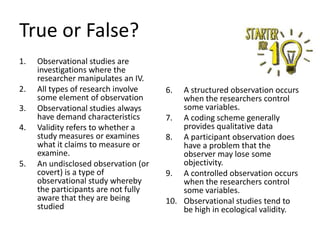
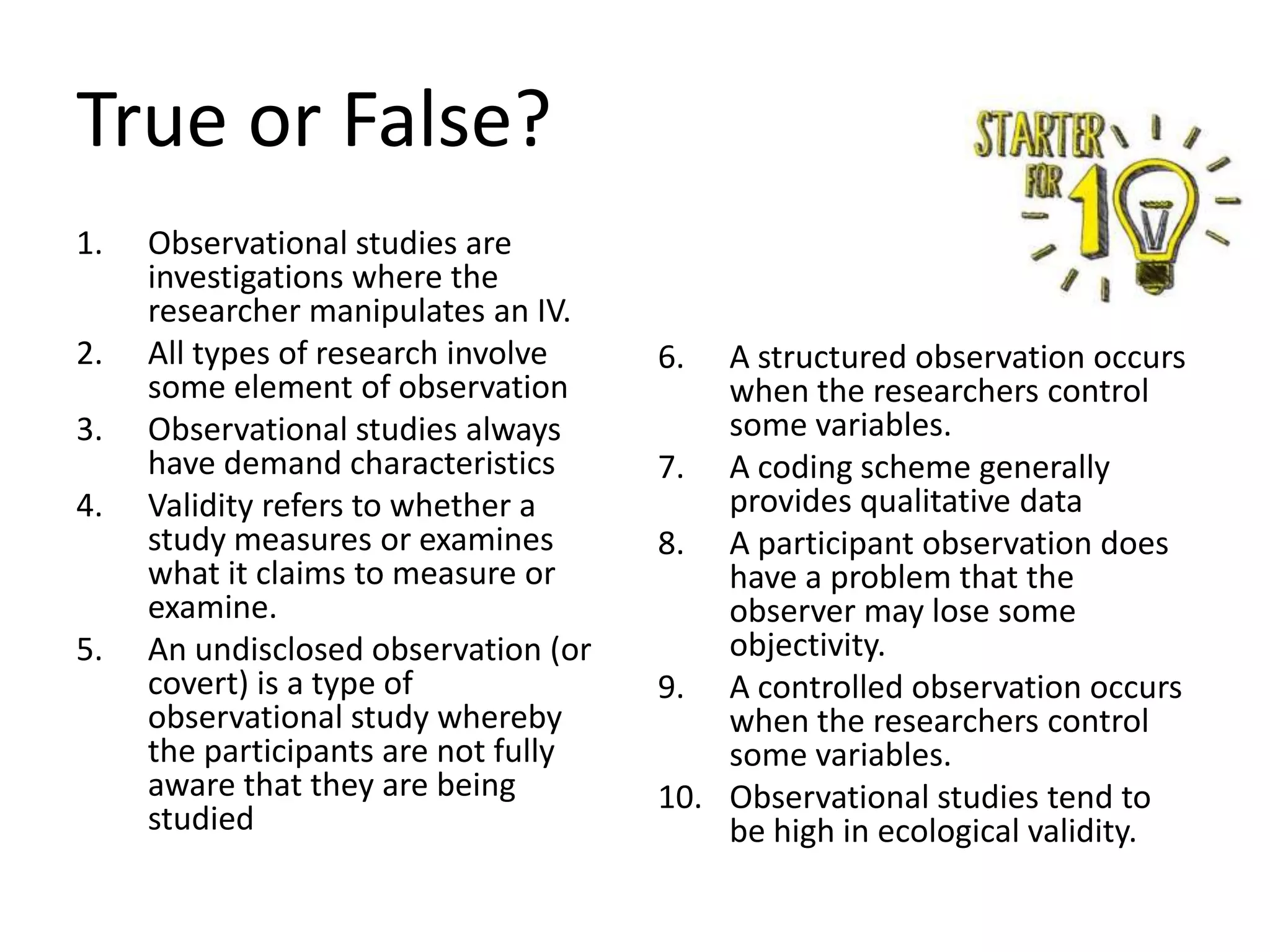



True or False?
1.
2.
3.
4.

5.

Observational studies are
investigations where the
researcher manipulates an IV.
All types of research involve
some element of observation
Observational studies always
have demand characteristics
Validity refers to whether a
study measures or examines
what it claims to measure or
examine.
An undisclosed observation (or
covert) is a type of
observational study whereby
the participants are not fully
aware that they are being
studied

6.

A structured observation occurs
when the researchers control
some variables.
7. A coding scheme generally
provides qualitative data
8. A participant observation does
have a problem that the
observer may lose some
objectivity.
9. A controlled observation occurs
when the researchers control
some variables.
10. Observational studies tend to
be high in ecological validity.
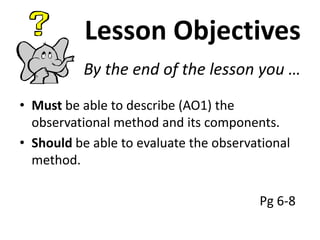
Lesson Objectives
By the end of the lesson you …
• Must be able to describe (AO1) the
observational method and its components.
• Should be able to evaluate the observational
method.
Pg 6-8
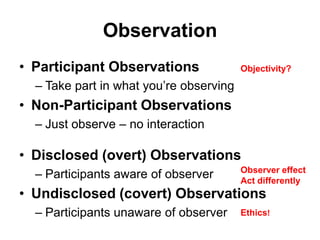
Observation
• Participant Observations

Objectivity?

– Take part in what you’re observing

• Non-Participant Observations
– Just observe – no interaction

• Disclosed (overt) Observations
– Participants aware of observer

Observer effect
Act differently

• Undisclosed (covert) Observations
– Participants unaware of observer

Ethics!
Observation
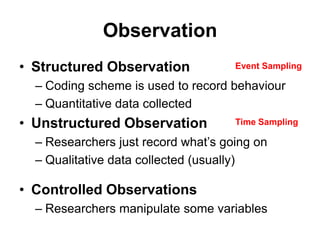
• Structured Observation

Event Sampling

– Coding scheme is used to record behaviour
– Quantitative data collected

• Unstructured Observation

Time Sampling

– Researchers just record what’s going on
– Qualitative data collected (usually)

• Controlled Observations
– Researchers manipulate some variables
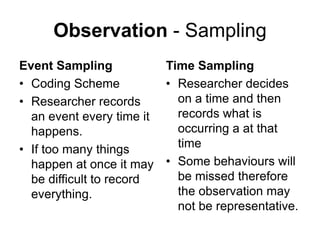
Observation - Sampling
Event Sampling
Time Sampling
• Coding Scheme
• Researcher decides
on a time and then
• Researcher records
records what is
an event every time it
occurring a at that
happens.
time
• If too many things
happen at once it may • Some behaviours will
be missed therefore
be difficult to record
the observation may
everything.
not be representative.
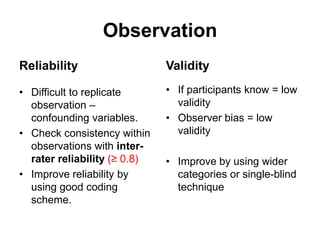
Observation
Reliability

Validity

• Difficult to replicate
observation –
confounding variables.
• Check consistency within
observations with interrater reliability (≥ 0.8)
• Improve reliability by
using good coding
scheme.

• If participants know = low
validity
• Observer bias = low
validity
• Improve by using wider
categories or single-blind
technique
BPS Ethical Concepts (1990)
• Informed consent
of participant
• Right to withdraw
• Debriefing
• Deception

• Observation
• Protection of
participants
• Colleagues
• Confidentiality
• Competence

When conducting research psychologists should
adhere to these.
• C AN
• DO
• CAN’T
• DO
• W ITH
• PARTICIPANTS
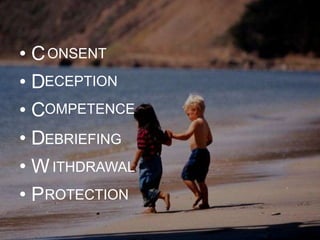
• C ONSENT
• DECEPTION
• COMPETENCE
• DEBRIEFING
• W ITHDRAWAL
• PROTECTION
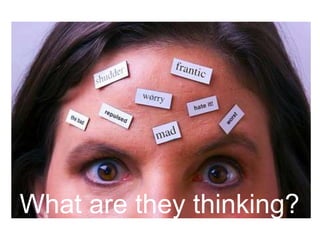
What are they thinking?
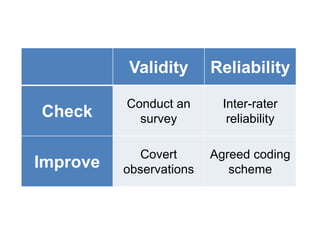
Validity

Reliability

Check

Conduct an
survey

Inter-rater
reliability

Improve

Covert
observations

Agreed coding
scheme
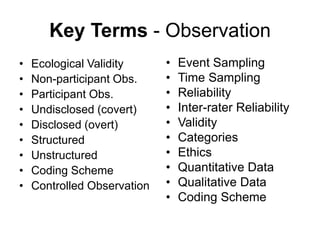
Key Terms - Observation
•
•
•
•
•
•
•
•
•

Ecological Validity
Non-participant Obs.
Participant Obs.
Undisclosed (covert)
Disclosed (overt)
Structured
Unstructured
Coding Scheme
Controlled Observation

•
•
•
•
•
•
•
•
•
•

Event Sampling
Time Sampling
Reliability
Inter-rater Reliability
Validity
Categories
Ethics
Quantitative Data
Qualitative Data
Coding Scheme
• Must be able to describe (AO1) the observational
method and its components.
• Should be able to evaluate the observational
method.

AS Week 6 Observational Research

  • 1.
    True or False? 1. 2. 3. 4. 5. Observationalstudies are investigations where the researcher manipulates an IV. All types of research involve some element of observation Observational studies always have demand characteristics Validity refers to whether a study measures or examines what it claims to measure or examine. An undisclosed observation (or covert) is a type of observational study whereby the participants are not fully aware that they are being studied 6. A structured observation occurs when the researchers control some variables. 7. A coding scheme generally provides qualitative data 8. A participant observation does have a problem that the observer may lose some objectivity. 9. A controlled observation occurs when the researchers control some variables. 10. Observational studies tend to be high in ecological validity.
  • 2.
    Lesson Objectives By theend of the lesson you … • Must be able to describe (AO1) the observational method and its components. • Should be able to evaluate the observational method. Pg 6-8
  • 3.
    Observation • Participant Observations Objectivity? –Take part in what you’re observing • Non-Participant Observations – Just observe – no interaction • Disclosed (overt) Observations – Participants aware of observer Observer effect Act differently • Undisclosed (covert) Observations – Participants unaware of observer Ethics!
  • 4.
    Observation • Structured Observation EventSampling – Coding scheme is used to record behaviour – Quantitative data collected • Unstructured Observation Time Sampling – Researchers just record what’s going on – Qualitative data collected (usually) • Controlled Observations – Researchers manipulate some variables
  • 5.
    Observation - Sampling EventSampling Time Sampling • Coding Scheme • Researcher decides on a time and then • Researcher records records what is an event every time it occurring a at that happens. time • If too many things happen at once it may • Some behaviours will be missed therefore be difficult to record the observation may everything. not be representative.
  • 6.
    Observation Reliability Validity • Difficult toreplicate observation – confounding variables. • Check consistency within observations with interrater reliability (≥ 0.8) • Improve reliability by using good coding scheme. • If participants know = low validity • Observer bias = low validity • Improve by using wider categories or single-blind technique
  • 7.
    BPS Ethical Concepts(1990) • Informed consent of participant • Right to withdraw • Debriefing • Deception • Observation • Protection of participants • Colleagues • Confidentiality • Competence When conducting research psychologists should adhere to these.
  • 8.
    • C AN •DO • CAN’T • DO • W ITH • PARTICIPANTS
  • 9.
    • C ONSENT •DECEPTION • COMPETENCE • DEBRIEFING • W ITHDRAWAL • PROTECTION
  • 12.
    What are theythinking?
  • 13.
  • 14.
    Key Terms -Observation • • • • • • • • • Ecological Validity Non-participant Obs. Participant Obs. Undisclosed (covert) Disclosed (overt) Structured Unstructured Coding Scheme Controlled Observation • • • • • • • • • • Event Sampling Time Sampling Reliability Inter-rater Reliability Validity Categories Ethics Quantitative Data Qualitative Data Coding Scheme
  • 15.
    • Must beable to describe (AO1) the observational method and its components. • Should be able to evaluate the observational method.