Observational Research
     Brian J. Piper, Ph.D.
Types
• Naturalistic Observation: observe the behavior
  as an outsider
• Participant Observation: observe the behavior
  as in insider
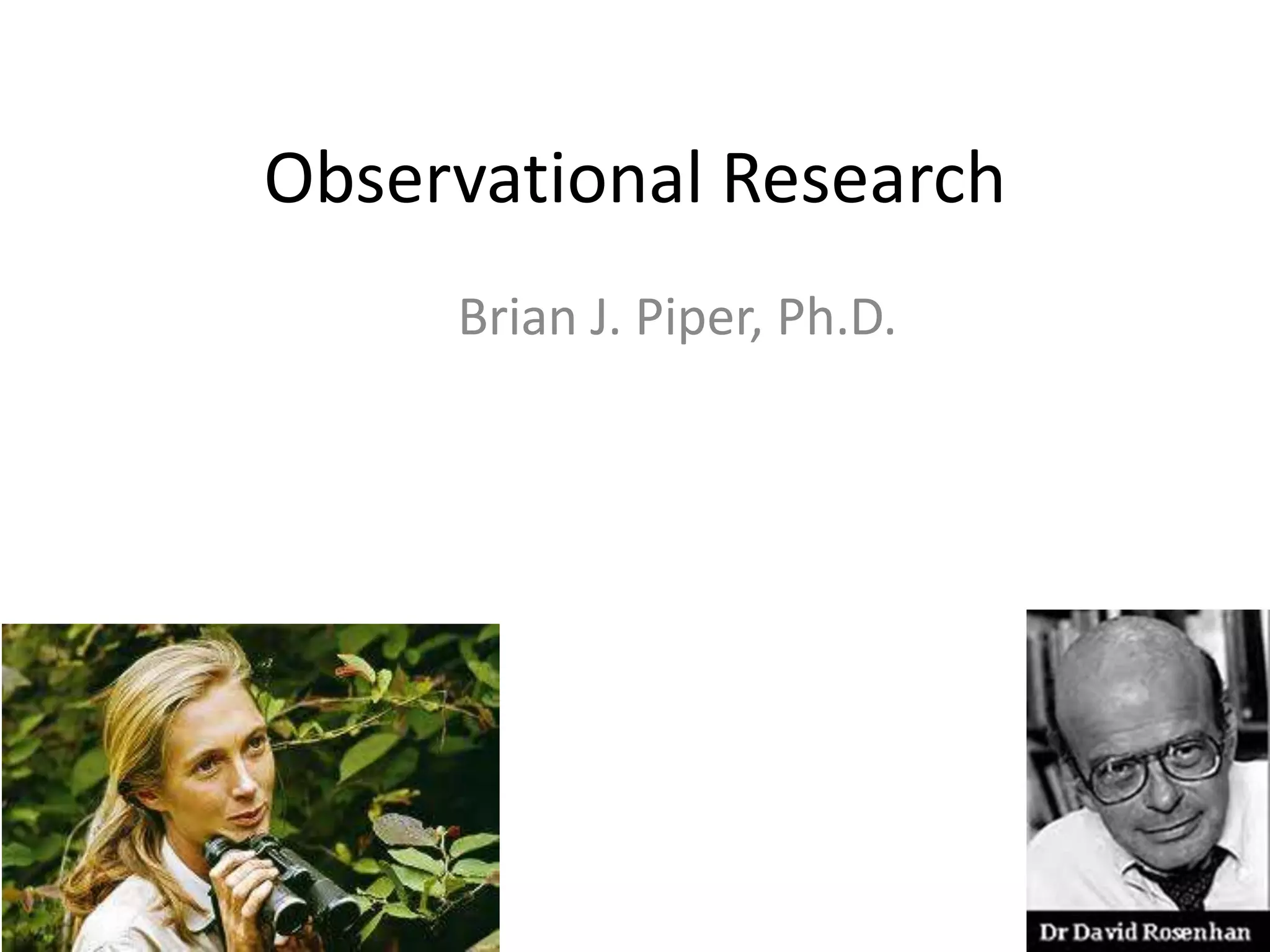
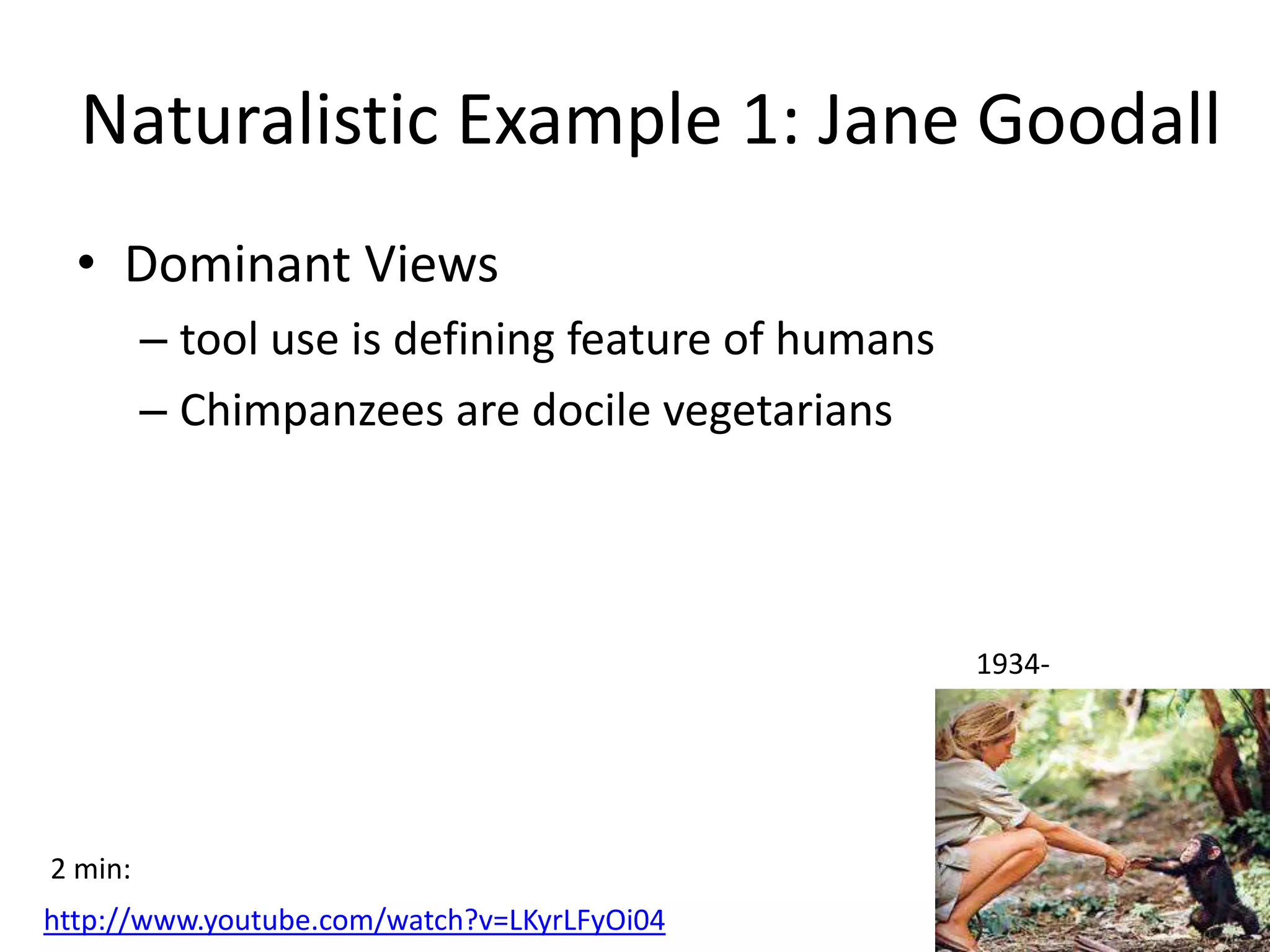
Naturalistic Example 1: Jane Goodall
  • Dominant Views
         – tool use is defining feature of humans
         – Chimpanzees are docile vegetarians


                                                    1934-


2 min:
http://www.youtube.com/watch?v=LKyrLFyOi04
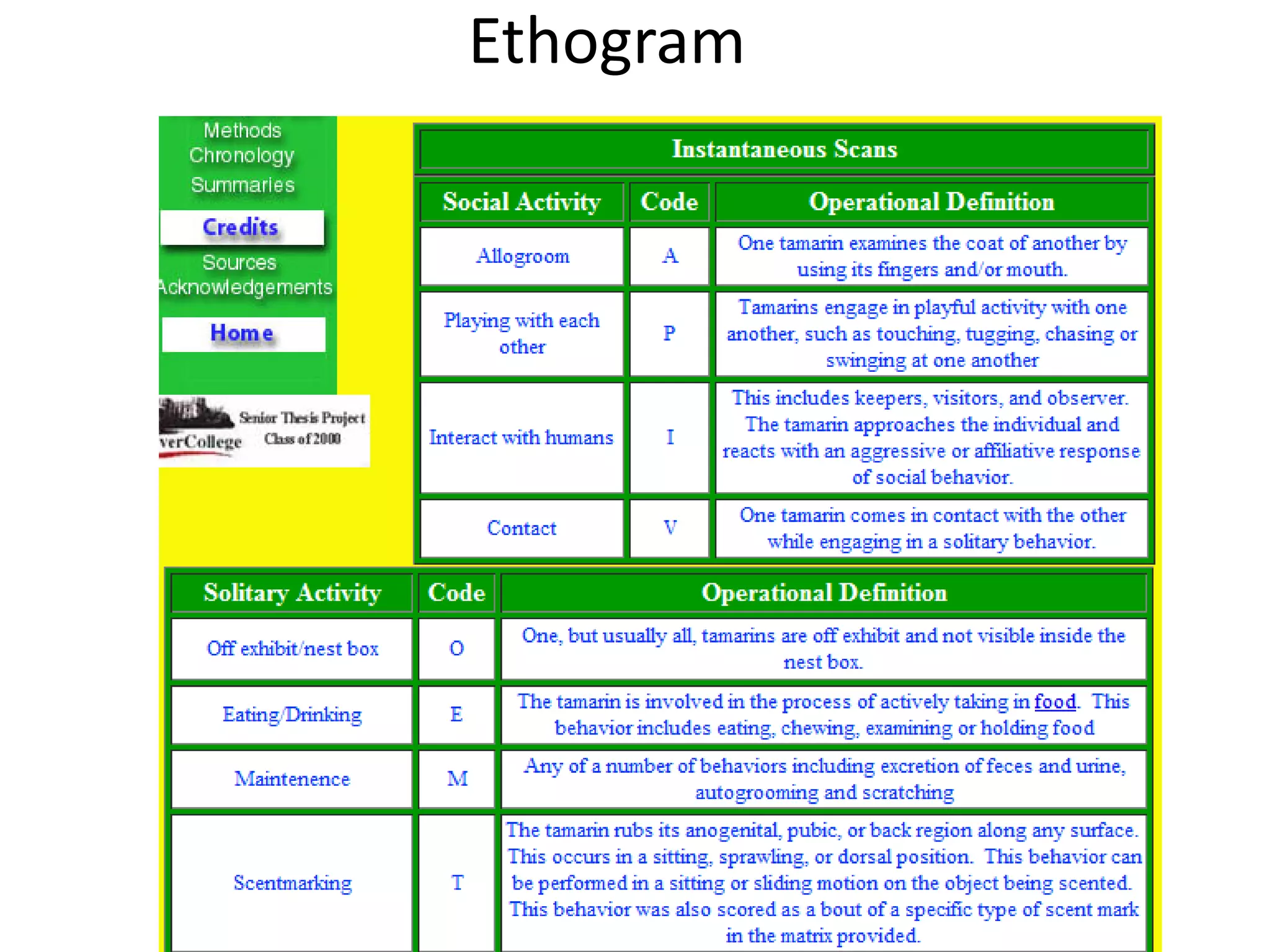
Ethogram
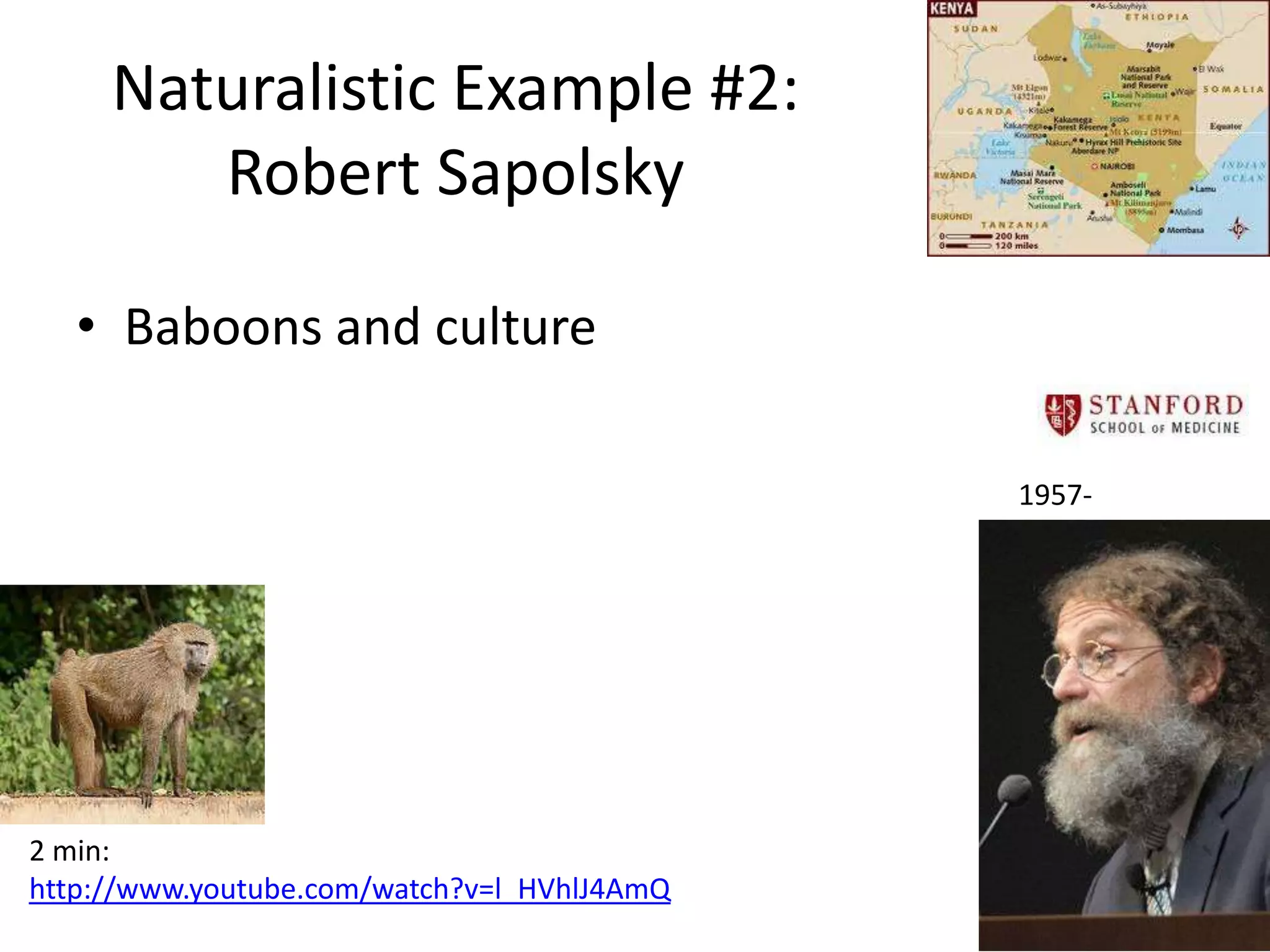
Naturalistic Example #2:
        Robert Sapolsky

   • Baboons and culture

                                             1957-


2 min:
http://www.youtube.com/watch?v=l_HVhlJ4AmQ
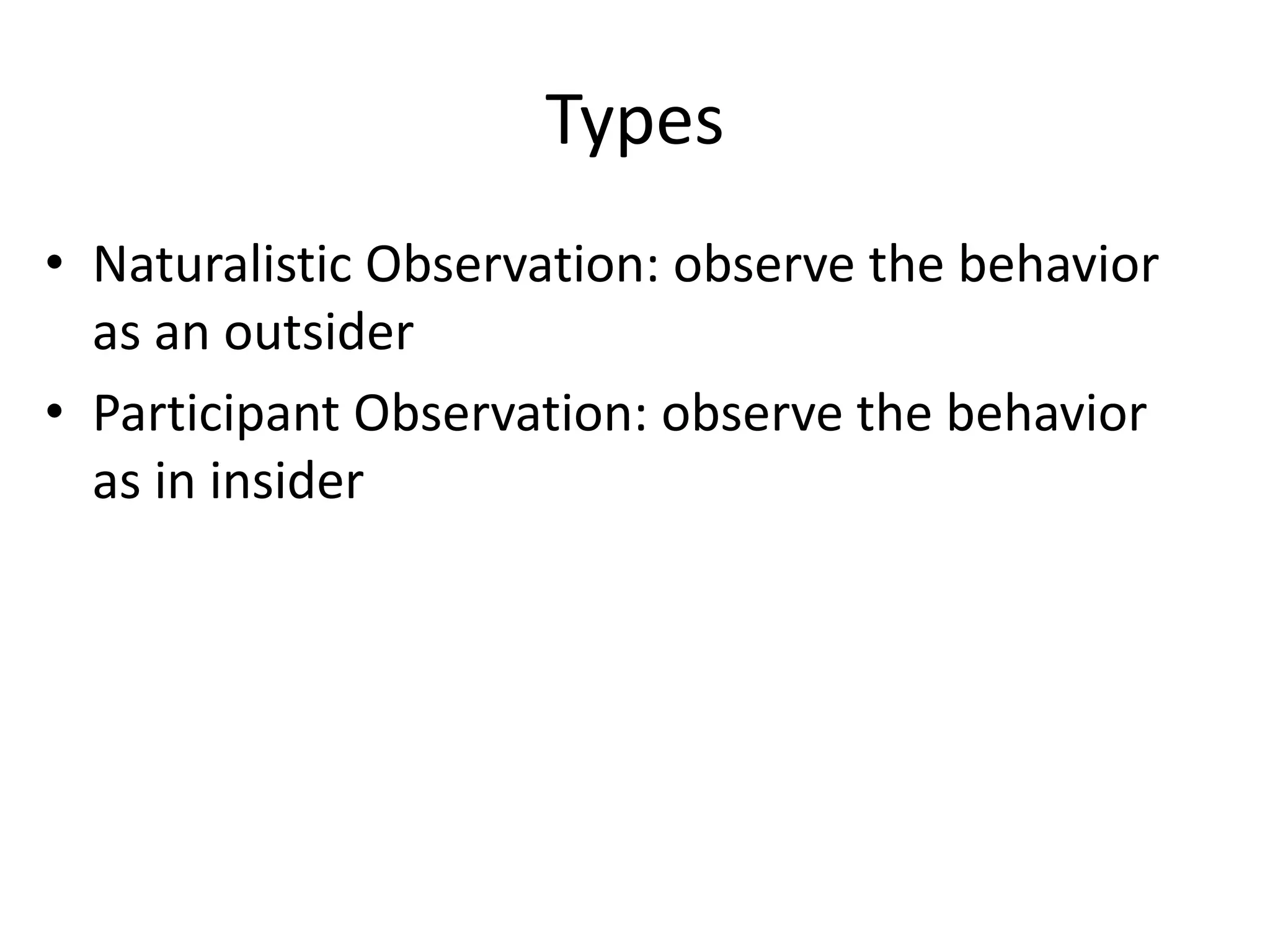
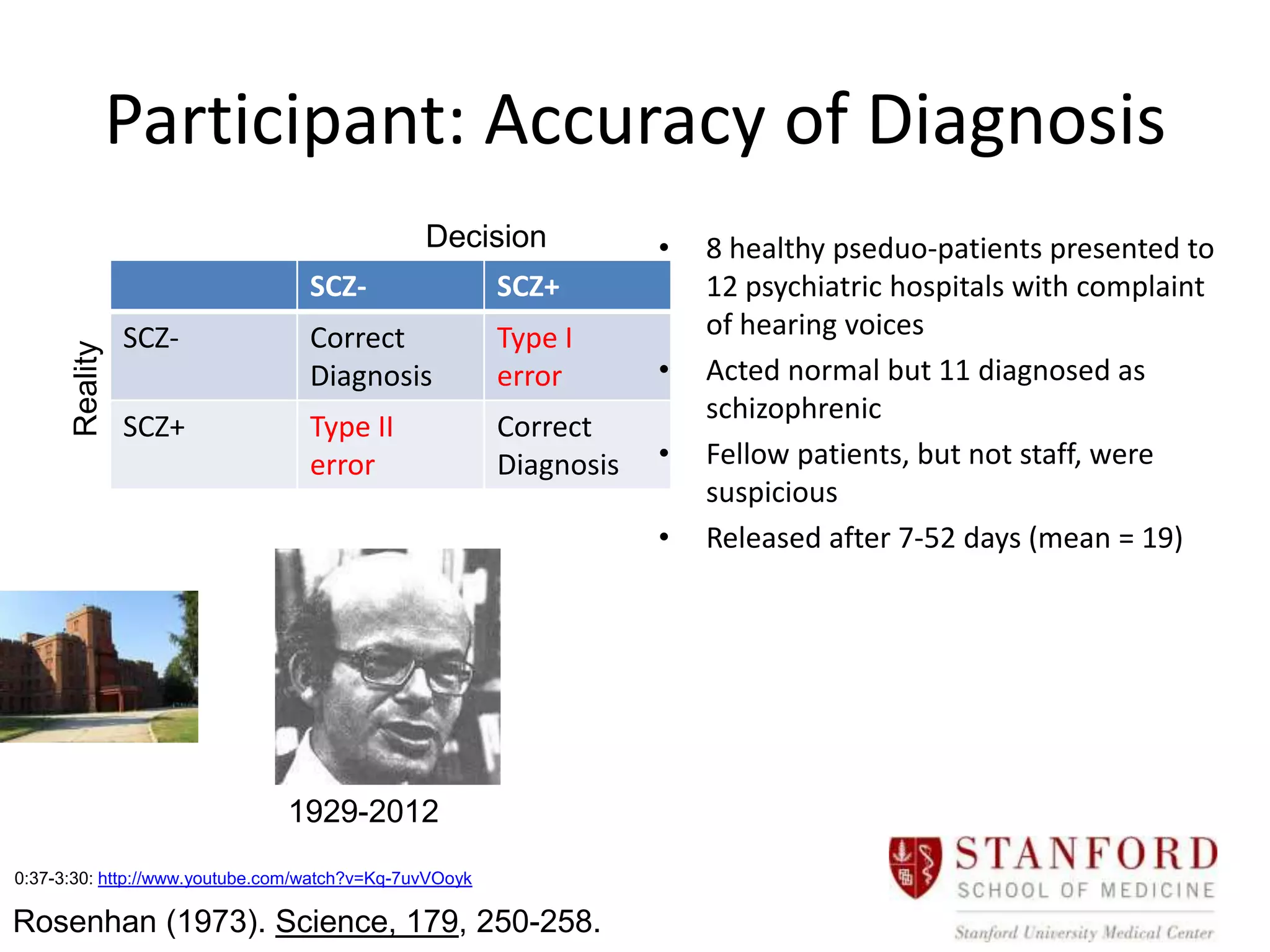
Participant: Accuracy of Diagnosis
                                               Decision             •   8 healthy pseduo-patients presented to
                                  SCZ-                  SCZ+            12 psychiatric hospitals with complaint
                SCZ-              Correct               Type I          of hearing voices
      Reality


                                  Diagnosis             error       •   Acted normal but 11 diagnosed as
                                                                        schizophrenic
                SCZ+              Type II               Correct
                                  error                 Diagnosis   •   Fellow patients, but not staff, were
                                                                        suspicious
                                                                    •   Released after 7-52 days (mean = 19)


                               1929-2012
0:37-3:30: http://www.youtube.com/watch?v=Kq-7uvVOoyk

Rosenhan (1973). Science, 179, 250-258.
Challenges
• Control: variable
• Observer bias: data fits with hypothesis
    – Inter-observer reliability
        • Correlation
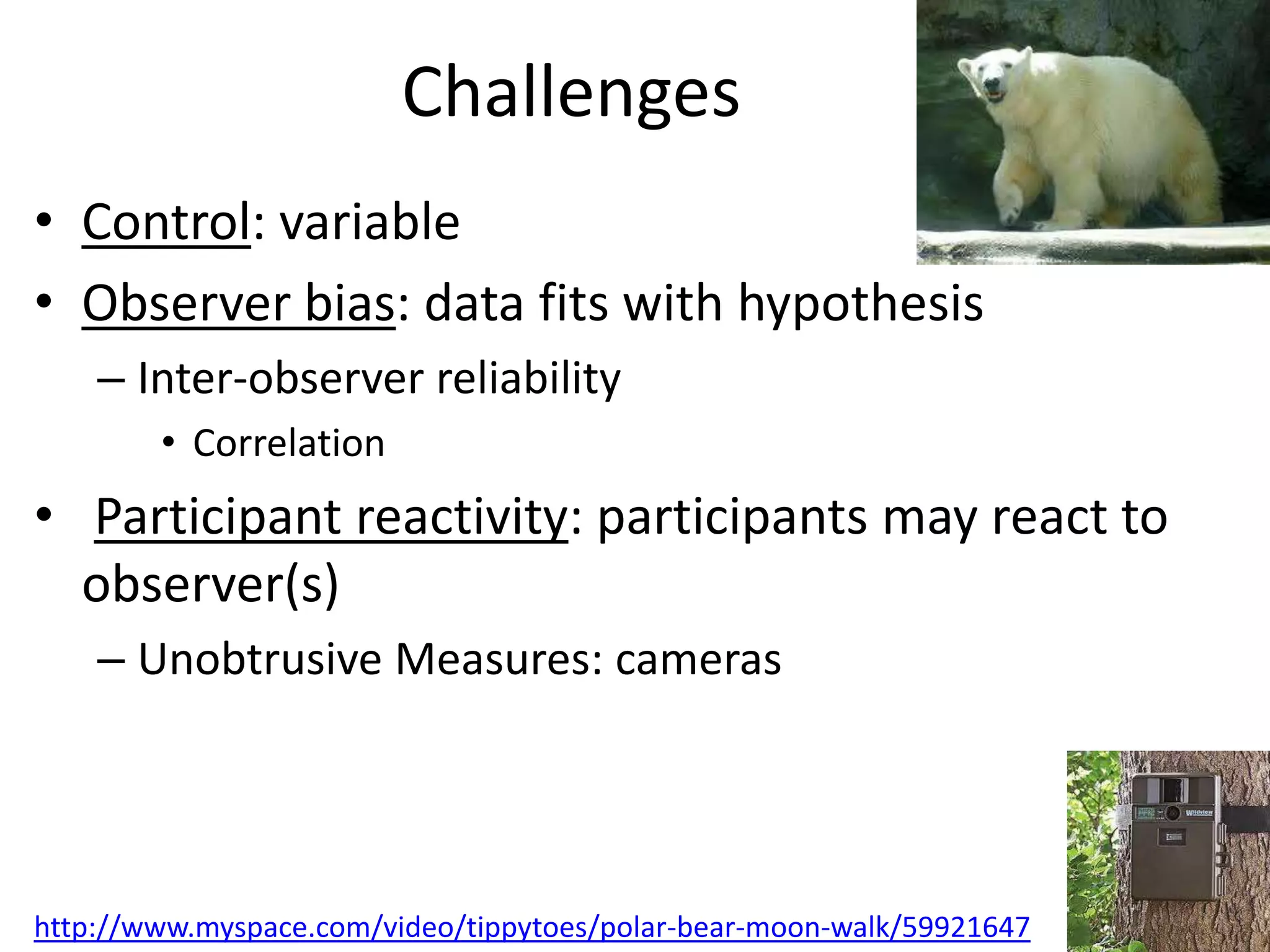
• Participant reactivity: participants may react to
  observer(s)
    – Unobtrusive Measures: cameras


http://www.myspace.com/video/tippytoes/polar-bear-moon-walk/59921647

Research Methods: Observational Research

  • 1.
    Observational Research Brian J. Piper, Ph.D.
  • 2.
    Types • Naturalistic Observation:observe the behavior as an outsider • Participant Observation: observe the behavior as in insider
  • 3.
    Naturalistic Example 1:Jane Goodall • Dominant Views – tool use is defining feature of humans – Chimpanzees are docile vegetarians 1934- 2 min: http://www.youtube.com/watch?v=LKyrLFyOi04
  • 4.
  • 5.
    Naturalistic Example #2: Robert Sapolsky • Baboons and culture 1957- 2 min: http://www.youtube.com/watch?v=l_HVhlJ4AmQ
  • 6.
    Participant: Accuracy ofDiagnosis Decision • 8 healthy pseduo-patients presented to SCZ- SCZ+ 12 psychiatric hospitals with complaint SCZ- Correct Type I of hearing voices Reality Diagnosis error • Acted normal but 11 diagnosed as schizophrenic SCZ+ Type II Correct error Diagnosis • Fellow patients, but not staff, were suspicious • Released after 7-52 days (mean = 19) 1929-2012 0:37-3:30: http://www.youtube.com/watch?v=Kq-7uvVOoyk Rosenhan (1973). Science, 179, 250-258.
  • 7.
    Challenges • Control: variable •Observer bias: data fits with hypothesis – Inter-observer reliability • Correlation • Participant reactivity: participants may react to observer(s) – Unobtrusive Measures: cameras http://www.myspace.com/video/tippytoes/polar-bear-moon-walk/59921647