Data Collection Methods:
Observation Studies

       Deepak Khazanchi
OBSERVING
   Observation is a method of data
    gathering in which a qualified person
    watches, or walks through, the actual
    processing associated with a system
       Best for studying processes, e.g.
        manufacturing
       Useful for studying the work flow through
        an office for example
       Could be active or passive
Observation
   Nonbehavioral observation
       Record analysis:
            Analysis of historical or current records and public or
             private records.
       Physical condition analysis
            Audits of merchandise availability, studies of plant safety
             compliance, etc.
       Process or activity analysis
            Time/motion studies, financial flows in a banking system,
             paper flow in office systems, etc.
Observation
   Behavioral observation
       Nonverbal analysis
            E.g., Monitoring eye movement in user-interface studies.
       Linguistic analysis
            E.g., study of a sales presentation’s content or the study
             of what, how, and how much information is conveyed in
             a training situation.
       Extralinguistic analysis
            E.g., study of the linguistic content of the interaction
             between supervisors and subordinates.
       Spatial analysis
            E.g., a study of how salespeople physically approach
             customers.
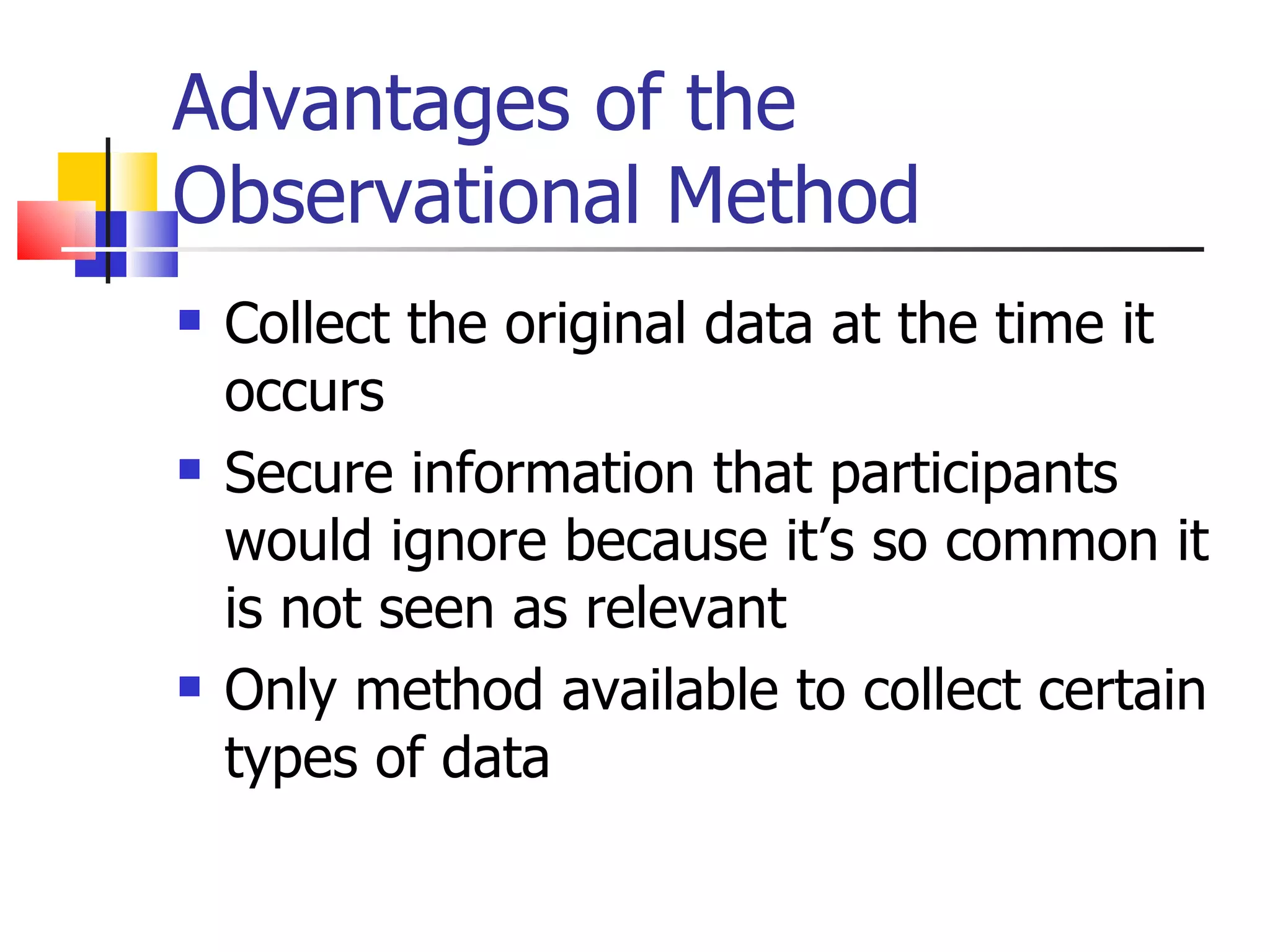
Advantages of the
Observational Method
   Collect the original data at the time it
    occurs
   Secure information that participants
    would ignore because it’s so common it
    is not seen as relevant
   Only method available to collect certain
    types of data
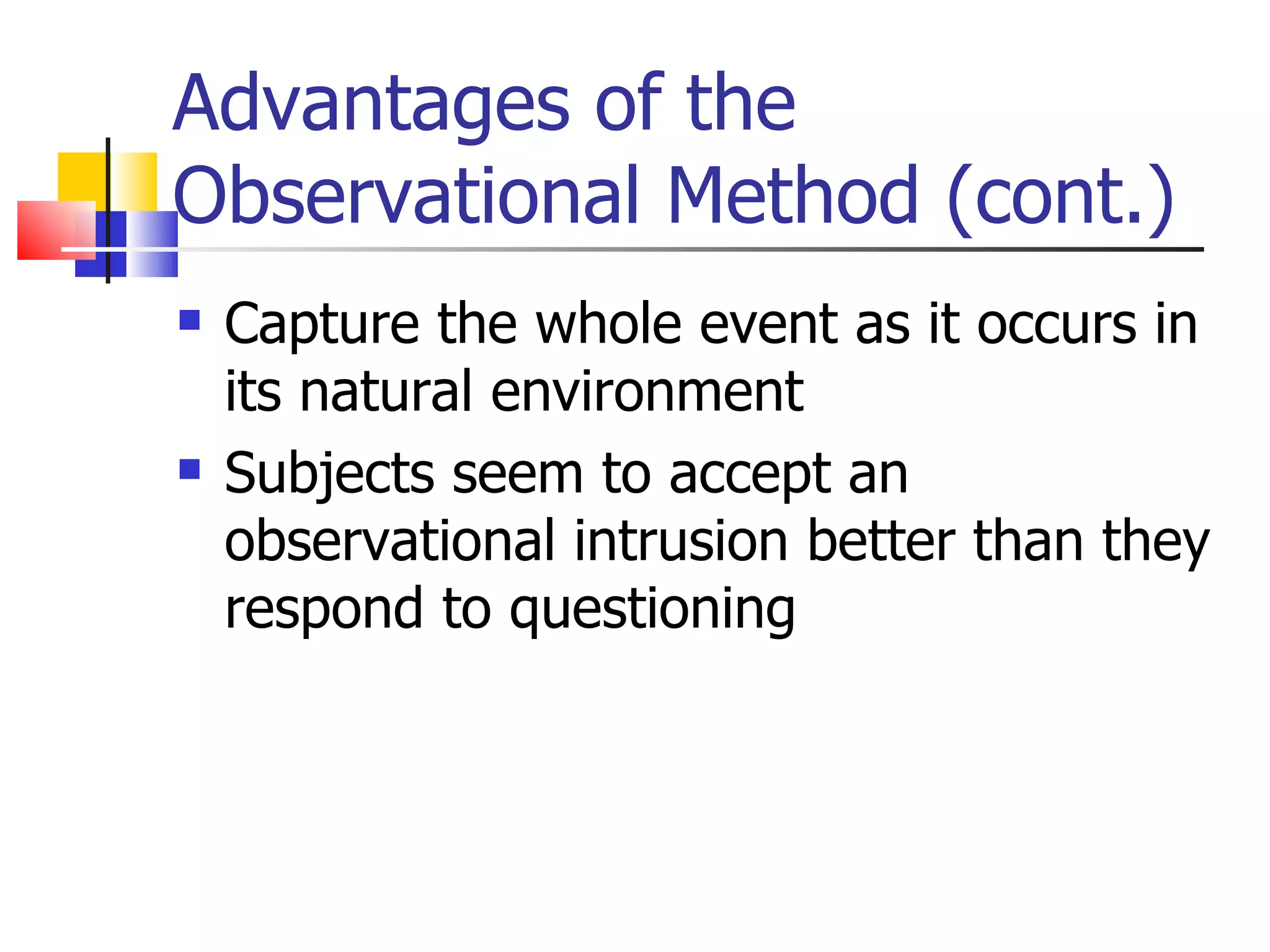
Advantages of the
Observational Method (cont.)
   Capture the whole event as it occurs in
    its natural environment
   Subjects seem to accept an
    observational intrusion better than they
    respond to questioning
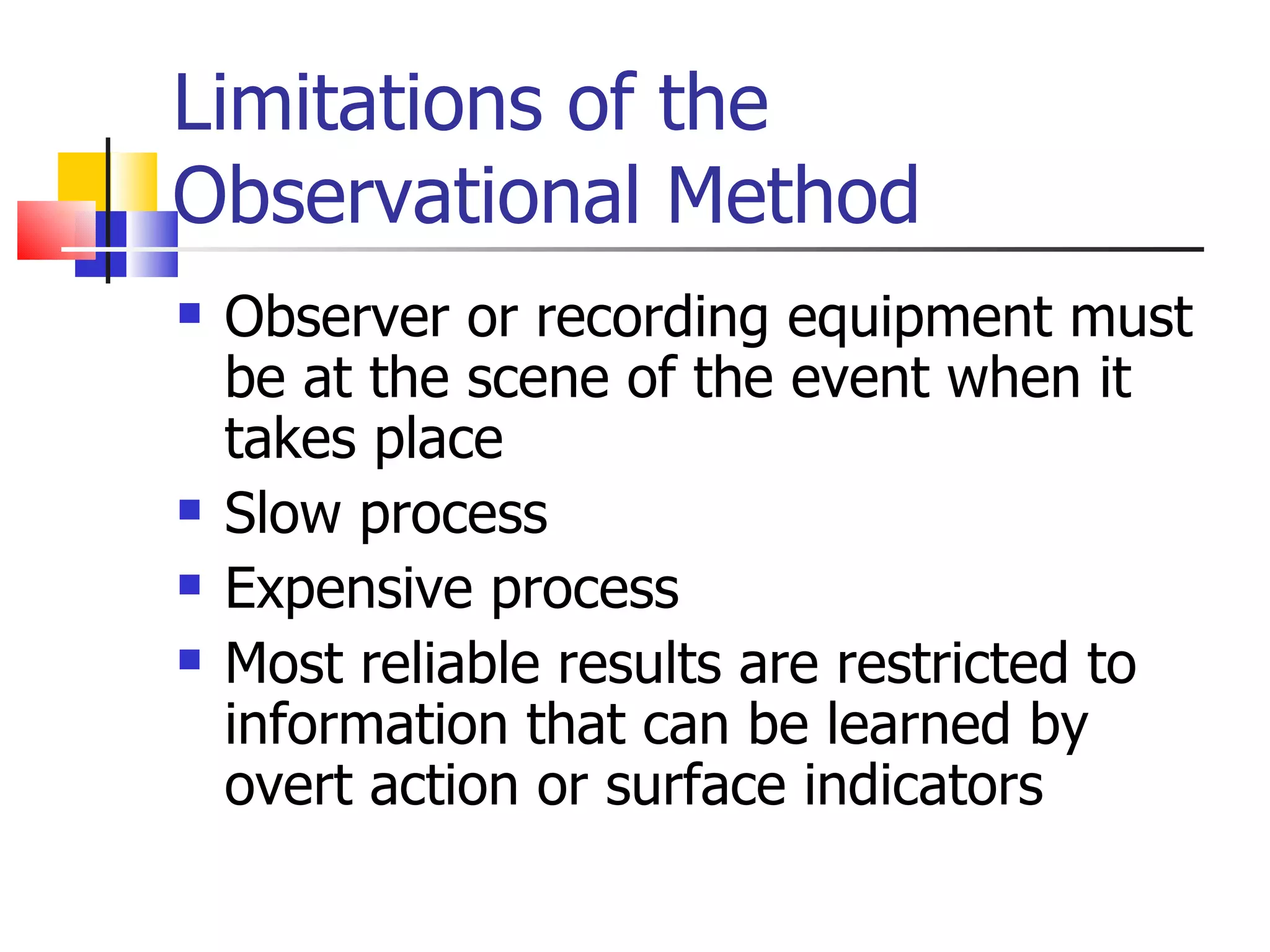
Limitations of the
Observational Method
   Observer or recording equipment must
    be at the scene of the event when it
    takes place
   Slow process
   Expensive process
   Most reliable results are restricted to
    information that can be learned by
    overt action or surface indicators
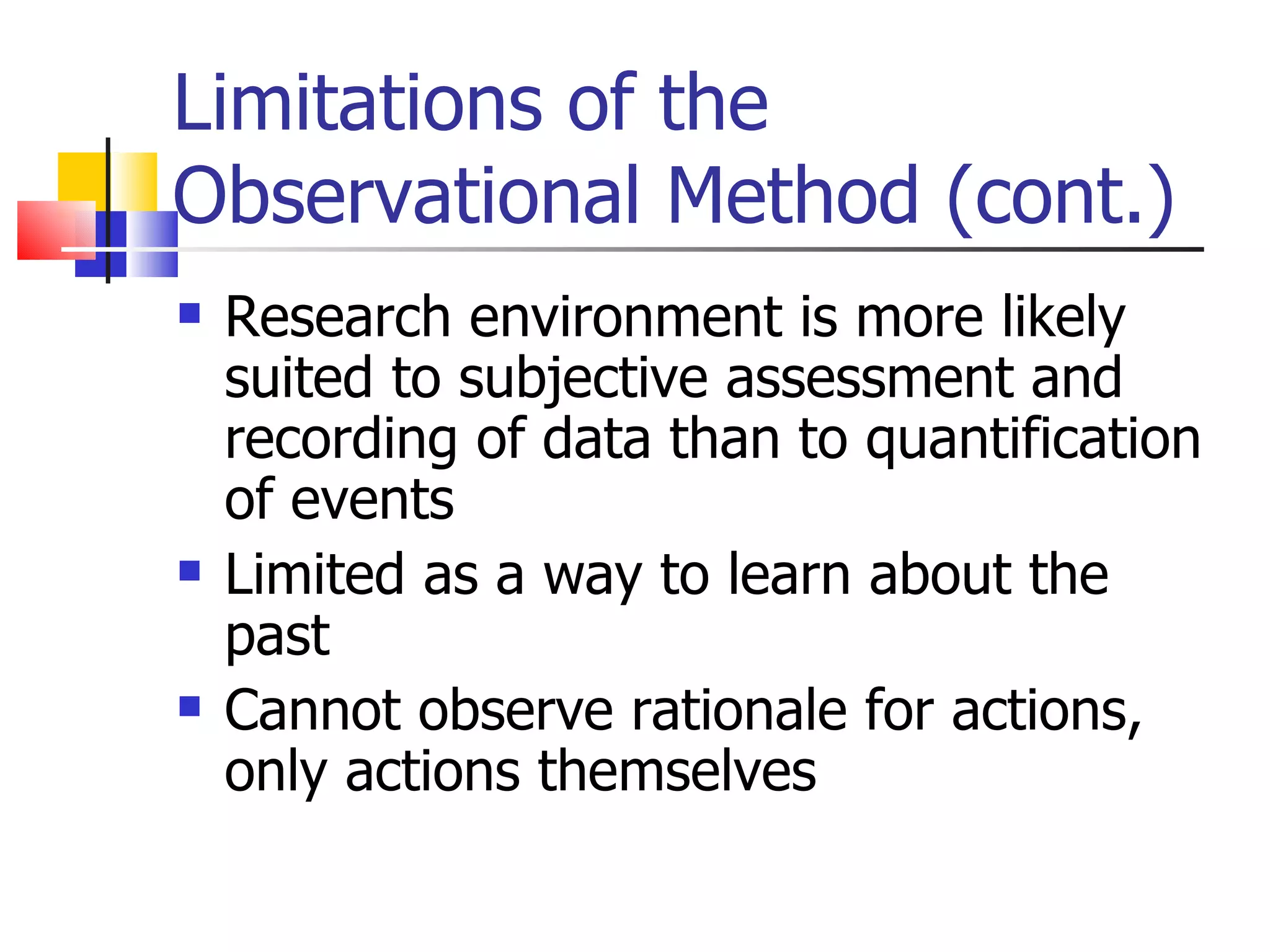
Limitations of the
Observational Method (cont.)
   Research environment is more likely
    suited to subjective assessment and
    recording of data than to quantification
    of events
   Limited as a way to learn about the
    past
   Cannot observe rationale for actions,
    only actions themselves
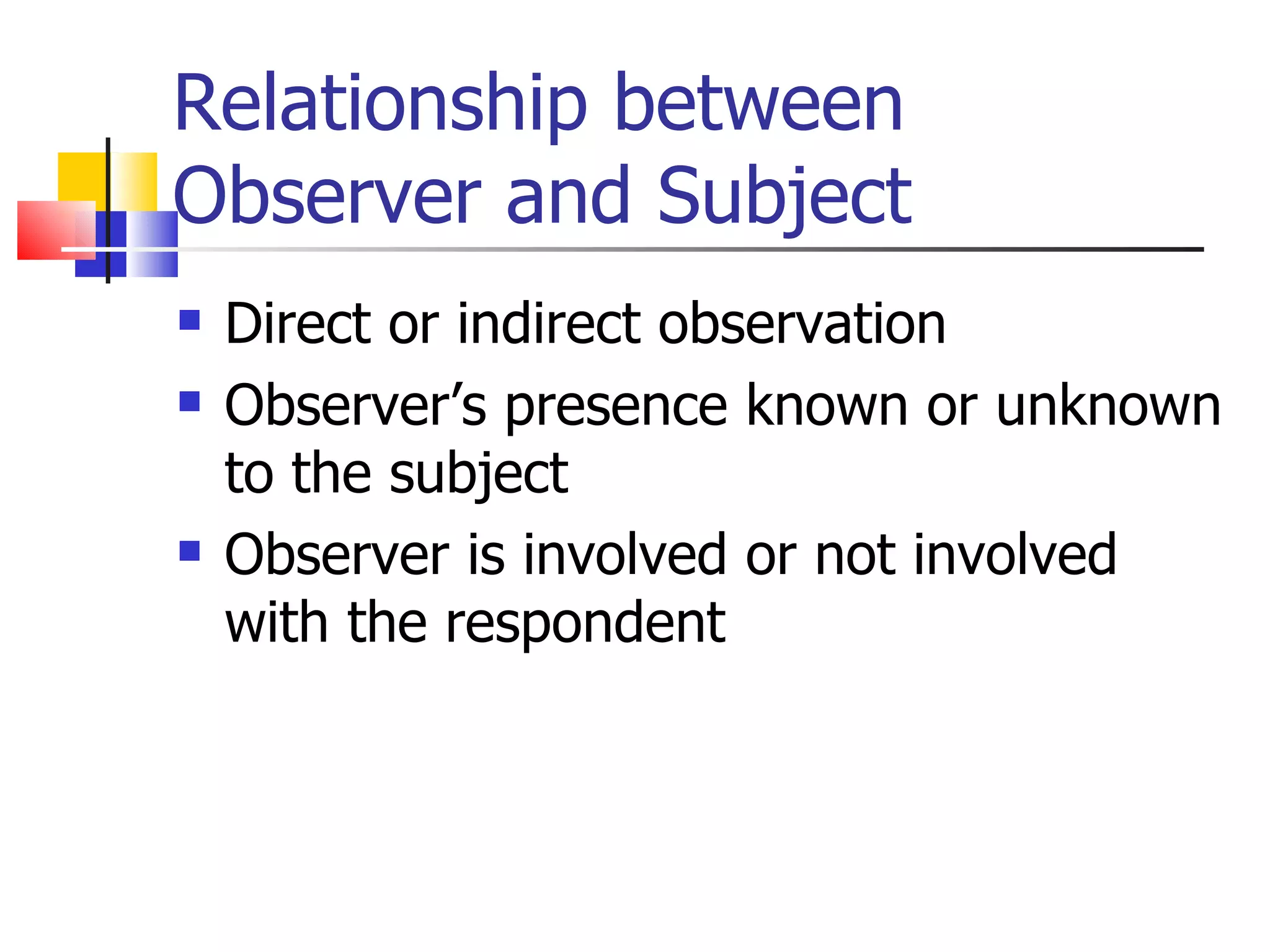
Relationship between
Observer and Subject
   Direct or indirect observation
   Observer’s presence known or unknown
    to the subject
   Observer is involved or not involved
    with the respondent
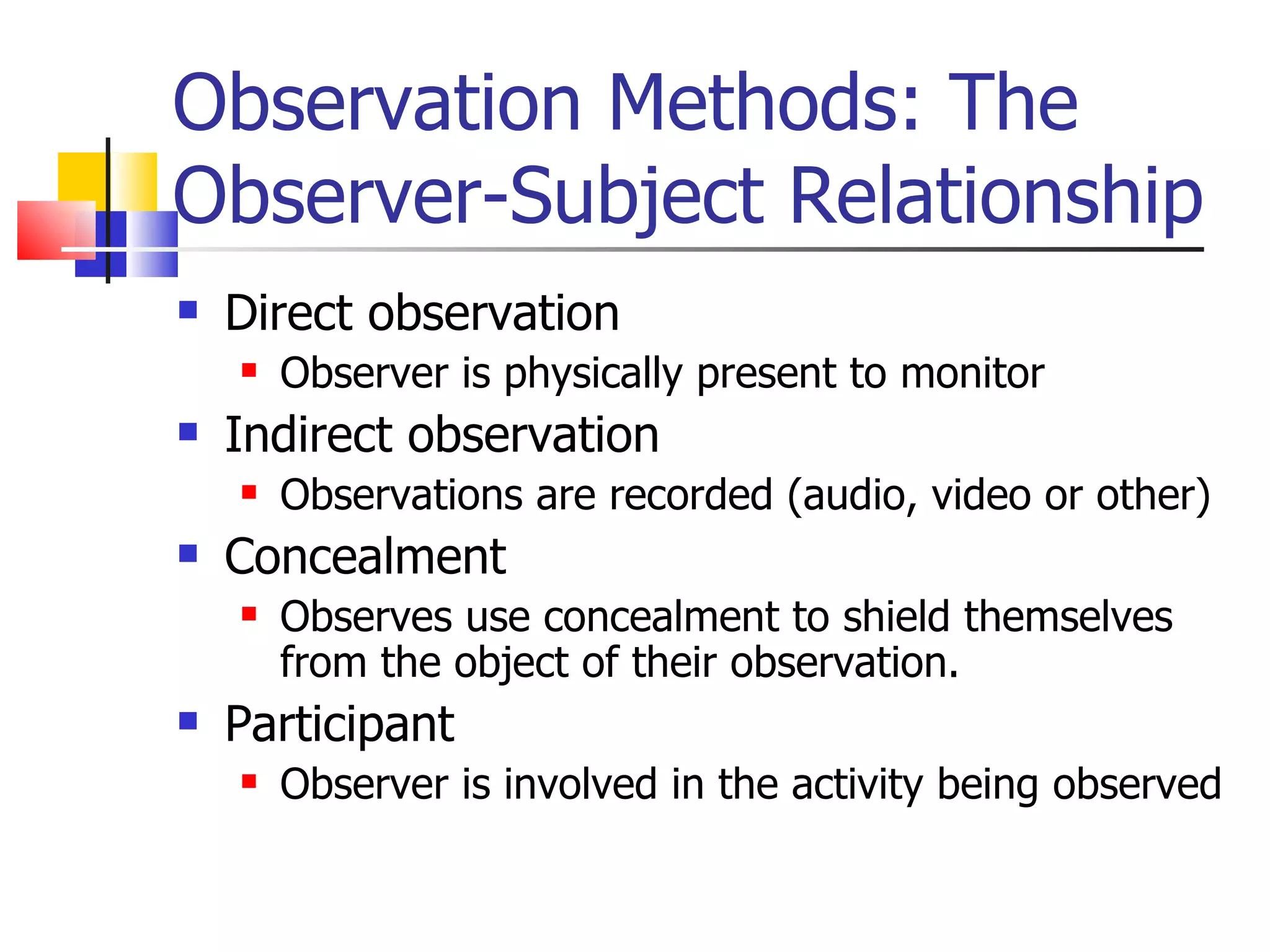
Observation Methods: The
Observer-Subject Relationship
   Direct observation
       Observer is physically present to monitor
   Indirect observation
       Observations are recorded (audio, video or other)
   Concealment
       Observes use concealment to shield themselves
        from the object of their observation.
   Participant
       Observer is involved in the activity being observed
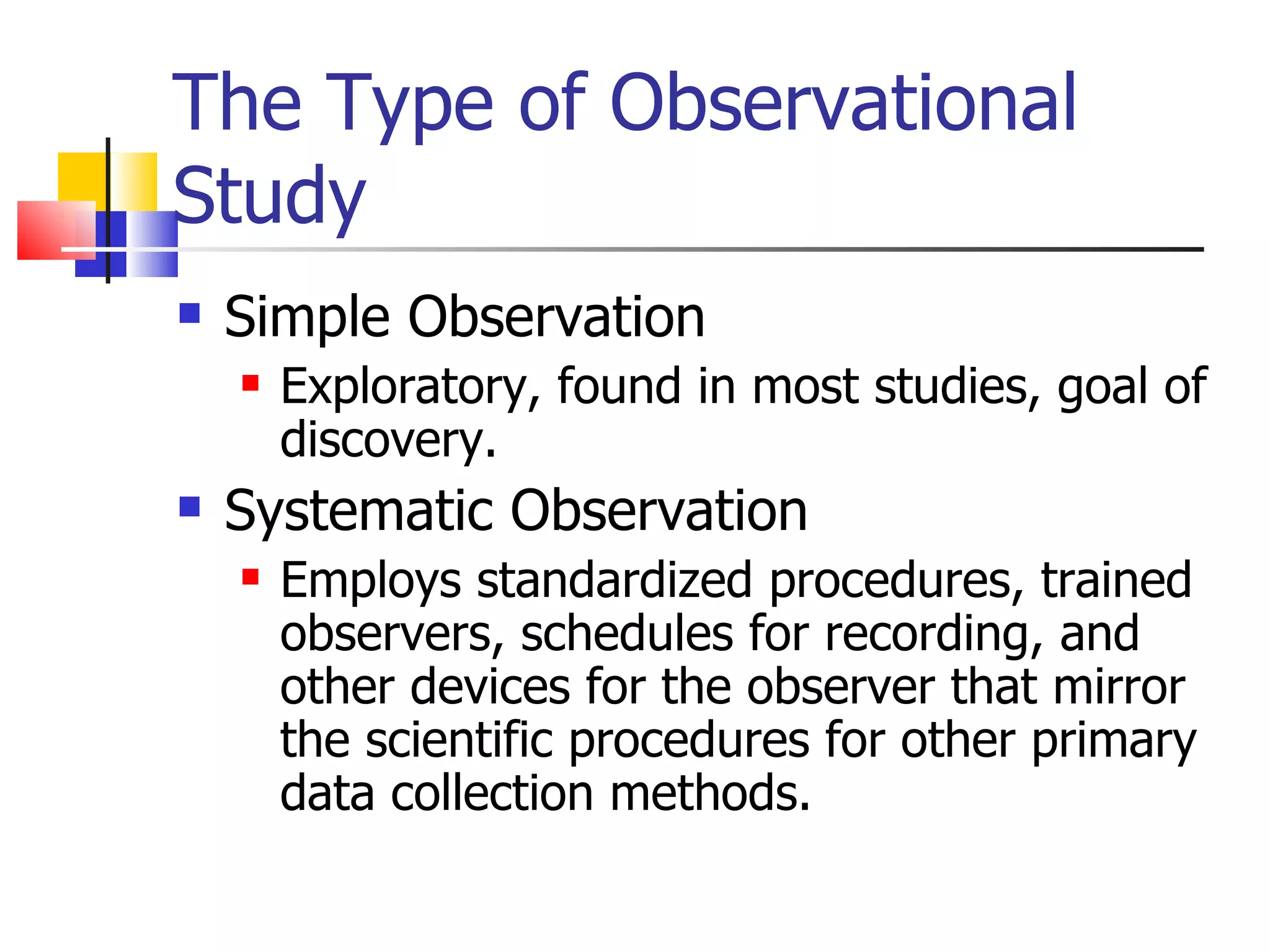
The Type of Observational
Study
   Simple Observation
       Exploratory, found in most studies, goal of
        discovery.
   Systematic Observation
       Employs standardized procedures, trained
        observers, schedules for recording, and
        other devices for the observer that mirror
        the scientific procedures for other primary
        data collection methods.
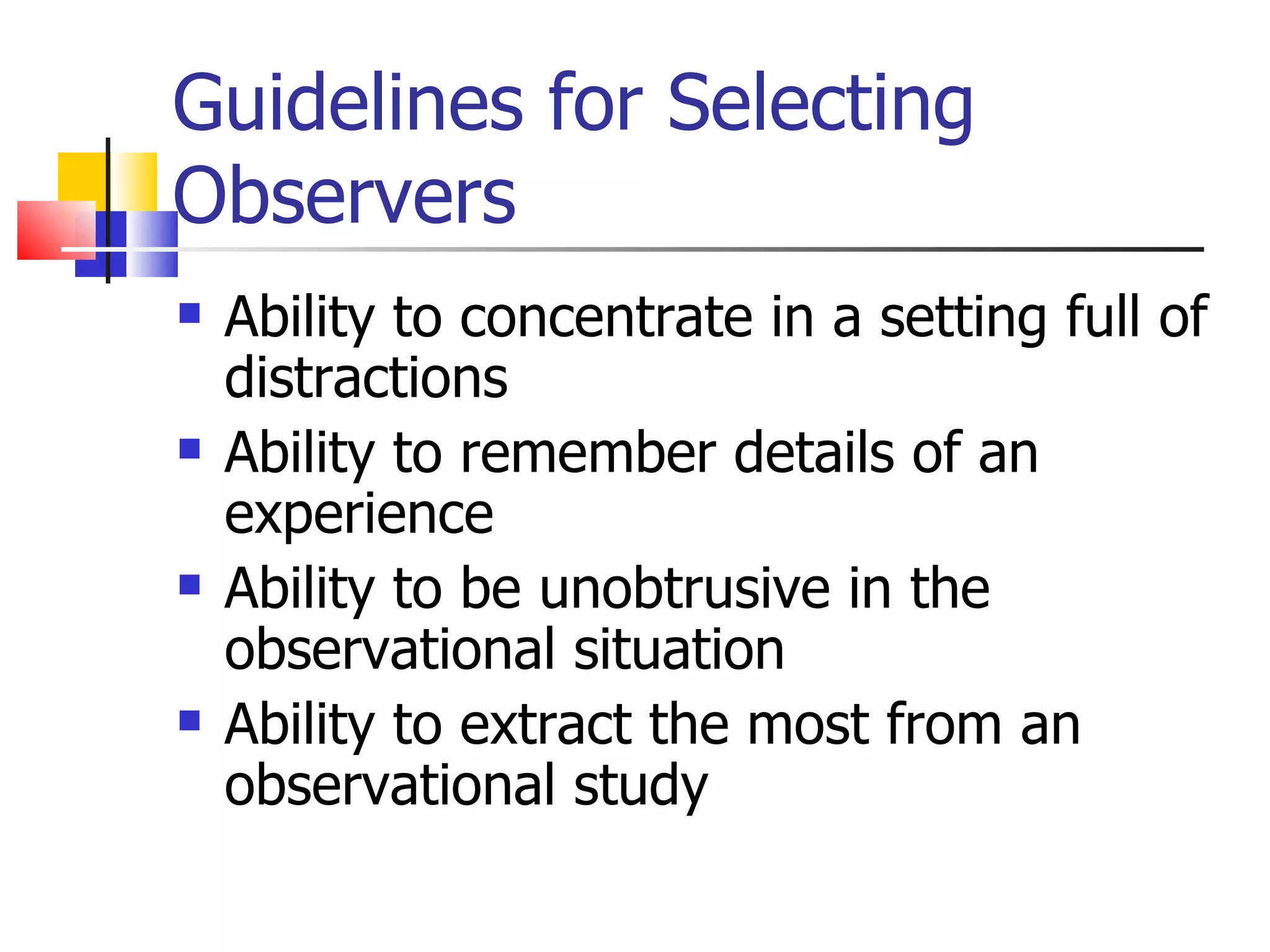
Guidelines for Selecting
Observers
   Ability to concentrate in a setting full of
    distractions
   Ability to remember details of an
    experience
   Ability to be unobtrusive in the
    observational situation
   Ability to extract the most from an
    observational study
Conducting the Study:
Observation Data Collection
   Who?
       What qualifies a subject to be observed?
   What?
       Event Sampling
            Observer records selected behavior that answers the
             investigative question
       Time Sampling
            Observer may record data at fixed points in time for a
             specified length, at specified intervals, or continuously.
Observation Data Collection
(cont’d)
   When?
       Is the time of the study important, or can any
        time be used?
   How?
       Will the data be directly observed? If there sis
        more than one observer, how will the task be
        divided? How will the results be recorded for later
        analysis?
   Where
       Within spatial confine, where does the act take
        place?

Observation (1)

  • 1.
    Data Collection Methods: ObservationStudies Deepak Khazanchi
  • 2.
    OBSERVING  Observation is a method of data gathering in which a qualified person watches, or walks through, the actual processing associated with a system  Best for studying processes, e.g. manufacturing  Useful for studying the work flow through an office for example  Could be active or passive
  • 3.
    Observation  Nonbehavioral observation  Record analysis:  Analysis of historical or current records and public or private records.  Physical condition analysis  Audits of merchandise availability, studies of plant safety compliance, etc.  Process or activity analysis  Time/motion studies, financial flows in a banking system, paper flow in office systems, etc.
  • 4.
    Observation  Behavioral observation  Nonverbal analysis  E.g., Monitoring eye movement in user-interface studies.  Linguistic analysis  E.g., study of a sales presentation’s content or the study of what, how, and how much information is conveyed in a training situation.  Extralinguistic analysis  E.g., study of the linguistic content of the interaction between supervisors and subordinates.  Spatial analysis  E.g., a study of how salespeople physically approach customers.
  • 5.
    Advantages of the ObservationalMethod  Collect the original data at the time it occurs  Secure information that participants would ignore because it’s so common it is not seen as relevant  Only method available to collect certain types of data
  • 6.
    Advantages of the ObservationalMethod (cont.)  Capture the whole event as it occurs in its natural environment  Subjects seem to accept an observational intrusion better than they respond to questioning
  • 7.
    Limitations of the ObservationalMethod  Observer or recording equipment must be at the scene of the event when it takes place  Slow process  Expensive process  Most reliable results are restricted to information that can be learned by overt action or surface indicators
  • 8.
    Limitations of the ObservationalMethod (cont.)  Research environment is more likely suited to subjective assessment and recording of data than to quantification of events  Limited as a way to learn about the past  Cannot observe rationale for actions, only actions themselves
  • 9.
    Relationship between Observer andSubject  Direct or indirect observation  Observer’s presence known or unknown to the subject  Observer is involved or not involved with the respondent
  • 10.
    Observation Methods: The Observer-SubjectRelationship  Direct observation  Observer is physically present to monitor  Indirect observation  Observations are recorded (audio, video or other)  Concealment  Observes use concealment to shield themselves from the object of their observation.  Participant  Observer is involved in the activity being observed
  • 11.
    The Type ofObservational Study  Simple Observation  Exploratory, found in most studies, goal of discovery.  Systematic Observation  Employs standardized procedures, trained observers, schedules for recording, and other devices for the observer that mirror the scientific procedures for other primary data collection methods.
  • 12.
    Guidelines for Selecting Observers  Ability to concentrate in a setting full of distractions  Ability to remember details of an experience  Ability to be unobtrusive in the observational situation  Ability to extract the most from an observational study
  • 13.
    Conducting the Study: ObservationData Collection  Who?  What qualifies a subject to be observed?  What?  Event Sampling  Observer records selected behavior that answers the investigative question  Time Sampling  Observer may record data at fixed points in time for a specified length, at specified intervals, or continuously.
  • 14.
    Observation Data Collection (cont’d)  When?  Is the time of the study important, or can any time be used?  How?  Will the data be directly observed? If there sis more than one observer, how will the task be divided? How will the results be recorded for later analysis?  Where  Within spatial confine, where does the act take place?