VIVEKANANDHA ARTS AND SCIENCE
COLLEGE FOR WOMEN, SANKAGIRI.
Mr.K.SURESHKUMAR.,M.Sc.,M.Phil.,B.Ed.,PGDCA.,(Ph.D),
Assistant Professor in Chemistry
9788584447
ORGANIC REACTION MECHANISM
UNIT-III: Aromatic and Aliphatic Nucleophilic
Substitution
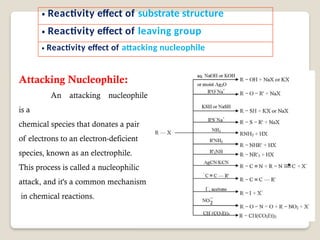
Attacking Nucleophile:
An attacking nucleophile
is a
chemical species that donates a pair
of electrons to an electron-deficient
species, known as an electrophile.
This process is called a nucleophilic
attack, and it's a common mechanism
in chemical reactions.
• Reactivity effect of substrate structure
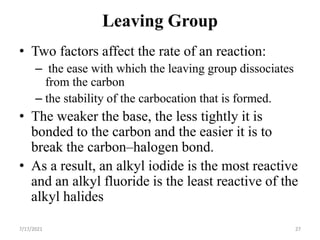
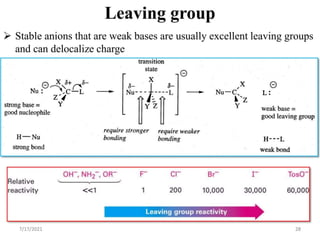
• Reactivity effect of leaving group
• Reactivity effect of attacking nucleophile
Oxygen and Sulphur-nucleophiles
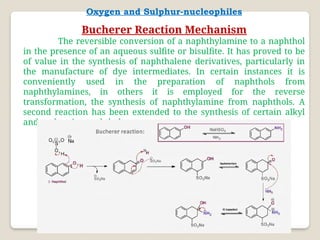
Bucherer Reaction Mechanism
The reversible conversion of a naphthylamine to a naphthol
in the presence of an aqueous sulfite or bisulfite. It has proved to be
of value in the synthesis of naphthalene derivatives, particularly in
the manufacture of dye intermediates. In certain instances it is
conveniently used in the preparation of naphthols from
naphthylamines, in others it is employed for the reverse
transformation, the synthesis of naphthylamine from naphthols. A
second reaction has been extended to the synthesis of certain alkyl
and aryl aminonaphthalenes.
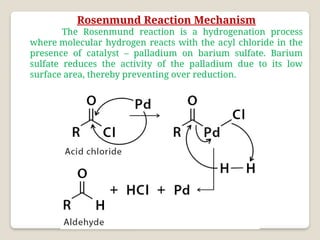
Rosenmund Reaction Mechanism
The Rosenmund reaction is a hydrogenation process
where molecular hydrogen reacts with the acyl chloride in the
presence of catalyst – palladium on barium sulfate. Barium
sulfate reduces the activity of the palladium due to its low
surface area, thereby preventing over reduction.
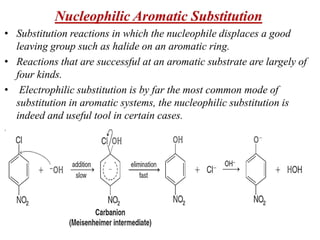
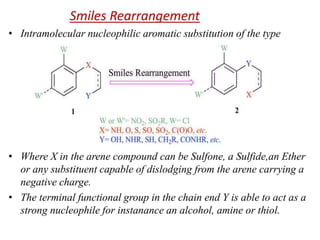
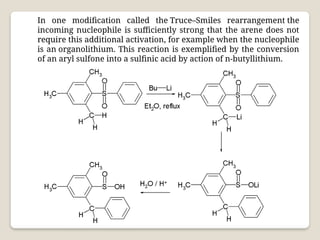
In one modification called the Truce–Smiles rearrangement the
incoming nucleophile is sufficiently strong that the arene does not
require this additional activation, for example when the nucleophile
is an organolithium. This reaction is exemplified by the conversion
of an aryl sulfone into a sulfinic acid by action of n-butyllithium.
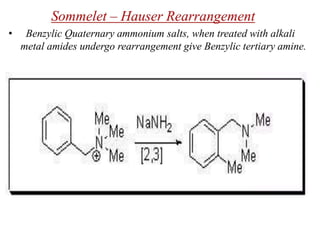
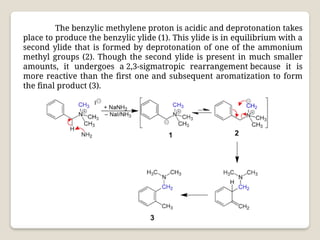
The benzylic methylene proton is acidic and deprotonation takes
place to produce the benzylic ylide (1). This ylide is in equilibrium with a
second ylide that is formed by deprotonation of one of the ammonium
methyl groups (2). Though the second ylide is present in much smaller
amounts, it undergoes a 2,3-sigmatropic rearrangement because it is
more reactive than the first one and subsequent aromatization to form
the final product (3).
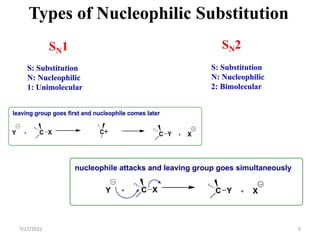
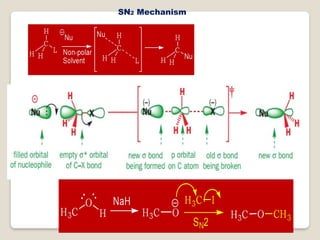
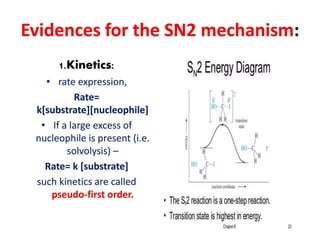
SN2 Mechanism
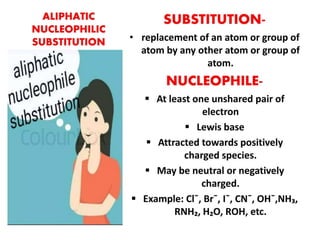
ALIPHATIC NUCLEOPHILIC
SUBSTITUTION REACTION
MECHANISM
K.SURESHKUMAR_PG_Unit_III_Aro.Nu.&Ali.Nu.Sub_Final.pptx

K.SURESHKUMAR_PG_Unit_III_Aro.Nu.&Ali.Nu.Sub_Final.pptx

  • 1.
    VIVEKANANDHA ARTS ANDSCIENCE COLLEGE FOR WOMEN, SANKAGIRI. Mr.K.SURESHKUMAR.,M.Sc.,M.Phil.,B.Ed.,PGDCA.,(Ph.D), Assistant Professor in Chemistry 9788584447 ORGANIC REACTION MECHANISM UNIT-III: Aromatic and Aliphatic Nucleophilic Substitution
  • 4.
    Attacking Nucleophile: An attackingnucleophile is a chemical species that donates a pair of electrons to an electron-deficient species, known as an electrophile. This process is called a nucleophilic attack, and it's a common mechanism in chemical reactions. • Reactivity effect of substrate structure • Reactivity effect of leaving group • Reactivity effect of attacking nucleophile
  • 26.
    Oxygen and Sulphur-nucleophiles BuchererReaction Mechanism The reversible conversion of a naphthylamine to a naphthol in the presence of an aqueous sulfite or bisulfite. It has proved to be of value in the synthesis of naphthalene derivatives, particularly in the manufacture of dye intermediates. In certain instances it is conveniently used in the preparation of naphthols from naphthylamines, in others it is employed for the reverse transformation, the synthesis of naphthylamine from naphthols. A second reaction has been extended to the synthesis of certain alkyl and aryl aminonaphthalenes.
  • 27.
    Rosenmund Reaction Mechanism TheRosenmund reaction is a hydrogenation process where molecular hydrogen reacts with the acyl chloride in the presence of catalyst – palladium on barium sulfate. Barium sulfate reduces the activity of the palladium due to its low surface area, thereby preventing over reduction.
  • 31.
    In one modificationcalled the Truce–Smiles rearrangement the incoming nucleophile is sufficiently strong that the arene does not require this additional activation, for example when the nucleophile is an organolithium. This reaction is exemplified by the conversion of an aryl sulfone into a sulfinic acid by action of n-butyllithium.
  • 33.
    The benzylic methyleneproton is acidic and deprotonation takes place to produce the benzylic ylide (1). This ylide is in equilibrium with a second ylide that is formed by deprotonation of one of the ammonium methyl groups (2). Though the second ylide is present in much smaller amounts, it undergoes a 2,3-sigmatropic rearrangement because it is more reactive than the first one and subsequent aromatization to form the final product (3).
  • 34.
  • 35.