


NAME : NUR FARRA NAJWA BT ABDUL AZIM
MATRIC NO : 082015100035
 Students should be able to know the applied
aspect of internal capsule
 Cause
 Treatments
 Symptoms
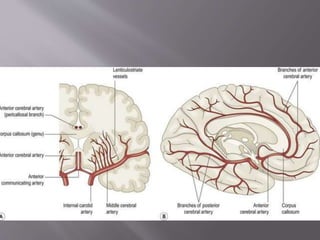
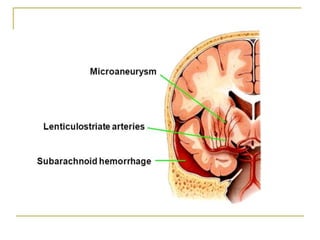
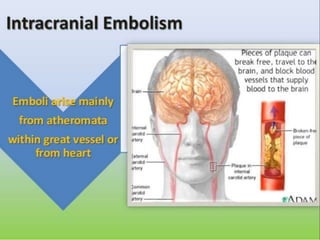
 The lenticulostriate arteries supply a
substantial amount of the internal capsule.
 These small vessels are vulnerable to
narrowing in the setting of
 Chronic hypertension
 And can result in
 Small, punctate infarctions or intraparenchymal
haemorrhage due to vessel rupture.
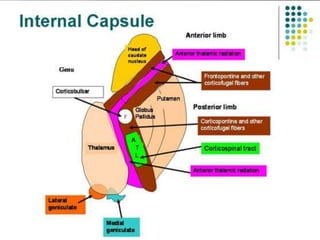
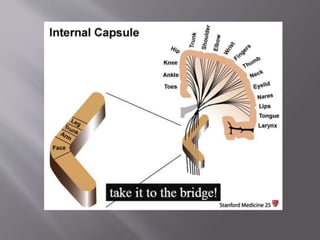
 Lesions of the genu of the internal capsule affect
fibers of the corticobulbar tract.
 The primary motor cortex sends its axons through
the posterior limb of the internal capsule.
 Lesions, therefore, result in a
contralateral hemiparesis or hemiplegia.
 While symptoms of weakness due to an isolated
lesion of the posterior limb can initially be severe,
recovery of motor function is sometimes possible
due to spinal projections of premotor cortical
regions that are contained more rostrally in the
internal capsule.
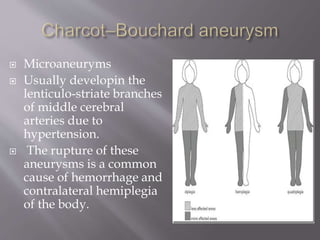
 Microaneuryms
 Usually developin the
lenticulo-striate branches
of middle cerebral
arteries due to
hypertension.
 The rupture of these
aneurysms is a common
cause of hemorrhage and
contralateral hemiplegia
of the body.
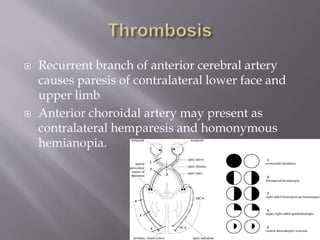
 Recurrent branch of anterior cerebral artery
causes paresis of contralateral lower face and
upper limb
 Anterior choroidal artery may present as
contralateral hemparesis and homonymous
hemianopia.
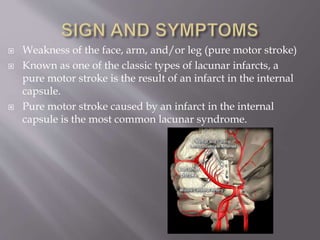
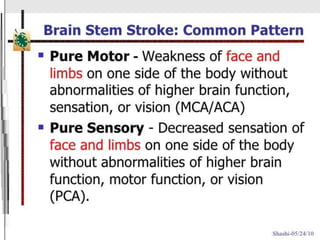
 Weakness of the face, arm, and/or leg (pure motor stroke)
 Known as one of the classic types of lacunar infarcts, a
pure motor stroke is the result of an infarct in the internal
capsule.
 Pure motor stroke caused by an infarct in the internal
capsule is the most common lacunar syndrome.
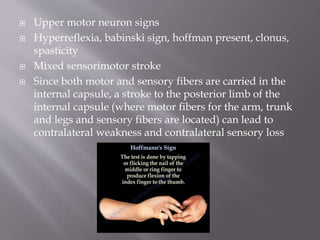
 Upper motor neuron signs
 Hyperreflexia, babinski sign, hoffman present, clonus,
spasticity
 Mixed sensorimotor stroke
 Since both motor and sensory fibers are carried in the
internal capsule, a stroke to the posterior limb of the
internal capsule (where motor fibers for the arm, trunk
and legs and sensory fibers are located) can lead to
contralateral weakness and contralateral sensory loss
 BD Chaurasia’s, HUMAN ANATOMY,
regional and applied dissection and clinical,
volume 3, head and neck, brain
 http://stanfordmedicine25.stanford.edu/the25
/ics.html
Applied aspect of internal capsule

Applied aspect of internal capsule

  • 1.
    NAME : NURFARRA NAJWA BT ABDUL AZIM MATRIC NO : 082015100035
  • 2.
     Students shouldbe able to know the applied aspect of internal capsule  Cause  Treatments  Symptoms
  • 3.
     The lenticulostriatearteries supply a substantial amount of the internal capsule.  These small vessels are vulnerable to narrowing in the setting of  Chronic hypertension  And can result in  Small, punctate infarctions or intraparenchymal haemorrhage due to vessel rupture.
  • 5.
     Lesions ofthe genu of the internal capsule affect fibers of the corticobulbar tract.  The primary motor cortex sends its axons through the posterior limb of the internal capsule.  Lesions, therefore, result in a contralateral hemiparesis or hemiplegia.  While symptoms of weakness due to an isolated lesion of the posterior limb can initially be severe, recovery of motor function is sometimes possible due to spinal projections of premotor cortical regions that are contained more rostrally in the internal capsule.
  • 8.
     Microaneuryms  Usuallydevelopin the lenticulo-striate branches of middle cerebral arteries due to hypertension.  The rupture of these aneurysms is a common cause of hemorrhage and contralateral hemiplegia of the body.
  • 10.
     Recurrent branchof anterior cerebral artery causes paresis of contralateral lower face and upper limb  Anterior choroidal artery may present as contralateral hemparesis and homonymous hemianopia.
  • 12.
     Weakness ofthe face, arm, and/or leg (pure motor stroke)  Known as one of the classic types of lacunar infarcts, a pure motor stroke is the result of an infarct in the internal capsule.  Pure motor stroke caused by an infarct in the internal capsule is the most common lacunar syndrome.
  • 13.
     Upper motorneuron signs  Hyperreflexia, babinski sign, hoffman present, clonus, spasticity  Mixed sensorimotor stroke  Since both motor and sensory fibers are carried in the internal capsule, a stroke to the posterior limb of the internal capsule (where motor fibers for the arm, trunk and legs and sensory fibers are located) can lead to contralateral weakness and contralateral sensory loss
  • 16.
     BD Chaurasia’s,HUMAN ANATOMY, regional and applied dissection and clinical, volume 3, head and neck, brain  http://stanfordmedicine25.stanford.edu/the25 /ics.html