INTERNAL CAPSULE
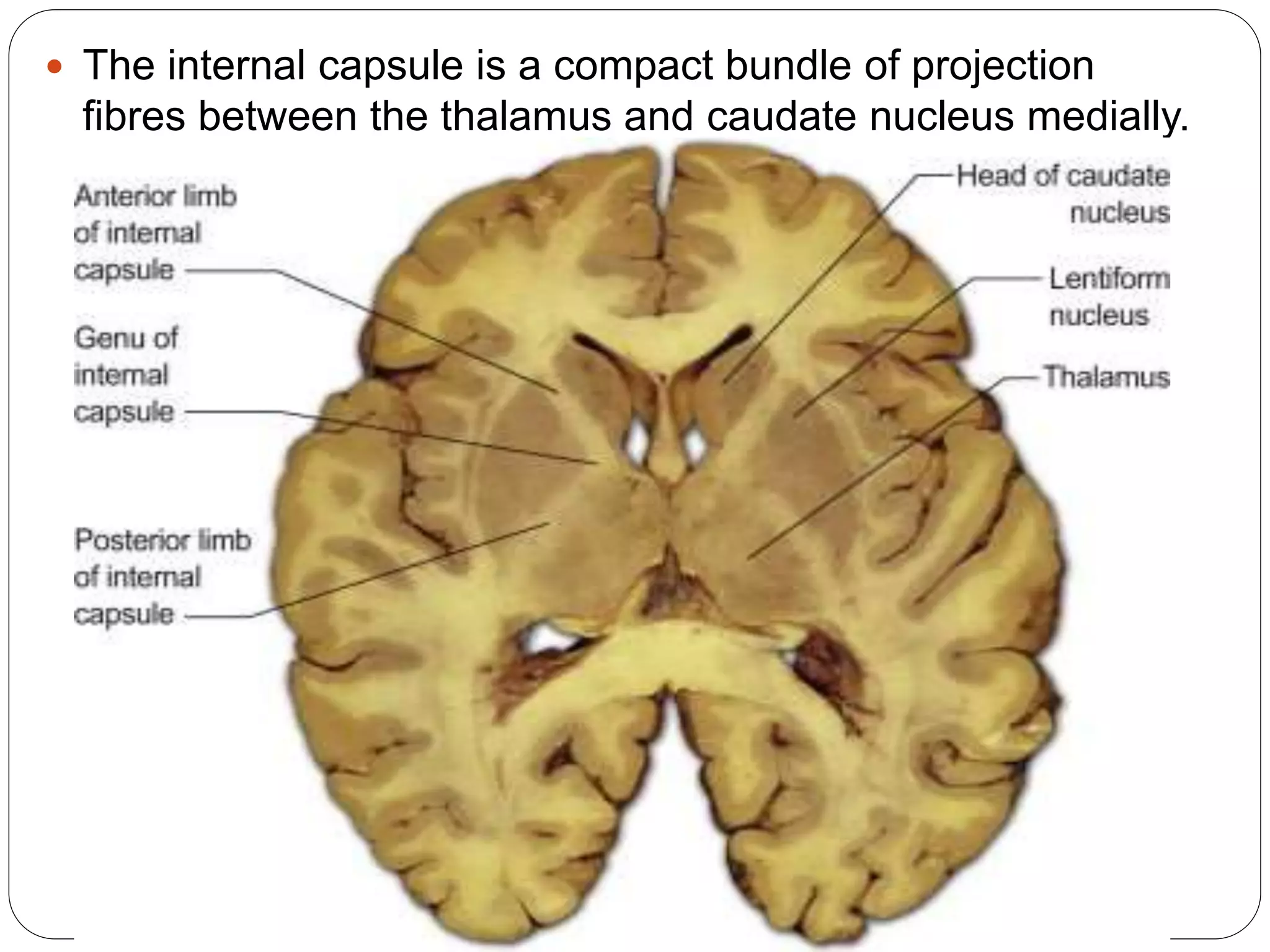
 The internal capsule is a compact bundle of projection
fibres between the thalamus and caudate nucleus medially.
and the lentiform nucleus laterally.)
Relations
Medially:
•Head of
caudate
nucleus
• Thalamus
Laterally:
Lentiform
nucleus (globus
pallidus &
putamen)
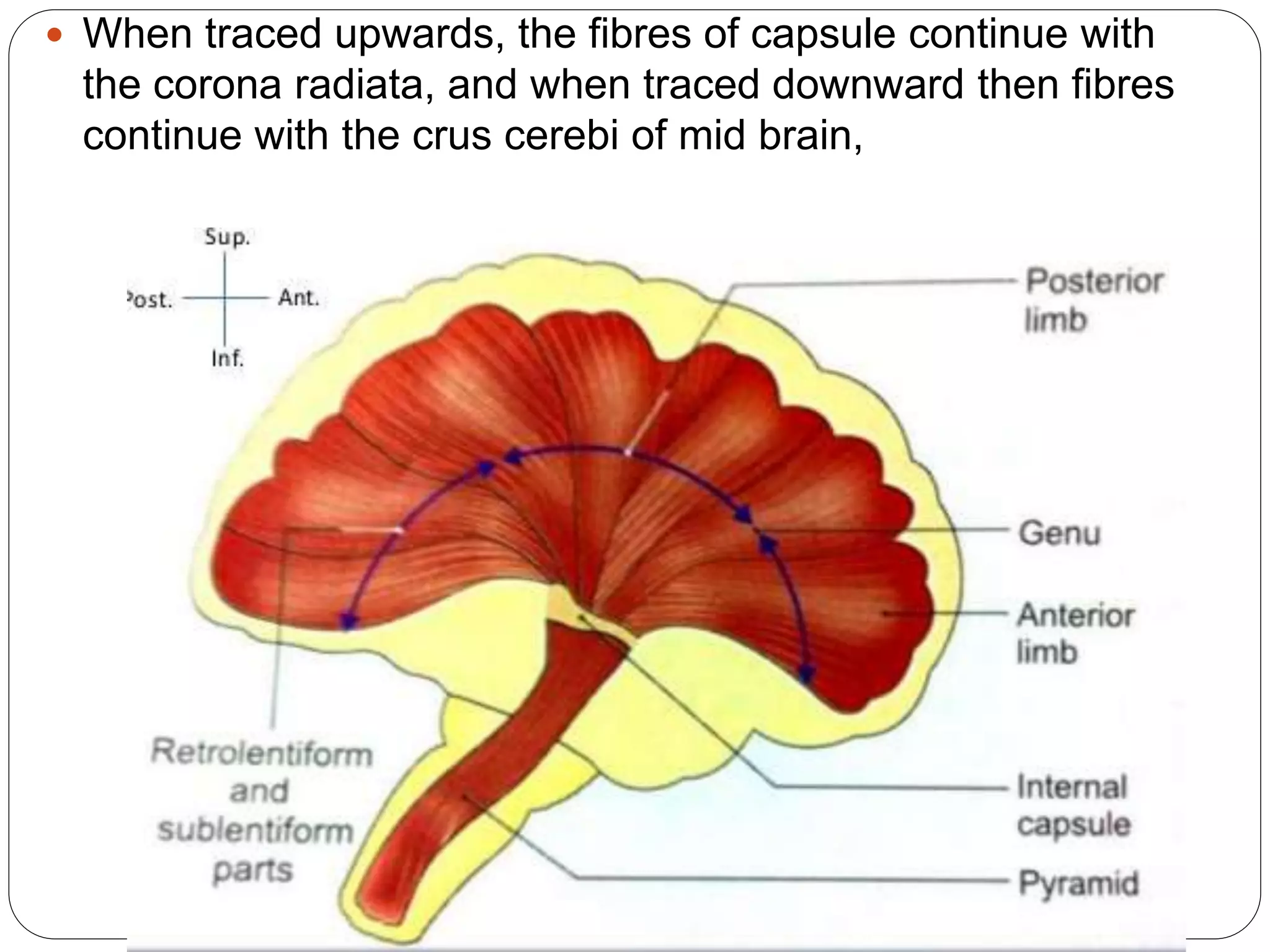
 When traced upwards, the fibres of capsule continue with
the corona radiata, and when traced downward then fibres
continue with the crus cerebi of mid brain,
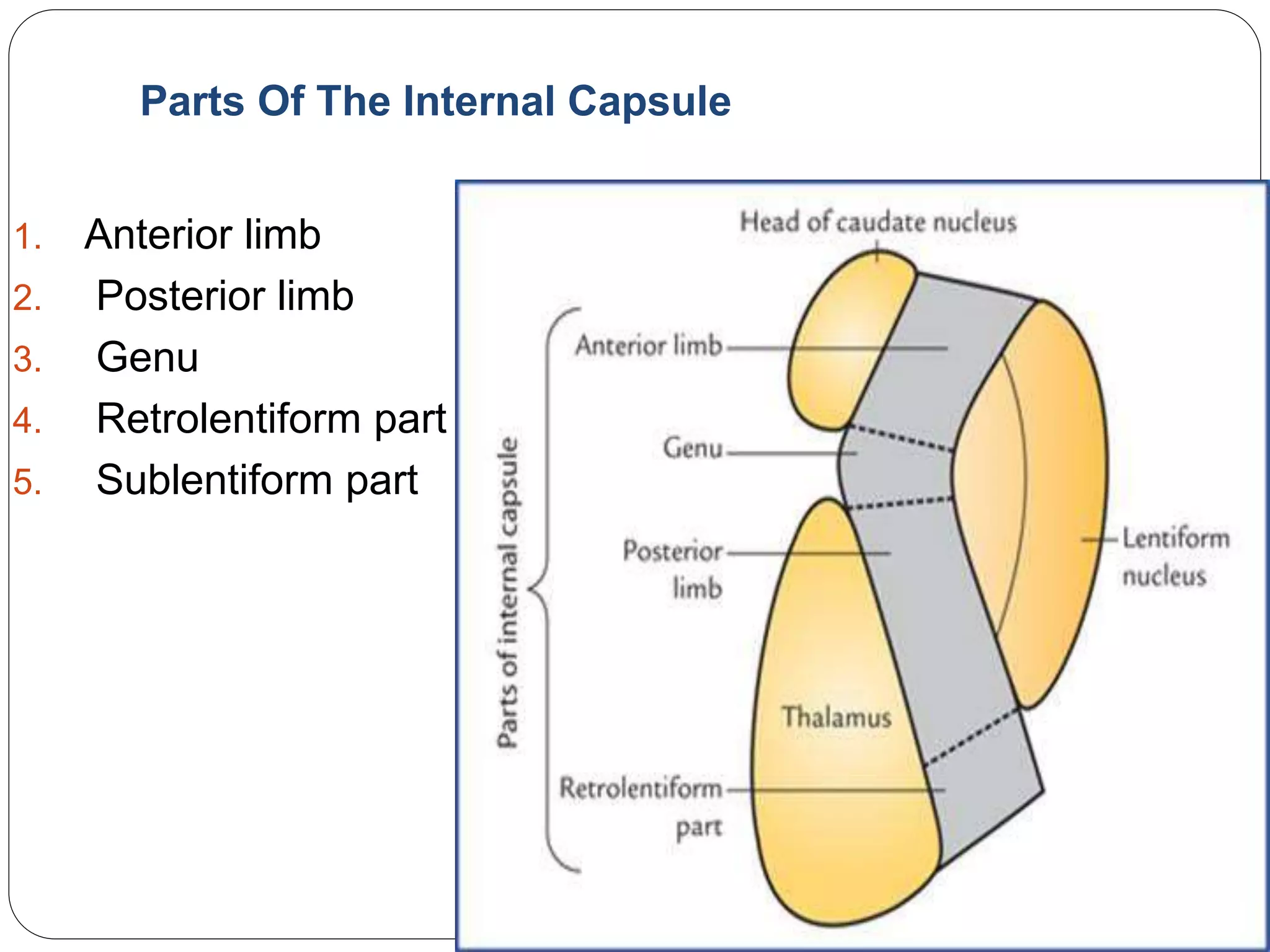
Parts Of The Internal Capsule
1. Anterior limb
2. Posterior limb
3. Genu
4. Retrolentiform part
5. Sublentiform part
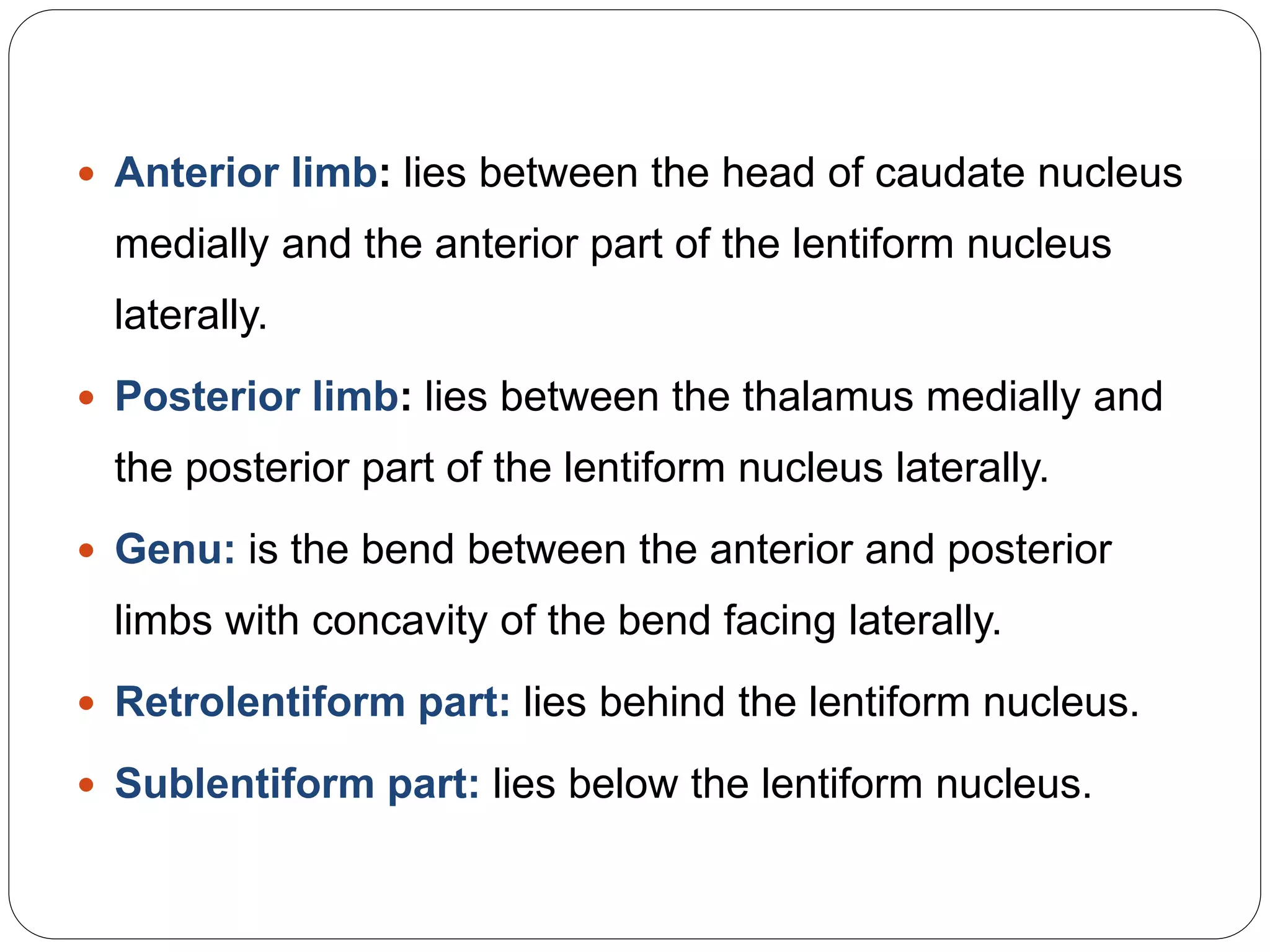
 Anterior limb: lies between the head of caudate nucleus
medially and the anterior part of the lentiform nucleus
laterally.
 Posterior limb: lies between the thalamus medially and
the posterior part of the lentiform nucleus laterally.
 Genu: is the bend between the anterior and posterior
limbs with concavity of the bend facing laterally.
 Retrolentiform part: lies behind the lentiform nucleus.
 Sublentiform part: lies below the lentiform nucleus.
Fibres Of The Internal Capsule
Motor Fibres
Corticopontine
Fibres
Pyramidal Fibres
Extrapyramidal
Fibres
Sensory Fibres
Thalamocortical
Fibres
REPRESENTE
D BY
SYMBOLS
Sensory Motor
CEREBRAL CORTEX
THALAMUS
BRAINSTEM:
•MidBrain
•Pons
•Medulla
Oblogata
•SPINAL CORD
Named according to the
lobe from which they
arise FROM FRONTAL,
PARIETAL, OCCIPITAL
AND TEMPORAL
Thalamocortical
1. Frontopontine- AL, G, PL
2. Parietopontine- RetroLF
3. Occipitopontine- RetroLF
4. Temporopontine – Sub LF
Corticonuclear - G
Corticospinal - PL
Corticorubral- PL
Corticostriate - PL
Corticonigral - PL
Anterior thalamic
radiation
Posterior thalamic
radiation
Superior thalamic
radiation
Inferior thalamic
radiation
SENSORY FIBRES - Thalamocortical Fibres
 According to the direction of these fibres the thalamic radiation
is divided into following subgroups:
 Anterior Thalamic Radiation: the fibres of anterior thalamic
radiation are directed anteriorly and connects thalamus to
frontal lobe cortex.
 Superior Thalamic Radiation : is directed superiorly. Connect
frontal and parietal lobes.
 Posterior Thalamic Radiation : is directed posteriorly.
Connect occipital lobe forming optic radiation,
 Inferior Thalamic Radiation : connects medial geniculate body
with primary auditory cortex. (auditory radiation)
Arterial Supply of Internal Capsule
 Medial and lateral striate branches of the middle cerebral artery: One of the
lateral striate branches is larger and more frequently ruptured. It is often
termed Charcot's artery of cerebral haemorrhage. It supplies the posterior limb of
the internal capsule.
 Striate branches of anterior cerebral artery: One of these branches is larger
and takes a recurrent course. It is termed recurrent artery of Huebner. It arises just
proximal to the anterior communicating artery & supply the genu and anterior limb
of the internal capsule.
 Central branches of the anterior choroidal artery: supply the sublentiform part.
 Some direct branches from the internal carotid artery: supply the genu.
 Central branches of the posterior cerebral artery: supply the retrolentiform and
sublentiform parts of the internal capsule.
 Central branches of the posterior communicating artery.
Applied
 Damage to the internal capsule, due to haemorrhage or
infarction leads to loss of sensations and spastic paralysis
of the opposite half of the body (contralateral
hemiplegia).
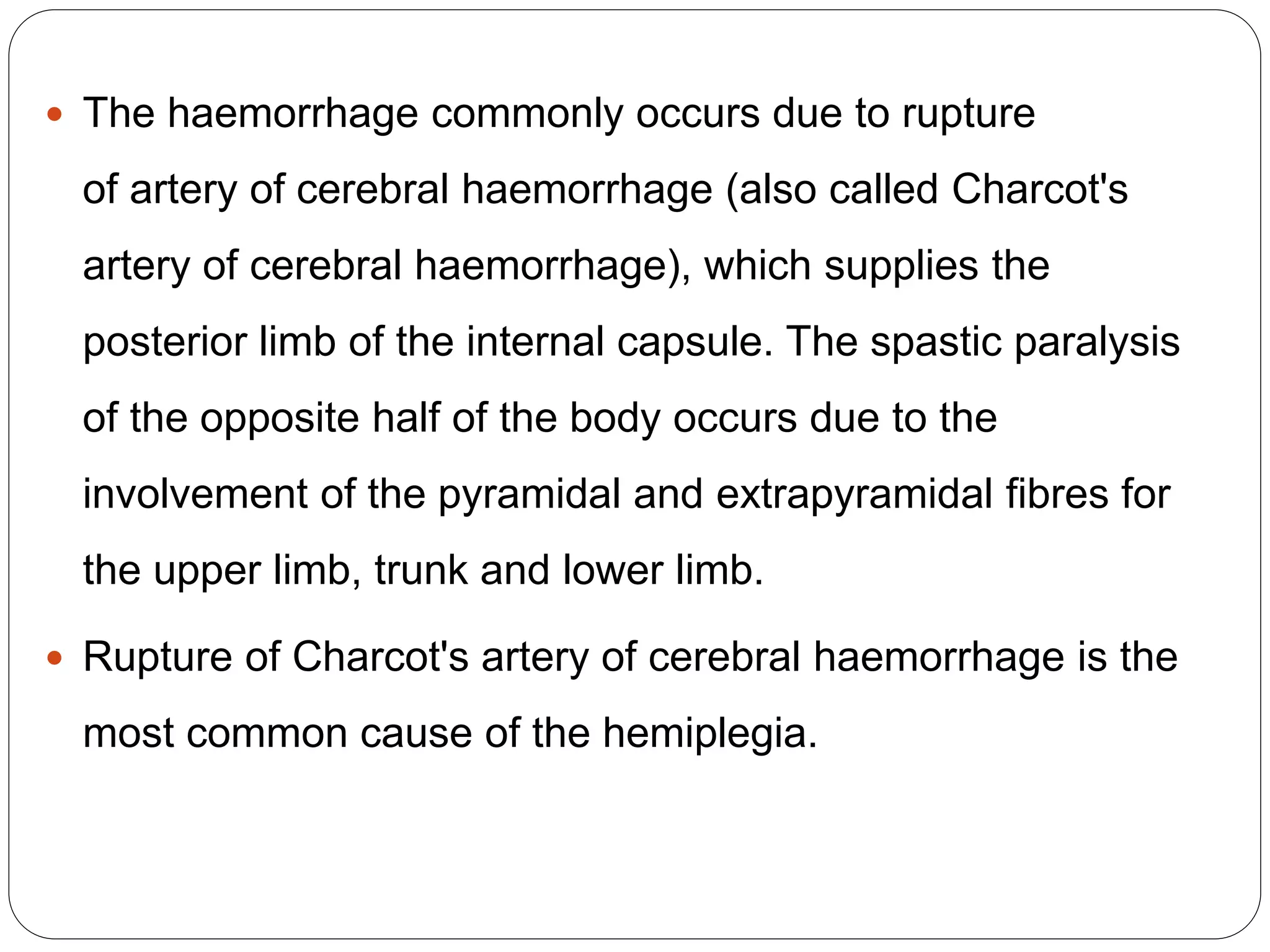
 The haemorrhage commonly occurs due to rupture
of artery of cerebral haemorrhage (also called Charcot's
artery of cerebral haemorrhage), which supplies the
posterior limb of the internal capsule. The spastic paralysis
of the opposite half of the body occurs due to the
involvement of the pyramidal and extrapyramidal fibres for
the upper limb, trunk and lower limb.
 Rupture of Charcot's artery of cerebral haemorrhage is the
most common cause of the hemiplegia.
 Involvement of recurrent artery of Huebner (due to
thrombosis/rupture) results in paralysis of the face and
upper limb on the opposite side (because of the
involvement of corticonuclear fibres in genu and adjacent
pyramidal fibres in the posterior limb for the upper limb).
 Lesions of the posterior one-third of the posterior limb,
and sublentiform and retrolentiform parts of the internal
capsule lead to visual (hemianopia) and auditory (loss of
hearing) defects. These lesions usually occur due to
thrombosis of the anterior choroidal artery, a branch of
internal carotid artery.

Internal capsule

  • 1.
  • 2.
     The internalcapsule is a compact bundle of projection fibres between the thalamus and caudate nucleus medially. and the lentiform nucleus laterally.)
  • 4.
  • 5.
     When tracedupwards, the fibres of capsule continue with the corona radiata, and when traced downward then fibres continue with the crus cerebi of mid brain,
  • 6.
    Parts Of TheInternal Capsule 1. Anterior limb 2. Posterior limb 3. Genu 4. Retrolentiform part 5. Sublentiform part
  • 7.
     Anterior limb:lies between the head of caudate nucleus medially and the anterior part of the lentiform nucleus laterally.  Posterior limb: lies between the thalamus medially and the posterior part of the lentiform nucleus laterally.  Genu: is the bend between the anterior and posterior limbs with concavity of the bend facing laterally.  Retrolentiform part: lies behind the lentiform nucleus.  Sublentiform part: lies below the lentiform nucleus.
  • 8.
    Fibres Of TheInternal Capsule Motor Fibres Corticopontine Fibres Pyramidal Fibres Extrapyramidal Fibres Sensory Fibres Thalamocortical Fibres REPRESENTE D BY SYMBOLS
  • 9.
    Sensory Motor CEREBRAL CORTEX THALAMUS BRAINSTEM: •MidBrain •Pons •Medulla Oblogata •SPINALCORD Named according to the lobe from which they arise FROM FRONTAL, PARIETAL, OCCIPITAL AND TEMPORAL Thalamocortical 1. Frontopontine- AL, G, PL 2. Parietopontine- RetroLF 3. Occipitopontine- RetroLF 4. Temporopontine – Sub LF Corticonuclear - G Corticospinal - PL Corticorubral- PL Corticostriate - PL Corticonigral - PL Anterior thalamic radiation Posterior thalamic radiation Superior thalamic radiation Inferior thalamic radiation
  • 11.
    SENSORY FIBRES -Thalamocortical Fibres  According to the direction of these fibres the thalamic radiation is divided into following subgroups:  Anterior Thalamic Radiation: the fibres of anterior thalamic radiation are directed anteriorly and connects thalamus to frontal lobe cortex.  Superior Thalamic Radiation : is directed superiorly. Connect frontal and parietal lobes.  Posterior Thalamic Radiation : is directed posteriorly. Connect occipital lobe forming optic radiation,  Inferior Thalamic Radiation : connects medial geniculate body with primary auditory cortex. (auditory radiation)
  • 14.
    Arterial Supply ofInternal Capsule  Medial and lateral striate branches of the middle cerebral artery: One of the lateral striate branches is larger and more frequently ruptured. It is often termed Charcot's artery of cerebral haemorrhage. It supplies the posterior limb of the internal capsule.  Striate branches of anterior cerebral artery: One of these branches is larger and takes a recurrent course. It is termed recurrent artery of Huebner. It arises just proximal to the anterior communicating artery & supply the genu and anterior limb of the internal capsule.  Central branches of the anterior choroidal artery: supply the sublentiform part.  Some direct branches from the internal carotid artery: supply the genu.  Central branches of the posterior cerebral artery: supply the retrolentiform and sublentiform parts of the internal capsule.  Central branches of the posterior communicating artery.
  • 15.
    Applied  Damage tothe internal capsule, due to haemorrhage or infarction leads to loss of sensations and spastic paralysis of the opposite half of the body (contralateral hemiplegia).
  • 16.
     The haemorrhagecommonly occurs due to rupture of artery of cerebral haemorrhage (also called Charcot's artery of cerebral haemorrhage), which supplies the posterior limb of the internal capsule. The spastic paralysis of the opposite half of the body occurs due to the involvement of the pyramidal and extrapyramidal fibres for the upper limb, trunk and lower limb.  Rupture of Charcot's artery of cerebral haemorrhage is the most common cause of the hemiplegia.
  • 17.
     Involvement ofrecurrent artery of Huebner (due to thrombosis/rupture) results in paralysis of the face and upper limb on the opposite side (because of the involvement of corticonuclear fibres in genu and adjacent pyramidal fibres in the posterior limb for the upper limb).  Lesions of the posterior one-third of the posterior limb, and sublentiform and retrolentiform parts of the internal capsule lead to visual (hemianopia) and auditory (loss of hearing) defects. These lesions usually occur due to thrombosis of the anterior choroidal artery, a branch of internal carotid artery.