Applications of GIS  in Logistics and Transportation Fuentes, Ryan Amiel Gumboc, Cyrus Ildefonso, Sorbi Genaleon Mercado, Michael Morales, George Michael
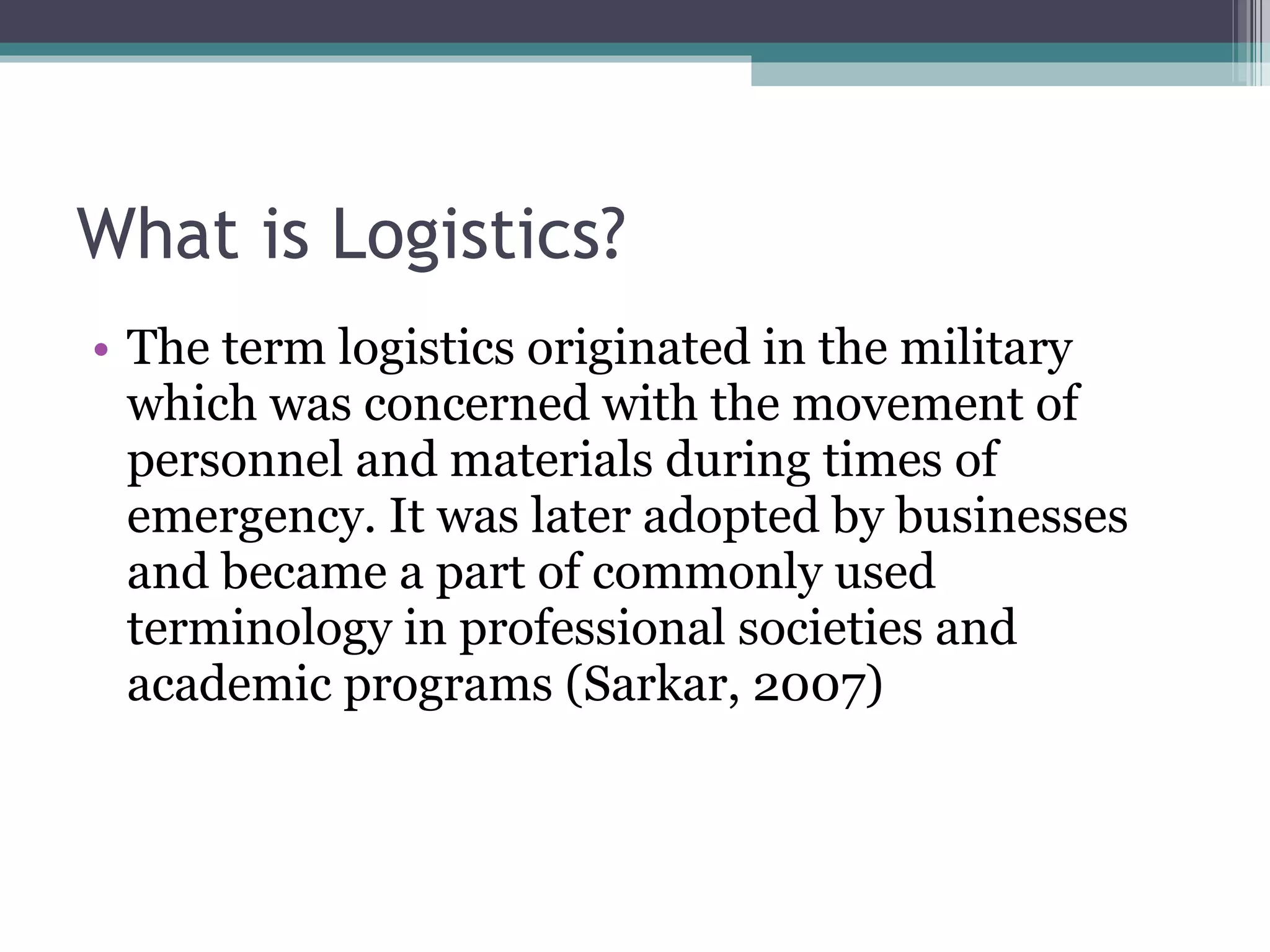
What is Logistics? The term logistics originated in the military which was concerned with the movement of personnel and materials during times of emergency. It was later adopted by businesses and became a part of commonly used terminology in professional societies and academic programs (Sarkar, 2007)
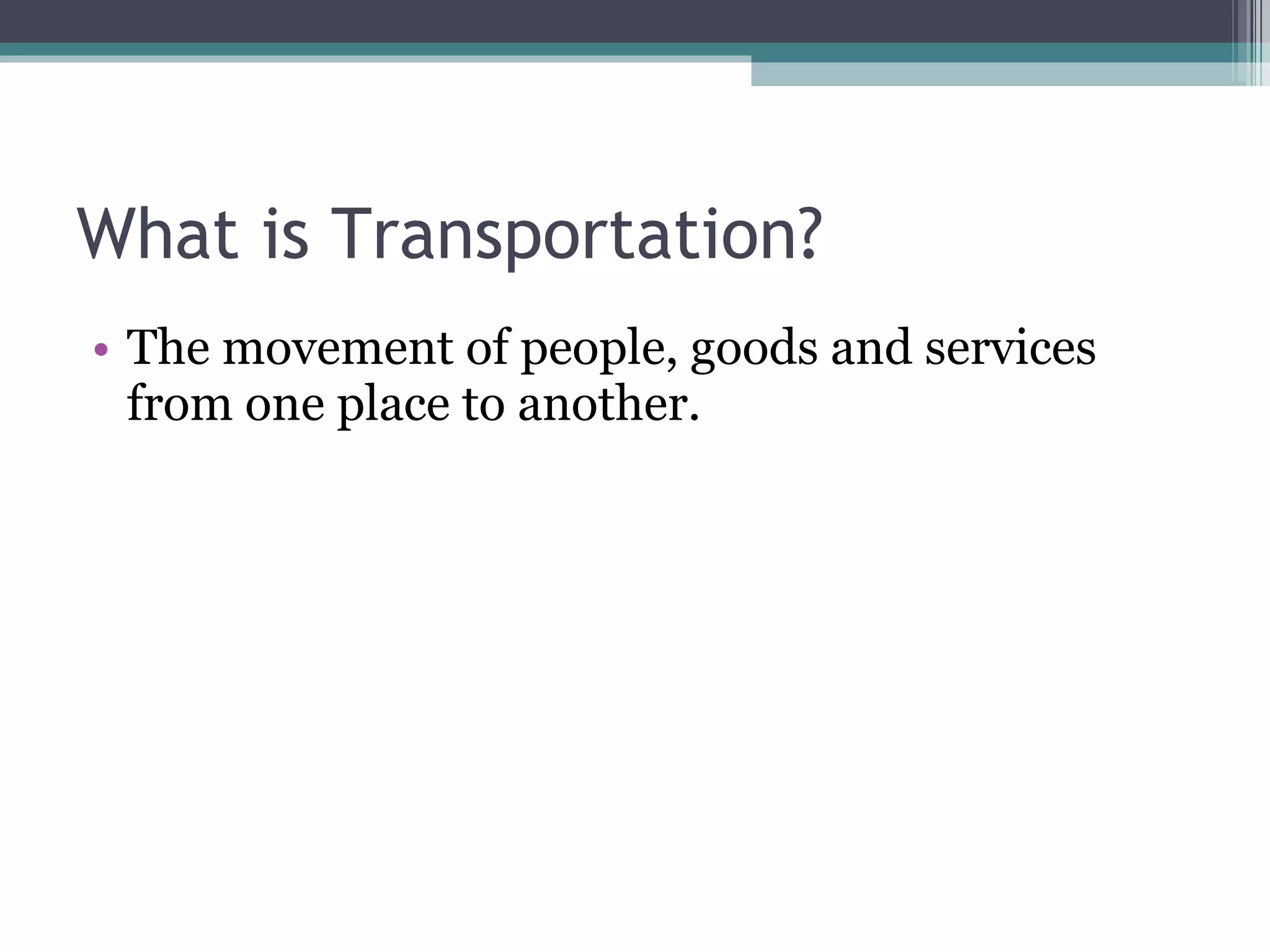
What is Transportation? The movement of people, goods and services from one place to another.
Getting Around: Transportation Today (http://www.princeton.edu)
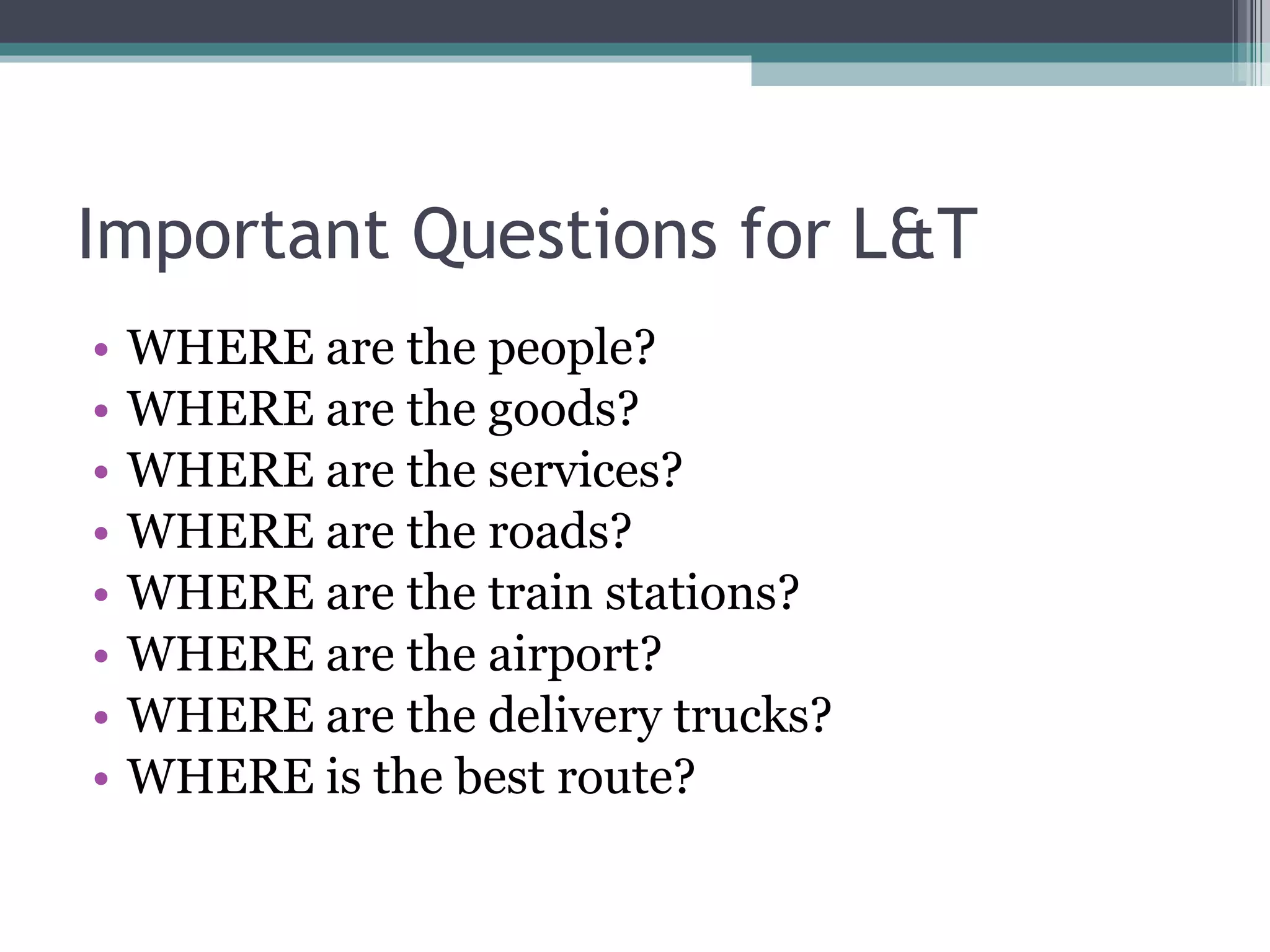
Important Questions for L&T WHERE are the people? WHERE are the goods? WHERE are the services? WHERE are the roads? WHERE are the train stations? WHERE are the airport? WHERE are the delivery trucks? WHERE is the best route?
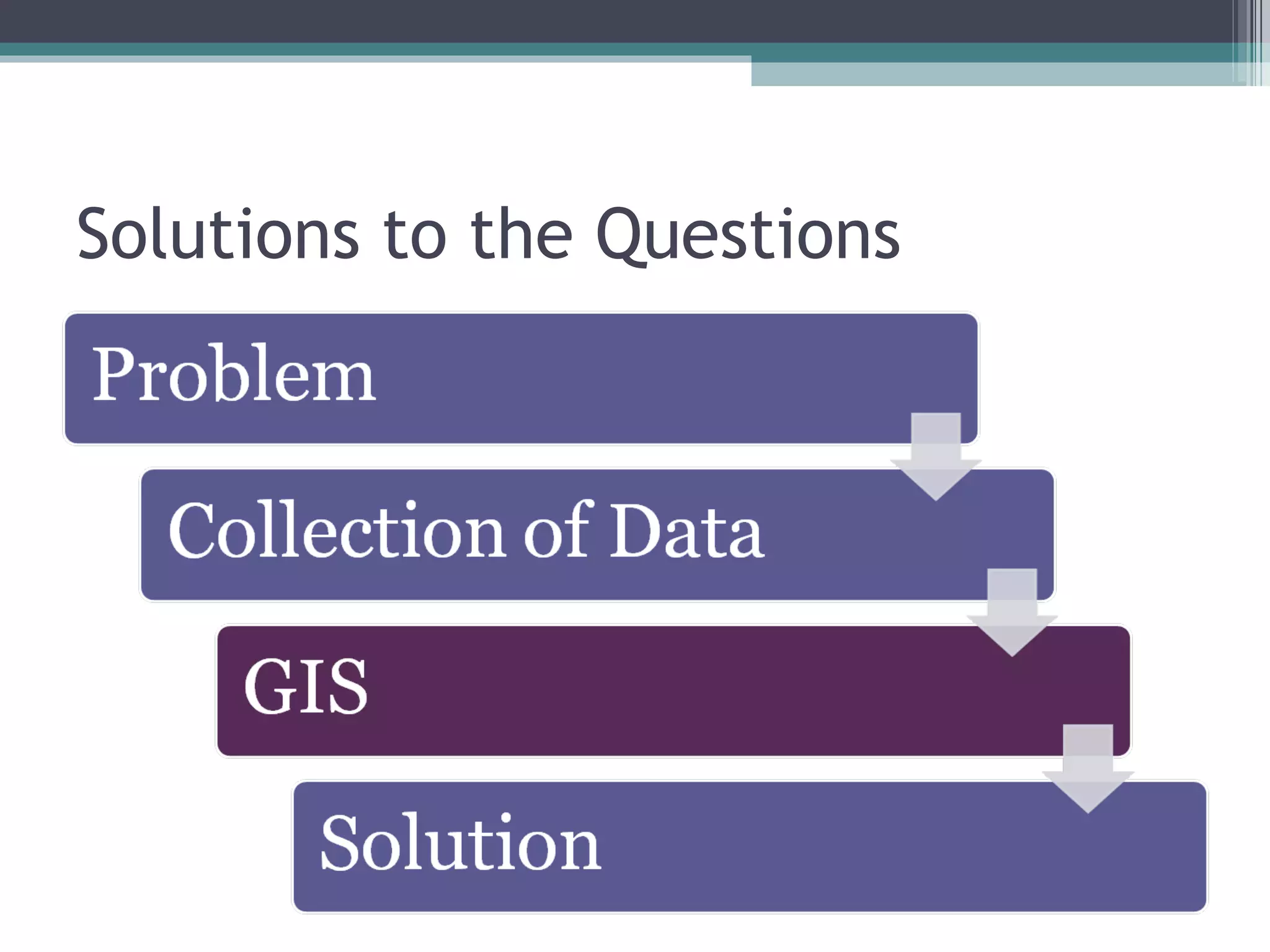
Solutions to the Questions
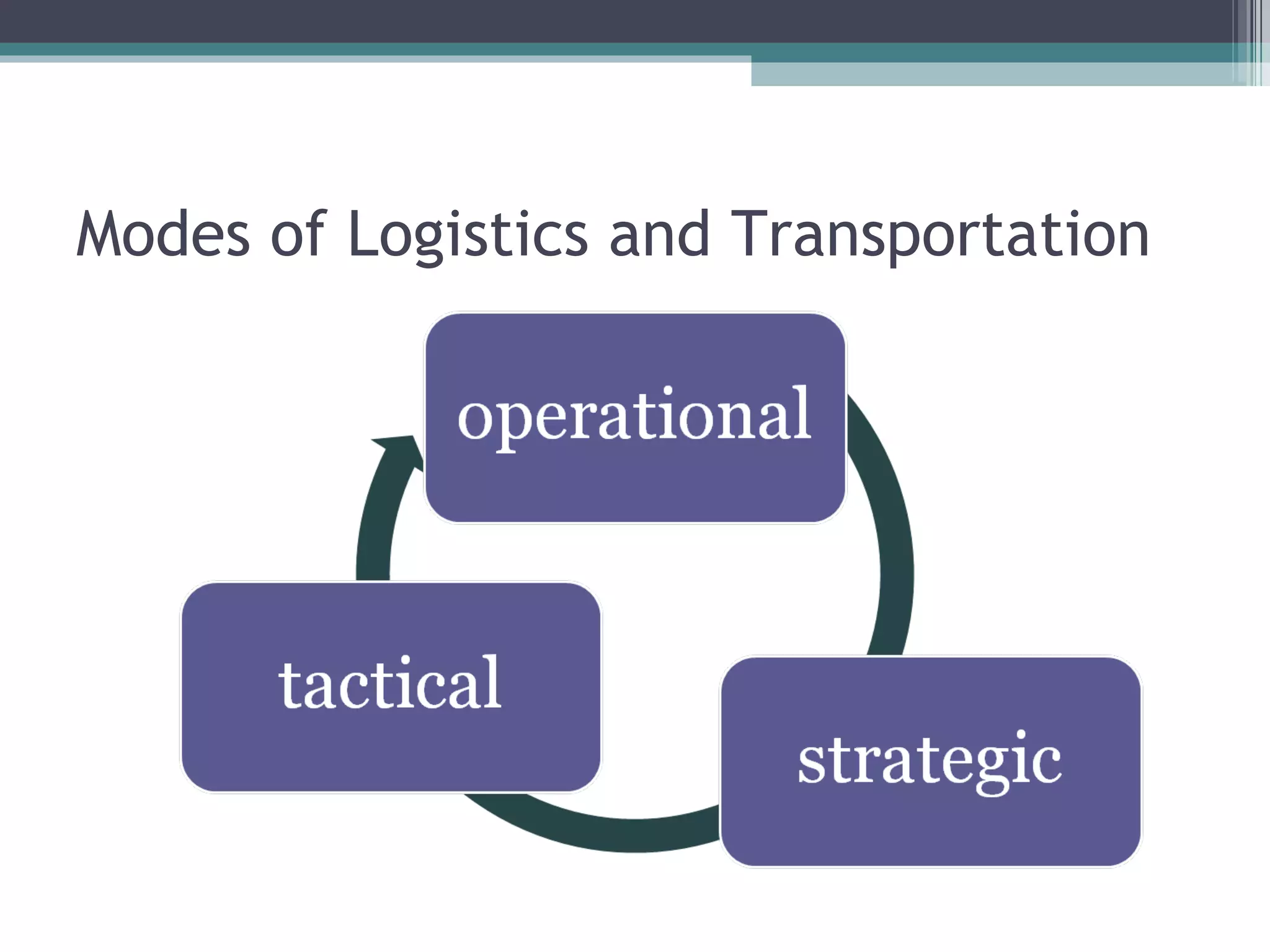
Modes of Logistics and Transportation
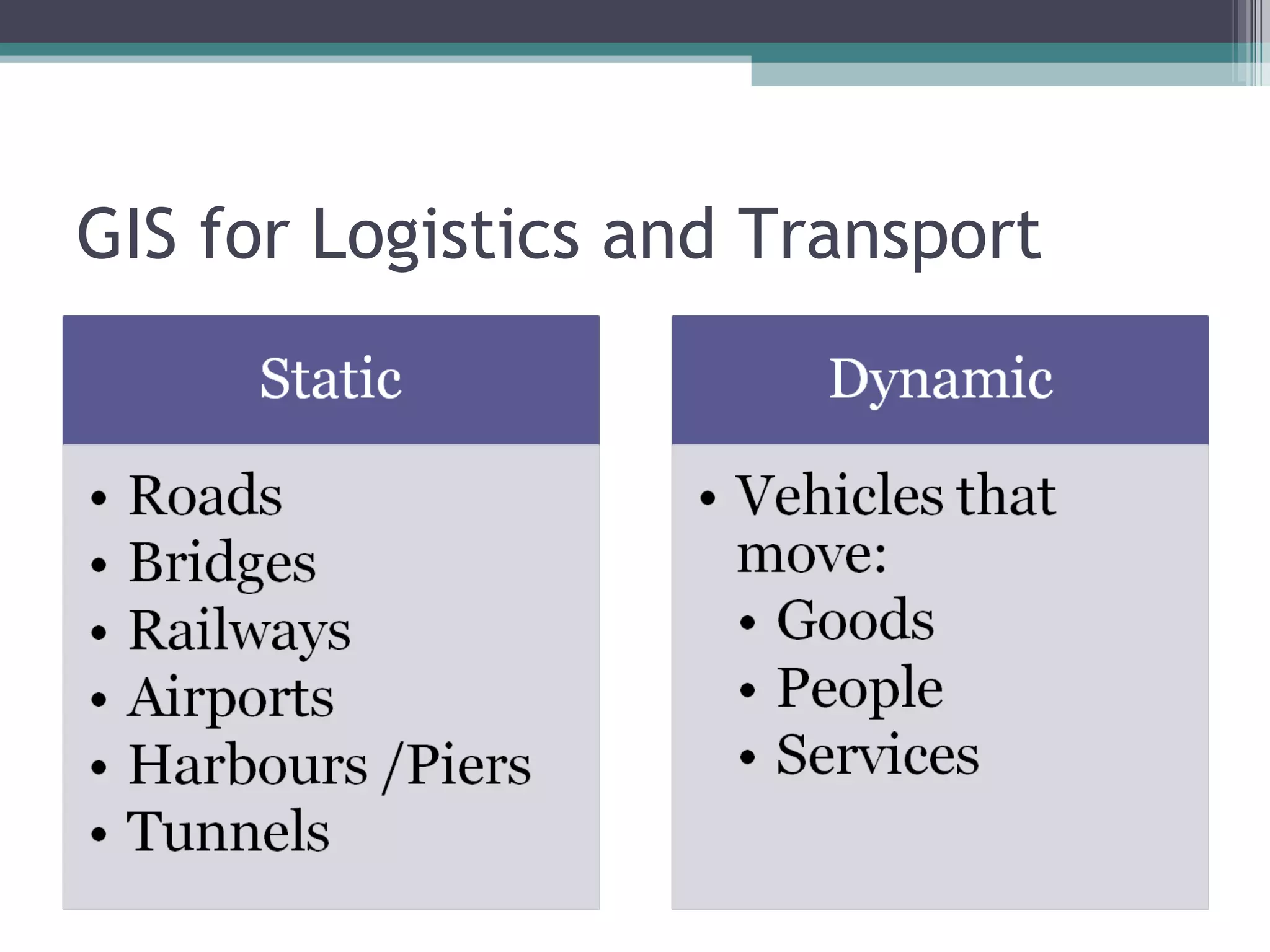
GIS for Logistics and Transport
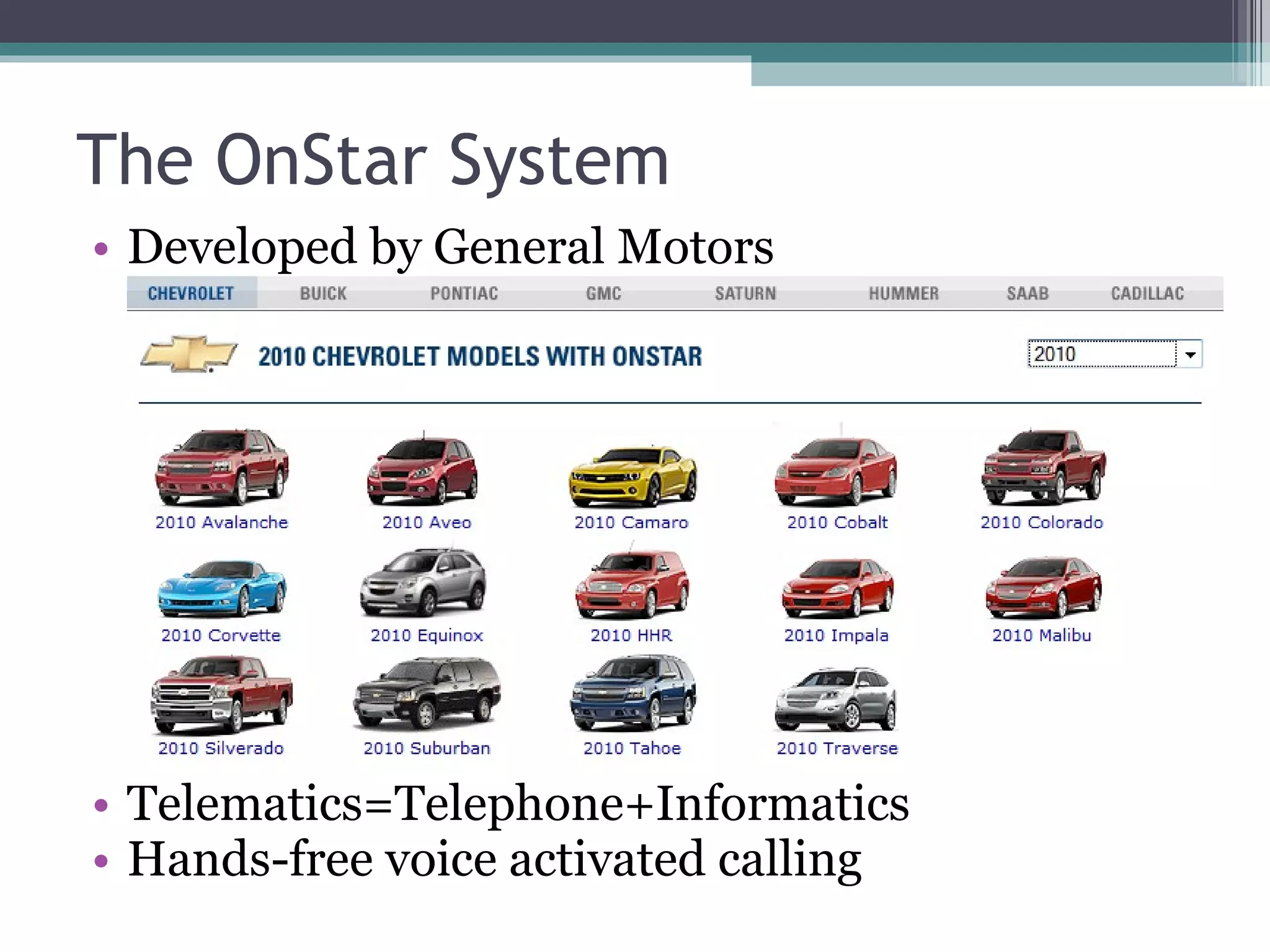
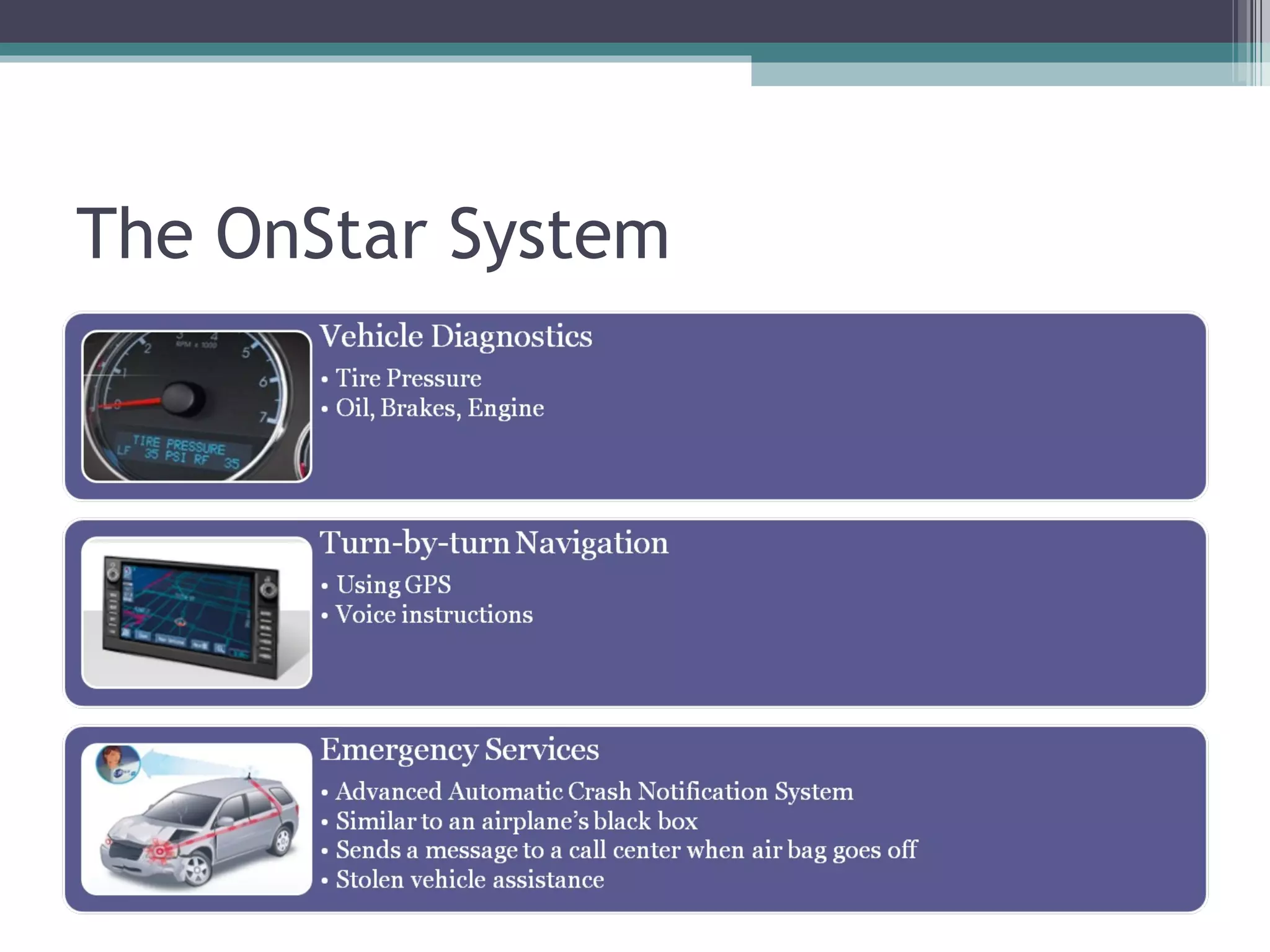
The OnStar System Developed by General Motors Telematics=Telephone+Informatics Hands-free voice activated calling
The OnStar System
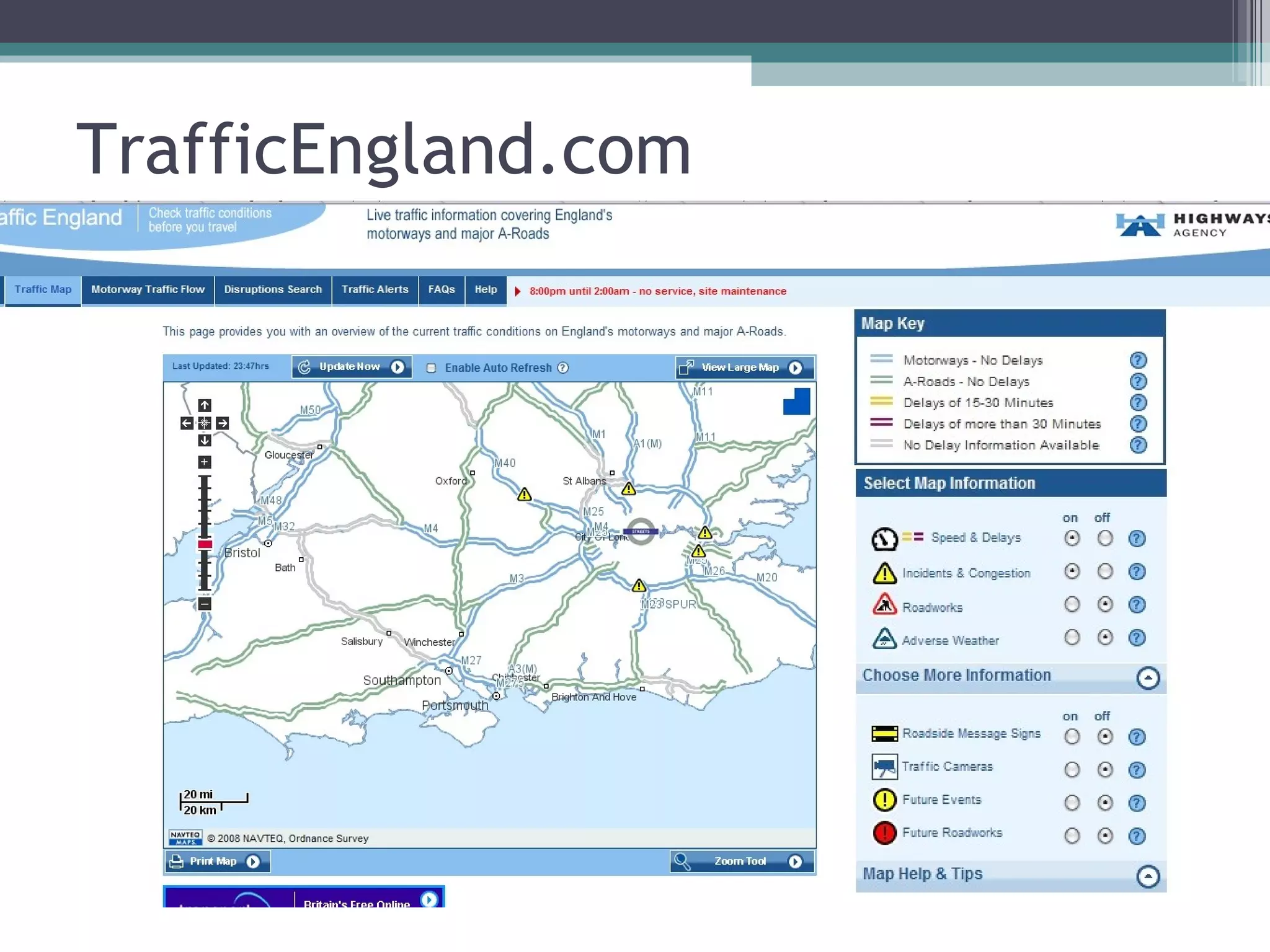
TrafficEngland.com
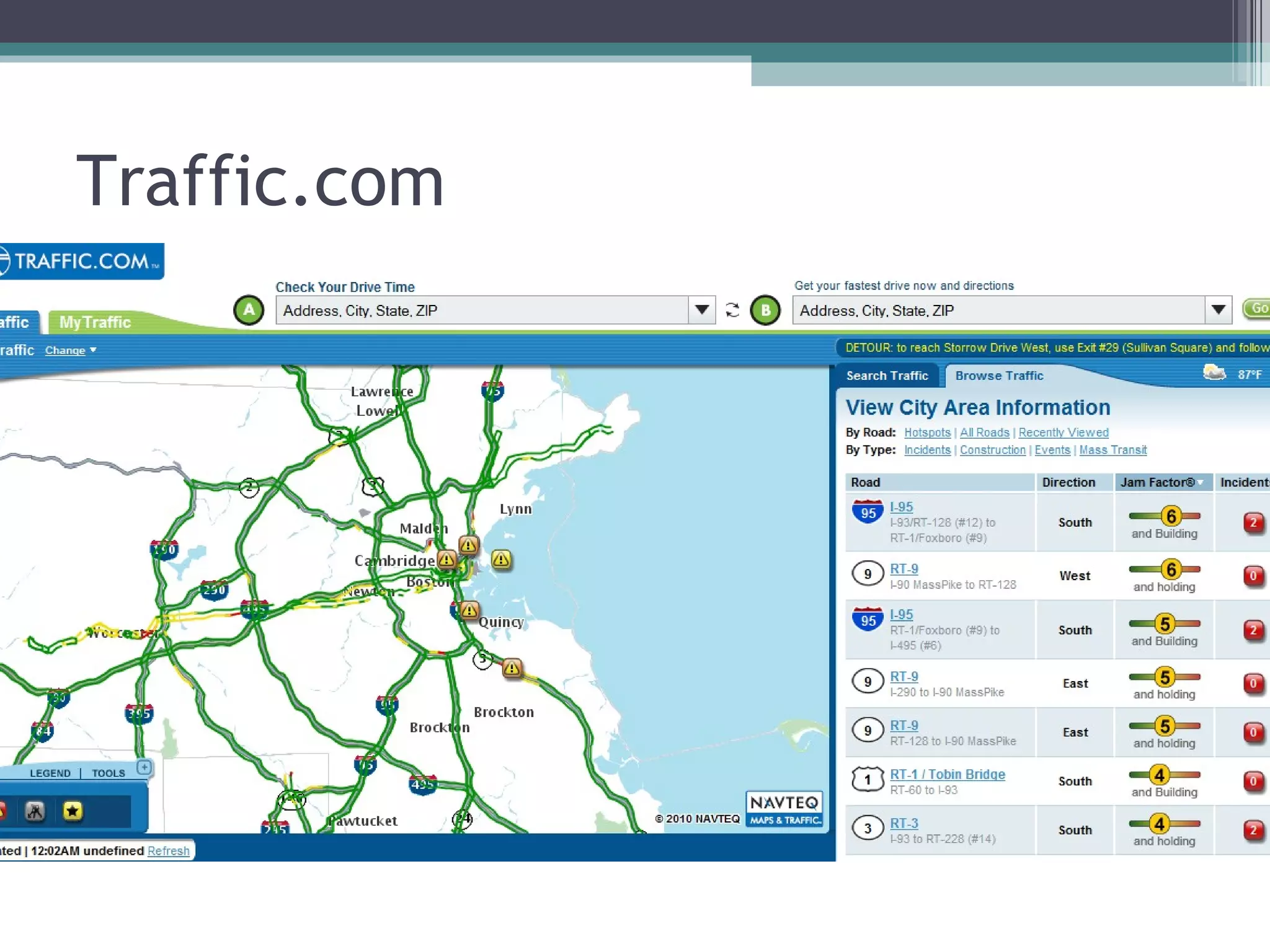
Traffic.com
Case Study Application: Planning for Emergency Evacuation
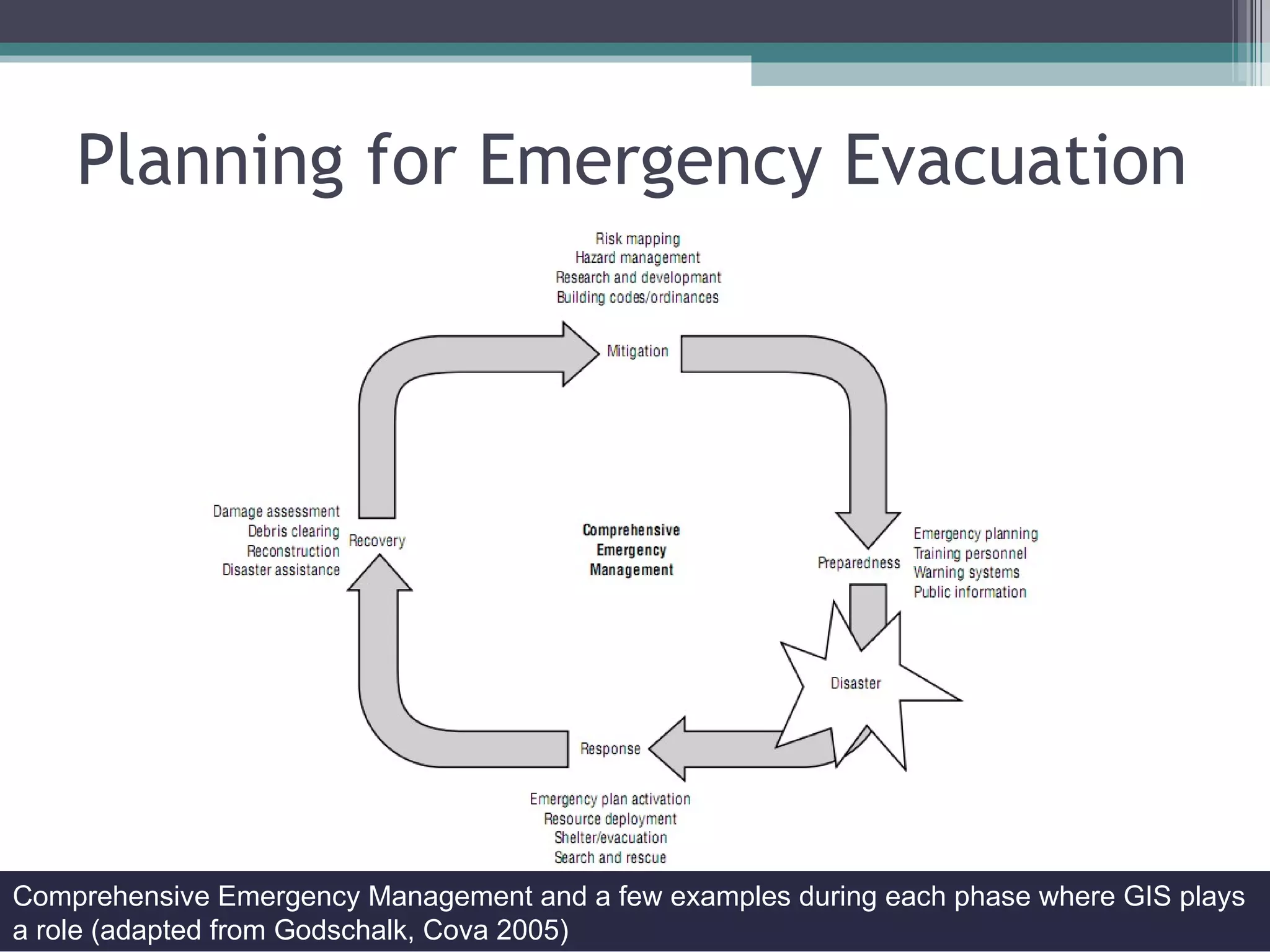
Planning for Emergency Evacuation Comprehensive Emergency Management and a few examples during each phase where GIS plays a role (adapted from Godschalk, Cova 2005)
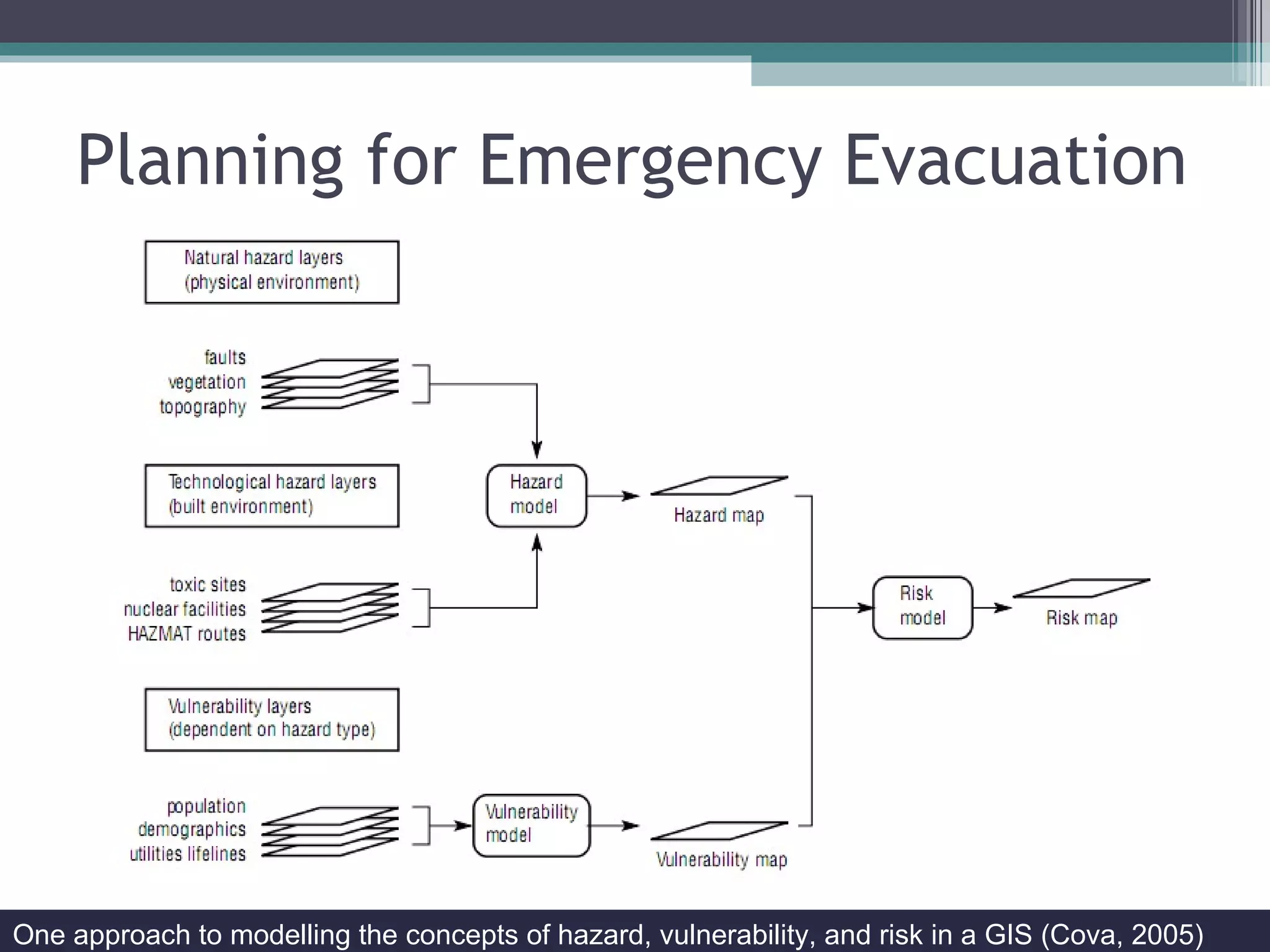
Planning for Emergency Evacuation One approach to modelling the concepts of hazard, vulnerability, and risk in a GIS (Cova, 2005)
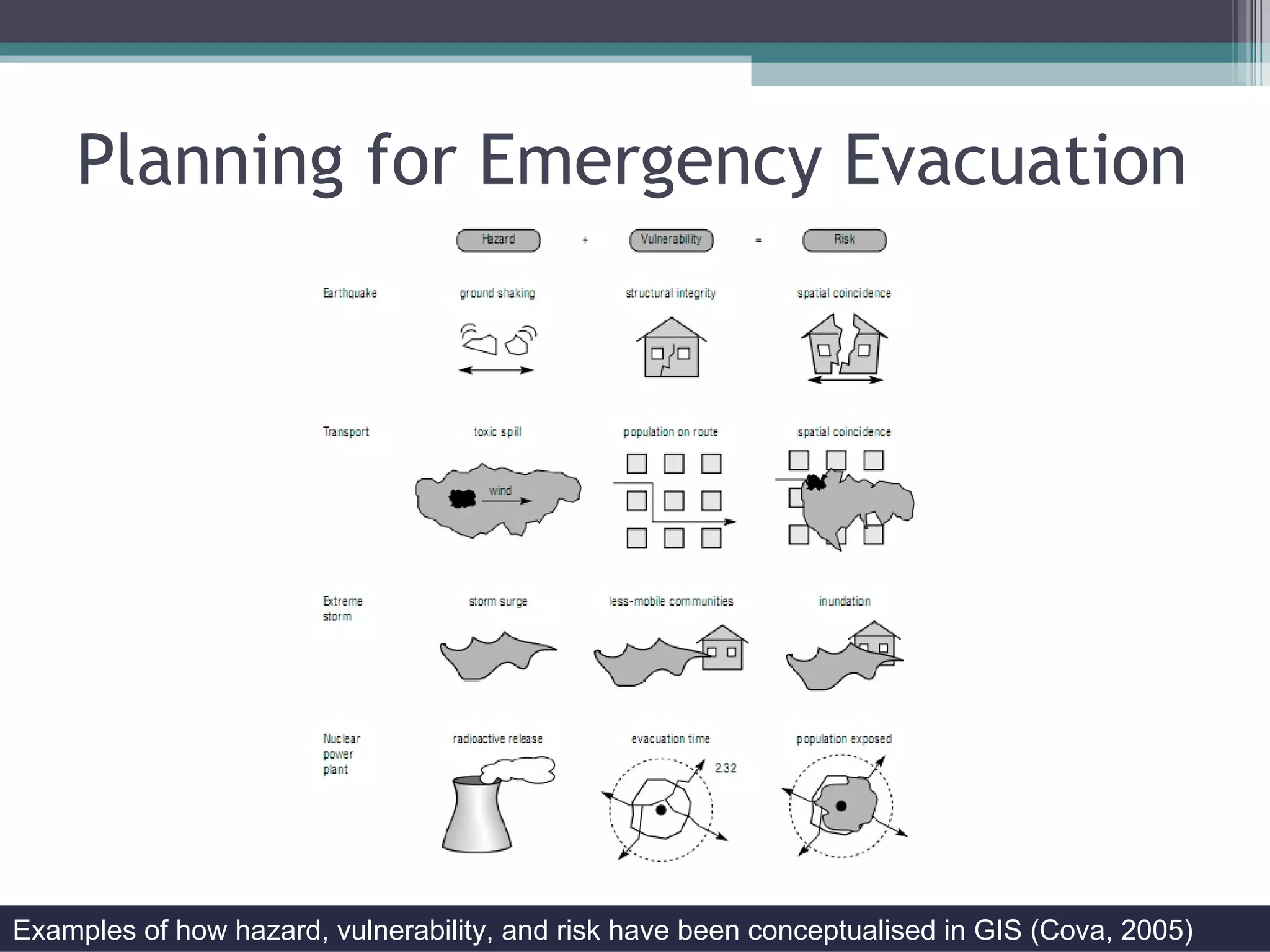
Planning for Emergency Evacuation Examples of how hazard, vulnerability, and risk have been conceptualised in GIS (Cova, 2005)
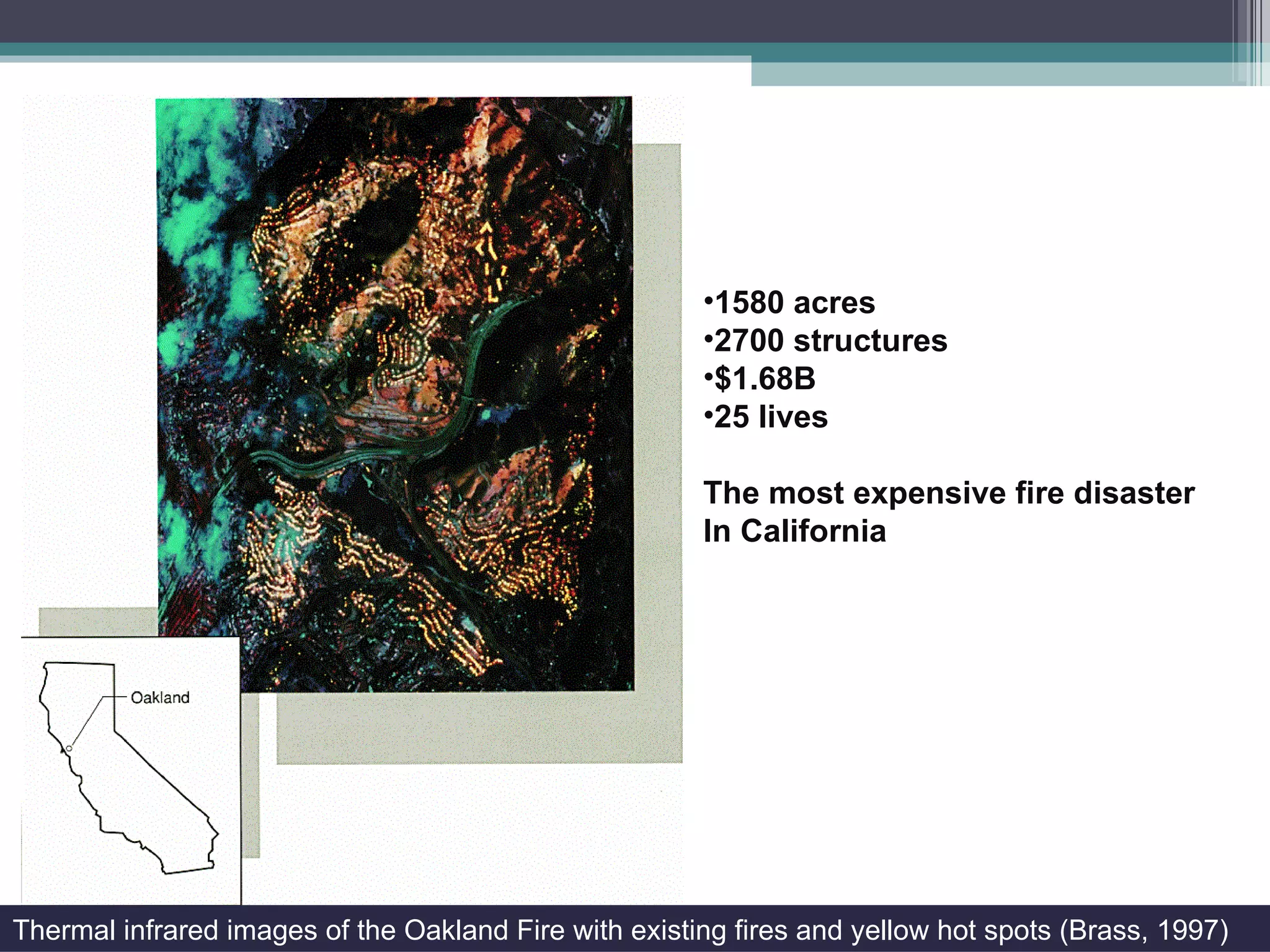
Thermal infrared images of the Oakland Fire with existing fires and yellow hot spots (Brass, 1997) 1580 acres 2700 structures $1.68B  25 lives  The most expensive fire disaster In California
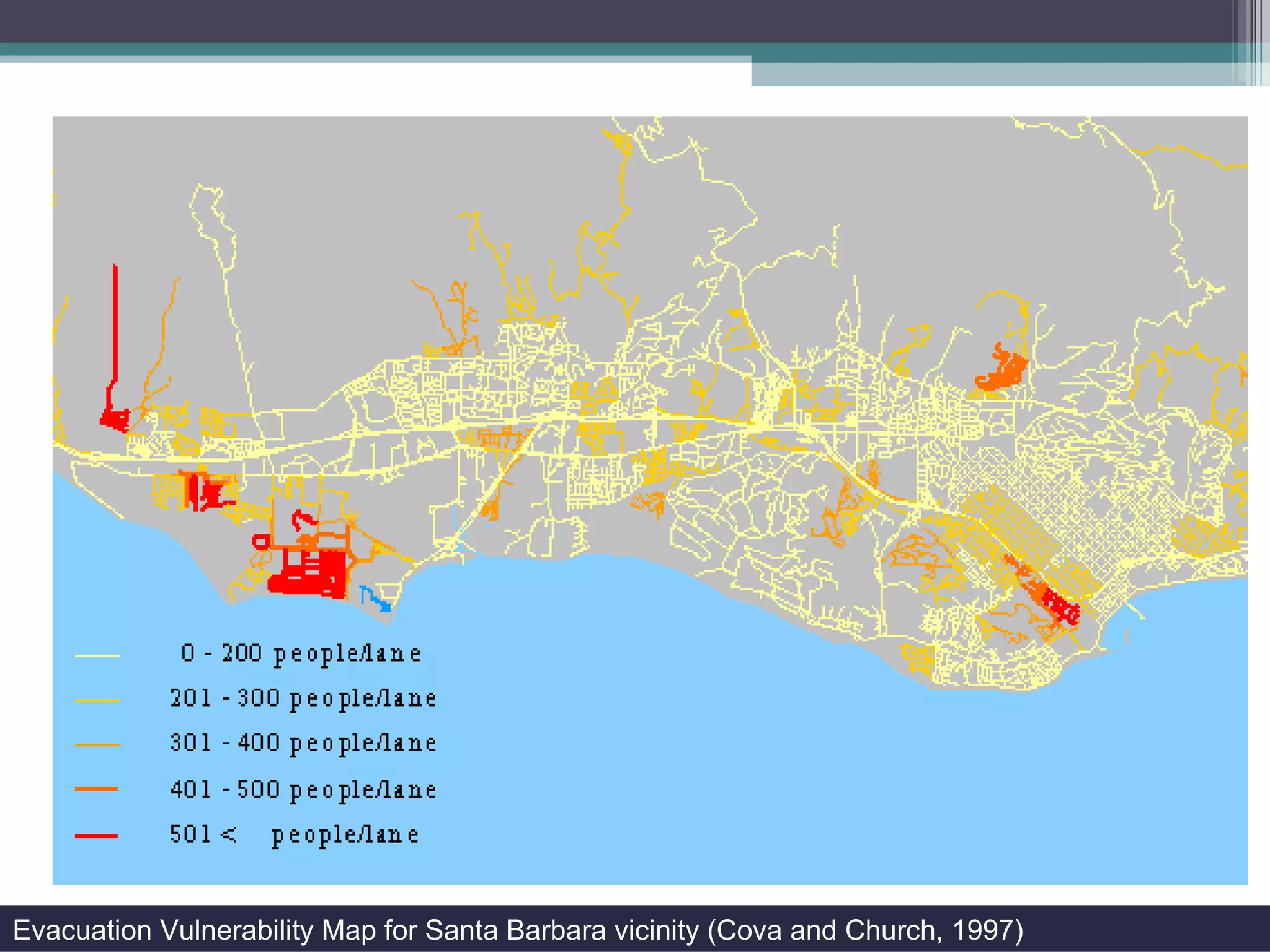
Tom Cova The Oakland fire prompted Tom Cova in developing a planning tool that uses a GIS database that allows rating the potential for problems linked with evacuation.  “ worst-case scenario” modeling evacuation vulnerability map for community evacuation plans  Yellow – 100 people/lane Red – 500 people/lane - hotspots
Evacuation Vulnerability Map for Santa Barbara vicinity (Cova and Church, 1997)
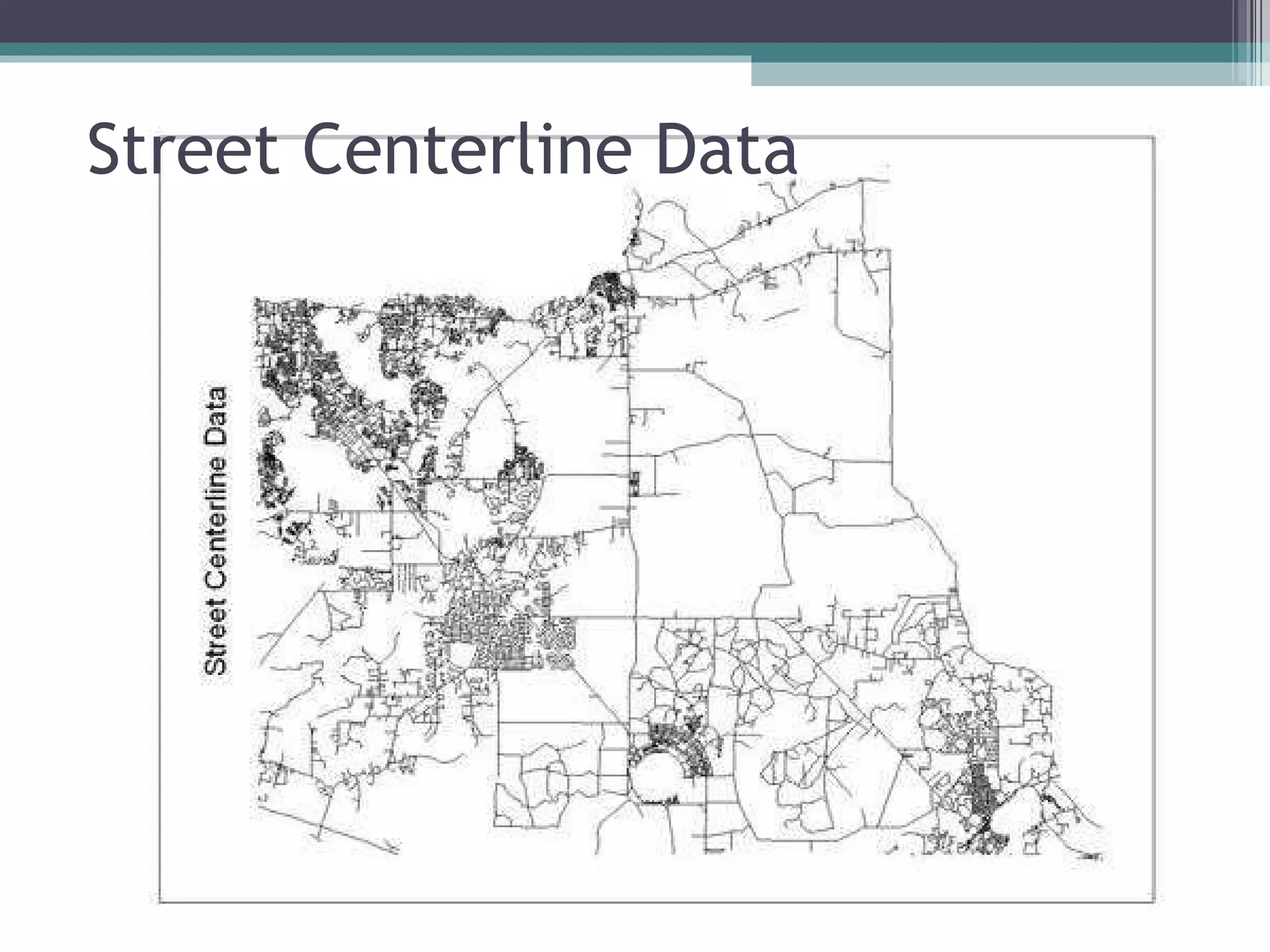
Method Two types of data Census Data – population and household count Street Centerline Data – names and location of streets and intersections (ex. TIGER, OSM, ESRI Street Map, etc.)
Street Centerline Data
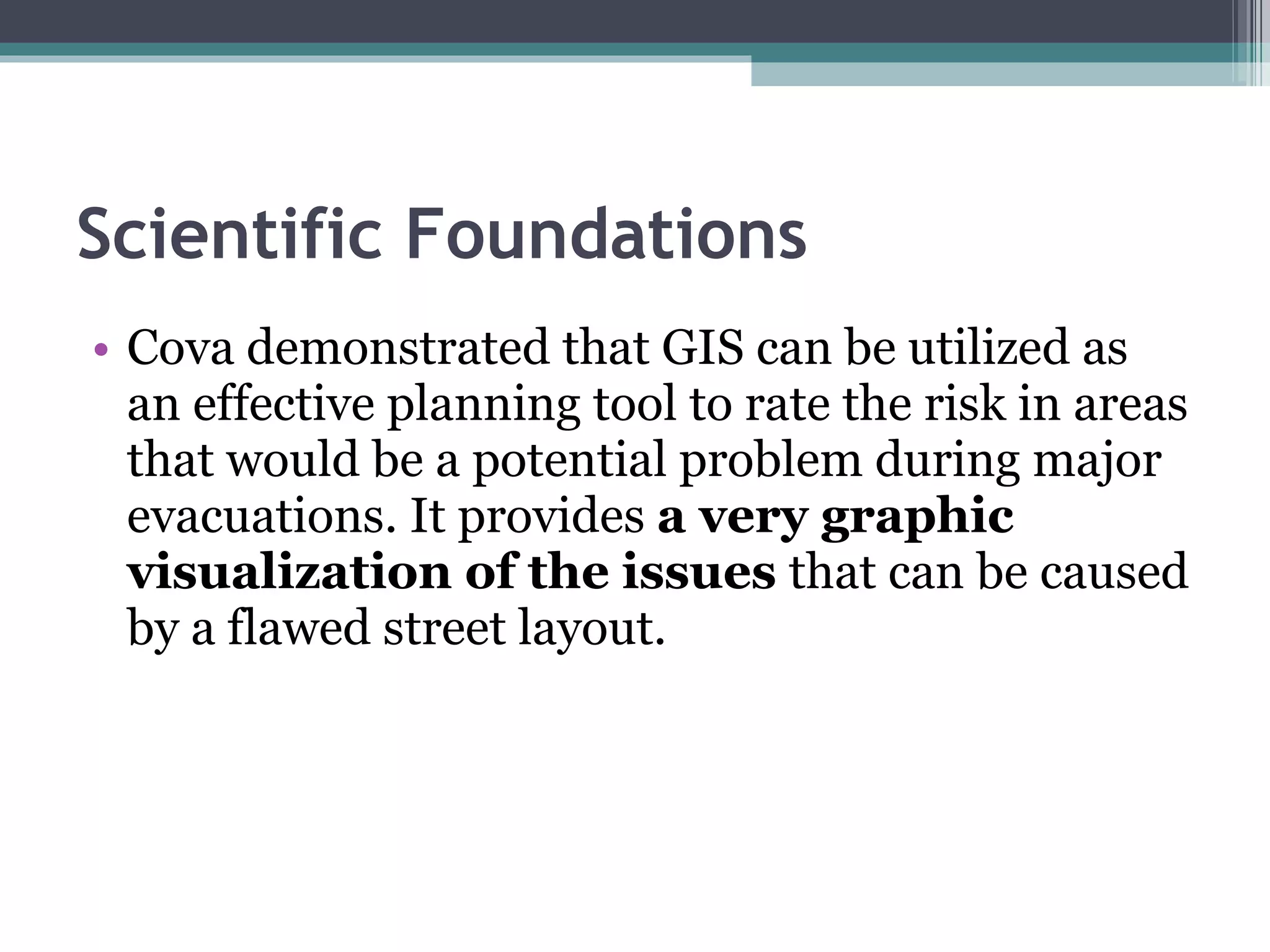
Method The analysis start at every street intersection and works outwards until it reaches a new intersection.  The ratio of the total number of vehicles per neighborhood to the number exit lanes is the indicator for determining whether an intersection could be a bottleneck during emergencies.  After all streets have been measured, the worst-case value (vehicles per lane) is assigned to the starting intersection.  In the last stage, the worst-case value is colored to the entire road network.
Scientific Foundations Cova demonstrated that GIS can be utilized as an effective planning tool to rate the risk in areas that would be a potential problem during major evacuations. It provides  a very graphic visualization of the issues  that can be caused by a flawed street layout.
Scientific Foundations His approach also showed that  the modern street layout, which limits the entrances of subdivisions and gated communities from the main roads, is a major concern during evacuation.  Although this kind of layout fosters a sense of community and gives the residents a feeling of security, Cova’s study proved that such entrances can also be hazard.
Scientific Foundations The use of the “worst-case” scenario  is a principle utilized in Cova’s analysis. This is a solution to the high degree of uncertainty in the spatial impact of a wildfire. The principle could also be appropriate for analysis in other disasters such as an earthquake and hazardous material spill.
Scientific Foundations The study showed that the  availability of geographic data , both the demographics and street layout, is very important for planning for emergency evacuations. The  accuracy  of these data was also essential because in order to have a good model, the source data should be reliable.
Scientific Foundations Lastly, because Cova’s analysis is based purely on  geometrically measurable data  such as population and street length,  the social effects on emergency evacuations were not taken into consideration . The issues of culture, language and the evacuation of disabled, the elderly and children were not discussed. The location of important institutions and support services such as schools, hospitals and government offices was not a factor in the analysis.
Geographic Principle The central concept of Cova’s analysis is  Connectivity .  “ Connectivity is an instance of a topological property that remains constant when the spatial framework is stretched or distorted, because what matters is how the network of streets is connected to the rest of the world”. (Longley et al, 2001)
Geographic Principle The assumption that people would use the  “shortest path” , from one point to another within the street network, is also a principle followed by Cova’s analysis. This is also used by other GIS applications that are involved in managing network information and routing such as in logistics management.
Techniques Spatial Interpolation  – for assigning the worst-case values to streets, since the analysis only produces values for the intersections.  This technique is widely used in GIS to obtain information from a limited number of sample points to estimate the values for other points.
Generic scientific questions arising from the application Will people use the recommended routes during emergencies?  Will it be acceptable to the adjacent communities?  Aren’t the social factors also important issues to be addressed during emergency evacuations?  Would the addition of a highway or freeway help mitigate the situation or aggravate the possible risks?
Practice GIS is employed in all three modes in logistics and transportation – operational, tactical and strategic.
Operational systems To monitor the improvement of mass transit vehicles, in order to improve performance and to provide improved information to system users. To route and schedule delivery and service vehicles on a daily basis to improve efficiency and reduce costs.
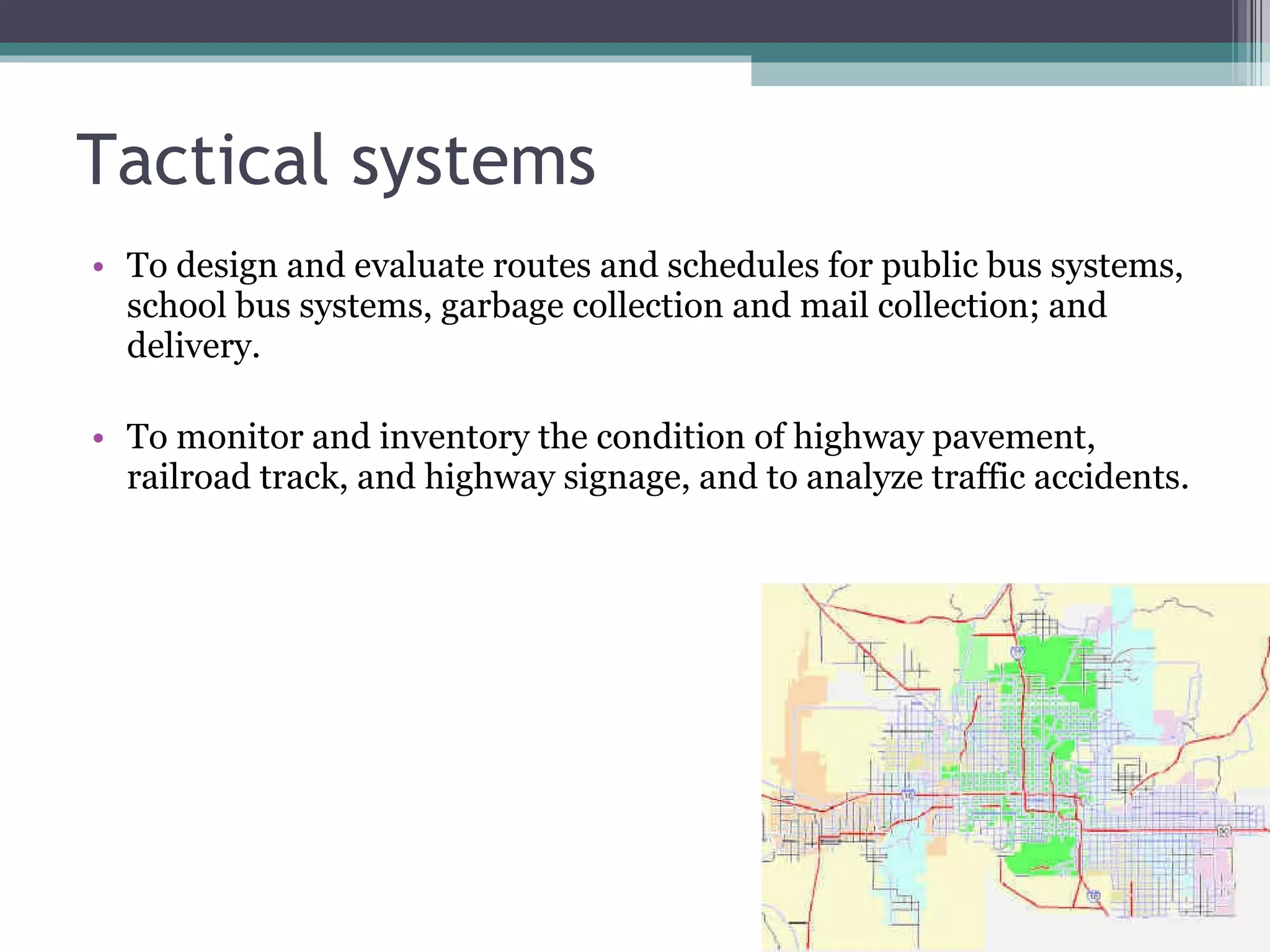
Tactical systems To design and evaluate routes and schedules for public bus systems, school bus systems, garbage collection and mail collection; and delivery. To monitor and inventory the condition of highway pavement, railroad track, and highway signage, and to analyze traffic accidents.
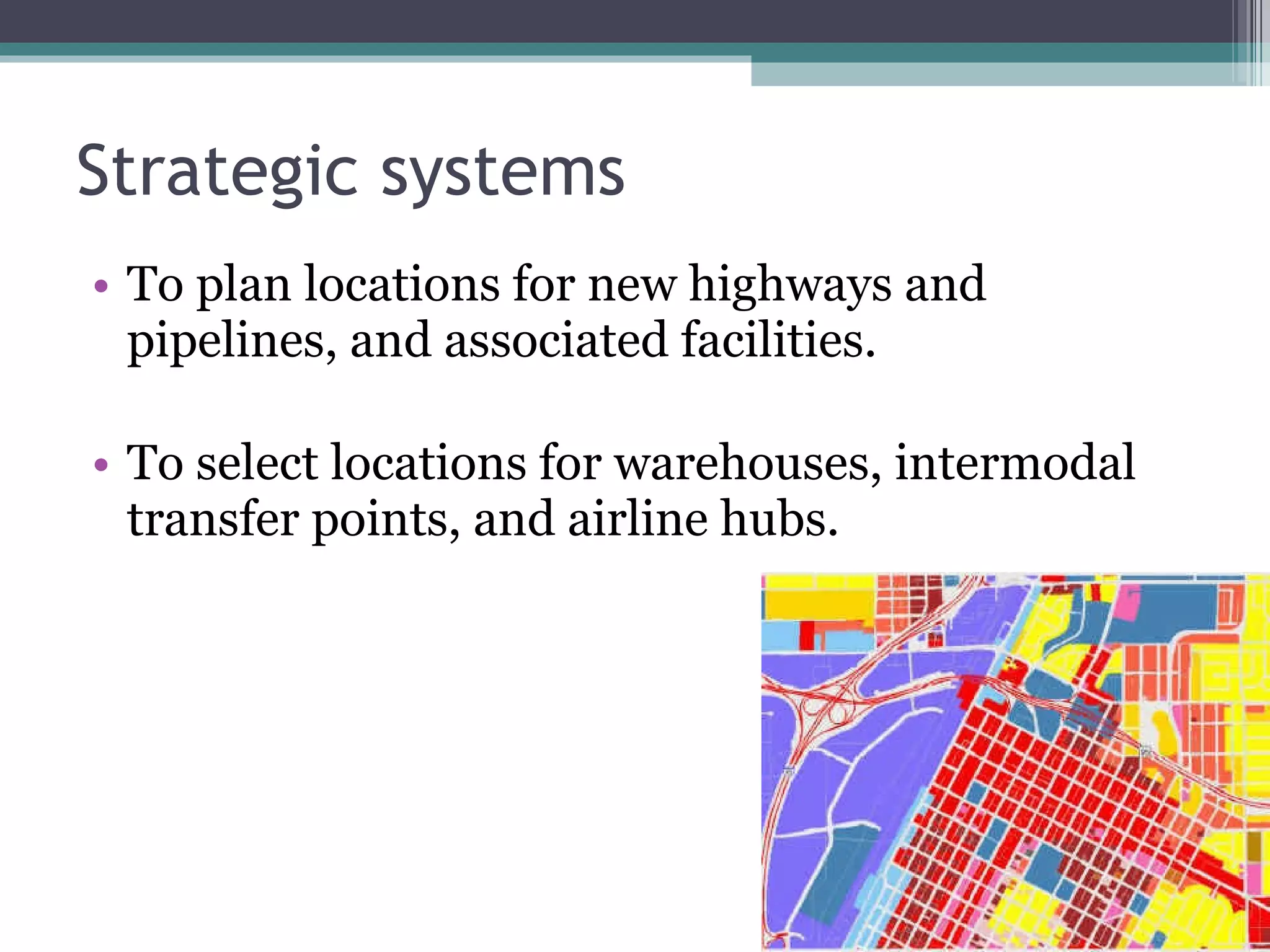
Strategic systems To plan locations for new highways and pipelines, and associated facilities. To select locations for warehouses, intermodal transfer points, and airline hubs.
References Borgia, N., 2009. The Truth about OnStar Brass J., 1997. Oakland Hills Fire Storm: Remote Sensing and Emergency Management. NASA-Ames Research Center Chakraborty J. et al, 2005. Population Evacuation: Assessing Spatial Variability in Geophysical Risk and Social Vulnerability to Natural Hazards Cova, T.J and Church, R.L., 1997. Modeling Community Evacuation Vulnerability using GIS Cova, T.J., 2001. GIS is Disaster Management. ESRI, 2001. Challenges for GIS in Emergency Preparedness and Response Longley, P. et.al, 2001. Geographic Information Systems and Science Radke J et al, 2000. Application Challenges for GIS: Implications of Research, Education and Policy for Emergency Preparedness and Response Sarkar, A., 2007. GIS Application in Logistics-A Literature Review San Francisco Chronicle, 1991. Charring cross bottleneck was big killer. Sunday, November 2, pg. A14 http://www.traffic.com http://www.trafficengland.com http://wiki.openstreetmap.org/ http://www.princeton.edu/~ina/infographics/transportation.html
Questions?
Thank you!

Applications of GIS to Logistics and Transportation

  • 1.
    Applications of GIS in Logistics and Transportation Fuentes, Ryan Amiel Gumboc, Cyrus Ildefonso, Sorbi Genaleon Mercado, Michael Morales, George Michael
  • 2.
    What is Logistics?The term logistics originated in the military which was concerned with the movement of personnel and materials during times of emergency. It was later adopted by businesses and became a part of commonly used terminology in professional societies and academic programs (Sarkar, 2007)
  • 3.
    What is Transportation?The movement of people, goods and services from one place to another.
  • 4.
    Getting Around: TransportationToday (http://www.princeton.edu)
  • 5.
    Important Questions forL&T WHERE are the people? WHERE are the goods? WHERE are the services? WHERE are the roads? WHERE are the train stations? WHERE are the airport? WHERE are the delivery trucks? WHERE is the best route?
  • 6.
  • 7.
    Modes of Logisticsand Transportation
  • 8.
    GIS for Logisticsand Transport
  • 9.
    The OnStar SystemDeveloped by General Motors Telematics=Telephone+Informatics Hands-free voice activated calling
  • 10.
  • 11.
  • 12.
  • 13.
    Case Study Application:Planning for Emergency Evacuation
  • 14.
    Planning for EmergencyEvacuation Comprehensive Emergency Management and a few examples during each phase where GIS plays a role (adapted from Godschalk, Cova 2005)
  • 15.
    Planning for EmergencyEvacuation One approach to modelling the concepts of hazard, vulnerability, and risk in a GIS (Cova, 2005)
  • 16.
    Planning for EmergencyEvacuation Examples of how hazard, vulnerability, and risk have been conceptualised in GIS (Cova, 2005)
  • 17.
    Thermal infrared imagesof the Oakland Fire with existing fires and yellow hot spots (Brass, 1997) 1580 acres 2700 structures $1.68B 25 lives The most expensive fire disaster In California
  • 18.
    Tom Cova TheOakland fire prompted Tom Cova in developing a planning tool that uses a GIS database that allows rating the potential for problems linked with evacuation. “ worst-case scenario” modeling evacuation vulnerability map for community evacuation plans Yellow – 100 people/lane Red – 500 people/lane - hotspots
  • 19.
    Evacuation Vulnerability Mapfor Santa Barbara vicinity (Cova and Church, 1997)
  • 20.
    Method Two typesof data Census Data – population and household count Street Centerline Data – names and location of streets and intersections (ex. TIGER, OSM, ESRI Street Map, etc.)

  • 21.
  • 22.
    Method The analysisstart at every street intersection and works outwards until it reaches a new intersection. The ratio of the total number of vehicles per neighborhood to the number exit lanes is the indicator for determining whether an intersection could be a bottleneck during emergencies. After all streets have been measured, the worst-case value (vehicles per lane) is assigned to the starting intersection. In the last stage, the worst-case value is colored to the entire road network.

  • 23.
    Scientific Foundations Covademonstrated that GIS can be utilized as an effective planning tool to rate the risk in areas that would be a potential problem during major evacuations. It provides a very graphic visualization of the issues that can be caused by a flawed street layout.
  • 24.
    Scientific Foundations Hisapproach also showed that the modern street layout, which limits the entrances of subdivisions and gated communities from the main roads, is a major concern during evacuation. Although this kind of layout fosters a sense of community and gives the residents a feeling of security, Cova’s study proved that such entrances can also be hazard.
  • 25.
    Scientific Foundations Theuse of the “worst-case” scenario is a principle utilized in Cova’s analysis. This is a solution to the high degree of uncertainty in the spatial impact of a wildfire. The principle could also be appropriate for analysis in other disasters such as an earthquake and hazardous material spill.
  • 26.
    Scientific Foundations Thestudy showed that the availability of geographic data , both the demographics and street layout, is very important for planning for emergency evacuations. The accuracy of these data was also essential because in order to have a good model, the source data should be reliable.
  • 27.
    Scientific Foundations Lastly,because Cova’s analysis is based purely on geometrically measurable data such as population and street length, the social effects on emergency evacuations were not taken into consideration . The issues of culture, language and the evacuation of disabled, the elderly and children were not discussed. The location of important institutions and support services such as schools, hospitals and government offices was not a factor in the analysis.
  • 28.
    Geographic Principle Thecentral concept of Cova’s analysis is Connectivity . “ Connectivity is an instance of a topological property that remains constant when the spatial framework is stretched or distorted, because what matters is how the network of streets is connected to the rest of the world”. (Longley et al, 2001)
  • 29.
    Geographic Principle Theassumption that people would use the “shortest path” , from one point to another within the street network, is also a principle followed by Cova’s analysis. This is also used by other GIS applications that are involved in managing network information and routing such as in logistics management.
  • 30.
    Techniques Spatial Interpolation – for assigning the worst-case values to streets, since the analysis only produces values for the intersections. This technique is widely used in GIS to obtain information from a limited number of sample points to estimate the values for other points.
  • 31.
    Generic scientific questionsarising from the application Will people use the recommended routes during emergencies? Will it be acceptable to the adjacent communities? Aren’t the social factors also important issues to be addressed during emergency evacuations? Would the addition of a highway or freeway help mitigate the situation or aggravate the possible risks?
  • 32.
    Practice GIS isemployed in all three modes in logistics and transportation – operational, tactical and strategic.
  • 33.
    Operational systems Tomonitor the improvement of mass transit vehicles, in order to improve performance and to provide improved information to system users. To route and schedule delivery and service vehicles on a daily basis to improve efficiency and reduce costs.
  • 34.
    Tactical systems Todesign and evaluate routes and schedules for public bus systems, school bus systems, garbage collection and mail collection; and delivery. To monitor and inventory the condition of highway pavement, railroad track, and highway signage, and to analyze traffic accidents.
  • 35.
    Strategic systems Toplan locations for new highways and pipelines, and associated facilities. To select locations for warehouses, intermodal transfer points, and airline hubs.
  • 36.
    References Borgia, N.,2009. The Truth about OnStar Brass J., 1997. Oakland Hills Fire Storm: Remote Sensing and Emergency Management. NASA-Ames Research Center Chakraborty J. et al, 2005. Population Evacuation: Assessing Spatial Variability in Geophysical Risk and Social Vulnerability to Natural Hazards Cova, T.J and Church, R.L., 1997. Modeling Community Evacuation Vulnerability using GIS Cova, T.J., 2001. GIS is Disaster Management. ESRI, 2001. Challenges for GIS in Emergency Preparedness and Response Longley, P. et.al, 2001. Geographic Information Systems and Science Radke J et al, 2000. Application Challenges for GIS: Implications of Research, Education and Policy for Emergency Preparedness and Response Sarkar, A., 2007. GIS Application in Logistics-A Literature Review San Francisco Chronicle, 1991. Charring cross bottleneck was big killer. Sunday, November 2, pg. A14 http://www.traffic.com http://www.trafficengland.com http://wiki.openstreetmap.org/ http://www.princeton.edu/~ina/infographics/transportation.html
  • 37.
  • 38.