Transportation
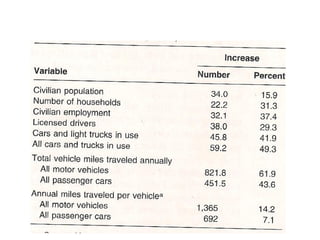
Causes of traffic Rapid population and job growth Intensified use of automobile Failure to build new roads Desire for low density residential development Failure to require the drivers to pay the full marginal cost of their behavior
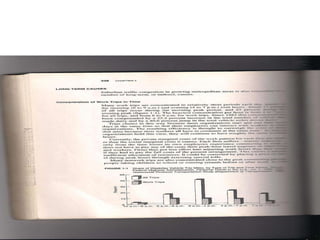
Long-term causes Concentration of work trips in time Desire to choose where to live and work Desire for low-density neighborhood Preference for low-density workplaces Desire to travel in private vehicles
Effect of traffic Exasperating conditions for citizens Economic inefficiency Opportunity cost of lost time
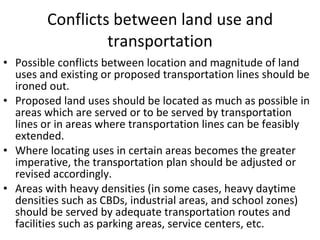
Conflicts between land use and transportation Possible conflicts between location and magnitude of land uses and existing or proposed transportation lines should be ironed out. Proposed land uses should be located as much as possible in areas which are served or to be served by transportation lines or in areas where transportation lines can be feasibly extended. Where locating uses in certain areas becomes the greater imperative, the transportation plan should be adjusted or revised accordingly. Areas with heavy densities (in some cases, heavy daytime densities such as CBDs, industrial areas, and school zones) should be served by adequate transportation routes and facilities such as parking areas, service centers, etc.
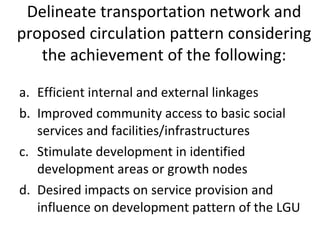
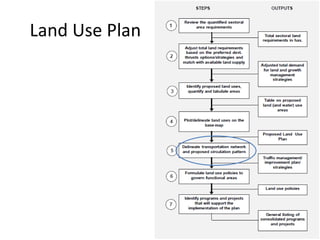
Delineate transportation network and proposed circulation pattern considering the achievement of the following: Efficient internal and external linkages Improved community access to basic social services and facilities/infrastructures Stimulate development in identified development areas or growth nodes Desired impacts on service provision and influence on development pattern of the LGU
Land Use Plan
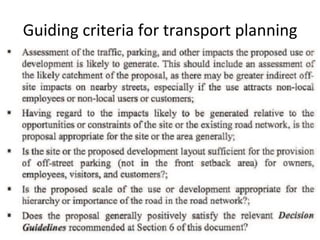
Guiding criteria for transport planning


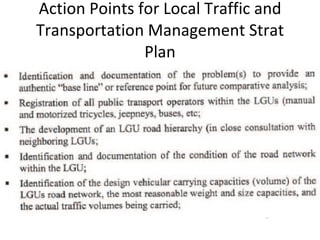
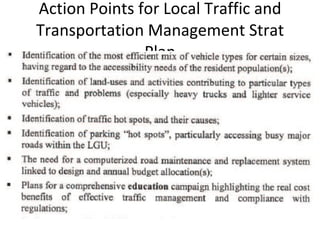
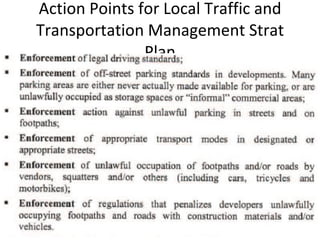
Action Points for Local Traffic and Transportation Management Strat Plan
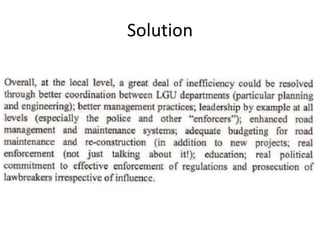
Solution


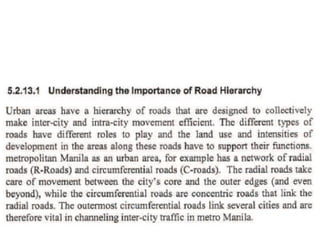
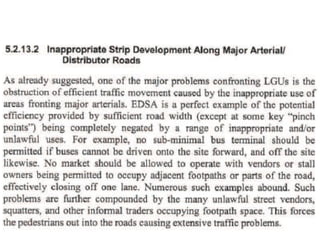
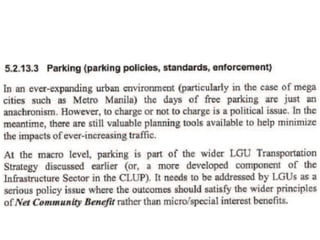
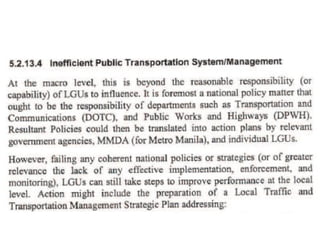
Transportation in Urban Planning

  • 1.
  • 2.
    Causes of trafficRapid population and job growth Intensified use of automobile Failure to build new roads Desire for low density residential development Failure to require the drivers to pay the full marginal cost of their behavior
  • 3.
    Long-term causes Concentrationof work trips in time Desire to choose where to live and work Desire for low-density neighborhood Preference for low-density workplaces Desire to travel in private vehicles
  • 4.
    Effect of trafficExasperating conditions for citizens Economic inefficiency Opportunity cost of lost time
  • 5.
    Conflicts between landuse and transportation Possible conflicts between location and magnitude of land uses and existing or proposed transportation lines should be ironed out. Proposed land uses should be located as much as possible in areas which are served or to be served by transportation lines or in areas where transportation lines can be feasibly extended. Where locating uses in certain areas becomes the greater imperative, the transportation plan should be adjusted or revised accordingly. Areas with heavy densities (in some cases, heavy daytime densities such as CBDs, industrial areas, and school zones) should be served by adequate transportation routes and facilities such as parking areas, service centers, etc.
  • 6.
    Delineate transportation networkand proposed circulation pattern considering the achievement of the following: Efficient internal and external linkages Improved community access to basic social services and facilities/infrastructures Stimulate development in identified development areas or growth nodes Desired impacts on service provision and influence on development pattern of the LGU
  • 7.
  • 8.
    Guiding criteria fortransport planning
  • 9.
  • 10.
  • 11.
  • 12.
  • 13.
    Action Points forLocal Traffic and Transportation Management Strat Plan
  • 14.
    Action Points forLocal Traffic and Transportation Management Strat Plan
  • 15.
    Action Points forLocal Traffic and Transportation Management Strat Plan
  • 16.
  • 17.
  • 18.
  • 19.
  • 20.
  • 21.
  • 22.