Transportation Accessibility and Livable CommunitiesPatricia HuDirector, Bureau of Transportation StatisticsResearch and Innovative Technology AdministrationUnited States Department of TransportationSeptember 27, 2011
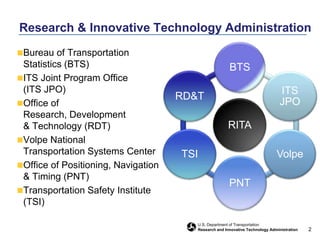
Research & Innovative Technology AdministrationBureau of Transportation Statistics (BTS)ITS Joint Program Office (ITS JPO)Office of Research, Development & Technology (RDT)Volpe National Transportation Systems CenterOffice of Positioning, Navigation & Timing (PNT)Transportation Safety Institute (TSI)
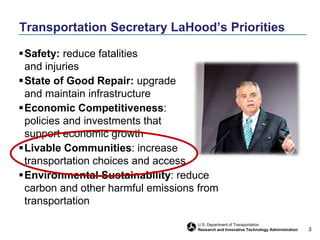
Transportation Secretary LaHood’s PrioritiesSafety:reduce fatalities and injuries
State of Good Repair:upgrade and maintain infrastructure
Economic Competitiveness: policies and investments that support economic growth
Livable Communities: increase transportation choices and access
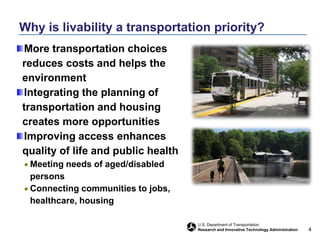
Environmental Sustainability: reduce carbon and other harmful emissions from transportationWhy is livability a transportation priority?More transportation choices reduces costs and helps the environmentIntegrating the planning of transportation and housing creates more opportunitiesImproving access enhances quality of life and public healthMeeting needs of aged/disabled personsConnecting communities to jobs, healthcare, housing
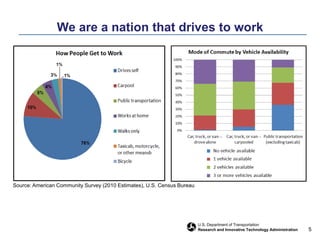
We are a nation that drives to workSource: American Community Survey (2010 Estimates), U.S. Census Bureau
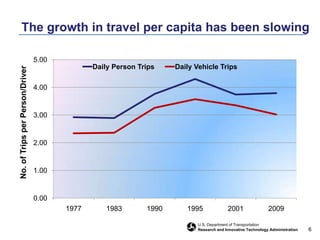
The growth in travel per capita has been slowing
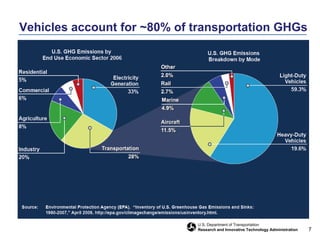
Vehicles account for ~80% of transportation GHGs
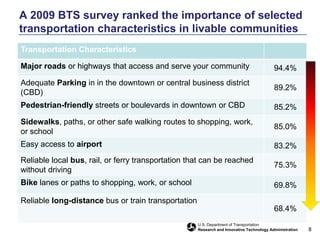
A 2009 BTS survey ranked the importance of selected transportation characteristics in livable communities
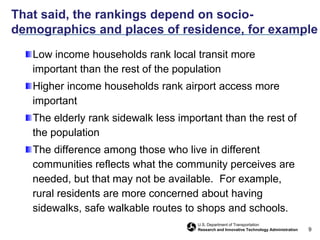
That said, the rankings depend on socio-demographics and places of residence, for exampleLow income households rank local transit more important than the rest of the populationHigher income households rank airport access more importantThe elderly rank sidewalk less important than the rest of the populationThe difference among those who live in different communities reflects what the community perceives are needed, but that may not be available.  For example, rural residents are more concerned about having sidewalks, safe walkable routes to shops and schools.
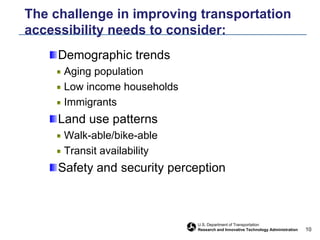
The challenge in improving transportation accessibility needs to consider:Demographic trends Aging populationLow income householdsImmigrantsLand use patternsWalk-able/bike-ableTransit availabilitySafety and security perception
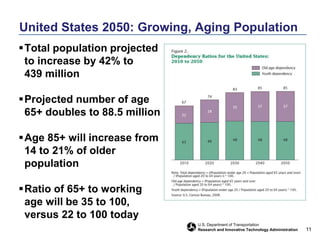
United States 2050: Growing, Aging Population Total population projected to increase by 42% to 439 million
Projected number of age 65+ doubles to 88.5 million
Age 85+ will increase from 14 to 21% of older population
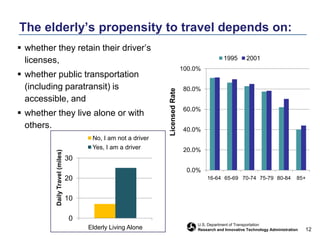
Ratio of 65+ to working age will be 35 to 100, versus 22 to 100 todayThe elderly’s propensity to travel depends on:whether they retain their driver’s licenses, whether public transportation (including paratransit) is accessible, andwhether they live alone or with others.

SSC2011_Patricia Hu PPT

  • 1.
    Transportation Accessibility andLivable CommunitiesPatricia HuDirector, Bureau of Transportation StatisticsResearch and Innovative Technology AdministrationUnited States Department of TransportationSeptember 27, 2011
  • 2.
    Research & InnovativeTechnology AdministrationBureau of Transportation Statistics (BTS)ITS Joint Program Office (ITS JPO)Office of Research, Development & Technology (RDT)Volpe National Transportation Systems CenterOffice of Positioning, Navigation & Timing (PNT)Transportation Safety Institute (TSI)
  • 3.
    Transportation Secretary LaHood’sPrioritiesSafety:reduce fatalities and injuries
  • 4.
    State of GoodRepair:upgrade and maintain infrastructure
  • 5.
    Economic Competitiveness: policiesand investments that support economic growth
  • 6.
    Livable Communities: increasetransportation choices and access
  • 7.
    Environmental Sustainability: reducecarbon and other harmful emissions from transportationWhy is livability a transportation priority?More transportation choices reduces costs and helps the environmentIntegrating the planning of transportation and housing creates more opportunitiesImproving access enhances quality of life and public healthMeeting needs of aged/disabled personsConnecting communities to jobs, healthcare, housing
  • 8.
    We are anation that drives to workSource: American Community Survey (2010 Estimates), U.S. Census Bureau
  • 9.
    The growth intravel per capita has been slowing
  • 10.
    Vehicles account for~80% of transportation GHGs
  • 11.
    A 2009 BTSsurvey ranked the importance of selected transportation characteristics in livable communities
  • 12.
    That said, therankings depend on socio-demographics and places of residence, for exampleLow income households rank local transit more important than the rest of the populationHigher income households rank airport access more importantThe elderly rank sidewalk less important than the rest of the populationThe difference among those who live in different communities reflects what the community perceives are needed, but that may not be available. For example, rural residents are more concerned about having sidewalks, safe walkable routes to shops and schools.
  • 13.
    The challenge inimproving transportation accessibility needs to consider:Demographic trends Aging populationLow income householdsImmigrantsLand use patternsWalk-able/bike-ableTransit availabilitySafety and security perception
  • 14.
    United States 2050:Growing, Aging Population Total population projected to increase by 42% to 439 million
  • 15.
    Projected number ofage 65+ doubles to 88.5 million
  • 16.
    Age 85+ willincrease from 14 to 21% of older population
  • 17.
    Ratio of 65+to working age will be 35 to 100, versus 22 to 100 todayThe elderly’s propensity to travel depends on:whether they retain their driver’s licenses, whether public transportation (including paratransit) is accessible, andwhether they live alone or with others.

Editor's Notes

  • #3 At the Research and Innovative Technology Administration our mission is to ensure that our nation’s investments in transportation research produce results for the American people—strengthening our data capabilities is a defining element of this mission.
  • #4 U.S. Secretary of Transportation Ray LaHood has outlined this Administration’s priorities for transportation—priorities that reflect the President’s vision for winning the future:Safety State of Good Repair.Economic Competitiveness.Environmentally Sustainability.Community Livability