
APPLICATION OF BIORISK MANAGEMENT
FOR TRAINING AND RESEARCH ON ANIMALS
Abiodun A. Denloye, PhD, mesn, IFBA-CP, FSEAN
Dept of Zoology and Environmental Biology
Lagos State University, Nigeria.
Thursday 16th
February 2017
www.denloye.com
www.slideshare.net/abiodundenloye
twitter@AbiodunDenloye
OUTLINE
• What is Biorisk?
• Meaning and Scope of Biosafety
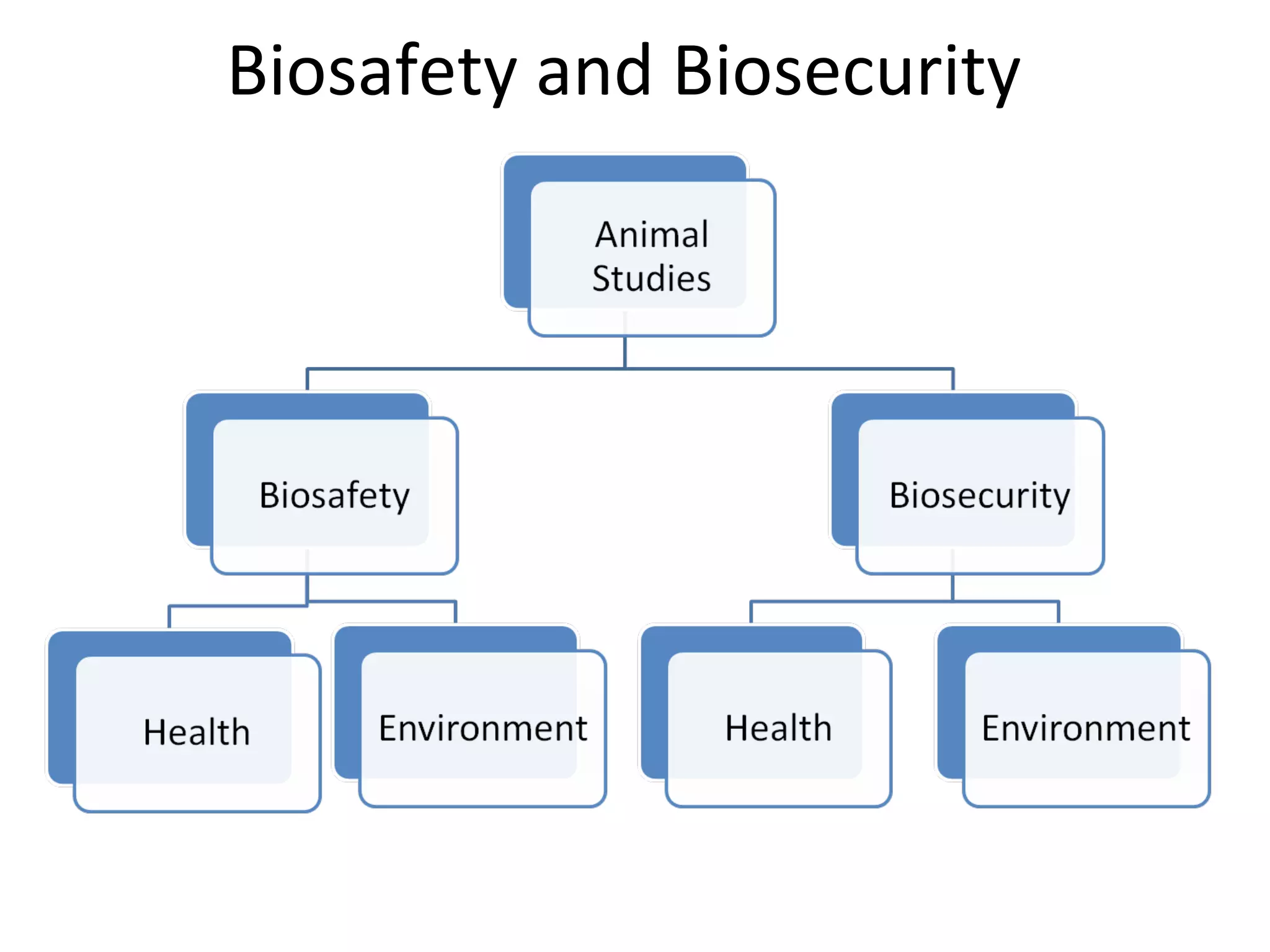
• Biosafety and Biosecurity
• Working with Animals and Associated Risks
• Biosafety Levels and Criteria
• Where is LASU?
• The Future is AMP: Laboratory Biorisk
Management.
• Regulations - CWA15793
• Where do I Fit in as a Zoologist?
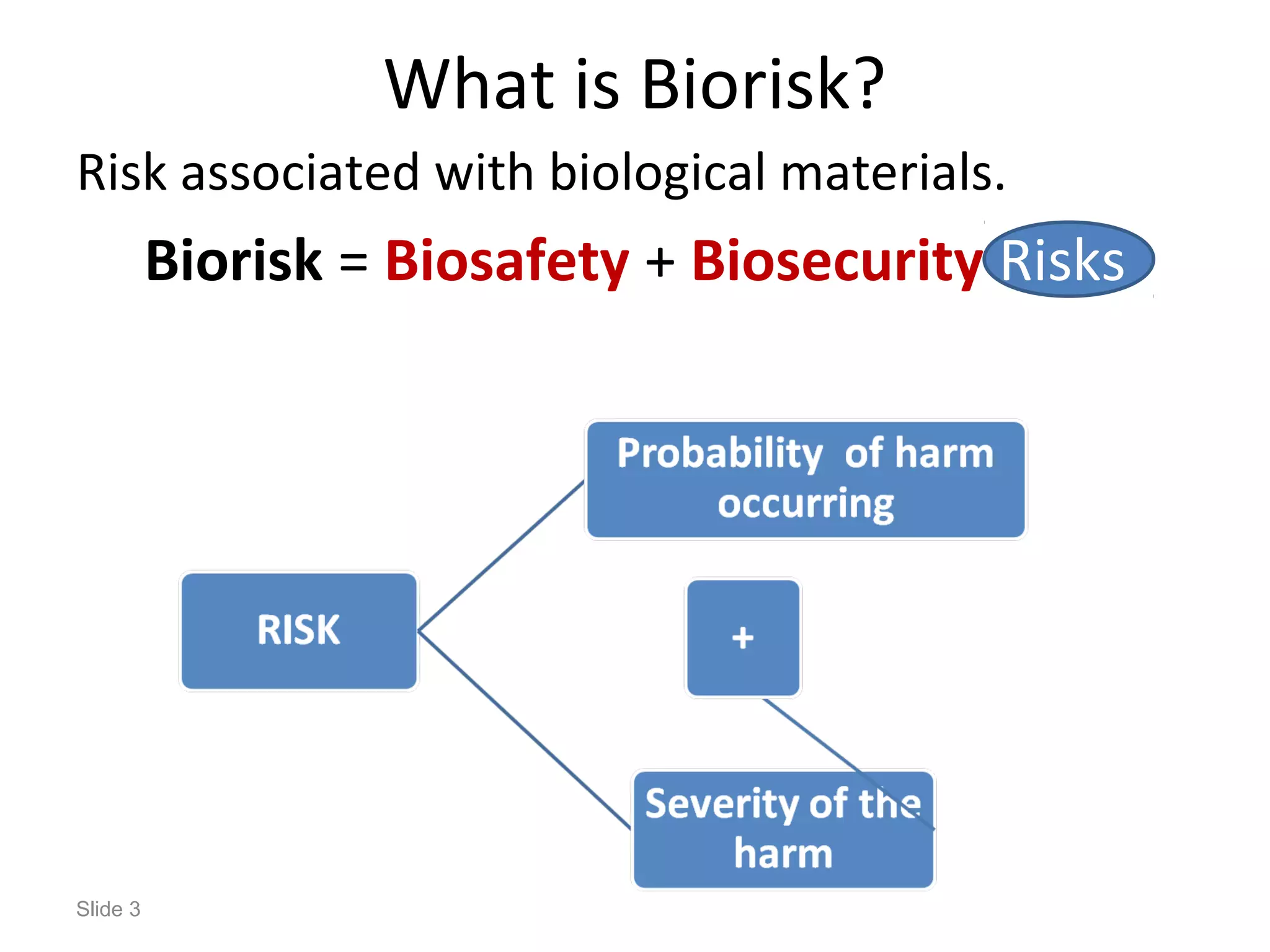
What is Biorisk?
Risk associated with biological materials.
Biorisk = Biosafety + Biosecurity Risks
Slide 3
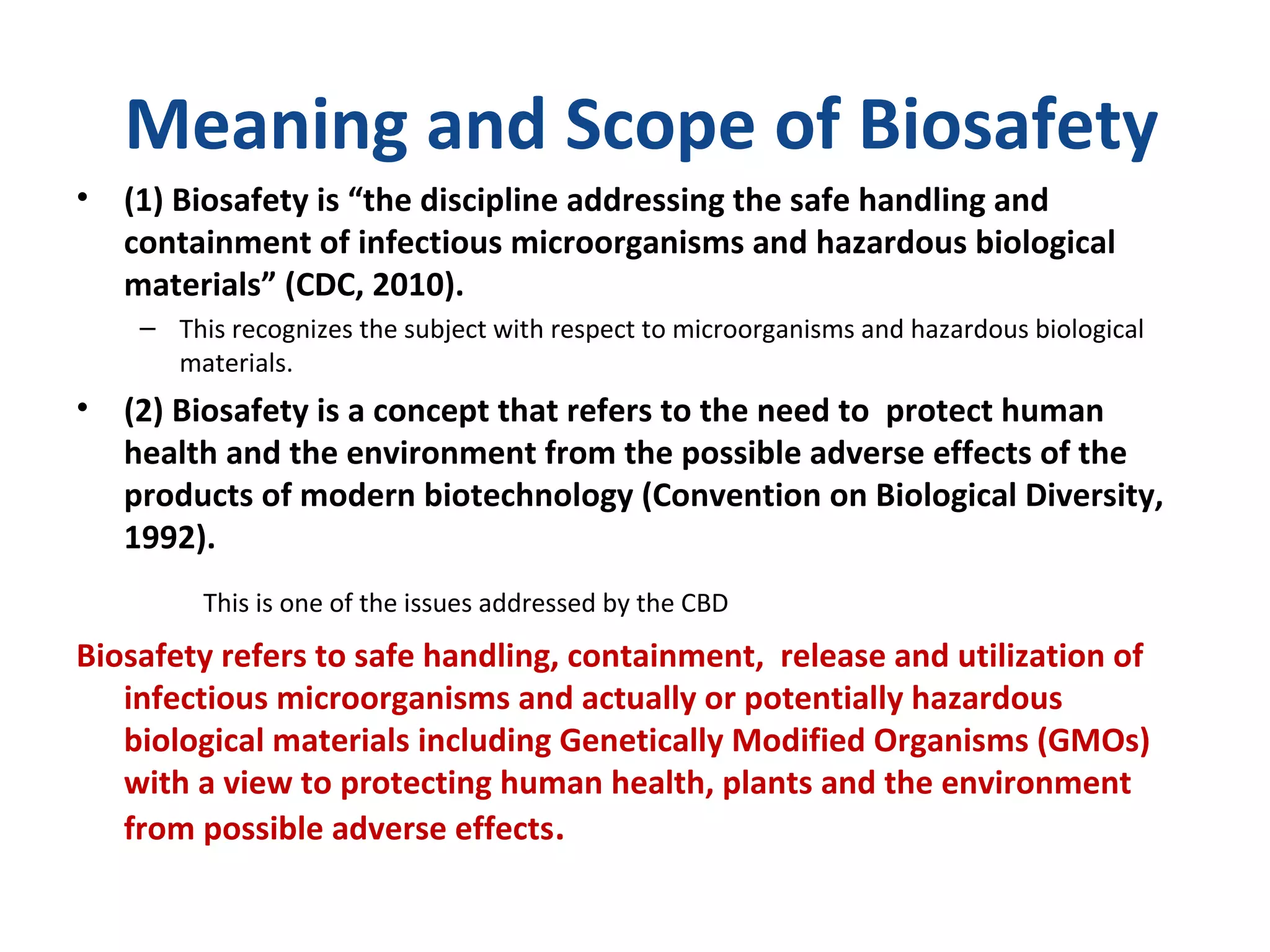
Meaning and Scope of Biosafety
• (1) Biosafety is “the discipline addressing the safe handling and
containment of infectious microorganisms and hazardous biological
materials” (CDC, 2010).
– This recognizes the subject with respect to microorganisms and hazardous biological
materials.
• (2) Biosafety is a concept that refers to the need to protect human
health and the environment from the possible adverse effects of the
products of modern biotechnology (Convention on Biological Diversity,
1992).
This is one of the issues addressed by the CBD
Biosafety refers to safe handling, containment, release and utilization of
infectious microorganisms and actually or potentially hazardous
biological materials including Genetically Modified Organisms (GMOs)
with a view to protecting human health, plants and the environment
from possible adverse effects.
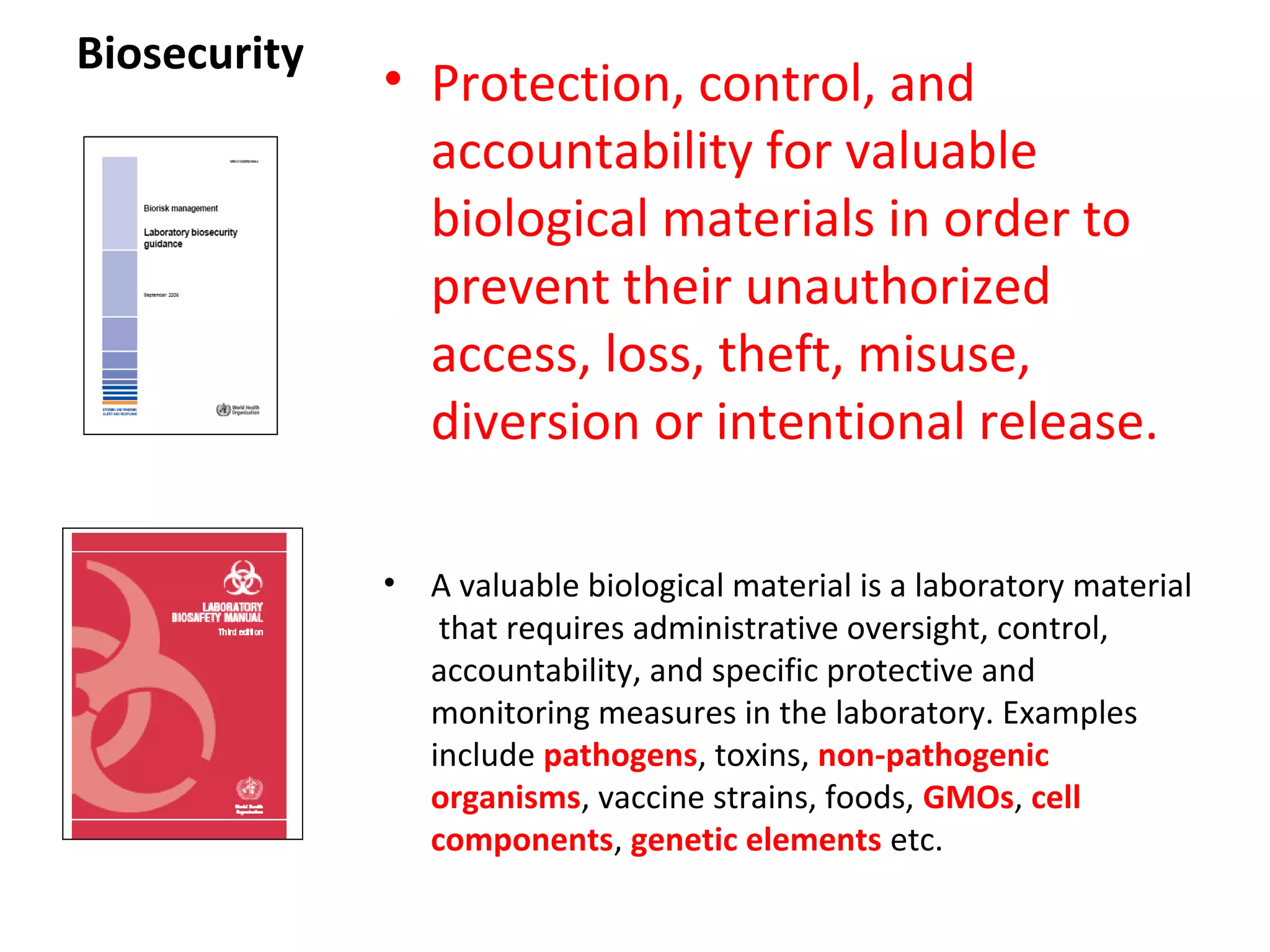
Biosecurity
• Protection, control, and
accountability for valuable
biological materials in order to
prevent their unauthorized
access, loss, theft, misuse,
diversion or intentional release.
• A valuable biological material is a laboratory material
that requires administrative oversight, control,
accountability, and specific protective and
monitoring measures in the laboratory. Examples
include pathogens, toxins, non-pathogenic
organisms, vaccine strains, foods, GMOs, cell
components, genetic elements etc.
Biosafety and Biosecurity
Likelihood
Very
High
Consequences
Very
Low
Low
Moderate
High
RISK
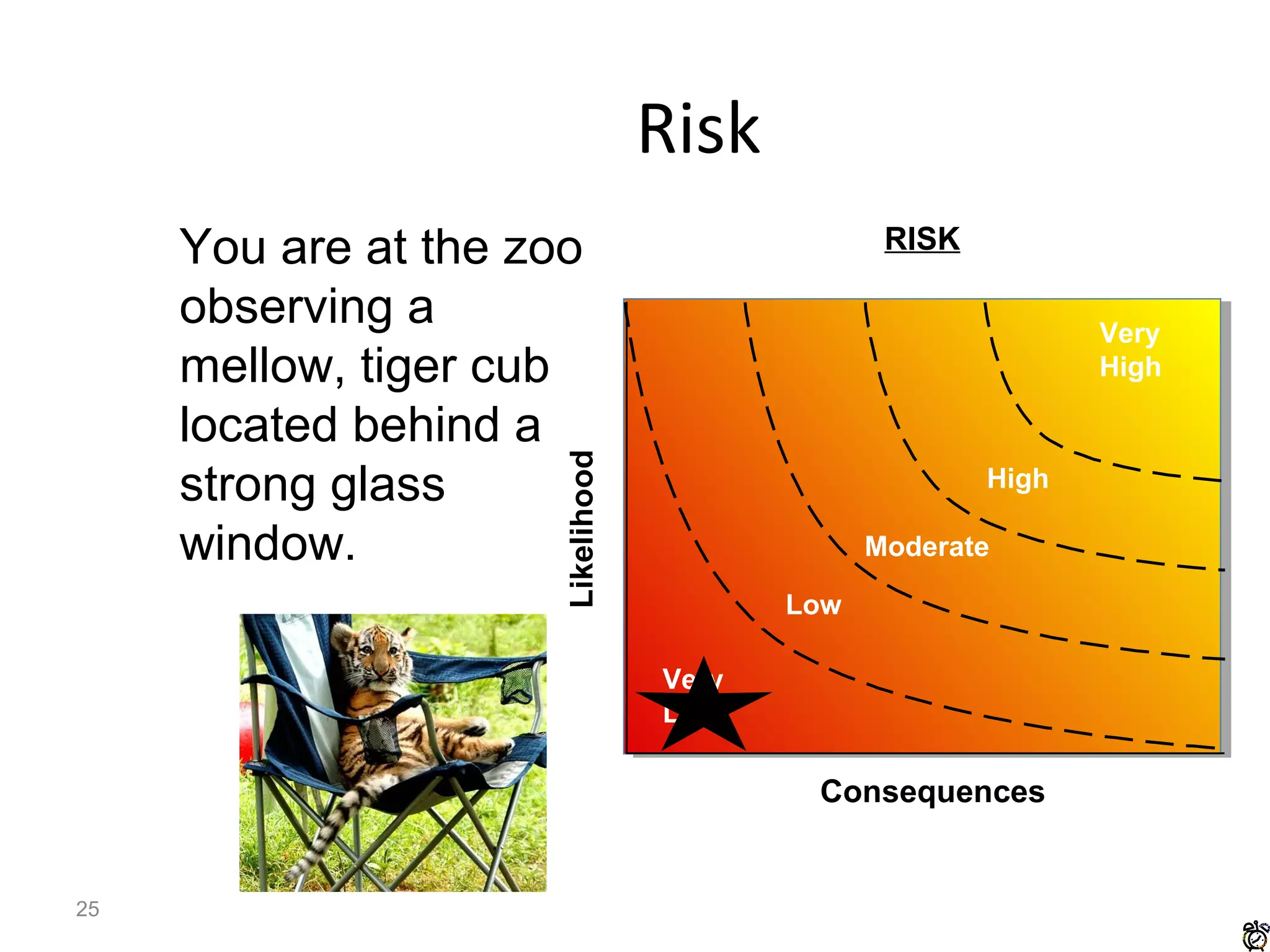
Risk
25
You are at the zoo
observing a
mellow, tiger cub
located behind a
strong glass
window.
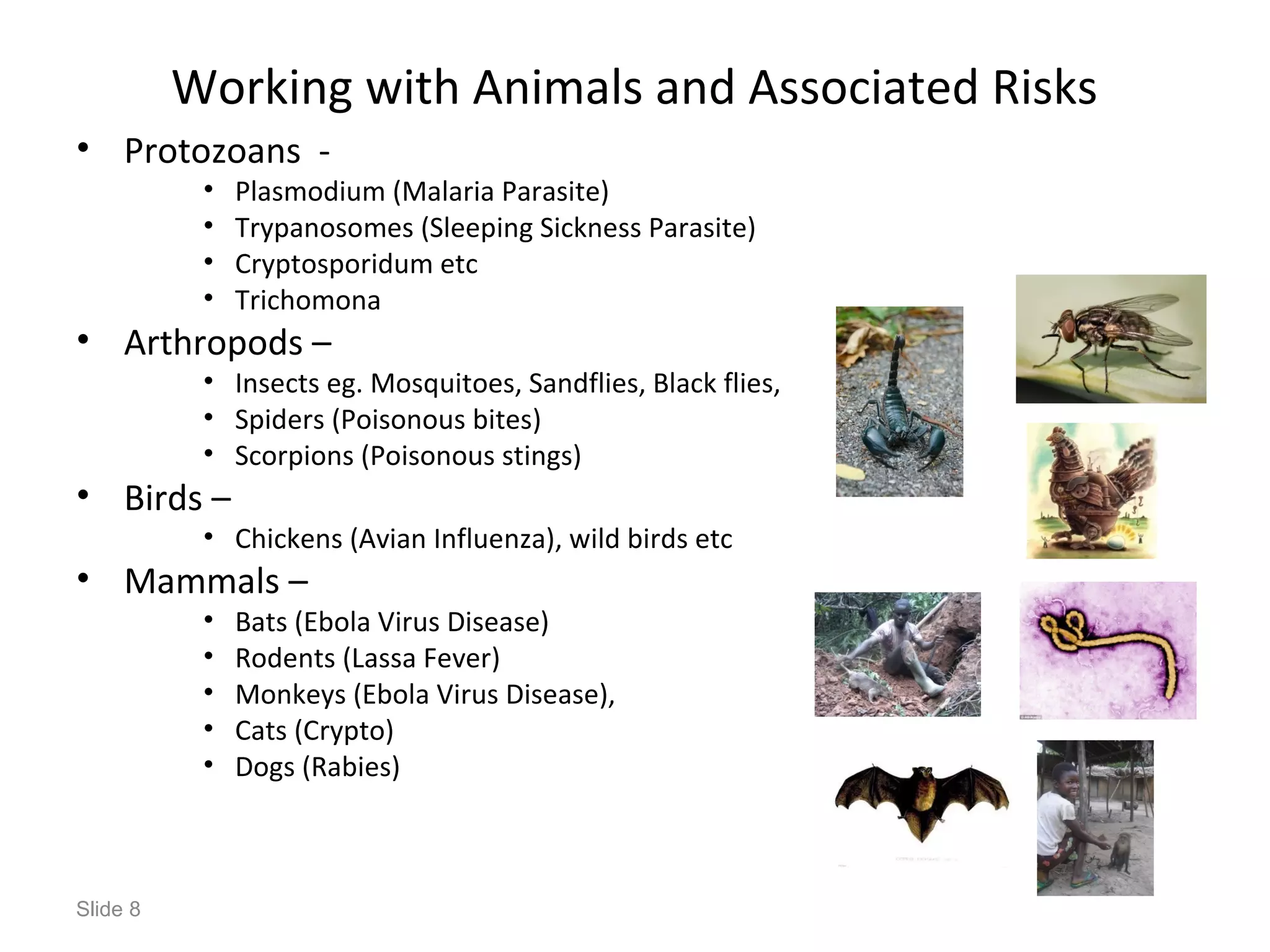
Working with Animals and Associated Risks
• Protozoans -
• Plasmodium (Malaria Parasite)
• Trypanosomes (Sleeping Sickness Parasite)
• Cryptosporidum etc
• Trichomona
• Arthropods –
• Insects eg. Mosquitoes, Sandflies, Black flies,
• Spiders (Poisonous bites)
• Scorpions (Poisonous stings)
• Birds –
• Chickens (Avian Influenza), wild birds etc
• Mammals –
• Bats (Ebola Virus Disease)
• Rodents (Lassa Fever)
• Monkeys (Ebola Virus Disease),
• Cats (Crypto)
• Dogs (Rabies)
Slide 8
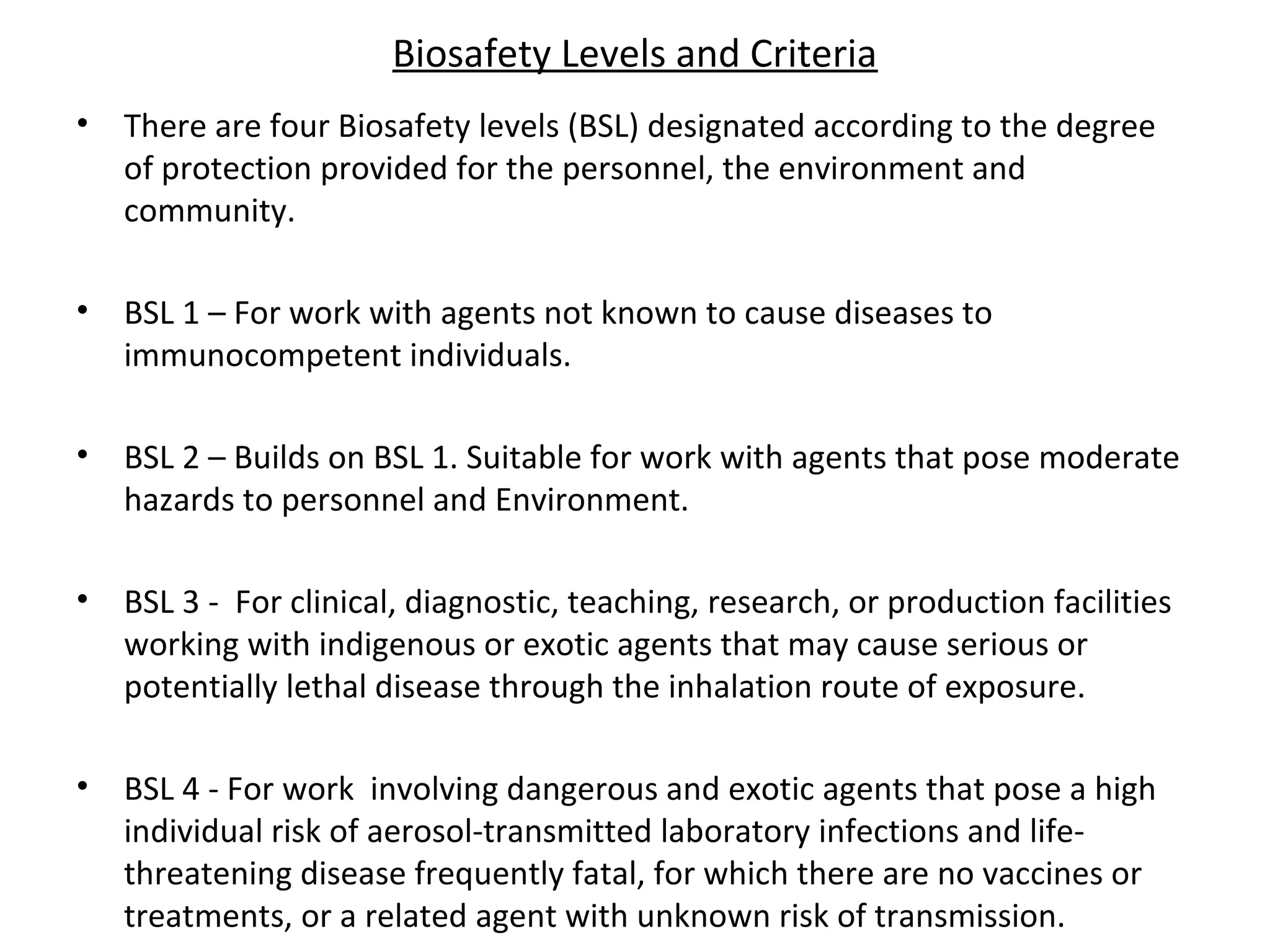
Biosafety Levels and Criteria
• There are four Biosafety levels (BSL) designated according to the degree
of protection provided for the personnel, the environment and
community.
• BSL 1 – For work with agents not known to cause diseases to
immunocompetent individuals.
• BSL 2 – Builds on BSL 1. Suitable for work with agents that pose moderate
hazards to personnel and Environment.
• BSL 3 - For clinical, diagnostic, teaching, research, or production facilities
working with indigenous or exotic agents that may cause serious or
potentially lethal disease through the inhalation route of exposure.
• BSL 4 - For work involving dangerous and exotic agents that pose a high
individual risk of aerosol-transmitted laboratory infections and life-
threatening disease frequently fatal, for which there are no vaccines or
treatments, or a related agent with unknown risk of transmission.
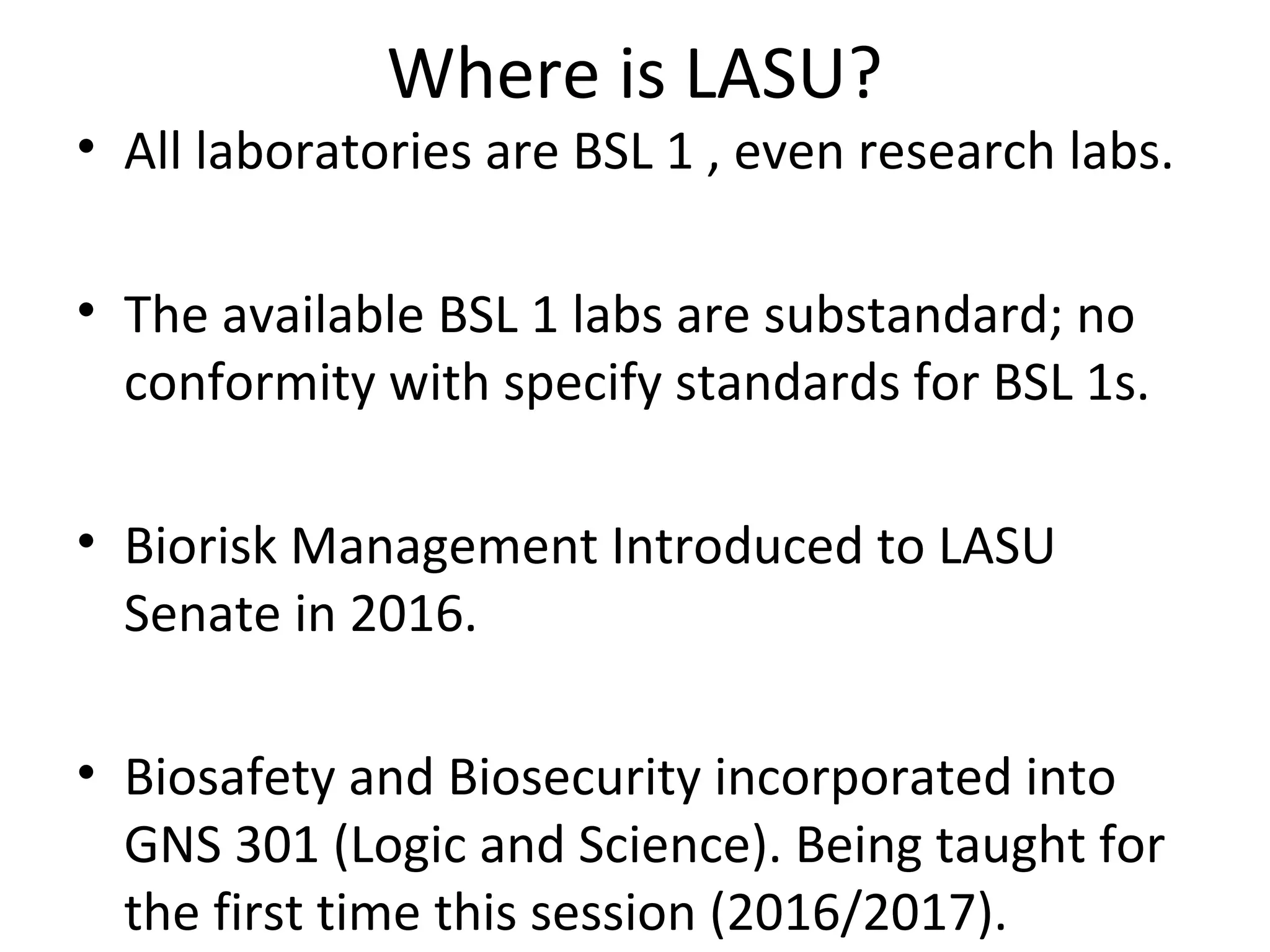
Where is LASU?
• All laboratories are BSL 1 , even research labs.
• The available BSL 1 labs are substandard; no
conformity with specify standards for BSL 1s.
• Biorisk Management Introduced to LASU
Senate in 2016.
• Biosafety and Biosecurity incorporated into
GNS 301 (Logic and Science). Being taught for
the first time this session (2016/2017).
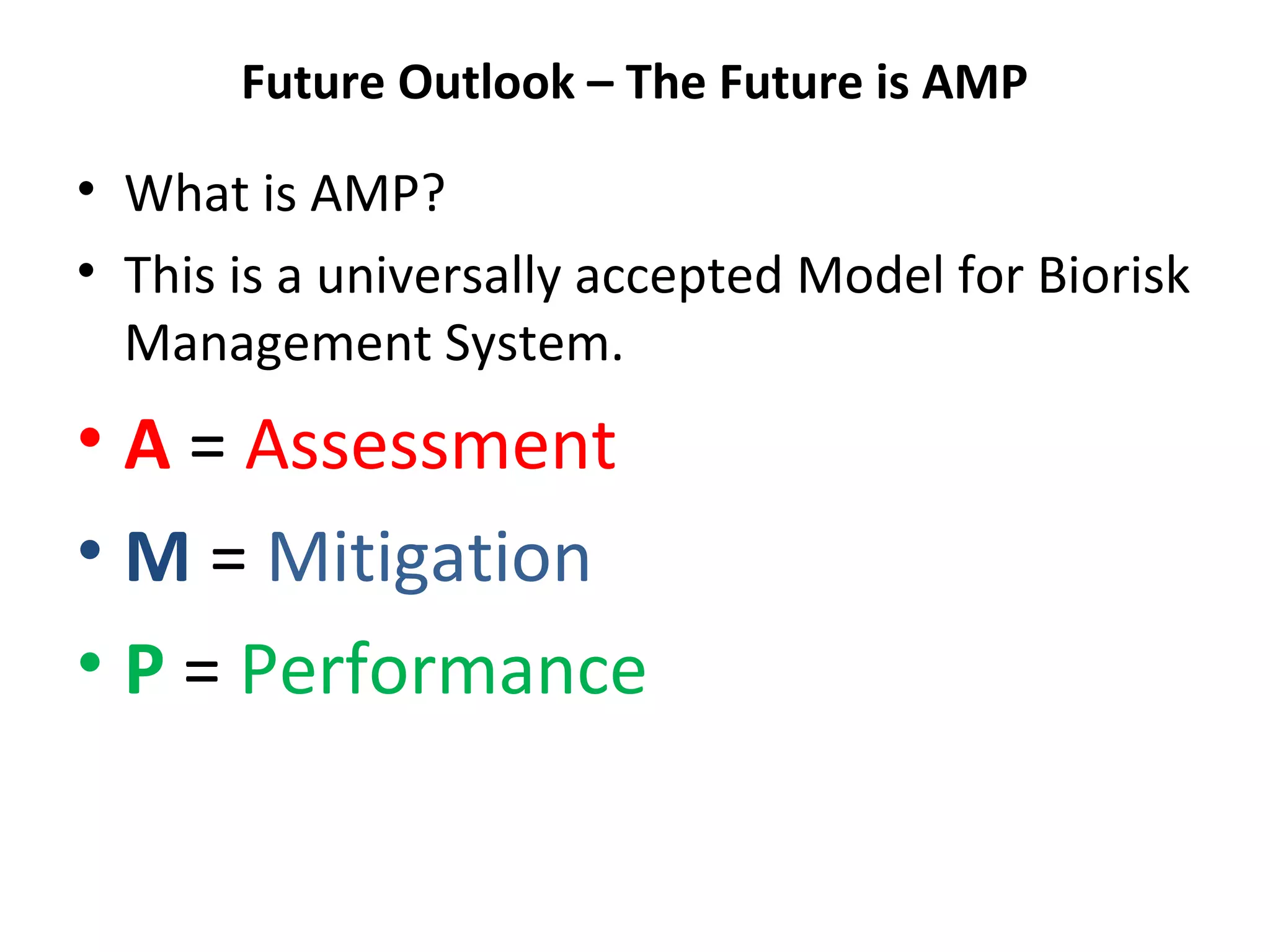
Future Outlook – The Future is AMP
• What is AMP?
• This is a universally accepted Model for Biorisk
Management System.
• A = Assessment
• M = Mitigation
• P = Performance
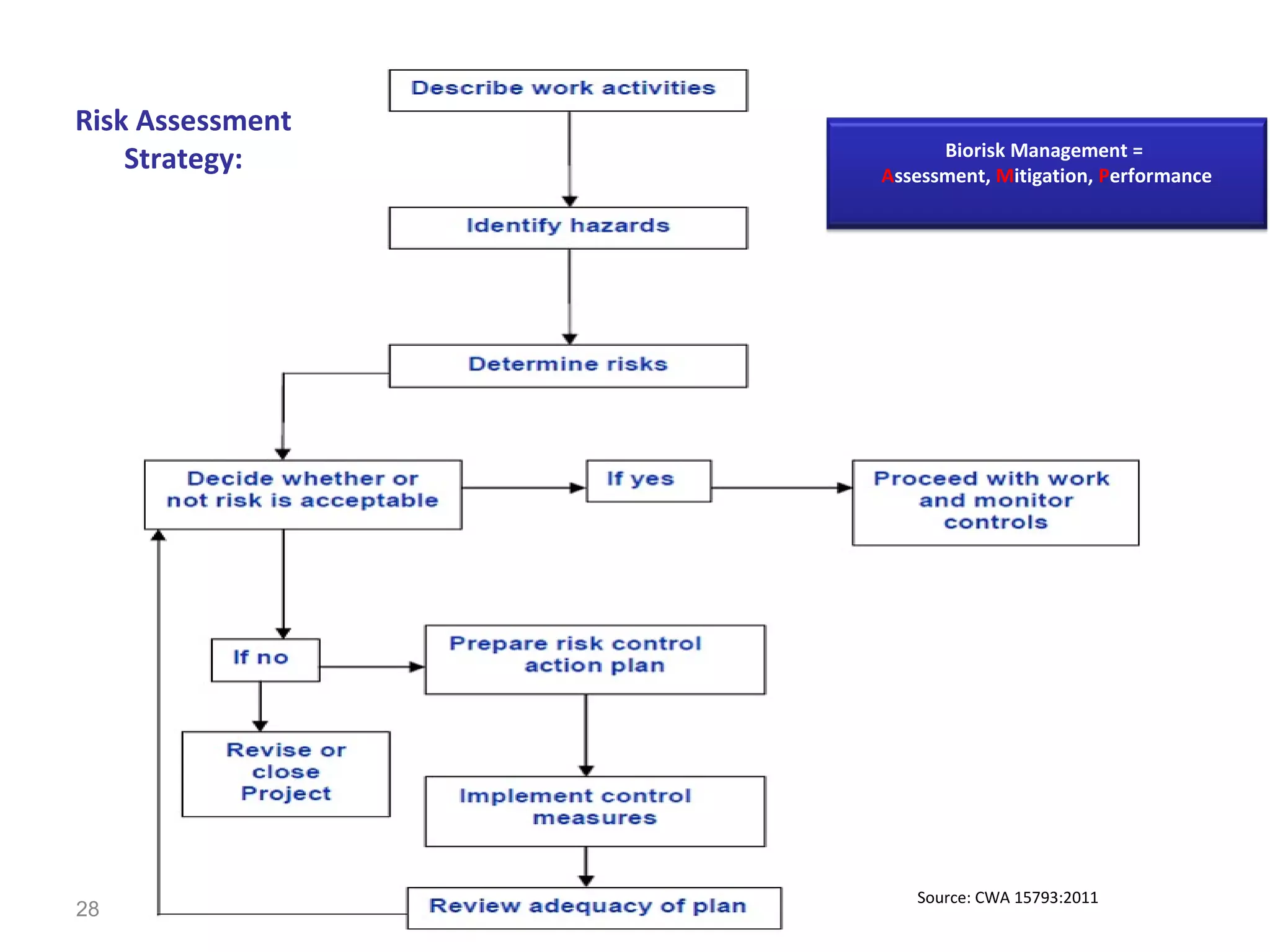
Risk Assessment
Strategy:
Source: CWA 15793:2011
Biorisk Management =
Assessment, Mitigation, Performance
28
Slide 13
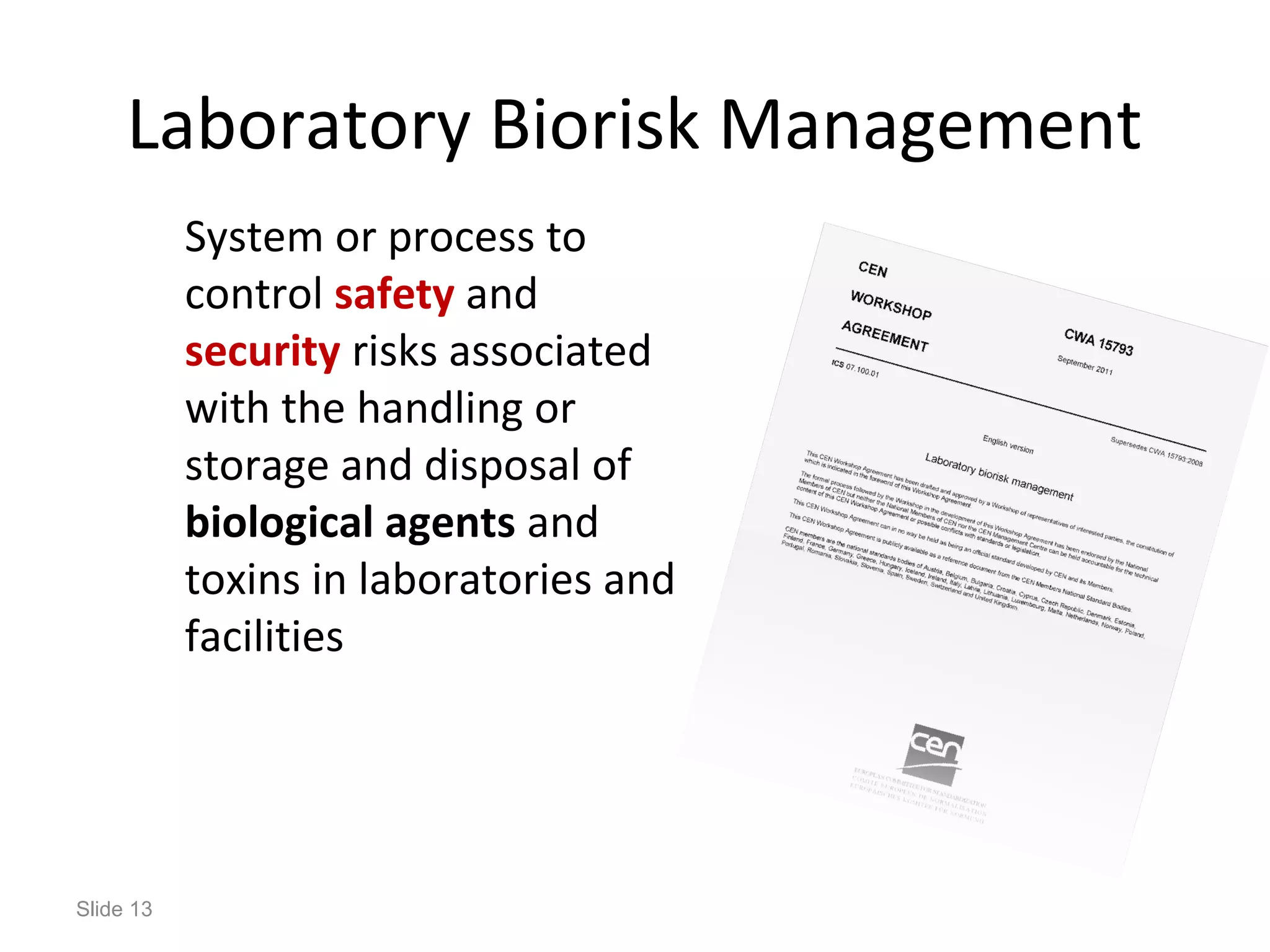
Laboratory Biorisk Management
System or process to
control safety and
security risks associated
with the handling or
storage and disposal of
biological agents and
toxins in laboratories and
facilities
CWA 15793 – International
Approach
• Derived from the current WHO
Biosafety and Biosecurity
Guidelines
• Consistent with other
international standards such as
– ISO 9001/14001 and OSHAS18001
• Not country specific
– Local solutions possible
– Compliance with national and
local regulations mandatory
Slide 14
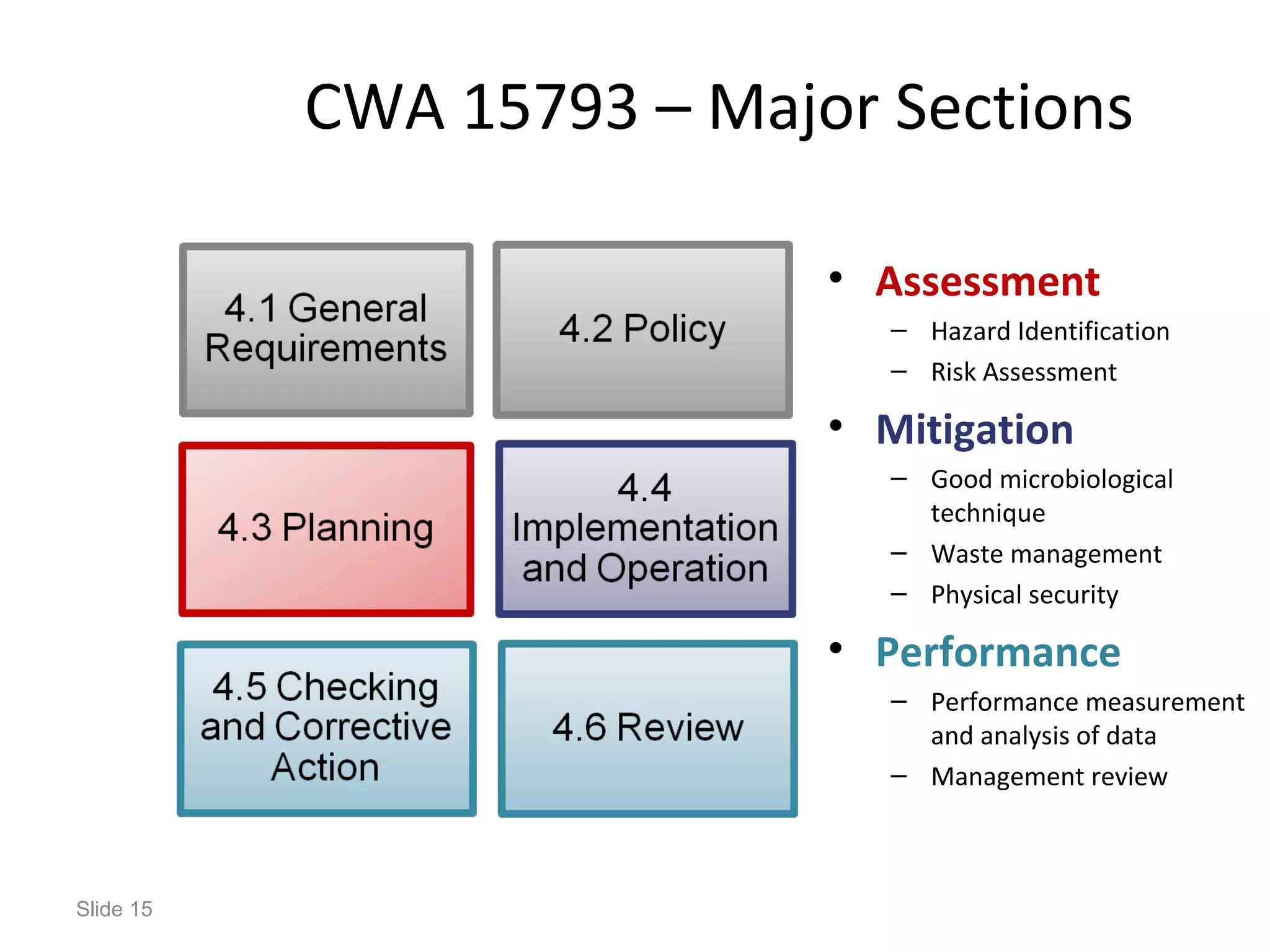
CWA 15793 – Major Sections
• Assessment
– Hazard Identification
– Risk Assessment
• Mitigation
– Good microbiological
technique
– Waste management
– Physical security
• Performance
– Performance measurement
and analysis of data
– Management review
Slide 15
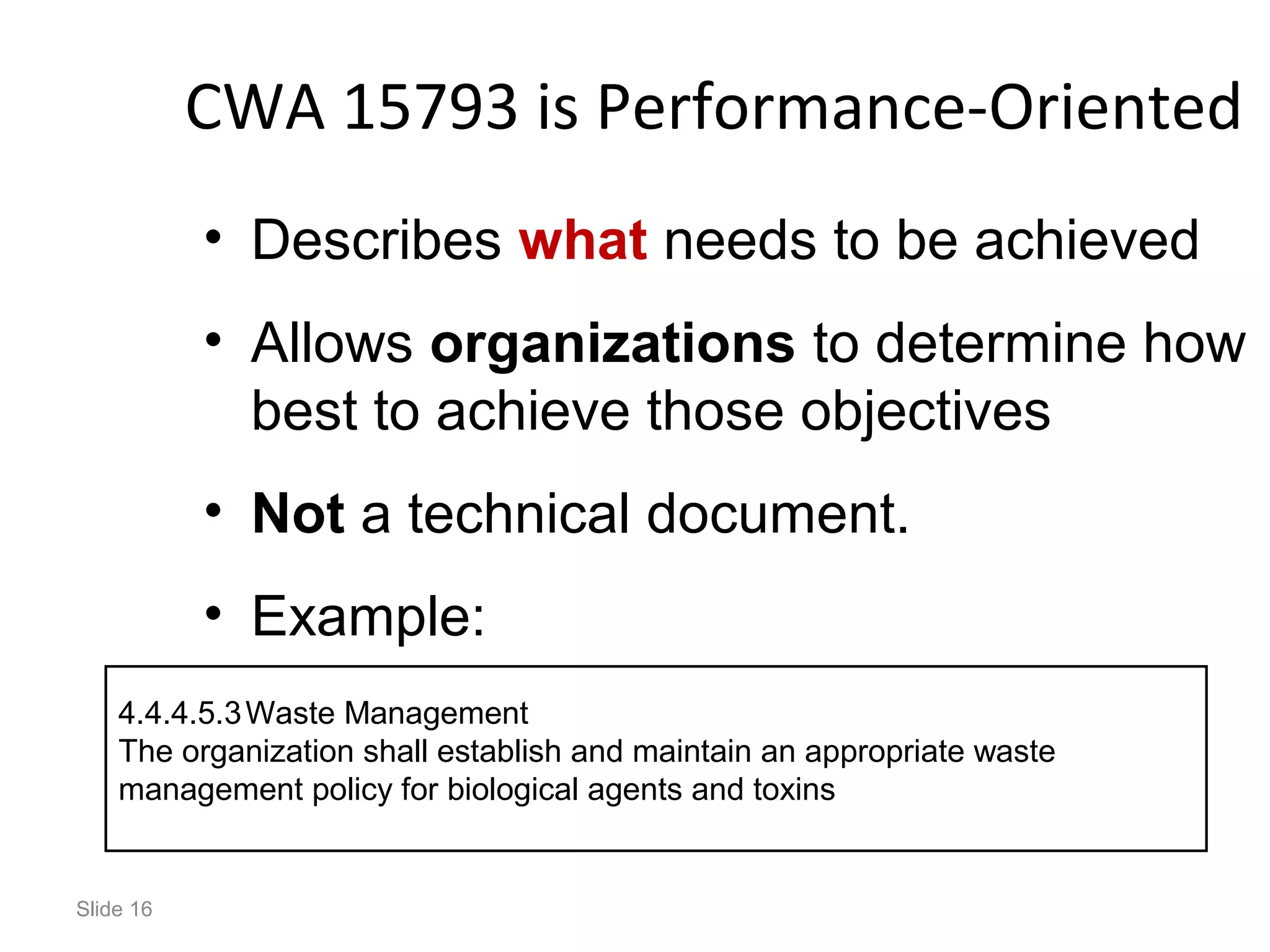
CWA 15793 is Performance-Oriented
• Describes what needs to be achieved
• Allows organizations to determine how
best to achieve those objectives
• Not a technical document.
• Example:
Slide 16
4.4.4.5.3Waste Management
The organization shall establish and maintain an appropriate waste
management policy for biological agents and toxins
• The lab worker/trainer/supervisor etc could
be using animals bearing pathogens. He must
be fully protected and has to train his students
from getting infected.
• The zoology and Environmental biologist must
key into the provisions of CWA 15793-2011
and operate with the standard for safe and
secure work with AMP Model.
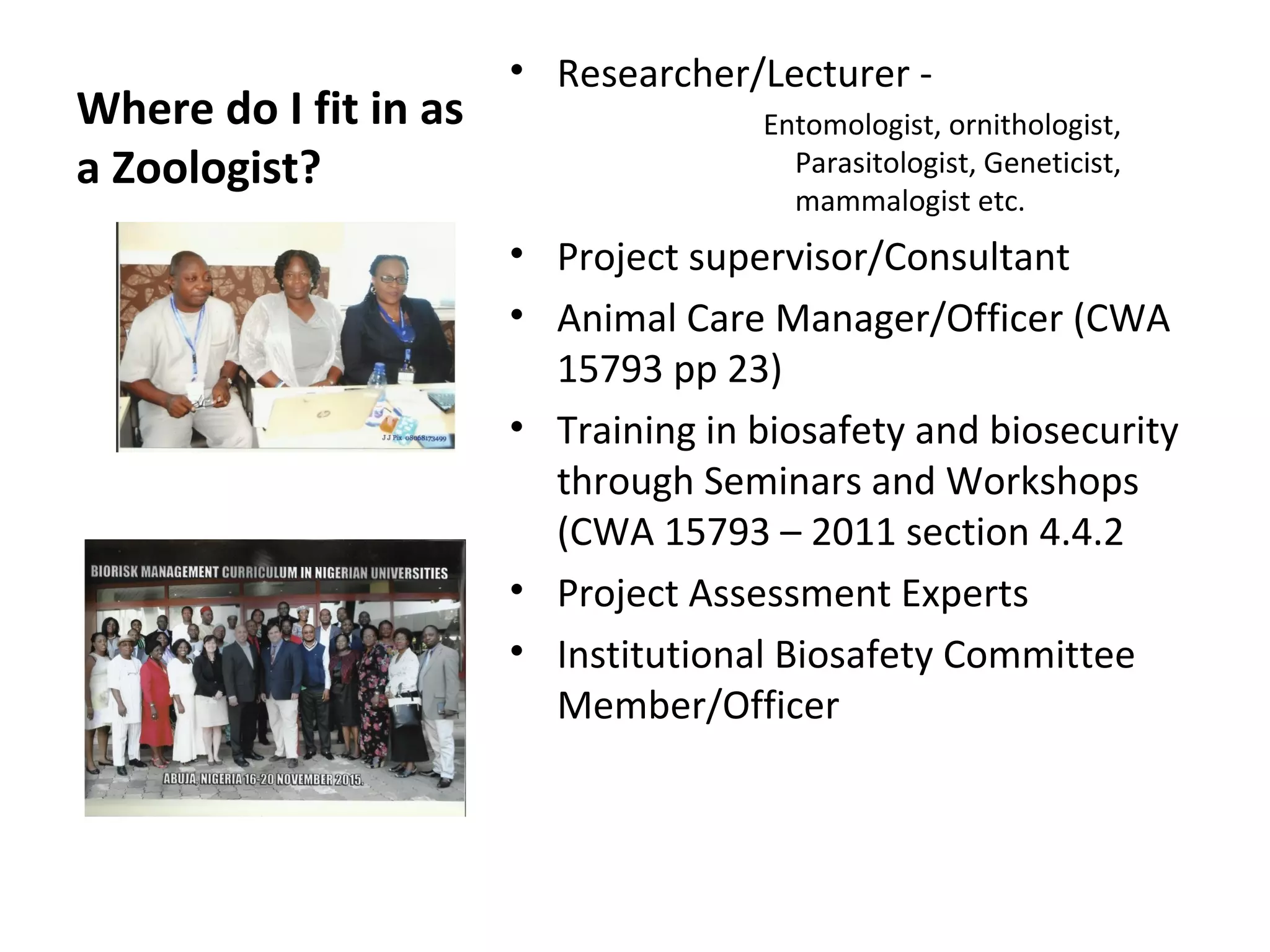
Where do I fit in as
a Zoologist?
• Researcher/Lecturer -
Entomologist, ornithologist,
Parasitologist, Geneticist,
mammalogist etc.
• Project supervisor/Consultant
• Animal Care Manager/Officer (CWA
15793 pp 23)
• Training in biosafety and biosecurity
through Seminars and Workshops
(CWA 15793 – 2011 section 4.4.2
• Project Assessment Experts
• Institutional Biosafety Committee
Member/Officer
•THANK YOU

Application of Biorisk Management for Learning and Research in Animals

  • 1.
    APPLICATION OF BIORISKMANAGEMENT FOR TRAINING AND RESEARCH ON ANIMALS Abiodun A. Denloye, PhD, mesn, IFBA-CP, FSEAN Dept of Zoology and Environmental Biology Lagos State University, Nigeria. Thursday 16th February 2017 www.denloye.com www.slideshare.net/abiodundenloye twitter@AbiodunDenloye
  • 2.
    OUTLINE • What isBiorisk? • Meaning and Scope of Biosafety • Biosafety and Biosecurity • Working with Animals and Associated Risks • Biosafety Levels and Criteria • Where is LASU? • The Future is AMP: Laboratory Biorisk Management. • Regulations - CWA15793 • Where do I Fit in as a Zoologist?
  • 3.
    What is Biorisk? Riskassociated with biological materials. Biorisk = Biosafety + Biosecurity Risks Slide 3
  • 4.
    Meaning and Scopeof Biosafety • (1) Biosafety is “the discipline addressing the safe handling and containment of infectious microorganisms and hazardous biological materials” (CDC, 2010). – This recognizes the subject with respect to microorganisms and hazardous biological materials. • (2) Biosafety is a concept that refers to the need to protect human health and the environment from the possible adverse effects of the products of modern biotechnology (Convention on Biological Diversity, 1992). This is one of the issues addressed by the CBD Biosafety refers to safe handling, containment, release and utilization of infectious microorganisms and actually or potentially hazardous biological materials including Genetically Modified Organisms (GMOs) with a view to protecting human health, plants and the environment from possible adverse effects.
  • 5.
    Biosecurity • Protection, control,and accountability for valuable biological materials in order to prevent their unauthorized access, loss, theft, misuse, diversion or intentional release. • A valuable biological material is a laboratory material that requires administrative oversight, control, accountability, and specific protective and monitoring measures in the laboratory. Examples include pathogens, toxins, non-pathogenic organisms, vaccine strains, foods, GMOs, cell components, genetic elements etc.
  • 6.
  • 7.
    Likelihood Very High Consequences Very Low Low Moderate High RISK Risk 25 You are atthe zoo observing a mellow, tiger cub located behind a strong glass window.
  • 8.
    Working with Animalsand Associated Risks • Protozoans - • Plasmodium (Malaria Parasite) • Trypanosomes (Sleeping Sickness Parasite) • Cryptosporidum etc • Trichomona • Arthropods – • Insects eg. Mosquitoes, Sandflies, Black flies, • Spiders (Poisonous bites) • Scorpions (Poisonous stings) • Birds – • Chickens (Avian Influenza), wild birds etc • Mammals – • Bats (Ebola Virus Disease) • Rodents (Lassa Fever) • Monkeys (Ebola Virus Disease), • Cats (Crypto) • Dogs (Rabies) Slide 8
  • 9.
    Biosafety Levels andCriteria • There are four Biosafety levels (BSL) designated according to the degree of protection provided for the personnel, the environment and community. • BSL 1 – For work with agents not known to cause diseases to immunocompetent individuals. • BSL 2 – Builds on BSL 1. Suitable for work with agents that pose moderate hazards to personnel and Environment. • BSL 3 - For clinical, diagnostic, teaching, research, or production facilities working with indigenous or exotic agents that may cause serious or potentially lethal disease through the inhalation route of exposure. • BSL 4 - For work involving dangerous and exotic agents that pose a high individual risk of aerosol-transmitted laboratory infections and life- threatening disease frequently fatal, for which there are no vaccines or treatments, or a related agent with unknown risk of transmission.
  • 10.
    Where is LASU? •All laboratories are BSL 1 , even research labs. • The available BSL 1 labs are substandard; no conformity with specify standards for BSL 1s. • Biorisk Management Introduced to LASU Senate in 2016. • Biosafety and Biosecurity incorporated into GNS 301 (Logic and Science). Being taught for the first time this session (2016/2017).
  • 11.
    Future Outlook –The Future is AMP • What is AMP? • This is a universally accepted Model for Biorisk Management System. • A = Assessment • M = Mitigation • P = Performance
  • 12.
    Risk Assessment Strategy: Source: CWA15793:2011 Biorisk Management = Assessment, Mitigation, Performance 28
  • 13.
    Slide 13 Laboratory BioriskManagement System or process to control safety and security risks associated with the handling or storage and disposal of biological agents and toxins in laboratories and facilities
  • 14.
    CWA 15793 –International Approach • Derived from the current WHO Biosafety and Biosecurity Guidelines • Consistent with other international standards such as – ISO 9001/14001 and OSHAS18001 • Not country specific – Local solutions possible – Compliance with national and local regulations mandatory Slide 14
  • 15.
    CWA 15793 –Major Sections • Assessment – Hazard Identification – Risk Assessment • Mitigation – Good microbiological technique – Waste management – Physical security • Performance – Performance measurement and analysis of data – Management review Slide 15
  • 16.
    CWA 15793 isPerformance-Oriented • Describes what needs to be achieved • Allows organizations to determine how best to achieve those objectives • Not a technical document. • Example: Slide 16 4.4.4.5.3Waste Management The organization shall establish and maintain an appropriate waste management policy for biological agents and toxins
  • 17.
    • The labworker/trainer/supervisor etc could be using animals bearing pathogens. He must be fully protected and has to train his students from getting infected. • The zoology and Environmental biologist must key into the provisions of CWA 15793-2011 and operate with the standard for safe and secure work with AMP Model.
  • 18.
    Where do Ifit in as a Zoologist? • Researcher/Lecturer - Entomologist, ornithologist, Parasitologist, Geneticist, mammalogist etc. • Project supervisor/Consultant • Animal Care Manager/Officer (CWA 15793 pp 23) • Training in biosafety and biosecurity through Seminars and Workshops (CWA 15793 – 2011 section 4.4.2 • Project Assessment Experts • Institutional Biosafety Committee Member/Officer
  • 19.