OVERVIEW OF BIOSAFETY
& BIOSECURITY
By DANNY SIWILA
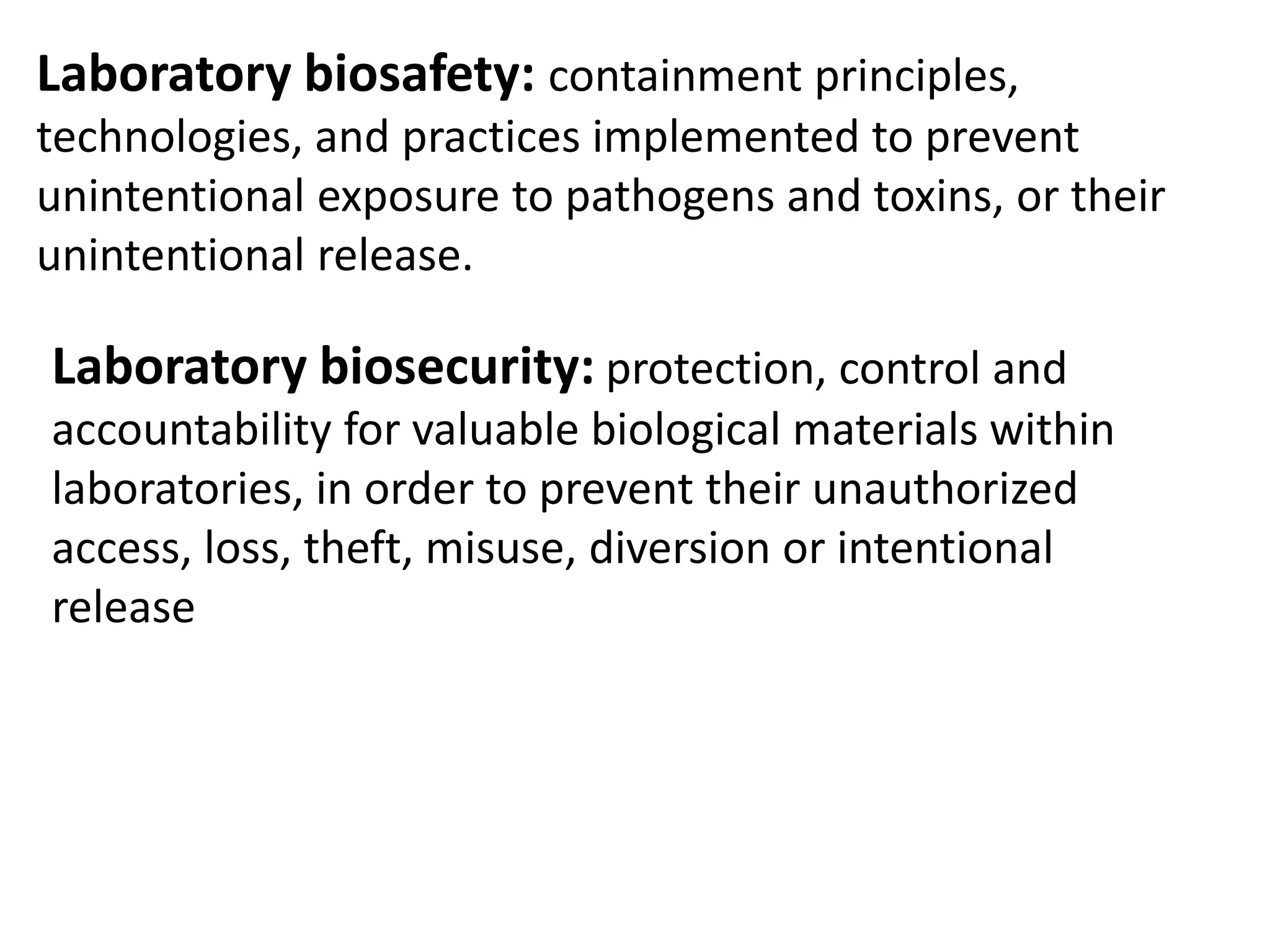
Laboratory biosafety: containment principles,
technologies, and practices implemented to prevent
unintentional exposure to pathogens and toxins, or their
unintentional release.
Laboratory biosecurity: protection, control and
accountability for valuable biological materials within
laboratories, in order to prevent their unauthorized
access, loss, theft, misuse, diversion or intentional
release
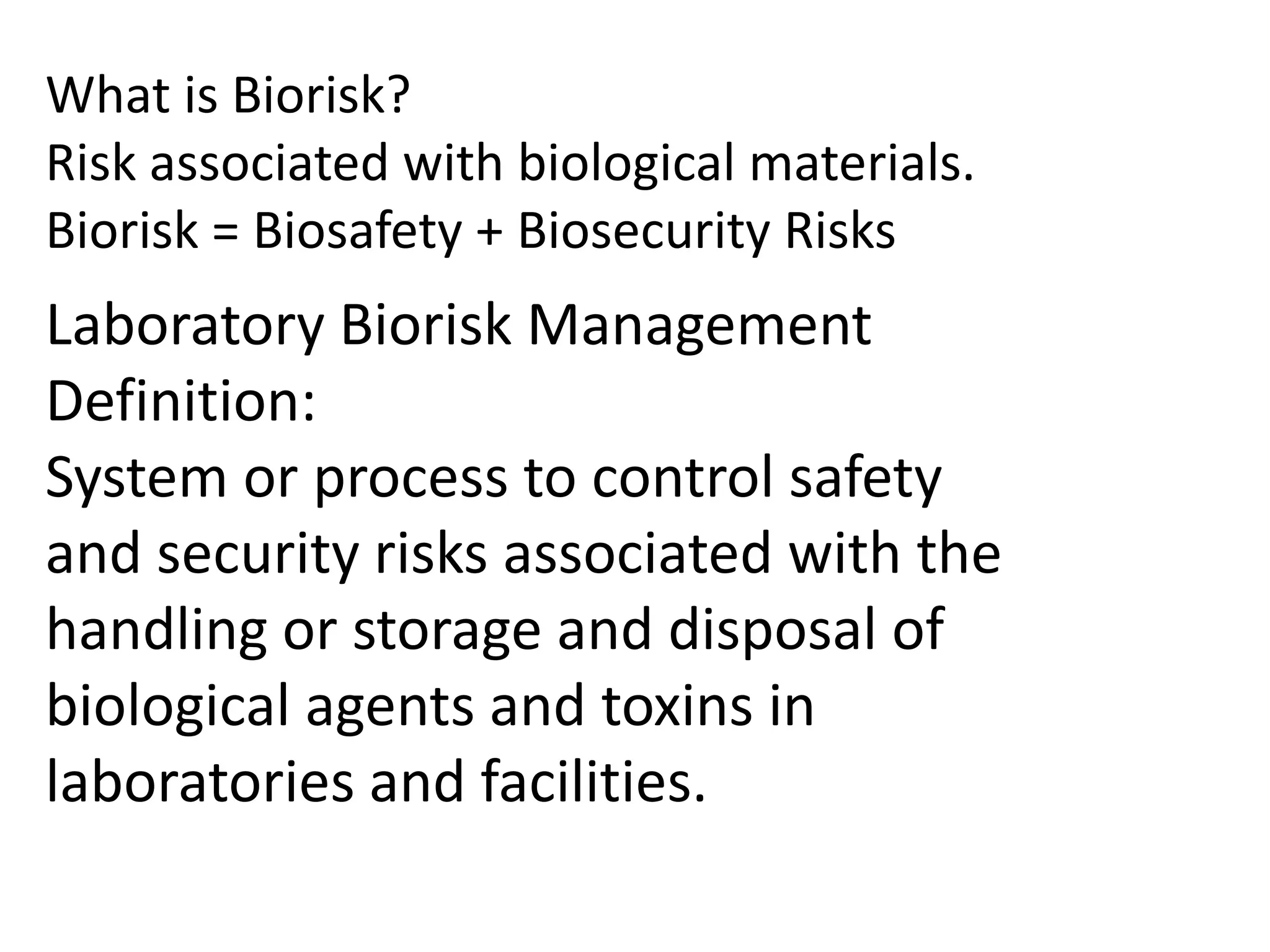
What is Biorisk?
Risk associated with biological materials.
Biorisk = Biosafety + Biosecurity Risks
Laboratory Biorisk Management
Definition:
System or process to control safety
and security risks associated with the
handling or storage and disposal of
biological agents and toxins in
laboratories and facilities.
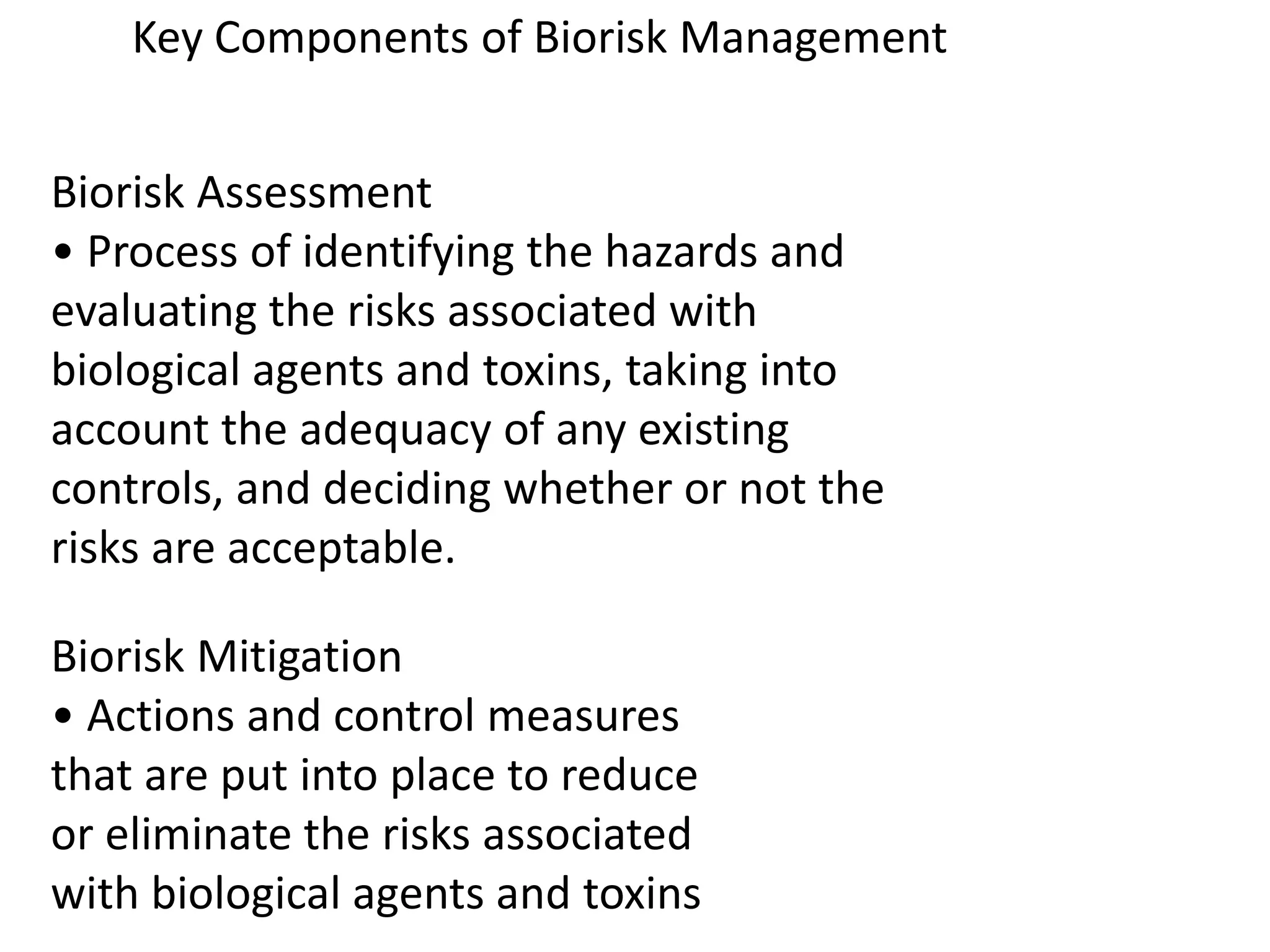
Biorisk Assessment
• Process of identifying the hazards and
evaluating the risks associated with
biological agents and toxins, taking into
account the adequacy of any existing
controls, and deciding whether or not the
risks are acceptable.
Biorisk Mitigation
• Actions and control measures
that are put into place to reduce
or eliminate the risks associated
with biological agents and toxins
Key Components of Biorisk Management
Biorisk Performance
•Improving biorisk management
by recording, measuring, and
evaluating organizational actions
and outcomes to reduce biorisk.
Key Components of Biorisk Management
The European Committee for Standardization (CEN)
Workshop Agreement 15793 (CWA 15973): Laboratory
Biorisk Management Standard is a management systems
approach that implements a plan-do-check-act cycle to
identify, monitor and control laboratory biosafety and
biosecurity.
The Standard was prepared through a CEN workshop on
Laboratory biosafety and biosecurity which was attended
by 76 experts from around the world. It was published in
2008, and updated in 2011, and is available in English,
French and German.

OVERVIEW OF BIOSAFETY & BIOSECURITY.pptx

  • 1.
    OVERVIEW OF BIOSAFETY &BIOSECURITY By DANNY SIWILA
  • 2.
    Laboratory biosafety: containmentprinciples, technologies, and practices implemented to prevent unintentional exposure to pathogens and toxins, or their unintentional release. Laboratory biosecurity: protection, control and accountability for valuable biological materials within laboratories, in order to prevent their unauthorized access, loss, theft, misuse, diversion or intentional release
  • 3.
    What is Biorisk? Riskassociated with biological materials. Biorisk = Biosafety + Biosecurity Risks Laboratory Biorisk Management Definition: System or process to control safety and security risks associated with the handling or storage and disposal of biological agents and toxins in laboratories and facilities.
  • 4.
    Biorisk Assessment • Processof identifying the hazards and evaluating the risks associated with biological agents and toxins, taking into account the adequacy of any existing controls, and deciding whether or not the risks are acceptable. Biorisk Mitigation • Actions and control measures that are put into place to reduce or eliminate the risks associated with biological agents and toxins Key Components of Biorisk Management
  • 5.
    Biorisk Performance •Improving bioriskmanagement by recording, measuring, and evaluating organizational actions and outcomes to reduce biorisk. Key Components of Biorisk Management
  • 6.
    The European Committeefor Standardization (CEN) Workshop Agreement 15793 (CWA 15973): Laboratory Biorisk Management Standard is a management systems approach that implements a plan-do-check-act cycle to identify, monitor and control laboratory biosafety and biosecurity. The Standard was prepared through a CEN workshop on Laboratory biosafety and biosecurity which was attended by 76 experts from around the world. It was published in 2008, and updated in 2011, and is available in English, French and German.