MCB 315
Biosafety anf Bioethics
BIOSAFETY
OUTLINE
 Introduction to Biosafety
 Classification of biosafety levels
 Description of biosafety levels
 Design of clean rooms and biosafety labs
Introduction to Biosafety
 Biosafety principles were generally applied in
microbiological and biomedical research laboratories
with consideration of occupational health and safety of
environment.
 In recent years biosafety principles were also applied
to research involving rDNA techniques which result in
production, handling, storing and transportation of
Genetically Modified Organisms (GMOs) also referred
to as Living Modified Organisms (LMOs).
 With this approach in understanding biosafety,
different definitions of the term biosafety have
emerged.
Definitions of Biosafety
1. Application of safety principles to laboratory practices
in which potentially hazardous biological material or
organisms are manipulated or handled.
2. Approaches in handling the perceived risks of GMOs
released into the environment, such as their possible
adverse impacts on biodiversity or human health.
Approaches may include guidelines or legally binding
instruments at the national and international level.
Definitions of Biosafety
3. Generally biosafety practices deals with the application
of safety principles in any environment where
hazardous biological material or agents or
microorganisms are handled, to minimize the potential
harmful effects to human’s health and environment.
 The hazardous biological material could be pathogenic
organisms of known risks or those suspected to have
harmful risks.
What is Biosafety?
 Biosafety refers to the “development and implementation
of administrative work practices, facility design and
safety equipment to prevent the transmission of
biological agents to workers, other persons or the
environment.”
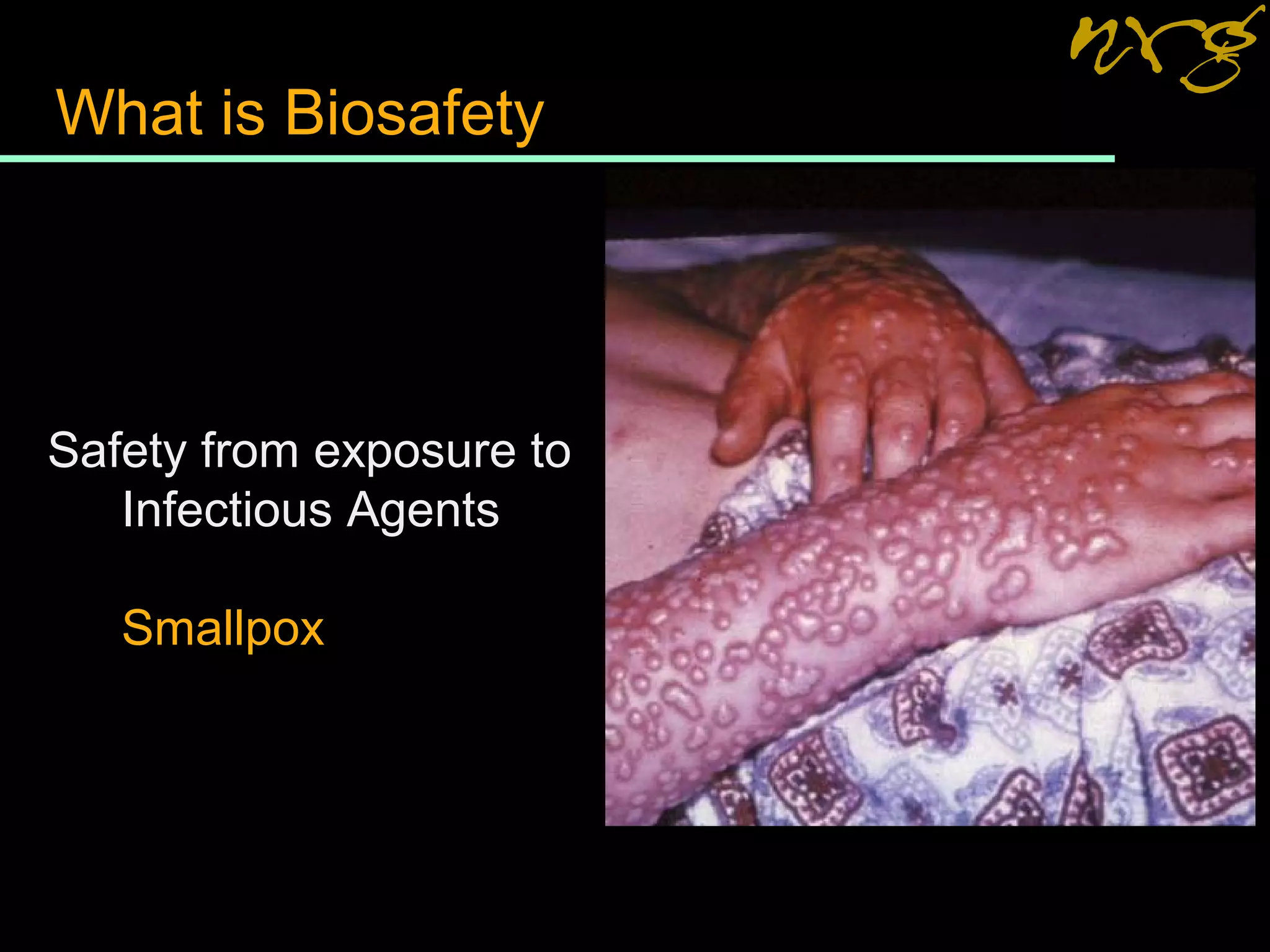
What is Biosafety
Safety from exposure to
Infectious Agents
Smallpox
What is Biosecurity
 Security measures to protect the release of high
consequence microbial agents, biological pathogens,
toxins, critical information, pests or diseases as a result
of theft or misuse.
Biohazards
• An agent of biological origin that has the capacity to
produce deleterious effects on humans, animals,
plants and insects.
 These include microorganisms, toxins and allergens
derived from those organisms and
 allergens and toxins derived from insects, animals
and plants.
Biosafety in various disciplines
Ecology
referring to imported life forms not indigenous to the region
Agriculture
reducing the risk of alien viral or transgenic genes, and
reducing the risk of food bacterial contamination
Medicine
referring to organs or tissues from biological origin, or
genetic therapy products, virus; levels of lab containment
protocols BSL-1, 2, 3, 4 in increasing order of
danger
Biosafety in various disciplines
Chemistry
Such as nitrates in water, PCB levels affecting fertility
Exobiology
This includes NASA's policy for containing alien microbes
that may exist on space samples – sometimes called
"biosafety level 5"
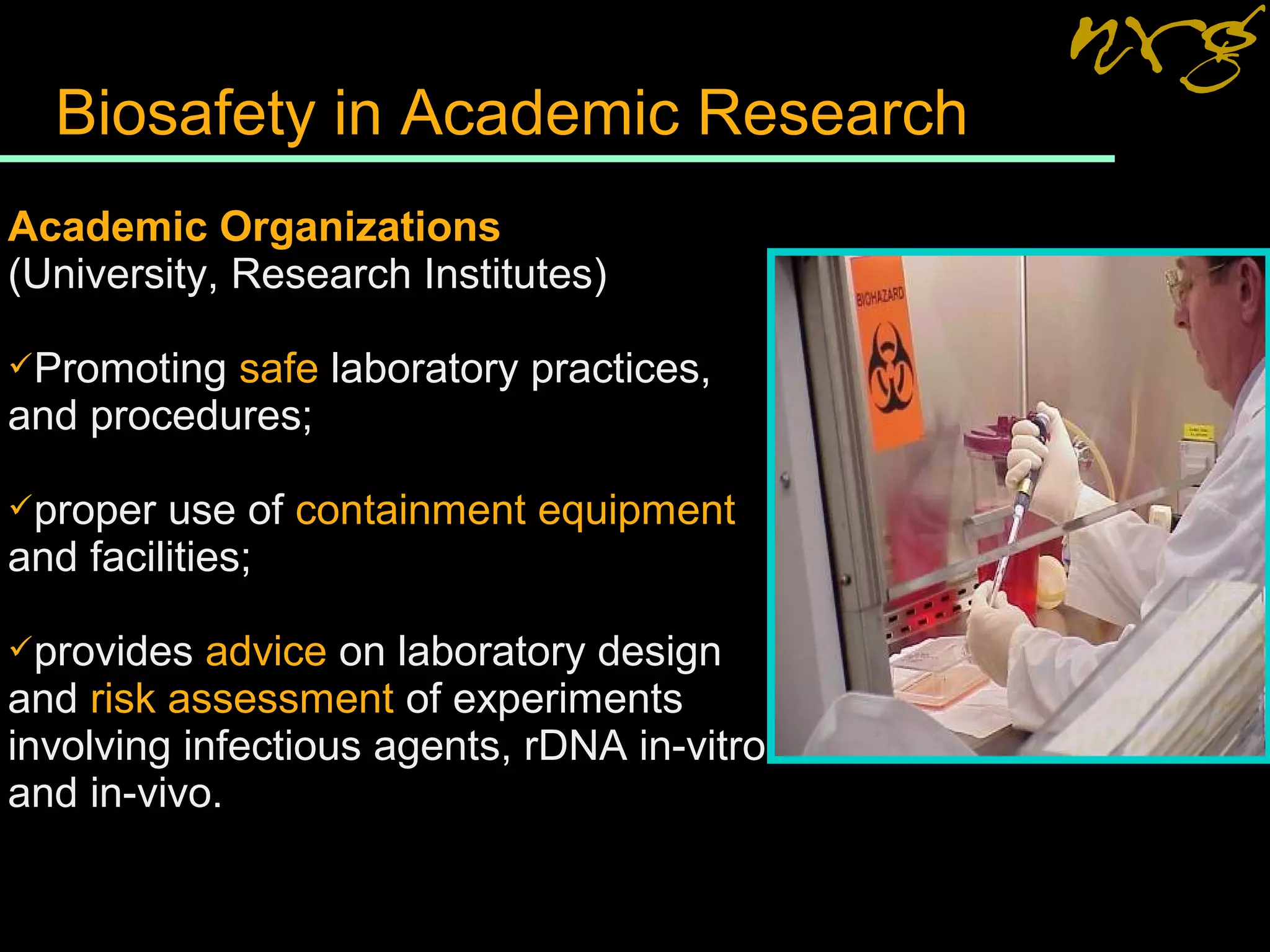
Biosafety in Academic Research
Academic Organizations
(University, Research Institutes)
Promoting safe laboratory practices,
and procedures;
proper use of containment equipment
and facilities;
provides advice on laboratory design
and risk assessment of experiments
involving infectious agents, rDNA in-vitro
and in-vivo.
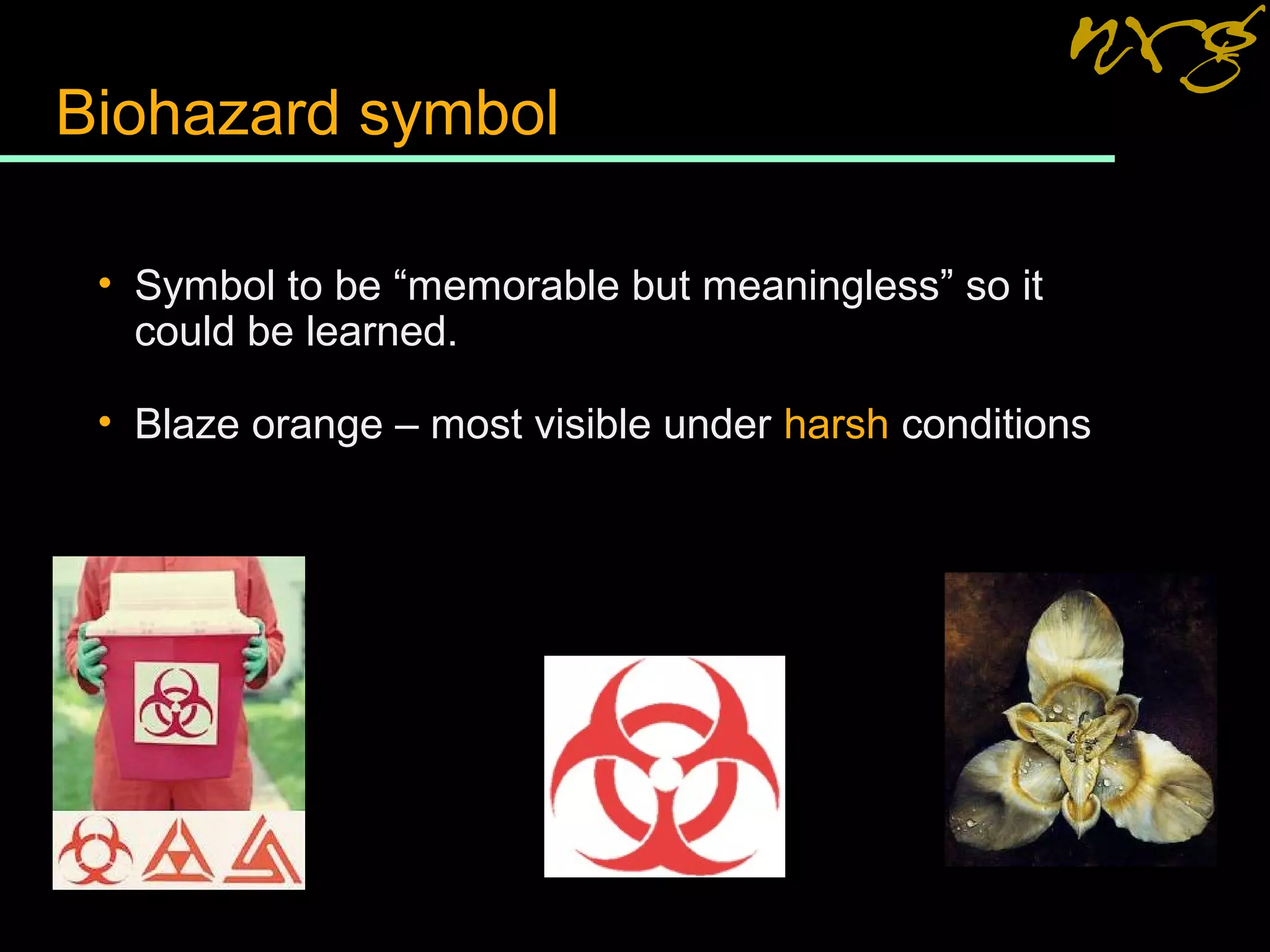
Biohazard symbol
• Symbol to be “memorable but meaningless” so it
could be learned.
• Blaze orange – most visible under harsh conditions
Biosafety issues
 Laboratory Safety
 Bloodborne pathogens (BBP)
 Recombinant DNA (rDNA)
 Biological waste disposal
 Infectious substance and diagnostic specimen shipping
 Respiratory Protection
 Bioterrorism and Select agents
 Mold and indoor air quality
 Occupational safety and health in the use of research
animals
Biohazardous materials
 Viruses
 Bacteria
 Fungi
 Chlamydiae/Rickettsiae
 Prions
 Recombinant DNA
 Transgenic Plant and Animals
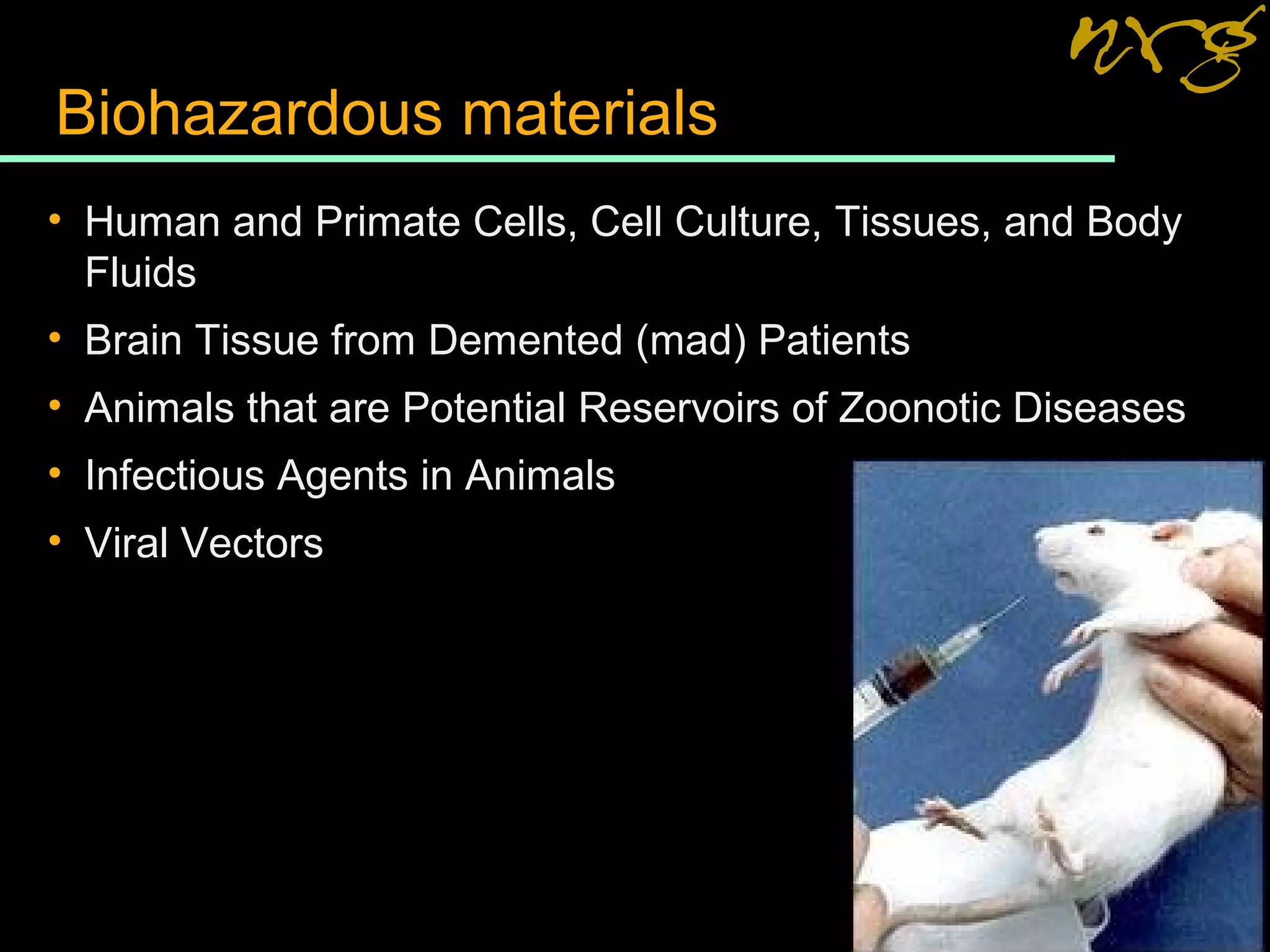
Biohazardous materials
• Human and Primate Cells, Cell Culture, Tissues, and Body
Fluids
• Brain Tissue from Demented (mad) Patients
• Animals that are Potential Reservoirs of Zoonotic Diseases
• Infectious Agents in Animals
• Viral Vectors
Concept of Biosafety
Principles of Biosafety:
Includes;
• Practice and Procedure
 Standard Practices
 Special Practices & Considerations
• Safety Equipment
• Facility Design and Construction
• Increasing levels of protection
Principle of Biosafety for Mic. Biom Lab
 Increasing levels of personnel and environmental
protection
 Providing guidelines for working safely in laboratories
involved in microbiological, biomedical and genetic
modification activities
 Guidelines describe practices, techniques, safety
equipment and other facilities which will ensure safety
Principle of Biosafety for Mic. Biom Lab
 Laboratories require superiors or supervisors who are
knowledgeable with biosafety procedures and
practices.
 Personnel working in such laboratories need to know
of potential hazards and
 Also should have proficiency in practice and
techniques of executing their work.
Principle of Biosafety for Mic. Biom Lab
 Laboratories need to have biosafety manual
 specific to the kind of activities taking place in the
laboratory, and
 risks that may arise from those activities.
 Laboratories handling hazardous biological material
should be categorized into biosafety levels
depending on what type and category of risks they
are designed to handle.
Principle of Biosafety for Mic. Biom Lab
 The levels of biosafety vary with the:
type of activities taking place and
the severity of associated risks to be regulated
Laboratories should allow only those activities
whose risks they can handle or
which are manageable by the design and
facilities available.
Principle of Biosafety for Mic. Biom Lab
 The risks being avoided can be categorized
into the following categories:
 Direct effects
 Indirect effect
 Immediate effects
 Delayed effects
 Cumulative long term effects
Principle of Biosafety for Mic. Biom Lab
 Worldwide, development in biotechnology
application - generated a number of
 human health,
 environment,
 economic and social concerns on the safety of
the technology.
 Many of these concerns have legal, policy and
ethical aspects to the extent that they are
addressed by national and global policies and
regulations.
Principle of Biosafety for Mic. Biom Lab
 Safety concerns on application of biotechnology will be
discussed under the issues associated with the benefits
and risk concerns on biotechnology
These issues will include:
1. Biosafety of genetically modified organisms (GMOs)
2. Biopolicy: Guiding policy to biotechnology application and
regulation
3. Biopolitics: Politicization of modern biotechnology issues
with the political stream that influence public policy
Principle of Biosafety for Mic. Biom Lab
4. Bioethics with respect to biotechnology: Refers to
principles and practice of applying biotechnology
without doing harm to humans and environment
5. Biosecurity: Protection of high-consequence
microbial agents and toxins, or critical relevant
information, against theft or diversion by those who
intend to pursue intentional misuse
Principle of Biosafety for Mic. Biom Lab
6. Bioweapons: Use of biologic agents or toxins (e.g.,
pathogenic organisms that affect humans, animals, or
plants) as weapons
7. Bioterrorism: Use of biologic agents or toxins (e.g.,
pathogenic organisms that affect humans, animals, or
plants) for terrorist purposes.
8. Bioeconomy: Economy depending on bioscience-
based technology or biotechnology-based economic
activities

Biosafety lecture 1[1]

  • 1.
  • 2.
    BIOSAFETY OUTLINE  Introduction toBiosafety  Classification of biosafety levels  Description of biosafety levels  Design of clean rooms and biosafety labs
  • 3.
    Introduction to Biosafety Biosafety principles were generally applied in microbiological and biomedical research laboratories with consideration of occupational health and safety of environment.  In recent years biosafety principles were also applied to research involving rDNA techniques which result in production, handling, storing and transportation of Genetically Modified Organisms (GMOs) also referred to as Living Modified Organisms (LMOs).  With this approach in understanding biosafety, different definitions of the term biosafety have emerged.
  • 4.
    Definitions of Biosafety 1.Application of safety principles to laboratory practices in which potentially hazardous biological material or organisms are manipulated or handled. 2. Approaches in handling the perceived risks of GMOs released into the environment, such as their possible adverse impacts on biodiversity or human health. Approaches may include guidelines or legally binding instruments at the national and international level.
  • 5.
    Definitions of Biosafety 3.Generally biosafety practices deals with the application of safety principles in any environment where hazardous biological material or agents or microorganisms are handled, to minimize the potential harmful effects to human’s health and environment.  The hazardous biological material could be pathogenic organisms of known risks or those suspected to have harmful risks.
  • 6.
    What is Biosafety? Biosafety refers to the “development and implementation of administrative work practices, facility design and safety equipment to prevent the transmission of biological agents to workers, other persons or the environment.”
  • 7.
    What is Biosafety Safetyfrom exposure to Infectious Agents Smallpox
  • 8.
    What is Biosecurity Security measures to protect the release of high consequence microbial agents, biological pathogens, toxins, critical information, pests or diseases as a result of theft or misuse.
  • 9.
    Biohazards • An agentof biological origin that has the capacity to produce deleterious effects on humans, animals, plants and insects.  These include microorganisms, toxins and allergens derived from those organisms and  allergens and toxins derived from insects, animals and plants.
  • 10.
    Biosafety in variousdisciplines Ecology referring to imported life forms not indigenous to the region Agriculture reducing the risk of alien viral or transgenic genes, and reducing the risk of food bacterial contamination Medicine referring to organs or tissues from biological origin, or genetic therapy products, virus; levels of lab containment protocols BSL-1, 2, 3, 4 in increasing order of danger
  • 11.
    Biosafety in variousdisciplines Chemistry Such as nitrates in water, PCB levels affecting fertility Exobiology This includes NASA's policy for containing alien microbes that may exist on space samples – sometimes called "biosafety level 5"
  • 12.
    Biosafety in AcademicResearch Academic Organizations (University, Research Institutes) Promoting safe laboratory practices, and procedures; proper use of containment equipment and facilities; provides advice on laboratory design and risk assessment of experiments involving infectious agents, rDNA in-vitro and in-vivo.
  • 13.
    Biohazard symbol • Symbolto be “memorable but meaningless” so it could be learned. • Blaze orange – most visible under harsh conditions
  • 14.
    Biosafety issues  LaboratorySafety  Bloodborne pathogens (BBP)  Recombinant DNA (rDNA)  Biological waste disposal  Infectious substance and diagnostic specimen shipping  Respiratory Protection  Bioterrorism and Select agents  Mold and indoor air quality  Occupational safety and health in the use of research animals
  • 15.
    Biohazardous materials  Viruses Bacteria  Fungi  Chlamydiae/Rickettsiae  Prions  Recombinant DNA  Transgenic Plant and Animals
  • 16.
    Biohazardous materials • Humanand Primate Cells, Cell Culture, Tissues, and Body Fluids • Brain Tissue from Demented (mad) Patients • Animals that are Potential Reservoirs of Zoonotic Diseases • Infectious Agents in Animals • Viral Vectors
  • 17.
    Concept of Biosafety Principlesof Biosafety: Includes; • Practice and Procedure  Standard Practices  Special Practices & Considerations • Safety Equipment • Facility Design and Construction • Increasing levels of protection
  • 18.
    Principle of Biosafetyfor Mic. Biom Lab  Increasing levels of personnel and environmental protection  Providing guidelines for working safely in laboratories involved in microbiological, biomedical and genetic modification activities  Guidelines describe practices, techniques, safety equipment and other facilities which will ensure safety
  • 19.
    Principle of Biosafetyfor Mic. Biom Lab  Laboratories require superiors or supervisors who are knowledgeable with biosafety procedures and practices.  Personnel working in such laboratories need to know of potential hazards and  Also should have proficiency in practice and techniques of executing their work.
  • 20.
    Principle of Biosafetyfor Mic. Biom Lab  Laboratories need to have biosafety manual  specific to the kind of activities taking place in the laboratory, and  risks that may arise from those activities.  Laboratories handling hazardous biological material should be categorized into biosafety levels depending on what type and category of risks they are designed to handle.
  • 21.
    Principle of Biosafetyfor Mic. Biom Lab  The levels of biosafety vary with the: type of activities taking place and the severity of associated risks to be regulated Laboratories should allow only those activities whose risks they can handle or which are manageable by the design and facilities available.
  • 22.
    Principle of Biosafetyfor Mic. Biom Lab  The risks being avoided can be categorized into the following categories:  Direct effects  Indirect effect  Immediate effects  Delayed effects  Cumulative long term effects
  • 23.
    Principle of Biosafetyfor Mic. Biom Lab  Worldwide, development in biotechnology application - generated a number of  human health,  environment,  economic and social concerns on the safety of the technology.  Many of these concerns have legal, policy and ethical aspects to the extent that they are addressed by national and global policies and regulations.
  • 24.
    Principle of Biosafetyfor Mic. Biom Lab  Safety concerns on application of biotechnology will be discussed under the issues associated with the benefits and risk concerns on biotechnology These issues will include: 1. Biosafety of genetically modified organisms (GMOs) 2. Biopolicy: Guiding policy to biotechnology application and regulation 3. Biopolitics: Politicization of modern biotechnology issues with the political stream that influence public policy
  • 25.
    Principle of Biosafetyfor Mic. Biom Lab 4. Bioethics with respect to biotechnology: Refers to principles and practice of applying biotechnology without doing harm to humans and environment 5. Biosecurity: Protection of high-consequence microbial agents and toxins, or critical relevant information, against theft or diversion by those who intend to pursue intentional misuse
  • 26.
    Principle of Biosafetyfor Mic. Biom Lab 6. Bioweapons: Use of biologic agents or toxins (e.g., pathogenic organisms that affect humans, animals, or plants) as weapons 7. Bioterrorism: Use of biologic agents or toxins (e.g., pathogenic organisms that affect humans, animals, or plants) for terrorist purposes. 8. Bioeconomy: Economy depending on bioscience- based technology or biotechnology-based economic activities