Basics of Biosafety
Working Safely with Biological Materials
Central Michigan University
College of Science and Technology
 Principles and practices employed to protect
laboratory personnel and the environment from
exposure or infection while working with living
organisms, biological materials, or agents.
 Included are any materials that may be potentially
infectious.
 Includes recombinant DNA research
What is Biosafety?
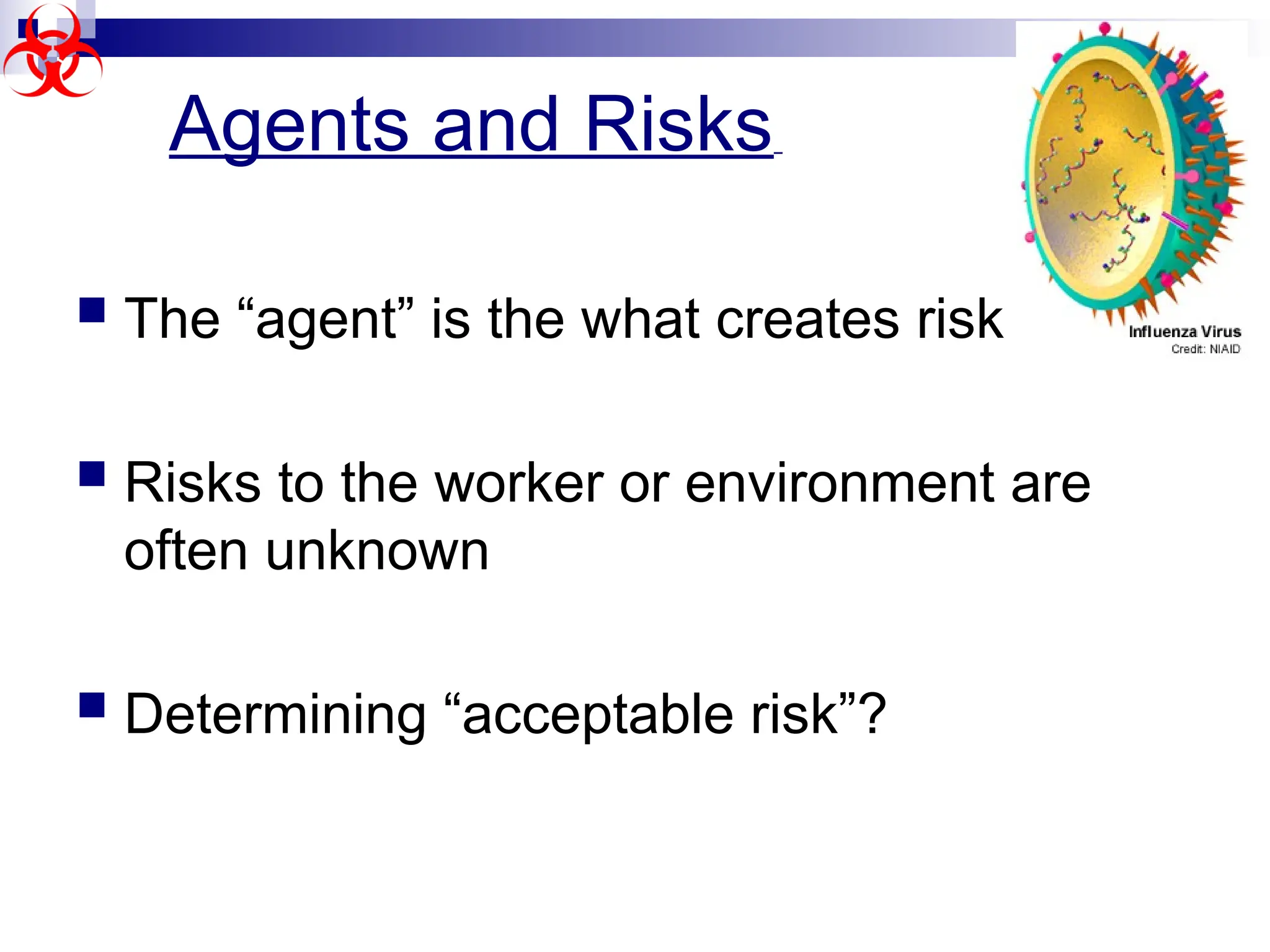
 The “agent” is the what creates risk
 Risks to the worker or environment are
often unknown
 Determining “acceptable risk”?
Agents and Risks
There is always risk!
The risk must be identified
The risk is evaluated
The risk must be measured
Plan to minimize the risk
Assessing Risk
 Assessment is conducted by a Biosafety
Professional in partnership with and based
on information provided by the Principal
Investigator
 The assessment is presented to the
Institutional Biosafety Committee (IBC) for
approval
Who Determines Acceptable Risk?
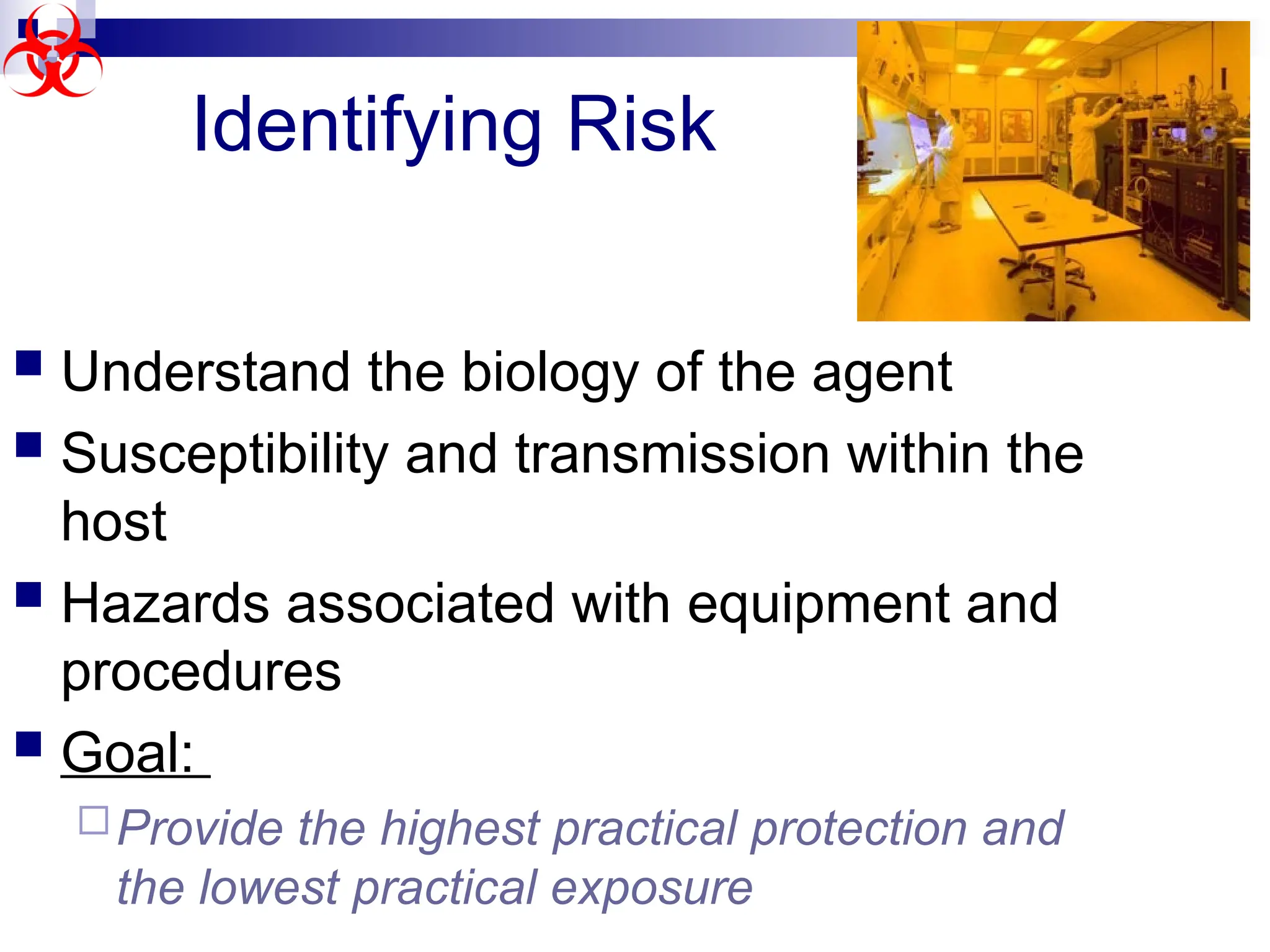
 Understand the biology of the agent
 Susceptibility and transmission within the
host
 Hazards associated with equipment and
procedures
 Goal:
Provide the highest practical protection and
the lowest practical exposure
Identifying Risk
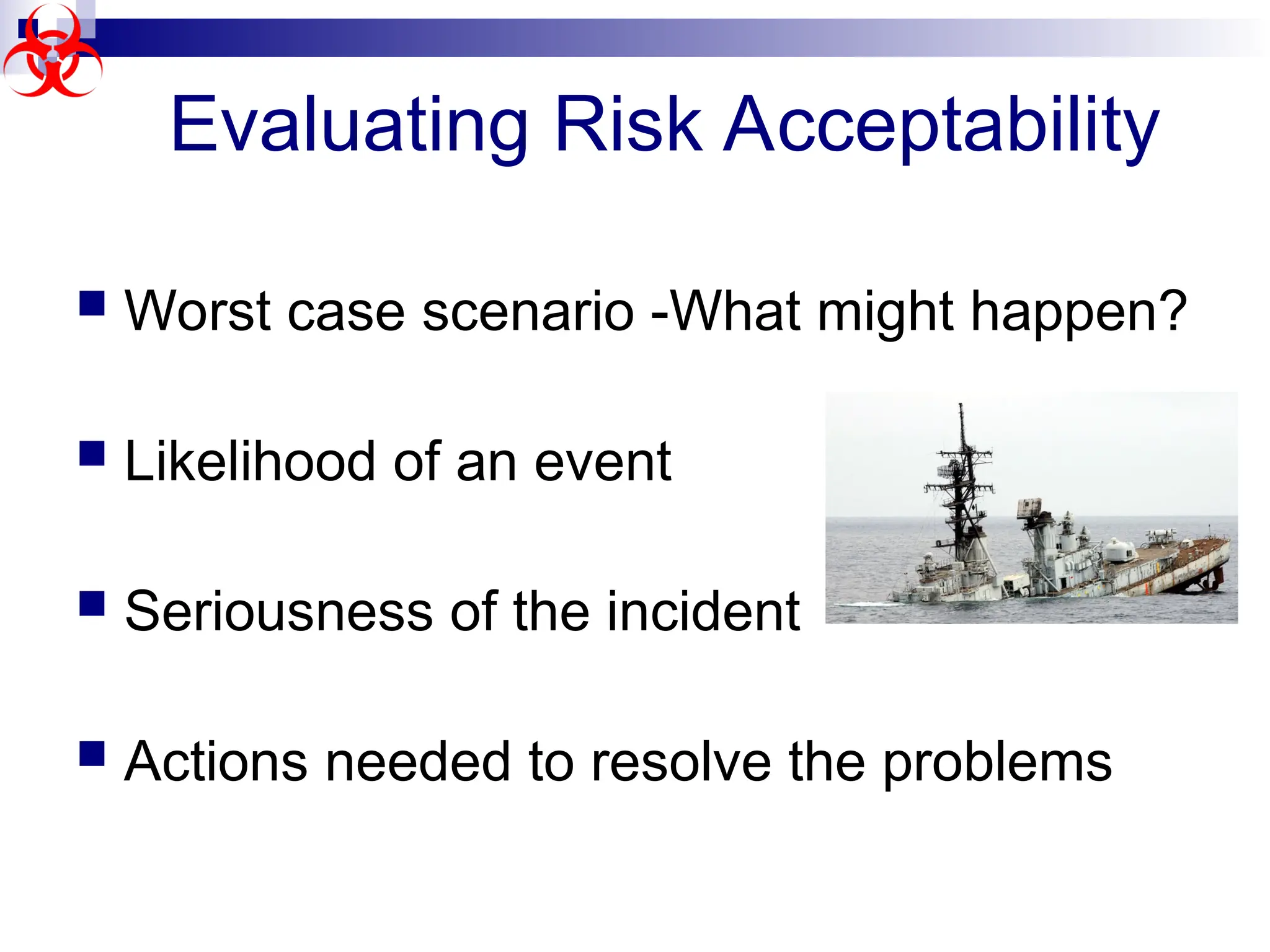
 Worst case scenario -What might happen?
 Likelihood of an event
 Seriousness of the incident
 Actions needed to resolve the problems
Evaluating Risk Acceptability
 Since there is no such thing as “no risk”
 “Safe” means risk has been judged acceptable
 Judging risk is a subjective- humans make
decisions
 Measuring risk is objective- use available
guidelines, data, and documentation
 Keep records of how determinations were made
due to subjective nature of the process
What is Acceptable Risk?
Agents Assigned Risk Groups
 RG-1 Unlikely to cause disease in humans or animals
 low individual or community risk
 RG-2 May cause disease but typically not serious
 individual risk, low community risk, treatable
 RG-3 May cause serious disease, usually treatable
 High individual but low community risk, serious respiratory agents
 RG-4 Serious or fatal, often not treatable,
 Easy transmission, high individual and community risk
WHO-World Health Organization
 Different than the Risk Groups!!
 Risk groups used in risk assessment
 BSL are used in risk management
 BSL are ways to control the agent
 facilities, safety equipment, practices, PPE, etc.
 Once risk is assessed then the appropriate BSL
is determined
Biosafety Levels (BSL)
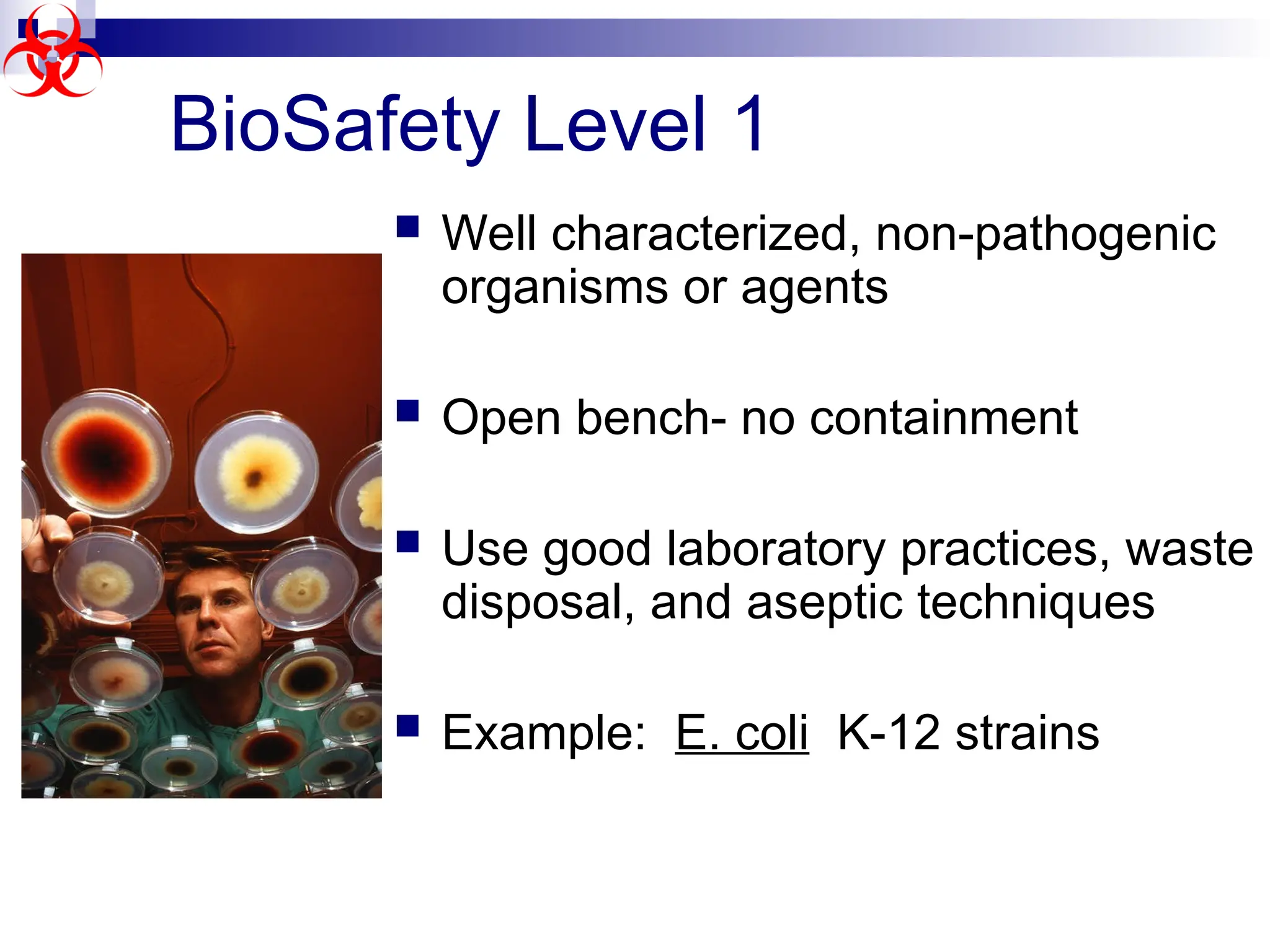
 Well characterized, non-pathogenic
organisms or agents
 Open bench- no containment
 Use good laboratory practices, waste
disposal, and aseptic techniques
 Example: E. coli K-12 strains
BioSafety Level 1
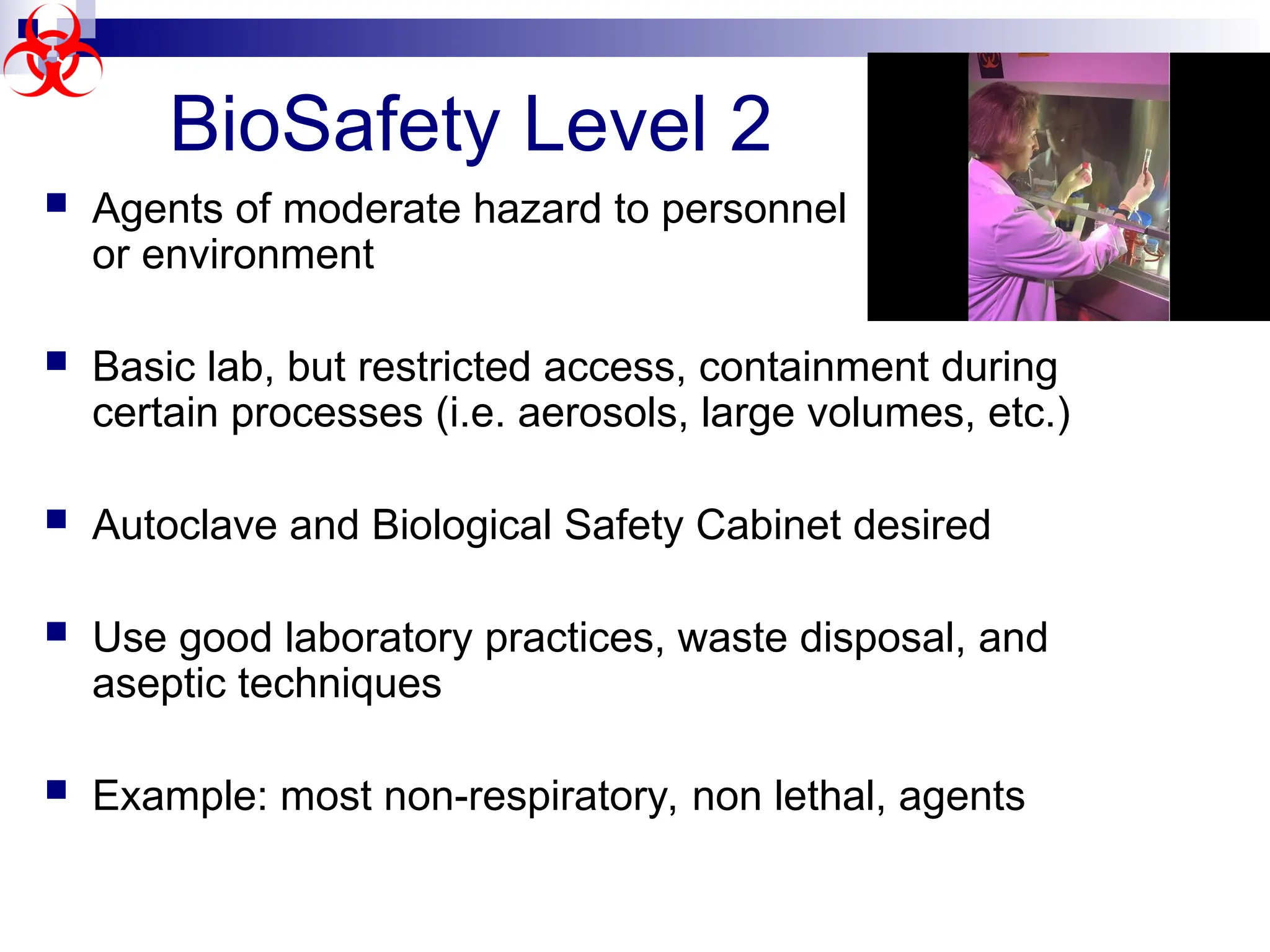
 Agents of moderate hazard to personnel
or environment
 Basic lab, but restricted access, containment during
certain processes (i.e. aerosols, large volumes, etc.)
 Autoclave and Biological Safety Cabinet desired
 Use good laboratory practices, waste disposal, and
aseptic techniques
 Example: most non-respiratory, non lethal, agents
BioSafety Level 2
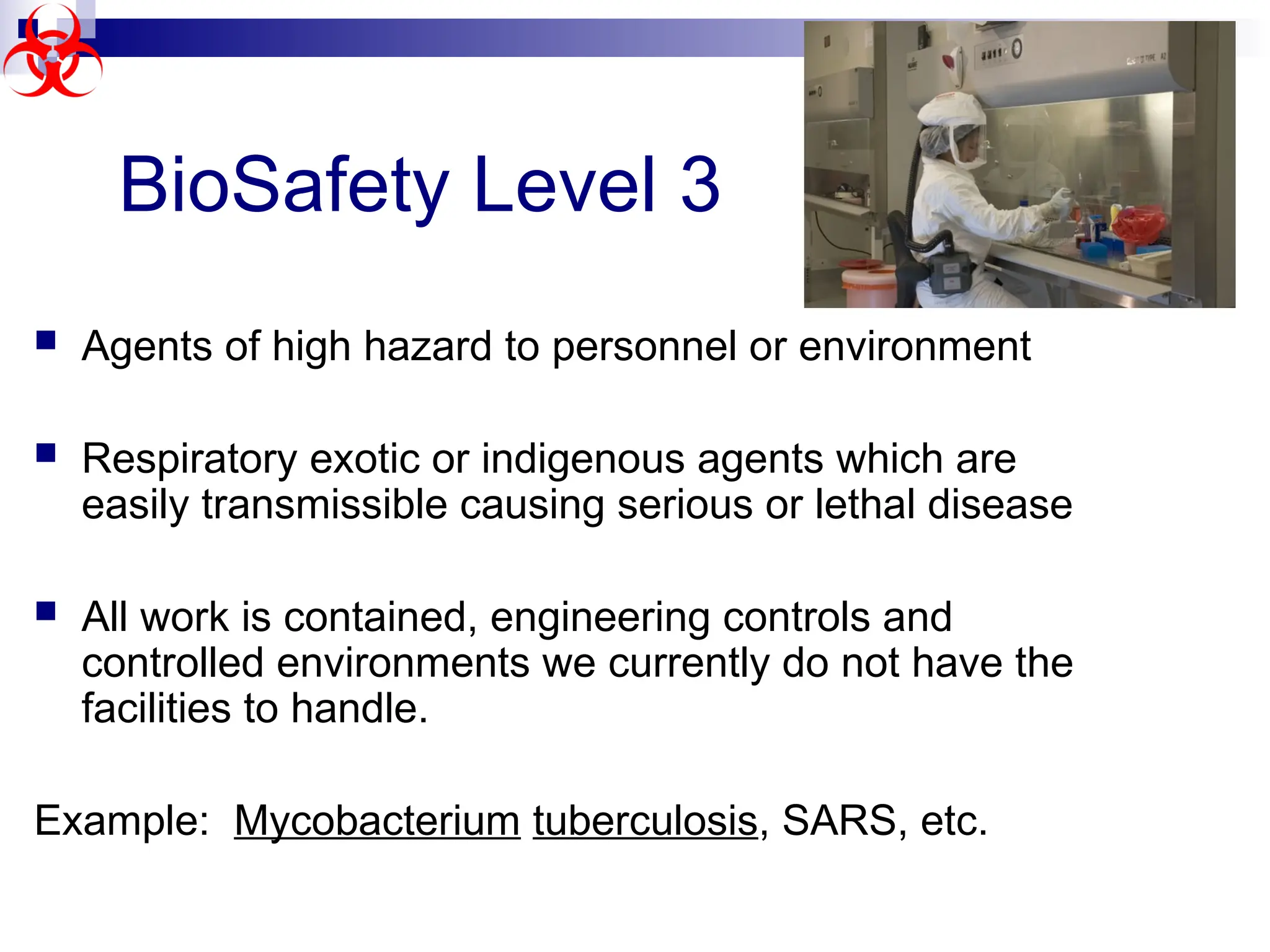
 Agents of high hazard to personnel or environment
 Respiratory exotic or indigenous agents which are
easily transmissible causing serious or lethal disease
 All work is contained, engineering controls and
controlled environments we currently do not have the
facilities to handle.
Example: Mycobacterium tuberculosis, SARS, etc.
BioSafety Level 3
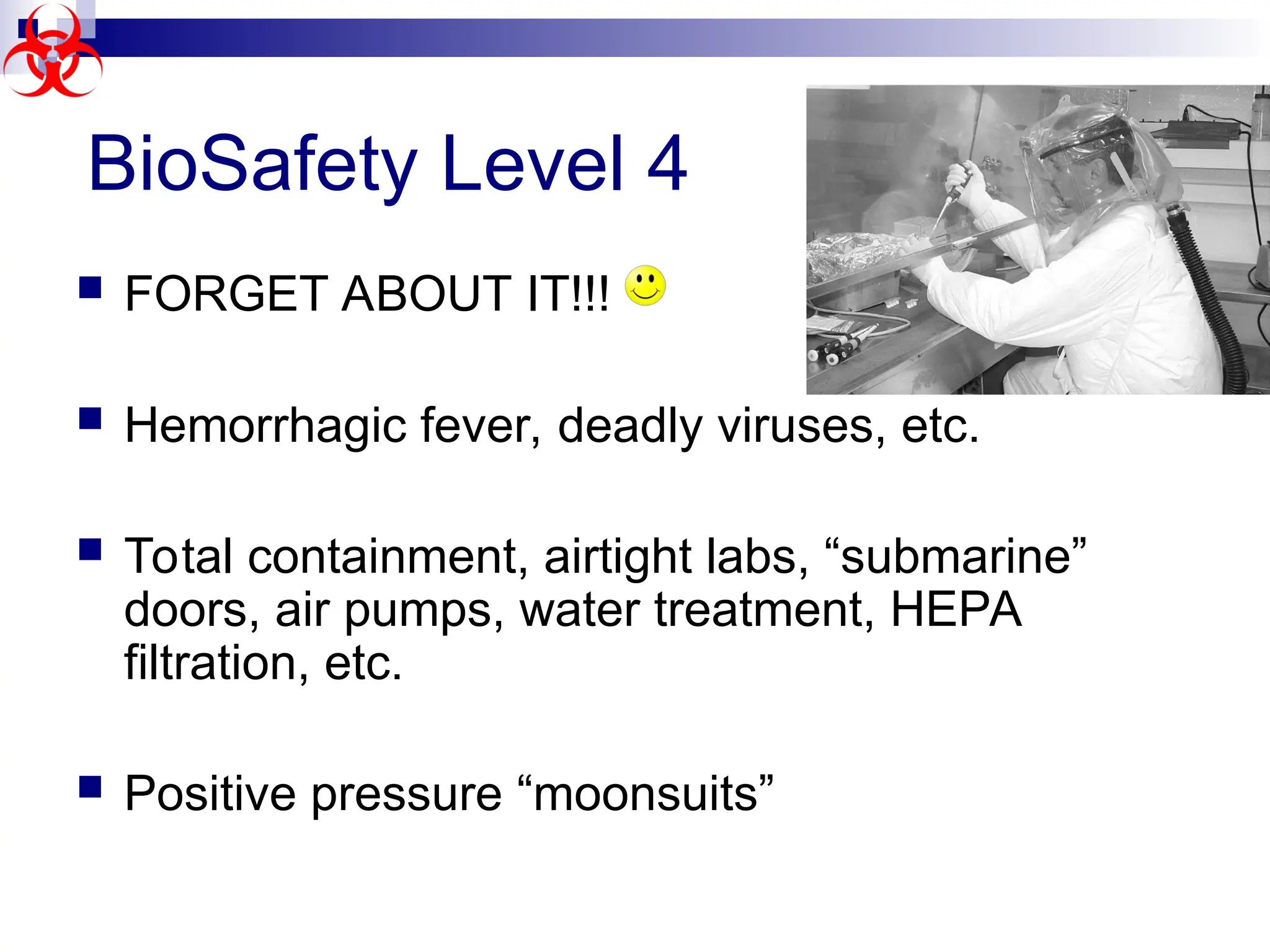
 FORGET ABOUT IT!!!
 Hemorrhagic fever, deadly viruses, etc.
 Total containment, airtight labs, “submarine”
doors, air pumps, water treatment, HEPA
filtration, etc.
 Positive pressure “moonsuits”
BioSafety Level 4
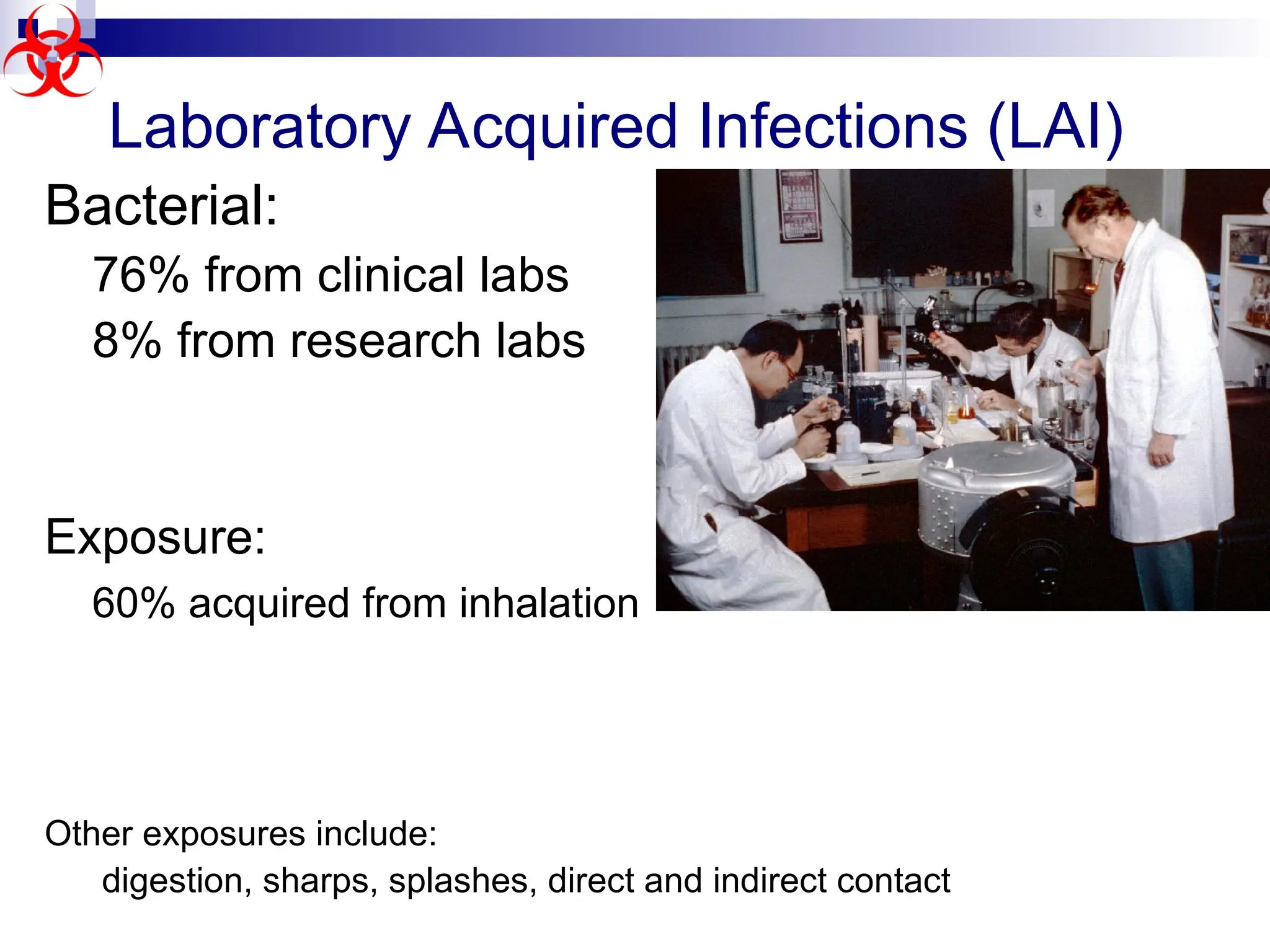
Bacterial:
76% from clinical labs
8% from research labs
Exposure:
60% acquired from inhalation
Other exposures include:
digestion, sharps, splashes, direct and indirect contact
Laboratory Acquired Infections (LAI)
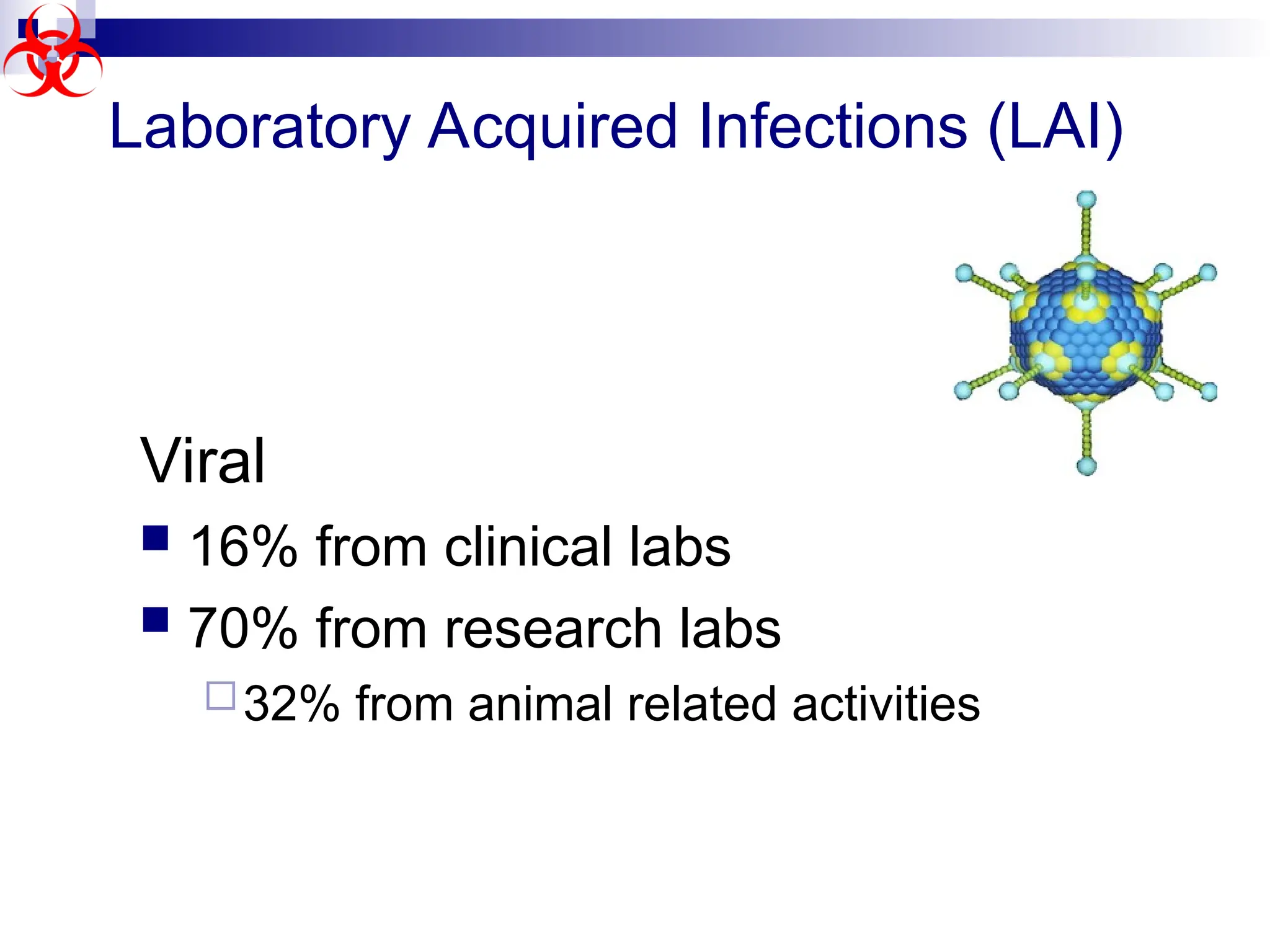
Viral
 16% from clinical labs
 70% from research labs
32% from animal related activities
Laboratory Acquired Infections (LAI)
Biohazardous/Medical Waste
Waste that is potentially infectious to
humans, animals or plants. It includes:
Medical Waste according to MMWRA
Regulated Waste by MIOSHA
Regulated Waste by CDC/NIH
Michigan Medical Waste Regulatory Act
(MMWRA)
 Defines “medical waste”
 Requirements for waste handling and
disposal
 Requires generators to register with
DEQ and implement a Medical Waste
Management Plan
Michigan Medical Waste Regulatory Act
(MMWRA)
 Defines “medical waste”
 Requirements for waste handling and
disposal
 Requires generators to register with
DEQ and implement a Medical Waste
Management Plan
Biohazardous Waste Management Plan
Must outline how generating facility
complies with the MMWRA:
 Types of wastes generated
 Storage and disposal of wastes
 Contingency plans
 Training
Biohazardous Waste Categories
Cultures and stocks of infectious
agents and associated biologicals
laboratory waste
biological production waste
discarded live and attenuated vaccines
culture dishes and related materials
contaminated PPE
Biohazardous Waste Categories
Liquid human and animal waste
liquid or semi-liquid blood and blood
products and body fluids
contaminated items that would release
blood or items that are caked with blood
or other potentially infectious materials;
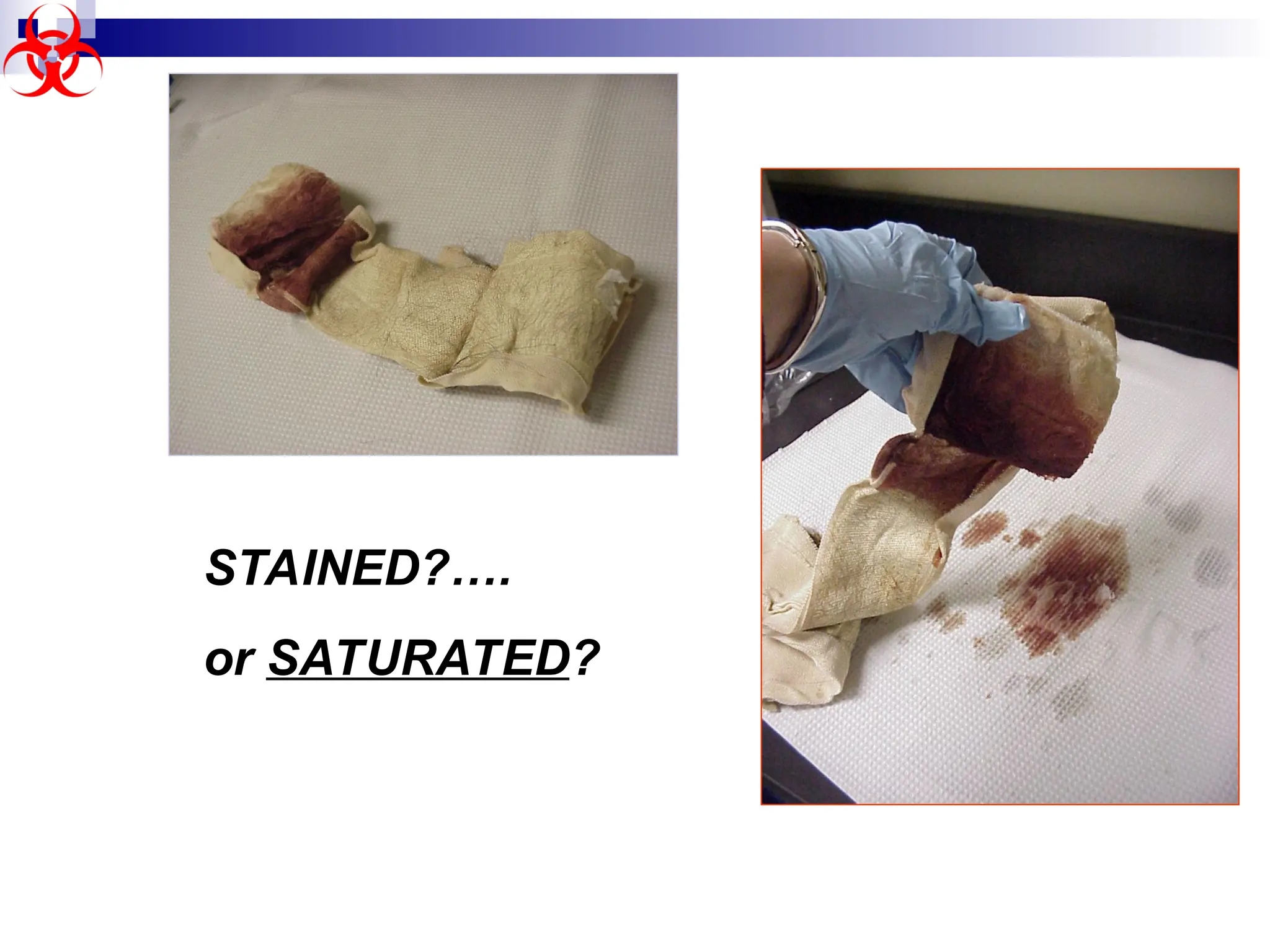
NOT including urine or materials stained
with blood or body fluids
infectious animal waste (research)
Biohazardous Waste Categories
Pathological waste
tissues
body parts other than teeth
products of conception
fluids removed by trauma or during
surgery or autopsy/necropsy or other
medical procedure and not chemically
fixed.
…And More Biohazardous
Waste Categories
 Animal and plant pathogen waste
 Recombinant DNA waste
 Sharps
Biowaste vs. Trash
3 basic questions to differentiate:
1. Is it contaminated with viable
biological material?
2. Can blood or other regulated
body or biological fluids be
released?
3. Is it a sharps hazard?
#1
Is it contaminated with
viable biological
material?
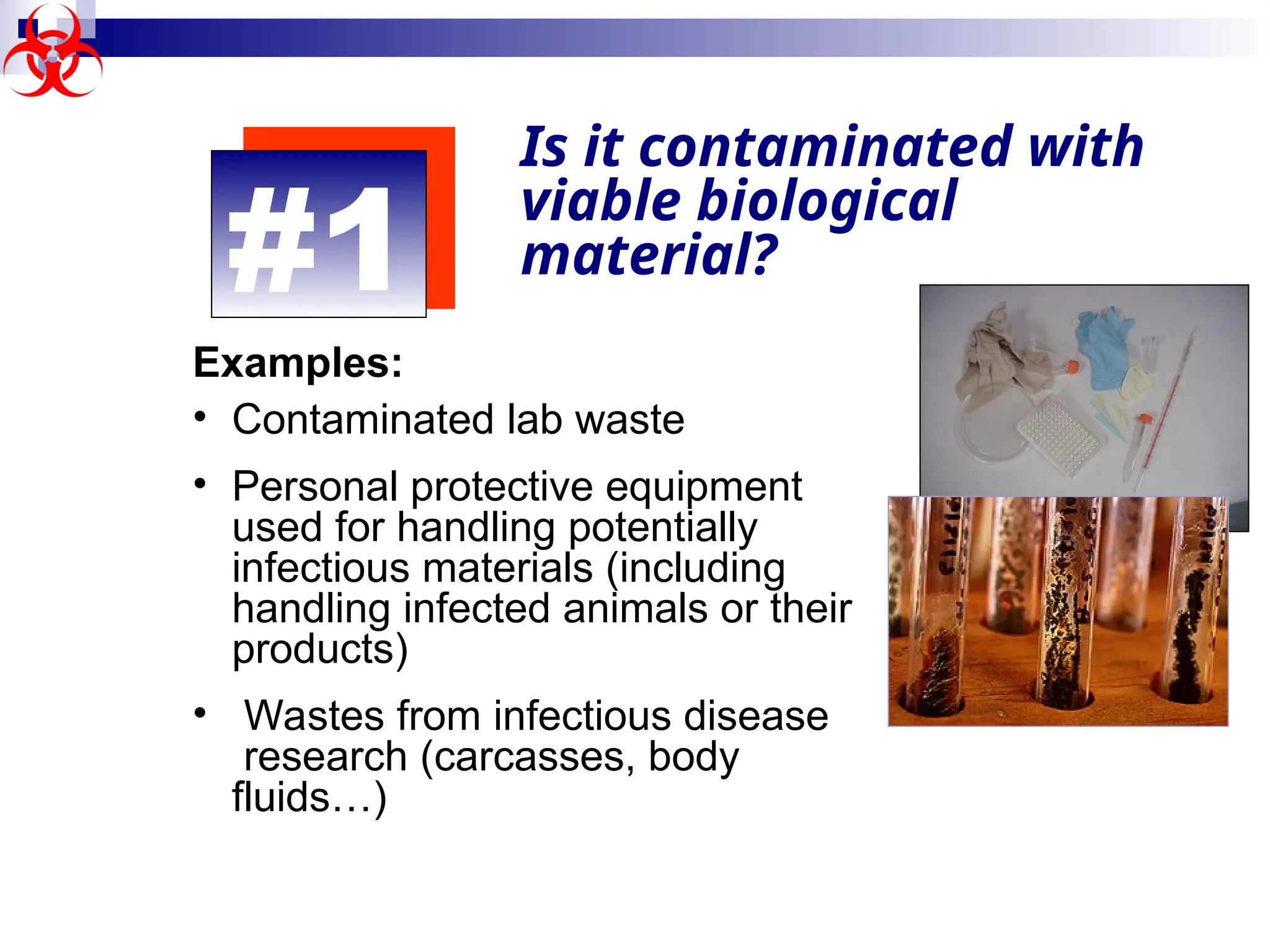
Examples:
• Contaminated lab waste
• Personal protective equipment
used for handling potentially
infectious materials (including
handling infected animals or their
products)
• Wastes from infectious disease
research (carcasses, body
fluids…)
#2
Can blood or other
(regulated) body fluids or
viable biological materials be
released?
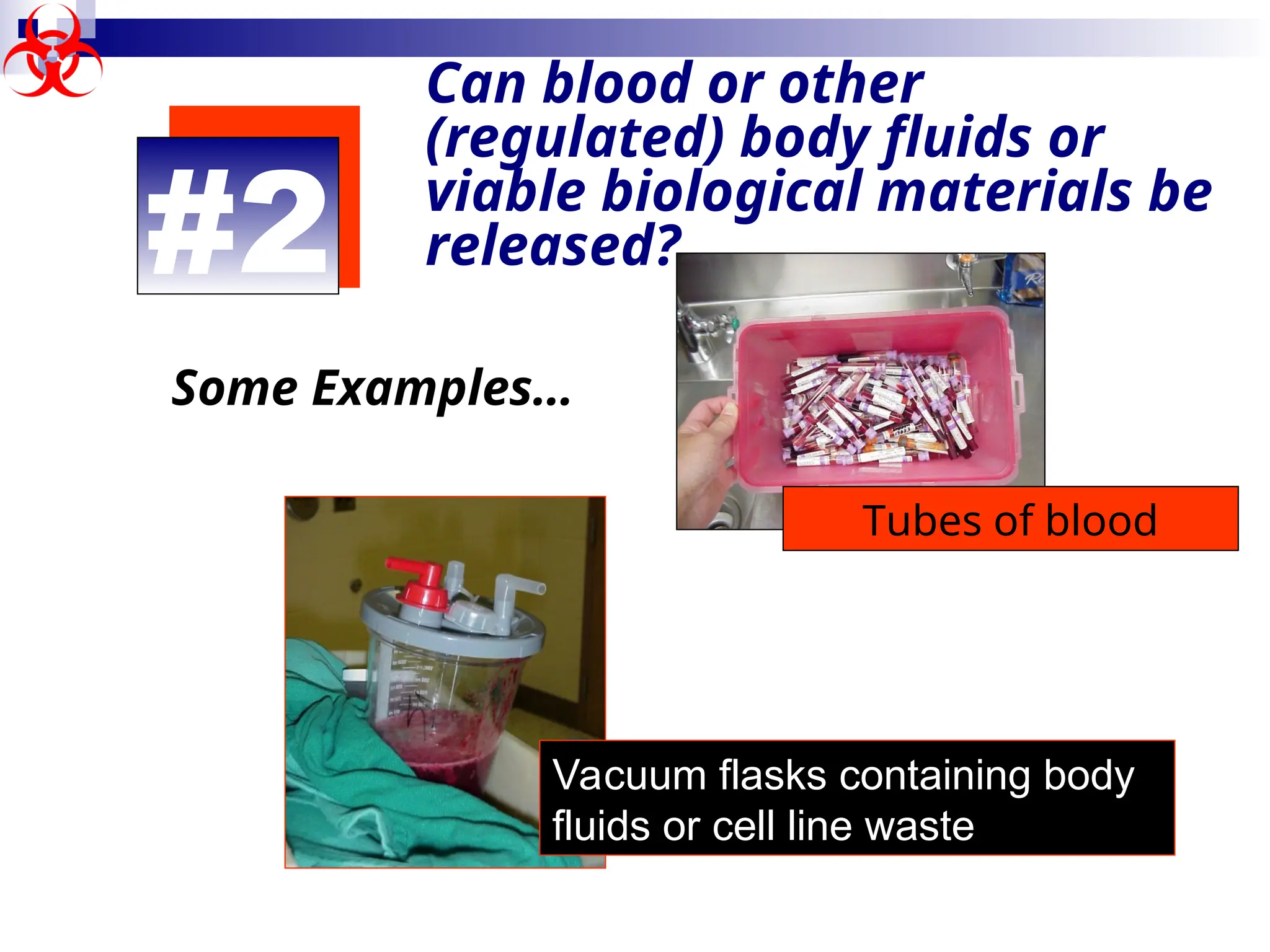
Some Examples…
Tubes of blood
Vacuum flasks containing body
fluids or cell line waste
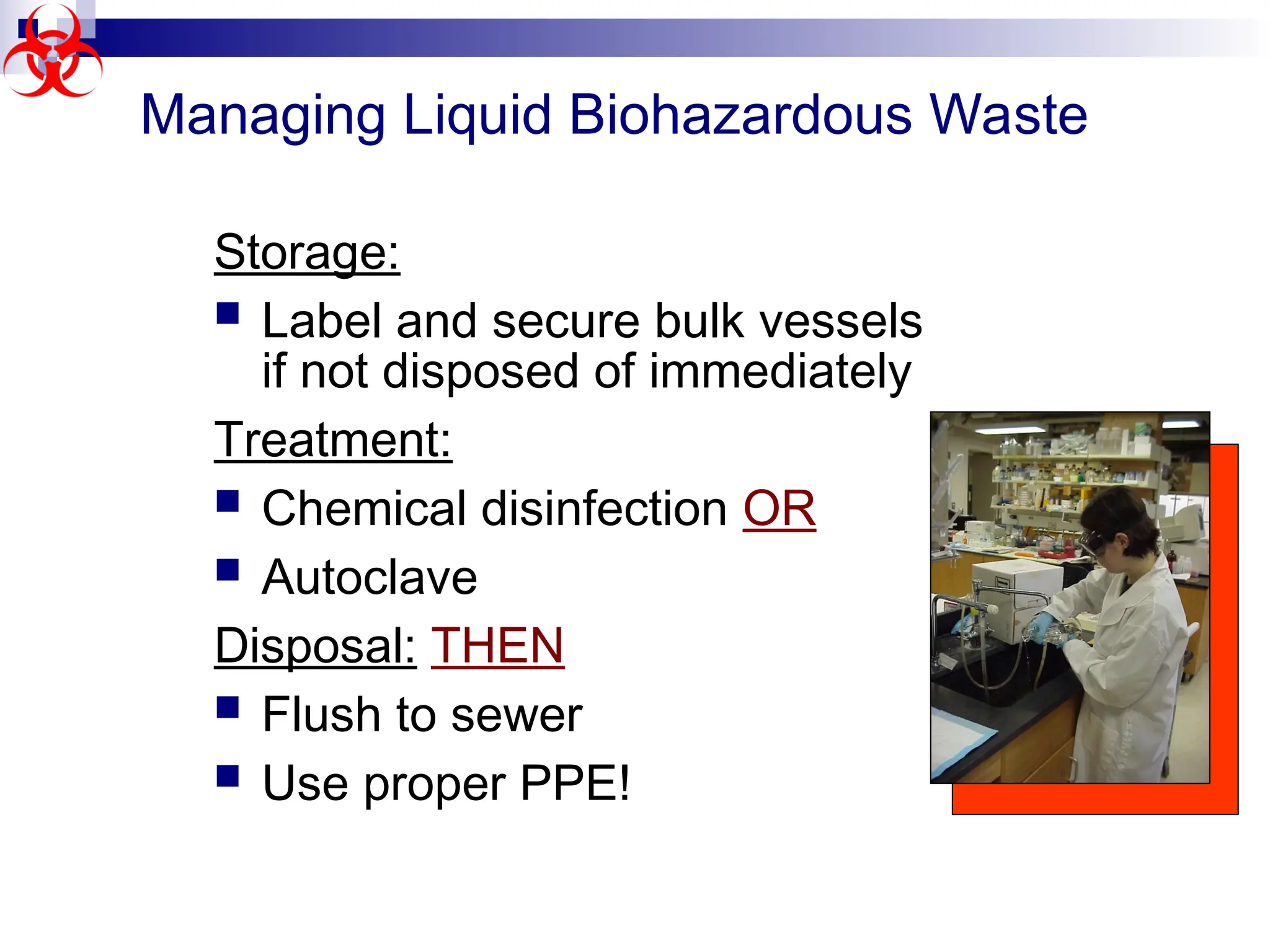
Managing Liquid Biohazardous Waste
Storage:
 Label and secure bulk vessels
if not disposed of immediately
Treatment:
 Chemical disinfection OR
 Autoclave
Disposal: THEN
 Flush to sewer
 Use proper PPE!
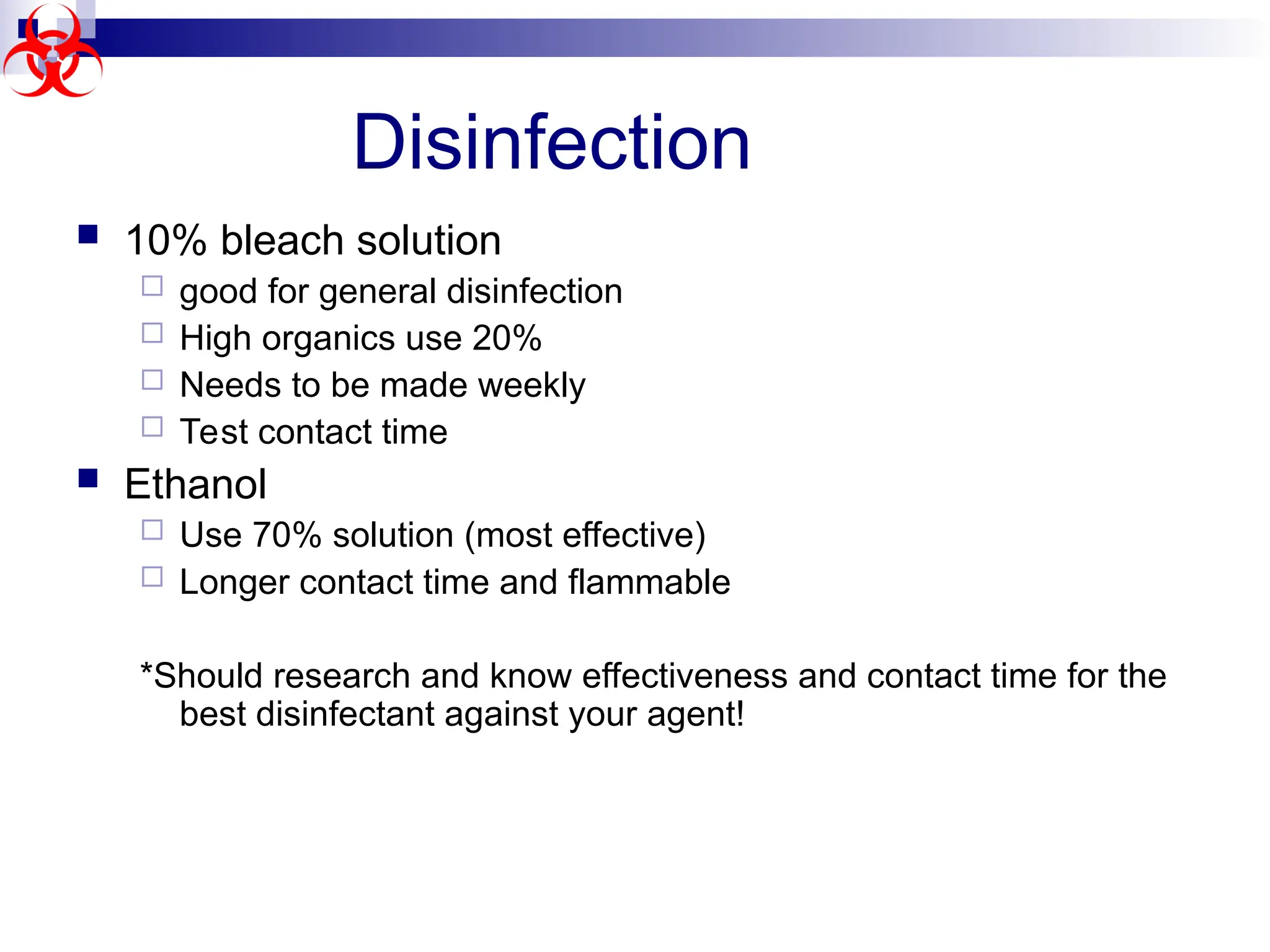
 10% bleach solution
 good for general disinfection
 High organics use 20%
 Needs to be made weekly
 Test contact time
 Ethanol
 Use 70% solution (most effective)
 Longer contact time and flammable
*Should research and know effectiveness and contact time for the
best disinfectant against your agent!
Disinfection
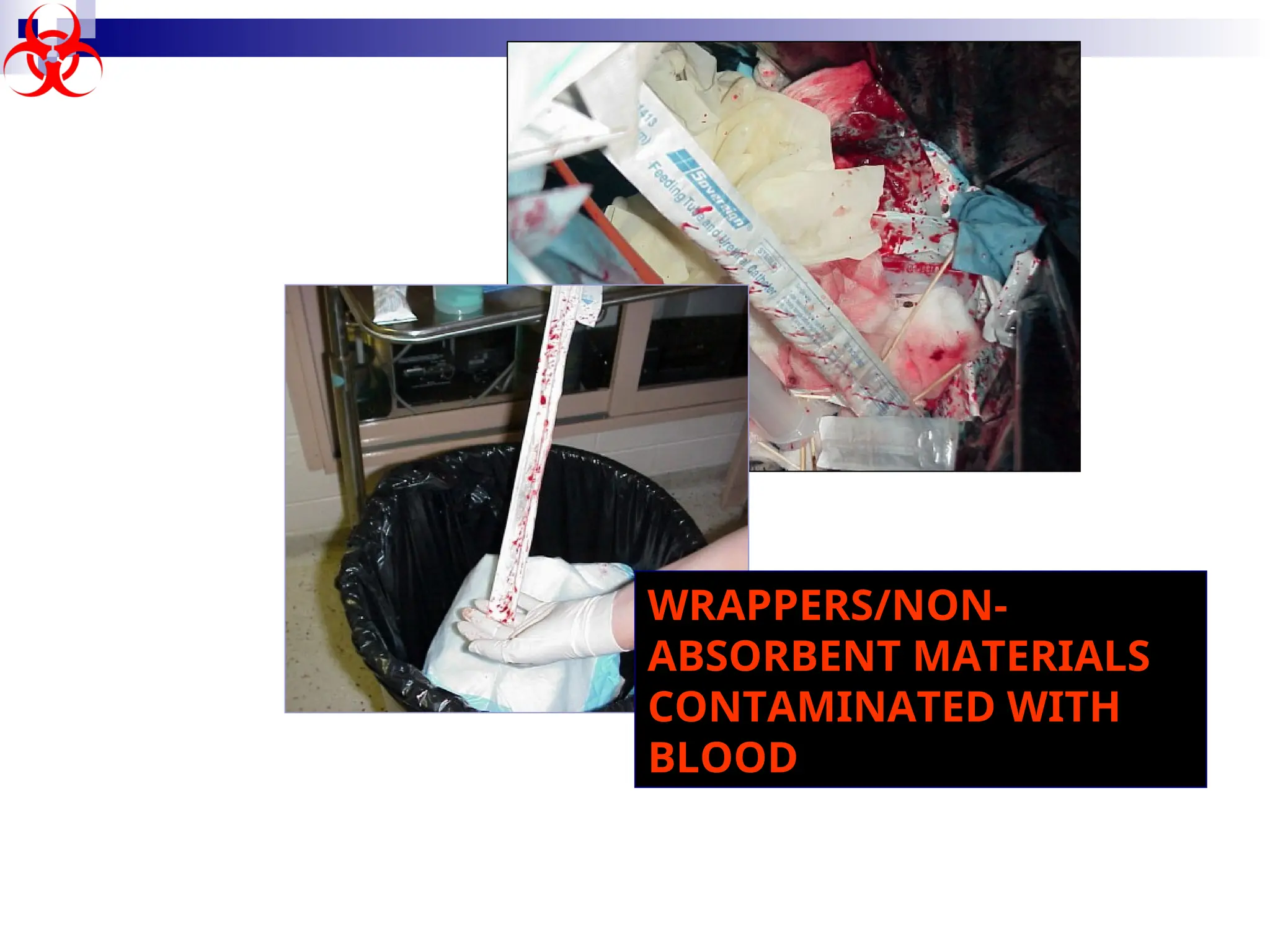
WRAPPERS/NON-
ABSORBENT MATERIALS
CONTAMINATED WITH
BLOOD
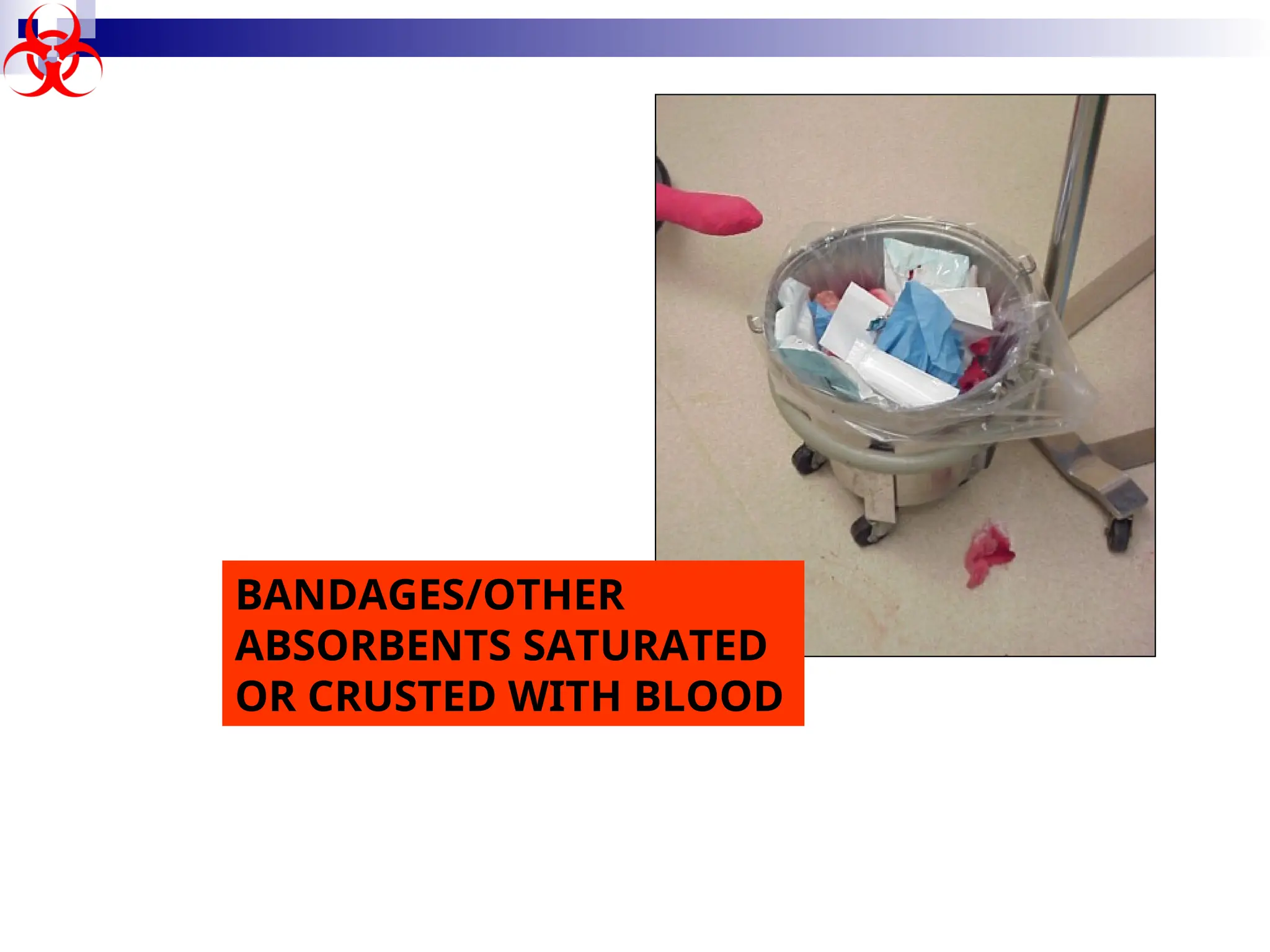
BANDAGES/OTHER
ABSORBENTS SATURATED
OR CRUSTED WITH BLOOD
STAINED?….
or SATURATED?
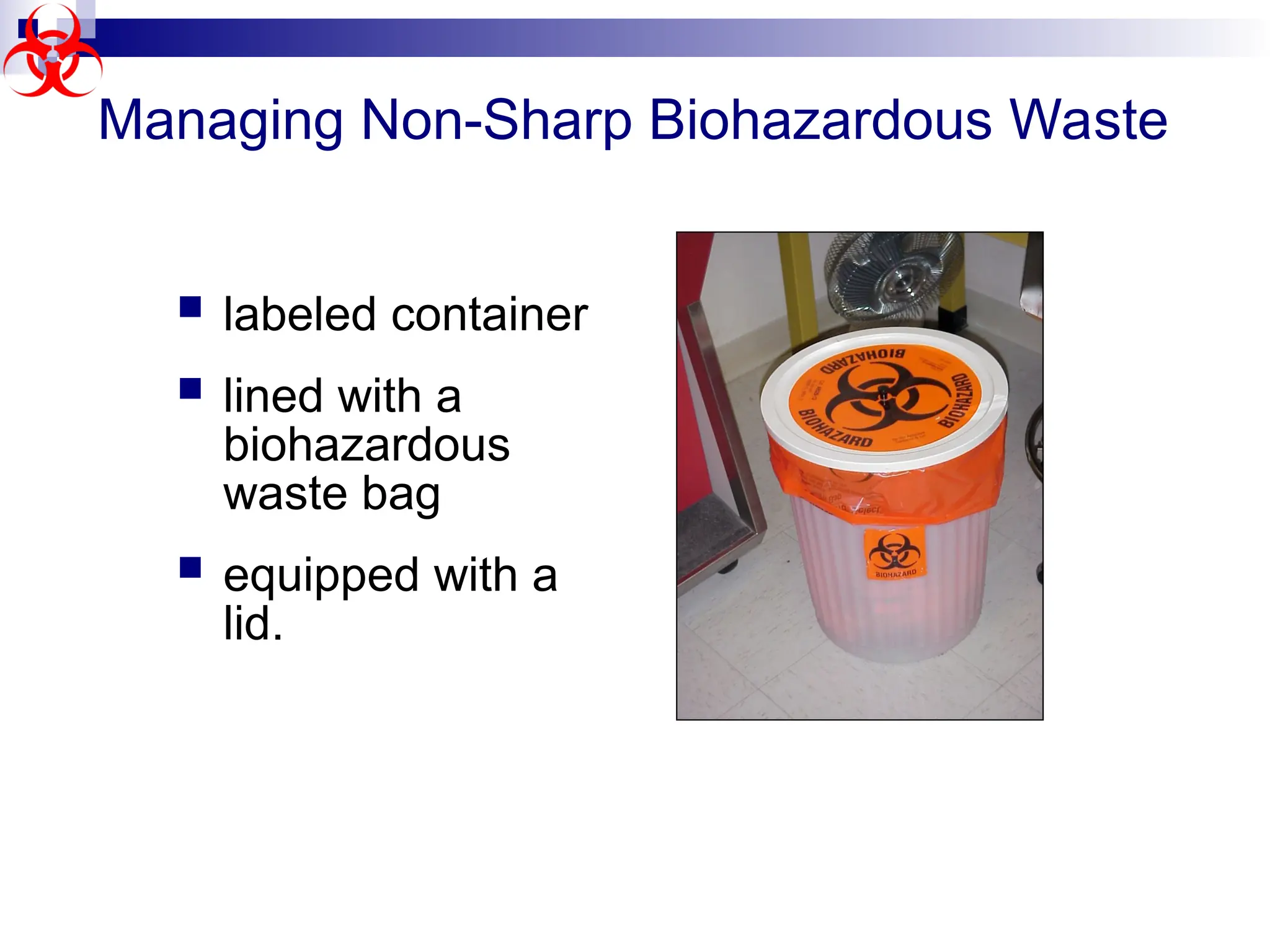
Managing Non-Sharp Biohazardous Waste
 labeled container
 lined with a
biohazardous
waste bag
 equipped with a
lid.
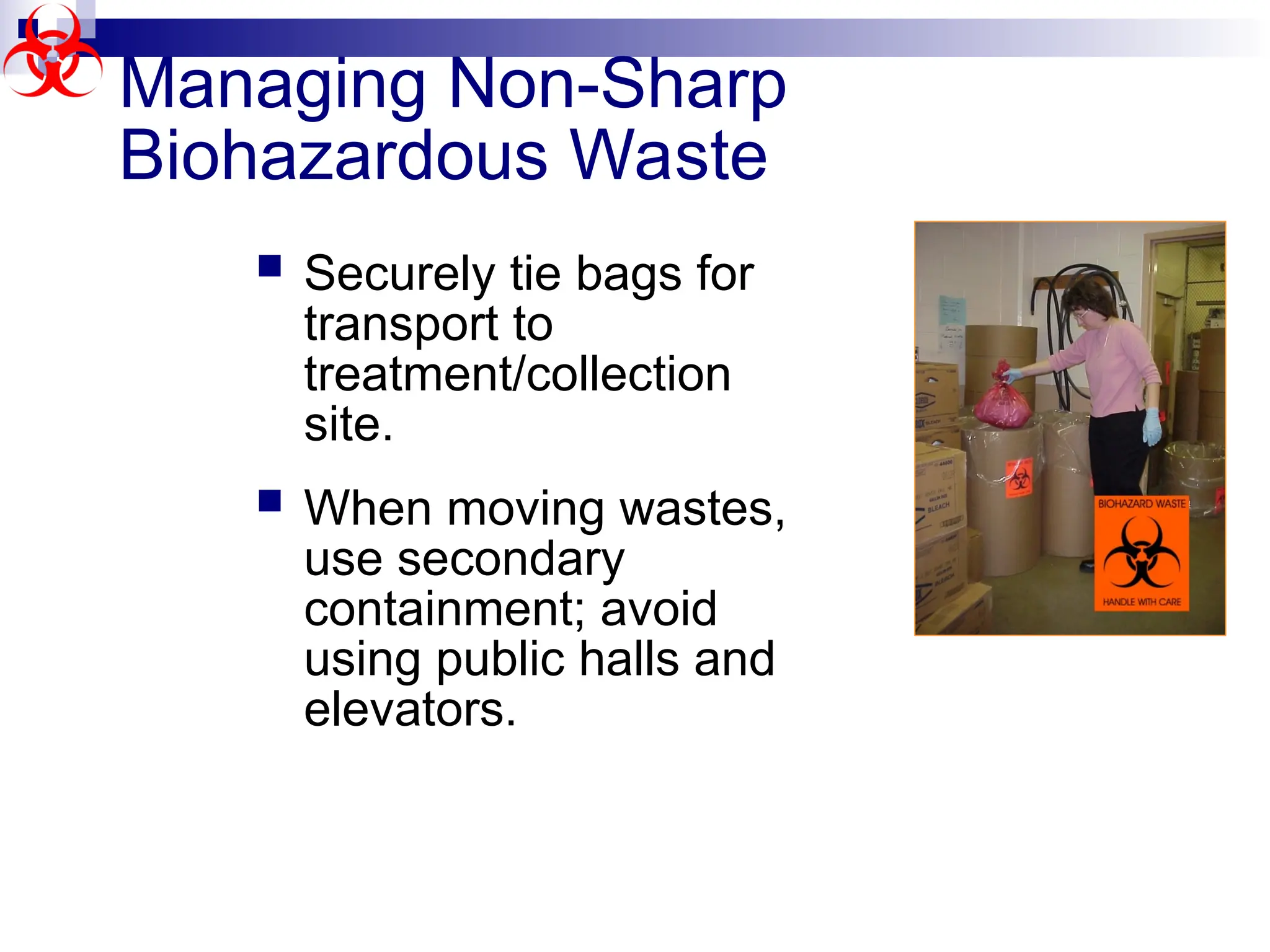
Managing Non-Sharp
Biohazardous Waste
 Securely tie bags for
transport to
treatment/collection
site.
 When moving wastes,
use secondary
containment; avoid
using public halls and
elevators.
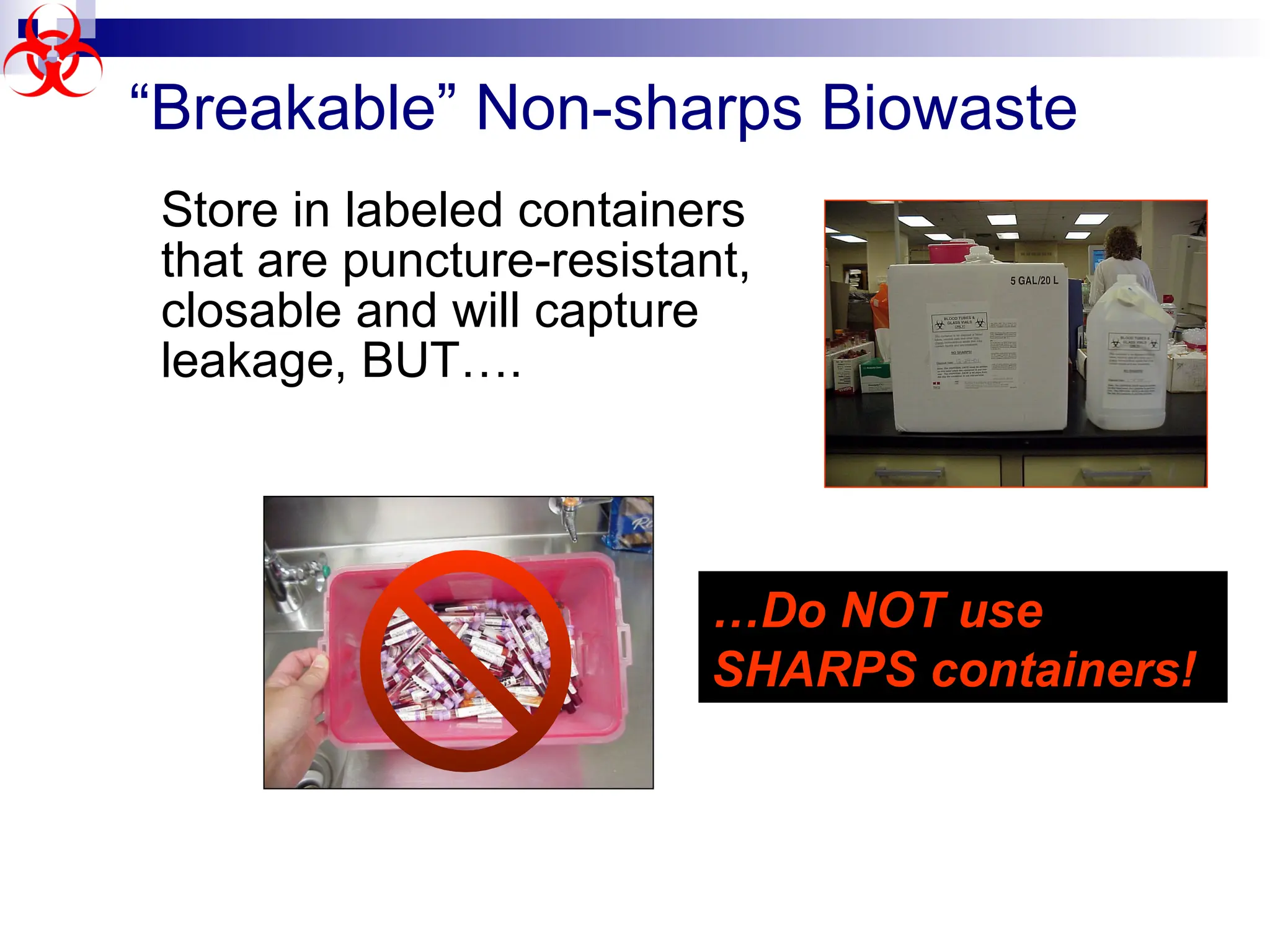
“Breakable” Non-sharps Biowaste
Store in labeled containers
that are puncture-resistant,
closable and will capture
leakage, BUT….
…Do NOT use
SHARPS containers!
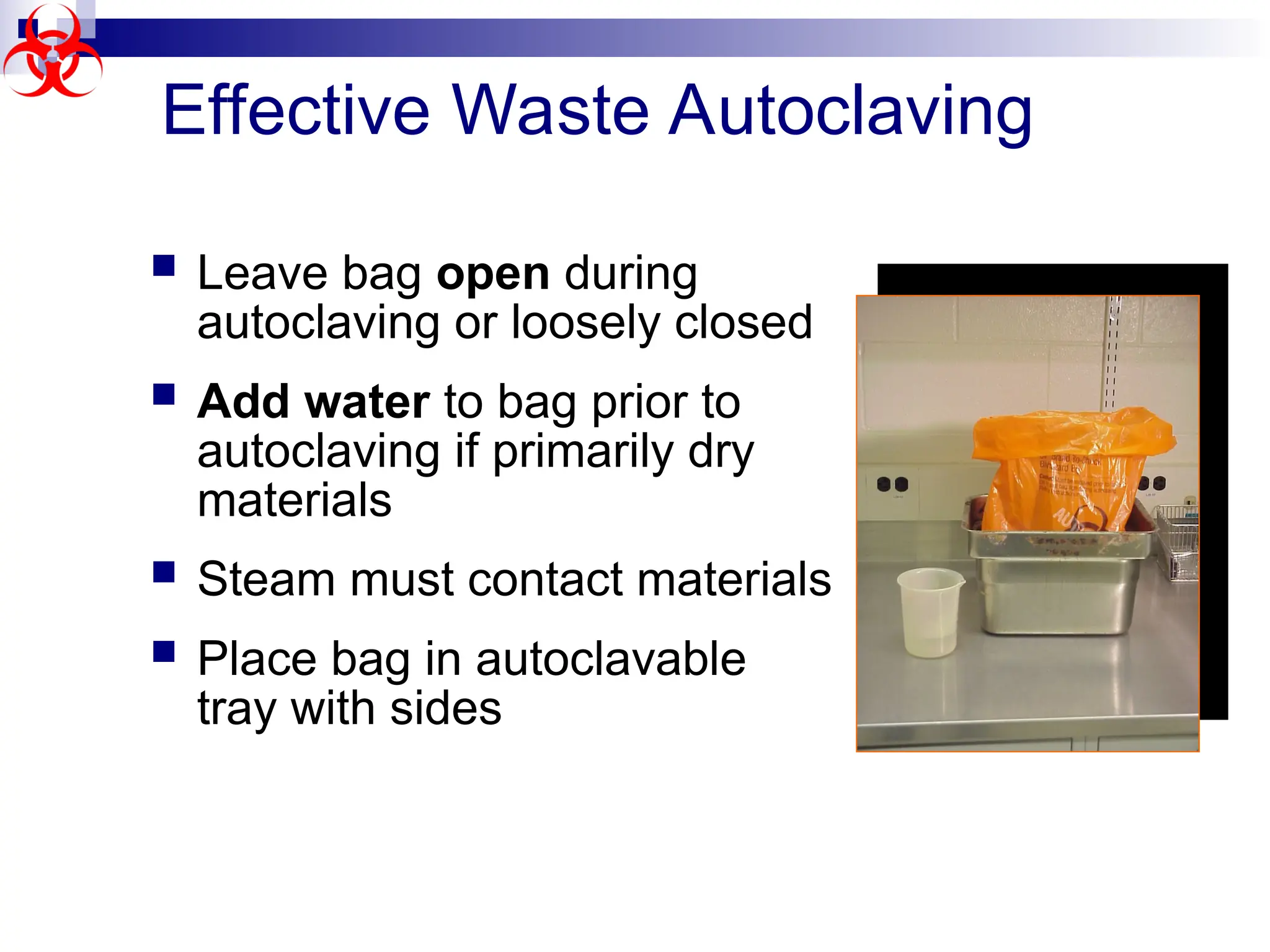
Effective Waste Autoclaving
 Leave bag open during
autoclaving or loosely closed
 Add water to bag prior to
autoclaving if primarily dry
materials
 Steam must contact materials
 Place bag in autoclavable
tray with sides
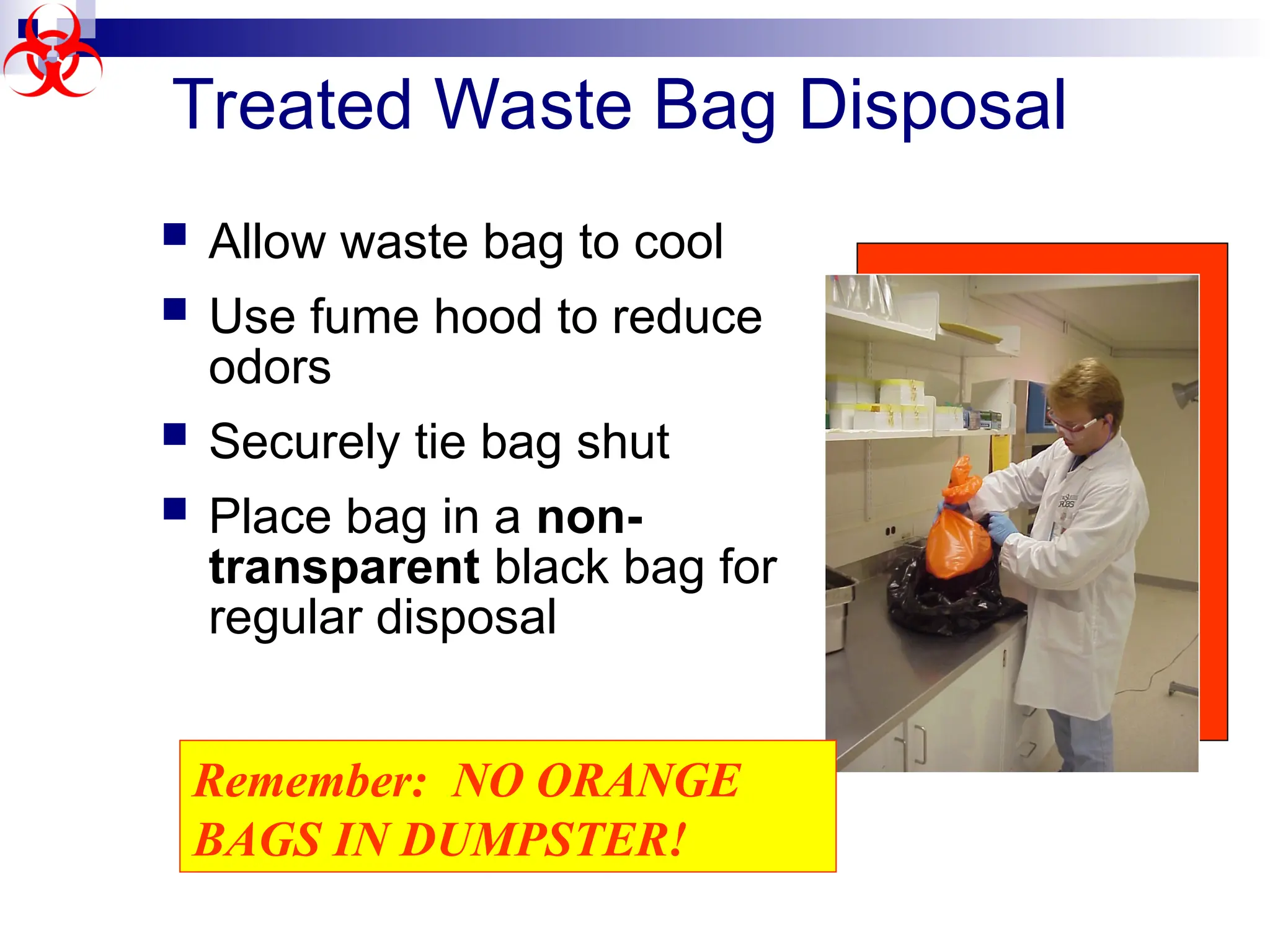
Treated Waste Bag Disposal
 Allow waste bag to cool
 Use fume hood to reduce
odors
 Securely tie bag shut
 Place bag in a non-
transparent black bag for
regular disposal
Remember: NO ORANGE
BAGS IN DUMPSTER!
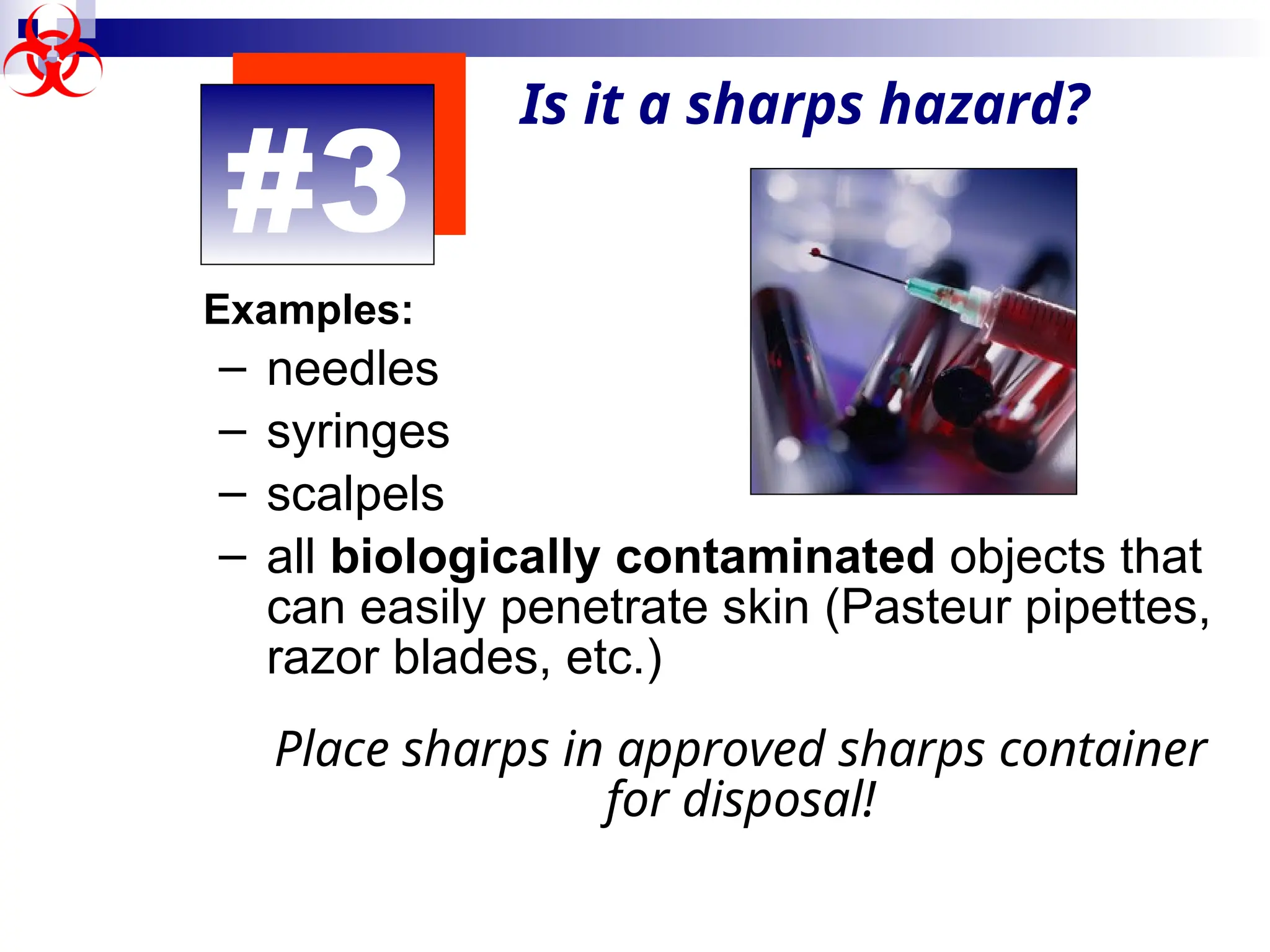
#3
Is it a sharps hazard?
Examples:
– needles
– syringes
– scalpels
– all biologically contaminated objects that
can easily penetrate skin (Pasteur pipettes,
razor blades, etc.)
Place sharps in approved sharps container
for disposal!
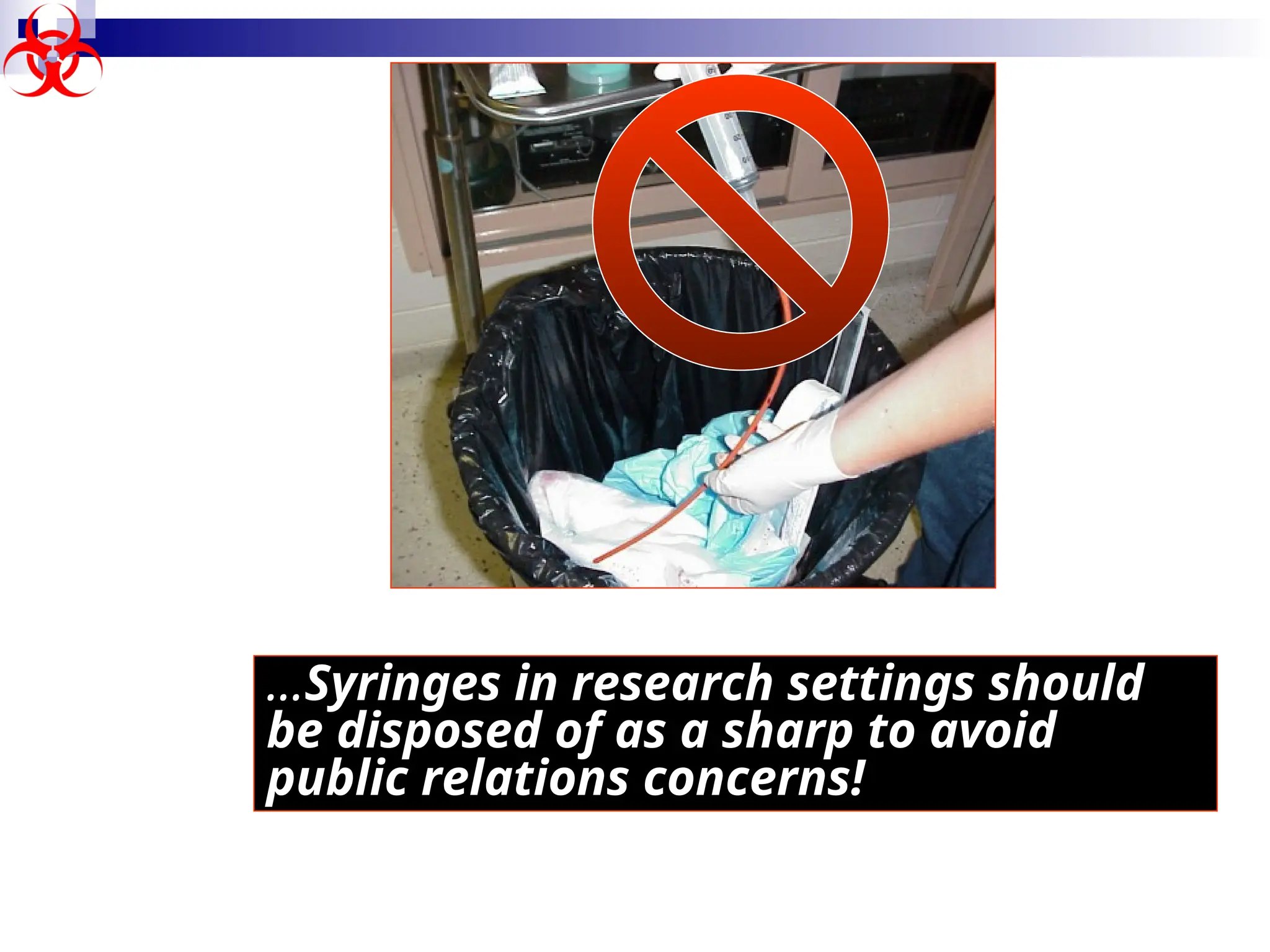
…Syringes in research settings should
be disposed of as a sharp to avoid
public relations concerns!
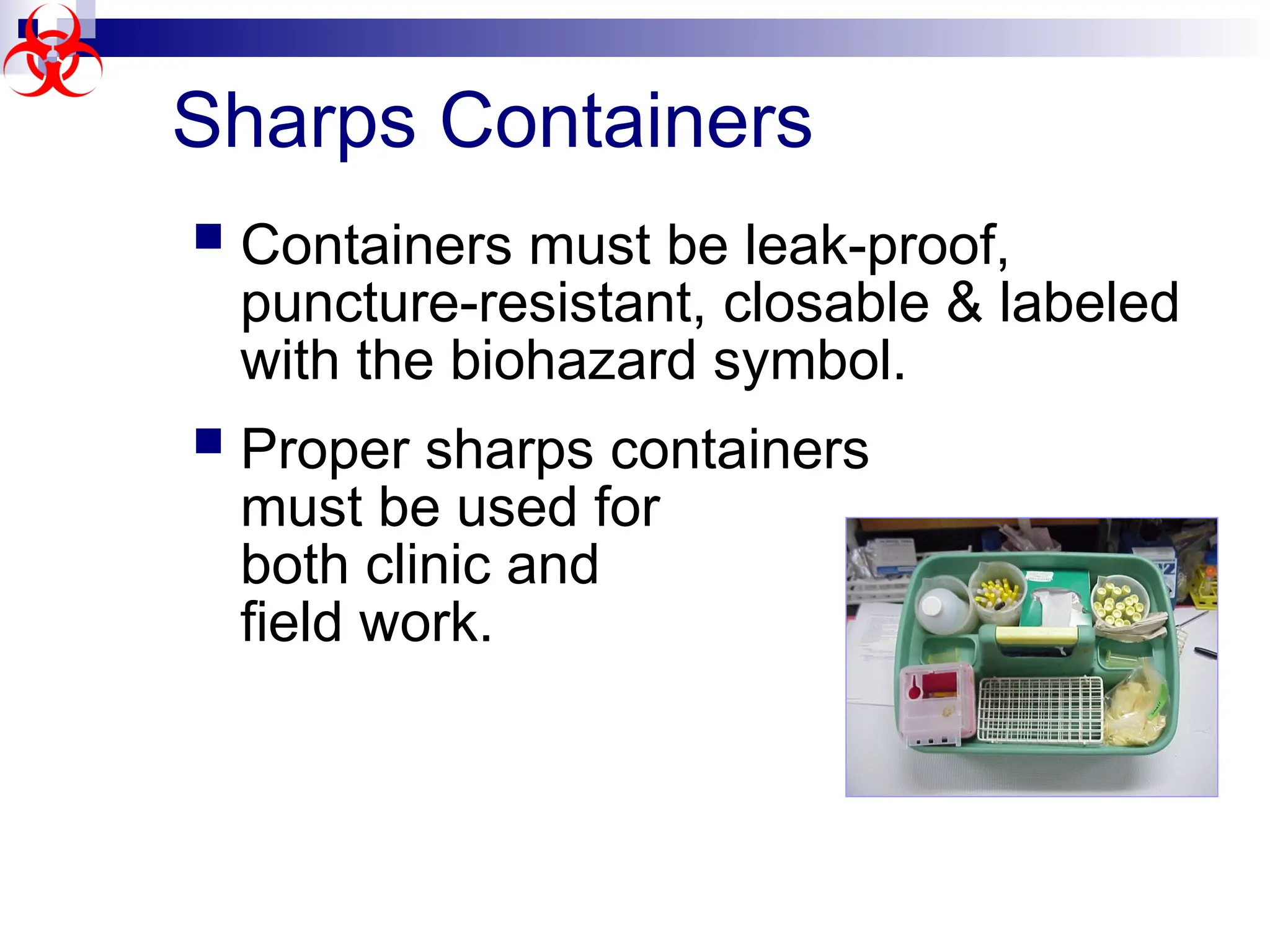
Sharps Containers
 Containers must be leak-proof,
puncture-resistant, closable & labeled
with the biohazard symbol.
 Proper sharps containers
must be used for
both clinic and
field work.
Proper Use of Sharps Containers
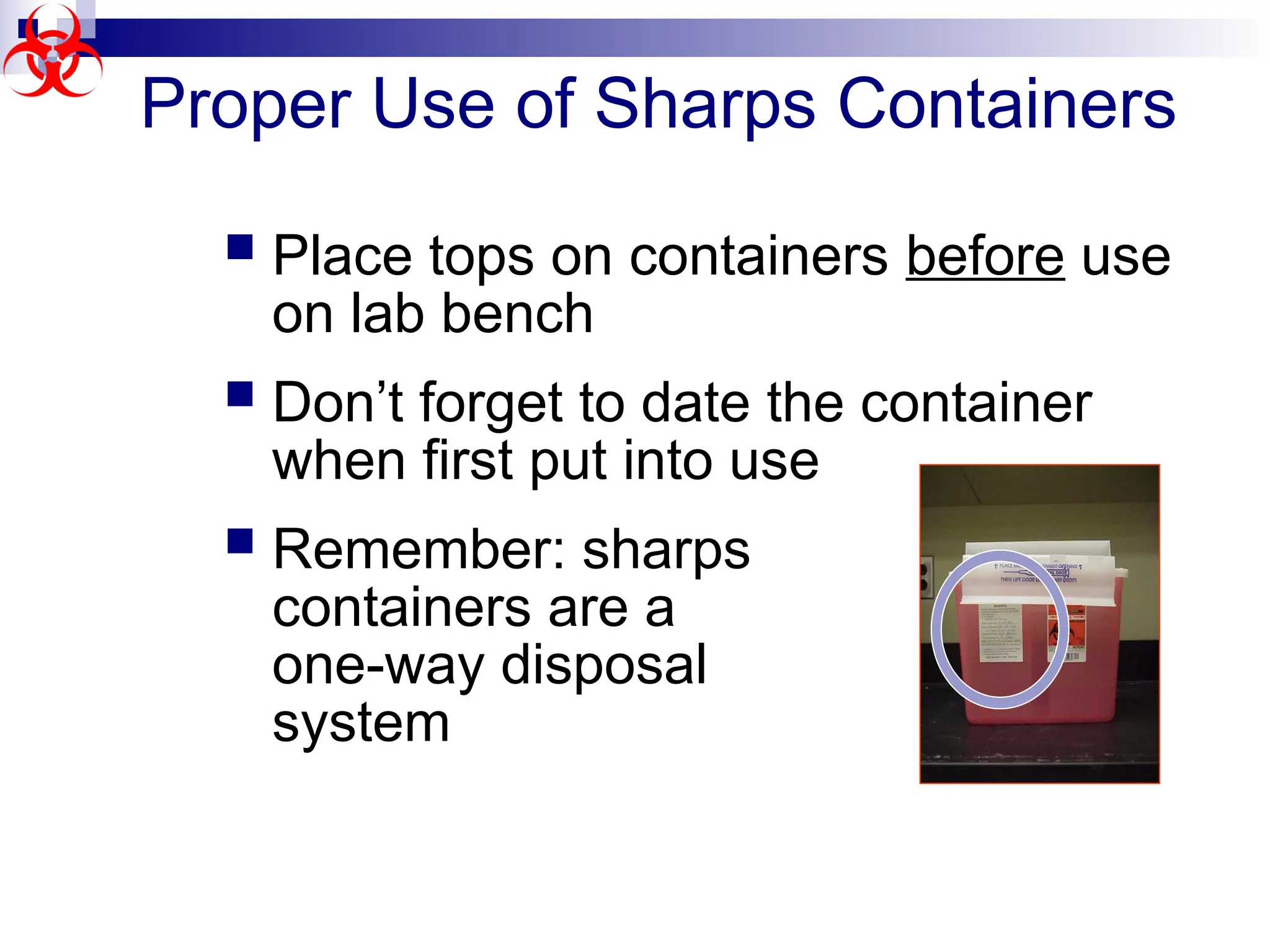
 Place tops on containers before use
on lab bench
 Don’t forget to date the container
when first put into use
 Remember: sharps
containers are a
one-way disposal
system
Proper Use of Sharps Containers
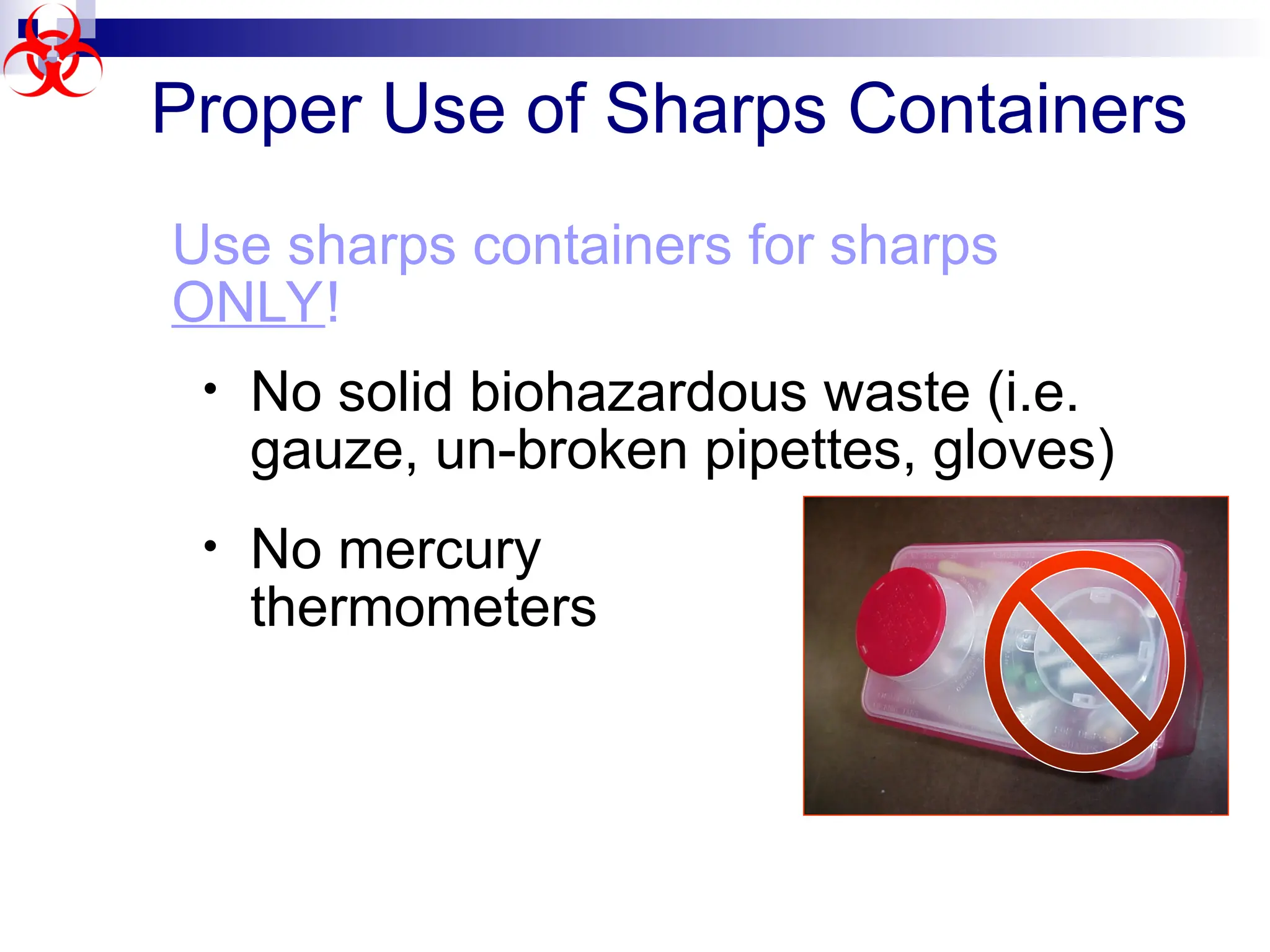
Use sharps containers for sharps
ONLY!
• No solid biohazardous waste (i.e.
gauze, un-broken pipettes, gloves)
• No mercury
thermometers
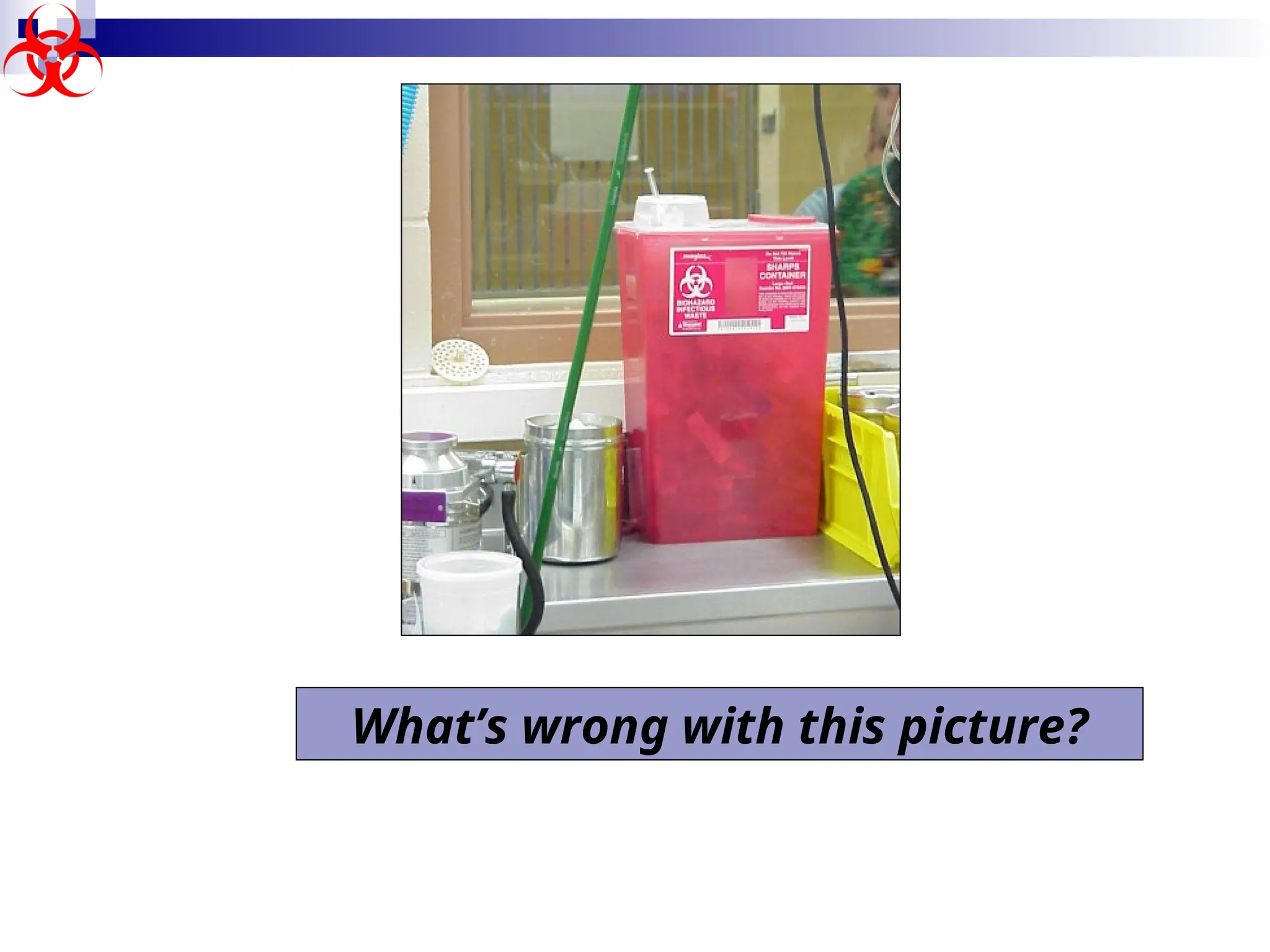
What’s wrong with this picture?
Sharps Container Disposal
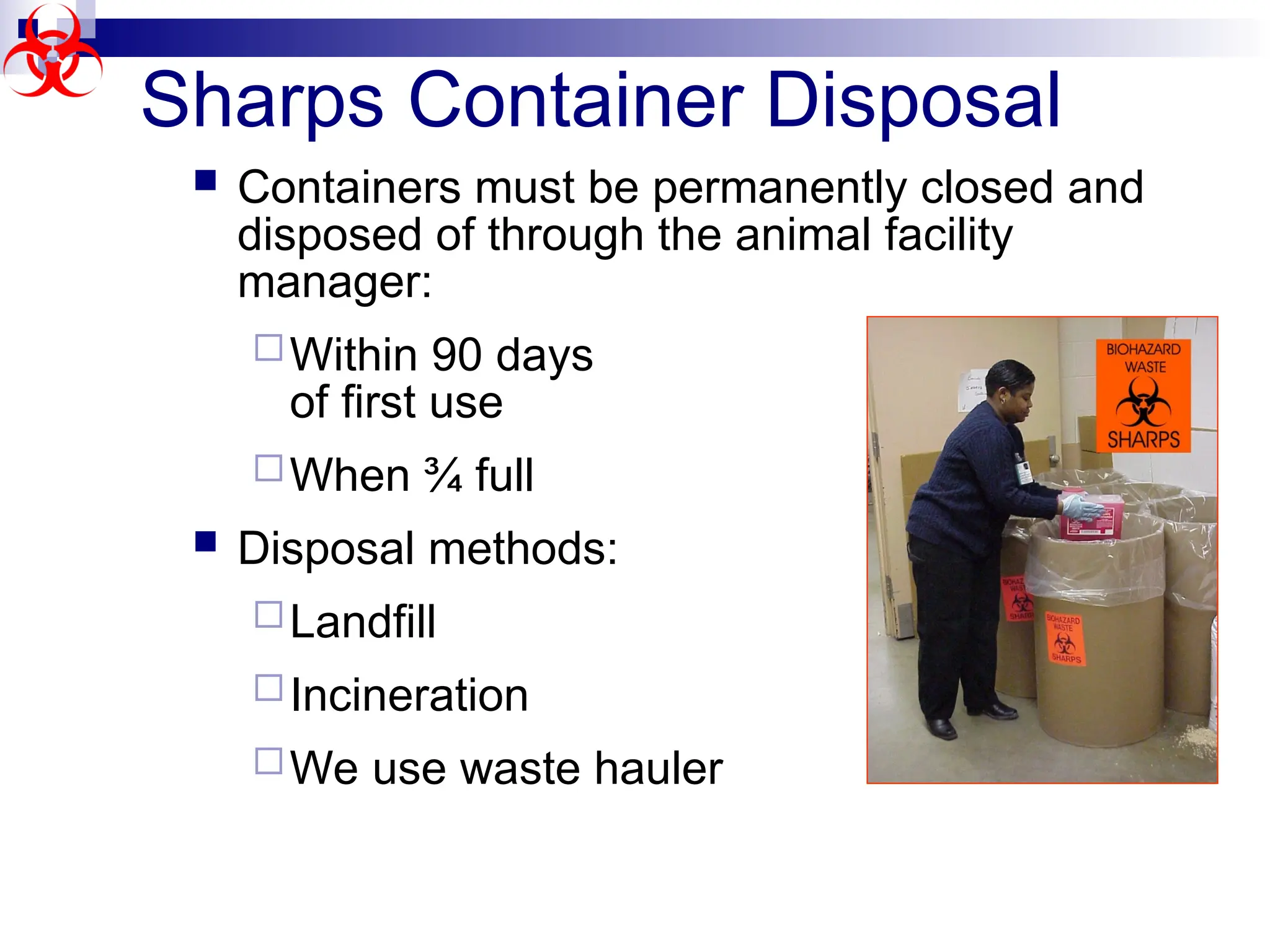
 Containers must be permanently closed and
disposed of through the animal facility
manager:
Within 90 days
of first use
When ¾ full
 Disposal methods:
Landfill
Incineration
We use waste hauler
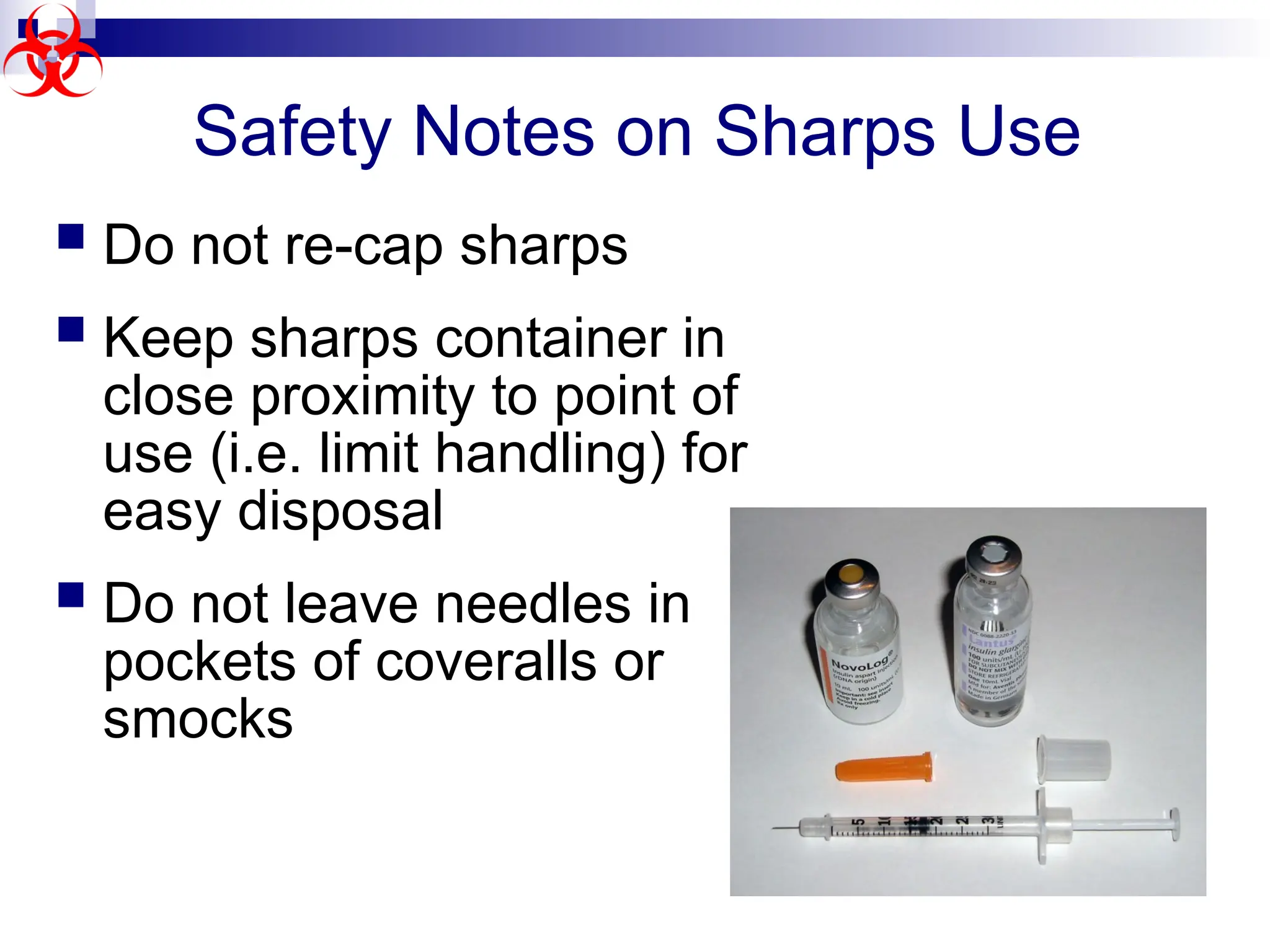
Safety Notes on Sharps Use
 Do not re-cap sharps
 Keep sharps container in
close proximity to point of
use (i.e. limit handling) for
easy disposal
 Do not leave needles in
pockets of coveralls or
smocks
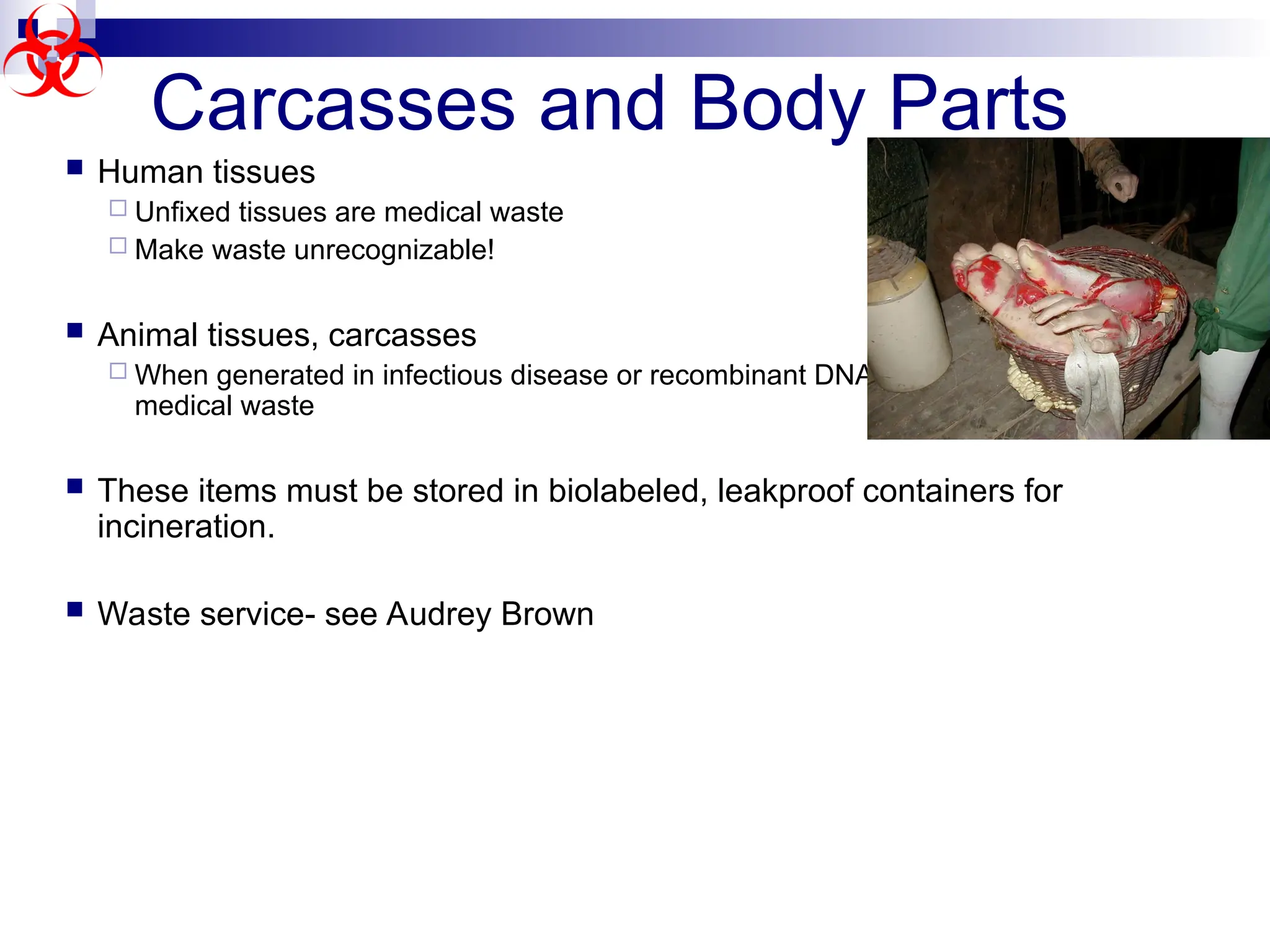
Carcasses and Body Parts
 Human tissues
 Unfixed tissues are medical waste
 Make waste unrecognizable!
 Animal tissues, carcasses
 When generated in infectious disease or recombinant DNA research, these are
medical waste
 These items must be stored in biolabeled, leakproof containers for
incineration.
 Waste service- see Audrey Brown
Managing All That Other Waste…
 Drain bottles of non-hazardous
materials before disposal in trash
 <3% of volume is considered empty
 Higher volumes must not be thrown
in the trash
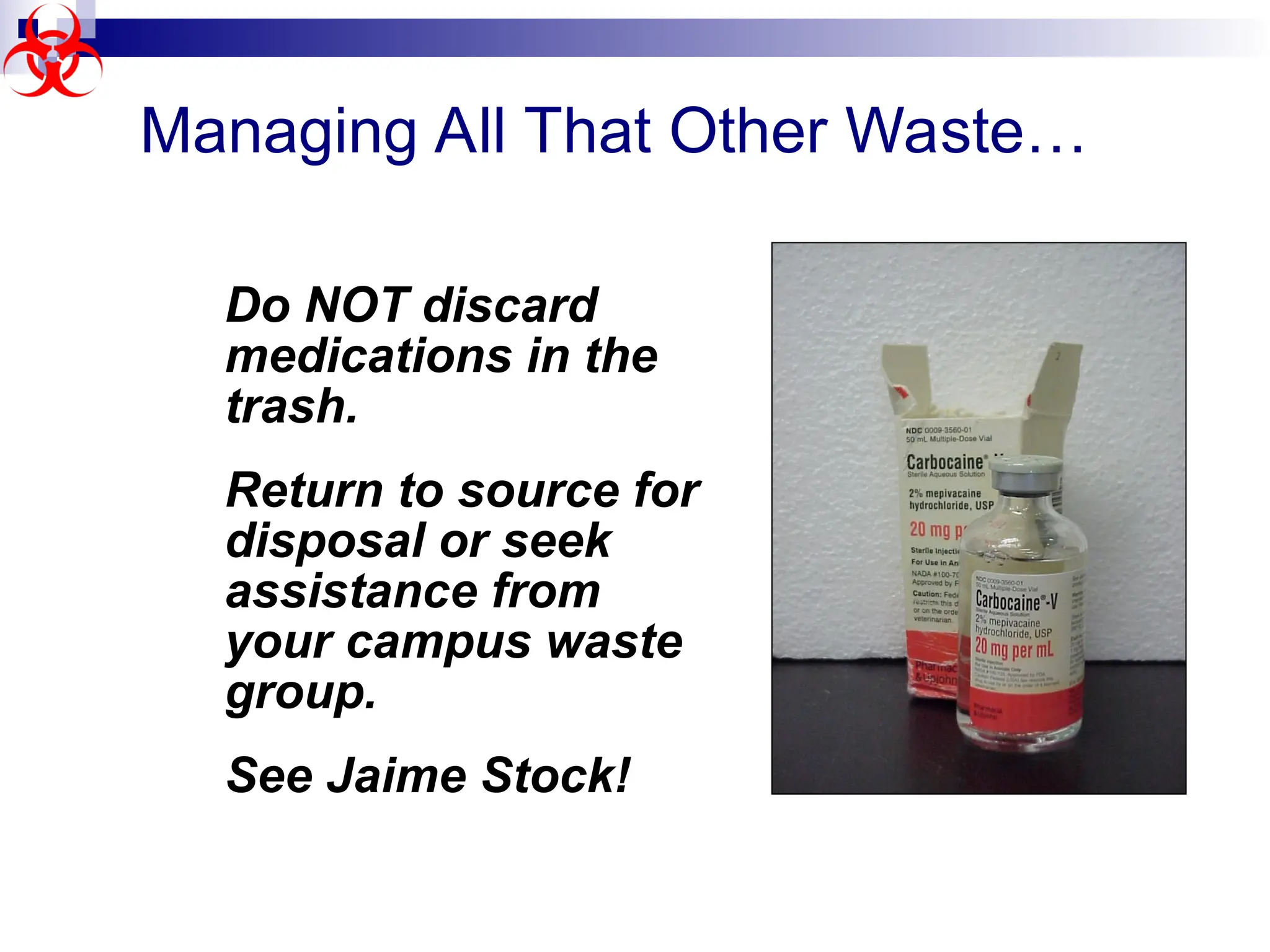
Managing All That Other Waste…
Do NOT discard
medications in the
trash.
Return to source for
disposal or seek
assistance from
your campus waste
group.
See Jaime Stock!
Any Questions?
Thank You
for your attention!
Thanks to Carol Stevens at CMU & Robin Mecklem at MSU for their assistance with this presentation
2.1 Basics of Biosafety And bioethics (1).ppt

2.1 Basics of Biosafety And bioethics (1).ppt

  • 1.
    Basics of Biosafety WorkingSafely with Biological Materials Central Michigan University College of Science and Technology
  • 2.
     Principles andpractices employed to protect laboratory personnel and the environment from exposure or infection while working with living organisms, biological materials, or agents.  Included are any materials that may be potentially infectious.  Includes recombinant DNA research What is Biosafety?
  • 3.
     The “agent”is the what creates risk  Risks to the worker or environment are often unknown  Determining “acceptable risk”? Agents and Risks
  • 4.
    There is alwaysrisk! The risk must be identified The risk is evaluated The risk must be measured Plan to minimize the risk Assessing Risk
  • 5.
     Assessment isconducted by a Biosafety Professional in partnership with and based on information provided by the Principal Investigator  The assessment is presented to the Institutional Biosafety Committee (IBC) for approval Who Determines Acceptable Risk?
  • 6.
     Understand thebiology of the agent  Susceptibility and transmission within the host  Hazards associated with equipment and procedures  Goal: Provide the highest practical protection and the lowest practical exposure Identifying Risk
  • 7.
     Worst casescenario -What might happen?  Likelihood of an event  Seriousness of the incident  Actions needed to resolve the problems Evaluating Risk Acceptability
  • 8.
     Since thereis no such thing as “no risk”  “Safe” means risk has been judged acceptable  Judging risk is a subjective- humans make decisions  Measuring risk is objective- use available guidelines, data, and documentation  Keep records of how determinations were made due to subjective nature of the process What is Acceptable Risk?
  • 9.
    Agents Assigned RiskGroups  RG-1 Unlikely to cause disease in humans or animals  low individual or community risk  RG-2 May cause disease but typically not serious  individual risk, low community risk, treatable  RG-3 May cause serious disease, usually treatable  High individual but low community risk, serious respiratory agents  RG-4 Serious or fatal, often not treatable,  Easy transmission, high individual and community risk WHO-World Health Organization
  • 10.
     Different thanthe Risk Groups!!  Risk groups used in risk assessment  BSL are used in risk management  BSL are ways to control the agent  facilities, safety equipment, practices, PPE, etc.  Once risk is assessed then the appropriate BSL is determined Biosafety Levels (BSL)
  • 11.
     Well characterized,non-pathogenic organisms or agents  Open bench- no containment  Use good laboratory practices, waste disposal, and aseptic techniques  Example: E. coli K-12 strains BioSafety Level 1
  • 12.
     Agents ofmoderate hazard to personnel or environment  Basic lab, but restricted access, containment during certain processes (i.e. aerosols, large volumes, etc.)  Autoclave and Biological Safety Cabinet desired  Use good laboratory practices, waste disposal, and aseptic techniques  Example: most non-respiratory, non lethal, agents BioSafety Level 2
  • 13.
     Agents ofhigh hazard to personnel or environment  Respiratory exotic or indigenous agents which are easily transmissible causing serious or lethal disease  All work is contained, engineering controls and controlled environments we currently do not have the facilities to handle. Example: Mycobacterium tuberculosis, SARS, etc. BioSafety Level 3
  • 14.
     FORGET ABOUTIT!!!  Hemorrhagic fever, deadly viruses, etc.  Total containment, airtight labs, “submarine” doors, air pumps, water treatment, HEPA filtration, etc.  Positive pressure “moonsuits” BioSafety Level 4
  • 15.
    Bacterial: 76% from clinicallabs 8% from research labs Exposure: 60% acquired from inhalation Other exposures include: digestion, sharps, splashes, direct and indirect contact Laboratory Acquired Infections (LAI)
  • 16.
    Viral  16% fromclinical labs  70% from research labs 32% from animal related activities Laboratory Acquired Infections (LAI)
  • 17.
    Biohazardous/Medical Waste Waste thatis potentially infectious to humans, animals or plants. It includes: Medical Waste according to MMWRA Regulated Waste by MIOSHA Regulated Waste by CDC/NIH
  • 18.
    Michigan Medical WasteRegulatory Act (MMWRA)  Defines “medical waste”  Requirements for waste handling and disposal  Requires generators to register with DEQ and implement a Medical Waste Management Plan
  • 19.
    Michigan Medical WasteRegulatory Act (MMWRA)  Defines “medical waste”  Requirements for waste handling and disposal  Requires generators to register with DEQ and implement a Medical Waste Management Plan
  • 20.
    Biohazardous Waste ManagementPlan Must outline how generating facility complies with the MMWRA:  Types of wastes generated  Storage and disposal of wastes  Contingency plans  Training
  • 21.
    Biohazardous Waste Categories Culturesand stocks of infectious agents and associated biologicals laboratory waste biological production waste discarded live and attenuated vaccines culture dishes and related materials contaminated PPE
  • 22.
    Biohazardous Waste Categories Liquidhuman and animal waste liquid or semi-liquid blood and blood products and body fluids contaminated items that would release blood or items that are caked with blood or other potentially infectious materials; NOT including urine or materials stained with blood or body fluids infectious animal waste (research)
  • 23.
    Biohazardous Waste Categories Pathologicalwaste tissues body parts other than teeth products of conception fluids removed by trauma or during surgery or autopsy/necropsy or other medical procedure and not chemically fixed.
  • 24.
    …And More Biohazardous WasteCategories  Animal and plant pathogen waste  Recombinant DNA waste  Sharps
  • 25.
    Biowaste vs. Trash 3basic questions to differentiate: 1. Is it contaminated with viable biological material? 2. Can blood or other regulated body or biological fluids be released? 3. Is it a sharps hazard?
  • 26.
    #1 Is it contaminatedwith viable biological material? Examples: • Contaminated lab waste • Personal protective equipment used for handling potentially infectious materials (including handling infected animals or their products) • Wastes from infectious disease research (carcasses, body fluids…)
  • 27.
    #2 Can blood orother (regulated) body fluids or viable biological materials be released? Some Examples… Tubes of blood Vacuum flasks containing body fluids or cell line waste
  • 28.
    Managing Liquid BiohazardousWaste Storage:  Label and secure bulk vessels if not disposed of immediately Treatment:  Chemical disinfection OR  Autoclave Disposal: THEN  Flush to sewer  Use proper PPE!
  • 29.
     10% bleachsolution  good for general disinfection  High organics use 20%  Needs to be made weekly  Test contact time  Ethanol  Use 70% solution (most effective)  Longer contact time and flammable *Should research and know effectiveness and contact time for the best disinfectant against your agent! Disinfection
  • 30.
  • 31.
  • 32.
  • 33.
    Managing Non-Sharp BiohazardousWaste  labeled container  lined with a biohazardous waste bag  equipped with a lid.
  • 34.
    Managing Non-Sharp Biohazardous Waste Securely tie bags for transport to treatment/collection site.  When moving wastes, use secondary containment; avoid using public halls and elevators.
  • 35.
    “Breakable” Non-sharps Biowaste Storein labeled containers that are puncture-resistant, closable and will capture leakage, BUT…. …Do NOT use SHARPS containers!
  • 36.
    Effective Waste Autoclaving Leave bag open during autoclaving or loosely closed  Add water to bag prior to autoclaving if primarily dry materials  Steam must contact materials  Place bag in autoclavable tray with sides
  • 37.
    Treated Waste BagDisposal  Allow waste bag to cool  Use fume hood to reduce odors  Securely tie bag shut  Place bag in a non- transparent black bag for regular disposal Remember: NO ORANGE BAGS IN DUMPSTER!
  • 38.
    #3 Is it asharps hazard? Examples: – needles – syringes – scalpels – all biologically contaminated objects that can easily penetrate skin (Pasteur pipettes, razor blades, etc.) Place sharps in approved sharps container for disposal!
  • 39.
    …Syringes in researchsettings should be disposed of as a sharp to avoid public relations concerns!
  • 40.
    Sharps Containers  Containersmust be leak-proof, puncture-resistant, closable & labeled with the biohazard symbol.  Proper sharps containers must be used for both clinic and field work.
  • 41.
    Proper Use ofSharps Containers  Place tops on containers before use on lab bench  Don’t forget to date the container when first put into use  Remember: sharps containers are a one-way disposal system
  • 42.
    Proper Use ofSharps Containers Use sharps containers for sharps ONLY! • No solid biohazardous waste (i.e. gauze, un-broken pipettes, gloves) • No mercury thermometers
  • 43.
    What’s wrong withthis picture?
  • 44.
    Sharps Container Disposal Containers must be permanently closed and disposed of through the animal facility manager: Within 90 days of first use When ¾ full  Disposal methods: Landfill Incineration We use waste hauler
  • 45.
    Safety Notes onSharps Use  Do not re-cap sharps  Keep sharps container in close proximity to point of use (i.e. limit handling) for easy disposal  Do not leave needles in pockets of coveralls or smocks
  • 46.
    Carcasses and BodyParts  Human tissues  Unfixed tissues are medical waste  Make waste unrecognizable!  Animal tissues, carcasses  When generated in infectious disease or recombinant DNA research, these are medical waste  These items must be stored in biolabeled, leakproof containers for incineration.  Waste service- see Audrey Brown
  • 47.
    Managing All ThatOther Waste…  Drain bottles of non-hazardous materials before disposal in trash  <3% of volume is considered empty  Higher volumes must not be thrown in the trash
  • 48.
    Managing All ThatOther Waste… Do NOT discard medications in the trash. Return to source for disposal or seek assistance from your campus waste group. See Jaime Stock!
  • 49.
    Any Questions? Thank You foryour attention! Thanks to Carol Stevens at CMU & Robin Mecklem at MSU for their assistance with this presentation