Biosafety and Biosecurity
What is Biosafety?
“Laboratory biosafety” is the term used to
describe the containment principles,
technologies and practices that are
implemented to prevent unintentional
exposure
to pathogens and toxins, or their accidental
release.
Laboratory biosafety manual
Third edition
World Health Organization
Geneva, 2004
Principles of Biosafety
• Protection of laboratory worker
• Equipment to prevent exposures
• Containment laboratory design
• Safe practices
• Biosafety guidelines
• Fort Detrick contributions
WHO Risk Groups (RG) 1-4: Agents are
categorized based on their relative risk
Pathogenicity of the organism
Mode of transmission and host range
Availability of effective preventive
measures (e.g., vaccines)
Availability of effective treatment (e.g.,
antibiotics)
Other factors
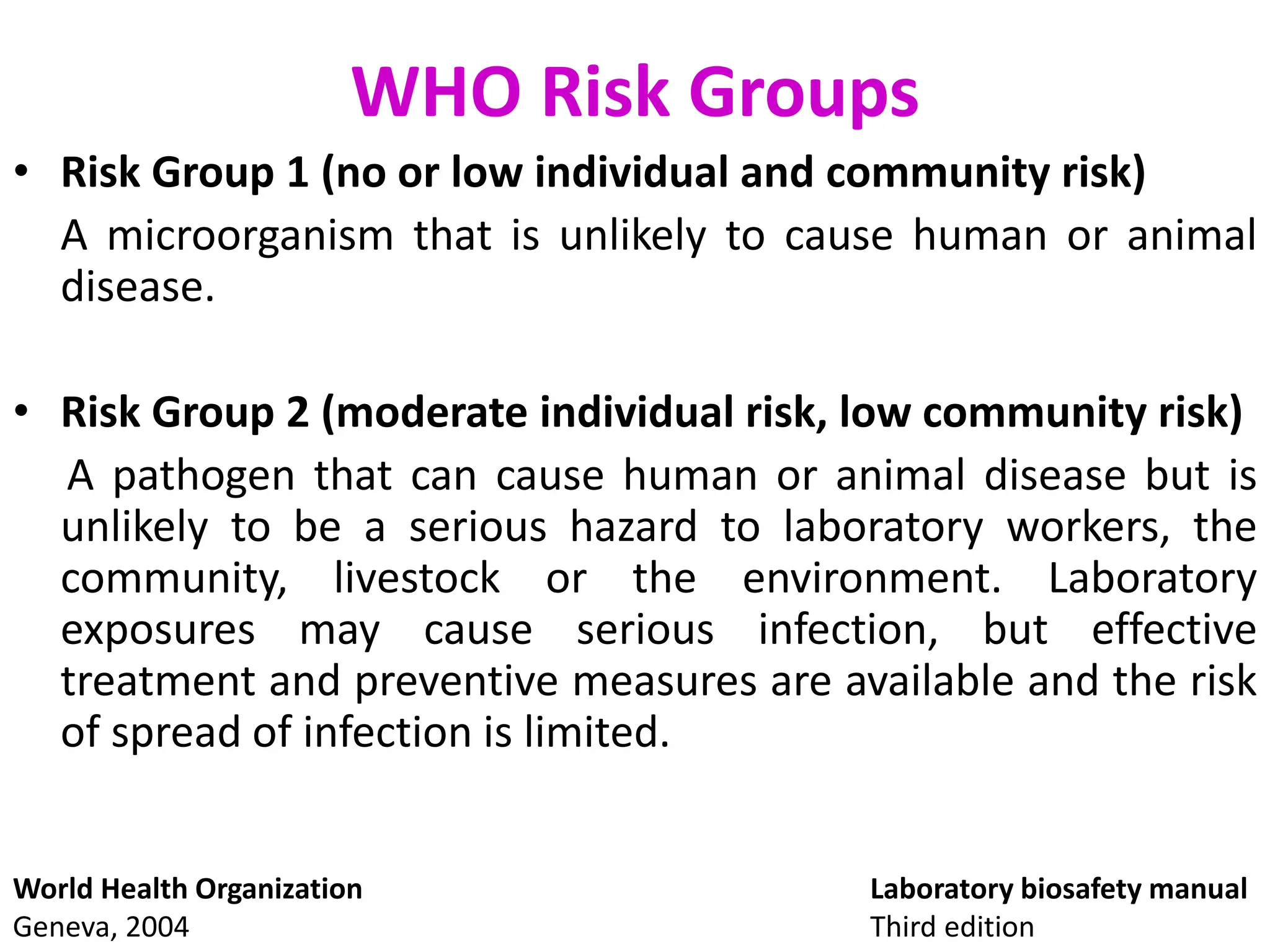
WHO Risk Groups
• Risk Group 1 (no or low individual and community risk)
A microorganism that is unlikely to cause human or animal
disease.
• Risk Group 2 (moderate individual risk, low community risk)
A pathogen that can cause human or animal disease but is
unlikely to be a serious hazard to laboratory workers, the
community, livestock or the environment. Laboratory
exposures may cause serious infection, but effective
treatment and preventive measures are available and the risk
of spread of infection is limited.
Laboratory biosafety manual
Third edition
World Health Organization
Geneva, 2004
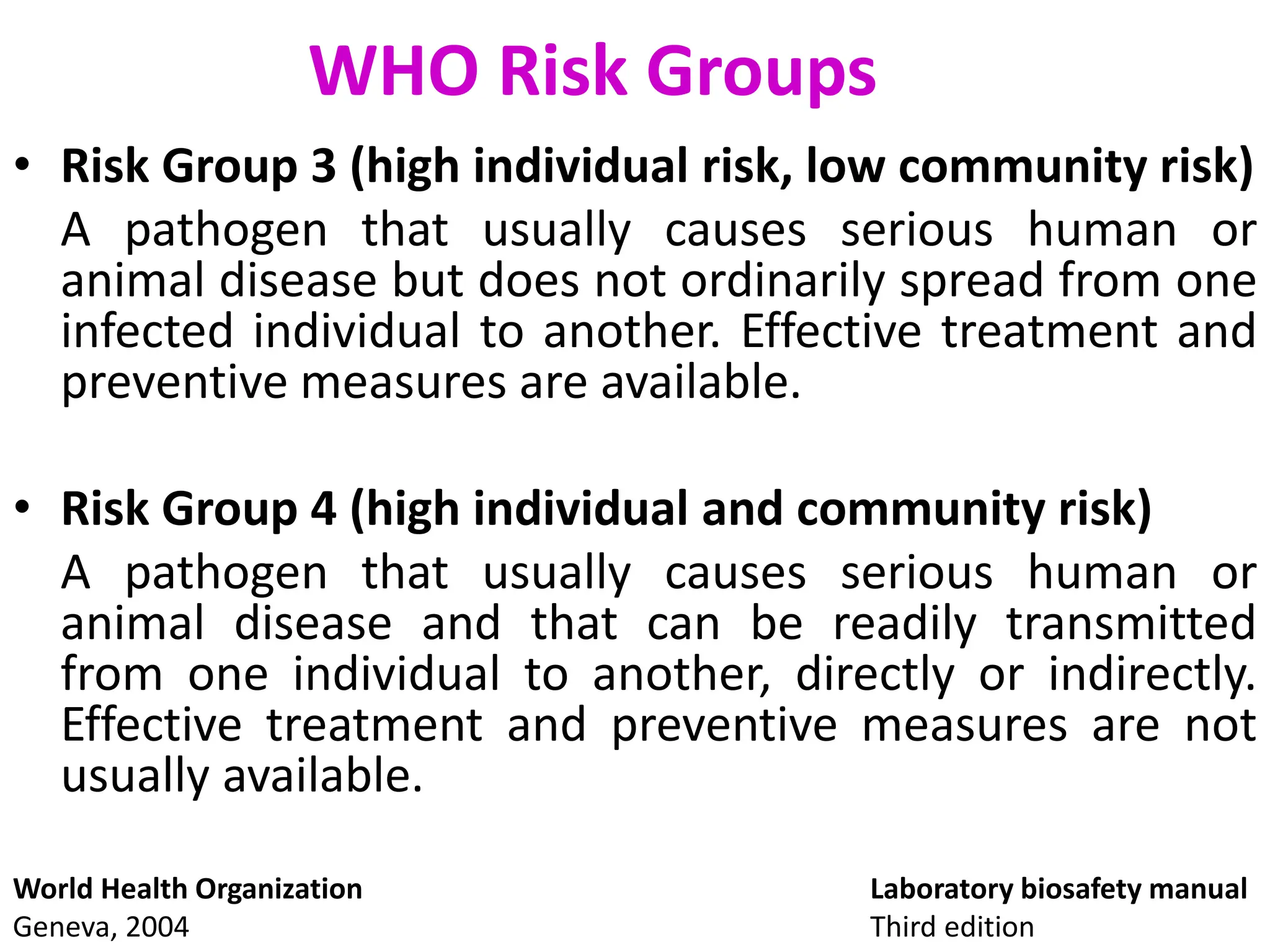
WHO Risk Groups
• Risk Group 3 (high individual risk, low community risk)
A pathogen that usually causes serious human or
animal disease but does not ordinarily spread from one
infected individual to another. Effective treatment and
preventive measures are available.
• Risk Group 4 (high individual and community risk)
A pathogen that usually causes serious human or
animal disease and that can be readily transmitted
from one individual to another, directly or indirectly.
Effective treatment and preventive measures are not
usually available.
Laboratory biosafety manual
Third edition
World Health Organization
Geneva, 2004
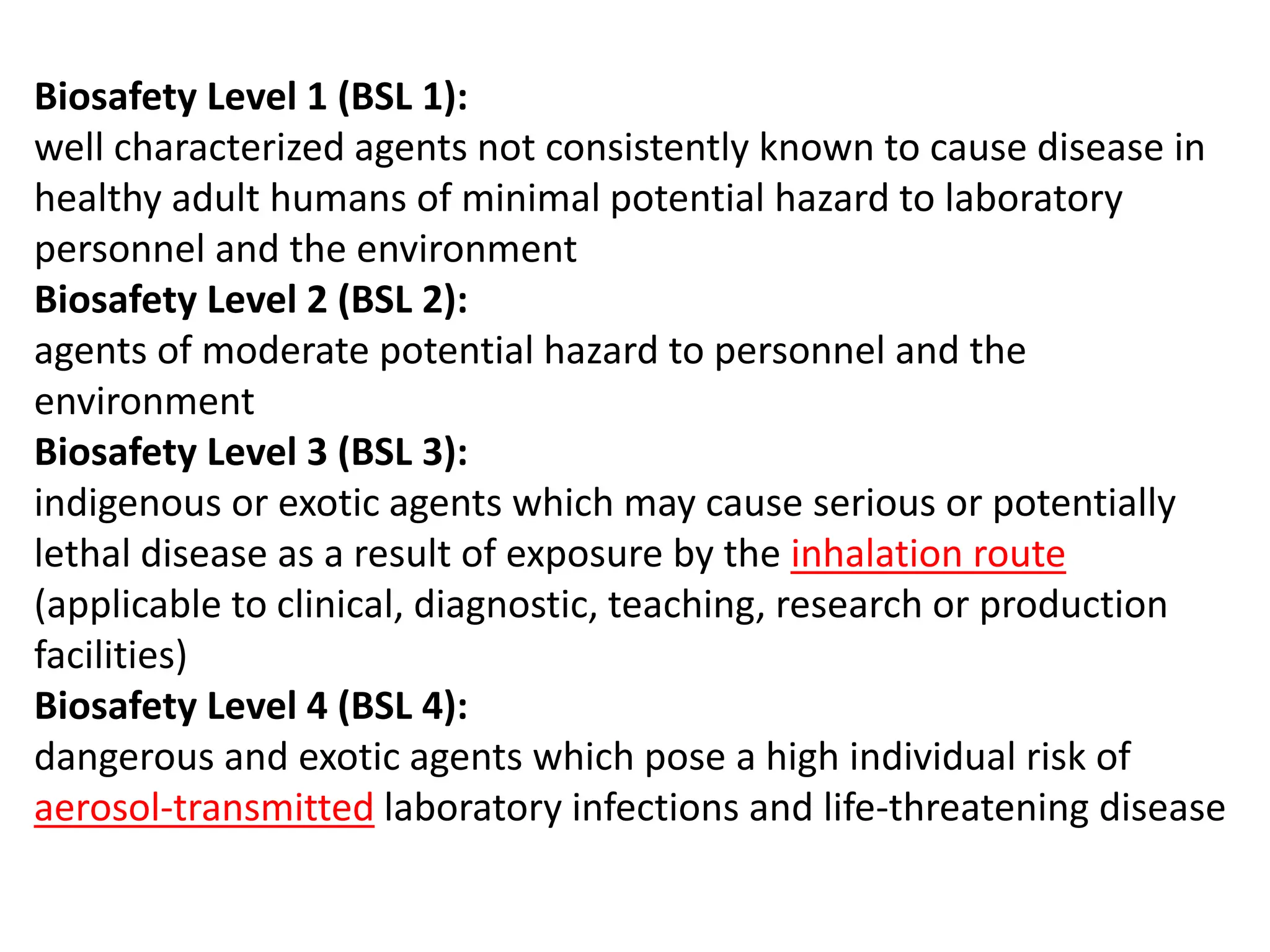
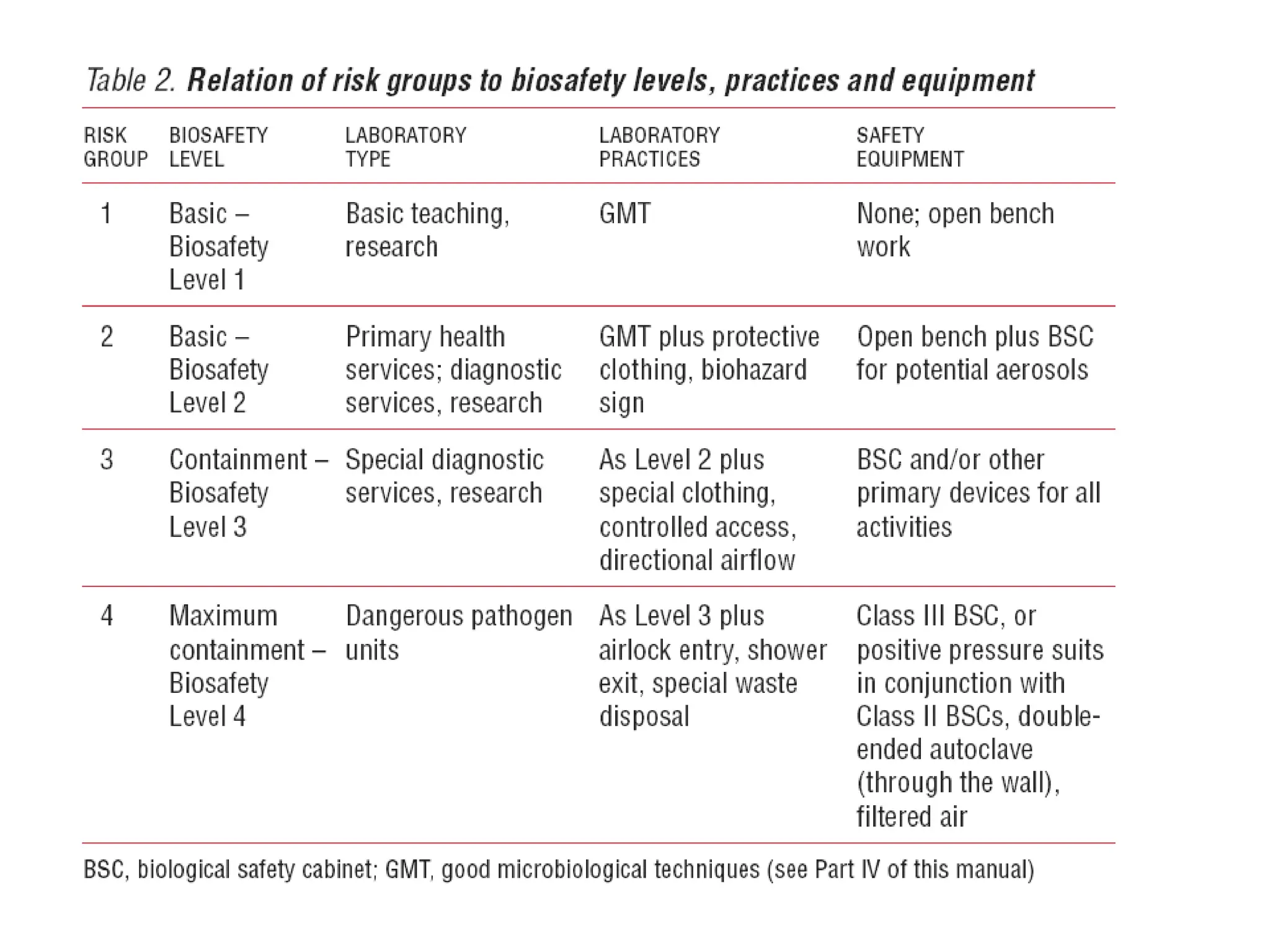
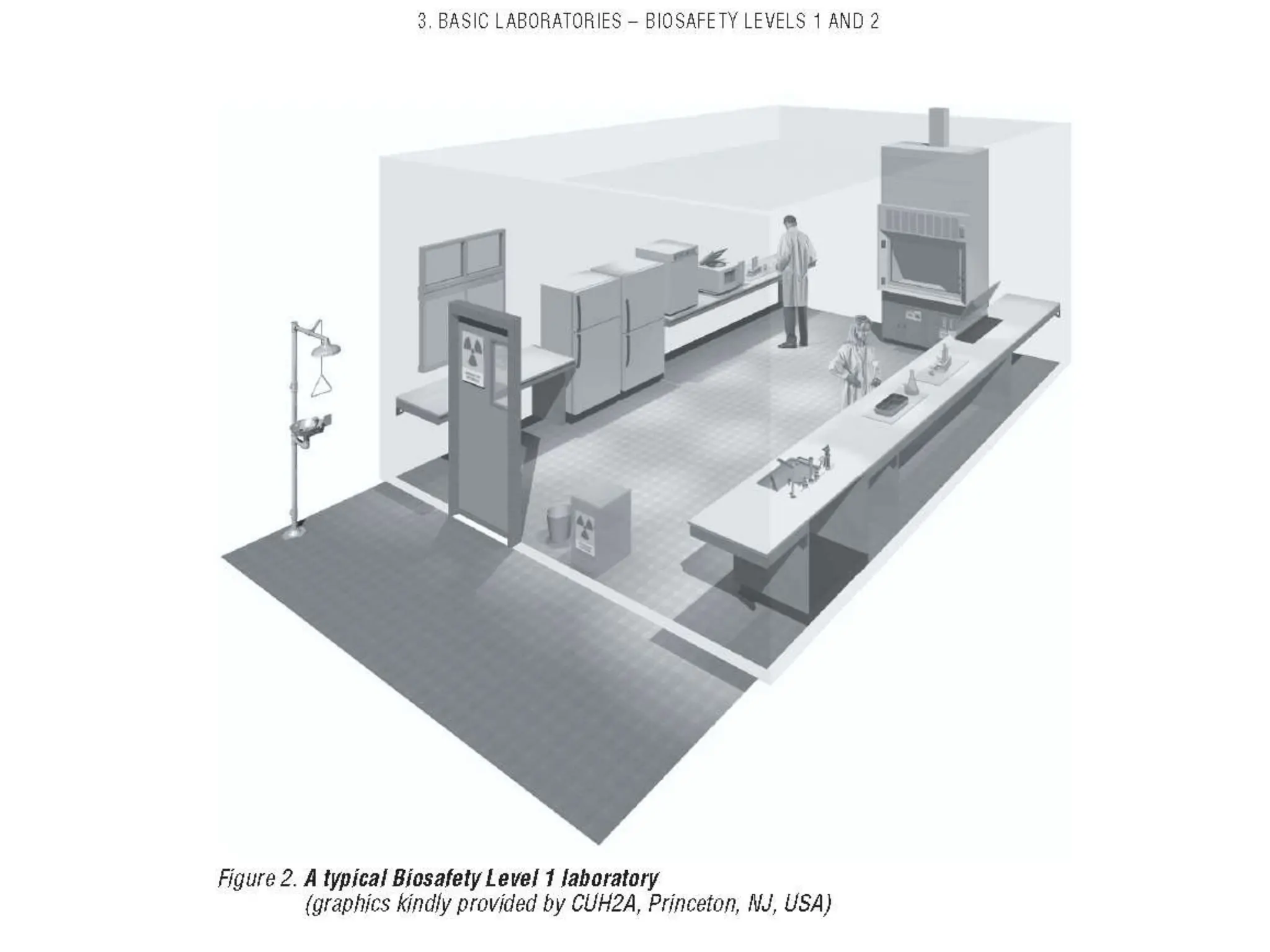
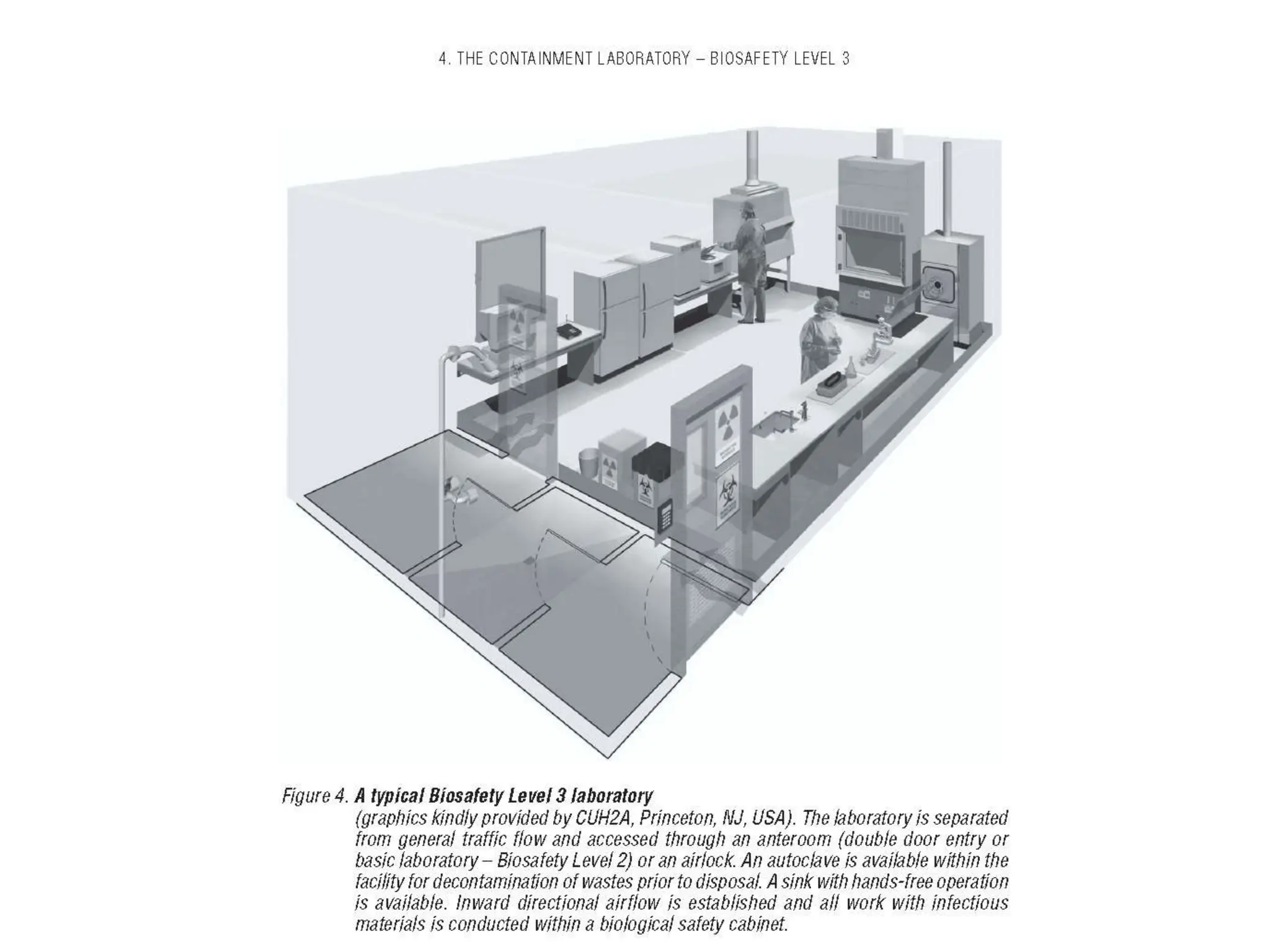
Biosafety Level 1 (BSL 1):
well characterized agents not consistently known to cause disease in
healthy adult humans of minimal potential hazard to laboratory
personnel and the environment
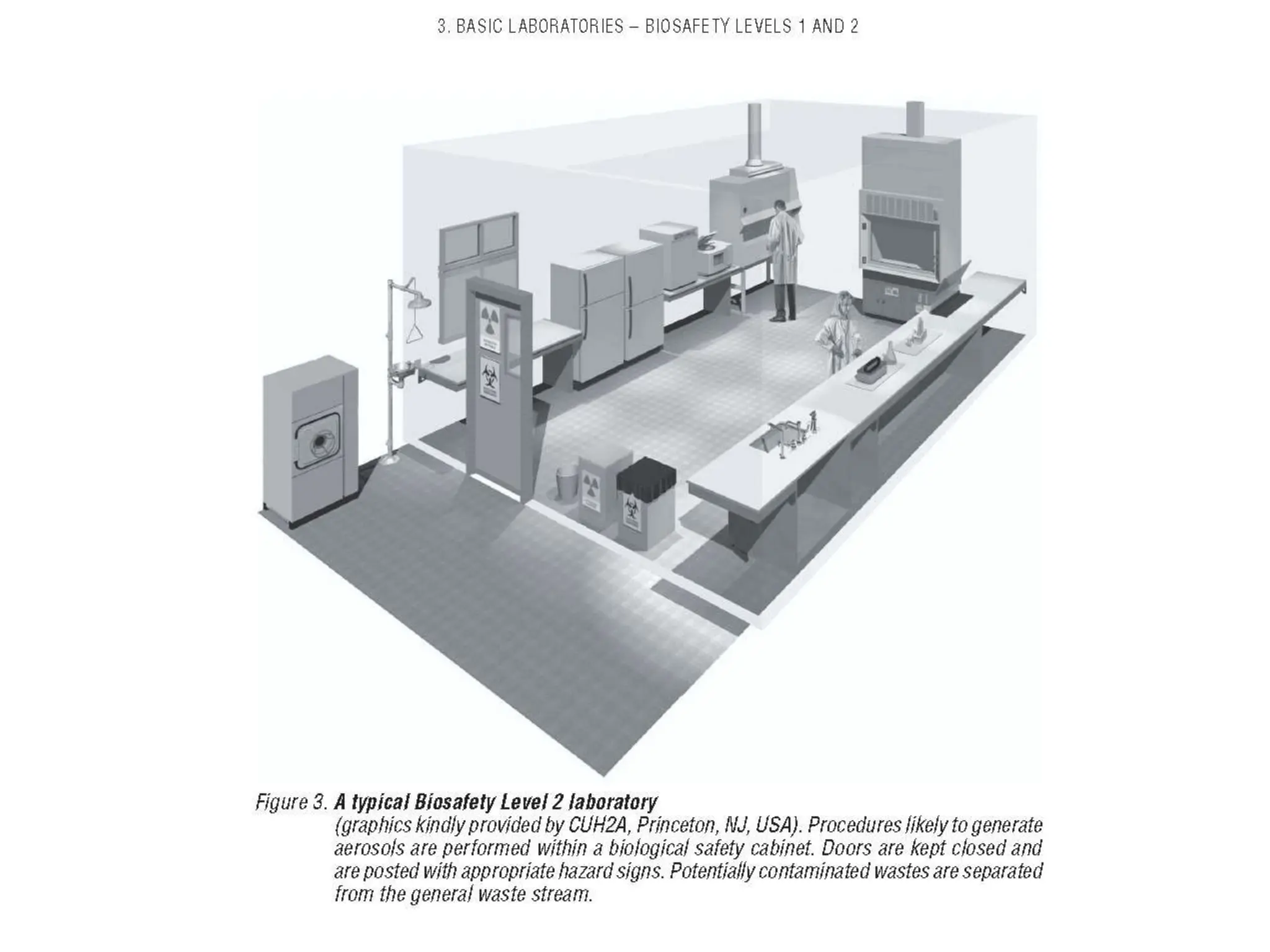
Biosafety Level 2 (BSL 2):
agents of moderate potential hazard to personnel and the
environment
Biosafety Level 3 (BSL 3):
indigenous or exotic agents which may cause serious or potentially
lethal disease as a result of exposure by the inhalation route
(applicable to clinical, diagnostic, teaching, research or production
facilities)
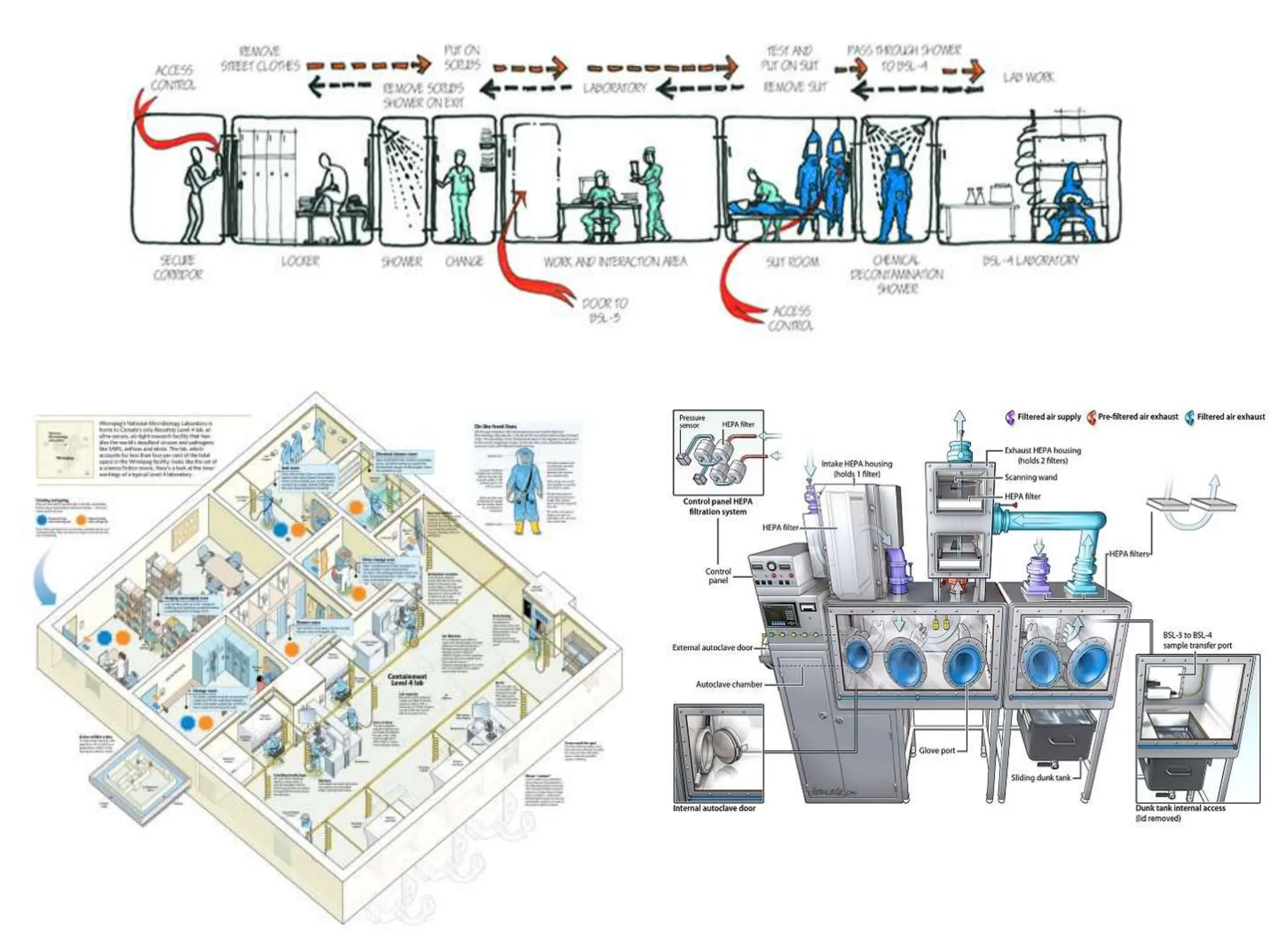
Biosafety Level 4 (BSL 4):
dangerous and exotic agents which pose a high individual risk of
aerosol-transmitted laboratory infections and life-threatening disease
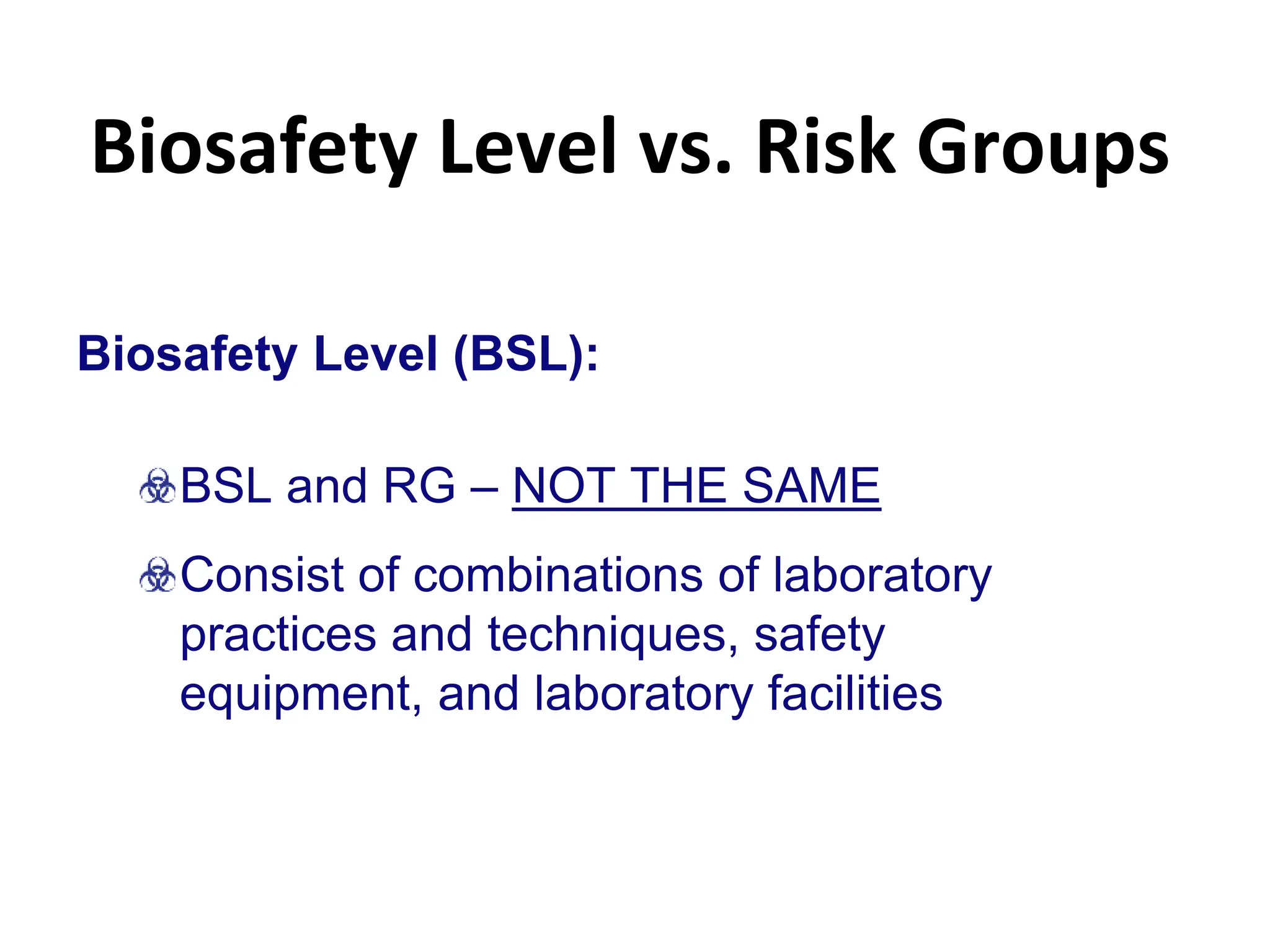
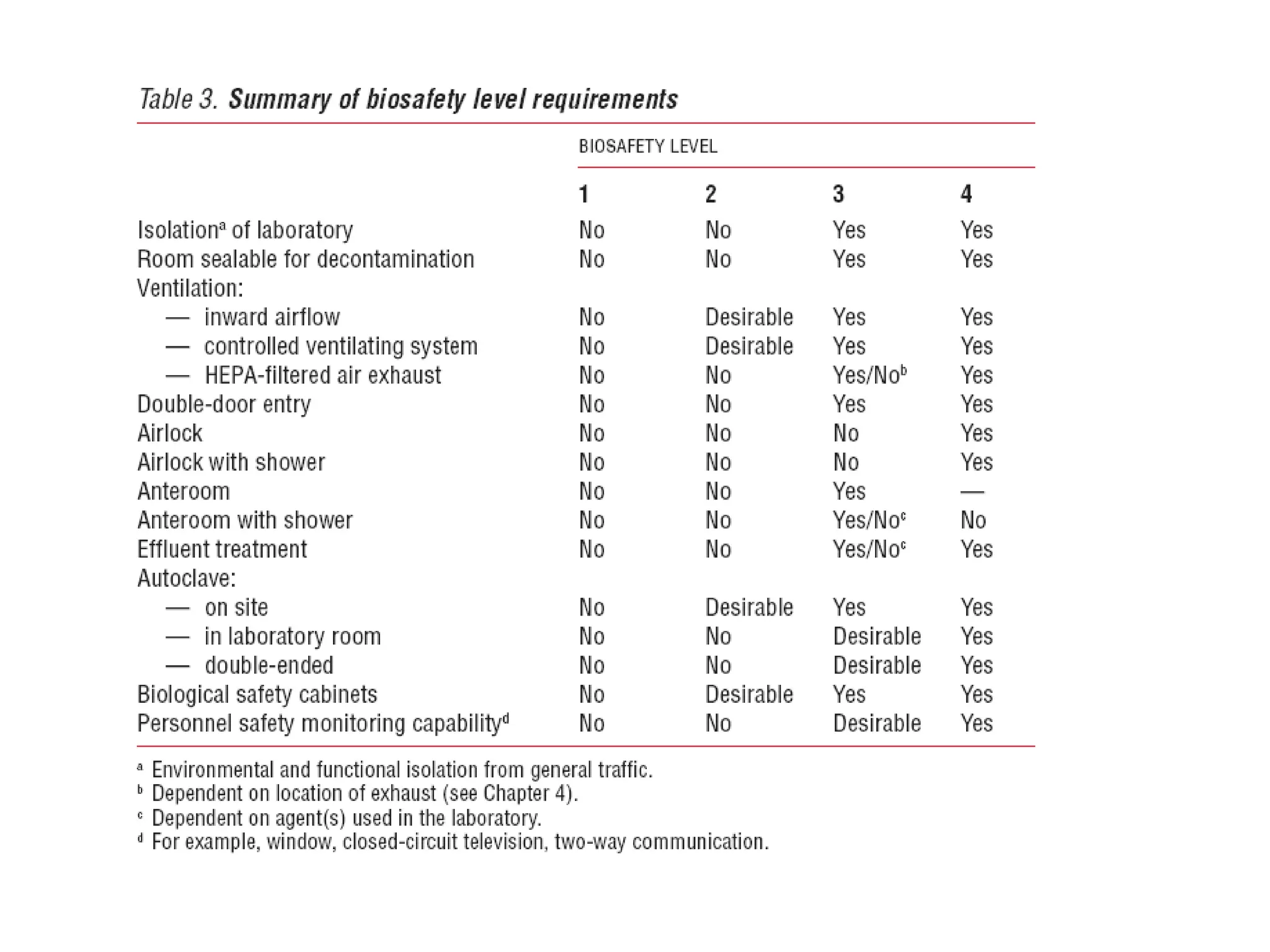
Biosafety Level vs. Risk Groups
Biosafety Level (BSL):
BSL and RG – NOT THE SAME
Consist of combinations of laboratory
practices and techniques, safety
equipment, and laboratory facilities
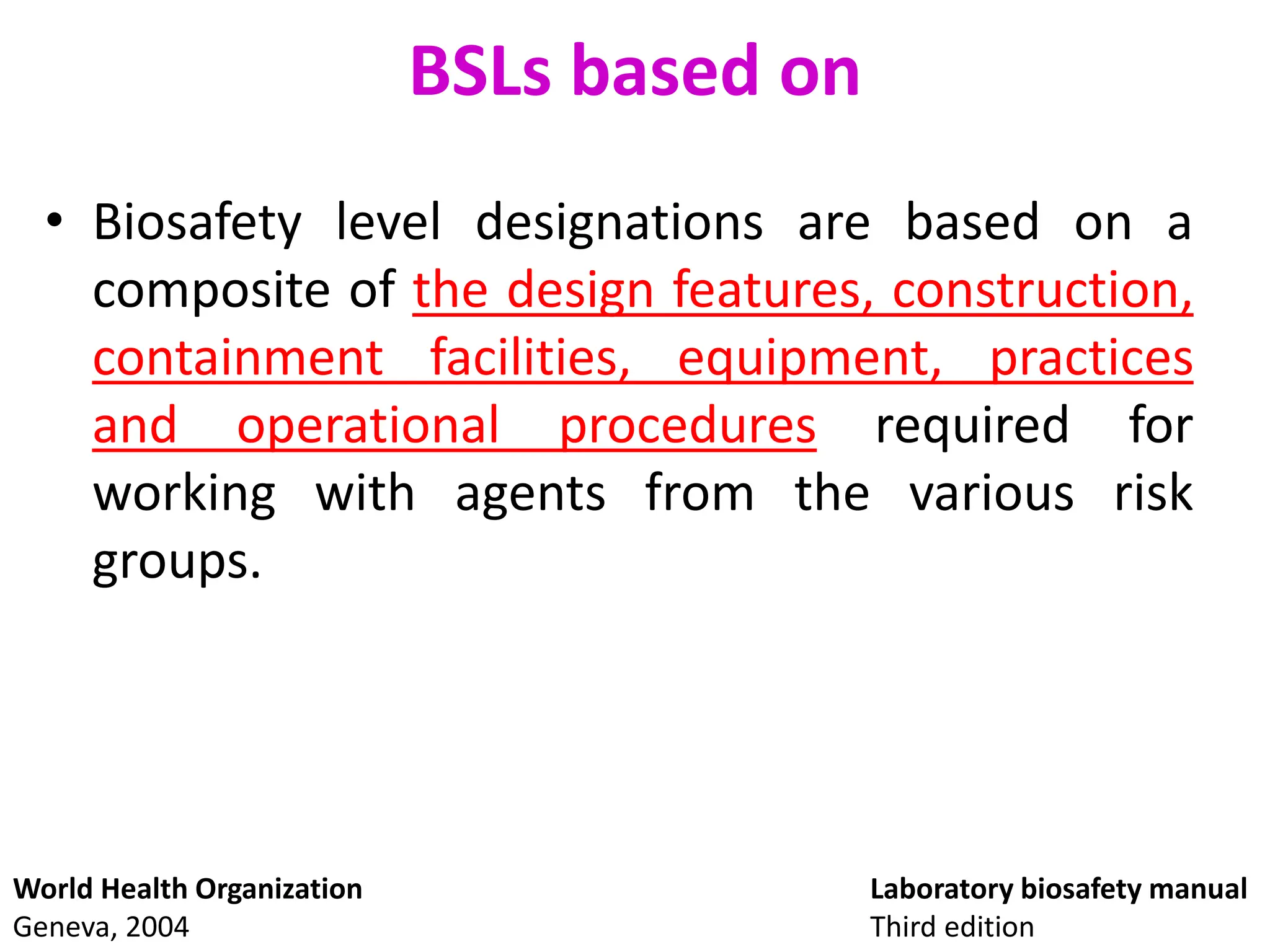
BSLs based on
• Biosafety level designations are based on a
composite of the design features, construction,
containment facilities, equipment, practices
and operational procedures required for
working with agents from the various risk
groups.
Laboratory biosafety manual
Third edition
World Health Organization
Geneva, 2004
Biosafety Hazards &
Risk Assessment
Biosafety Hazards
• Agent Hazards
• Procedure Hazards
• Technique Hazards
• Worker Susceptibility to Disease
• Risk Assessment
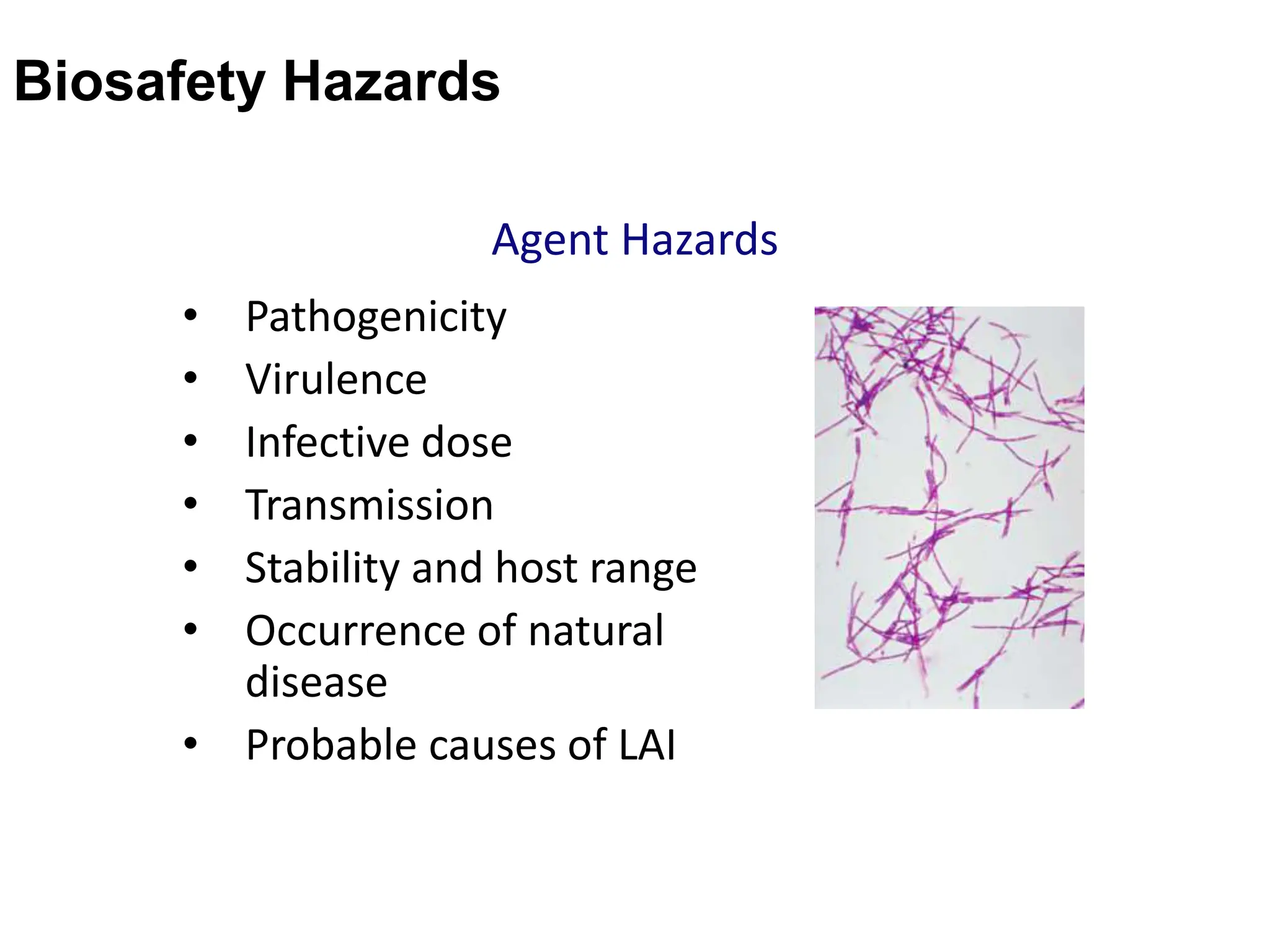
Agent Hazards
• Pathogenicity
• Virulence
• Infective dose
• Transmission
• Stability and host range
• Occurrence of natural
disease
• Probable causes of LAI
Biosafety Hazards
Procedure Hazards
• Agent concentration
• Suspension volume
• Droplets and aerosols
• Protocol complexity
• Use of animals
• Use of sharps
Biosafety Hazards
Hazardous Techniques
• Handling infectious agents
• Sterile techniques
• Biological safety cabinets use
• Other primary barriers
• Training and mentoring
• Emergency response procedures
• Attitude
Biosafety Hazards
Biosafety Hazards
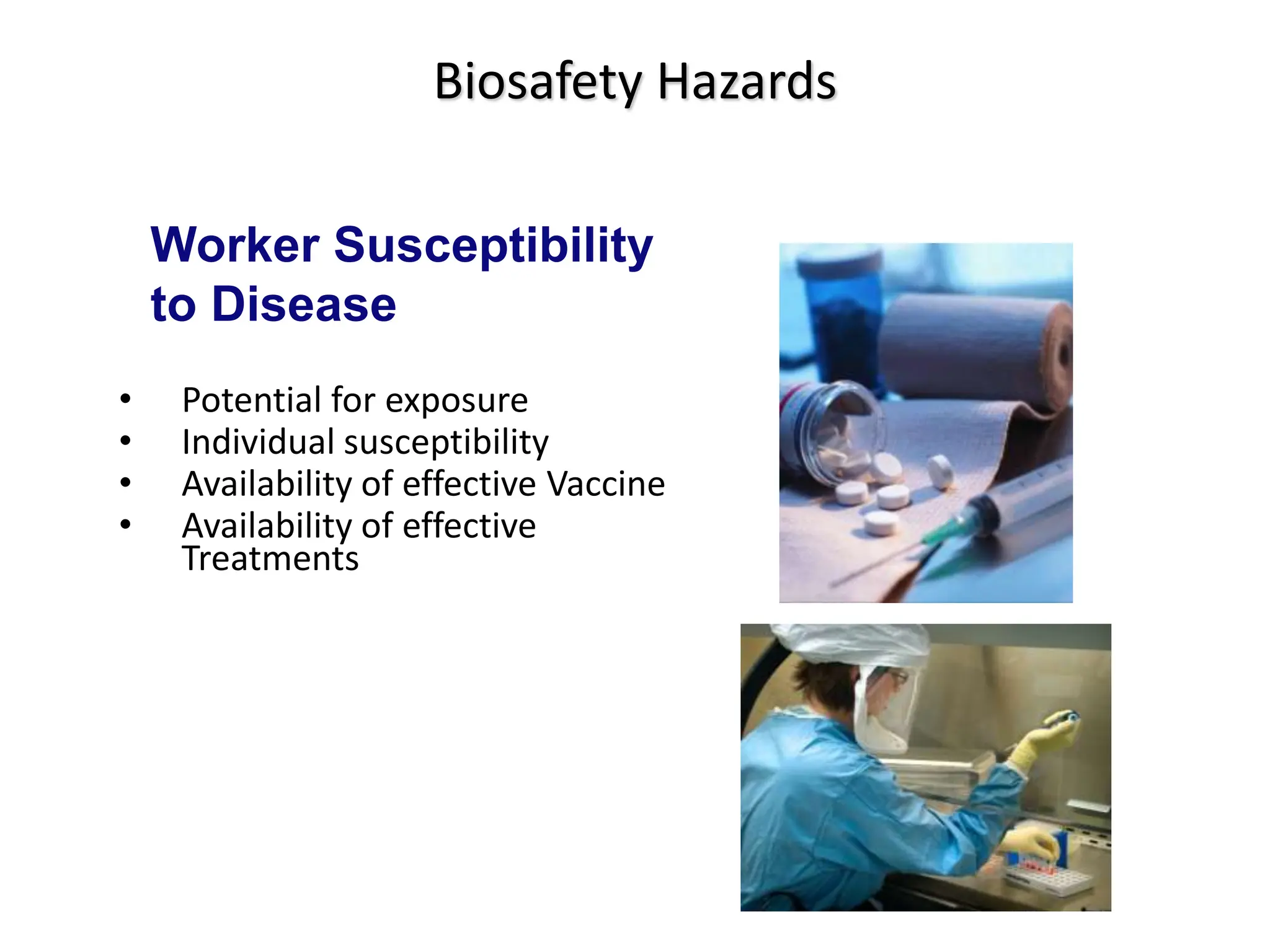
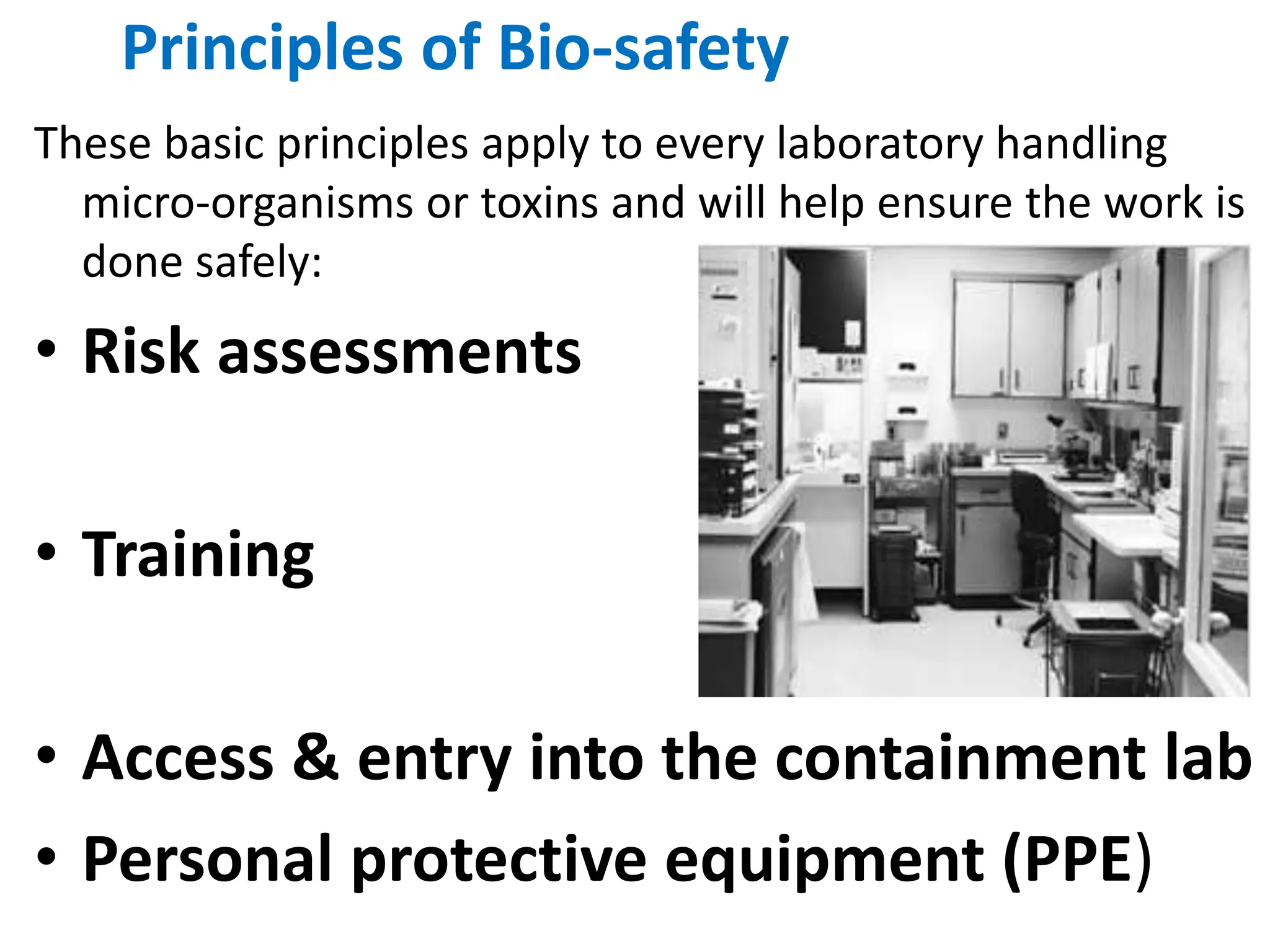
Worker Susceptibility
to Disease
• Potential for exposure
• Individual susceptibility
• Availability of effective Vaccine
• Availability of effective
Treatments
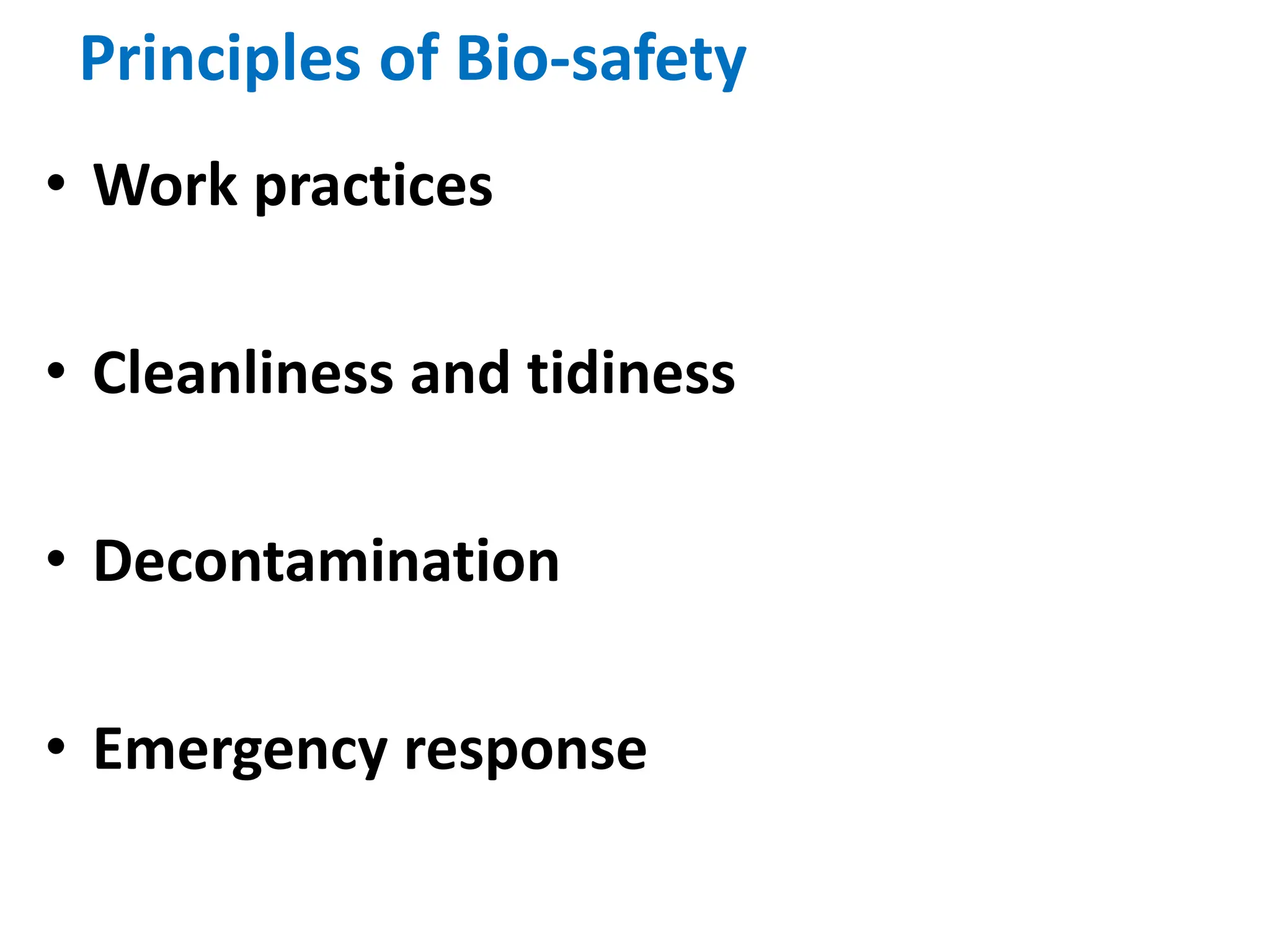
Principles of Bio-safety
These basic principles apply to every laboratory handling
micro-organisms or toxins and will help ensure the work is
done safely:
• Risk assessments
• Training
• Access & entry into the containment lab
• Personal protective equipment (PPE)
Principles of Bio-safety
• Work practices
• Cleanliness and tidiness
• Decontamination
• Emergency response
Risk assessment types
• Overarching risk assessment – will identify the
hazards and appropriate mitigation
management strategies for proposed activities
involving infectious material or toxins.
• Local Risk Assessment (LRA) – will examine
each activity, identify risks, and develop safe
work practices
Risk assessment types
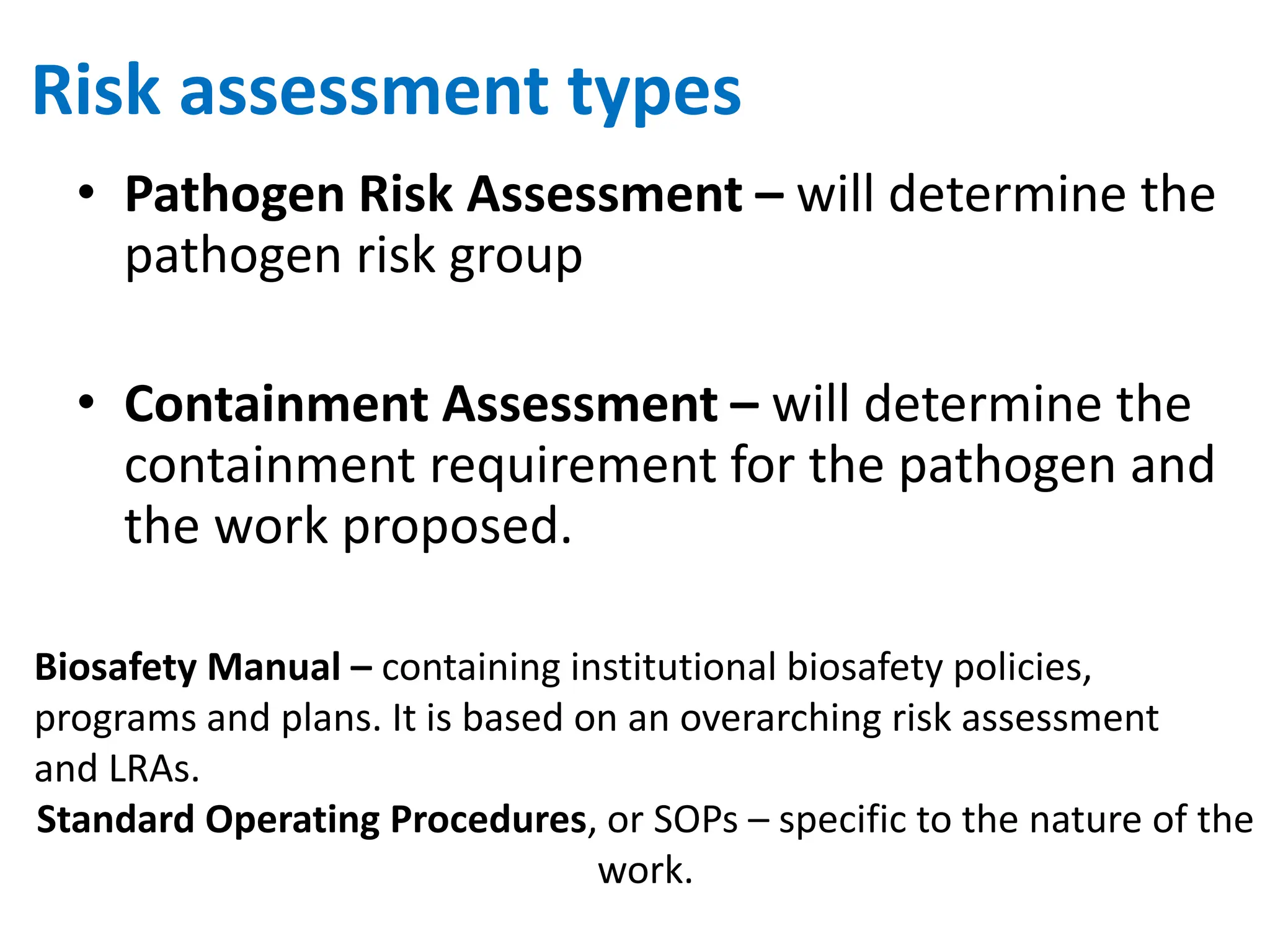
• Pathogen Risk Assessment – will determine the
pathogen risk group
• Containment Assessment – will determine the
containment requirement for the pathogen and
the work proposed.
Biosafety Manual – containing institutional biosafety policies,
programs and plans. It is based on an overarching risk assessment
and LRAs.
Standard Operating Procedures, or SOPs – specific to the nature of the
work.
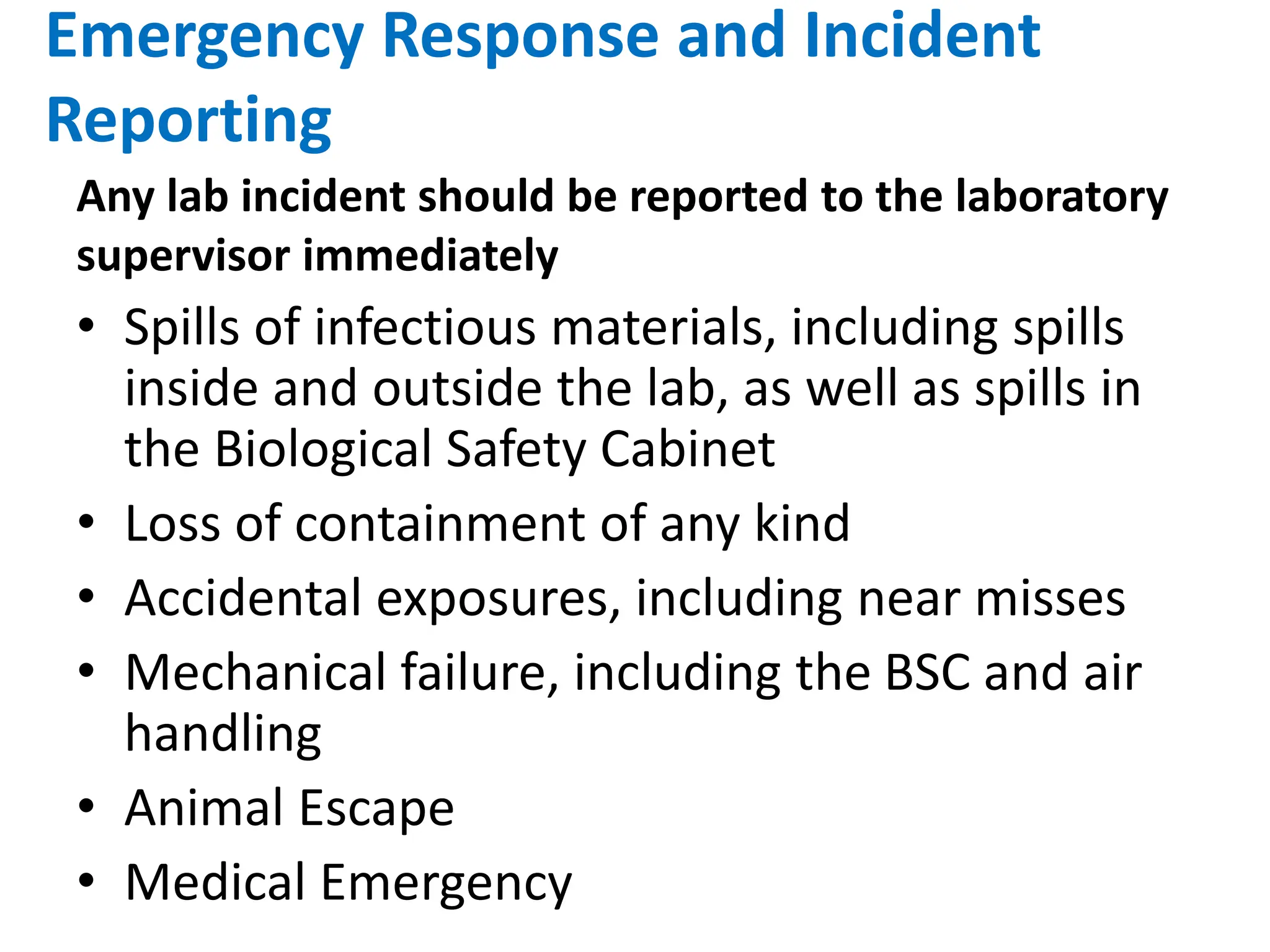
Emergency Response and Incident
Reporting
• Spills of infectious materials, including spills
inside and outside the lab, as well as spills in
the Biological Safety Cabinet
• Loss of containment of any kind
• Accidental exposures, including near misses
• Mechanical failure, including the BSC and air
handling
• Animal Escape
• Medical Emergency
Any lab incident should be reported to the laboratory
supervisor immediately
Additional Safety Considerations
• Waste Management
• Chemical Hygiene
• Electrical
• Fire
• Radiation
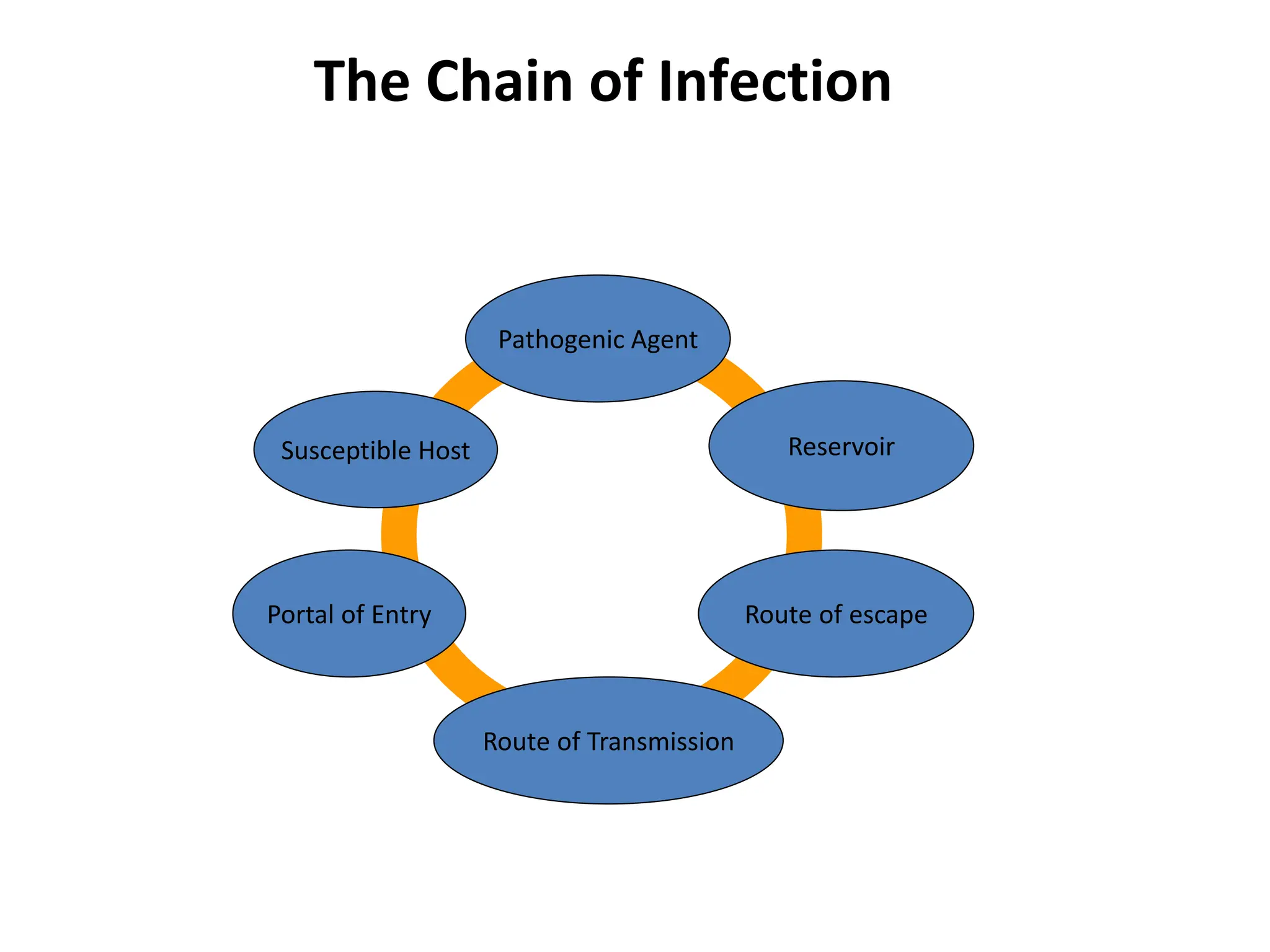
The Chain of Infection
Route of Transmission
Pathogenic Agent
Portal of Entry
Reservoir
Susceptible Host
Route of escape
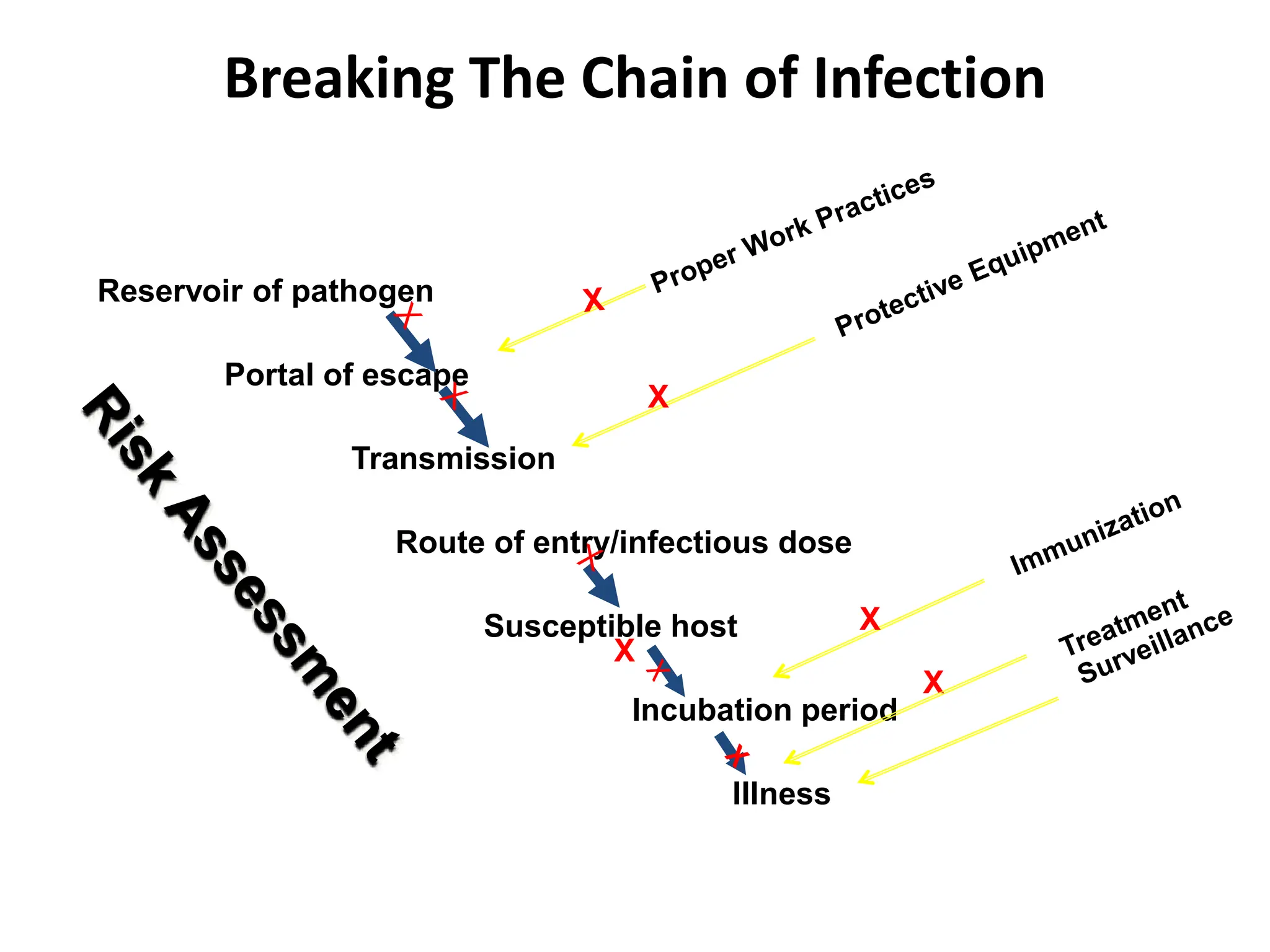
Reservoir of pathogen
Portal of escape
Transmission
Route of entry/infectious dose
Susceptible host
Incubation period
Illness
X
X
X
X
Breaking The Chain of Infection
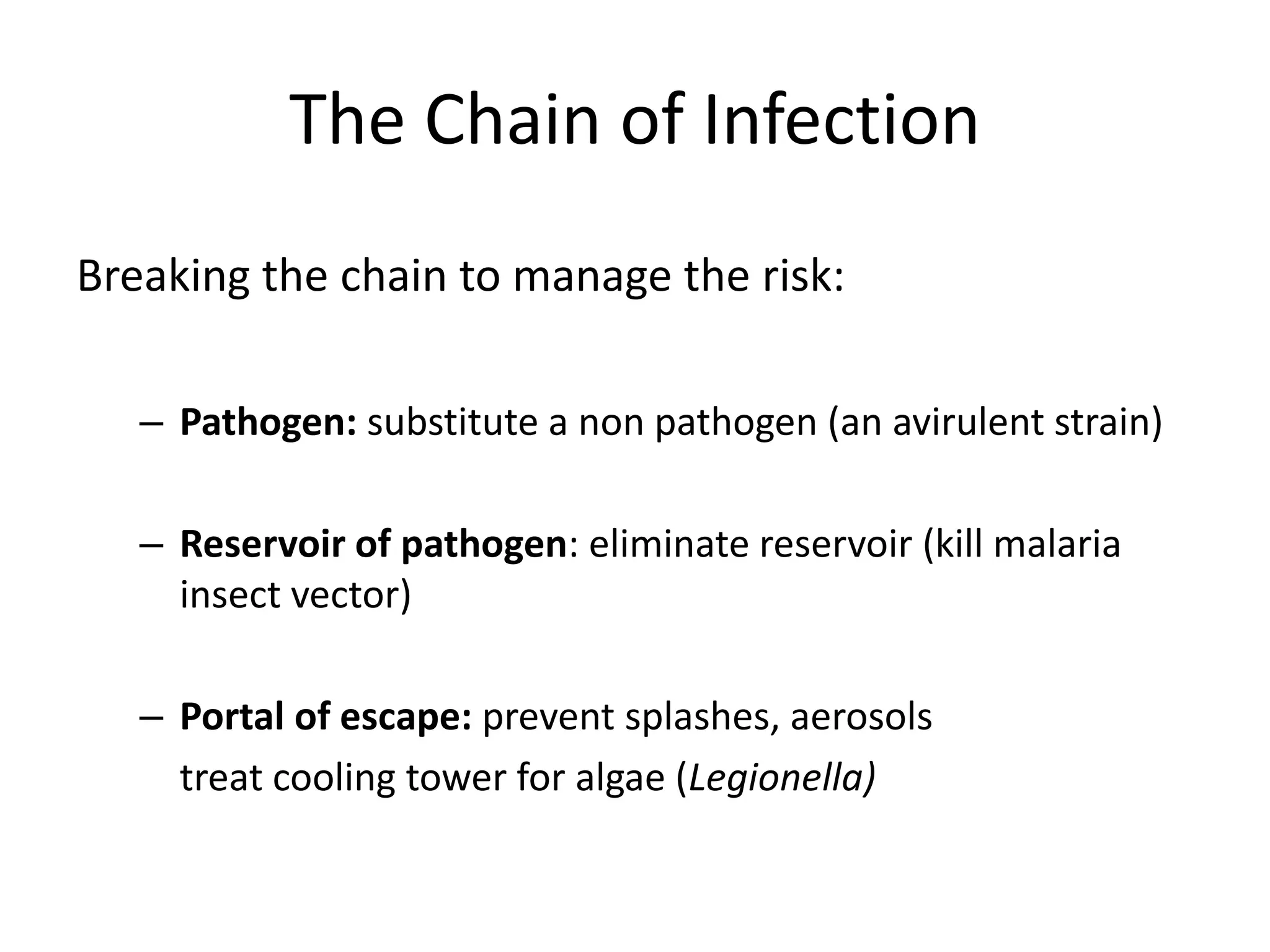
The Chain of Infection
Breaking the chain to manage the risk:
– Pathogen: substitute a non pathogen (an avirulent strain)
– Reservoir of pathogen: eliminate reservoir (kill malaria
insect vector)
– Portal of escape: prevent splashes, aerosols
treat cooling tower for algae (Legionella)
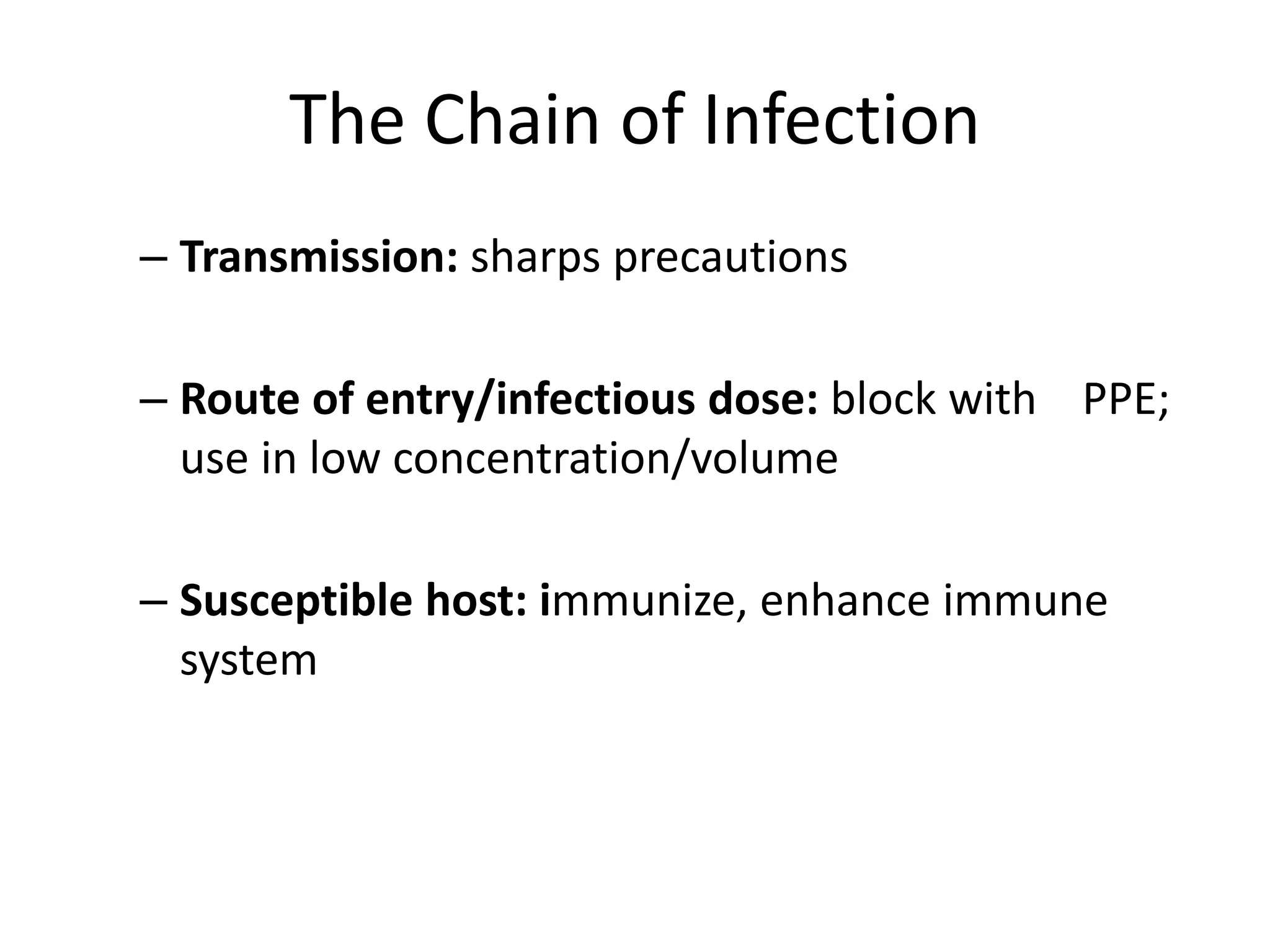
The Chain of Infection
– Transmission: sharps precautions
– Route of entry/infectious dose: block with PPE;
use in low concentration/volume
– Susceptible host: immunize, enhance immune
system
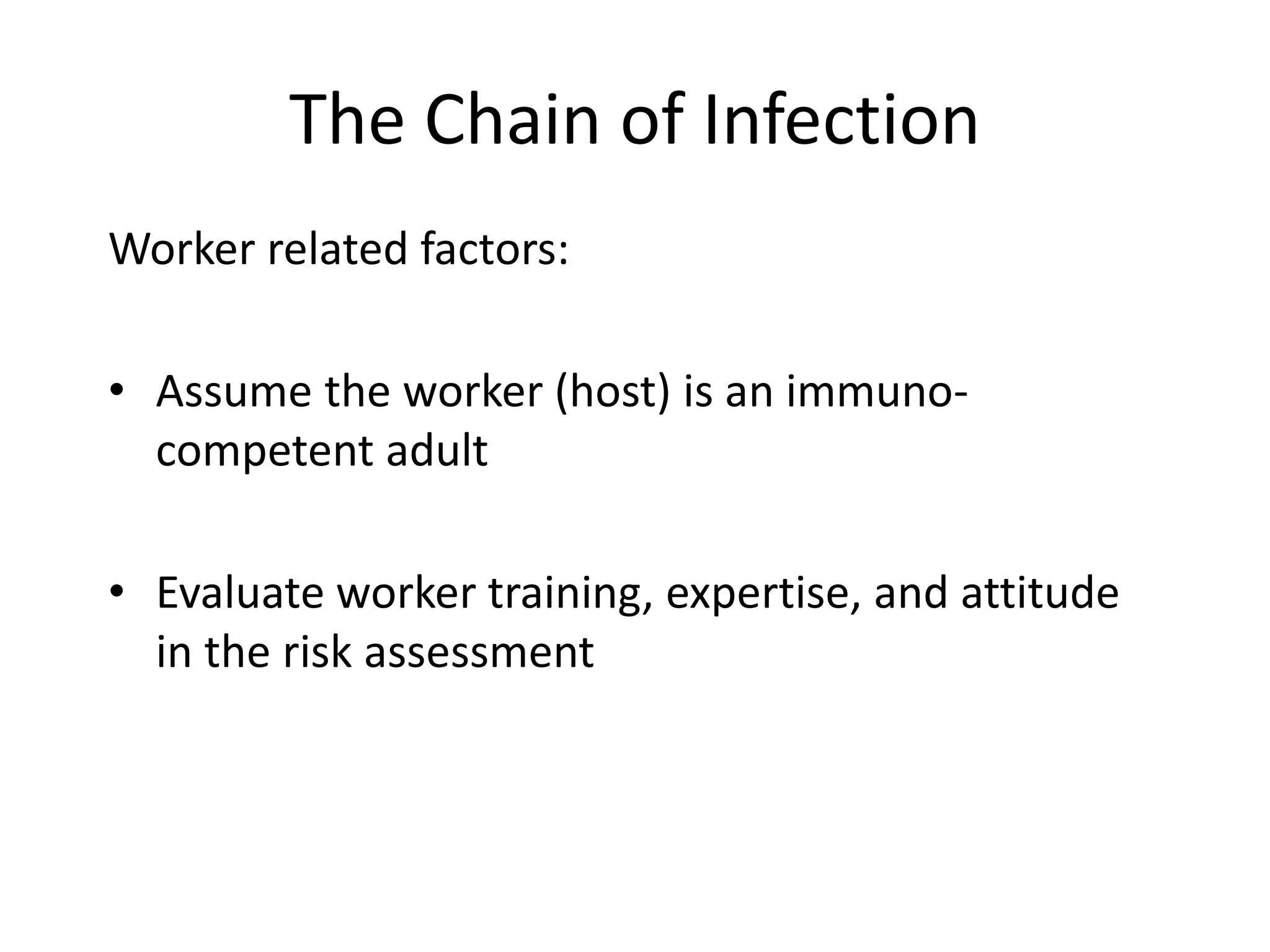
The Chain of Infection
Worker related factors:
• Assume the worker (host) is an immuno-
competent adult
• Evaluate worker training, expertise, and attitude
in the risk assessment
What is Biosecurity?
“Laboratory biosecurity” refers to
institutional and personal security measures
designed to prevent the loss, theft, misuse
(states and non states agents),
diversion or intentional (states and non states
agents) release of pathogens and toxins.
Laboratory biosafety manual
Third edition
World Health Organization
Geneva, 2004
Developing a Biosecurity Program
• Scientific directors,
• Principle investigators
• Biological safety officers
• Institutional biosafety committee
• Laboratory and maintenance staff
• Administrative support
• Information technology group
• Law enforcement agencies and in-house security
staff.
Biosafety in Pakistan
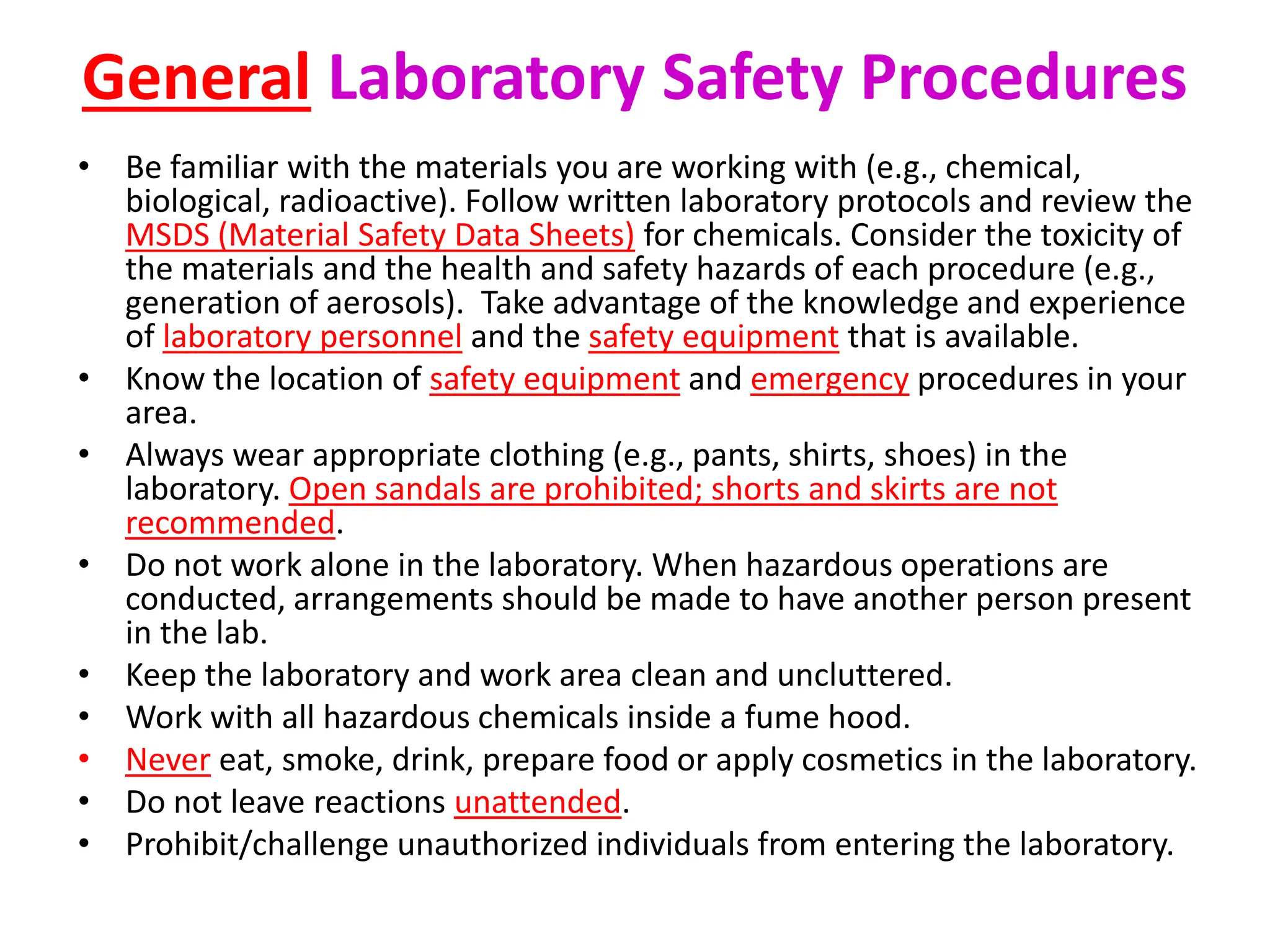
General Laboratory Safety Procedures
• Be familiar with the materials you are working with (e.g., chemical,
biological, radioactive). Follow written laboratory protocols and review the
MSDS (Material Safety Data Sheets) for chemicals. Consider the toxicity of
the materials and the health and safety hazards of each procedure (e.g.,
generation of aerosols). Take advantage of the knowledge and experience
of laboratory personnel and the safety equipment that is available.
• Know the location of safety equipment and emergency procedures in your
area.
• Always wear appropriate clothing (e.g., pants, shirts, shoes) in the
laboratory. Open sandals are prohibited; shorts and skirts are not
recommended.
• Do not work alone in the laboratory. When hazardous operations are
conducted, arrangements should be made to have another person present
in the lab.
• Keep the laboratory and work area clean and uncluttered.
• Work with all hazardous chemicals inside a fume hood.
• Never eat, smoke, drink, prepare food or apply cosmetics in the laboratory.
• Do not leave reactions unattended.
• Prohibit/challenge unauthorized individuals from entering the laboratory.
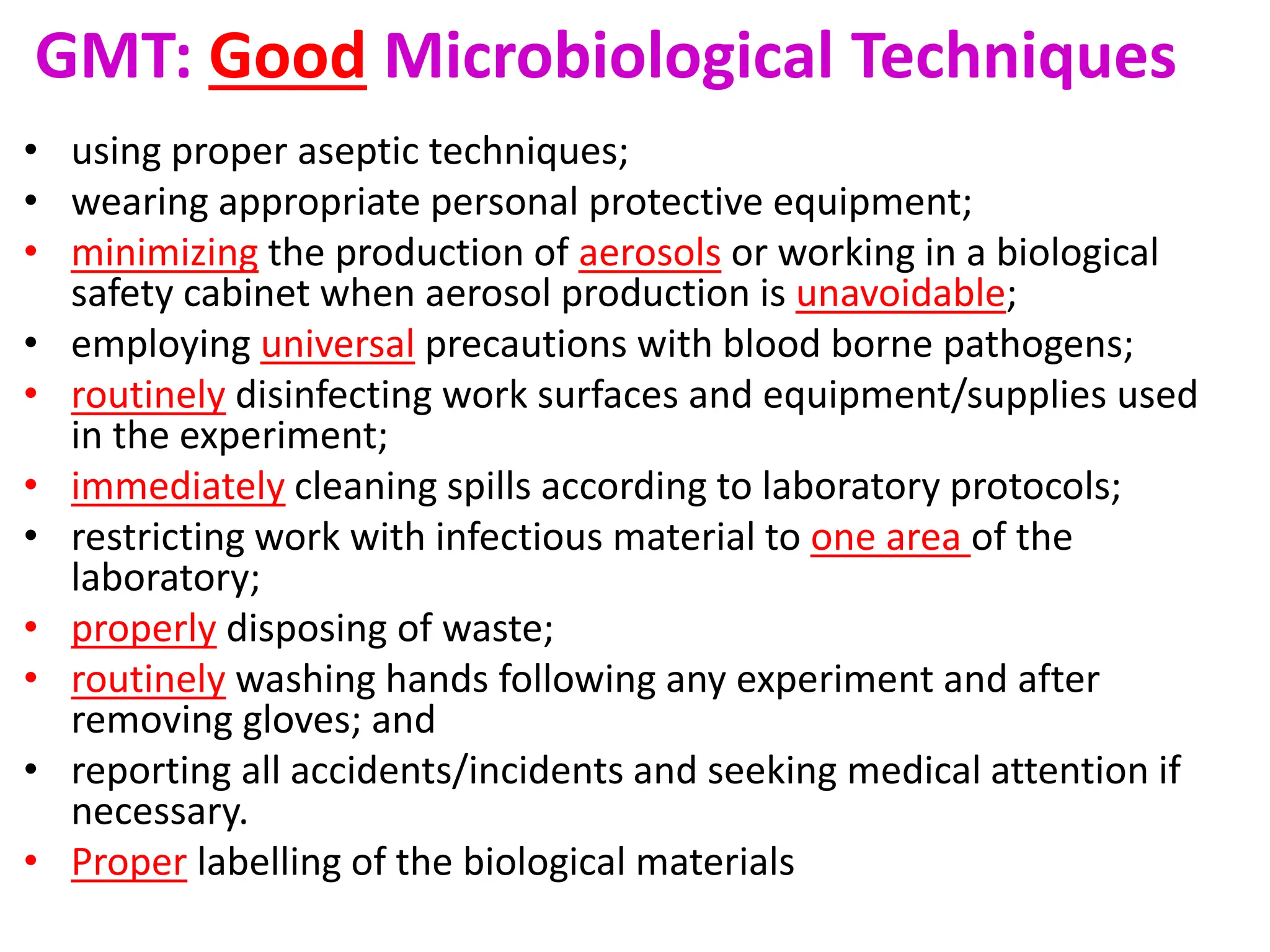
GMT: Good Microbiological Techniques
• using proper aseptic techniques;
• wearing appropriate personal protective equipment;
• minimizing the production of aerosols or working in a biological
safety cabinet when aerosol production is unavoidable;
• employing universal precautions with blood borne pathogens;
• routinely disinfecting work surfaces and equipment/supplies used
in the experiment;
• immediately cleaning spills according to laboratory protocols;
• restricting work with infectious material to one area of the
laboratory;
• properly disposing of waste;
• routinely washing hands following any experiment and after
removing gloves; and
• reporting all accidents/incidents and seeking medical attention if
necessary.
• Proper labelling of the biological materials

Biosafety and biosecurity biosafety levels

  • 1.
  • 2.
    What is Biosafety? “Laboratorybiosafety” is the term used to describe the containment principles, technologies and practices that are implemented to prevent unintentional exposure to pathogens and toxins, or their accidental release. Laboratory biosafety manual Third edition World Health Organization Geneva, 2004
  • 3.
    Principles of Biosafety •Protection of laboratory worker • Equipment to prevent exposures • Containment laboratory design • Safe practices • Biosafety guidelines • Fort Detrick contributions
  • 4.
    WHO Risk Groups(RG) 1-4: Agents are categorized based on their relative risk Pathogenicity of the organism Mode of transmission and host range Availability of effective preventive measures (e.g., vaccines) Availability of effective treatment (e.g., antibiotics) Other factors
  • 5.
    WHO Risk Groups •Risk Group 1 (no or low individual and community risk) A microorganism that is unlikely to cause human or animal disease. • Risk Group 2 (moderate individual risk, low community risk) A pathogen that can cause human or animal disease but is unlikely to be a serious hazard to laboratory workers, the community, livestock or the environment. Laboratory exposures may cause serious infection, but effective treatment and preventive measures are available and the risk of spread of infection is limited. Laboratory biosafety manual Third edition World Health Organization Geneva, 2004
  • 6.
    WHO Risk Groups •Risk Group 3 (high individual risk, low community risk) A pathogen that usually causes serious human or animal disease but does not ordinarily spread from one infected individual to another. Effective treatment and preventive measures are available. • Risk Group 4 (high individual and community risk) A pathogen that usually causes serious human or animal disease and that can be readily transmitted from one individual to another, directly or indirectly. Effective treatment and preventive measures are not usually available. Laboratory biosafety manual Third edition World Health Organization Geneva, 2004
  • 7.
    Biosafety Level 1(BSL 1): well characterized agents not consistently known to cause disease in healthy adult humans of minimal potential hazard to laboratory personnel and the environment Biosafety Level 2 (BSL 2): agents of moderate potential hazard to personnel and the environment Biosafety Level 3 (BSL 3): indigenous or exotic agents which may cause serious or potentially lethal disease as a result of exposure by the inhalation route (applicable to clinical, diagnostic, teaching, research or production facilities) Biosafety Level 4 (BSL 4): dangerous and exotic agents which pose a high individual risk of aerosol-transmitted laboratory infections and life-threatening disease
  • 8.
    Biosafety Level vs.Risk Groups Biosafety Level (BSL): BSL and RG – NOT THE SAME Consist of combinations of laboratory practices and techniques, safety equipment, and laboratory facilities
  • 10.
    BSLs based on •Biosafety level designations are based on a composite of the design features, construction, containment facilities, equipment, practices and operational procedures required for working with agents from the various risk groups. Laboratory biosafety manual Third edition World Health Organization Geneva, 2004
  • 17.
  • 18.
    Biosafety Hazards • AgentHazards • Procedure Hazards • Technique Hazards • Worker Susceptibility to Disease • Risk Assessment
  • 19.
    Agent Hazards • Pathogenicity •Virulence • Infective dose • Transmission • Stability and host range • Occurrence of natural disease • Probable causes of LAI Biosafety Hazards
  • 20.
    Procedure Hazards • Agentconcentration • Suspension volume • Droplets and aerosols • Protocol complexity • Use of animals • Use of sharps Biosafety Hazards
  • 21.
    Hazardous Techniques • Handlinginfectious agents • Sterile techniques • Biological safety cabinets use • Other primary barriers • Training and mentoring • Emergency response procedures • Attitude Biosafety Hazards
  • 22.
    Biosafety Hazards Worker Susceptibility toDisease • Potential for exposure • Individual susceptibility • Availability of effective Vaccine • Availability of effective Treatments
  • 23.
    Principles of Bio-safety Thesebasic principles apply to every laboratory handling micro-organisms or toxins and will help ensure the work is done safely: • Risk assessments • Training • Access & entry into the containment lab • Personal protective equipment (PPE)
  • 24.
    Principles of Bio-safety •Work practices • Cleanliness and tidiness • Decontamination • Emergency response
  • 25.
    Risk assessment types •Overarching risk assessment – will identify the hazards and appropriate mitigation management strategies for proposed activities involving infectious material or toxins. • Local Risk Assessment (LRA) – will examine each activity, identify risks, and develop safe work practices
  • 26.
    Risk assessment types •Pathogen Risk Assessment – will determine the pathogen risk group • Containment Assessment – will determine the containment requirement for the pathogen and the work proposed. Biosafety Manual – containing institutional biosafety policies, programs and plans. It is based on an overarching risk assessment and LRAs. Standard Operating Procedures, or SOPs – specific to the nature of the work.
  • 27.
    Emergency Response andIncident Reporting • Spills of infectious materials, including spills inside and outside the lab, as well as spills in the Biological Safety Cabinet • Loss of containment of any kind • Accidental exposures, including near misses • Mechanical failure, including the BSC and air handling • Animal Escape • Medical Emergency Any lab incident should be reported to the laboratory supervisor immediately
  • 28.
    Additional Safety Considerations •Waste Management • Chemical Hygiene • Electrical • Fire • Radiation
  • 29.
    The Chain ofInfection Route of Transmission Pathogenic Agent Portal of Entry Reservoir Susceptible Host Route of escape
  • 30.
    Reservoir of pathogen Portalof escape Transmission Route of entry/infectious dose Susceptible host Incubation period Illness X X X X Breaking The Chain of Infection
  • 31.
    The Chain ofInfection Breaking the chain to manage the risk: – Pathogen: substitute a non pathogen (an avirulent strain) – Reservoir of pathogen: eliminate reservoir (kill malaria insect vector) – Portal of escape: prevent splashes, aerosols treat cooling tower for algae (Legionella)
  • 32.
    The Chain ofInfection – Transmission: sharps precautions – Route of entry/infectious dose: block with PPE; use in low concentration/volume – Susceptible host: immunize, enhance immune system
  • 33.
    The Chain ofInfection Worker related factors: • Assume the worker (host) is an immuno- competent adult • Evaluate worker training, expertise, and attitude in the risk assessment
  • 34.
    What is Biosecurity? “Laboratorybiosecurity” refers to institutional and personal security measures designed to prevent the loss, theft, misuse (states and non states agents), diversion or intentional (states and non states agents) release of pathogens and toxins. Laboratory biosafety manual Third edition World Health Organization Geneva, 2004
  • 35.
    Developing a BiosecurityProgram • Scientific directors, • Principle investigators • Biological safety officers • Institutional biosafety committee • Laboratory and maintenance staff • Administrative support • Information technology group • Law enforcement agencies and in-house security staff.
  • 36.
  • 40.
    General Laboratory SafetyProcedures • Be familiar with the materials you are working with (e.g., chemical, biological, radioactive). Follow written laboratory protocols and review the MSDS (Material Safety Data Sheets) for chemicals. Consider the toxicity of the materials and the health and safety hazards of each procedure (e.g., generation of aerosols). Take advantage of the knowledge and experience of laboratory personnel and the safety equipment that is available. • Know the location of safety equipment and emergency procedures in your area. • Always wear appropriate clothing (e.g., pants, shirts, shoes) in the laboratory. Open sandals are prohibited; shorts and skirts are not recommended. • Do not work alone in the laboratory. When hazardous operations are conducted, arrangements should be made to have another person present in the lab. • Keep the laboratory and work area clean and uncluttered. • Work with all hazardous chemicals inside a fume hood. • Never eat, smoke, drink, prepare food or apply cosmetics in the laboratory. • Do not leave reactions unattended. • Prohibit/challenge unauthorized individuals from entering the laboratory.
  • 41.
    GMT: Good MicrobiologicalTechniques • using proper aseptic techniques; • wearing appropriate personal protective equipment; • minimizing the production of aerosols or working in a biological safety cabinet when aerosol production is unavoidable; • employing universal precautions with blood borne pathogens; • routinely disinfecting work surfaces and equipment/supplies used in the experiment; • immediately cleaning spills according to laboratory protocols; • restricting work with infectious material to one area of the laboratory; • properly disposing of waste; • routinely washing hands following any experiment and after removing gloves; and • reporting all accidents/incidents and seeking medical attention if necessary. • Proper labelling of the biological materials