Antigens
 Definition: Any substance which can stimulate host
immune system and causes production of antibodies or
sensitized cells and reacts specifically these products.
 Also known as “immunogen”.
 Two important properties of antigens:
a. Immunogenicity
b. Immunological specificity
A. Immunogenicity:
• Ability of antigen to stimulate immune response.
B. Immunological specificity:
• Ability of an antigen to react specifically with antibodies or
sensitized cells.
• Also known as ‘reactivity’.
 Antigenicity:
• Ability of antigen to stimulate immune response and are
react with the products of immune response.
A. Complete antigen
 A substance which shows both properties of
antigens like immunogenicity and immunological
specificity.
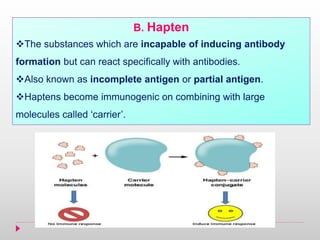
B. Hapten
The substances which are incapable of inducing antibody
formation but can react specifically with antibodies.
Also known as incomplete antigen or partial antigen.
Haptens become immunogenic on combining with large
molecules called ‘carrier’.
e.g. Dinitrophenol:
• Dinitrophenol = Incomplete Ag
• Dinitrophenol + serum albumin = Complete Ag
Some substance acts as hapten in one animal but
complete antigen in others.
e.g. Pneumococcal polysaccharide
It acts as complete Ag in mice but hapten in rabbits.
Chemical nature of antigens
 Chemically Ag’s are proteins or polysaccharides.
 Molecular weight: More than 10,000 Daltons.
 They may be nucleo-proteins, lipoproteins or glycoprotein's.
 Many naturally occurring substances acts as Ag.
e.g. Bacteria, viruses, other micro-organisms, pollens, egg
white and metabolic products of micro-organisms
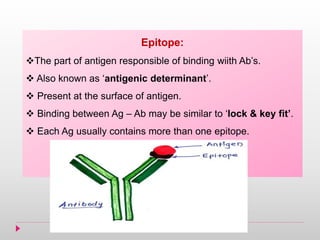
Epitope:
The part of antigen responsible of binding wiith Ab’s.
 Also known as ‘antigenic determinant’.
 Present at the surface of antigen.
 Binding between Ag – Ab may be similar to ‘lock & key fit’.
 Each Ag usually contains more than one epitope.
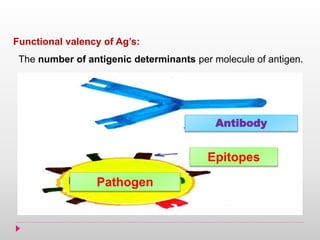
Epitopes
Pathogen
Antibody
Functional valency of Ag’s:
The number of antigenic determinants per molecule of antigen.
Types of antigens
1. Isoantigens
2. Auto-antigens
3. Heterophile/ cross reactive antigens
4. Histocompatibility antigens
5. Microbial antigens
6. T cell dependent and T cell independent antigens
1. Isoantigens
Antigens that are found in some but not in all members of a
species.
e.g. Blood group antigens
2. Autoantigens
Also called self or autologous antigens.
These are not recogized as self and immune respose developed.
e.g. Eye lens proteins
Some Ag’s are absent during embryonic life but develop later.
e.g. Sperms
Immune respose against autoantigens results into ‘autoimmune
disorders’.
e.g. Rheumatid arthritis
3. Heterophile antigens
Also called ‘cross reactive antigen’.
Antigens that are present on the surface of unrelated
plants, animals and bacteria but are identical.
Antibodies to such antigen can cross react with the
others.
Mostly these are polysaccharides.
e.g. Forssman Ag:
• It is glycolipid antigen.
• Present on RBC’s of horse, sheep, dog, cat, toad,
whale, turtle, chicken and other organisms.
• Also found on tissues of Guinea pigs and some human
beings
4. Histocompatibility antigens
The antigens that are specific to each individual of a
species.
These are antigens are used as markers of tissue
compatibility during grafting or transplantation of cellular
material.
e. g. Human leukocyte antigen (HLA) or Major
histocompatibility complex (MHC)
5. Microbial antigens
Antigen that is of microbial origin.
Exotoxins of many pathogens are potent antigen.
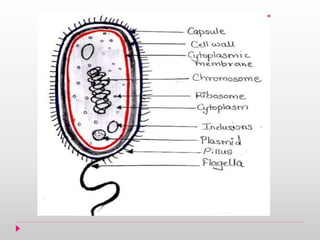
Bacterial cells contains many antigenic components.
e.g. 1. ‘O’ antigen (cell wall)
2. ‘H’ antigen (flagellar)
3. Vi antigen (Capsular)
6. T cell dependent & T cell independent Ag
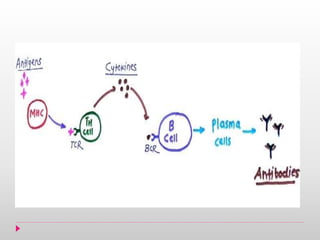
T cell dependent Ag:
 Requires T cell co-operation for induction of antibody
production by B cells.
 Structurally more complex
e.g. Erythrocytes, Serum proteins.
T cell independent Ag:
 Do not require T cell for induction of antibodies by B
cells.
 Simple in structure.
e.g. Pneumococcal capsular polysaccharide, bacterial
LPS and flagellar proteins
Factors affecting
antigenicity
1. Size
 Size of antigen has direct relation with antigenicity.
 Very large molecules are excellent antigens.
e.g. Hemocyanin (60,00,000 D mol.wt.), thyroglobulin
(6,69,000 D) and tetanus toxin (55,000 D)
 Molecules of low molecular size are poor antigens.
e.g. Insulin protein (5,700 D) and histones (6,000 D)
2. Chemical nature
 Most of naturally occurring antigens are chemically proteins and
polysaccharides.
 These are comparatively less antigenic than lipids & nucleic
acids.
 Proteins are better antigenic than polysaccharides of same size.
 In polypeptide antigens amino acid tyrosin (aromatic a.a.)
enhances antigenicity.
 Synthetic polymers are less antigenic than naturally
occurring polymers.
3. Solubility
Synthetic polymers are less antigenic as they are insoluble in
body fluids.
 Any substance which is not converted to soluble form by
tissue enzymes is non-antigenic.
e.g. Pneumococcal polysaccharide:
• It is greater immunogenic in mice than rabbits
• Because in mice it is converted to soluble form by liver enzymes
4.
Foreignness
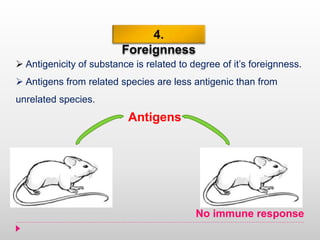
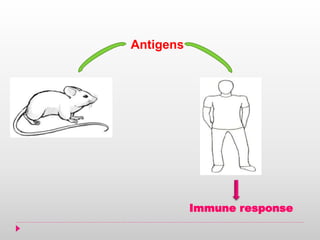
 Antigenicity of substance is related to degree of it’s foreignness.
 Antigens from related species are less antigenic than from
unrelated species.
Antigens
No immune response
Antigens
Immune response
5. Structural rigidity
 Antigenic determinants must be correctly exposed to
lymphocytes.
 Molecule having enough molecular size but not having
structural rigidity can be poor antigenic.
e.g. Polymerized flagellin (flagellar filament) is more
immunogenic than monomeric flagellin
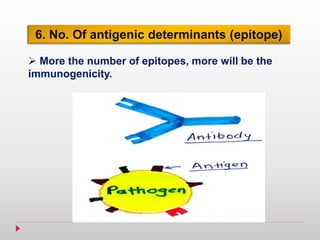
6. No. Of antigenic determinants (epitope)
 More the number of epitopes, more will be the
immunogenicity.
7. Route of entry of antigen
Antigens are much effective if injected via parentral routes such
as intradermal, subcutaneous, intravenous, intramuscular or
intraperitoneal than when injected orally.
It is because, if given orally it may be destroyed by digestive
enzymes.
8. Dose of antigen
Antigenicity also depends upon the no. of antigen
administered.
Less no. of antigen is insufficient to induce immune response.
Large no. of antigens may inhibit immune response.
Thus optimum dose of antigen is necessary for normal immune
response.
9. Adjuvants
 Substance which enhances immunogenicity is known as
adjuvants.
 Adjuvants increase persistance of antigen into body and thus
can keep antigenic stimulus persistance.
 Examples of adjuvants:
Silica particles, mineral oils, aluminium hydroxide, Freund’s
incomplete and Freund’s complete antigens.

Antigens, its types and factors affecting antigenicity

  • 2.
    Antigens  Definition: Anysubstance which can stimulate host immune system and causes production of antibodies or sensitized cells and reacts specifically these products.  Also known as “immunogen”.  Two important properties of antigens: a. Immunogenicity b. Immunological specificity
  • 3.
    A. Immunogenicity: • Abilityof antigen to stimulate immune response. B. Immunological specificity: • Ability of an antigen to react specifically with antibodies or sensitized cells. • Also known as ‘reactivity’.  Antigenicity: • Ability of antigen to stimulate immune response and are react with the products of immune response.
  • 4.
    A. Complete antigen A substance which shows both properties of antigens like immunogenicity and immunological specificity.
  • 5.
    B. Hapten The substanceswhich are incapable of inducing antibody formation but can react specifically with antibodies. Also known as incomplete antigen or partial antigen. Haptens become immunogenic on combining with large molecules called ‘carrier’.
  • 6.
    e.g. Dinitrophenol: • Dinitrophenol= Incomplete Ag • Dinitrophenol + serum albumin = Complete Ag Some substance acts as hapten in one animal but complete antigen in others. e.g. Pneumococcal polysaccharide It acts as complete Ag in mice but hapten in rabbits.
  • 7.
    Chemical nature ofantigens  Chemically Ag’s are proteins or polysaccharides.  Molecular weight: More than 10,000 Daltons.  They may be nucleo-proteins, lipoproteins or glycoprotein's.  Many naturally occurring substances acts as Ag. e.g. Bacteria, viruses, other micro-organisms, pollens, egg white and metabolic products of micro-organisms
  • 8.
    Epitope: The part ofantigen responsible of binding wiith Ab’s.  Also known as ‘antigenic determinant’.  Present at the surface of antigen.  Binding between Ag – Ab may be similar to ‘lock & key fit’.  Each Ag usually contains more than one epitope.
  • 9.
    Epitopes Pathogen Antibody Functional valency ofAg’s: The number of antigenic determinants per molecule of antigen.
  • 11.
    Types of antigens 1.Isoantigens 2. Auto-antigens 3. Heterophile/ cross reactive antigens 4. Histocompatibility antigens 5. Microbial antigens 6. T cell dependent and T cell independent antigens
  • 12.
    1. Isoantigens Antigens thatare found in some but not in all members of a species. e.g. Blood group antigens
  • 13.
    2. Autoantigens Also calledself or autologous antigens. These are not recogized as self and immune respose developed. e.g. Eye lens proteins Some Ag’s are absent during embryonic life but develop later. e.g. Sperms Immune respose against autoantigens results into ‘autoimmune disorders’. e.g. Rheumatid arthritis
  • 14.
    3. Heterophile antigens Alsocalled ‘cross reactive antigen’. Antigens that are present on the surface of unrelated plants, animals and bacteria but are identical. Antibodies to such antigen can cross react with the others. Mostly these are polysaccharides.
  • 15.
    e.g. Forssman Ag: •It is glycolipid antigen. • Present on RBC’s of horse, sheep, dog, cat, toad, whale, turtle, chicken and other organisms. • Also found on tissues of Guinea pigs and some human beings
  • 16.
    4. Histocompatibility antigens Theantigens that are specific to each individual of a species. These are antigens are used as markers of tissue compatibility during grafting or transplantation of cellular material. e. g. Human leukocyte antigen (HLA) or Major histocompatibility complex (MHC)
  • 17.
    5. Microbial antigens Antigenthat is of microbial origin. Exotoxins of many pathogens are potent antigen. Bacterial cells contains many antigenic components. e.g. 1. ‘O’ antigen (cell wall) 2. ‘H’ antigen (flagellar) 3. Vi antigen (Capsular)
  • 19.
    6. T celldependent & T cell independent Ag T cell dependent Ag:  Requires T cell co-operation for induction of antibody production by B cells.  Structurally more complex e.g. Erythrocytes, Serum proteins.
  • 21.
    T cell independentAg:  Do not require T cell for induction of antibodies by B cells.  Simple in structure. e.g. Pneumococcal capsular polysaccharide, bacterial LPS and flagellar proteins
  • 23.
  • 24.
    1. Size  Sizeof antigen has direct relation with antigenicity.  Very large molecules are excellent antigens. e.g. Hemocyanin (60,00,000 D mol.wt.), thyroglobulin (6,69,000 D) and tetanus toxin (55,000 D)  Molecules of low molecular size are poor antigens. e.g. Insulin protein (5,700 D) and histones (6,000 D)
  • 25.
    2. Chemical nature Most of naturally occurring antigens are chemically proteins and polysaccharides.  These are comparatively less antigenic than lipids & nucleic acids.  Proteins are better antigenic than polysaccharides of same size.  In polypeptide antigens amino acid tyrosin (aromatic a.a.) enhances antigenicity.  Synthetic polymers are less antigenic than naturally occurring polymers.
  • 26.
    3. Solubility Synthetic polymersare less antigenic as they are insoluble in body fluids.  Any substance which is not converted to soluble form by tissue enzymes is non-antigenic. e.g. Pneumococcal polysaccharide: • It is greater immunogenic in mice than rabbits • Because in mice it is converted to soluble form by liver enzymes
  • 27.
    4. Foreignness  Antigenicity ofsubstance is related to degree of it’s foreignness.  Antigens from related species are less antigenic than from unrelated species. Antigens No immune response
  • 28.
  • 29.
    5. Structural rigidity Antigenic determinants must be correctly exposed to lymphocytes.  Molecule having enough molecular size but not having structural rigidity can be poor antigenic. e.g. Polymerized flagellin (flagellar filament) is more immunogenic than monomeric flagellin
  • 30.
    6. No. Ofantigenic determinants (epitope)  More the number of epitopes, more will be the immunogenicity.
  • 31.
    7. Route ofentry of antigen Antigens are much effective if injected via parentral routes such as intradermal, subcutaneous, intravenous, intramuscular or intraperitoneal than when injected orally. It is because, if given orally it may be destroyed by digestive enzymes.
  • 32.
    8. Dose ofantigen Antigenicity also depends upon the no. of antigen administered. Less no. of antigen is insufficient to induce immune response. Large no. of antigens may inhibit immune response. Thus optimum dose of antigen is necessary for normal immune response.
  • 33.
    9. Adjuvants  Substancewhich enhances immunogenicity is known as adjuvants.  Adjuvants increase persistance of antigen into body and thus can keep antigenic stimulus persistance.  Examples of adjuvants: Silica particles, mineral oils, aluminium hydroxide, Freund’s incomplete and Freund’s complete antigens.