Antigen and Antibody Interaction 
By 
basis of serological testing 
Dr. Humera Kausar 
(PhD Molecular Biology)
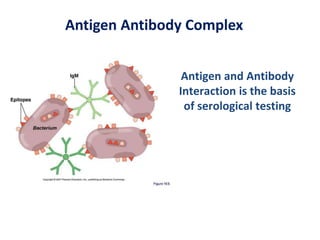
Antigen Antibody Complex 
Antigen and Antibody 
Interaction is the basis 
of serological testing
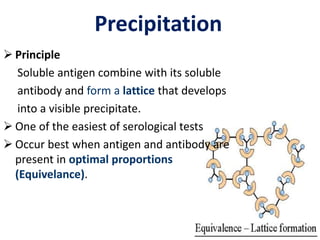
 Principle 
Precipitation 
Soluble antigen combine with its soluble 
antibody and form a lattice that develops 
into a visible precipitate. 
 One of the easiest of serological tests 
 Occur best when antigen and antibody are 
present in optimal proportions 
(Equivelance).
Precipitation 
Examples; 
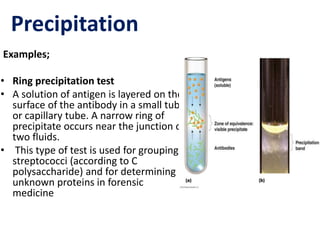
• Ring precipitation test 
• A solution of antigen is layered on the 
surface of the antibody in a small tube 
or capillary tube. A narrow ring of 
precipitate occurs near the junction of 
two fluids. 
• This type of test is used for grouping 
streptococci (according to C 
polysaccharide) and for determining 
unknown proteins in forensic 
medicine
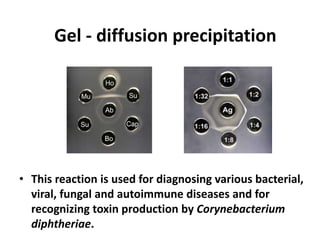
Gel - diffusion precipitation 
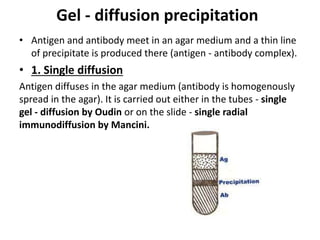
• Antigen and antibody meet in an agar medium and a thin line 
of precipitate is produced there (antigen - antibody complex). 
• 1. Single diffusion 
Antigen diffuses in the agar medium (antibody is homogenously 
spread in the agar). It is carried out either in the tubes - single 
gel - diffusion by Oudin or on the slide - single radial 
immunodiffusion by Mancini.
Gel - diffusion precipitation 
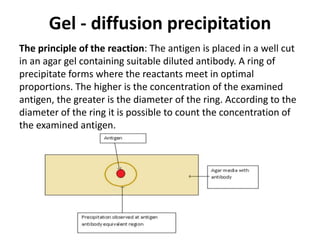
The principle of the reaction: The antigen is placed in a well cut 
in an agar gel containing suitable diluted antibody. A ring of 
precipitate forms where the reactants meet in optimal 
proportions. The higher is the concentration of the examined 
antigen, the greater is the diameter of the ring. According to the 
diameter of the ring it is possible to count the concentration of 
the examined antigen.
Gel - diffusion precipitation 
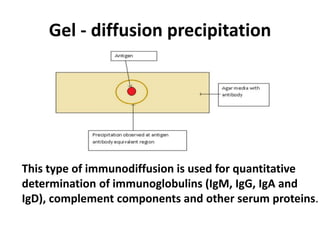
This type of immunodiffusion is used for quantitative 
determination of immunoglobulins (IgM, IgG, IgA and 
IgD), complement components and other serum proteins.
Gel - diffusion precipitation 
2. Double immunodiffusion 
is used more often. Antigen and antibody are 
allowed to diffuse towards each other in an agar 
medium, e.g. from separate wells cut in an agar 
plate or in a Petri dish. When antigen and antibody 
meet in optimal proportions they produce a thin 
line of precipitate. Position of the precipitate line 
depends on concentrations of both antigen and 
antibody and on their diffusion coefficient. 
•
Gel - diffusion precipitation 
• This reaction is used for diagnosing various bacterial, 
viral, fungal and autoimmune diseases and for 
recognizing toxin production by Corynebacterium 
diphtheriae.
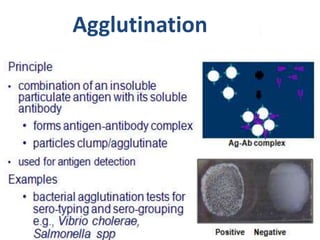
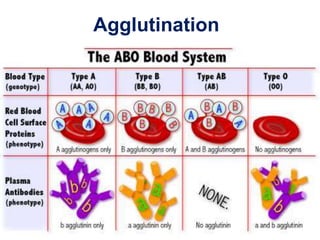
Agglutination
Agglutination 
6
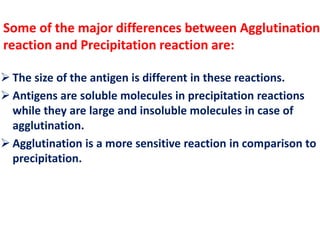
Some of the major differences between Agglutination 
reaction and Precipitation reaction are: 
 The size of the antigen is different in these reactions. 
 Antigens are soluble molecules in precipitation reactions 
while they are large and insoluble molecules in case of 
agglutination. 
 Agglutination is a more sensitive reaction in comparison to 
precipitation.
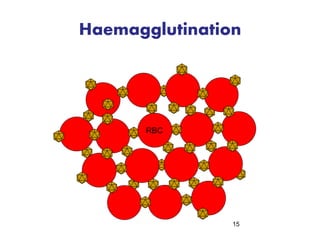
Haemagglutination 
15 
RBC
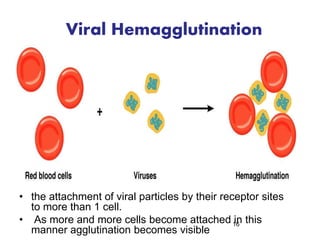
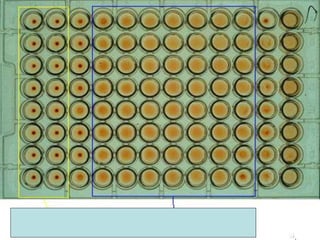
Viral Hemagglutination 
• the attachment of viral particles by their receptor sites 
16 
to more than 1 cell. 
• As more and more cells become attached in this 
manner agglutination becomes visible
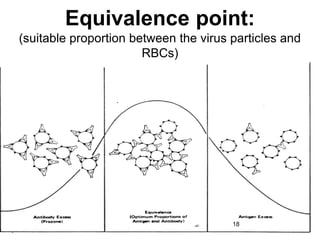
Equivalence point: 
(suitable proportion between the virus particles and 
18 
RBCs)
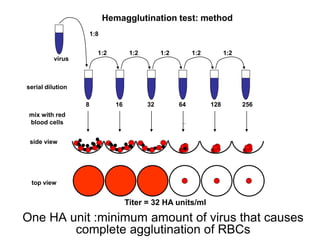
Hemagglutination test: method 
Titer = 32 HA units/ml 
1:8 
1:2 1:2 1:2 1:2 1:2 
8 16 32 64 128 256 
virus 
serial dilution 
mix with red 
blood cells 
side view 
top view 
One HA unit :minimum amount of virus that causes 
complete agglutination of RBCs
20
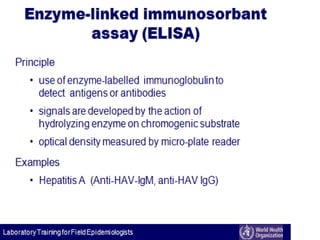
ELISA 
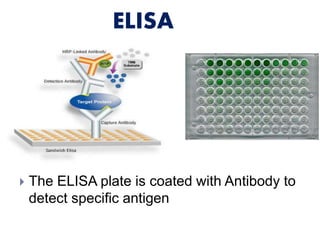
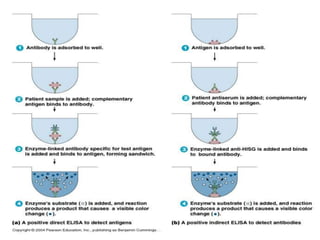
 The ELISA plate is coated with Antibody to 
detect specific antigen
Enzyme labeled 
Alkaline Phosphatase (AP) 
or 
Horseradish Peroxidase (HRP) 
They are readily available 
They are stable and remain usefull for long
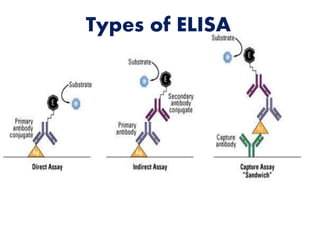
Types of ELISA
Disease 
Normal
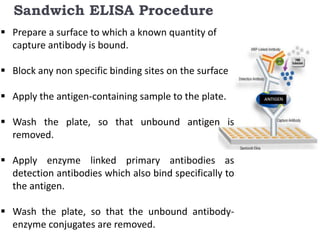
Sandwich ELISA Procedure 
 Prepare a surface to which a known quantity of 
capture antibody is bound. 
 Block any non specific binding sites on the surface 
 Apply the antigen-containing sample to the plate. 
 Wash the plate, so that unbound antigen is 
removed. 
 Apply enzyme linked primary antibodies as 
detection antibodies which also bind specifically to 
the antigen. 
 Wash the plate, so that the unbound antibody-enzyme 
conjugates are removed.
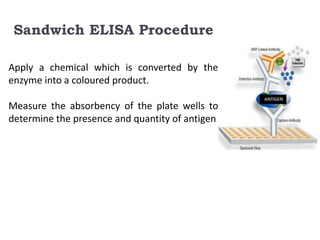
Sandwich ELISA Procedure 
Apply a chemical which is converted by the 
enzyme into a coloured product. 
Measure the absorbency of the plate wells to 
determine the presence and quantity of antigen
Indirect ELISA Procedure 
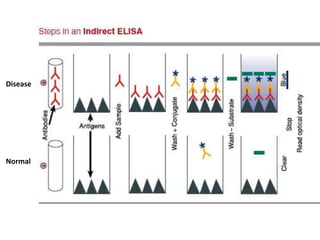
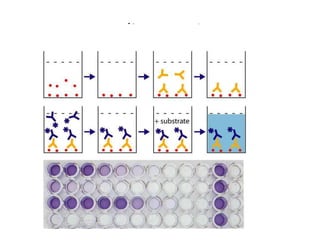
• The protein antigen to be tested for is added 
to each well of ELISA plate, where it is given 
time to adhere to the plastic through charge 
interactions 
• A solution of non-reacting protein is added to 
block any plastic surface in the well that 
remains uncoated by the protein antigen
Indirect ELISA-Cont 
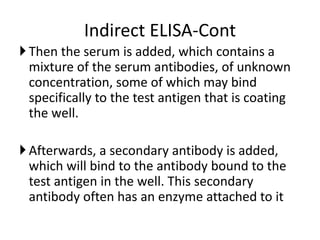
 Then the serum is added, which contains a 
mixture of the serum antibodies, of unknown 
concentration, some of which may bind 
specifically to the test antigen that is coating 
the well. 
 Afterwards, a secondary antibody is added, 
which will bind to the antibody bound to the 
test antigen in the well. This secondary 
antibody often has an enzyme attached to it
Indirect ELISA-Cont 
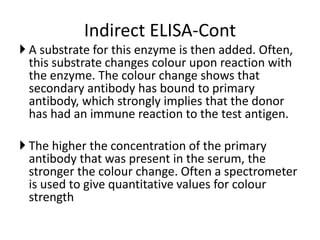
 A substrate for this enzyme is then added. Often, 
this substrate changes colour upon reaction with 
the enzyme. The colour change shows that 
secondary antibody has bound to primary 
antibody, which strongly implies that the donor 
has had an immune reaction to the test antigen. 
 The higher the concentration of the primary 
antibody that was present in the serum, the 
stronger the colour change. Often a spectrometer 
is used to give quantitative values for colour 
strength
Indirect ELISA
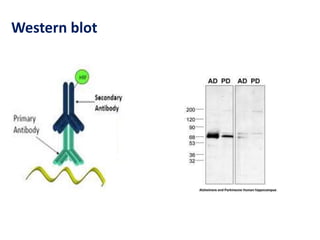
Western blot 
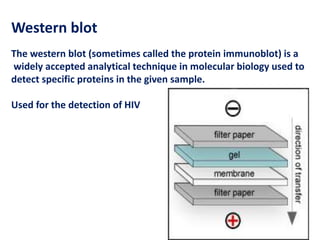
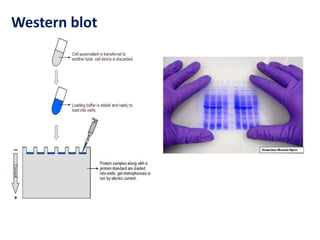
The western blot (sometimes called the protein immunoblot) is a 
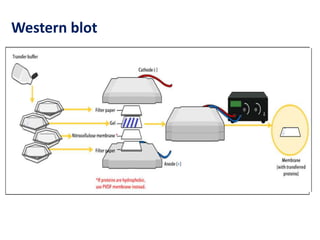
widely accepted analytical technique in molecular biology used to 
detect specific proteins in the given sample. 
Used for the detection of HIV
Western blot
Western blot
Western blot
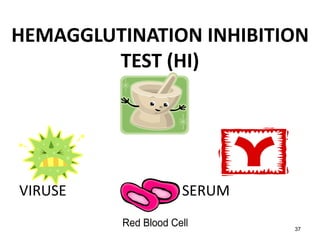
HEMAGGLUTINATION INHIBITION 
37 
TEST (HI) 
VIRUSE SERUM
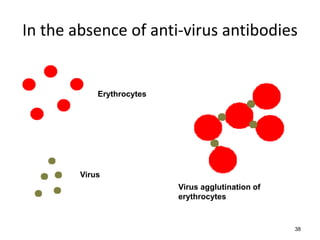
In the absence of anti-virus antibodies 
38 
Erythrocytes 
Virus 
Virus agglutination of 
erythrocytes
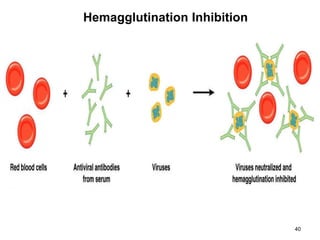
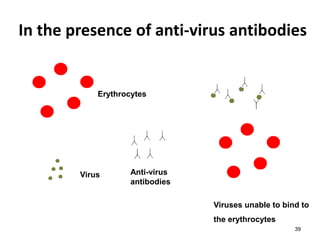
In the presence of anti-virus antibodies 
39 
Erythrocytes 
Virus Anti-virus 
antibodies 
Viruses unable to bind to 
the erythrocytes
40 
Hemagglutination Inhibition
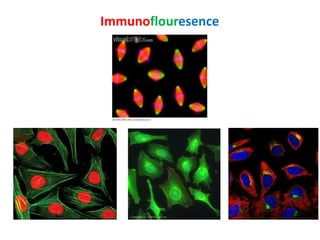
Immunoflouresence 
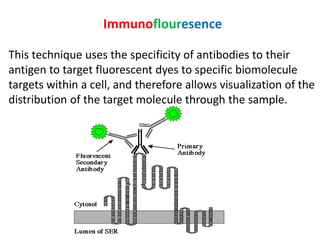
This technique uses the specificity of antibodies to their 
antigen to target fluorescent dyes to specific biomolecule 
targets within a cell, and therefore allows visualization of the 
distribution of the target molecule through the sample.
Immunoflouresence
THANKS

Antigen Antibody techniques 6 lecture

  • 1.
    Antigen and AntibodyInteraction By basis of serological testing Dr. Humera Kausar (PhD Molecular Biology)
  • 2.
    Antigen Antibody Complex Antigen and Antibody Interaction is the basis of serological testing
  • 4.
     Principle Precipitation Soluble antigen combine with its soluble antibody and form a lattice that develops into a visible precipitate.  One of the easiest of serological tests  Occur best when antigen and antibody are present in optimal proportions (Equivelance).
  • 5.
    Precipitation Examples; •Ring precipitation test • A solution of antigen is layered on the surface of the antibody in a small tube or capillary tube. A narrow ring of precipitate occurs near the junction of two fluids. • This type of test is used for grouping streptococci (according to C polysaccharide) and for determining unknown proteins in forensic medicine
  • 6.
    Gel - diffusionprecipitation • Antigen and antibody meet in an agar medium and a thin line of precipitate is produced there (antigen - antibody complex). • 1. Single diffusion Antigen diffuses in the agar medium (antibody is homogenously spread in the agar). It is carried out either in the tubes - single gel - diffusion by Oudin or on the slide - single radial immunodiffusion by Mancini.
  • 7.
    Gel - diffusionprecipitation The principle of the reaction: The antigen is placed in a well cut in an agar gel containing suitable diluted antibody. A ring of precipitate forms where the reactants meet in optimal proportions. The higher is the concentration of the examined antigen, the greater is the diameter of the ring. According to the diameter of the ring it is possible to count the concentration of the examined antigen.
  • 8.
    Gel - diffusionprecipitation This type of immunodiffusion is used for quantitative determination of immunoglobulins (IgM, IgG, IgA and IgD), complement components and other serum proteins.
  • 9.
    Gel - diffusionprecipitation 2. Double immunodiffusion is used more often. Antigen and antibody are allowed to diffuse towards each other in an agar medium, e.g. from separate wells cut in an agar plate or in a Petri dish. When antigen and antibody meet in optimal proportions they produce a thin line of precipitate. Position of the precipitate line depends on concentrations of both antigen and antibody and on their diffusion coefficient. •
  • 10.
    Gel - diffusionprecipitation • This reaction is used for diagnosing various bacterial, viral, fungal and autoimmune diseases and for recognizing toxin production by Corynebacterium diphtheriae.
  • 11.
  • 12.
  • 13.
    Some of themajor differences between Agglutination reaction and Precipitation reaction are:  The size of the antigen is different in these reactions.  Antigens are soluble molecules in precipitation reactions while they are large and insoluble molecules in case of agglutination.  Agglutination is a more sensitive reaction in comparison to precipitation.
  • 15.
  • 16.
    Viral Hemagglutination •the attachment of viral particles by their receptor sites 16 to more than 1 cell. • As more and more cells become attached in this manner agglutination becomes visible
  • 18.
    Equivalence point: (suitableproportion between the virus particles and 18 RBCs)
  • 19.
    Hemagglutination test: method Titer = 32 HA units/ml 1:8 1:2 1:2 1:2 1:2 1:2 8 16 32 64 128 256 virus serial dilution mix with red blood cells side view top view One HA unit :minimum amount of virus that causes complete agglutination of RBCs
  • 20.
  • 22.
    ELISA  TheELISA plate is coated with Antibody to detect specific antigen
  • 23.
    Enzyme labeled AlkalinePhosphatase (AP) or Horseradish Peroxidase (HRP) They are readily available They are stable and remain usefull for long
  • 24.
  • 25.
  • 27.
    Sandwich ELISA Procedure  Prepare a surface to which a known quantity of capture antibody is bound.  Block any non specific binding sites on the surface  Apply the antigen-containing sample to the plate.  Wash the plate, so that unbound antigen is removed.  Apply enzyme linked primary antibodies as detection antibodies which also bind specifically to the antigen.  Wash the plate, so that the unbound antibody-enzyme conjugates are removed.
  • 28.
    Sandwich ELISA Procedure Apply a chemical which is converted by the enzyme into a coloured product. Measure the absorbency of the plate wells to determine the presence and quantity of antigen
  • 29.
    Indirect ELISA Procedure • The protein antigen to be tested for is added to each well of ELISA plate, where it is given time to adhere to the plastic through charge interactions • A solution of non-reacting protein is added to block any plastic surface in the well that remains uncoated by the protein antigen
  • 30.
    Indirect ELISA-Cont Then the serum is added, which contains a mixture of the serum antibodies, of unknown concentration, some of which may bind specifically to the test antigen that is coating the well.  Afterwards, a secondary antibody is added, which will bind to the antibody bound to the test antigen in the well. This secondary antibody often has an enzyme attached to it
  • 31.
    Indirect ELISA-Cont A substrate for this enzyme is then added. Often, this substrate changes colour upon reaction with the enzyme. The colour change shows that secondary antibody has bound to primary antibody, which strongly implies that the donor has had an immune reaction to the test antigen.  The higher the concentration of the primary antibody that was present in the serum, the stronger the colour change. Often a spectrometer is used to give quantitative values for colour strength
  • 32.
  • 33.
    Western blot Thewestern blot (sometimes called the protein immunoblot) is a widely accepted analytical technique in molecular biology used to detect specific proteins in the given sample. Used for the detection of HIV
  • 34.
  • 35.
  • 36.
  • 37.
    HEMAGGLUTINATION INHIBITION 37 TEST (HI) VIRUSE SERUM
  • 38.
    In the absenceof anti-virus antibodies 38 Erythrocytes Virus Virus agglutination of erythrocytes
  • 39.
    In the presenceof anti-virus antibodies 39 Erythrocytes Virus Anti-virus antibodies Viruses unable to bind to the erythrocytes
  • 40.
  • 41.
    Immunoflouresence This techniqueuses the specificity of antibodies to their antigen to target fluorescent dyes to specific biomolecule targets within a cell, and therefore allows visualization of the distribution of the target molecule through the sample.
  • 42.
  • 44.