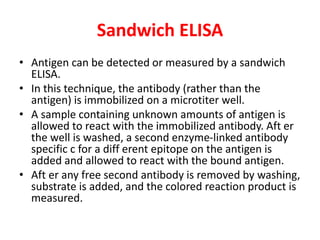
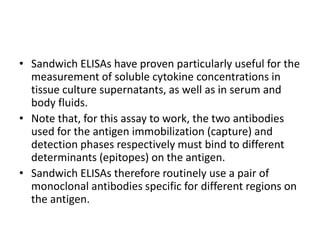
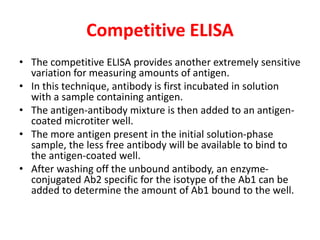
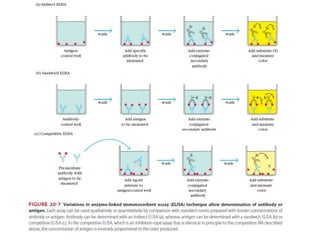
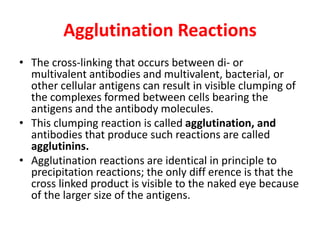
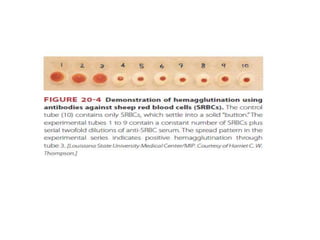
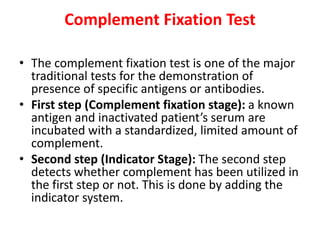
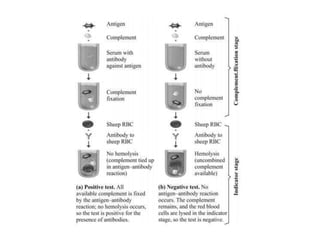
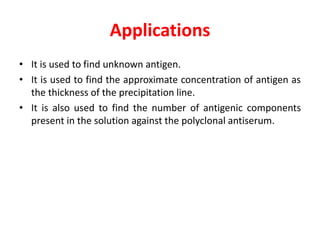
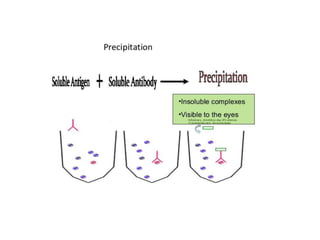
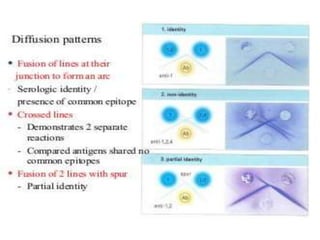
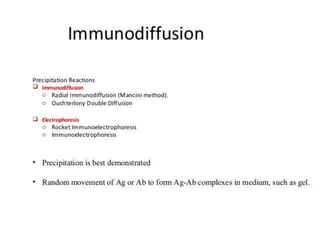
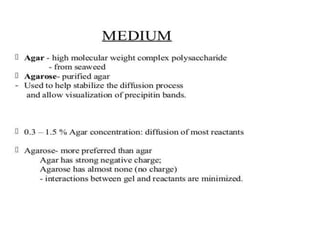
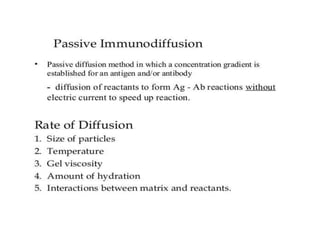
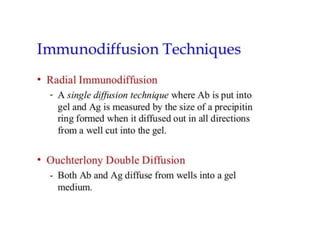
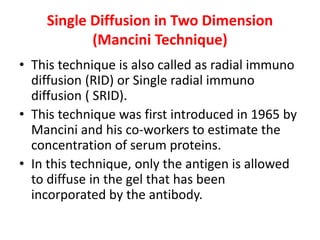
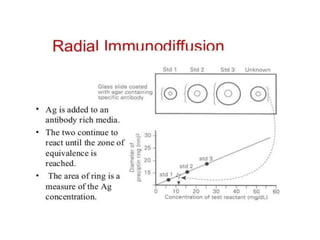
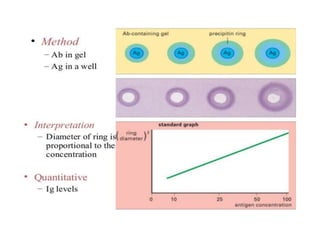
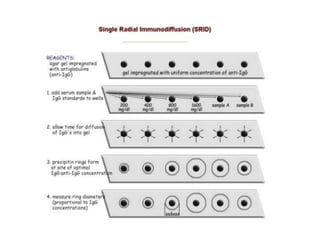
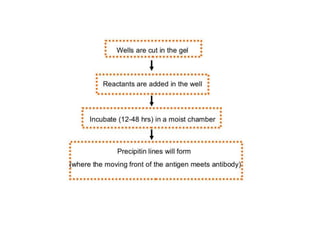
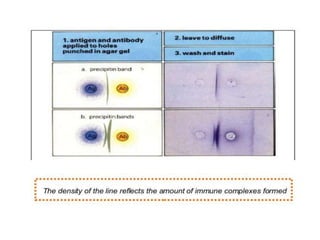
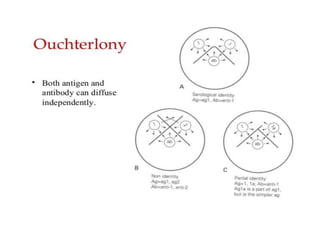
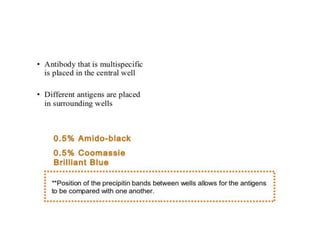
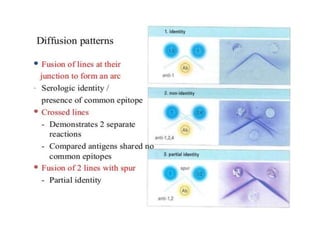
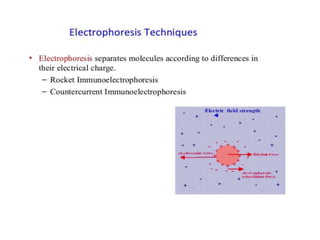
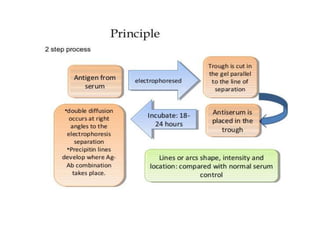
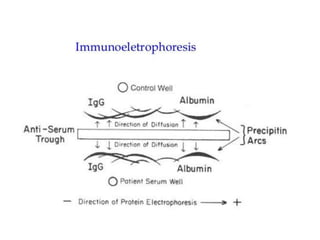
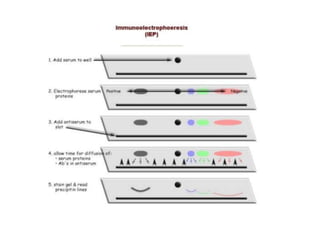
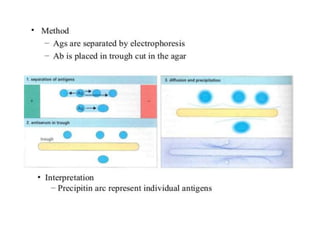
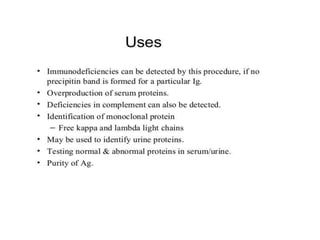
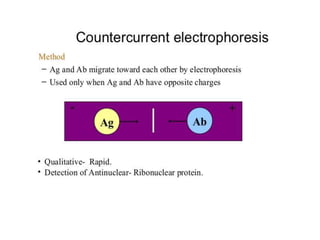
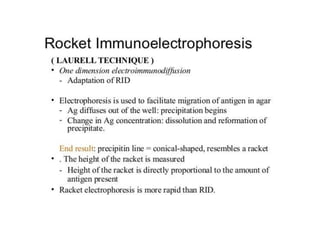
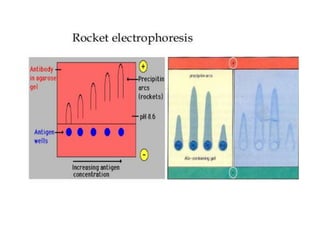
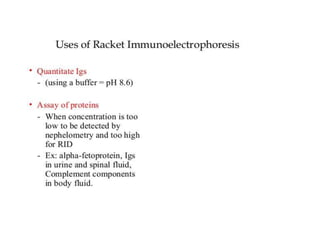
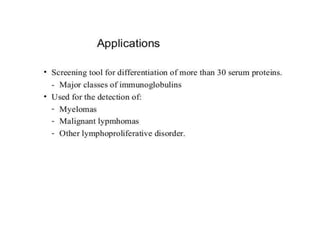
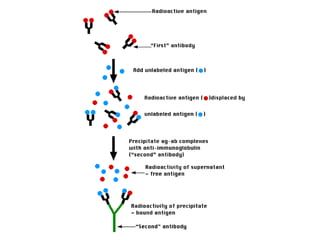
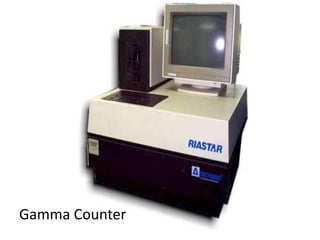
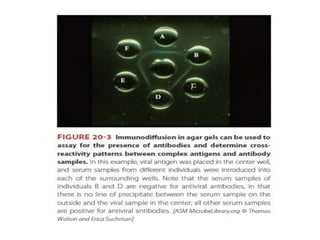
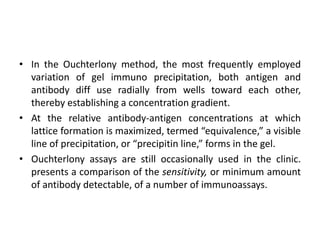
Radioimmunoassay (RIA) is a technique that uses the specificity of antibody-antigen binding and radioactivity to separate and quantify proteins. RIA revolutionized research and clinical practice by allowing the detection of hormone levels in blood. It works by measuring the displacement of labeled antigen from an antibody when unlabeled antigen is added. While useful, RIA requires radioactive materials and specialized equipment. Enzyme-linked immunosorbent assay (ELISA) was developed as a safer alternative, using enzyme-labeled antibodies or antigens. ELISA and other techniques like agglutination reactions, complement fixation tests, immunodiffusion, and precipitation reactions exploit the binding properties of antibodies to detect or quantify antigens.

![ELISA
[Enzyme Linked Immuno-Sorbent Assay]](https://image.slidesharecdn.com/radioimmunoassay-171207113731/85/Radioimmunoassay-20-320.jpg)