Animal Development

                Chapter 47
          Keonna & Brianna
Fertilization, cleavage, Gastrulation,&
Organogenesis
   Main function of fertilization is the combining of haploid
    sets of chromosomes from two individuals into a single
    diploid cell, the Zygote.
    Acrosomal reaction- The discharge of hydrolytic enzymes that come
    from a vesicle in the tip of the sperm, the acrosome, occurs when the
    sperm approaches or touches the egg.
   Cortical reaction – Excocytosis of enzymes and other
    macromolecules from cortical granules in the egg cytoplasm during
    fertilization, leading to the formation of fertilization envelope.
   After fertilization is complete, rapid cell divison occurs.
    This stage called cleavage, the cells carry out the S and M phases of
    the cell cycle.
The acrosomal & cortical reactions during
sea urchin fertilization.
Fertilization, cleavage, Gastrulation,&
Organogenesis
   After cleavage, the rate of cell division slows down,
    and undergo a process called gasturlation. This
    process takes up locations that will later for organs
    and tissues.
Fertilization, cleavage, Gastrulation,&
Organogenesis
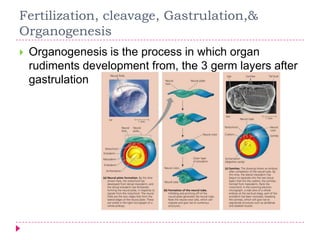
   Organogenesis is the process in which organ
    rudiments development from, the 3 germ layers after
    gastrulation
Developmental
adaptations of amniotes                   Mammalian development
   Require aqueous environment for          Fertilization occurs in the oviduct,
    development.                              then continues as it completes its
   Reptiles and mammals in eggs or           journey to the uterus.
    the uterus are surrounded by a           When embryonic cells separate ,
    fluid within are called amniotes.         causes twins
   Chorin, amnion, yolk sac, and the        Allantois in mammals is
    allantois make up the “life-support       incooperated in the umbilical cord.
    system” for further embryonic            There it forms blood vessels that
    development                               transport Oxygen/nutrients from
                                              the placenta and gets rid of
                                              harmful waste and carbon dioxide.
Morphogenesis in animals involves specific
changes in cell shape,position,and adhesion
   Changes of the cells usually involve the
    reorganization of the cytoskeleton. Cytoskeleton
    drives cell migration.

   Cell adhesion molecules- cell-surface molecule
    that bonds to CAM’s on other cells results in
    cell-to-cell attachments contribute contributing to
    strong tissues attachments.


Credit: 8th edition biology: Cambell.Reece
Developmental Fate of Cells
   During early cleavage               Fate maps provide a
    divisions have to                    territorial diagram of
    differentiate themselves.            embryonic development
       Initial differences result          Fate maps also trace the
        from uneven distribution             ancestry of each cell
        of cytoplasmic                  In many species that
        determinants                     have cytoplasmic
   Induction - Interactions             determinants only the
    among embryonic cells                zygote is totipotent
    influence their fate by                 Totipotent – capable of
    changing gene                            turning into all the
    expression                               different cell types in that
                                             species
Developmental Fate of Cells
   Inductive signals play an            Two critical regions in a
    important role in:                    limb bud have profound
        pattern formation – the          effects on the limb’s
        arrangement of organs and         development
        tissues                              Apical Ectodermal Ridge – a
       Positional information –              thickened area of the
        tells a cell where it is in           ectoderm at the tip of the
        location to the animal’s              bud. Removal of it prevent
        body axes and determine               growth of the limb
        how the cells and its                Zone of Polarizing Activity - a
        desendants will respond to            block of mesodermal tissue
        molecular signaling                   underneath the ectoderm
                                              where the posterior side in
                                              attached to the body. It is
                                              neccesary for proper pattern
                                              formation
Developmental Fate of Cells
   Hox genes play an               Mutation in the Hox
    important role in the            genes can cause cells
    development of limbs.            in the limb buds to react
   Research suggests that           differently to the
    pattern formation                positional cues
    requires cells to receive           Can cause
    and interpret cues from              polysyndactyly
    the environment
       This tells cells where
        they are in the
        developing organ

Animal development

  • 1.
    Animal Development Chapter 47 Keonna & Brianna
  • 2.
    Fertilization, cleavage, Gastrulation,& Organogenesis  Main function of fertilization is the combining of haploid sets of chromosomes from two individuals into a single diploid cell, the Zygote.  Acrosomal reaction- The discharge of hydrolytic enzymes that come from a vesicle in the tip of the sperm, the acrosome, occurs when the sperm approaches or touches the egg.  Cortical reaction – Excocytosis of enzymes and other macromolecules from cortical granules in the egg cytoplasm during fertilization, leading to the formation of fertilization envelope.  After fertilization is complete, rapid cell divison occurs. This stage called cleavage, the cells carry out the S and M phases of the cell cycle.
  • 3.
    The acrosomal &cortical reactions during sea urchin fertilization.
  • 4.
    Fertilization, cleavage, Gastrulation,& Organogenesis  After cleavage, the rate of cell division slows down, and undergo a process called gasturlation. This process takes up locations that will later for organs and tissues.
  • 5.
    Fertilization, cleavage, Gastrulation,& Organogenesis  Organogenesis is the process in which organ rudiments development from, the 3 germ layers after gastrulation
  • 6.
    Developmental adaptations of amniotes Mammalian development  Require aqueous environment for  Fertilization occurs in the oviduct, development. then continues as it completes its  Reptiles and mammals in eggs or journey to the uterus. the uterus are surrounded by a  When embryonic cells separate , fluid within are called amniotes. causes twins  Chorin, amnion, yolk sac, and the  Allantois in mammals is allantois make up the “life-support incooperated in the umbilical cord. system” for further embryonic  There it forms blood vessels that development transport Oxygen/nutrients from the placenta and gets rid of harmful waste and carbon dioxide.
  • 7.
    Morphogenesis in animalsinvolves specific changes in cell shape,position,and adhesion  Changes of the cells usually involve the reorganization of the cytoskeleton. Cytoskeleton drives cell migration.  Cell adhesion molecules- cell-surface molecule that bonds to CAM’s on other cells results in cell-to-cell attachments contribute contributing to strong tissues attachments. Credit: 8th edition biology: Cambell.Reece
  • 8.
    Developmental Fate ofCells  During early cleavage  Fate maps provide a divisions have to territorial diagram of differentiate themselves. embryonic development  Initial differences result  Fate maps also trace the from uneven distribution ancestry of each cell of cytoplasmic  In many species that determinants have cytoplasmic  Induction - Interactions determinants only the among embryonic cells zygote is totipotent influence their fate by  Totipotent – capable of changing gene turning into all the expression different cell types in that species
  • 9.
    Developmental Fate ofCells  Inductive signals play an  Two critical regions in a important role in: limb bud have profound  pattern formation – the effects on the limb’s arrangement of organs and development tissues  Apical Ectodermal Ridge – a  Positional information – thickened area of the tells a cell where it is in ectoderm at the tip of the location to the animal’s bud. Removal of it prevent body axes and determine growth of the limb how the cells and its  Zone of Polarizing Activity - a desendants will respond to block of mesodermal tissue molecular signaling underneath the ectoderm where the posterior side in attached to the body. It is neccesary for proper pattern formation
  • 10.
    Developmental Fate ofCells  Hox genes play an  Mutation in the Hox important role in the genes can cause cells development of limbs. in the limb buds to react  Research suggests that differently to the pattern formation positional cues requires cells to receive  Can cause and interpret cues from polysyndactyly the environment  This tells cells where they are in the developing organ