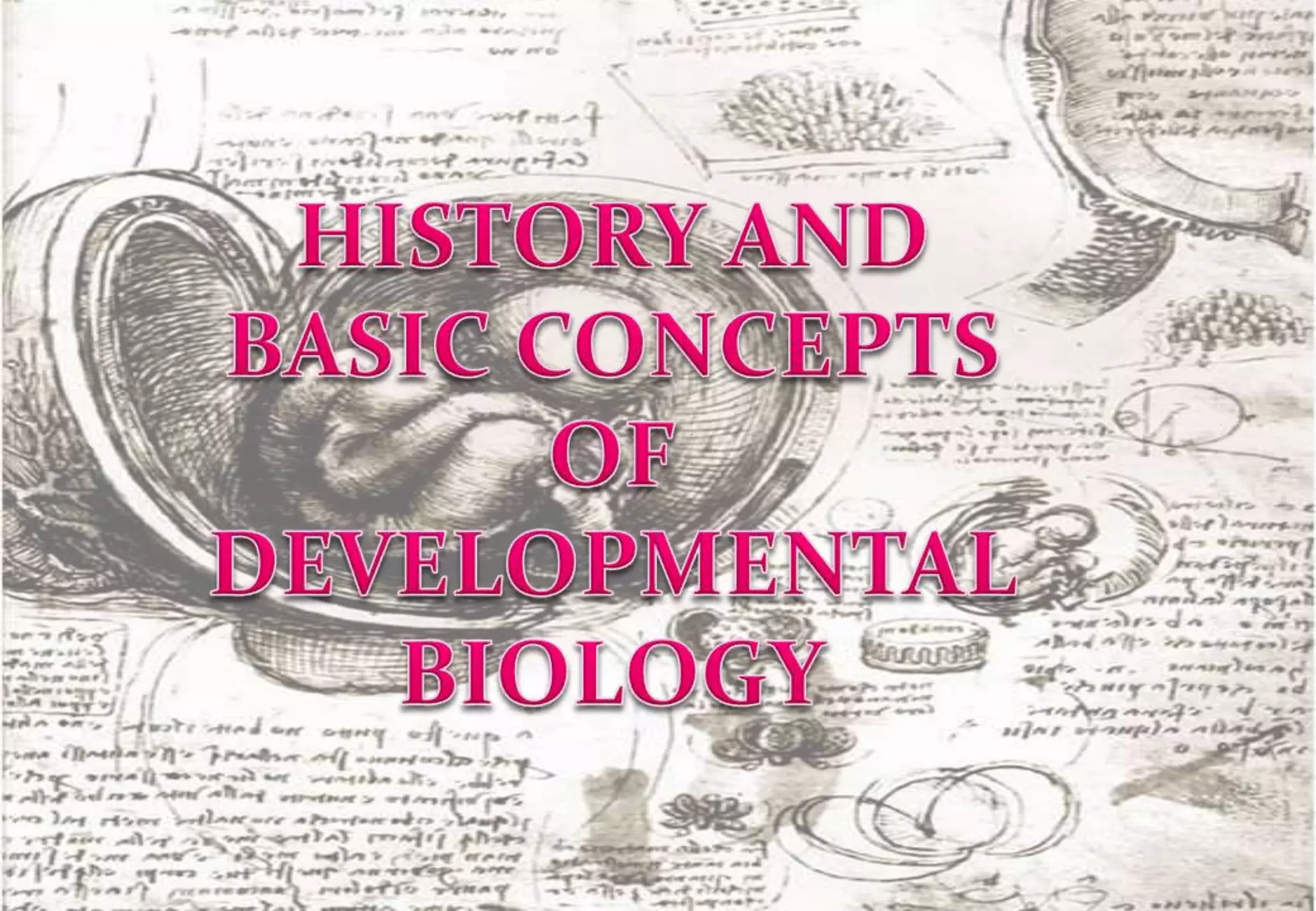
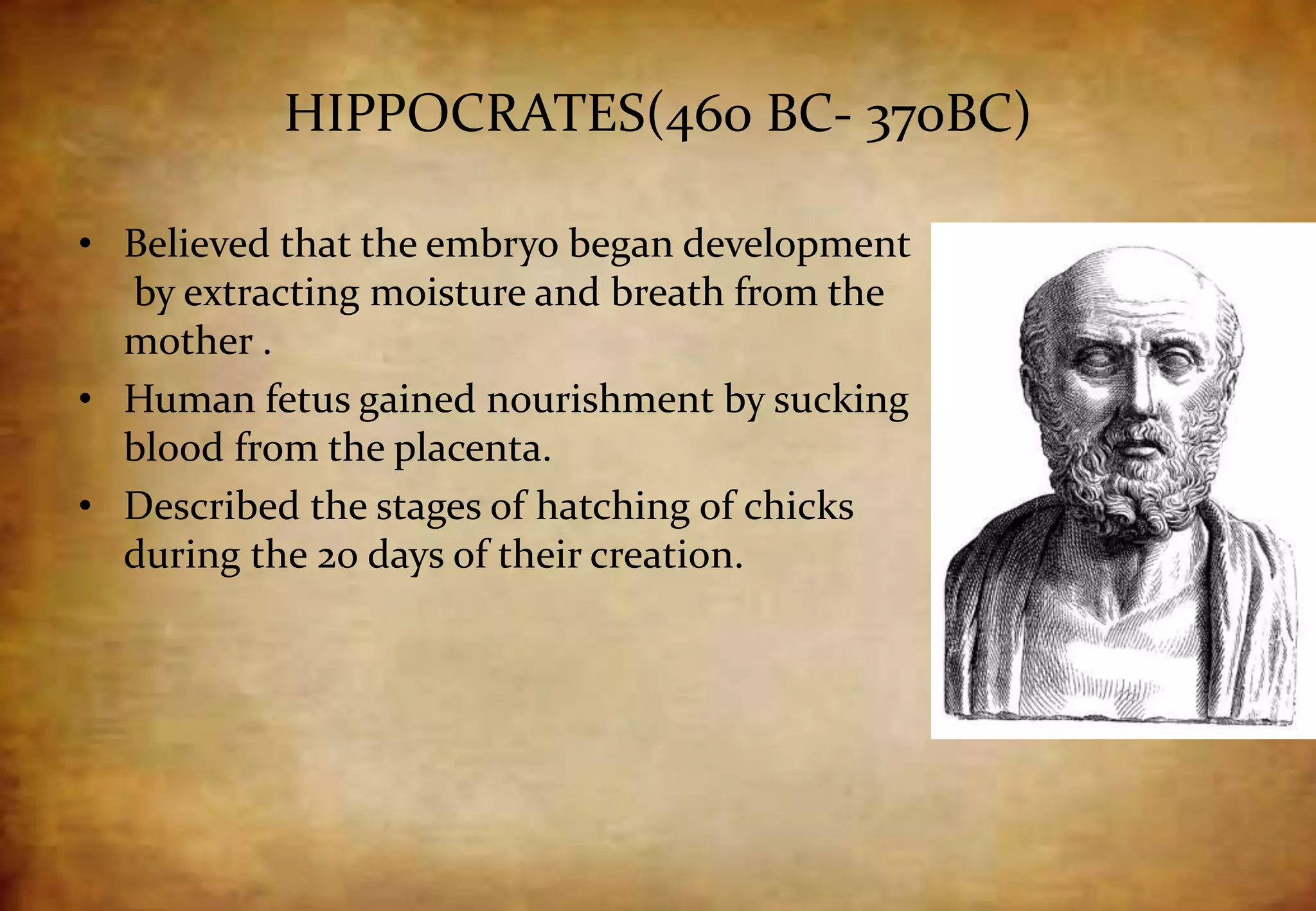
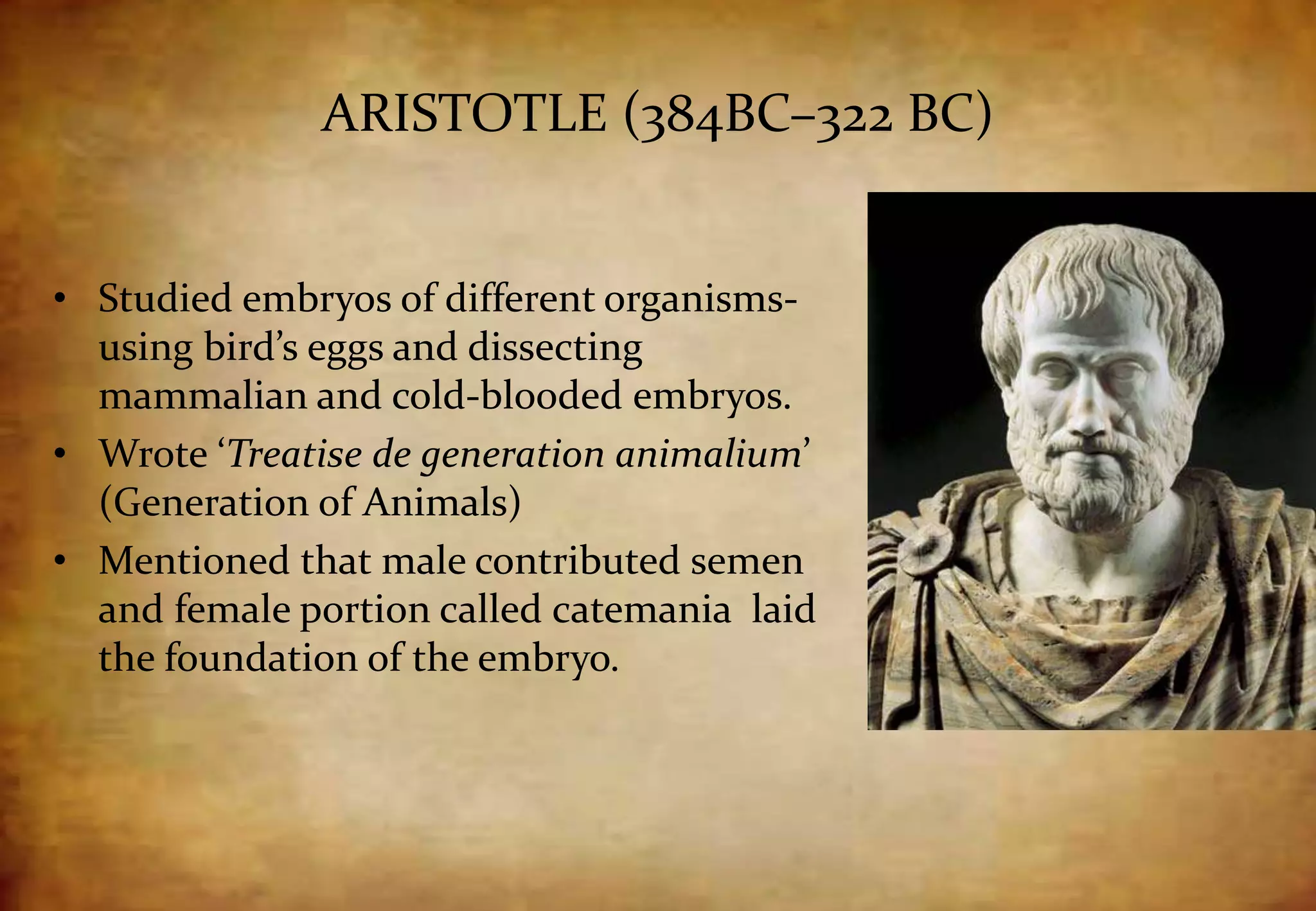
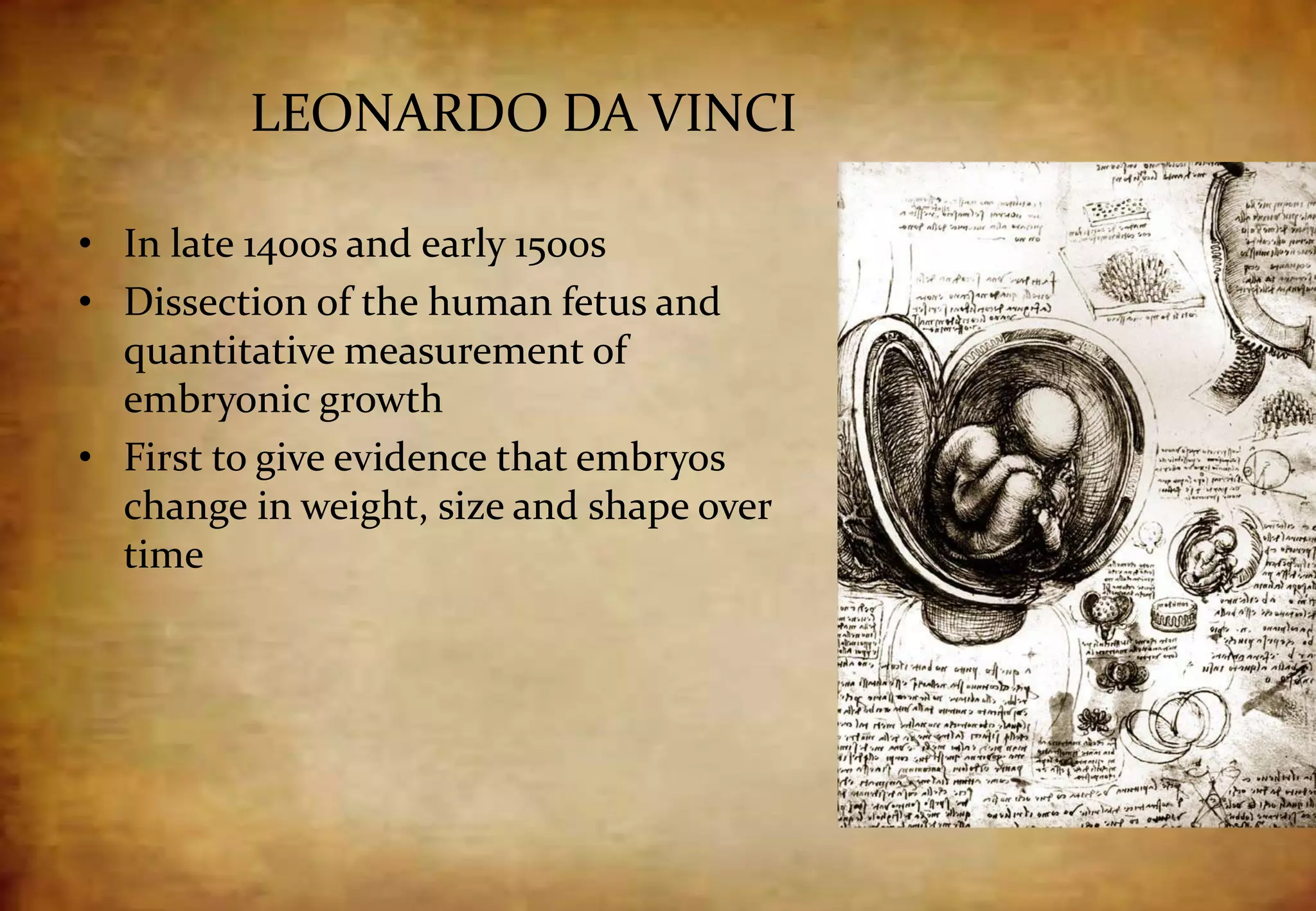
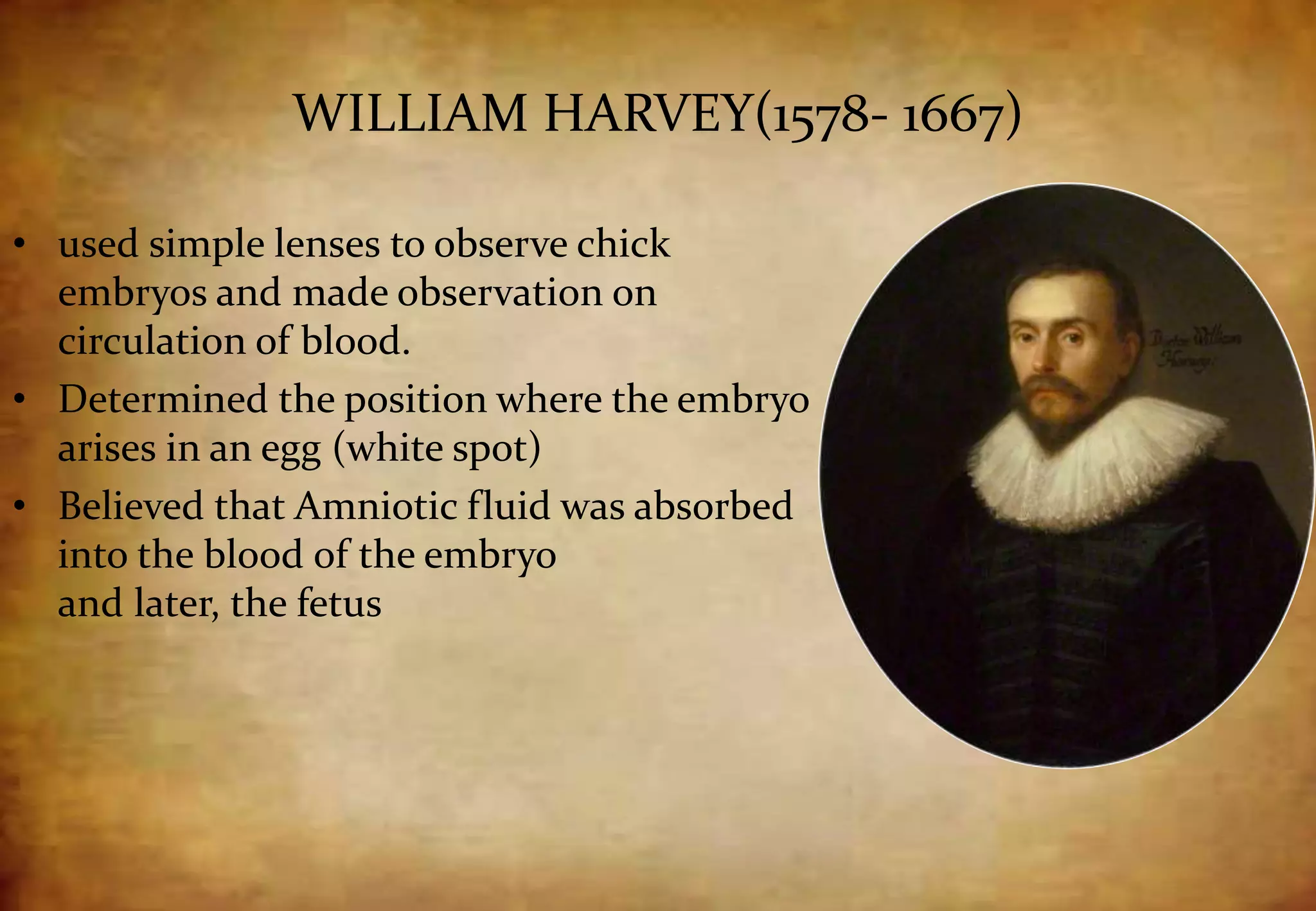
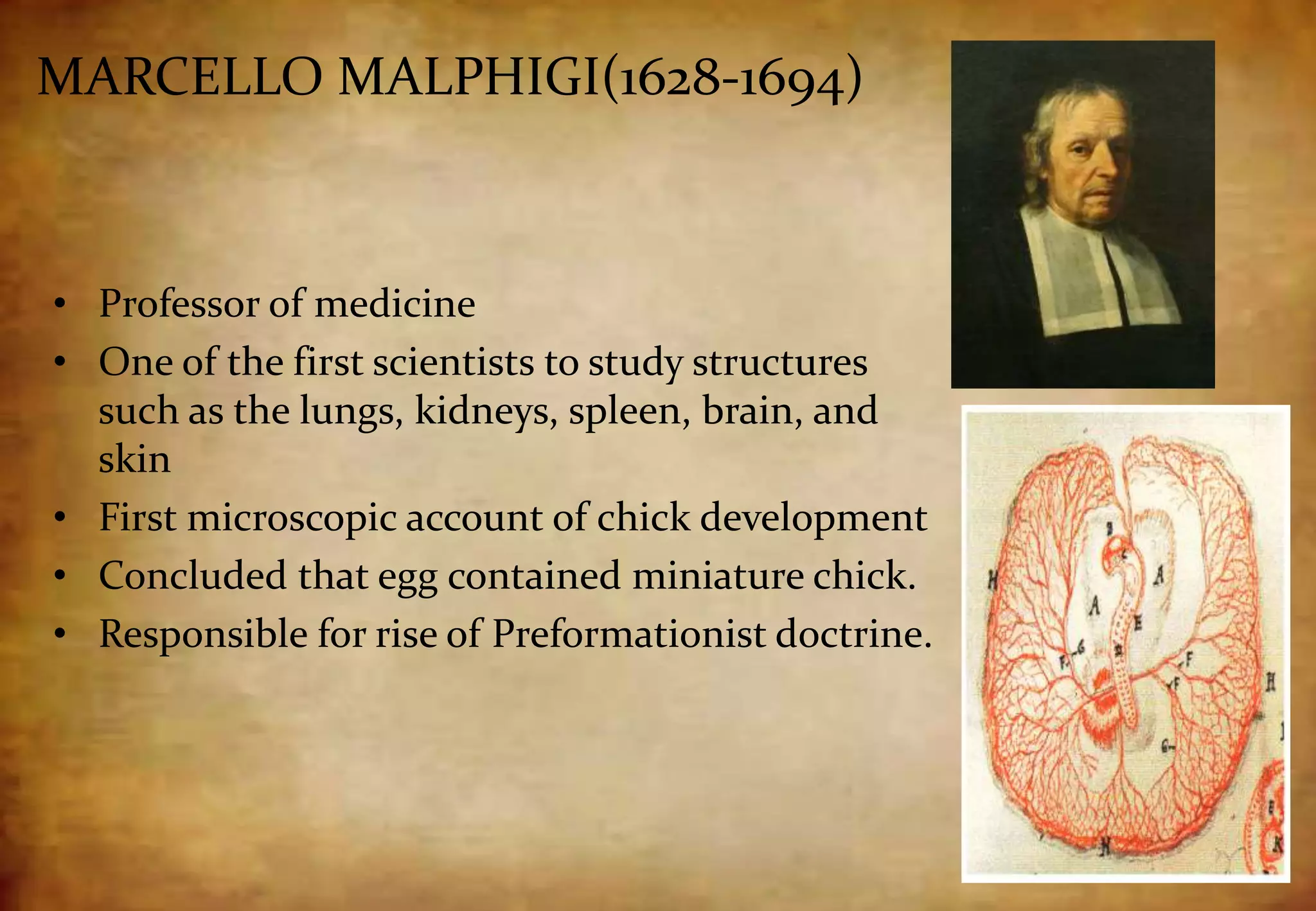
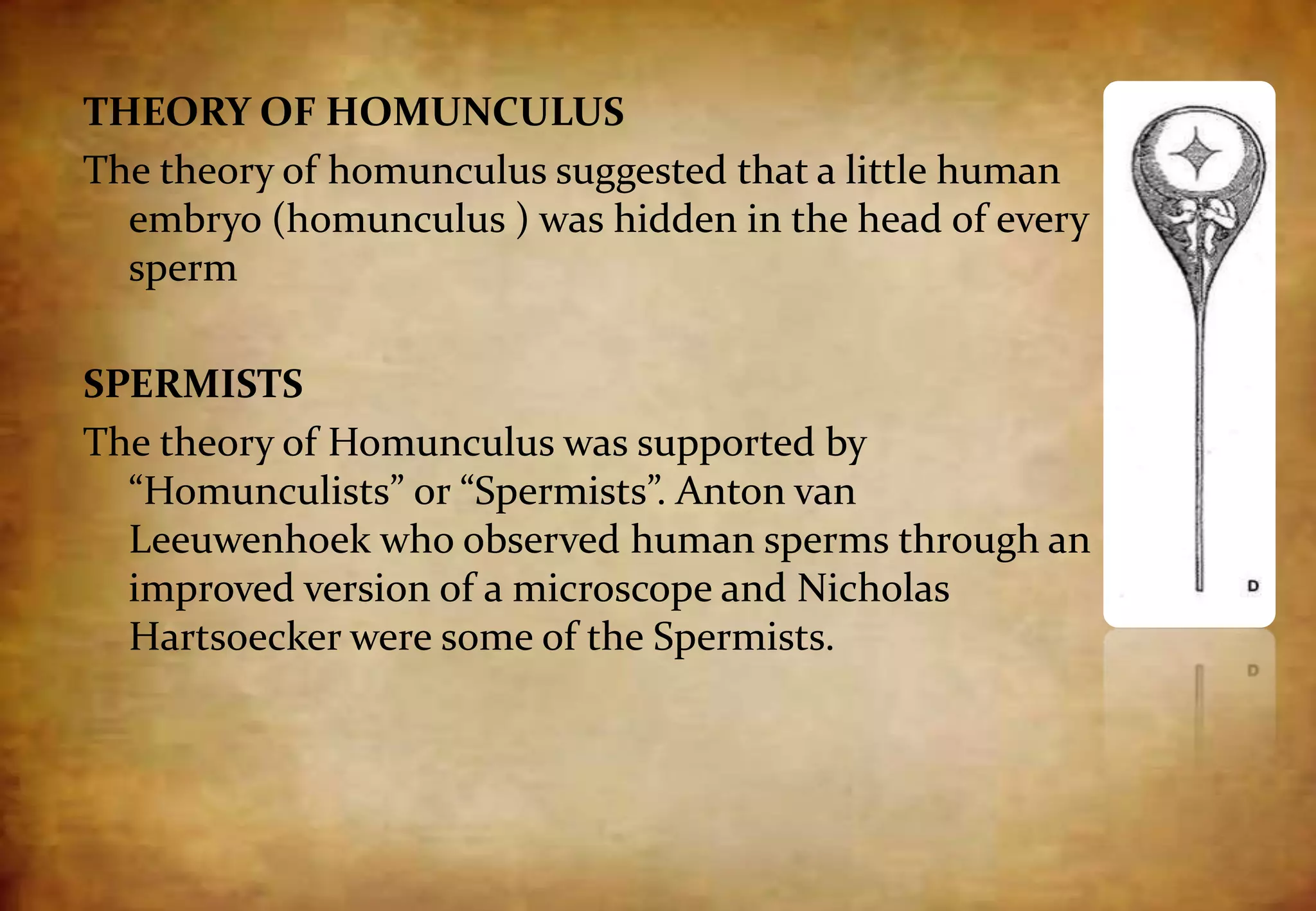
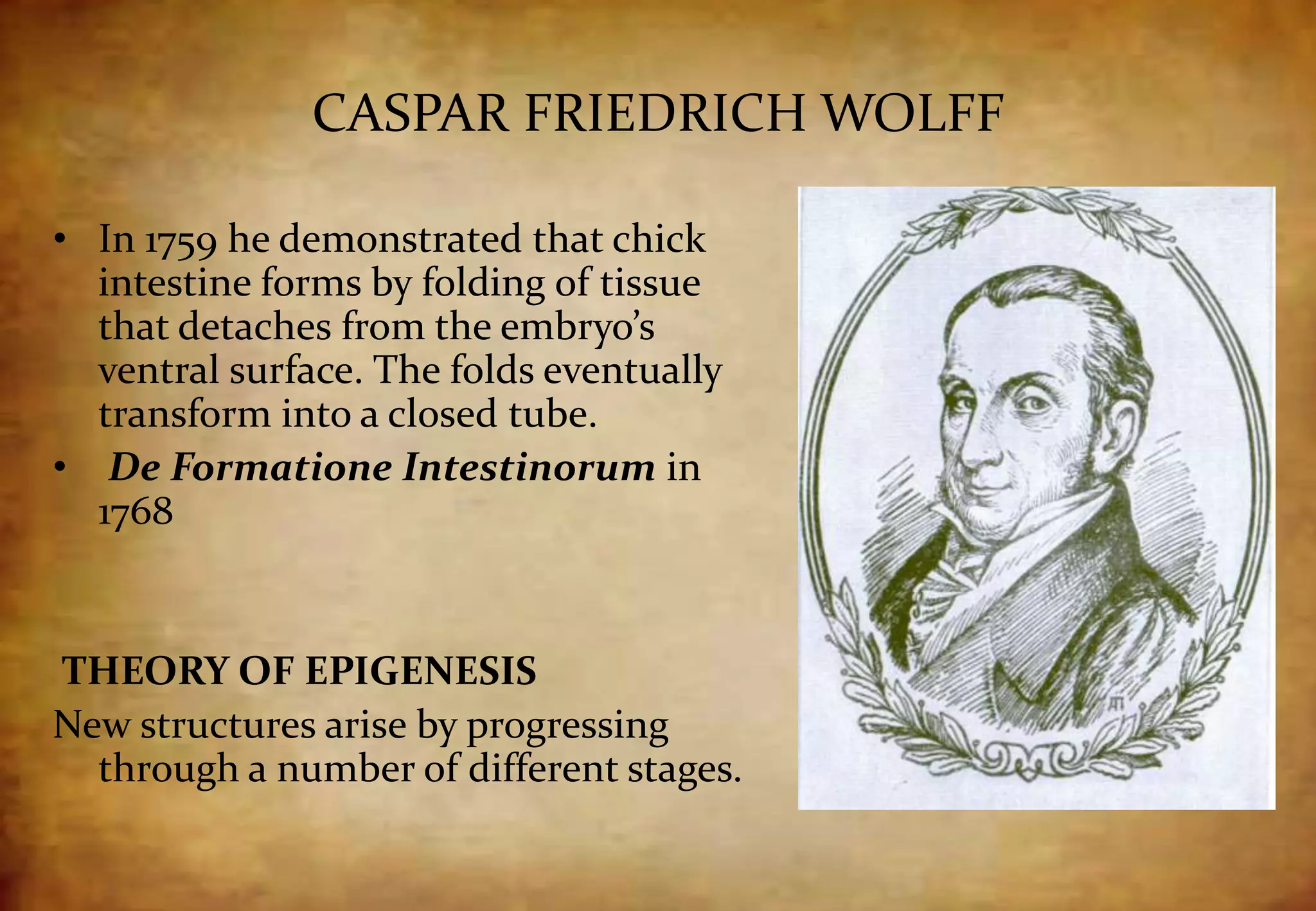
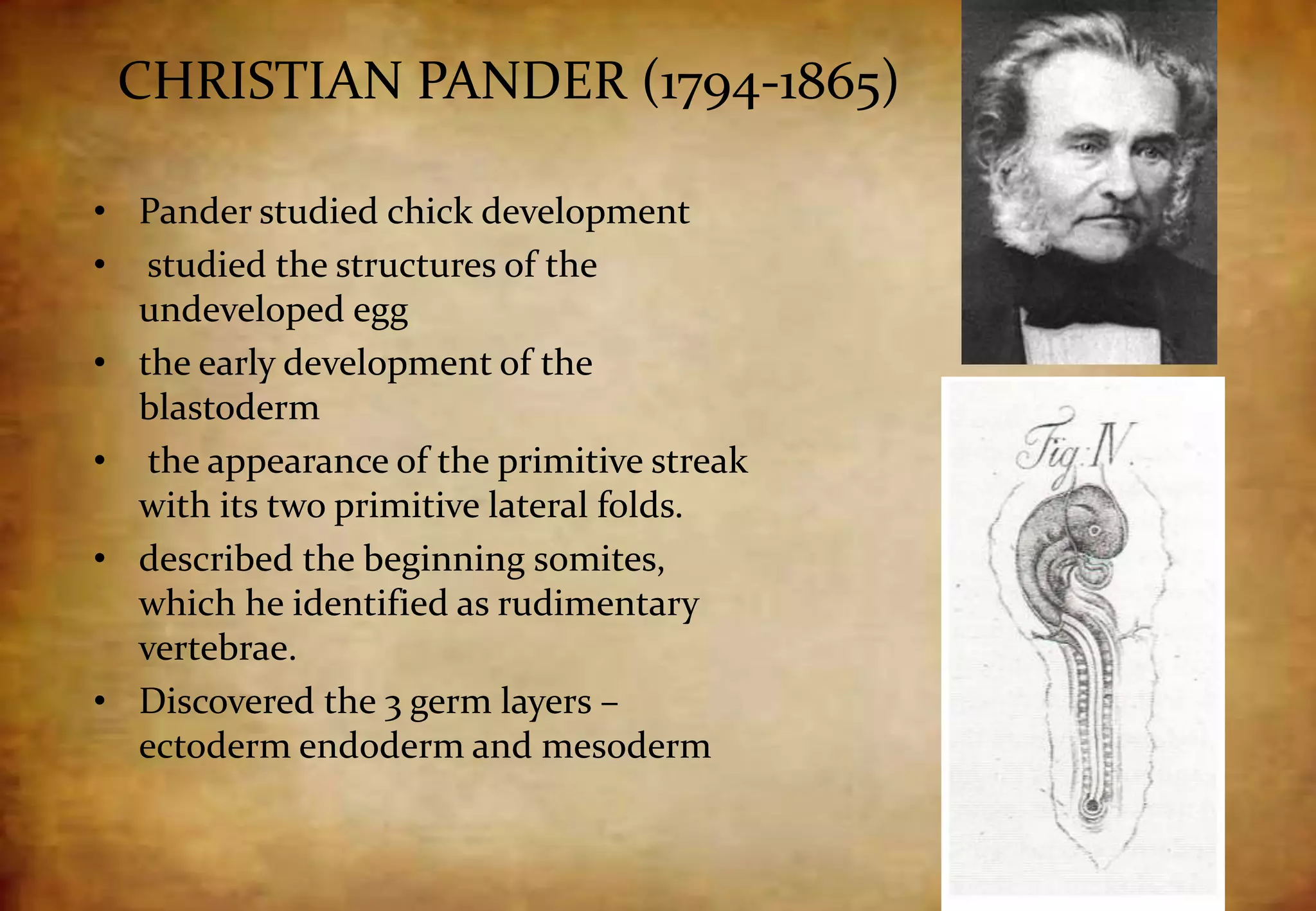
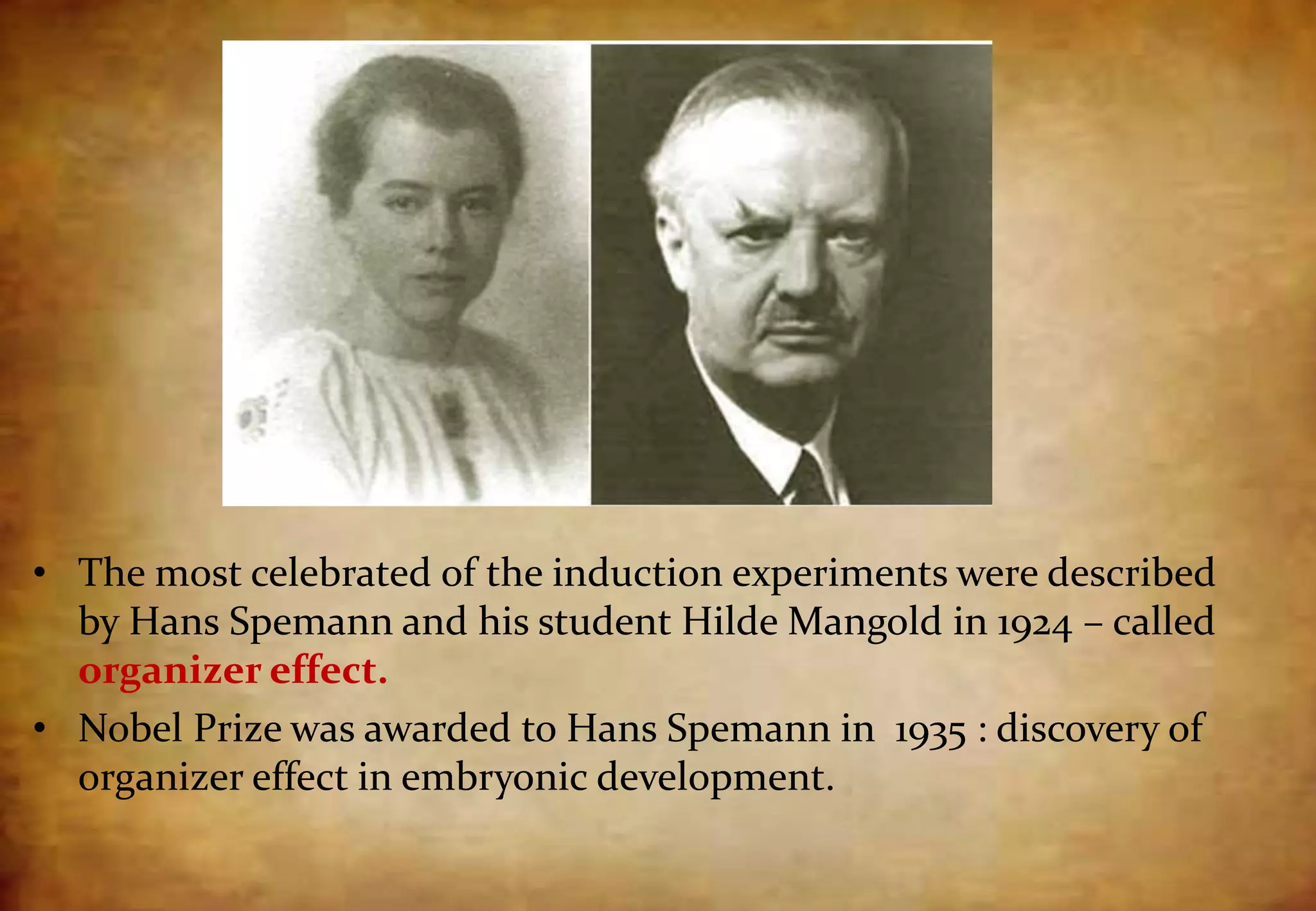
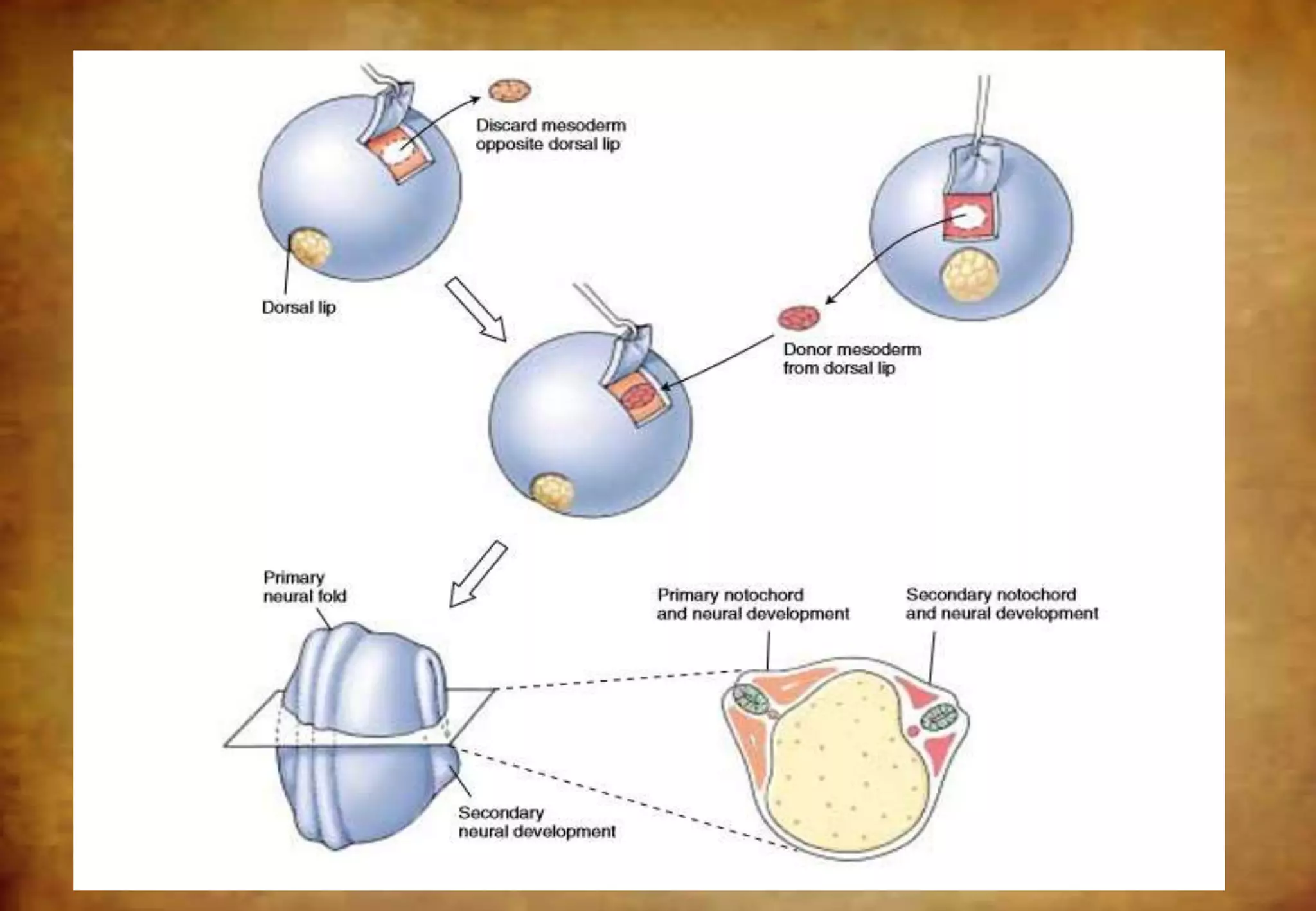
Developmental biology studies how interacting processes generate an organism's shapes, sizes, and structures from embryo to adult. Early scientists like Hippocrates, Aristotle, and Galen made observations of embryonic development but believed embryos derived nourishment from the mother. In the 1500s, da Vinci conducted early dissections of human fetuses. In the 1600s, Harvey observed chick embryos and concluded the amniotic fluid was absorbed. Later, scientists like Wolff and Pander established epigenesis over preformation through experiments showing structures develop progressively. Spemann's organizer experiments in the 1920s demonstrated induction, wherein one group of cells causes changes in adjacent cells. This established embryology's genetic basis and developmental mechanisms. Cell differentiation,