ANAESTHESIA IN
GERIATRICS
Dr. KSHAMA BALAKRISHNA
POST GRADUATE
Dr. SHILPASHRI A. M.
ASSOCIATE PROFESSOR
INTRODUCTION
•Gerontology is the broadest term applied to studies of
aging
•"Geriatrics” - medical subspecialty that focuses upon
care of the elderly patients
How does geriatrics represent a new opportunity in
Anaesthesiology?
•Advancement in technology and health care
•Chronological age is not a limitation for surgery
DEFINITION
•Ageing is a progressive physiological process that is
characterised by degenerative changes in both
structure and function of organ and tissues with
consequent loss of functional reserve of various
systems, more importantly with a decrease in ability
to respond to stress and overcome complication.
•Successful ageing -“low probability of disease and
disease-related disability, high cognitive and physical
functional capacity, and active engagement with life”.
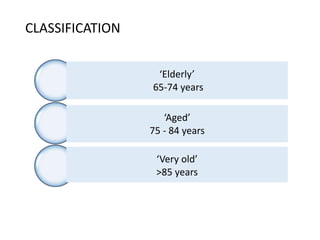
CLASSIFICATION
‘Elderly’
65-74 years
‘Aged’
75 - 84 years
‘Very old’
>85 years
OBJECTIVES
•To understand impact of physiology of ageing in
anaesthetic care
•Optimized care can be given to the elderly-
balancing patient satisfaction and efficiency
•Research opportunities for better geriatric care
•To address palliative care
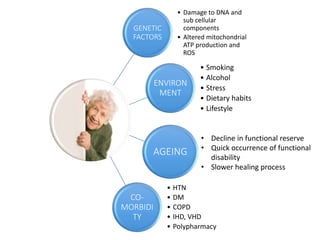
GENETIC
FACTORS
• Damage to DNA and
sub cellular
components
• Altered mitochondrial
ATP production and
ROS
ENVIRON
MENT
• Smoking
• Alcohol
• Stress
• Dietary habits
• Lifestyle
AGEING
CO-
MORBIDI
TY
• HTN
• DM
• COPD
• IHD, VHD
• Polypharmacy
• Decline in functional reserve
• Quick occurrence of functional
disability
• Slower healing process
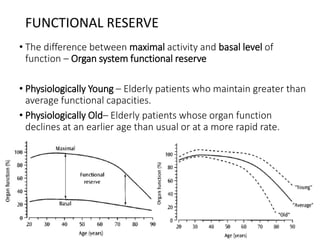
• The difference between maximal activity and basal level of
function – Organ system functional reserve
• Physiologically Young – Elderly patients who maintain greater than
average functional capacities.
• Physiologically Old– Elderly patients whose organ function
declines at an earlier age than usual or at a more rapid rate.
FUNCTIONAL RESERVE
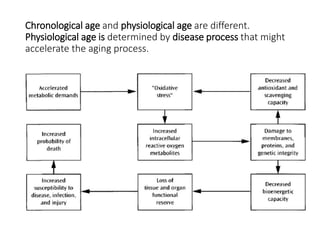
Chronological age and physiological age are different.
Physiological age is determined by disease process that might
accelerate the aging process.
CARDIOVASCULAR SYSTEM
Modest decrease in resting cardiac index in elderly, attributable to
lower metabolic requirements with age related atrophy of muscle
and loss of lean tissue mass.
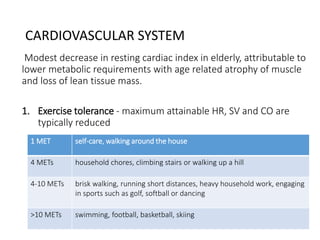
1. Exercise tolerance - maximum attainable HR, SV and CO are
typically reduced
1 MET self-care, walking around the house
4 METs household chores, climbing stairs or walking up a hill
4-10 METs brisk walking, running short distances, heavy household work, engaging
in sports such as golf, softball or dancing
>10 METs swimming, football, basketball, skiing
2. Decreased cardiac output (by 1% per year) and stroke
volume
• Unable to increase CO by increasing HR- due to
“hyposympathetic state”
• SV mostly dependent on venous return
3. Decreased beta adrenergic receptor responsiveness
•Reduced response to stimulation at cardiac and end organ
level
•Decreased heart rate, reduced SAN function
•Decreased baroreceptor sensitivity
4. Conduction abnormality, sick sinus syndrome
5. Diastolic Dysfunction- physiologic or preclinical state in which
abnormal relaxation and LV stiffness is compensated by LA
pressure to maintain LV preload.
• Structural changes
• Stiffer and less complaint ventricles
• Loss of ‘atrial kick’
6. Age related arteriosclerosis – chronic elevated afterload, LVH
7. Increased activity of sympathetic nervous system
• Increase in the amount of norepinephrine release.
• Increase in SVR (0.5% increase/yr).
• Slightly increased Alpha receptor response.
8. Decreased response to atropine
Anaesthetic implications
1. Neuraxial blockade
• Greater degree of stability over GA .
• Eliminates surgical stimulation induced increased
sympathetic tone
• Can cause severe hypotension when compared to GA
• Hypotension- fluid resuscitation and α agonist (in place of α/
β agonist) - restores BP and CO to basal levels
• α agonist- drug of choice- Metaraminol.
2. General Anaesthesia
• Diminished cardiac reserve- exaggerated fall in BP during
induction.
• β blockers promotes hemodynamic stability particularly at
the time of intubation.
• Anticholinergic mixed with α /β agonist are indicated in
bradycardia compromising cardiac output.
Anaesthetic implications
RESPIRATORY SYSTEM
Chest wall compliance, the elastic recoil of the lungs and respiratory
muscle strength all decrease.
1. Structural changes
• Upper airway-  protective reflexes,  mucociliary function
• Lungs
-  tissue elasticity and cross-linking, loss of recoiling effect of
lung.
-Loss of alveolar septa-  diffusing capacity , physiological dead
space.
- interstitial connective tissue causes duct ectasia- anatomical
dead space.
• Stiff chest wall- work of breathing, shortness of breath
2. Ventilatory mechanics
• Lungs - emphysematous and complaint
• RV of lung increases at the expense of IRV and ERV- causing VC
is significantly compromised
• Mismatch between stiff chest wall and respiratory muscle
weakness-
After 60yrs, FVC  by 14- 30ml/yr and FEV1  by 23-32ml/yr .
FRC increases (Closing capacity reaches FRC in upright position
at 66 yrs and supine position at 44yrs)
•  Air trapping due to loss of elastic forces- closing capacity ,
RV
3. Control of ventilation and Gas exchange
• Ventilatory response to hypercapnia  by 40% and hypoxia  by
50%- declining chemoreceptor function
• Respiratory drive 
• Misdistribution of ventilation-
• V/Q mismatch- dead space V>Q
Pulmonary venous admixture- Q> V
• PAO2 and PaO2  with age PAO2 = (100- age/4) mm of Hg
Mean arterial oxygen tension at room air reduces from 95mm of
Hg at 20 years to 70mm of Hg at 80 years.
• More prone to sleep apnoea
• Difficult mask ventilation- loss of facial contour, buccal fat,
dentition
• Cervical arthritis- restrict neck movements, more prone to
vertebra-basilar artery insufficiency
• Distorted alveoli impairs gas exchange- blood O2 content falls
by 10-15% while CO2 levels remain unchanged
• Less complaint chest wall- greater risk of peri-op hypoxemia
• ABG- more reliable in assessing respiratory functions
Anaesthetic implications
• Premedication- increases risk of aspiration
• Aspiration prophylaxis- sodium citrate, cimetidine,
metoclopramide
• V/Q scan for elderly patients undergoing pulmonary surgery
• Increase in MV to achieve normal PaCO2 due to gas exchange
abnormality , which is more in recumbent position and in
respiratory disease.
• Early respiratory mobilization and sitting position in post
operative period improves respiratory mechanics and
oxygenation.
NERVOUS SYSTEM
1. Brain anatomy
• Neuronal shrinkage and loss.
•  production of neurotransmitters- noradrenaline, serotonin,
acetylcholine and dopamine
• Grey matter – atrophy; (grey>white), brain weight reduces 2-3g per year
after 60 years. Hemispheric volume reduces by 2% -3.5% per decade
after the age of 20.
• Enlarged ventricles,  CSF, sulcal widening and space between surface
of brain and skull.
• Function- decline in cognition, motor, sensory and behavioural function.
Decrease in memory, vision, hearing and vibratory sense in lower
extremity is common.
2. Cerebral circulation
• Cerebral autoregulation and CO2 responsiveness –well preserved.
•  mass-specific (ml/100g/min) global and regional blood flow.
Progressive  total (ml/min) hemispheric blood flow.
3. Neurophysiology-  neuronal activity,  brain-spinal cord
neurotransmitter activity. Decreased plasticity, impaired recovery
from neuronal injury
4. Autonomic system-  sympathetic and  parasympathetic flow.
Common problems- hypothermia, heat stroke, orthostatic
hypotension, syncope
5. Common pathologies- cerebral atherosclerosis, Parkinson’s
disease, Alzheimer’s disease, delirium, depression, dementia
Anaesthetic implications
• Increased pain threshold and potency of inhalational agents .
• Increased sensitivity to anaesthetic drugs
• Decrease in anaesthetic requirement
• Delayed recovery from anaesthesia
• Incidence of post-op delirium and in 15-50% POCD (post-op
cognitive dysfunction)
• Decreased requirement of LA for spinal and epidural anaesthesia
• Tracheal Extubation only when wide awake.
Neuromuscular Junction
• Decline in number and density of motor neuron/endplate
units
• Thickening of muscle motor endplate and loss neurotropic
support
• Increase in the number and variety of cholinergic receptors at
the endplate and surrounding areas offsets the age related
decline in the number of motor endplates
• Hence, despite loss of skeletal muscle mass, dose
requirements of NM blocking drugs are not reduced.
Thermoregulation
• Elderly- Frail constitution, reduced metabolic rate, reduced
subcutaneous fat
• Delayed and less vigorous compensatory mechanisms-
cutaneous vasoconstriction, shivering etc.
Effects of hypothermia
• CNS depression, depression of ventilator drive - postop
somnolence and hypoxia
• Prolonged drug action
• Accelerates protein catabolism
• Vigorous compensatory mechanisms for hypothermia-
increases oxygen demand beyond respiratory and cardiac
capacity of the patient.
Hence, can precipitate myocardial ischemia.
• Hampers wound healing and surgical recovery, impairs
coagulation, immune dysfunction.
• Leftward shift of ODC
Prevention
• Use of blankets
• Warm solutions, fluid warmers
• Regulating theatre temperature accordingly
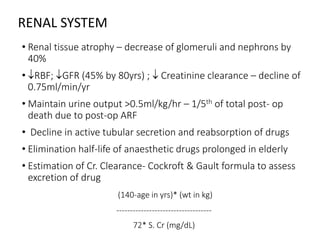
RENAL SYSTEM
• Renal tissue atrophy – decrease of glomeruli and nephrons by
40%
• RBF; GFR (45% by 80yrs) ;  Creatinine clearance – decline of
0.75ml/min/yr
• Maintain urine output >0.5ml/kg/hr – 1/5th of total post- op
death due to post-op ARF
• Decline in active tubular secretion and reabsorption of drugs
• Elimination half-life of anaesthetic drugs prolonged in elderly
• Estimation of Cr. Clearance- Cockroft & Gault formula to assess
excretion of drug
(140-age in yrs)* (wt in kg)
-----------------------------------
72* S. Cr (mg/dL)
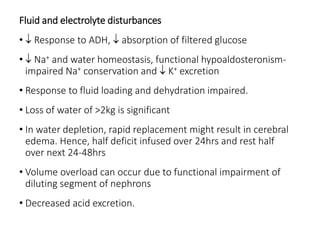
Fluid and electrolyte disturbances
•  Response to ADH,  absorption of filtered glucose
•  Na+ and water homeostasis, functional hypoaldosteronism-
impaired Na+ conservation and  K+ excretion
• Response to fluid loading and dehydration impaired.
• Loss of water of >2kg is significant
• In water depletion, rapid replacement might result in cerebral
edema. Hence, half deficit infused over 24hrs and rest half
over next 24-48hrs
• Volume overload can occur due to functional impairment of
diluting segment of nephrons
• Decreased acid excretion.
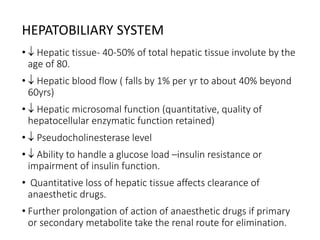
HEPATOBILIARY SYSTEM
•  Hepatic tissue- 40-50% of total hepatic tissue involute by the
age of 80.
•  Hepatic blood flow ( falls by 1% per yr to about 40% beyond
60yrs)
•  Hepatic microsomal function (quantitative, quality of
hepatocellular enzymatic function retained)
•  Pseudocholinesterase level
•  Ability to handle a glucose load –insulin resistance or
impairment of insulin function.
• Quantitative loss of hepatic tissue affects clearance of
anaesthetic drugs.
• Further prolongation of action of anaesthetic drugs if primary
or secondary metabolite take the renal route for elimination.
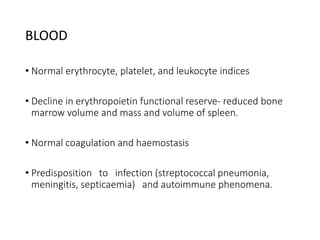
BLOOD
• Normal erythrocyte, platelet, and leukocyte indices
• Decline in erythropoietin functional reserve- reduced bone
marrow volume and mass and volume of spleen.
• Normal coagulation and haemostasis
• Predisposition to infection (streptococcal pneumonia,
meningitis, septicaemia) and autoimmune phenomena.
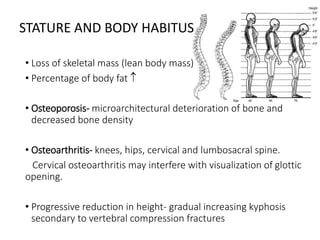
STATURE AND BODY HABITUS
• Loss of skeletal mass (lean body mass)
• Percentage of body fat 
• Osteoporosis- microarchitectural deterioration of bone and
decreased bone density
• Osteoarthritis- knees, hips, cervical and lumbosacral spine.
Cervical osteoarthritis may interfere with visualization of glottic
opening.
• Progressive reduction in height- gradual increasing kyphosis
secondary to vertebral compression fractures
BODY COMPOSITION
• Loss of lean body mass
• Accelerated loss of subcutaneous and intramuscular fat,
although percentage of fat compared to LBW is increased
• Loss of vital organ-lean tissue mass (liver, spleen)
• Decreased intracellular water- more prone to dehydration
• Blood volume is maintained
Geriatric syndromes
• Osteoporosis
• Osteoarthritis
• Alzheimer’s Disease
• Parkinson’s Disease
• Dementia
• Constipation
• Delirium
• Insomnia
• Decubitus Ulcer
Geriatric Disorders
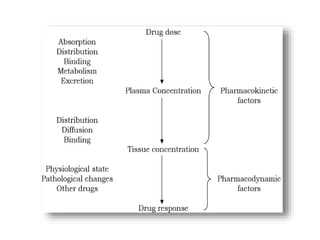
PHARMACOKINETICS AND PHARMACODYNAMICS
Pharmacokinetics:
The relationship between drug dose and plasma concentration.
It deals with what body does to the drug and it includes drug
absorption, tissue distribution, metabolism and elimination.
Pharmacodynamics:
The relationship between concentration and clinical effect. It
explains what a drug does to the body.
T½ of any drug depends on two factors.
Vd = volume of distribution
CI = clearance
T½ = (0.693 x Vd)/CI
Pharmacokinetics
Plasma concentration and Vd of a drug are inversely related.
• Decline in TBW – smaller Vd for hydrophilic drugs, plasma
concentration
• With age percentage of total body fat 
Lipophilic drugs, Vd  ; accumulation, prolongation of drug effects
• Impaired hepatic metabolism and renal elimination-  clearance
• Increase in the arm-brain circulatory time
• Most induction agents (hydrophilic ) are distributed in a
smaller initial compartment, resulting in increased exposure
of receptors and potentially augmented impact.
• Drug- binding proteins- albumin  , alpha-1 glycoprotein 
with age.
• Qualitative changes in these proteins alters drug-binding and
result in  free fraction in circulation, which affects clearance,
Vd and apparent potency.
Pharmacokinetics
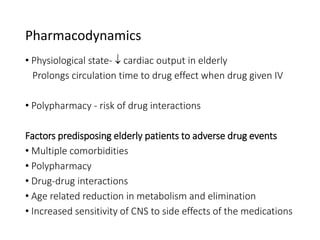
Pharmacodynamics
• Physiological state-  cardiac output in elderly
Prolongs circulation time to drug effect when drug given IV
• Polypharmacy - risk of drug interactions
Factors predisposing elderly patients to adverse drug events
• Multiple comorbidities
• Polypharmacy
• Drug-drug interactions
• Age related reduction in metabolism and elimination
• Increased sensitivity of CNS to side effects of the medications
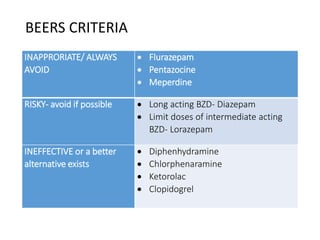
BEERS CRITERIA
INAPPRORIATE/ ALWAYS
AVOID
 Flurazepam
 Pentazocine
 Meperdine
RISKY- avoid if possible  Long acting BZD- Diazepam
 Limit doses of intermediate acting
BZD- Lorazepam
INEFFECTIVE or a better
alternative exists
 Diphenhydramine
 Chlorphenaramine
 Ketorolac
 Clopidogrel
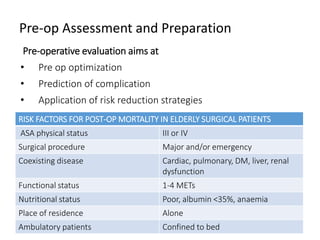
Pre-op Assessment and Preparation
Pre-operative evaluation aims at
• Pre op optimization
• Prediction of complication
• Application of risk reduction strategies
RISK FACTORS FOR POST-OP MORTALITY IN ELDERLY SURGICAL PATIENTS
ASA physical status III or IV
Surgical procedure Major and/or emergency
Coexisting disease Cardiac, pulmonary, DM, liver, renal
dysfunction
Functional status 1-4 METs
Nutritional status Poor, albumin <35%, anaemia
Place of residence Alone
Ambulatory patients Confined to bed
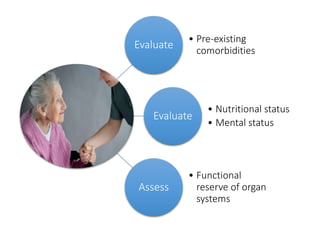
Evaluate
• Pre-existing
comorbidities
Evaluate
• Nutritional status
• Mental status
Assess
• Functional
reserve of organ
systems
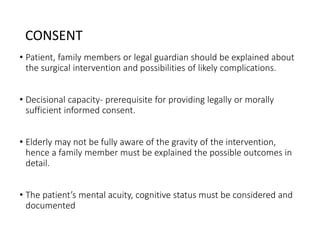
CONSENT
• Patient, family members or legal guardian should be explained about
the surgical intervention and possibilities of likely complications.
• Decisional capacity- prerequisite for providing legally or morally
sufficient informed consent.
• Elderly may not be fully aware of the gravity of the intervention,
hence a family member must be explained the possible outcomes in
detail.
• The patient’s mental acuity, cognitive status must be considered and
documented
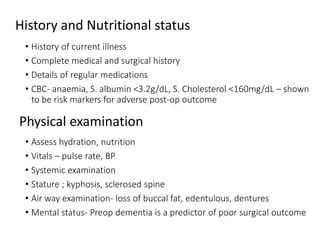
History and Nutritional status
• History of current illness
• Complete medical and surgical history
• Details of regular medications
• CBC- anaemia, S. albumin <3.2g/dL, S. Cholesterol <160mg/dL – shown
to be risk markers for adverse post-op outcome
• Assess hydration, nutrition
• Vitals – pulse rate, BP
• Systemic examination
• Stature ; kyphosis, sclerosed spine
• Air way examination- loss of buccal fat, edentulous, dentures
• Mental status- Preop dementia is a predictor of poor surgical outcome
Physical examination
Preoperative investigations
• CBC
• RFT, serum electrolytes
• Blood glucose, cholesterol
• LFT, albumin levels and coagulation profile
• ECG- for all patients >60yrs
• Chest X-ray, PFT in COPD patients
• Cardiology reference must be invariably sought and
subsequent echocardiography is required.
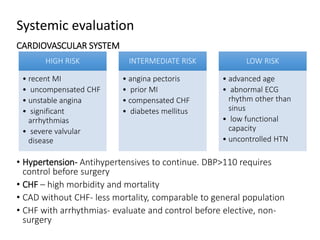
CARDIOVASCULAR SYSTEM
• Hypertension- Antihypertensives to continue. DBP>110 requires
control before surgery
• CHF – high morbidity and mortality
• CAD without CHF- less mortality, comparable to general population
• CHF with arrhythmias- evaluate and control before elective, non-
surgery
HIGH RISK
• recent MI
• uncompensated CHF
• unstable angina
• significant
arrhythmias
• severe valvular
disease
INTERMEDIATE RISK
• angina pectoris
• prior MI
• compensated CHF
• diabetes mellitus
LOW RISK
• advanced age
• abnormal ECG
rhythm other than
sinus
• low functional
capacity
• uncontrolled HTN
Systemic evaluation
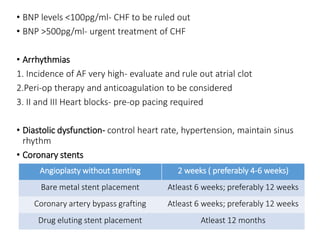
• BNP levels <100pg/ml- CHF to be ruled out
• BNP >500pg/ml- urgent treatment of CHF
• Arrhythmias
1. Incidence of AF very high- evaluate and rule out atrial clot
2.Peri-op therapy and anticoagulation to be considered
3. II and III Heart blocks- pre-op pacing required
• Diastolic dysfunction- control heart rate, hypertension, maintain sinus
rhythm
• Coronary stents
Angioplasty without stenting 2 weeks ( preferably 4-6 weeks)
Bare metal stent placement Atleast 6 weeks; preferably 12 weeks
Coronary artery bypass grafting Atleast 6 weeks; preferably 12 weeks
Drug eluting stent placement Atleast 12 months
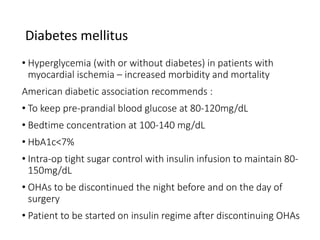
Diabetes mellitus
• Hyperglycemia (with or without diabetes) in patients with
myocardial ischemia – increased morbidity and mortality
American diabetic association recommends :
• To keep pre-prandial blood glucose at 80-120mg/dL
• Bedtime concentration at 100-140 mg/dL
• HbA1c<7%
• Intra-op tight sugar control with insulin infusion to maintain 80-
150mg/dL
• OHAs to be discontinued the night before and on the day of
surgery
• Patient to be started on insulin regime after discontinuing OHAs
Pulmonary disease
• Peri-op opioid dose for elderly much less than younger patients
• Short and intermediate acting neuromuscular blocking agents preferred
and antagonists to reverse routinely used
• Steps to avoid post-op pulmonary complications (PPCs)
i. Adequate analgesia
ii. Early mobilization
iii. Supplemental O2 for at least 12hrs post-op as indicated by pulse
oximetry
• Active COPD or bronchial asthma – vigorous pre-op management and
optimization prior to surgery
• Smokers- hyperactive airway, bronchospasm, atelectasis, increased
cardiopulmonary complications.
• Long period of abstinence (8-10wks) reduce peri-op complications
Most common surgeries in elderly
population
• TURP
• Cataract surgeries
• Hernia repair
• Fracture stabilization
• Oncosurgeries
• THR and TKR
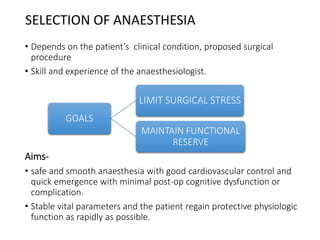
SELECTION OF ANAESTHESIA
• Depends on the patient’s clinical condition, proposed surgical
procedure
• Skill and experience of the anaesthesiologist.
Aims-
• safe and smooth anaesthesia with good cardiovascular control and
quick emergence with minimal post-op cognitive dysfunction or
complication.
• Stable vital parameters and the patient regain protective physiologic
function as rapidly as possible.
GOALS
LIMIT SURGICAL STRESS
MAINTAIN FUNCTIONAL
RESERVE
REGIONAL ANAESTHESIA
• Local infiltration and nerve blocks preferred if patient is cooperative
• Lower subarachnoid block for lower abdominal and perineal
surgeries
Advantages
• Lower incidence of PDPH due to closure of intervertebral foramina,
which inhibit the leakage of CSF.
• Decreased stress response to surgical stimulation and blood loss
• Decreased incidence of thromboembolism
• Good post operative analgesia, early ambulation and discharge
• Ensures better recognition of ischaemic attack and better
assessment of mental status.
• Less risk of aspiration
Disadvantages
• Difficulty in controlling the level of block
• Increased sensitivity to local anaesthetic
• Limited power of adaptation to vasomotor changes. Wide
fluctuation in hemodynamic status.
• Difficulty in technique due to calcified ligaments and ankylosis
of joints.
• Increased incidence of persistent numbness, nerve palsies,
neuralgia
GENERAL ANAESTHESIA
MONITORING
Basic monitors- Pulse oximetry, NIBP, ECG, ETCO2, urine output
monitoring, temperature monitoring
Major procedures- CVP, IABP, TEE, ABG analysis
PREOXYGENATION
• Elderly are more prone to cardiac mishaps from desaturation
• Maximum oxygenation in shortest time – 8 deep breaths of 100%
oxygen within 60s with oxygen flow of10L/min
PREMEDICATION
• Anticholinergic- Inj. Glycopyrrolate – antisialogogue
• Anxiolytics- drugs with minimal and short lived sedative effects must
be used. Short actings BZDs with dose titration.
• Aspiration prophylaxis, preferably RSI to be followed for all patients
Hypertensive response to intubation should be obtunded especially in
hypertensive patients with
• Lidocaine 1.5mg/kg
• Esmolol 0.3mg/kg IV.
• Alfentanil 5µgm/kg IV.
INDUCTION
• Commonly used- Propofol, thiopentone (5-7mg/kg), etomidate (0.3mg/kg)
• Graded induction practised
• Peak effects of drugs administered is delayed: midazolam- 5min, fentanyl-
6-8min, propofol- 10min
• Drug dose calculated according to LBW; Propofol 1-1.5mg/kg, and 0.5-
1mg/kg if opioids supplemented.
• Slow onset of anaesthesia due to sluggish circulation.
• Dose titration- delayed elimination due to retarded metabolism
After induction controlled ventilation with muscle relaxants, N20,
O2, adequate analgesia
• Cuffed tube in patient – to avoid aspiration
• Short or intermediate acting NMBs, dose calculated according
to LBW
• Atracurium and Cisatracurium are more preferred over
Vecuronium and Rocuronium
•  Level of plasma cholinesterase - prolong the effect of Sch.
• Vecuronium dose reduced by 30%. Atracurium dose not
affected.
Maintenance of Anaesthesia
• Two fold prolongation in onset of NM block in elderly patients
due decreased cardiac output, slow muscle blood flow.
• Monitoring depth of neuromuscular blockade is useful
• Inhalational agents- MAC of all inhalational agents reduced by 4-
5% per decade after 40yrs of age
• Sevoflurane and desflurane excreted unchanged by lungs
• It is better to maintain sub MAC concentrations of potent
inhalationals with b-blockers to control hypertension rather
than use supra MAC
• Combined epidural and GA reduce MAC by as much as 50%
Delayed recovery from anaesthesia
• Prolonged action of anaesthetic drugs, sedative,
• Narcotics, muscle relaxant.
• Hypoxia or carbon dioxide retention
• Hypothermia
• Diabetic ketoacidosis or hypoglycemia
• Anaemia or myxoedema
• Intra operative hypotension.
• Cerebral hypoxia.
Extubation criteria
1. Adequate oxygenation SpO2>92; PaO2 >60
2. Adequate ventilation TV>5ml/kg, RR> 7bpm, ETCO2<50,
PaCO2<60
3. Hemodynamically stable
4. Full reversal; TOF>0.9, sustained 5s hand grasp
5. Neurologically intact – follows commands, intact cough
reflex
6. ABG- pH>7.25
7. Normal S. Electrolyte, normovolemic, normothermic
8. Other factors- aspiration risk, airway edema
POST-OP SHIVERING
Increases oxygen consumption by 300 % and metabolic rate by 20-38%.
Causes
• Intraoperative hypothermia.
• Adrenal suppression .
• Decreased sympathetic activity.
Prevention
• Warm IV Fluids
• Heating blankets, Warmed water mattresses ,
• Forced air warming.
• Drug - clonidine, opiates, magnesium sulfate, naloxone, ketaserine.
POSTOPERATIVE COMPLICATIONS
Post op cardiovascular
complication
• Myocardial infarction
• Congestive heart failure
• Cardiac arrest
• Arrhythmias
• Hypotension
Post op respiratory
complication
• Ventilatory depression
• Hypoxemia
• Carbon dioxide retention
• Aspiration
• Pneumonia
• Atelectasis.
CNS related complications
Post-op delirium
• Typically presents after 24-72 hrs post operatively
• Prevention- controlling intraoperative use of sedation and adequate
post-op pain relief.
Post-op cognitive dysfunction- post-op memory or thinking
impairment that has been corroborated by neuropsychological
testing.
• multifactorial in origin
• Incidence - fairly equal in regional and general anaesthesia. Avoided
by maintaining adequate oxygenation and stable hemodynamic
status intra-op and judicious titration of anaesthetics.
• POCD may last upto 5-6 months from surgery.
POST OP ANALGESIA
Adequate post-op analgesia
• Reduces incidence of cardiorespiratory complication.
• Reduces thromboembolic complications.
• Reduces duration of hospital stay.
Commonly used are
• NSAID
• Opioid
• Patient controlled analgesia
• Epidural opioids, Nerve blocks
CONCLUSION
• Ageing is multifactorial process resulting in decreased
capacity for adaptation and producing a gradual decrease in
functional reserve. A good understanding of the physiological
changes that occurs in these patients , pharmacokinetics and
pharmacodynamic help in planning of an optimal anaesthetic
technique for each elderly patient.
• The effects of ageing on the body are numerous, but the
most important point is to differentiate physiological from
pathological and attain prompt optimization prior to surgery.
• To attain best possible outcome in geriatrics is to have a
multidisciplinary approach with involvement of the surgeons,
physicians, cardiologists and anaesthesiologists to anticipate,
identify and treat the patient accordingly.
REFERENCES
• Anaesthesia – Ronald D .Miller, 5th edition.
• Clinical Anaesthesiology – G. Edward Morgan, 4th edition.
• Geriatric Anaesthesia – Anaesthesiology Clinics of North
America, September 2009. Anesthesiology Clin 27 (2009) 417-
532 doi:10.1016/j.anclin.2009.07
• Anaesthesia and Co-Existing Disease, 2nd SAE.
• SAARC J. Anaesth. 2008; 1 (1): 39-49
• Anaesthesiology Clin N Am 22 (2004) 45-58
doi:10.1016/S0889-8537(03)00119-6

Anaesthesia in Geriatrics

  • 1.
    ANAESTHESIA IN GERIATRICS Dr. KSHAMABALAKRISHNA POST GRADUATE Dr. SHILPASHRI A. M. ASSOCIATE PROFESSOR
  • 2.
    INTRODUCTION •Gerontology is thebroadest term applied to studies of aging •"Geriatrics” - medical subspecialty that focuses upon care of the elderly patients How does geriatrics represent a new opportunity in Anaesthesiology? •Advancement in technology and health care •Chronological age is not a limitation for surgery
  • 3.
    DEFINITION •Ageing is aprogressive physiological process that is characterised by degenerative changes in both structure and function of organ and tissues with consequent loss of functional reserve of various systems, more importantly with a decrease in ability to respond to stress and overcome complication. •Successful ageing -“low probability of disease and disease-related disability, high cognitive and physical functional capacity, and active engagement with life”.
  • 4.
  • 5.
    OBJECTIVES •To understand impactof physiology of ageing in anaesthetic care •Optimized care can be given to the elderly- balancing patient satisfaction and efficiency •Research opportunities for better geriatric care •To address palliative care
  • 6.
    GENETIC FACTORS • Damage toDNA and sub cellular components • Altered mitochondrial ATP production and ROS ENVIRON MENT • Smoking • Alcohol • Stress • Dietary habits • Lifestyle AGEING CO- MORBIDI TY • HTN • DM • COPD • IHD, VHD • Polypharmacy • Decline in functional reserve • Quick occurrence of functional disability • Slower healing process
  • 8.
    • The differencebetween maximal activity and basal level of function – Organ system functional reserve • Physiologically Young – Elderly patients who maintain greater than average functional capacities. • Physiologically Old– Elderly patients whose organ function declines at an earlier age than usual or at a more rapid rate. FUNCTIONAL RESERVE
  • 9.
    Chronological age andphysiological age are different. Physiological age is determined by disease process that might accelerate the aging process.
  • 10.
    CARDIOVASCULAR SYSTEM Modest decreasein resting cardiac index in elderly, attributable to lower metabolic requirements with age related atrophy of muscle and loss of lean tissue mass. 1. Exercise tolerance - maximum attainable HR, SV and CO are typically reduced 1 MET self-care, walking around the house 4 METs household chores, climbing stairs or walking up a hill 4-10 METs brisk walking, running short distances, heavy household work, engaging in sports such as golf, softball or dancing >10 METs swimming, football, basketball, skiing
  • 11.
    2. Decreased cardiacoutput (by 1% per year) and stroke volume • Unable to increase CO by increasing HR- due to “hyposympathetic state” • SV mostly dependent on venous return 3. Decreased beta adrenergic receptor responsiveness •Reduced response to stimulation at cardiac and end organ level •Decreased heart rate, reduced SAN function •Decreased baroreceptor sensitivity 4. Conduction abnormality, sick sinus syndrome
  • 12.
    5. Diastolic Dysfunction-physiologic or preclinical state in which abnormal relaxation and LV stiffness is compensated by LA pressure to maintain LV preload. • Structural changes • Stiffer and less complaint ventricles • Loss of ‘atrial kick’ 6. Age related arteriosclerosis – chronic elevated afterload, LVH 7. Increased activity of sympathetic nervous system • Increase in the amount of norepinephrine release. • Increase in SVR (0.5% increase/yr). • Slightly increased Alpha receptor response. 8. Decreased response to atropine
  • 13.
    Anaesthetic implications 1. Neuraxialblockade • Greater degree of stability over GA . • Eliminates surgical stimulation induced increased sympathetic tone • Can cause severe hypotension when compared to GA • Hypotension- fluid resuscitation and α agonist (in place of α/ β agonist) - restores BP and CO to basal levels • α agonist- drug of choice- Metaraminol.
  • 14.
    2. General Anaesthesia •Diminished cardiac reserve- exaggerated fall in BP during induction. • β blockers promotes hemodynamic stability particularly at the time of intubation. • Anticholinergic mixed with α /β agonist are indicated in bradycardia compromising cardiac output. Anaesthetic implications
  • 15.
    RESPIRATORY SYSTEM Chest wallcompliance, the elastic recoil of the lungs and respiratory muscle strength all decrease. 1. Structural changes • Upper airway-  protective reflexes,  mucociliary function • Lungs -  tissue elasticity and cross-linking, loss of recoiling effect of lung. -Loss of alveolar septa-  diffusing capacity , physiological dead space. - interstitial connective tissue causes duct ectasia- anatomical dead space. • Stiff chest wall- work of breathing, shortness of breath
  • 16.
    2. Ventilatory mechanics •Lungs - emphysematous and complaint • RV of lung increases at the expense of IRV and ERV- causing VC is significantly compromised • Mismatch between stiff chest wall and respiratory muscle weakness- After 60yrs, FVC  by 14- 30ml/yr and FEV1  by 23-32ml/yr . FRC increases (Closing capacity reaches FRC in upright position at 66 yrs and supine position at 44yrs) •  Air trapping due to loss of elastic forces- closing capacity , RV
  • 17.
    3. Control ofventilation and Gas exchange • Ventilatory response to hypercapnia  by 40% and hypoxia  by 50%- declining chemoreceptor function • Respiratory drive  • Misdistribution of ventilation- • V/Q mismatch- dead space V>Q Pulmonary venous admixture- Q> V • PAO2 and PaO2  with age PAO2 = (100- age/4) mm of Hg Mean arterial oxygen tension at room air reduces from 95mm of Hg at 20 years to 70mm of Hg at 80 years. • More prone to sleep apnoea
  • 18.
    • Difficult maskventilation- loss of facial contour, buccal fat, dentition • Cervical arthritis- restrict neck movements, more prone to vertebra-basilar artery insufficiency • Distorted alveoli impairs gas exchange- blood O2 content falls by 10-15% while CO2 levels remain unchanged • Less complaint chest wall- greater risk of peri-op hypoxemia • ABG- more reliable in assessing respiratory functions Anaesthetic implications
  • 19.
    Anaesthetic implications • Premedication-increases risk of aspiration • Aspiration prophylaxis- sodium citrate, cimetidine, metoclopramide • V/Q scan for elderly patients undergoing pulmonary surgery • Increase in MV to achieve normal PaCO2 due to gas exchange abnormality , which is more in recumbent position and in respiratory disease. • Early respiratory mobilization and sitting position in post operative period improves respiratory mechanics and oxygenation.
  • 20.
    NERVOUS SYSTEM 1. Brainanatomy • Neuronal shrinkage and loss. •  production of neurotransmitters- noradrenaline, serotonin, acetylcholine and dopamine • Grey matter – atrophy; (grey>white), brain weight reduces 2-3g per year after 60 years. Hemispheric volume reduces by 2% -3.5% per decade after the age of 20. • Enlarged ventricles,  CSF, sulcal widening and space between surface of brain and skull. • Function- decline in cognition, motor, sensory and behavioural function. Decrease in memory, vision, hearing and vibratory sense in lower extremity is common.
  • 21.
    2. Cerebral circulation •Cerebral autoregulation and CO2 responsiveness –well preserved. •  mass-specific (ml/100g/min) global and regional blood flow. Progressive  total (ml/min) hemispheric blood flow. 3. Neurophysiology-  neuronal activity,  brain-spinal cord neurotransmitter activity. Decreased plasticity, impaired recovery from neuronal injury 4. Autonomic system-  sympathetic and  parasympathetic flow. Common problems- hypothermia, heat stroke, orthostatic hypotension, syncope 5. Common pathologies- cerebral atherosclerosis, Parkinson’s disease, Alzheimer’s disease, delirium, depression, dementia
  • 22.
    Anaesthetic implications • Increasedpain threshold and potency of inhalational agents . • Increased sensitivity to anaesthetic drugs • Decrease in anaesthetic requirement • Delayed recovery from anaesthesia • Incidence of post-op delirium and in 15-50% POCD (post-op cognitive dysfunction) • Decreased requirement of LA for spinal and epidural anaesthesia • Tracheal Extubation only when wide awake.
  • 23.
    Neuromuscular Junction • Declinein number and density of motor neuron/endplate units • Thickening of muscle motor endplate and loss neurotropic support • Increase in the number and variety of cholinergic receptors at the endplate and surrounding areas offsets the age related decline in the number of motor endplates • Hence, despite loss of skeletal muscle mass, dose requirements of NM blocking drugs are not reduced.
  • 24.
    Thermoregulation • Elderly- Frailconstitution, reduced metabolic rate, reduced subcutaneous fat • Delayed and less vigorous compensatory mechanisms- cutaneous vasoconstriction, shivering etc. Effects of hypothermia • CNS depression, depression of ventilator drive - postop somnolence and hypoxia • Prolonged drug action • Accelerates protein catabolism
  • 25.
    • Vigorous compensatorymechanisms for hypothermia- increases oxygen demand beyond respiratory and cardiac capacity of the patient. Hence, can precipitate myocardial ischemia. • Hampers wound healing and surgical recovery, impairs coagulation, immune dysfunction. • Leftward shift of ODC Prevention • Use of blankets • Warm solutions, fluid warmers • Regulating theatre temperature accordingly
  • 26.
    RENAL SYSTEM • Renaltissue atrophy – decrease of glomeruli and nephrons by 40% • RBF; GFR (45% by 80yrs) ;  Creatinine clearance – decline of 0.75ml/min/yr • Maintain urine output >0.5ml/kg/hr – 1/5th of total post- op death due to post-op ARF • Decline in active tubular secretion and reabsorption of drugs • Elimination half-life of anaesthetic drugs prolonged in elderly • Estimation of Cr. Clearance- Cockroft & Gault formula to assess excretion of drug (140-age in yrs)* (wt in kg) ----------------------------------- 72* S. Cr (mg/dL)
  • 27.
    Fluid and electrolytedisturbances •  Response to ADH,  absorption of filtered glucose •  Na+ and water homeostasis, functional hypoaldosteronism- impaired Na+ conservation and  K+ excretion • Response to fluid loading and dehydration impaired. • Loss of water of >2kg is significant • In water depletion, rapid replacement might result in cerebral edema. Hence, half deficit infused over 24hrs and rest half over next 24-48hrs • Volume overload can occur due to functional impairment of diluting segment of nephrons • Decreased acid excretion.
  • 28.
    HEPATOBILIARY SYSTEM • Hepatic tissue- 40-50% of total hepatic tissue involute by the age of 80. •  Hepatic blood flow ( falls by 1% per yr to about 40% beyond 60yrs) •  Hepatic microsomal function (quantitative, quality of hepatocellular enzymatic function retained) •  Pseudocholinesterase level •  Ability to handle a glucose load –insulin resistance or impairment of insulin function. • Quantitative loss of hepatic tissue affects clearance of anaesthetic drugs. • Further prolongation of action of anaesthetic drugs if primary or secondary metabolite take the renal route for elimination.
  • 29.
    BLOOD • Normal erythrocyte,platelet, and leukocyte indices • Decline in erythropoietin functional reserve- reduced bone marrow volume and mass and volume of spleen. • Normal coagulation and haemostasis • Predisposition to infection (streptococcal pneumonia, meningitis, septicaemia) and autoimmune phenomena.
  • 30.
    STATURE AND BODYHABITUS • Loss of skeletal mass (lean body mass) • Percentage of body fat  • Osteoporosis- microarchitectural deterioration of bone and decreased bone density • Osteoarthritis- knees, hips, cervical and lumbosacral spine. Cervical osteoarthritis may interfere with visualization of glottic opening. • Progressive reduction in height- gradual increasing kyphosis secondary to vertebral compression fractures
  • 31.
    BODY COMPOSITION • Lossof lean body mass • Accelerated loss of subcutaneous and intramuscular fat, although percentage of fat compared to LBW is increased • Loss of vital organ-lean tissue mass (liver, spleen) • Decreased intracellular water- more prone to dehydration • Blood volume is maintained
  • 32.
    Geriatric syndromes • Osteoporosis •Osteoarthritis • Alzheimer’s Disease • Parkinson’s Disease • Dementia • Constipation • Delirium • Insomnia • Decubitus Ulcer Geriatric Disorders
  • 33.
    PHARMACOKINETICS AND PHARMACODYNAMICS Pharmacokinetics: Therelationship between drug dose and plasma concentration. It deals with what body does to the drug and it includes drug absorption, tissue distribution, metabolism and elimination. Pharmacodynamics: The relationship between concentration and clinical effect. It explains what a drug does to the body. T½ of any drug depends on two factors. Vd = volume of distribution CI = clearance T½ = (0.693 x Vd)/CI
  • 35.
    Pharmacokinetics Plasma concentration andVd of a drug are inversely related. • Decline in TBW – smaller Vd for hydrophilic drugs, plasma concentration • With age percentage of total body fat  Lipophilic drugs, Vd  ; accumulation, prolongation of drug effects • Impaired hepatic metabolism and renal elimination-  clearance • Increase in the arm-brain circulatory time
  • 36.
    • Most inductionagents (hydrophilic ) are distributed in a smaller initial compartment, resulting in increased exposure of receptors and potentially augmented impact. • Drug- binding proteins- albumin  , alpha-1 glycoprotein  with age. • Qualitative changes in these proteins alters drug-binding and result in  free fraction in circulation, which affects clearance, Vd and apparent potency. Pharmacokinetics
  • 37.
    Pharmacodynamics • Physiological state- cardiac output in elderly Prolongs circulation time to drug effect when drug given IV • Polypharmacy - risk of drug interactions Factors predisposing elderly patients to adverse drug events • Multiple comorbidities • Polypharmacy • Drug-drug interactions • Age related reduction in metabolism and elimination • Increased sensitivity of CNS to side effects of the medications
  • 39.
    BEERS CRITERIA INAPPRORIATE/ ALWAYS AVOID Flurazepam  Pentazocine  Meperdine RISKY- avoid if possible  Long acting BZD- Diazepam  Limit doses of intermediate acting BZD- Lorazepam INEFFECTIVE or a better alternative exists  Diphenhydramine  Chlorphenaramine  Ketorolac  Clopidogrel
  • 40.
    Pre-op Assessment andPreparation Pre-operative evaluation aims at • Pre op optimization • Prediction of complication • Application of risk reduction strategies RISK FACTORS FOR POST-OP MORTALITY IN ELDERLY SURGICAL PATIENTS ASA physical status III or IV Surgical procedure Major and/or emergency Coexisting disease Cardiac, pulmonary, DM, liver, renal dysfunction Functional status 1-4 METs Nutritional status Poor, albumin <35%, anaemia Place of residence Alone Ambulatory patients Confined to bed
  • 41.
    Evaluate • Pre-existing comorbidities Evaluate • Nutritionalstatus • Mental status Assess • Functional reserve of organ systems
  • 42.
    CONSENT • Patient, familymembers or legal guardian should be explained about the surgical intervention and possibilities of likely complications. • Decisional capacity- prerequisite for providing legally or morally sufficient informed consent. • Elderly may not be fully aware of the gravity of the intervention, hence a family member must be explained the possible outcomes in detail. • The patient’s mental acuity, cognitive status must be considered and documented
  • 43.
    History and Nutritionalstatus • History of current illness • Complete medical and surgical history • Details of regular medications • CBC- anaemia, S. albumin <3.2g/dL, S. Cholesterol <160mg/dL – shown to be risk markers for adverse post-op outcome • Assess hydration, nutrition • Vitals – pulse rate, BP • Systemic examination • Stature ; kyphosis, sclerosed spine • Air way examination- loss of buccal fat, edentulous, dentures • Mental status- Preop dementia is a predictor of poor surgical outcome Physical examination
  • 44.
    Preoperative investigations • CBC •RFT, serum electrolytes • Blood glucose, cholesterol • LFT, albumin levels and coagulation profile • ECG- for all patients >60yrs • Chest X-ray, PFT in COPD patients • Cardiology reference must be invariably sought and subsequent echocardiography is required.
  • 45.
    CARDIOVASCULAR SYSTEM • Hypertension-Antihypertensives to continue. DBP>110 requires control before surgery • CHF – high morbidity and mortality • CAD without CHF- less mortality, comparable to general population • CHF with arrhythmias- evaluate and control before elective, non- surgery HIGH RISK • recent MI • uncompensated CHF • unstable angina • significant arrhythmias • severe valvular disease INTERMEDIATE RISK • angina pectoris • prior MI • compensated CHF • diabetes mellitus LOW RISK • advanced age • abnormal ECG rhythm other than sinus • low functional capacity • uncontrolled HTN Systemic evaluation
  • 46.
    • BNP levels<100pg/ml- CHF to be ruled out • BNP >500pg/ml- urgent treatment of CHF • Arrhythmias 1. Incidence of AF very high- evaluate and rule out atrial clot 2.Peri-op therapy and anticoagulation to be considered 3. II and III Heart blocks- pre-op pacing required • Diastolic dysfunction- control heart rate, hypertension, maintain sinus rhythm • Coronary stents Angioplasty without stenting 2 weeks ( preferably 4-6 weeks) Bare metal stent placement Atleast 6 weeks; preferably 12 weeks Coronary artery bypass grafting Atleast 6 weeks; preferably 12 weeks Drug eluting stent placement Atleast 12 months
  • 47.
    Diabetes mellitus • Hyperglycemia(with or without diabetes) in patients with myocardial ischemia – increased morbidity and mortality American diabetic association recommends : • To keep pre-prandial blood glucose at 80-120mg/dL • Bedtime concentration at 100-140 mg/dL • HbA1c<7% • Intra-op tight sugar control with insulin infusion to maintain 80- 150mg/dL • OHAs to be discontinued the night before and on the day of surgery • Patient to be started on insulin regime after discontinuing OHAs
  • 48.
    Pulmonary disease • Peri-opopioid dose for elderly much less than younger patients • Short and intermediate acting neuromuscular blocking agents preferred and antagonists to reverse routinely used • Steps to avoid post-op pulmonary complications (PPCs) i. Adequate analgesia ii. Early mobilization iii. Supplemental O2 for at least 12hrs post-op as indicated by pulse oximetry • Active COPD or bronchial asthma – vigorous pre-op management and optimization prior to surgery • Smokers- hyperactive airway, bronchospasm, atelectasis, increased cardiopulmonary complications. • Long period of abstinence (8-10wks) reduce peri-op complications
  • 49.
    Most common surgeriesin elderly population • TURP • Cataract surgeries • Hernia repair • Fracture stabilization • Oncosurgeries • THR and TKR
  • 50.
    SELECTION OF ANAESTHESIA •Depends on the patient’s clinical condition, proposed surgical procedure • Skill and experience of the anaesthesiologist. Aims- • safe and smooth anaesthesia with good cardiovascular control and quick emergence with minimal post-op cognitive dysfunction or complication. • Stable vital parameters and the patient regain protective physiologic function as rapidly as possible. GOALS LIMIT SURGICAL STRESS MAINTAIN FUNCTIONAL RESERVE
  • 51.
    REGIONAL ANAESTHESIA • Localinfiltration and nerve blocks preferred if patient is cooperative • Lower subarachnoid block for lower abdominal and perineal surgeries Advantages • Lower incidence of PDPH due to closure of intervertebral foramina, which inhibit the leakage of CSF. • Decreased stress response to surgical stimulation and blood loss • Decreased incidence of thromboembolism • Good post operative analgesia, early ambulation and discharge • Ensures better recognition of ischaemic attack and better assessment of mental status. • Less risk of aspiration
  • 52.
    Disadvantages • Difficulty incontrolling the level of block • Increased sensitivity to local anaesthetic • Limited power of adaptation to vasomotor changes. Wide fluctuation in hemodynamic status. • Difficulty in technique due to calcified ligaments and ankylosis of joints. • Increased incidence of persistent numbness, nerve palsies, neuralgia
  • 53.
    GENERAL ANAESTHESIA MONITORING Basic monitors-Pulse oximetry, NIBP, ECG, ETCO2, urine output monitoring, temperature monitoring Major procedures- CVP, IABP, TEE, ABG analysis PREOXYGENATION • Elderly are more prone to cardiac mishaps from desaturation • Maximum oxygenation in shortest time – 8 deep breaths of 100% oxygen within 60s with oxygen flow of10L/min PREMEDICATION • Anticholinergic- Inj. Glycopyrrolate – antisialogogue • Anxiolytics- drugs with minimal and short lived sedative effects must be used. Short actings BZDs with dose titration. • Aspiration prophylaxis, preferably RSI to be followed for all patients
  • 54.
    Hypertensive response tointubation should be obtunded especially in hypertensive patients with • Lidocaine 1.5mg/kg • Esmolol 0.3mg/kg IV. • Alfentanil 5µgm/kg IV. INDUCTION • Commonly used- Propofol, thiopentone (5-7mg/kg), etomidate (0.3mg/kg) • Graded induction practised • Peak effects of drugs administered is delayed: midazolam- 5min, fentanyl- 6-8min, propofol- 10min • Drug dose calculated according to LBW; Propofol 1-1.5mg/kg, and 0.5- 1mg/kg if opioids supplemented. • Slow onset of anaesthesia due to sluggish circulation. • Dose titration- delayed elimination due to retarded metabolism
  • 55.
    After induction controlledventilation with muscle relaxants, N20, O2, adequate analgesia • Cuffed tube in patient – to avoid aspiration • Short or intermediate acting NMBs, dose calculated according to LBW • Atracurium and Cisatracurium are more preferred over Vecuronium and Rocuronium •  Level of plasma cholinesterase - prolong the effect of Sch. • Vecuronium dose reduced by 30%. Atracurium dose not affected. Maintenance of Anaesthesia
  • 56.
    Maintenance of Anaesthesia •Two fold prolongation in onset of NM block in elderly patients due decreased cardiac output, slow muscle blood flow. • Monitoring depth of neuromuscular blockade is useful • Inhalational agents- MAC of all inhalational agents reduced by 4- 5% per decade after 40yrs of age • Sevoflurane and desflurane excreted unchanged by lungs • It is better to maintain sub MAC concentrations of potent inhalationals with b-blockers to control hypertension rather than use supra MAC • Combined epidural and GA reduce MAC by as much as 50%
  • 57.
    Delayed recovery fromanaesthesia • Prolonged action of anaesthetic drugs, sedative, • Narcotics, muscle relaxant. • Hypoxia or carbon dioxide retention • Hypothermia • Diabetic ketoacidosis or hypoglycemia • Anaemia or myxoedema • Intra operative hypotension. • Cerebral hypoxia.
  • 58.
    Extubation criteria 1. Adequateoxygenation SpO2>92; PaO2 >60 2. Adequate ventilation TV>5ml/kg, RR> 7bpm, ETCO2<50, PaCO2<60 3. Hemodynamically stable 4. Full reversal; TOF>0.9, sustained 5s hand grasp 5. Neurologically intact – follows commands, intact cough reflex 6. ABG- pH>7.25 7. Normal S. Electrolyte, normovolemic, normothermic 8. Other factors- aspiration risk, airway edema
  • 59.
    POST-OP SHIVERING Increases oxygenconsumption by 300 % and metabolic rate by 20-38%. Causes • Intraoperative hypothermia. • Adrenal suppression . • Decreased sympathetic activity. Prevention • Warm IV Fluids • Heating blankets, Warmed water mattresses , • Forced air warming. • Drug - clonidine, opiates, magnesium sulfate, naloxone, ketaserine.
  • 60.
    POSTOPERATIVE COMPLICATIONS Post opcardiovascular complication • Myocardial infarction • Congestive heart failure • Cardiac arrest • Arrhythmias • Hypotension Post op respiratory complication • Ventilatory depression • Hypoxemia • Carbon dioxide retention • Aspiration • Pneumonia • Atelectasis.
  • 61.
    CNS related complications Post-opdelirium • Typically presents after 24-72 hrs post operatively • Prevention- controlling intraoperative use of sedation and adequate post-op pain relief. Post-op cognitive dysfunction- post-op memory or thinking impairment that has been corroborated by neuropsychological testing. • multifactorial in origin • Incidence - fairly equal in regional and general anaesthesia. Avoided by maintaining adequate oxygenation and stable hemodynamic status intra-op and judicious titration of anaesthetics. • POCD may last upto 5-6 months from surgery.
  • 62.
    POST OP ANALGESIA Adequatepost-op analgesia • Reduces incidence of cardiorespiratory complication. • Reduces thromboembolic complications. • Reduces duration of hospital stay. Commonly used are • NSAID • Opioid • Patient controlled analgesia • Epidural opioids, Nerve blocks
  • 63.
    CONCLUSION • Ageing ismultifactorial process resulting in decreased capacity for adaptation and producing a gradual decrease in functional reserve. A good understanding of the physiological changes that occurs in these patients , pharmacokinetics and pharmacodynamic help in planning of an optimal anaesthetic technique for each elderly patient. • The effects of ageing on the body are numerous, but the most important point is to differentiate physiological from pathological and attain prompt optimization prior to surgery. • To attain best possible outcome in geriatrics is to have a multidisciplinary approach with involvement of the surgeons, physicians, cardiologists and anaesthesiologists to anticipate, identify and treat the patient accordingly.
  • 64.
    REFERENCES • Anaesthesia –Ronald D .Miller, 5th edition. • Clinical Anaesthesiology – G. Edward Morgan, 4th edition. • Geriatric Anaesthesia – Anaesthesiology Clinics of North America, September 2009. Anesthesiology Clin 27 (2009) 417- 532 doi:10.1016/j.anclin.2009.07 • Anaesthesia and Co-Existing Disease, 2nd SAE. • SAARC J. Anaesth. 2008; 1 (1): 39-49 • Anaesthesiology Clin N Am 22 (2004) 45-58 doi:10.1016/S0889-8537(03)00119-6

Editor's Notes

  • #3  More surgical procedures are being performed upon increasingly larger and older population – this is the new opportunity in Anaesthesiology
  • #4 Increase in life expectancy reflects the progress in health care and public health interventions. Median age of the world’s population is increasing with decline in fertility and increase in average life span. In the United States, elderly population (>65 years) is predicted to increase from 47 million in 2010 to 80 million by 2030.
  • #5 Since aging is a continuous process, determination of the age at which one is considered elderly is also arbitrary. For administrative and epidemiological purposes, people aged above 65 years are considered elderly or belonging to the geriatric group.
  • #7 FACTORS AFFECTING AGING PROCESS
  • #11 Exercise tolerance – maximum attainable heart rate, stroke volume and cardiac output are typically reduced. Although myocardial contractility remains at baseline levels at rest, but rises to a lesser extent when stressed. Assessment of exercise tolerance involves calculation of energy requirements for different activities in terms of metabolic equivalents or METs
  • #12 Decreased CO responsible for delayed absorption, onset of action and elimination of drugs. SV – intrinsically dependent on preload VR, extrinsically on sympathetic innervation of heart ( reduced with age) Therefore adequate preload to maintain CO and BP Fibrosis and loss of muscle mass of left atrium and conditions (eg- mitral stenosis, arterial hypertension) leading to atrial stretch and sclerosis from ischemic events trigger conduction disturbances and facilitate re-entry phenomena Pathophysiology of AF on CVS- loss of synchronous atrial mechanical activity, irregular ventricular response, rapid heart rate, impaired coronary perfusion, increased risk of embolism (principally CVA). Evidence of conduction abnormalities- prolonged PR interval, to some extent increased QRS and QT interval. Decreased in QRS and T wave amplitude. Progressive LAD, heart blocks. Attrition of pacemaker cells in SAN causing bradycardia.
  • #13 Diastolic dysfunction structural level- decrease in myocyte number, increase in myocyte size and increase in amount of connective tissue matrix,collagen and interstitial fibrosis-stiffer and less compliant ventricle affecting diastolic relaxation as well as systolic contraction. Stiffening of myocardium hinders the isovolumetric relaxation phase of diastole-maximum LV filling occurs. Elevated LA pressures to fill the LV, leads to enlargement and dilatation making the myocardium arrhythmogenic. age related arteriosclerosis leads to LVH , increased SBP and prolongs systolic contraction time, in turn, impinges on early diastole. Stiffening leads to decreased aortic distensibility and increased pulse velocity. This leads to higher systolic pressure and less stored energy for forward flow causing lower diastolic pressure, therefore increasing pulse pressure. Conduction abnormality
  • #14 Elderly exhibits greater variability of blood pressure and degree of hypotension under anaesthesia. Sympathetic tone changes distribution of blood volume by Changing venoconstriction Arterial constriction.
  • #16 Respiratory complication post operatively accounts for 40% of peri operative deaths over 65 years of age Protective reflexes- coughing, swallowing diminished- repeated “microaspirations” leads to chronic pulm inflammation & increasing risk of LRTI. Lungs-- Age-related loss of tissue elasticity - increased proteolysis of elastin and decreased cross-linking, causing progressive loss of recoiling effect of lung- lungs become more complaint and patency of small airways are impaired. Loss of alveolar septa causes merging of small alveoli into larger ones decreasing surface area for gas exchange Increased interstitial connective tissue causes duct ectasia (dilated respiratory bronchioles and alveolar ducts) Chest wall Stiffness due to costochondral calcification and osteoarthritic changes of the vertebral joints Respiratory muscle weakness this leads to increased work of breathing, shortness of breath during daily activities
  • #17  Ventilatory mechanics As the lung becomes more emphysematous and complaint, vital capacity (VC) is significantly compromised Increased air trapping due to loss of elastic forces- increasing closing capacity and residual volume Closing capacity reaches FRC in upright position at 66 yrs and supine position at 44yrs. Environmental factors- smoking, agricultural dust and industrial toxins cause additional insult.
  • #18 chemoreceptor func- Decreased CNS activity. Decreased neuronal output to respiratory muscles. Reserve capacity of O2 decreases by 4 times from 20-70 yrs Environmental factors- smoking, agricultural dust and industrial toxins cause additional insult, COPD
  • #19 ABG- more reliable in assessing respiratory functions, rather than simple- RR, spO2, PR, BP
  • #20 Respiratory complication post operatively accounts for 40% of peri operative deaths over 65 years of age reduced ability to cough forcibly and clear secretions, prolonged effects of NMB, anaesthetics Arozullah multifactorial risk index- post op pulm complications- procedure related risk, functional, nutritional, age, coex pulm diseases
  • #21 Added insult from CVA, degenerative diseases
  • #22 Fall in CMR and CBF to approximately 20%.
  • #25 Prevention by using: Warm IV Fluids, Heating blankets, Warmed water mattresses Forced air warming.
  • #27 approximately 50% reduction in function nephrons by 80 years, corresponds to 1%-1.5% decline in GFR per year compared to that in an adult. Decline in RBF in elderly Cr clearance ; although Creatinine values fairly normal due to loss of muscle mass and low creatinine production. Maintenance of adequate urine output (>0.5ml/kg/hr) is crucial in adults to avoid post-op renal dysfunction Post op ARF- 1/5th of total post op death
  • #29 Reduced tissue mass 40%- 50% of total hepatic tissue may involute by the age of 80. Reduced liver perfusion , splanchnic blood flow decreased. Reduced activity of hepatic microsomal enzymes . Low pseudocholinesterase level. Reduced quantity of circulatory protines eg albumin. Gastric pH rises , gastric emptying time is prolonged.
  • #31 Osteoarthritis- weight bearing joints such as knees, hips, cervical and lumbosacral spine. Cervical osteoarthritis may interfere with visualization of glottic opening. Progressive reduction in height-
  • #34 Physiological changes in body composition affects distribution, metabolism and clearance of drugs, hence there is alteration in pharmacokinetics and pharmacodynamics.
  • #36 Plasma concentration and volume of distribution (Vd) of a drug are inversely related. In elderly, there is decline in total body water –results in smaller Vd for hydrophilic drugs, therefore higher plasma concentration for the given drug. With age percentage of total adipose tissue is more, hence lipophilic drugs, Vd increases; resulting in accumulation, prolongation of drug effects which may prolong further in the presence of impaired hepatic metabolism and renal elimination
  • #37 Most induction agents (hydrophilic ) are distributed in a smaller initial compartment, resulting in increased exposure of receptors and potentially augmented impact.
  • #38 Physiological state- decreased cardiac output in elderly, creates prolonged circulation time to drug effect when drug given intravenously, but can result in more rapid uptake of volatile anaesthetics. Polypharmacy in most elderly patients increase risk of drug interactions, interfering with action, metabolism and clearance of many drugs used in anaesthetic practices.   Factors predisposing elderly patients to adverse drug events Multiple comorbidities Polypharmacy Drug-drug interactions Age related reduction in metabolism and elimination Increased sensitivity of CNS to side effects of the medications
  • #40 In perioperative period, relevant “inappropriate” medications are indentified using Beers criteria.
  • #41  It should be done several days before the planned surgery Knowledge of patient’s general status, co-morbidities, medications enables us to make judgement for the acceptance of surgery, permits treatment of preexisting disease allow appropriate lab testing to be performed to access the expected perioperative and intraoperative problems and their management.
  • #47 Digoxin- S. level of 0.5-0.8ng/ml, dosage 0.25mg By 80yrs, sinus cel ls reduced by 10%- bradycardia and sick sinus syndrome- prolonged PR, 2 weeks for effects of clopidogrel and ticlopidine to wear off, 6weeks for endothelialisation of injured lumen Low dose Aspirin can be continued B-type natriuretic peptide - secreted by ventricles in response to increased end-diastolic pressure and volume expansion Plasma Levels of BNP is the indicator of diastolic dysfunction & C.H.F, called Pharmacologic stethoscope and ↑ with severity of CHF. BNP helps in decisions for monitoring. MONITORING DECISIONS Normal BNP - Do not need PA catheter Elevated BNP - May need PA catheter or TEE for major surgery 
  • #48 Metformin and sulfonyl ureas- lactic acidosis
  • #55 Injected slowly to avoid circulatory depression, graded induction It is important to aggressively preoxygenate the patient and anticipate drug synergy with concurrent use of induction agents, opioids and benzodiazepines
  • #56 Duration of action of NMBs increase with increasing age, decreasing body temperature, diabetes and obesity
  • #58 Extubation criteria- Adequate oxygenation spo2>92; pao2 >60 Adequate ventilation TV>5ml/kg, RR> 7, ETCO2<50, PaCO2<60 Hemodynamically stable Full reversal; TOF>0.9, sustained 5s hand grasp Neurologically intact – follows commands, intact cough reflex ABG- pH>7.25 Normal S/E, Normovolemic, normothermic Others--- aspiration risk, airway edema, awake Vs Deep
  • #61 Morbidity and mortality in first 24hrs and over next 6 postoperative days are twice and ten fold more frequent than intraoperatively. PPCs- due to diminished cough, residual effects of anaesthetics, fluid shifts, atelectasis or due to inadequate pain relief Risk factors for respiratory complications Smoking, COPD, Obesity Poor general health Reduced serum albumin level. Operative risk factors Surgery near diaphragm Vascular surgery on neck Neurosurgery Emergency laprotomy.
  • #62 Post op delirium- acute change in mental status, with inattention and altered level of consciousness that tend to fluctuate during the course of the day. Exhibits perpetual disturbances, psychomotor or memory impairment, disorganized thought process Causes- Drugs, Electrolyteor physiological abnormality, Lack of drugd, Infection, Reduced sensory input, intracranial problems, urinary retention/ fecal impaction, myocardial infarction/ischemia/arrhythmia Multifactorial- age, education level, level of physical activity, lifestyle, duration of anaesthesia, post op infection, a second operation, preop depression symptoms, mild cognitive decline Affecting patient, patients family, social life and persists for about a week prolonging hospital stay and compromising functional reserve further