OBSTRUCTIVE JAUNDICE
Dr. Shashikant Sharma
MD anesthesiology & critical care
 Liver is most versatile & largest internal organ in human body,
comprising 2% of total mass of healthy adults and 5% of
neonates.
 Liver is an essential part of the gastrointestinal tract that
filters, excretes and modifies an enormity of gut-derived
substances.
 It is also a key component of monocyte-macrophage system,
Kupffer cells within liver sinusoids avidly remove bacteria
and other harmful substances from portal blood, preventing
their entry into the systemic circulation.
 Liver is most vascular organ in body, has a unique dual blood
supply and receives nearly 30% of total cardiac output.
HEPATIC ANATOMY
 The liver looks like a reddish-
brown & occupies entire right
subcostal space, most of
epigastrium, & part of the left
subcostal space.
 Topologic landmarks, separate
liver into four lobes, known as
the left, right, caudate & quadrate
lobes.
 Couinaud classification devides
liver into 8 different segments.
BILE
 Constituents are conjugated bile salts, cholesterol, phospholipids,
conjugated bilirubins & electrolytes.
 After its release from CBD into duodenum, bile alkalinizes intestinal
contents & its detergent-like chemical properties promote
emulsification, absorption & digestion of hydrophobic dietary lipids,
including saturated long-chain fatty acids & fat soluble vitamins.
 Plays an indispensable role in the excretion of potentially toxic
endogenous wastes & xenobiotics.
 Liver transforms cholesterol into bile salts that are secreted by liver as
a vehicle to facilitate fat digestion & absorption.
 Bile acids recycle several times daily from intestine to liver in
enterohepatic circulation.
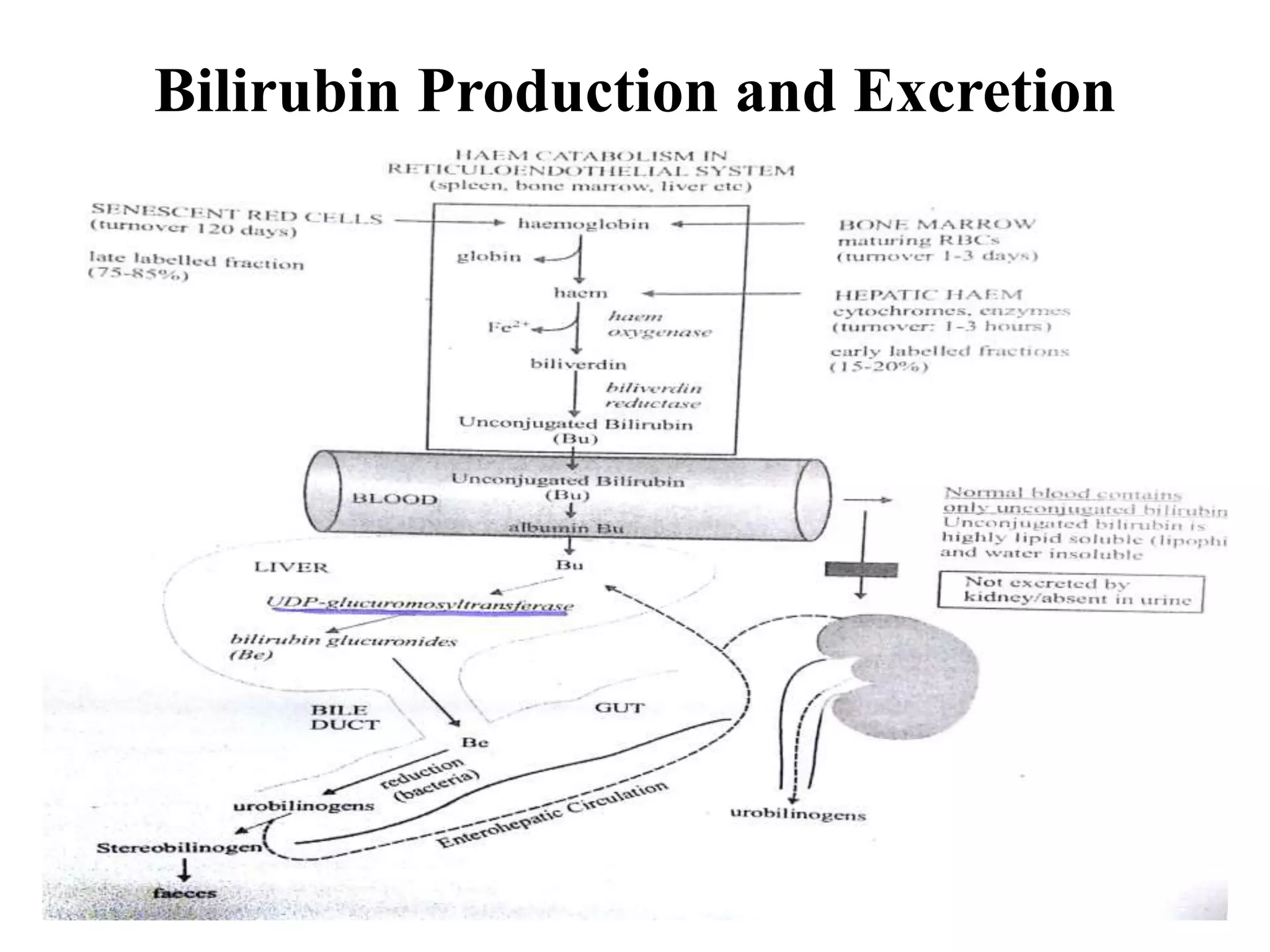
Bilirubin Production and Excretion
Jaundice
 Yellowish discoloration of sclera, skin mucous membranes
due to increased serum bilirubin level.
 Typically detected in sclera if serum bilirubin level above 3
mg/dl
 Obstructive jaundice is interruption to the drainage of bile in
the biliary system
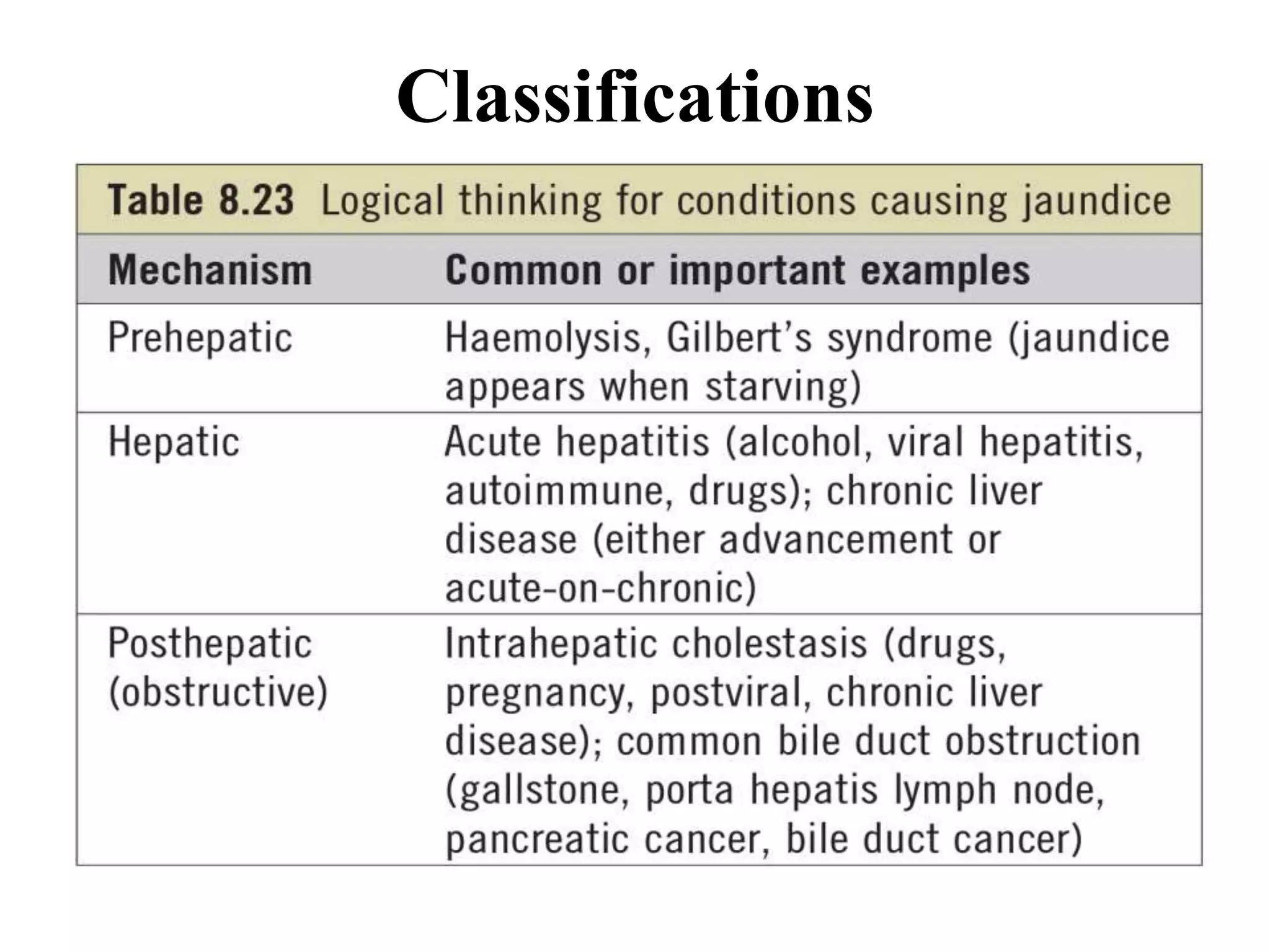
Classifications
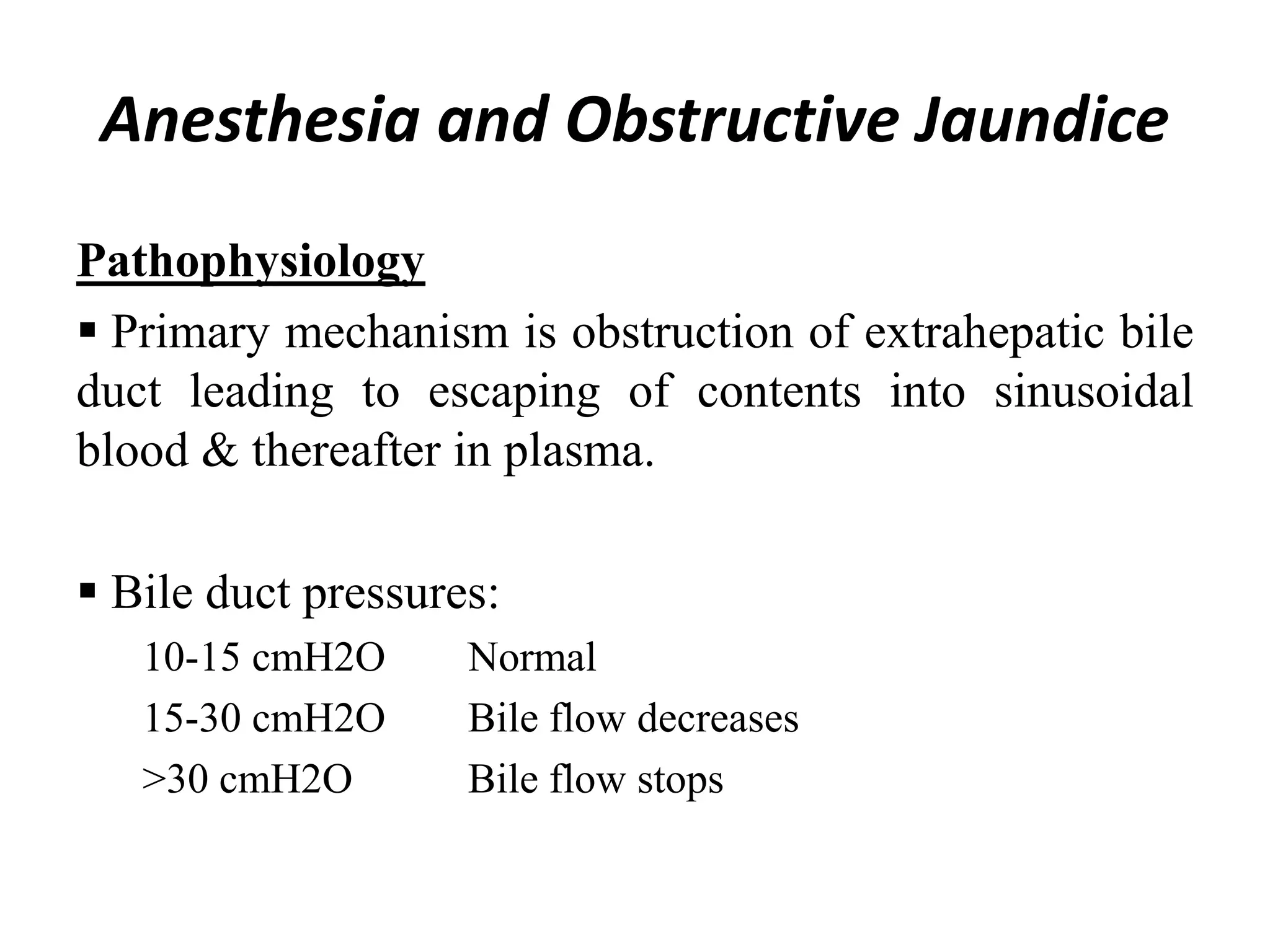
Anesthesia and Obstructive Jaundice
Pathophysiology
 Primary mechanism is obstruction of extrahepatic bile
duct leading to escaping of contents into sinusoidal
blood & thereafter in plasma.
 Bile duct pressures:
10-15 cmH2O Normal
15-30 cmH2O Bile flow decreases
>30 cmH2O Bile flow stops
Obstructive Jaundice
Signs and symptoms
 Right upper quadrant abdominal pain
 Fever
 Jaundice
 Pruritus
 Dark colored urine
 Clay colored stools
 Hepatomegaly, Splenomegaly, Ascites
 Loss of appetite, Weight loss
Obstructive Juandice
History
 Previous surgery or exposure to anaesthesia
 GI bleed or Ascites
 Drug intake
 Alcoholic or drug addict
 Blood transfusions
Obstructive Juandice
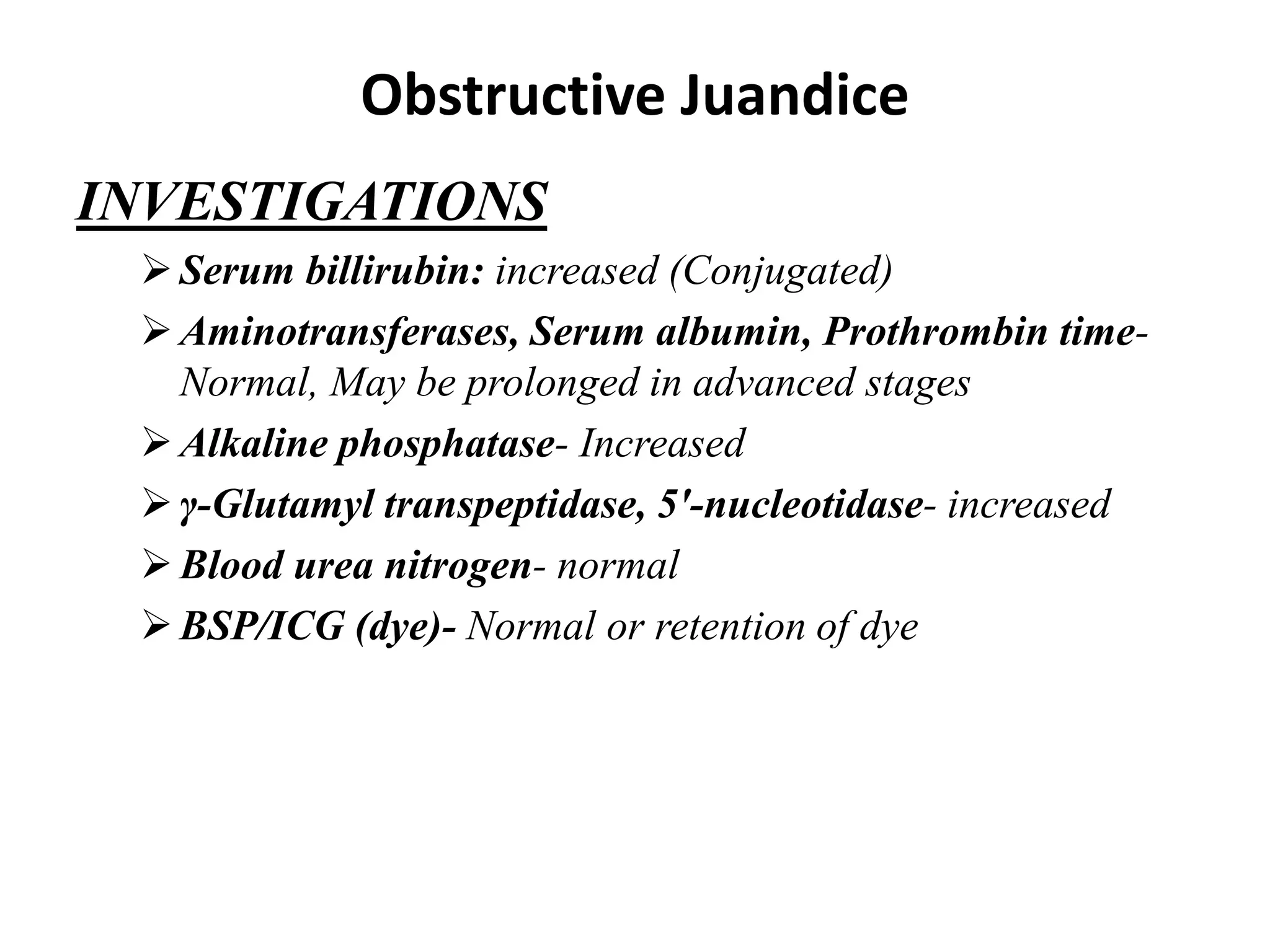
INVESTIGATIONS
Serum billirubin: increased (Conjugated)
Aminotransferases, Serum albumin, Prothrombin time-
Normal, May be prolonged in advanced stages
Alkaline phosphatase- Increased
γ-Glutamyl transpeptidase, 5′-nucleotidase- increased
Blood urea nitrogen- normal
BSP/ICG (dye)- Normal or retention of dye
Obstructive Juandice
Differential diagnosis
Extrahepatic causes
Benign-
 Gallstone/ Choledocholithiasis (M/C)
 Chronic pancreatitis
 Strictures
 Parasitic infections eg.: Ascariasis, clonorchiasis
 Biliary atresia
 Choledochal cysts
Malignant-
 Carcinoma of pancreas/ampulla/bile duct/gall bladder
Obstructive Juandice
Intrahepatic causes
Familial/ hereditary disorders
 Dublin Johnson syndrome
 Rotor syndrome
 Cholestatic jaundice of pregnancy
 Recurrent intrahepatic cholestasis
Acquired:
 Cholestatic drugs
 Biliary cirrhosis
 Sclerosing cholangitis
Pre-op optimization
 Avoid prolonged hyperbilirubinemia, consider drainage stent
 Treat infection
 Prophylactic antibiotics to prevent sepsis
 Correct anemia, coagulation abnormality, hypoalbuminemia,
dyselectrolytemia
 Inj-Vitamin K 10 mg IM OD for 3 days atleast 48-72 hrs
before surgery
Pre-op optimization
Avoid nephrotoxic drugs eg. NSAIDs, aminoglycosides
 Maintain hydration
 Maintain urine output >1 ml/kg/hr
 Mannitol to flush out bilirubin from renal tubules (If T.Bil>
8mg%, 0.25-1 gm/kg of 10% solution)
 Oral bile salts to normalize gut flora
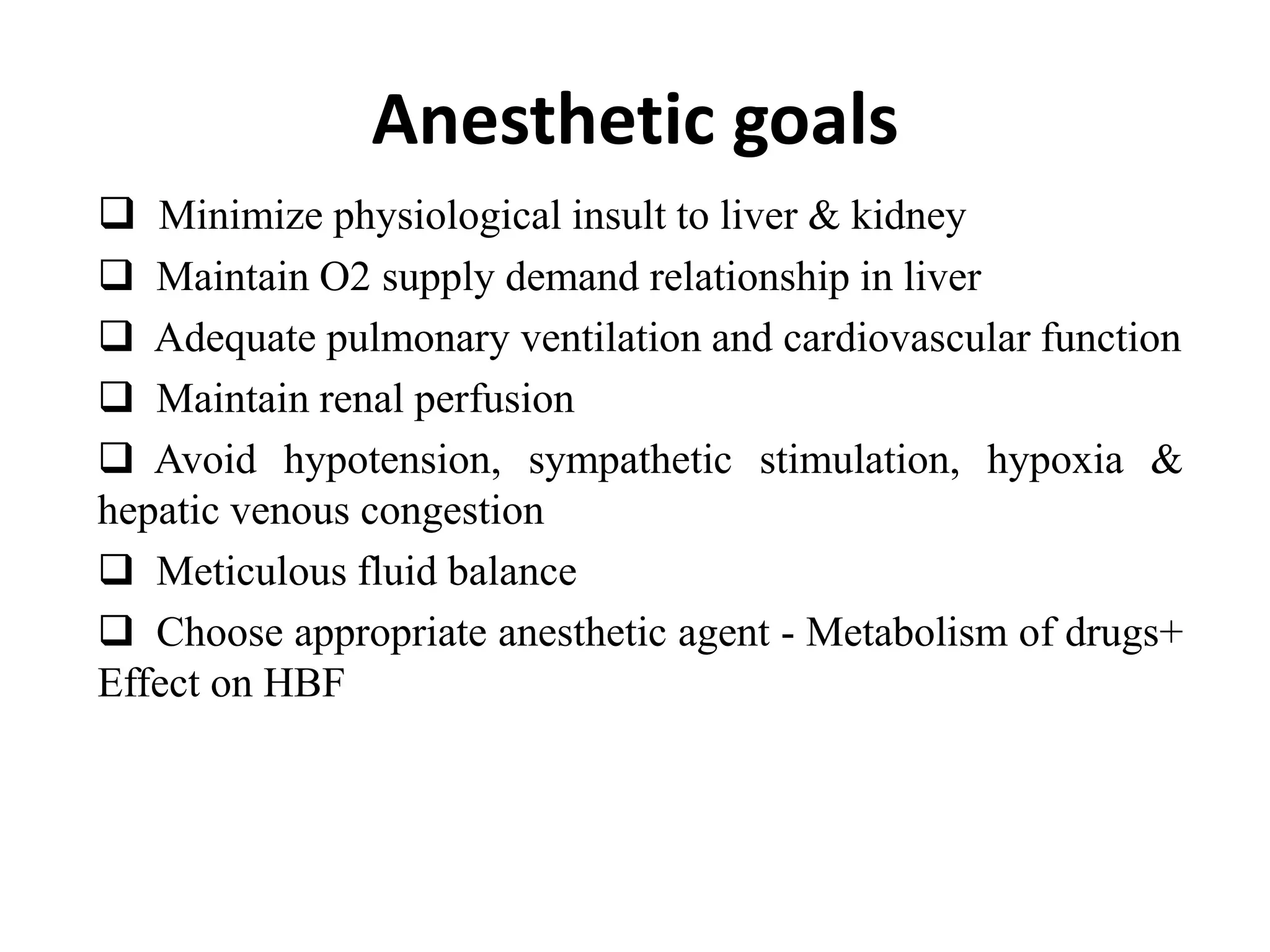
Anesthetic goals
 Minimize physiological insult to liver & kidney
 Maintain O2 supply demand relationship in liver
 Adequate pulmonary ventilation and cardiovascular function
 Maintain renal perfusion
 Avoid hypotension, sympathetic stimulation, hypoxia &
hepatic venous congestion
 Meticulous fluid balance
 Choose appropriate anesthetic agent - Metabolism of drugs+
Effect on HBF
EFFECT OF ANESTHETICS
ON HEPATIC FUNCTION
EFFECT OF HEPATIC DYSFUNCTION AND
HEPATOBILIARY DISEASE ON ANESTHETIC
DRUG PHARMACOKINETICS
Liver disease may have a significant impact on drug
metabolism and pharmacokinetics as a result of :
A. Alterations in protein binding
B. Reduced levels of s. albumin & other drug-binding
proteins
C. Altered volume of distribution because of ascites &
increased total-body water compartments
D. Reduced metabolism secondary to abnormal hepatocyte
function
The efficiency of drug removal by the liver is determined by:
A. Hepatic blood flow
B. Hepatic enzyme activity and efficiency
C. Extent of plasma protein binding
D. Cholestasis induced alterations in enterohepatic circulation
and metabolism of enteral drugs
E. Presence of portosystemic shunts that exclude certain drugs
from elimination by the diseased liver.
VOLATILE ANESTHETICS
 Volatile anesthetics variably influence blood flow to the liver,
whereas IV anesthetics and Opioids probably have a less significant
impact.
 Most anesthetics decrease portal blood flow (PBF) because of
decreased cardiac output. however, hepatic arterial blood flow
(HABF) may increase, although often not sufficiently to restore
total hepatic blood flow (THBF) to normal values.
 MAP & cardiac output decrease with all volatile anesthetics, but a
more pronounced reduction in PBF, HABF, and THBF occurs with
Halothane and Enflurane than with Isoflurane and Sevoflurane.
VOLATILE ANESTHETICS
• Halothane causes vasoconstriction in the hepatic arterial vascular
bed, as reflected by an increase in hepatic arterial resistance.
• Isoflurane increased flow velocity in hepatic sinusoids and in this
way preserved microvascular blood flow more than halothane or
enflurane.
• Halothane also reduces hepatic oxygen delivery and hepatic venous
oxygen saturation.
• These changes are related to decreased MAP and more dramatic
reductions in cardiac output with halothane than with any other
volatile anesthetics.
HEPATIC ARTERIAL BUFFER RESPONSE
(HABR)
• Reductions in PBF compensated by increases in HABF to maintain total
blood flow to liver in presence of profound hypovolemia, indirect
effects of major abdominal surgery, or severe hemorrhage.
• Halothane disrupts this compensatory response, whereas sevoflurane
and isoflurane maintain HABR.
• Sevoflurane further suppresses hepatic arterial vasoconstriction and
thus maintains HABF more effectively than does halothane.
• Sevoflurane is also consistently equivalent or superior to isoflurane in
maintaining HABF, hepatic oxygen delivery, and oxygen delivery-to-
consumption ratios.
INTRAVENOUS ANESTHETICS
 Etomidate and thiopental decreased hepatic blood flow, either from
increased hepatic arterial vascular resistance or from reduced cardiac
output and BP, whereas ketamine has little impact on hepatic blood flow.
 Propofol increase THBF in both hepatic arterial and portal venous
circulations, thus suggesting a significant splanchnic vasodilator effect
of this drug. Antioxidant effect may occur with Propofol in patients
undergoing liver surgery and orthotopic liver transplantation.
 Based on limited clinical and experimental data, it appears that IV
anesthetics have only a modest impact on hepatic blood flow and no
meaningful adverse influence on postoperative liver function when BP
& cardiac output are adequately maintained.
CENTRAL NEURAXIALANESTHESIA
 Effect of spinal or epidural anesthesia on liver blood flow & hepatic
function is not clearly an anesthetic drug–induced alteration in hepatic
function.
 Hepatic blood flow decreased during high spinal & epidural
anesthesia, appeared to mirror simultaneous reductions in MAP.
 These adverse changes may be reversed and hepatic blood flow
maintained with administration of vasopressors to restore PBF.
 Vasopressors may actually further reduce hepatic blood flow.
Presumably, hypotension-induced reductions in hepatic blood flow are
secondary to decreased splanchnic blood flow and thus reduced PBF.
OPIOIDS
MORPHINE
• Significantly reduced metabolism in patients with
advanced cirrhosis leads to a prolonged elimination half-
life, markedly increased bioavailability of orally
administered morphine, decreased plasma protein
binding, and potentially exaggerated sedative and
respiratory-depressant effects.
• Although extrahepatic metabolism may contribute to
morphine clearance in patients with cirrhosis,
administration interval should be increased 1.5- to 2-fold
in these patients and oral dose of the drug reduced.
OPIOIDS
• Fentanyl is almost completely metabolized in liver,
its elimination should be predictably prolonged in
patients with advanced liver disease.
• Unlike with Fentanyl or sufentanil, half-life of
alfentanil is almost doubled in patients with cirrhosis,
and higher free fractions of the drug are observed;
these higher free fractions can potentially lead to a
prolonged duration of action and enhanced effects
SEDATIVE-HYPNOTIC DRUGS
 A prolonged effect from standard doses of thiopental thus seems
unlikely in this patient population.
 Other IV anesthetics, including Methohexital, ketamine, Etomidate,
and Propofol, are highly lipid soluble, are metabolized by the liver,
have a large hepatic extraction ratio, and should have diminished
clearance in presence of advanced liver disease.
 Despite this pharmacokinetic profile, Etomidate clearance is
unchanged in cirrhotic patients, although increased volumes of
distribution may prolong the elimination half life and result in
unpredictable recovery times.
SEDATIVE-HYPNOTIC DRUGS
 Midazolam in patients with end-stage liver disease
produces prolonged elimination half-lives, prolonged
duration of action and enhanced sedative effect,
especially after multiple doses or prolonged infusions.
Similar changes have also been observed with
Diazepam.
 Dosage adjustments are indicated when
Dexmedetomidine is used in patients with significant
hepatic dysfunction.
NEUROMUSCULAR BLOCKING DRUGS
 Cirrhosis and other forms of advanced liver disease
predictably reduce the elimination of Vecuronium,
Rocuronium, & Mivacurium and prolong duration of
NM blockade, especially after repeated doses or use of
prolonged infusions.
 Atracurium and cisatracurium are not dependent on
hepatic elimination and can be used without
modification of dosing in patients with end-stage liver
disease.
THANK YOU

anaesthetic considerations in Obstructive jaundice

  • 1.
    OBSTRUCTIVE JAUNDICE Dr. ShashikantSharma MD anesthesiology & critical care
  • 2.
     Liver ismost versatile & largest internal organ in human body, comprising 2% of total mass of healthy adults and 5% of neonates.  Liver is an essential part of the gastrointestinal tract that filters, excretes and modifies an enormity of gut-derived substances.  It is also a key component of monocyte-macrophage system, Kupffer cells within liver sinusoids avidly remove bacteria and other harmful substances from portal blood, preventing their entry into the systemic circulation.  Liver is most vascular organ in body, has a unique dual blood supply and receives nearly 30% of total cardiac output.
  • 3.
    HEPATIC ANATOMY  Theliver looks like a reddish- brown & occupies entire right subcostal space, most of epigastrium, & part of the left subcostal space.  Topologic landmarks, separate liver into four lobes, known as the left, right, caudate & quadrate lobes.  Couinaud classification devides liver into 8 different segments.
  • 4.
    BILE  Constituents areconjugated bile salts, cholesterol, phospholipids, conjugated bilirubins & electrolytes.  After its release from CBD into duodenum, bile alkalinizes intestinal contents & its detergent-like chemical properties promote emulsification, absorption & digestion of hydrophobic dietary lipids, including saturated long-chain fatty acids & fat soluble vitamins.  Plays an indispensable role in the excretion of potentially toxic endogenous wastes & xenobiotics.  Liver transforms cholesterol into bile salts that are secreted by liver as a vehicle to facilitate fat digestion & absorption.  Bile acids recycle several times daily from intestine to liver in enterohepatic circulation.
  • 5.
  • 6.
    Jaundice  Yellowish discolorationof sclera, skin mucous membranes due to increased serum bilirubin level.  Typically detected in sclera if serum bilirubin level above 3 mg/dl  Obstructive jaundice is interruption to the drainage of bile in the biliary system
  • 7.
  • 8.
    Anesthesia and ObstructiveJaundice Pathophysiology  Primary mechanism is obstruction of extrahepatic bile duct leading to escaping of contents into sinusoidal blood & thereafter in plasma.  Bile duct pressures: 10-15 cmH2O Normal 15-30 cmH2O Bile flow decreases >30 cmH2O Bile flow stops
  • 10.
    Obstructive Jaundice Signs andsymptoms  Right upper quadrant abdominal pain  Fever  Jaundice  Pruritus  Dark colored urine  Clay colored stools  Hepatomegaly, Splenomegaly, Ascites  Loss of appetite, Weight loss
  • 11.
    Obstructive Juandice History  Previoussurgery or exposure to anaesthesia  GI bleed or Ascites  Drug intake  Alcoholic or drug addict  Blood transfusions
  • 12.
    Obstructive Juandice INVESTIGATIONS Serum billirubin:increased (Conjugated) Aminotransferases, Serum albumin, Prothrombin time- Normal, May be prolonged in advanced stages Alkaline phosphatase- Increased γ-Glutamyl transpeptidase, 5′-nucleotidase- increased Blood urea nitrogen- normal BSP/ICG (dye)- Normal or retention of dye
  • 13.
    Obstructive Juandice Differential diagnosis Extrahepaticcauses Benign-  Gallstone/ Choledocholithiasis (M/C)  Chronic pancreatitis  Strictures  Parasitic infections eg.: Ascariasis, clonorchiasis  Biliary atresia  Choledochal cysts Malignant-  Carcinoma of pancreas/ampulla/bile duct/gall bladder
  • 14.
    Obstructive Juandice Intrahepatic causes Familial/hereditary disorders  Dublin Johnson syndrome  Rotor syndrome  Cholestatic jaundice of pregnancy  Recurrent intrahepatic cholestasis Acquired:  Cholestatic drugs  Biliary cirrhosis  Sclerosing cholangitis
  • 15.
    Pre-op optimization  Avoidprolonged hyperbilirubinemia, consider drainage stent  Treat infection  Prophylactic antibiotics to prevent sepsis  Correct anemia, coagulation abnormality, hypoalbuminemia, dyselectrolytemia  Inj-Vitamin K 10 mg IM OD for 3 days atleast 48-72 hrs before surgery
  • 16.
    Pre-op optimization Avoid nephrotoxicdrugs eg. NSAIDs, aminoglycosides  Maintain hydration  Maintain urine output >1 ml/kg/hr  Mannitol to flush out bilirubin from renal tubules (If T.Bil> 8mg%, 0.25-1 gm/kg of 10% solution)  Oral bile salts to normalize gut flora
  • 17.
    Anesthetic goals  Minimizephysiological insult to liver & kidney  Maintain O2 supply demand relationship in liver  Adequate pulmonary ventilation and cardiovascular function  Maintain renal perfusion  Avoid hypotension, sympathetic stimulation, hypoxia & hepatic venous congestion  Meticulous fluid balance  Choose appropriate anesthetic agent - Metabolism of drugs+ Effect on HBF
  • 18.
    EFFECT OF ANESTHETICS ONHEPATIC FUNCTION
  • 19.
    EFFECT OF HEPATICDYSFUNCTION AND HEPATOBILIARY DISEASE ON ANESTHETIC DRUG PHARMACOKINETICS Liver disease may have a significant impact on drug metabolism and pharmacokinetics as a result of : A. Alterations in protein binding B. Reduced levels of s. albumin & other drug-binding proteins C. Altered volume of distribution because of ascites & increased total-body water compartments D. Reduced metabolism secondary to abnormal hepatocyte function
  • 20.
    The efficiency ofdrug removal by the liver is determined by: A. Hepatic blood flow B. Hepatic enzyme activity and efficiency C. Extent of plasma protein binding D. Cholestasis induced alterations in enterohepatic circulation and metabolism of enteral drugs E. Presence of portosystemic shunts that exclude certain drugs from elimination by the diseased liver.
  • 21.
    VOLATILE ANESTHETICS  Volatileanesthetics variably influence blood flow to the liver, whereas IV anesthetics and Opioids probably have a less significant impact.  Most anesthetics decrease portal blood flow (PBF) because of decreased cardiac output. however, hepatic arterial blood flow (HABF) may increase, although often not sufficiently to restore total hepatic blood flow (THBF) to normal values.  MAP & cardiac output decrease with all volatile anesthetics, but a more pronounced reduction in PBF, HABF, and THBF occurs with Halothane and Enflurane than with Isoflurane and Sevoflurane.
  • 22.
    VOLATILE ANESTHETICS • Halothanecauses vasoconstriction in the hepatic arterial vascular bed, as reflected by an increase in hepatic arterial resistance. • Isoflurane increased flow velocity in hepatic sinusoids and in this way preserved microvascular blood flow more than halothane or enflurane. • Halothane also reduces hepatic oxygen delivery and hepatic venous oxygen saturation. • These changes are related to decreased MAP and more dramatic reductions in cardiac output with halothane than with any other volatile anesthetics.
  • 23.
    HEPATIC ARTERIAL BUFFERRESPONSE (HABR) • Reductions in PBF compensated by increases in HABF to maintain total blood flow to liver in presence of profound hypovolemia, indirect effects of major abdominal surgery, or severe hemorrhage. • Halothane disrupts this compensatory response, whereas sevoflurane and isoflurane maintain HABR. • Sevoflurane further suppresses hepatic arterial vasoconstriction and thus maintains HABF more effectively than does halothane. • Sevoflurane is also consistently equivalent or superior to isoflurane in maintaining HABF, hepatic oxygen delivery, and oxygen delivery-to- consumption ratios.
  • 24.
    INTRAVENOUS ANESTHETICS  Etomidateand thiopental decreased hepatic blood flow, either from increased hepatic arterial vascular resistance or from reduced cardiac output and BP, whereas ketamine has little impact on hepatic blood flow.  Propofol increase THBF in both hepatic arterial and portal venous circulations, thus suggesting a significant splanchnic vasodilator effect of this drug. Antioxidant effect may occur with Propofol in patients undergoing liver surgery and orthotopic liver transplantation.  Based on limited clinical and experimental data, it appears that IV anesthetics have only a modest impact on hepatic blood flow and no meaningful adverse influence on postoperative liver function when BP & cardiac output are adequately maintained.
  • 25.
    CENTRAL NEURAXIALANESTHESIA  Effectof spinal or epidural anesthesia on liver blood flow & hepatic function is not clearly an anesthetic drug–induced alteration in hepatic function.  Hepatic blood flow decreased during high spinal & epidural anesthesia, appeared to mirror simultaneous reductions in MAP.  These adverse changes may be reversed and hepatic blood flow maintained with administration of vasopressors to restore PBF.  Vasopressors may actually further reduce hepatic blood flow. Presumably, hypotension-induced reductions in hepatic blood flow are secondary to decreased splanchnic blood flow and thus reduced PBF.
  • 26.
    OPIOIDS MORPHINE • Significantly reducedmetabolism in patients with advanced cirrhosis leads to a prolonged elimination half- life, markedly increased bioavailability of orally administered morphine, decreased plasma protein binding, and potentially exaggerated sedative and respiratory-depressant effects. • Although extrahepatic metabolism may contribute to morphine clearance in patients with cirrhosis, administration interval should be increased 1.5- to 2-fold in these patients and oral dose of the drug reduced.
  • 27.
    OPIOIDS • Fentanyl isalmost completely metabolized in liver, its elimination should be predictably prolonged in patients with advanced liver disease. • Unlike with Fentanyl or sufentanil, half-life of alfentanil is almost doubled in patients with cirrhosis, and higher free fractions of the drug are observed; these higher free fractions can potentially lead to a prolonged duration of action and enhanced effects
  • 28.
    SEDATIVE-HYPNOTIC DRUGS  Aprolonged effect from standard doses of thiopental thus seems unlikely in this patient population.  Other IV anesthetics, including Methohexital, ketamine, Etomidate, and Propofol, are highly lipid soluble, are metabolized by the liver, have a large hepatic extraction ratio, and should have diminished clearance in presence of advanced liver disease.  Despite this pharmacokinetic profile, Etomidate clearance is unchanged in cirrhotic patients, although increased volumes of distribution may prolong the elimination half life and result in unpredictable recovery times.
  • 29.
    SEDATIVE-HYPNOTIC DRUGS  Midazolamin patients with end-stage liver disease produces prolonged elimination half-lives, prolonged duration of action and enhanced sedative effect, especially after multiple doses or prolonged infusions. Similar changes have also been observed with Diazepam.  Dosage adjustments are indicated when Dexmedetomidine is used in patients with significant hepatic dysfunction.
  • 30.
    NEUROMUSCULAR BLOCKING DRUGS Cirrhosis and other forms of advanced liver disease predictably reduce the elimination of Vecuronium, Rocuronium, & Mivacurium and prolong duration of NM blockade, especially after repeated doses or use of prolonged infusions.  Atracurium and cisatracurium are not dependent on hepatic elimination and can be used without modification of dosing in patients with end-stage liver disease.
  • 31.