PAEDIATRIC ANAESTHESIA
DR SWASTIKA SWARO
Children are not little adults!
 Neonates: 0-30 days old
 Infants: 1 month to 1 year
 small Children(toddler): 1 -4 yrs
 Old child:4-12 yrs
 Full term neonate: born between 37-40 weeks
 Premature neonate: child born before 37 weeks
gestation
 A 10-12 yrs old child thought of anatomically and
physiologically small adult
2
Different anatomy
Different physiology
Different pharmacology
3
Respiratory system
(Anatomical changes)
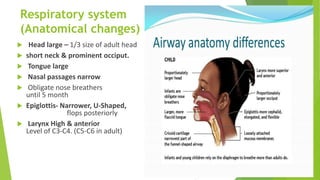
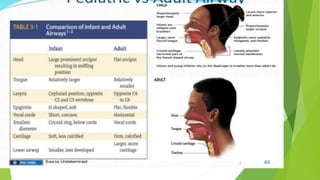
 Head large – 1/3 size of adult head
 short neck & prominent occiput.
 Tongue large
 Nasal passages narrow
 Obligate nose breathers
until 5 month
 Epiglottis- Narrower, U-Shaped,
flops posteriorly
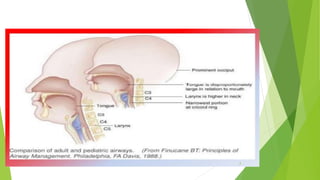
 Larynx High & anterior
Level of C3-C4. (C5-C6 in adult)
4
5
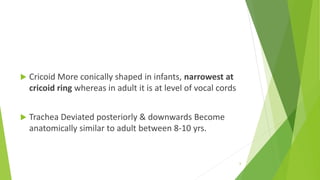
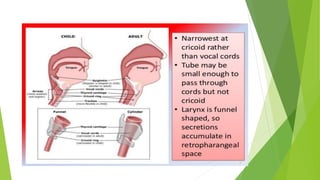
 Cricoid More conically shaped in infants, narrowest at
cricoid ring whereas in adult it is at level of vocal cords
 Trachea Deviated posteriorly & downwards Become
anatomically similar to adult between 8-10 yrs.
6
7
8
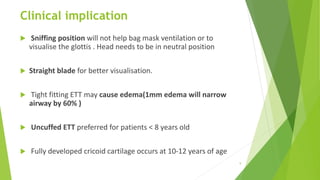
Clinical implication
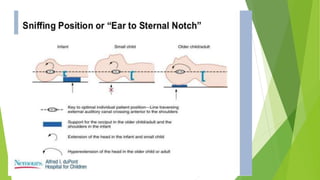
 Sniffing position will not help bag mask ventilation or to
visualise the glottis . Head needs to be in neutral position
 Straight blade for better visualisation.
 Tight fitting ETT may cause edema(1mm edema will narrow
airway by 60% )
 Uncuffed ETT preferred for patients < 8 years old
 Fully developed cricoid cartilage occurs at 10-12 years of age
9
10
Respiratory system(physiological
changes)
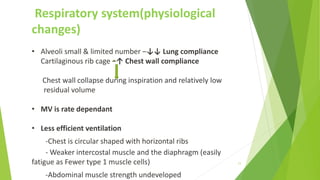
• Alveoli small & limited number –↓↓ Lung compliance
Cartilaginous rib cage –↑ Chest wall compliance
Chest wall collapse during inspiration and relatively low
residual volume
• MV is rate dependant
• Less efficient ventilation
-Chest is circular shaped with horizontal ribs
- Weaker intercostal muscle and the diaphragm (easily
fatigue as Fewer type 1 muscle cells)
-Abdominal muscle strength undeveloped
11
• Caliber of airways is relatively narrow…..more airway R
• Large rate of o2 consumption
• Ventilator drive are not well developed, so hypoxia
and hypercapnia depress respiration
• Postop apnoea common(if >15 sec or with desaturation
or↓HR 12
 The closing volume > FRC until 6-8 yrs of age
Increase tendency for airway closure at end of
expiration
 Need IPPV during anaesthesia with a higher RR & the
use of PEEP (High RR to maintain FRC)
 CPAP during spontaneus ventilation improves
oxygenation & ↓the work of breathing
 Work of respiration may be 15% of O2 Consumption
13
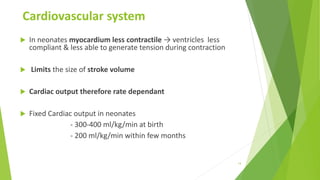
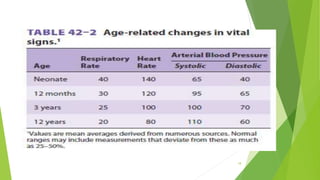
Cardiovascular system
 In neonates myocardium less contractile → ventricles less
compliant & less able to generate tension during contraction
 Limits the size of stroke volume
 Cardiac output therefore rate dependant
 Fixed Cardiac output in neonates
- 300-400 ml/kg/min at birth
- 200 ml/kg/min within few months
14
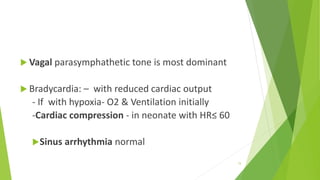
 Vagal parasymphathetic tone is most dominant
 Bradycardia: – with reduced cardiac output
- If with hypoxia- O2 & Ventilation initially
-Cardiac compression - in neonate with HR≤ 60
Sinus arrhythmia normal
15
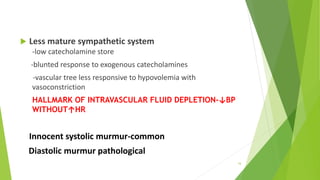
 Less mature sympathetic system
-low catecholamine store
-blunted response to exogenous catecholamines
-vascular tree less responsive to hypovolemia with
vasoconstriction
HALLMARK OF INTRAVASCULAR FLUID DEPLETION-↓BP
WITHOUT↑HR
Innocent systolic murmur-common
Diastolic murmur pathological
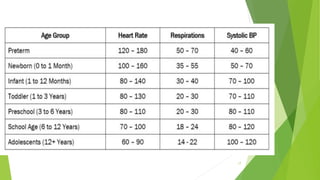
16
17
18
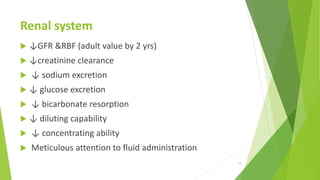
Renal system
 ↓GFR &RBF (adult value by 2 yrs)
 ↓creatinine clearance
 ↓ sodium excretion
 ↓ glucose excretion
 ↓ bicarbonate resorption
 ↓ diluting capability
 ↓ concentrating ability
 Meticulous attention to fluid administration
19
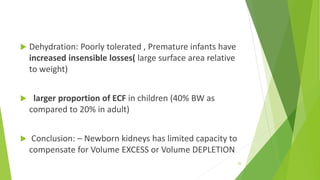
 Dehydration: Poorly tolerated , Premature infants have
increased insensible losses( large surface area relative
to weight)
 larger proportion of ECF in children (40% BW as
compared to 20% in adult)
 Conclusion: – Newborn kidneys has limited capacity to
compensate for Volume EXCESS or Volume DEPLETION
20
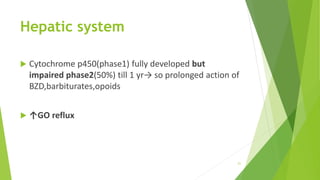
Hepatic system
 Cytochrome p450(phase1) fully developed but
impaired phase2(50%) till 1 yr→ so prolonged action of
BZD,barbiturates,opoids
 ↑GO reflux
21
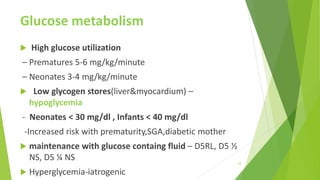
Glucose metabolism
 High glucose utilization
– Prematures 5-6 mg/kg/minute
– Neonates 3-4 mg/kg/minute
 Low glycogen stores(liver&myocardium) –
hypoglycemia
- Neonates < 30 mg/dl , Infants < 40 mg/dl
-Increased risk with prematurity,SGA,diabetic mother
 maintenance with glucose containg fluid – D5RL, D5 ½
NS, D5 ¼ NS
 Hyperglycemia-iatrogenic
22
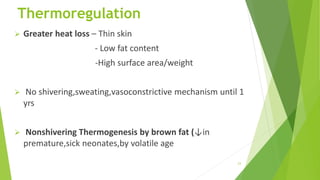
Thermoregulation
 Greater heat loss – Thin skin
- Low fat content
-High surface area/weight
 No shivering,sweating,vasoconstrictive mechanism until 1
yrs
 Nonshivering Thermogenesis by brown fat (↓in
premature,sick neonates,by volatile age
23
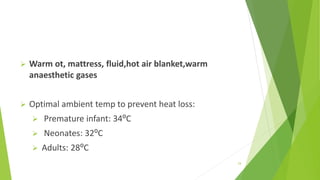
 Warm ot, mattress, fluid,hot air blanket,warm
anaesthetic gases
 Optimal ambient temp to prevent heat loss:
 Premature infant: 34⁰C
 Neonates: 32⁰C
 Adults: 28⁰C
24
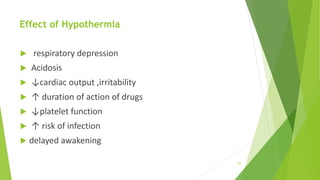
Effect of Hypothermia
 respiratory depression
 Acidosis
 ↓cardiac output ,irritability
 ↑ duration of action of drugs
 ↓platelet function
 ↑ risk of infection
 delayed awakening
25
Central nervous system
 BBB is poorly formed
– Drugs (barbiturates, opioids, antibiotics, bilirubin)
cross BBB easily , prolong & variable duration of action
 Cerebral vessels in preterm infant are thin walled &
fragile
Prone to IVH –↑ with hypoxia, hypercarbia,
hypernatraemia,low HCT, Awake airway manipulation,
rapid bicarb administration & fluctuation in BP and CBF
26
 Appreciate pain with ↑HR,BP and neuroendocrine response
 Myelination complete by 7yrs
 Nonmyelination
 ↓nerve size
 ↓distance between favour penetration,early onset LA
and nodes of ranvier
 CEREBRAL AUTOREGULATION-functional from birth
 ↑CMR02-metabolism decreases with age(neonate to 4yrs↑)
 ↓CBF
27
Haematology
 HbF- At birth, 70-90%
- 3 months 5%
 Hb –new born=18-20g/dL , HCT ~ 0.6
-3-6 Mo =9-12 g/dl( ↑in circulating volume is more rapid
the bone marrow function)
 O2 disso. curve shifts to right as the level of HbA & 2,3-DPG↑
 Vit K dependant clotting factor (II, VII, IX, X) & PLT are deficient in
first few months
 Transfusion recommended when 15% of the circulating volume
28
pshycology
 <6mn-no fear
 4yrs-separation from parents,unfamiliar surroundings
 School age-upset about surgical procedure,pain
 Adoloscent-pain,not able to cope illness
29
Pharmacological changes
 Total body water content ↑(70-75%) – Large Vd for
water soluble meds – Increased dose/kg
 Hepatic biotransformation immature
 Protein binding decreased
 Neuromuscular junction immature
 less fat and muscle mass in neonates– Termination of
action by redistribution prolonged
LARGE LOADING,LESS MAINTAENANCE
30
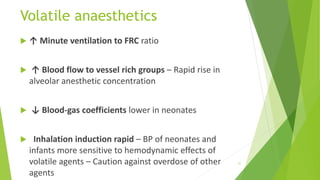
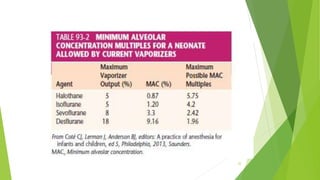
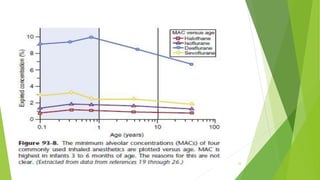
Volatile anaesthetics
 ↑ Minute ventilation to FRC ratio
 ↑ Blood flow to vessel rich groups – Rapid rise in
alveolar anesthetic concentration
 ↓ Blood-gas coefficients lower in neonates
 Inhalation induction rapid – BP of neonates and
infants more sensitive to hemodynamic effects of
volatile agents – Caution against overdose of other
agents
31
32
33
Perioperative anaesthetic management
preoperative
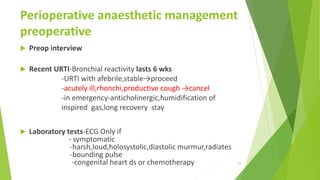
 Preop interview
 Recent URTI-Bronchial reactivity lasts 6 wks
-URTI with afebrile,stable→proceed
-acutely ill,rhonchi,productive cough →cancel
-in emergency-anticholinergic,humidification of
inspired gas,long recovery stay
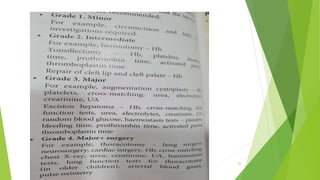
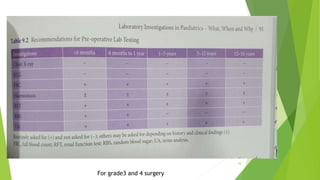
 Laboratory tests-ECG Only if
- symptomatic
-harsh,loud,holosystolic,diastolic murmur,radiates
-bounding pulse
-congenital heart ds or chemotherapy 34
35
36
For grade3 and 4 surgery
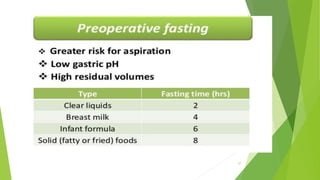
Preop fasting
37
IV ACCESS-
 best sites-back of hand,inner wrist,dorsum of foot
 in difficulty
-Saphenous vein(medial malleolous)
-intraosseus(shin of tibia)
38
Pharmacological premedication
1.Midazolam + Ketamine:
• PO- 0.2 to 0.3 mg/kg + 4 mg/kg respectively
• IM-0.05-0.1 mg/kg +2-3 mg/kg + atropine 0.02
mg/kg
• 100% successful separation
• 85% easy mask induction
38
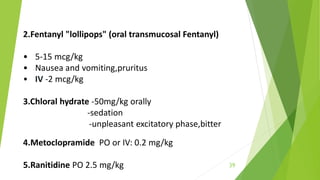
2.Fentanyl "lollipops" (oral transmucosal Fentanyl)
• 5-15 mcg/kg
• Nausea and vomiting,pruritus
• IV -2 mcg/kg
3.Chloral hydrate -50mg/kg orally
-sedation
-unpleasant excitatory phase,bitter
4.Metoclopramide PO or IV: 0.2 mg/kg
5.Ranitidine PO 2.5 mg/kg 39
6.EMLA cream:
-Eutactic mixture of Lidocaine and Prilocaine.
- For cutaneous application by occlusive dressing 1 hr
before
7.Glycopyrrolate: for selected patients
- planned airway instrumentation; e.g.: fiberoptic
oral or upper airway surgery( cleft palate)
- 5-10 mcg/kg IV or 10 mcg/kg IM
atropine:orally0.05 mg/kg
IM 0.02 mg/kg
IV 0.01 mg/kg
↓secretions and ↓bradycardia& hypotension during
induction 40
MONITORING
 Small ECG electrode
 NIBP
 PRECORDIAL STETHOSCOPE
 Pulse Oximetry(rt.hand/earlobe)
 Capnography
 Temperature
 Urine output
 Serum glucose
 Arterial canulation and ABG(RT.RADIAL,FEMORAL,UMBILICAL)-if
required
42
INDUCTION
 Intravenous-familiarity of drug,rapid induction,availability
of IV acess for emergency drugs.
-propofol/thiopentone/ketamine
 Inhalational-N2o(70%)+O2(30%)+SEVO/HALOTHANE in
0.5 increments in every 3 to 5 breaths
-single breath induction technique
(Sevo7-8% in 70%N2O)
-sevo-emergency delirum
-halothane-arrythmia
43
 Neonates-less muscle mass nd fat→prolonged action
 eg:thiopentone-neonate-3-4 mg/kg
infant-5-6mg/kg
 remifentanyl-only drug whose t half is shorter than old
children
 variable response to muscle relaxant
 Midazolam-watersoluble,wait fr 3 mins to avoid stacking of effect
-nasal avoided(CNS spread via olfactory nerve)
 Scholine-prior atropine
Only in RSI,Laryngospasm,rapid relaxation prior to IV
acess
Alternate –rocuronium
Both can be given IM
44
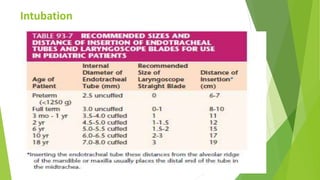
Intubation
45
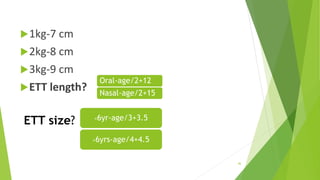
ETT size?
1kg-7 cm
2kg-8 cm
3kg-9 cm
ETT length?
46
<6yr-age/3+3.5
>6yrs-age/4+4.5
Oral-age/2+12
Nasal-age/2+15
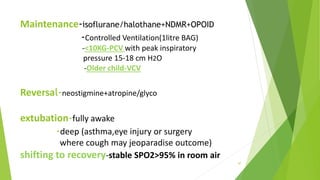
Maintenance-isoflurane/halothane+NDMR+OPOID
-Controlled Ventilation(1litre BAG)
-<10KG-PCV with peak inspiratory
pressure 15-18 cm H2O
-Older child-VCV
Reversal-neostigmine+atropine/glyco
extubation-fully awake
-deep (asthma,eye injury or surgery
where cough may jeoparadise outcome)
shifting to recovery-stable SPO2>95% in room air
47
48
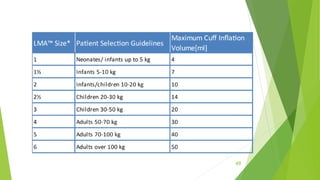
49
50
51
1 L BAG
52
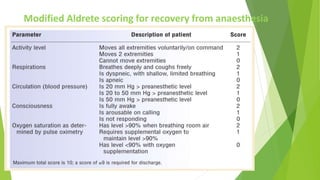
Modified Aldrete scoring for recovery from anaesthesia
53
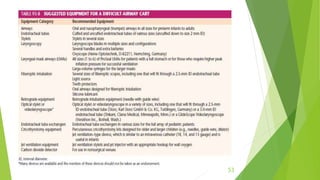
53
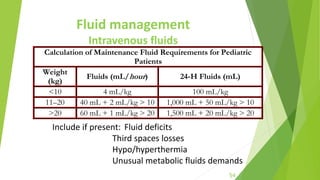
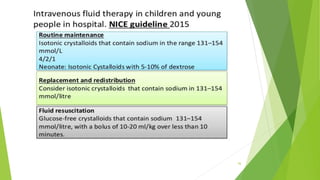
Fluid management
Intravenous fluids
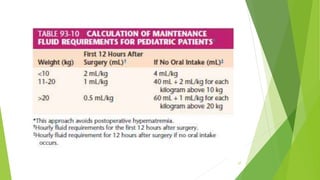
Calculation of Maintenance Fluid Requirements for Pediatric
Patients
Weight
(kg)
Fluids (mL/hour) 24-H Fluids (mL)
<10 4 mL/kg 100 mL/kg
11–20 40 mL + 2 mL/kg > 10 1,000 mL + 50 mL/kg > 10
>20 60 mL + 1 mL/kg > 20 1,500 mL + 20 mL/kg > 20
Include if present: Fluid deficits
Third spaces losses
Hypo/hyperthermia
Unusual metabolic fluids demands
54
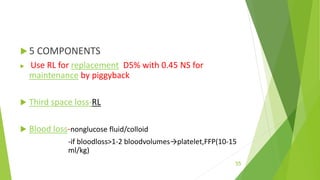
 5 COMPONENTS
 Use RL for replacement D5% with 0.45 NS for
maintenance by piggyback
 Third space loss-RL
 Blood loss-nonglucose fluid/colloid
-if bloodloss>1-2 bloodvolumes→platelet,FFP(10-15
ml/kg)
55
56
57
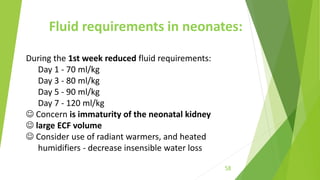
Fluid requirements in neonates:
During the 1st week reduced fluid requirements:
Day 1 - 70 ml/kg
Day 3 - 80 ml/kg
Day 5 - 90 ml/kg
Day 7 - 120 ml/kg
 Concern is immaturity of the neonatal kidney
 large ECF volume
 Consider use of radiant warmers, and heated
humidifiers - decrease insensible water loss
58
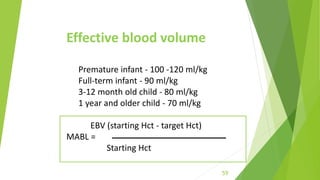
Effective blood volume
Premature infant - 100 -120 ml/kg
Full-term infant - 90 ml/kg
3-12 month old child - 80 ml/kg
1 year and older child - 70 ml/kg
EBV (starting Hct - target Hct)
MABL =
Starting Hct
59
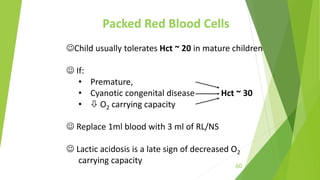
Packed Red Blood Cells
Child usually tolerates Hct ~ 20 in mature children
 If:
• Premature,
• Cyanotic congenital disease Hct ~ 30
•  O2 carrying capacity
 Replace 1ml blood with 3 ml of RL/NS
 Lactic acidosis is a late sign of decreased O2
carrying capacity
60
61
62
62
63
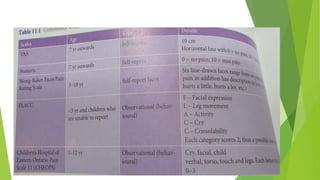
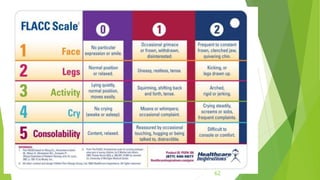
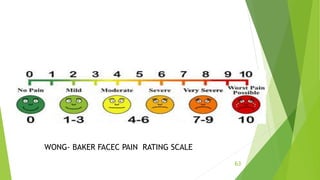
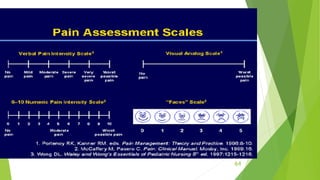
WONG- BAKER FACEC PAIN RATING SCALE
64
65
66
67
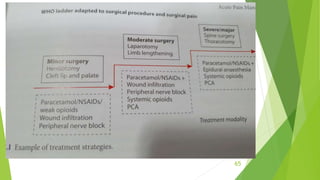
REGIONAL-epidural
-caudal.
-peripheral nerve blocks
 REFERENCES:
Millers anaesthesia
Paediatric anaesthesia by Rabecca Jacob
Morgans Clinical Anaesthesia
WFSA tutorial
68
Thank u
69

paediatric anaesthesia.pptx 2.pptx

  • 1.
  • 2.
    Children are notlittle adults!  Neonates: 0-30 days old  Infants: 1 month to 1 year  small Children(toddler): 1 -4 yrs  Old child:4-12 yrs  Full term neonate: born between 37-40 weeks  Premature neonate: child born before 37 weeks gestation  A 10-12 yrs old child thought of anatomically and physiologically small adult 2
  • 3.
  • 4.
    Respiratory system (Anatomical changes) Head large – 1/3 size of adult head  short neck & prominent occiput.  Tongue large  Nasal passages narrow  Obligate nose breathers until 5 month  Epiglottis- Narrower, U-Shaped, flops posteriorly  Larynx High & anterior Level of C3-C4. (C5-C6 in adult) 4
  • 5.
  • 6.
     Cricoid Moreconically shaped in infants, narrowest at cricoid ring whereas in adult it is at level of vocal cords  Trachea Deviated posteriorly & downwards Become anatomically similar to adult between 8-10 yrs. 6
  • 7.
  • 8.
  • 9.
    Clinical implication  Sniffingposition will not help bag mask ventilation or to visualise the glottis . Head needs to be in neutral position  Straight blade for better visualisation.  Tight fitting ETT may cause edema(1mm edema will narrow airway by 60% )  Uncuffed ETT preferred for patients < 8 years old  Fully developed cricoid cartilage occurs at 10-12 years of age 9
  • 10.
  • 11.
    Respiratory system(physiological changes) • Alveolismall & limited number –↓↓ Lung compliance Cartilaginous rib cage –↑ Chest wall compliance Chest wall collapse during inspiration and relatively low residual volume • MV is rate dependant • Less efficient ventilation -Chest is circular shaped with horizontal ribs - Weaker intercostal muscle and the diaphragm (easily fatigue as Fewer type 1 muscle cells) -Abdominal muscle strength undeveloped 11
  • 12.
    • Caliber ofairways is relatively narrow…..more airway R • Large rate of o2 consumption • Ventilator drive are not well developed, so hypoxia and hypercapnia depress respiration • Postop apnoea common(if >15 sec or with desaturation or↓HR 12
  • 13.
     The closingvolume > FRC until 6-8 yrs of age Increase tendency for airway closure at end of expiration  Need IPPV during anaesthesia with a higher RR & the use of PEEP (High RR to maintain FRC)  CPAP during spontaneus ventilation improves oxygenation & ↓the work of breathing  Work of respiration may be 15% of O2 Consumption 13
  • 14.
    Cardiovascular system  Inneonates myocardium less contractile → ventricles less compliant & less able to generate tension during contraction  Limits the size of stroke volume  Cardiac output therefore rate dependant  Fixed Cardiac output in neonates - 300-400 ml/kg/min at birth - 200 ml/kg/min within few months 14
  • 15.
     Vagal parasymphathetictone is most dominant  Bradycardia: – with reduced cardiac output - If with hypoxia- O2 & Ventilation initially -Cardiac compression - in neonate with HR≤ 60 Sinus arrhythmia normal 15
  • 16.
     Less maturesympathetic system -low catecholamine store -blunted response to exogenous catecholamines -vascular tree less responsive to hypovolemia with vasoconstriction HALLMARK OF INTRAVASCULAR FLUID DEPLETION-↓BP WITHOUT↑HR Innocent systolic murmur-common Diastolic murmur pathological 16
  • 17.
  • 18.
  • 19.
    Renal system  ↓GFR&RBF (adult value by 2 yrs)  ↓creatinine clearance  ↓ sodium excretion  ↓ glucose excretion  ↓ bicarbonate resorption  ↓ diluting capability  ↓ concentrating ability  Meticulous attention to fluid administration 19
  • 20.
     Dehydration: Poorlytolerated , Premature infants have increased insensible losses( large surface area relative to weight)  larger proportion of ECF in children (40% BW as compared to 20% in adult)  Conclusion: – Newborn kidneys has limited capacity to compensate for Volume EXCESS or Volume DEPLETION 20
  • 21.
    Hepatic system  Cytochromep450(phase1) fully developed but impaired phase2(50%) till 1 yr→ so prolonged action of BZD,barbiturates,opoids  ↑GO reflux 21
  • 22.
    Glucose metabolism  Highglucose utilization – Prematures 5-6 mg/kg/minute – Neonates 3-4 mg/kg/minute  Low glycogen stores(liver&myocardium) – hypoglycemia - Neonates < 30 mg/dl , Infants < 40 mg/dl -Increased risk with prematurity,SGA,diabetic mother  maintenance with glucose containg fluid – D5RL, D5 ½ NS, D5 ¼ NS  Hyperglycemia-iatrogenic 22
  • 23.
    Thermoregulation  Greater heatloss – Thin skin - Low fat content -High surface area/weight  No shivering,sweating,vasoconstrictive mechanism until 1 yrs  Nonshivering Thermogenesis by brown fat (↓in premature,sick neonates,by volatile age 23
  • 24.
     Warm ot,mattress, fluid,hot air blanket,warm anaesthetic gases  Optimal ambient temp to prevent heat loss:  Premature infant: 34⁰C  Neonates: 32⁰C  Adults: 28⁰C 24
  • 25.
    Effect of Hypothermia respiratory depression  Acidosis  ↓cardiac output ,irritability  ↑ duration of action of drugs  ↓platelet function  ↑ risk of infection  delayed awakening 25
  • 26.
    Central nervous system BBB is poorly formed – Drugs (barbiturates, opioids, antibiotics, bilirubin) cross BBB easily , prolong & variable duration of action  Cerebral vessels in preterm infant are thin walled & fragile Prone to IVH –↑ with hypoxia, hypercarbia, hypernatraemia,low HCT, Awake airway manipulation, rapid bicarb administration & fluctuation in BP and CBF 26
  • 27.
     Appreciate painwith ↑HR,BP and neuroendocrine response  Myelination complete by 7yrs  Nonmyelination  ↓nerve size  ↓distance between favour penetration,early onset LA and nodes of ranvier  CEREBRAL AUTOREGULATION-functional from birth  ↑CMR02-metabolism decreases with age(neonate to 4yrs↑)  ↓CBF 27
  • 28.
    Haematology  HbF- Atbirth, 70-90% - 3 months 5%  Hb –new born=18-20g/dL , HCT ~ 0.6 -3-6 Mo =9-12 g/dl( ↑in circulating volume is more rapid the bone marrow function)  O2 disso. curve shifts to right as the level of HbA & 2,3-DPG↑  Vit K dependant clotting factor (II, VII, IX, X) & PLT are deficient in first few months  Transfusion recommended when 15% of the circulating volume 28
  • 29.
    pshycology  <6mn-no fear 4yrs-separation from parents,unfamiliar surroundings  School age-upset about surgical procedure,pain  Adoloscent-pain,not able to cope illness 29
  • 30.
    Pharmacological changes  Totalbody water content ↑(70-75%) – Large Vd for water soluble meds – Increased dose/kg  Hepatic biotransformation immature  Protein binding decreased  Neuromuscular junction immature  less fat and muscle mass in neonates– Termination of action by redistribution prolonged LARGE LOADING,LESS MAINTAENANCE 30
  • 31.
    Volatile anaesthetics  ↑Minute ventilation to FRC ratio  ↑ Blood flow to vessel rich groups – Rapid rise in alveolar anesthetic concentration  ↓ Blood-gas coefficients lower in neonates  Inhalation induction rapid – BP of neonates and infants more sensitive to hemodynamic effects of volatile agents – Caution against overdose of other agents 31
  • 32.
  • 33.
  • 34.
    Perioperative anaesthetic management preoperative Preop interview  Recent URTI-Bronchial reactivity lasts 6 wks -URTI with afebrile,stable→proceed -acutely ill,rhonchi,productive cough →cancel -in emergency-anticholinergic,humidification of inspired gas,long recovery stay  Laboratory tests-ECG Only if - symptomatic -harsh,loud,holosystolic,diastolic murmur,radiates -bounding pulse -congenital heart ds or chemotherapy 34
  • 35.
  • 36.
  • 37.
  • 38.
    IV ACCESS-  bestsites-back of hand,inner wrist,dorsum of foot  in difficulty -Saphenous vein(medial malleolous) -intraosseus(shin of tibia) 38
  • 39.
    Pharmacological premedication 1.Midazolam +Ketamine: • PO- 0.2 to 0.3 mg/kg + 4 mg/kg respectively • IM-0.05-0.1 mg/kg +2-3 mg/kg + atropine 0.02 mg/kg • 100% successful separation • 85% easy mask induction 38
  • 40.
    2.Fentanyl "lollipops" (oraltransmucosal Fentanyl) • 5-15 mcg/kg • Nausea and vomiting,pruritus • IV -2 mcg/kg 3.Chloral hydrate -50mg/kg orally -sedation -unpleasant excitatory phase,bitter 4.Metoclopramide PO or IV: 0.2 mg/kg 5.Ranitidine PO 2.5 mg/kg 39
  • 41.
    6.EMLA cream: -Eutactic mixtureof Lidocaine and Prilocaine. - For cutaneous application by occlusive dressing 1 hr before 7.Glycopyrrolate: for selected patients - planned airway instrumentation; e.g.: fiberoptic oral or upper airway surgery( cleft palate) - 5-10 mcg/kg IV or 10 mcg/kg IM atropine:orally0.05 mg/kg IM 0.02 mg/kg IV 0.01 mg/kg ↓secretions and ↓bradycardia& hypotension during induction 40
  • 42.
    MONITORING  Small ECGelectrode  NIBP  PRECORDIAL STETHOSCOPE  Pulse Oximetry(rt.hand/earlobe)  Capnography  Temperature  Urine output  Serum glucose  Arterial canulation and ABG(RT.RADIAL,FEMORAL,UMBILICAL)-if required 42
  • 43.
    INDUCTION  Intravenous-familiarity ofdrug,rapid induction,availability of IV acess for emergency drugs. -propofol/thiopentone/ketamine  Inhalational-N2o(70%)+O2(30%)+SEVO/HALOTHANE in 0.5 increments in every 3 to 5 breaths -single breath induction technique (Sevo7-8% in 70%N2O) -sevo-emergency delirum -halothane-arrythmia 43
  • 44.
     Neonates-less musclemass nd fat→prolonged action  eg:thiopentone-neonate-3-4 mg/kg infant-5-6mg/kg  remifentanyl-only drug whose t half is shorter than old children  variable response to muscle relaxant  Midazolam-watersoluble,wait fr 3 mins to avoid stacking of effect -nasal avoided(CNS spread via olfactory nerve)  Scholine-prior atropine Only in RSI,Laryngospasm,rapid relaxation prior to IV acess Alternate –rocuronium Both can be given IM 44
  • 45.
  • 46.
    ETT size? 1kg-7 cm 2kg-8cm 3kg-9 cm ETT length? 46 <6yr-age/3+3.5 >6yrs-age/4+4.5 Oral-age/2+12 Nasal-age/2+15
  • 47.
    Maintenance-isoflurane/halothane+NDMR+OPOID -Controlled Ventilation(1litre BAG) -<10KG-PCVwith peak inspiratory pressure 15-18 cm H2O -Older child-VCV Reversal-neostigmine+atropine/glyco extubation-fully awake -deep (asthma,eye injury or surgery where cough may jeoparadise outcome) shifting to recovery-stable SPO2>95% in room air 47
  • 48.
  • 49.
  • 50.
  • 51.
  • 52.
    52 Modified Aldrete scoringfor recovery from anaesthesia
  • 53.
  • 54.
    Fluid management Intravenous fluids Calculationof Maintenance Fluid Requirements for Pediatric Patients Weight (kg) Fluids (mL/hour) 24-H Fluids (mL) <10 4 mL/kg 100 mL/kg 11–20 40 mL + 2 mL/kg > 10 1,000 mL + 50 mL/kg > 10 >20 60 mL + 1 mL/kg > 20 1,500 mL + 20 mL/kg > 20 Include if present: Fluid deficits Third spaces losses Hypo/hyperthermia Unusual metabolic fluids demands 54
  • 55.
     5 COMPONENTS Use RL for replacement D5% with 0.45 NS for maintenance by piggyback  Third space loss-RL  Blood loss-nonglucose fluid/colloid -if bloodloss>1-2 bloodvolumes→platelet,FFP(10-15 ml/kg) 55
  • 56.
  • 57.
  • 58.
    Fluid requirements inneonates: During the 1st week reduced fluid requirements: Day 1 - 70 ml/kg Day 3 - 80 ml/kg Day 5 - 90 ml/kg Day 7 - 120 ml/kg  Concern is immaturity of the neonatal kidney  large ECF volume  Consider use of radiant warmers, and heated humidifiers - decrease insensible water loss 58
  • 59.
    Effective blood volume Prematureinfant - 100 -120 ml/kg Full-term infant - 90 ml/kg 3-12 month old child - 80 ml/kg 1 year and older child - 70 ml/kg EBV (starting Hct - target Hct) MABL = Starting Hct 59
  • 60.
    Packed Red BloodCells Child usually tolerates Hct ~ 20 in mature children  If: • Premature, • Cyanotic congenital disease Hct ~ 30 •  O2 carrying capacity  Replace 1ml blood with 3 ml of RL/NS  Lactic acidosis is a late sign of decreased O2 carrying capacity 60
  • 61.
  • 62.
  • 63.
    63 WONG- BAKER FACECPAIN RATING SCALE
  • 64.
  • 65.
  • 66.
  • 67.
  • 68.
     REFERENCES: Millers anaesthesia Paediatricanaesthesia by Rabecca Jacob Morgans Clinical Anaesthesia WFSA tutorial 68
  • 69.