Anemia - Introduction
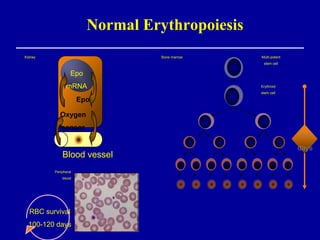
Normal Erythropoiesis
Kidney                            Bone marrow   Multi-potent
                                                 stem cell


                  Epo
               mRNA                             Erythroid
                                                stem cell

                      Epo

            Oxygen
             sensor
                                                               3-4
                                                               days
             Blood vessel
         Peripheral
             blood


  RBC survival
  100-120 days
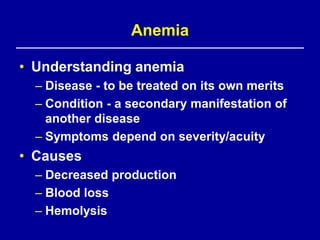
Anemia

• Understanding anemia
  – Disease - to be treated on its own merits
  – Condition - a secondary manifestation of
    another disease
  – Symptoms depend on severity/acuity
• Causes
  – Decreased production
  – Blood loss
  – Hemolysis
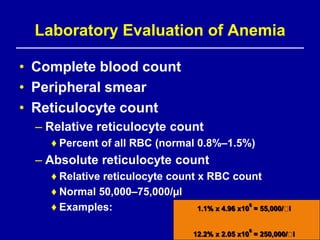
Laboratory Evaluation of Anemia

• Complete blood count
• Peripheral smear
• Reticulocyte count
  – Relative reticulocyte count
    ♦ Percent of all RBC (normal 0.8%–1.5%)
  – Absolute reticulocyte count
    ♦ Relative reticulocyte count x RBC count
    ♦ Normal 50,000–75,000/µl
    ♦ Examples:                                  6
                                  1.1% x 4.96 x10 = 55,000/l


                                                    6
                                     12.2% x 2.05 x10 = 250,000/l
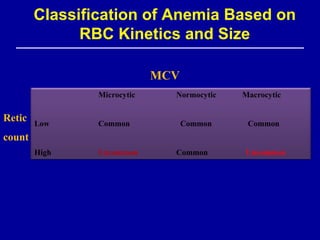
Classification of Anemia Based on
              RBC Kinetics and Size

                             MCV
                Microcytic     Normocytic   Macrocytic

Retic   Low     Common             Common    Common
count
        High    Uncommon       Common       Uncommon
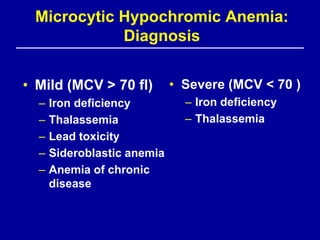
Microcytic Hypochromic Anemia:
            Diagnosis


• Mild (MCV > 70 fl)         • Severe (MCV < 70 )
  –   Iron deficiency          – Iron deficiency
  –   Thalassemia              – Thalassemia
  –   Lead toxicity
  –   Sideroblastic anemia
  –   Anemia of chronic
      disease
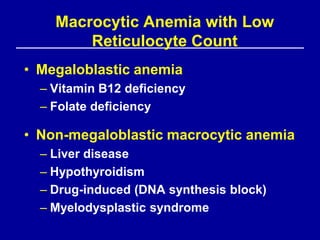
Macrocytic Anemia with Low
        Reticulocyte Count
• Megaloblastic anemia
  – Vitamin B12 deficiency
  – Folate deficiency

• Non-megaloblastic macrocytic anemia
  – Liver disease
  – Hypothyroidism
  – Drug-induced (DNA synthesis block)
  – Myelodysplastic syndrome

Anemia introduction - medicaldump.com

  • 1.
  • 2.
    Normal Erythropoiesis Kidney Bone marrow Multi-potent stem cell Epo mRNA Erythroid stem cell Epo Oxygen sensor 3-4 days Blood vessel Peripheral blood RBC survival 100-120 days
  • 7.
    Anemia • Understanding anemia – Disease - to be treated on its own merits – Condition - a secondary manifestation of another disease – Symptoms depend on severity/acuity • Causes – Decreased production – Blood loss – Hemolysis
  • 8.
    Laboratory Evaluation ofAnemia • Complete blood count • Peripheral smear • Reticulocyte count – Relative reticulocyte count ♦ Percent of all RBC (normal 0.8%–1.5%) – Absolute reticulocyte count ♦ Relative reticulocyte count x RBC count ♦ Normal 50,000–75,000/µl ♦ Examples: 6 1.1% x 4.96 x10 = 55,000/l 6 12.2% x 2.05 x10 = 250,000/l
  • 9.
    Classification of AnemiaBased on RBC Kinetics and Size MCV Microcytic Normocytic Macrocytic Retic Low Common Common Common count High Uncommon Common Uncommon
  • 10.
    Microcytic Hypochromic Anemia: Diagnosis • Mild (MCV > 70 fl) • Severe (MCV < 70 ) – Iron deficiency – Iron deficiency – Thalassemia – Thalassemia – Lead toxicity – Sideroblastic anemia – Anemia of chronic disease
  • 11.
    Macrocytic Anemia withLow Reticulocyte Count • Megaloblastic anemia – Vitamin B12 deficiency – Folate deficiency • Non-megaloblastic macrocytic anemia – Liver disease – Hypothyroidism – Drug-induced (DNA synthesis block) – Myelodysplastic syndrome