
ANALYSIS OF CONTROL SYSTEMS OF SMALL HYDRO POWER
PLANT ON ISLANDING OPERATION AND DISTRIBUTION
NETWORK CONNECTION OPERATION
Himanshu Paghdal
(232825)
Outlines
• About work
• Background
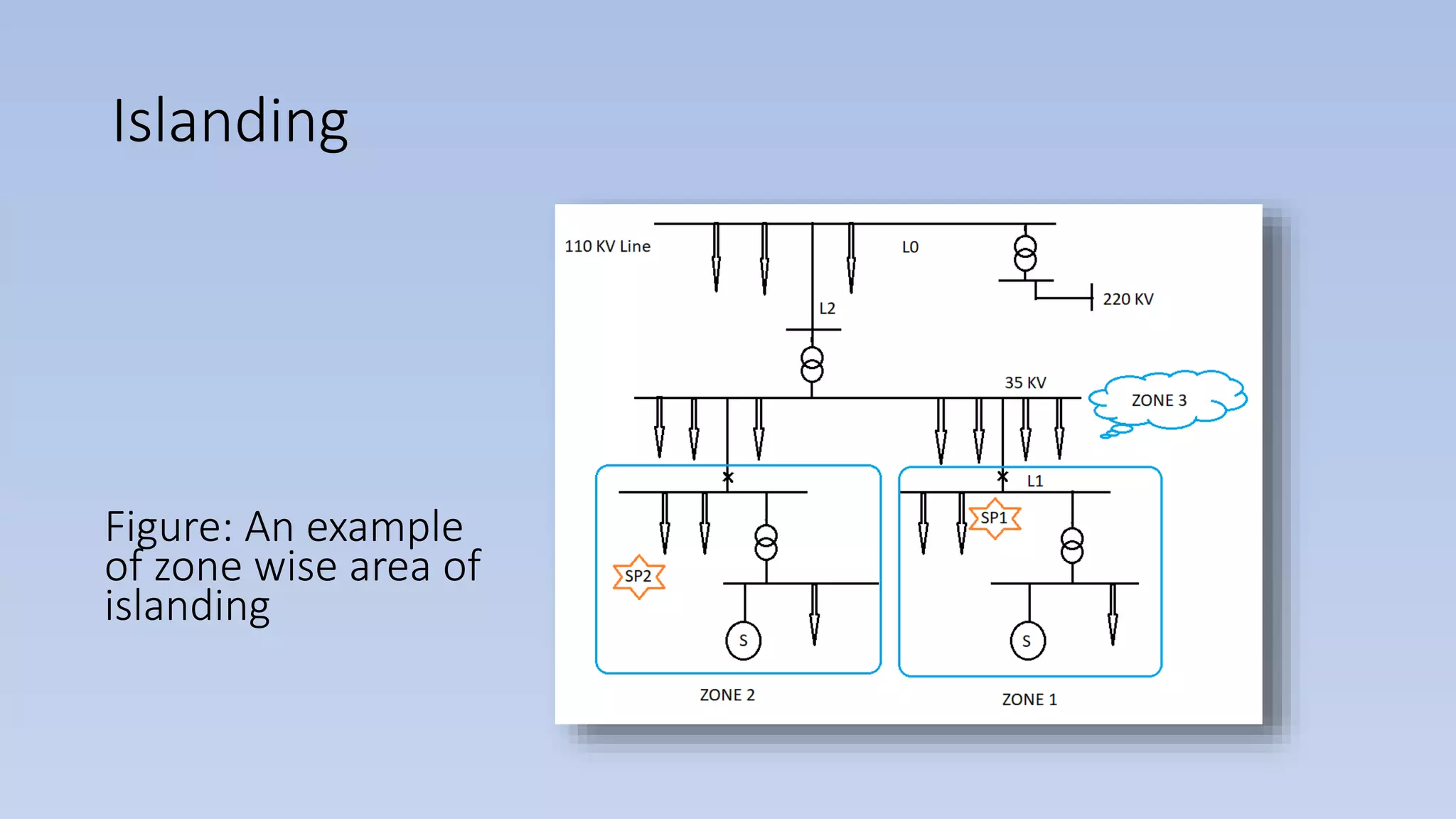
• Hydro power plants - General layout, Islanding
• Field test results, demand curve behaviour
• Simulation
• Simulation results
• Conclusion
• Future work
• References
About work
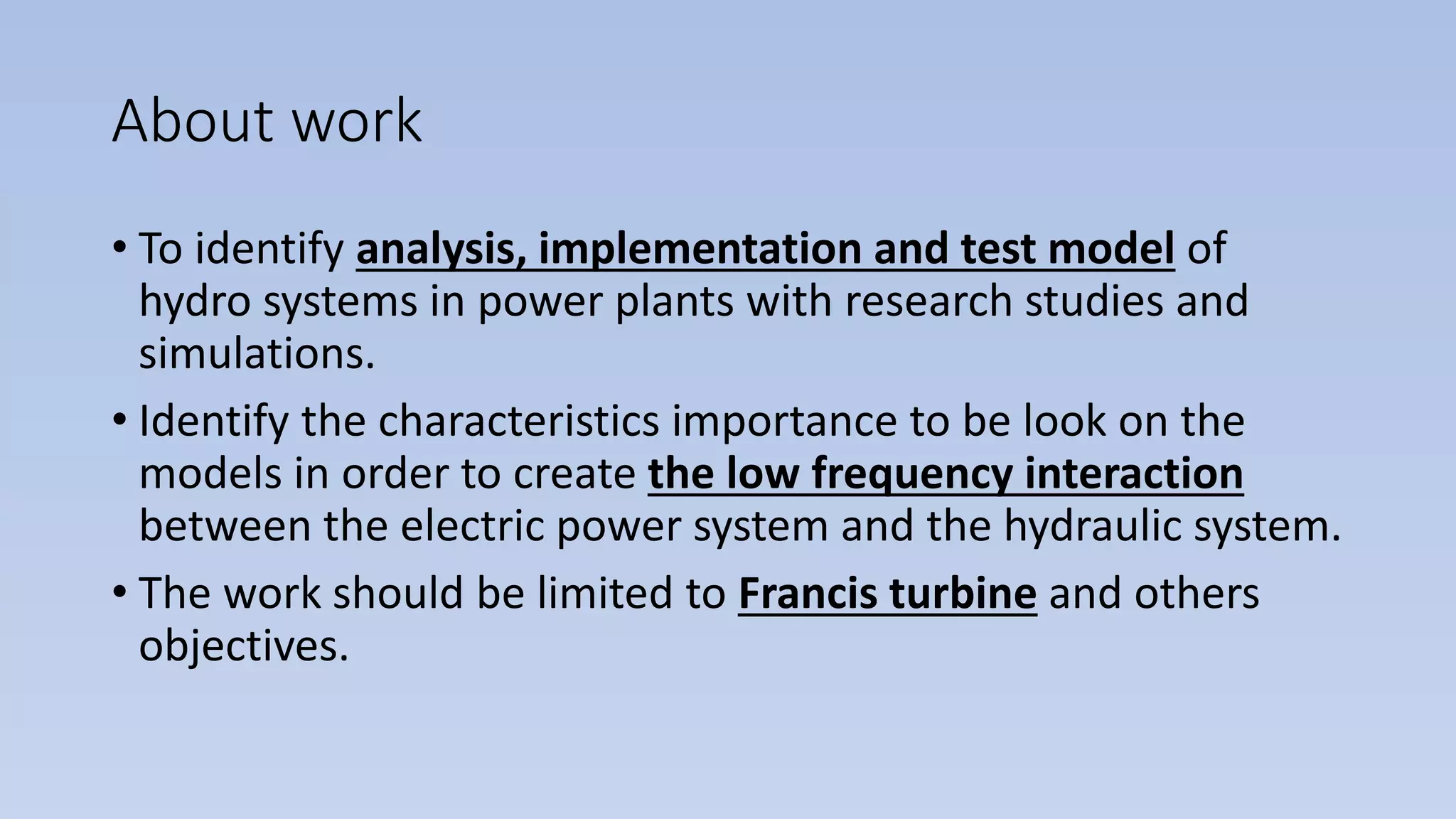
• To identify analysis, implementation and test model of
hydro systems in power plants with research studies and
simulations.
• Identify the characteristics importance to be look on the
models in order to create the low frequency interaction
between the electric power system and the hydraulic system.
• The work should be limited to Francis turbine and others
objectives.
Background
• “Turbine and Hydropower Modelling” - SINTEF Energy Research
• Considering an ideal turbine and ignoring the elasticity of the conduit
system.
• These models only reflect part of the real satiations and as such could
have a limited application.
• Today is clean energy-saving energy.
• For that, we will go to a destructive coal plant and only generate
electricity, which is actually environmentally friendly and meets the
demand for electricity.
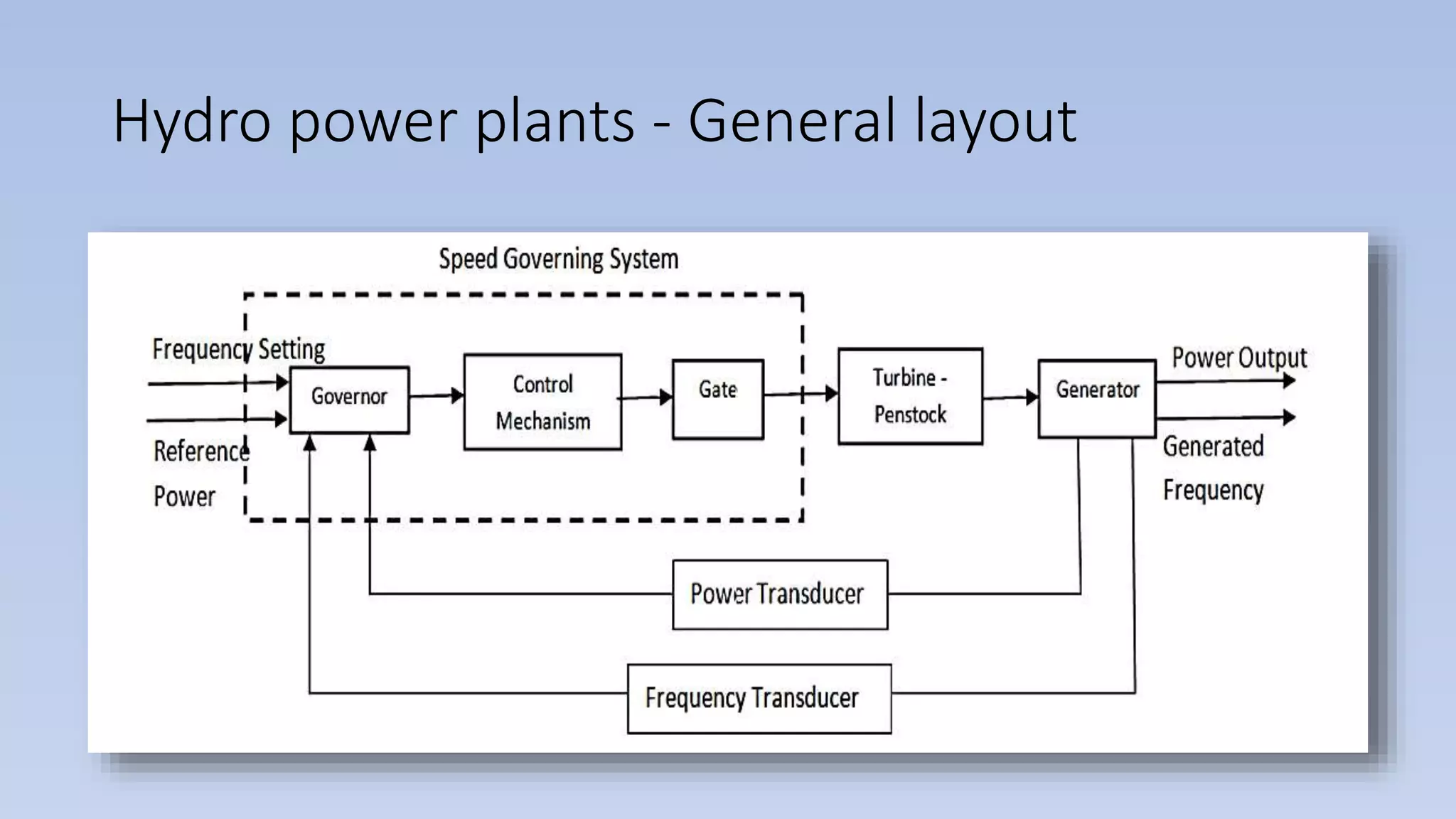
Hydro power plants - General layout
Islanding
Figure: An example
of zone wise area of
islanding
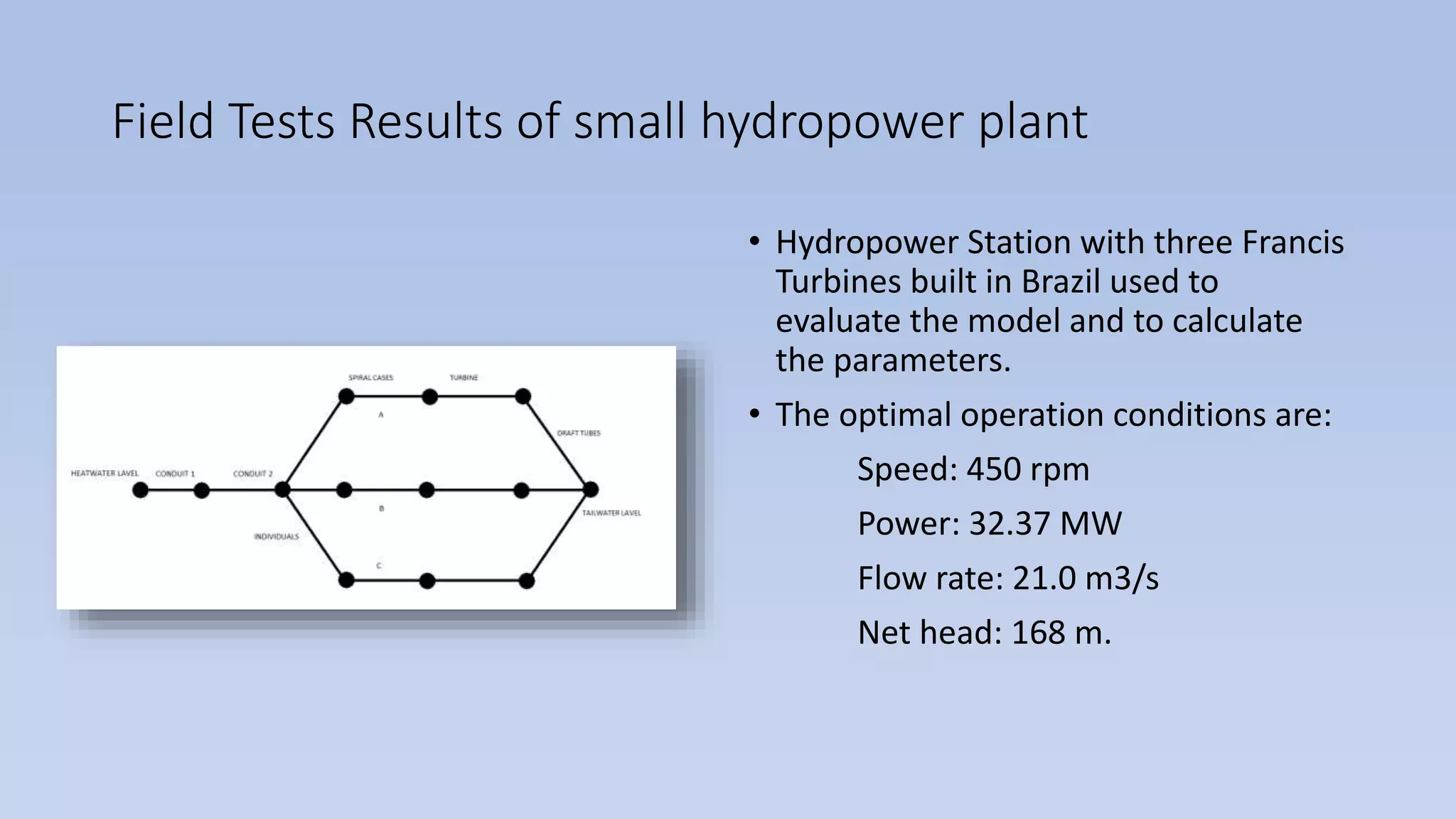
Field Tests Results of small hydropower plant
• Hydropower Station with three Francis
Turbines built in Brazil used to
evaluate the model and to calculate
the parameters.
• The optimal operation conditions are:
Speed: 450 rpm
Power: 32.37 MW
Flow rate: 21.0 m3/s
Net head: 168 m.
Demand Curve Behavior
0
0.2
0.4
0.6
0.8
1
1.2
1.4
-0.02
-0.015
-0.01
-0.005
0
0.005
0.01
0.015
0.02
0.025
0.03
0.035
1 2 3 4 5 6 7 8 9 10 11 12 13 14 15 16 17 18 19 20 21 22 23 24
Powerpu]
Dw[pu]
Axis Title
Dw power [pu]
Figure: Speed variation of demand curve of one regular day
Simulation
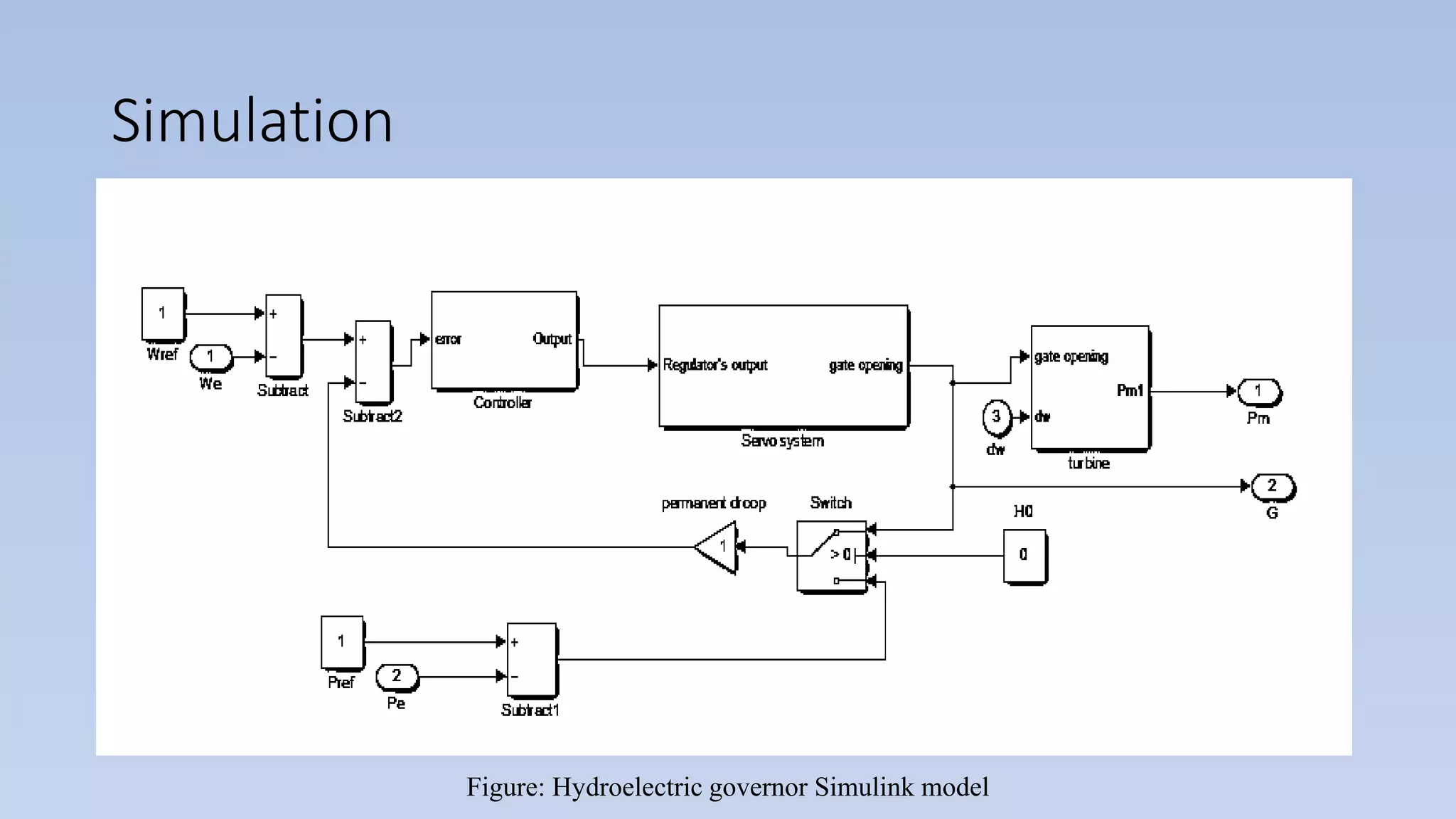
Figure: Hydroelectric governor Simulink model
Figure: Function block parameters
hydro turbine governor[HTG]
Figure: Excitation system - parameters
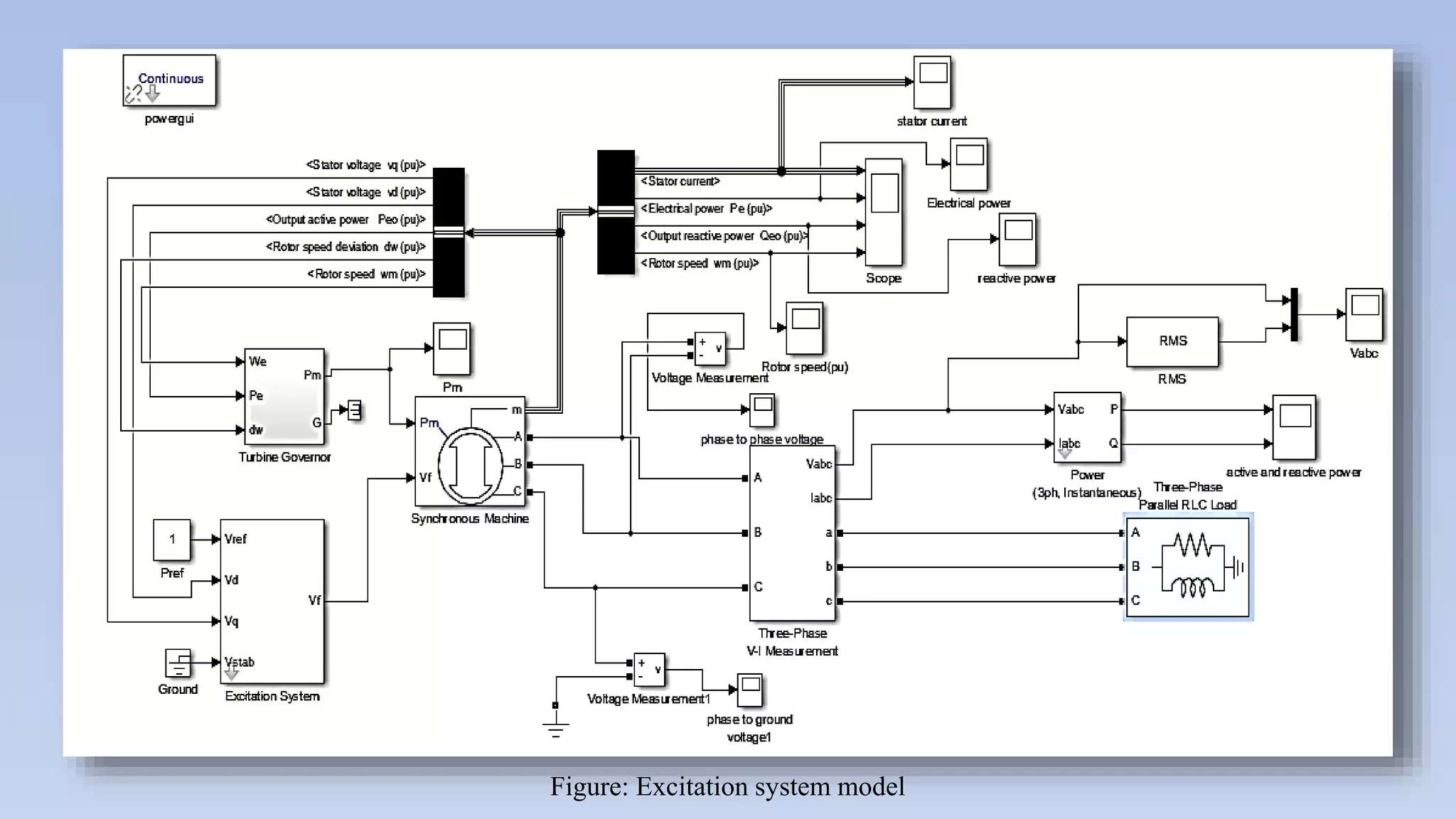
Figure: Excitation system model
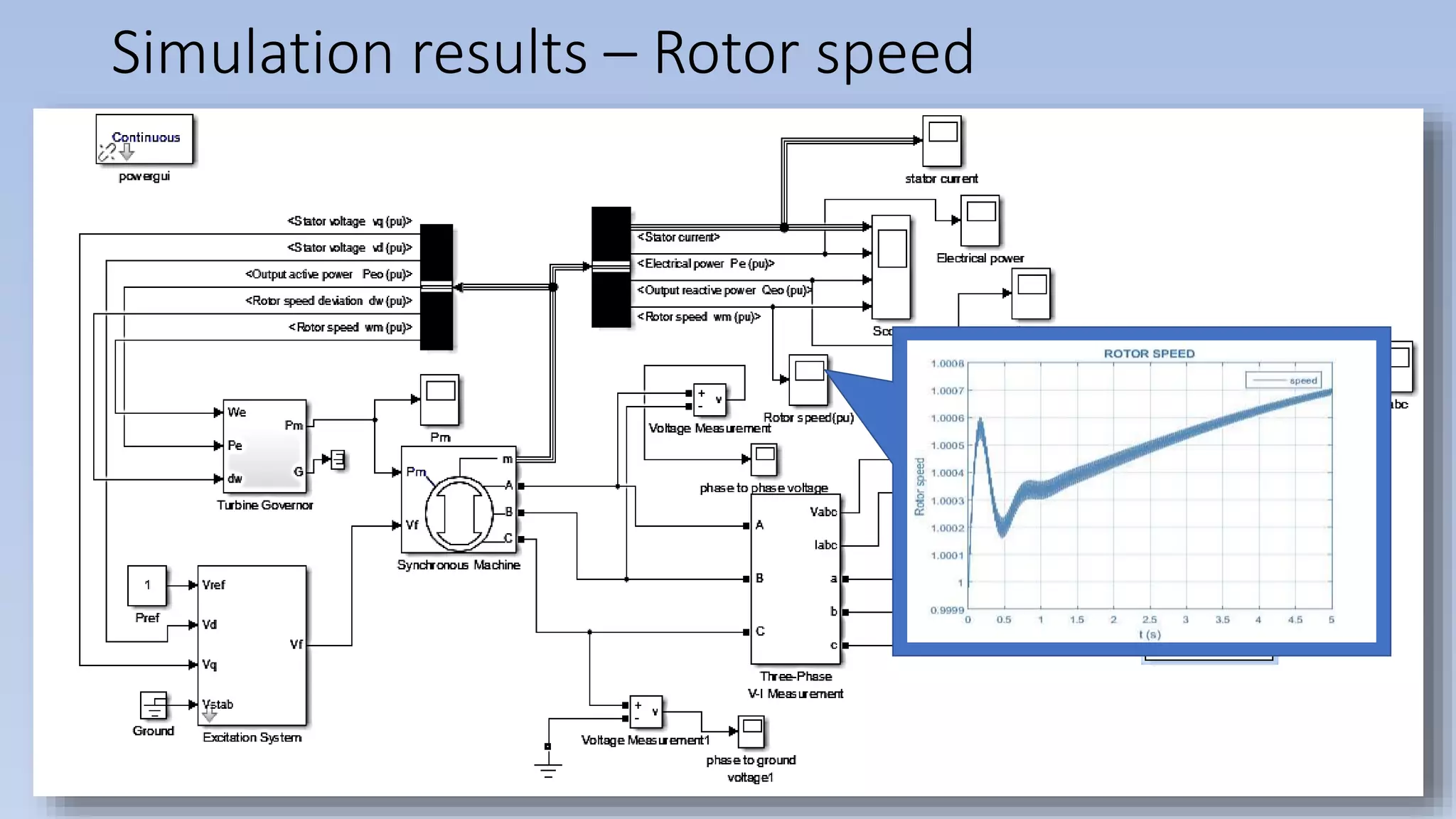
Simulation results – Rotor speed
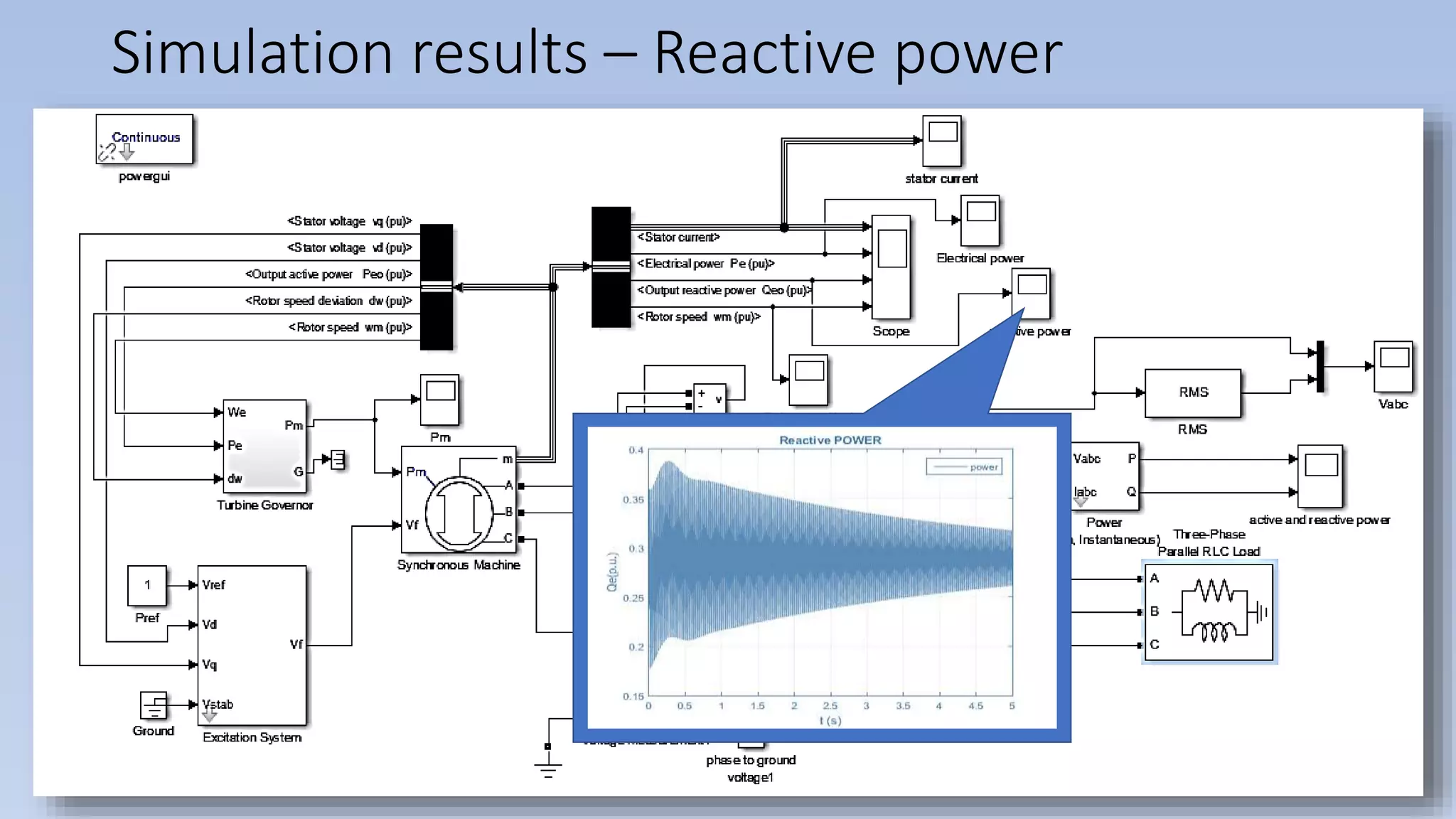
Simulation results – Reactive power
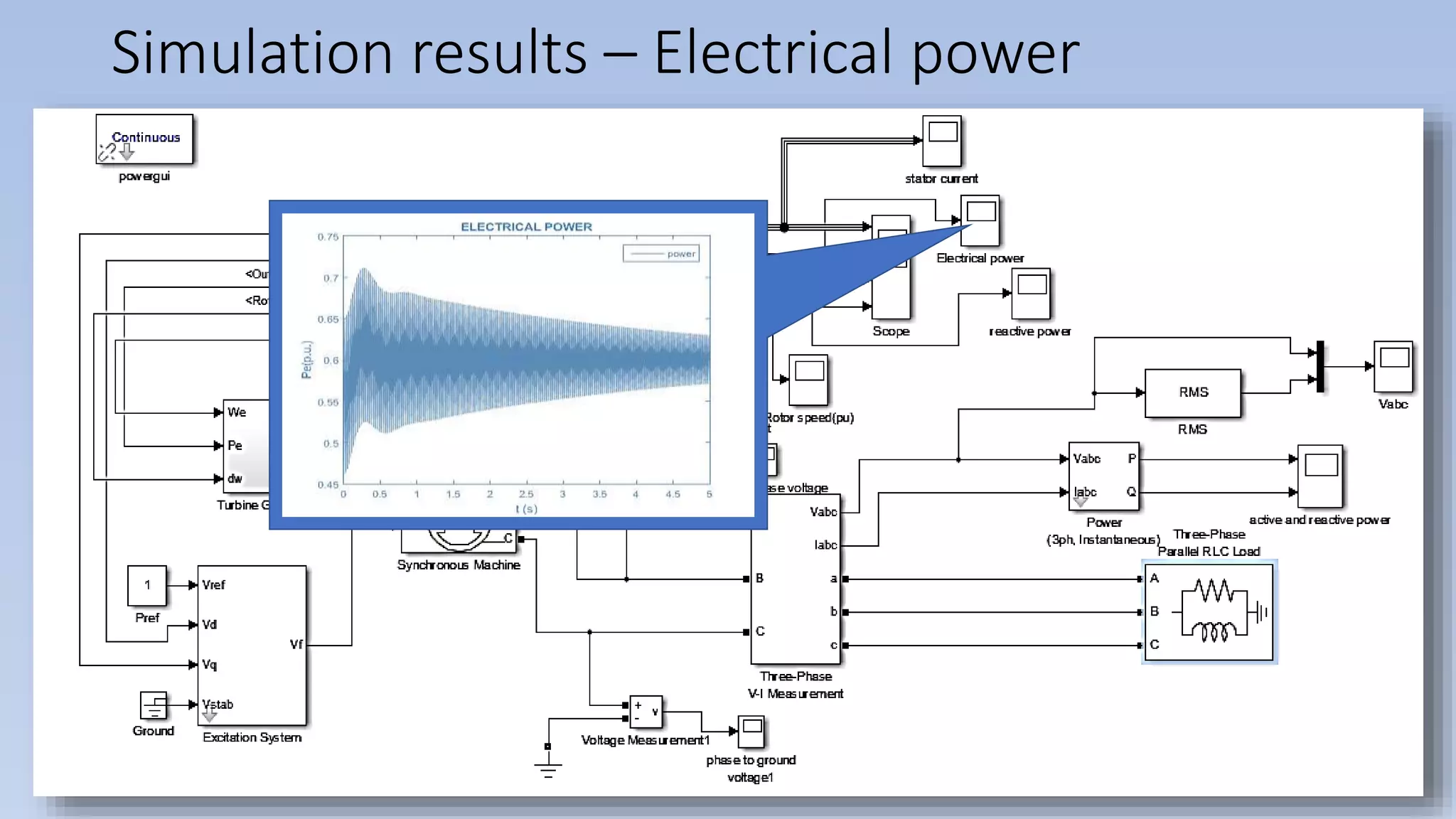
Simulation results – Electrical power
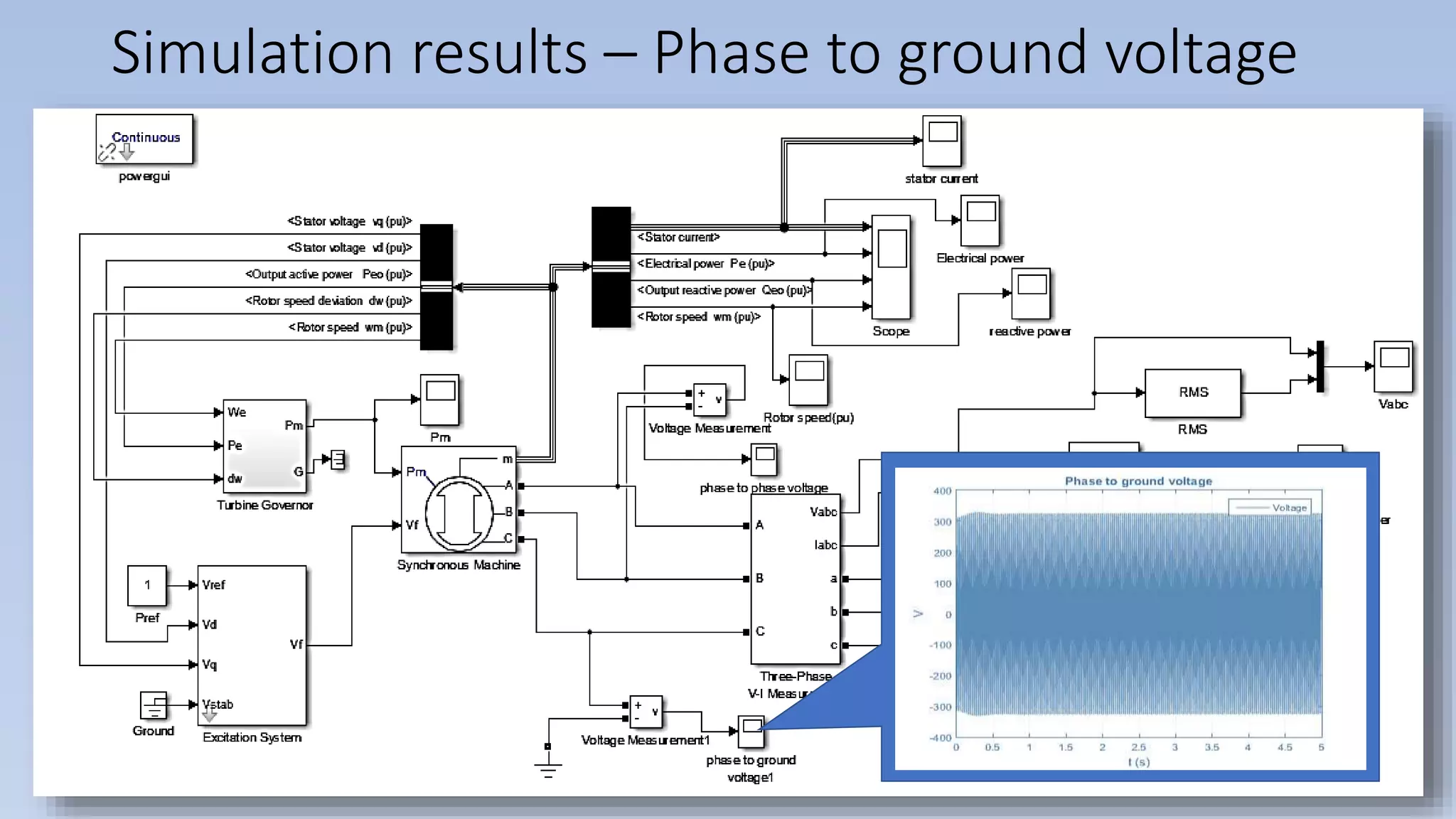
Simulation results – Phase to ground voltage
Conclusions
• This function connects the non-linear model analysis with primary control
system optimization. This can define the model's validation, objectives and
controller's dimensions.
• The model's parameters can be calculated based on the actual hydropower
plant running with a turbine, which is satisfactorily cheaper. They show
flow, power and speed less than 1percent. These deviations have been
estimated on model parameters. The analysis shows that the PI controller
represents the best performance index.
• The reaction of the PI Controller Plant model to the actual demand turn
represents the behaviour in sustainability measures for this type of power
plant and the mechanical power demands the power of demand.
Future work
• In future demand, the demonstration of this system can be prepared
more efficiently, and some regulatory block systems can show adverts
in the ad by reactivating power control. Devices will be integrated into
modelling, which can be extended to the system’s capabilities.
• It will be possible to measure the future near real-life power plants.
• Integrate Hydraulic System Models in Dynamic Power System
Simulation Model with the intention to study by possible low-
frequency counteraction.
References
• Auwal Abubakar Usman, Rabiu Aliyu Abdulkadir, MODELLING AND SIMULATION
OF MICRO HYDRO POWER PLANT,ISSN 2348-7550.
• Hasmaini Mohamada, Hazlie Mokhlisa, Ab Halim Abu Bakara, Hew Wooi Pinga A
review on islanding operation and control for distribution network connected
with small hydro power plant, Renewable and Sustainable Energy Reviews 15
(2011) 3952–3962.
• DTI. 2005, Islanded operation of distribution networks.
• X. Ding, Synchronized Phasor Measurement and Islanding Operation of
Distributed Generation, Doctor of Philosophy, Faculty of Engineering, The
Queen’s University Belfast, 2006.
• Lin G, Junrong X, Yiping D. Analysis of power system frequency responses with
hydro turbines incorporating load shedding. In: 2010, the 5th IEEE Conference on
Industrial Electronics and Applications (ICIEA). 2010. p. 893–7.

Analysis of control systems of small hydro power plant on islanding operation and distribution network connection operation

  • 1.
    ANALYSIS OF CONTROLSYSTEMS OF SMALL HYDRO POWER PLANT ON ISLANDING OPERATION AND DISTRIBUTION NETWORK CONNECTION OPERATION Himanshu Paghdal (232825)
  • 2.
    Outlines • About work •Background • Hydro power plants - General layout, Islanding • Field test results, demand curve behaviour • Simulation • Simulation results • Conclusion • Future work • References
  • 3.
    About work • Toidentify analysis, implementation and test model of hydro systems in power plants with research studies and simulations. • Identify the characteristics importance to be look on the models in order to create the low frequency interaction between the electric power system and the hydraulic system. • The work should be limited to Francis turbine and others objectives.
  • 4.
    Background • “Turbine andHydropower Modelling” - SINTEF Energy Research • Considering an ideal turbine and ignoring the elasticity of the conduit system. • These models only reflect part of the real satiations and as such could have a limited application. • Today is clean energy-saving energy. • For that, we will go to a destructive coal plant and only generate electricity, which is actually environmentally friendly and meets the demand for electricity.
  • 5.
    Hydro power plants- General layout
  • 6.
    Islanding Figure: An example ofzone wise area of islanding
  • 7.
    Field Tests Resultsof small hydropower plant • Hydropower Station with three Francis Turbines built in Brazil used to evaluate the model and to calculate the parameters. • The optimal operation conditions are: Speed: 450 rpm Power: 32.37 MW Flow rate: 21.0 m3/s Net head: 168 m.
  • 8.
    Demand Curve Behavior 0 0.2 0.4 0.6 0.8 1 1.2 1.4 -0.02 -0.015 -0.01 -0.005 0 0.005 0.01 0.015 0.02 0.025 0.03 0.035 12 3 4 5 6 7 8 9 10 11 12 13 14 15 16 17 18 19 20 21 22 23 24 Powerpu] Dw[pu] Axis Title Dw power [pu] Figure: Speed variation of demand curve of one regular day
  • 9.
  • 10.
    Figure: Function blockparameters hydro turbine governor[HTG] Figure: Excitation system - parameters
  • 11.
  • 12.
  • 13.
    Simulation results –Reactive power
  • 14.
    Simulation results –Electrical power
  • 15.
    Simulation results –Phase to ground voltage
  • 16.
    Conclusions • This functionconnects the non-linear model analysis with primary control system optimization. This can define the model's validation, objectives and controller's dimensions. • The model's parameters can be calculated based on the actual hydropower plant running with a turbine, which is satisfactorily cheaper. They show flow, power and speed less than 1percent. These deviations have been estimated on model parameters. The analysis shows that the PI controller represents the best performance index. • The reaction of the PI Controller Plant model to the actual demand turn represents the behaviour in sustainability measures for this type of power plant and the mechanical power demands the power of demand.
  • 17.
    Future work • Infuture demand, the demonstration of this system can be prepared more efficiently, and some regulatory block systems can show adverts in the ad by reactivating power control. Devices will be integrated into modelling, which can be extended to the system’s capabilities. • It will be possible to measure the future near real-life power plants. • Integrate Hydraulic System Models in Dynamic Power System Simulation Model with the intention to study by possible low- frequency counteraction.
  • 18.
    References • Auwal AbubakarUsman, Rabiu Aliyu Abdulkadir, MODELLING AND SIMULATION OF MICRO HYDRO POWER PLANT,ISSN 2348-7550. • Hasmaini Mohamada, Hazlie Mokhlisa, Ab Halim Abu Bakara, Hew Wooi Pinga A review on islanding operation and control for distribution network connected with small hydro power plant, Renewable and Sustainable Energy Reviews 15 (2011) 3952–3962. • DTI. 2005, Islanded operation of distribution networks. • X. Ding, Synchronized Phasor Measurement and Islanding Operation of Distributed Generation, Doctor of Philosophy, Faculty of Engineering, The Queen’s University Belfast, 2006. • Lin G, Junrong X, Yiping D. Analysis of power system frequency responses with hydro turbines incorporating load shedding. In: 2010, the 5th IEEE Conference on Industrial Electronics and Applications (ICIEA). 2010. p. 893–7.