
AN INTRODUCTION
TO FUNORMALING
BUSINESS
Alireza Ranjbar SHourabi
Gamified or Gamifyed!
re based on the number of the typos you can f
Count conceptual conflicts in my speech!
And
Win a free Gamification session!
Alireza Ranjbar SHourabi
 Problem Designer (Game Designer)
 Problem Solver (Gamification Designer)
 Electrical Engineer (IUST)
 Animation & Game (Mobile – Desktop)
 Business (Creativity – GrowthHacks)
 Photography(Hobby)
This Presentation
 What is Gamification
 What is not Gamification
 Definitions and Samples
 Why is it valuable? Where does the power
come from?
 How to Gamify?
Gamification?
Gamification is …
 Learning from games and their abilities to
connect with people.
 Using game elements while knowing that
a game is a lot more.
 Thinking like a game designer.
 Having objectives other than winning in
the game.
 Appreciating FUN!
 Much HARDER than it appears!
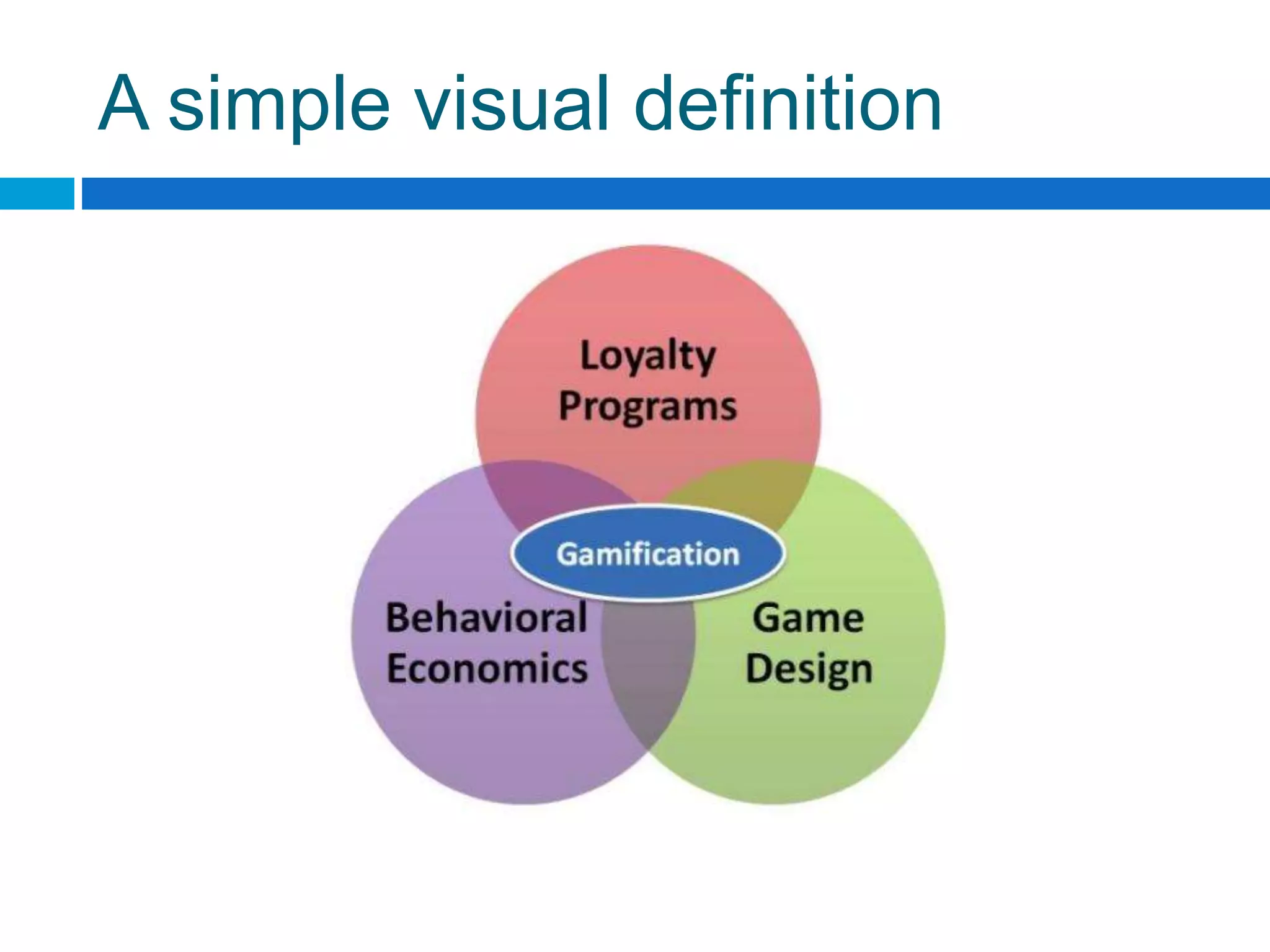
A simple visual definition
Definitions
 The use of game elements and game design
techniques in non-game contexts.
 The process of game thinking and game
mechanics to engage users and solve
problems.
 Gamification is the concept of applying game-
design thinking to non-game applications.
 the application of typical elements of game
playing to other areas of activity, typically as
an online marketing technique to encourage
engagement with a product or service.
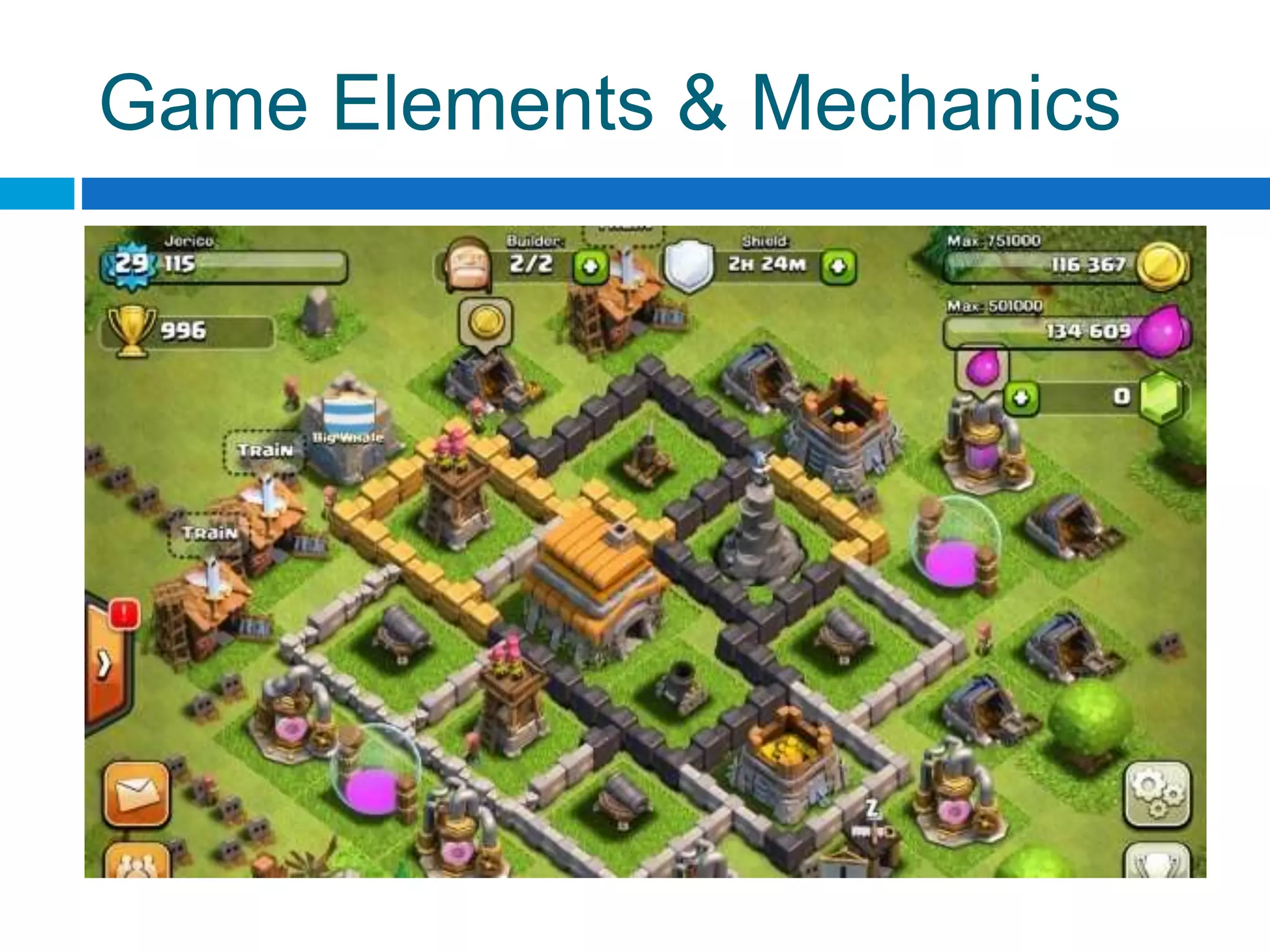
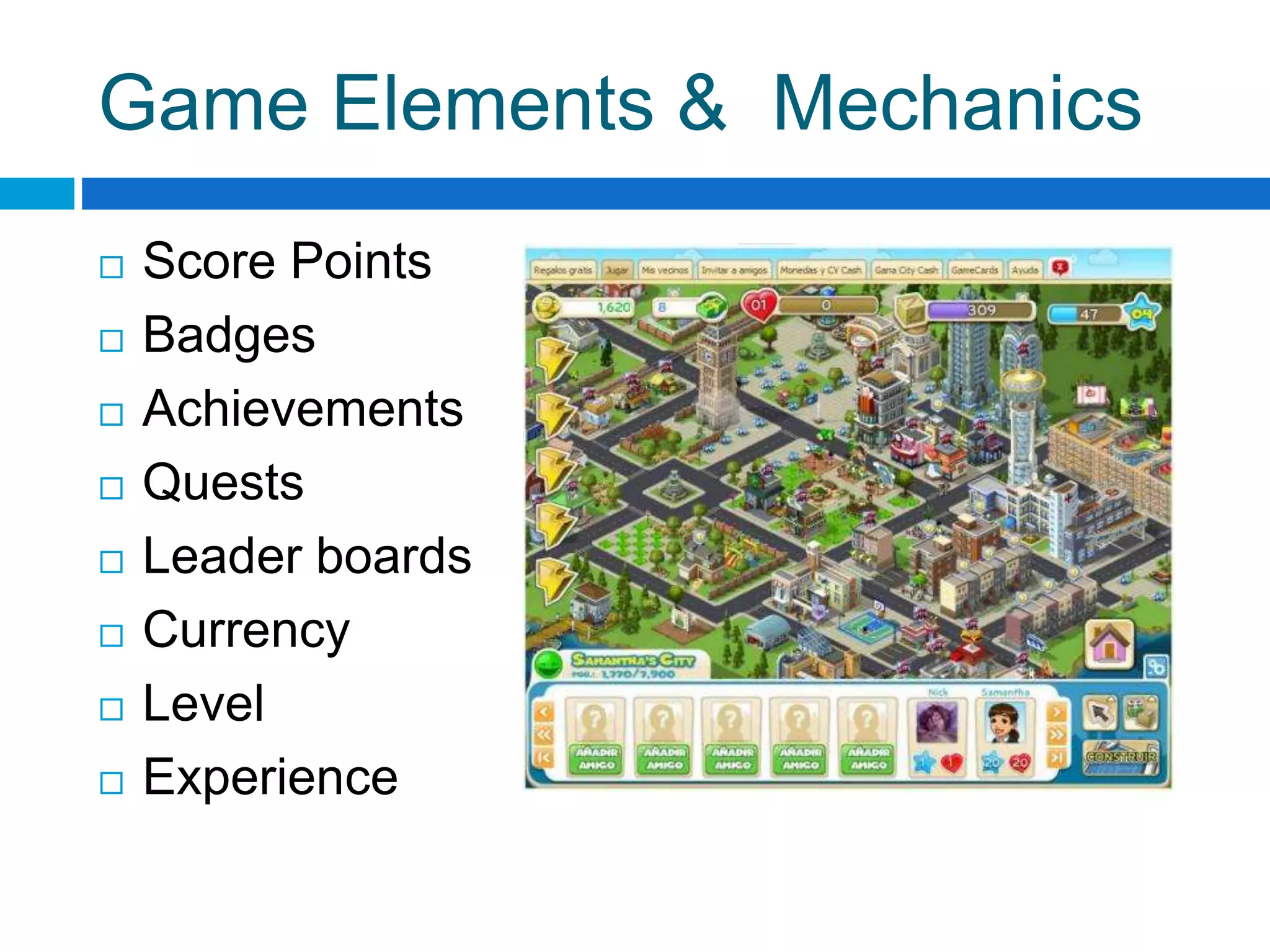
Game Elements & Mechanics
 Score Points
 Badges
 Achievements
 Quests
 Leader boards
 Currency
 Level
 Experience
Gamification is NOT …
 Making a 3D virtual world
 Making everything a game
 Game theory
 Just PBLs
 Simulations or serious games
 Windows solitaire
Gamification is NOT …
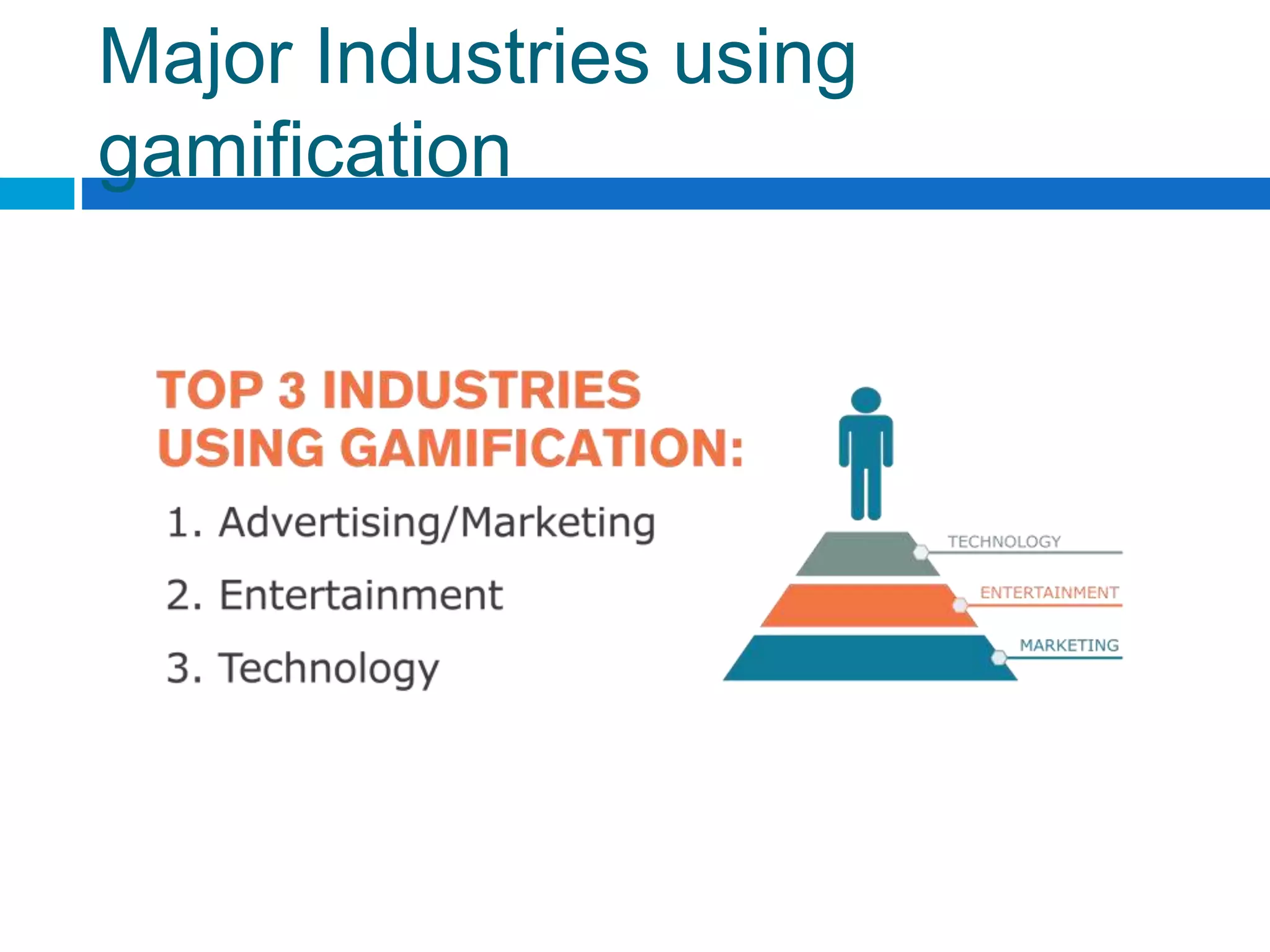
Major Industries using
gamification
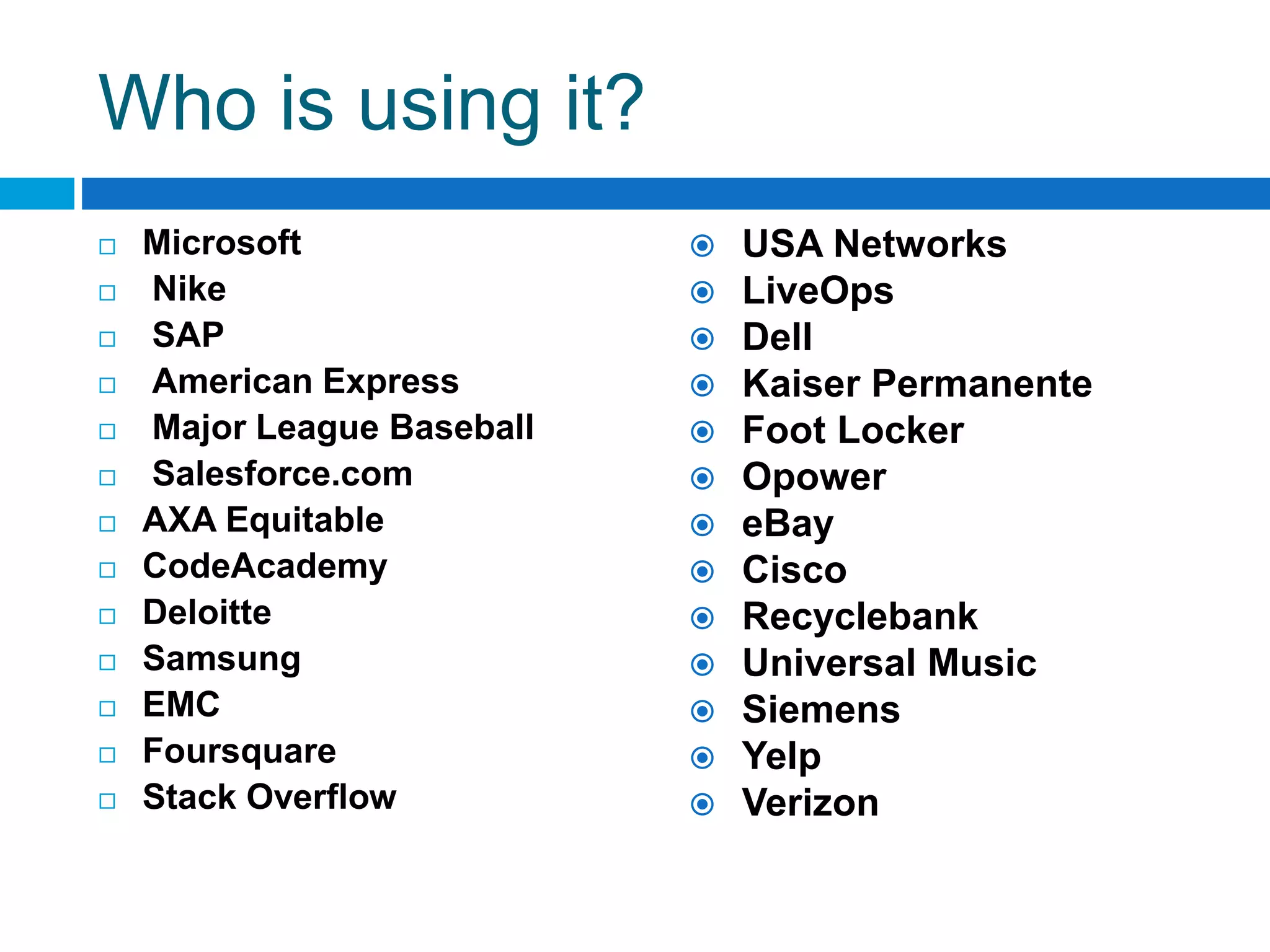
Who is using it?
 Microsoft
 Nike
 SAP
 American Express
 Major League Baseball
 Salesforce.com
 AXA Equitable
 CodeAcademy
 Deloitte
 Samsung
 EMC
 Foursquare
 Stack Overflow
 USA Networks
 LiveOps
 Dell
 Kaiser Permanente
 Foot Locker
 Opower
 eBay
 Cisco
 Recyclebank
 Universal Music
 Siemens
 Yelp
 Verizon
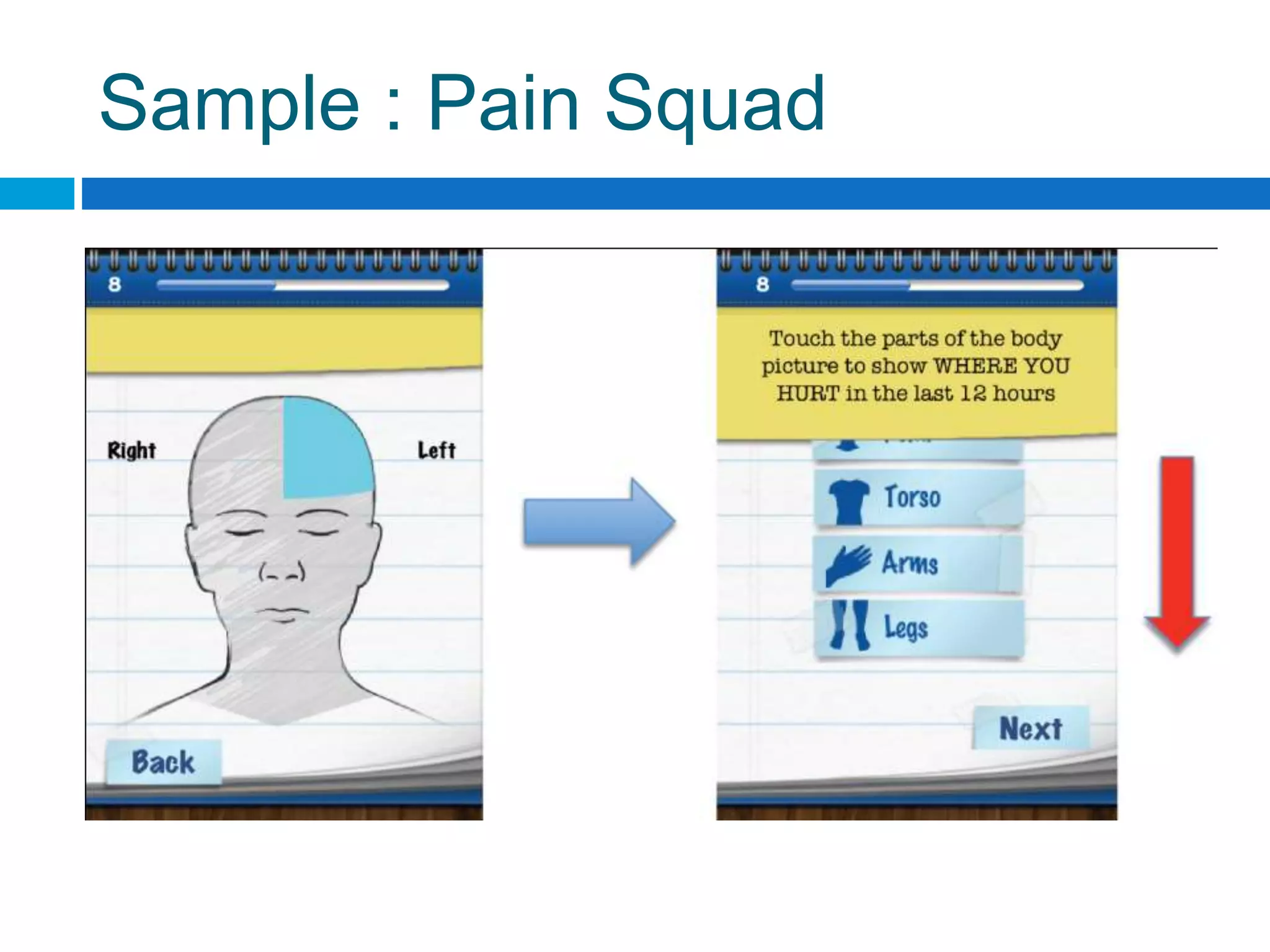
Sample : Pain Squad
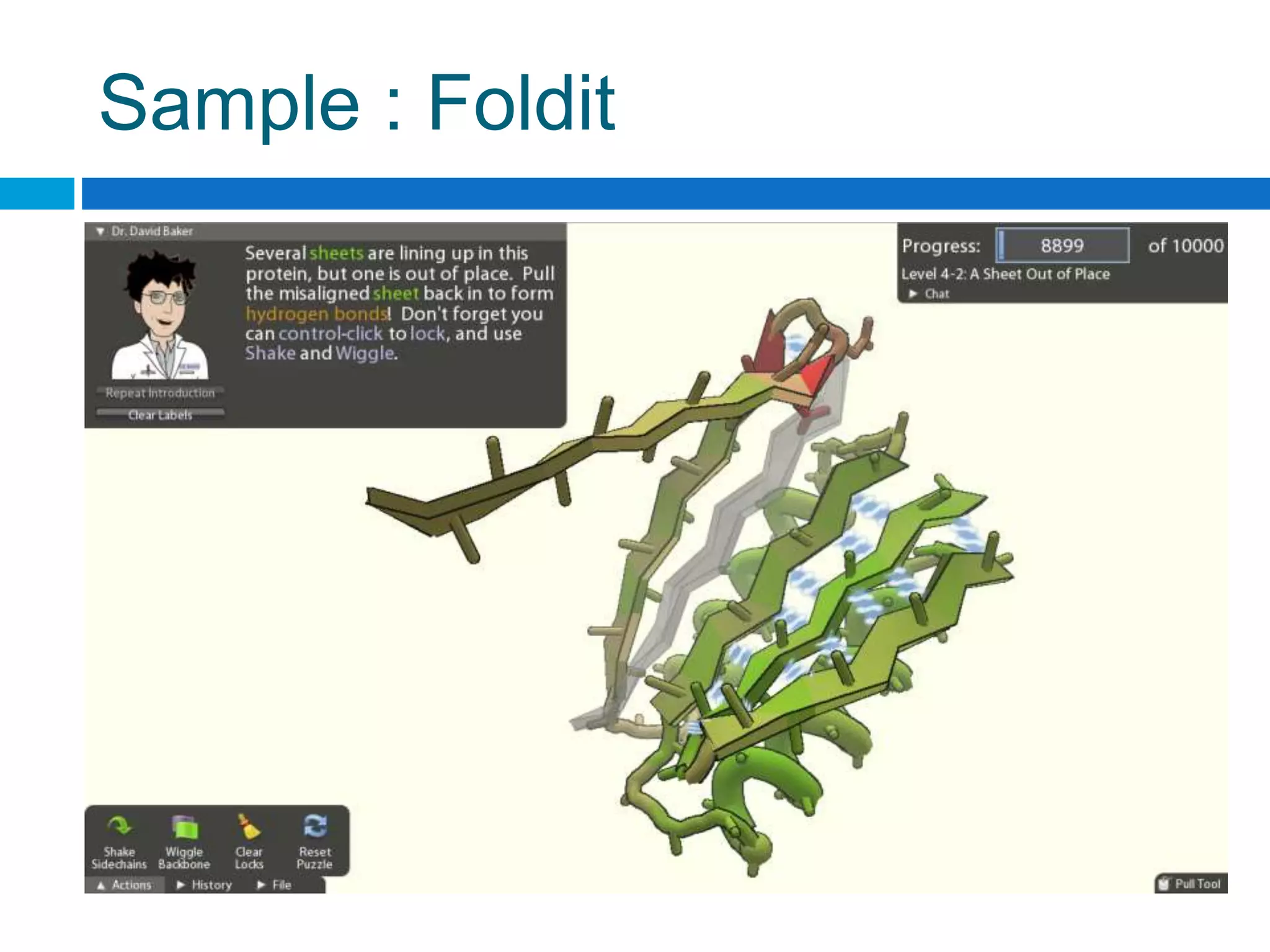
Sample : Foldit
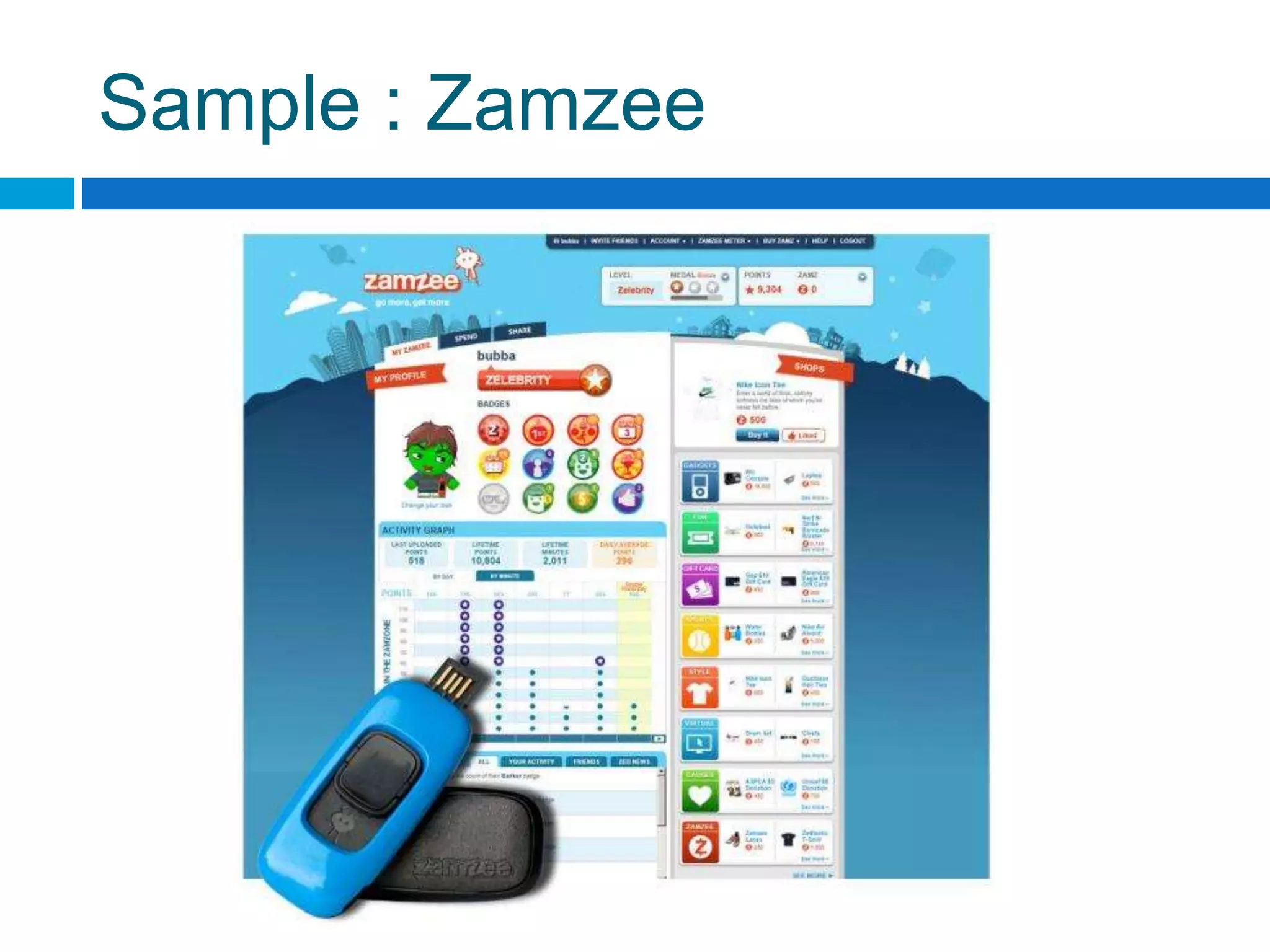
Sample : Zamzee
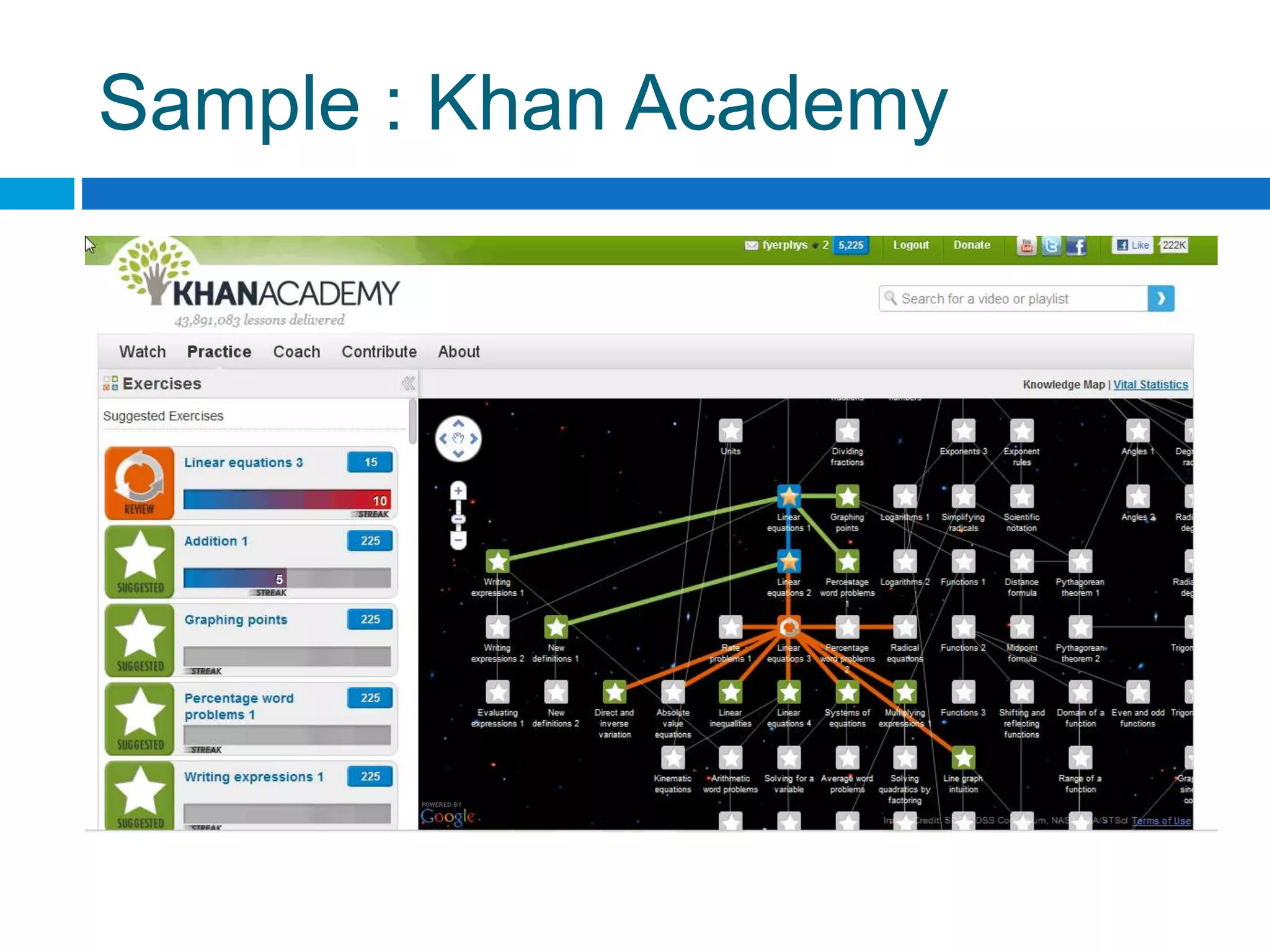
Sample : Khan Academy
Engagement = Loyalty
 Connection between consumer and a product
or service
 Recency
 Frequency
 Duration
 Virality
 Ratings
 Loyalty is no longer private!
 Behind engagement, revenue follows!
Usage : External / Internal
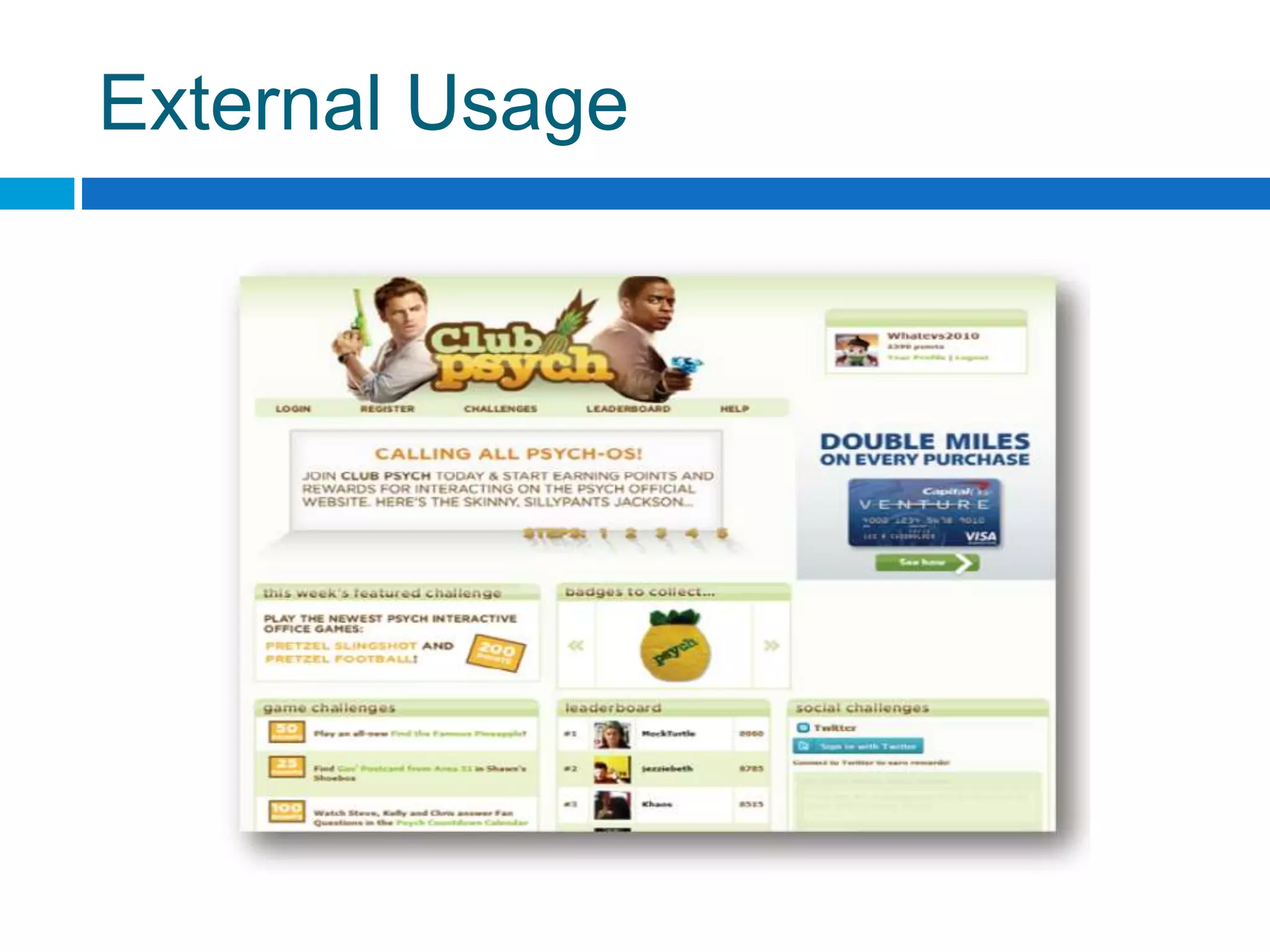
 External
 Marketing
 Sales
 Customer engagement
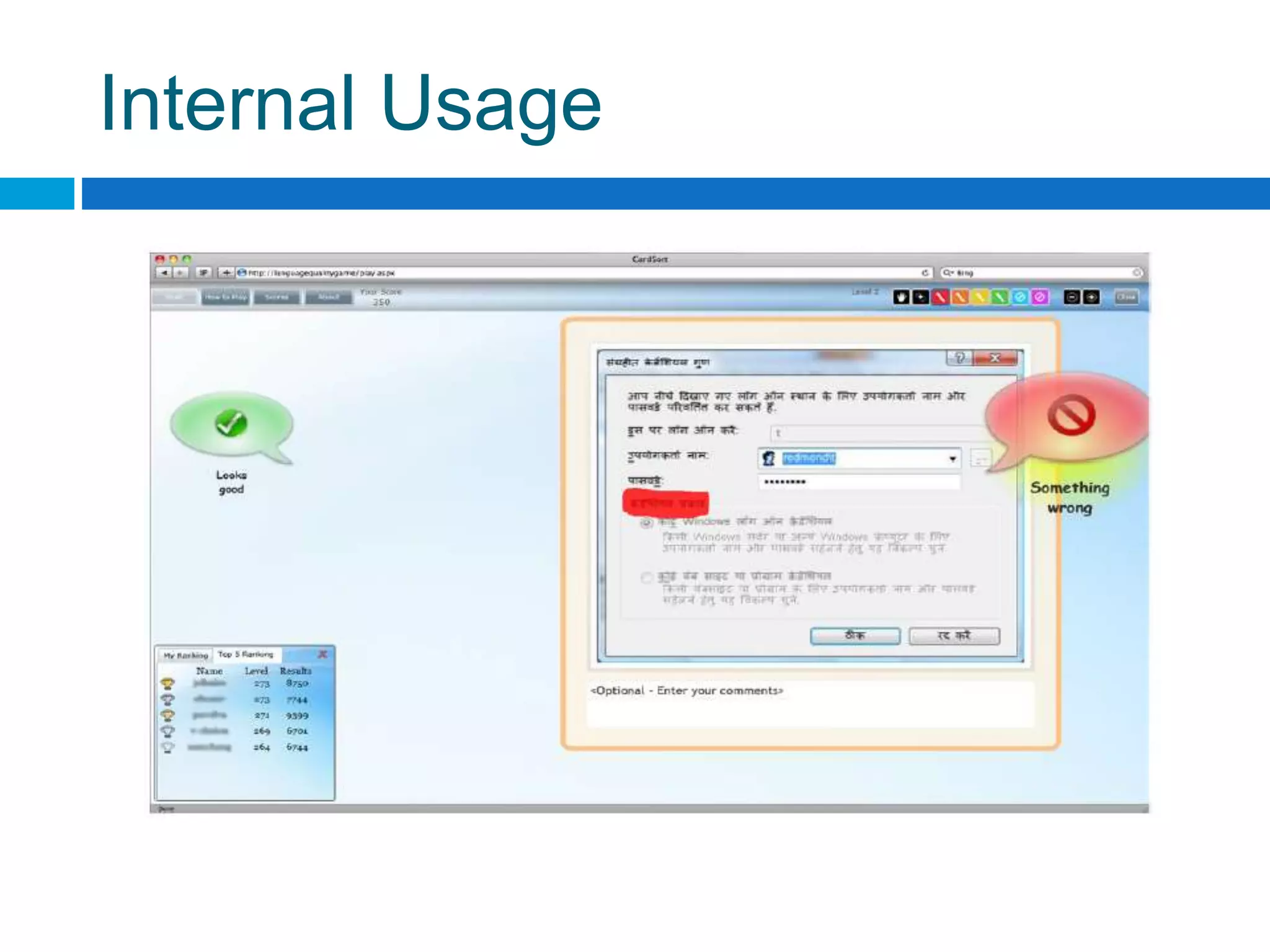
 Internal
 HR
 Productivity enhancement
 Crowd sourcing
External Usage
Internal Usage
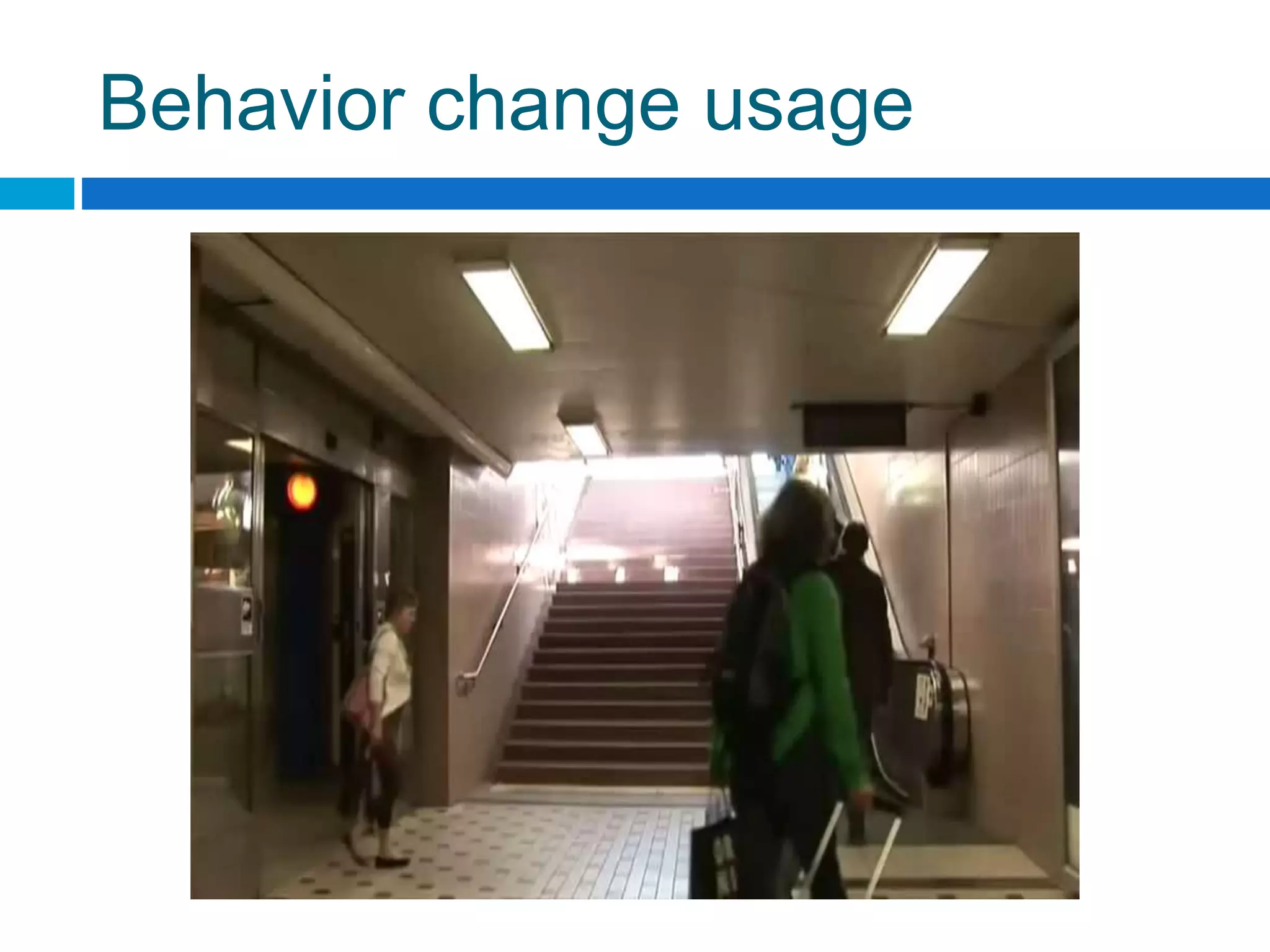
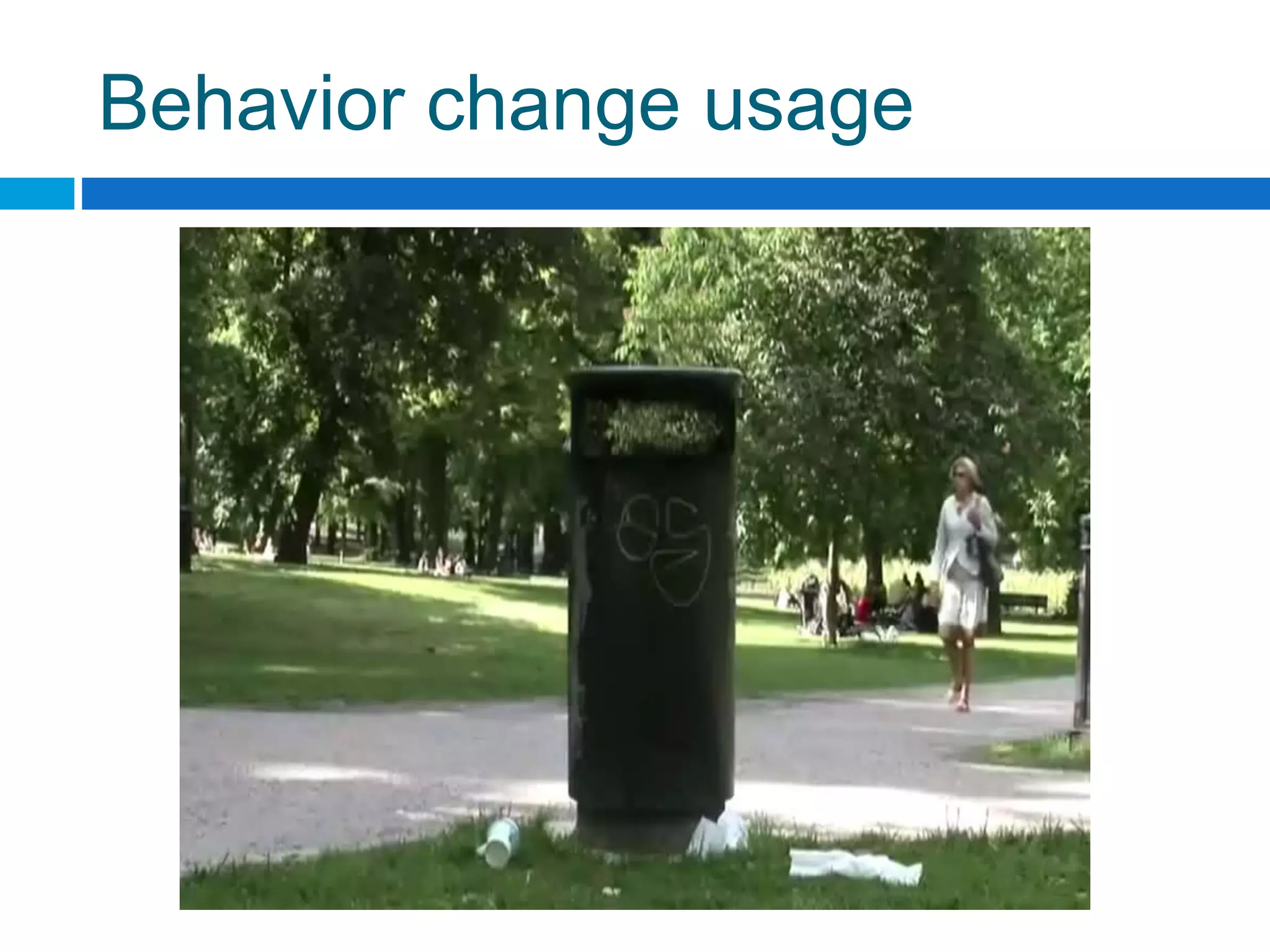
Usage : Behavior Change
 Health and wellness
 Sustainability
 Personal finance
 Social good applications
 Social Entrepreneurship
Behavior change usage
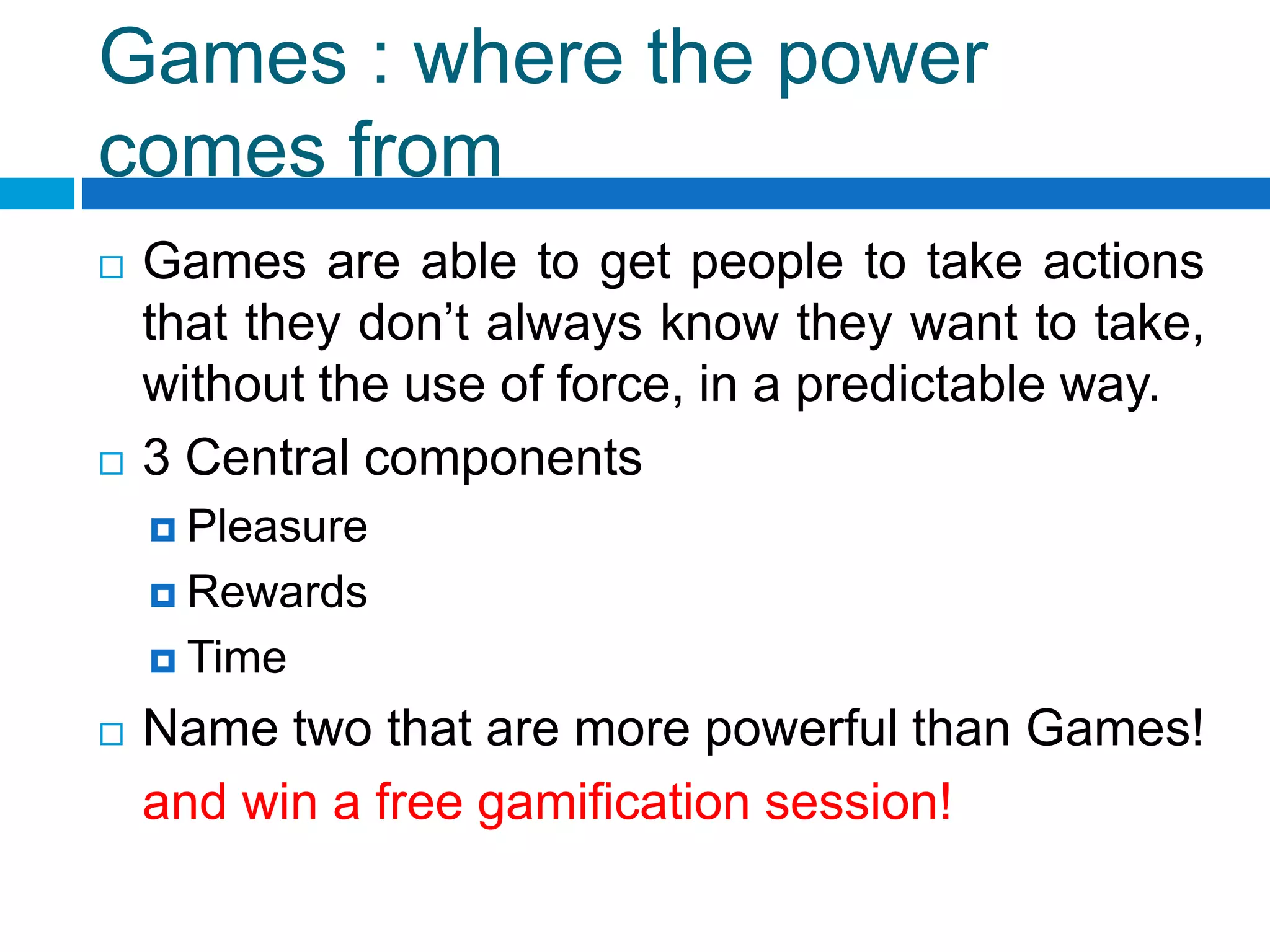
Games : where the power
comes from
 Games are able to get people to take actions
that they don’t always know they want to take,
without the use of force, in a predictable way.
 3 Central components
 Pleasure
 Rewards
 Time
 Name two that are more powerful than Games!
and win a free gamification session!
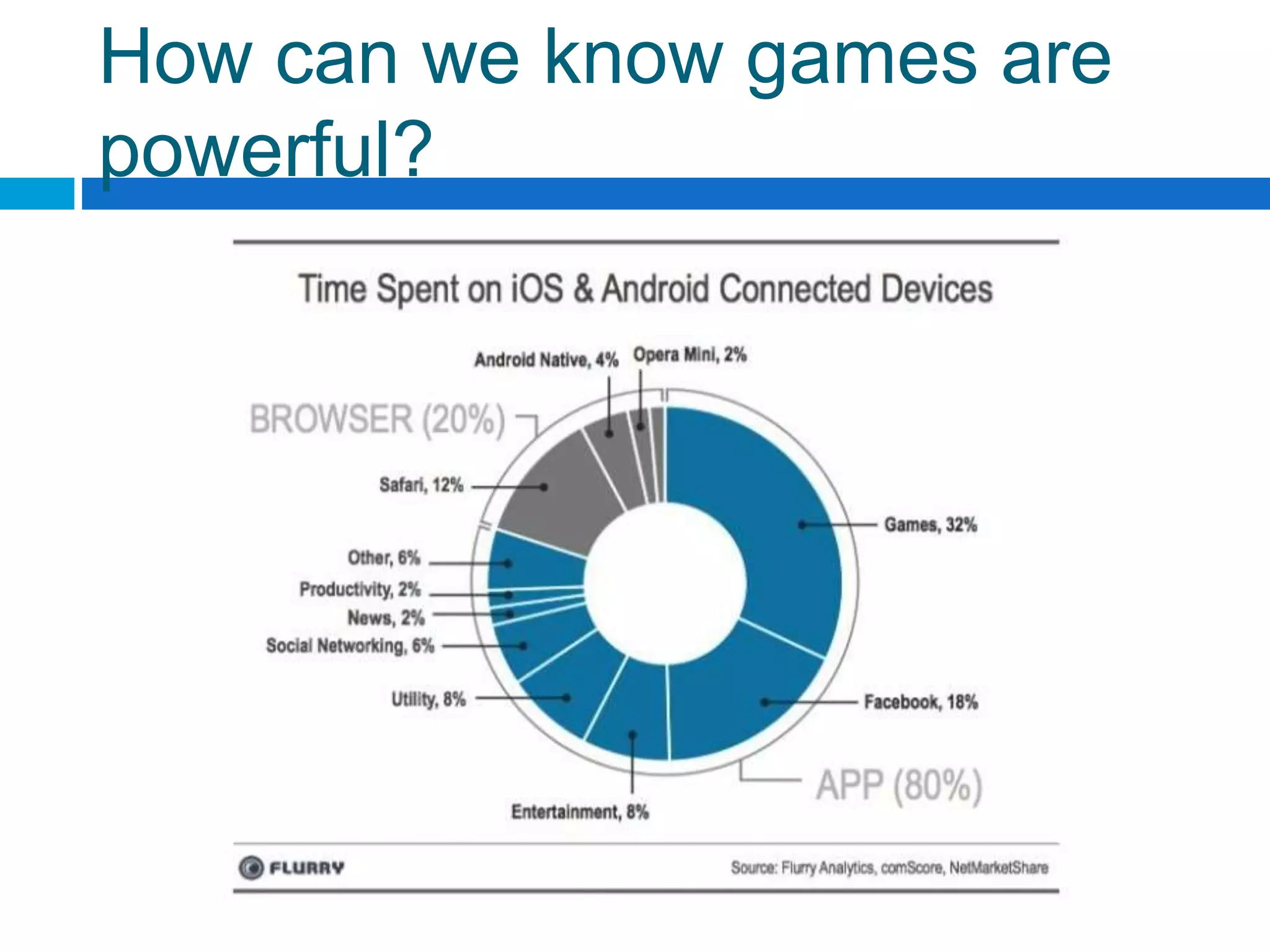
How can we know games are
powerful?
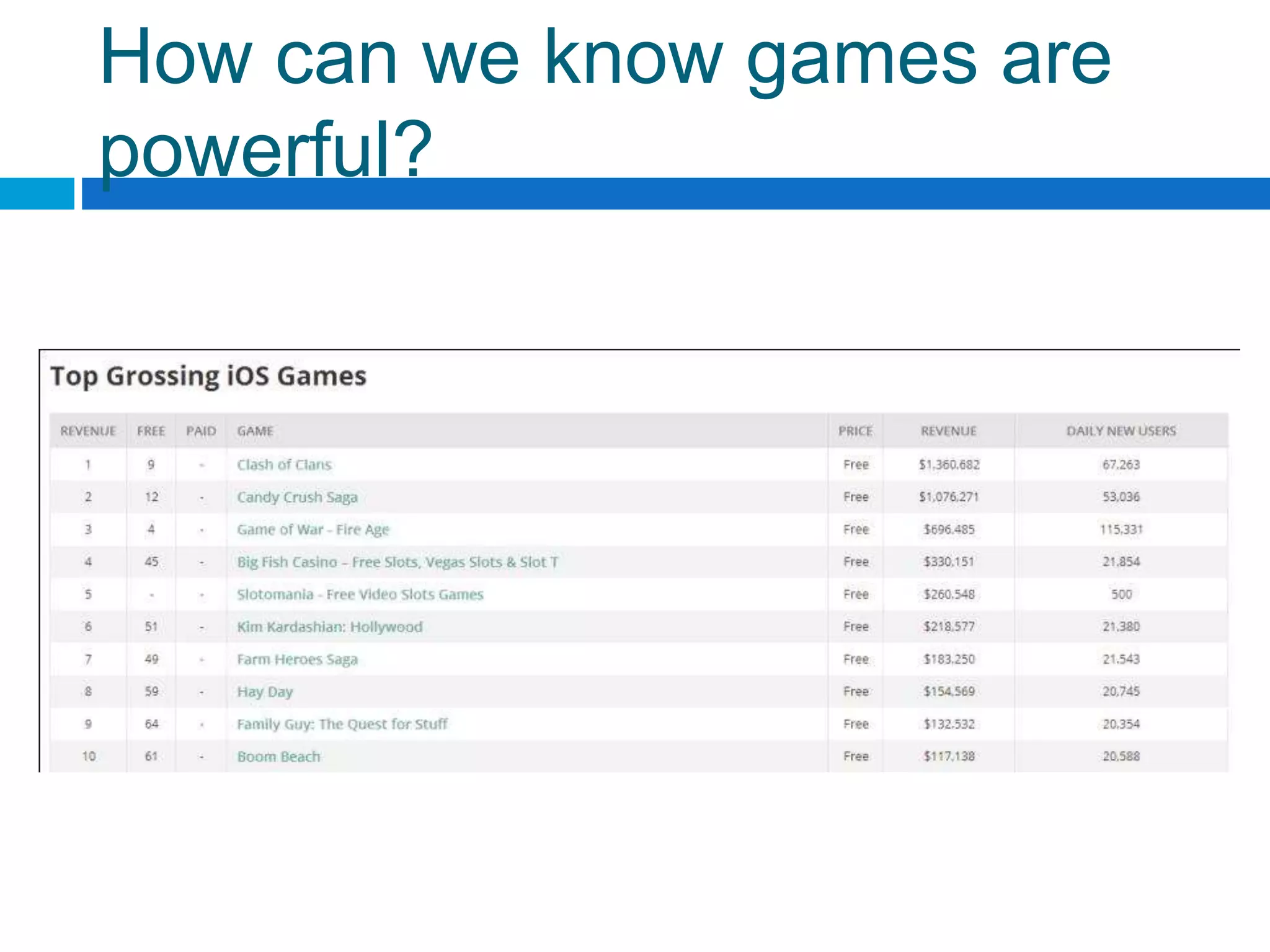
How can we know games are
powerful?
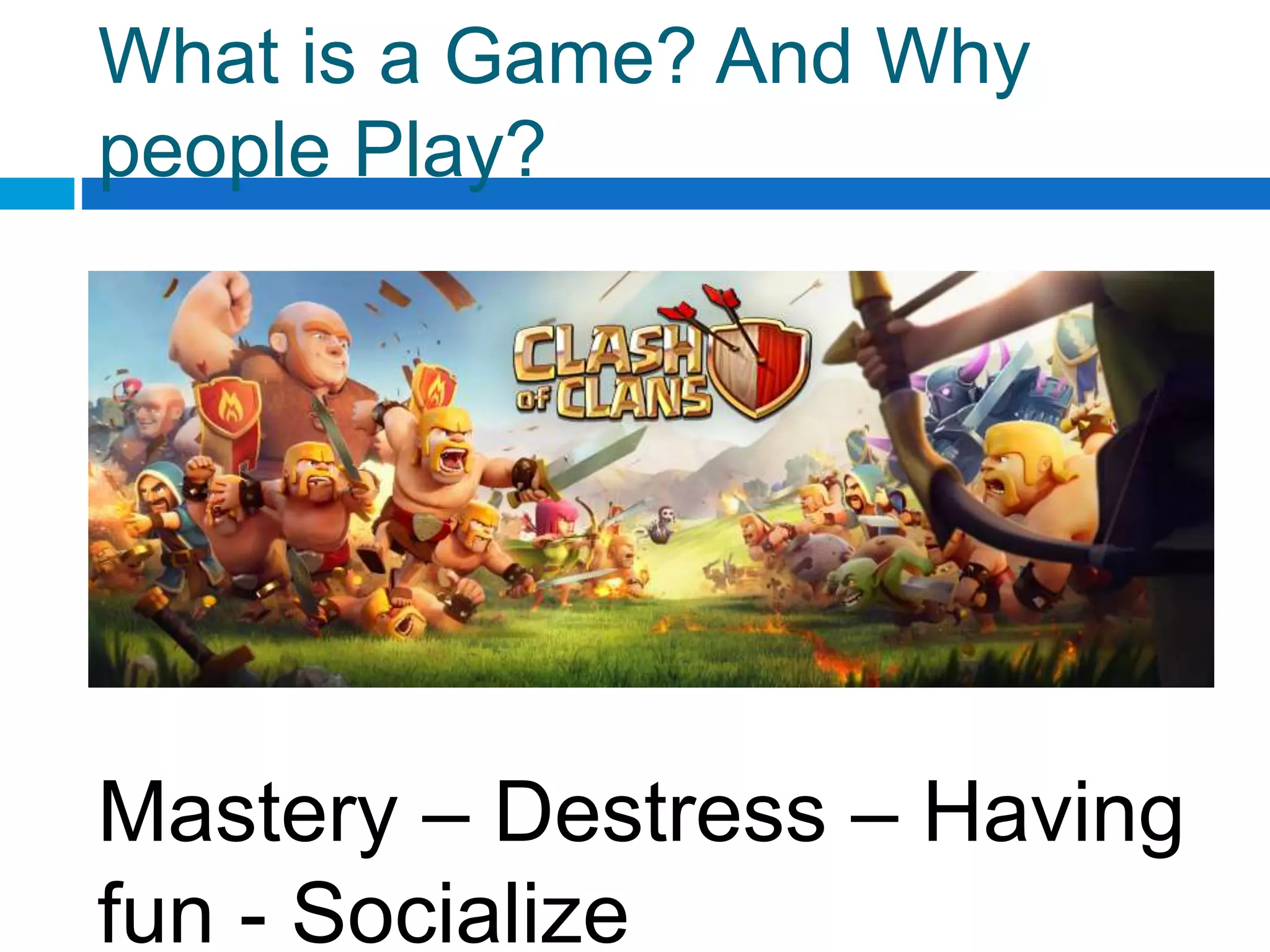
What is a Game? And Why
people Play?
Mastery – Destress – Having
fun - Socialize
What is a Game?
 Has Goal(s) = Objective(s)
 Has Rule(s) = Limitation(s)
 Has Balance of structure and exploration
 Needs Attitude = Following rule(s)
 Voluntarily overcoming unnecessary obstacles
Games & Gamification
 Real World  Games
 Creating unnecessary obstacles
 Video games when used best provide
experiences to people.
 Games  Real World
 Helping with situations at hand
 Gamification when used best provides motivation
to participate in a behavior.
How to Gamify … Simple Intro
 Thinking like a game designer
 You’re Not a game designer
 You’re Not a gamer
 Know the players, Get the players playing and
Keep them playing
 Your participants are your players
 Engage your players
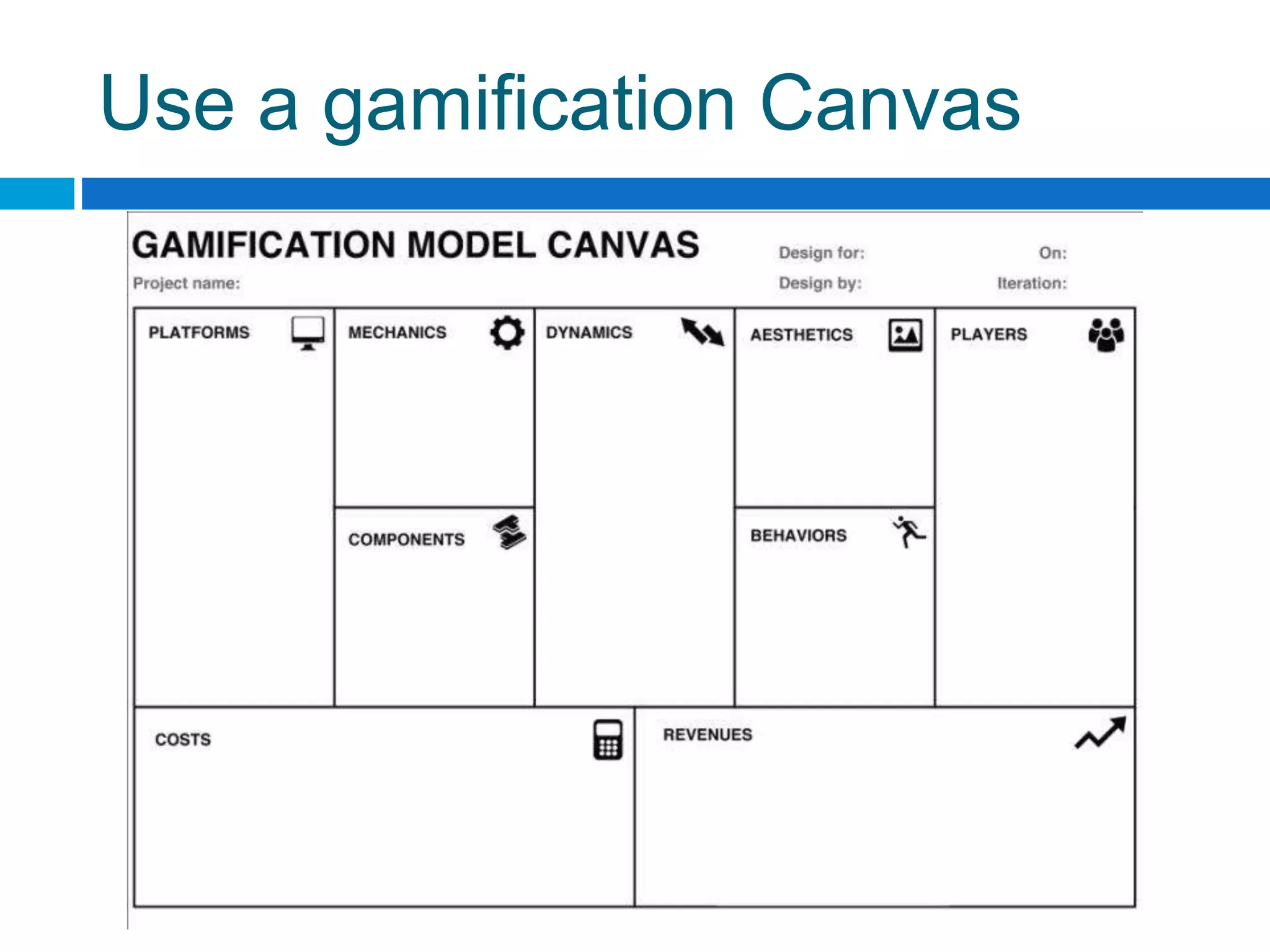
Use a gamification Canvas
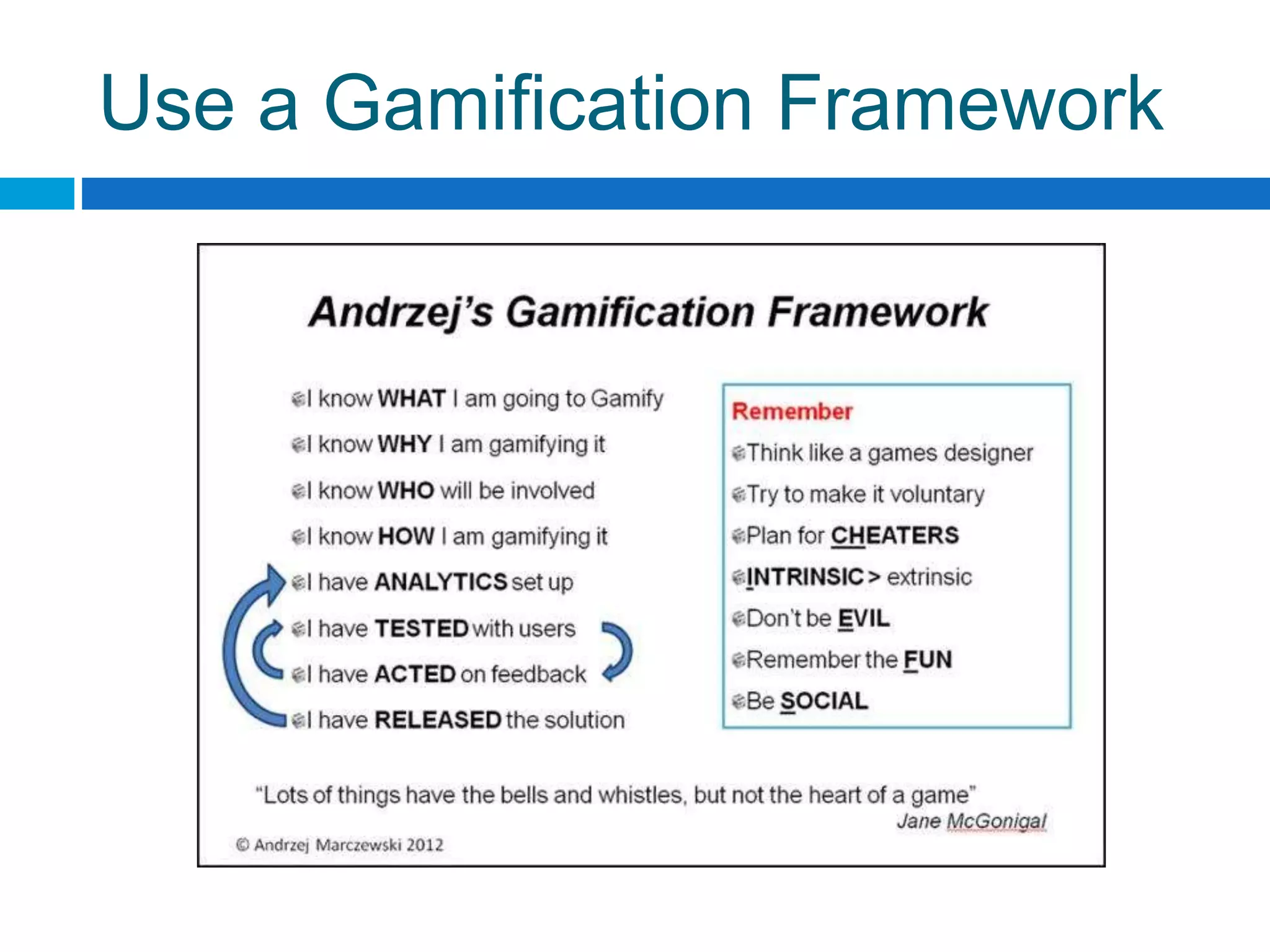
Use a Gamification Framework
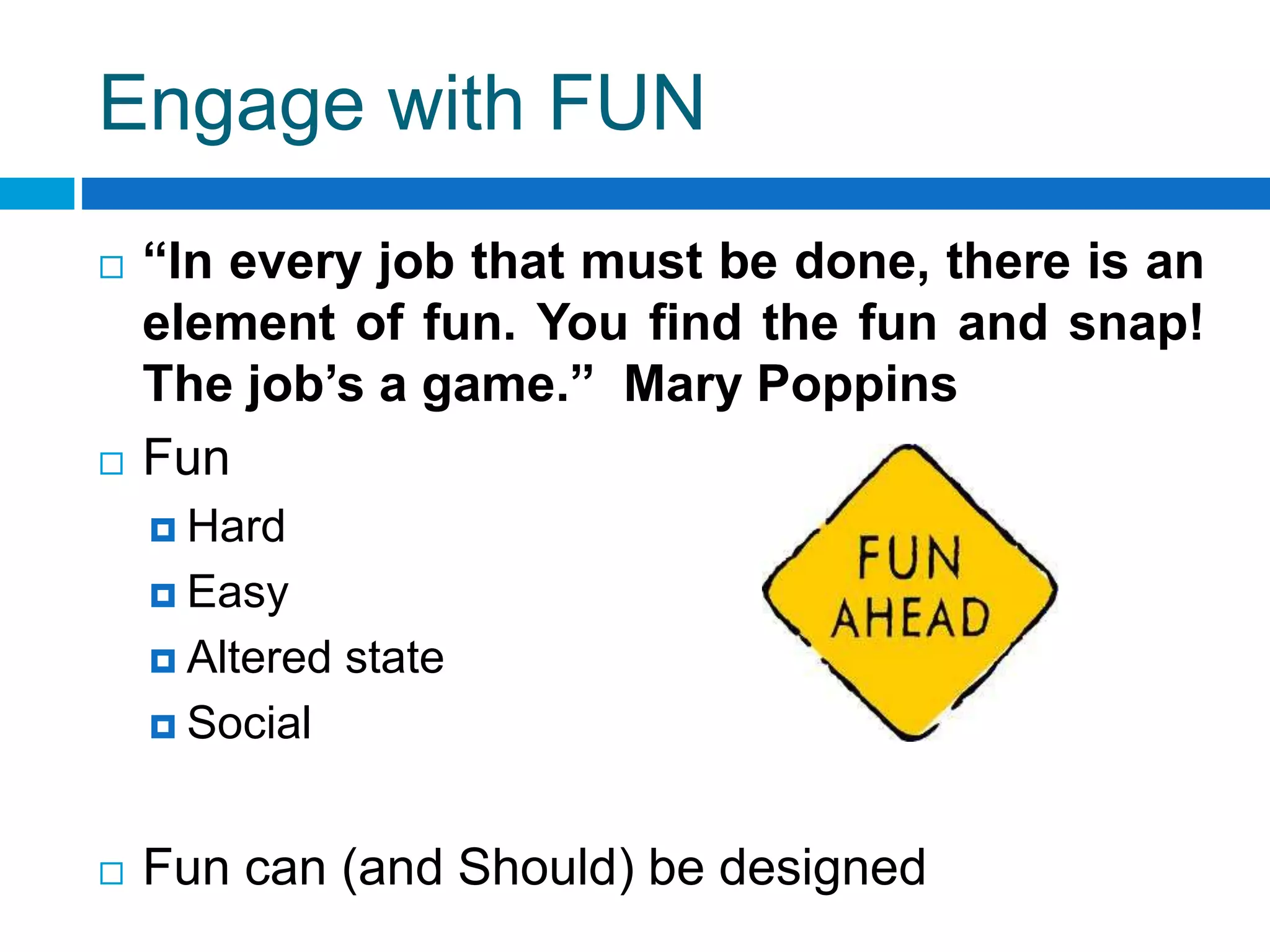
Engage with FUN
 “In every job that must be done, there is an
element of fun. You find the fun and snap!
The job’s a game.” Mary Poppins
 Fun
 Hard
 Easy
 Altered state
 Social
 Fun can (and Should) be designed
Design – Design Thinking – Game
Design Thinking
Gamification Design
 Hire a Designer
 
 Gartner 80%
 But know (game) design thinking
 Purposive
 Human centered
 Balance of analytics and creativeness
 Iterations and iterations
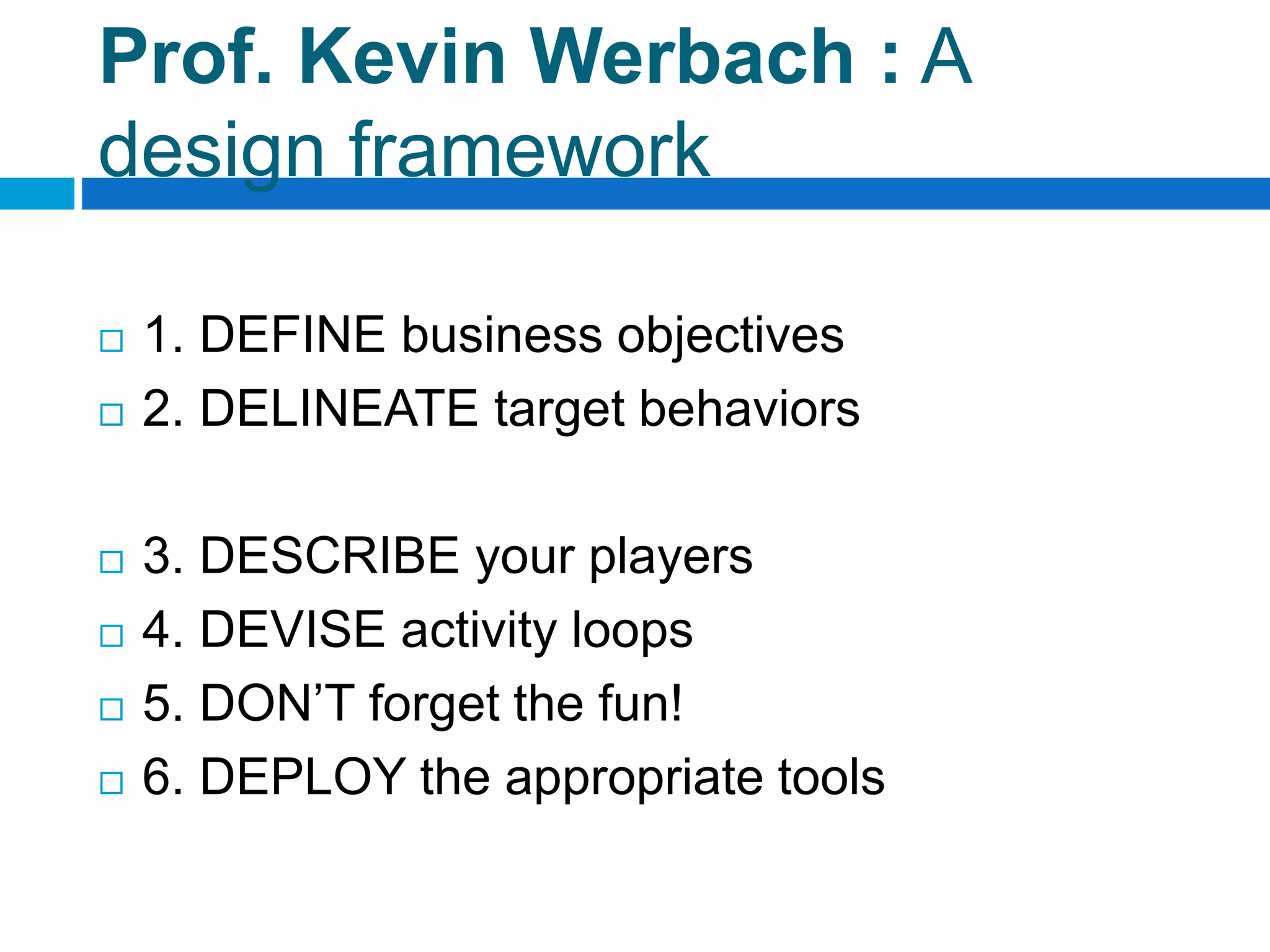
Prof. Kevin Werbach : A
design framework
 1. DEFINE business objectives
 2. DELINEATE target behaviors
 3. DESCRIBE your players
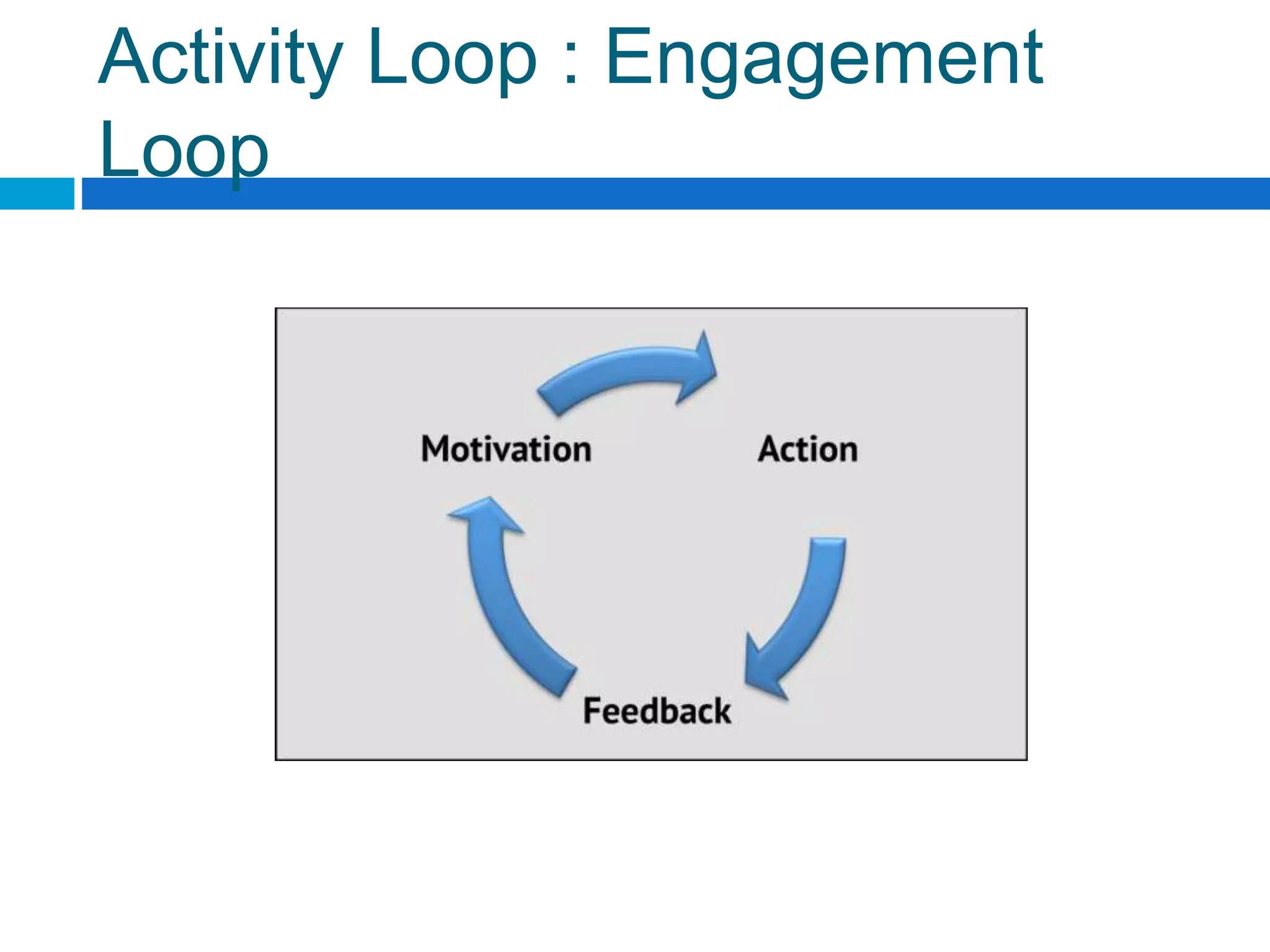
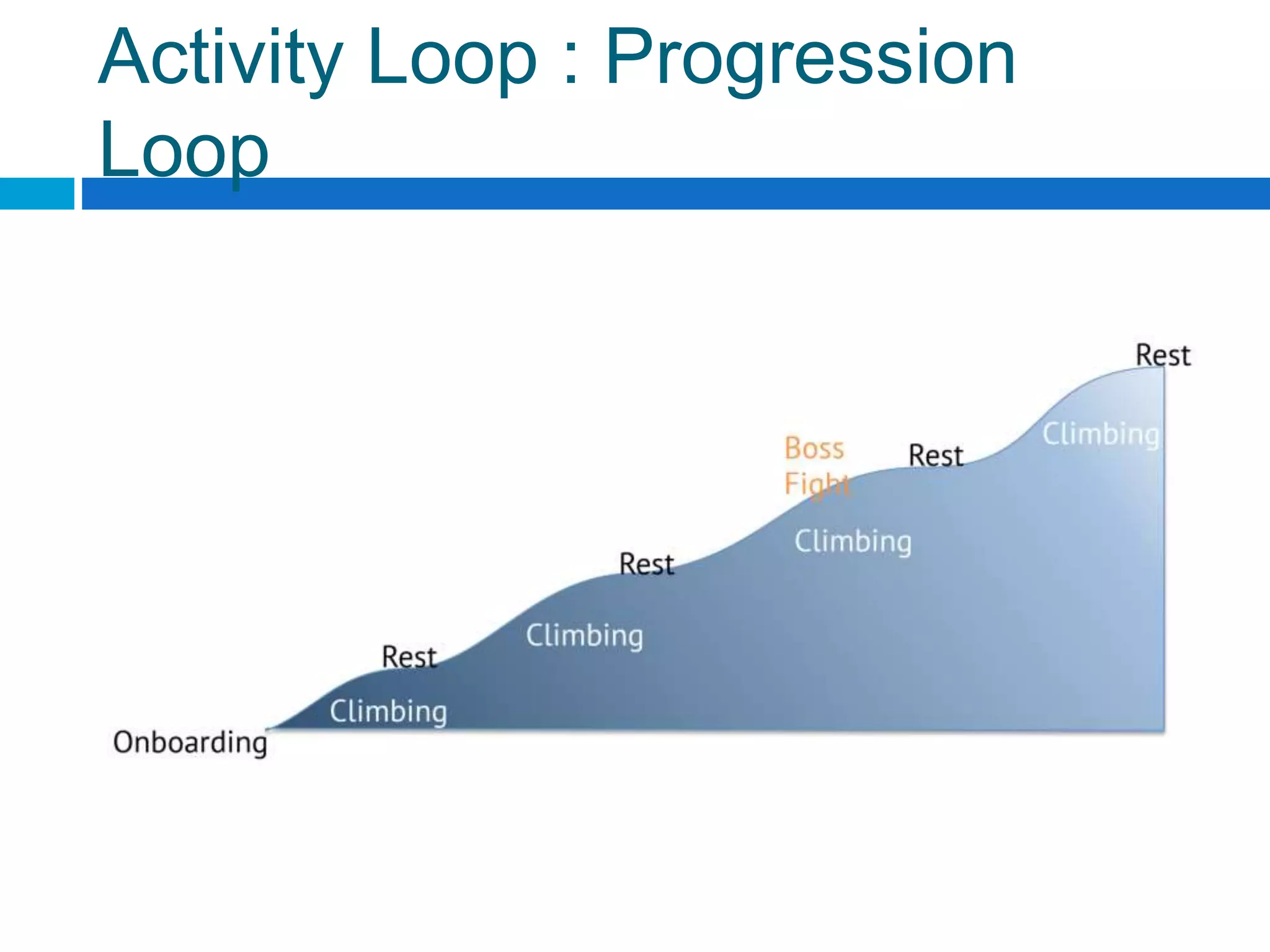
 4. DEVISE activity loops
 5. DON’T forget the fun!
 6. DEPLOY the appropriate tools
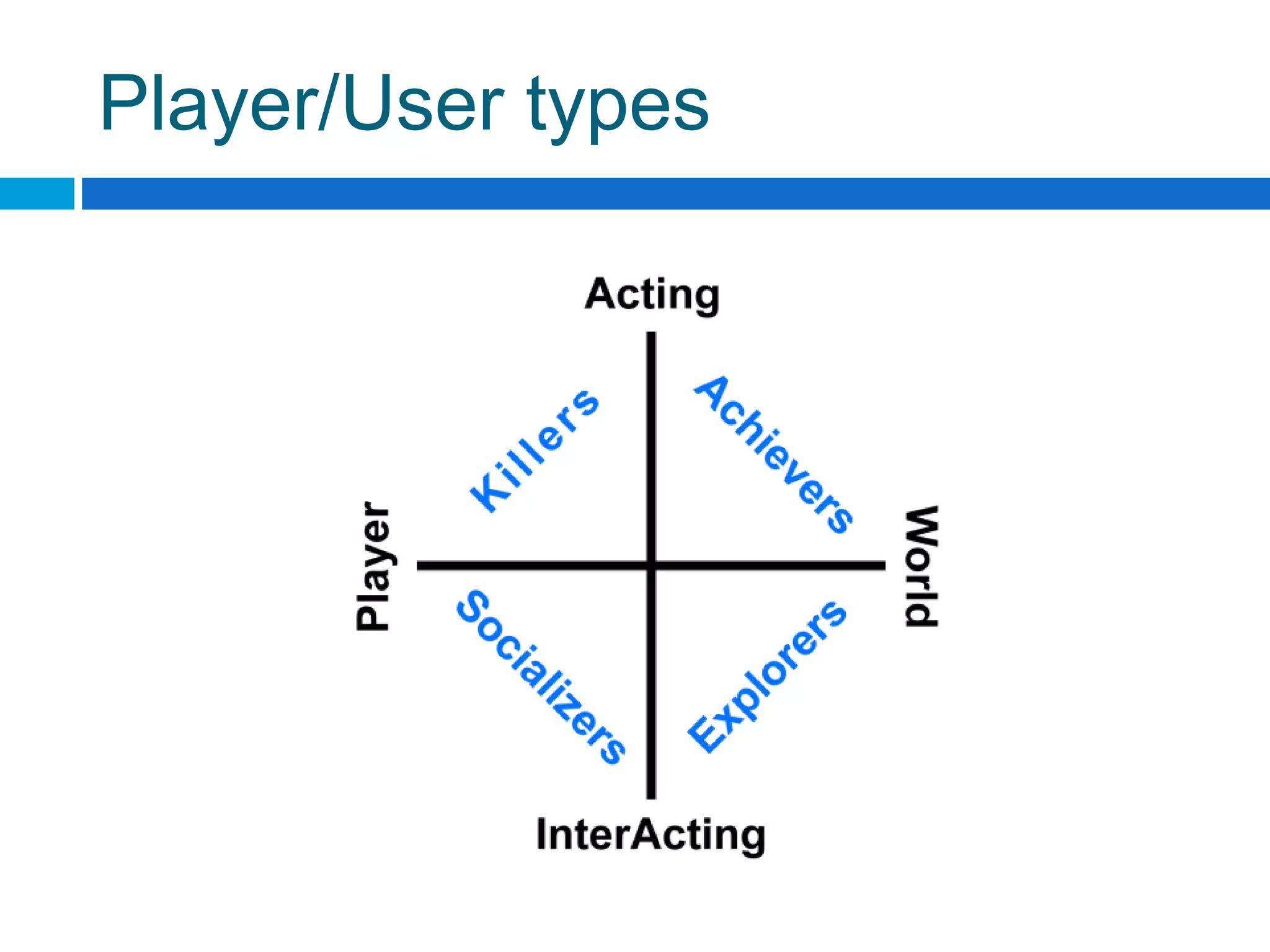
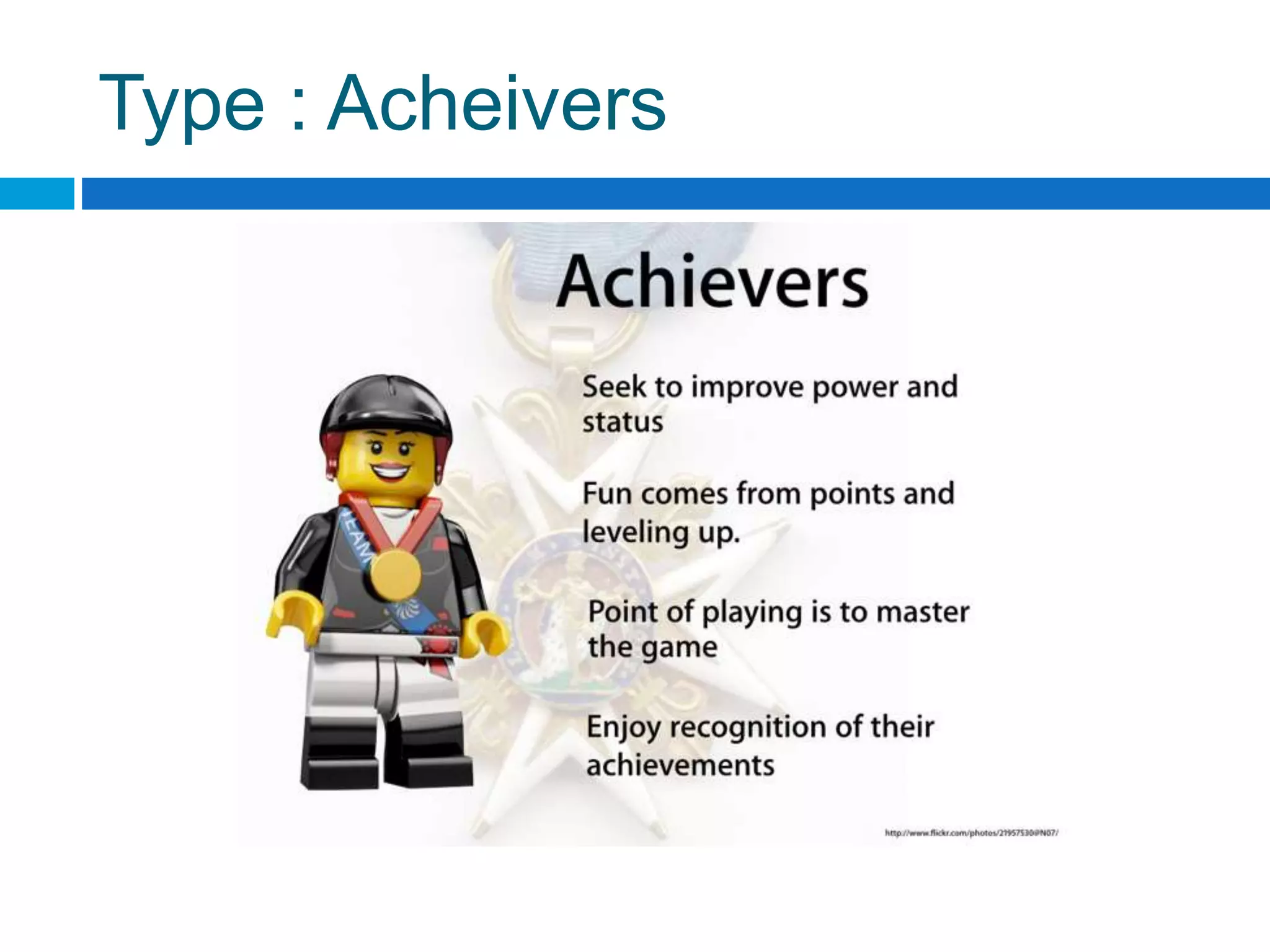
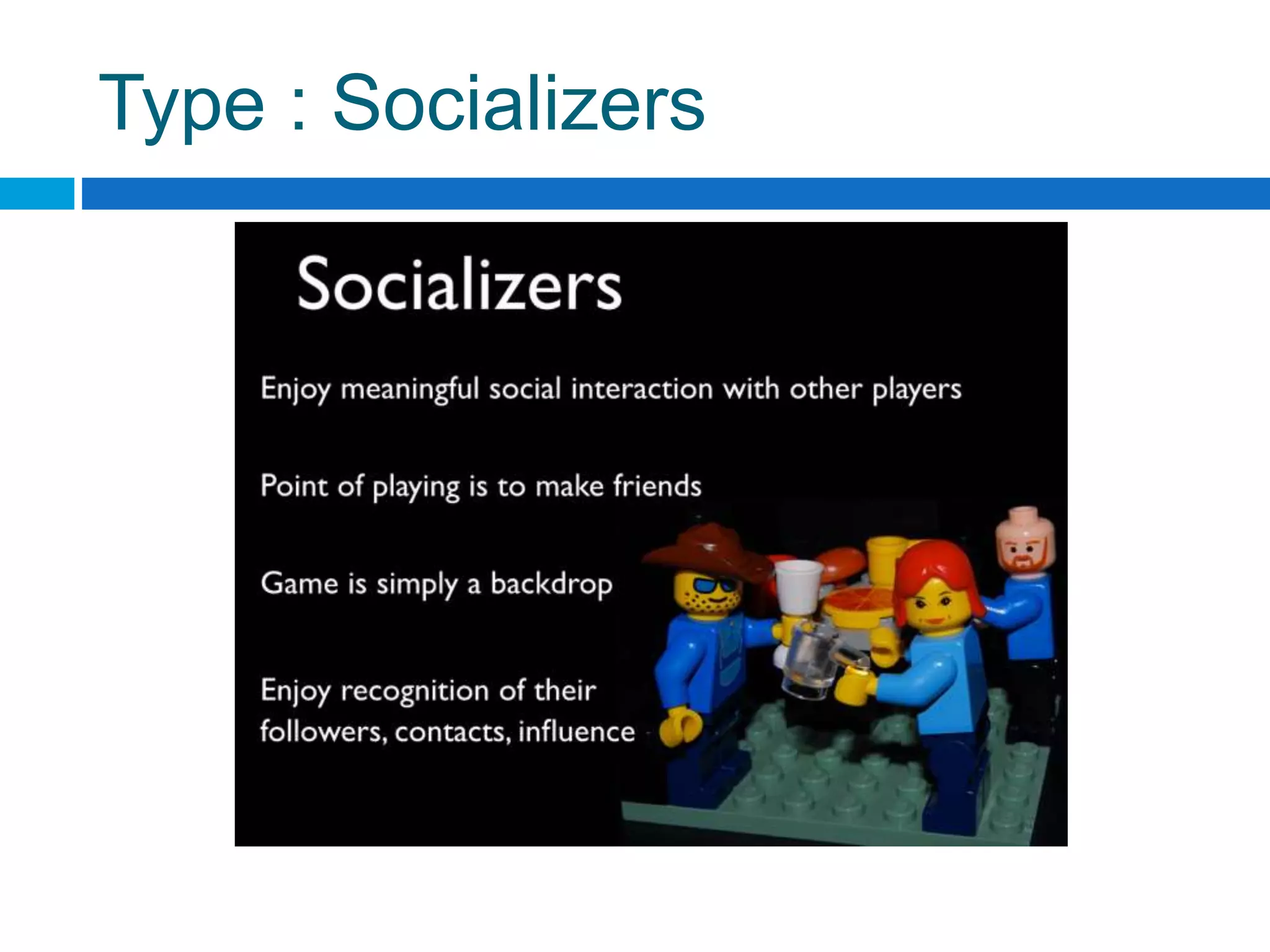
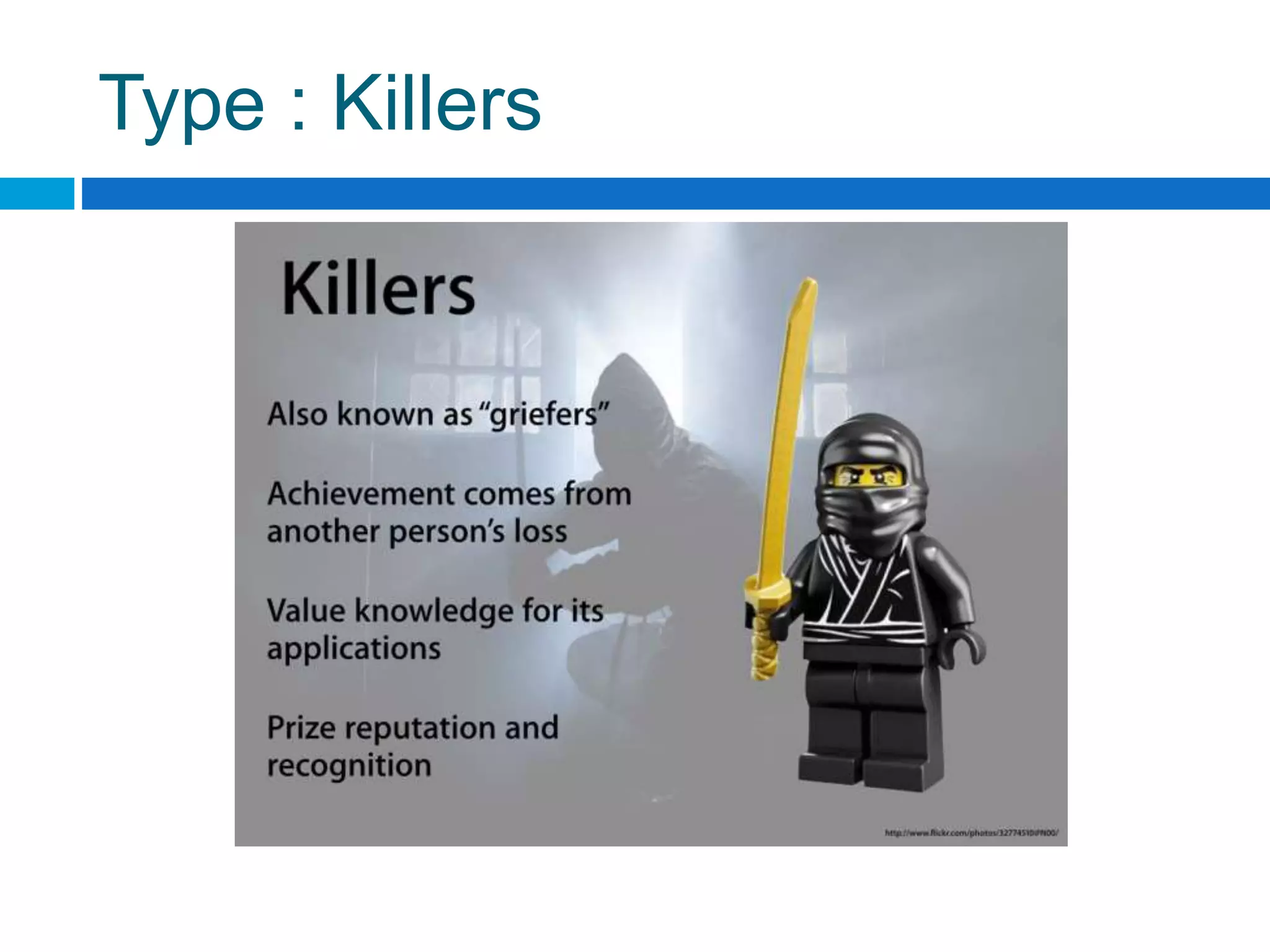
Player/User types
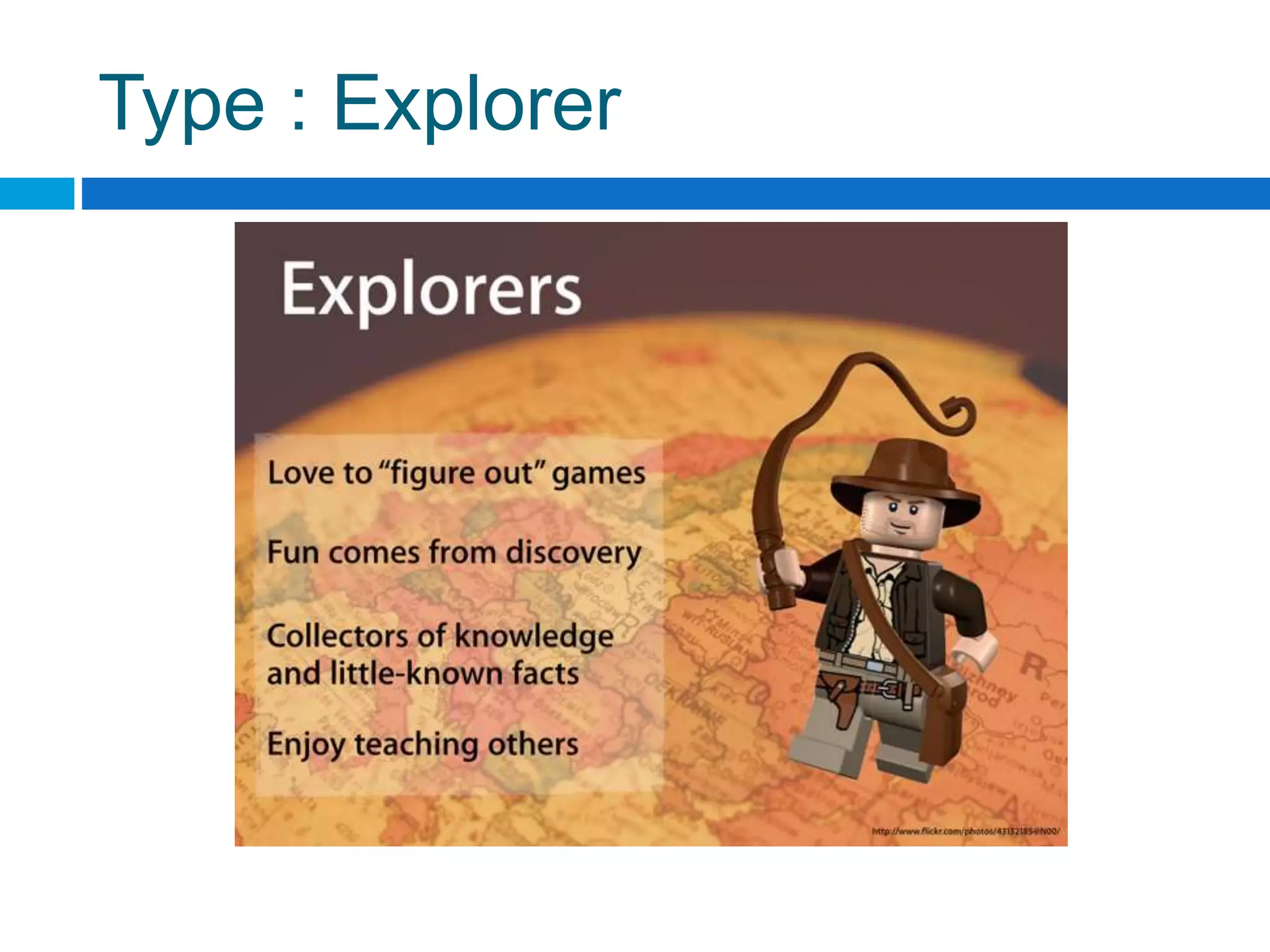
Type : Explorer
Type : Acheivers
Type : Socializers
Type : Killers
Activity Loop : Engagement
Loop
Activity Loop : Progression
Loop
Fun
 Winning
 Problem-solving
 Exploring
 Chilling
 Teamwork
 Recognition
 Triumphing
 Collecting
 Surprise
 Imagination
 Sharing
 Role Playing
 Customization
 Goofing off
Tools (Before us)
 Badgeville
 Bunchball
 Mozilla open badges
 Bigdoor
 Gigya
 LevelEleven
 gametize
 Lithium Technologies
Win the Gamification in 4 levels
 Know your user
 Identify your mission
 Apply game mechanics
 3M
 Manage
 Monitor
 Measure
 Remember : Gamification is data driven
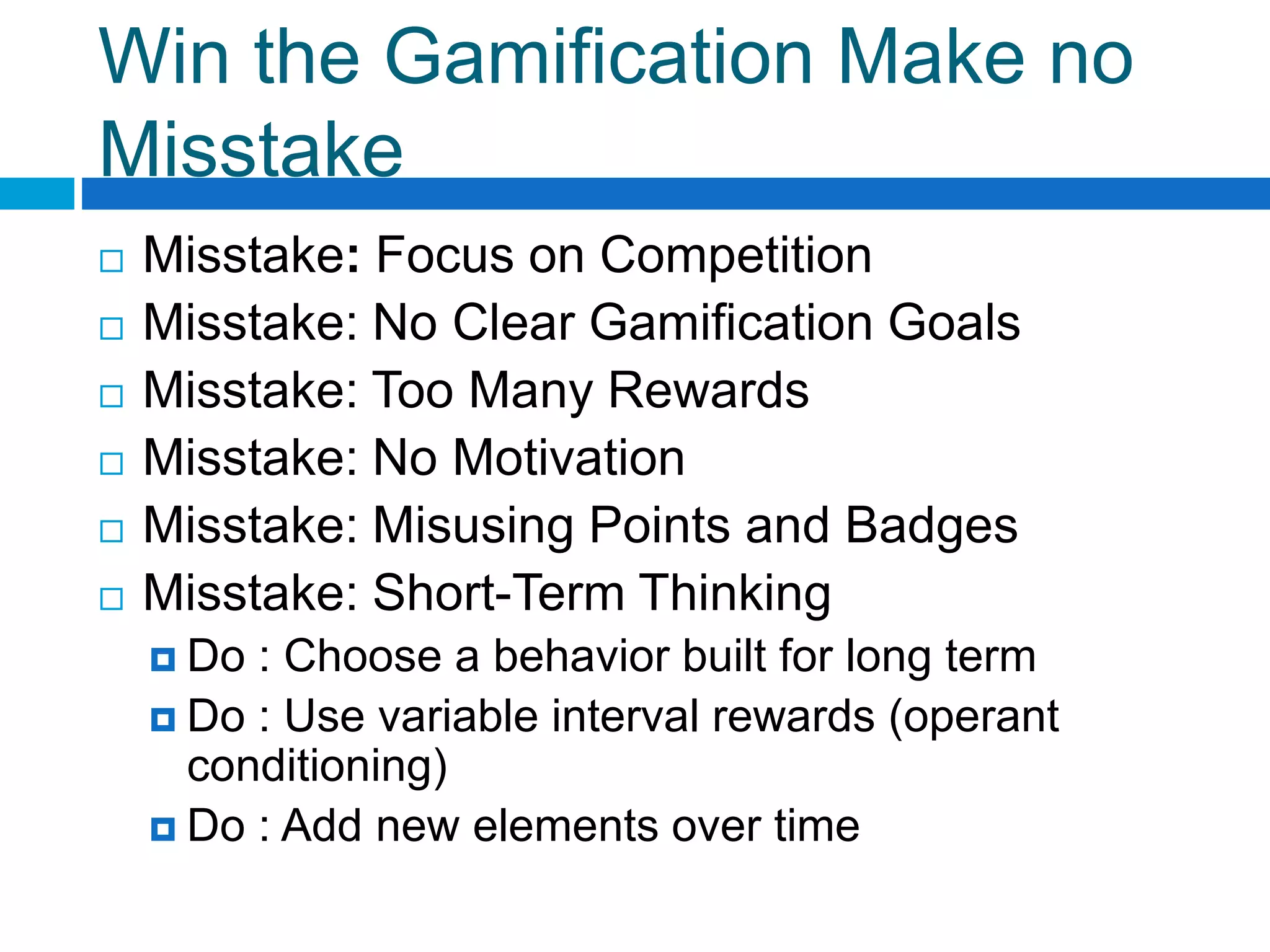
Win the Gamification Make no
Misstake
 Misstake: Focus on Competition
 Misstake: No Clear Gamification Goals
 Misstake: Too Many Rewards
 Misstake: No Motivation
 Misstake: Misusing Points and Badges
 Misstake: Short-Term Thinking
 Do : Choose a behavior built for long term
 Do : Use variable interval rewards (operant
conditioning)
 Do : Add new elements over time
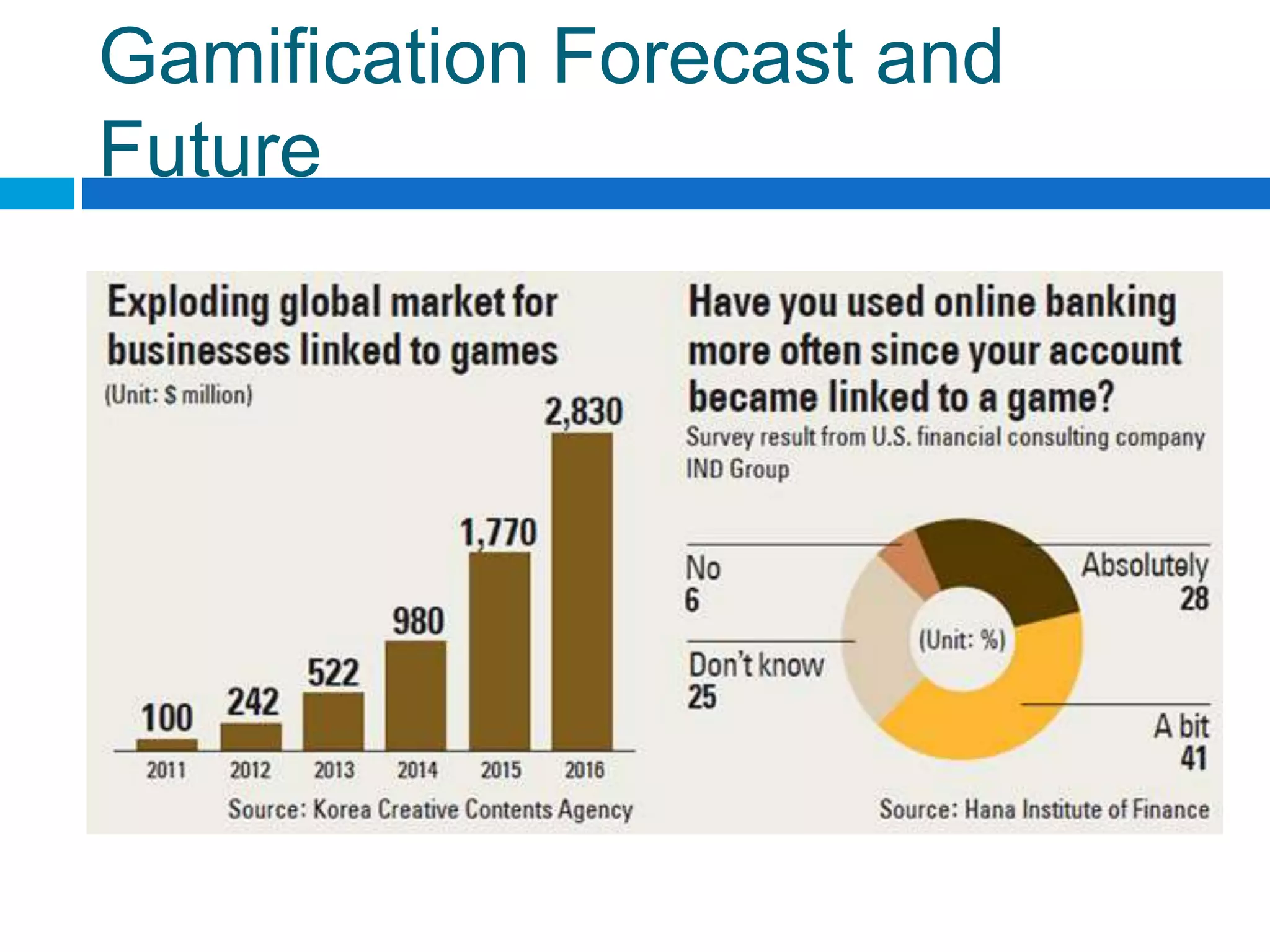
Gamification Forecast and
Future
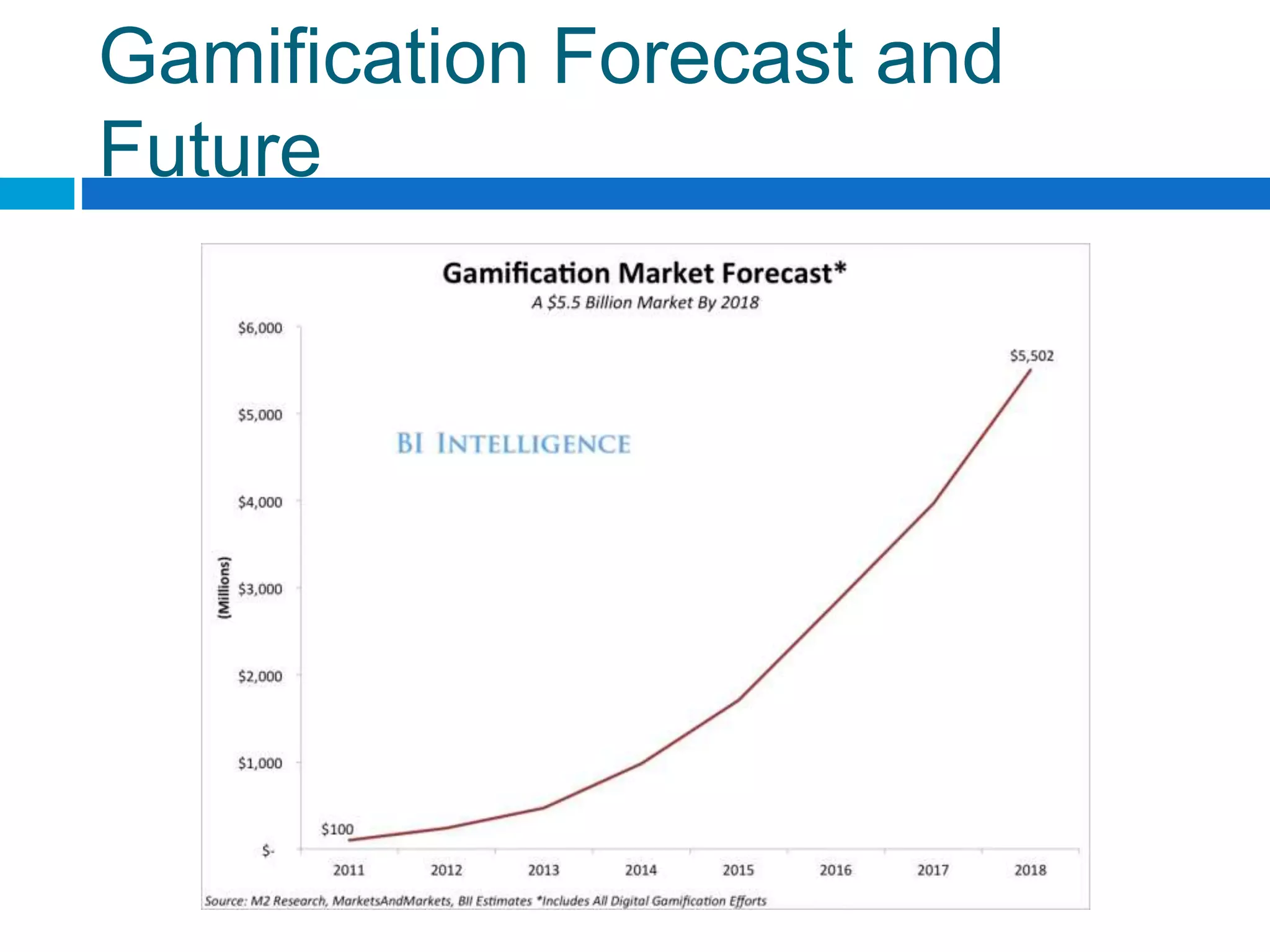
Gamification Forecast and
Future
Sight
THANK YOU FOR
LISTENING
Alireza Ranjbar Shourabi @ARSHourabi

An introduction to funormaling business

  • 1.
  • 2.
    Gamified or Gamifyed! rebased on the number of the typos you can f Count conceptual conflicts in my speech! And Win a free Gamification session!
  • 3.
    Alireza Ranjbar SHourabi Problem Designer (Game Designer)  Problem Solver (Gamification Designer)  Electrical Engineer (IUST)  Animation & Game (Mobile – Desktop)  Business (Creativity – GrowthHacks)  Photography(Hobby)
  • 4.
    This Presentation  Whatis Gamification  What is not Gamification  Definitions and Samples  Why is it valuable? Where does the power come from?  How to Gamify?
  • 5.
  • 6.
    Gamification is … Learning from games and their abilities to connect with people.  Using game elements while knowing that a game is a lot more.  Thinking like a game designer.  Having objectives other than winning in the game.  Appreciating FUN!  Much HARDER than it appears!
  • 7.
    A simple visualdefinition
  • 8.
    Definitions  The useof game elements and game design techniques in non-game contexts.  The process of game thinking and game mechanics to engage users and solve problems.  Gamification is the concept of applying game- design thinking to non-game applications.  the application of typical elements of game playing to other areas of activity, typically as an online marketing technique to encourage engagement with a product or service.
  • 9.
    Game Elements &Mechanics
  • 10.
    Game Elements &Mechanics  Score Points  Badges  Achievements  Quests  Leader boards  Currency  Level  Experience
  • 11.
    Gamification is NOT…  Making a 3D virtual world  Making everything a game  Game theory  Just PBLs  Simulations or serious games  Windows solitaire
  • 12.
  • 13.
  • 14.
    Who is usingit?  Microsoft  Nike  SAP  American Express  Major League Baseball  Salesforce.com  AXA Equitable  CodeAcademy  Deloitte  Samsung  EMC  Foursquare  Stack Overflow  USA Networks  LiveOps  Dell  Kaiser Permanente  Foot Locker  Opower  eBay  Cisco  Recyclebank  Universal Music  Siemens  Yelp  Verizon
  • 15.
  • 16.
  • 17.
  • 18.
  • 19.
    Engagement = Loyalty Connection between consumer and a product or service  Recency  Frequency  Duration  Virality  Ratings  Loyalty is no longer private!  Behind engagement, revenue follows!
  • 20.
    Usage : External/ Internal  External  Marketing  Sales  Customer engagement  Internal  HR  Productivity enhancement  Crowd sourcing
  • 21.
  • 22.
  • 23.
    Usage : BehaviorChange  Health and wellness  Sustainability  Personal finance  Social good applications  Social Entrepreneurship
  • 24.
  • 25.
  • 26.
    Games : wherethe power comes from  Games are able to get people to take actions that they don’t always know they want to take, without the use of force, in a predictable way.  3 Central components  Pleasure  Rewards  Time  Name two that are more powerful than Games! and win a free gamification session!
  • 27.
    How can weknow games are powerful?
  • 28.
    How can weknow games are powerful?
  • 29.
    What is aGame? And Why people Play? Mastery – Destress – Having fun - Socialize
  • 30.
    What is aGame?  Has Goal(s) = Objective(s)  Has Rule(s) = Limitation(s)  Has Balance of structure and exploration  Needs Attitude = Following rule(s)  Voluntarily overcoming unnecessary obstacles
  • 31.
    Games & Gamification Real World  Games  Creating unnecessary obstacles  Video games when used best provide experiences to people.  Games  Real World  Helping with situations at hand  Gamification when used best provides motivation to participate in a behavior.
  • 32.
    How to Gamify… Simple Intro  Thinking like a game designer  You’re Not a game designer  You’re Not a gamer  Know the players, Get the players playing and Keep them playing  Your participants are your players  Engage your players
  • 33.
  • 34.
  • 35.
    Engage with FUN “In every job that must be done, there is an element of fun. You find the fun and snap! The job’s a game.” Mary Poppins  Fun  Hard  Easy  Altered state  Social  Fun can (and Should) be designed
  • 36.
    Design – DesignThinking – Game Design Thinking
  • 37.
    Gamification Design  Hirea Designer    Gartner 80%  But know (game) design thinking  Purposive  Human centered  Balance of analytics and creativeness  Iterations and iterations
  • 38.
    Prof. Kevin Werbach: A design framework  1. DEFINE business objectives  2. DELINEATE target behaviors  3. DESCRIBE your players  4. DEVISE activity loops  5. DON’T forget the fun!  6. DEPLOY the appropriate tools
  • 39.
  • 40.
  • 41.
  • 42.
  • 43.
  • 44.
    Activity Loop :Engagement Loop
  • 45.
    Activity Loop :Progression Loop
  • 46.
    Fun  Winning  Problem-solving Exploring  Chilling  Teamwork  Recognition  Triumphing  Collecting  Surprise  Imagination  Sharing  Role Playing  Customization  Goofing off
  • 47.
    Tools (Before us) Badgeville  Bunchball  Mozilla open badges  Bigdoor  Gigya  LevelEleven  gametize  Lithium Technologies
  • 48.
    Win the Gamificationin 4 levels  Know your user  Identify your mission  Apply game mechanics  3M  Manage  Monitor  Measure  Remember : Gamification is data driven
  • 49.
    Win the GamificationMake no Misstake  Misstake: Focus on Competition  Misstake: No Clear Gamification Goals  Misstake: Too Many Rewards  Misstake: No Motivation  Misstake: Misusing Points and Badges  Misstake: Short-Term Thinking  Do : Choose a behavior built for long term  Do : Use variable interval rewards (operant conditioning)  Do : Add new elements over time
  • 50.
  • 51.
  • 52.
  • 53.
    THANK YOU FOR LISTENING AlirezaRanjbar Shourabi @ARSHourabi

Editor's Notes

  • #5 Raise your hand
  • #41 Elder Scroll : oblivion