US ARMY VIDEO 
Question
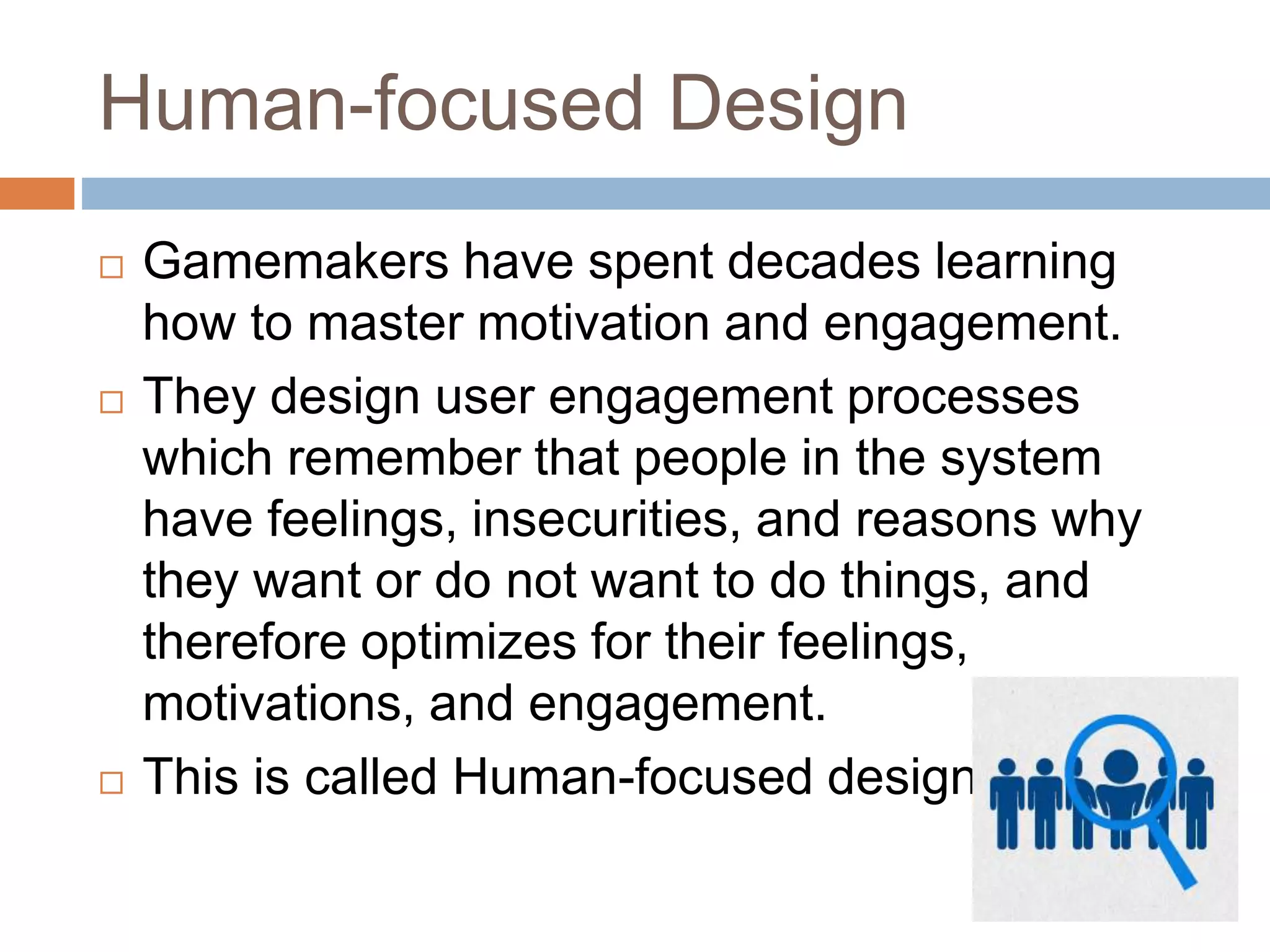
Human-focused Design 
 Gamemakers have spent decades learning 
how to master motivation and engagement. 
 They design user engagement processes 
which remember that people in the system 
have feelings, insecurities, and reasons why 
they want or do not want to do things, and 
therefore optimizes for their feelings, 
motivations, and engagement. 
 This is called Human-focused design.
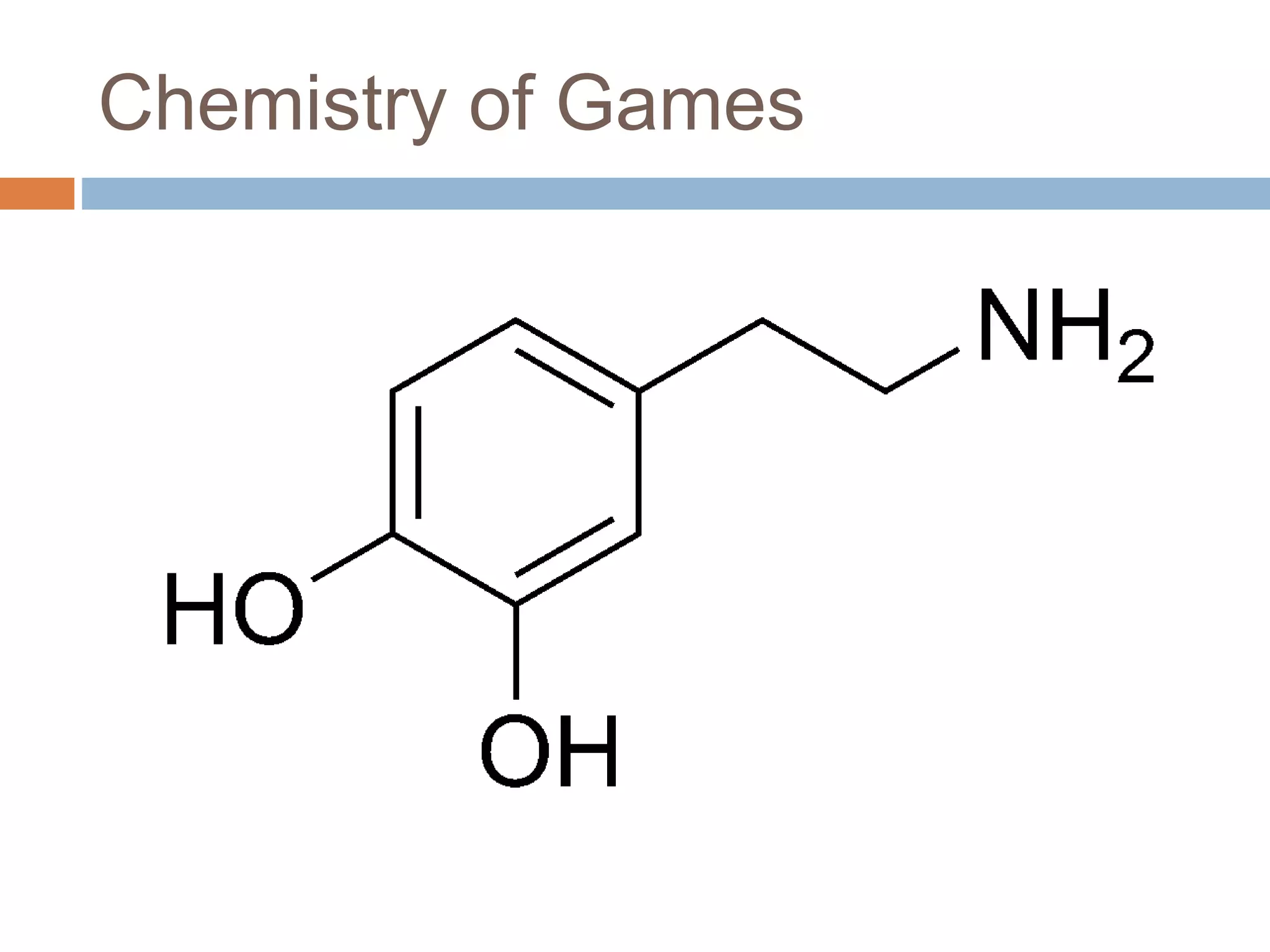
Chemistry of Games
Chemistry of Games 
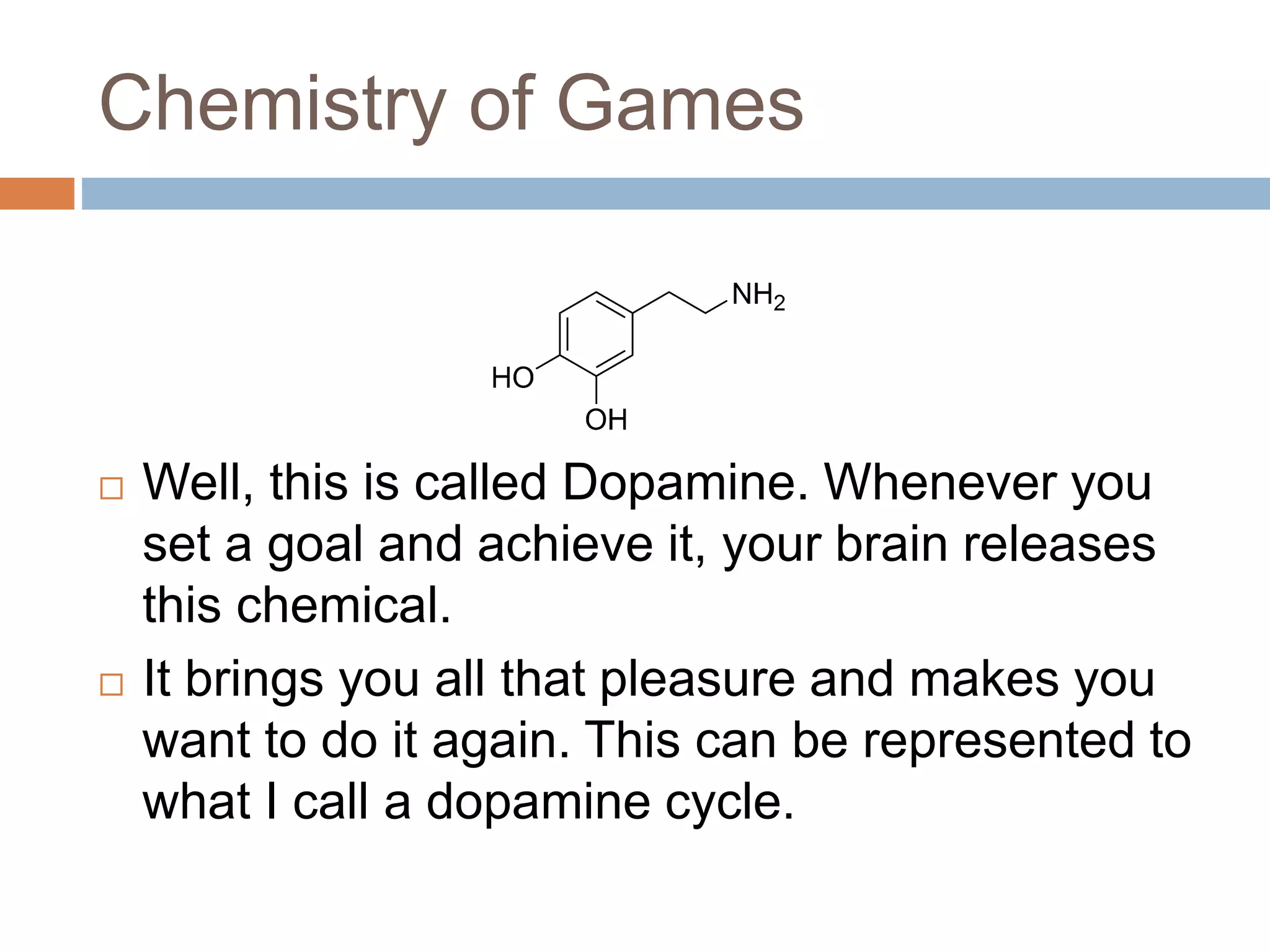
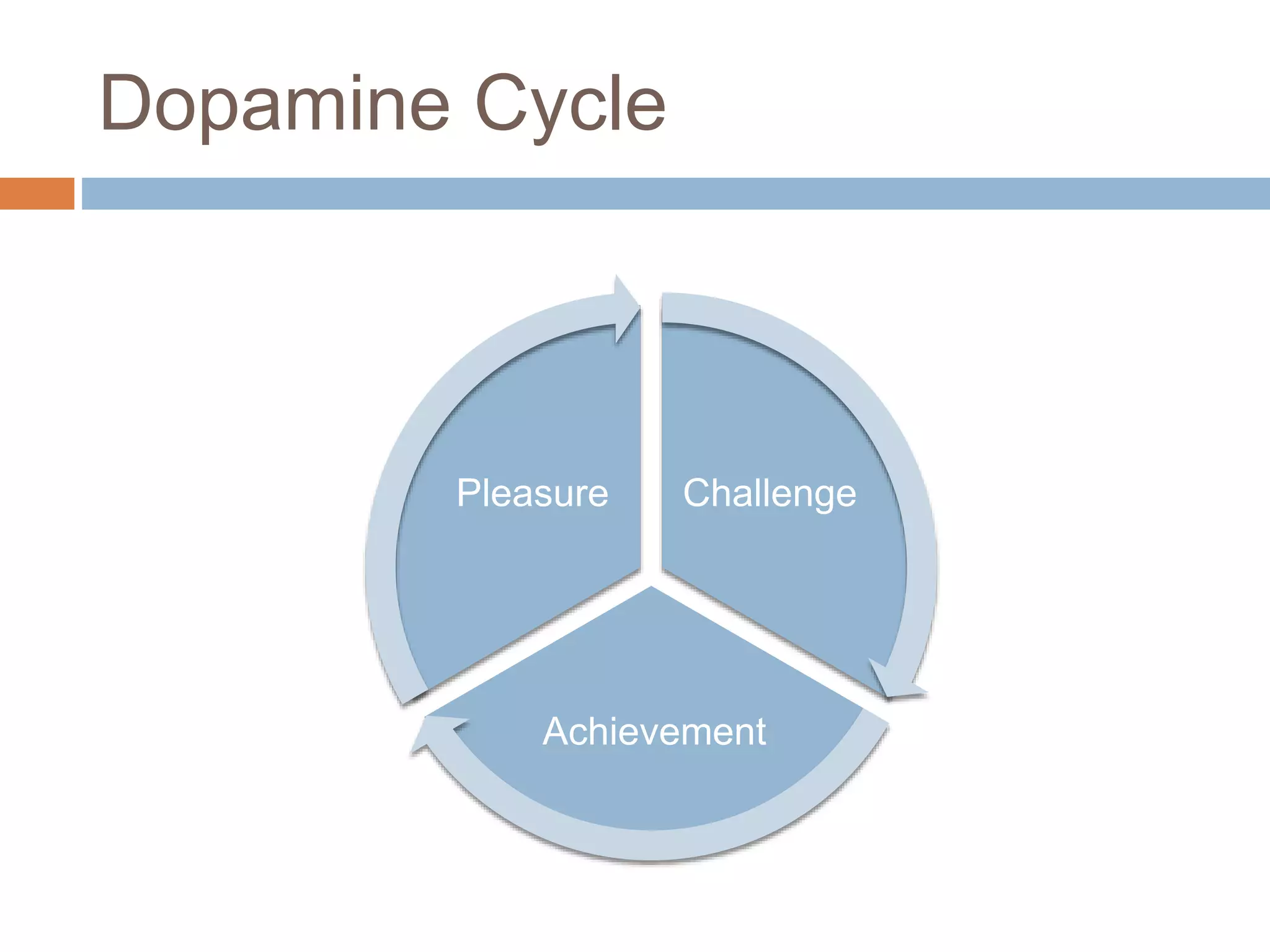
 Well, this is called Dopamine. Whenever you 
set a goal and achieve it, your brain releases 
this chemical. 
 It brings you all that pleasure and makes you 
want to do it again. This can be represented to 
what I call a dopamine cycle.
Dopamine Cycle 
Challenge 
Pleasure 
Achievement
My Business isn't a Game!
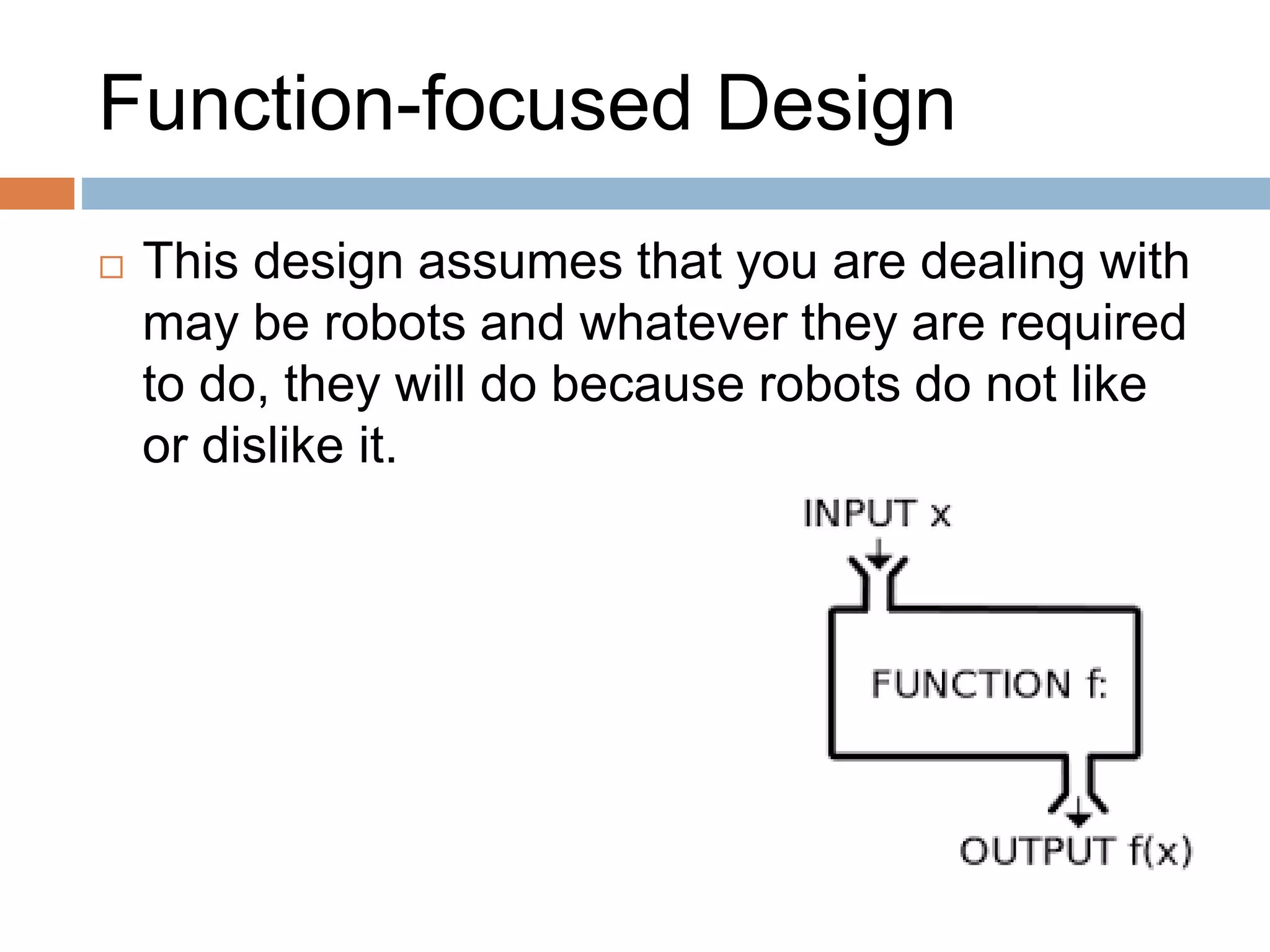
Function-focused Design 
 This design assumes that you are dealing with 
may be robots and whatever they are required 
to do, they will do because robots do not like 
or dislike it.
FfD+HfD  (F+H )(fD) = 
Gamification 
 Gamification is 
making your users 
do what you want 
them to do in a way 
that they like doing it 
while ultimately 
getting what they 
wanted from the 
whole engagement 
and making you 
realize your 
business objectives.
Is it worth trying? 
 Who is using it? 
 Does it fit with-in my 
industry? 
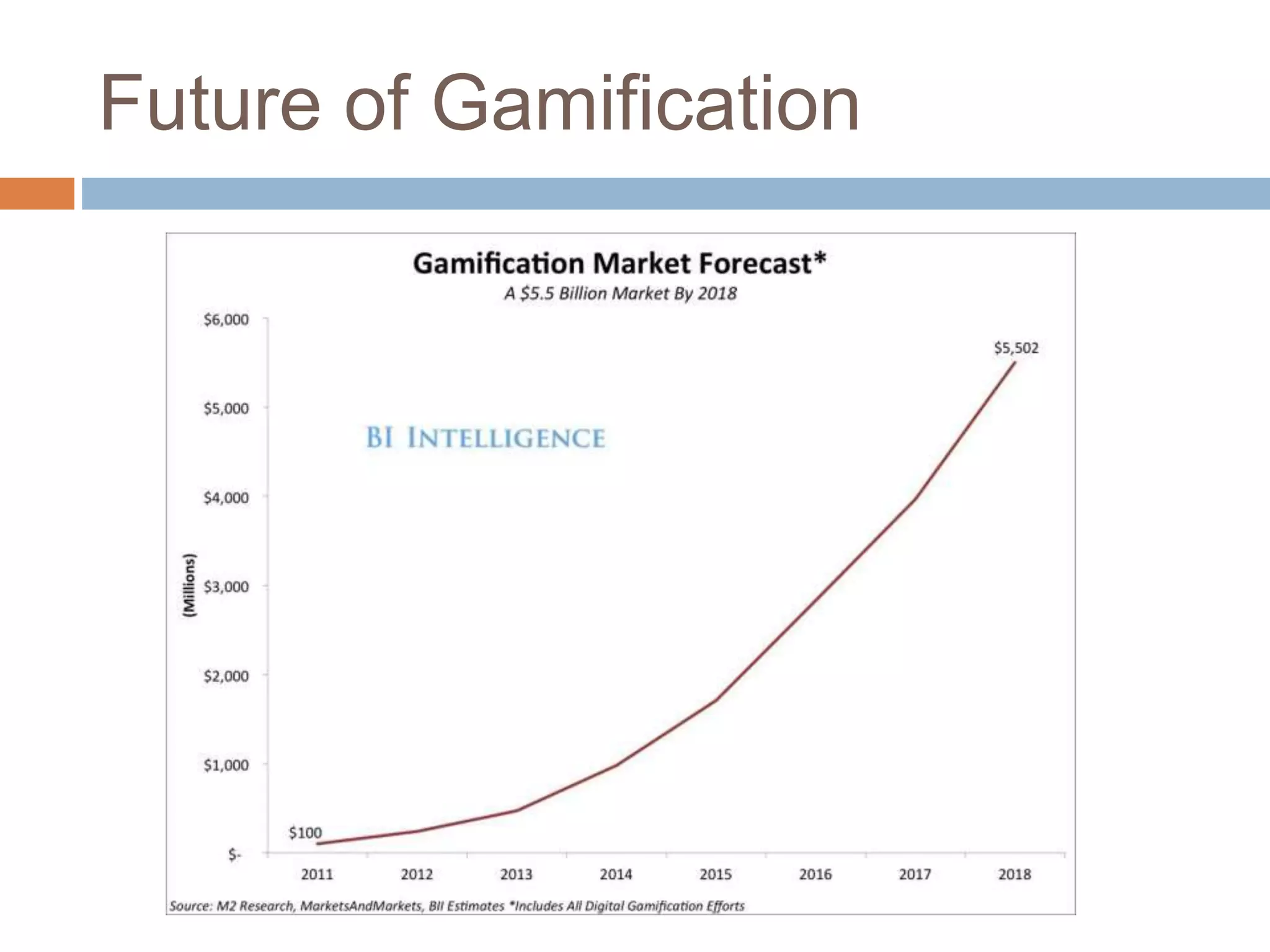
 What is the projected 
future of 
gamification?
Microsoft uses Gamification 
 Beta one: 4x improvement in participation 
 Language Quality: 500,000 screens were 
reviewed by over 4,500 people to correct 
and/or improve the translations 
 Communicate Hope: 16x more feedbacks 
 Ribbon Hero 1 & 2: MS office learning skills. 
this game proved so successful, that a sequel 
was launched.
SAP uses Gamification 
 SAP ERP: tele-presence is improved by 
29.75%, interface by 23.4%, flow by 30.353%, 
enjoyment by 53.414%, and perceived ease of 
use by 36.123%. 
 The SAP Community Network regamified its 
already-mature reputation system, increasing 
usage by 400% and community feedback by 
96% 
 SAP Streamwork: added gamification in 
brainstorming groups and grew generated 
ideas by 58%
Cisco uses Gamification 
 The Hunt: used gaming strategies 
 to enhance its virtual global sales meeting 
 reduce call time by 15% 
 improved sales by around 10%
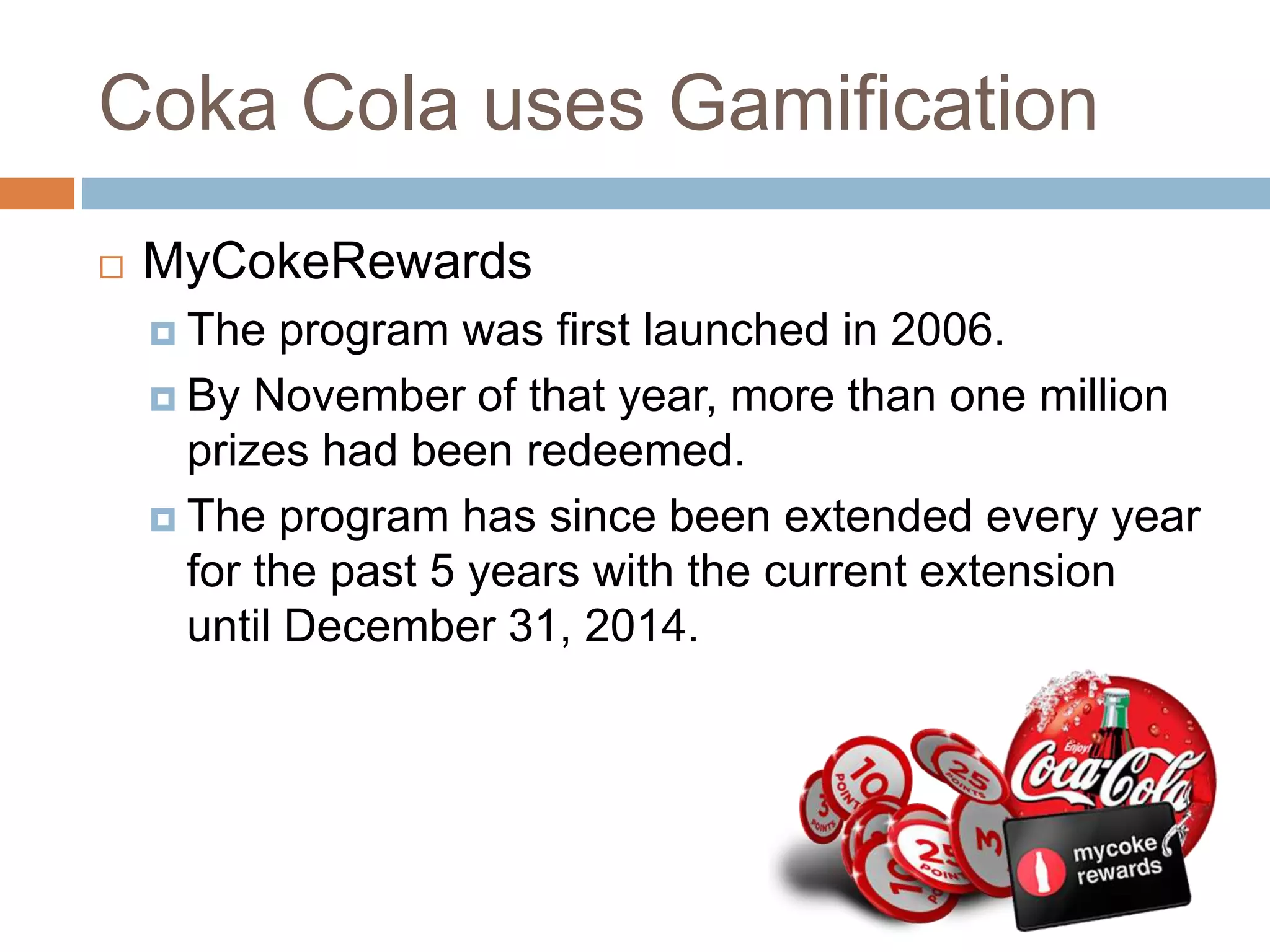
Coka Cola uses Gamification 
 MyCokeRewards 
 The program was first launched in 2006. 
 By November of that year, more than one million 
prizes had been redeemed. 
 The program has since been extended every year 
for the past 5 years with the current extension 
until December 31, 2014.
Samsung uses Gamification 
 Samsung Nation: 500% increase in customers' 
product reviews, 66% increase in site visitors, 
30% increase in comments, reduced 
marketing costs, reduced product support 
costs
HP uses Gamification 
 Project Everest: 
 950 sales people out of possible 1200 registered 
(80%) 
 Aimed for 50% of revenue growth – achieved 
56.4% 
 $1bn revenue growth for HP in first three months
T-Mobile uses Gamification 
 T-Mobile's online social business community 
 participation in T-Community increase 1,000 
percent 
 within the first two weeks, more than 15,000 
frontline employees completed an array of Getting 
Started missions 
 T-Mobile awarded 187,000 achievement badges 
in the first six weeks 
 the number of "likes" assigned by employees to 
indicate a helpful response increased a 
staggering 6,000 percent.
Some interesting Stats 
 More than 70% of the world’s 
largest 2,000 companies are 
expected to have deployed at least 
one gamified application by year-end 
2014 (Gartner) 
 The enterprise industry vertical 
already accounts for 1/4th of all 
gamification vendor revenues (M2 
Research) 
 Vendors claim that gamification can 
lead to a 100% to 150% pickup in 
engagement metrics including 
unique views, page views, 
community activities, and time on 
site (M2 Research)
Does it fit with-in my industry? 
 Let me ask what is 
your target 
audience?
Future of Gamification
How to Gamify? 
 But before we get into 
‘how’ we need to do a 
‘what’ analysis.
‘What’ Analysis 
 What problem I am going to 
address? 
 What audience will 
participate? 
 What are the desired 
behaviors I want to drive from 
my audience? 
 What are the KPIs to monitor a 
positive change?
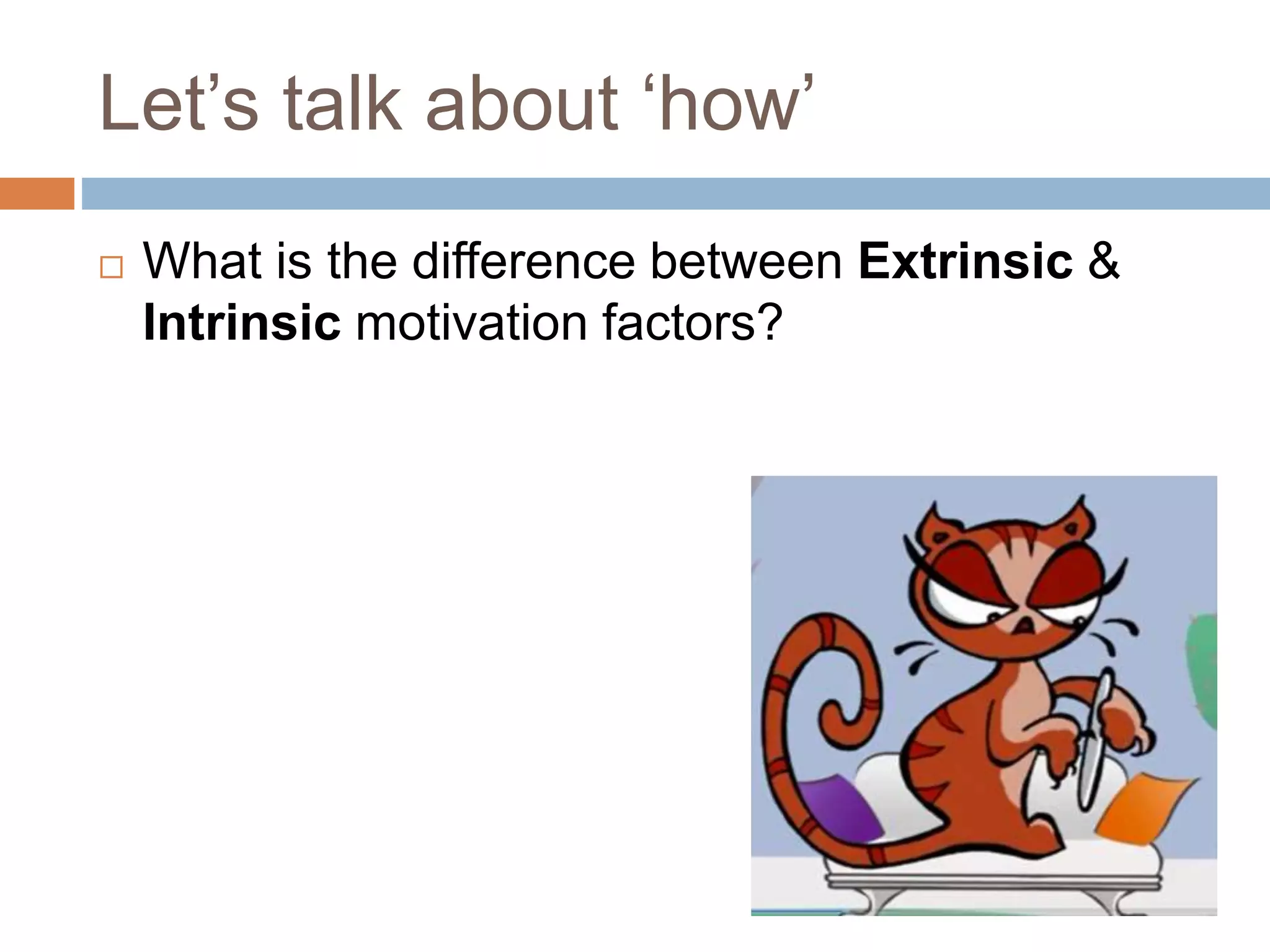
Let’s talk about ‘how’ 
 What is the difference between Extrinsic & 
Intrinsic motivation factors?
Gamification Frameworks 
There are multiple gamification frameworks 
available to help devise your plan. The 2 most 
widely used are SAPS and Octalysis.
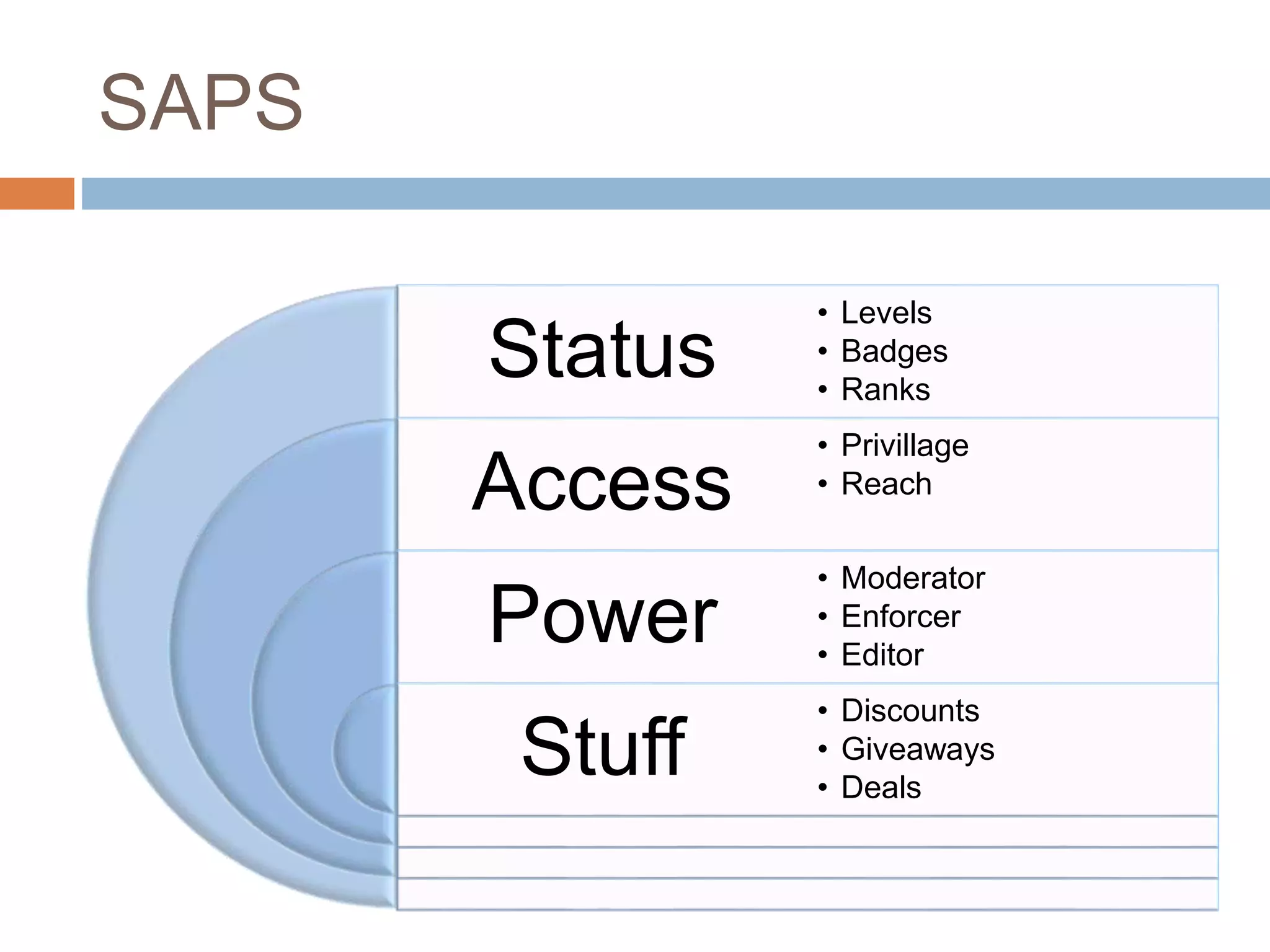
SAPS 
Status 
Access 
Power 
Stuff 
• Levels 
• Badges 
• Ranks 
• Privillage 
• Reach 
• Moderator 
• Enforcer 
• Editor 
• Discounts 
• Giveaways 
• Deals
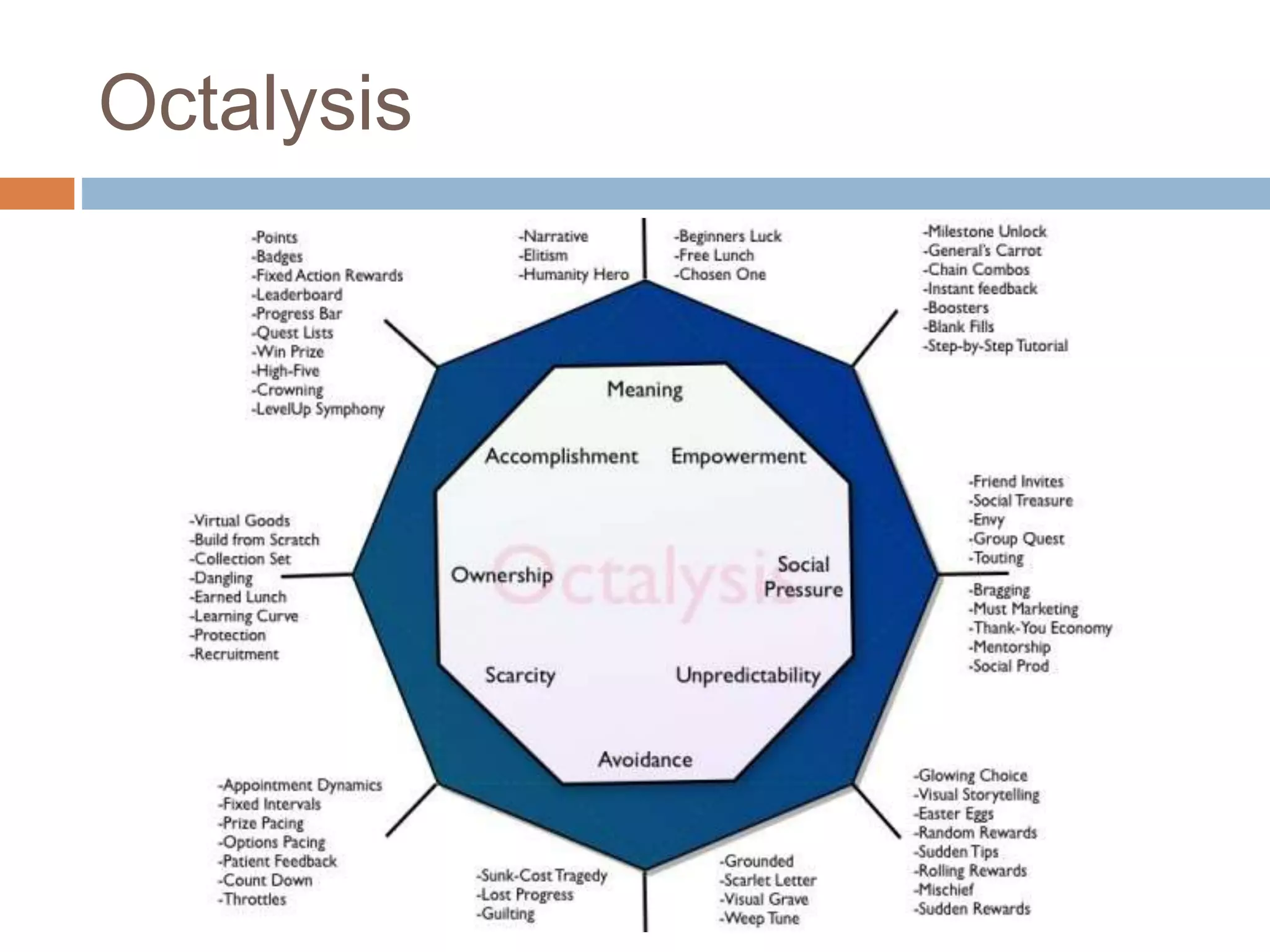
Octalysis
Giveaways 
 Rather Homework 
:p 
 Do a SAPS or 
Octalysis of three 
internet giants 
(Facebook, Twitter, 
Linkedin) for fun. 
 Try to find out what 
game tactics they 
are using to engage 
their audience.
Hint! 
Who ever figures out motivation. 
Wins!

Gamification of User Engagement Process

  • 1.
    US ARMY VIDEO Question
  • 2.
    Human-focused Design Gamemakers have spent decades learning how to master motivation and engagement.  They design user engagement processes which remember that people in the system have feelings, insecurities, and reasons why they want or do not want to do things, and therefore optimizes for their feelings, motivations, and engagement.  This is called Human-focused design.
  • 3.
  • 4.
    Chemistry of Games  Well, this is called Dopamine. Whenever you set a goal and achieve it, your brain releases this chemical.  It brings you all that pleasure and makes you want to do it again. This can be represented to what I call a dopamine cycle.
  • 5.
    Dopamine Cycle Challenge Pleasure Achievement
  • 6.
  • 7.
    Function-focused Design This design assumes that you are dealing with may be robots and whatever they are required to do, they will do because robots do not like or dislike it.
  • 8.
    FfD+HfD  (F+H)(fD) = Gamification  Gamification is making your users do what you want them to do in a way that they like doing it while ultimately getting what they wanted from the whole engagement and making you realize your business objectives.
  • 9.
    Is it worthtrying?  Who is using it?  Does it fit with-in my industry?  What is the projected future of gamification?
  • 10.
    Microsoft uses Gamification  Beta one: 4x improvement in participation  Language Quality: 500,000 screens were reviewed by over 4,500 people to correct and/or improve the translations  Communicate Hope: 16x more feedbacks  Ribbon Hero 1 & 2: MS office learning skills. this game proved so successful, that a sequel was launched.
  • 11.
    SAP uses Gamification  SAP ERP: tele-presence is improved by 29.75%, interface by 23.4%, flow by 30.353%, enjoyment by 53.414%, and perceived ease of use by 36.123%.  The SAP Community Network regamified its already-mature reputation system, increasing usage by 400% and community feedback by 96%  SAP Streamwork: added gamification in brainstorming groups and grew generated ideas by 58%
  • 12.
    Cisco uses Gamification  The Hunt: used gaming strategies  to enhance its virtual global sales meeting  reduce call time by 15%  improved sales by around 10%
  • 13.
    Coka Cola usesGamification  MyCokeRewards  The program was first launched in 2006.  By November of that year, more than one million prizes had been redeemed.  The program has since been extended every year for the past 5 years with the current extension until December 31, 2014.
  • 14.
    Samsung uses Gamification  Samsung Nation: 500% increase in customers' product reviews, 66% increase in site visitors, 30% increase in comments, reduced marketing costs, reduced product support costs
  • 15.
    HP uses Gamification  Project Everest:  950 sales people out of possible 1200 registered (80%)  Aimed for 50% of revenue growth – achieved 56.4%  $1bn revenue growth for HP in first three months
  • 16.
    T-Mobile uses Gamification  T-Mobile's online social business community  participation in T-Community increase 1,000 percent  within the first two weeks, more than 15,000 frontline employees completed an array of Getting Started missions  T-Mobile awarded 187,000 achievement badges in the first six weeks  the number of "likes" assigned by employees to indicate a helpful response increased a staggering 6,000 percent.
  • 17.
    Some interesting Stats  More than 70% of the world’s largest 2,000 companies are expected to have deployed at least one gamified application by year-end 2014 (Gartner)  The enterprise industry vertical already accounts for 1/4th of all gamification vendor revenues (M2 Research)  Vendors claim that gamification can lead to a 100% to 150% pickup in engagement metrics including unique views, page views, community activities, and time on site (M2 Research)
  • 18.
    Does it fitwith-in my industry?  Let me ask what is your target audience?
  • 19.
  • 20.
    How to Gamify?  But before we get into ‘how’ we need to do a ‘what’ analysis.
  • 21.
    ‘What’ Analysis What problem I am going to address?  What audience will participate?  What are the desired behaviors I want to drive from my audience?  What are the KPIs to monitor a positive change?
  • 22.
    Let’s talk about‘how’  What is the difference between Extrinsic & Intrinsic motivation factors?
  • 23.
    Gamification Frameworks Thereare multiple gamification frameworks available to help devise your plan. The 2 most widely used are SAPS and Octalysis.
  • 24.
    SAPS Status Access Power Stuff • Levels • Badges • Ranks • Privillage • Reach • Moderator • Enforcer • Editor • Discounts • Giveaways • Deals
  • 25.
  • 26.
    Giveaways  RatherHomework :p  Do a SAPS or Octalysis of three internet giants (Facebook, Twitter, Linkedin) for fun.  Try to find out what game tactics they are using to engage their audience.
  • 27.
    Hint! Who everfigures out motivation. Wins!

Editor's Notes

  • #3 Game Makers are the first to master this approach. But how they are using this approach in the games they develop? To find the answer I will have to ask another question.
  • #6 Almost all of the games are built on the same cycle. Game makers have mastered this art of challenging the player continually to get pleasure through achievements. The moment a player enters the loop and feels the challenge is entertaining, doable and a certain reward could easily be realized, he/she gets addicted to take that pleasure from the process over and over. So this is how the user engagement process for games works.
  • #7 But your business, on the other hand is obviously not a game. I am not asking you to change your business type, become a game studio and start competing with EA. Or turn your workplace into a gaming zone with all sort of sounds and flashes coming from everywhere Or turn your end-users into game freaks, glued to the small to extra large size screens, in their hands, on their laps or desks wasting time for no meaningful gain. I only want you to take best lessons from games and apply them to your situation. I just want you to understand how understanding games mechanics can help you do your business in a better way.
  • #8  In today’s business world most of the systems are based on a function-focused design.
  • #9 Gamification requires you to apply game thinking & mechanics in a non-game context to engage users. Gamification requires you to remember you are dealing with human-beings so to add a layer of the human-focused design elements into your existing function-focused designs. It is about getting desired behavior from your users in a non-directive context. It is coming up with an appropriate give and take process to create win-win situation for everyone.
  • #19 Gen Y (i.e., people who were born in late eighties to early Nineties. According to a study conducted by MTV in 2011, “Gen Yers reported that a ‘game-like metaphor’ applied to almost every aspect of their life. More than half also reported that “People my age see real life as a video game” and “#winning is the slogan of my generation”. if your audience belongs to Gen Y and you have not embraced gamification yet, you are already sustaining huge losses
  • #22 What problem I am going to address? It could be employee satisfaction, productivity, increased repeat sales, etc… What audience who will participate in the gamified process? What are demographics I am going to target. What are the desired behaviors I want to drive from my audience? These desired behaviors could be making employees punctual, solve issues quickly, do better team work, write a review, add a new listing, come on your site daily, share the purchase with their audience, get their friends to purchase from your site, etc… What are the KPIs to measure the success of this gamified user engagement process? KPIs to monitor an increase could be attendance, lead generation, sales, number of reviews, listings, social shares, referrals, Page Views per visit, etc…
  • #23 Now we know ‘what’ so let’s talk about ‘how’? But I yet have another question to ask Let’s take help from the lazy cat.
  • #24 SAPS framework divides extrinsic and intrinsic rewards in 4 categories while Octalysis talks about 8 core drives to provide extrinsic and intrinsic motivation to the user.
  • #25 Status: is a position in relation to other players Access: Access is the privilege difference in relation to others. It could be access to information, people, objects. Power: Power over other users like ability to moderate a forum. This conference. Stuff: things you get like Discounts, cash backs, free T-shirts, etc…
  • #26 Key thing to learn here is no matter what framework you choose, always remember, you really have to find the balance between the three rewards or core drives, business objectives and audience preference.