Alireza Ranjbar Shourabi
 Microsoft
 Nike
 SAP
 American Express
 Major League Baseball
 Salesforce.com
 AXA Equitable
 CodeAcademy
 Deloitte
 Samsung
 EMC
 Foursquare
 Stack Overflow
 Facebook
 Tweeter
 USA Networks
 LiveOps
 Dell
 Kaiser Permanente
 Foot Locker
 Opower
 eBay
 Cisco
 Recyclebank
 Universal Music
 Siemens
 Yelp
 Verizon
 FUN
 Game Mechanic
 Dopamine Loop
 Reward
 Motivation
 Flow
 PlayerType
 Intrinsic / Extrinsic
 Gamification Framework
 “In every job that must be done, there is an
element of fun. You find the fun and snap!
The job’s a game.”
-- Mary Poppins
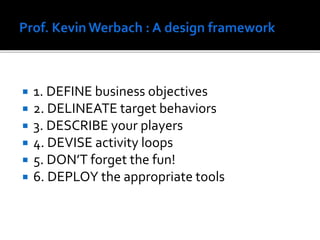
 1. DEFINE business objectives
 2. DELINEATE target behaviors
 3. DESCRIBE your players
 4. DEVISE activity loops
 5. DON’T forget the fun!
 6. DEPLOY the appropriate tools
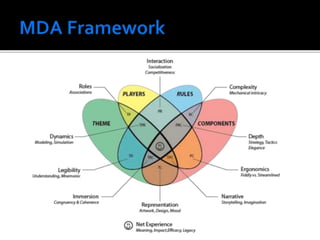
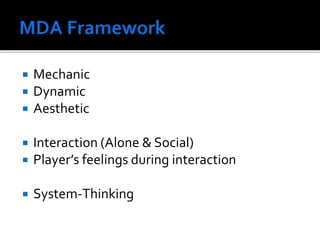
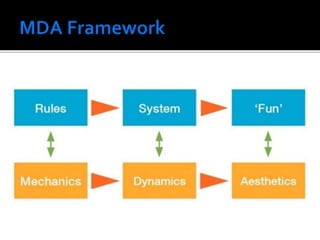
 Mechanic
 Dynamic
 Aesthetic
 Interaction (Alone & Social)
 Player’s feelings during interaction
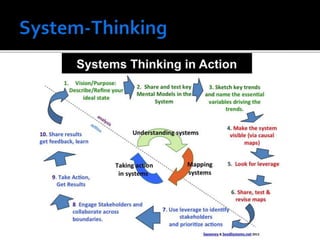
 System-Thinking
 The process of understanding how those
things which may be regarded as systems
influence one another within a complete
entity, or larger system.
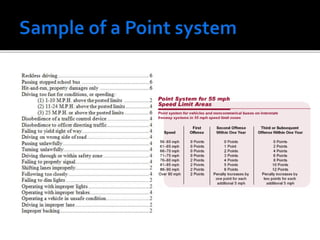
 Point System
 Level (Level Design)
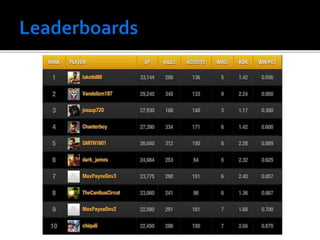
 Leaderboard (Social Element)
 Absolute requirement for all gamified
systems
 Some examples in real life
 Cash score
 Video game score
 Social networking score
 Composite Metrics
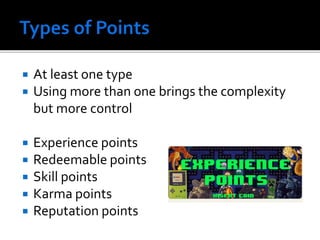
 At least one type
 Using more than one brings the complexity
but more control
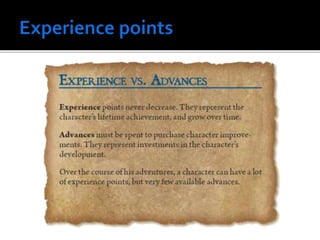
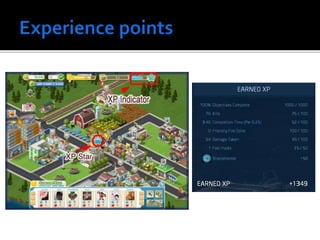
 Experience points
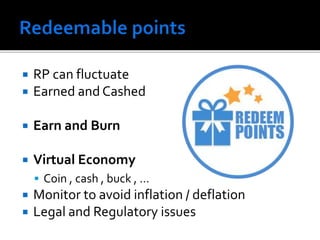
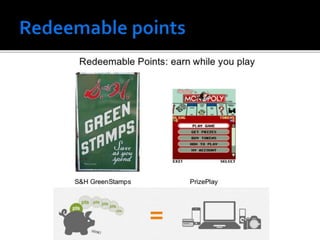
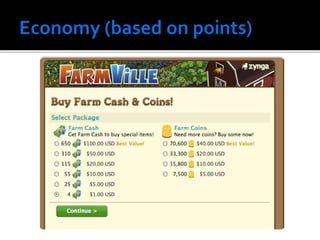
 Redeemable points
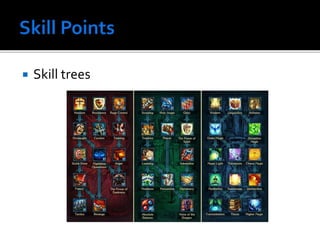
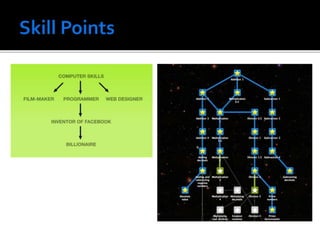
 Skill points
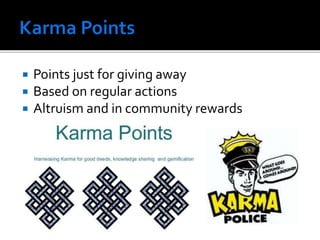
 Karma points
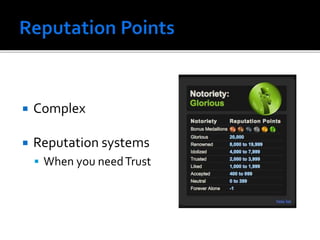
 Reputation points
 XP is the most important one
 It’s not a currency
 Every action has XP
 Never goes down
 Always grows and has no limit
 Is not redeemable
 Can be expired
 Creating goal loops
 RP can fluctuate
 Earned and Cashed
 Earn and Burn
 Virtual Economy
 Coin , cash , buck , …
 Monitor to avoid inflation / deflation
 Legal and Regulatory issues
 Skill trees
 Points just for giving away
 Based on regular actions
 Altruism and in community rewards
 Complex
 Reputation systems
 When you needTrust
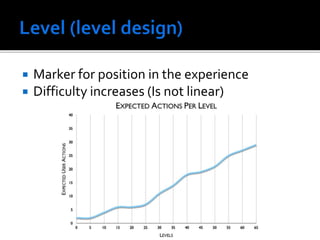
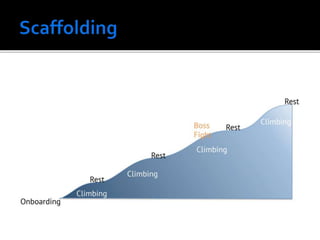
 Marker for position in the experience
 Difficulty increases (Is not linear)
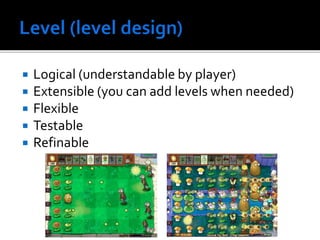
 Logical (understandable by player)
 Extensible (you can add levels when needed)
 Flexible
 Testable
 Refinable
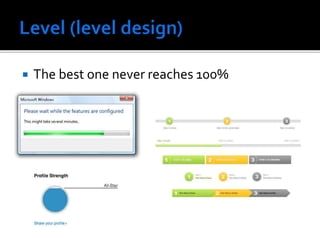
 The best one never reaches 100%
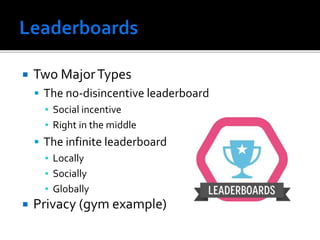
 Two MajorTypes
 The no-disincentive leaderboard
▪ Social incentive
▪ Right in the middle
 The infinite leaderboard
▪ Locally
▪ Socially
▪ Globally
 Privacy (gym example)
 FANAPApp (with prize)
 A Gamified plan for your work/job title with
your hobby as prize
 (Change a bad habit) or (Create a good habit)
with a gamification plan with your hobby as
prize
Alireza Ranjbar Shourabi

Gamification 101 session 3

  • 1.
  • 2.
     Microsoft  Nike SAP  American Express  Major League Baseball  Salesforce.com  AXA Equitable  CodeAcademy  Deloitte  Samsung  EMC  Foursquare  Stack Overflow  Facebook  Tweeter  USA Networks  LiveOps  Dell  Kaiser Permanente  Foot Locker  Opower  eBay  Cisco  Recyclebank  Universal Music  Siemens  Yelp  Verizon
  • 6.
     FUN  GameMechanic  Dopamine Loop  Reward  Motivation  Flow  PlayerType  Intrinsic / Extrinsic  Gamification Framework
  • 7.
     “In everyjob that must be done, there is an element of fun. You find the fun and snap! The job’s a game.” -- Mary Poppins
  • 9.
     1. DEFINEbusiness objectives  2. DELINEATE target behaviors  3. DESCRIBE your players  4. DEVISE activity loops  5. DON’T forget the fun!  6. DEPLOY the appropriate tools
  • 11.
     Mechanic  Dynamic Aesthetic  Interaction (Alone & Social)  Player’s feelings during interaction  System-Thinking
  • 12.
     The processof understanding how those things which may be regarded as systems influence one another within a complete entity, or larger system.
  • 15.
     Point System Level (Level Design)  Leaderboard (Social Element)
  • 16.
     Absolute requirementfor all gamified systems  Some examples in real life  Cash score  Video game score  Social networking score  Composite Metrics
  • 18.
     At leastone type  Using more than one brings the complexity but more control  Experience points  Redeemable points  Skill points  Karma points  Reputation points
  • 20.
     XP isthe most important one  It’s not a currency  Every action has XP  Never goes down  Always grows and has no limit  Is not redeemable  Can be expired  Creating goal loops
  • 22.
     RP canfluctuate  Earned and Cashed  Earn and Burn  Virtual Economy  Coin , cash , buck , …  Monitor to avoid inflation / deflation  Legal and Regulatory issues
  • 24.
  • 26.
     Points justfor giving away  Based on regular actions  Altruism and in community rewards
  • 27.
     Complex  Reputationsystems  When you needTrust
  • 29.
     Marker forposition in the experience  Difficulty increases (Is not linear)
  • 31.
     Logical (understandableby player)  Extensible (you can add levels when needed)  Flexible  Testable  Refinable
  • 32.
     The bestone never reaches 100%
  • 34.
     Two MajorTypes The no-disincentive leaderboard ▪ Social incentive ▪ Right in the middle  The infinite leaderboard ▪ Locally ▪ Socially ▪ Globally  Privacy (gym example)
  • 35.
     FANAPApp (withprize)  A Gamified plan for your work/job title with your hobby as prize  (Change a bad habit) or (Create a good habit) with a gamification plan with your hobby as prize
  • 36.