An Introduction to Research Methodology
Dr. Jaganmohana Rao
Faculty of Education
MITE, Kohima
Research
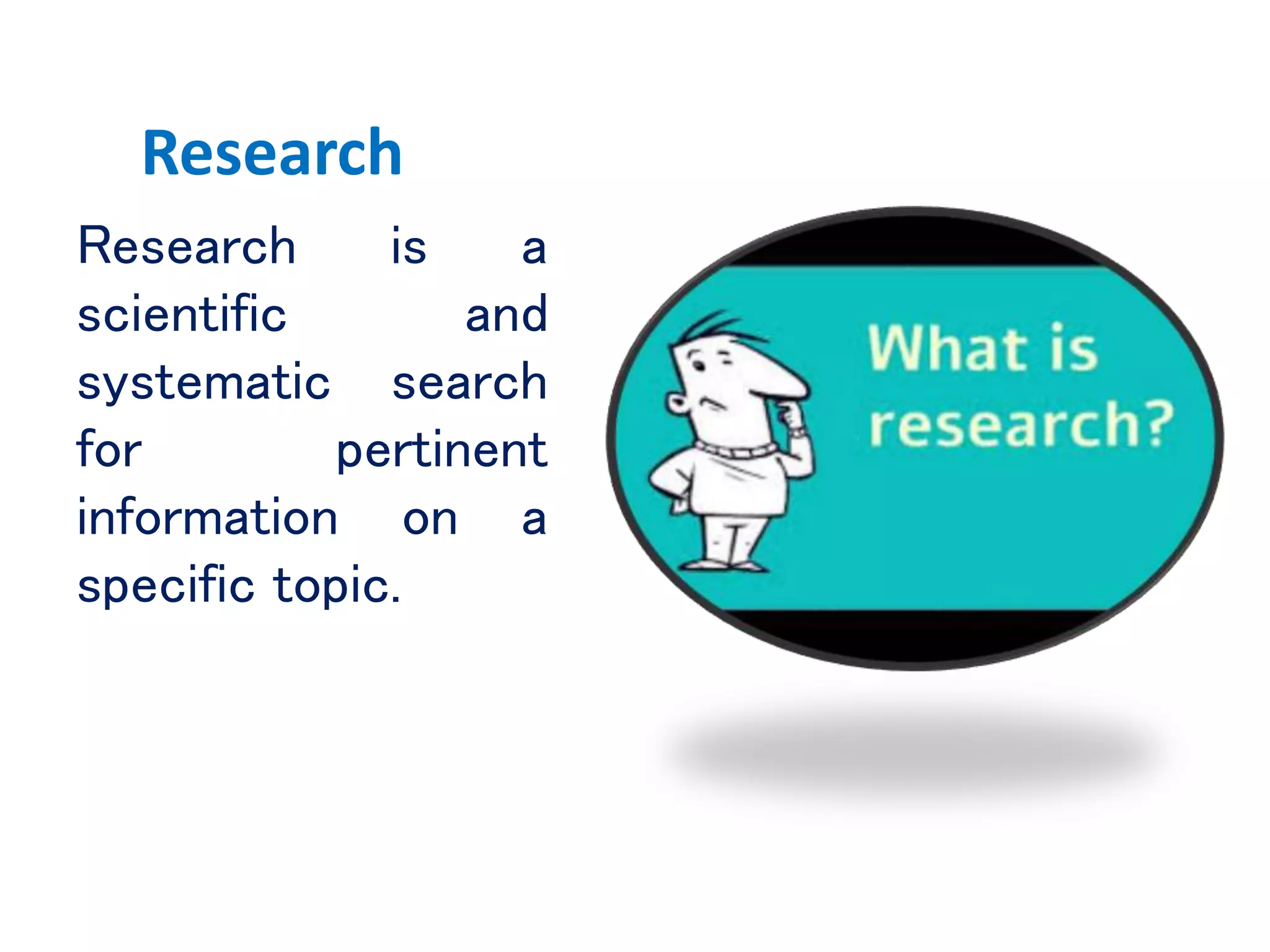
Research is a
scientific and
systematic search
for pertinent
information on a
specific topic.
As per the dictionary definition it is a careful
investigation or enquiry especially through search
for new facts in any branch of knowledge
Characteristics of Research:
It is always Search for Knowledge
Its moves from Known to known
Systematic and careful inquiry
It has the Logic reason and evidence
It should fallow the scientific methods (Inductive &
Deductive)
It will formulate the generalisations & theories
Types of Research
Descriptive vs Analytical:
Descriptive research (Ex post facto research)
includes surveys and fact-finding enquiries of
different kinds. The main characteristic of this
method is that the researcher has no control
over the variables; he can only report what has
happened or what is happening.
Analytical research in this the researcher has to
use facts or information already available, and
analyze these to make a critical evaluation of
the material
Applied vs Fundamental:
Applied research aims at finding a solution for an
immediate problems facing by a society or an
organization.
Fundamental research is mainly concerned with
generalizations and with the formulation of
theory. (gathering knowledge for knowledge’s
sake)
Quantitative vs Qualitative:
Quantitative research is based on the
quantitative measurements of some
characteristics. It is applicable to phenomena
that can be expressed in terms of quantities.
Qualitative research is concerned with
qualitative phenomenon, it is a method of
inquiry that develops understanding on human
and social sciences, to find the way people
think and feel.
Conceptual vs Empirical:
Conceptual research is that related to some
abstract ideas or theory. It is generally used by
philosophers and thinkers to develop new
concepts or to reinterpret existing ones.
Empirical research (Experimental) relies on
experience or observation alone, often
without due regard for system and theory. It is
data based research, coming up with
conclusions which are capable of being verified
by observation or experiment.
Other Types of Research:
 One-time research
 Longitudinal research
 Field setting research / Laboratory research
 Clinical or diagnostic research
 Historical research
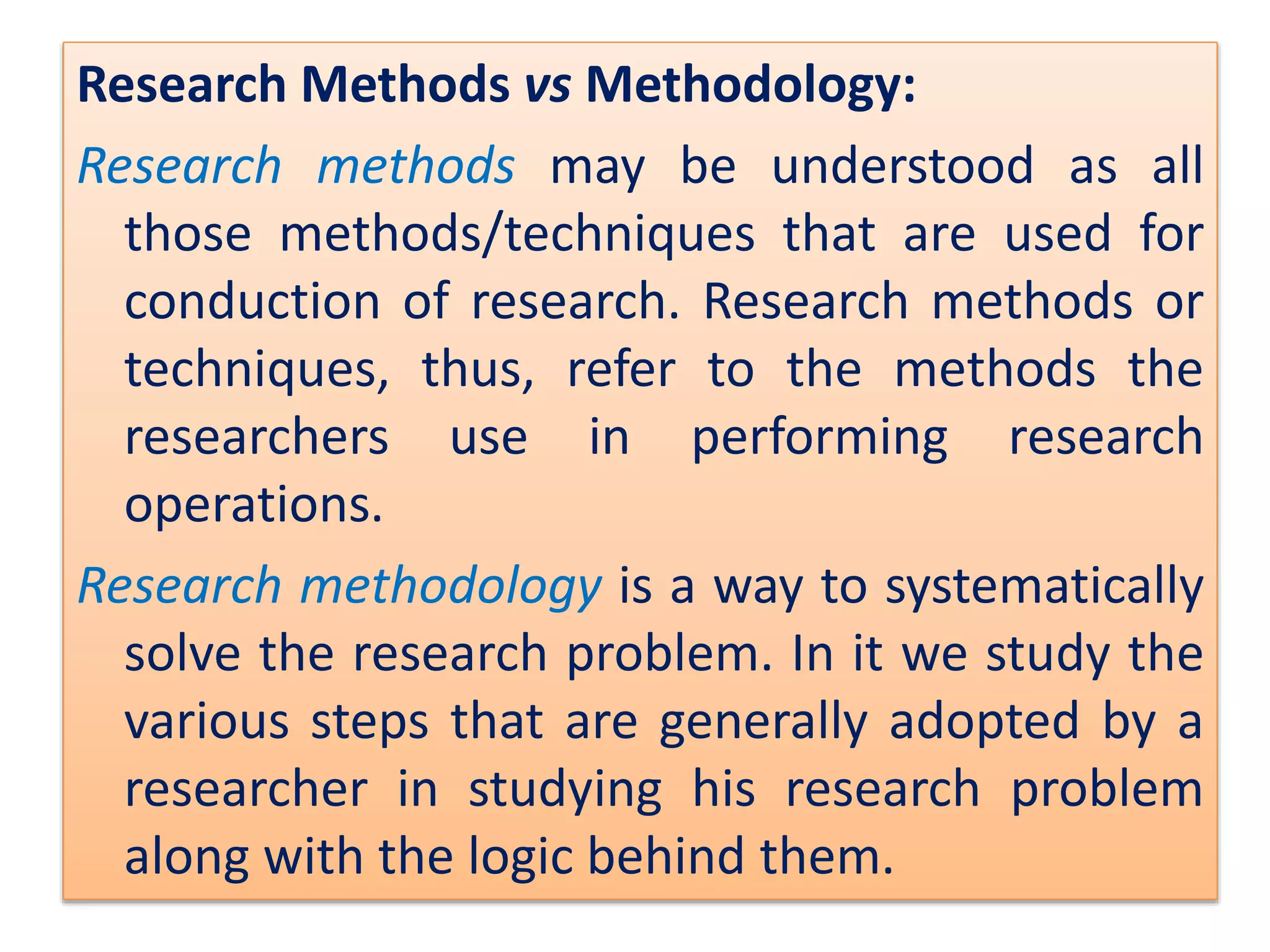
Research Methods vs Methodology:
Research methods may be understood as all
those methods/techniques that are used for
conduction of research. Research methods or
techniques, thus, refer to the methods the
researchers use in performing research
operations.
Research methodology is a way to systematically
solve the research problem. In it we study the
various steps that are generally adopted by a
researcher in studying his research problem
along with the logic behind them.
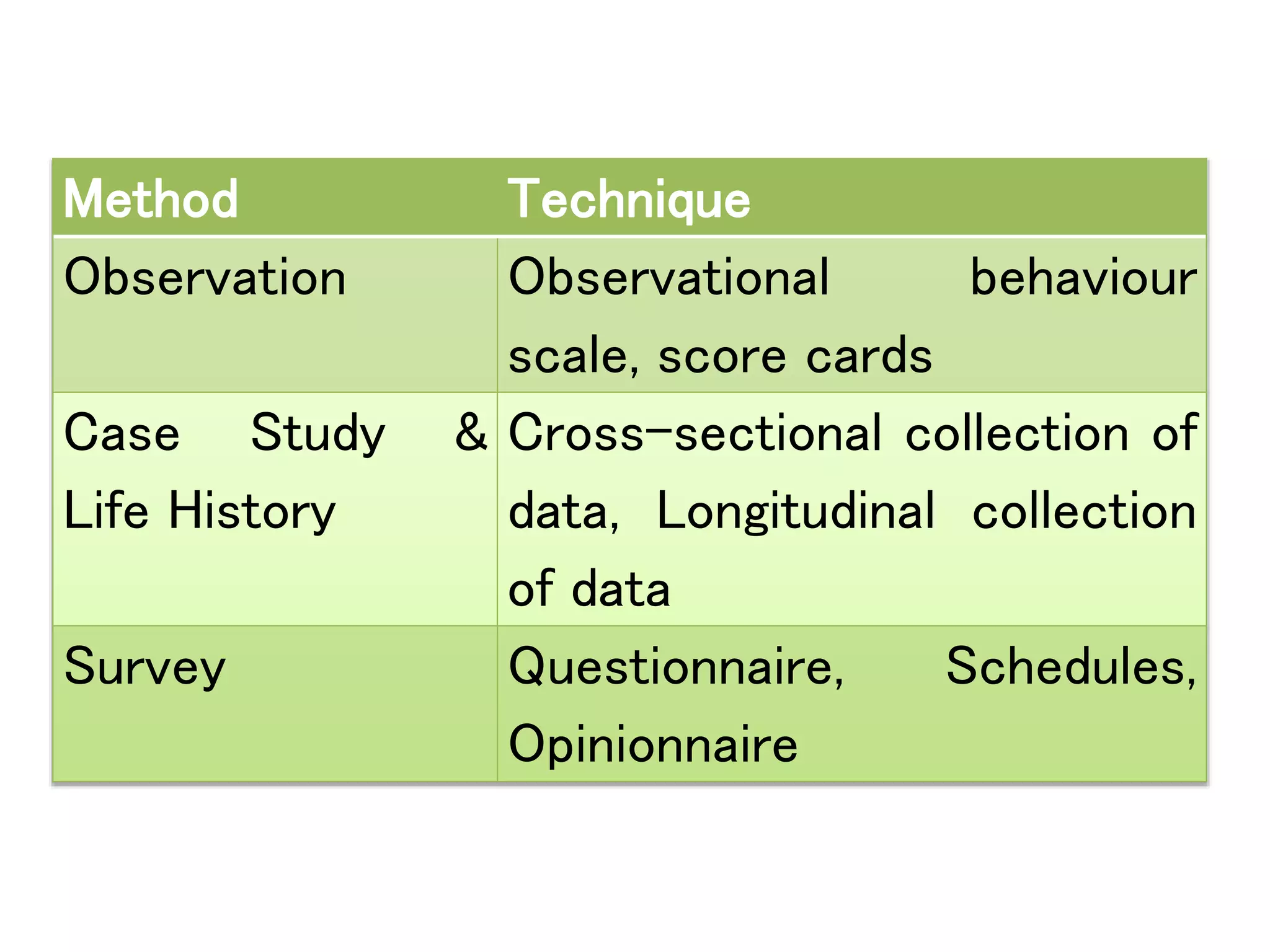
Method Technique
Observation Observational behaviour
scale, score cards
Case Study &
Life History
Cross-sectional collection of
data, Longitudinal collection
of data
Survey Questionnaire, Schedules,
Opinionnaire
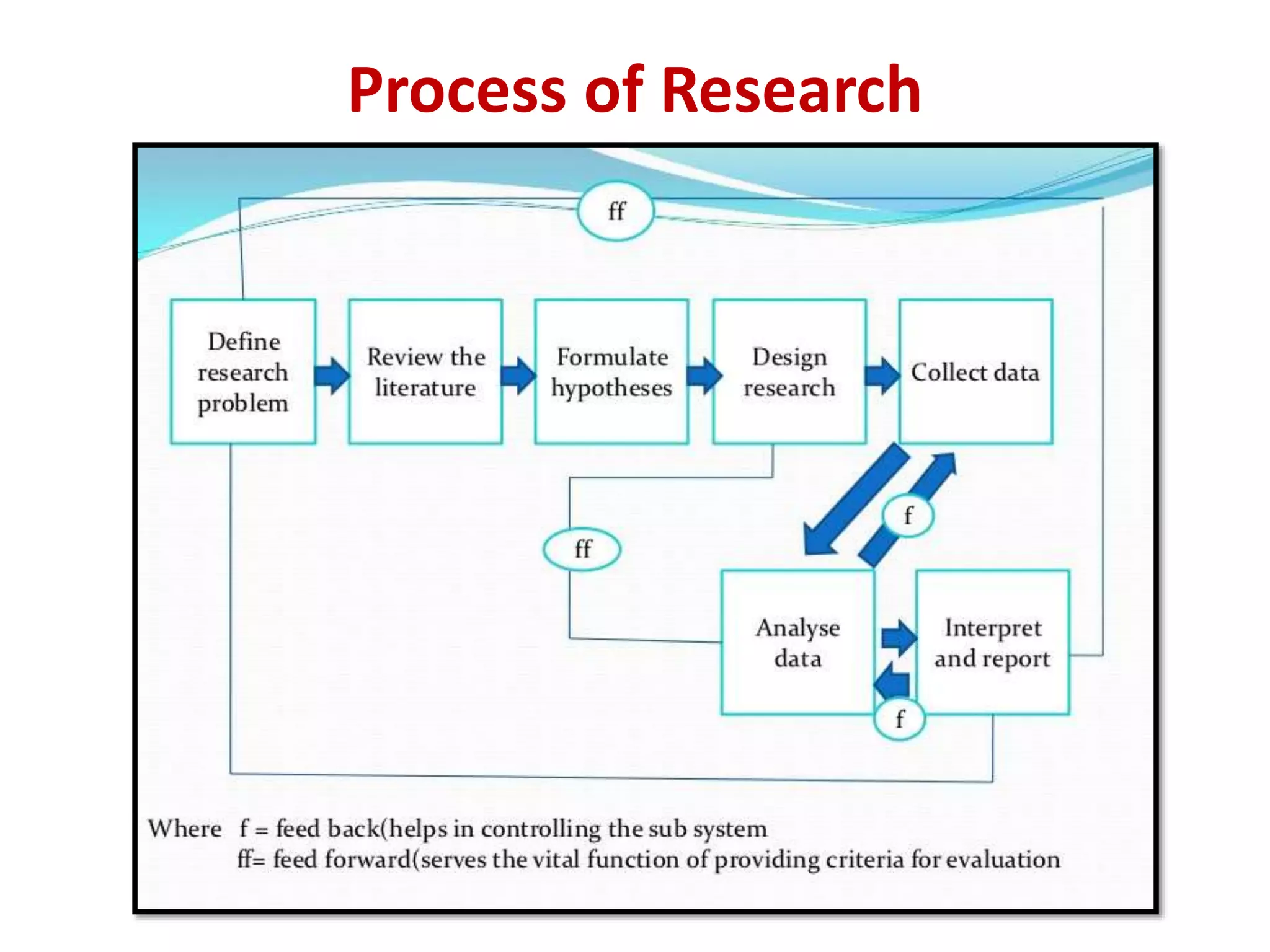
Process of Research
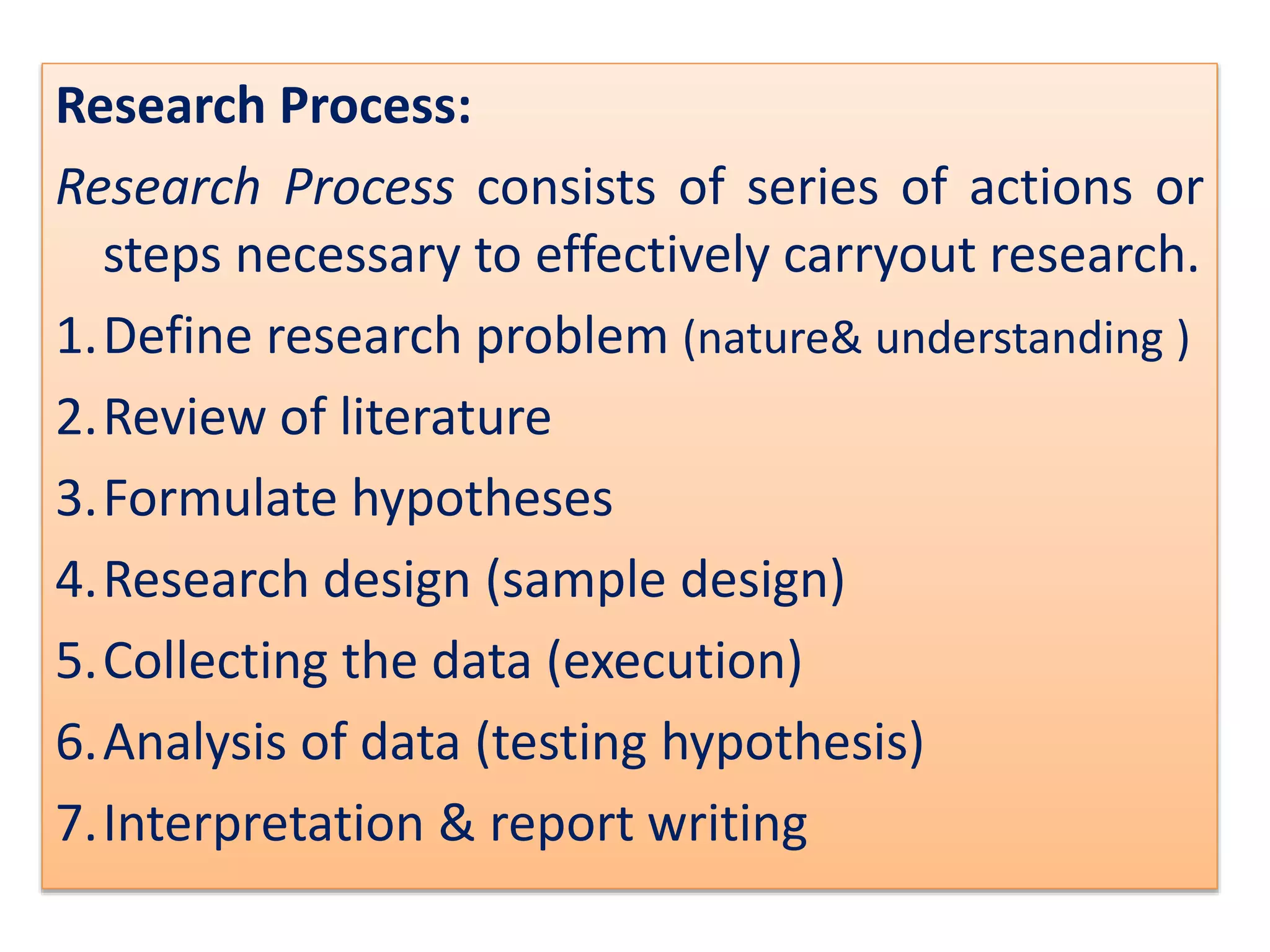
Research Process:
Research Process consists of series of actions or
steps necessary to effectively carryout research.
1.Define research problem (nature& understanding )
2.Review of literature
3.Formulate hypotheses
4.Research design (sample design)
5.Collecting the data (execution)
6.Analysis of data (testing hypothesis)
7.Interpretation & report writing
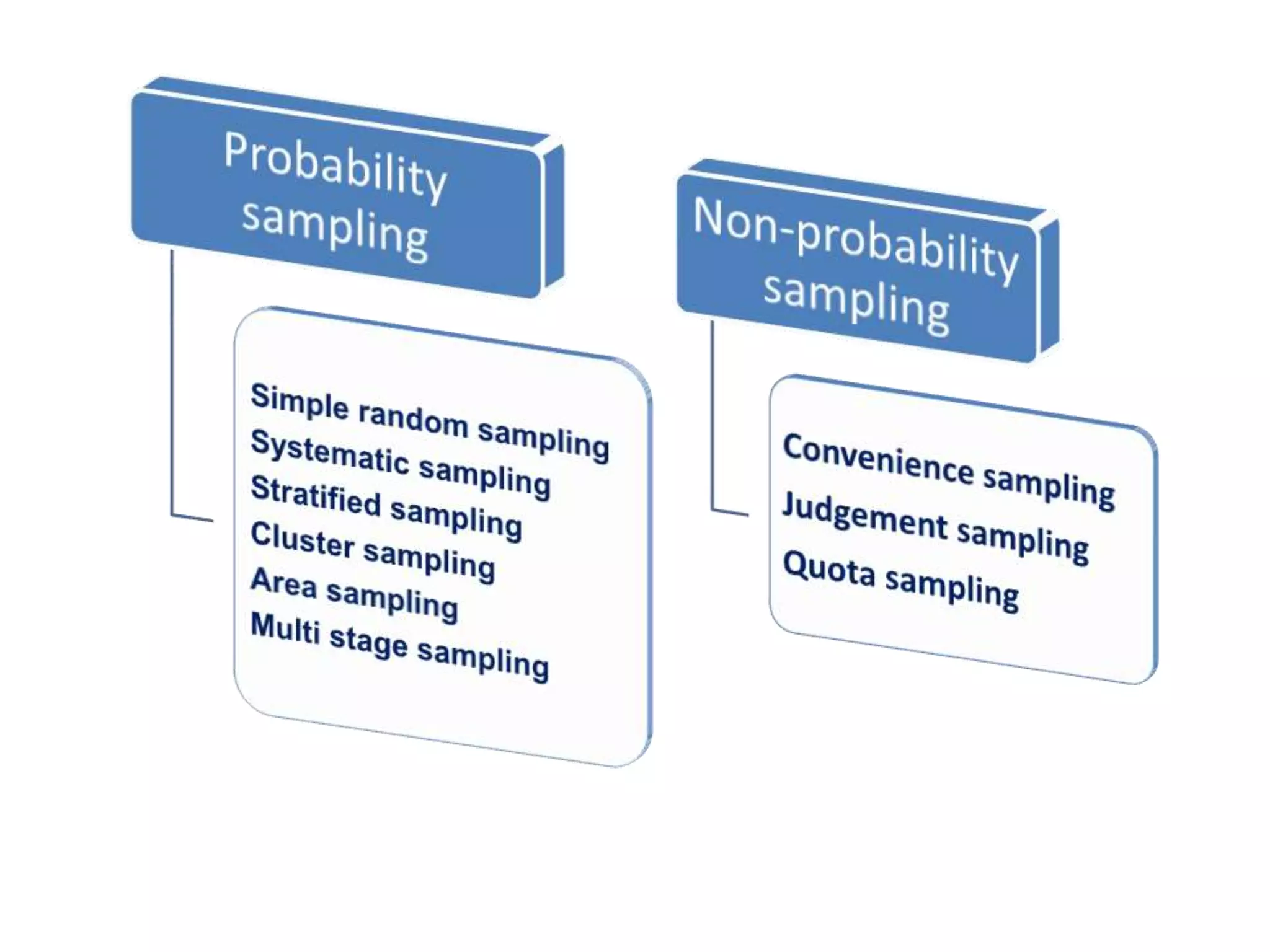
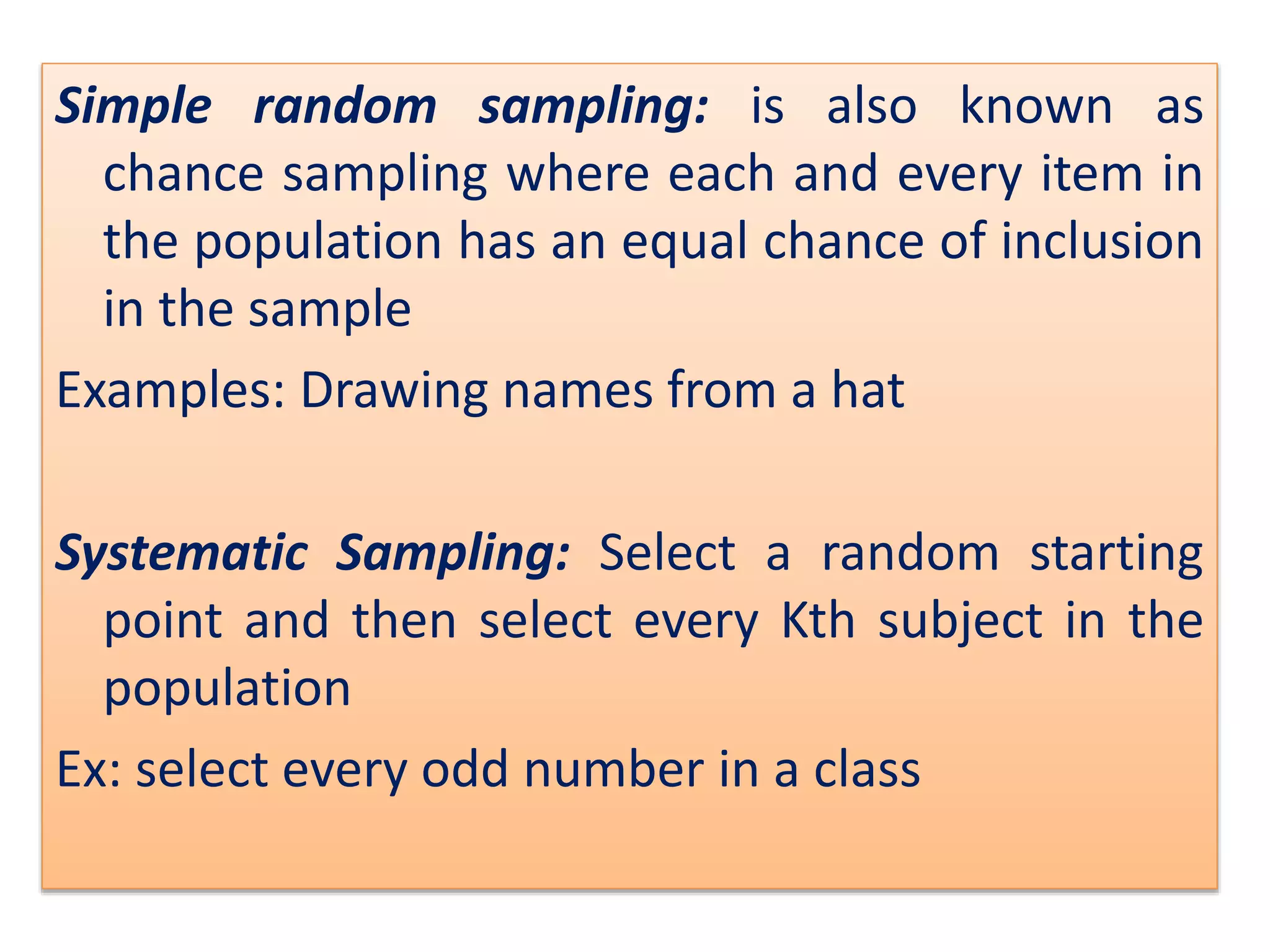
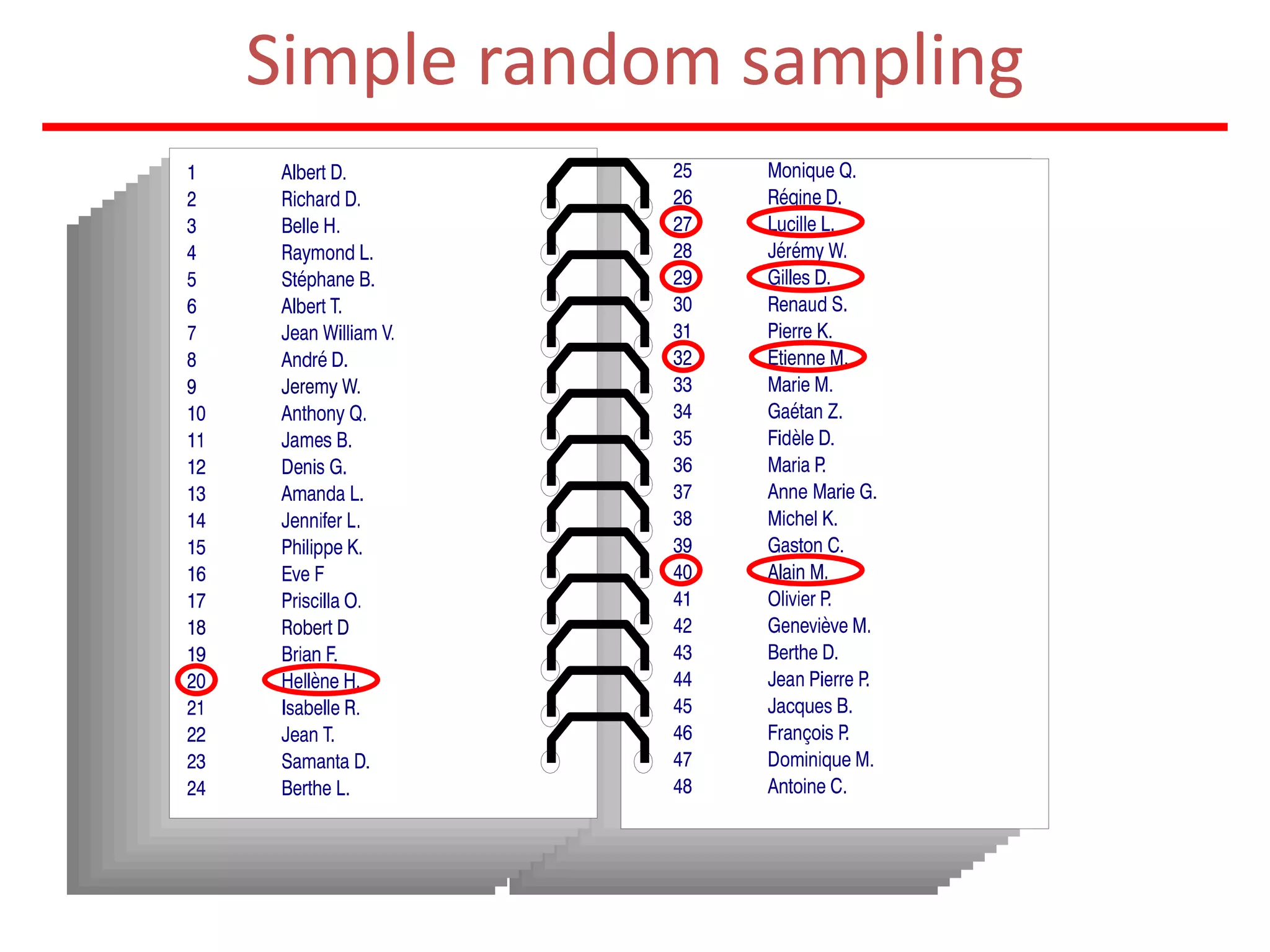
Simple random sampling: is also known as
chance sampling where each and every item in
the population has an equal chance of inclusion
in the sample
Examples: Drawing names from a hat
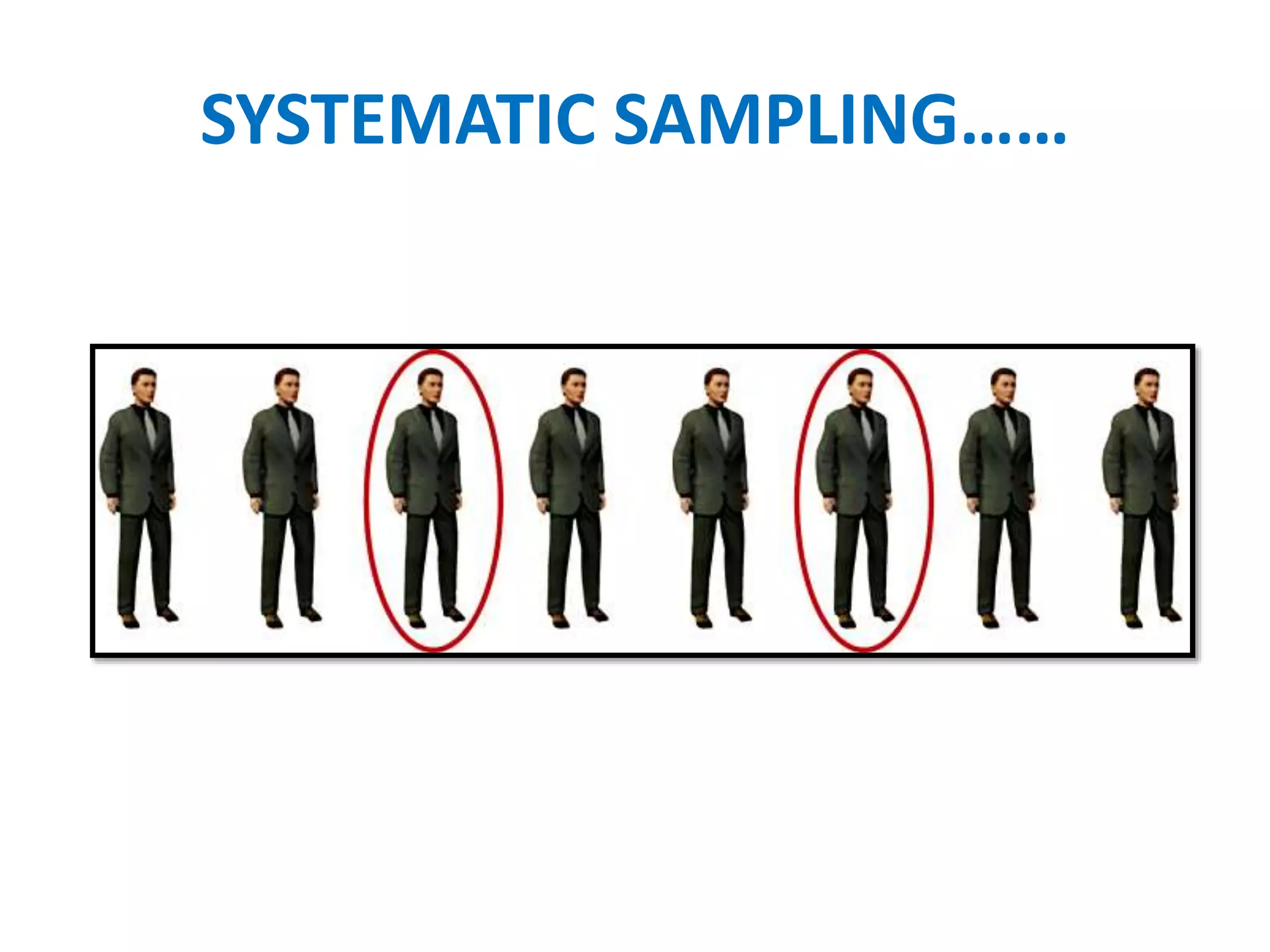
Systematic Sampling: Select a random starting
point and then select every Kth subject in the
population
Ex: select every odd number in a class
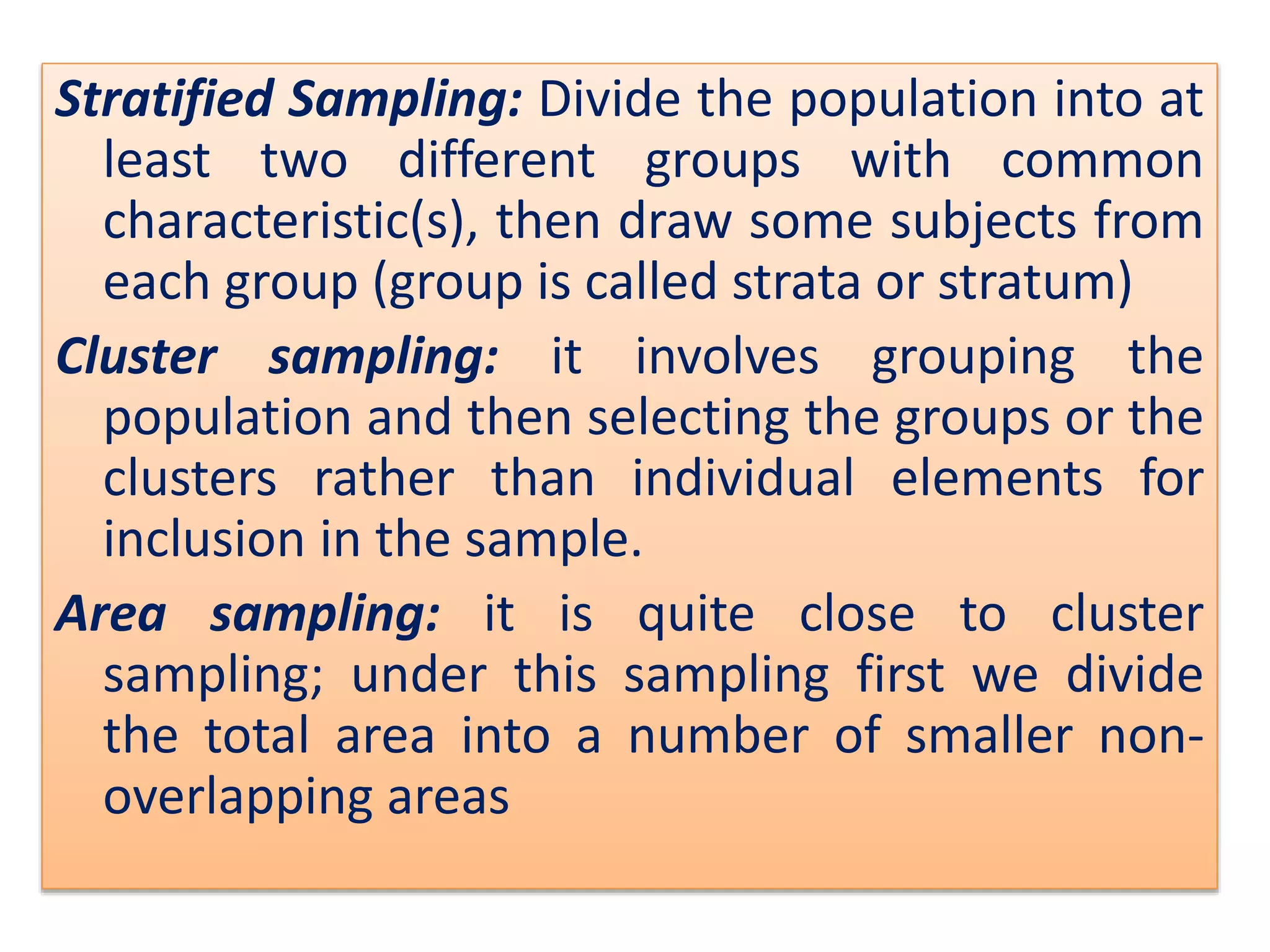
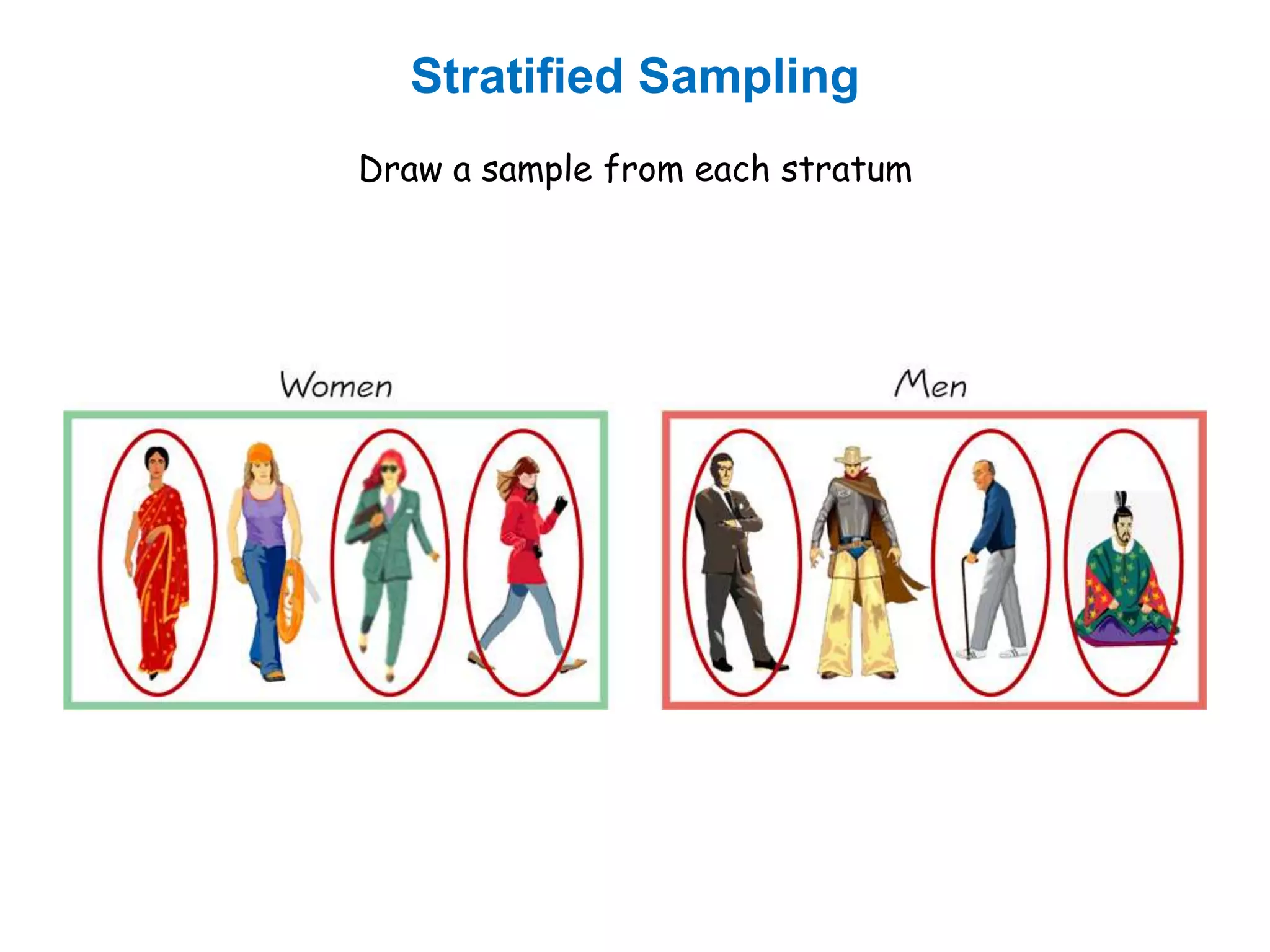
Stratified Sampling: Divide the population into at
least two different groups with common
characteristic(s), then draw some subjects from
each group (group is called strata or stratum)
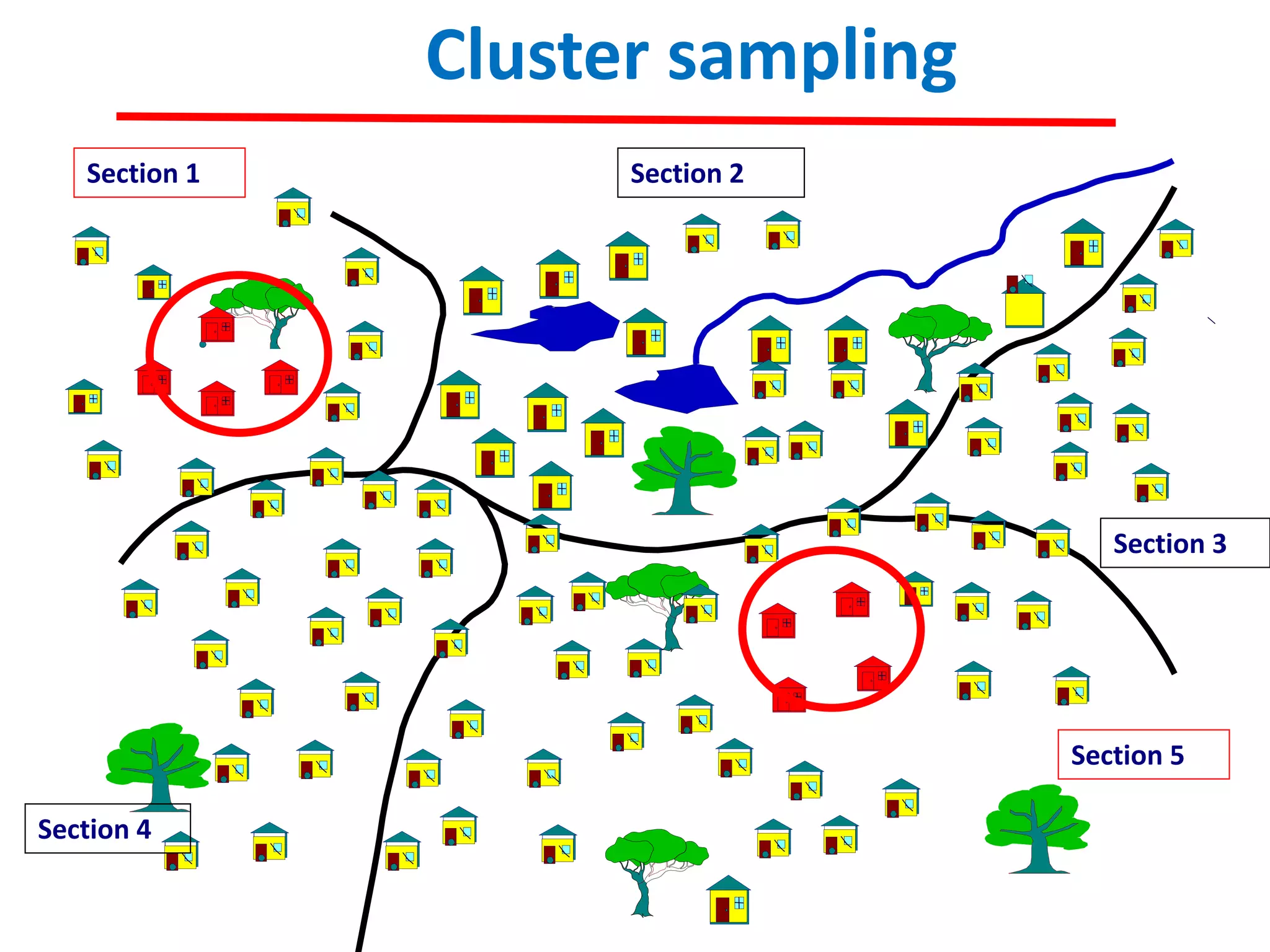
Cluster sampling: it involves grouping the
population and then selecting the groups or the
clusters rather than individual elements for
inclusion in the sample.
Area sampling: it is quite close to cluster
sampling; under this sampling first we divide
the total area into a number of smaller non-
overlapping areas
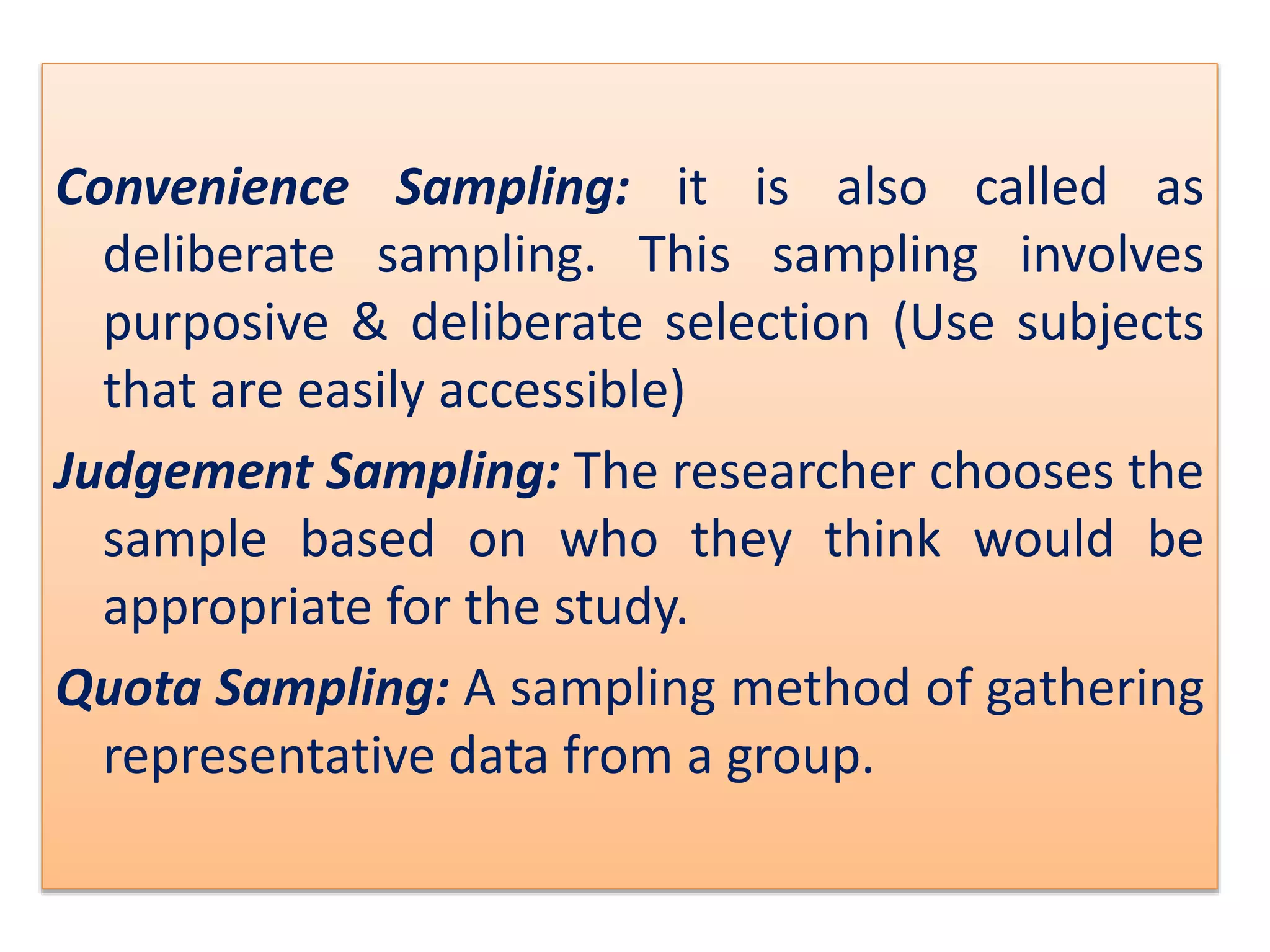
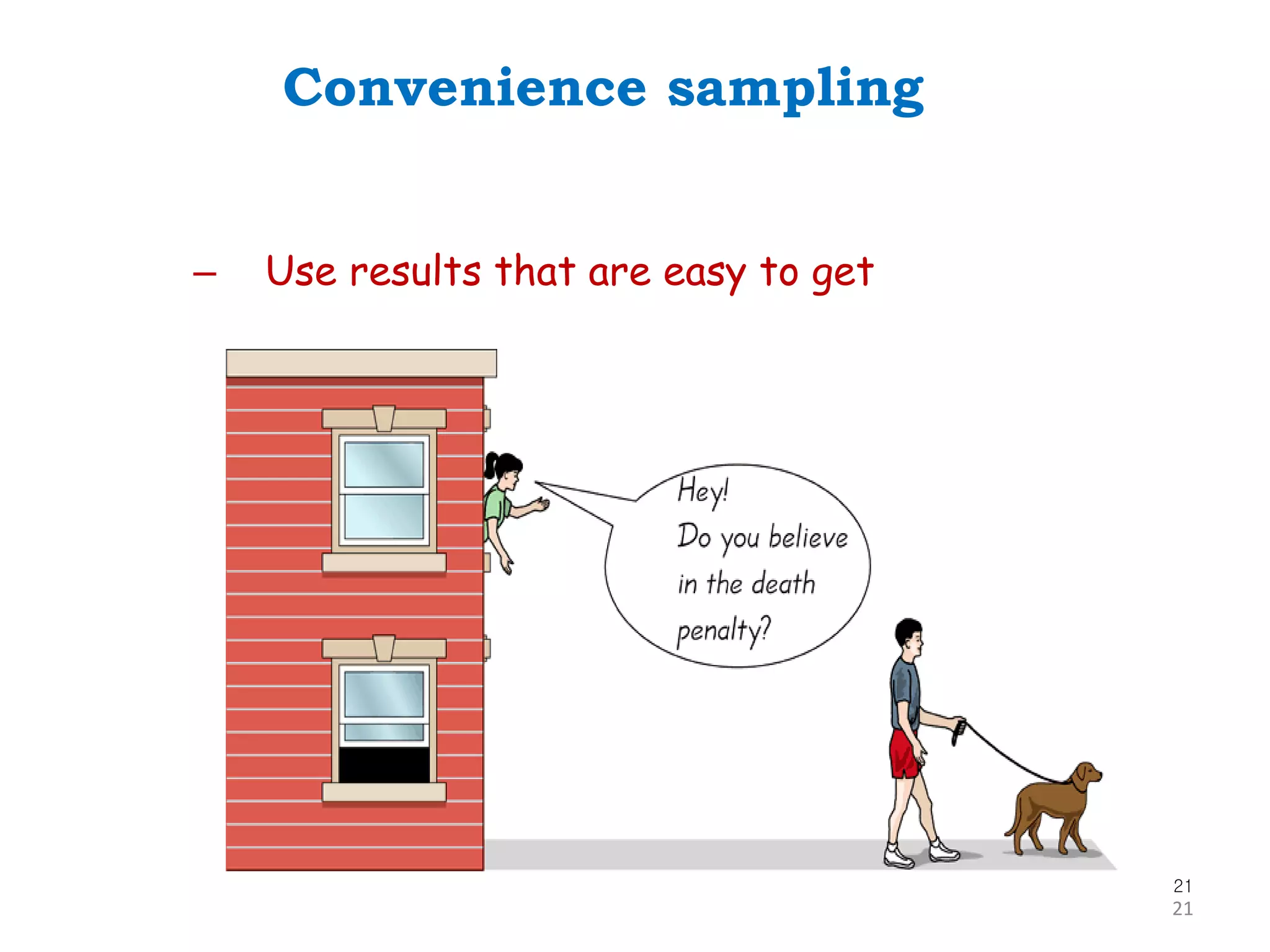
Convenience Sampling: it is also called as
deliberate sampling. This sampling involves
purposive & deliberate selection (Use subjects
that are easily accessible)
Judgement Sampling: The researcher chooses the
sample based on who they think would be
appropriate for the study.
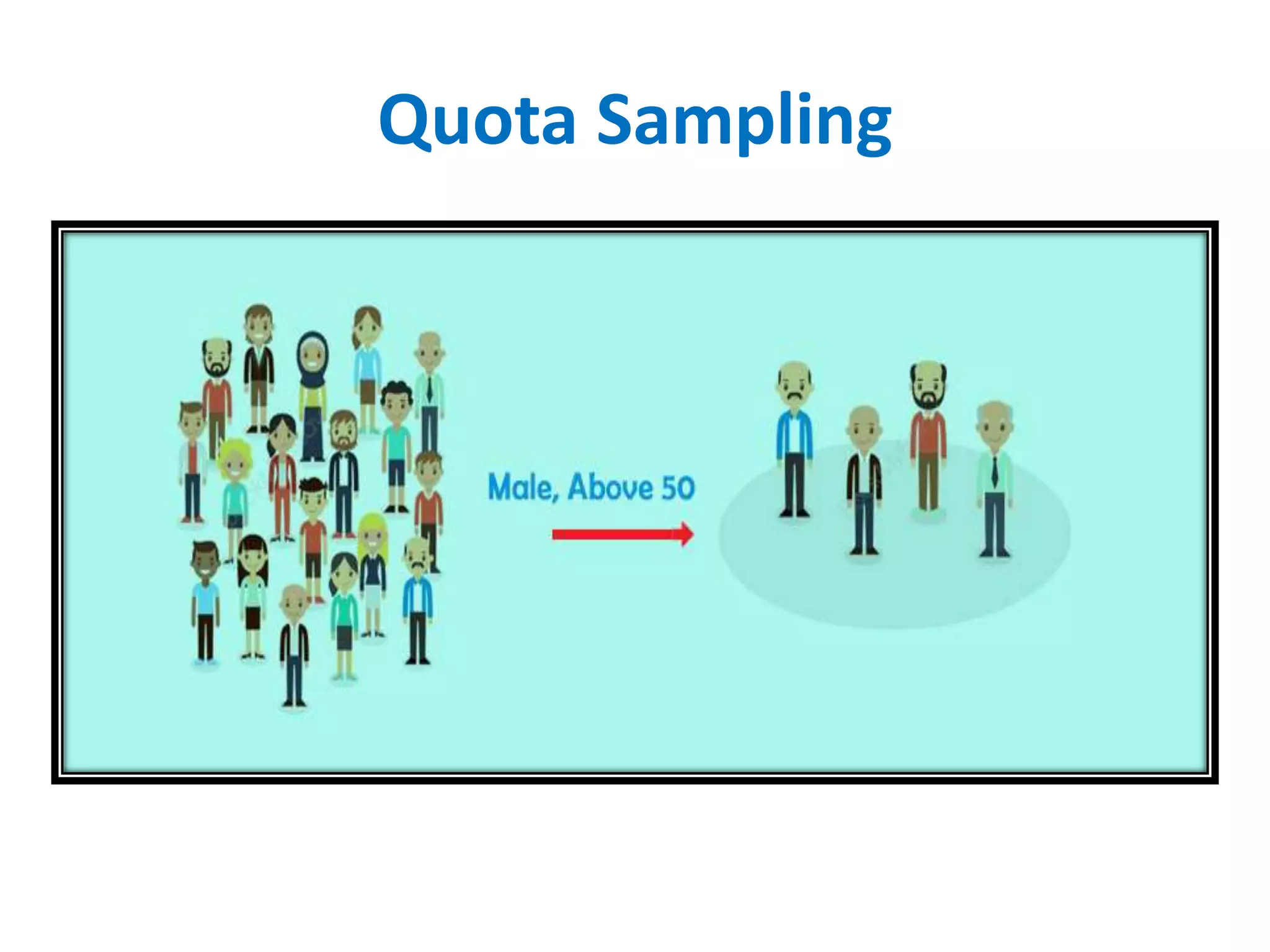
Quota Sampling: A sampling method of gathering
representative data from a group.
Simple random sampling
SYSTEMATIC SAMPLING……
Stratified Sampling
Draw a sample from each stratum
Cluster sampling
Section 4
Section 5
Section 3
Section 2Section 1
21
Convenience sampling
– Use results that are easy to get
21
Quota Sampling
An introduction to research methodoloy

An introduction to research methodoloy

  • 1.
    An Introduction toResearch Methodology Dr. Jaganmohana Rao Faculty of Education MITE, Kohima
  • 2.
    Research Research is a scientificand systematic search for pertinent information on a specific topic.
  • 3.
    As per thedictionary definition it is a careful investigation or enquiry especially through search for new facts in any branch of knowledge Characteristics of Research: It is always Search for Knowledge Its moves from Known to known Systematic and careful inquiry It has the Logic reason and evidence It should fallow the scientific methods (Inductive & Deductive) It will formulate the generalisations & theories
  • 4.
    Types of Research Descriptivevs Analytical: Descriptive research (Ex post facto research) includes surveys and fact-finding enquiries of different kinds. The main characteristic of this method is that the researcher has no control over the variables; he can only report what has happened or what is happening. Analytical research in this the researcher has to use facts or information already available, and analyze these to make a critical evaluation of the material
  • 5.
    Applied vs Fundamental: Appliedresearch aims at finding a solution for an immediate problems facing by a society or an organization. Fundamental research is mainly concerned with generalizations and with the formulation of theory. (gathering knowledge for knowledge’s sake)
  • 6.
    Quantitative vs Qualitative: Quantitativeresearch is based on the quantitative measurements of some characteristics. It is applicable to phenomena that can be expressed in terms of quantities. Qualitative research is concerned with qualitative phenomenon, it is a method of inquiry that develops understanding on human and social sciences, to find the way people think and feel.
  • 7.
    Conceptual vs Empirical: Conceptualresearch is that related to some abstract ideas or theory. It is generally used by philosophers and thinkers to develop new concepts or to reinterpret existing ones. Empirical research (Experimental) relies on experience or observation alone, often without due regard for system and theory. It is data based research, coming up with conclusions which are capable of being verified by observation or experiment.
  • 8.
    Other Types ofResearch:  One-time research  Longitudinal research  Field setting research / Laboratory research  Clinical or diagnostic research  Historical research
  • 9.
    Research Methods vsMethodology: Research methods may be understood as all those methods/techniques that are used for conduction of research. Research methods or techniques, thus, refer to the methods the researchers use in performing research operations. Research methodology is a way to systematically solve the research problem. In it we study the various steps that are generally adopted by a researcher in studying his research problem along with the logic behind them.
  • 10.
    Method Technique Observation Observationalbehaviour scale, score cards Case Study & Life History Cross-sectional collection of data, Longitudinal collection of data Survey Questionnaire, Schedules, Opinionnaire
  • 11.
  • 12.
    Research Process: Research Processconsists of series of actions or steps necessary to effectively carryout research. 1.Define research problem (nature& understanding ) 2.Review of literature 3.Formulate hypotheses 4.Research design (sample design) 5.Collecting the data (execution) 6.Analysis of data (testing hypothesis) 7.Interpretation & report writing
  • 14.
    Simple random sampling:is also known as chance sampling where each and every item in the population has an equal chance of inclusion in the sample Examples: Drawing names from a hat Systematic Sampling: Select a random starting point and then select every Kth subject in the population Ex: select every odd number in a class
  • 15.
    Stratified Sampling: Dividethe population into at least two different groups with common characteristic(s), then draw some subjects from each group (group is called strata or stratum) Cluster sampling: it involves grouping the population and then selecting the groups or the clusters rather than individual elements for inclusion in the sample. Area sampling: it is quite close to cluster sampling; under this sampling first we divide the total area into a number of smaller non- overlapping areas
  • 16.
    Convenience Sampling: itis also called as deliberate sampling. This sampling involves purposive & deliberate selection (Use subjects that are easily accessible) Judgement Sampling: The researcher chooses the sample based on who they think would be appropriate for the study. Quota Sampling: A sampling method of gathering representative data from a group.
  • 17.
  • 18.
  • 19.
    Stratified Sampling Draw asample from each stratum
  • 20.
    Cluster sampling Section 4 Section5 Section 3 Section 2Section 1
  • 21.
    21 Convenience sampling – Useresults that are easy to get 21
  • 22.