INTRODUCTION
PROPERTIES OF GLASS
TYPES OF GLASS
INTRODUCTION
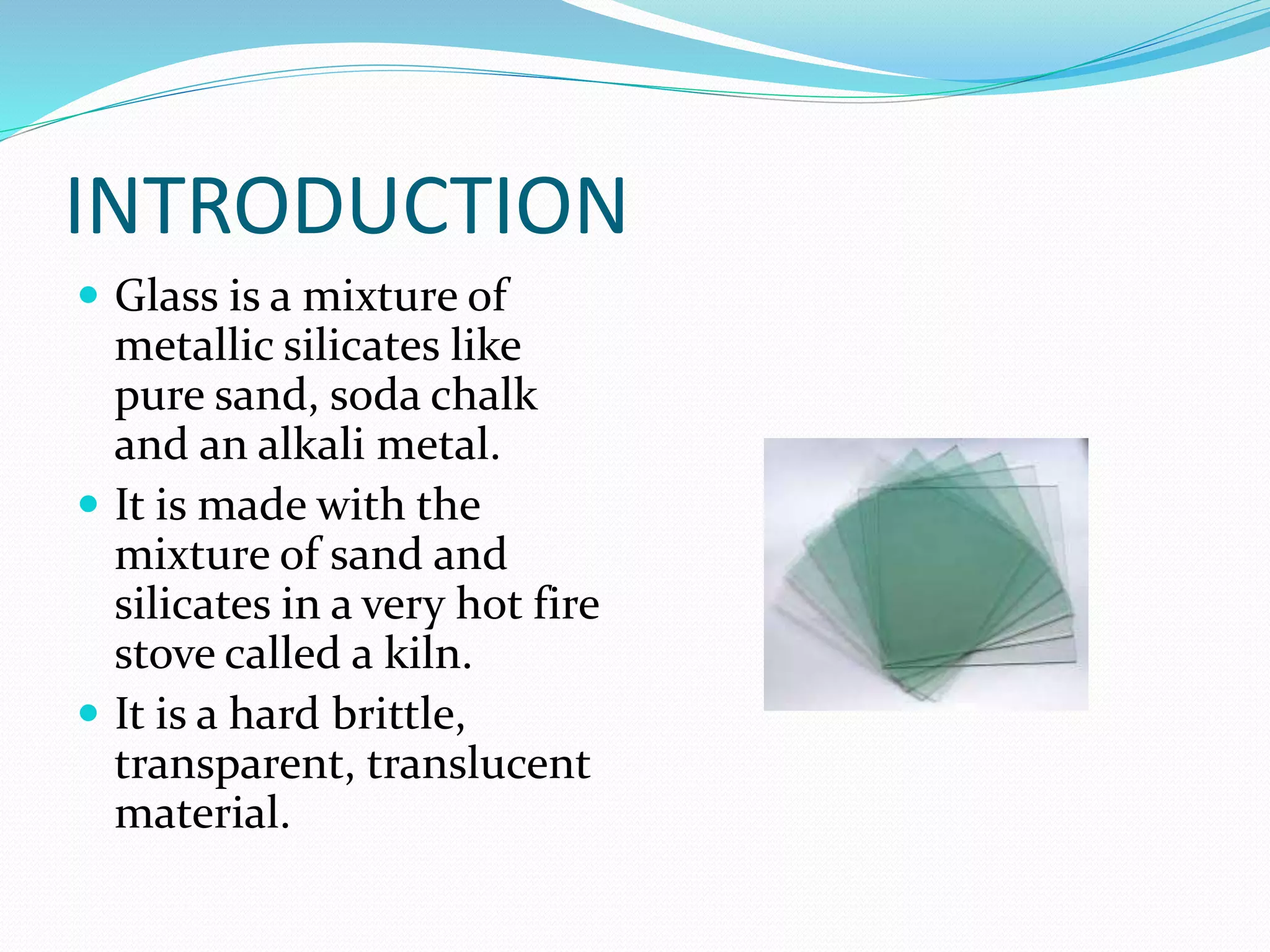
 Glass is a mixture of
metallic silicates like
pure sand, soda chalk
and an alkali metal.
 It is made with the
mixture of sand and
silicates in a very hot fire
stove called a kiln.
 It is a hard brittle,
transparent, translucent
material.
PROPRTIES OF GLASS
 Extremely brittle , transparent, translucent and
available in different colors.
 Has amorphous structure and no definite melting
point.
 Not easily affected by air or water and any chemicals.
 Absorbs and refracts light.
 Can be polished, welded by fusion ,cast into any
desired shape and modify its properties like hardness,
refractive power.
SODA-LIME GLASS
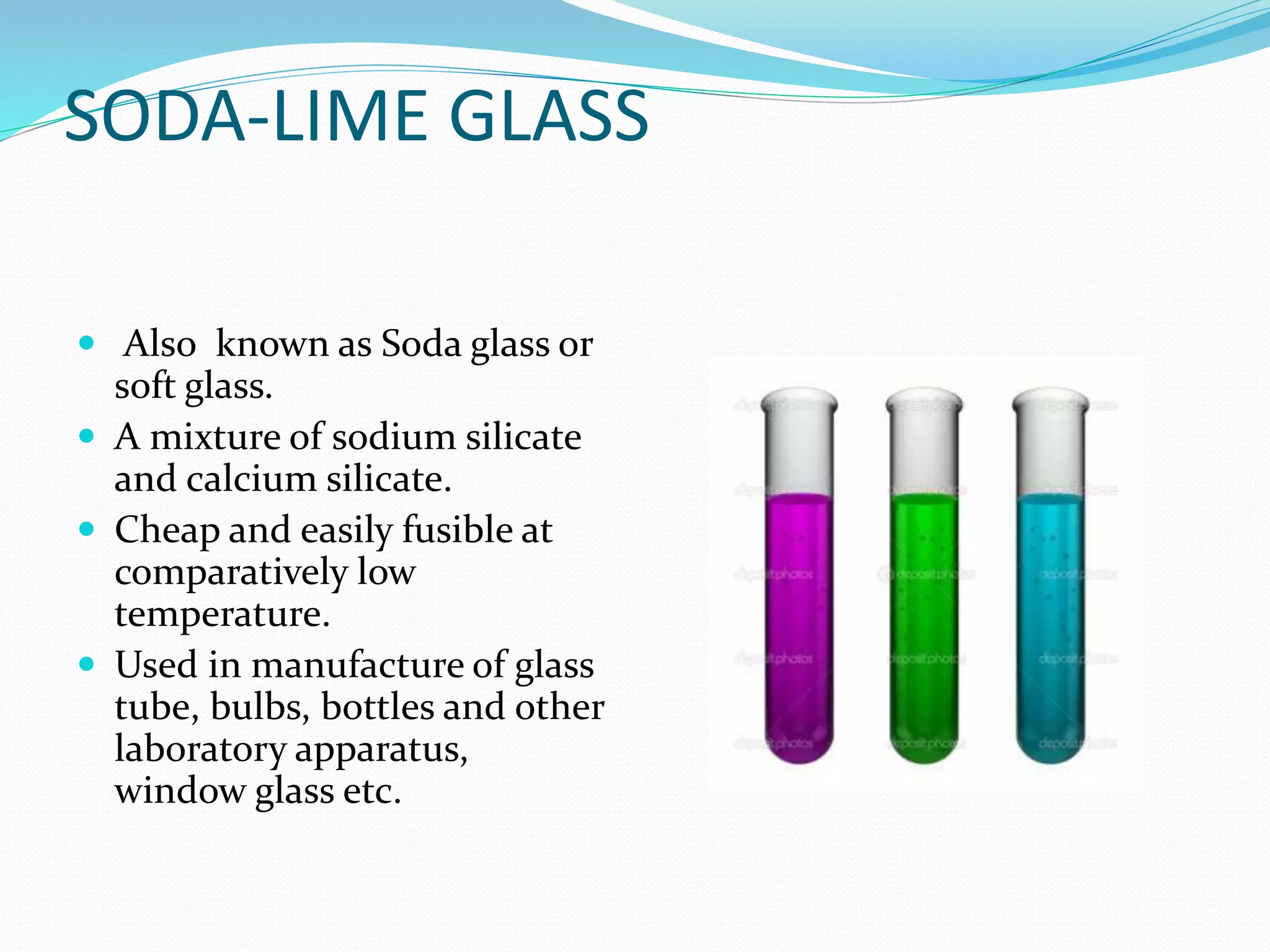
 Also known as Soda glass or
soft glass.
 A mixture of sodium silicate
and calcium silicate.
 Cheap and easily fusible at
comparatively low
temperature.
 Used in manufacture of glass
tube, bulbs, bottles and other
laboratory apparatus,
window glass etc.
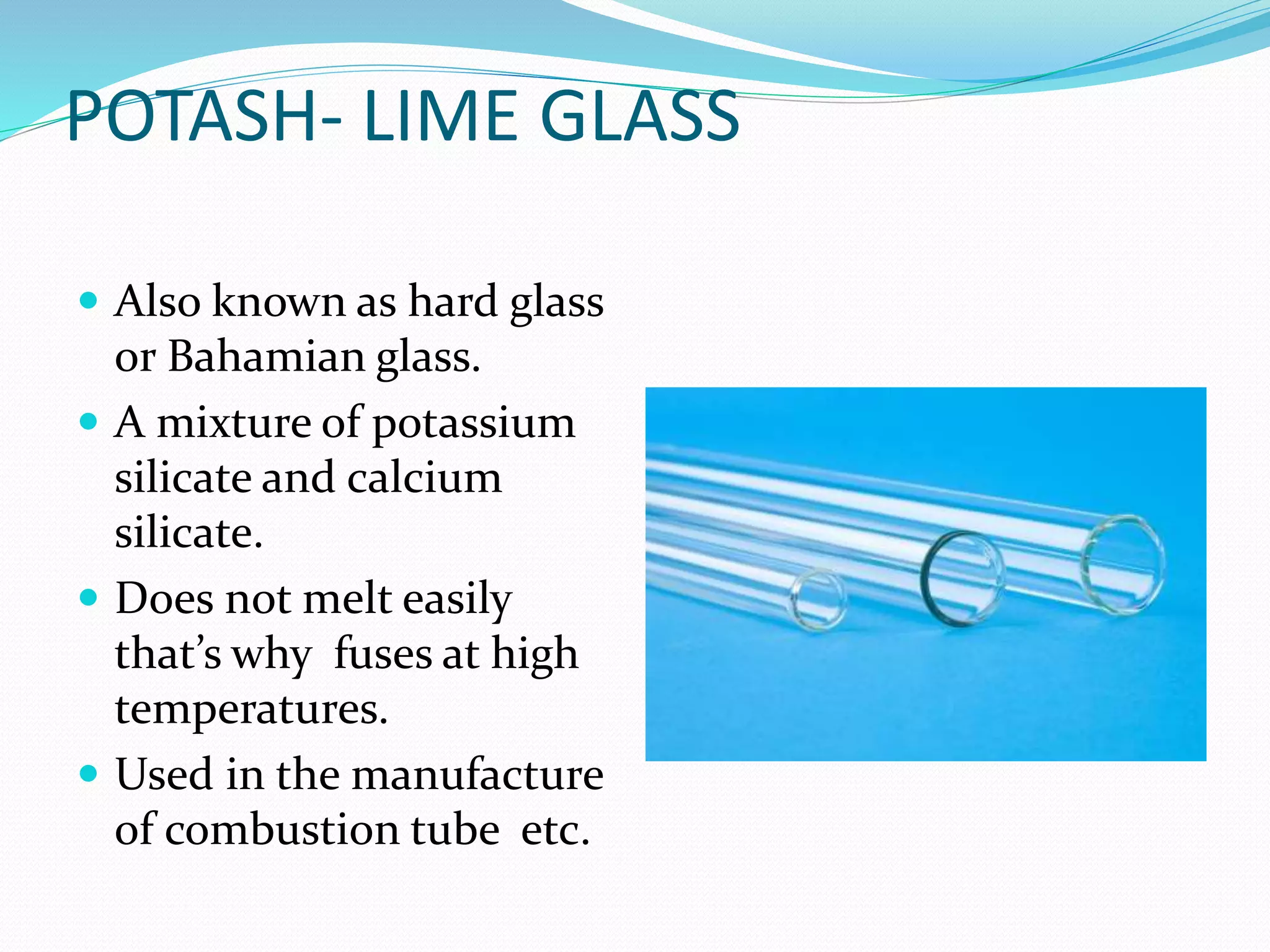
POTASH- LIME GLASS
 Also known as hard glass
or Bahamian glass.
 A mixture of potassium
silicate and calcium
silicate.
 Does not melt easily
that’s why fuses at high
temperatures.
 Used in the manufacture
of combustion tube etc.
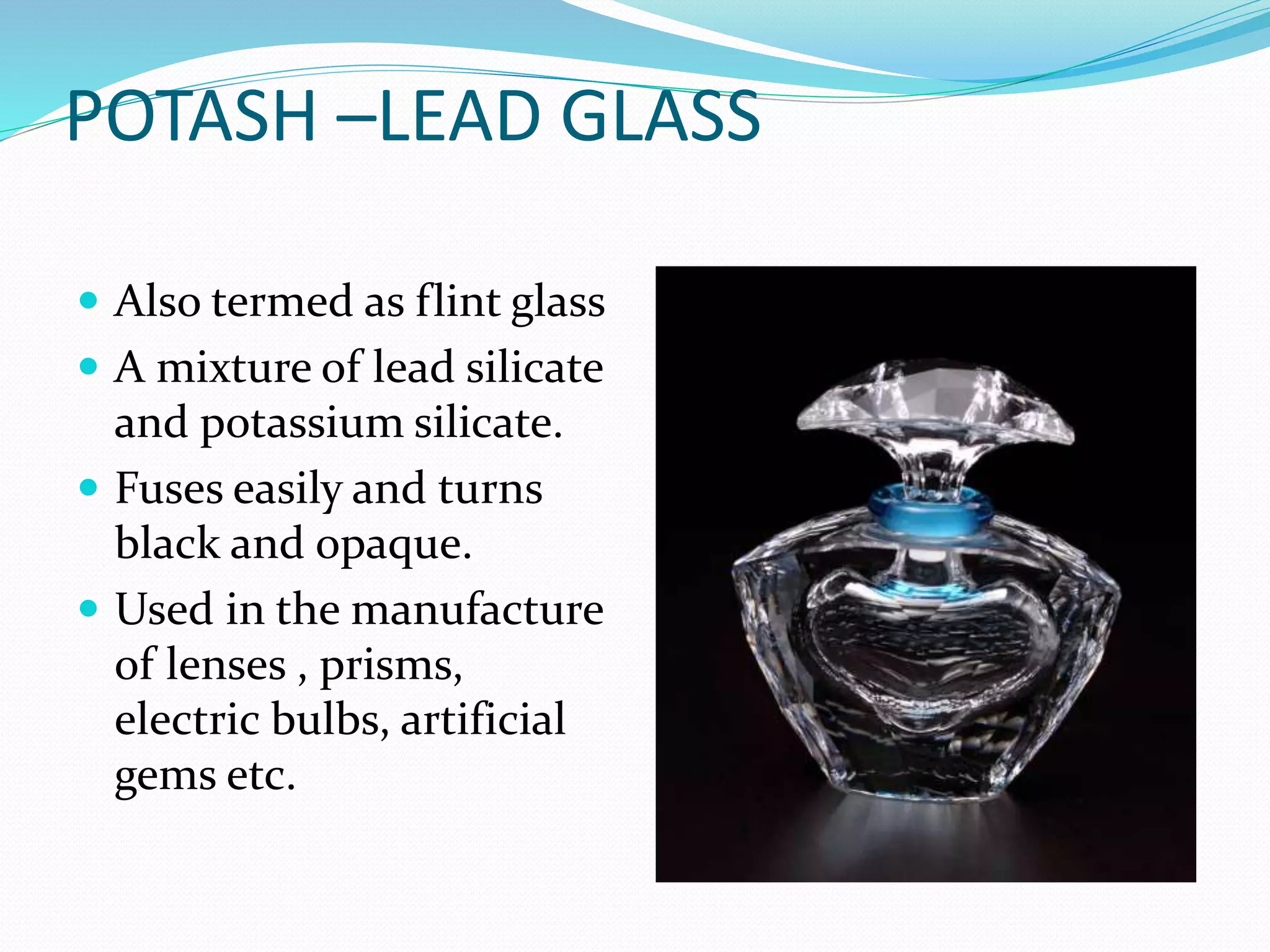
POTASH –LEAD GLASS
 Also termed as flint glass
 A mixture of lead silicate
and potassium silicate.
 Fuses easily and turns
black and opaque.
 Used in the manufacture
of lenses , prisms,
electric bulbs, artificial
gems etc.
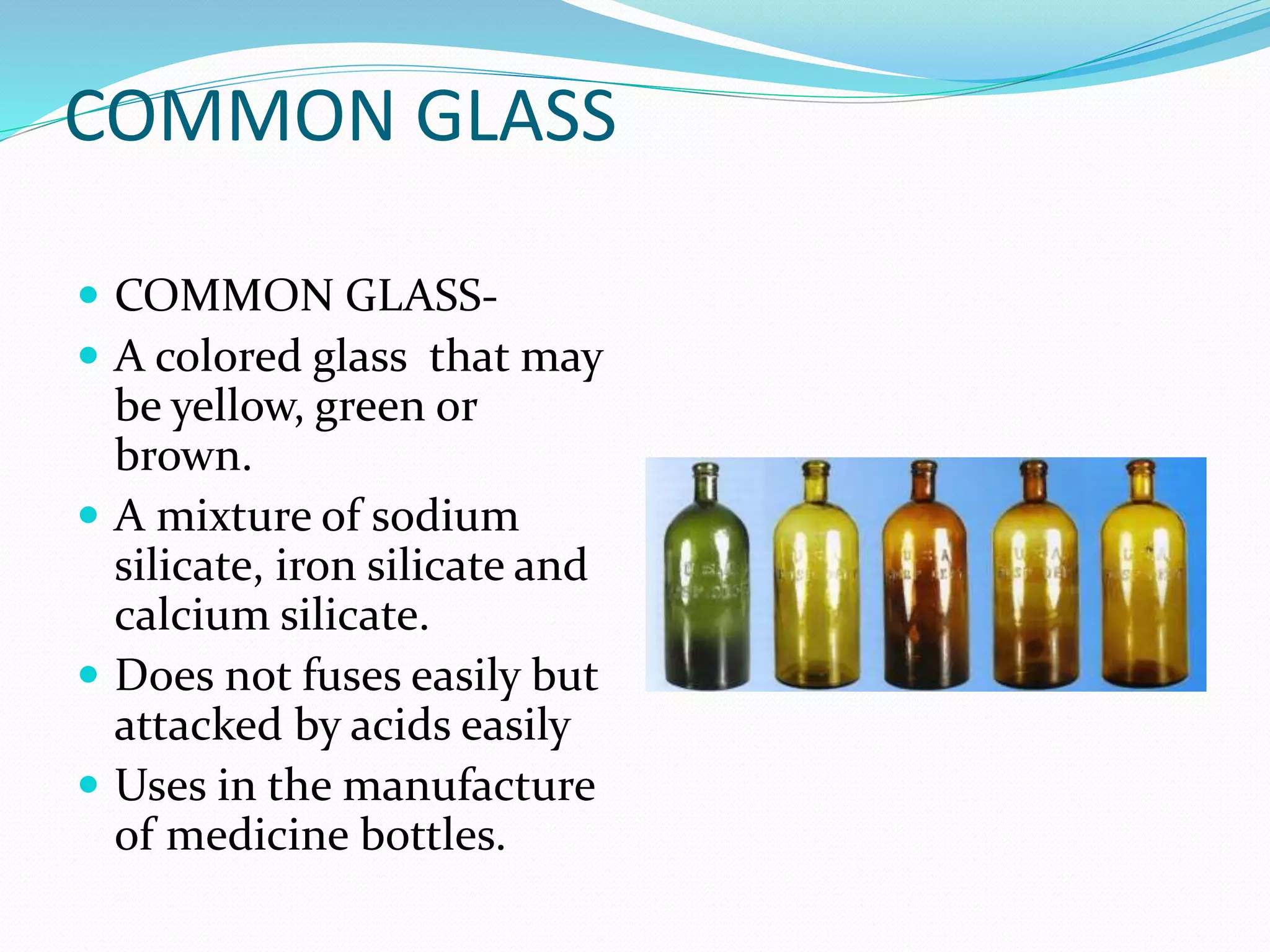
COMMON GLASS
 COMMON GLASS-
 A colored glass that may
be yellow, green or
brown.
 A mixture of sodium
silicate, iron silicate and
calcium silicate.
 Does not fuses easily but
attacked by acids easily
 Uses in the manufacture
of medicine bottles.
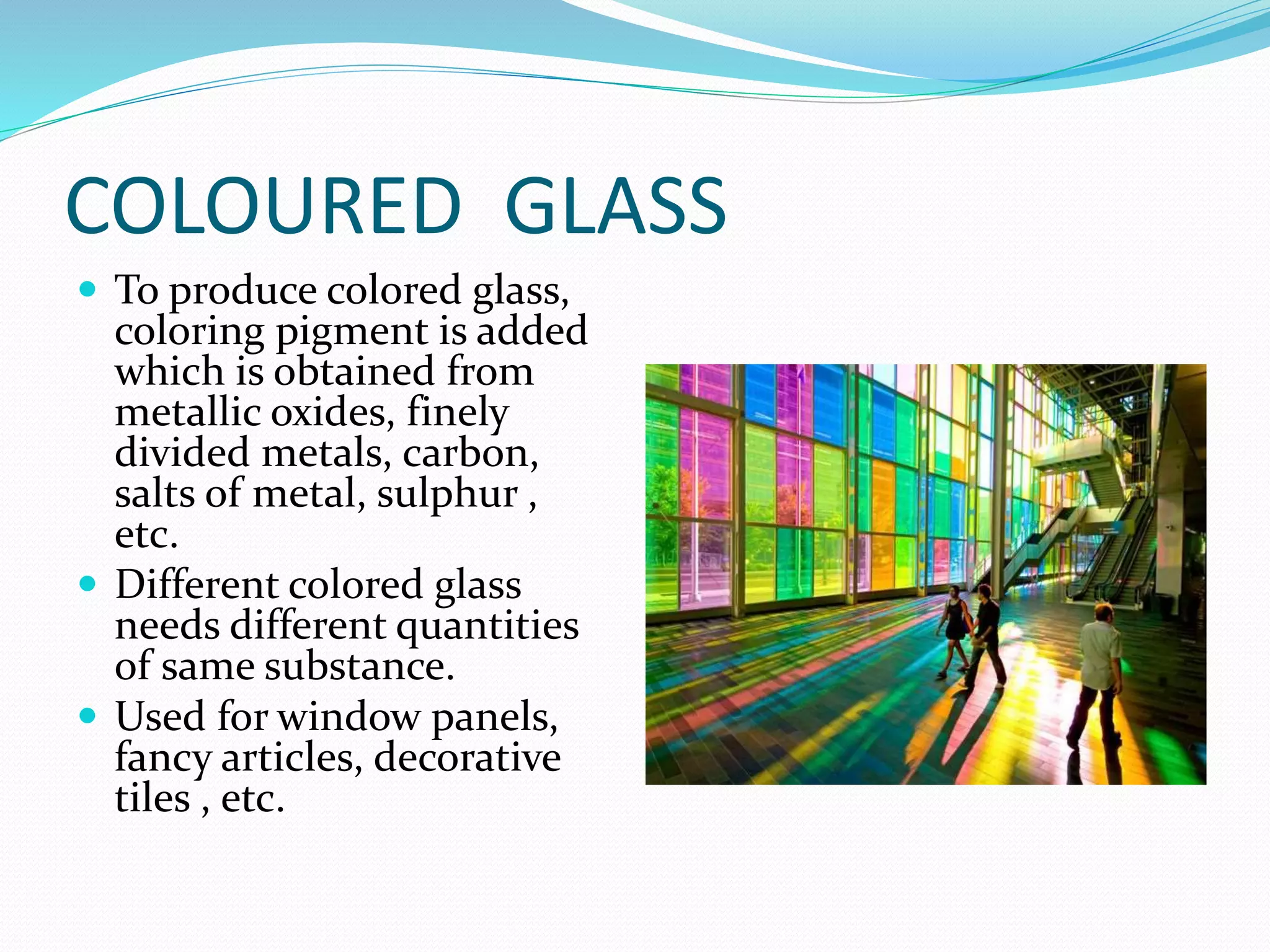
COLOURED GLASS
 To produce colored glass,
coloring pigment is added
which is obtained from
metallic oxides, finely
divided metals, carbon,
salts of metal, sulphur ,
etc.
 Different colored glass
needs different quantities
of same substance.
 Used for window panels,
fancy articles, decorative
tiles , etc.
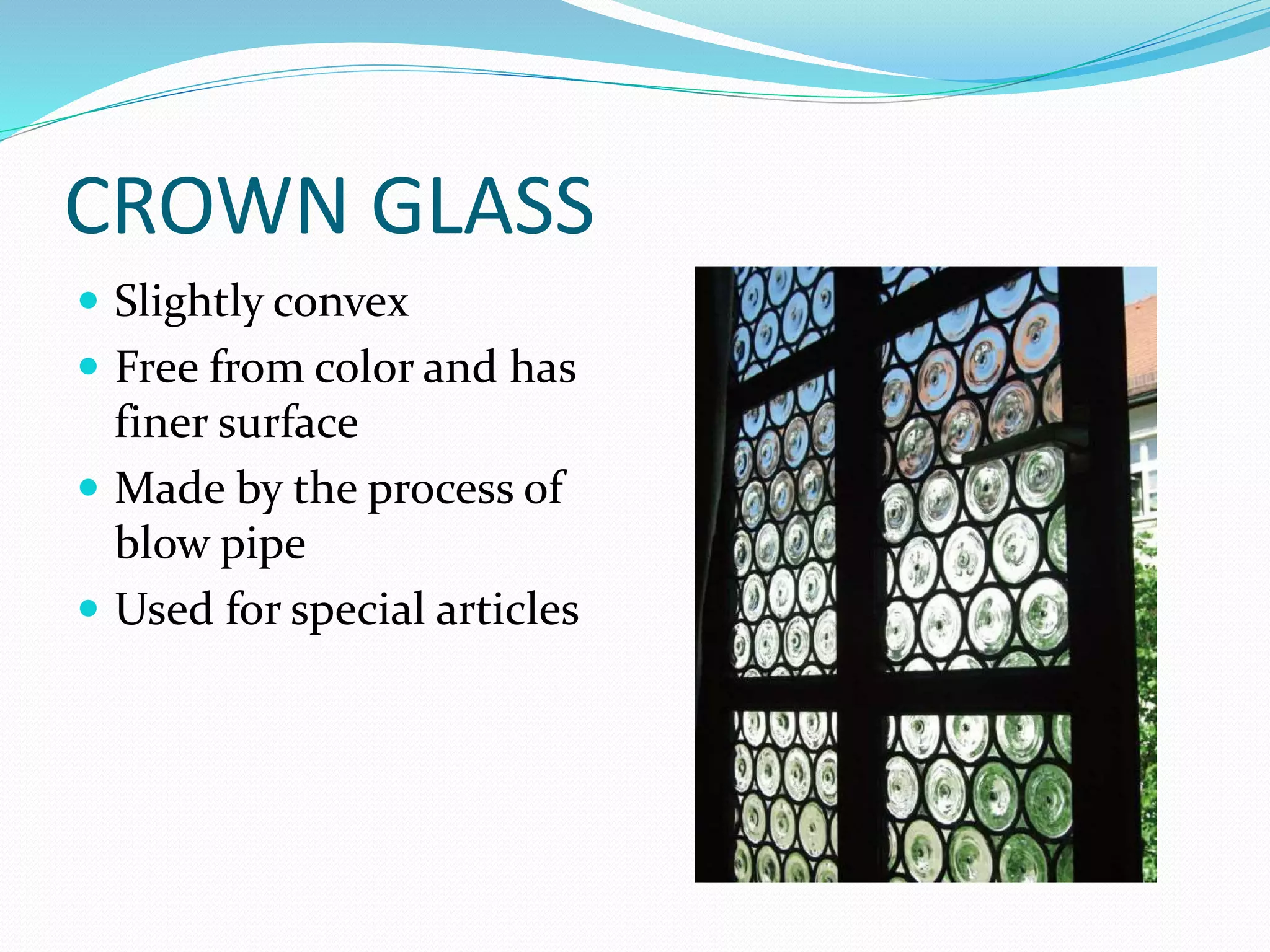
CROWN GLASS
 Slightly convex
 Free from color and has
finer surface
 Made by the process of
blow pipe
 Used for special articles
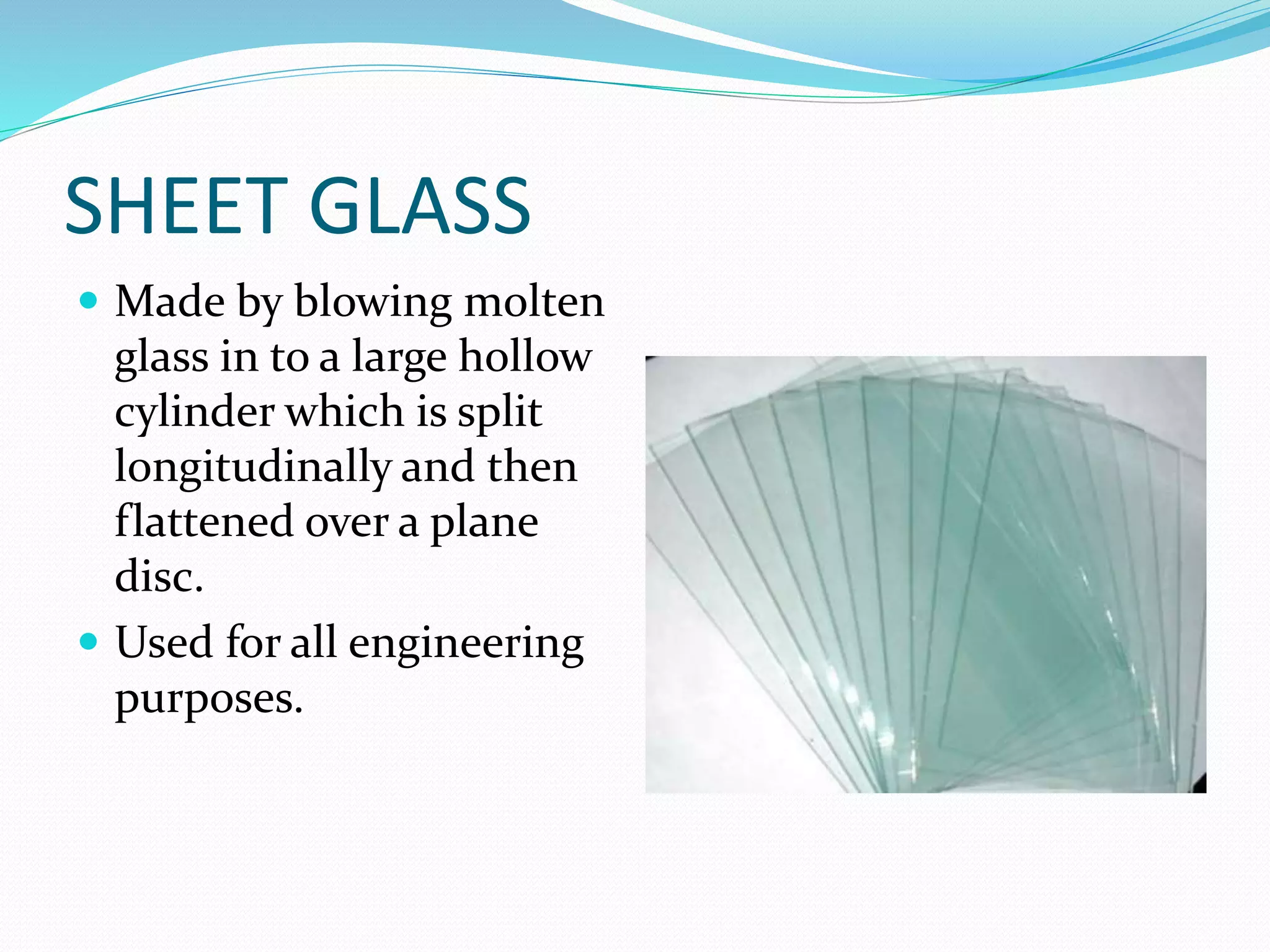
SHEET GLASS
 Made by blowing molten
glass in to a large hollow
cylinder which is split
longitudinally and then
flattened over a plane
disc.
 Used for all engineering
purposes.
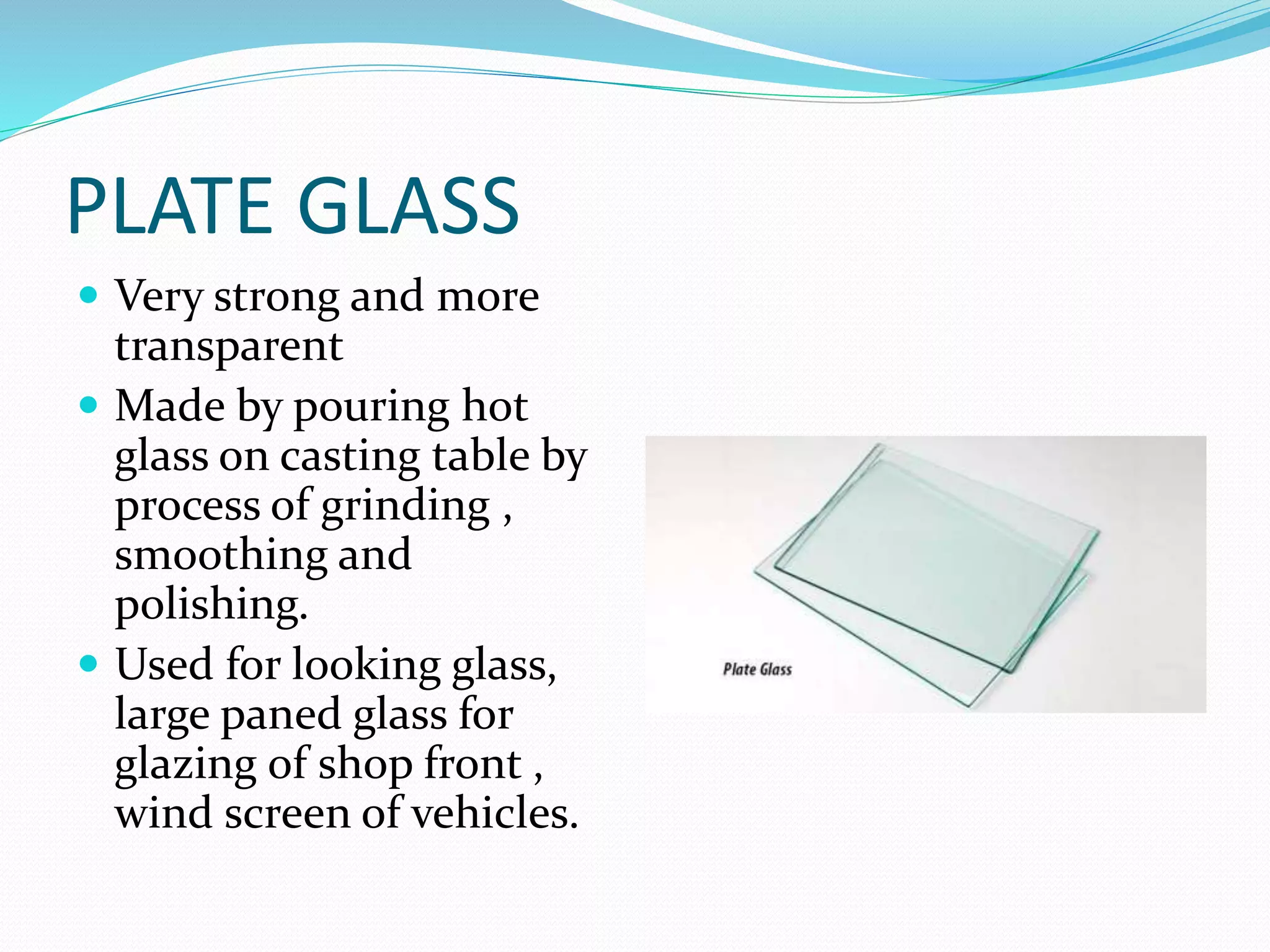
PLATE GLASS
 Very strong and more
transparent
 Made by pouring hot
glass on casting table by
process of grinding ,
smoothing and
polishing.
 Used for looking glass,
large paned glass for
glazing of shop front ,
wind screen of vehicles.
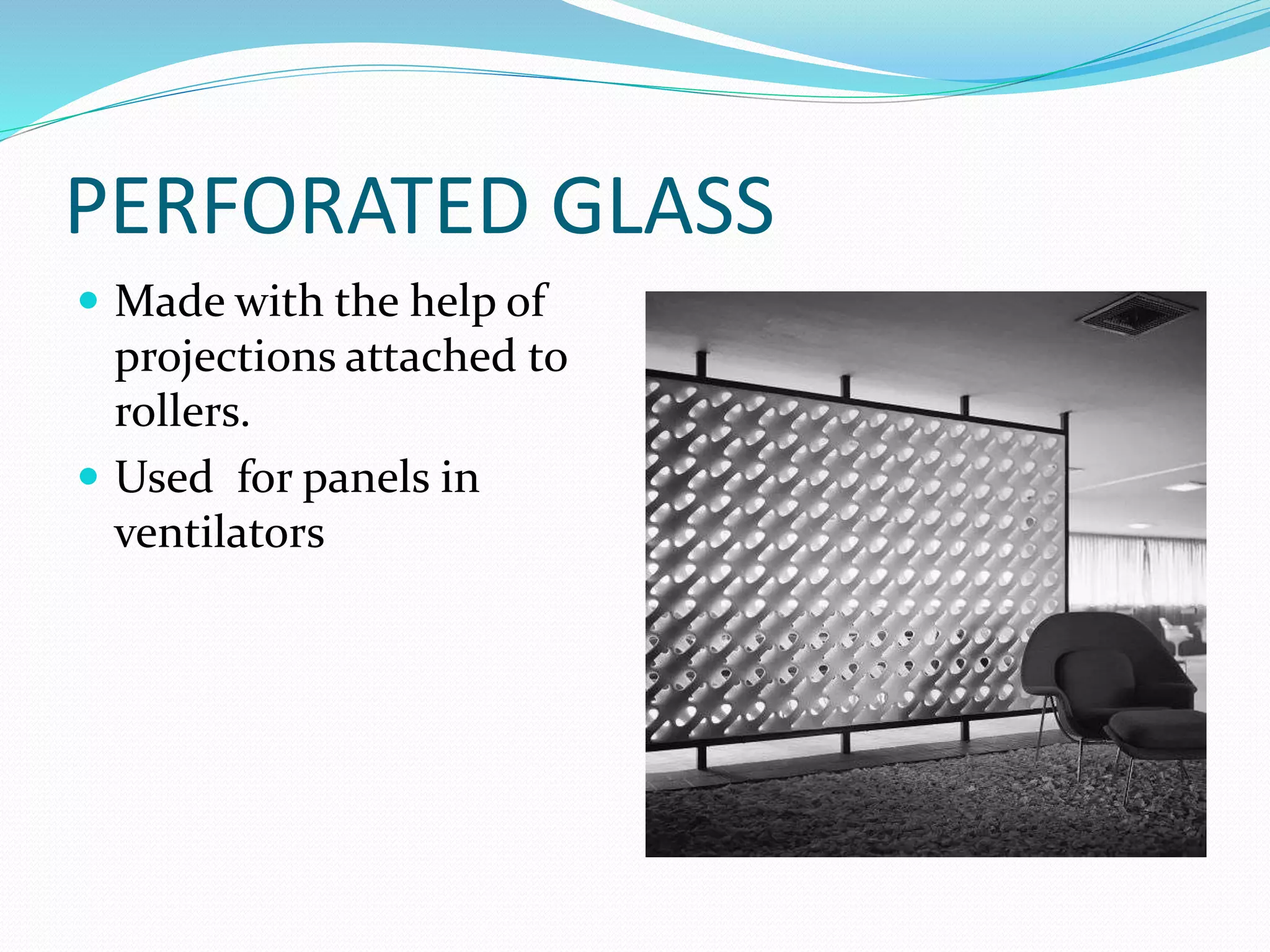
PERFORATED GLASS
 Made with the help of
projections attached to
rollers.
 Used for panels in
ventilators
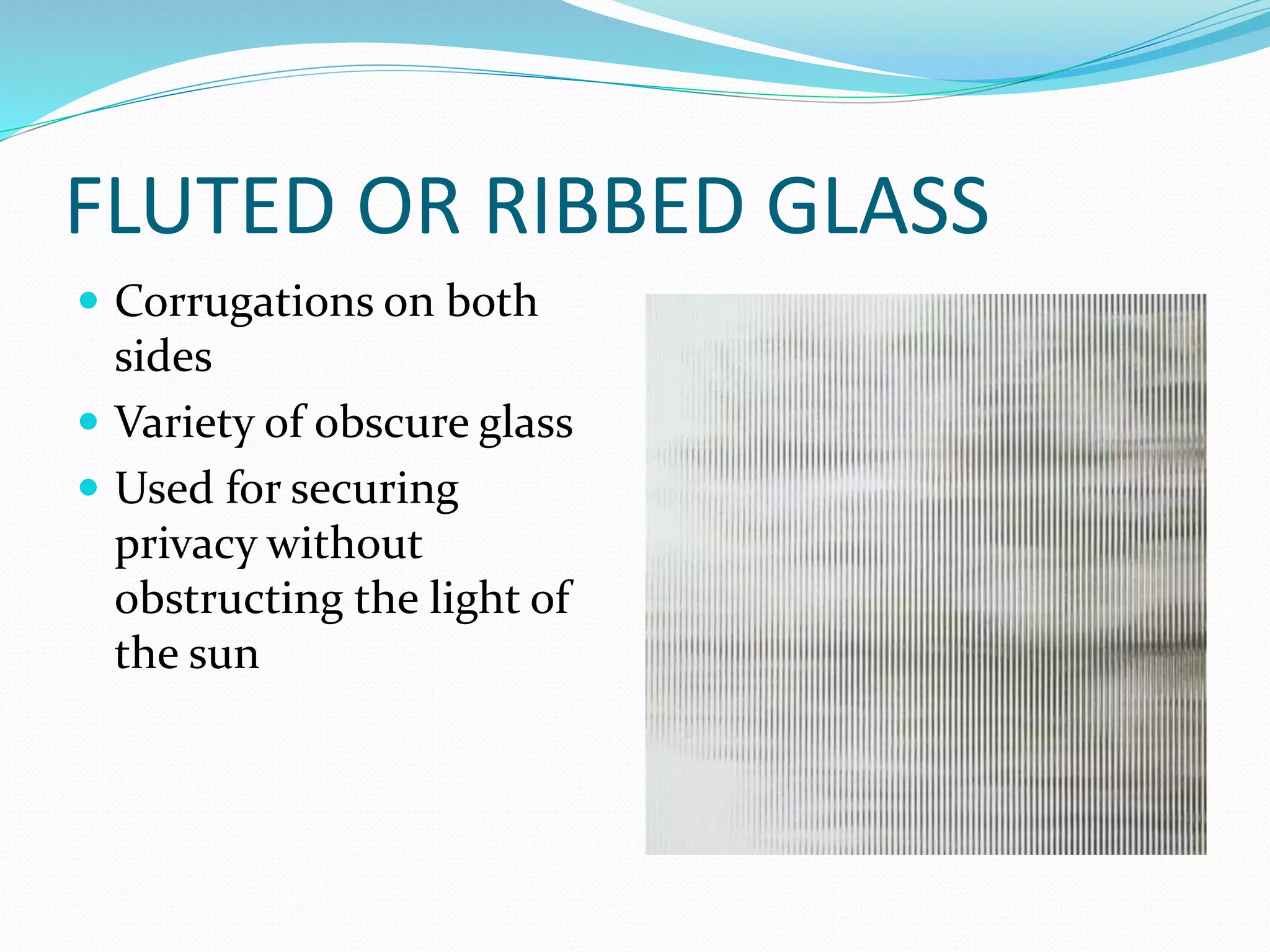
FLUTED OR RIBBED GLASS
 Corrugations on both
sides
 Variety of obscure glass
 Used for securing
privacy without
obstructing the light of
the sun
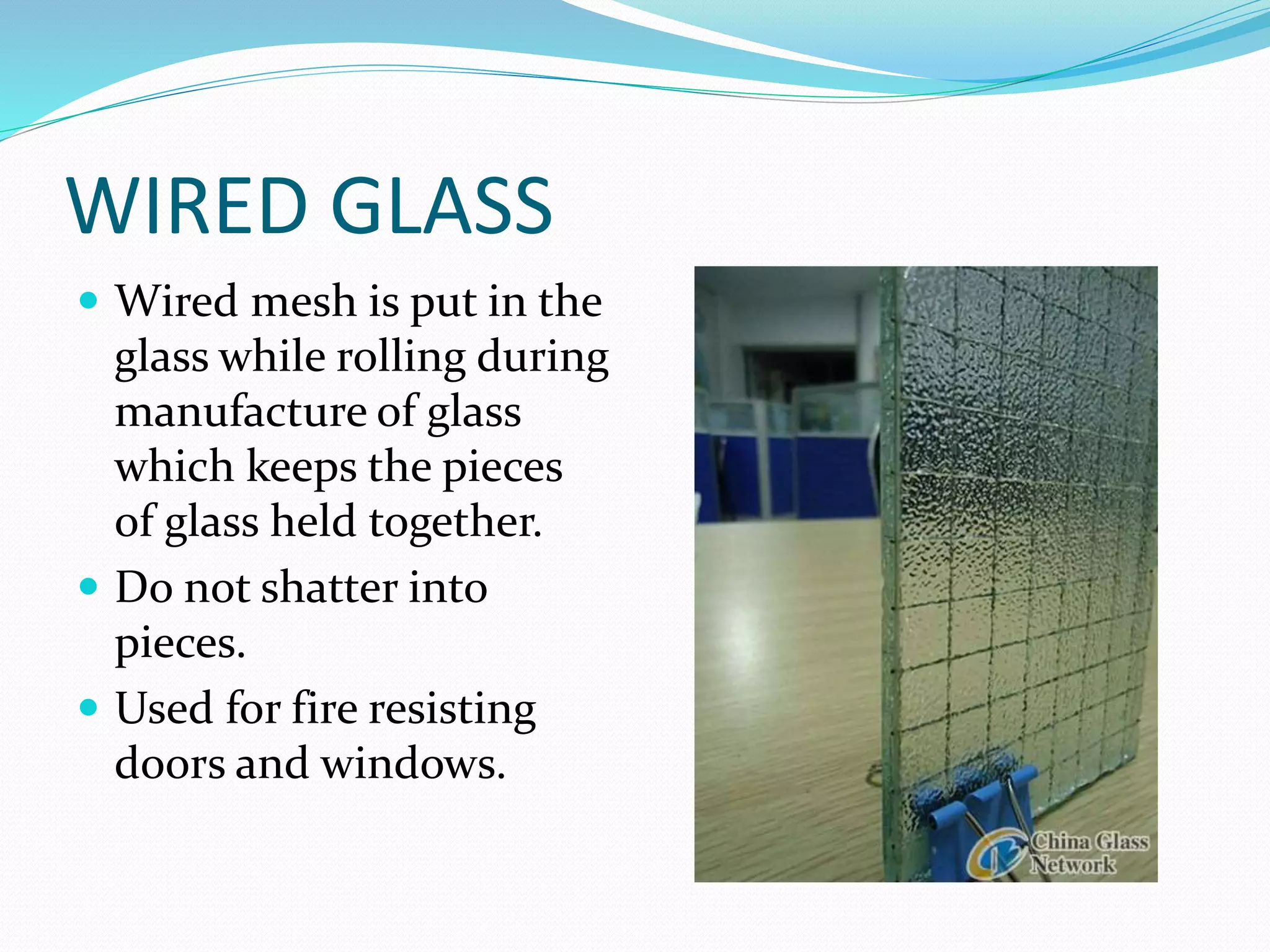
WIRED GLASS
 Wired mesh is put in the
glass while rolling during
manufacture of glass
which keeps the pieces
of glass held together.
 Do not shatter into
pieces.
 Used for fire resisting
doors and windows.
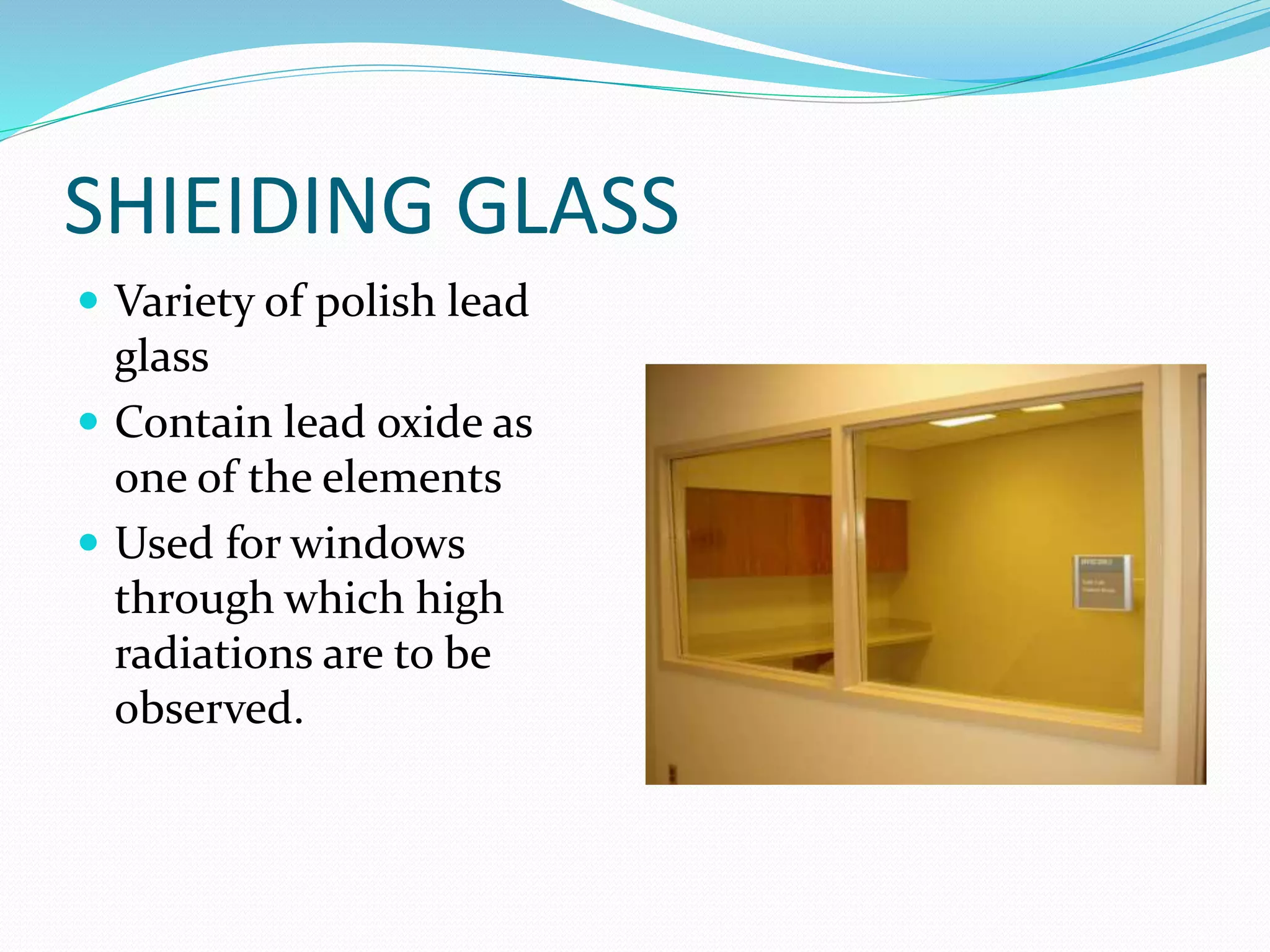
SHIEIDING GLASS
 Variety of polish lead
glass
 Contain lead oxide as
one of the elements
 Used for windows
through which high
radiations are to be
observed.
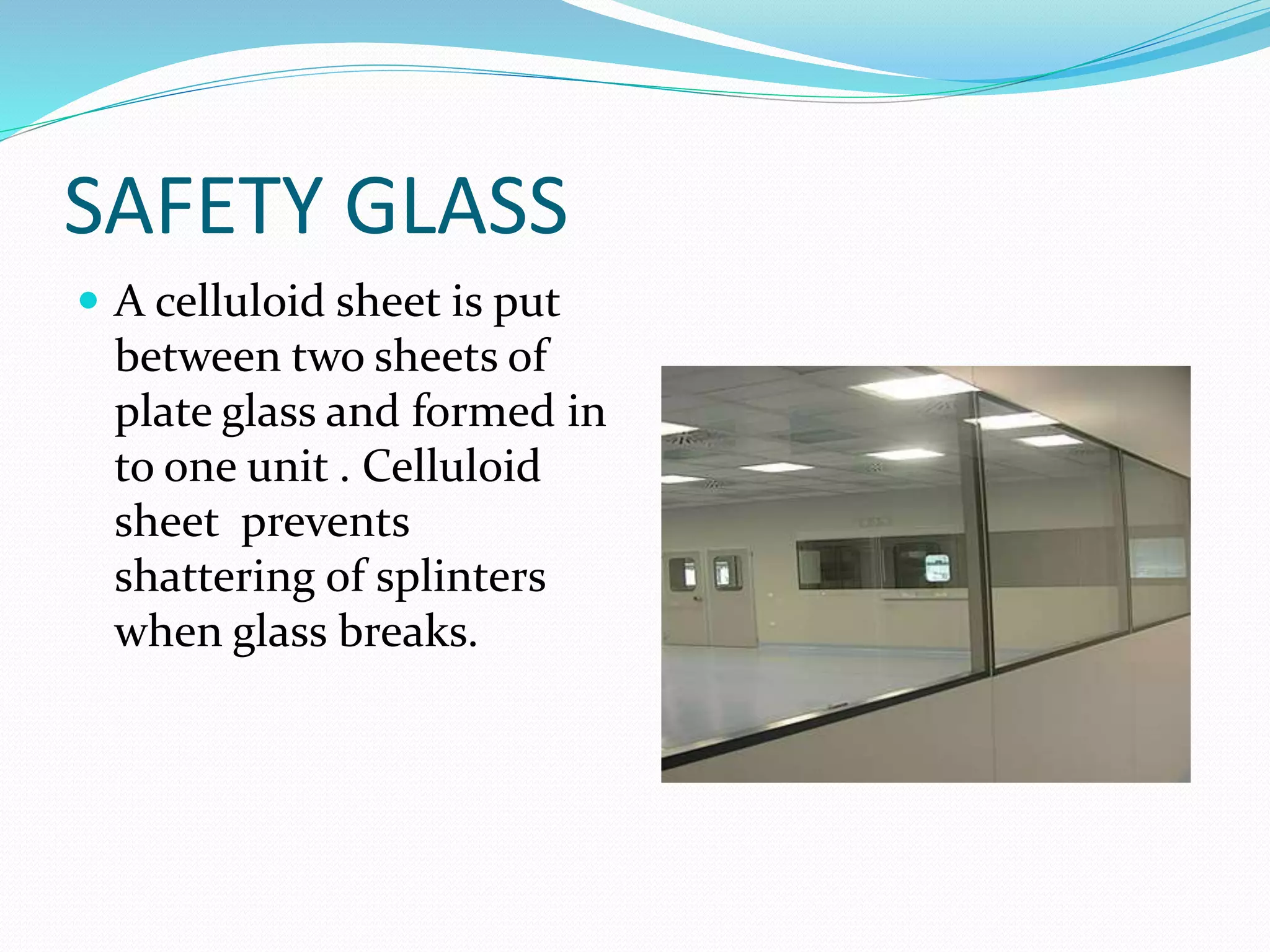
SAFETY GLASS
 A celluloid sheet is put
between two sheets of
plate glass and formed in
to one unit . Celluloid
sheet prevents
shattering of splinters
when glass breaks.
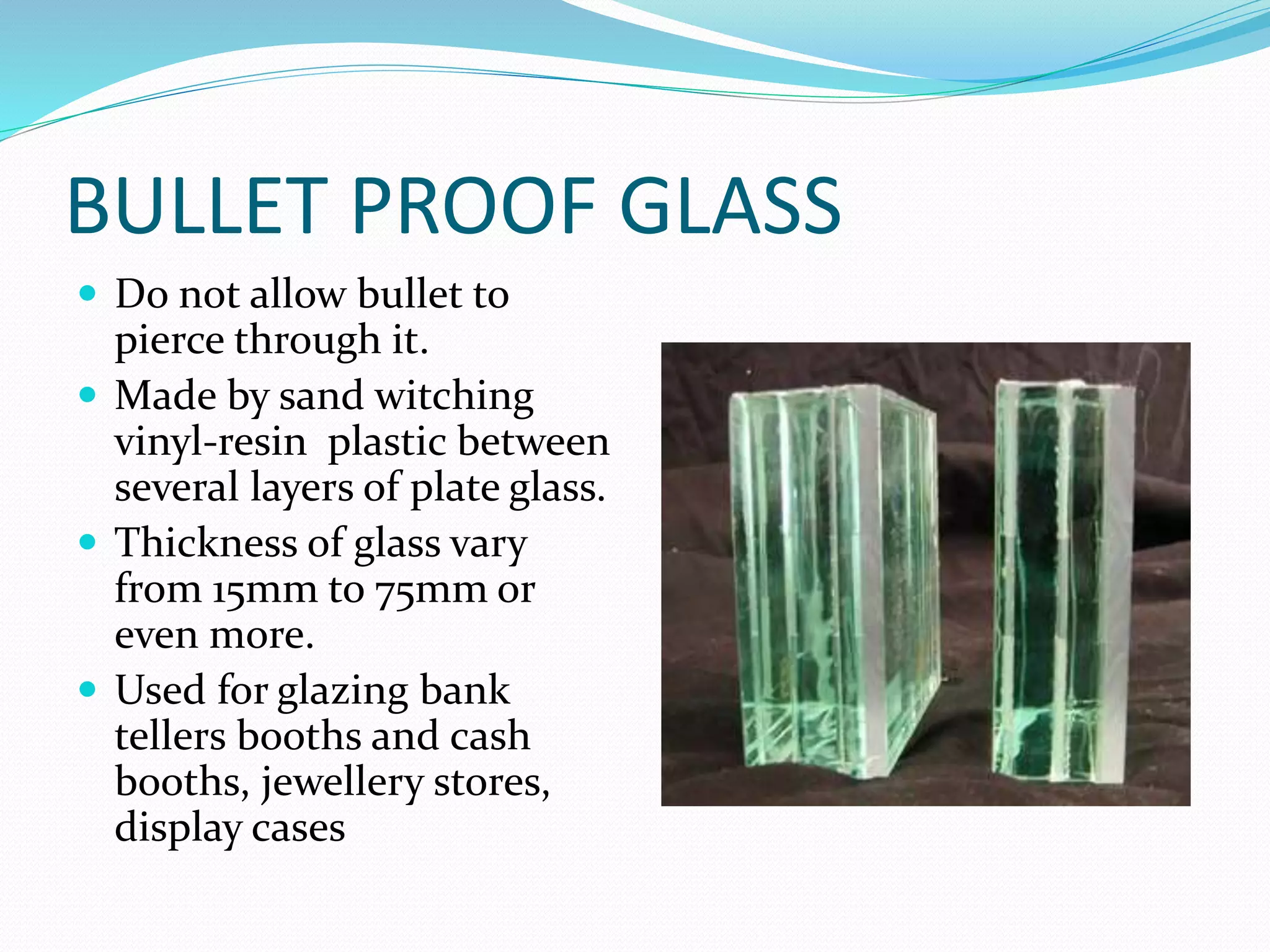
BULLET PROOF GLASS
 Do not allow bullet to
pierce through it.
 Made by sand witching
vinyl-resin plastic between
several layers of plate glass.
 Thickness of glass vary
from 15mm to 75mm or
even more.
 Used for glazing bank
tellers booths and cash
booths, jewellery stores,
display cases
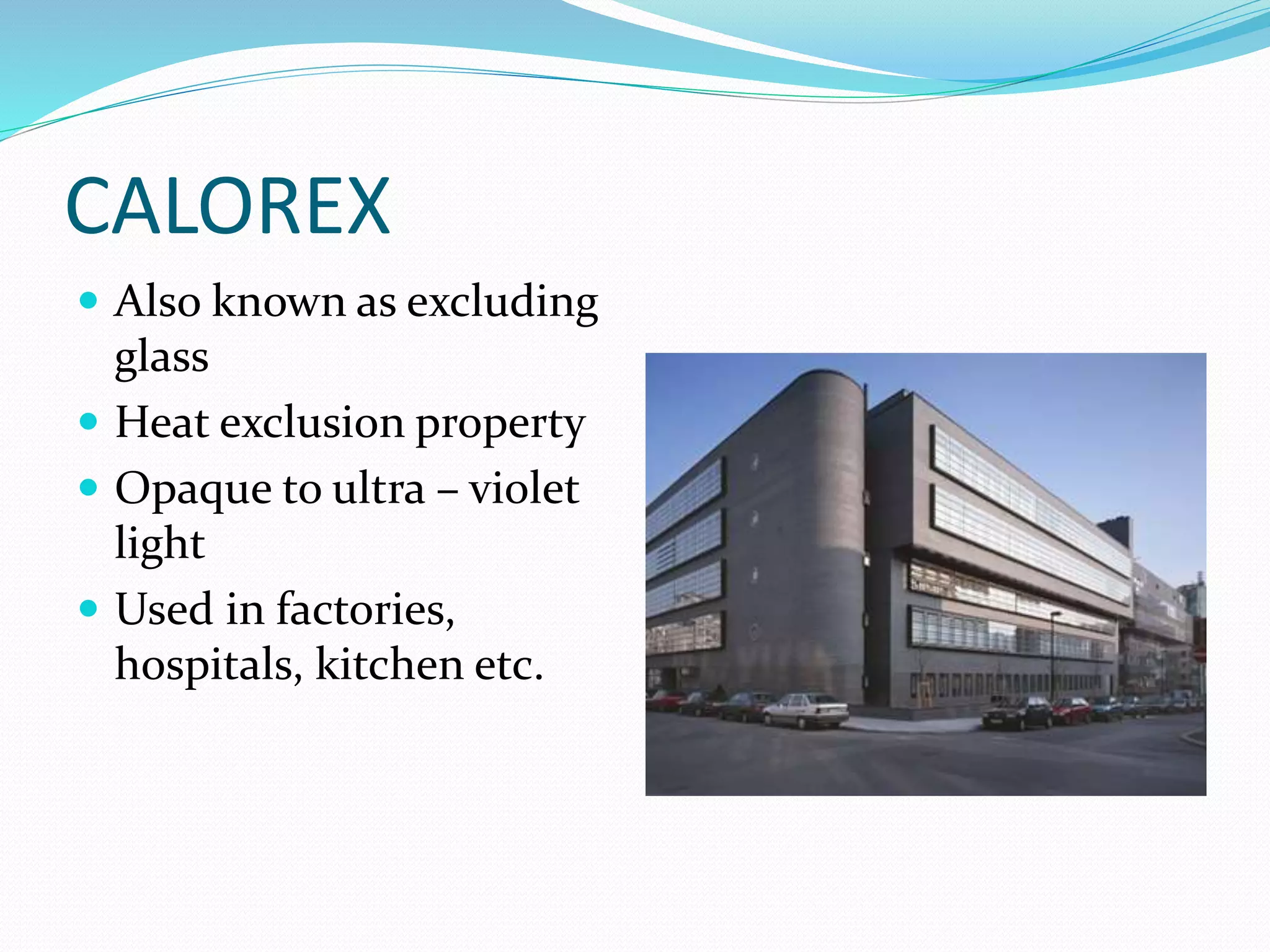
CALOREX
 Also known as excluding
glass
 Heat exclusion property
 Opaque to ultra – violet
light
 Used in factories,
hospitals, kitchen etc.
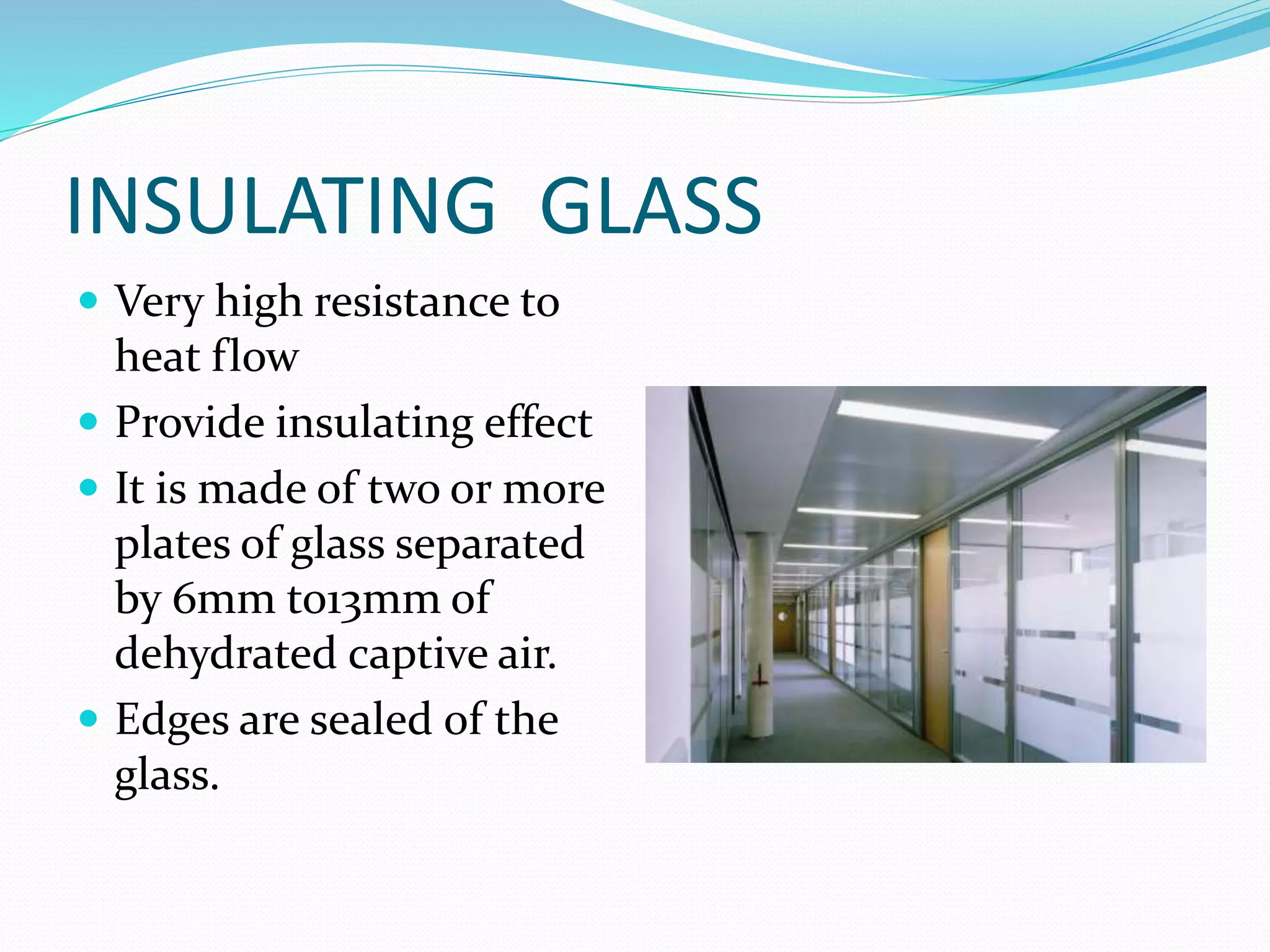
INSULATING GLASS
 Very high resistance to
heat flow
 Provide insulating effect
 It is made of two or more
plates of glass separated
by 6mm to13mm of
dehydrated captive air.
 Edges are sealed of the
glass.
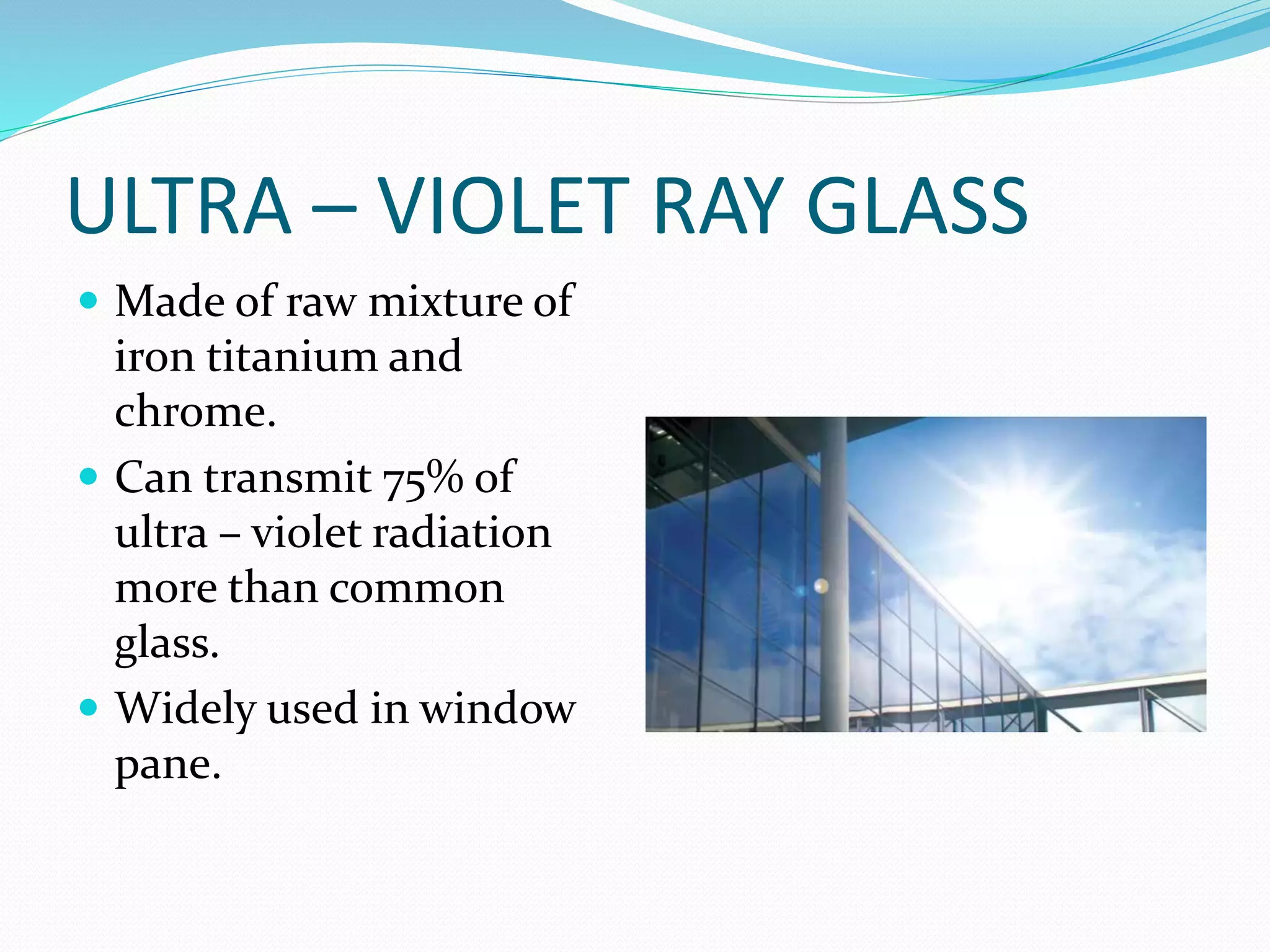
ULTRA – VIOLET RAY GLASS
 Made of raw mixture of
iron titanium and
chrome.
 Can transmit 75% of
ultra – violet radiation
more than common
glass.
 Widely used in window
pane.
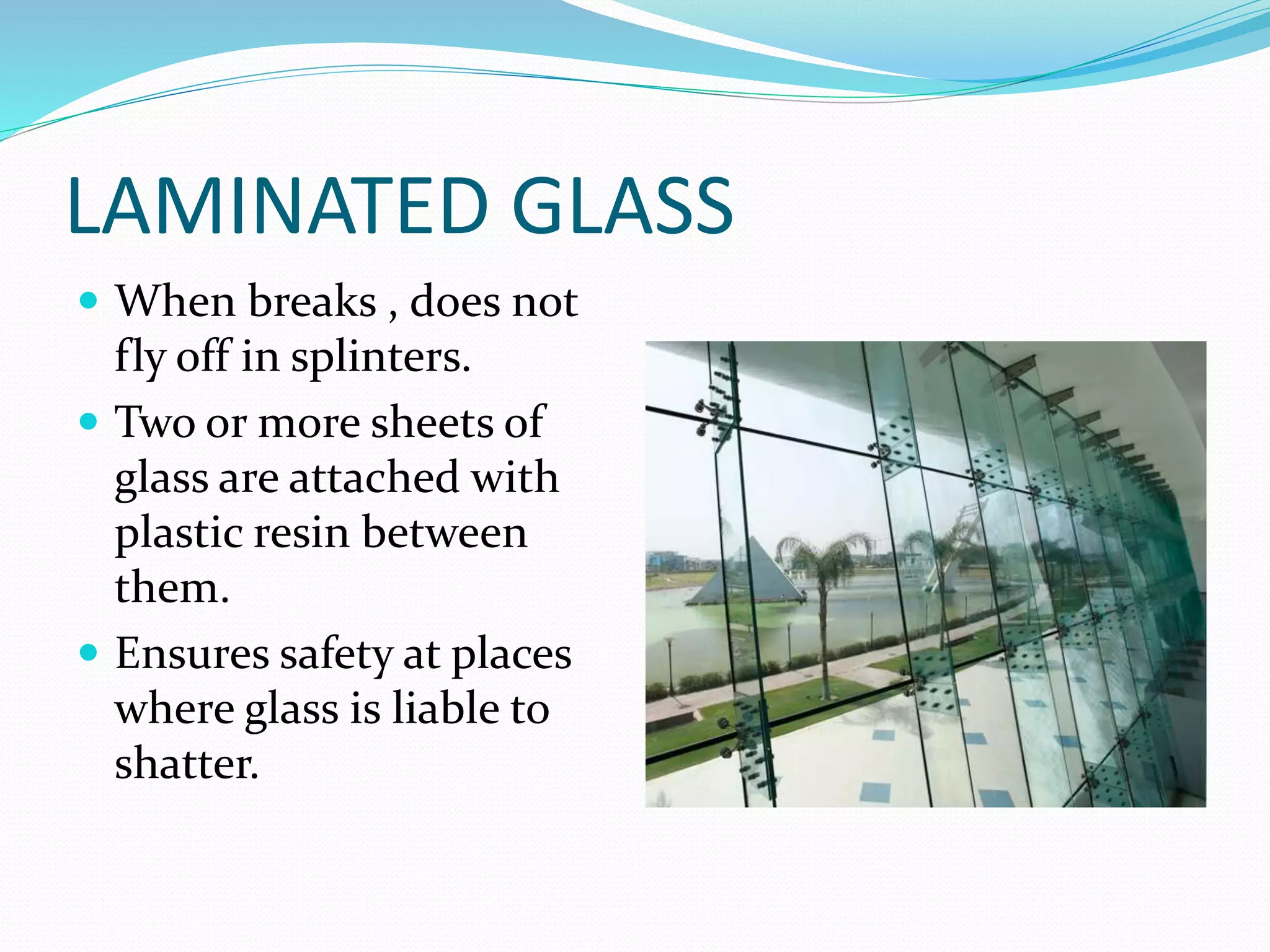
LAMINATED GLASS
 When breaks , does not
fly off in splinters.
 Two or more sheets of
glass are attached with
plastic resin between
them.
 Ensures safety at places
where glass is liable to
shatter.
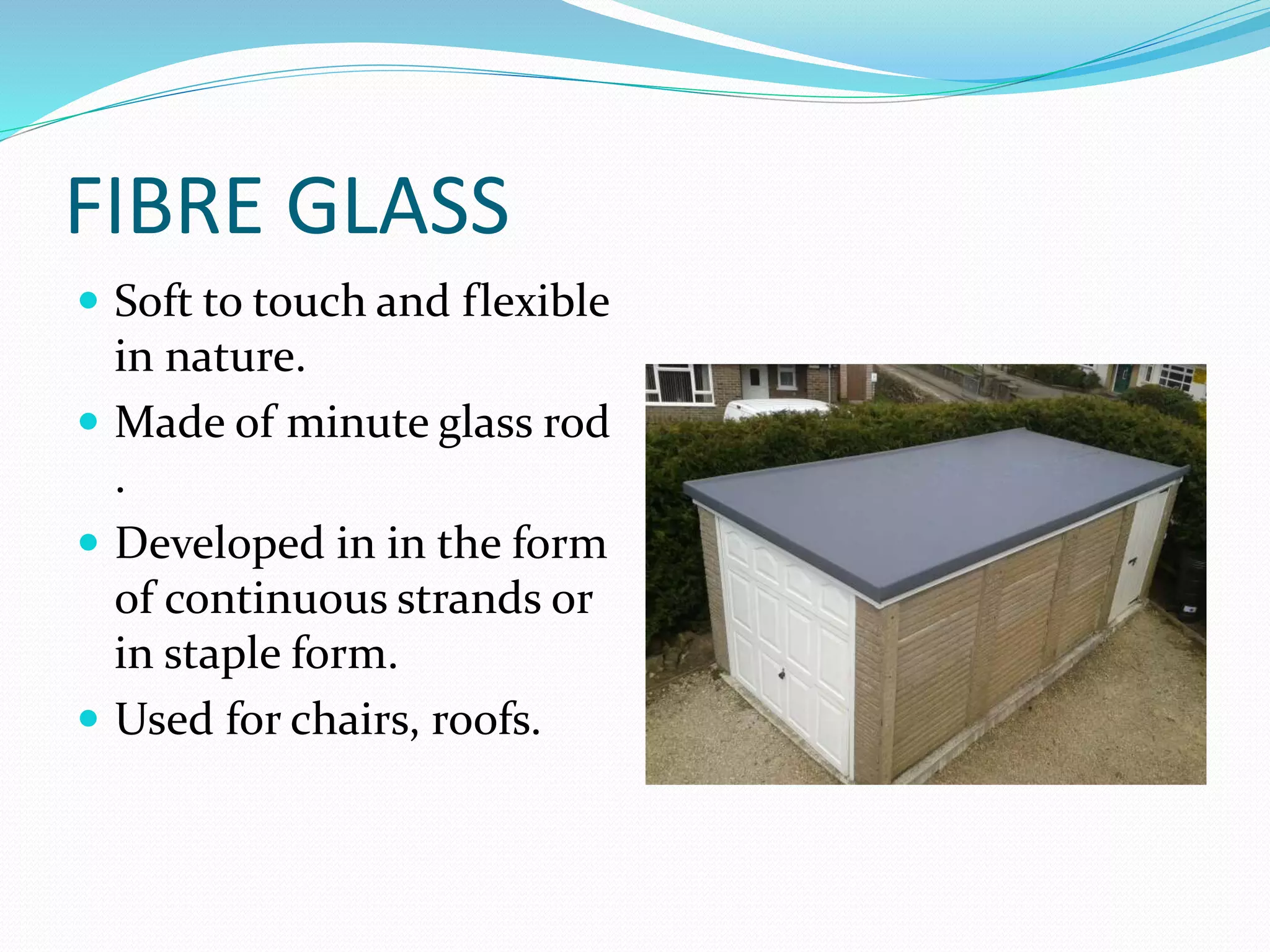
FIBRE GLASS
 Soft to touch and flexible
in nature.
 Made of minute glass rod
.
 Developed in in the form
of continuous strands or
in staple form.
 Used for chairs, roofs.
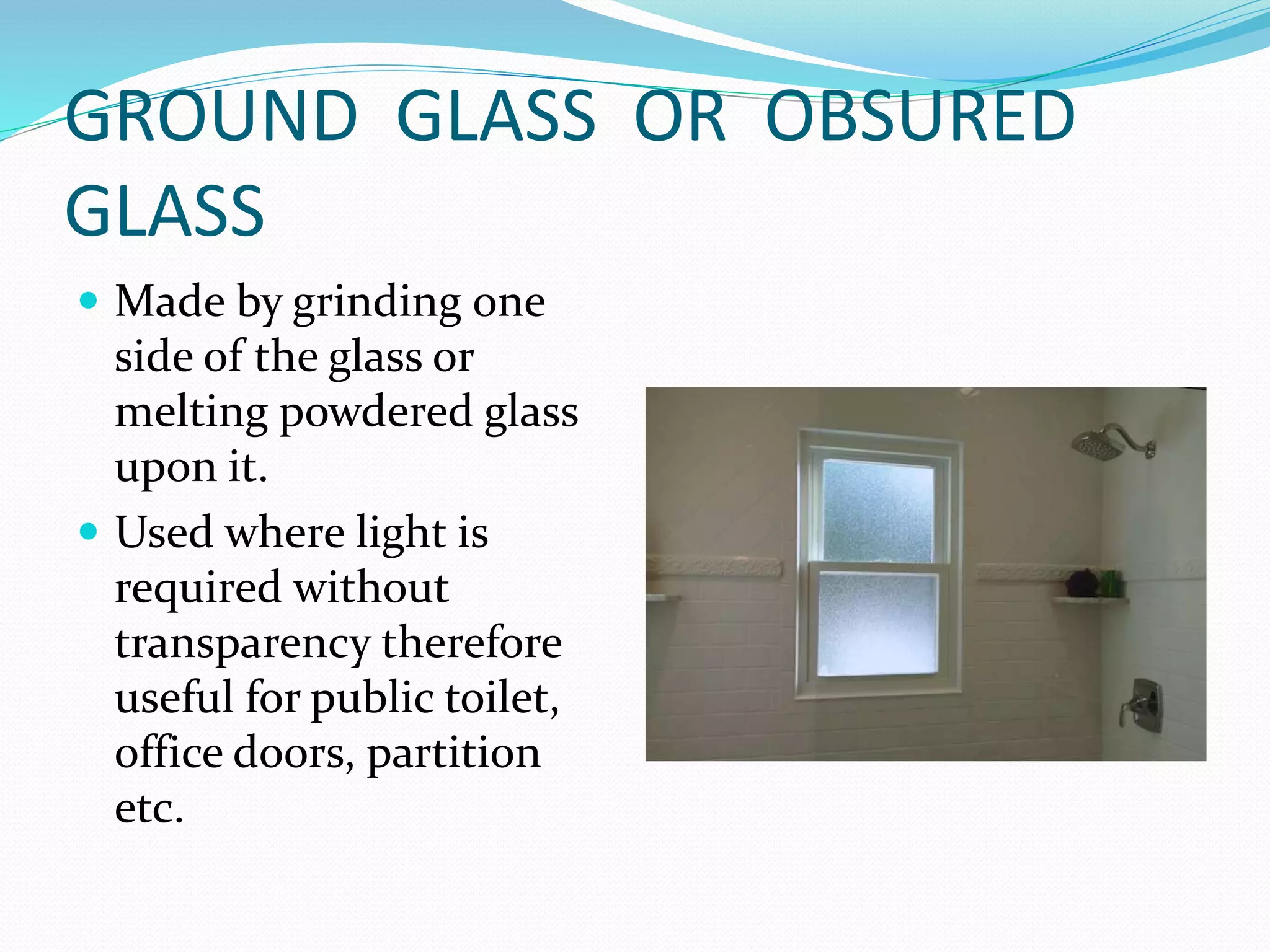
GROUND GLASS OR OBSURED
GLASS
 Made by grinding one
side of the glass or
melting powdered glass
upon it.
 Used where light is
required without
transparency therefore
useful for public toilet,
office doors, partition
etc.
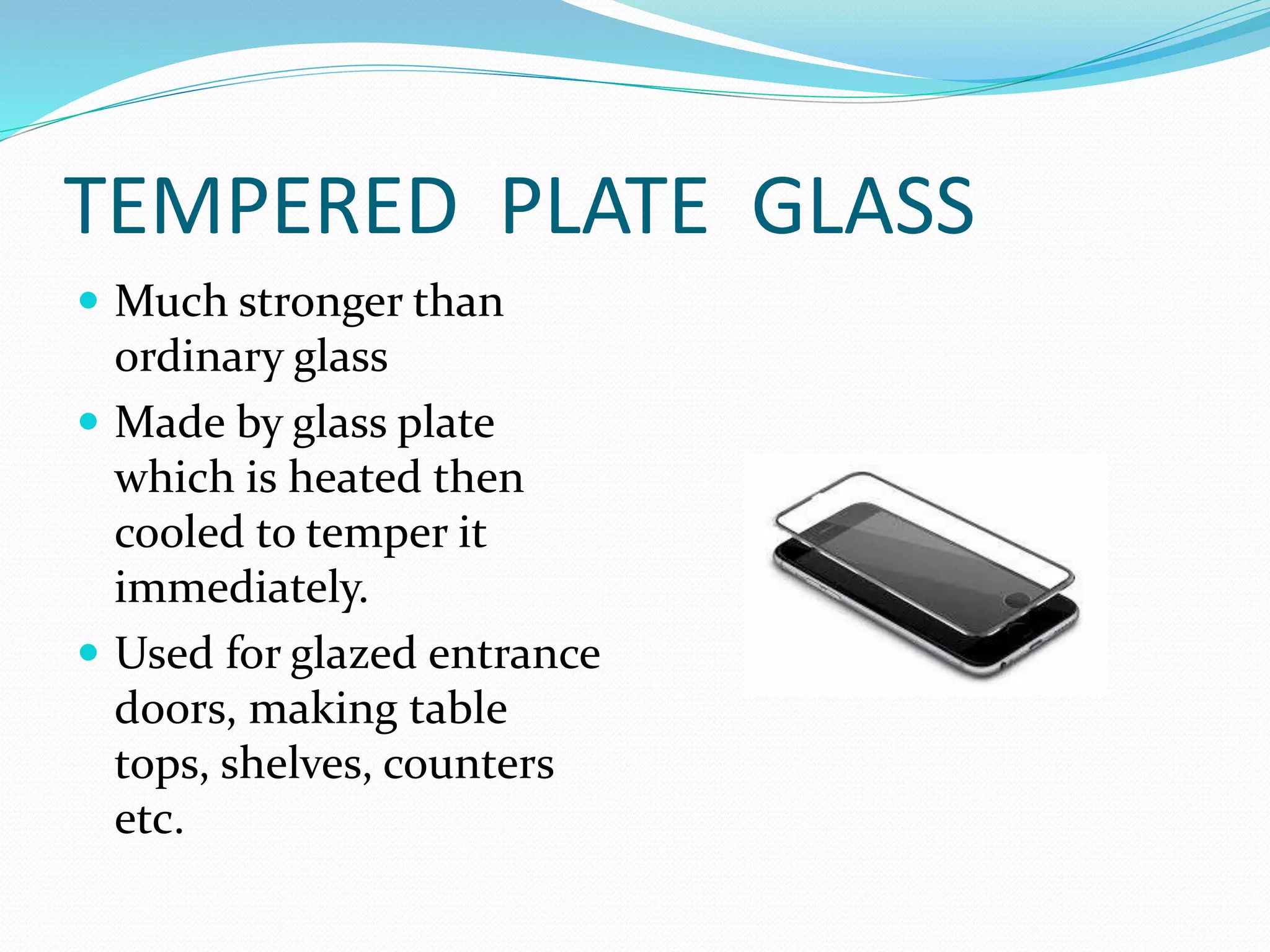
TEMPERED PLATE GLASS
 Much stronger than
ordinary glass
 Made by glass plate
which is heated then
cooled to temper it
immediately.
 Used for glazed entrance
doors, making table
tops, shelves, counters
etc.
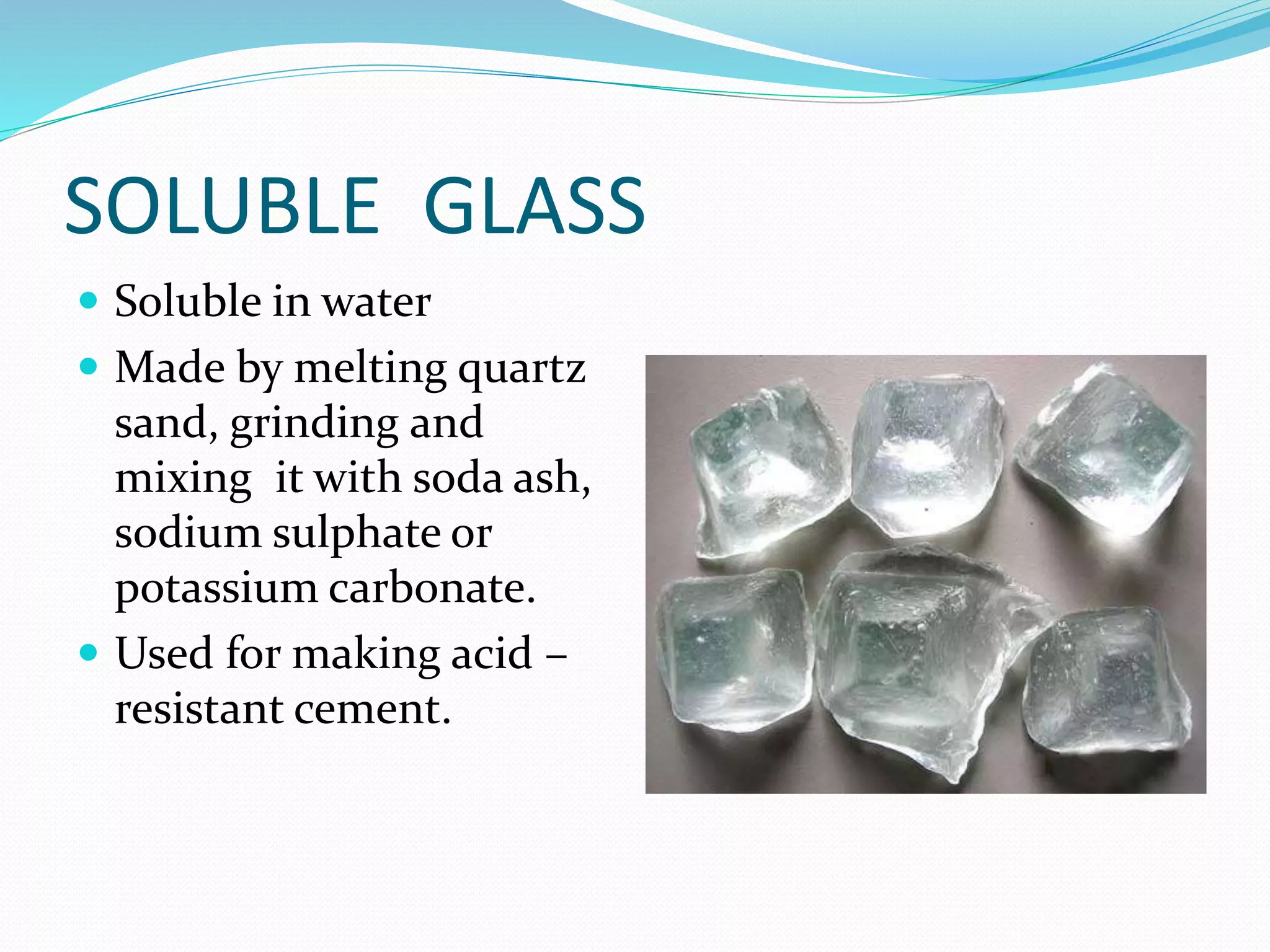
SOLUBLE GLASS
 Soluble in water
 Made by melting quartz
sand, grinding and
mixing it with soda ash,
sodium sulphate or
potassium carbonate.
 Used for making acid –
resistant cement.
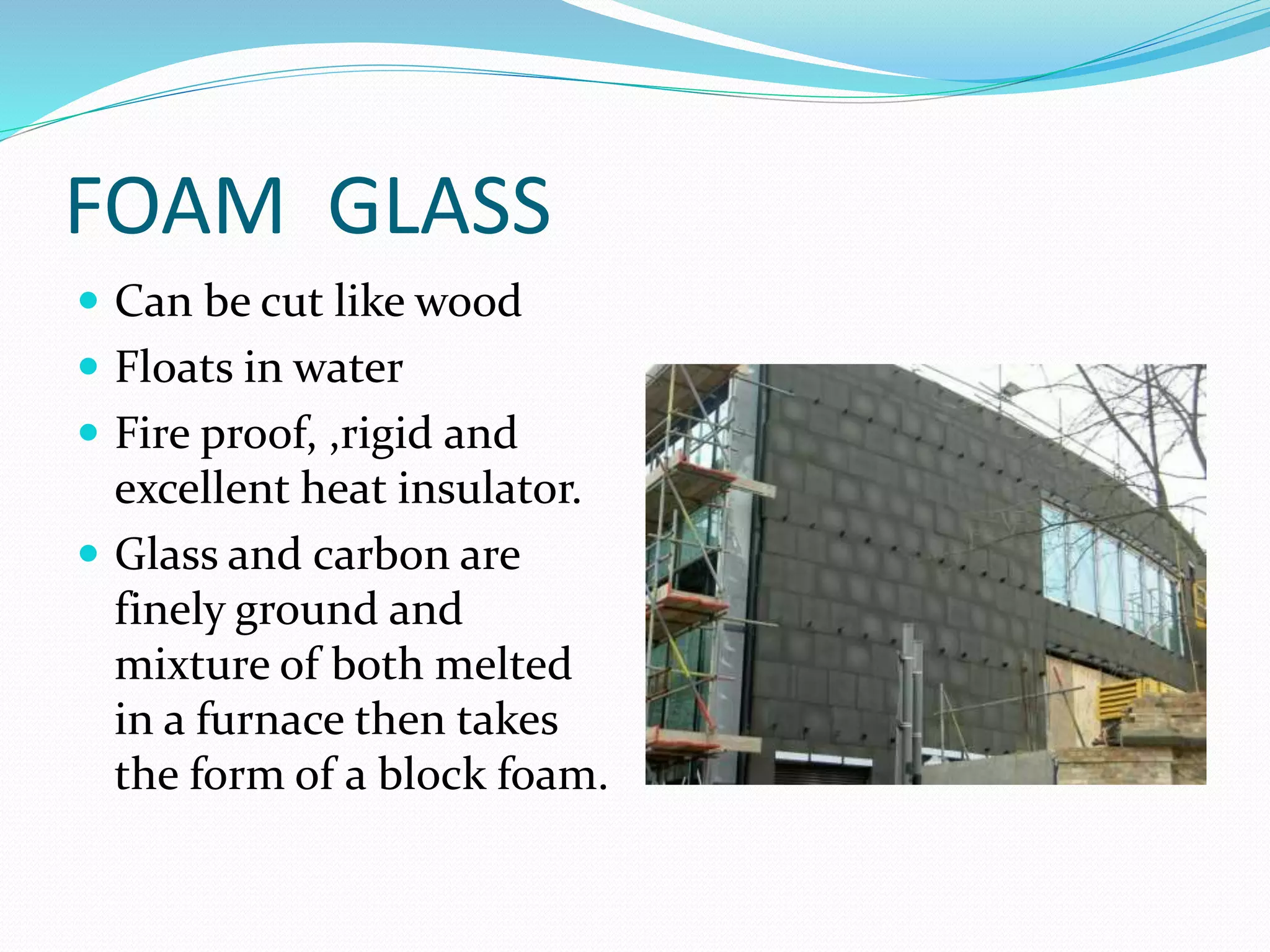
FOAM GLASS
 Can be cut like wood
 Floats in water
 Fire proof, ,rigid and
excellent heat insulator.
 Glass and carbon are
finely ground and
mixture of both melted
in a furnace then takes
the form of a block foam.
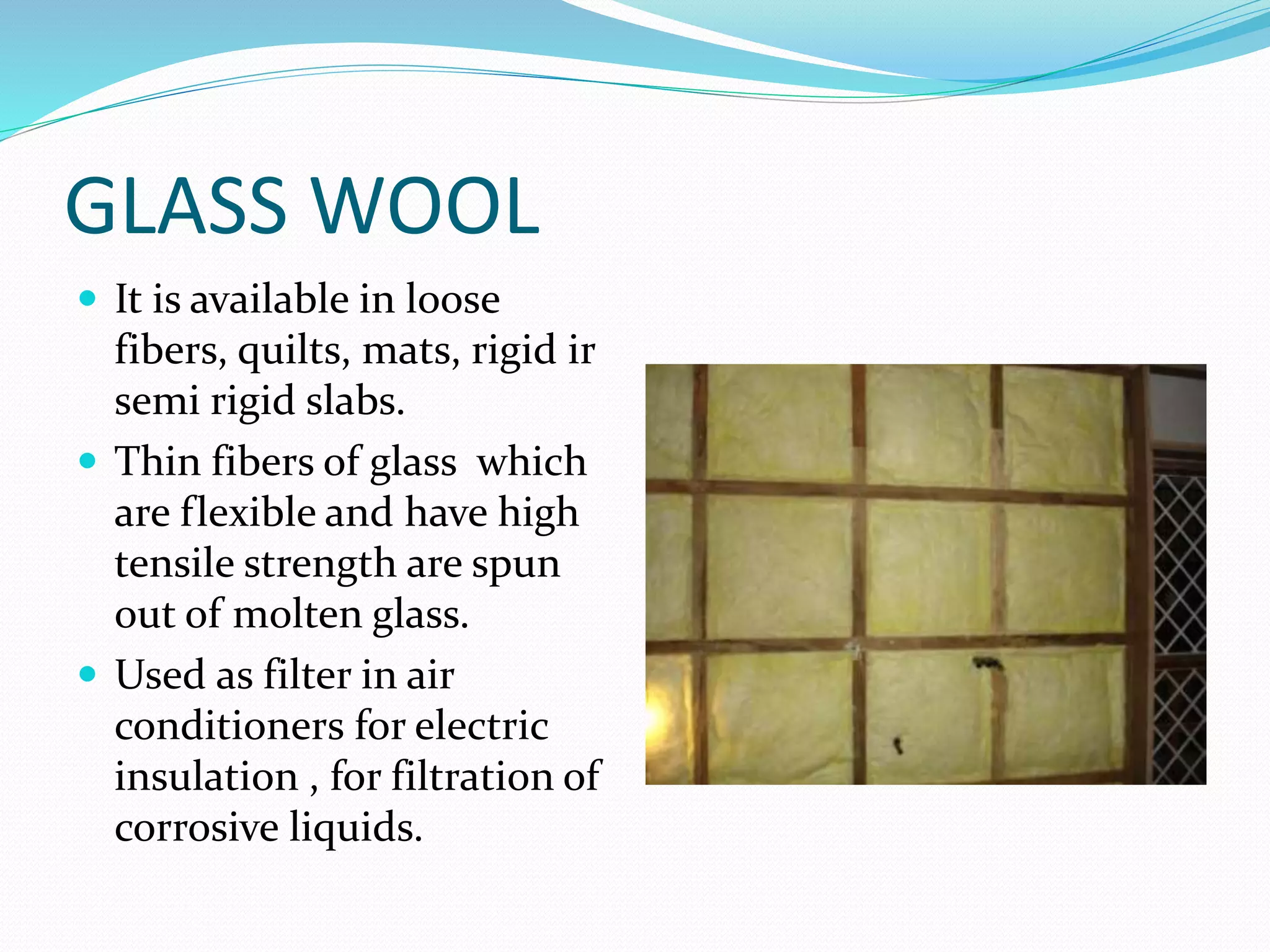
GLASS WOOL
 It is available in loose
fibers, quilts, mats, rigid ir
semi rigid slabs.
 Thin fibers of glass which
are flexible and have high
tensile strength are spun
out of molten glass.
 Used as filter in air
conditioners for electric
insulation , for filtration of
corrosive liquids.
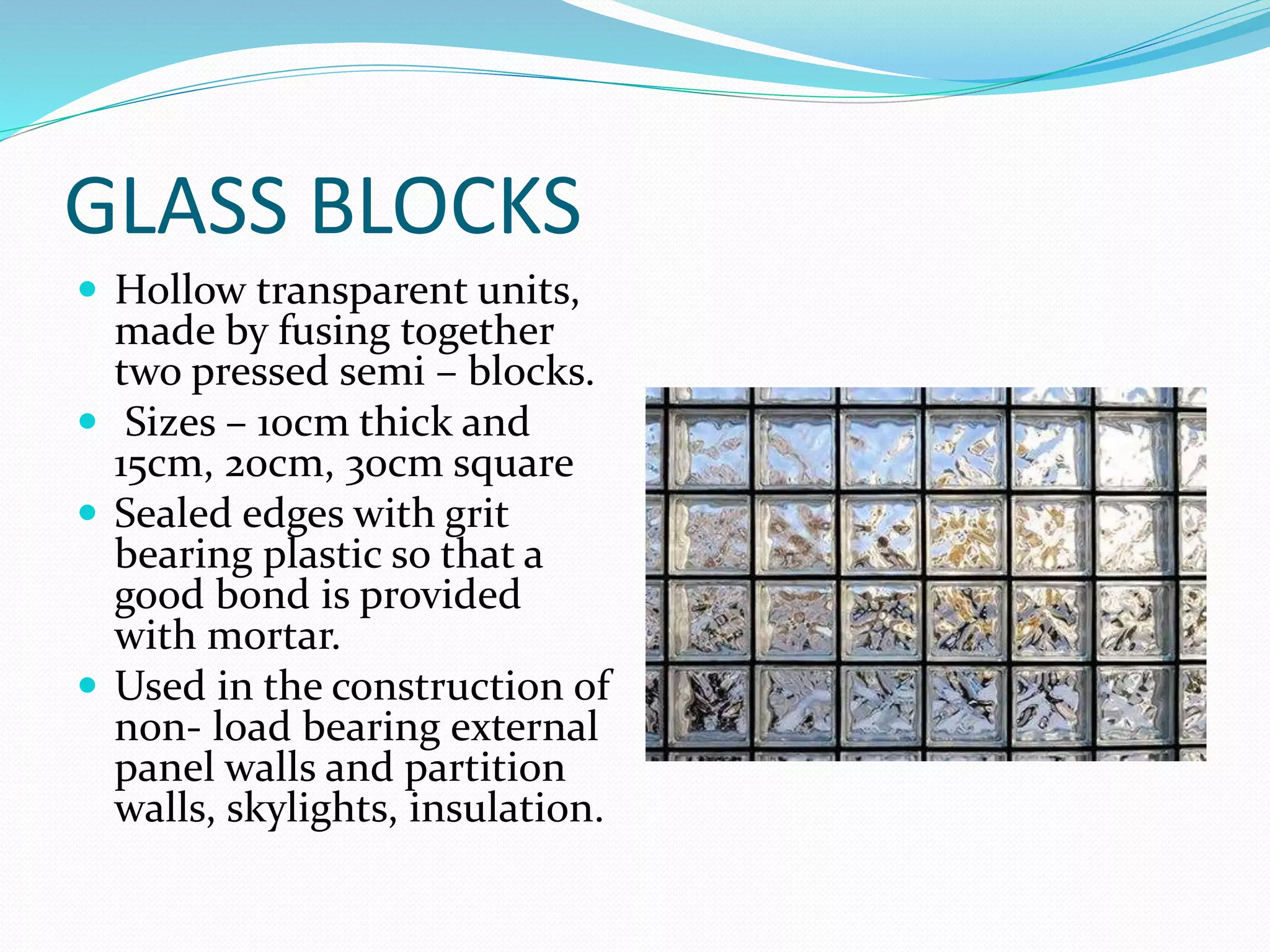
GLASS BLOCKS
 Hollow transparent units,
made by fusing together
two pressed semi – blocks.
 Sizes – 10cm thick and
15cm, 20cm, 30cm square
 Sealed edges with grit
bearing plastic so that a
good bond is provided
with mortar.
 Used in the construction of
non- load bearing external
panel walls and partition
walls, skylights, insulation.
MANISHA AGARWAL

An introduction of different types of glasses

  • 1.
  • 2.
    INTRODUCTION  Glass isa mixture of metallic silicates like pure sand, soda chalk and an alkali metal.  It is made with the mixture of sand and silicates in a very hot fire stove called a kiln.  It is a hard brittle, transparent, translucent material.
  • 3.
    PROPRTIES OF GLASS Extremely brittle , transparent, translucent and available in different colors.  Has amorphous structure and no definite melting point.  Not easily affected by air or water and any chemicals.  Absorbs and refracts light.  Can be polished, welded by fusion ,cast into any desired shape and modify its properties like hardness, refractive power.
  • 4.
    SODA-LIME GLASS  Alsoknown as Soda glass or soft glass.  A mixture of sodium silicate and calcium silicate.  Cheap and easily fusible at comparatively low temperature.  Used in manufacture of glass tube, bulbs, bottles and other laboratory apparatus, window glass etc.
  • 5.
    POTASH- LIME GLASS Also known as hard glass or Bahamian glass.  A mixture of potassium silicate and calcium silicate.  Does not melt easily that’s why fuses at high temperatures.  Used in the manufacture of combustion tube etc.
  • 6.
    POTASH –LEAD GLASS Also termed as flint glass  A mixture of lead silicate and potassium silicate.  Fuses easily and turns black and opaque.  Used in the manufacture of lenses , prisms, electric bulbs, artificial gems etc.
  • 7.
    COMMON GLASS  COMMONGLASS-  A colored glass that may be yellow, green or brown.  A mixture of sodium silicate, iron silicate and calcium silicate.  Does not fuses easily but attacked by acids easily  Uses in the manufacture of medicine bottles.
  • 8.
    COLOURED GLASS  Toproduce colored glass, coloring pigment is added which is obtained from metallic oxides, finely divided metals, carbon, salts of metal, sulphur , etc.  Different colored glass needs different quantities of same substance.  Used for window panels, fancy articles, decorative tiles , etc.
  • 9.
    CROWN GLASS  Slightlyconvex  Free from color and has finer surface  Made by the process of blow pipe  Used for special articles
  • 10.
    SHEET GLASS  Madeby blowing molten glass in to a large hollow cylinder which is split longitudinally and then flattened over a plane disc.  Used for all engineering purposes.
  • 11.
    PLATE GLASS  Verystrong and more transparent  Made by pouring hot glass on casting table by process of grinding , smoothing and polishing.  Used for looking glass, large paned glass for glazing of shop front , wind screen of vehicles.
  • 12.
    PERFORATED GLASS  Madewith the help of projections attached to rollers.  Used for panels in ventilators
  • 13.
    FLUTED OR RIBBEDGLASS  Corrugations on both sides  Variety of obscure glass  Used for securing privacy without obstructing the light of the sun
  • 14.
    WIRED GLASS  Wiredmesh is put in the glass while rolling during manufacture of glass which keeps the pieces of glass held together.  Do not shatter into pieces.  Used for fire resisting doors and windows.
  • 15.
    SHIEIDING GLASS  Varietyof polish lead glass  Contain lead oxide as one of the elements  Used for windows through which high radiations are to be observed.
  • 16.
    SAFETY GLASS  Acelluloid sheet is put between two sheets of plate glass and formed in to one unit . Celluloid sheet prevents shattering of splinters when glass breaks.
  • 17.
    BULLET PROOF GLASS Do not allow bullet to pierce through it.  Made by sand witching vinyl-resin plastic between several layers of plate glass.  Thickness of glass vary from 15mm to 75mm or even more.  Used for glazing bank tellers booths and cash booths, jewellery stores, display cases
  • 18.
    CALOREX  Also knownas excluding glass  Heat exclusion property  Opaque to ultra – violet light  Used in factories, hospitals, kitchen etc.
  • 19.
    INSULATING GLASS  Veryhigh resistance to heat flow  Provide insulating effect  It is made of two or more plates of glass separated by 6mm to13mm of dehydrated captive air.  Edges are sealed of the glass.
  • 20.
    ULTRA – VIOLETRAY GLASS  Made of raw mixture of iron titanium and chrome.  Can transmit 75% of ultra – violet radiation more than common glass.  Widely used in window pane.
  • 21.
    LAMINATED GLASS  Whenbreaks , does not fly off in splinters.  Two or more sheets of glass are attached with plastic resin between them.  Ensures safety at places where glass is liable to shatter.
  • 22.
    FIBRE GLASS  Softto touch and flexible in nature.  Made of minute glass rod .  Developed in in the form of continuous strands or in staple form.  Used for chairs, roofs.
  • 23.
    GROUND GLASS OROBSURED GLASS  Made by grinding one side of the glass or melting powdered glass upon it.  Used where light is required without transparency therefore useful for public toilet, office doors, partition etc.
  • 24.
    TEMPERED PLATE GLASS Much stronger than ordinary glass  Made by glass plate which is heated then cooled to temper it immediately.  Used for glazed entrance doors, making table tops, shelves, counters etc.
  • 25.
    SOLUBLE GLASS  Solublein water  Made by melting quartz sand, grinding and mixing it with soda ash, sodium sulphate or potassium carbonate.  Used for making acid – resistant cement.
  • 26.
    FOAM GLASS  Canbe cut like wood  Floats in water  Fire proof, ,rigid and excellent heat insulator.  Glass and carbon are finely ground and mixture of both melted in a furnace then takes the form of a block foam.
  • 27.
    GLASS WOOL  Itis available in loose fibers, quilts, mats, rigid ir semi rigid slabs.  Thin fibers of glass which are flexible and have high tensile strength are spun out of molten glass.  Used as filter in air conditioners for electric insulation , for filtration of corrosive liquids.
  • 28.
    GLASS BLOCKS  Hollowtransparent units, made by fusing together two pressed semi – blocks.  Sizes – 10cm thick and 15cm, 20cm, 30cm square  Sealed edges with grit bearing plastic so that a good bond is provided with mortar.  Used in the construction of non- load bearing external panel walls and partition walls, skylights, insulation.
  • 29.