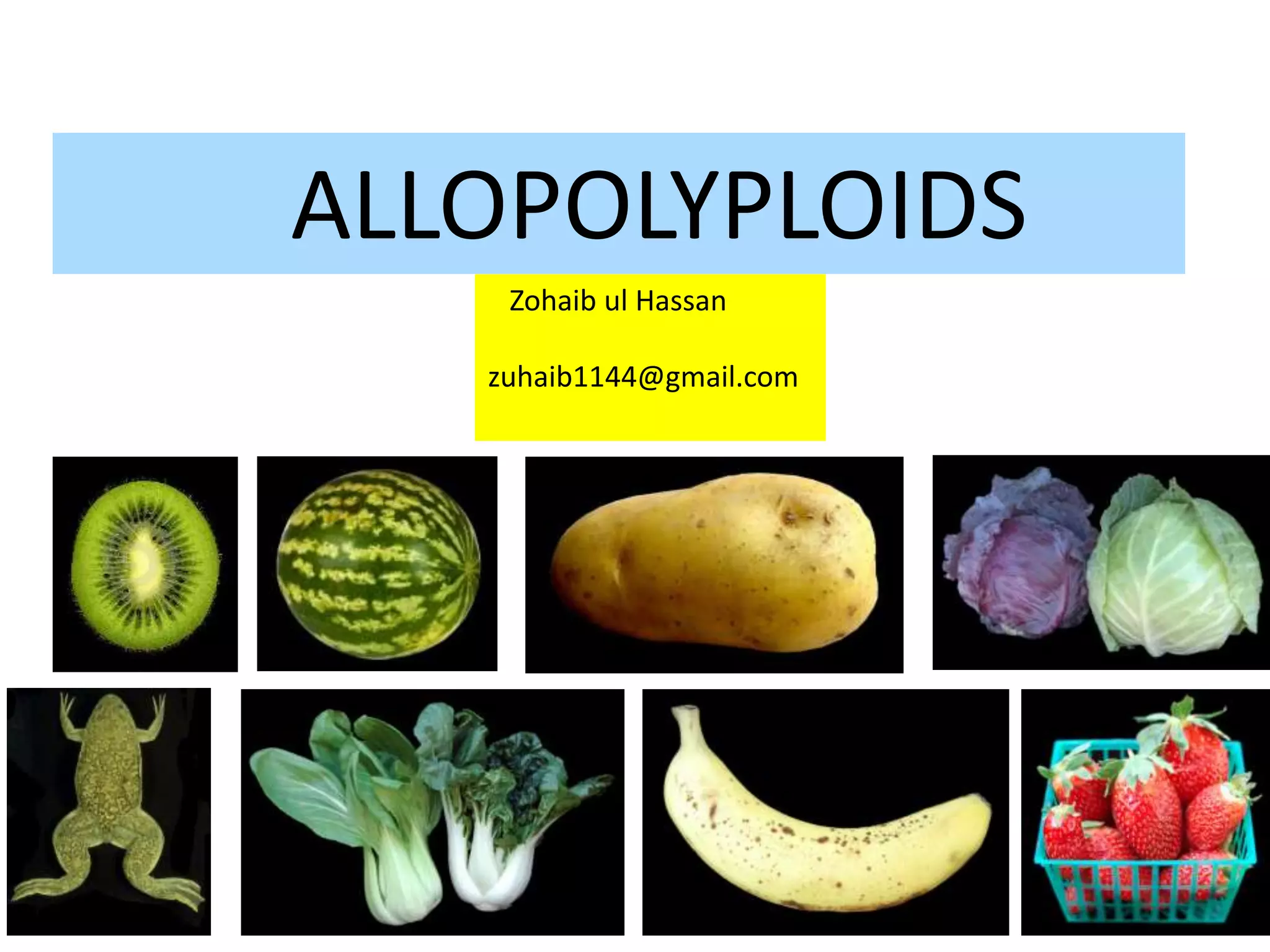
ALLOPOLYPLOID ALLOPOLYPLOIDS 
Zohaib ul Hassan 
zuhaib1144@gmail.com
POLYPLOIDY 
• Polyploidy = the addition of one or more complete sets 
of chromosomes to the original set. 
• two copies of each autosome = diploid 
• four copies of each autosome = tetraploid 
• six copies of each autosome = hexaploid 
• The gametes of diploids are haploid, those of 
tertraploids are diploid, those of hexaploid are triploid, 
and so on.
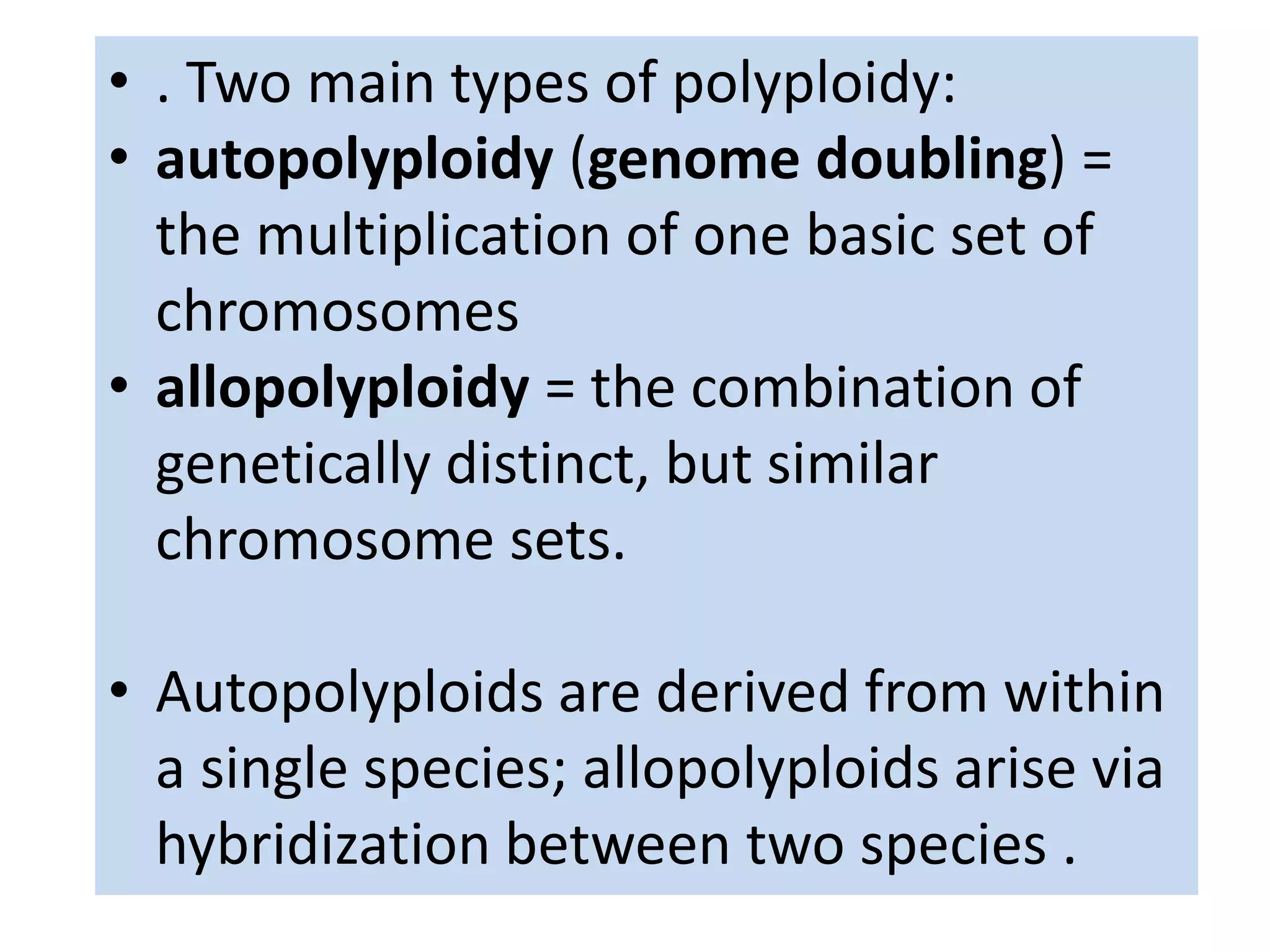
• . Two main types of polyploidy: 
• autopolyploidy (genome doubling) = 
the multiplication of one basic set of 
chromosomes 
• allopolyploidy = the combination of 
genetically distinct, but similar 
chromosome sets. 
• Autopolyploids are derived from within 
a single species; allopolyploids arise via 
hybridization between two species .
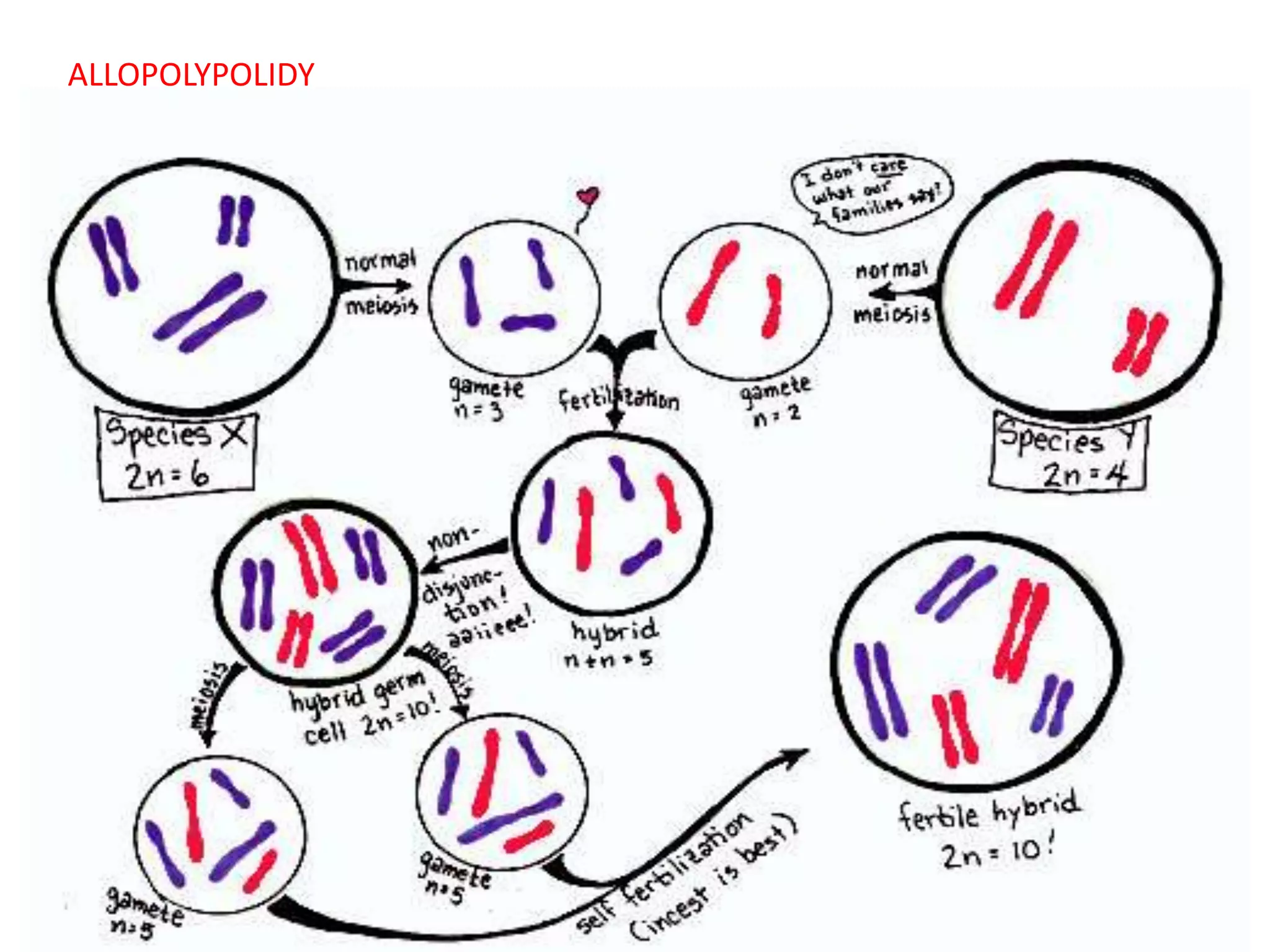
ALLOPOLYPOLIDY 
autopolyploidy (genome doubling) = the multiplication of one basic set of 
chromosomes 
allopolyploidy = the combination of genetically distinct, but similar chromosome sets. 
Autopolyploids are derived from within a single species; allopolyploids arise via 
hybridization between two species .
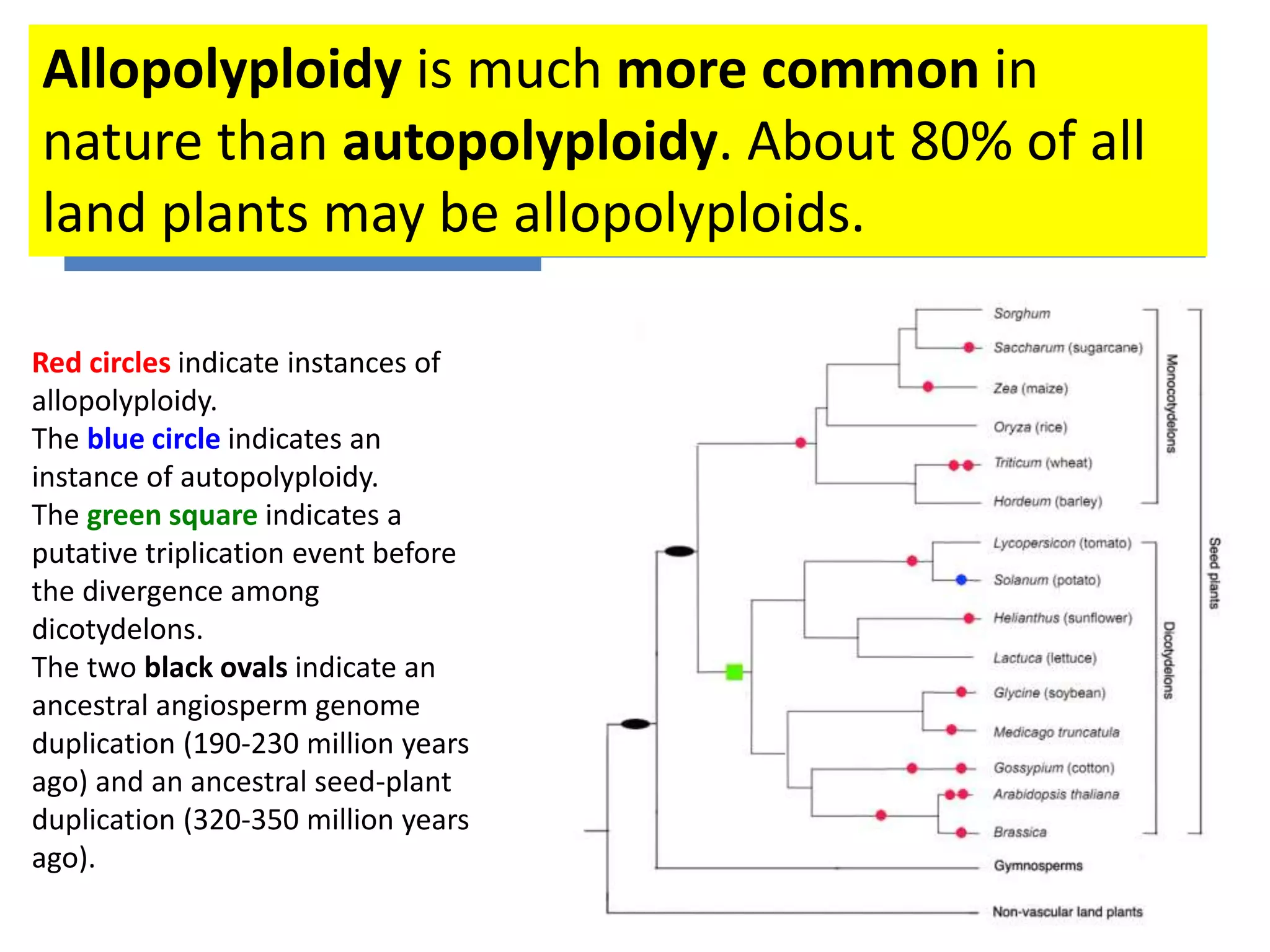
Allopolyploidy is much more common in 
nature than autopolyploidy. About 80% of all 
land plants may be allopolyploids. 
Red circles indicate instances of 
allopolyploidy. 
The blue circle indicates an 
instance of autopolyploidy. 
The green square indicates a 
putative triplication event before 
the divergence among 
dicotydelons. 
The two black ovals indicate an 
ancestral angiosperm genome 
duplication (190-230 million years 
ago) and an ancestral seed-plant 
duplication (320-350 million years 
ago).
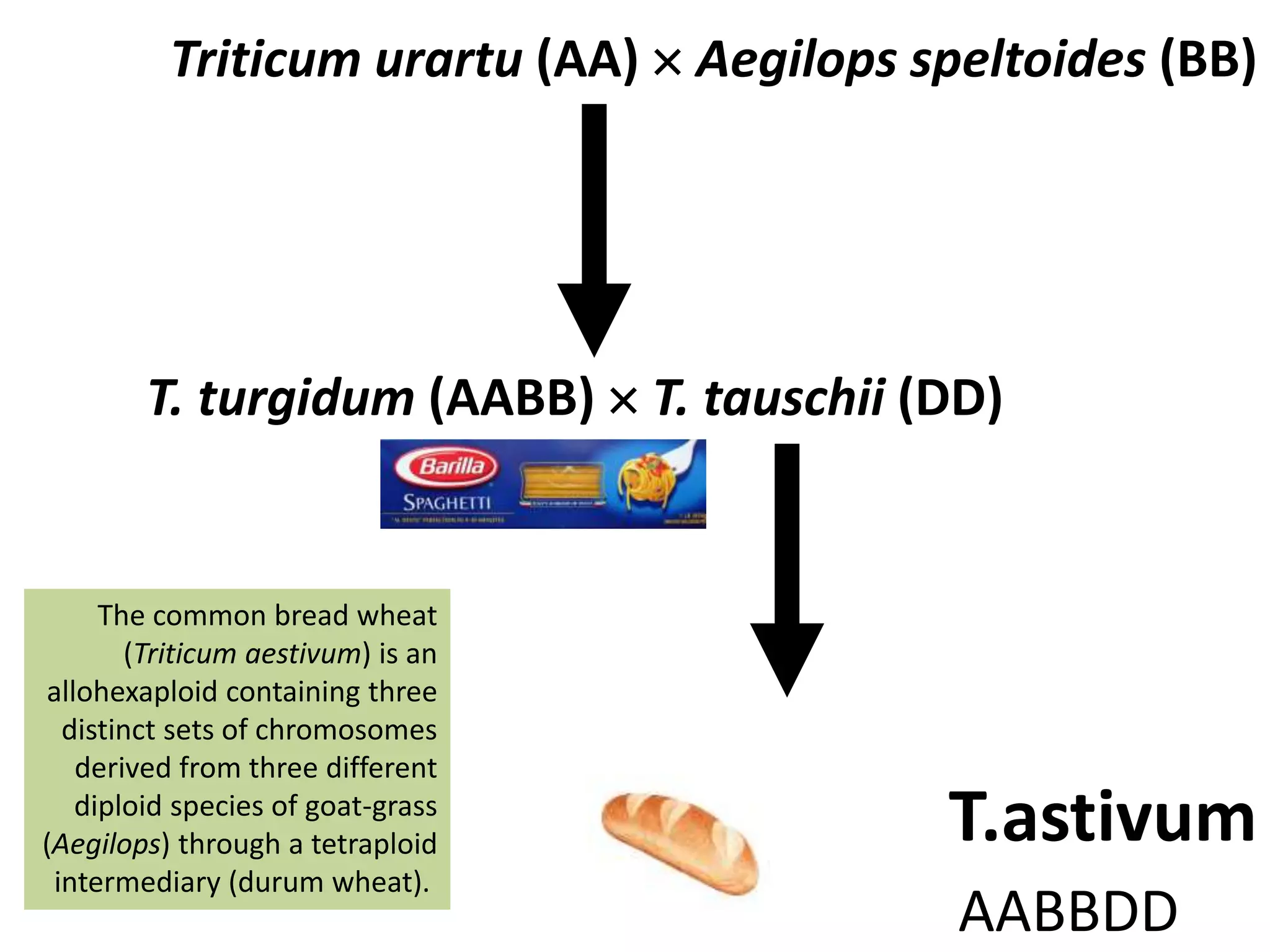
Triticum urartu (AA)  Aegilops speltoides (BB) 
T. turgidum (AABB)  T. tauschii (DD) 
T.astivum 
AABBDD 
The common bread wheat 
(Triticum aestivum) is an 
allohexaploid containing three 
distinct sets of chromosomes 
derived from three different 
diploid species of goat-grass 
(Aegilops) through a tetraploid 
intermediary (durum wheat).
Allopolyploidy in Animals 
• In animals, allopolyploidy is rare. Allopolyploidy was found in 
insects, fish, reptiles, and amphibians. For example, Xenopus 
laevis, the African clawed frog of laboratory fame, is an 
allotetraploid. No cases of polyploidy have ever been found in 
birds. Two mammalian species are suspected tetraploids, the 
red vizcacha rat (Tympanoctomys barrerae) and the golden 
vizcacha rat (Pipanacoctomys aureus), however, some 
disagreement exists in the literature.
Identifying Auto- & Allopolyploidy 
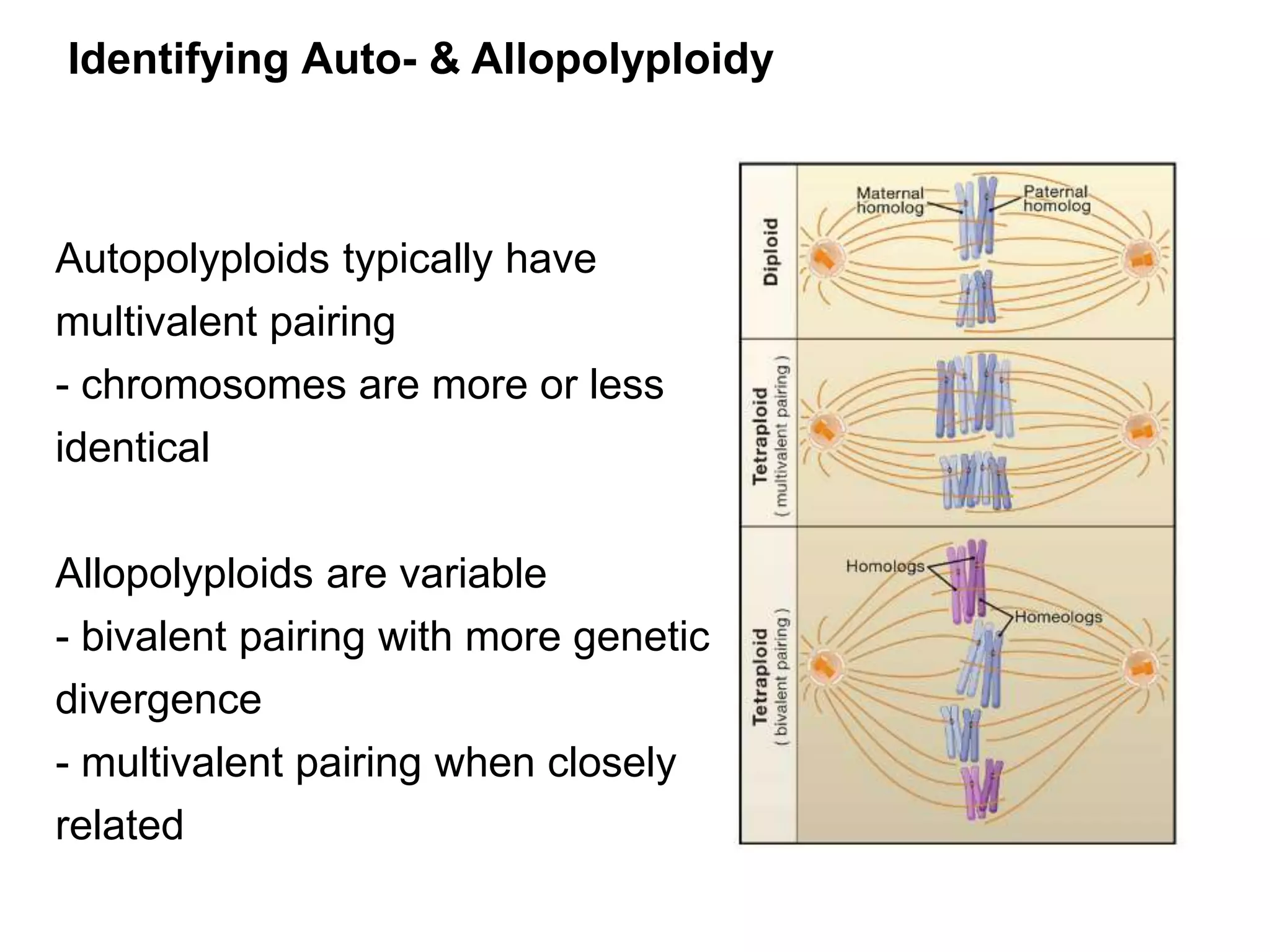
Autopolyploids typically have 
multivalent pairing 
- chromosomes are more or less 
identical 
Allopolyploids are variable 
- bivalent pairing with more genetic 
divergence 
- multivalent pairing when closely 
related
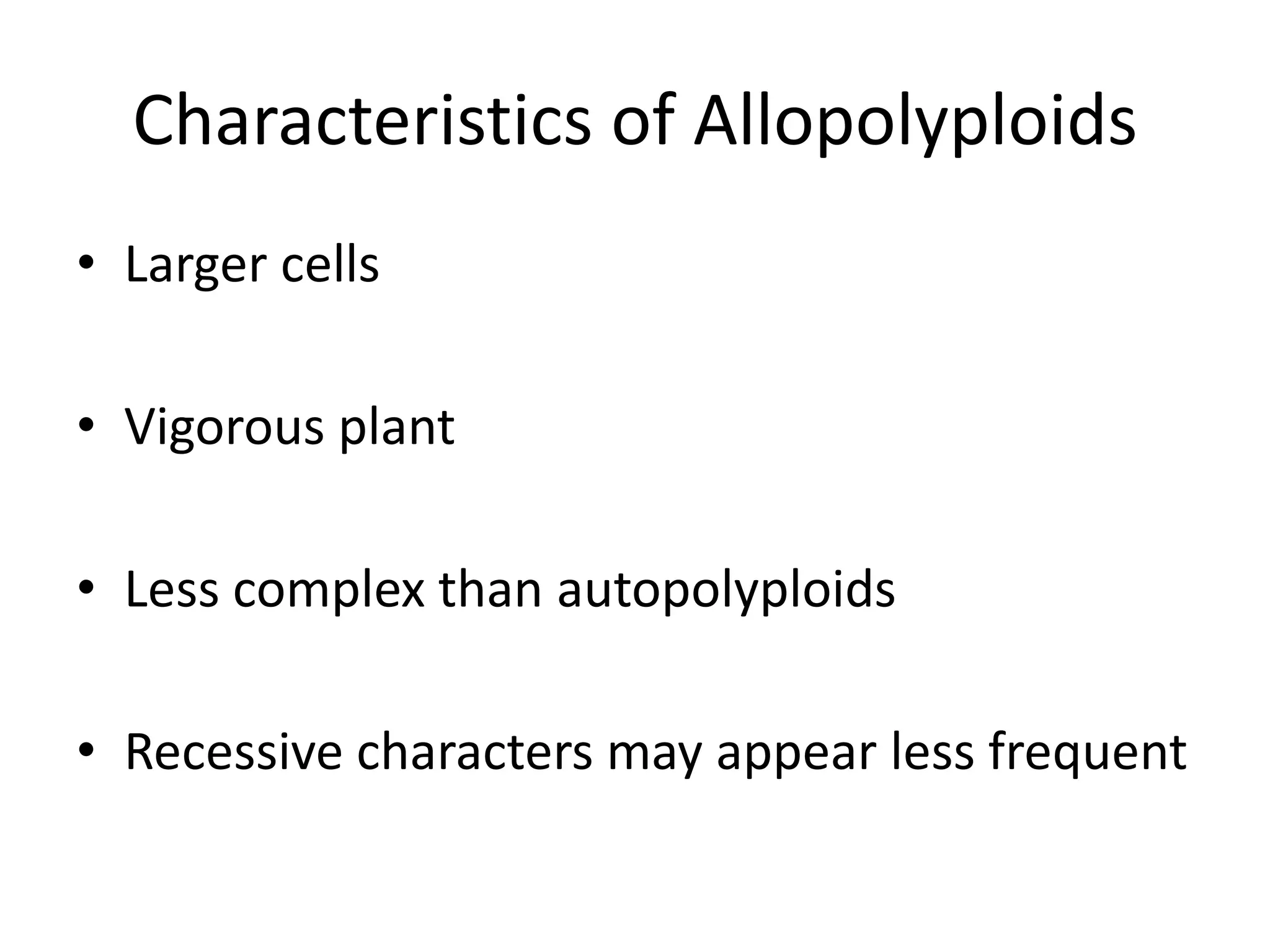
Characteristics of Allopolyploids 
• Larger cells 
• Vigorous plant 
• Less complex than autopolyploids 
• Recessive characters may appear less frequent
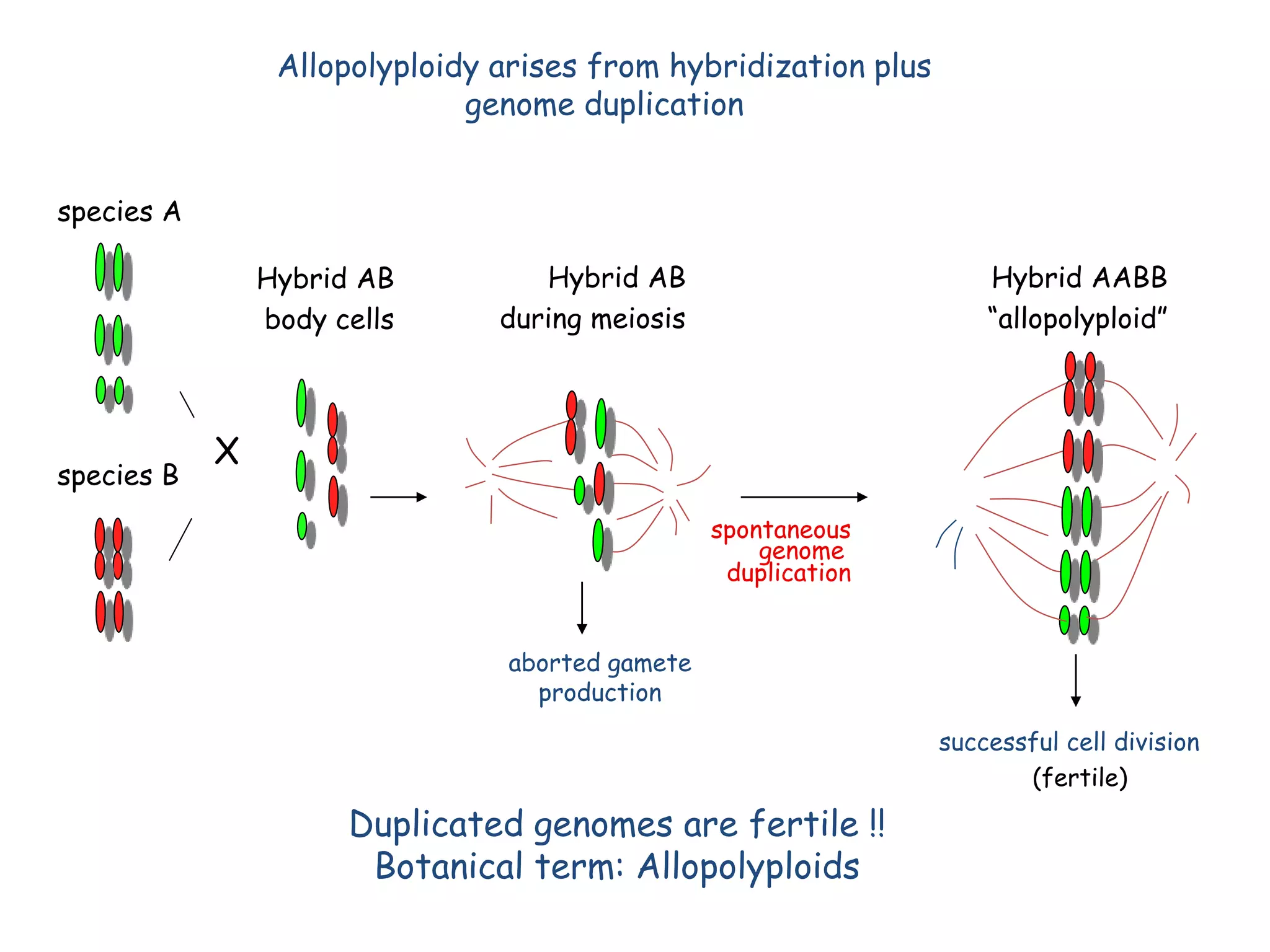
species A 
species B 
X 
Hybrid AB 
during meiosis 
aborted gamete 
production 
Hybrid AB 
body cells 
spontaneous 
genome 
duplication 
Duplicated genomes are fertile !! 
Botanical term: Allopolyploids 
Hybrid AABB 
“allopolyploid” 
successful cell division 
(fertile) 
Allopolyploidy arises from hybridization plus 
genome duplication
Allopolyploids in Plant Breeding
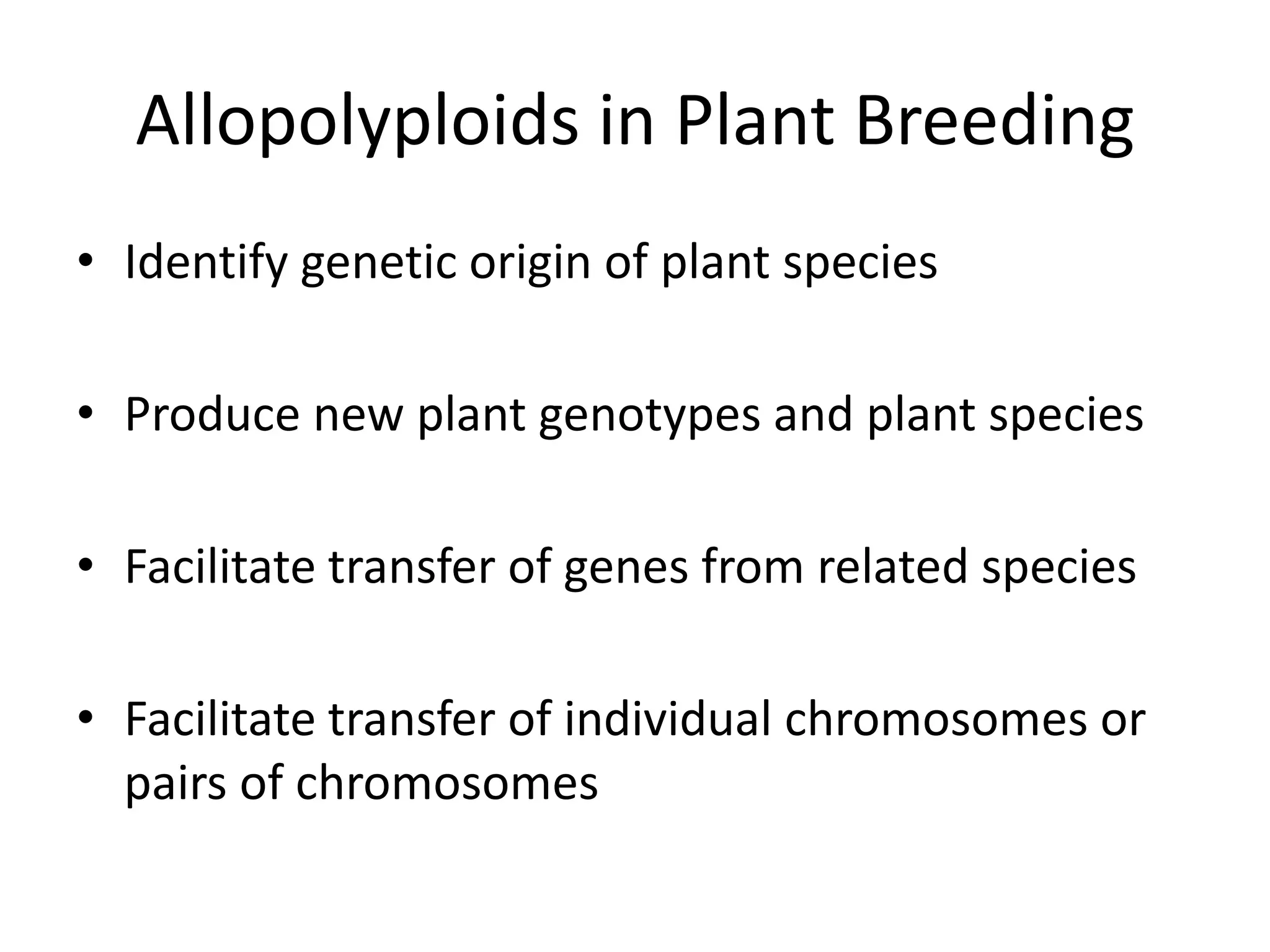
Allopolyploids in Plant Breeding 
• Identify genetic origin of plant species 
• Produce new plant genotypes and plant species 
• Facilitate transfer of genes from related species 
• Facilitate transfer of individual chromosomes or 
pairs of chromosomes
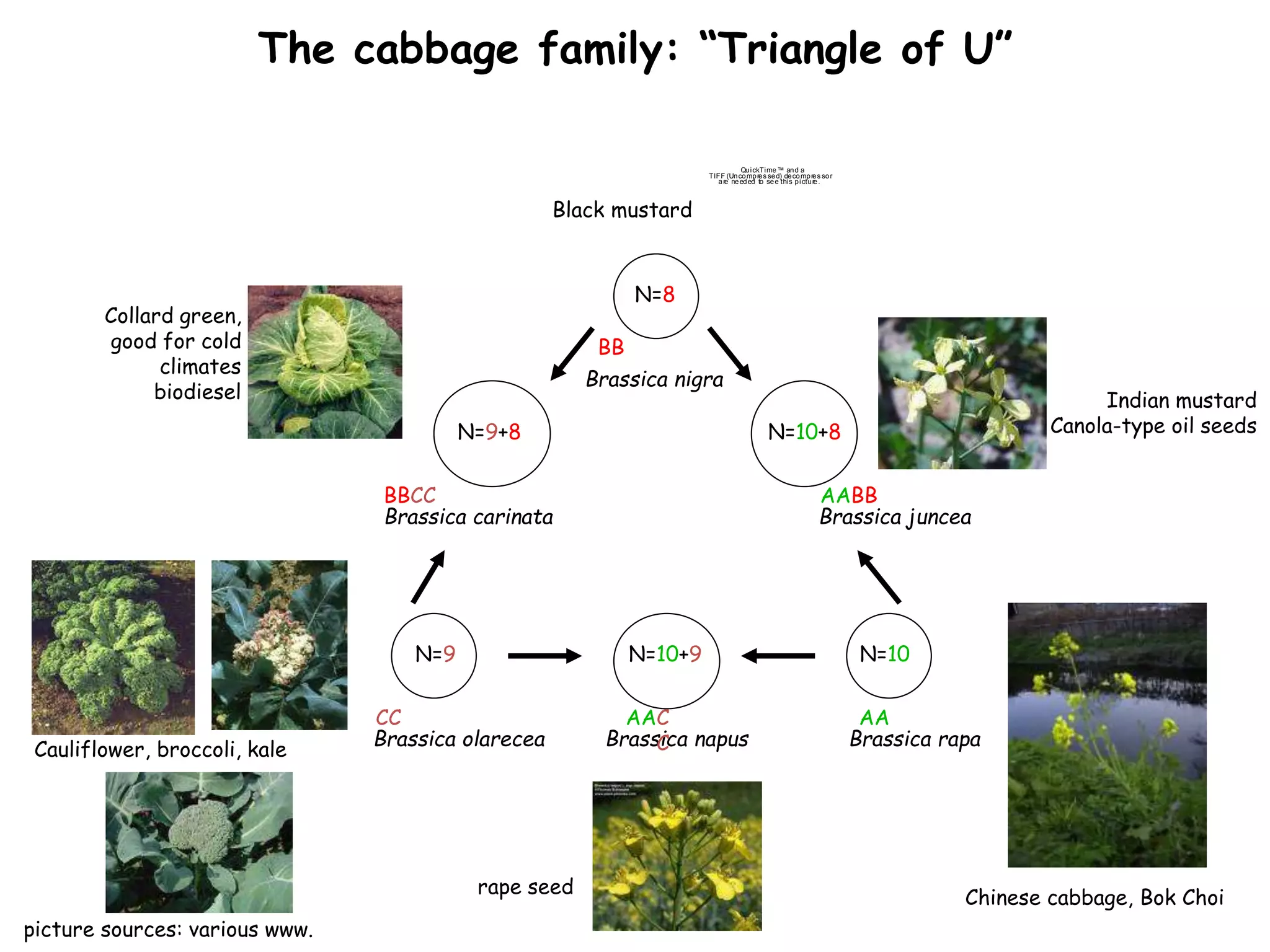
The cabbage family: “Triangle of U” 
Black mustard 
N=8 
N=10+8 
BB 
Brassica carinata Brassica juncea 
Chinese cabbage, Bok Choi 
Cauliflower, broccoli, kale 
Qu i ckTi me™ an d a 
TIFF (Uncompres sed) decompres sor 
are needed to see this picture. 
N=9 N=10 
rape seed 
Indian mustard 
Canola-type oil seeds 
Collard green, 
good for cold 
climates 
biodiesel 
Brassica nigra 
N=10+9 
Brassica olarecea Brassica napus 
Brassica rapa 
AABB 
AA 
BBCC 
AAC 
C 
N=9+8 
CC 
picture sources: various www.

Allopolyploid

  • 1.
    ALLOPOLYPLOID ALLOPOLYPLOIDS Zohaibul Hassan zuhaib1144@gmail.com
  • 2.
    POLYPLOIDY • Polyploidy= the addition of one or more complete sets of chromosomes to the original set. • two copies of each autosome = diploid • four copies of each autosome = tetraploid • six copies of each autosome = hexaploid • The gametes of diploids are haploid, those of tertraploids are diploid, those of hexaploid are triploid, and so on.
  • 3.
    • . Twomain types of polyploidy: • autopolyploidy (genome doubling) = the multiplication of one basic set of chromosomes • allopolyploidy = the combination of genetically distinct, but similar chromosome sets. • Autopolyploids are derived from within a single species; allopolyploids arise via hybridization between two species .
  • 4.
    ALLOPOLYPOLIDY autopolyploidy (genomedoubling) = the multiplication of one basic set of chromosomes allopolyploidy = the combination of genetically distinct, but similar chromosome sets. Autopolyploids are derived from within a single species; allopolyploids arise via hybridization between two species .
  • 5.
    Allopolyploidy is muchmore common in nature than autopolyploidy. About 80% of all land plants may be allopolyploids. Red circles indicate instances of allopolyploidy. The blue circle indicates an instance of autopolyploidy. The green square indicates a putative triplication event before the divergence among dicotydelons. The two black ovals indicate an ancestral angiosperm genome duplication (190-230 million years ago) and an ancestral seed-plant duplication (320-350 million years ago).
  • 6.
    Triticum urartu (AA) Aegilops speltoides (BB) T. turgidum (AABB)  T. tauschii (DD) T.astivum AABBDD The common bread wheat (Triticum aestivum) is an allohexaploid containing three distinct sets of chromosomes derived from three different diploid species of goat-grass (Aegilops) through a tetraploid intermediary (durum wheat).
  • 7.
    Allopolyploidy in Animals • In animals, allopolyploidy is rare. Allopolyploidy was found in insects, fish, reptiles, and amphibians. For example, Xenopus laevis, the African clawed frog of laboratory fame, is an allotetraploid. No cases of polyploidy have ever been found in birds. Two mammalian species are suspected tetraploids, the red vizcacha rat (Tympanoctomys barrerae) and the golden vizcacha rat (Pipanacoctomys aureus), however, some disagreement exists in the literature.
  • 8.
    Identifying Auto- &Allopolyploidy Autopolyploids typically have multivalent pairing - chromosomes are more or less identical Allopolyploids are variable - bivalent pairing with more genetic divergence - multivalent pairing when closely related
  • 9.
    Characteristics of Allopolyploids • Larger cells • Vigorous plant • Less complex than autopolyploids • Recessive characters may appear less frequent
  • 10.
    species A speciesB X Hybrid AB during meiosis aborted gamete production Hybrid AB body cells spontaneous genome duplication Duplicated genomes are fertile !! Botanical term: Allopolyploids Hybrid AABB “allopolyploid” successful cell division (fertile) Allopolyploidy arises from hybridization plus genome duplication
  • 11.
  • 12.
    Allopolyploids in PlantBreeding • Identify genetic origin of plant species • Produce new plant genotypes and plant species • Facilitate transfer of genes from related species • Facilitate transfer of individual chromosomes or pairs of chromosomes
  • 13.
    The cabbage family:“Triangle of U” Black mustard N=8 N=10+8 BB Brassica carinata Brassica juncea Chinese cabbage, Bok Choi Cauliflower, broccoli, kale Qu i ckTi me™ an d a TIFF (Uncompres sed) decompres sor are needed to see this picture. N=9 N=10 rape seed Indian mustard Canola-type oil seeds Collard green, good for cold climates biodiesel Brassica nigra N=10+9 Brassica olarecea Brassica napus Brassica rapa AABB AA BBCC AAC C N=9+8 CC picture sources: various www.