Polyploidy breeding
PRESENTED BY:
K NIKILESH
Reg. no.: 11408963
ROLL.NO:B41
SECTION:H1435
Introduction
 Polyploidy:-
 Which involves three or more sets of chromosomes , and
may occur naturally or by induction.
 Nearly all plants probably have some polyploid tissues.
Examples:
i. Plant endosperm is triploid.
ii. Wheat is hexaploid (6N) and the strawberry is
octaploid (8N).
Origin of polyploids
There are various modes for the origin of polyploids.
1. Somatic doubling during mitosis,
2. Non-reduction in meiosis leading to the production of
unreduced gametes,
3. Polyspermaty:-fertilization of the egg by two male nuclei
4. Endoreplication:-replication of the DNA but no
cytokinesis.
somatic doubling during mitosis,
 Chromosome doubling can occur either in the zygote to
produce a completely polyploid individual or locally in
some apical meristem to give polyploid chimeras.
 In somatic doubling the main cause is mitotic non-
disjunction. This doubling may occur in purely vegetative
tissues like in root nodules of some leguminous plants or
at times in a branch that may produce flowers or in early
embryos.
Non-reduction in meiosis leading
to the production of unreduced
gametes
 Non reduction could be due to meiotic non-
disjunction (failure of the chromosome to separate
and subsequent reduction in chromosome
number), failure of cell wall formation.
 Example:- Raphanobrassica, originated by a one
step process of fusion of two non- reduced
gametes.
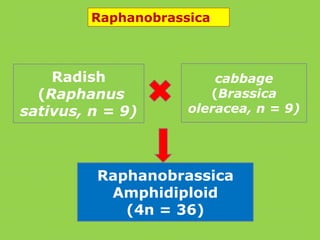
Radish
(Raphanus
sativus, n = 9)
cabbage
(Brassica
oleracea, n = 9)
Raphanobrassica
Amphidiploid
(4n = 36)
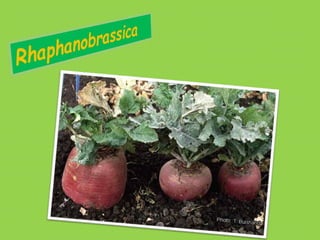
Raphanobrassica
factors promoting polyploidy
 The mode of reproduction
 The mode of fertilization
 The breeding system
 The growth habit of the plant
 Size of chromosomes etc.
an interspecific hybrid having a complete diploid chromosome set from
each parent form is known as “ amphidiploid”. If the parental
species are polyploids, the derivative will be called as “
amphipolyploid”.
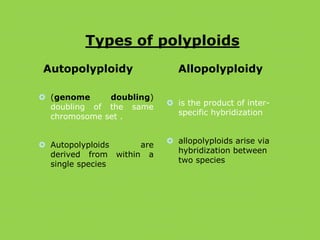
Types of polyploids
Autopolyploidy
 (genome doubling)
doubling of the same
chromosome set .
 Autopolyploids are
derived from within a
single species
Allopolyploidy
 is the product of inter-
specific hybridization
 allopolyploids arise via
hybridization between
two species
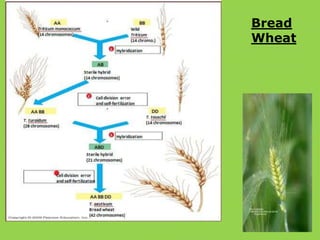
Bread
Wheat
Evolutionof naturalpolyploids
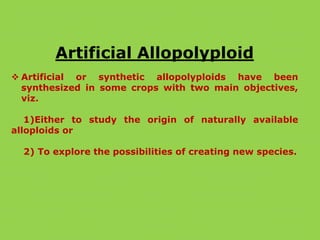
Artificial Allopolyploid
 Artificial or synthetic allopolyploids have been
synthesized in some crops with two main objectives,
viz.
1)Either to study the origin of naturally available
alloploids or
2) To explore the possibilities of creating new species.
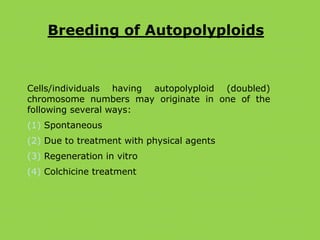
Breeding of Autopolyploids
Cells/individuals having autopolyploid (doubled)
chromosome numbers may originate in one of the
following several ways:
(1) Spontaneous
(2) Due to treatment with physical agents
(3) Regeneration in vitro
(4) Colchicine treatment
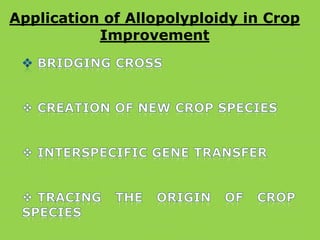
Application of Allopolyploidy in Crop
Improvement
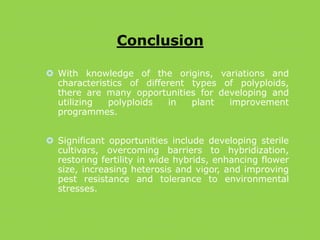
Conclusion
 With knowledge of the origins, variations and
characteristics of different types of polyploids,
there are many opportunities for developing and
utilizing polyploids in plant improvement
programmes.
 Significant opportunities include developing sterile
cultivars, overcoming barriers to hybridization,
restoring fertility in wide hybrids, enhancing flower
size, increasing heterosis and vigor, and improving
pest resistance and tolerance to environmental
stresses.
Thank you….

polyploid Breeding

  • 1.
    Polyploidy breeding PRESENTED BY: KNIKILESH Reg. no.: 11408963 ROLL.NO:B41 SECTION:H1435
  • 2.
    Introduction  Polyploidy:-  Whichinvolves three or more sets of chromosomes , and may occur naturally or by induction.  Nearly all plants probably have some polyploid tissues. Examples: i. Plant endosperm is triploid. ii. Wheat is hexaploid (6N) and the strawberry is octaploid (8N).
  • 3.
    Origin of polyploids Thereare various modes for the origin of polyploids. 1. Somatic doubling during mitosis, 2. Non-reduction in meiosis leading to the production of unreduced gametes, 3. Polyspermaty:-fertilization of the egg by two male nuclei 4. Endoreplication:-replication of the DNA but no cytokinesis.
  • 4.
    somatic doubling duringmitosis,  Chromosome doubling can occur either in the zygote to produce a completely polyploid individual or locally in some apical meristem to give polyploid chimeras.  In somatic doubling the main cause is mitotic non- disjunction. This doubling may occur in purely vegetative tissues like in root nodules of some leguminous plants or at times in a branch that may produce flowers or in early embryos.
  • 5.
    Non-reduction in meiosisleading to the production of unreduced gametes  Non reduction could be due to meiotic non- disjunction (failure of the chromosome to separate and subsequent reduction in chromosome number), failure of cell wall formation.  Example:- Raphanobrassica, originated by a one step process of fusion of two non- reduced gametes.
  • 7.
    Radish (Raphanus sativus, n =9) cabbage (Brassica oleracea, n = 9) Raphanobrassica Amphidiploid (4n = 36) Raphanobrassica
  • 8.
    factors promoting polyploidy The mode of reproduction  The mode of fertilization  The breeding system  The growth habit of the plant  Size of chromosomes etc. an interspecific hybrid having a complete diploid chromosome set from each parent form is known as “ amphidiploid”. If the parental species are polyploids, the derivative will be called as “ amphipolyploid”.
  • 9.
    Types of polyploids Autopolyploidy (genome doubling) doubling of the same chromosome set .  Autopolyploids are derived from within a single species Allopolyploidy  is the product of inter- specific hybridization  allopolyploids arise via hybridization between two species
  • 10.
  • 11.
    Artificial Allopolyploid  Artificialor synthetic allopolyploids have been synthesized in some crops with two main objectives, viz. 1)Either to study the origin of naturally available alloploids or 2) To explore the possibilities of creating new species.
  • 12.
    Breeding of Autopolyploids Cells/individualshaving autopolyploid (doubled) chromosome numbers may originate in one of the following several ways: (1) Spontaneous (2) Due to treatment with physical agents (3) Regeneration in vitro (4) Colchicine treatment
  • 13.
    Application of Allopolyploidyin Crop Improvement
  • 14.
    Conclusion  With knowledgeof the origins, variations and characteristics of different types of polyploids, there are many opportunities for developing and utilizing polyploids in plant improvement programmes.  Significant opportunities include developing sterile cultivars, overcoming barriers to hybridization, restoring fertility in wide hybrids, enhancing flower size, increasing heterosis and vigor, and improving pest resistance and tolerance to environmental stresses.
  • 15.