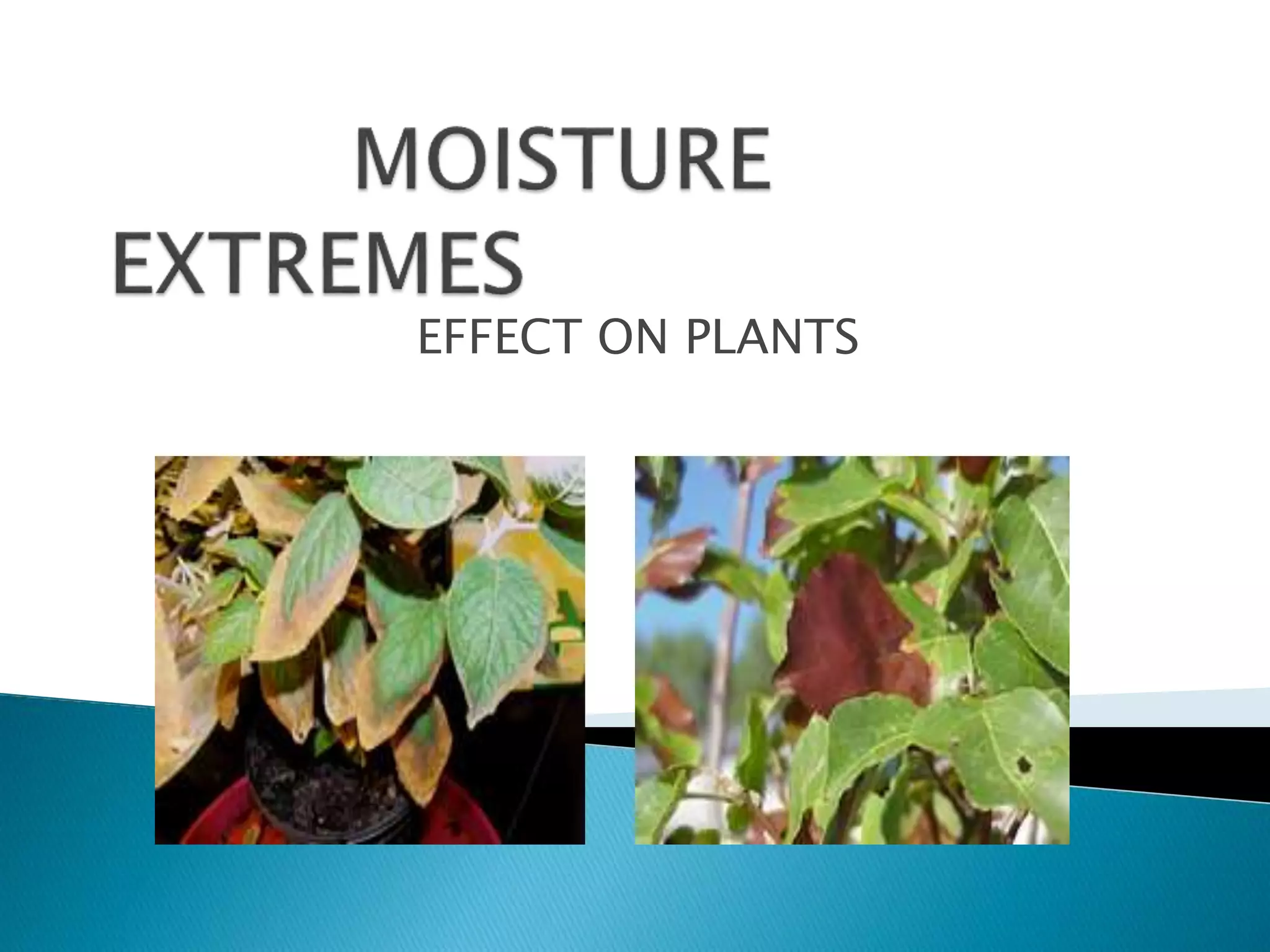
EFFECT ON PLANTS
ZOHAIB UL HASSAN 
email: zuhaib1144@gmail.com 
PLANT PATHOLOGY 
University College of Agriculture , 
University of Sargodha, 
Pakistan.
Water is an important requirement for growth 
and survival of plants. 
The plant's physiology and biochemistry are 
affected . 
Both water deficiency and excess can cause 
injury to plants. 
. Sometimes the injury is short-lived (acute; 
several hours) or long-lived (chronic; days or 
weeks).
Diagnosis of water status problems can be 
difficult. 
Symptoms confused with injury from salts or 
herbicide etc. 
Certain infectious diseases such as root-rot 
(e.g., Phytophthora spp.) and vascular wilt (e.g., 
Ophiostoma ulmi) also cause similar symptoms 
such as wilting. 
A soil test might be necessary .
If soil appears to be excessively wet, is 
discolored, or smells strongly of rotten eggs, 
water drainage in the area should be 
addressed. 
Plant samples should be collected and sent to 
a reputable diagnostic lab for analysis.
occur either as a short-term or chronic 
deficiency. 
SHORT- TERM: 
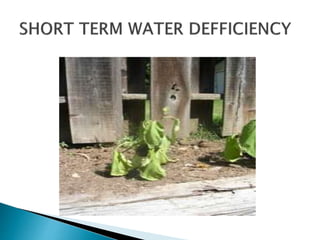
A short-term deficit of water might result in 
only minor effects on the plant such as wilted 
leaves or shoots .
These symptoms may be temporary and 
occur during the warmest part of the day 
when transpiration rates are highest. 
Once the environmental stresses are relieved 
the symptoms of low water status may 
disappear.
CHRONIC PERIOD: 
During chronic periods of water deficit, the 
injury sustained by plants may be more 
severe. 
Plants may grow more slowly or not at all. 
young leaves may not fully expand. 
foliage may not appear as colorful relative to 
foliage. 
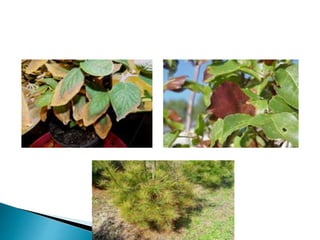
In severe cases "scorching" or marginal leaf 
necrosis can occur on deciduous trees. 
needle necrosis can occur on conifers.
During winter months when rain or snowfall 
might be scarce, plant roots may not be able 
to absorb water. 
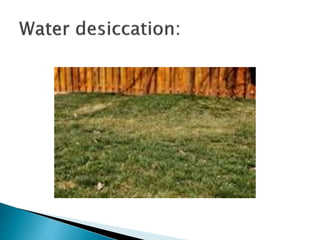
The result is winter desiccation, in which the 
foliage might appear off-color, "scorched", or 
necrotic .
Excessive soil moisture can result in reduced 
oxygen availability to roots. 
primary symptom of flooding is plant wilt. 
excess soil moisture can manifest as acute or 
chronic.
roots are subjected to low oxygen status and 
cell weakening and/or death occurs. 
Symptoms include discolored and/or water-soaked 
and mushy roots. 
Way of entry for different pathogens like 
Phytophthora spp. , anaerobic and low-oxygen 
conditions can be detrimental to 
nematode populations.
plants appear stunted and have 
underdeveloped shoots. 
In severe cases bleeding cankers on stems 
can occur. 
Adventitious roots may form at the root 
crown. 
Edema or corky, blister-like swelling can 
occur on the underside of leaves on plants 
growing in waterlogged soils.
. Edema can be worse during cloudy, overcast 
periods. 
In areas where waterlogged soils prevail for 
long periods of time, an odor of rotten eggs 
may be noticeable, due to sulfur gas 
production in the anaerobic soil.
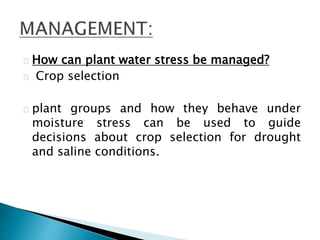
How can plant water stress be managed? 
Crop selection 
plant groups and how they behave under 
moisture stress can be used to guide 
decisions about crop selection for drought 
and saline conditions.
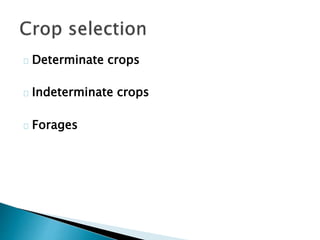
Determinate crops 
Indeterminate crops 
Forages
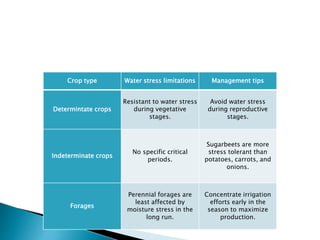
Crop type Water stress limitations Management tips 
Table. Crop selection for water stress management. 
Determintate crops 
Resistant to water stress 
during vegetative 
stages. 
Avoid water stress 
during reproductive 
stages. 
Indeterminate crops 
No specific critical 
periods. 
Sugarbeets are more 
stress tolerant than 
potatoes, carrots, and 
onions. 
Forages 
Perennial forages are 
least affected by 
moisture stress in the 
long run. 
Concentrate irrigation 
efforts early in the 
season to maximize 
production.
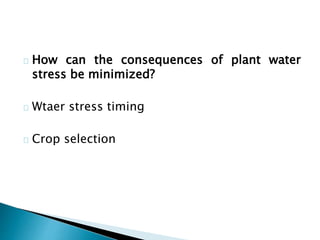
How can the consequences of plant water 
stress be minimized? 
Wtaer stress timing 
Crop selection
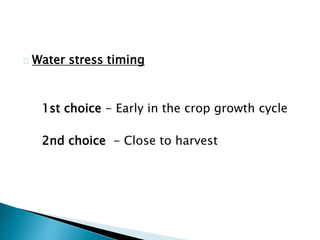
Water stress timing 
1st choice - Early in the crop growth cycle 
2nd choice - Close to harvest
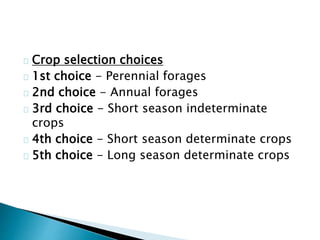
Crop selection choices 
1st choice - Perennial forages 
2nd choice - Annual forages 
3rd choice - Short season indeterminate 
crops 
4th choice - Short season determinate crops 
5th choice - Long season determinate crops

Moisture extremes, A-biotic stresses in plants.

  • 1.
  • 2.
    ZOHAIB UL HASSAN email: zuhaib1144@gmail.com PLANT PATHOLOGY University College of Agriculture , University of Sargodha, Pakistan.
  • 3.
    Water is animportant requirement for growth and survival of plants. The plant's physiology and biochemistry are affected . Both water deficiency and excess can cause injury to plants. . Sometimes the injury is short-lived (acute; several hours) or long-lived (chronic; days or weeks).
  • 4.
    Diagnosis of waterstatus problems can be difficult. Symptoms confused with injury from salts or herbicide etc. Certain infectious diseases such as root-rot (e.g., Phytophthora spp.) and vascular wilt (e.g., Ophiostoma ulmi) also cause similar symptoms such as wilting. A soil test might be necessary .
  • 5.
    If soil appearsto be excessively wet, is discolored, or smells strongly of rotten eggs, water drainage in the area should be addressed. Plant samples should be collected and sent to a reputable diagnostic lab for analysis.
  • 6.
    occur either asa short-term or chronic deficiency. SHORT- TERM: A short-term deficit of water might result in only minor effects on the plant such as wilted leaves or shoots .
  • 7.
    These symptoms maybe temporary and occur during the warmest part of the day when transpiration rates are highest. Once the environmental stresses are relieved the symptoms of low water status may disappear.
  • 9.
    CHRONIC PERIOD: Duringchronic periods of water deficit, the injury sustained by plants may be more severe. Plants may grow more slowly or not at all. young leaves may not fully expand. foliage may not appear as colorful relative to foliage. In severe cases "scorching" or marginal leaf necrosis can occur on deciduous trees. needle necrosis can occur on conifers.
  • 11.
    During winter monthswhen rain or snowfall might be scarce, plant roots may not be able to absorb water. The result is winter desiccation, in which the foliage might appear off-color, "scorched", or necrotic .
  • 13.
    Excessive soil moisturecan result in reduced oxygen availability to roots. primary symptom of flooding is plant wilt. excess soil moisture can manifest as acute or chronic.
  • 14.
    roots are subjectedto low oxygen status and cell weakening and/or death occurs. Symptoms include discolored and/or water-soaked and mushy roots. Way of entry for different pathogens like Phytophthora spp. , anaerobic and low-oxygen conditions can be detrimental to nematode populations.
  • 15.
    plants appear stuntedand have underdeveloped shoots. In severe cases bleeding cankers on stems can occur. Adventitious roots may form at the root crown. Edema or corky, blister-like swelling can occur on the underside of leaves on plants growing in waterlogged soils.
  • 16.
    . Edema canbe worse during cloudy, overcast periods. In areas where waterlogged soils prevail for long periods of time, an odor of rotten eggs may be noticeable, due to sulfur gas production in the anaerobic soil.
  • 17.
    How can plantwater stress be managed? Crop selection plant groups and how they behave under moisture stress can be used to guide decisions about crop selection for drought and saline conditions.
  • 18.
  • 19.
    Crop type Waterstress limitations Management tips Table. Crop selection for water stress management. Determintate crops Resistant to water stress during vegetative stages. Avoid water stress during reproductive stages. Indeterminate crops No specific critical periods. Sugarbeets are more stress tolerant than potatoes, carrots, and onions. Forages Perennial forages are least affected by moisture stress in the long run. Concentrate irrigation efforts early in the season to maximize production.
  • 20.
    How can theconsequences of plant water stress be minimized? Wtaer stress timing Crop selection
  • 21.
    Water stress timing 1st choice - Early in the crop growth cycle 2nd choice - Close to harvest
  • 22.
    Crop selection choices 1st choice - Perennial forages 2nd choice - Annual forages 3rd choice - Short season indeterminate crops 4th choice - Short season determinate crops 5th choice - Long season determinate crops