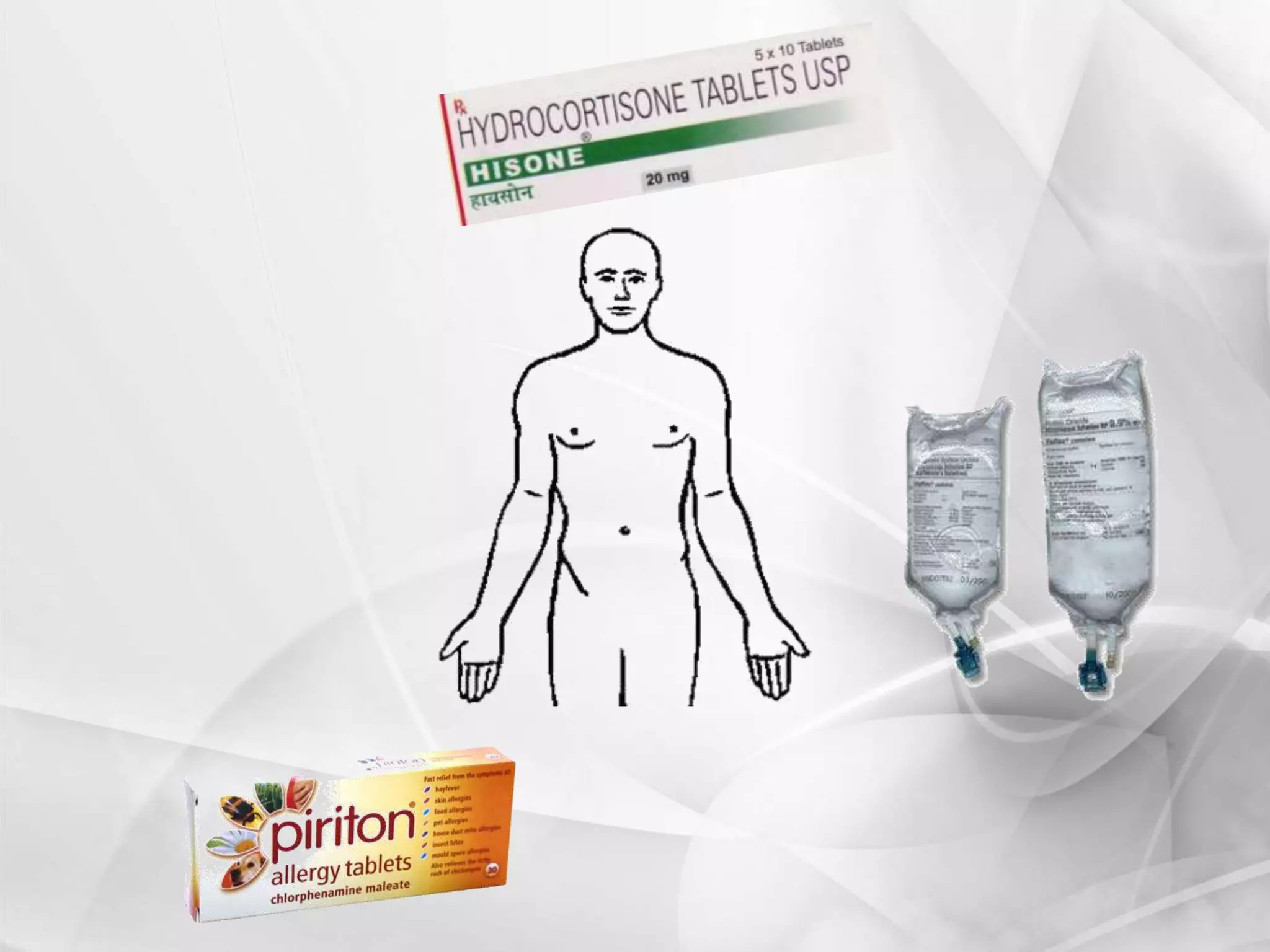
Allergies and anaphylaxis
By Ben Green
Instructions
 You must complete the first section
 Please click the  arrows to advance
 Click the  arrows to return to the menu
 Choose additional topics from the menu
Anaphylaxis
Basic science
Anaphylaxis
 Type 1 hypersensitivity reaction
 Sudden onset immunological reaction
 Following sensitisation to an allergen
 Often following the 3rd exposure
 Mediated by IgE
Immunoglobulin E (IgE)
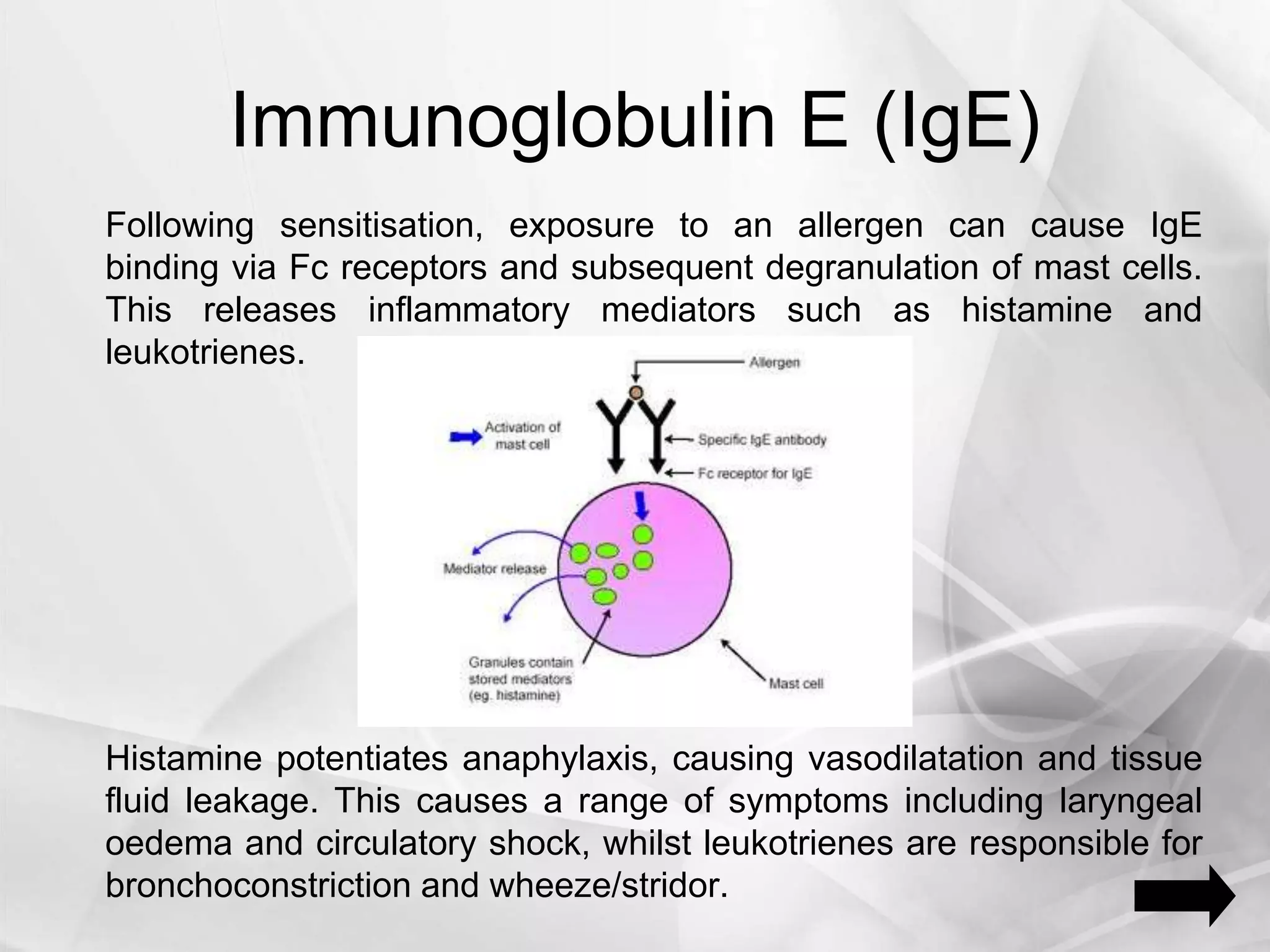
Following sensitisation, exposure to an allergen can cause IgE
binding via Fc receptors and subsequent degranulation of mast cells.
This releases inflammatory mediators such as histamine and
leukotrienes.
Histamine potentiates anaphylaxis, causing vasodilatation and tissue
fluid leakage. This causes a range of symptoms including laryngeal
oedema and circulatory shock, whilst leukotrienes are responsible for
bronchoconstriction and wheeze/stridor.
Recognising
anaphylaxis
Picture Quiz
a
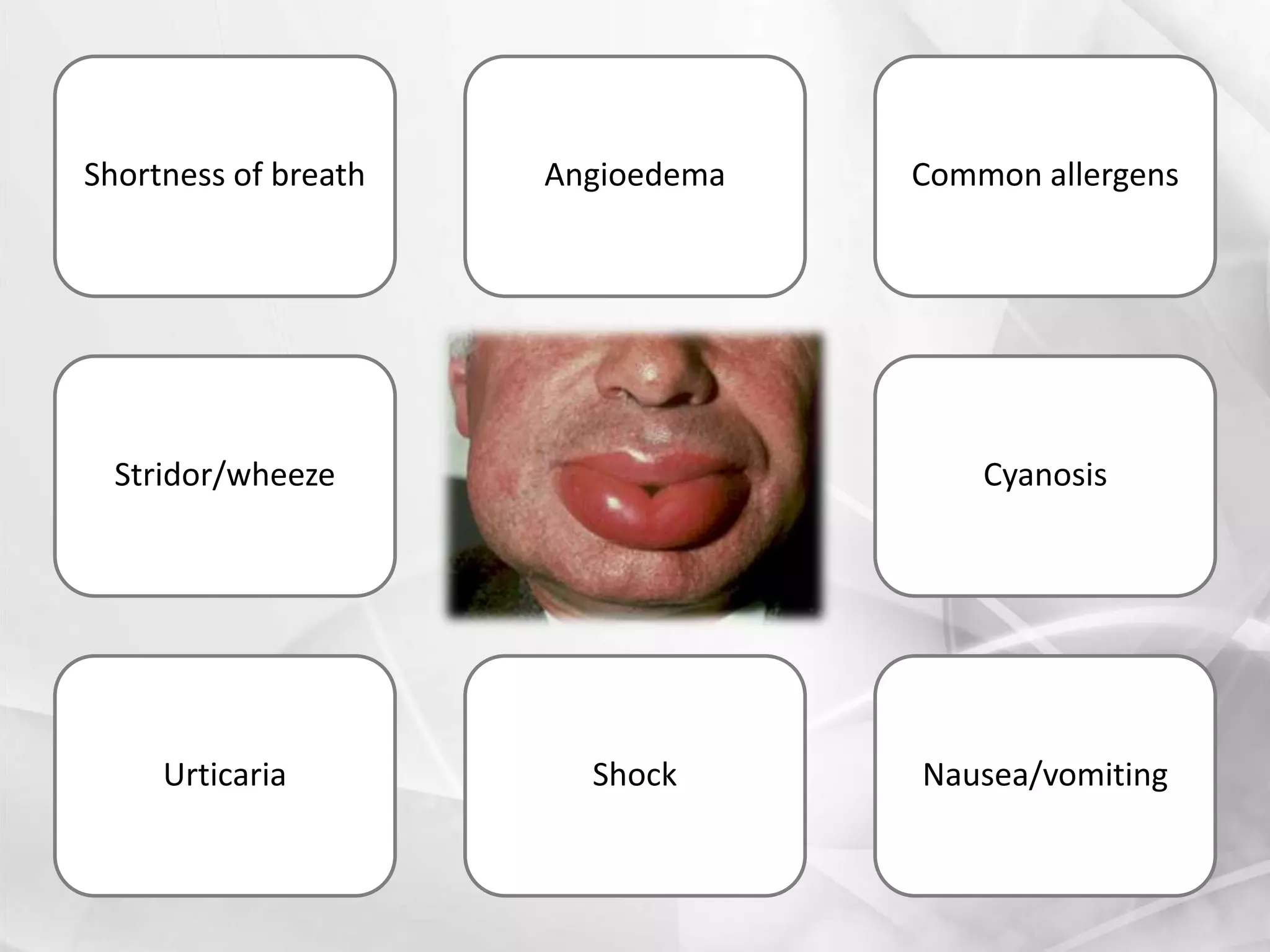
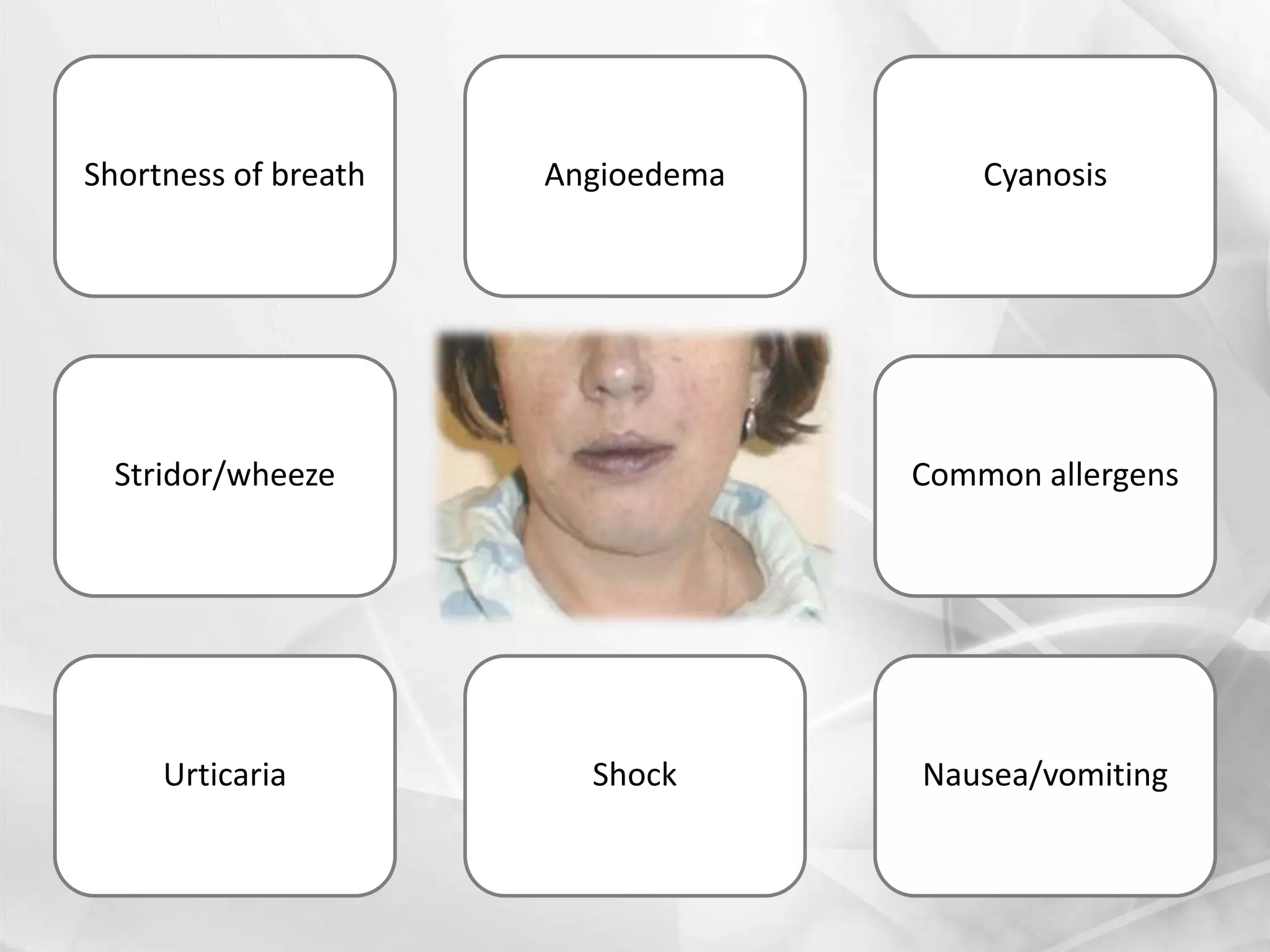
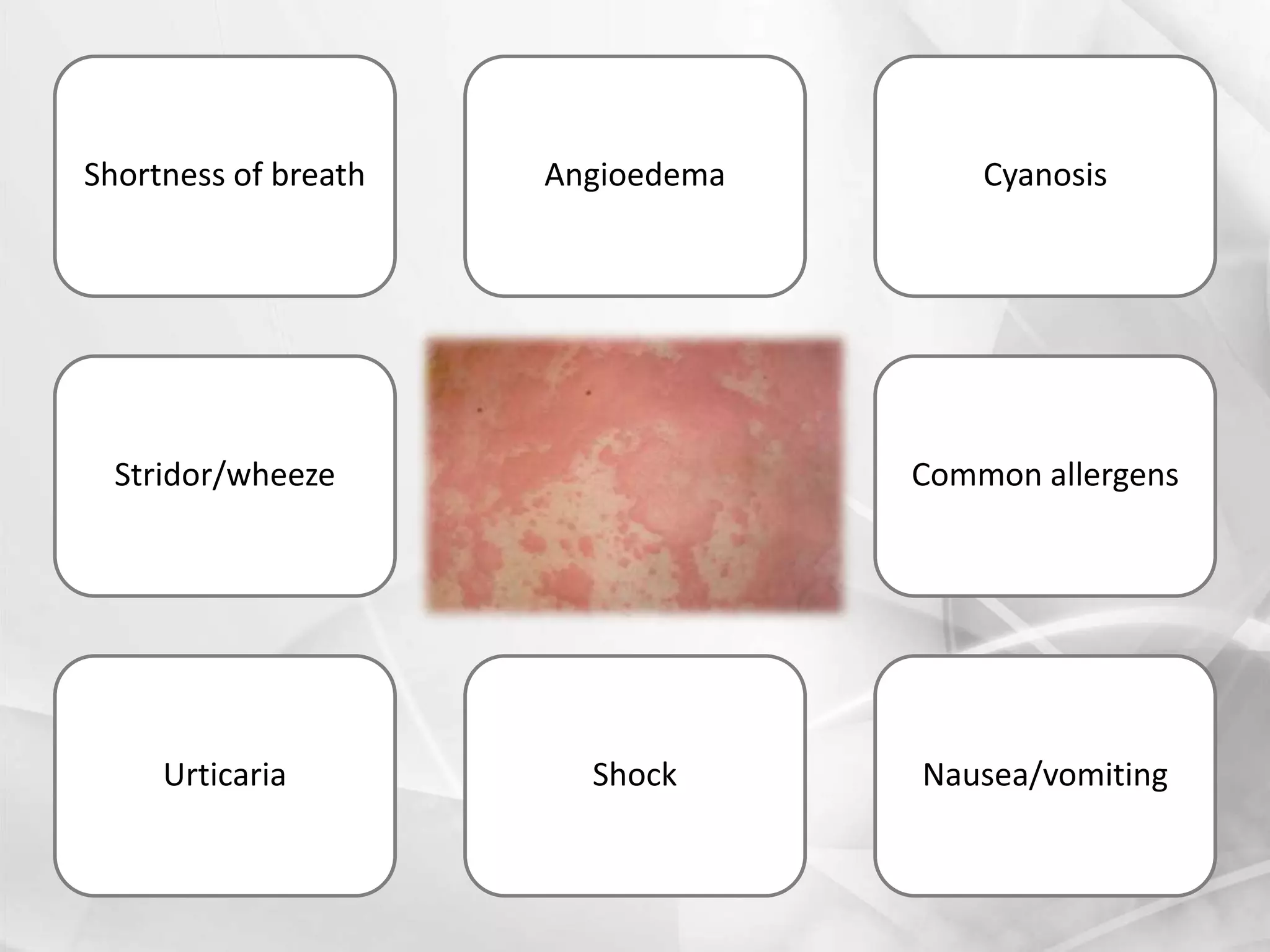
The following slides list common symptoms
of anaphylaxis!
Select the tab that matches the picture in
order to advance!
Stridor/wheeze
Nausea/vomiting
AngioedemaShortness of breath
Cyanosis
ShockUrticaria
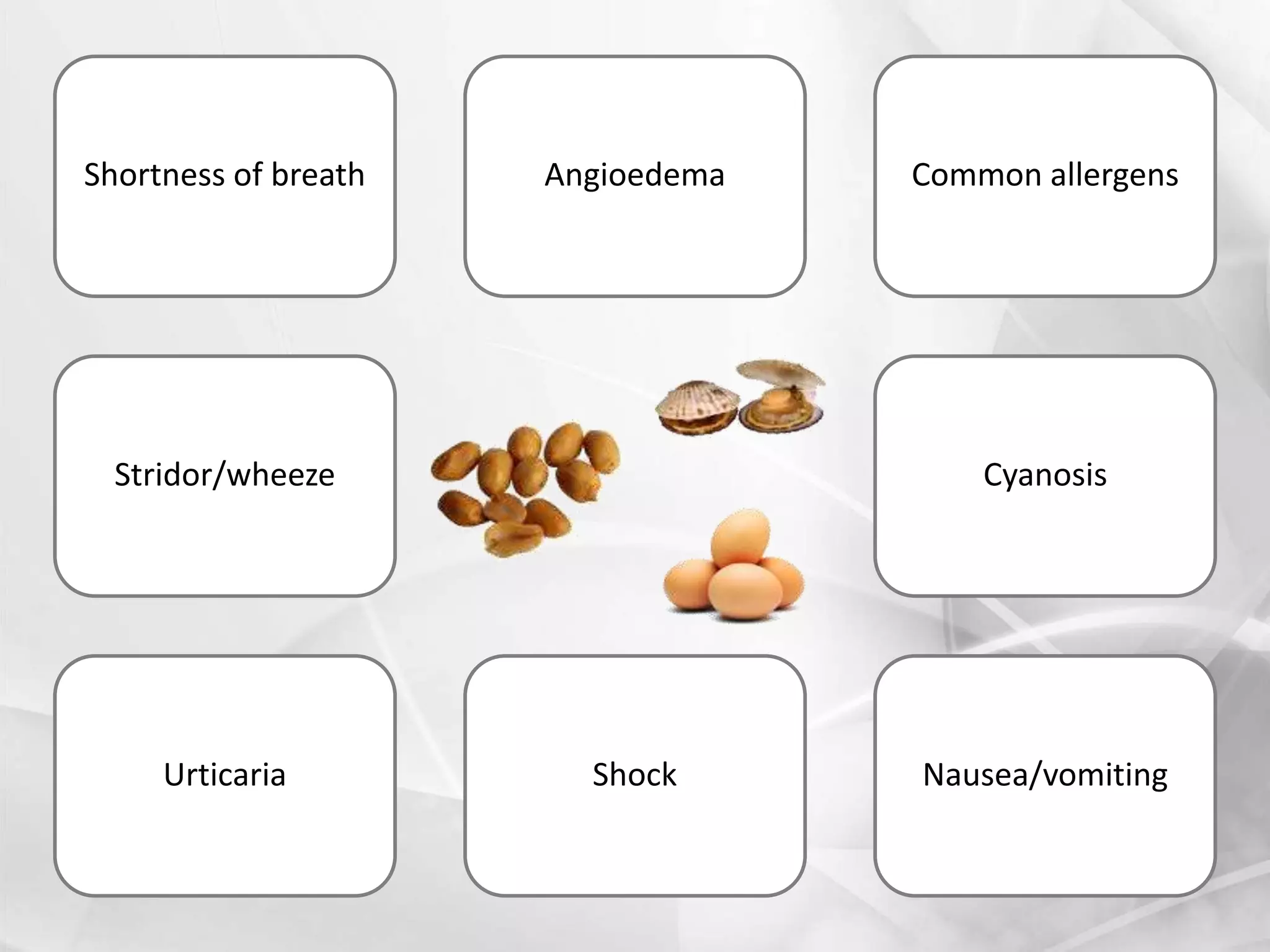
Common allergens
Stridor/wheeze
Nausea/vomiting
Shortness of breath
Cyanosis
ShockUrticaria
Common allergensAngioedema
Nausea/vomiting
Shortness of breath
Cyanosis
ShockUrticaria
Common allergensAngioedema
Stridor/wheeze
Stridor/wheeze
Nausea/vomiting
AngioedemaShortness of breath
Common allergens
ShockUrticaria
Cyanosis
Stridor/wheeze
Nausea/vomiting
AngioedemaShortness of breath
Common allergens
Shock
Cyanosis
Urticaria
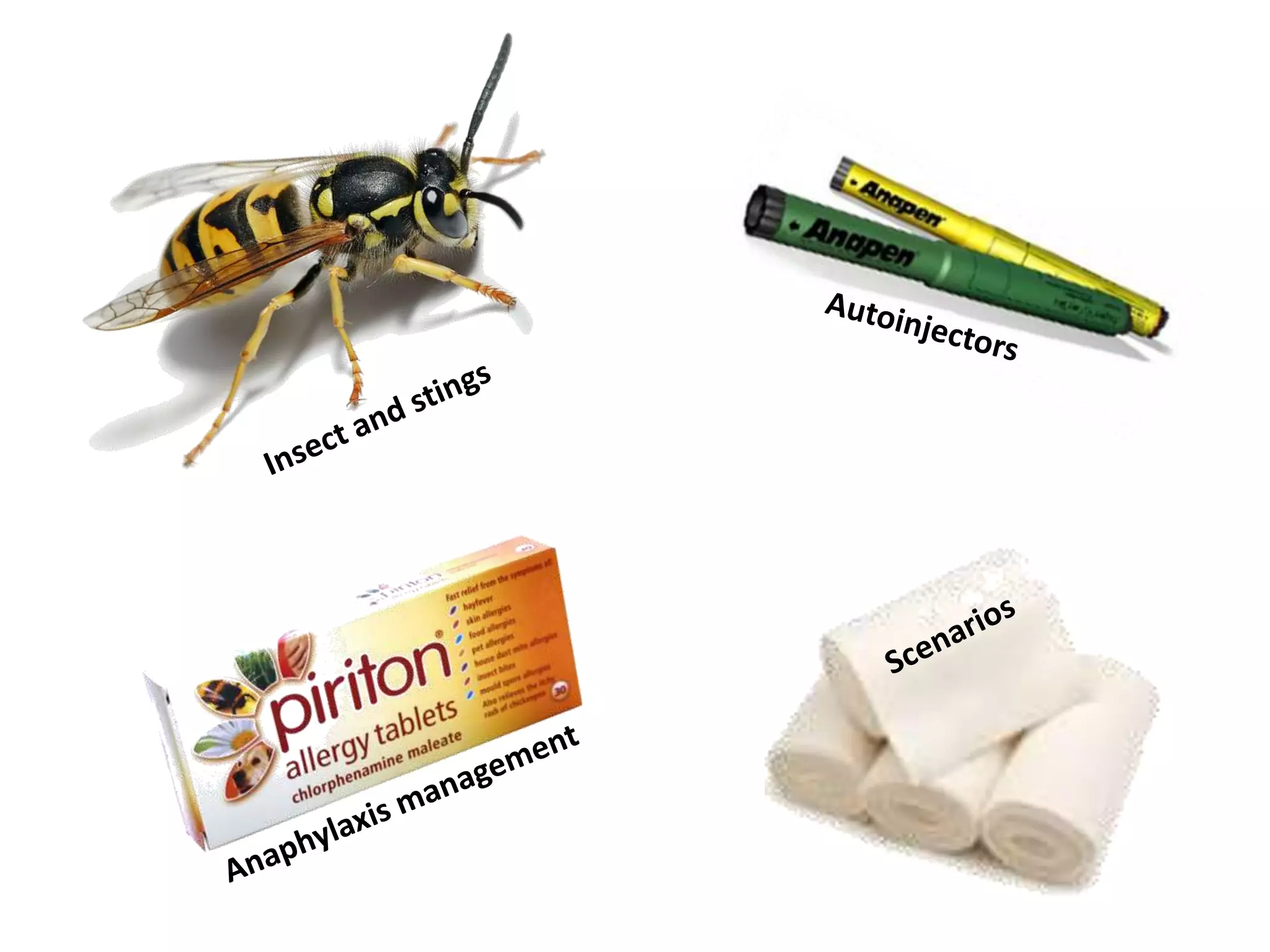
Insects and stings
Insects and stings
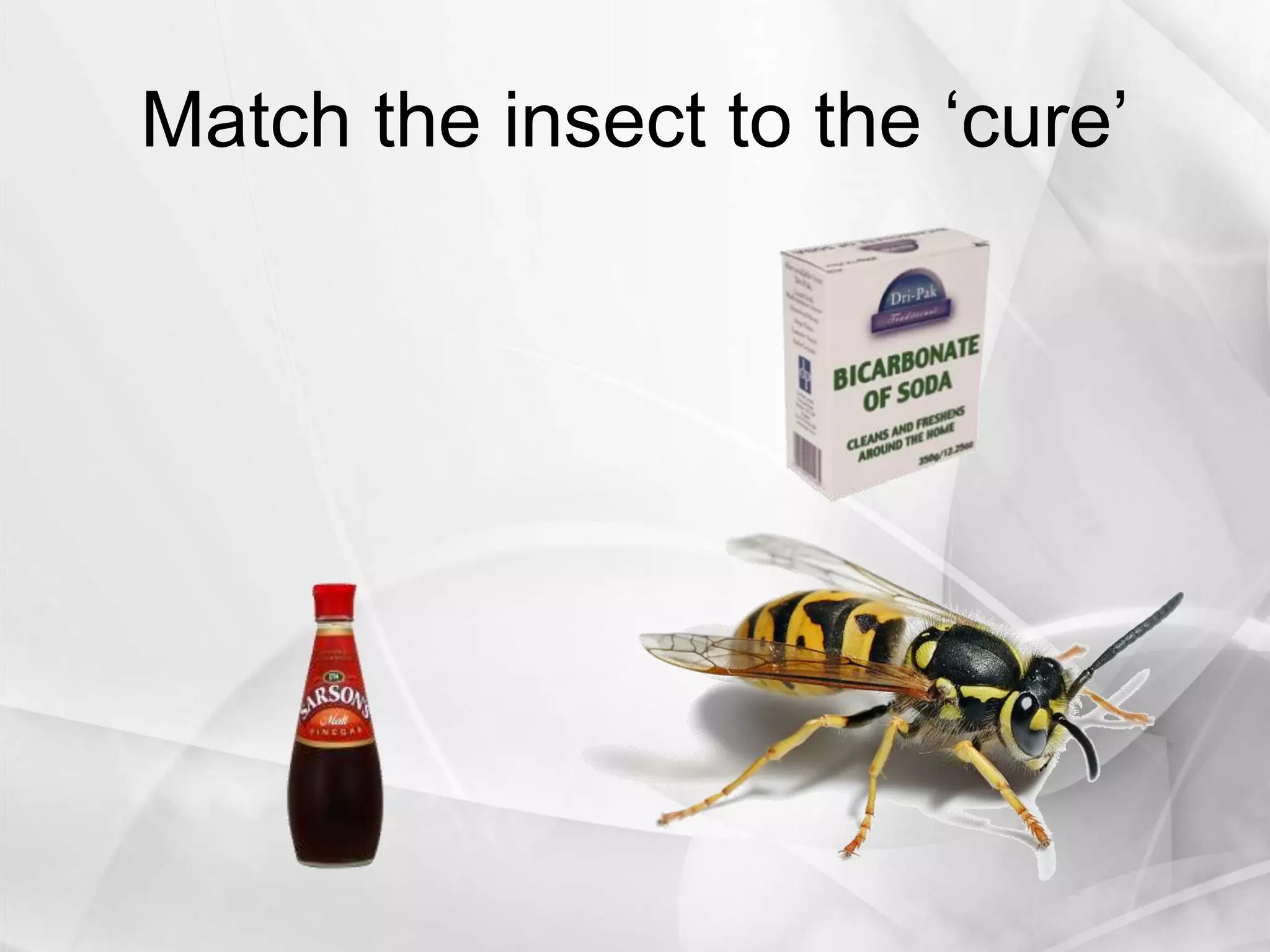
Wasp stings
The wasp sting is easy to
insert, and easy to come out
 Delivers 2-15mcg venom
Alkaline
Treatment
 Remove sting
 Elevation
 Ice
Insects and stings
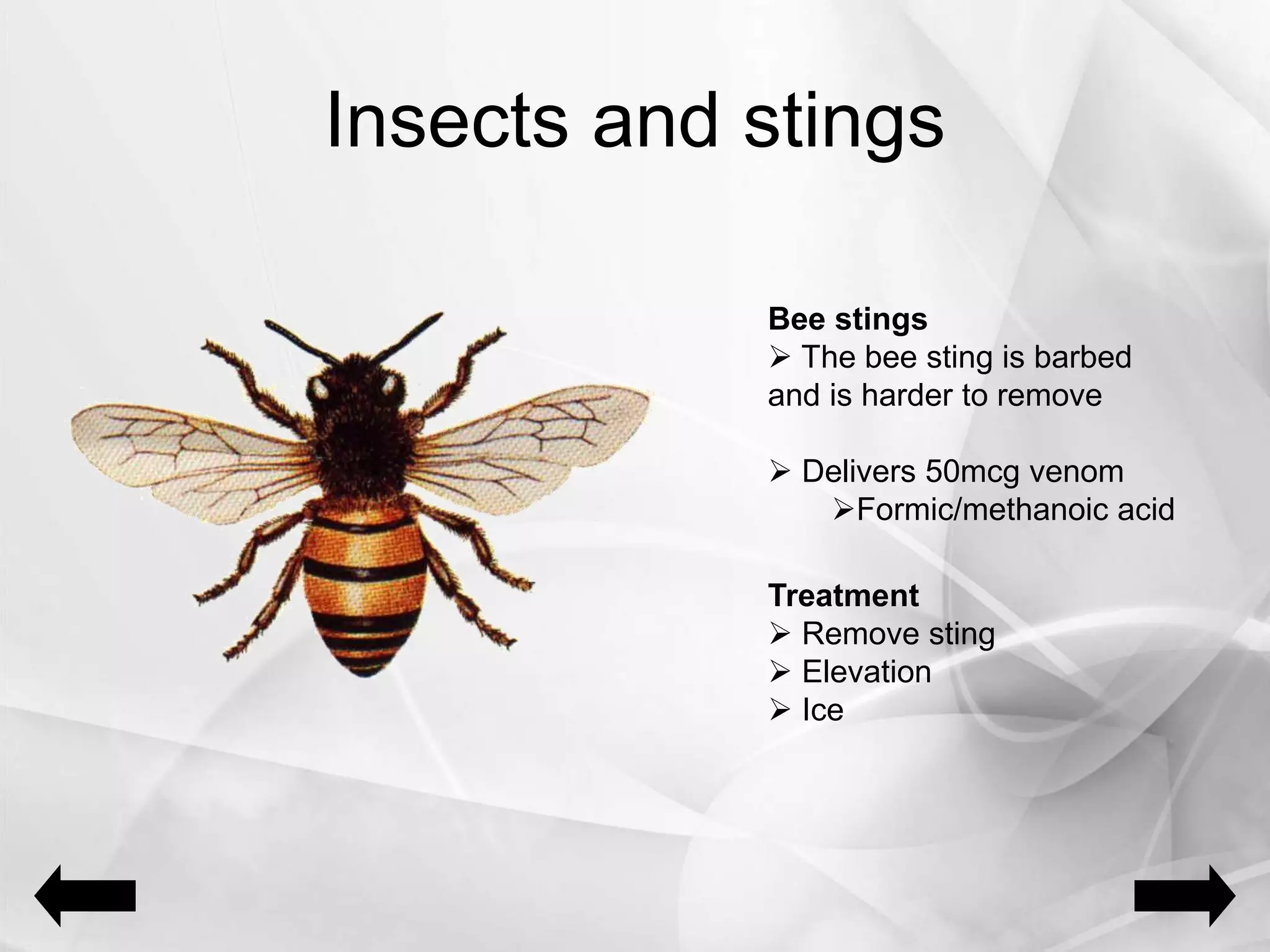
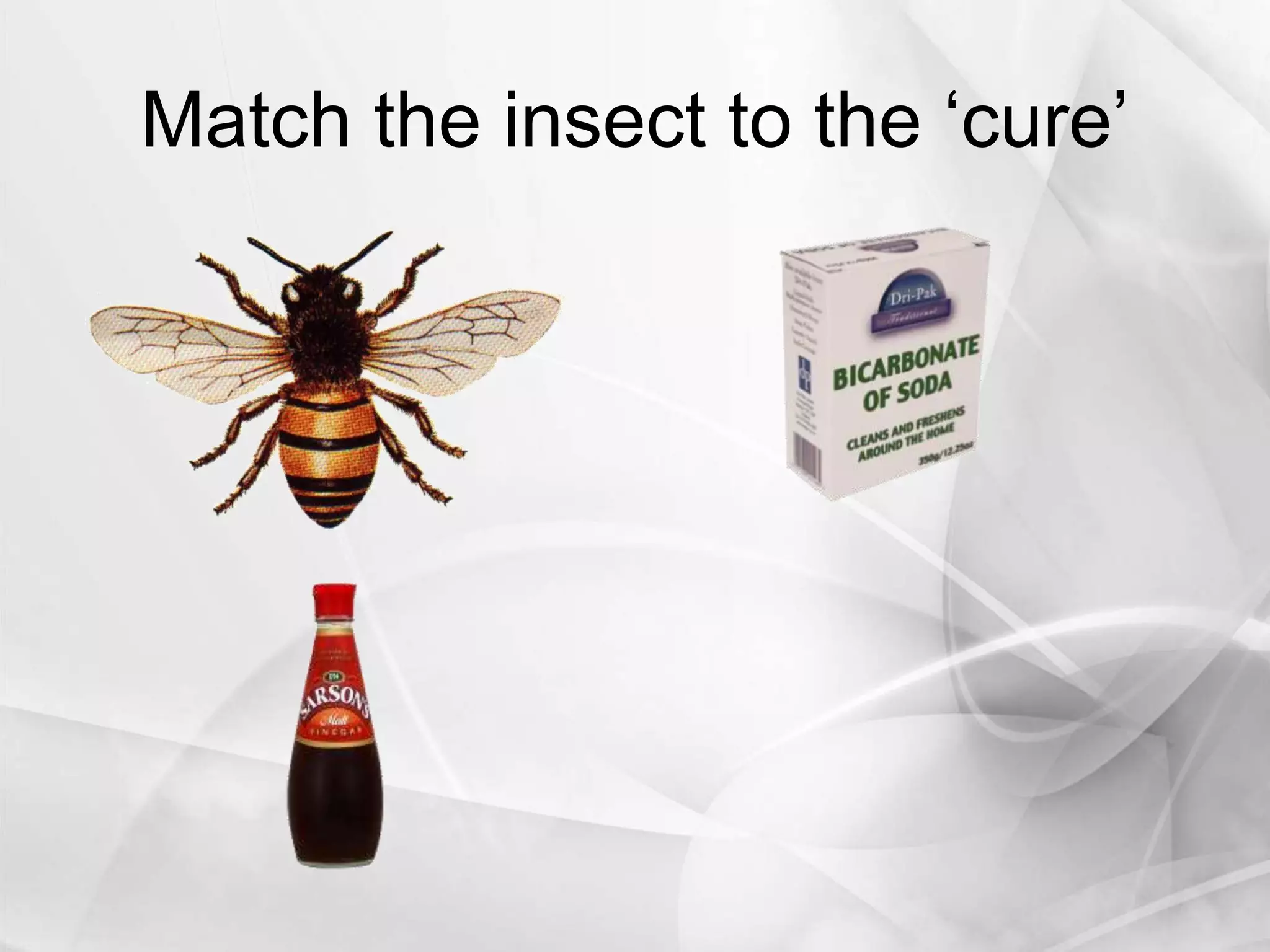
Bee stings
 The bee sting is barbed
and is harder to remove
 Delivers 50mcg venom
Formic/methanoic acid
Treatment
 Remove sting
 Elevation
 Ice
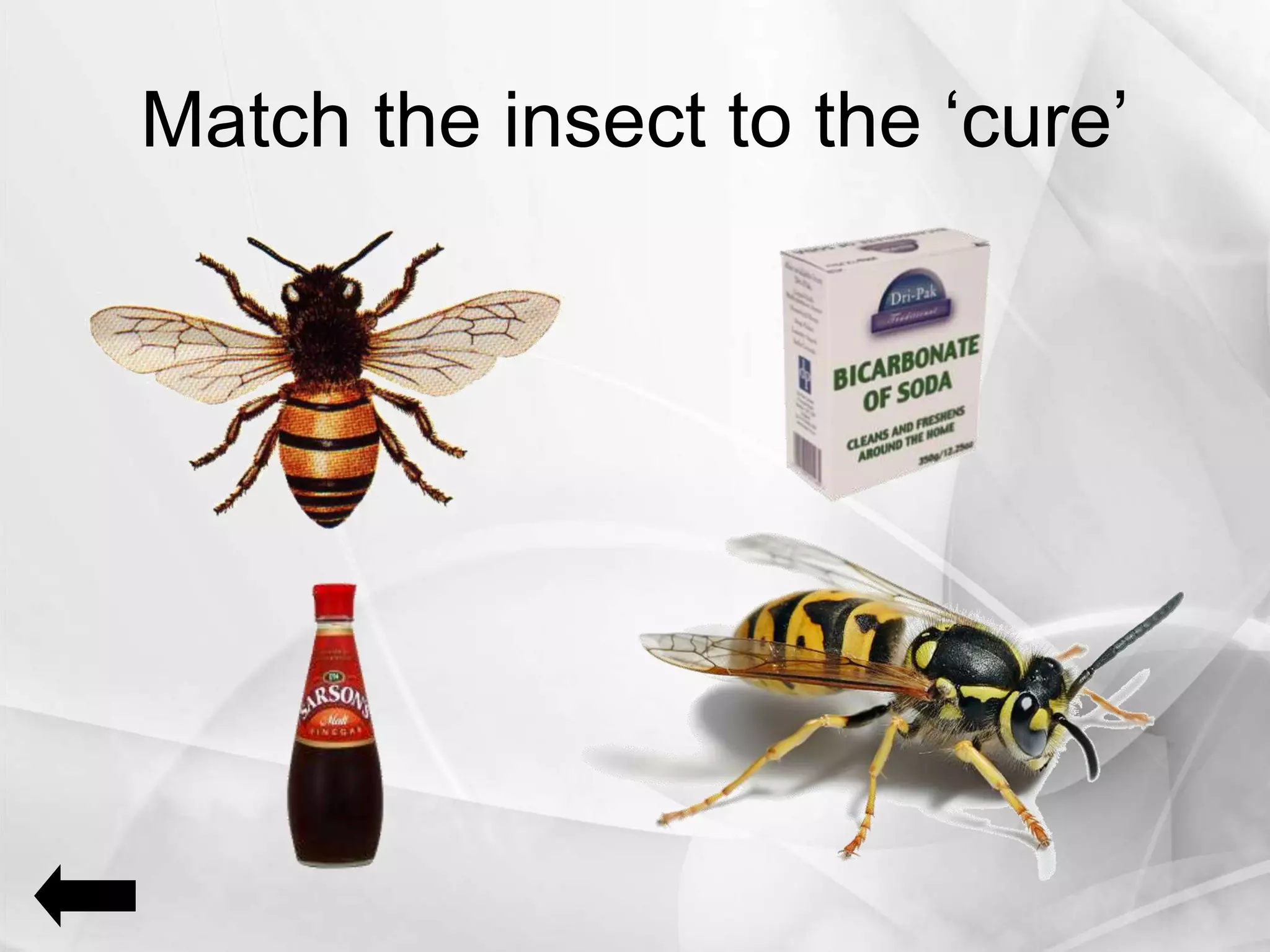
Match the insect to the ‘cure’
Bicarbonate for Bees
Match the insect to the ‘cure’
Vinegar for Vasps
Management of
anaphylaxis
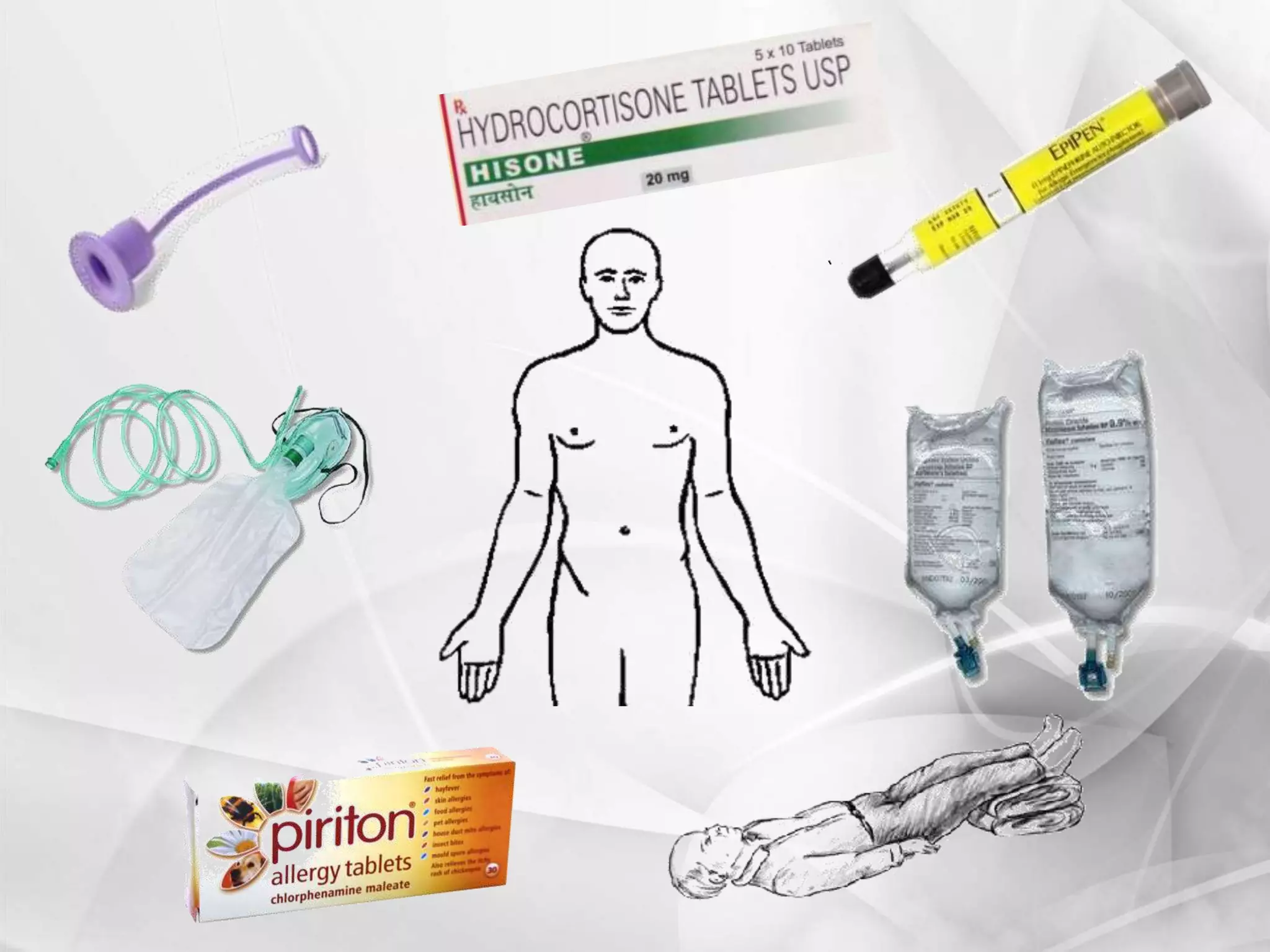
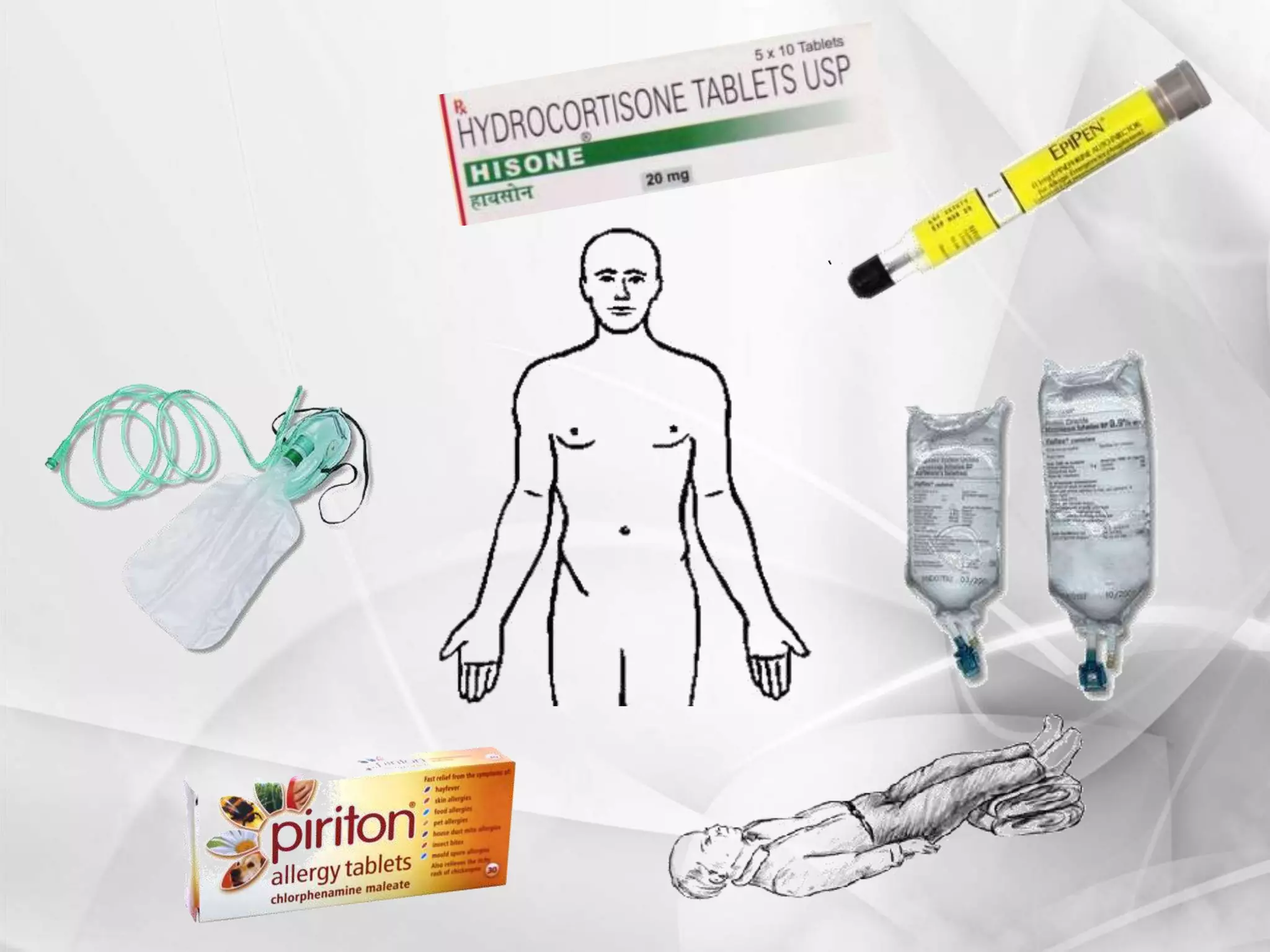
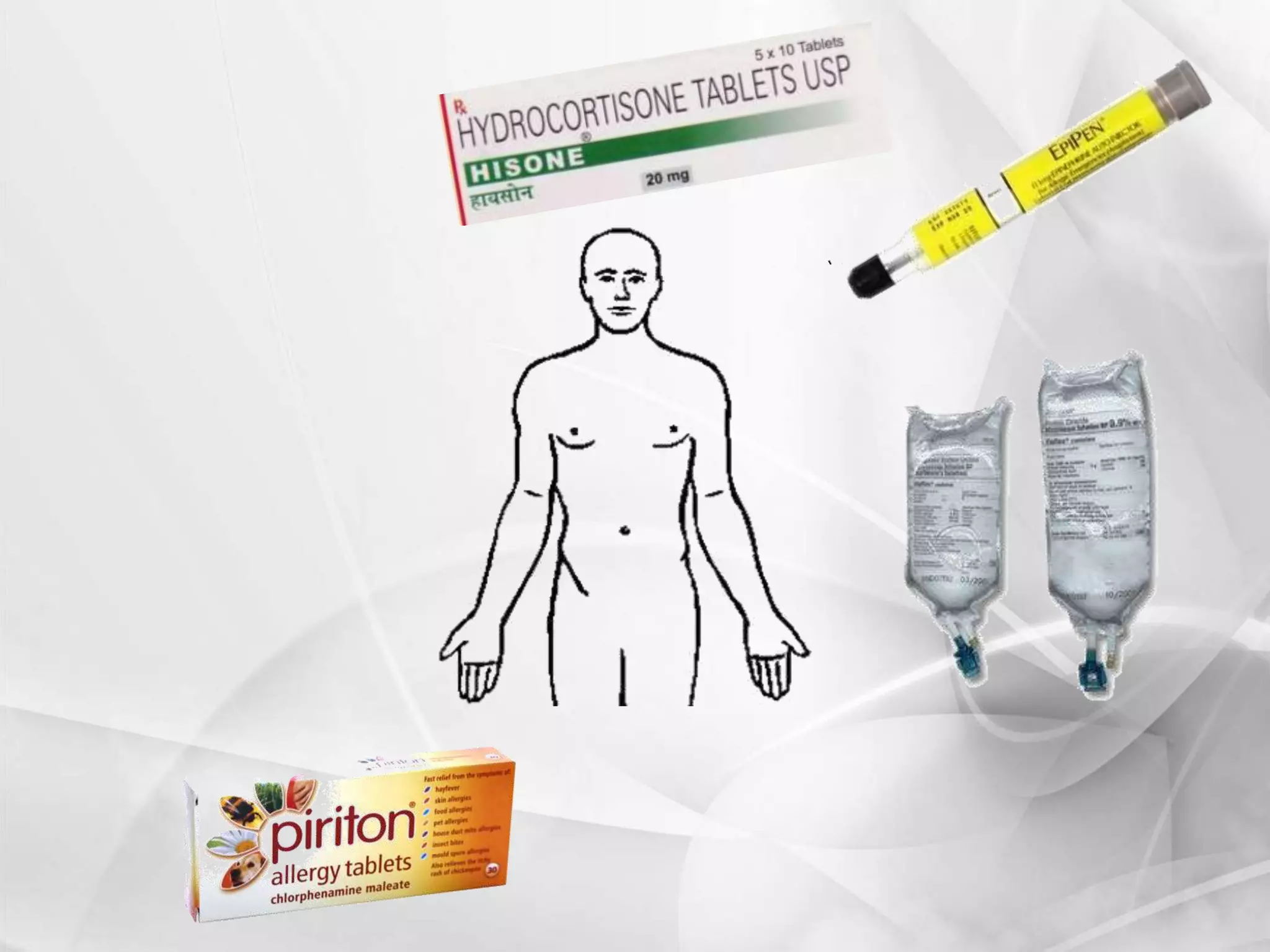
Your patient is unconscious following an
anaphylactic reaction!
Select the correct order of treatment!
A wrong move returns you to the start!
Well done!
Having successfully treated your patient you
decide to review the anaphylaxis guidelines to
make sure your treatment was correct!
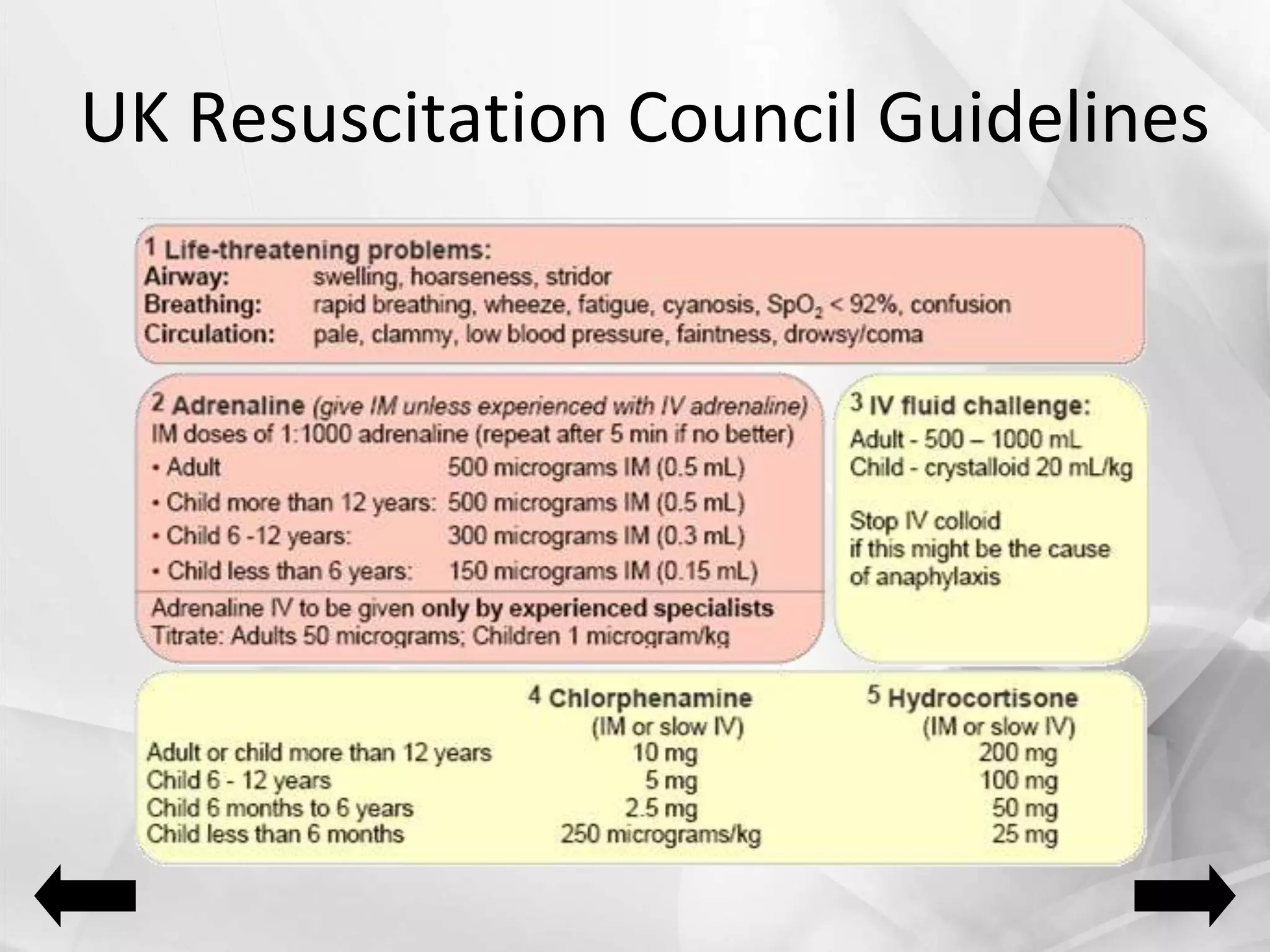
UK Resuscitation Council Guidelines
Autoinjectors
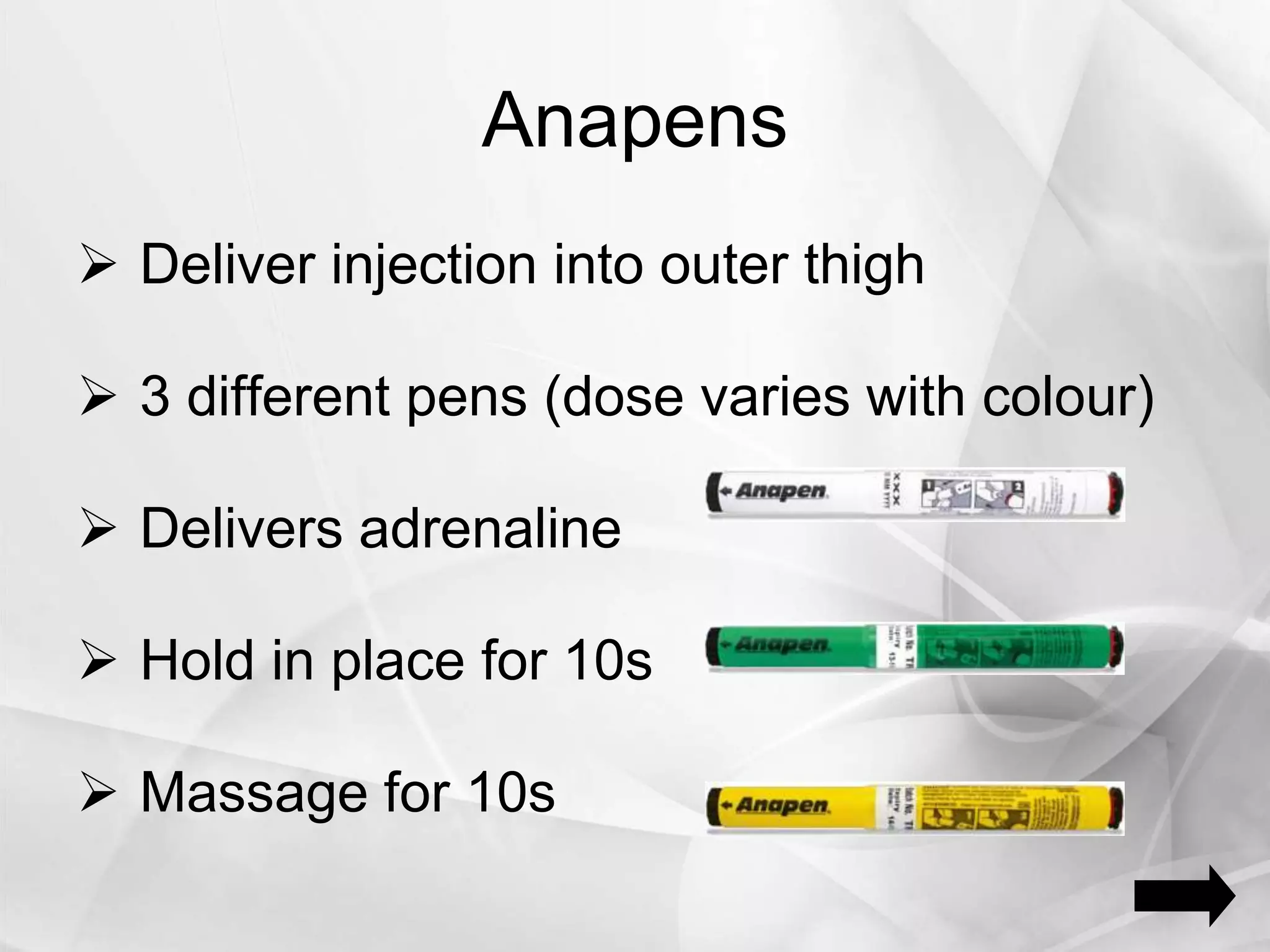
Anapens
 Deliver injection into outer thigh
 3 different pens (dose varies with colour)
 Delivers adrenaline
 Hold in place for 10s
 Massage for 10s
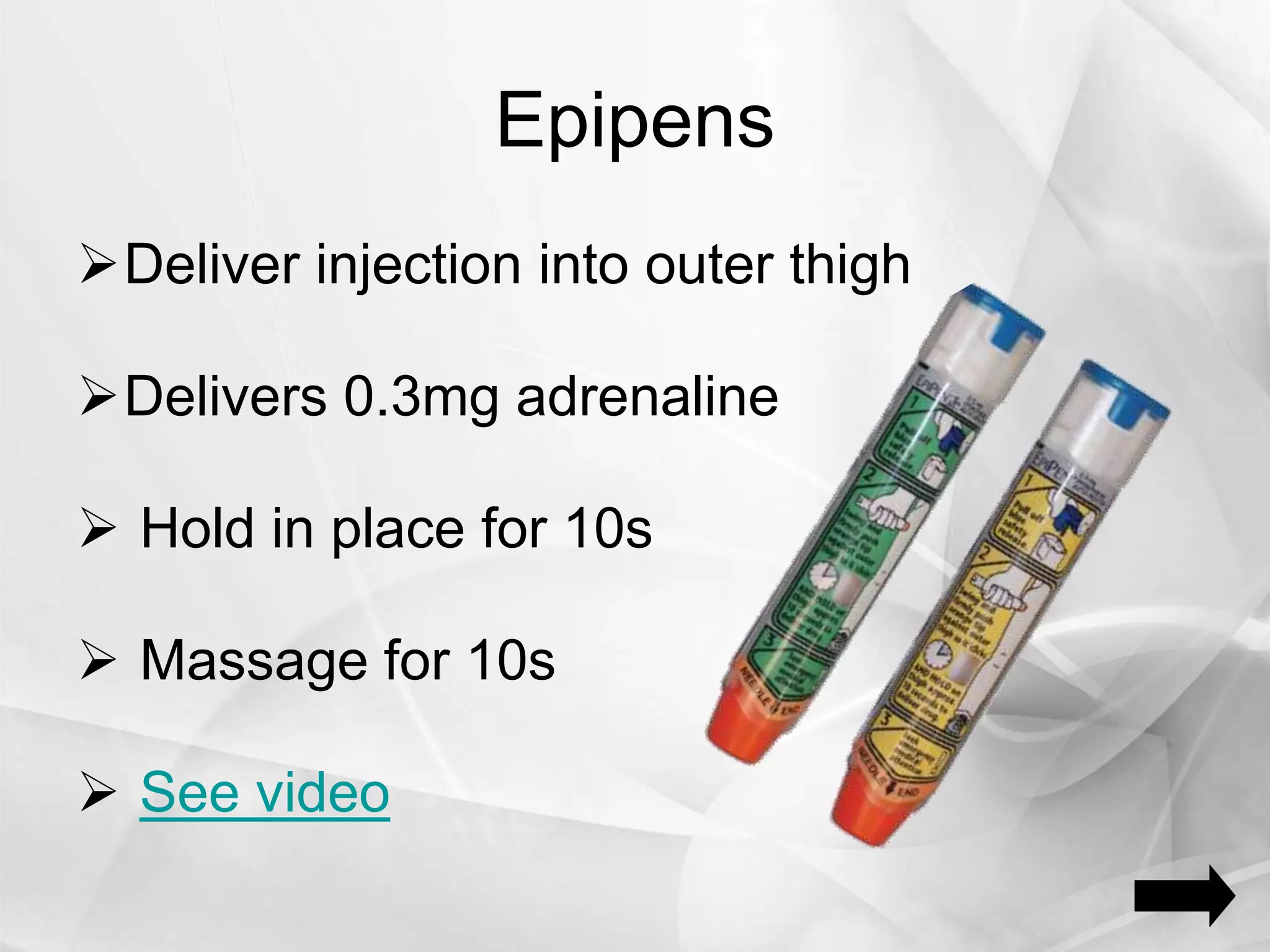
Epipens
Deliver injection into outer thigh
Delivers 0.3mg adrenaline
 Hold in place for 10s
 Massage for 10s
 See video
Adrenaline and
autoinjectors
True or false
Correctly answer a question to advance!
Adrenaline and autoinjectors
Adrenaline targets both alpha and beta
adrenergic receptors!
FalseTrue
Adrenaline and autoinjectors
You must remove clothing and expose the
skin before using the autoinjector!
True False
Adrenaline and autoinjectors
Adrenaline treats shock by causing
peripheral vasoconstriction!
FalseTrue
Scenarios
Split into pairs
1 member wait outside the room…
Scenario 1 Scenario 2
Scenario 1
Information for patient...
 You are complaining of nausea and light
headedness (pass out after a minute or so)
 A – NKDA
 M – salbutamol inhaler
 P – asthma
 L – scallops for starter
 E – at a restaurant
Scenario 1
Information for first aiders...
The casualty is looking pale and clammy
Upon examination has a weak rapid pulse
Scenario 2
Information for patient...
 Act slightly confused and complain of chest
tightness (remain conscious throughout)
 A – peanuts
 M – you have an epipen in your pocket
 P – none
 L – just eaten curry (unsure what was in it)
 E – at a friends house for dinner
Scenario 2
Information for first aiders...
You notice swelling around the patients
face and lips
You notice the patient looks very flushed

Allergies and anaphylaxis