VASHI NARULA
(final year)
 Emergency – An unforeseen occurrence
or combination of circumstances that calls
for immediate action or remedy - Mosby’s
 Drug – Any substance or product that is
used or is intended to be used to modify
or explore physiological system or
pathological states for the benefit of the
recipient - W.H.O
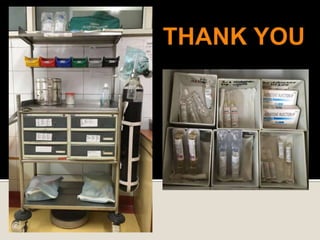
 Large kit in mobile tool cabinets with
several compartments
 Labels should be applied to each
compartment in which drug is stored,
listing the drug’s generic and proprietary
names, dosage, indication and expiry date
to avoid possible confusion during
emergency.
 Expired drugs and empty O2 cylinders are
ineffective
 Drug should be replaced prior to expiry
date.
 An office staff member should be
assigned to check the emergency drug kit
at least once a week
THE KISS PRINCIPLE
Complexity in a
time of adversity
breeds chaos
-PALLASCH(1976)
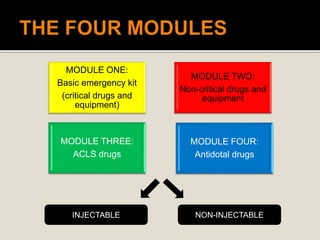
MODULE ONE:
Basic emergency kit
(critical drugs and
equipment)
MODULE TWO:
Non-critical drugs and
equipment
MODULE THREE:
ACLS drugs
MODULE FOUR:
Antidotal drugs
INJECTABLE NON-INJECTABLE
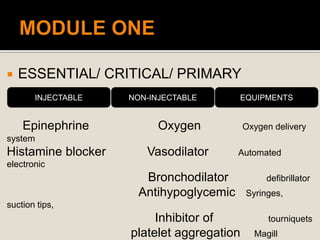
 ESSENTIAL/ CRITICAL/ PRIMARY
Epinephrine Oxygen Oxygen delivery
system
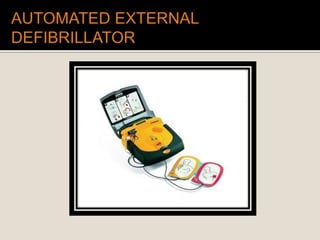
Histamine blocker Vasodilator Automated
electronic
Bronchodilator defibrillator
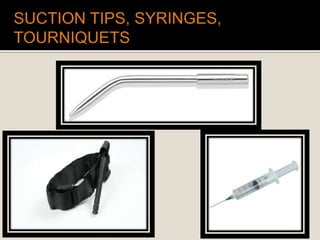
Antihypoglycemic Syringes,
suction tips,
Inhibitor of tourniquets
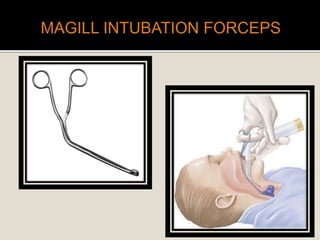
platelet aggregation Magill
INJECTABLE NON-INJECTABLE EQUIPMENTS
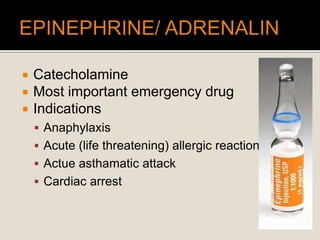
 Catecholamine
 Most important emergency drug
 Indications
 Anaphylaxis
 Acute (life threatening) allergic reactions
 Actue asthamatic attack
 Cardiac arrest
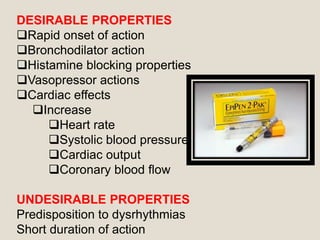
DESIRABLE PROPERTIES
Rapid onset of action
Bronchodilator action
Histamine blocking properties
Vasopressor actions
Cardiac effects
Increase
Heart rate
Systolic blood pressure
Cardiac output
Coronary blood flow
UNDESIRABLE PROPERTIES
Predisposition to dysrhythmias
Short duration of action
DOSE AND ADMINISTRATION
I.M. Or S.C. - 1:1000 concentration In dose of
0.3-0.5 mg for 30 kg or greater patients.
0.15mg for patients who weigh less than 30kg is
recommended
 Preloaded auto injectors are preferred- Ana
Guard, Epipen, Epipen Jr, Auvi Q
 Intravenous- 1:10,000- m/m of cardiac arrest
In Pregnancy-decrease placental blood flow and can
induce premature labor
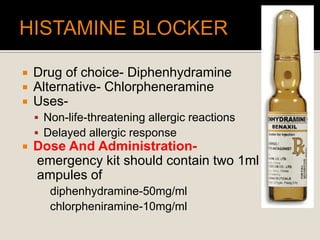
 Drug of choice- Diphenhydramine
 Alternative- Chlorpheneramine
 Uses-
 Non-life-threatening allergic reactions
 Delayed allergic response
 Dose And Administration-
emergency kit should contain two 1ml
ampules of
diphenhydramine-50mg/ml
chlorpheniramine-10mg/ml
 Side effects
 CNS depression (sedation, drowsiness)
Avoid operating motor vehicle and use of
dangerous machinery
 Decrease blood pressure
 Thickened bronchial secretions therefore
contraindicated in acute asthmatic episodes
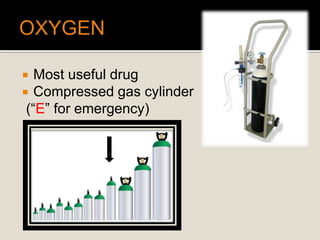
 Most useful drug
 Compressed gas cylinder
(“E” for emergency)
 CONTRAINDICATION-
Management of hyperventilation
Chronic Obstructive Pulmonary Disease
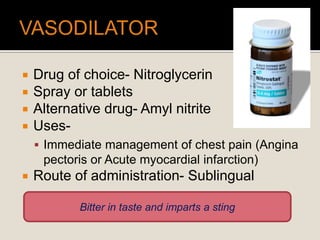
 Drug of choice- Nitroglycerin
 Spray or tablets
 Alternative drug- Amyl nitrite
 Uses-
 Immediate management of chest pain (Angina
pectoris or Acute myocardial infarction)
 Route of administration- Sublingual
Bitter in taste and imparts a sting
 Side effect
 pulsatile headache
 flushing, weakness
 sweating
 palpitation
 fainting , hypotension
 Precaution
 Rest in supine or sitting position
 Monitor B.P.
 Contraindication in hypotensive state
 Sublingual tablet - 0.4 mg
(not more than 3 tablets in 15 min)
 Translingual spray- 0.4-0.8 mg
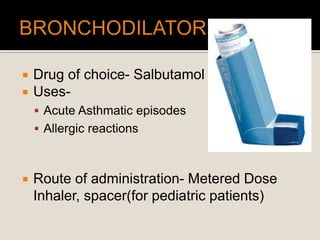
 Drug of choice- Salbutamol
 Uses-
 Acute Asthmatic episodes
 Allergic reactions
 Route of administration- Metered Dose
Inhaler, spacer(for pediatric patients)
 Produces bronchodilatation within 5 min
and last for 2-4 hours
 one or two inhalations every 4-6 hours is
recommended dosage
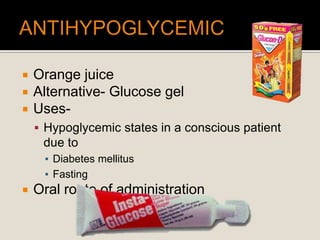
 Orange juice
 Alternative- Glucose gel
 Uses-
 Hypoglycemic states in a conscious patient
due to
▪ Diabetes mellitus
▪ Fasting
 Oral route of administration
 Drug of choice- Aspirin
 Alternative drug- Clopidogrel
 Oral route of administration
 Uses-
 Acute myocardial infarction
 Unstable angina
 Contraindications
 Major life threatening haemorrhage
 Recent bleeding peptic ulcer
 Allergy to aspirin
 Standard dose – 160-325mg
 Emergency kit include powdered or
chewable aspirin (325 mg)
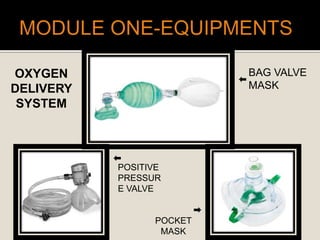
OXYGEN
DELIVERY
SYSTEM
BAG VALVE
MASK
POSITIVE
PRESSUR
E VALVE
POCKET
MASK
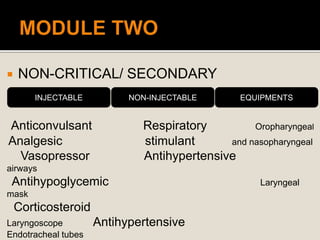
 NON-CRITICAL/ SECONDARY
Anticonvulsant Respiratory Oropharyngeal
Analgesic stimulant and nasopharyngeal
Vasopressor Antihypertensive
airways
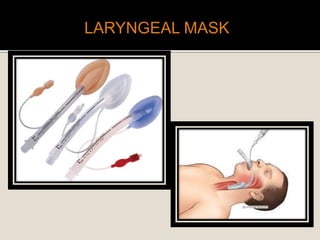
Antihypoglycemic Laryngeal
mask
Corticosteroid
Laryngoscope Antihypertensive
Endotracheal tubes
INJECTABLE NON-INJECTABLE EQUIPMENTS
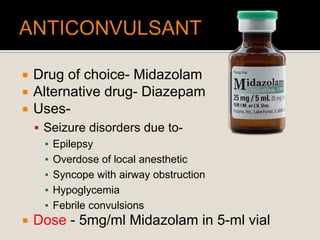
 Drug of choice- Midazolam
 Alternative drug- Diazepam
 Uses-
 Seizure disorders due to-
▪ Epilepsy
▪ Overdose of local anesthetic
▪ Syncope with airway obstruction
▪ Hypoglycemia
▪ Febrile convulsions
 Dose - 5mg/ml Midazolam in 5-ml vial
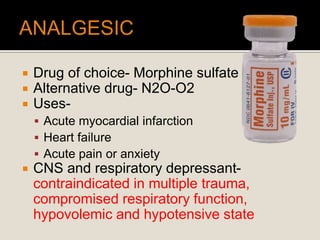
 Drug of choice- Morphine sulfate
 Alternative drug- N2O-O2
 Uses-
 Acute myocardial infarction
 Heart failure
 Acute pain or anxiety
 CNS and respiratory depressant-
contraindicated in multiple trauma,
compromised respiratory function,
hypovolemic and hypotensive state
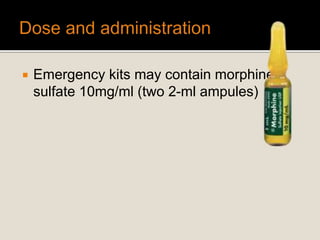
 Emergency kits may contain morphine
sulfate 10mg/ml (two 2-ml ampules)
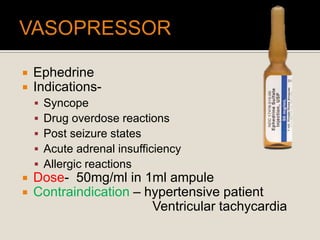
 Ephedrine
 Indications-
 Syncope
 Drug overdose reactions
 Post seizure states
 Acute adrenal insufficiency
 Allergic reactions
 Dose- 50mg/ml in 1ml ampule
 Contraindication – hypertensive patient
Ventricular tachycardia
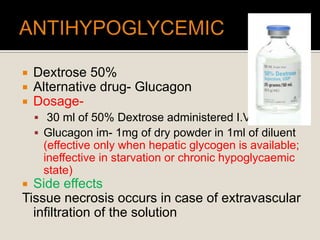
 Dextrose 50%
 Alternative drug- Glucagon
 Dosage-
 30 ml of 50% Dextrose administered I.V.
 Glucagon im- 1mg of dry powder in 1ml of diluent
(effective only when hepatic glycogen is available;
ineffective in starvation or chronic hypoglycaemic
state)
 Side effects
Tissue necrosis occurs in case of extravascular
infiltration of the solution
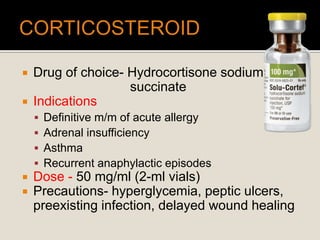
 Drug of choice- Hydrocortisone sodium
succinate
 Indications
 Definitive m/m of acute allergy
 Adrenal insufficiency
 Asthma
 Recurrent anaphylactic episodes
 Dose - 50 mg/ml (2-ml vials)
 Precautions- hyperglycemia, peptic ulcers,
preexisting infection, delayed wound healing
 Non specific anti inflammatory action
 Suppresses sign of inflammation by
reduction of increased capillary permeability,
local exudation, cellular infiltration
 Limitation of recruitment of inflammatory cells
at local site.
 Inhibit phospholipase A responsible for
release of arachidonic acid for PG and LT
synthesis.
 Suppress all type of hypersensitisation
and allergic phenomena.
 Reduces bronchial hyperactivity
 Do not remove cause of inflammation
while manifestations are dampened.
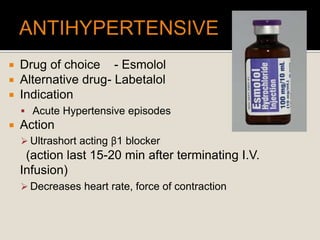
 Drug of choice - Esmolol
 Alternative drug- Labetalol
 Indication
 Acute Hypertensive episodes
 Action
 Ultrashort acting β1 blocker
(action last 15-20 min after terminating I.V.
Infusion)
 Decreases heart rate, force of contraction
 Contraindications
 sinus bradycardia
 heart block
 cardiogenic shock
 heart failure
 Dose
 100 mg/ml of esmolol which is diluted to 10
mg/ml with a diluent prior to administration
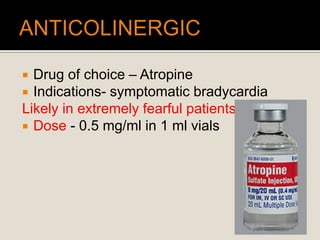
 Drug of choice – Atropine
 Indications- symptomatic bradycardia
Likely in extremely fearful patients
 Dose - 0.5 mg/ml in 1 ml vials
 Side effects
 Xerostomia
 Dry, flushed and hot skin- inhibition of sweating
- stimulation of temperature regulating centre in
hypothalamus
 Excitement, Hallucinations, disorientation
 Cardiovascular collapse
 Respiratory depression
 Contraindications
 Narrow angle glaucoma - rise in intraocular
tension
 Prostatic hypertrophy - urinary retention
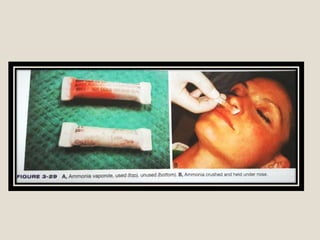
 Drug of choice- Aromatic ammonia
 Indications
 Vasodepressor syncope
 Respiratory depression
 Dose- Silver gray vaporoles containing 0.3
ml of aromatic ammonia
 Precaution
 Chronic obstructive pulmonary disease or
asthma- irritating effect may precipitate
bronchospasm.
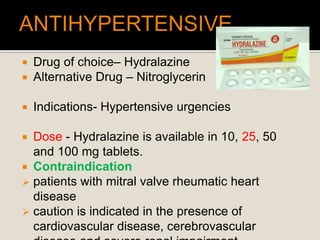
 Drug of choice– Hydralazine
 Alternative Drug – Nitroglycerin
 Indications- Hypertensive urgencies
 Dose - Hydralazine is available in 10, 25, 50
and 100 mg tablets.
 Contraindication
 patients with mitral valve rheumatic heart
disease
 caution is indicated in the presence of
cardiovascular disease, cerebrovascular
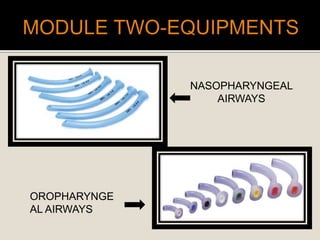
NASOPHARYNGEAL
AIRWAYS
OROPHARYNGE
AL AIRWAYS
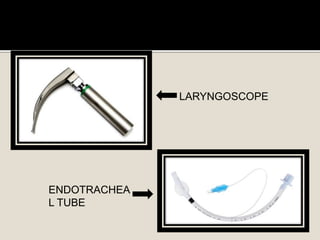
LARYNGOSCOPE
ENDOTRACHEA
L TUBE
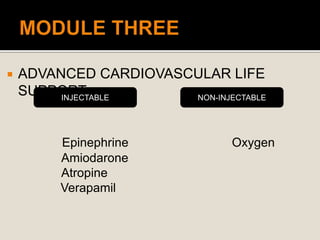
 ADVANCED CARDIOVASCULAR LIFE
SUPPORT
Epinephrine Oxygen
Amiodarone
Atropine
Verapamil
INJECTABLE NON-INJECTABLE
 Drug of choice – Epinephrine
 Action
 Maintain coronary artery blood flow
 preserves blood flow to the brain, helping to
minimize neurologic damage.
 Dose – 1 : 10,000 concentration in preloaded
10ml syringes
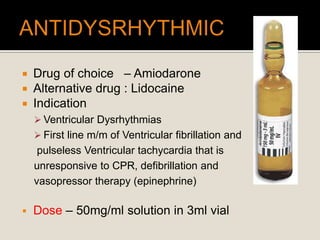
 Drug of choice – Amiodarone
 Alternative drug : Lidocaine
 Indication
 Ventricular Dysrhythmias
 First line m/m of Ventricular fibrillation and
pulseless Ventricular tachycardia that is
unresponsive to CPR, defibrillation and
vasopressor therapy (epinephrine)
 Dose – 50mg/ml solution in 3ml vial
 Contraindications
 Atrioventricular block
 Bradycardia
 Cardiogenic shock
 Iodine hypersensitivity
 Sick sinus syndrome
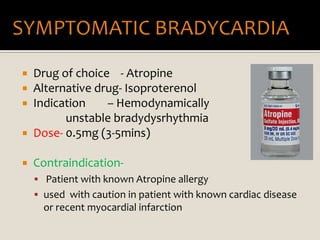
 Drug of choice - Atropine
 Alternative drug- Isoproterenol
 Indication – Hemodynamically
unstable bradydysrhythmia
 Dose- 0.5mg (3-5mins)
 Contraindication-
 Patient with known Atropine allergy
 used with caution in patient with known cardiac disease
or recent myocardial infarction
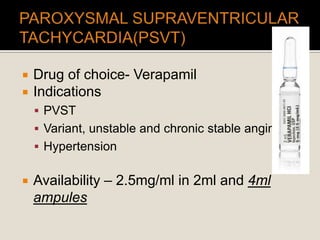
 Drug of choice- Verapamil
 Indications
 PVST
 Variant, unstable and chronic stable angina
 Hypertension
 Availability – 2.5mg/ml in 2ml and 4ml
ampules
 ANTIDOTAL DRUGS
Opioid Antagonist
Benzodiazepine antagonist
Antiemergence delirium drug
Vasodilator
INJECTABLE
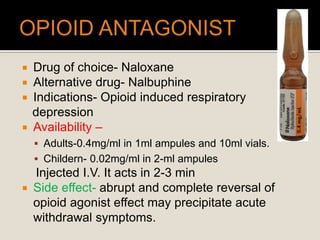
 Drug of choice- Naloxane
 Alternative drug- Nalbuphine
 Indications- Opioid induced respiratory
depression
 Availability –
 Adults-0.4mg/ml in 1ml ampules and 10ml vials.
 Childern- 0.02mg/ml in 2-ml ampules
Injected I.V. It acts in 2-3 min
 Side effect- abrupt and complete reversal of
opioid agonist effect may precipitate acute
withdrawal symptoms.
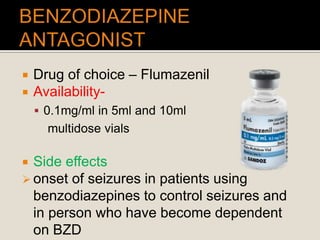
 Drug of choice – Flumazenil
 Availability-
 0.1mg/ml in 5ml and 10ml
multidose vials
 Side effects
 onset of seizures in patients using
benzodiazepines to control seizures and
in person who have become dependent
on BZD
 Drug of choice– Physostigmine
 Indication
 Antiemergence delirium drug
Several drugs such as brnzodiazapenes
diazepam and midazolam that are commonly
employed parenterally to induce sedation can
produce emergence delirium ( anticholinergic
syndrome)
 The patient
 appears to lose contact to reality
 Increased muscular movement
 Makes unintelligible sounds
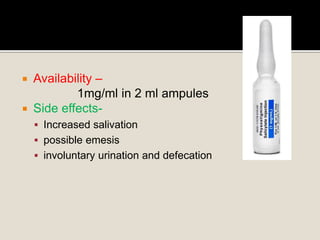
 Availability –
1mg/ml in 2 ml ampules
 Side effects-
 Increased salivation
 possible emesis
 involuntary urination and defecation
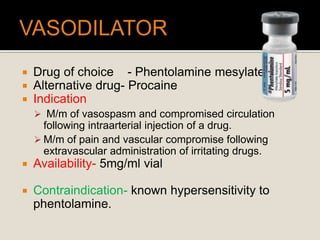
 Drug of choice - Phentolamine mesylate
 Alternative drug- Procaine
 Indication
 M/m of vasospasm and compromised circulation
following intraarterial injection of a drug.
 M/m of pain and vascular compromise following
extravascular administration of irritating drugs.
 Availability- 5mg/ml vial
 Contraindication- known hypersensitivity to
phentolamine.
Emergency drugs os

Emergency drugs os

  • 1.
  • 2.
     Emergency –An unforeseen occurrence or combination of circumstances that calls for immediate action or remedy - Mosby’s  Drug – Any substance or product that is used or is intended to be used to modify or explore physiological system or pathological states for the benefit of the recipient - W.H.O
  • 3.
     Large kitin mobile tool cabinets with several compartments  Labels should be applied to each compartment in which drug is stored, listing the drug’s generic and proprietary names, dosage, indication and expiry date to avoid possible confusion during emergency.
  • 4.
     Expired drugsand empty O2 cylinders are ineffective  Drug should be replaced prior to expiry date.  An office staff member should be assigned to check the emergency drug kit at least once a week
  • 5.
    THE KISS PRINCIPLE Complexityin a time of adversity breeds chaos -PALLASCH(1976)
  • 6.
    MODULE ONE: Basic emergencykit (critical drugs and equipment) MODULE TWO: Non-critical drugs and equipment MODULE THREE: ACLS drugs MODULE FOUR: Antidotal drugs INJECTABLE NON-INJECTABLE
  • 7.
     ESSENTIAL/ CRITICAL/PRIMARY Epinephrine Oxygen Oxygen delivery system Histamine blocker Vasodilator Automated electronic Bronchodilator defibrillator Antihypoglycemic Syringes, suction tips, Inhibitor of tourniquets platelet aggregation Magill INJECTABLE NON-INJECTABLE EQUIPMENTS
  • 8.
     Catecholamine  Mostimportant emergency drug  Indications  Anaphylaxis  Acute (life threatening) allergic reactions  Actue asthamatic attack  Cardiac arrest
  • 9.
    DESIRABLE PROPERTIES Rapid onsetof action Bronchodilator action Histamine blocking properties Vasopressor actions Cardiac effects Increase Heart rate Systolic blood pressure Cardiac output Coronary blood flow UNDESIRABLE PROPERTIES Predisposition to dysrhythmias Short duration of action
  • 10.
    DOSE AND ADMINISTRATION I.M.Or S.C. - 1:1000 concentration In dose of 0.3-0.5 mg for 30 kg or greater patients. 0.15mg for patients who weigh less than 30kg is recommended  Preloaded auto injectors are preferred- Ana Guard, Epipen, Epipen Jr, Auvi Q  Intravenous- 1:10,000- m/m of cardiac arrest In Pregnancy-decrease placental blood flow and can induce premature labor
  • 11.
     Drug ofchoice- Diphenhydramine  Alternative- Chlorpheneramine  Uses-  Non-life-threatening allergic reactions  Delayed allergic response  Dose And Administration- emergency kit should contain two 1ml ampules of diphenhydramine-50mg/ml chlorpheniramine-10mg/ml
  • 12.
     Side effects CNS depression (sedation, drowsiness) Avoid operating motor vehicle and use of dangerous machinery  Decrease blood pressure  Thickened bronchial secretions therefore contraindicated in acute asthmatic episodes
  • 13.
     Most usefuldrug  Compressed gas cylinder (“E” for emergency)
  • 14.
     CONTRAINDICATION- Management ofhyperventilation Chronic Obstructive Pulmonary Disease
  • 15.
     Drug ofchoice- Nitroglycerin  Spray or tablets  Alternative drug- Amyl nitrite  Uses-  Immediate management of chest pain (Angina pectoris or Acute myocardial infarction)  Route of administration- Sublingual Bitter in taste and imparts a sting
  • 16.
     Side effect pulsatile headache  flushing, weakness  sweating  palpitation  fainting , hypotension  Precaution  Rest in supine or sitting position  Monitor B.P.  Contraindication in hypotensive state
  • 17.
     Sublingual tablet- 0.4 mg (not more than 3 tablets in 15 min)  Translingual spray- 0.4-0.8 mg
  • 18.
     Drug ofchoice- Salbutamol  Uses-  Acute Asthmatic episodes  Allergic reactions  Route of administration- Metered Dose Inhaler, spacer(for pediatric patients)
  • 19.
     Produces bronchodilatationwithin 5 min and last for 2-4 hours  one or two inhalations every 4-6 hours is recommended dosage
  • 20.
     Orange juice Alternative- Glucose gel  Uses-  Hypoglycemic states in a conscious patient due to ▪ Diabetes mellitus ▪ Fasting  Oral route of administration
  • 21.
     Drug ofchoice- Aspirin  Alternative drug- Clopidogrel  Oral route of administration  Uses-  Acute myocardial infarction  Unstable angina  Contraindications  Major life threatening haemorrhage  Recent bleeding peptic ulcer  Allergy to aspirin
  • 22.
     Standard dose– 160-325mg  Emergency kit include powdered or chewable aspirin (325 mg)
  • 23.
  • 27.
     NON-CRITICAL/ SECONDARY AnticonvulsantRespiratory Oropharyngeal Analgesic stimulant and nasopharyngeal Vasopressor Antihypertensive airways Antihypoglycemic Laryngeal mask Corticosteroid Laryngoscope Antihypertensive Endotracheal tubes INJECTABLE NON-INJECTABLE EQUIPMENTS
  • 28.
     Drug ofchoice- Midazolam  Alternative drug- Diazepam  Uses-  Seizure disorders due to- ▪ Epilepsy ▪ Overdose of local anesthetic ▪ Syncope with airway obstruction ▪ Hypoglycemia ▪ Febrile convulsions  Dose - 5mg/ml Midazolam in 5-ml vial
  • 29.
     Drug ofchoice- Morphine sulfate  Alternative drug- N2O-O2  Uses-  Acute myocardial infarction  Heart failure  Acute pain or anxiety  CNS and respiratory depressant- contraindicated in multiple trauma, compromised respiratory function, hypovolemic and hypotensive state
  • 30.
     Emergency kitsmay contain morphine sulfate 10mg/ml (two 2-ml ampules)
  • 31.
     Ephedrine  Indications- Syncope  Drug overdose reactions  Post seizure states  Acute adrenal insufficiency  Allergic reactions  Dose- 50mg/ml in 1ml ampule  Contraindication – hypertensive patient Ventricular tachycardia
  • 32.
     Dextrose 50% Alternative drug- Glucagon  Dosage-  30 ml of 50% Dextrose administered I.V.  Glucagon im- 1mg of dry powder in 1ml of diluent (effective only when hepatic glycogen is available; ineffective in starvation or chronic hypoglycaemic state)  Side effects Tissue necrosis occurs in case of extravascular infiltration of the solution
  • 33.
     Drug ofchoice- Hydrocortisone sodium succinate  Indications  Definitive m/m of acute allergy  Adrenal insufficiency  Asthma  Recurrent anaphylactic episodes  Dose - 50 mg/ml (2-ml vials)  Precautions- hyperglycemia, peptic ulcers, preexisting infection, delayed wound healing
  • 34.
     Non specificanti inflammatory action  Suppresses sign of inflammation by reduction of increased capillary permeability, local exudation, cellular infiltration  Limitation of recruitment of inflammatory cells at local site.  Inhibit phospholipase A responsible for release of arachidonic acid for PG and LT synthesis.
  • 35.
     Suppress alltype of hypersensitisation and allergic phenomena.  Reduces bronchial hyperactivity  Do not remove cause of inflammation while manifestations are dampened.
  • 36.
     Drug ofchoice - Esmolol  Alternative drug- Labetalol  Indication  Acute Hypertensive episodes  Action  Ultrashort acting β1 blocker (action last 15-20 min after terminating I.V. Infusion)  Decreases heart rate, force of contraction
  • 37.
     Contraindications  sinusbradycardia  heart block  cardiogenic shock  heart failure  Dose  100 mg/ml of esmolol which is diluted to 10 mg/ml with a diluent prior to administration
  • 38.
     Drug ofchoice – Atropine  Indications- symptomatic bradycardia Likely in extremely fearful patients  Dose - 0.5 mg/ml in 1 ml vials
  • 39.
     Side effects Xerostomia  Dry, flushed and hot skin- inhibition of sweating - stimulation of temperature regulating centre in hypothalamus  Excitement, Hallucinations, disorientation  Cardiovascular collapse  Respiratory depression  Contraindications  Narrow angle glaucoma - rise in intraocular tension  Prostatic hypertrophy - urinary retention
  • 40.
     Drug ofchoice- Aromatic ammonia  Indications  Vasodepressor syncope  Respiratory depression  Dose- Silver gray vaporoles containing 0.3 ml of aromatic ammonia  Precaution  Chronic obstructive pulmonary disease or asthma- irritating effect may precipitate bronchospasm.
  • 42.
     Drug ofchoice– Hydralazine  Alternative Drug – Nitroglycerin  Indications- Hypertensive urgencies  Dose - Hydralazine is available in 10, 25, 50 and 100 mg tablets.  Contraindication  patients with mitral valve rheumatic heart disease  caution is indicated in the presence of cardiovascular disease, cerebrovascular
  • 43.
  • 45.
  • 47.
     ADVANCED CARDIOVASCULARLIFE SUPPORT Epinephrine Oxygen Amiodarone Atropine Verapamil INJECTABLE NON-INJECTABLE
  • 48.
     Drug ofchoice – Epinephrine  Action  Maintain coronary artery blood flow  preserves blood flow to the brain, helping to minimize neurologic damage.  Dose – 1 : 10,000 concentration in preloaded 10ml syringes
  • 49.
     Drug ofchoice – Amiodarone  Alternative drug : Lidocaine  Indication  Ventricular Dysrhythmias  First line m/m of Ventricular fibrillation and pulseless Ventricular tachycardia that is unresponsive to CPR, defibrillation and vasopressor therapy (epinephrine)  Dose – 50mg/ml solution in 3ml vial
  • 50.
     Contraindications  Atrioventricularblock  Bradycardia  Cardiogenic shock  Iodine hypersensitivity  Sick sinus syndrome
  • 51.
     Drug ofchoice - Atropine  Alternative drug- Isoproterenol  Indication – Hemodynamically unstable bradydysrhythmia  Dose- 0.5mg (3-5mins)  Contraindication-  Patient with known Atropine allergy  used with caution in patient with known cardiac disease or recent myocardial infarction
  • 52.
     Drug ofchoice- Verapamil  Indications  PVST  Variant, unstable and chronic stable angina  Hypertension  Availability – 2.5mg/ml in 2ml and 4ml ampules
  • 53.
     ANTIDOTAL DRUGS OpioidAntagonist Benzodiazepine antagonist Antiemergence delirium drug Vasodilator INJECTABLE
  • 54.
     Drug ofchoice- Naloxane  Alternative drug- Nalbuphine  Indications- Opioid induced respiratory depression  Availability –  Adults-0.4mg/ml in 1ml ampules and 10ml vials.  Childern- 0.02mg/ml in 2-ml ampules Injected I.V. It acts in 2-3 min  Side effect- abrupt and complete reversal of opioid agonist effect may precipitate acute withdrawal symptoms.
  • 55.
     Drug ofchoice – Flumazenil  Availability-  0.1mg/ml in 5ml and 10ml multidose vials  Side effects  onset of seizures in patients using benzodiazepines to control seizures and in person who have become dependent on BZD
  • 56.
     Drug ofchoice– Physostigmine  Indication  Antiemergence delirium drug Several drugs such as brnzodiazapenes diazepam and midazolam that are commonly employed parenterally to induce sedation can produce emergence delirium ( anticholinergic syndrome)  The patient  appears to lose contact to reality  Increased muscular movement  Makes unintelligible sounds
  • 57.
     Availability – 1mg/mlin 2 ml ampules  Side effects-  Increased salivation  possible emesis  involuntary urination and defecation
  • 58.
     Drug ofchoice - Phentolamine mesylate  Alternative drug- Procaine  Indication  M/m of vasospasm and compromised circulation following intraarterial injection of a drug.  M/m of pain and vascular compromise following extravascular administration of irritating drugs.  Availability- 5mg/ml vial  Contraindication- known hypersensitivity to phentolamine.

Editor's Notes

  • #6 Drug administration is not necessary for the immediate m/m of medical emergencies. Primary m/m of all emergencies involves BLS When in doubt don’t medicate
  • #13 Actions Competitive antagonist of histamine- block effect of released histamine block histamine induced bronchoconstriction block triple response- wheal, flare and itch prevent Anaphylactic fall in B.P.
  • #16  Direct non specific smooth muscle relaxation Preload reduction Vasodilatation of veins more than arteries peripheral pooling of blood venous return cardiac work After load reduction- Arteriolar dilatation Total peripheral resistance Blood pressure Redistribution of coronary flow Dilatation of bigger conducting coronary arteries, Redistribution of blood flow to ischemic areas
  • #20 Action Stimulate β2 receptor Relaxes bronchial smooth muscle with no stimulatory action on cardiovascular and GI systems (β1) Side effect Muscle tremors( dose related) Palpitation, nervousness, restlessness Throat infection Ankle edema
  • #23 Action- Non selective irreversible inhibitor of COX isoform low dose aspirin inhibits thromboxane A2 produced by platelet interfere with platelet aggregation bleeding time is prolonged
  • #29 Iv im in?
  • #30 Precaution and contraindication children and elderly- Respiratory depressant action Patient with respiratory insufficiency Asthma- Histamine release Victims of injury and multiple trauma- -inc Intracranial pressure - vomiting, altered mentation interfere with assessment of progress in head injury cases -respiratory depression Hypovolemic and hypotensive state- fall in B.P.
  • #31 Side effect- Sedation Euphoric effect Respiratory depression Vomiting Constipation Urinary retention Hypotension local reaction at injection site- histamine release Blurring of vision
  • #32 Actions Increase in B.P. without undue increase in myocardium’s workload Vasoconstriction
  • #41 Action Production of Noxious odor Irritation of respiratory membrane Stimulation of Respiratory and Vasomotor centres of Medulla Increase in B.P. ,respiration
  • #43 Action Relaxation of arteriolar smooth muscle causing arterial vasodilatation with little action on venous capacitance vessel Reduces total peripheral resistance reflex compensatory mechanism are evoked which causes tachycardia, increase in C.O. and renin release. Angina may be precipitated due to increased cardiac work
  • #50 Action prolongation of repolarisation by blocking potassium channels that open during repolarisation blocks sodium channel during inactivation noncompetitive β adrenergic blocking property
  • #53 Action Depress calcium mediated depolarization Slow SA Node pacemaker, AV conduction and suppress re-entry through AV Node as well as in partially depolarized (ischemic) tissue
  • #55 Action Antagonizes all action of morphine, namely analgesia and sedation by blocking μ receptors respiration stimulated- probably due to sudden sensitization of respiratory centre to retained CO2
  • #56 Action Decrease recovery time from Medazolam sedation Increase alertness decrease amnesic effect
  • #57 Actions Physostigamine is lipid soluble reversible inhibitor and can cross blood brain barrier. -they react with enzyme in same way as ACh, protect ACh from hydrolysis- produce cholinergic effect.
  • #59 Action Blockade of vasoconstrictor receptors reduce peripheral resistance pooling of blood in capacitance vessels venous return and cardiac output are reduced fall in bp