Anaphylaxis
Are we bugging you?
Steve Cole, CCEMT-P
Ada County Paramedics
Anaphylaxis
• Anaphylaxis comes from the Greek and
means against or without protection.
As opposed to prophylaxis for protection
Definition of Anaphylaxis
• Systemic allergic reaction
– Affects body as a whole
– Multiple organ systems may be involved
• Onset generally acute
• Manifestations vary from mild to fatal
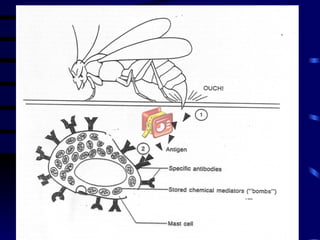
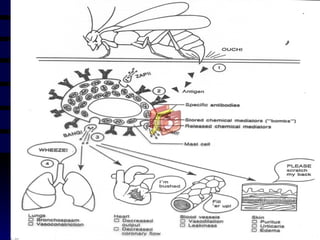
Antigen to Antibody
Relationship
• Antigen
the foreign protein that when taken
into the body stimulates/formulates specific
protective proteins called antibodies.
• Antibody
a protein produced in the body to response
to a specific antigen (foreign protein) tot destroy
or inactivate the antigen. (IgE)
Histamine
• Coronary vasoconstriction
• Bronchoconstriction
• Vascular permeability
• Intestinal smooth muscle contraction
• Dysrhythmias: sinus tach, a-fib, AV, and
IVCD
Pathogenesis of Anaphylaxis
• IgE-mediated (Type I hypersensitivity)
• Sensitization stage
• Subsequent anaphylactic response
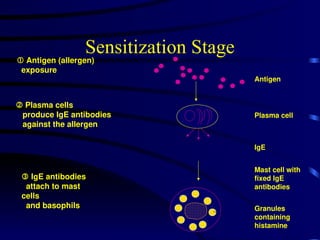
Sensitization Stage
 Antigen (allergen)
exposure
 Plasma cells
produce IgE antibodies
against the allergen
 IgE antibodies
attach to mast
cells
and basophils
Mast cell with
fixed IgE
antibodies
IgE
Granules
containing
histamine
Antigen
Plasma cell
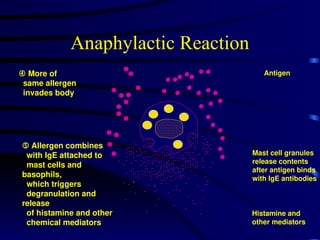
Anaphylactic Reaction
 More of
same allergen
invades body
Antigen
Mast cell granules
release contents
after antigen binds
with IgE antibodies
Histamine and
other mediators
.
•
•
•
•
•
•
•
•
•
•
•
• •
•
•
•
•
•
•
•
•
• •
•
•
•
•
•
•
•
•
•
•
•
• •
•
•
•
•
•
•
•
•
• •
•
• •
•
•
•
•
•
•
• •
• •
•
•
•
•
•
•
•
•
•
•
•
•
•
•
•
•
•
• •
•
•
•
•
•
•
•
•
•
•
•
•
•
•
•
•
•
•
• •
•
• •
•
•
•
•
•
•
• •
•
•
•
•
•
•
•
•
•
•
•
•
•
•
•
•
•
•
•
• •
•
•
•
•
•
•
•
•
•
•
•
•
•
•
•
•
•
•
•
•
•
•
•
• •
•
•
•
•
•
•
•
•
•
•
•
•
•
•
•
•
•
•
•
•
•
• •
•
• •
•
•
•
•
•
•
•
•
•
•
•
• •
•
•
•
•
•
•
•
•
•
•
•
•
•
•
•
•
•
•
•
•
• •
•
•
•
•
•
•
•
• •
•
• •
• •
•
•
•
•
•
•
•
• •
•
•
•
•
•
•
•
•
•
•
•
•
•
•
•
•
•
•
•
•
• •
•
•
•
•
•
•
•
•
•
•
 Allergen combines
with IgE attached to
mast cells and
basophils,
which triggers
degranulation and
release
of histamine and other
chemical mediators
•
•
•
•
•
•
•
•
•
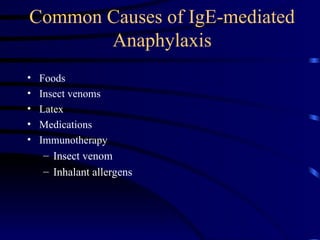
Common Causes of IgE-mediated
Anaphylaxis
• Foods
• Insect venoms
• Latex
• Medications
• Immunotherapy
– Insect venom
– Inhalant allergens
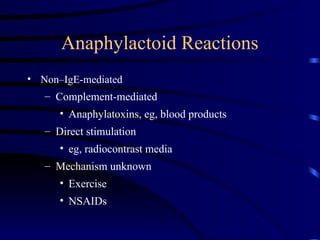
Anaphylactoid Reactions
• Non–IgE-mediated
– Complement-mediated
• Anaphylatoxins, eg, blood products
– Direct stimulation
• eg, radiocontrast media
– Mechanism unknown
• Exercise
• NSAIDs
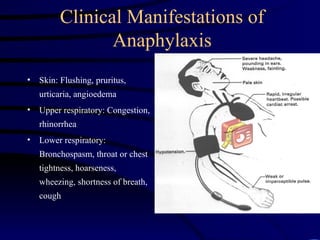
Clinical Manifestations of
Anaphylaxis
• Skin: Flushing, pruritus,
urticaria, angioedema
• Upper respiratory: Congestion,
rhinorrhea
• Lower respiratory:
Bronchospasm, throat or chest
tightness, hoarseness,
wheezing, shortness of breath,
cough
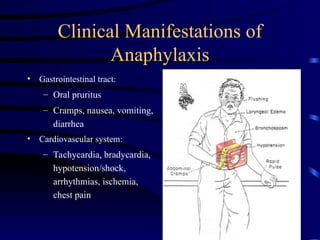
Clinical Manifestations of
Anaphylaxis
• Gastrointestinal tract:
– Oral pruritus
– Cramps, nausea, vomiting,
diarrhea
• Cardiovascular system:
– Tachycardia, bradycardia,
hypotension/shock,
arrhythmias, ischemia,
chest pain
Clinical Manifestations of
Anaphylaxis
• Urticaria
• Angioedema
• Upper airway
edema
• Dyspnea and
wheezing
• Flush
• Dizziness, syncope,
and hypotension
• Gastrointestinal
symptoms
• Rhinitis
• Headache
• Substernal pain
• Itch without rash
– Pruritus
• Seizure
Clinical Course of Anaphylaxis
• Uniphasic
• Biphasic
– Recurrence up to 8 hours later
• Different in Peds
– Descriptions and perceptions are different
• Protracted
– Hours to days
Anaphylaxis Fatalities
• Estimated 500–1000 deaths annually
• 1% risk
• Risk factors:
– Failure to administer epinephrine immediately
– Peanut, Soy & tree nut allergy (foods in general)
– Beta blocker, ACEI therapy
– Asthma
– Cardiac disease
– Rapid IV allergen
– Atopic dermatitis (eczema)
Food-induced Anaphylaxis:
Incidence
• 35%–55% of anaphylaxis is caused by food allergy
• 6%–8% of children have food allergy
• 1%–2% of adults have food allergy
• Incidence is increasing
• Accidental food exposures are common and unpredictable
Food-induced Anaphylaxis:
Common Triggers
• Children and adults (usually not outgrown):
– Peanuts (Beware Atrovent)
– Tree nuts
– Shellfish
– Fish
• Additional triggers in children (commonly outgrown):
– Milk
– Egg
– Soy
– Wheat
Food-induced Anaphylaxis:
Common Symptoms
• Oropharynx: Oral pruritus, swelling of lips and tongue, throat
tightening
• GI: Crampy abdominal pain, nausea, vomiting, diarrhea
• Cutaneous: Urticaria, angioedema
• Respiratory: Shortness of breath,
stridor, cough, wheezing
Food-induced Anaphylaxis:
Fatal Reactions
• Fatal reactions are on the rise
– ~150 deaths per year
– Usually caused by a known allergy
• Patients at risk:
– Peanut and tree nut allergy
– Asthma
– Prior anaphylaxis
– Failure to treat promptly w/epinephrine
• Many cases exhibit biphasic reaction
Fatal Food-induced Anaphylaxis
(Bock SA, et al. JACI 2001;107:191–193)
• 32 cases of fatal anaphylaxis
• Adolescents or young adults
• Peanuts, tree nuts caused >90% of Rxn
• 20 of 21 with complete history had asthma
• Most did not have epinephrine available
Venom-induced Anaphylaxis:
Incidence
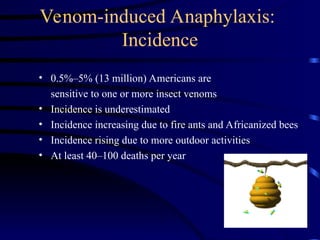
• 0.5%–5% (13 million) Americans are
sensitive to one or more insect venoms
• Incidence is underestimated
• Incidence increasing due to fire ants and Africanized bees
• Incidence rising due to more outdoor activities
• At least 40–100 deaths per year
Venom-induced Anaphylaxis:
Common Culprits
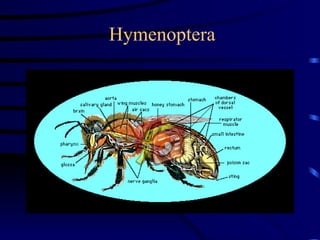
• Hymenoptera
– Bees
– Wasps
– Yellow jackets
– Hornets
– Fire ants
• Geographical
– Honeybees, yellow jackets most common in East,
Midwest, and West regions of US
– Wasps, fire ants most common in Southwest
and Gulf Coast
Hymenoptera
Venom-induced Reactions:
Common Symptoms
• Normal: Local pain, erythema, mild swelling
• Large local: Extended swelling, erythema
• Anaphylaxis: Usual onset within 15–20 minutes
– Cutaneous: urticaria, flushing, angioedema
– Respiratory: dyspnea, stridor
– Cardiovascular: hypotension, dizziness, loss of
consciousness
• 30%–60% of patients will experience a systemic
reaction with subsequent stings
Venom-induced Anaphylaxis:
Prevention
Risk Management
Keep EpiPen
or EpiPen
Jr on hand at all times
Educate and train on EpiPen
use
Develop emergency action plan
Wear a MedicAlert
bracelet
Consult an allergist to determine need for venom immunotherapy
Venom-induced Anaphylaxis:
Immunotherapy
• Medical criteria
– Hx of any systemic reaction in adults
– Hx of life-threatening reaction in children
– Positive venom skin test
• 97% effective
• Can be discontinued in most after 3–5 years; 10%
risk of systemic reaction to subsequent stings
Venom-induced Anaphylaxis:
Immunotherapy
Risk of anaphylaxis
10%-15% of patients experience systemic
reactions during early weeks of treatment
Sx generally occur within 20 minutes
Patients at risk: asthma, prior reactions, beta
blocker or ACEI therapy
Immunotherapy-induced
Anaphylaxis
Risk management
Trained physician, equipped facility
Epinephrine immediately available
Monitor closely for 20–30 minutes
Consider supply of EpiPen
for those at high risk
Latex-induced Anaphylaxis:
Incidence
• 1%–6% of US population (up to 16 million) affected
– High as 67% in patients with spina bifida
– 6.5% in patients who have undergone multiple surgeries
• 3%–18% incidence among health care workers
• Repeated exposure leads to a higher risk
• Incidence has increased since mid 1980s
– Latex gloves, especially powdered gloves
– BVM, ETT, IV Tubing and Caths.
– Nasal Canulas, NRB’s.
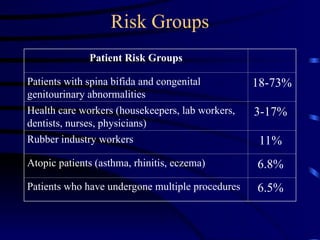
Risk Groups
Patient Risk Groups
Patients with spina bifida and congenital
genitourinary abnormalities
18-73%
Health care workers (housekeepers, lab workers,
dentists, nurses, physicians)
3-17%
Rubber industry workers 11%
Atopic patients (asthma, rhinitis, eczema) 6.8%
Patients who have undergone multiple procedures 6.5%
Latex-induced Anaphylaxis
• Hypoallergenic
The "hypoallergenic" label generally means
that gloves are low in chemical contact
sensitizers, but "hypoallergenic" does not
refer to latex allergens.
Latex-induced Anaphylaxis:
Triggers
• Proteins in natural rubber latex
• Component of ~40,000 commonly used items
– Rubber bands
– Elastic (undergarments)
– Hospital and dental equipment
• Latex-dipped products are biggest culprits
– Balloons, gloves, bandages, hot water bottles
Reactions to Latex
Irritant contact dermatitis
Dry, itchy, irritated hands
Allergic contact dermatitis
Delayed hypersensitivity
Latex allergy
Immediate hypersensitivity
Sx: hives, itching, sneezing, rhinitis, dyspnea, cough,
wheezing
Greatest risk with mucosal contact
Latex-induced Anaphylaxis:
Prevention
• Use latex-free products
• Alert employer/health care providers, schools about need for
latex-free products and equipment
• Wear MedicAlert
bracelet
• Awareness of cross-sensitivity with foods:
AVOIDANCE
– Banana
– Avocado
– Chestnuts
– Kiwi
– Stone fruit
– Others
Latex-induced Anaphylaxis:
Prevention
• Prescribe EpiPen®
or EpiPen®
Jr
– Accidental exposure
– Patients at risk
• Go Latex Free at agency
• Educate re: EpiPen®
use
• Develop emergency action plan
RISK MANAGEMENT
Exercise-Induced Anaphylaxis
• First reported in 1979
• Mechanism of action is unclear
• Predisposing factors:
– ASA , Motrin use
– Food, including shell fish, cheese, dense fruits,
snails.
• Triggered by almost any physical exertion
• Most common in very athletic children
Exercise-Induced Anaphylaxis
• Four Phases
– Prodromal phase is characterized by fatigue,
warmth, pruritus, and cutaneous erythema
– The early phase: urticarial eruption that
progresses from giant hives may include
angioedema of the face, palms, and soles.
– Fully established phase: hypotension, syncope,
loss of consciousness, choking, stridor, nausea,
and vomiting ( 30 minutes to 4 hours.)
– Late or postexertional phase, Prolonged urticaria
and headache persisting for 24-74 hours.
Other Causes of Anaphylactic
and Anaphylactoid Reactions
• Drugs
– Antibiotics
– Chemotherapeutic agents
– Aspirin, NSAIDs
– Streptokinaise
– Biologicals (vaccines, monoclonal antibodies)
• Radiocontrast media (iodine)
• Idiopathic
Diagnosing Anaphylaxis
• Based on clinical presentation, exposure Hx
• Cutaneous, respiratory Sx most common
• Some cases may be difficult to diagnose
– Vasovagal syncope
– Scombroid poisoning
– Systemic mastocytosis
Diagnosing Anaphylaxis
• Careful history to identify possible causes
• Can be confirmed by serum tryptase
– Specific for mast cell degranulation
– Remains elevated for up to 6 hours
• Other labs to rule out other diagnoses
• Refer to allergist for specific testing
Diagnosing Anaphylaxis
• Skin tests/RAST
– Foods
– Insect venoms
– Drugs
• Challenge tests
– Foods
– NSAIDs
– Exercise
Allergists can identify specific causes by:
Use of Epi Pen
• Immediate treatment with epinephrine
imperative
– No contraindications in anaphylaxis
– Failure or delay associated with fatalities
– IM may produce more rapid, higher peak
levels vs SC
– Must be available at all times
State of Idaho Regs
• 1994 EMT-B CurriculumTrained to recognize anaphylaxis
Not Authorized to possess EPI-PEN Authorized assist
patient in self administration Assist & Monitor
• Effective September 9th
, 2003: EpiPen may now be
carried by BLS agencies with medical director
approval and QA
– No Medical Director, may only “assist” the pt with their Epi
Pen
• Must undergo upgrade module
– About 1-2 hours
– Skills test
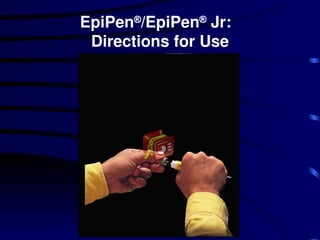
EpiPen
/EpiPen
Jr:
Directions for Use
EpiPen
/EpiPen
Jr:
Directions for Use
EpiPen
/EpiPen
Jr:
Directions for Use
Treatment of Anaphylaxis
• Simple BLS (O2, position, etc)
• Anti Histamines
– Benadryl (IV 25-50 mg, PO 50 mg adult, 25 mg ped)
• Corticosteroids
– Decadron, Solu-medrol, etc
• Treat Hypotension
– IV fluids
– Dopamine 5-20 mcg/min
– Epi Drip 2-10 mcg/min
Treatment of Anaphylaxis
• Broncheodiators
– Albuterol MDI or Neb
• Observe for a minimum 8-12 hours
– Insure F/U with PMD,
– Benadryl for 24 hours.
• Rebound or persitant S/S
– Repeat epinephrine if Sx persist or increase after 10-15
minutes
– Repeat antihistamine ± H2 blocker if Sx persist
Screening Patients at Risk
Did you ever have a severe allergic reaction:
• To any food?
• To any medicine?
• To an insect sting?
• To latex?
• Side effect or allergic reaction?
• That caused breathing trouble? Severe hives and swelling? Severe
vomiting or diarrhea? Dizziness?
• That required you to go to the hospital?
Risk Management for Anaphylaxis
• EDUCATE
– Teach avoidance measures
– “Accidents are never planned”
– Stress importance of:
• Always having a current EpiPen
on hand
• Immediate treatment
– Emphasize the need for follow-up care
EpiPen®
2-Pak
* EpiPen®
2-Pak
was launched in April
2001
Myth: Insect Stings are the most fatal
REALITY:
• While any trigger can be fatal, Most common trigger resulting ina fatal
outcome is food allergies, especially in peds.
• This is espeecialy true with other risk factors , like Astma
• Also aggrivated as most kids forget Epi Pen or have the wrong size.
• Most common fatal food allergies are:
– Peanuts
– Tree Nuts
Myth: Prior Episodes
Predict Future Reactions
REALITY:
• No predictable pattern
• Severity depends on:
– Sensitivity of the individual
– Dose of the allergen
– Anaphylactoid vs Anaphylactic
Myth: Anaphylaxis Is Rare
REALITY:
• Anaphylaxis is underreported
• Incidence seems to be increasing
• Up to 41 million Americans at risk (Neugut AI et al, 2001)
• 63,000 new cases per year
(Yocum MW et al, 1999)
• 5% of adults may have a history of anaphylaxis (various
surveys)
Myth: Anaphylaxis is Easy to Avoid
If You Know What You are Allergic
To
REALITY:
• Most cases of anaphylaxis are due to
accidental exposures
• Clinical studies have found repeatedly that, even
when patients attempt strict avoidance of a known
allergen, their efforts are rarely 100% successful.
Myth: Anaphylaxis is Reported
REALITY:
• Most individuals do not inform their personal physician of
an anaphylactic reaction either at the time of the reaction
or during routine exams
Myth:
Epinephrine is Dangerous
REALITY:
• Risks of anaphylaxis far outweigh risks
of epinephrine administration
• Minimal cardiovascular effects in children
(Simons et al, 1998)
• Caution when administering epinephrine in
elderly patients or those with known cardiac
disease
Myth: The Cause of Anaphylaxis is
Always Obvious
REALITY:
• Idiopathic anaphylaxis is common
• Triggers may be hidden
– Foods
– Latex
• Patient may not recall details of exposure, clinical course
Myth: Prior Episodes
Predict Future Reactions
REALITY:
• No predictable pattern
• Severity depends on:
– Sensitivity of the individual
– Dose of the allergen
Myth: Anaphylaxis Always Presents
with Cutaneous Manifestations
REALITY:
• Approximately 10%-20% of anaphylaxis cases will not
present with hives or other cutaneous manifestations
• 80% of food-induced, fatal anaphylaxis cases were not
associated with cutaneous signs or symptoms

anaphylaxis cole are we bugging you?(PPTminimizer).ppt

  • 1.
    Anaphylaxis Are we buggingyou? Steve Cole, CCEMT-P Ada County Paramedics
  • 2.
    Anaphylaxis • Anaphylaxis comesfrom the Greek and means against or without protection. As opposed to prophylaxis for protection
  • 3.
    Definition of Anaphylaxis •Systemic allergic reaction – Affects body as a whole – Multiple organ systems may be involved • Onset generally acute • Manifestations vary from mild to fatal
  • 4.
    Antigen to Antibody Relationship •Antigen the foreign protein that when taken into the body stimulates/formulates specific protective proteins called antibodies. • Antibody a protein produced in the body to response to a specific antigen (foreign protein) tot destroy or inactivate the antigen. (IgE)
  • 5.
    Histamine • Coronary vasoconstriction •Bronchoconstriction • Vascular permeability • Intestinal smooth muscle contraction • Dysrhythmias: sinus tach, a-fib, AV, and IVCD
  • 6.
    Pathogenesis of Anaphylaxis •IgE-mediated (Type I hypersensitivity) • Sensitization stage • Subsequent anaphylactic response
  • 7.
    Sensitization Stage  Antigen(allergen) exposure  Plasma cells produce IgE antibodies against the allergen  IgE antibodies attach to mast cells and basophils Mast cell with fixed IgE antibodies IgE Granules containing histamine Antigen Plasma cell
  • 8.
    Anaphylactic Reaction  Moreof same allergen invades body Antigen Mast cell granules release contents after antigen binds with IgE antibodies Histamine and other mediators . • • • • • • • • • • • • • • • • • • • • • • • • • • • • • • • • • • • • • • • • • • • • • • • • • • • • • • • • • • • • • • • • • • • • • • • • • • • • • • • • • • • • • • • • • • • • • • • • • • • • • • • • • • • • • • • • • • • • • • • • • • • • • • • • • • • • • • • • • • • • • • • • • • • • • • • • • • • • • • • • • • • • • • • • • • • • • • • • • • • • • • • • • • • • • • • • • • • • • • • • • • • • • • • • • • • • • • • • • • • • • • • • • • • • • • • • • • • • • • • • • • • • • • • • • • • • • • • • • • • • • • • • • • • • • • •  Allergen combines with IgE attached to mast cells and basophils, which triggers degranulation and release of histamine and other chemical mediators • • • • • • • • •
  • 11.
    Common Causes ofIgE-mediated Anaphylaxis • Foods • Insect venoms • Latex • Medications • Immunotherapy – Insect venom – Inhalant allergens
  • 12.
    Anaphylactoid Reactions • Non–IgE-mediated –Complement-mediated • Anaphylatoxins, eg, blood products – Direct stimulation • eg, radiocontrast media – Mechanism unknown • Exercise • NSAIDs
  • 13.
    Clinical Manifestations of Anaphylaxis •Skin: Flushing, pruritus, urticaria, angioedema • Upper respiratory: Congestion, rhinorrhea • Lower respiratory: Bronchospasm, throat or chest tightness, hoarseness, wheezing, shortness of breath, cough
  • 14.
    Clinical Manifestations of Anaphylaxis •Gastrointestinal tract: – Oral pruritus – Cramps, nausea, vomiting, diarrhea • Cardiovascular system: – Tachycardia, bradycardia, hypotension/shock, arrhythmias, ischemia, chest pain
  • 15.
    Clinical Manifestations of Anaphylaxis •Urticaria • Angioedema • Upper airway edema • Dyspnea and wheezing • Flush • Dizziness, syncope, and hypotension • Gastrointestinal symptoms • Rhinitis • Headache • Substernal pain • Itch without rash – Pruritus • Seizure
  • 16.
    Clinical Course ofAnaphylaxis • Uniphasic • Biphasic – Recurrence up to 8 hours later • Different in Peds – Descriptions and perceptions are different • Protracted – Hours to days
  • 17.
    Anaphylaxis Fatalities • Estimated500–1000 deaths annually • 1% risk • Risk factors: – Failure to administer epinephrine immediately – Peanut, Soy & tree nut allergy (foods in general) – Beta blocker, ACEI therapy – Asthma – Cardiac disease – Rapid IV allergen – Atopic dermatitis (eczema)
  • 18.
    Food-induced Anaphylaxis: Incidence • 35%–55%of anaphylaxis is caused by food allergy • 6%–8% of children have food allergy • 1%–2% of adults have food allergy • Incidence is increasing • Accidental food exposures are common and unpredictable
  • 19.
    Food-induced Anaphylaxis: Common Triggers •Children and adults (usually not outgrown): – Peanuts (Beware Atrovent) – Tree nuts – Shellfish – Fish • Additional triggers in children (commonly outgrown): – Milk – Egg – Soy – Wheat
  • 20.
    Food-induced Anaphylaxis: Common Symptoms •Oropharynx: Oral pruritus, swelling of lips and tongue, throat tightening • GI: Crampy abdominal pain, nausea, vomiting, diarrhea • Cutaneous: Urticaria, angioedema • Respiratory: Shortness of breath, stridor, cough, wheezing
  • 21.
    Food-induced Anaphylaxis: Fatal Reactions •Fatal reactions are on the rise – ~150 deaths per year – Usually caused by a known allergy • Patients at risk: – Peanut and tree nut allergy – Asthma – Prior anaphylaxis – Failure to treat promptly w/epinephrine • Many cases exhibit biphasic reaction
  • 22.
    Fatal Food-induced Anaphylaxis (BockSA, et al. JACI 2001;107:191–193) • 32 cases of fatal anaphylaxis • Adolescents or young adults • Peanuts, tree nuts caused >90% of Rxn • 20 of 21 with complete history had asthma • Most did not have epinephrine available
  • 23.
    Venom-induced Anaphylaxis: Incidence • 0.5%–5%(13 million) Americans are sensitive to one or more insect venoms • Incidence is underestimated • Incidence increasing due to fire ants and Africanized bees • Incidence rising due to more outdoor activities • At least 40–100 deaths per year
  • 24.
    Venom-induced Anaphylaxis: Common Culprits •Hymenoptera – Bees – Wasps – Yellow jackets – Hornets – Fire ants • Geographical – Honeybees, yellow jackets most common in East, Midwest, and West regions of US – Wasps, fire ants most common in Southwest and Gulf Coast
  • 25.
  • 26.
    Venom-induced Reactions: Common Symptoms •Normal: Local pain, erythema, mild swelling • Large local: Extended swelling, erythema • Anaphylaxis: Usual onset within 15–20 minutes – Cutaneous: urticaria, flushing, angioedema – Respiratory: dyspnea, stridor – Cardiovascular: hypotension, dizziness, loss of consciousness • 30%–60% of patients will experience a systemic reaction with subsequent stings
  • 27.
    Venom-induced Anaphylaxis: Prevention Risk Management KeepEpiPen or EpiPen Jr on hand at all times Educate and train on EpiPen use Develop emergency action plan Wear a MedicAlert bracelet Consult an allergist to determine need for venom immunotherapy
  • 28.
    Venom-induced Anaphylaxis: Immunotherapy • Medicalcriteria – Hx of any systemic reaction in adults – Hx of life-threatening reaction in children – Positive venom skin test • 97% effective • Can be discontinued in most after 3–5 years; 10% risk of systemic reaction to subsequent stings
  • 29.
    Venom-induced Anaphylaxis: Immunotherapy Risk ofanaphylaxis 10%-15% of patients experience systemic reactions during early weeks of treatment Sx generally occur within 20 minutes Patients at risk: asthma, prior reactions, beta blocker or ACEI therapy
  • 30.
    Immunotherapy-induced Anaphylaxis Risk management Trained physician,equipped facility Epinephrine immediately available Monitor closely for 20–30 minutes Consider supply of EpiPen for those at high risk
  • 31.
    Latex-induced Anaphylaxis: Incidence • 1%–6%of US population (up to 16 million) affected – High as 67% in patients with spina bifida – 6.5% in patients who have undergone multiple surgeries • 3%–18% incidence among health care workers • Repeated exposure leads to a higher risk • Incidence has increased since mid 1980s – Latex gloves, especially powdered gloves – BVM, ETT, IV Tubing and Caths. – Nasal Canulas, NRB’s.
  • 32.
    Risk Groups Patient RiskGroups Patients with spina bifida and congenital genitourinary abnormalities 18-73% Health care workers (housekeepers, lab workers, dentists, nurses, physicians) 3-17% Rubber industry workers 11% Atopic patients (asthma, rhinitis, eczema) 6.8% Patients who have undergone multiple procedures 6.5%
  • 33.
    Latex-induced Anaphylaxis • Hypoallergenic The"hypoallergenic" label generally means that gloves are low in chemical contact sensitizers, but "hypoallergenic" does not refer to latex allergens.
  • 34.
    Latex-induced Anaphylaxis: Triggers • Proteinsin natural rubber latex • Component of ~40,000 commonly used items – Rubber bands – Elastic (undergarments) – Hospital and dental equipment • Latex-dipped products are biggest culprits – Balloons, gloves, bandages, hot water bottles
  • 35.
    Reactions to Latex Irritantcontact dermatitis Dry, itchy, irritated hands Allergic contact dermatitis Delayed hypersensitivity Latex allergy Immediate hypersensitivity Sx: hives, itching, sneezing, rhinitis, dyspnea, cough, wheezing Greatest risk with mucosal contact
  • 36.
    Latex-induced Anaphylaxis: Prevention • Uselatex-free products • Alert employer/health care providers, schools about need for latex-free products and equipment • Wear MedicAlert bracelet • Awareness of cross-sensitivity with foods: AVOIDANCE – Banana – Avocado – Chestnuts – Kiwi – Stone fruit – Others
  • 37.
    Latex-induced Anaphylaxis: Prevention • PrescribeEpiPen® or EpiPen® Jr – Accidental exposure – Patients at risk • Go Latex Free at agency • Educate re: EpiPen® use • Develop emergency action plan RISK MANAGEMENT
  • 38.
    Exercise-Induced Anaphylaxis • Firstreported in 1979 • Mechanism of action is unclear • Predisposing factors: – ASA , Motrin use – Food, including shell fish, cheese, dense fruits, snails. • Triggered by almost any physical exertion • Most common in very athletic children
  • 39.
    Exercise-Induced Anaphylaxis • FourPhases – Prodromal phase is characterized by fatigue, warmth, pruritus, and cutaneous erythema – The early phase: urticarial eruption that progresses from giant hives may include angioedema of the face, palms, and soles. – Fully established phase: hypotension, syncope, loss of consciousness, choking, stridor, nausea, and vomiting ( 30 minutes to 4 hours.) – Late or postexertional phase, Prolonged urticaria and headache persisting for 24-74 hours.
  • 40.
    Other Causes ofAnaphylactic and Anaphylactoid Reactions • Drugs – Antibiotics – Chemotherapeutic agents – Aspirin, NSAIDs – Streptokinaise – Biologicals (vaccines, monoclonal antibodies) • Radiocontrast media (iodine) • Idiopathic
  • 41.
    Diagnosing Anaphylaxis • Basedon clinical presentation, exposure Hx • Cutaneous, respiratory Sx most common • Some cases may be difficult to diagnose – Vasovagal syncope – Scombroid poisoning – Systemic mastocytosis
  • 42.
    Diagnosing Anaphylaxis • Carefulhistory to identify possible causes • Can be confirmed by serum tryptase – Specific for mast cell degranulation – Remains elevated for up to 6 hours • Other labs to rule out other diagnoses • Refer to allergist for specific testing
  • 43.
    Diagnosing Anaphylaxis • Skintests/RAST – Foods – Insect venoms – Drugs • Challenge tests – Foods – NSAIDs – Exercise Allergists can identify specific causes by:
  • 44.
    Use of EpiPen • Immediate treatment with epinephrine imperative – No contraindications in anaphylaxis – Failure or delay associated with fatalities – IM may produce more rapid, higher peak levels vs SC – Must be available at all times
  • 45.
    State of IdahoRegs • 1994 EMT-B CurriculumTrained to recognize anaphylaxis Not Authorized to possess EPI-PEN Authorized assist patient in self administration Assist & Monitor • Effective September 9th , 2003: EpiPen may now be carried by BLS agencies with medical director approval and QA – No Medical Director, may only “assist” the pt with their Epi Pen • Must undergo upgrade module – About 1-2 hours – Skills test
  • 46.
  • 47.
  • 48.
  • 49.
    Treatment of Anaphylaxis •Simple BLS (O2, position, etc) • Anti Histamines – Benadryl (IV 25-50 mg, PO 50 mg adult, 25 mg ped) • Corticosteroids – Decadron, Solu-medrol, etc • Treat Hypotension – IV fluids – Dopamine 5-20 mcg/min – Epi Drip 2-10 mcg/min
  • 50.
    Treatment of Anaphylaxis •Broncheodiators – Albuterol MDI or Neb • Observe for a minimum 8-12 hours – Insure F/U with PMD, – Benadryl for 24 hours. • Rebound or persitant S/S – Repeat epinephrine if Sx persist or increase after 10-15 minutes – Repeat antihistamine ± H2 blocker if Sx persist
  • 51.
    Screening Patients atRisk Did you ever have a severe allergic reaction: • To any food? • To any medicine? • To an insect sting? • To latex? • Side effect or allergic reaction? • That caused breathing trouble? Severe hives and swelling? Severe vomiting or diarrhea? Dizziness? • That required you to go to the hospital?
  • 52.
    Risk Management forAnaphylaxis • EDUCATE – Teach avoidance measures – “Accidents are never planned” – Stress importance of: • Always having a current EpiPen on hand • Immediate treatment – Emphasize the need for follow-up care
  • 53.
  • 54.
    Myth: Insect Stingsare the most fatal REALITY: • While any trigger can be fatal, Most common trigger resulting ina fatal outcome is food allergies, especially in peds. • This is espeecialy true with other risk factors , like Astma • Also aggrivated as most kids forget Epi Pen or have the wrong size. • Most common fatal food allergies are: – Peanuts – Tree Nuts
  • 55.
    Myth: Prior Episodes PredictFuture Reactions REALITY: • No predictable pattern • Severity depends on: – Sensitivity of the individual – Dose of the allergen – Anaphylactoid vs Anaphylactic
  • 56.
    Myth: Anaphylaxis IsRare REALITY: • Anaphylaxis is underreported • Incidence seems to be increasing • Up to 41 million Americans at risk (Neugut AI et al, 2001) • 63,000 new cases per year (Yocum MW et al, 1999) • 5% of adults may have a history of anaphylaxis (various surveys)
  • 57.
    Myth: Anaphylaxis isEasy to Avoid If You Know What You are Allergic To REALITY: • Most cases of anaphylaxis are due to accidental exposures • Clinical studies have found repeatedly that, even when patients attempt strict avoidance of a known allergen, their efforts are rarely 100% successful.
  • 58.
    Myth: Anaphylaxis isReported REALITY: • Most individuals do not inform their personal physician of an anaphylactic reaction either at the time of the reaction or during routine exams
  • 59.
    Myth: Epinephrine is Dangerous REALITY: •Risks of anaphylaxis far outweigh risks of epinephrine administration • Minimal cardiovascular effects in children (Simons et al, 1998) • Caution when administering epinephrine in elderly patients or those with known cardiac disease
  • 60.
    Myth: The Causeof Anaphylaxis is Always Obvious REALITY: • Idiopathic anaphylaxis is common • Triggers may be hidden – Foods – Latex • Patient may not recall details of exposure, clinical course
  • 61.
    Myth: Prior Episodes PredictFuture Reactions REALITY: • No predictable pattern • Severity depends on: – Sensitivity of the individual – Dose of the allergen
  • 62.
    Myth: Anaphylaxis AlwaysPresents with Cutaneous Manifestations REALITY: • Approximately 10%-20% of anaphylaxis cases will not present with hives or other cutaneous manifestations • 80% of food-induced, fatal anaphylaxis cases were not associated with cutaneous signs or symptoms

Editor's Notes

  • #1 Anaphylaxis is a potentially fatal allergic reaction that can occur anywhere and at any age. It is associated with exposure to many substances, including foods, insect venoms, drugs, and latex. To improve patient outcomes, it is imperative that all health care professionals be aware of the associated risk factors, be able to rapidly identify the signs and symptoms, and be prepared to effectively screen, educate, and protect patients at risk. Anaphylactoid reactions have symptoms similar to those of anaphylaxis, but are triggered instead by non- IgE mechanisms which directly cause the release of these mediators. These include reactions to nonsteroidal anti-inflammatory drugs (e.g., aspirin, ibuprofen), radiocontrast dye (used for x-ray studies) and exercise.
  • #2 The first documented case of anaphylaxis was in 2641 BC, when King Menes of Egypt died from a Wasp sting
  • #3 Anaphylaxis is a severe systemic allergic reaction: it is a response to an allergen that generally affects the body as a whole. While some anaphylactic reactions involve one organ system, such as the respiratory tract, other reactions may affect multiple systems simultaneously (including the cardiovascular and gastrointestinal systems). An anaphylactic event is generally acute in onset, but depends upon individual patient sensitivity, the dose, and the route of administration of the allergen. Most reactions begin within an hour of exposure to the allergen. Some individuals experience symptoms within seconds, while others demonstrate symptoms hours after exposure. In general, it is believed that more severe reactions are more rapid in onset. The manifestations of anaphylaxis can range from relatively mild symptoms, involving only the skin, to life-threatening reactions, involving the respiratory and cardiovascular systems. Dey, L.P. Fact file on anaphylaxis: acute allergic reactions to food, medication, insect stings, latex. Napa, Calif: Dey, L.P.; 2000. Wood RA. Identifying patients at risk for serious allergic reactions: an introduction to anaphylaxis. Abstract presented at: Anaphylaxis: Safely Managing Your Patients at Risk for Severe Allergic Reactions. Postgraduate Institute for Medicine; October 8, 1999; Washington, DC.
  • #4 Lymphocytes recognize foreign matter as “bad” 1 st Exposure Antibodies to foreign matter produced Subsequent exposures Antibodies coat the foreign matter White blood cells eliminate the antibody coated material Antibodies activate MAST cell activity MAST cells produce/release Histamine Histamine activates protective mechanisms
  • #6 Most anaphylactic episodes are mediated by IgE antibodies; these are also known as Type I hypersensitivity reactions. Prior to the anaphylactic event, a sensitization stage must occur, during which the affected individual is first exposed to the allergen. This exposure results in subsequent production of specific IgE antibodies. A repeat exposure to the same allergen results in the development of the signs and symptoms of anaphylaxis. Berkow R, ed. The Merck Manual of Medical Information: Home Edition. Whitehouse Station, NJ: Merck & Co, Inc; 1997.
  • #7 This slide presents the steps occurring in the sensitization stage. The initial meeting with the allergen produces no symptoms, but sensitizes the individual to future exposures. In this stage, the individual is exposed to a normally harmless substance, such as peanuts or shellfish, that the body perceives as an allergen. IgE antibodies, produced by plasma cells in response to this exposure, attach to tissue mast cells and peripheral blood basophils of the body’s immune system. At this point, sensitization is complete. Berkow R, ed. The Merck Manual of Medical Information: Home Edition. Whitehouse Station, NJ: Merck & Co, Inc; 1997. Marieb E. Nonspecific body defenses and immunity. In: Human Anatomy & Physiology. 4th ed. Menlo Park, Calif: Addison Wesley Longman, Inc; 1998:758–797.
  • #8 During subsequent encounters with the same allergen, the allergen cross-links to adjacent IgE molecules on the surface of the mast cells and basophils. This induces an enzymatic cascade that causes the mast cells and basophils to degranulate, releasing a flood of histamine and other bioactive mediators, such as prostaglandins and various cytokines. Together, these chemicals induce the inflammatory response, producing increased vascular permeability, vasodilation, smooth muscle contraction, and myocardial depression, which are responsible for the clinical manifestations of hives, edema, bronchospasm, and shock. Marieb E. Nonspecific body defenses and immunity. In: Human Anatomy & Physiology. 4th ed. Menlo Park, Calif: Addison Wesley Longman, Inc; 1998:758–797.
  • #11 Allergens causing IgE-mediated anaphylaxis are primarily proteins. Proteins present in foods, insect venoms, and latex are the most common causes of anaphylaxis occurring by this mechanism. Virtually any medication can cause anaphylaxis. The most common drug allergens, which occur as haptens, are the beta-lactam antibiotics and the sulfonamides, but many other drugs can cause severe allergic reactions. Because immunotherapy involves exposure to an allergen, it has the potential to trigger anaphylaxis; the occurrence, however, is low. For patients undergoing venom immunotherapy, the incidence of allergic reactions is approximately 10-15%; these are mostly mild and tend to occur early in treatment. More severe reactions are much less common (2%–5%). Immunotherapy injections for asthma and other nonvenom allergies have resulted in at least 47 deaths over the past 40 years. While it is important to remember that fatal anaphylaxis can occur in these patients, this extremely low risk is far outweighed by the benefits of immunotherapy. Anaphylaxis Committee, AAAAI. Anaphylaxis. Teaching Slides. 2000. Dey, L.P. Fact file on anaphylaxis: acute allergic reactions to food, medication, insect stings, latex. Napa, Calif: Dey, L.P.; 2000. Valentine MD. Anaphylaxis and stinging insect hypersensitivity. JAMA 1992;268:2830–2833. Cook RP, et al. The safety of allergen immunotherapy: a literature review. Ear Nose Throat J 1998;77:378–379,383–388.
  • #12 Anaphylactoid reactions resemble anaphylaxis clinically, but are unique in that they are not mediated by IgE and may occur upon initial exposure to an allergen. Despite these differences, it has become common practice to use the term anaphylaxis to describe either clinical syndrome. Although IgE antibodies are not involved here, the mast cell can be induced to react by other mechanisms. These include activation of the complement system or direct stimulation of mast cells and basophils to produce a sudden, massive release of histamine and other mediators. Anaphylactoid reactions following the administration of blood products occur as a result of immune complex formation and activation of the complement system. As by-products of an activated complement system, the protein fragments C3a and C5a act as anaphylatoxins because of their ability to trigger the release of mediators from mast cells and basophils. Although the exact mechanism of direct stimulation of mast cells and basophils is unclear, exposure to various agents may result in mast cell degranulation and symptoms of anaphylaxis. Agents such as radiocontrast media, opioids, and neuromuscular blocking agents have been associated with these direct effects. Other causes, for which the mechanism is unknown, include NSAIDs and exercise. Again, reactions to these triggers do not require prior exposure, although patients with a history of reactions to radiocontrast media demonstrate a markedly increased risk of anaphylaxis upon subsequent exposure. The incidence of reactions to aspirin and other NSAIDs is approximately 1%, although aspirin intolerance may be present in up to 20% of asthmatics. The occurrence of exercise-induced anaphylaxis is intermittent and unpredictable; however, episodes tend to decrease or stabilize over time. These reactions may be associated with the ingestion of certain foods prior to or after exercise. Wood RA. Identifying patients at risk for serious allergic reactions: an introduction to anaphylaxis. Abstract presented at: Anaphylaxis: Safely Managing Your Patients at Risk for Severe Allergic Reactions. Postgraduate Institute for Medicine; October 8, 1999; Washington, DC. Atkinson TP, et al. Anaphylaxis. Med Clin North Am 1992;76:841–855. Wyatt R. Anaphylaxis. How to recognize, treat, and prevent potentially fatal attacks. Postgrad Med 1996;100:87–99.
  • #13 The clinical manifestations of anaphylaxis are the result of the effects of mast cell mediators on 1 or more of the 4 major organ systems involved in a reaction: the skin, the respiratory tract, the gastrointestinal tract, and the cardiovascular system. These organ systems are rich in mast cells and are highly sensitive to the effects of mast cell mediators. The cutaneous manifestations of flushing, pruritus, urticaria, and angioedema are seen in the majority of cases of anaphylaxis. Flushing and pruritus are often the first signs observed, later progressing to include hives and angioedema. In the upper respiratory tract, edema of the larynx, epiglottis, and surrounding tissues can cause severe and even fatal obstruction. Swelling of the lips and tongue may be severe enough to impair ventilation. The symptoms of rhinitis (eg, pruritus, watery discharge from the nose and eyes) are common. In the lower respiratory tract, bronchospasm may be associated with chest or throat tightness, hoarseness, shortness of breath, cough, and wheezing, especially in patients with underlying reactive airways disease. In fact, there is evidence that patients with asthma may be at highest risk of fatal food-induced anaphylaxis because of their increased risk of lower airway complications. Wood RA. Identifying patients at risk for serious allergic reactions: an introduction to anaphylaxis. Abstract presented at: Anaphylaxis: Safely Managing Your Patients at Risk for Severe Allergic Reactions. Postgraduate Institute for Medicine; October 8, 1999; Washington, DC.
  • #14 Gastrointestinal symptoms occur most commonly in food-induced anaphylaxis, but can occur with other causes as well. Oral pruritus is often the first symptom observed in patients experiencing food-induced anaphylaxis. Abdominal cramping is also common, but nausea, vomiting, and diarrhea are frequently observed as well. The cardiovascular effects of anaphylaxis may be profound. Typically, tachycardia is present, occurring as a compensatory response to a decreased intravascular volume. However, bradycardia may also develop as a result of increased vagal activity or in patients with atrial conduction defects or those taking beta blockers. Hypotension and hypotensive shock occur as a result of peripheral vasodilation, increased capillary permeability, and intravascular volume losses. In addition, ECG changes may be observed, including arrhythmias and evidence of ischemia, and patients may complain of chest pain. Bochner BS. Anaphylaxis. N Engl J Med 1991;324:1785–1790.
  • #15 This table summarizes the presenting signs and symptoms documented in 4 studies involving 743 patients with anaphylaxis. The most common symptoms were urticaria and angioedema, occurring in 88% of patients. The next most common manifestations were respiratory symptoms, such as upper airway edema, dyspnea, and wheezing. Cardiovascular symptoms of dizziness, syncope, and hypotension, were less common, but it is important to remember that cardiovascular collapse may occur abruptly, without the prior development of skin or respiratory manifestations. Other symptoms of rhinitis, headache, substernal pain, and pruritus without rash were less commonly observed. Lieberman P. Distinguishing anaphylaxis from other serious disorders. J Respir Dis 1995;16:411–420.
  • #16 The clinical course of anaphylaxis is variable, and depends on patient sensitivity and dose and route of administration of the allergen. We are most familiar with the uniphasic type of anaphylactic reaction, whose onset occurs in seconds to under an hour following allergen exposure and resolves within 4 hours with appropriate treatment. However, up to 20% of cases exhibit a biphasic pattern, in which recurrence of symptoms, or the appearance of new signs and symptoms, is observed several hours after the initial onset of the reaction. Signs and symptoms experienced during the recurrent phase may be similar, or worse than, those associated with the initial reaction. Since life-threatening manifestations may recur, careful monitoring is critical. The American Academy of Allergy Asthma and Immunology currently recommends that patients experiencing anaphylaxis be observed in a hospital for at least 4 hours after the initial symptoms subside. In still other individuals, a protracted syndrome may occur, lasting from hours to days in duration. Given these variations in clinical course, it is important that clinicians be particularly vigilant in these cases, as death can occur virtually at any time during this period. AAAAI Board of Directors. Position statement.Anaphylaxis in schools and other childcare settings. J Allergy Clin Immunol 1998;102:173–176. Stark BJ, et al. Biphasic and protracted anaphylaxis. J Allergy Clin Immunol 1986;78:76–83.
  • #17 Data regarding fatalities associated with anaphylactic reactions are limited. It is estimated, however, that between 500 and 1000 individuals die of anaphylaxis each year, and that the risk of death in those who experience such a reaction approximates 1%. It is clear that the risk for an increased severity of anaphylaxis or death may be related to alterations in the body’s homeostatic mechanisms, as in patients receiving beta blockers, ACE inhibitors, or in the presence of underlying adrenal insufficiency. Beta blocking drugs or the presence of asthma may worsen the airway response to treatment and complicate resuscitative efforts. Moreover, epinephrine administration in the face of beta blocker treatment may lead to unopposed -adrenergic effects and significant hypertension. Preexisting cardiac disease or the rapid intravenous infusion of an allergen may also be responsible for poor outcomes. Importantly, the failure to administer epinephrine immediately after the onset of anaphylactic symptoms has been shown to be an independent risk factor contributing to fatal outcomes. Miller RL. Epidemiology of anaphylaxis. Presented at: Anaphylaxis: Safely Managing Your Patients at Risk for Severe Allergic Reactions. Postgraduate Institute for Medicine; October 8, 1999; Washington, DC. Bocher BS. Anaphylaxis. N Engl J Med 1991:324:1785–1790.
  • #18 Food allergy is the most common cause of anaphylaxis, accounting for 35% to 55% of cases. The prevalence of food allergy is highest in the first year of life. Overall, 6% to 8% of young children display food allergy in population studies employing oral food challenges. The greater susceptibility of young infants is believed to be the result of immunologic immaturity and, to some extent, immaturity of the gut. Introducing solid foods to an infant’s diet after 4 months of age has been shown to prevent some food allergy. As children mature, the prevalence of food allergy declines. Oral food challenge studies in adults have indicated that 1% to 2% are affected by food allergies. It appears that, for both children and adults, the incidence of food allergy and anaphylaxis is increasing. More children are demonstrating peanut allergy, possibly due to early exposure through breast milk, as well as many environmental factors. More adults are reporting allergic reactions to foods, possibly due to a greater exposure to processed and foreign foods. The incidence of food-related anaphylaxis is underreported for several reasons. First, anaphylaxis is not reportable by the CDC. In addition, many patients fail to recognize a particular food as the stimulus for a reaction, and, if the reaction was mild, may have self-medicated with over-the-counter antihistamines and never consulted a physician. If the patient did seek emergency medical care, there is a good chance that follow-up with a primary care physician or an allergist was never scheduled. Kemp SF, et al. Anaphylaxis. A review of 266 cases. Arch Intern Med 1995; 155:1749–54. Pumphrey RSH, et al. The clinical spectrum of anaphylaxis in northwest England. Clin Exp Allergy 1996; 26:1364–1370. Bock SA. Prospective appraisal of complaints of adverse reactions to foods in children during the first 3 years of life. Pediatrics 1987;79:683–688.
  • #19 Food-induced anaphylaxis is caused by exposure to specific food proteins (but not carbohydrates or fats). Lifelong sensitivity to peanuts, tree nuts, shellfish, and fish account for 80% to 90% of life-threatening anaphylactic reactions. Reactions resulting from lifelong triggers tend to be more severe in their presentation. Additional triggers include milk, egg, soy, and wheat. Fortunately, at least 85% of children outgrow their sensitivity to these foods. Of interest, certain foods such as bananas, avocado, chestnuts, kiwi, and stone fruit (B-A-C-K-S) display a cross-sensitivity in latex-allergic individuals. Bock SA. Prospective appraisal of complaints of adverse reactions to foods in children during the first 3 years of life. Pediatrics 1987;79:683–688. Bock SA, et al. Patterns of food hypersensitivity during sixteen years of double-blind, placebo-controlled food challenges. J Pediatr 1990;117:561–567. Ahlroth M, et al. Cross-reacting allergens in natural rubber latex and avocado. J Allergy Clin Immunol 1995;96:167–173. Alenius H, et al. Crossreactivity between allergens in natural rubber latex and banana studied by immunoblot inhibition. Clin Exp Allergy 1996;26:341–348.
  • #20 Following exposure to food triggers, initial symptoms may be limited to the oropharynx, and include sensations of tingling or itching of the mouth, swelling of the lips or tongue, and throat tightness. As one might expect, the GI tract is prominently involved; crampy abdominal pain is most common, but nausea, vomiting, and diarrhea are also frequently observed. Further spread of the antigen through the blood results in effects on the skin (urticaria, angioedema) and the respiratory system (shortness of breath, stridor, cough, and wheezing). In the most severe cases, the cardiovascular system is involved, as evidenced by hypotension and cardiovascular collapse. As with other causes of anaphylaxis, food-induced reactions are often not associated with cutaneous symptoms. Indeed, studies have shown that 80% (or more) of patients experiencing fatal food-induced anaphylaxis had no evidence of skin involvement. Sampson HA, et al. Fatal and near-fatal anaphylactic reactions to food in children and adolescents. N Engl J Med 1992;327:380–384. Wood RA. Identifying patients at risk for serious allergic reactions: an introduction to anaphylaxis. Abstract presented at: Anaphylaxis: Safely Managing Your Patients at Risk for Severe Allergic Reactions. Postgraduate Institute for Medicine; October 8, 1999; Washington, DC. Yuninger JW, et al. Fatal food-induced anaphylaxis. JAMA 1988;260:1450–1452.
  • #21 Of significant concern is the increase in reports of fatal food anaphylaxis. Approximately 150 individuals in the United States die each year from these events, a number believed to be underestimated due to the exclusion of those who die before reaching a hospital or sudden deaths attributed to other causes. Death is usually caused by a known food allergen ingested away from home and the failure to administer epinephrine promptly. This may be due to a delayed recognition of the seriousness of the reaction and a “wait and see” approach during an insidious progression of symptoms to a severe and irreversible level. Individuals at great risk for a fatal reaction include those with asthma, a prior anaphylactic history, and those who deny symptoms and therefore delay treatment with epinephrine. In one study (Sampson et al) many cases of fatal food-induced anaphylaxis occurred in a biphasic clinical pattern. In these, mild oral and gastrointestinal symptoms occurred within 30 minutes of food ingestion. These symptoms resolved, only to be followed 1–2 hours later by severe respiratory symptoms and hypotension. Due to the potential for this presentation, it is critical that patients with food-induced anaphylaxis presenting for emergency care be closely observed for a minimum of 4 hours following their recovery from the initial event. Anaphylaxis Committee, AAAAI. Anaphylaxis. Teaching Slides. 2000. Sampson HA, et al. Fatal and near-fatal anaphylactic reactions to food in children. N Engl J Med 1992;327:380–384. Yuninger JW, et al. Fatal food-induced anaphylaxis. JAMA 1988;260:1450–1452.
  • #22 This recent study by Bock and colleagues presents the characteristics of 32 episodes of fatal anaphylaxis reported to a national registry established by the American Academy of Allergy, Asthma, and Immunology. Most patients involved were adolescents or young adults with known allergies to peanuts or tree nuts. All but 1 of 21 patients with complete information had asthma at the time of death. Most of the reactions took place away from home, and only a few patients (n=4) had epinephrine available for administration at the time of their reaction. Bock SA, et al. Fatalities due to anaphylactic reactions to food. J Allergy Clin Immunol 2001;107:191–193.
  • #23 Systemic reactions to insect stings are a major medical problem. Population studies indicate that the incidence of systemic reactions from stinging insects of the Hymenoptera order ranges from 0.5% to 5%, meaning that up to 13 million Americans are sensitive to the venom of stinging insects. Many of these patients have reactions severe enough to warrant emergency care or hospital admission. The actual incidence of these reactions is likely to be much higher, since reactions to insect stings are not reportable by the CDC, and few individuals report the event to their primary care physician or allergist. The incidence is also believed to be rising due to a recent influx of fire ants and, possibly, as a result of the presence of Africanized bees in southern Texas. The incidence is also likely rising as a result of a greater interest in outdoor activities, such as gardening, hiking, camping, and bicycling in the rural countryside. It is estimated that approximately 40–100 deaths occur each year as a result of anaphylaxis due to insect stings, but again, since these are often unrecognized and rarely reported, this incidence is likely to be significantly underestimated. Anaphylaxis can occur in any age group, but most deaths due to insect sting anaphylaxis occur in adults. Valentine MD. Anaphylaxis and stinging insect hypersensitivity. JAMA 1992;268:2830-2833. Golden DBK, et al. Epidemiology of insect venom sensitivity. JAMA 1989;262:240-2404. Wyatt R. Anaphylaxis: how to recognize, treat, and prevent potentially fatal attacks. Postgrad Med 1996;100:87-99.
  • #24 The protein component of insect venom is responsible for the symptoms associated with anaphylaxis. Insects most commonly associated with triggering severe allergic reactions are members of the Hymenoptera order. These include bees, wasps, yellow jackets, hornets, and fire ants. These key culprits can be further delineated by the geographic location in which they reside. Honeybees and yellow jackets account for most of the systemic sting reactions reported in the eastern, midwestern, and western United States. Wasps and fire ants cause most of the reactions in the southwestern and Gulf Coast regions of the country. As a result of warmer weather conditions, the fire ant has become an increasingly prevalent pest and common cause of venom-associated reactions. Known for their aggressive behavior, fire ants attack in swarms, stinging their victims up to 7 or 8 times. These insects pose a serious health risk to susceptible humans and animals. Dey, L.P. Fact file on anaphylaxis: acute allergic reactions to food, medication, insect stings, latex. Napa, Calif: Dey, L.P.; 2000.
  • #25 The urban pests of the order Hymenoptera are the stinging insects. Although the first image to come to mind implies danger to humans, these yellowjackets, hornets, and wasps sometimes serve our interest: They feed their young largely on flies and caterpillars. Many of these stinging insects are social. They live in colonies with a caste system or a division of labor and overlapping generations -- all offspring of one individual reproductive. Some of these colonies persist for many years (ants, honey bees) and others, like stinging wasps, start anew each year. THE AFRICANIZED BEE The Africanized bee is the same species as the European honey bee kept by beekeepers all over the United States. Introduced into Brazil from southern Africa, it is adapted to longer warm seasons than are northern honey bees. It is thought that this bee will advance as far into the northern temperate region as it has into the southern temperate region. If this is true, Africanized bees will be distributed north in a line that will reach from southern Pennsylvania, west to Seattle, Washington. Africanized bees do not store as much honey to take them through the winter as honey bees do. They have smaller colonies and tend to swarm more often. Smaller swarms allow colony development in smaller cavities. In South and Central America, Africanized swarms settle in hollow trees like northern honey bees; they also colonize in rubber tires, crates and boxes, wall voids, abandoned vehicles and other protected places that abound in urban areas. Worker bees tend to mob intruders. The urbanized Africanized honey bee presents a new management challenge not only to beekeepers but to urban pest management technicians.
  • #26 Normally, an insect sting produces local pain, redness, and mild swelling. Insect stings always are accompanied by pain, which differentiates stings from insect bites. This reaction usually subsides within 1 to 2 hours. Large local reactions are more pronounced and involve swelling that extends from the sting site over a large area. Symptoms usually peak at 48 hours and may last up to 1 week. If severe, such reactions may be accompanied by fatigue and nausea. Symptoms of venom-induced anaphylaxis vary from patient to patient and are typical of anaphylaxis triggered by other causes. The most common symptoms are cutaneous, including urticaria, flushing, and angioedema. Additionally, respiratory (upper airway edema) and cardiovascular events (shock) can be fatal. In most patients, symptoms occur within 15 to 20 minutes. Among patients who have experienced venom-induced anaphylaxis and not undergone venom immunotherapy, the risk of a systemic reaction (of equal or lesser severity) from future stings ranges between 30% and 60%. Reisman RE. Clinical aspects of Hymenoptera allergy. In: Levine MI, Lockey RF, eds. Monograph on Insect Allergy. Pittsburgh, Pa: Dave Lambert Associates; 1995:39–42.
  • #27 Because insect stings cannot be completely avoided, all patients at risk for anaphylactic reactions should have an EpiPen or EpiPen Jr auto-injector immediately accessible for administration. In fact, multiple EpiPen units should be available in Scout first aid kits and in schools and other public facilities. Emergency personnel training must emphasize the need for prescribing multiple EpiPen or EpiPen Jr units and scheduling follow-up care for patients at risk. Patients and their families must be educated about the significance of prompt treatment and trained about the appropriate use of the EpiPen auto-injector. Patients must be counseled on the importance of seeking medical attention promptly, even if the symptoms appear mild initially. It must be emphasized to family members and teachers that a “wait and see” approach only delays appropriate life-saving care and portends a poor outcome. Additionally, an emergency action plan must be developed and shared with all who are in close contact with the affected individual. This plan should emphasize the need for immediate epinephrine administration and a call for emergency assistance and transport to a health care facility for further management, which may include antihistamines, corticosteroids, intravenous fluids, and oxygen. Patients should wear a MedicAlert bracelet to facilitate rapid treatment if the patient is unconscious. To further decrease their risk, individuals at risk should be appropriately followed up by scheduling a consultation with an allergist to determine the need for venom immunotherapy. Hutcheson PS, et al. Lack of preventive measures given to patients with stinging insect anaphylaxis in hospital emergency rooms. Ann Allergy 1990;64:306–307. AAAAI Board of Directors. The use of epinephrine in the treatment of anaphylaxis. J Allergy Clin Immunol 1994;94:666–668.
  • #28 Unlike individuals susceptible to anaphylaxis triggered by food, latex, or medications, those allergic to insect venom have the option of undergoing immunotherapy. Venom immunotherapy is medically indicated in any adult with a history of a systemic reaction to an insect sting, and in children who have had life-threatening sting reactions. A positive skin test response to one or more insect venoms is also required before immunotherapy is initiated. Venom immunotherapy has been shown to be 97% effective in providing protection against future systemic reactions related to insect stings. This is in contrast to the 30% to 60% risk for the development of a similar reaction that may occur in susceptible individuals not receiving immunotherapy. Most patients are able to discontinue venom immunotherapy after 3 to 5 years, although longer treatment may be recommended for patients experiencing more severe sting reactions. It must be remembered that, even after discontinuing venom immunotherapy, patients have a 10% risk of developing a systemic reaction to subsequent stings, although these reactions are generally mild. Dey, L.P. Fact file on anaphylaxis: acute allergic reactions to food, medication, insect stings, latex. Napa, Calif: Dey, L.P.; 2000. Hunt KJ, et al. A controlled trial of immunotherapy in insect hypersensitivity. N Engl J Med. 1978;299:157–161. Nicklas RA, et al. Anaphylaxis: insect stings and bites. J Allergy Clin Immunol 1998;101: S493–S495.
  • #29 Immunotherapy is generally well tolerated, with approximately 10%-15% of patients experiencing treatment-related systemic reactions. These reactions are generally mild and tend to occur in the first few weeks of treatment. The incidence of systemic reactions is much lower during maintenance therapy. Reactions typically occur within 20 minutes of immunotherapy administration, and range from symptoms of rhinitis or hives to chest tightness and throat swelling to loss of consciousness. Patients at greatest risk for systemic reactions related to immunotherapy include those with steroid-dependent asthma, a prior history of systemic reactions to immunotherapy, increased allergy sensitivity during diagnostic testing, and those receiving beta blocker or ACE inhibitor treatment. Valentine MD. Anaphylaxis and stinging insect hypersensitivity. JAMA 1992;268:2830–2833. Dey, L.P. Fact file on anaphylaxis: acute allergic reactions to food, medication, insect stings, latex. Napa, Calif: Dey, L.P.; 2000.
  • #30  To ensure patient safety, immunotherapy must be performed only by a physician specifically trained in immunotherapy and anaphylaxis management and in facilities equipped to handle potential complications. Epinephrine should be immediately available during all immunotherapy sessions. It is also recommended that patients be closely monitored for at least 20 minutes following immunotherapy, a period during which allergic reactions may be expected to occur. This time may be extended to 30–45 minutes for high-risk patients. As insurance, physicians should consider prescribing EpiPen for patients with a significant risk for a systemic reaction following treatment. AAAAI Board of Directors. Guidelines to minimize the risk from systemic reactions caused by immunotherapy with allergenic extracts. Position Statement #25. Available at: http://www.aaaai.org.
  • #31 Latex allergy has been recognized as a medical problem with increasing frequency since the mid-1980s when surgical glove use rose dramatically to protect the health care work force against bloodborne pathogens. Recent reports indicate that latex allergy affects between 1% and 6% of the general population, or as many as 16 million Americans. Among health care workers, this figure rises to between 8% and 17%, involving up to 935,000 medical personnel. It is well known that repeated exposure increases the risk of developing latex sensitivity. Thus, those who have chronic medical conditions (eg, congenital urinary tract problems, spina bifida) that involve repeated, ongoing exposure to latex are at higher risk for developing anaphylaxis. For example, it has been reported that as many as 67% of children with spina bifida exhibit some degree of latex sensitivity. The incidence of latex allergy is increasing, largely due to the substantial rise in the use of powdered latex gloves among health care workers, custodians, sanitation workers, and food service staff. Incidence: Studies have shown the incidence of latex allergy to be as high as 67% in patients with spina bifida, (1) 6.5% in patients who have undergone multiple surgeries, (2) 8% to 17% in health care workers, (3-5) and between 1% and 6% in the general population. (4,6,7) These figures would indicate, based on assumptions, that there are presently more than 5.5 million health care workers in the United States (1) and 272 million Americans in the current US population. An estimated 440,000 to 935,000 health care workers, or 2.7 million to 16 million Americans, may suffer from some type of allergic reaction to latex. Medical Glove Allergenicity Latex Medical Gloves are the most prominent source of latex allergen exposure by cutaneous contact, inhalation, wound inoculation and ingestion. (8,9) Allergens levels vary considerably in gloves from different manufacturers, and from lot to lot, with higher levels occurring in powdered gloves and examination gloves than in powder-free gloves and surgical gloves. (8,10) Latex gloves that are inadequately processed during manufacture contain loosely-bound protein that readily rubs off or leaches into sweat, then accumulates on glove wearer's hands and easily transfers by touch to other persons and objects (e.g. medical records, telephones, doorknobs, food, etc.). Dey, L.P. Fact file on anaphylaxis: acute allergic reactions to food, medication, insect stings, latex. Napa, Calif: Dey, L.P.; 2000.
  • #32 [1] Slater et al., 1991; Kelly et al., 1994. [2.] Sussman et al., 1995; Turjanmaa, 1987; Zoltan et al., 1992; Lagier et al., 1993; Arellano et al., 1992. [3.] Tarlo et al., 1990. [4.] Shield and Blaiss, 1992. [5.] Moneret-Vautrin et al., 1993. In addition to these risk groups, individuals who have certain food allergies, including banana, avocado, chestnut, apricot, kiwi, papaya, passion fruit, pineapple, peach, nectarine, plum, cherry, melon, fig, grape, potato, tomato and celery, may also have a coexisting latex allergy (Kurup et al., 1994). Other implicated foods and food products include apple, pear, carrot, hazelnut, wheat, rye, mugwort, profilin, potatin, plant stress proteins and ficus. The latex sensitivity may appear before, at the same time or after the development of the food sensitivity. Questioning about latex reactivity and skin and serologic testing should be considered in this group. However, not all patients with these food allergies will require latex avoidance, and similarly, not all patients with latex allergies will have problems with these foods. Patients with none of the above risk factors may still be allergic to latex. A recent study of 1,000 volunteer blood donors found a 6.4% prevalence of serum specific anti-latex IgE antibody (Ownby et al., 1994). A second study reported 10 out of 224 (4.5%) allergy clinic patients with a positive skin text to latex (Hadjiliadis et al., 1995). Most of these patients were symptomatic on latex exposure, but the full extent of the clinical relevance of these results in unknown. The fact that symptomatic latex allergy has been reported in the absence of known risk factors suggests that these findings may have significance for some affected individuals (Charous, 1994).
  • #33 Latex Precautions Use of non-latex gloves Use of latex free products wherever possible No injection of medications through latex ports in IV bags or tubing No injection of or withdrawal of medications through latex vial stoppers. Decappers will be used to remove vial stoppers before drawing up medication A product list will be maintained by Ambulance of products that contain latex and alternatives will be supplied if available
  • #34 Latex-induced anaphylaxis occurs in response to the proteins present in natural rubber latex. Synthetic latex rarely causes allergic reactions. Natural rubber latex is a component of an estimated 40,000 common items, including rubber bands, elastic (eg, in undergarments), and hospital and dental equipment. Latex-dipped products, such as balloons, gloves, condoms, diaphragms, Koosh balls, bandages, baby bottle nipples, hot water bottles, pacifiers, and rubber toys are common culprits in triggering allergic reactions. Dey, L.P. Fact file on anaphylaxis: acute allergic reactions to food, medication, insect stings, latex. Napa, Calif: Dey, L.P.; 2000. It is estimated that 50 to 70 % of latex-allergic people have IgE antibodies to some vegetables. In addition, the kinds of suspected plant foods are progressively increasing. Fruits are especially notorious for their cross-reactivity, which is often called "latex-fruit syndrome" [1,2]. Besides various vegetables, latex-allergic people are sometimes affected by tree pollen and medical plants. These facts suggest that latex allergy is one cross section of the general "plant allergy". The remarkable cross-reactivity is partly ascribed to the pathogenesis-, or rather, defense-related proteins of higher plants. Any plant has the potential to induce such proteins under certain conditions. Because of their conserved structures, defense-related proteins can construct a group of plant pan-allergens [3,4]. Indeed, the class I chitinases of avocado, chestnut, and banana, which belong to a family of pathogenesis-related proteins (PR-3), were revealed to be important cross-reactive allergens for latex-sensitized people (Figure) [5]. Class I chitinases from plants contain a hevein-related domain in common at their N-terminus. Hevein is one of the important latex allergens. Its three-dimensional structure is shown below. The yellow site indicates the IgE-epitope. On the other hand, patatin was identified as a major cross-reactive allergen in potato [6,7]. Patatin is a defense-related protein with lipid acyl-hydrolase or esterase activity as well as the important storage protein in potato tuber.
  • #35 Three types of reactions may occur in individuals exposed to latex-containing products. It is important to distinguish between them so that anaphylactic reactions can be recognized and treated promptly. Irritant contact dermatitis is the most common reaction to latex; this involves the development of dry, itchy, irritated areas on the skin, usually the hands. It is caused by exposure to gloves and glove powder, workplace chemicals, and frequent handwashing. Irritant contact dermatitis is not considered a true allergy. Allergic contact dermatitis is a delayed hypersensitivity reaction resulting from exposure to chemicals added to latex during harvesting, processing, or manufacturing. The skin reaction resembles that caused by poison ivy, occurring 24 to 48 hours after contact. It may progress to oozing skin blisters or spread away from the area of initial contact. Latex allergy is an immediate hypersensitivity reaction of potentially greater severity than the 2 previously described conditions. Prior sensitization to proteins in the latex results in symptoms that range from mild (skin redness, hives, or itching) to moderate (rhinitis symptoms) to severe (wheezing, dyspnea). The greatest risk for these reactions is associated with mucosal contact. U.S. Department of Health and Human Services. Preventing allergic reactions to natural rubber latex in the workplace. DHHS (NIOSH) Publication No.97-135; August 1998.
  • #36 To be most effective, prevention requires the utilization of both avoidance measures and risk management strategies. Patients with a history of prior allergic reactions to latex should use latex-free products in the home and workplace. Because latex is a component of many household items, it may be difficult to avoid completely. However, as health care facilities, manufacturers, and others recognize the significant increase in reactions to latex, latex substitutes—or, at least powder-free, low-protein latex products—are becoming more readily available. Latex-sensitive individuals should alert their employers and health care providers of their history so that latex-free products can be utilized and serious anaphylactic reactions avoided. These individuals should be encouraged to wear a MedicAlert bracelet to communicate the need for medical assistance in the event of life-threatening symptoms. And finally, patients need to be educated regarding the potential cross-sensitivity between latex allergy and sensitivity to certain foods, including banana, avocado, chestnuts, kiwi, and stone fruit. Dey, L.P. Fact file on anaphylaxis: acute allergic reactions to food, medication, insect stings, latex. Napa, Calif: Dey, L.P.; 2000.
  • #37 Understanding that allergic reactions cannot be completely avoided, risk management strategies must be implemented. Patients with a history of latex sensitivity or those at high risk (eg, patients with spina bifida, congenital urologic abnormalities, multiple surgeries) should have an EpiPen auto-injector readily available for administration at the first onset of symptoms. Patients must be educated regarding when and how to administer EpiPen, as well as the need to develop and share an emergency action plan in the case of an anaphylactic episode. Dey, L.P. Fact file on anaphylaxis: acute allergic reactions to food, medication, insect stings, latex. Napa, Calif: Dey, L.P.; 2000.
  • #38 Exercise-induced anaphylaxis is a form of physical allergy. Although the mechanism by which exercise can cause anaphylaxis is unknown, some medications (such as aspirin or ibuprofen) or foods ingested before exercise have been associated with exercise-induced anaphylaxis.1 If you have a personal or family history of being prone to allergies, then you may be at an increased risk for experiencing exercise-induced anaphylaxis.1 Background: Exercise-induced anaphylaxis (EIA) is a syndrome in which patients experience the symptoms of anaphylaxis, which occur only after increased physical activity. The symptoms include pruritus and urticaria (typically with giant hives), and, without emergency intervention, the patient may develop hypotension and collapse. Now increasingly recognized as more children and teenagers participate in physical activities and sports, EIA quite possibly will become more common in the future. Those affected by the syndrome typically are accomplished athletes The types of physical activities that have triggered episodes of EIA have included walking, dancing, racquet sports, swimming, jogging, bicycling, skiing, basketball, and sprinting. Hot humid weather and cold weather can precipitate episodes in some patients. If a patient has recurrent EIA, the episodes tend to be worse in the summer months. The first reported case of EIA was in 1979 by Maulitz and coworkers and was food-related, occurring in a 31-year-old patient who had ingested shellfish prior to long-distance running. Since then, many different allergens have been reported in the literature to have caused EIA, including shrimp, oyster, celery, cheese sandwiches, pizza, wheat gliadin, eggs, peaches, grapes, chick peas, pears, poppy seeds, and snails (which have been reported to have cross-reactivity with dust mites).
  • #39 EIA has been categorized in a few different ways in the literature. Classic EIA is the most common type. Sheffer and Austen (1980) originally described 4 phases in the sequence of symptomatology of classic EIA. A prodromal phase is characterized by fatigue, warmth, pruritus, and cutaneous erythema. The early phase follows, with the urticarial eruption that progresses from giant hives (about 10-15 mm in diameter) to become confluent and may include angioedema of the face, palms, and soles. Then, the fully established phase occurs, which can include hypotension, syncope, loss of consciousness, choking, stridor, nausea, and vomiting and can last 30 minutes to 4 hours. The final phase is the late or postexertional phase, which is characterized by prolonged urticaria and headache persisting for 24-74 hours. Another type of EIA is variant-type EIA, which is similar to classic EIA, except the typical giant hives are not observed. In their place are small punctate skin lesions, more typical of cholinergic urticaria, but the syndrome does lead to hypotension and collapse if allowed to progress. The variant type of EIA accounts for approximately 10% of cases. Familial EIA has been described involving patients with a family history of EIA and atopy. No inheritance pattern has been established. Two forms of food-dependent EIA have been described. Inherent in the definition of food-dependent EIA is that the food or exercise alone does not produce symptoms. First, specific-food EIA exists in which a specific food is known to be the offending allergen. Second, non–specific-food EIA exists in which no specific food is known, but eating any food prior to exercise causes symptoms of EIA. The last type of EIA described is medication- or drug-dependent EIA. This category includes patients who develop the syndrome only after ingesting a specific medication and then exercising. The offending medications that have been reported include nonsteroidal anti-inflammatory drugs (NSAIDs), aspirin, antibiotics, and cold remedies. Previous observations suggest that increased physical activity has a direct effect on mast cell releasability and does not result in an increased sensitivity to histamine. History: Pediatric patients with EIA typically are athletic or involved in school or otherwise organized sports, and they typically have a history of atopy and/or a family history of atopy or possibly of EIA. Episodes usually occur after exercise on a particularly hot, humid, or cold day. History of ingesting food or a specific food prior to exercising may exist. In women, the episodes are more frequent and more severe before and during menstrual cycles. The history of an episode most likely includes the initial pruritus and giant hives associated with the onset of the symptoms. As the syndrome progresses, the patient may report nausea, cramping, diarrhea, vomiting, tinnitus, vertigo, difficulty breathing, chest tightness, and wheezing; a syncopal episode may occur. The history may be obtained from a paramedic who responded to the collapse of a child. In this case, the patient's history may include loss of consciousness or variable consciousness. In several minutes or hours after the episode, the patient may report only a headache that can persist for up to 3 days. Physical: The physical examination should start with the airway, breathing, and circulation (ABCs). The most emergent assessments are those of airway maintenance and level of consciousness. Rule out laryngeal obstruction. Simultaneously assess for hypotension. The rest of the physical examination should include looking for the typical features of EIA, including urticaria and giant hives, angioedema, wheezing, and stridor. Causes: Risk factors for EIA include personal or family history of EIA or atopy, male sex (in one study), exposure to food allergen, and extremes of weather. Beta-blocker medications can aggravate anaphylactic episodes.
  • #40 Many drugs have been implicated in the development of severe allergic reactions in hospitalized patients and as the primary reason for hospital admission. These include antibiotics (beta-lactams, sulfonamides, vancomycin, ciprofloxacin, tetracyclines, nitrofurantoin), chemotherapeutic agents (vincristine, methotrexate, fluorouracil), aspirin and other nonsteroidal anti-inflammatory drugs, and biologicals, such as vaccines and monoclonal antibodies. It has been estimated that 1 in 2700 hospitalized patients experiences drug-induced anaphylaxis. A recent meta-analysis of serious and fatal drug reactions indicates that, in the United States, as many as 500,000 hospital admissions per year may be associated with serious drug-related allergic reactions. Penicillin is the most frequent drug-related cause of anaphylaxis, accounting for 75% of anaphylactic deaths in the United States. Radiocontrast media (RCM) are used in more than 10 million procedures annually in the United States. Anaphylactoid reactions are estimated to occur in 0.22% to 1% of patients exposed. Patients with a history of such reactions have a 16% to 44% risk of reaction upon re-exposure. This risk may be reduced with pretreatment or the use of lower osmolality agents. Exercise-induced anaphylaxis may be associated with food or medication (aspirin, NSAIDs) ingestion prior to physical exertion, and may be associated with a higher incidence of familial atopic disorders. In a substantial percentage of cases, no cause for anaphylaxis can be identified. In a retrospective review of 266 cases referred to a private allergy practice, Kemp and colleagues classified 37% (or 98 patients) as having anaphylaxis of an idiopathic etiology. Porter J, et al. Drug-induced anaphylaxis, convulsions, and extrapyramidal symptoms. Lancet 1977;1:587. Lazarou J, et al. Incidence of adverse drug reactions in hospitalized patients. A meta-analysis of prospective studies. JAMA 1998;279:1200–1205. Nicklas RA, et al. Anaphylaxis. J Allergy Clin Immunol 1998;101(suppl):S465–S528. Kemp SF, et al. Anaphylaxis. A review of 266 cases. Arch Intern Med 1995;155:1749–1754.
  • #41 In some cases, a definitive diagnosis of anaphylaxis can be made on the basis of clinical manifestations and evidence for a temporal exposure to a specific allergen. In general, the existence of airway compromise, hypotension, gastrointestinal symptoms, and generalized cutaneous reactions, alone or in combination, are essential to this diagnosis. The onset of symptoms is typically immediate, but in food allergies, can be delayed up to 1 to 2 hours after exposure. Cutaneous and respiratory manifestations are most common in patients with anaphylaxis, but there may be a few important exceptions. In 2 studies of fatal, food-induced anaphylactic reactions, at least 80% of patients presented without skin manifestations. This is an important point, as the diagnosis of anaphylaxis is most often overlooked in cases in which no cutaneous manifestations are observed. Similarly, cardiovascular collapse with shock may occur immediately without respiratory or cutaneous symptoms. In other cases, anaphylaxis may be difficult to diagnose. Some conditions (such as those listed here) may share some clinical features of anaphylaxis, such as loss of consciousness and hypotension (as in vasovagal syncope) or generalized urticaria (seen in scombroid fish poisoning or systemic mastocytosis). These syndromes must be ruled out before a definitive diagnosis can be made. Bochner BS. Anaphylaxis. N Engl J Med 1991;324:1785–1790. Yunginger JW, et al. Fatal food-induced anaphylaxis. JAMA 1988;260:1450–1452. Sampson HA, et al. Fatal and near-fatal anaphylactic reactions to food in children and adolescents. N Engl J Med 1992;327:380–384.
  • #42 The physician must obtain a careful history to identify potential causes for the anaphylactic event. The diagnosis of anaphylaxis may be confirmed by the presence of elevated plasma concentrations of the enzyme tryptase, which is specific for mast cell degranulation. Tryptase may be a useful marker, as it remains elevated for up to 6 hours following an anaphylactic episode and is stable in refrigerated serum, so that an assay may be performed in a previously obtained sample. Other laboratory data should be obtained as indicated to differentiate between anaphylaxis and other similarly presenting conditions. Once anaphylaxis is diagnosed and treated, referral to an allergist is recommended so that allergy testing can be done to confirm the specific cause and provide specific information about treatment and prevention. Anaphylaxis Committee, AAAAI. Anaphylaxis. Teaching Slides. 2000. Wood RA. Identifying patients at risk for serious allergic reactions: an introduction to anaphylaxis. Abstract presented at: Anaphylaxis: Safely Managing Your Patients at Risk for Severe Allergic Reactions. Postgraduate Institute for Medicine; October 8, 1999; Washington, DC.
  • #43 Allergists routinely perform skin tests or RASTS (radioallergosorbent tests) to identify the cause of a previous allergic reaction due to foods, insect venoms or drugs, and guide further management. A wheal response indicates the presence of specific IgE antibodies to the allergen tested, and identifies a specific trigger in a given patient. Challenge testing may also be indicated. This involves a supervised exposure to suspected foods, drugs, or exercise by an allergist. In these situations, emergency medications (including epinephrine) and supportive care measures must be readily accessible since direct exposure may result in anaphylaxis.
  • #44 Treatment must begin immediately following the onset of symptoms, as it is well known that the reaction can rapidly progress within minutes to a life-threatening event. Epinephrine is the pharmacologic treatment of choice for an acute anaphylactic reaction. While there is reluctance by some to administer epinephrine, there are no contraindications to its use for a life-threatening allergic event. In fact, there is clear evidence that failing to use epinephrine, or delaying its use, may contribute to fatal outcomes associated with this serious disorder. Standard references recommend that epinephrine be administered by either the subcutaneous or intramuscular routes. A recent prospective randomized study has demonstrated, however, that peak drug concentrations may be higher and attained more rapidly by the intramuscular route. An antihistamine, usually diphenhydramine, also should be administered immediately. Although antihistamines do not have any life-saving effects and should not be considered a substitute for epinephrine, they can help reduce symptoms more quickly and potentially shorten the course of the reaction. When given orally, it is best if they are given as a liquid or chewable (or rapidly dissolving) tablet for quicker absorption. Following administration of epinephrine, a patient should be instructed to call 911 and proceed to an emergency room for follow-up medical care. Medical personnel should be told that a dose of epinephrine has been given. Bochner BS, et al. Anaphylaxis. N Engl J Med 1991;324:1785–1790. Yunginger JW, et al. Fatal food-induced anaphylaxis. JAMA 1988;260:1450–1452. Simons FER, et al. Epinephrine absorption in children with a history of anaphylaxis. J Allergy Clin Immunol 1998;101:33–37.
  • #46 All patients at risk should be instructed as to the proper administration of EpiPen/EpiPen Jr before the need for its use arises. Detailed instructions for self-administration (contained in each auto-injector package) should be carefully reviewed with the patient. In addition, a training device (known as the EpiPen Trainer) that simulates the auto-injection process without actual drug delivery is available. Using the EpiPen Trainer, patients should practice self-administration under the supervision of a physician (or a trained assistant) until an appropriate administration technique and a satisfactory comfort level are assured. To prepare the EpiPen/EpiPen Jr for use, grasp the auto-injector with the hand (forming a fist around the unit) with the black tip facing downward. Immediately before use, remove the gray activation cap with the other hand, being careful not to touch the black tip, where the needle is located, at any time. EpiPen/EpiPen Jr package instructions. Napa, Calif: Dey, L.P., December 2000.
  • #47  After uncapping the auto-injector, place the black tip near the fleshy outer portion of the thigh. Instruct the patient that it is not necessary to remove any clothing; the EpiPen/EpiPen Jr auto-injector is designed to work effectively through clothing. Remind the patient not to touch the black tip of the auto-injector at any time. EpiPen/EpiPen Jr package instructions. Napa, Calif: Dey, L.P., December 2000.
  • #48 With a quick motion, swing out and jab firmly into the outer thigh, so that the injector is at a 90 degree angle to the thigh. Hold firmly in the thigh for several seconds. During this time, a spring-activated mechanism is released, and a dose of epinephrine is administered. When practicing with the trainer, a “click” indicates that the device worked properly. Remove the unit and massage the injection site for an additional few seconds. Once administration is complete, the patient should check the black tip of the auto-injector. If the needle is exposed, a dose of epinephrine was injected. If not, the above steps should be repeated. Inform the patient that most of the liquid (90%) stays in the auto-injector after the dose is administered and cannot be reused. To avoid an accidental needle stick, the needle of the fired unit should be bent back against a hard surface. Carefully return the auto-injector to its carrying tube (NEEDLE FIRST) without replacing the gray safety cap. Recap the carrying tube and bring it to the emergency care facility for proper disposal. Patients should be instructed to go immediately to the nearest Emergency Room for further medical attention. Medical personnel should be told that a dose of epinephrine has been given and should dispose of the auto-injector properly. Patients should be reminded to store their EpiPen/EpiPen Jr in a dark place at room temperature; prolonged temperature extremes (refrigeration or car glove box, trunk) should be avoided for optimal functioning of the auto-injector. Patients should check the EpiPen/EpiPen Jr monthly for expiration date and discoloration. If the unit has expired or the drug solution appears brown, the unit should be discarded and replaced immediately. EpiPen/EpiPen Jr package instructions. Napa, Calif: Dey, L.P., December 2000.
  • #49 After an immediate injection of epinephrine, the patient must be transported to an emergency care facility for follow-up care. Due to the potential for a protracted or biphasic reaction, all patients should remain in the Emergency Department for observation for at least 4-6 hours. Corticosteroids may be helpful in preventing prolonged or biphasic reactions and should be administered in all severe cases. If the initial reaction persists or escalates despite the initial dose of epinephrine, the dose may be repeated after 10-15 minutes. One study showed that 35% of patients required more than 1 dose of epinephrine to effectively manage an anaphylactic reaction. Basic supportive measures, such as oxygen and maintenance of airway patency, may be required. Intravenous fluids or vasopressor therapy may be administered for hypotension. Patients receiving beta blocker therapy may be unresponsive to the vasopressor effects of epinephrine; in these cases, intravenous glucagon may reverse hypotension. An additional dose of antihistamine should be given if symptoms persist and an H2 blocker such as cimetidine also may be helpful in reversing the histamine-induced component of anaphylactic hypotension. Finally, follow-up care must be arranged prior to discharge. The patient should be referred to an allergist if they have not seen one previously. If this was a first reaction, the patient should be provided with an EpiPen prescription and instructions regarding its use. The Emergency Room physician should make sure that patients who had previously been prescribed an EpiPen have a current prescription. Broadbent JB. Anaphylaxis: safely managing your patients at risk for severe allergic reactions. Postgraduate Institute for Medicine; October 8, 1999; Washington, DC. Lieberman P. Anaphylaxis: guidelines for prevention and management. J Respir Dis 1995;16:456–462. Korenblat P, et al. A retrospective study of epinephrine administration for anaphylaxis:how many doses are needed? Allergy Asthma Proc 1999;20:383–386.
  • #50 Sympathomimetic agents -- Epinephrine, either SC or IM, is the DOC for the treatment of severe anaphylaxis in a patient with EIA. Epinephrine antagonizes the effects of the chemical mediators, including histamine and leukotrienes, on smooth muscle and blood vessels. A recent prospective randomized study has demonstrated that peak drug concentrations may be higher and attained more rapidly by the intramuscular route. Antihistamines -- Used to treat minor allergic reactions and anaphylaxis. Prevent histamine response in sensory nerve endings and blood vessels. Are more effective in preventing histamine response than in reversing it. Act by competitive inhibition of histamine at the H1 receptor. This mediates the wheal and flare reactions, bronchial constriction, mucus secretion, smooth muscle contraction, edema, hypotension, CNS depression, and cardiac arrhythmias. Although antihistamines do not have any life-saving effects and should not be considered a substitute for epinephrine, they can help reduce symptoms more quickly and potentially shorten the course of the reaction. When given orally, it is best if they are given as a liquid or chewable (or rapidly dissolving) tablet for quicker absorption. Bochner BS, et al. Anaphylaxis. N Engl J Med 1991;324:1785–1790. Yunginger JW, et al. Fatal food-induced anaphylaxis. JAMA 1988;260:1450–1452. Simons FER, et al. Epinephrine absorption in children with a history of anaphylaxis. J Allergy Clin Immunol 1998;101:33–37.
  • #51 Physicians must carefully screen their patients to identify those at risk for anaphylaxis. Detailed information about food, medication, latex, and stinging insect exposures in the hours before the episode should be obtained. The questions shown in this slide are examples from an intake form provided by a practicing allergist. A positive answer to any question requires further probing regarding the details of the event, eg, suspected cause, duration of symptoms, treatment received, and the presence of underlying diseases such as asthma. Source: Intake Tool. Developed by David B.K. Golden, MD, Associate Professor of Medicine at the Johns Hopkins University School of Medicine; Baltimore, Md. Dey, LP. Napa, Calif., 2000.
  • #52 Once patients at risk have been identified, they should be educated about anaphylaxis and appropriate avoidance measures. Physicians must emphasize that avoidance measures are not 100% effective in preventing future episodes. Accidental exposure can and will occur; therefore, patients need to be prepared. Stress the importance of always having a current EpiPen on hand. Stress that the expiry date of unit should be checked regularly (and enroll the unit in the free reminder program offered by Dey; enrollment forms are included in every package). Stress the need for immediate administration at the onset of symptoms. Provide training on the administration of an EpiPen unit using the EpiPen Trainer. To facilitate appropriate management, it may be optimal to supply some patients at risk with multiple units of EpiPen, particularly patients with severe prior reactions. Explain the importance of follow-up care, including prompt transport to the nearest emergency care facility and referral to an allergist for further treatment. Also, emphasize the patient’s responsibility in reporting the details of any reaction to his/her primary care physician or allergist.
  • #53 As stated earlier, it may be optimal to supply some patients at risk with multiple units of EpiPen, particularly: a) patients with severe prior reactions; b) patients who live, work, or play 15 minutes from medical attention; and c) patients living in areas where epinephrine is not automatically carried on ambulances (true in 38 states). EpiPen 2-Pak  offers two auto-injectors and a Trainer in every carton.
  • #54 Another widely held belief is that the severity of previous anaphylactic reactions will predict future episodes or that each consecutive episode will become progressively more severe. To be accurate, there is no predictable pattern with regard to the severity of future anaphylactic reactions. The severity of any reaction depends on the individual’s degree of hypersensitivity and the dose of the allergen, neither of which is constant or predictable. In addition, a patient’s response to a particular allergen may be exacerbated by poorly controlled asthma, exercise, or the consumption of alcohol. Wood RA. Identifying patients at risk for serious allergic reactions: an introduction to anaphylaxis. Presented at: Anaphylaxis: Safely Managing Your Patients at Risk for Severe Allergic Reactions. Postgraduate Institute for Medicine; October 8, 1999; Washington, DC. Dey, L.P. Fact file on anaphylaxis: acute allergic reactions to food, medication, insect stings, latex. Napa, Calif: Dey, L.P.; 2000.
  • #55 Another widely held belief is that the severity of previous anaphylactic reactions will predict future episodes or that each consecutive episode will become progressively more severe. To be accurate, there is no predictable pattern with regard to the severity of future anaphylactic reactions. The severity of any reaction depends on the individual’s degree of hypersensitivity and the dose of the allergen, neither of which is constant or predictable. In addition, a patient’s response to a particular allergen may be exacerbated by poorly controlled asthma, exercise, or the consumption of alcohol. Wood RA. Identifying patients at risk for serious allergic reactions: an introduction to anaphylaxis. Presented at: Anaphylaxis: Safely Managing Your Patients at Risk for Severe Allergic Reactions. Postgraduate Institute for Medicine; October 8, 1999; Washington, DC. Dey, L.P. Fact file on anaphylaxis: acute allergic reactions to food, medication, insect stings, latex. Napa, Calif: Dey, L.P.; 2000.
  • #56 For 30 years, epidemiologic data regarding the incidence of anaphylaxis from all causes have been limited. This has resulted in the perception by many clinicians that anaphylaxis is rare. Although estimates of its occurrence are difficult to determine, specialists agree that the incidence of anaphylaxis is underreported and appears to be increasing. A recently published study indicates that as many as 41 million individuals in the United States are at risk; however, cases may go unreported as many affected individuals fail to inform their physicians about prior reactions. Confusion about the definition of anaphylaxis may also lead to underreporting, and mild reactions, involving hives and occurring without other manifestations, are not always recorded as anaphylaxis. More severe symptoms may be misdiagnosed as acute asthma or other respiratory emergencies. An epidemiologic study conducted by Yocum et al at the Mayo Clinic identified an average annual incidence rate of 21 per 100,000 person-years. If this is projected as a national average, then approximately 63,000 new cases of anaphylaxis would be reported each year in the United States. While there have been few reports of the overall prevalence of anaphylaxis, it has been estimated that 5% of adults may have a history of anaphylactic reactions. Anaphylaxis Committee, AAAAI. Anaphylaxis. Teaching Slides. 2000. Dey, L.P. Fact file on anaphylaxis: acute allergic reactions to food, medication, insect stings, latex. Napa, Calif: Dey, L.P.; 2000. Neugut AI, et al. Anaphylaxis in the United States. An investigation into its epidemiology. Arch Intern Med 2001;161:15–21. Yocum MW, et al. Epidemiology of anaphylaxis in Olmsted County: a population-based study. J Allergy Clin Immunol 1999;104:452–456.
  • #57 It seems logical that anaphylaxis can be avoided simply by avoiding known allergens. However, most cases of anaphylaxis occur due to accidental exposures. Clinical studies have found repeatedly that, even when patients attempt strict avoidance of a known allergen, their efforts are rarely 100% successful. Hidden food ingredients can lead to fatal anaphylaxis. Even minute amounts of allergen, such as food particles that become airborne during cooking, can cause an allergic response. Other allergen sources, such as latex or flying Hymenoptera, may be similarly difficult to avoid. It is much more common to have a reaction to a hidden ingredient to which there is a known allergy than to experience an allergic reaction to a previously tolerated food. Wood RA. Common myths about anaphylaxis. Food Allergy News. 2000;9:1–11. Sampson H, et al. Fatal and near-fatal anaphylactic reactions to food in children and adolescents. N Engl J Med 1992;327:380–384. Bock SA, et al. The natural history of peanut allergy. J Allergy Clin Immunol. 1989;83:900–904. AAAAI Board of Directors. Position statement.Anaphylaxis in schools and other childcare settings. J Allergy Clin Immunol 1998;102:173–176. Anaphylaxis Committee, AAAAI. Anaphylaxis. Teaching Slides. 2000.
  • #58 Given the life-threatening severity of anaphylaxis, it may be assumed that patients will seek medical care and inform their primary care physician of the event. However, this is often not the case. The reality is that patients treated in the Emergency Department frequently do not seek follow-up care or referral with an allergist. Therefore, it is important to screen patients through careful questioning about their medical history to determine the need for preventive measures. Dey, L.P. Anaphylaxis Myths & Realities. Slide presentation. Based on the work of David B.K. Golden, MD, Johns Hopkins University School of Medicine.
  • #59 Misconceptions about epinephrine administration have resulted in delayed treatment and unfortunate outcomes. Some believe that epinephrine is too unsafe, as a result of its adverse cardiovascular effects. These effects, which include hypertension, tachycardia, arrhythmias, and myocardial ischemia may be related to excessive -and -agonist activity associated with rapid intravenous infusion of moderate to high doses of epinephrine. The reality is that the danger of untreated anaphylaxis far outweighs the risks of epinephrine for the vast majority of patients, particularly when usual doses are administered by the subcutaneous or intramuscular routes. A study by Simons et al reported no serious adverse effects in pediatric patients receiving epinephrine by these routes. Increases in blood pressure and heart rate were observed, but were mild and transient and could not be correlated with serum epinephrine concentrations. Particular caution should be exercised, however, when epinephrine is administered to elderly patients or those with pre-exisitng cardiac conditions. Barach EM, et al. Epinephrine for treatment of anaphylactic shock. JAMA 1984;251:2118–2122. AAAAI Board of Directors. The use of epinephrine in the treatment of anaphylaxis. J Allergy Clin Immunol 1994;94:666–668. Simons FER et al. Epinephrine absorption in children with a history of anaphylaxis. J Clin Allergy Immunol 1998;101:33-37.
  • #60 Often, the cause of an anaphylactic reaction is obvious. In some cases, however, no specific etiology can be determined, even after repeated episodes and extensive investigation. This is referred to as idiopathic anaphylaxis. In the case of food and latex allergies, the trigger may be easily hidden. Food product labels may use ingredient names confusing to consumers (eg, whey for milk protein). In addition, accidental cross-contamination of production lines may occur. Many individuals may be unaware that latex is present in the elastic of undergarments, in erasers, balloons, and any of 40,000 other common household items. And finally, many patients simply may not recall the details of prior exposures. Wood RA. Identifying patients at risk for serious allergic reactions: an introduction to anaphylaxis. Abstract presented at: Anaphylaxis: Safely Managing Your Patients at Risk for Severe Allergic Reactions. Postgraduate Institute for Medicine; October 8, 1999; Washington, DC.
  • #61 Another widely held belief is that the severity of previous anaphylactic reactions will predict future episodes or that each consecutive episode will become progressively more severe. To be accurate, there is no predictable pattern with regard to the severity of future anaphylactic reactions. The severity of any reaction depends on the individual’s degree of hypersensitivity and the dose of the allergen, neither of which is constant or predictable. In addition, a patient’s response to a particular allergen may be exacerbated by poorly controlled asthma, exercise, or the consumption of alcohol. Wood RA. Identifying patients at risk for serious allergic reactions: an introduction to anaphylaxis. Presented at: Anaphylaxis: Safely Managing Your Patients at Risk for Severe Allergic Reactions. Postgraduate Institute for Medicine; October 8, 1999; Washington, DC. Dey, L.P. Fact file on anaphylaxis: acute allergic reactions to food, medication, insect stings, latex. Napa, Calif: Dey, L.P.; 2000.
  • #62 It is commonly believed that all cases of anaphylaxis present with cutaneous manifestations, such as hives or mucocutaneous swelling. But in fact, as previously mentioned, up to 20% of anaphylactic episodes may not involve these signs and symptoms on presentation for emergency care. Moreover, a survey of children with food-induced anaphylaxis showed that 80% of fatal reactions were not associated with cutaneous manifestations, but rather involved initial gastrointestinal complaints of abdominal cramping and vomiting. This is important, as many of the most severe cases of anaphylaxis may go unrecognized by emergency personnel, resulting in inappropriate treatment and adverse health outcomes. Wood RA. Common myths about anaphylaxis. Food Allergy News. 2000;9:1–11. Sampson HA, et al. Fatal and near-fatal anaphylactic reactions to food in children and adolescents. N Engl J Med 1992;327:380–384.