Made by adeeba shamim
           Student of petroleum technology department


5/1/2012
ALKYLATION
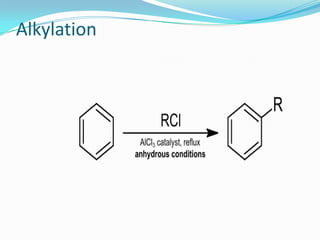
 Alkylation is the transfer of alkyl group from one molecule
  to another
 Alkyl group may transferred an alkyl carbocation free
  readical a carbanion or a carbene (or their equipment)
Alkylation process used in many aspect of chemistry

In oil refineries:
                               in oil refineries alkylation process
  refers to a particular alkylation of iso butane with olefins it is a
  major aspect of up grating of petroleum
Alkylation
ALKYLATION AGENTS
 NUCLEOPHILIC ALKYLATING AGENTS


 ELECTRO ALKYLATING AGENTS


 CARBENE ALKYLATING AGENTS
NUCLEOPHILIC ALKYLATING
AGENTS
 Nucleophilic alkylation (carbanion) e.g. include the
  use of organometallic compound such as Grignard
  (organo magnesium)agent. organoithm and
  organosidium reagent .these compound typically can
  add to an electro deficient carbon atom such as to
  carbonyl group they are also alkyl ate alkyl and aryl
  halides as exemplified by suzuki couplings.
 Where Grignard is the chemical process in which
  alkyl may halide add to a carbonyl group for sale are
  in production plant.
ELECTROPHILIC ALKYLATING
PROCESS
 Electrophilic alkylating agent deliver the equivalent of
  an alkylation
 Electrophilic soluble alkylating agent are often very
  toxic ,due to their ability to alkylate DNA. they should
  be handled by proper ppe. the mechanism of toxicity
  is also responsible for the ability of some alkylating
  agent to perform as anti –cancer drug in the form of
  alkylating antineoplastic agent.
CARBENE ALKYLATING AGENT
 Carbene are extremely reactive and are known to
 attack even un- activated c-h bend carbenes can be
 generated by elimination of a diazo group

 Where diazo group is a type of organic compound
 called diazo compound heat with nitrogen atom
IN OIL REFINERIES USES OF
ALKYLATION
 In standard oil refining process ,iso butane is
  alkylated with low molecular weight.
 Alkenes (primarily a mixture of propane and butane)
  in the presence of a strong and catalyst, either sulfuric
   Acid or hydro fluoric acid.
In an oil refinery it is referred as sulfuric acid alkylation
  unit (SAAU) or hydrofluoric alkylation unit .(HFAU)
  refinery worker may simply referred it the alkyl unit .
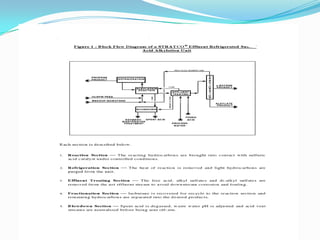
SAAU
             plant required lower temp so water medium
 need to be chilled for catalytic process
HFAU

            normal refinery cooling water will suffice

“ Since crude oil generally contain only up to 10 to 40% of
 hydrocarbon refineries use fluid catalytic cracking process
 to convert high molecular weight hydrocarbon
  Into smaller and more metallic compound which are then
 converted in to liquid gasoline size hydrocarbon”.
COMBINING CRACKING
POLYMERIZATION
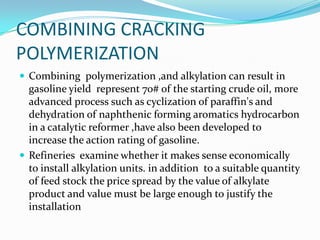
 Combining polymerization ,and alkylation can result in
  gasoline yield represent 70# of the starting crude oil, more
  advanced process such as cyclization of paraffin's and
  dehydration of naphthenic forming aromatics hydrocarbon
  in a catalytic reformer ,have also been developed to
  increase the action rating of gasoline.
 Refineries examine whether it makes sense economically
  to install alkylation units. in addition to a suitable quantity
  of feed stock the price spread by the value of alkylate
  product and value must be large enough to justify the
  installation
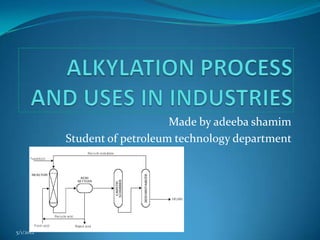
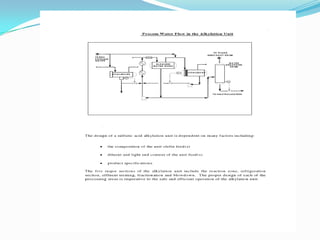
HF- ALKYLATION PROCESS
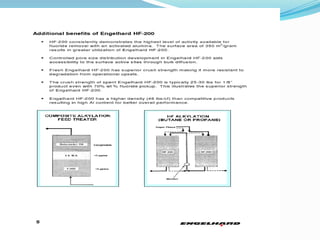
 Primary process technique
1.Alkylation occurs in the presence of a highly acidic
    catalyst process step
2.Olefins from fcc are combined with iso butane and
    feed to the hf reaction where alkylation occur
3.Acid settler separates the free hf from hydrocarbons
    and recycles the acid back to the reactor.
4. A portion of the hf is generation remove acid oil
    formed by feed contamination of hydrocarbon
    polymerization.
5. Hydro carbon from settler to the delso- butinizer for
  fractionating the propane and iso –butane from n-
  butane and alkylate
6. Propane is fractionated from the iso –butane
  ,propane as a product and iso –butane to be recycled to
  the reactor
7. N-butane and alkylate deflourized in a bed of solid
  adsorb and fractionated as separate particles ,
Alkylation
Alkylation

Alkylation

  • 1.
    Made by adeebashamim Student of petroleum technology department 5/1/2012
  • 2.
    ALKYLATION  Alkylation isthe transfer of alkyl group from one molecule to another  Alkyl group may transferred an alkyl carbocation free readical a carbanion or a carbene (or their equipment) Alkylation process used in many aspect of chemistry In oil refineries: in oil refineries alkylation process refers to a particular alkylation of iso butane with olefins it is a major aspect of up grating of petroleum
  • 3.
  • 5.
    ALKYLATION AGENTS  NUCLEOPHILICALKYLATING AGENTS  ELECTRO ALKYLATING AGENTS  CARBENE ALKYLATING AGENTS
  • 6.
    NUCLEOPHILIC ALKYLATING AGENTS  Nucleophilicalkylation (carbanion) e.g. include the use of organometallic compound such as Grignard (organo magnesium)agent. organoithm and organosidium reagent .these compound typically can add to an electro deficient carbon atom such as to carbonyl group they are also alkyl ate alkyl and aryl halides as exemplified by suzuki couplings.  Where Grignard is the chemical process in which alkyl may halide add to a carbonyl group for sale are in production plant.
  • 7.
    ELECTROPHILIC ALKYLATING PROCESS  Electrophilicalkylating agent deliver the equivalent of an alkylation  Electrophilic soluble alkylating agent are often very toxic ,due to their ability to alkylate DNA. they should be handled by proper ppe. the mechanism of toxicity is also responsible for the ability of some alkylating agent to perform as anti –cancer drug in the form of alkylating antineoplastic agent.
  • 8.
    CARBENE ALKYLATING AGENT Carbene are extremely reactive and are known to attack even un- activated c-h bend carbenes can be generated by elimination of a diazo group  Where diazo group is a type of organic compound called diazo compound heat with nitrogen atom
  • 9.
    IN OIL REFINERIESUSES OF ALKYLATION  In standard oil refining process ,iso butane is alkylated with low molecular weight.  Alkenes (primarily a mixture of propane and butane) in the presence of a strong and catalyst, either sulfuric Acid or hydro fluoric acid. In an oil refinery it is referred as sulfuric acid alkylation unit (SAAU) or hydrofluoric alkylation unit .(HFAU) refinery worker may simply referred it the alkyl unit .
  • 10.
    SAAU plant required lower temp so water medium need to be chilled for catalytic process HFAU normal refinery cooling water will suffice “ Since crude oil generally contain only up to 10 to 40% of hydrocarbon refineries use fluid catalytic cracking process to convert high molecular weight hydrocarbon Into smaller and more metallic compound which are then converted in to liquid gasoline size hydrocarbon”.
  • 12.
    COMBINING CRACKING POLYMERIZATION  Combiningpolymerization ,and alkylation can result in gasoline yield represent 70# of the starting crude oil, more advanced process such as cyclization of paraffin's and dehydration of naphthenic forming aromatics hydrocarbon in a catalytic reformer ,have also been developed to increase the action rating of gasoline.  Refineries examine whether it makes sense economically to install alkylation units. in addition to a suitable quantity of feed stock the price spread by the value of alkylate product and value must be large enough to justify the installation
  • 13.
    HF- ALKYLATION PROCESS Primary process technique 1.Alkylation occurs in the presence of a highly acidic catalyst process step 2.Olefins from fcc are combined with iso butane and feed to the hf reaction where alkylation occur 3.Acid settler separates the free hf from hydrocarbons and recycles the acid back to the reactor. 4. A portion of the hf is generation remove acid oil formed by feed contamination of hydrocarbon polymerization.
  • 14.
    5. Hydro carbonfrom settler to the delso- butinizer for fractionating the propane and iso –butane from n- butane and alkylate 6. Propane is fractionated from the iso –butane ,propane as a product and iso –butane to be recycled to the reactor 7. N-butane and alkylate deflourized in a bed of solid adsorb and fractionated as separate particles ,