A HELPFUL SUPPORT TO THE 
NEW MATHS CURRICULUM 
2ND SEPTEMBER 2014
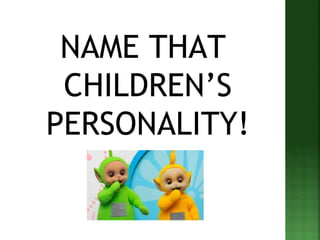
NAME THAT 
CHILDREN’S 
PERSONALITY!
Purpose of study 
 Mathematics is a creative and highly interconnected 
discipline that has been developed over centuries, 
providing the solution to some of history’s most 
intriguing problems. 
 It is essential to everyday life, critical to science, 
technology and engineering, and necessary for 
financial literacy and most forms of employment. 
 A high-quality mathematics education therefore 
provides a foundation for understanding the world, 
the ability to reason mathematically, an appreciation 
of the beauty and power of mathematics, and a sense 
of enjoyment and curiosity about the subject.
The Aims of The New Curriculum 
The National Curriculum for mathematics aims to 
ensure all pupils: 
become fluent in the fundamentals of 
mathematics so that they are efficient in using and 
selecting the appropriate written algorithms and 
mental methods, underpinned by mathematical 
concepts 
can solve problems by applying their mathematics 
to a variety of problems with increasing 
sophistication, including in unfamiliar contexts and 
to model real-life scenarios 
can reason mathematically by following a line of 
enquiry and develop and present a justification, 
argument or proof using mathematical language.
 Increased focus on arithmetic 
proficiency 
 Instant recall of number facts 
 Higher expectations in 
Fractions, Decimals and 
Percentages 
 Less emphasis on data handling
 Data Handling will now 
be called Statistics 
 Shape and Space now 
comes under the 
Geometry umbrella
 P. 3: A breakdown of the teaching 
and learning policy for maths. 
 P. 4: Aims of the policy to make 
your lives easier and to ensure we 
are all working from the same 
information and in the same format. 
 P. 5: Aims and approaches. 
 P. 6: The organisation of maths.
 P. 7: Curriculum maps. 
 P. 8: Medium and short term 
planning. 
 P. 9: EYFS 
 P. 10: Tests. 
 Ps. 11-12: CPA approach to maths. 
 Ps. 13-14: Problem solving 
approaches.
 http://www.mathsnoproblem.co.uk/singapore-maths 
 http://www.thesingaporemaths.com/ 
 http://www.bbc.co.uk/skillswise/0/24925787 
 http://www.independent.co.uk/news/educa 
tion/schools/box-clever-singapores-magic-formula- 
for-maths-success-1727053.html
 From now on, the methods outlined in the 
handbook are the methods to be delivered in 
classrooms. 
 From diagnostic assessments, ascertain what 
stage of learning your children are at and 
move on to the next appropriate method 
when you feel the children are able to access 
it.
 The aim of the curriculum map is to break 
down the objectives needed to be covered in 
your year group into half termly 
expectations. 
 The objectives have been taken from the 
programmes of study that you were shown in 
November. 
 It is important that, depending upon which 
maths group you will be teaching, you look at 
the curriculum map for your current year 
group and also that of the year group above 
or below your own.
 The point of the MTPs is to give you a 
starting point for your planning. 
 It is important to remember that the MTPs 
are to be used as a tool, not as a syllabus. 
They serve as an idea bank to be used in 
conjunction with the curriculum map but 
that does not mean that they should be stuck 
to rigidly. 
 You may have ideas and activities from 
previous teaching and learning experiences. 
Do not be afraid to use them!
 The short term planning format is 
predominantly the same as before. 
 The information at the top should be as 
before, with the names of your children 
listed alongside the level in which they are 
currently working. 
 Colour coding has now changed to the traffic 
light system, with higher achievers being 
green, middle attainers being yellow and 
children at the lower end of your group being 
red. 
 Depending upon the topic being taught, 
there may be some movement in the yellow 
group activities.
 Due to Big Write being re-introduced to 
LKS2, you may wish to list your lessons as 
sessions rather than as days. 
 In KS2, there is to be a Tables starter as well 
as a mental oral starter. This should be a 
short activity that focuses on the children 
learning their tables and developing rapid 
recall. 
 The Tables starter will move on to becoming 
the Rainbow Challenge starter which was 
trialled in some classes last year but the 
system is currently being adapted to sit more 
in line with the new curriculum.
 http://www.transum.org/Software/SW/Start 
er_of_the_day/Similar.asp?ID_Topic=39 
 http://www.bbc.co.uk/skillswise/game/ma1 
3tabl-game-tables-grid-find 
 http://www.ilovemathsgames.com/Flashstar 
ters/tables.swf 
 http://www.topmarks.co.uk/Search.aspx? 
q=times+tables&p=2

Aids for teaching Mathematics

  • 1.
    A HELPFUL SUPPORTTO THE NEW MATHS CURRICULUM 2ND SEPTEMBER 2014
  • 2.
  • 3.
    Purpose of study  Mathematics is a creative and highly interconnected discipline that has been developed over centuries, providing the solution to some of history’s most intriguing problems.  It is essential to everyday life, critical to science, technology and engineering, and necessary for financial literacy and most forms of employment.  A high-quality mathematics education therefore provides a foundation for understanding the world, the ability to reason mathematically, an appreciation of the beauty and power of mathematics, and a sense of enjoyment and curiosity about the subject.
  • 4.
    The Aims ofThe New Curriculum The National Curriculum for mathematics aims to ensure all pupils: become fluent in the fundamentals of mathematics so that they are efficient in using and selecting the appropriate written algorithms and mental methods, underpinned by mathematical concepts can solve problems by applying their mathematics to a variety of problems with increasing sophistication, including in unfamiliar contexts and to model real-life scenarios can reason mathematically by following a line of enquiry and develop and present a justification, argument or proof using mathematical language.
  • 5.
     Increased focuson arithmetic proficiency  Instant recall of number facts  Higher expectations in Fractions, Decimals and Percentages  Less emphasis on data handling
  • 6.
     Data Handlingwill now be called Statistics  Shape and Space now comes under the Geometry umbrella
  • 7.
     P. 3:A breakdown of the teaching and learning policy for maths.  P. 4: Aims of the policy to make your lives easier and to ensure we are all working from the same information and in the same format.  P. 5: Aims and approaches.  P. 6: The organisation of maths.
  • 8.
     P. 7:Curriculum maps.  P. 8: Medium and short term planning.  P. 9: EYFS  P. 10: Tests.  Ps. 11-12: CPA approach to maths.  Ps. 13-14: Problem solving approaches.
  • 9.
     http://www.mathsnoproblem.co.uk/singapore-maths http://www.thesingaporemaths.com/  http://www.bbc.co.uk/skillswise/0/24925787  http://www.independent.co.uk/news/educa tion/schools/box-clever-singapores-magic-formula- for-maths-success-1727053.html
  • 10.
     From nowon, the methods outlined in the handbook are the methods to be delivered in classrooms.  From diagnostic assessments, ascertain what stage of learning your children are at and move on to the next appropriate method when you feel the children are able to access it.
  • 11.
     The aimof the curriculum map is to break down the objectives needed to be covered in your year group into half termly expectations.  The objectives have been taken from the programmes of study that you were shown in November.  It is important that, depending upon which maths group you will be teaching, you look at the curriculum map for your current year group and also that of the year group above or below your own.
  • 12.
     The pointof the MTPs is to give you a starting point for your planning.  It is important to remember that the MTPs are to be used as a tool, not as a syllabus. They serve as an idea bank to be used in conjunction with the curriculum map but that does not mean that they should be stuck to rigidly.  You may have ideas and activities from previous teaching and learning experiences. Do not be afraid to use them!
  • 13.
     The shortterm planning format is predominantly the same as before.  The information at the top should be as before, with the names of your children listed alongside the level in which they are currently working.  Colour coding has now changed to the traffic light system, with higher achievers being green, middle attainers being yellow and children at the lower end of your group being red.  Depending upon the topic being taught, there may be some movement in the yellow group activities.
  • 14.
     Due toBig Write being re-introduced to LKS2, you may wish to list your lessons as sessions rather than as days.  In KS2, there is to be a Tables starter as well as a mental oral starter. This should be a short activity that focuses on the children learning their tables and developing rapid recall.  The Tables starter will move on to becoming the Rainbow Challenge starter which was trialled in some classes last year but the system is currently being adapted to sit more in line with the new curriculum.
  • 15.
     http://www.transum.org/Software/SW/Start er_of_the_day/Similar.asp?ID_Topic=39  http://www.bbc.co.uk/skillswise/game/ma1 3tabl-game-tables-grid-find  http://www.ilovemathsgames.com/Flashstar ters/tables.swf  http://www.topmarks.co.uk/Search.aspx? q=times+tables&p=2