Downloaded 499 times
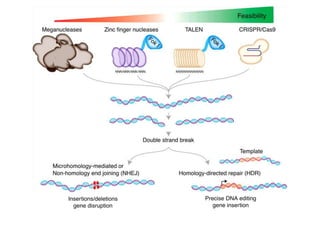
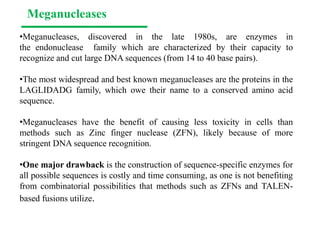

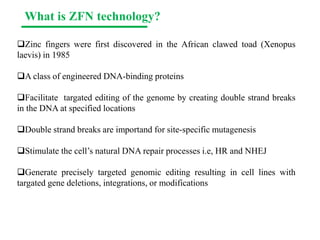
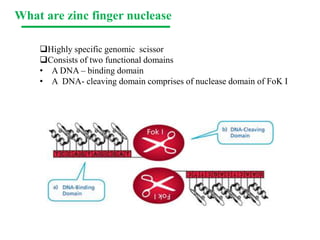
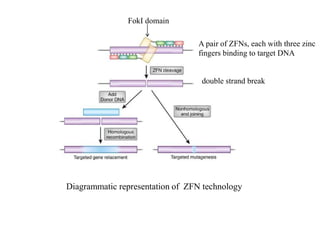
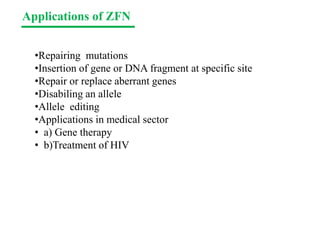
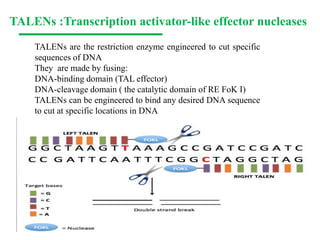
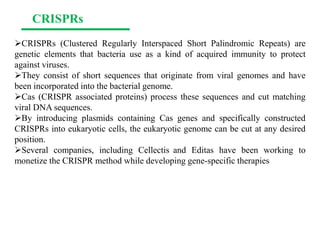
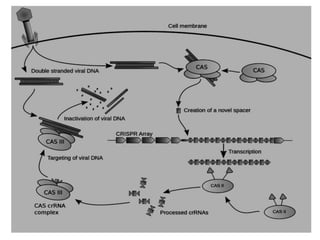
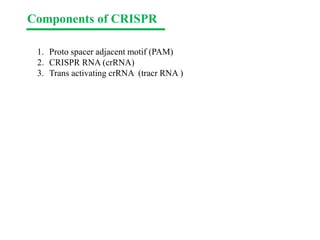

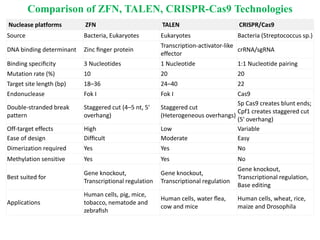


Genome editing techniques allow DNA to be inserted, deleted, modified or replaced in the genome of a living organism. Four families of engineered nucleases have been used for genome editing: meganucleases, zinc finger nucleases (ZFNs), transcription activator-like effector nucleases (TALENs), and the CRISPR/Cas9 system. Each system uses a different mechanism for recognizing and cutting DNA at specific locations to modify genes. The CRISPR/Cas9 system has become widely used due to its ease of design and lower off-target effects compared to other techniques.


