Forensic Science Resources:
How to get what you need
Linda Galloway
Biology, Chemistry & Forensic Science Librarian
October 9, 2013
Agenda
• Who I am, what I do
• Finding background information on a topic
• Scientific literature
– Identifying relevant materials
– Obtaining full text of documents
• Advanced search techniques
• Questions?
researchguides.library.syr.edu/forensic
About me…
• Former forensic chemist (drug & arson) for the
Syracuse Police Department
• Librarian for Biology, Chemistry, Neuroscience
& Forensic Science
• Help people access the content they
need, teach (guest lectures and
classes), purchase electronic & print
resources, create web content, etc.
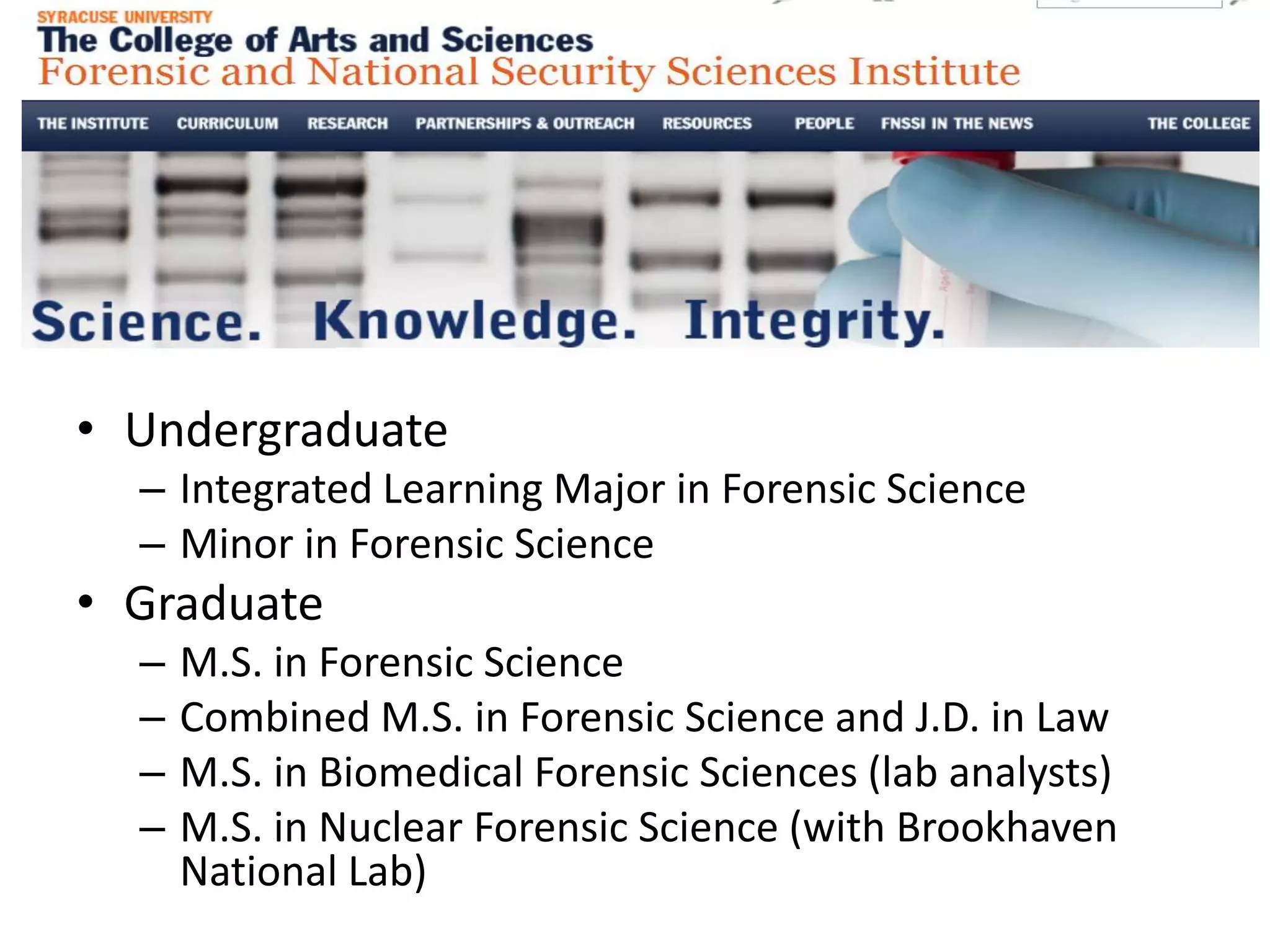
• Undergraduate
– Integrated Learning Major in Forensic Science
– Minor in Forensic Science
• Graduate
– M.S. in Forensic Science
– Combined M.S. in Forensic Science and J.D. in Law
– M.S. in Biomedical Forensic Sciences (lab analysts)
– M.S. in Nuclear Forensic Science (with Brookhaven
National Lab)
FSC 632
Research and Career Resources is a course designed to help
the graduate student meet forensic employers'
expectations and bring together concepts that may only be
touched on in other courses during their studies. Areas to be
covered will include effective research techniques and
literature interpretation, critical thinking
skills, communication methods specific to forensic science and
their potential discovery issues, trial practice/procedure and
topics relevant to employment in the field of forensic
science. It is expected that the skills learned in this course will
assist students to perform to a higher standard and to give
them an additional competitive edge when they enter the
job market.
Background Information
Wikipedia
• A great resource for background information
– Corroborate facts before you use them
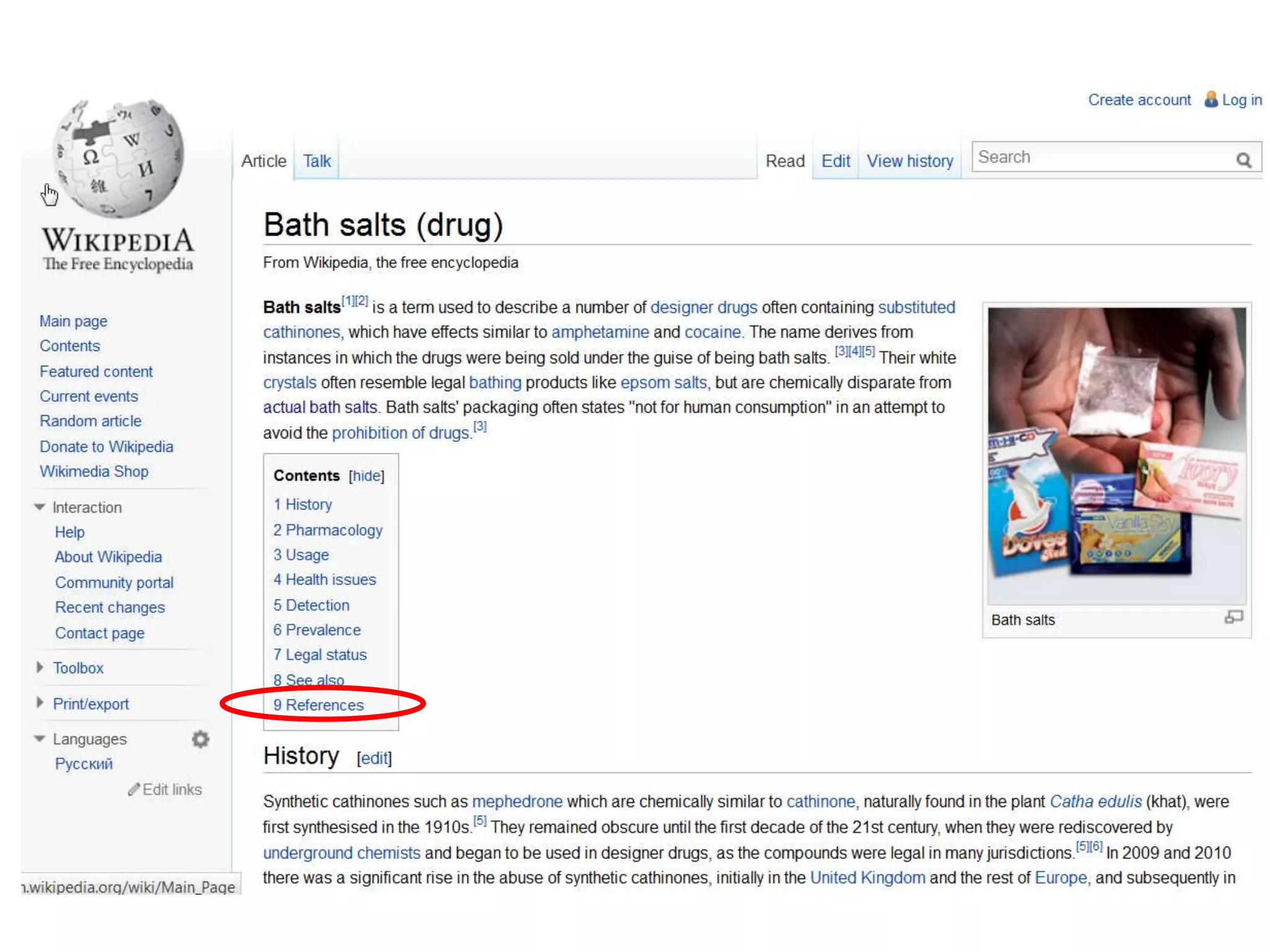
– Use the resources (links to other articles or to
other sources; found at end of Wikipedia article)
• Wikipedia is written by volunteer
contributors, but most of the content is
reviewed and edited by experts
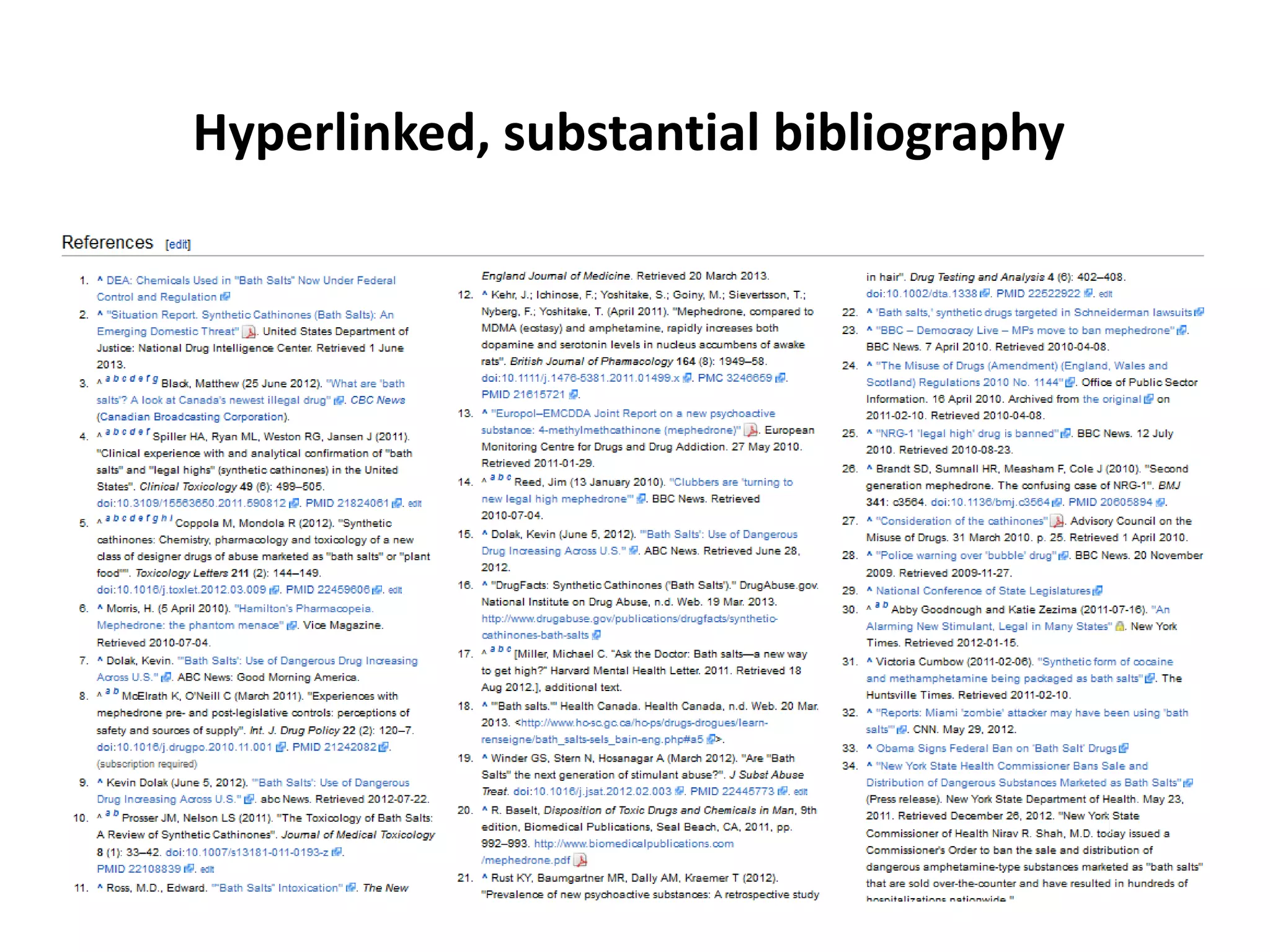
Hyperlinked, substantial bibliography
Before you really start your research…
• Be familiar enough to talk about your topic for
5 minutes
• Decide what kind of information you need
– Background information
– Newspaper or magazine articles
– Scientific or scholarly articles
– Images, photos
– Other?
Newspaper Articles
News Resources
• Most newspapers provide limited free access
to stories via web portals
• Access to older articles, or print version of
articles, is often behind a pay wall
• Print and electronic versions of articles are
often different
• Most public & college libraries provide online
access to newspaper databases
Scientific Literature
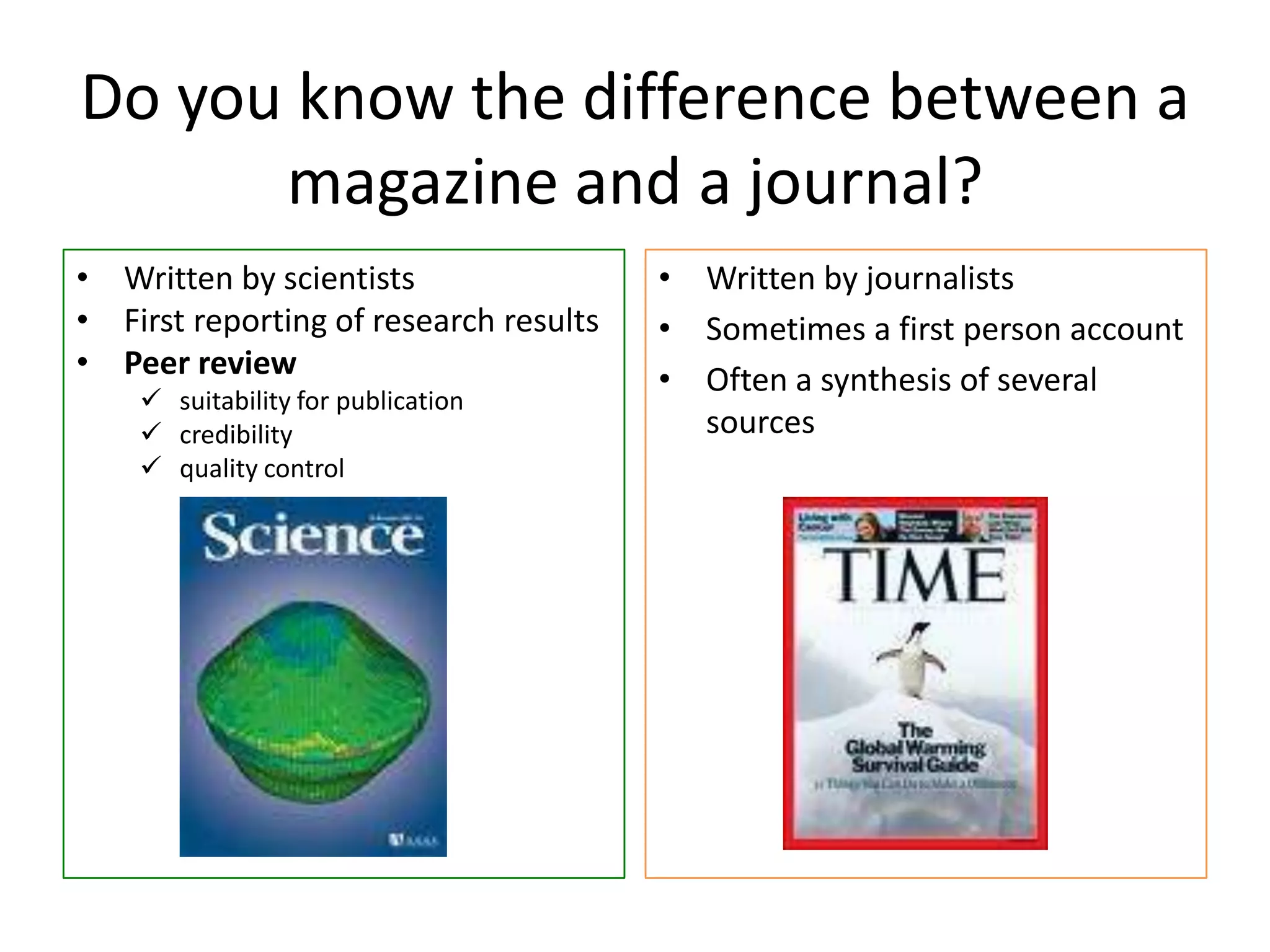
Do you know the difference between a
magazine and a journal?
• Written by scientists
• First reporting of research results
• Peer review
 suitability for publication
 credibility
 quality control
• Written by journalists
• Sometimes a first person account
• Often a synthesis of several
sources
Some terms to be aware of….
• Citation – reference to a source, so that
someone can find this again
• Abstract – summary of a published work
• Peer-reviewed article – before
publication, article is evaluate & edited by
experts
• DOI – Digital Object Identifier, unique number
for each digital publication
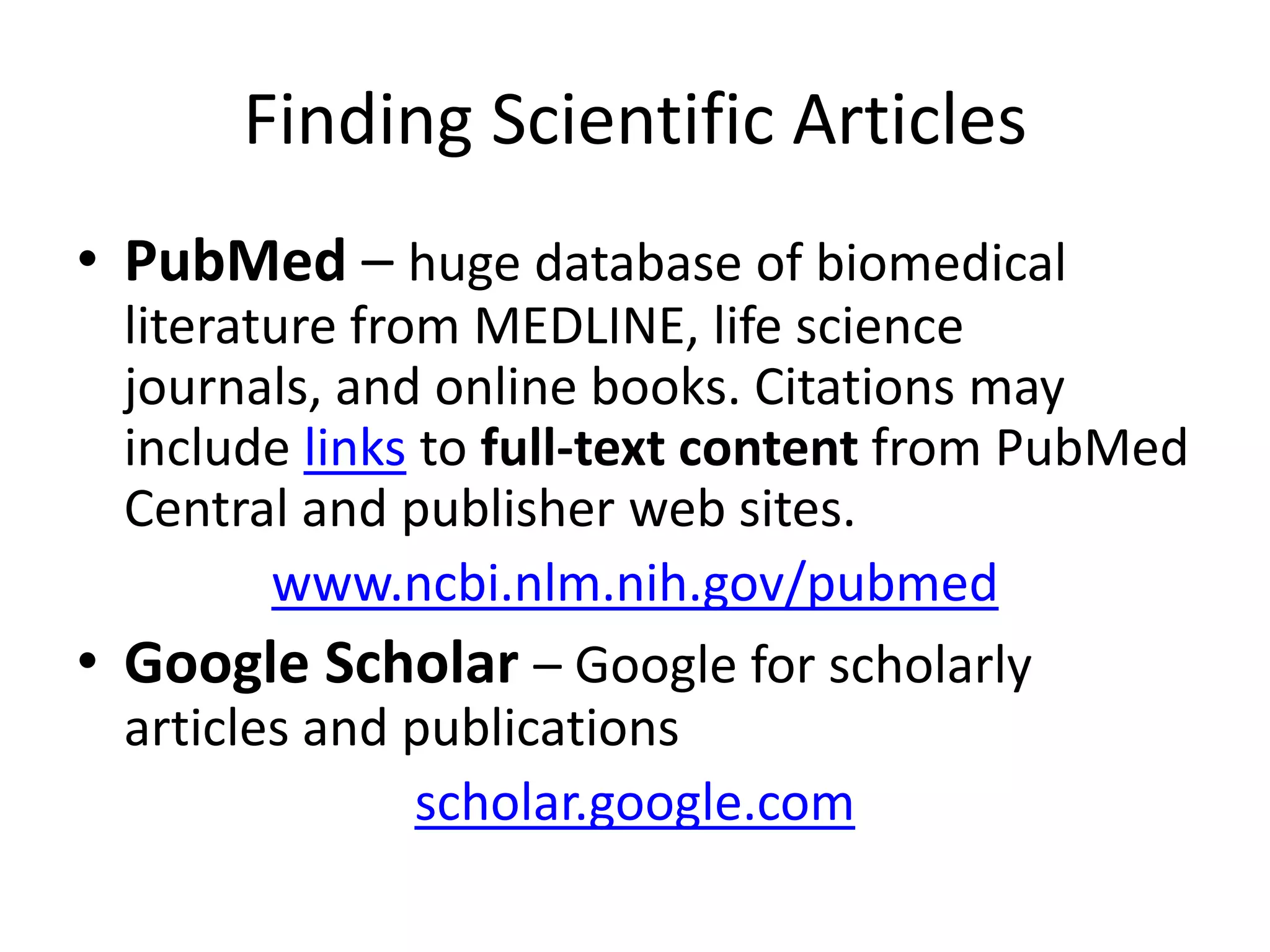
Finding Scientific Articles
• PubMed – huge database of biomedical
literature from MEDLINE, life science
journals, and online books. Citations may
include links to full-text content from PubMed
Central and publisher web sites.
www.ncbi.nlm.nih.gov/pubmed
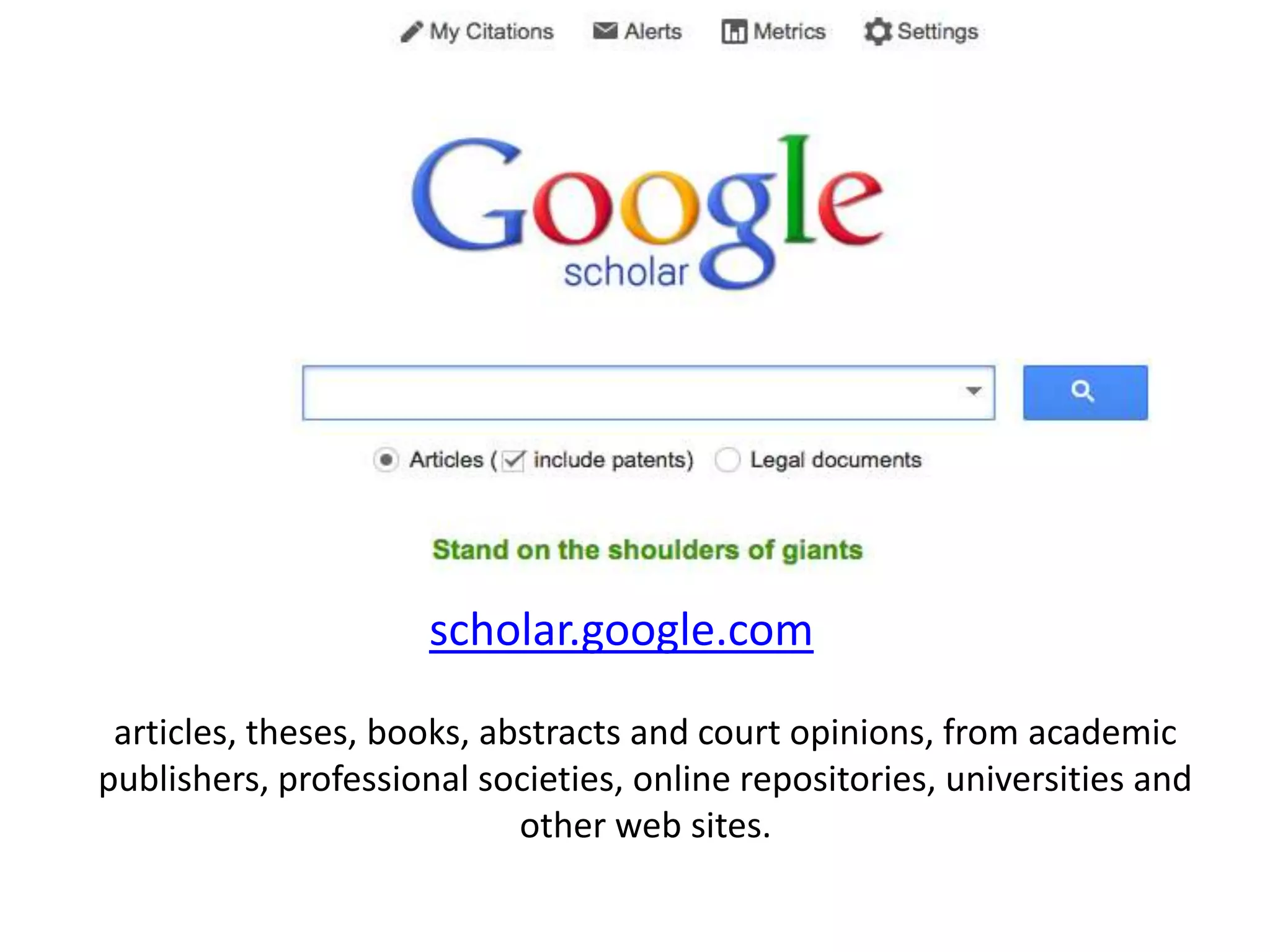
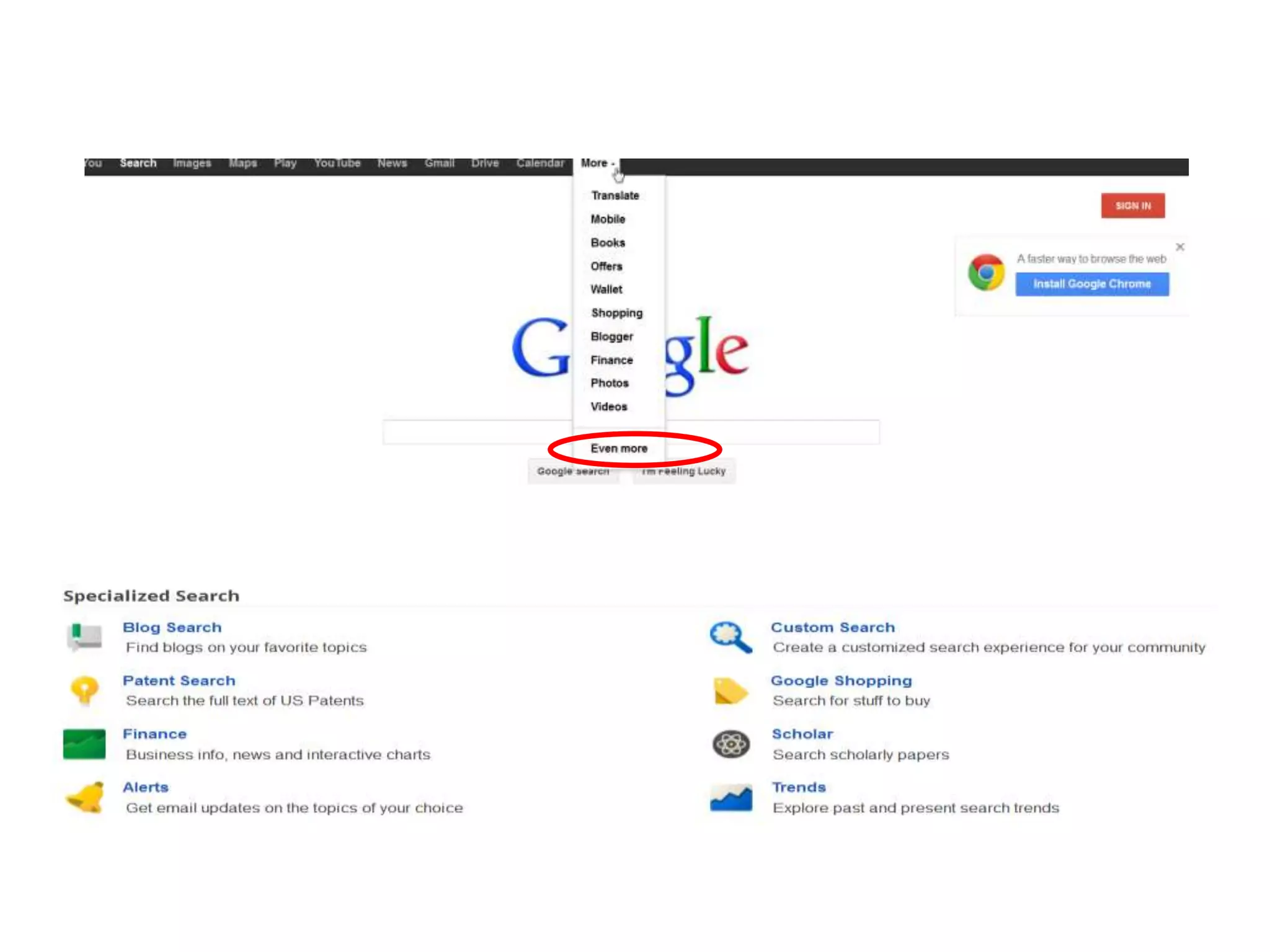
• Google Scholar – Google for scholarly
articles and publications
scholar.google.com
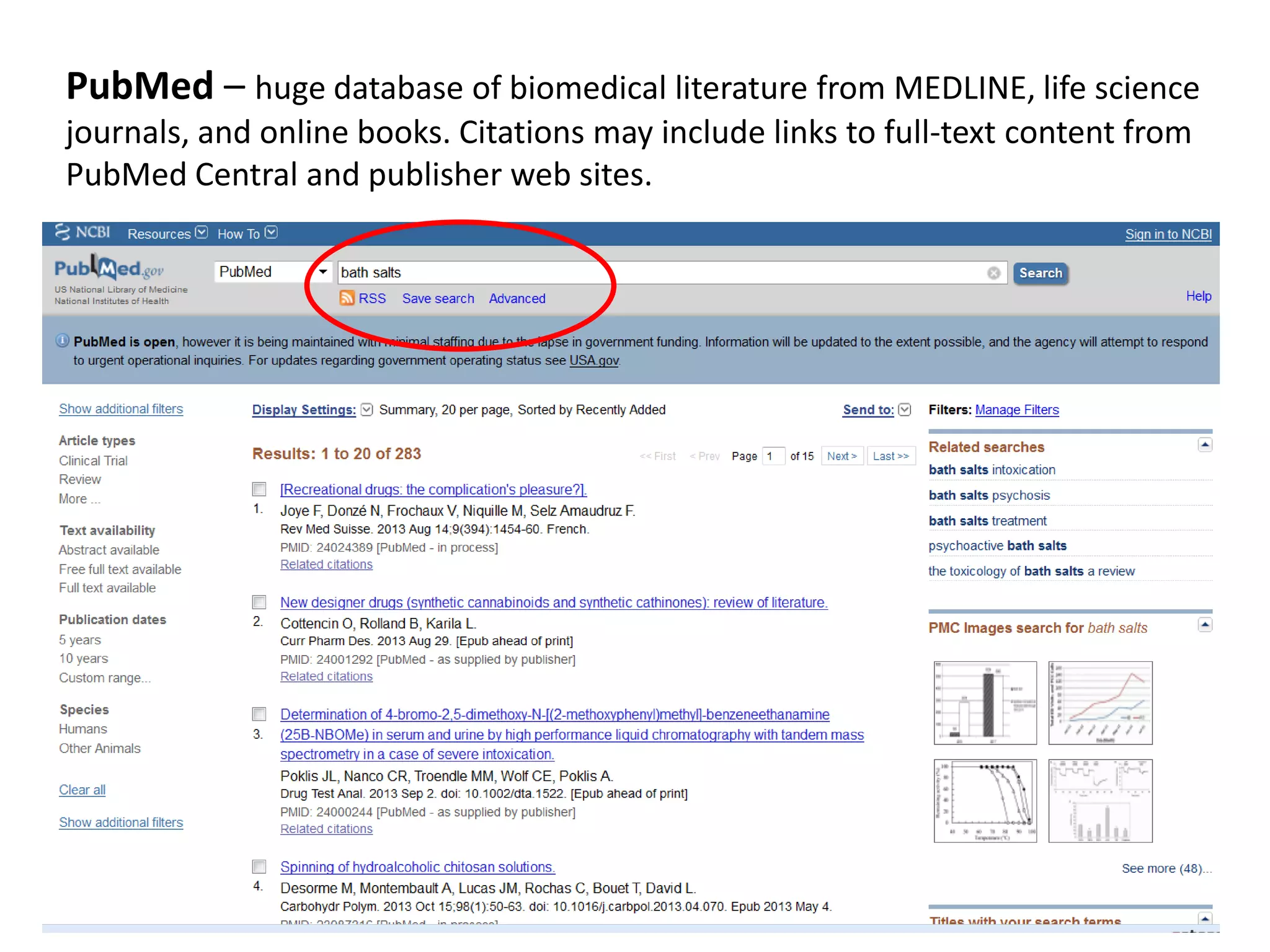
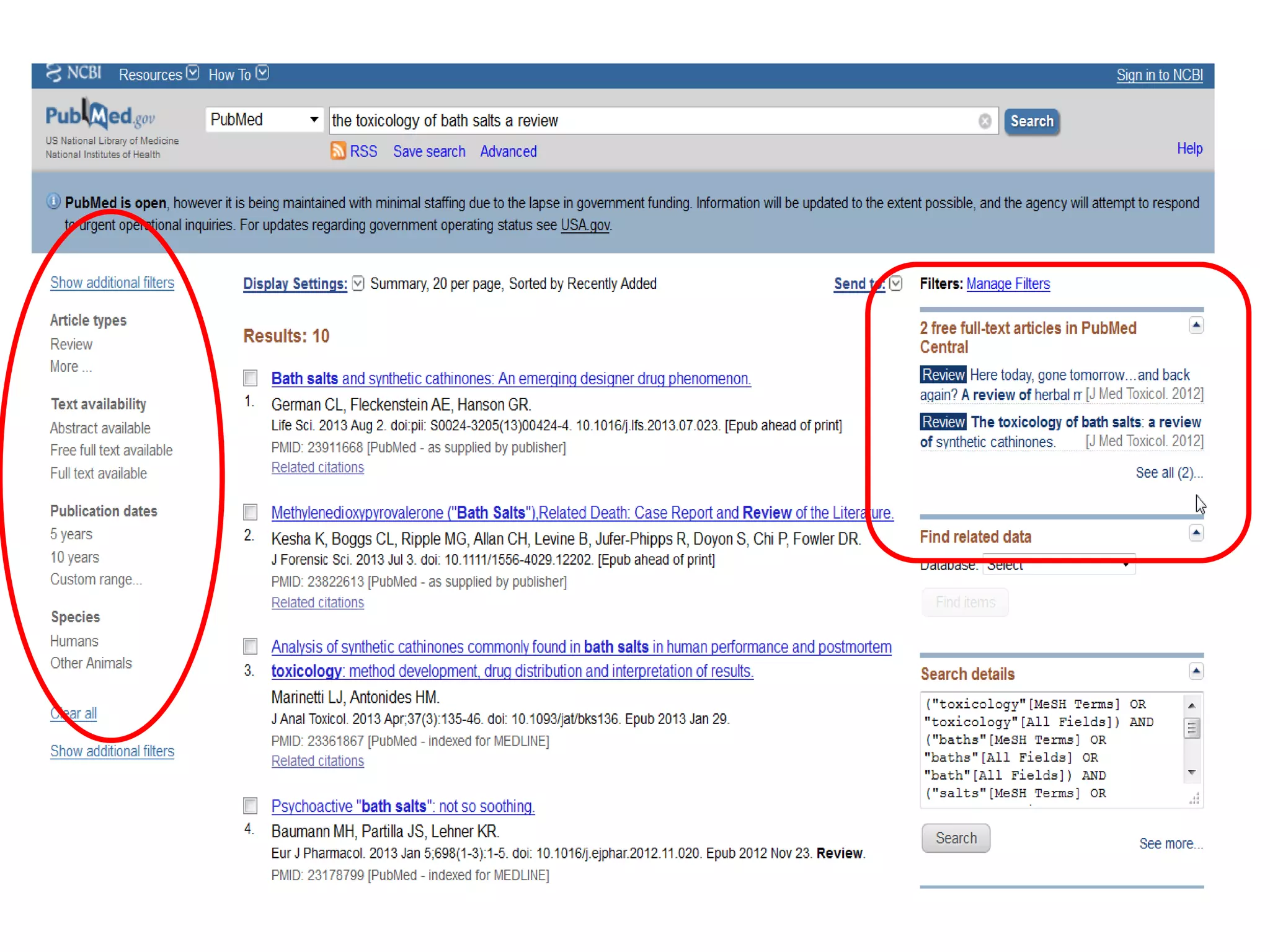
PubMed – huge database of biomedical literature from MEDLINE, life science
journals, and online books. Citations may include links to full-text content from
PubMed Central and publisher web sites.
Review Article
• Summarize current literature on a topic and
provide an analysis of the topic.
• Great to gain a thorough understanding of a
topic
articles, theses, books, abstracts and court opinions, from academic
publishers, professional societies, online repositories, universities and
other web sites.
scholar.google.com
Finding Full Text
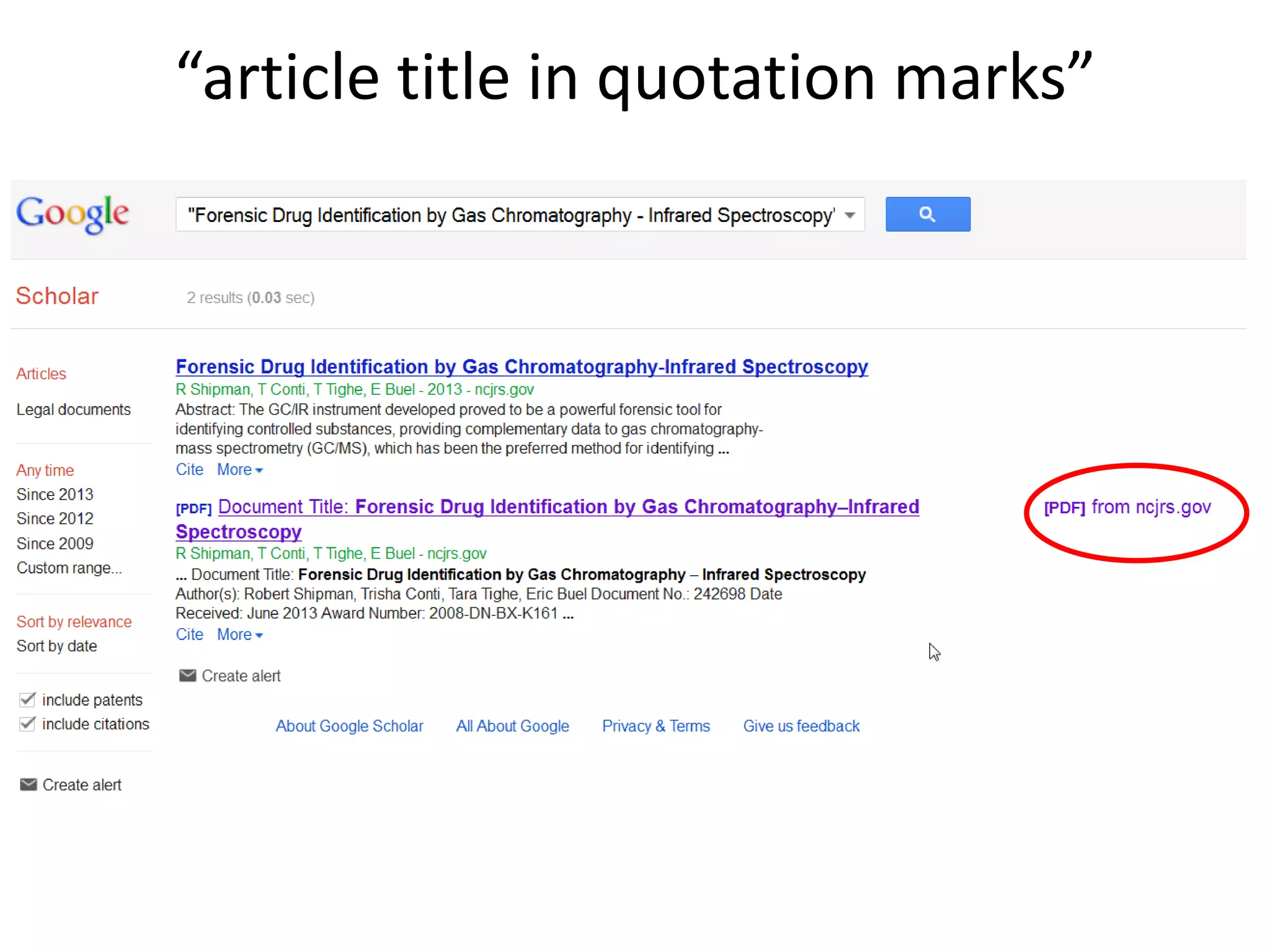
• Always check Google Scholar first; .pdf may be
available or put article title “in quotation
marks”
• College or University libraries offer walk-in
access to licensed resources
• Public libraries may offer access
• Purchase from publisher – around $39/article
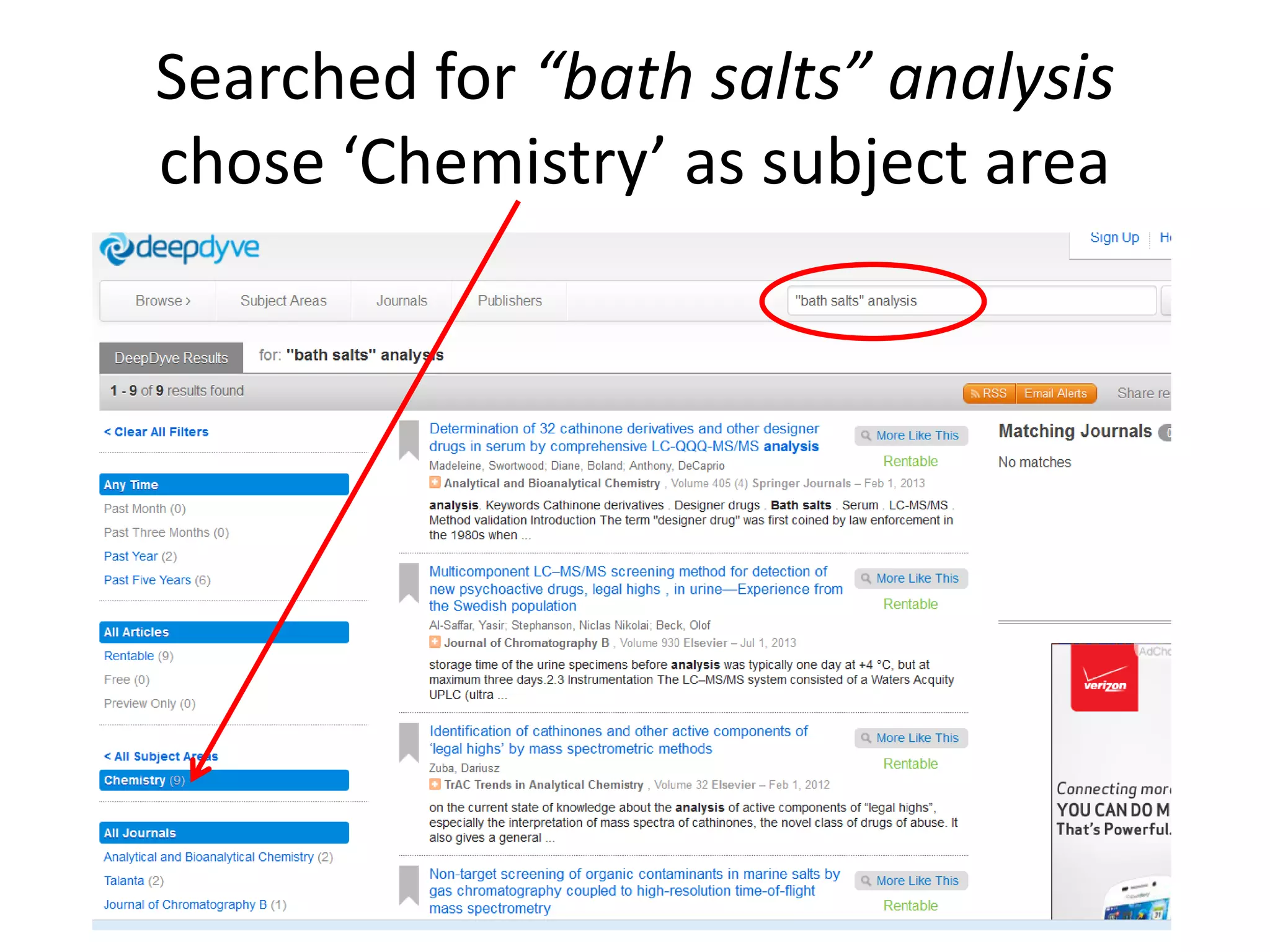
• Use an article service such as DeepDyve
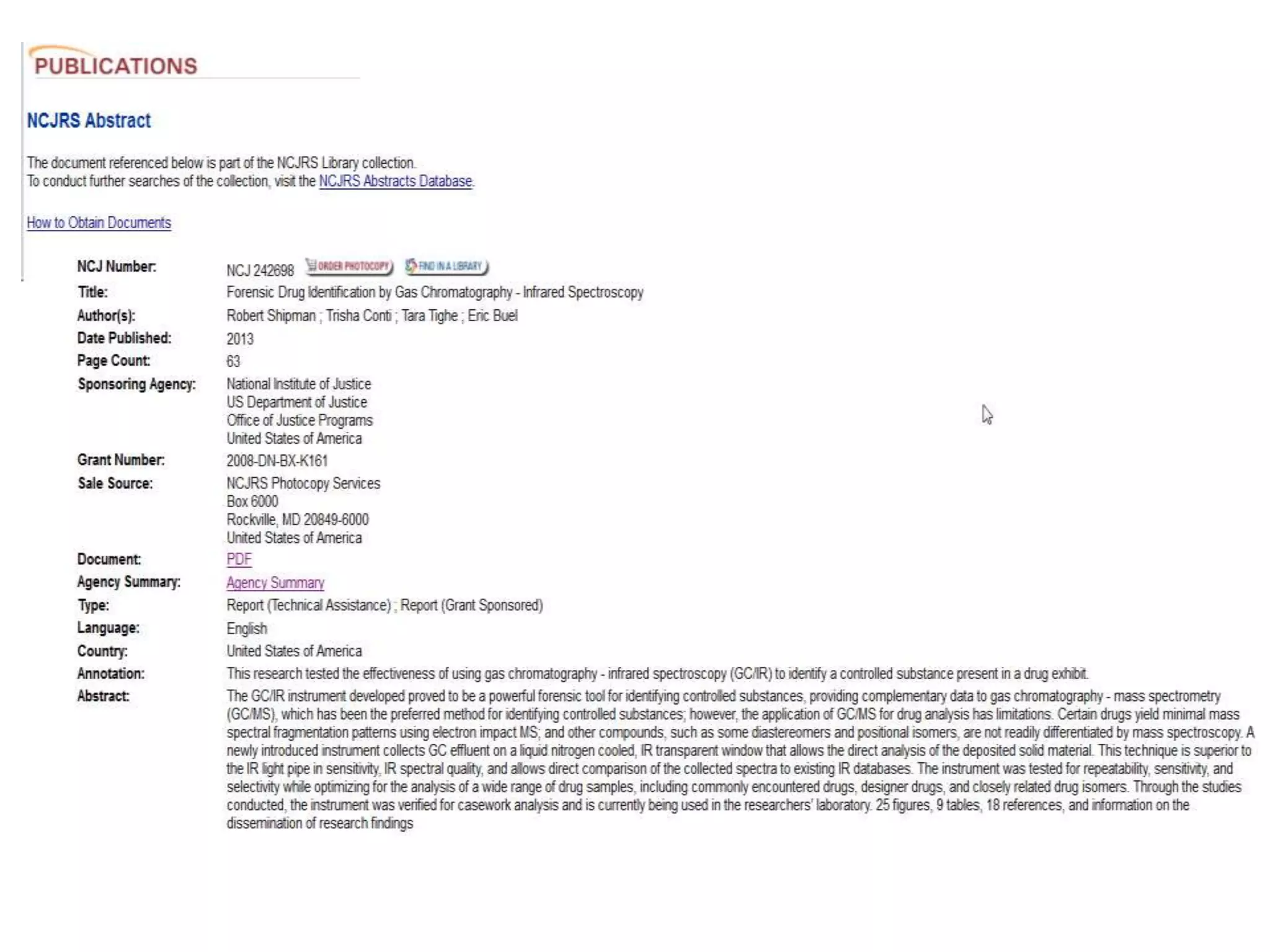
Government websites offer access
“article title in quotation marks”
Purchasing Access to Articles
• Societies often offer journal subscriptions
to their members
• From publishers, usually around $39 per
article
• Use an article service such as DeepDyve
Deepdyve
• Free account with DeepDyve gets you free access to full-text
articles for five minutes a day
• $20 for five 30-day rentals, or $40/month for 40 monthly
rentals
• Cannot print or download articles unless you purchase them
• Deepdyve offers individual & group plans for article rentals &
purchases
Searched for “bath salts” analysis
chose ‘Chemistry’ as subject area
www.deepdyve.com
Questions???
More about
Using Ggle Scholar Smarter…
• Creating a Google Scholar profile allows
Google Scholar provide links of interest
• Set ‘Library Links’ if affiliated with a college
library
• Sign up for ‘Alerts’ in your area of interest
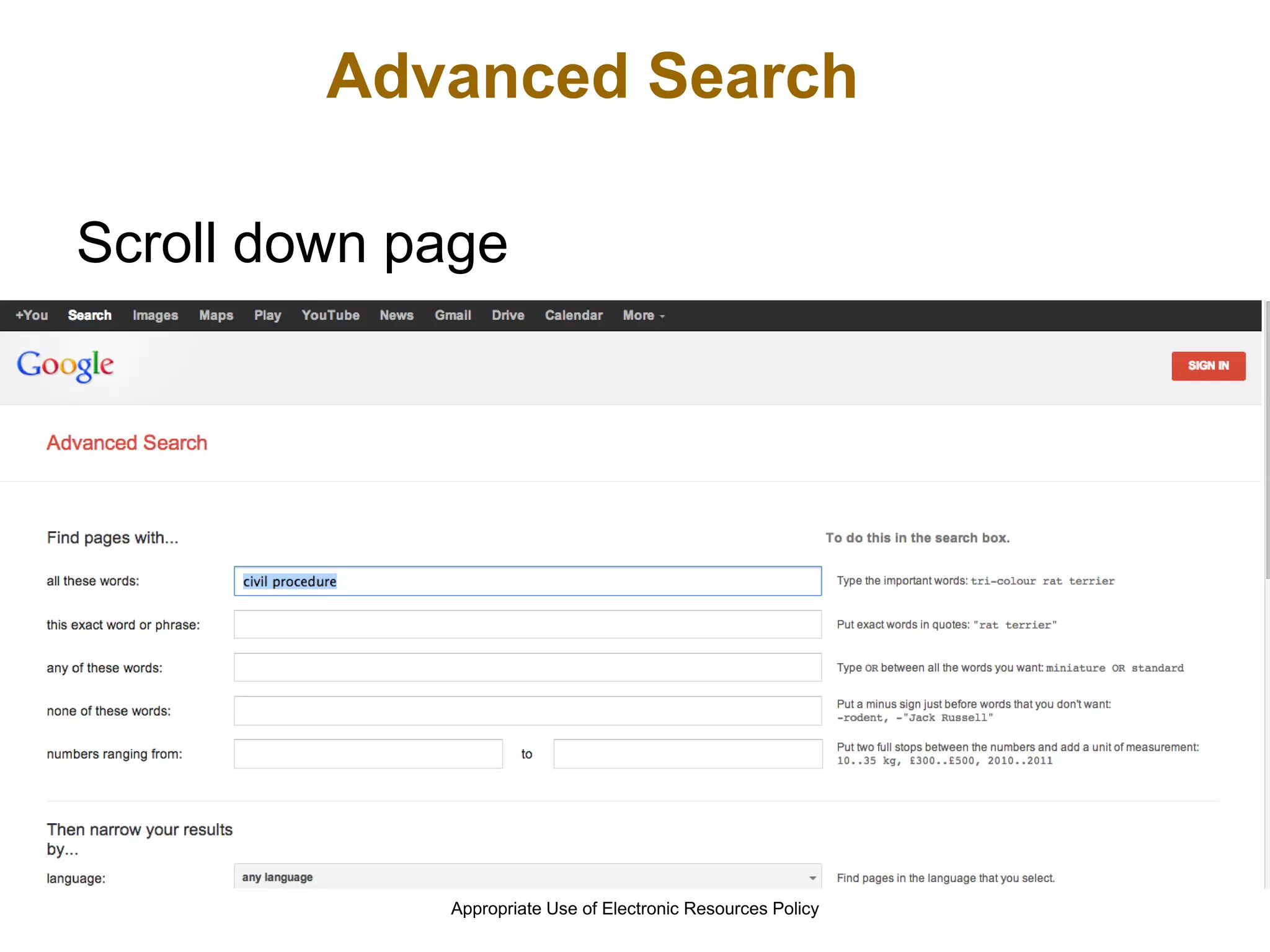
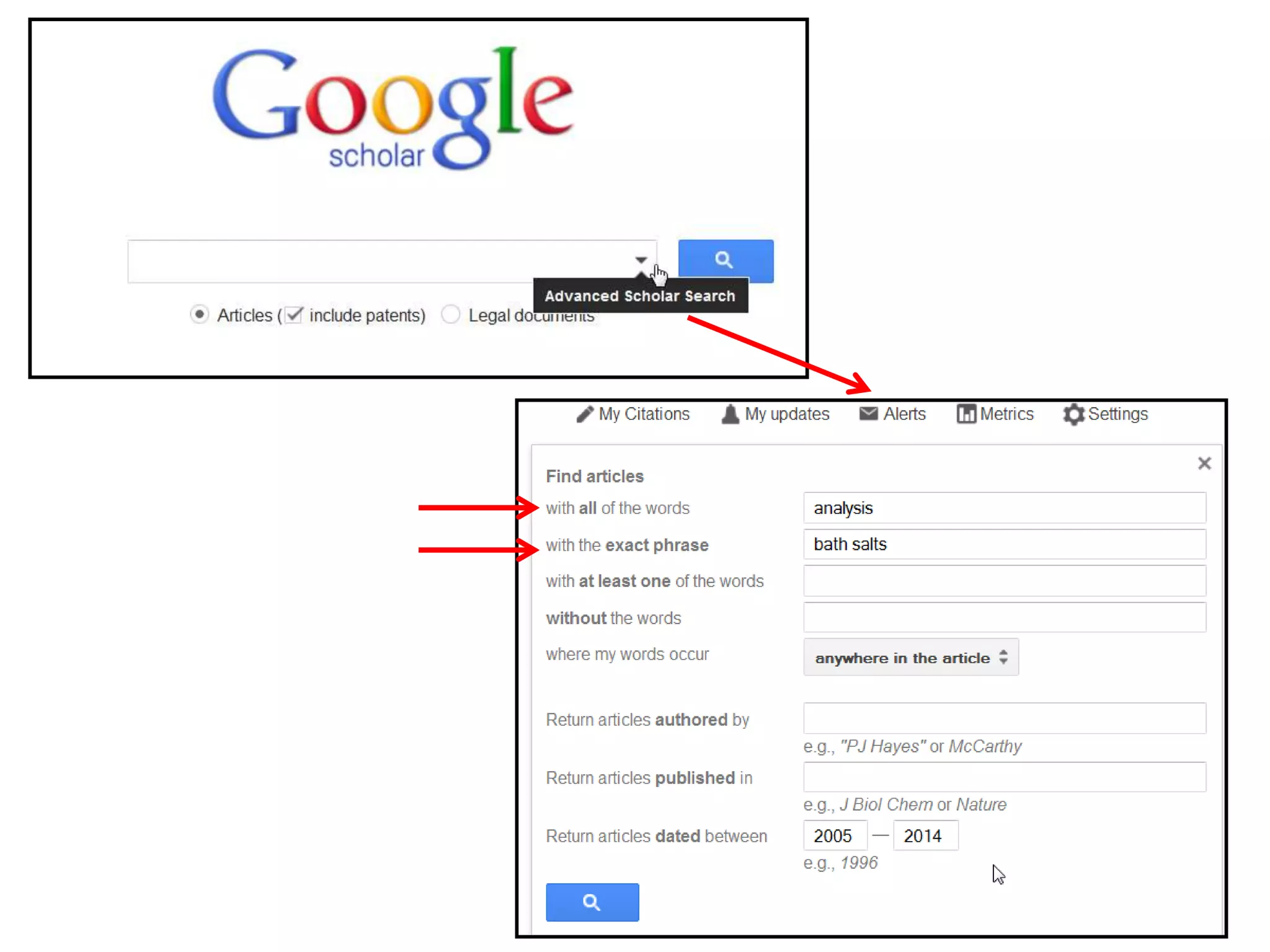
• Use ‘Advanced Search’ to be more specific
• Read the abstracts of articles before
requesting
Keep up with literature in your field…..
RSS Alerts
• Set up RSS feeds in Google Scholar to be
alerted when new articles in your field of
interest are published. (I use Scopus to do
this).
• Can set up alerts from many resources– by
author or topic
• Be cognizant of the amount of information
you might get….
Advanced
Search Techniques
Advanced Search
Appropriate Use of Electronic Resources Policy
Scroll down page
Advanced Search
To specify language that results
should appear in
Appropriate Use of Electronic Resources Policy
To specify that result should only
appear in one file type
e.g. in ppt, pdf
Appropriate Use of Electronic Resources Policy
To specify site or domain of result
e.g. .edu, .gov, .org
Appropriate Use of Electronic Resources Policy
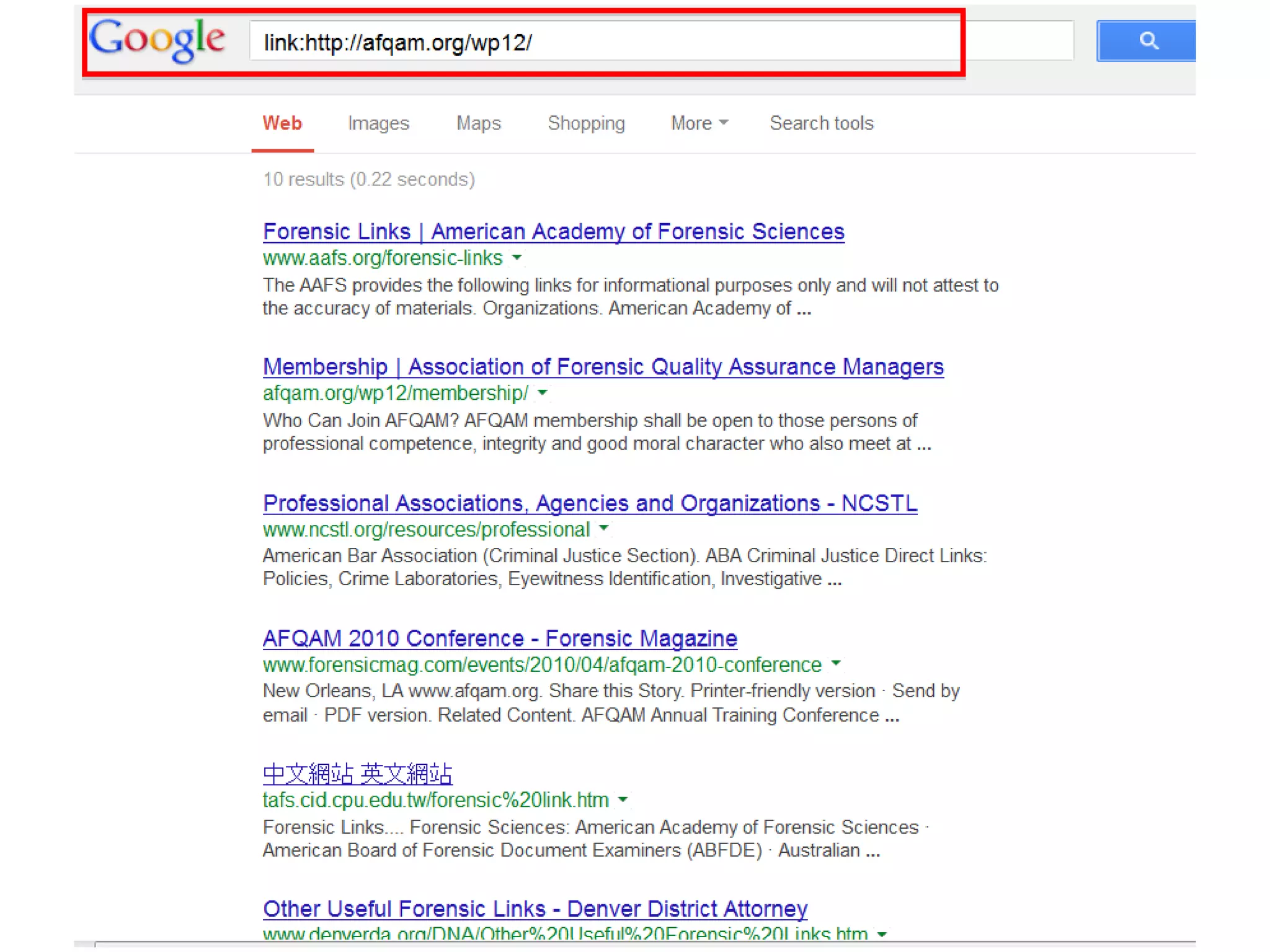
Google Search Operators
When you search using an operator, don't add
any spaces between the operator and your
query. A search for site:nytimes.com will
work, but site: nytimes.com will not.
Exclude a word; -query
Search within a site or domain site:query
Search for pages that link to a URL link:query
Search for either word query OR query
Questions???

AFQAM Galloway

  • 1.
    Forensic Science Resources: Howto get what you need Linda Galloway Biology, Chemistry & Forensic Science Librarian October 9, 2013
  • 2.
    Agenda • Who Iam, what I do • Finding background information on a topic • Scientific literature – Identifying relevant materials – Obtaining full text of documents • Advanced search techniques • Questions? researchguides.library.syr.edu/forensic
  • 3.
    About me… • Formerforensic chemist (drug & arson) for the Syracuse Police Department • Librarian for Biology, Chemistry, Neuroscience & Forensic Science • Help people access the content they need, teach (guest lectures and classes), purchase electronic & print resources, create web content, etc.
  • 4.
    • Undergraduate – IntegratedLearning Major in Forensic Science – Minor in Forensic Science • Graduate – M.S. in Forensic Science – Combined M.S. in Forensic Science and J.D. in Law – M.S. in Biomedical Forensic Sciences (lab analysts) – M.S. in Nuclear Forensic Science (with Brookhaven National Lab)
  • 5.
    FSC 632 Research andCareer Resources is a course designed to help the graduate student meet forensic employers' expectations and bring together concepts that may only be touched on in other courses during their studies. Areas to be covered will include effective research techniques and literature interpretation, critical thinking skills, communication methods specific to forensic science and their potential discovery issues, trial practice/procedure and topics relevant to employment in the field of forensic science. It is expected that the skills learned in this course will assist students to perform to a higher standard and to give them an additional competitive edge when they enter the job market.
  • 6.
  • 7.
    Wikipedia • A greatresource for background information – Corroborate facts before you use them – Use the resources (links to other articles or to other sources; found at end of Wikipedia article) • Wikipedia is written by volunteer contributors, but most of the content is reviewed and edited by experts
  • 9.
  • 10.
    Before you reallystart your research… • Be familiar enough to talk about your topic for 5 minutes • Decide what kind of information you need – Background information – Newspaper or magazine articles – Scientific or scholarly articles – Images, photos – Other?
  • 11.
  • 12.
    News Resources • Mostnewspapers provide limited free access to stories via web portals • Access to older articles, or print version of articles, is often behind a pay wall • Print and electronic versions of articles are often different • Most public & college libraries provide online access to newspaper databases
  • 13.
  • 14.
    Do you knowthe difference between a magazine and a journal? • Written by scientists • First reporting of research results • Peer review  suitability for publication  credibility  quality control • Written by journalists • Sometimes a first person account • Often a synthesis of several sources
  • 15.
    Some terms tobe aware of…. • Citation – reference to a source, so that someone can find this again • Abstract – summary of a published work • Peer-reviewed article – before publication, article is evaluate & edited by experts • DOI – Digital Object Identifier, unique number for each digital publication
  • 16.
    Finding Scientific Articles •PubMed – huge database of biomedical literature from MEDLINE, life science journals, and online books. Citations may include links to full-text content from PubMed Central and publisher web sites. www.ncbi.nlm.nih.gov/pubmed • Google Scholar – Google for scholarly articles and publications scholar.google.com
  • 17.
    PubMed – hugedatabase of biomedical literature from MEDLINE, life science journals, and online books. Citations may include links to full-text content from PubMed Central and publisher web sites.
  • 20.
    Review Article • Summarizecurrent literature on a topic and provide an analysis of the topic. • Great to gain a thorough understanding of a topic
  • 21.
    articles, theses, books,abstracts and court opinions, from academic publishers, professional societies, online repositories, universities and other web sites. scholar.google.com
  • 24.
    Finding Full Text •Always check Google Scholar first; .pdf may be available or put article title “in quotation marks” • College or University libraries offer walk-in access to licensed resources • Public libraries may offer access • Purchase from publisher – around $39/article • Use an article service such as DeepDyve
  • 25.
  • 27.
    “article title inquotation marks”
  • 28.
    Purchasing Access toArticles • Societies often offer journal subscriptions to their members • From publishers, usually around $39 per article • Use an article service such as DeepDyve
  • 29.
    Deepdyve • Free accountwith DeepDyve gets you free access to full-text articles for five minutes a day • $20 for five 30-day rentals, or $40/month for 40 monthly rentals • Cannot print or download articles unless you purchase them • Deepdyve offers individual & group plans for article rentals & purchases
  • 30.
    Searched for “bathsalts” analysis chose ‘Chemistry’ as subject area
  • 31.
  • 32.
  • 34.
    Using Ggle ScholarSmarter… • Creating a Google Scholar profile allows Google Scholar provide links of interest • Set ‘Library Links’ if affiliated with a college library • Sign up for ‘Alerts’ in your area of interest • Use ‘Advanced Search’ to be more specific • Read the abstracts of articles before requesting
  • 36.
    Keep up withliterature in your field…..
  • 37.
    RSS Alerts • Setup RSS feeds in Google Scholar to be alerted when new articles in your field of interest are published. (I use Scopus to do this). • Can set up alerts from many resources– by author or topic • Be cognizant of the amount of information you might get….
  • 39.
  • 40.
  • 41.
    Appropriate Use ofElectronic Resources Policy Scroll down page Advanced Search
  • 42.
    To specify languagethat results should appear in Appropriate Use of Electronic Resources Policy
  • 43.
    To specify thatresult should only appear in one file type e.g. in ppt, pdf Appropriate Use of Electronic Resources Policy
  • 44.
    To specify siteor domain of result e.g. .edu, .gov, .org Appropriate Use of Electronic Resources Policy
  • 46.
    Google Search Operators Whenyou search using an operator, don't add any spaces between the operator and your query. A search for site:nytimes.com will work, but site: nytimes.com will not. Exclude a word; -query Search within a site or domain site:query Search for pages that link to a URL link:query Search for either word query OR query
  • 47.

Editor's Notes

  • #5 Integrated learning major: primary degree in anthropology, Biochemistry, Biology, Chemistry, Earth Sciences, Physics, Psychology, or Sociology 25 creditsMinor 18 creditsAlso,In the Joint M.S./J.D. Program allows students to obtain both a J.D. through SU's College of Law and the M.S. in forensic science with a significant reduction of credits.  The Advanced Certificate in Medicolegal Death Investigation is a 12-credit program that offers instruction that can be tailored to a wide variety of professionals who may either directly or tangentially become involved in cases of deaths that require investigation. 
  • #6 Contains components of an information literacy course, plus career information. I try to include resources that are available to individuals not affiliated with a college or university.
  • #16 Citation : to uphold intellectual honesty (or avoiding plagiarism),[1to attribute prior or unoriginal work and ideas to the correct sources, to allow the reader to determine independently whether the referenced material supports the author's argument in the claimed way, and to help the reader gauge the strength and validity of the material the author has used.[2]