Chapter 1 – Intro to Chemistry
    By Kendon Smith – Columbia Central HS – Brooklyn, MI
Chapter 1 Notes: Introduction to Chemistry
I. What is Chemistry?
  Chemistry is the study of matter and the
  changes that matter undergoes.
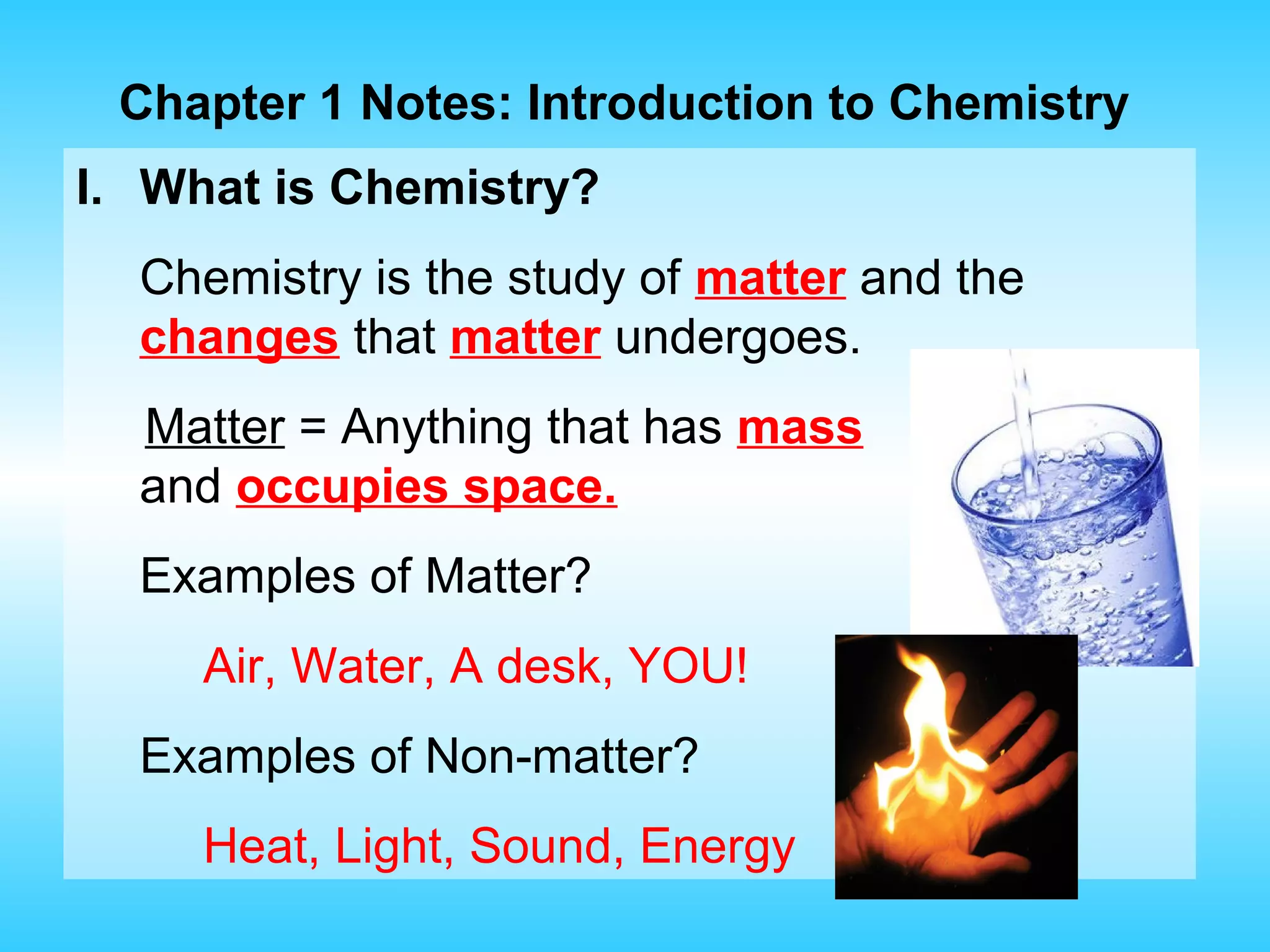
  Matter = Anything that has mass
  and occupies space.
  Examples of Matter?
     Air, Water, A desk, YOU!
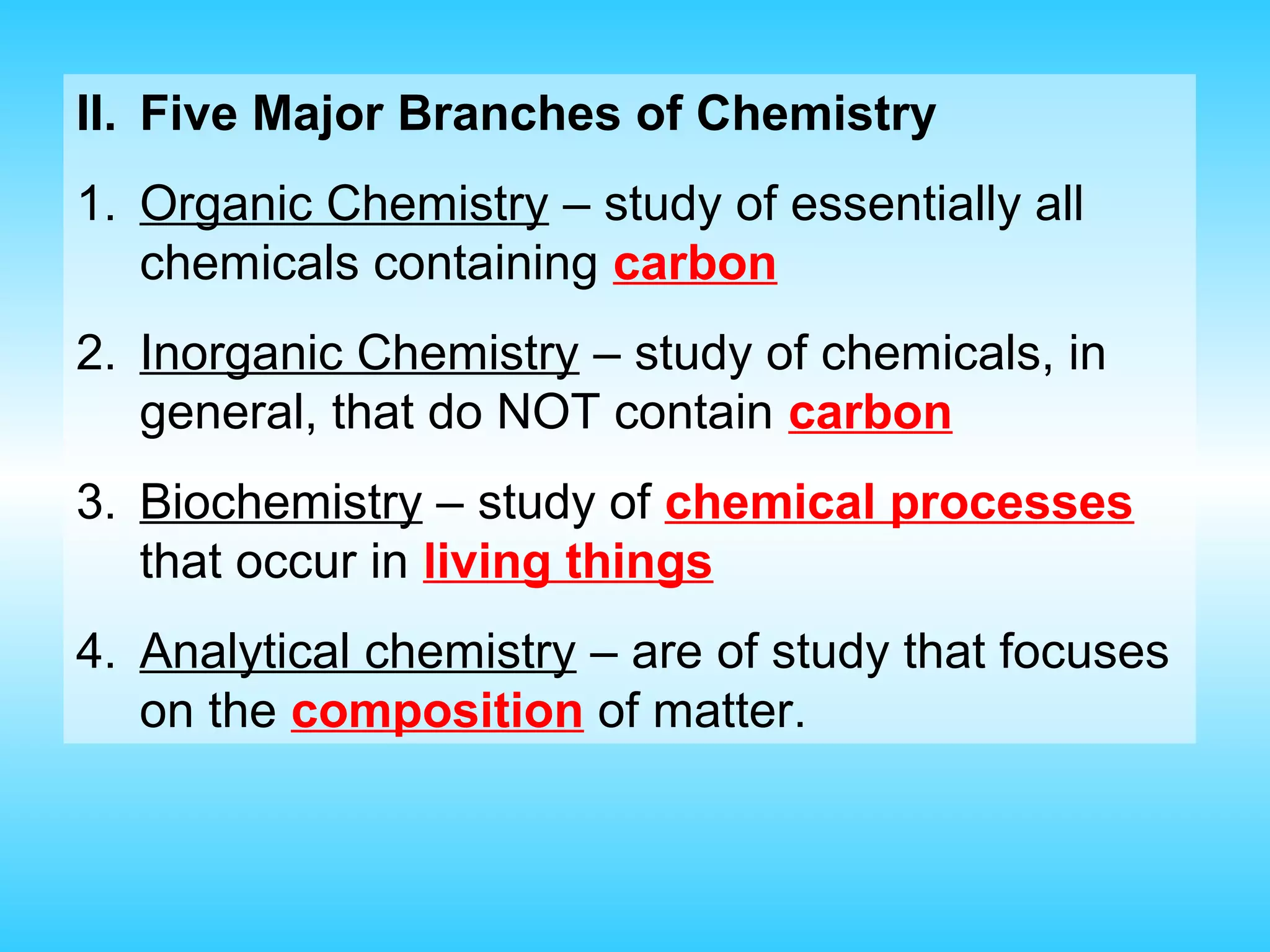
  Examples of Non-matter?
     Heat, Light, Sound, Energy
II. Five Major Branches of Chemistry
1. Organic Chemistry – study of essentially all
   chemicals containing carbon
2. Inorganic Chemistry – study of chemicals, in
   general, that do NOT contain carbon
3. Biochemistry – study of chemical processes
   that occur in living things
4. Analytical chemistry – are of study that focuses
   on the composition of matter.
II. Five Major Branches of Chemistry
5. Physical Chemistry – deals with the
   mechanism, the rate, and the energy transfer
   that occurs when matter undergoes a change.
  * Investigates underlying scientific principles
    behind changes.
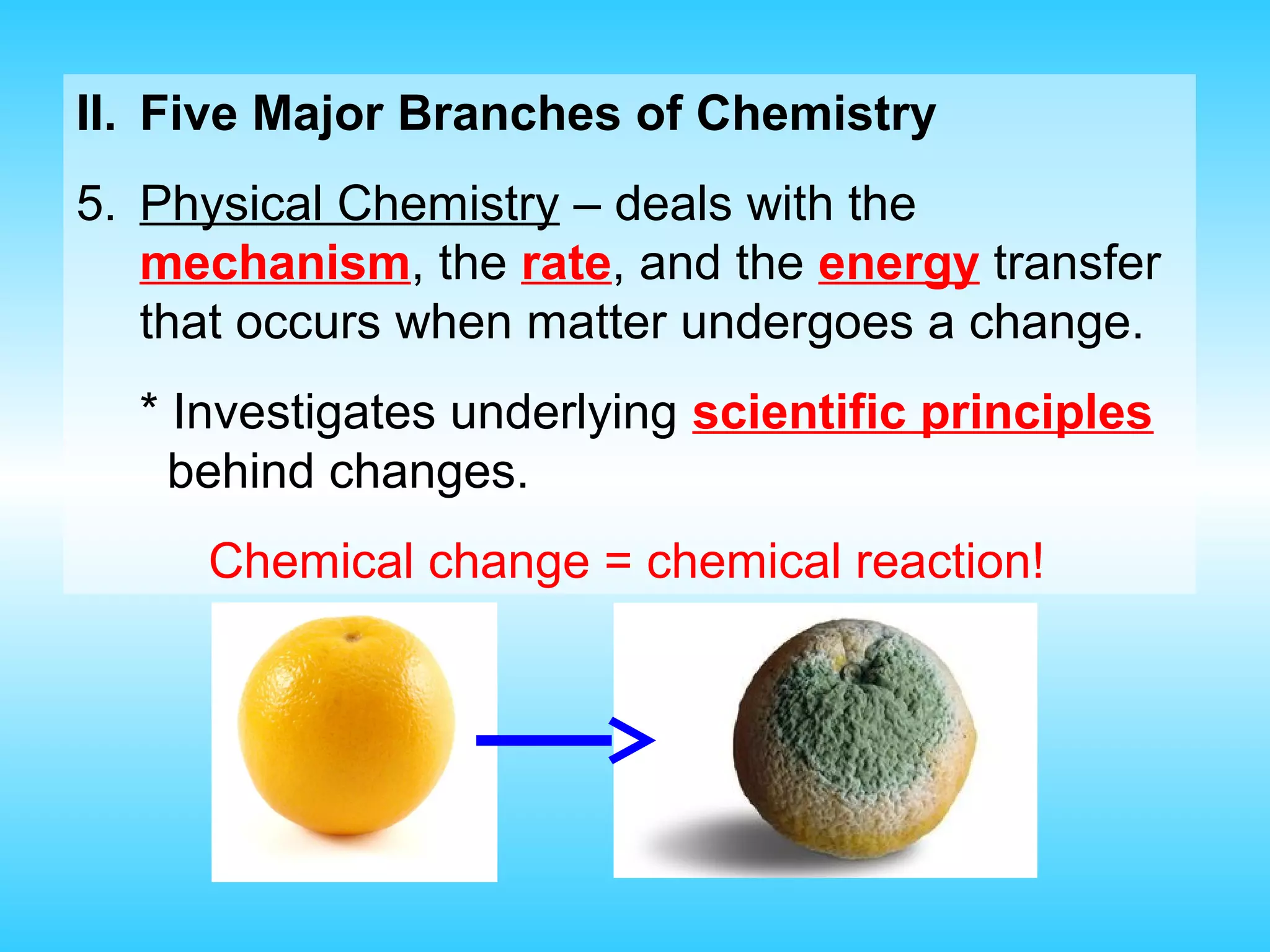
     Chemical change = chemical reaction!
II. Pure and Applied Chemistry
1. Pure Chemistry – pursuing of knowledge
   simply for the sake of knowing it or to satisfy
   man’s natural curiosity about the world.
2. Applied Chemistry – research that is directed
   toward a goal or application in order to solve
   a problem.
3. Technology – the means by which society
   provides its members with the things they need
   or desire.
III. Why study Chemistry?
1. In order to explain the natural world.
2. To help you prepare for a career.
3. To become an informed citizen.
IV. Chemistry Far and Wide
1. Materials – Chemists design materials to fit
   specific needs in the world.
  a. Macroscopic – the world in which objects
     are large enough to see.
  b. Microscopic – the world in which objects can
     only be seen under magnification
2. Energy – Chemists play an essential role in
   finding ways to conserve, produce, and store
   energy.
IV. Chemistry Far and Wide
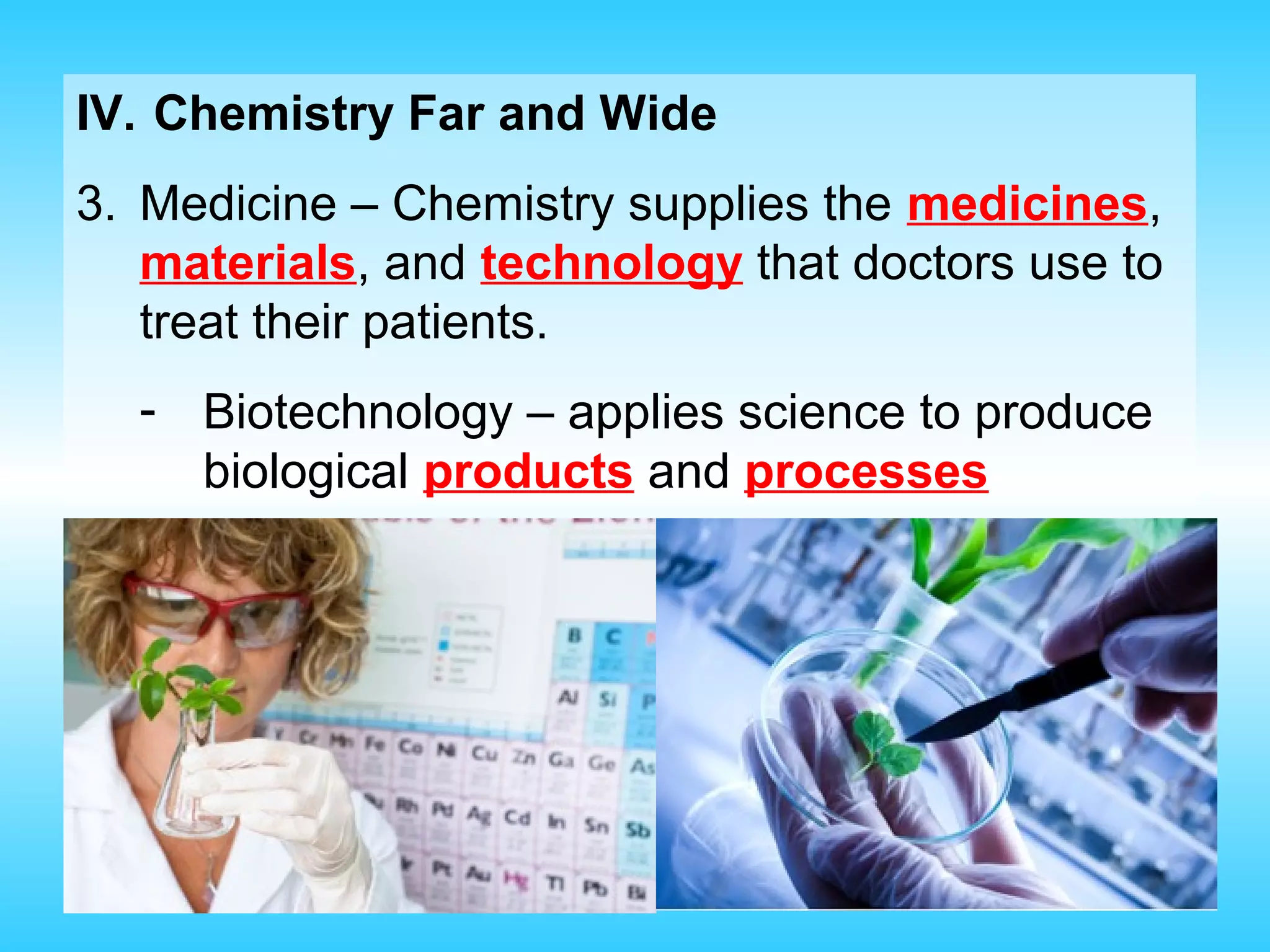
3. Medicine – Chemistry supplies the medicines,
   materials, and technology that doctors use to
   treat their patients.
  - Biotechnology – applies science to produce
    biological products and processes
IV. Chemistry Far and Wide
1. Agriculture – Chemists help develop more
   productive crops and safer, more effective ways
   to protect crops.
  i.   Soil quality testing to improve soil
  ii. Adding fertilizers to the soil
  iii. Developing herbicides to prevent weeds
  iv. Developing insecticides to kill pests
  v. Developing other chemicals to prevent plant diseases
  vi. Biochemists modify the genes of plants
IV. Chemistry Far and Wide
5. The Environment – Chemists identify
   pollutants and prevent pollution
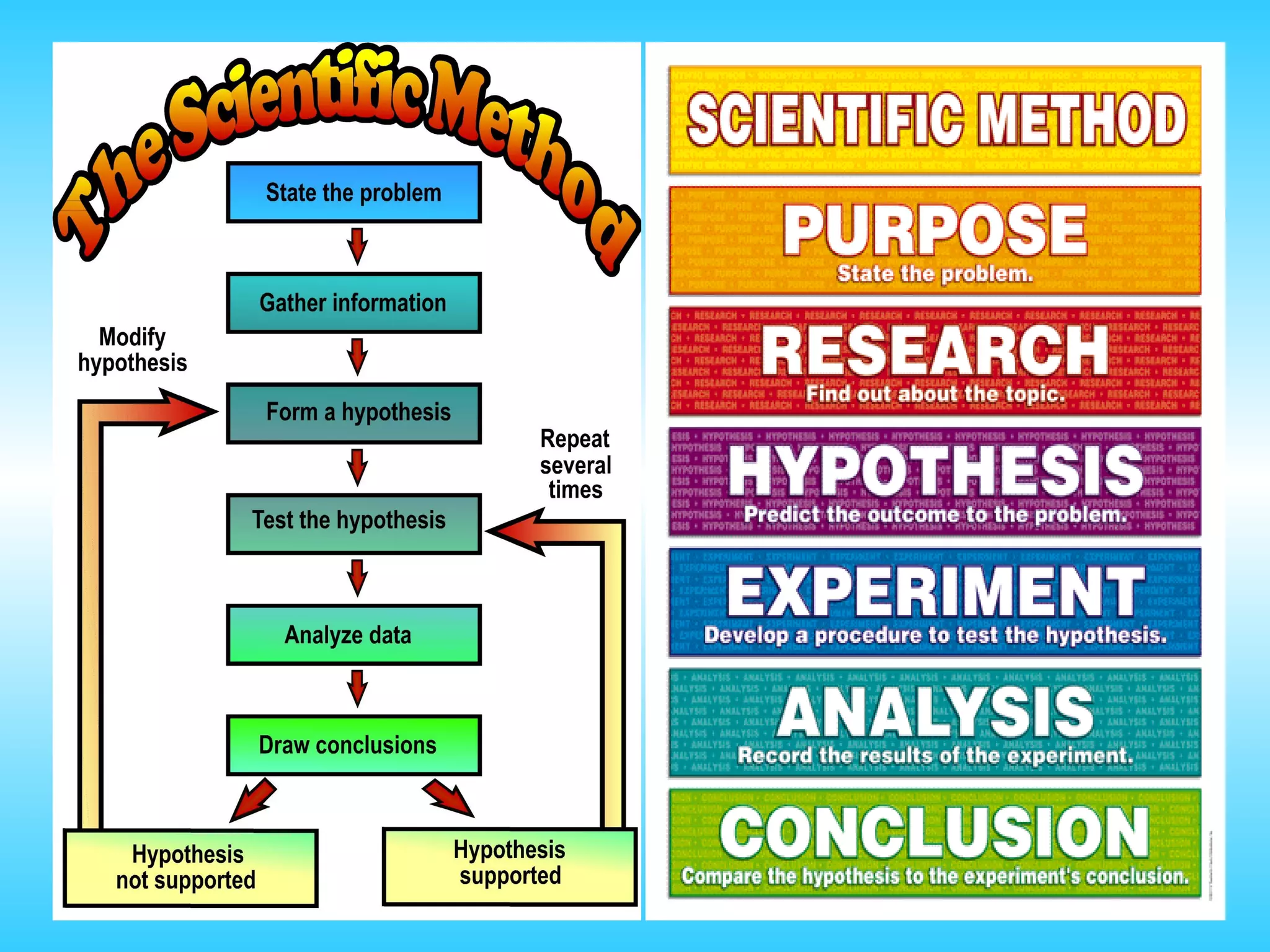
V. The Scientific Method
Def – A logical, systematic approach to solving
  problems.
1. Problem – a question to be answered, usually
   stated as a question.
2. Observations – Using your senses to obtain
   information about the problem.
3. Hypothesis – A proposed explanation for an
   observation.
V. The Scientific Method
4. Experiment – A procedure used to test your
   hypothesis.
  a. Manipulated or independent variable – a
  variable you change.
  b. Responding or dependent variable – a
  variable you observe.
V. The Scientific Method
1. Conclusion – Analyze experimental results to
   form theories or laws.
  a. Theory – a well tested explanation for a set
  of observations.
  - Tries to explain why, but can never be
  proven
  b. Law – a concise statement that summarizes
  results of many observations.
  - A law is simply a statement of fact that does
  not try to explain.
End of Chapter 1
   Read and study the rest of the
  chapter on your own for the test.
    Pay attention to vocabulary!
  Start off the year with a good test
grade! Don’t underestimate this test!

Chapter 1 - Introduction to Chemistry

  • 1.
    Chapter 1 –Intro to Chemistry By Kendon Smith – Columbia Central HS – Brooklyn, MI
  • 2.
    Chapter 1 Notes:Introduction to Chemistry I. What is Chemistry? Chemistry is the study of matter and the changes that matter undergoes. Matter = Anything that has mass and occupies space. Examples of Matter? Air, Water, A desk, YOU! Examples of Non-matter? Heat, Light, Sound, Energy
  • 3.
    II. Five MajorBranches of Chemistry 1. Organic Chemistry – study of essentially all chemicals containing carbon 2. Inorganic Chemistry – study of chemicals, in general, that do NOT contain carbon 3. Biochemistry – study of chemical processes that occur in living things 4. Analytical chemistry – are of study that focuses on the composition of matter.
  • 4.
    II. Five MajorBranches of Chemistry 5. Physical Chemistry – deals with the mechanism, the rate, and the energy transfer that occurs when matter undergoes a change. * Investigates underlying scientific principles behind changes. Chemical change = chemical reaction!
  • 5.
    II. Pure andApplied Chemistry 1. Pure Chemistry – pursuing of knowledge simply for the sake of knowing it or to satisfy man’s natural curiosity about the world. 2. Applied Chemistry – research that is directed toward a goal or application in order to solve a problem. 3. Technology – the means by which society provides its members with the things they need or desire.
  • 6.
    III. Why studyChemistry? 1. In order to explain the natural world. 2. To help you prepare for a career. 3. To become an informed citizen.
  • 7.
    IV. Chemistry Farand Wide 1. Materials – Chemists design materials to fit specific needs in the world. a. Macroscopic – the world in which objects are large enough to see. b. Microscopic – the world in which objects can only be seen under magnification 2. Energy – Chemists play an essential role in finding ways to conserve, produce, and store energy.
  • 8.
    IV. Chemistry Farand Wide 3. Medicine – Chemistry supplies the medicines, materials, and technology that doctors use to treat their patients. - Biotechnology – applies science to produce biological products and processes
  • 9.
    IV. Chemistry Farand Wide 1. Agriculture – Chemists help develop more productive crops and safer, more effective ways to protect crops. i. Soil quality testing to improve soil ii. Adding fertilizers to the soil iii. Developing herbicides to prevent weeds iv. Developing insecticides to kill pests v. Developing other chemicals to prevent plant diseases vi. Biochemists modify the genes of plants
  • 10.
    IV. Chemistry Farand Wide 5. The Environment – Chemists identify pollutants and prevent pollution
  • 11.
    V. The ScientificMethod Def – A logical, systematic approach to solving problems. 1. Problem – a question to be answered, usually stated as a question. 2. Observations – Using your senses to obtain information about the problem. 3. Hypothesis – A proposed explanation for an observation.
  • 12.
    V. The ScientificMethod 4. Experiment – A procedure used to test your hypothesis. a. Manipulated or independent variable – a variable you change. b. Responding or dependent variable – a variable you observe.
  • 13.
    V. The ScientificMethod 1. Conclusion – Analyze experimental results to form theories or laws. a. Theory – a well tested explanation for a set of observations. - Tries to explain why, but can never be proven b. Law – a concise statement that summarizes results of many observations. - A law is simply a statement of fact that does not try to explain.
  • 15.
    End of Chapter1 Read and study the rest of the chapter on your own for the test. Pay attention to vocabulary! Start off the year with a good test grade! Don’t underestimate this test!