ADRENAL GLAND
SECRETIONS, FUNCTIONS AND REGULATION1
SELINA SRAVANTHI
SAROJINI NAIDU VANITA PHARMACY MAHA VIDYALAYA,
TARNAKA, HYDERABAD, TELANAGANA
ADRENAL GLANDS
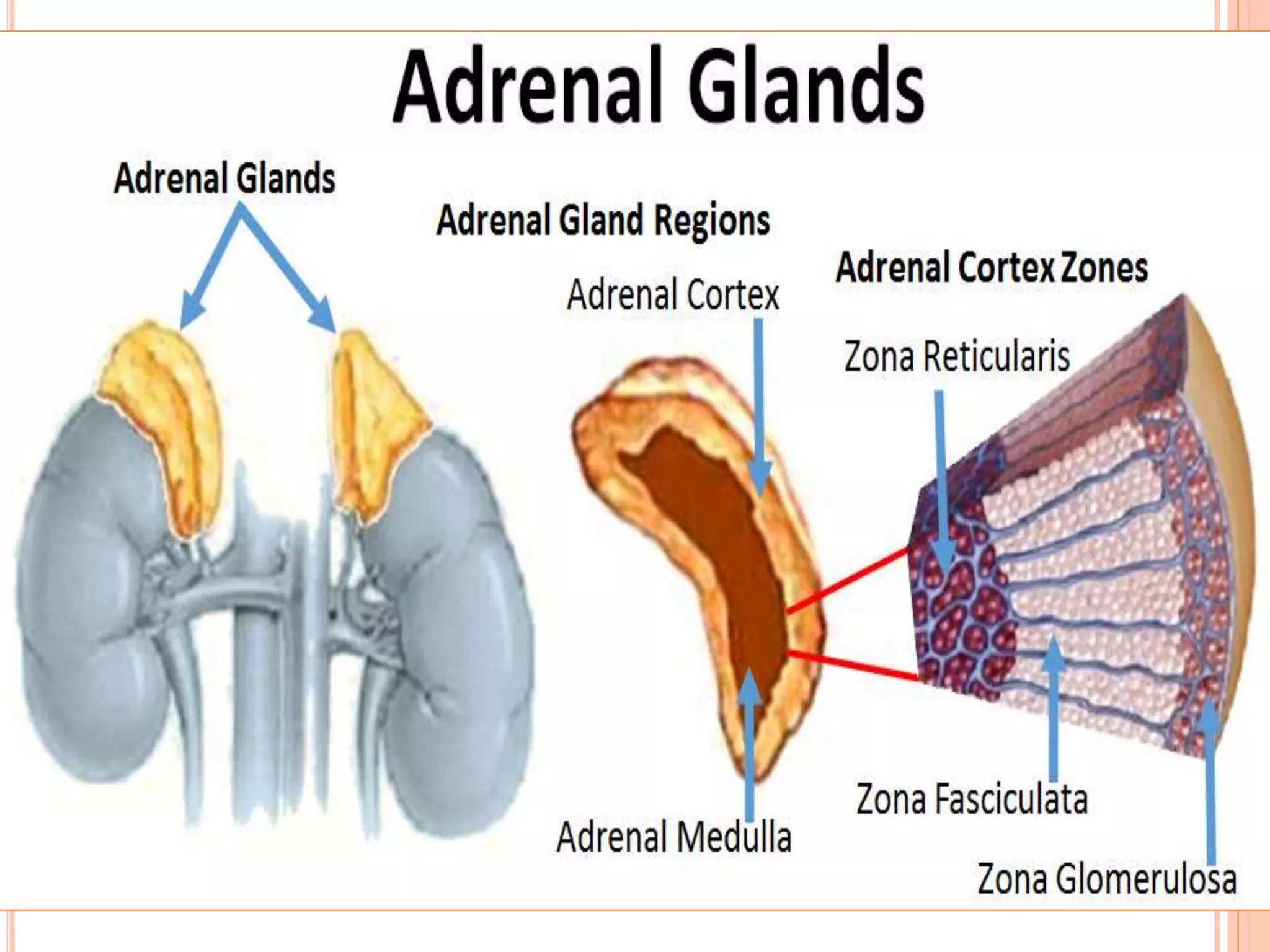
 They are paired, suprarenal glands
 Lies superior to each kidney in the retroperitoneal space
 Flattened pyramidal shape.
 Two distinct regions
 peripherally located adrenal cortex.
 small, centrally located adrenal medulla
 The adrenal cortex produces steroid hormones that are
essential for life.
 The adrenal medulla produces three catecholamine
hormones— norepinephrine, epinephrine, and a small
amount of dopamine. 2
3
4
ADRENAL CORTEX
 Adrenal cortex is subdivided into three zones
 The outer zone, is the zona glomerulosa-secrete
hormones called mineralocorticoids because they
affect mineral homeostasis.
 The middle zone, or zona fasciculata -secrete
mainly glucocorticoids because they affect
glucose homeostasis.
 The inner zone, the zona reticularis- synthesize
small amounts of weak androgens , steroid
hormones that have masculinizing effects.
5
MINERALOCORTICOIDS
 Aldosterone is the major mineralocorticoid.
 It regulates homeostasis of two mineral ions -
sodium ions (Na) and potassium ions (K), and helps
adjust blood pressure and blood volume.
 Aldosterone also promotes excretion of H+ in the
urine; this removal of acids from the body can help
prevent acidosis
6
REGULATION OF ALDOSTERONE
 The renin–angiotensin–aldosterone or RAA
pathway controls secretion of aldosterone.
7
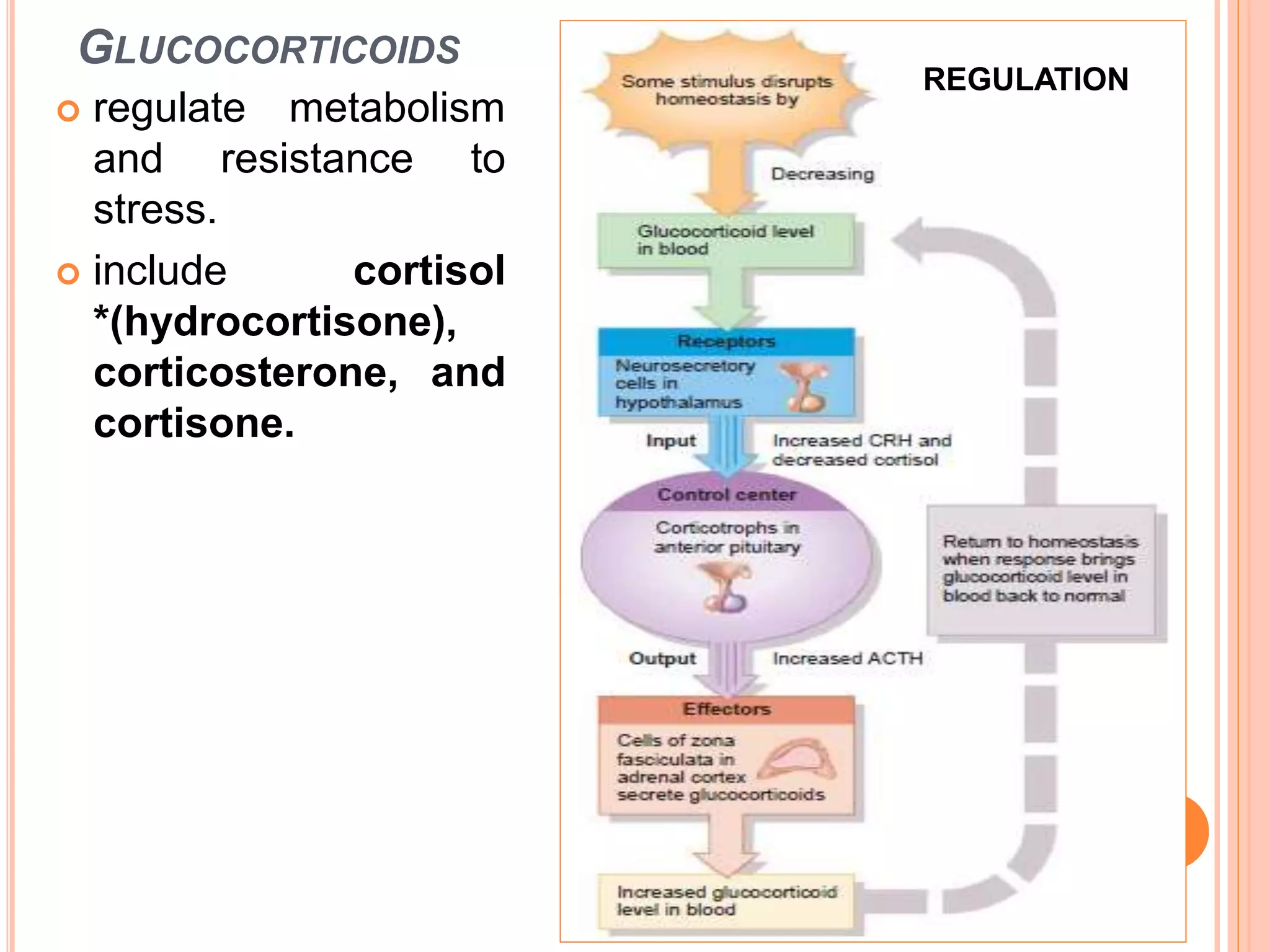
GLUCOCORTICOIDS
 regulate metabolism
and resistance to
stress.
 include cortisol
*(hydrocortisone),
corticosterone, and
cortisone.
REGULATION
8
FUNCTIONS OF GLUCOCORTICOIDS
 Protein breakdown- Glucocorticoids increase the rate of protein -
increase the liberation of amino acids into the bloodstream – AA may
be used by body cells for synthesis of new proteins or for ATP
production.
 Glucose formation -Upon stimulation by glucocorticoids, liver cells
may convert certain amino acids or lactic acid to glucose, which
neurons and other cells can use for ATP production. –
gluconeogenesis.
 Lipolysis – stimulate the breakdown of triglycerides and release of
fatty acids from adipose tissue into the blood.
 Resistance to stress -The additional glucose supplied by the liver
cells provides tissues with a ready source of ATP to combat a range of
stresses, including exercise, fasting, fright, temperature extremes, high
altitude, bleeding, infection, surgery, trauma, and disease.
 Anti-inflammatory effects - inhibit white blood cells that participate
in inflammatory responses, retard tissue repair- they slow wound
healing. useful in the treatment of chronic inflammatory disorders such
as rheumatoid arthritis.
 Depression of immune responses. High doses of glucocorticoids
depress immune responses. For this reason, glucocorticoids are
prescribed for organ transplant recipients to retard tissue rejection by
the immune system.
9
ANDROGENS
 In both males and females, the adrenal cortex secretes small amounts
of weak androgens.
 The major androgen secreted by the adrenal gland is
dehydroepiandrosterone (DHEA).
 After puberty in males, the androgen testosterone is also released in
much greater quantity by the testes.
 Thus, the amount of androgens secreted by the adrenal gland in males
is usually so low that their effects are insignificant.
 In females, however, adrenal androgens play important roles. They
promote libido (sex drive) and are converted into estrogens (feminizing
sex steroids) by other body tissues.
 After menopause, when ovarian secretion of estrogens ceases, all
female estrogens come from conversion of adrenal androgens.
 Adrenal androgens also stimulate growth of axillary and pubic hair in
boys and girls and contribute to the prepubertal growth spurt.
 Although control of adrenal androgen secretion is not fully understood,
the main hormone that stimulates its secretion is ACTH.
10
ADRENAL MEDULLA
 The inner region of the adrenal gland, the adrenal medulla, is a
modified sympathetic ganglion of the autonomic nervous system
(ANS).
 Rather than releasing a neurotransmitter, the cells (chromaffin
cells )of the adrenal medulla secrete hormones
 The two major hormones synthesized by the adrenal medulla
are epinephrine and norepinephrine (NE), also call
 the hormones of the adrenal medulla are not essential for life
since they only intensify sympathetic responses in other parts of
the body.
 In stressful situations and during exercise, impulses from the
hypothalamus stimulate sympathetic preganglionic neurons,
which in turn stimulate the chromaffin cells to secrete
epinephrine and norepinephrine.
 Help in fight-or-flight response by increasing heart rate and force
of contraction, epinephrine and norepinephrine increase the
output of the heart, which increases blood pressure. They also
increase blood flow to the heart, liver, skeletal muscles, and
adipose tissue; dilate airways to the lungs; and increase blood
levels of glucose and fatty acids.
11

Adrenal gland - Secretion, Function and Regulation

  • 1.
    ADRENAL GLAND SECRETIONS, FUNCTIONSAND REGULATION1 SELINA SRAVANTHI SAROJINI NAIDU VANITA PHARMACY MAHA VIDYALAYA, TARNAKA, HYDERABAD, TELANAGANA
  • 2.
    ADRENAL GLANDS  Theyare paired, suprarenal glands  Lies superior to each kidney in the retroperitoneal space  Flattened pyramidal shape.  Two distinct regions  peripherally located adrenal cortex.  small, centrally located adrenal medulla  The adrenal cortex produces steroid hormones that are essential for life.  The adrenal medulla produces three catecholamine hormones— norepinephrine, epinephrine, and a small amount of dopamine. 2
  • 3.
  • 4.
  • 5.
    ADRENAL CORTEX  Adrenalcortex is subdivided into three zones  The outer zone, is the zona glomerulosa-secrete hormones called mineralocorticoids because they affect mineral homeostasis.  The middle zone, or zona fasciculata -secrete mainly glucocorticoids because they affect glucose homeostasis.  The inner zone, the zona reticularis- synthesize small amounts of weak androgens , steroid hormones that have masculinizing effects. 5
  • 6.
    MINERALOCORTICOIDS  Aldosterone isthe major mineralocorticoid.  It regulates homeostasis of two mineral ions - sodium ions (Na) and potassium ions (K), and helps adjust blood pressure and blood volume.  Aldosterone also promotes excretion of H+ in the urine; this removal of acids from the body can help prevent acidosis 6
  • 7.
    REGULATION OF ALDOSTERONE The renin–angiotensin–aldosterone or RAA pathway controls secretion of aldosterone. 7
  • 8.
    GLUCOCORTICOIDS  regulate metabolism andresistance to stress.  include cortisol *(hydrocortisone), corticosterone, and cortisone. REGULATION 8
  • 9.
    FUNCTIONS OF GLUCOCORTICOIDS Protein breakdown- Glucocorticoids increase the rate of protein - increase the liberation of amino acids into the bloodstream – AA may be used by body cells for synthesis of new proteins or for ATP production.  Glucose formation -Upon stimulation by glucocorticoids, liver cells may convert certain amino acids or lactic acid to glucose, which neurons and other cells can use for ATP production. – gluconeogenesis.  Lipolysis – stimulate the breakdown of triglycerides and release of fatty acids from adipose tissue into the blood.  Resistance to stress -The additional glucose supplied by the liver cells provides tissues with a ready source of ATP to combat a range of stresses, including exercise, fasting, fright, temperature extremes, high altitude, bleeding, infection, surgery, trauma, and disease.  Anti-inflammatory effects - inhibit white blood cells that participate in inflammatory responses, retard tissue repair- they slow wound healing. useful in the treatment of chronic inflammatory disorders such as rheumatoid arthritis.  Depression of immune responses. High doses of glucocorticoids depress immune responses. For this reason, glucocorticoids are prescribed for organ transplant recipients to retard tissue rejection by the immune system. 9
  • 10.
    ANDROGENS  In bothmales and females, the adrenal cortex secretes small amounts of weak androgens.  The major androgen secreted by the adrenal gland is dehydroepiandrosterone (DHEA).  After puberty in males, the androgen testosterone is also released in much greater quantity by the testes.  Thus, the amount of androgens secreted by the adrenal gland in males is usually so low that their effects are insignificant.  In females, however, adrenal androgens play important roles. They promote libido (sex drive) and are converted into estrogens (feminizing sex steroids) by other body tissues.  After menopause, when ovarian secretion of estrogens ceases, all female estrogens come from conversion of adrenal androgens.  Adrenal androgens also stimulate growth of axillary and pubic hair in boys and girls and contribute to the prepubertal growth spurt.  Although control of adrenal androgen secretion is not fully understood, the main hormone that stimulates its secretion is ACTH. 10
  • 11.
    ADRENAL MEDULLA  Theinner region of the adrenal gland, the adrenal medulla, is a modified sympathetic ganglion of the autonomic nervous system (ANS).  Rather than releasing a neurotransmitter, the cells (chromaffin cells )of the adrenal medulla secrete hormones  The two major hormones synthesized by the adrenal medulla are epinephrine and norepinephrine (NE), also call  the hormones of the adrenal medulla are not essential for life since they only intensify sympathetic responses in other parts of the body.  In stressful situations and during exercise, impulses from the hypothalamus stimulate sympathetic preganglionic neurons, which in turn stimulate the chromaffin cells to secrete epinephrine and norepinephrine.  Help in fight-or-flight response by increasing heart rate and force of contraction, epinephrine and norepinephrine increase the output of the heart, which increases blood pressure. They also increase blood flow to the heart, liver, skeletal muscles, and adipose tissue; dilate airways to the lungs; and increase blood levels of glucose and fatty acids. 11