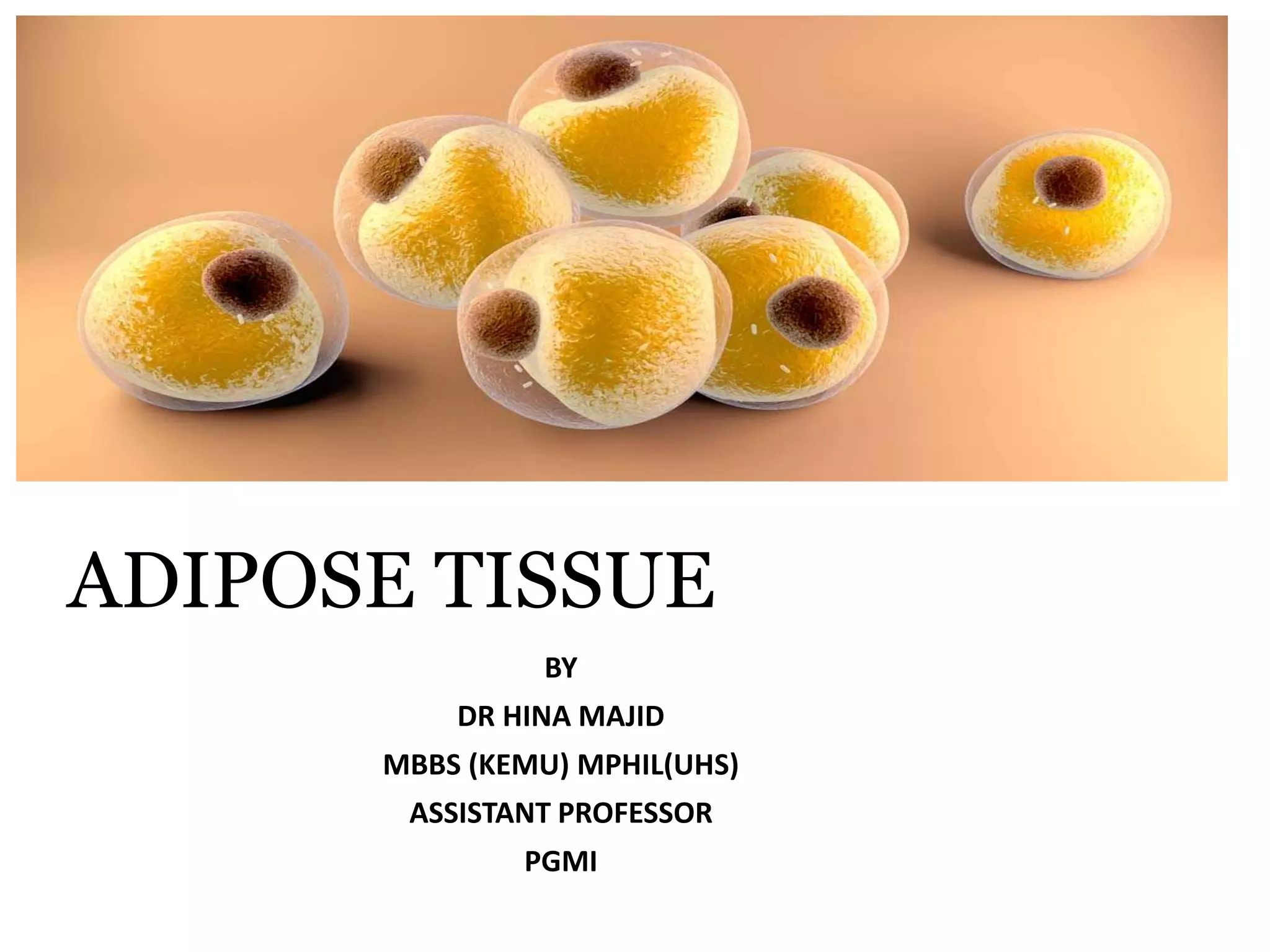
ADIPOSE TISSUE
BY
DR HINA MAJID
MBBS (KEMU) MPHIL(UHS)
ASSISTANT PROFESSOR
PGMI
•Fat stores, begin to
accumulate at week
30 of gestation.
•Adipose tissue
connective tissue in
which adipose (L.
adeps, fat) cells
(adipocytes)
predominate.
•It represents
• 15-20% of body wt. in man
•20-25% of body wt. in woman
•Largest repository of energy in the
form of Triglycerides.
•Energy production 9.1kcal/g Fat >
4.1kcal/g CHO.
•Cells found isolated or in groups in loose or
irregular C.T
•In a state of continuous turn over because of
•(1)Hormones:
•Insulin promotes triglycerides formation
from glucose.
•Glucagon & Growth hormone promote
triglycerides breakdown & release of fatty
acids.
•(2)Autonomic Nerves:
•Promote brown adipocytes differentiation
•Prevent apoptosis in mature brown cell.
FUNCTIONS
1. Thermal insulation
2. Shape up the surface of body
3. Acts as shock absorber (deposits in the form of
pads in soles & palms)
4. Imp. endocrine organ, release hormone
Leptin(16Kda)…….target cells in hypothalamus to
regulate appetite.
5. Fills up spaces between other tissues and helps to
keep some organs in place.
TYPES
The two known types:
1.Unilocular (common, or yellow/white)
Adipocytes contain one large central droplet of
yellow fat in their cytoplasm. Single adipocyte:
Signet ring
2. Multilocular (or brown)
Adipocytes contain numerous lipid droplets
and abundant brown mitochondria.
Both types of adipose tissue have a rich
blood supply.
Differences
Lipid storage & mobilization from
adipocytes
Storage & Mobilization of Lipids
• The unilocular adipose tissue is a large depot of energy for
the organism.
• The lipids stored in adipose cells are chiefly triglycerides,
i.e esters of fatty acids and glycerol.
• Dietary fats----CHYLOMICRONS---- adipocytes------
• Liver------Triglyceride----- very low-density
lipoproteins (VLDL)
• free fatty acids and glycerol from glucose to form
triglycerides in adipose cells.
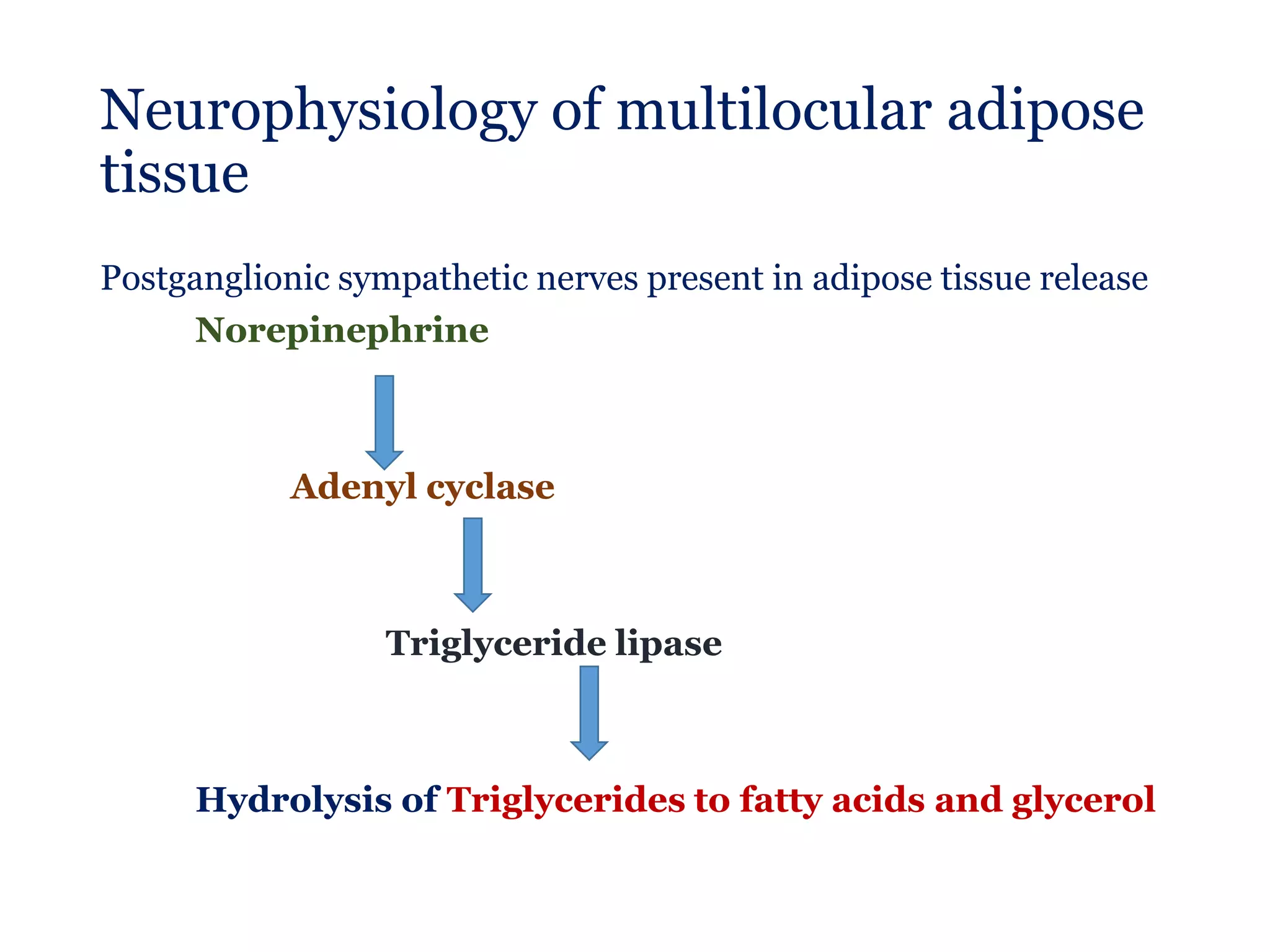
Neurophysiology of multilocular adipose
tissue
Postganglionic sympathetic nerves present in adipose tissue release
Norepinephrine
Adenyl cyclase
Triglyceride lipase
Hydrolysis of Triglycerides to fatty acids and glycerol
energy/heat liberation)
Mobilization
In response to body needs, the first deposit to be mobilized
is from
• Subcutaneous
• Mesenteric
• Retroperitoneal
Adipose tissue in the hands, feet, and retro orbital
fat pads resists long periods of starvation.
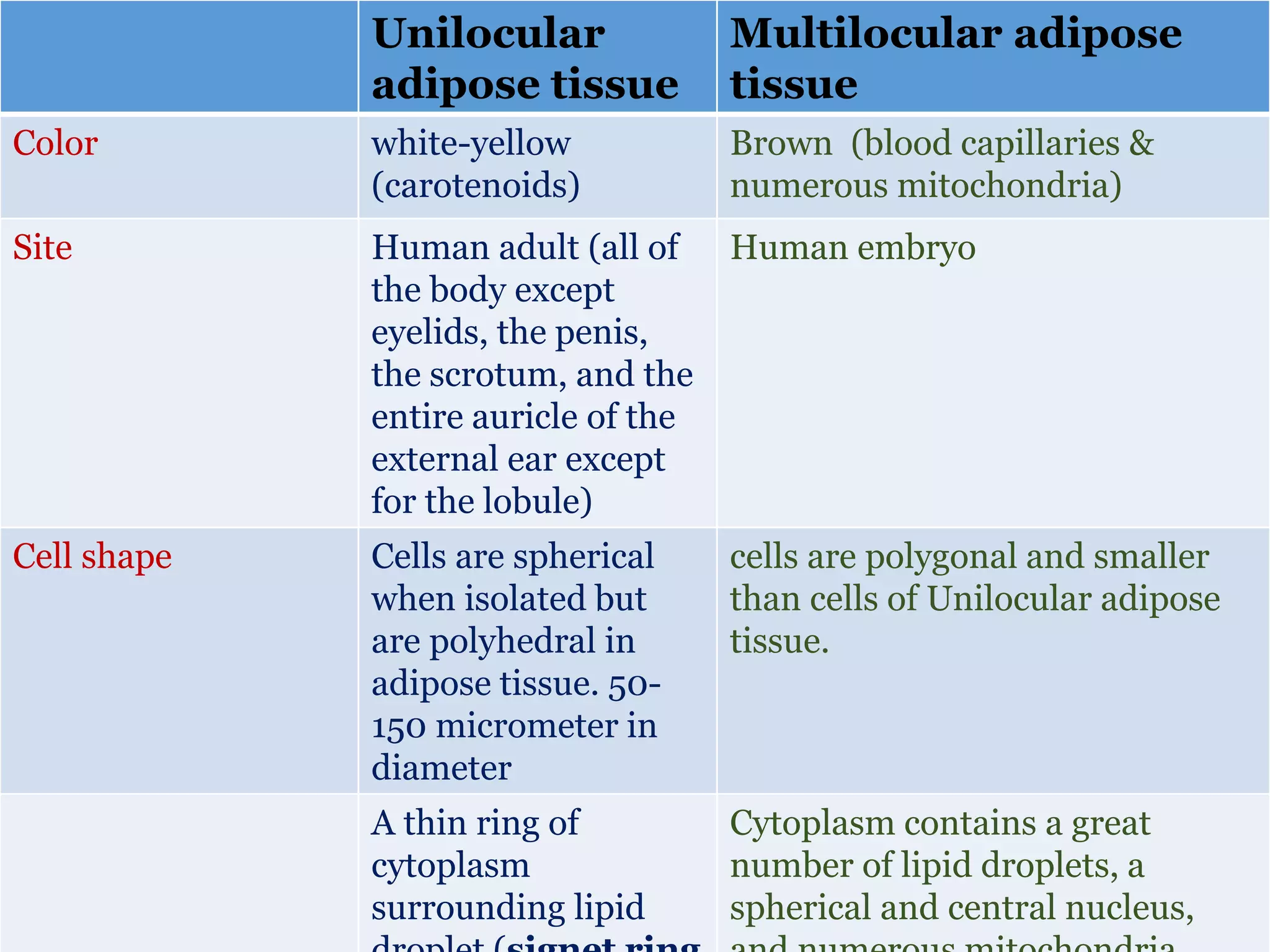
Unilocular
adipose tissue
Multilocular adipose
tissue
Color white-yellow
(carotenoids)
Brown (blood capillaries &
numerous mitochondria)
Site Human adult (all of
the body except
eyelids, the penis,
the scrotum, and the
entire auricle of the
external ear except
for the lobule)
Human embryo
Cell shape Cells are spherical
when isolated but
are polyhedral in
adipose tissue. 50-
150 micrometer in
diameter
cells are polygonal and smaller
than cells of Unilocular adipose
tissue.
A thin ring of
cytoplasm
surrounding lipid
Cytoplasm contains a great
number of lipid droplets, a
spherical and central nucleus,
Unilocular adipose
tissue
Multilocular adipose
tissue
Histogenesis They develop from
mesenchymally derived
lipoblasts that resemble
fibroblasts before they
accumulate fat.
They develop from
mesenchymally derived
lipoblasts that resemble
epithelium before they
accumulate fat.
Development At the age of 30wks of
gestation –throughout
life
Develop early, relative to
body weight at birth
Properties Hibernating gland
Medical applications Hypertrophic
Obesity: An excessive
accumulation of fat in
Unilocular tissue cells.
Adult onset
Hyperplastic obesity
Adipose tissue dr hina

Adipose tissue dr hina

  • 1.
    ADIPOSE TISSUE BY DR HINAMAJID MBBS (KEMU) MPHIL(UHS) ASSISTANT PROFESSOR PGMI
  • 2.
    •Fat stores, beginto accumulate at week 30 of gestation. •Adipose tissue connective tissue in which adipose (L. adeps, fat) cells (adipocytes) predominate.
  • 3.
    •It represents • 15-20%of body wt. in man •20-25% of body wt. in woman •Largest repository of energy in the form of Triglycerides. •Energy production 9.1kcal/g Fat > 4.1kcal/g CHO.
  • 4.
    •Cells found isolatedor in groups in loose or irregular C.T •In a state of continuous turn over because of •(1)Hormones: •Insulin promotes triglycerides formation from glucose. •Glucagon & Growth hormone promote triglycerides breakdown & release of fatty acids. •(2)Autonomic Nerves: •Promote brown adipocytes differentiation •Prevent apoptosis in mature brown cell.
  • 5.
    FUNCTIONS 1. Thermal insulation 2.Shape up the surface of body 3. Acts as shock absorber (deposits in the form of pads in soles & palms) 4. Imp. endocrine organ, release hormone Leptin(16Kda)…….target cells in hypothalamus to regulate appetite. 5. Fills up spaces between other tissues and helps to keep some organs in place.
  • 8.
    TYPES The two knowntypes: 1.Unilocular (common, or yellow/white) Adipocytes contain one large central droplet of yellow fat in their cytoplasm. Single adipocyte: Signet ring
  • 10.
    2. Multilocular (orbrown) Adipocytes contain numerous lipid droplets and abundant brown mitochondria. Both types of adipose tissue have a rich blood supply.
  • 16.
  • 17.
    Lipid storage &mobilization from adipocytes
  • 20.
    Storage & Mobilizationof Lipids • The unilocular adipose tissue is a large depot of energy for the organism. • The lipids stored in adipose cells are chiefly triglycerides, i.e esters of fatty acids and glycerol. • Dietary fats----CHYLOMICRONS---- adipocytes------ • Liver------Triglyceride----- very low-density lipoproteins (VLDL) • free fatty acids and glycerol from glucose to form triglycerides in adipose cells.
  • 21.
    Neurophysiology of multilocularadipose tissue Postganglionic sympathetic nerves present in adipose tissue release Norepinephrine Adenyl cyclase Triglyceride lipase Hydrolysis of Triglycerides to fatty acids and glycerol energy/heat liberation)
  • 22.
    Mobilization In response tobody needs, the first deposit to be mobilized is from • Subcutaneous • Mesenteric • Retroperitoneal Adipose tissue in the hands, feet, and retro orbital fat pads resists long periods of starvation.
  • 23.
    Unilocular adipose tissue Multilocular adipose tissue Colorwhite-yellow (carotenoids) Brown (blood capillaries & numerous mitochondria) Site Human adult (all of the body except eyelids, the penis, the scrotum, and the entire auricle of the external ear except for the lobule) Human embryo Cell shape Cells are spherical when isolated but are polyhedral in adipose tissue. 50- 150 micrometer in diameter cells are polygonal and smaller than cells of Unilocular adipose tissue. A thin ring of cytoplasm surrounding lipid Cytoplasm contains a great number of lipid droplets, a spherical and central nucleus,
  • 24.
    Unilocular adipose tissue Multilocular adipose tissue HistogenesisThey develop from mesenchymally derived lipoblasts that resemble fibroblasts before they accumulate fat. They develop from mesenchymally derived lipoblasts that resemble epithelium before they accumulate fat. Development At the age of 30wks of gestation –throughout life Develop early, relative to body weight at birth Properties Hibernating gland Medical applications Hypertrophic Obesity: An excessive accumulation of fat in Unilocular tissue cells. Adult onset Hyperplastic obesity