Dr Adeel Riaz
Rotation PGR ORTHO
CPTH, Lahore
Compartment Syndrome
 A condition in which increased
pressure in one of the compartments
of the body is raised to such a level
resulting in insufficient blood supply
to the tissues within that
compartment of the body.
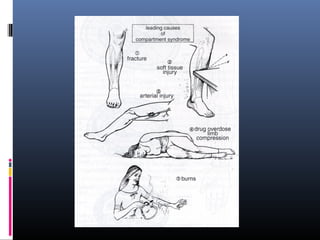
NUMEROUS ETIOLIGIES
Fracture(also open #’s) IM nailing (reaming)
Arterial injury Exertional states
Blunt trauma Closure of fascial defects
Cast/dressing IV & A-lines
Post-ischemic Coag.disorders
Hyperperfusion Intraosseous infusion
Burns/electrical injuries Distorsion(ankle)
Tumour Snake bite
Pathophysiology
Increased compartment pressure
Increased venous pressure
Decrease A-V gradient resulting in muscle
and nerve ischemia.
Diagnosis
 History
 Clinical exam: the Ps
 Compartment pressures
 Laboratory tests
 CPK
 Urine myoglobin
Clinical Diagnosis
 The six ‘Ps’:
 Pressure
 Pain
 Paresthesia
 Paralysis
 Pallor
 Pulselessness
Pressure
 Early finding
 Only objective finding
 Refers to palpation of compartment and its
tension or firmness
Pain
 Out of portion to injury
 Exaggerated with passive stretch
 Earliest symptom but inconsistent
 Not available in obtunded patient
Paresthesia
 Early sign
 Peripheral nerve tissue is more sensitive than
muscle to ischemia
 Permanent damage may occur in 75 minutes
 Difficult to interpret
 Will progress to anesthesia if pressure not
relieved
Paralysis
 Very late finding
 Irreversible nerve and muscle damage present
 Paresis may be present early
 Difficult to evaluate because of pain
Pallor & Pulselessness
 Rarely present
 Indicates direct damage to vessels rather
than compartment syndrome
 Vascular injury more of contributing factor to
syndrome rather than result
Compartment Pressure
 When
 Confirm clinical exam
 Obtunded patient with tight compartments
 Regional anesthetic
 Vascular injury
 Technique
 Whiteside infusion
 Stic technique: side port needle
 Wick catheter
 Slit catheter
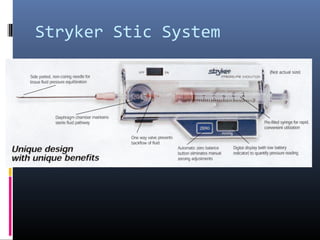
Stryker Stic System
 Easy to use
 Can check multiple compartments
 Different areas in one compartment
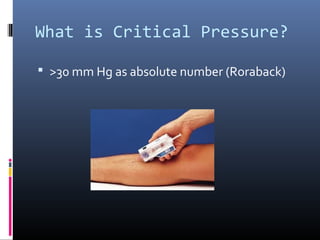
What is Critical Pressure?
 >30 mm Hg as absolute number (Roraback)
Treatment
 Lower leg to level of the heart
 Remove cast
 Split all dressings down to skin
Treatment
If concerned refer these patients early
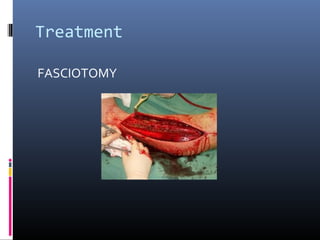
 Fasciotomy if continued clinical findings
and/or elevated compartment pressure
Treatment
FASCIOTOMY
Wound Care
 Soft tissue coverage by 5-7 days
 Delayed closure
 Split thickness skin graft
 Flaps or free tissue transfer
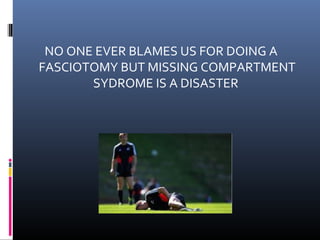
NO ONE EVER BLAMES US FOR DOING A
FASCIOTOMY BUT MISSING COMPARTMENT
SYDROME IS A DISASTER

Acute compartment syndrome

  • 1.
    Dr Adeel Riaz RotationPGR ORTHO CPTH, Lahore
  • 2.
    Compartment Syndrome  Acondition in which increased pressure in one of the compartments of the body is raised to such a level resulting in insufficient blood supply to the tissues within that compartment of the body.
  • 3.
    NUMEROUS ETIOLIGIES Fracture(also open#’s) IM nailing (reaming) Arterial injury Exertional states Blunt trauma Closure of fascial defects Cast/dressing IV & A-lines Post-ischemic Coag.disorders Hyperperfusion Intraosseous infusion Burns/electrical injuries Distorsion(ankle) Tumour Snake bite
  • 5.
    Pathophysiology Increased compartment pressure Increasedvenous pressure Decrease A-V gradient resulting in muscle and nerve ischemia.
  • 6.
    Diagnosis  History  Clinicalexam: the Ps  Compartment pressures  Laboratory tests  CPK  Urine myoglobin
  • 7.
    Clinical Diagnosis  Thesix ‘Ps’:  Pressure  Pain  Paresthesia  Paralysis  Pallor  Pulselessness
  • 8.
    Pressure  Early finding Only objective finding  Refers to palpation of compartment and its tension or firmness
  • 9.
    Pain  Out ofportion to injury  Exaggerated with passive stretch  Earliest symptom but inconsistent  Not available in obtunded patient
  • 10.
    Paresthesia  Early sign Peripheral nerve tissue is more sensitive than muscle to ischemia  Permanent damage may occur in 75 minutes  Difficult to interpret  Will progress to anesthesia if pressure not relieved
  • 11.
    Paralysis  Very latefinding  Irreversible nerve and muscle damage present  Paresis may be present early  Difficult to evaluate because of pain
  • 12.
    Pallor & Pulselessness Rarely present  Indicates direct damage to vessels rather than compartment syndrome  Vascular injury more of contributing factor to syndrome rather than result
  • 13.
    Compartment Pressure  When Confirm clinical exam  Obtunded patient with tight compartments  Regional anesthetic  Vascular injury  Technique  Whiteside infusion  Stic technique: side port needle  Wick catheter  Slit catheter
  • 14.
    Stryker Stic System Easy to use  Can check multiple compartments  Different areas in one compartment
  • 15.
    What is CriticalPressure?  >30 mm Hg as absolute number (Roraback)
  • 16.
    Treatment  Lower legto level of the heart  Remove cast  Split all dressings down to skin
  • 17.
    Treatment If concerned referthese patients early  Fasciotomy if continued clinical findings and/or elevated compartment pressure
  • 18.
  • 19.
    Wound Care  Softtissue coverage by 5-7 days  Delayed closure  Split thickness skin graft  Flaps or free tissue transfer
  • 20.
    NO ONE EVERBLAMES US FOR DOING A FASCIOTOMY BUT MISSING COMPARTMENT SYDROME IS A DISASTER