BY: DR. BIPUL BORTHAKUR,
PROFESSOR,
DEPT. OF ORTHOPAEDICS, SMCH
FRACTURE SHAFT OF TIBIA
INTRODUCTION
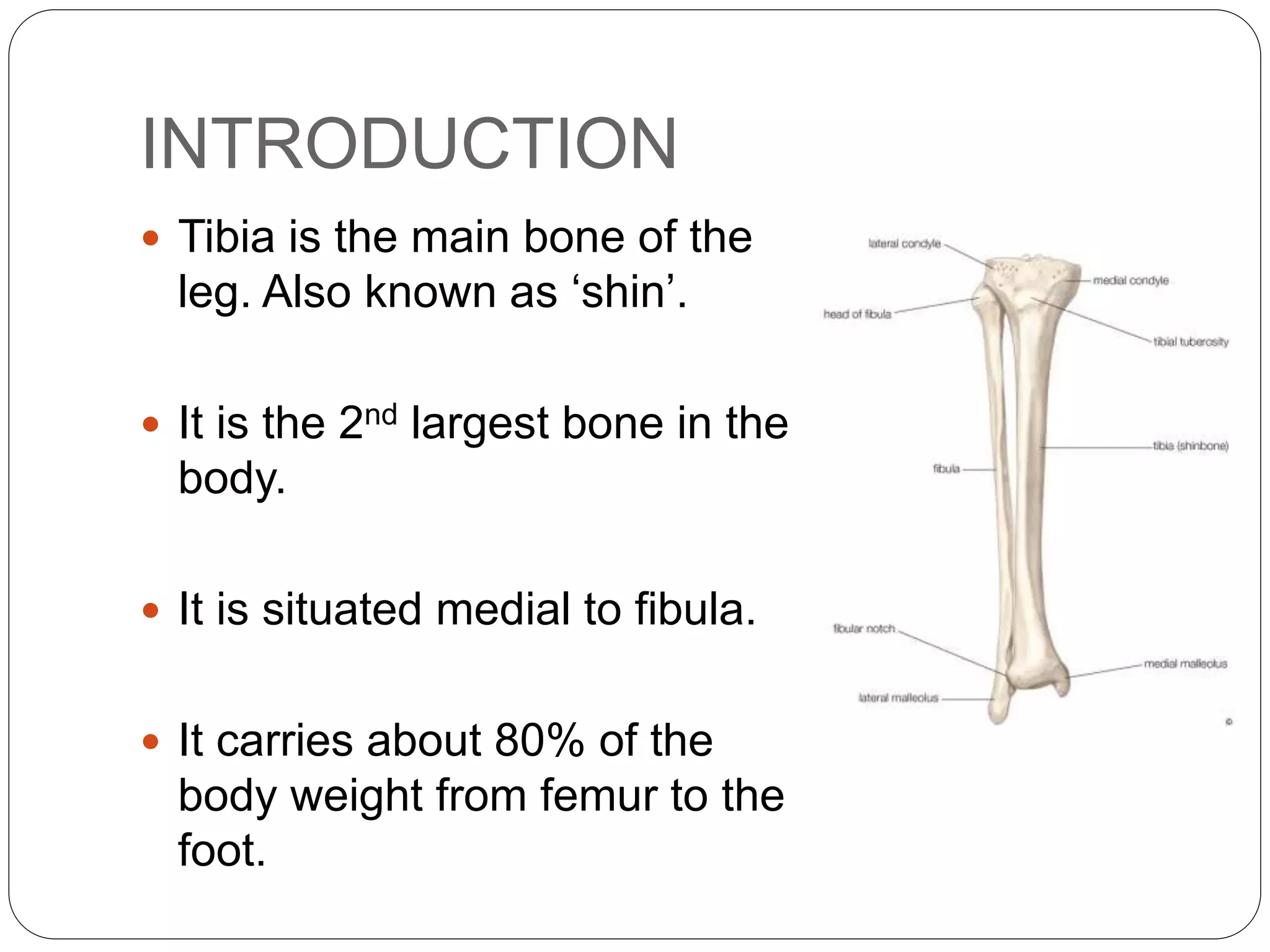
 Tibia is the main bone of the
leg. Also known as ‘shin’.
 It is the 2nd largest bone in the
body.
 It is situated medial to fibula.
 It carries about 80% of the
body weight from femur to the
foot.
ANATOMY
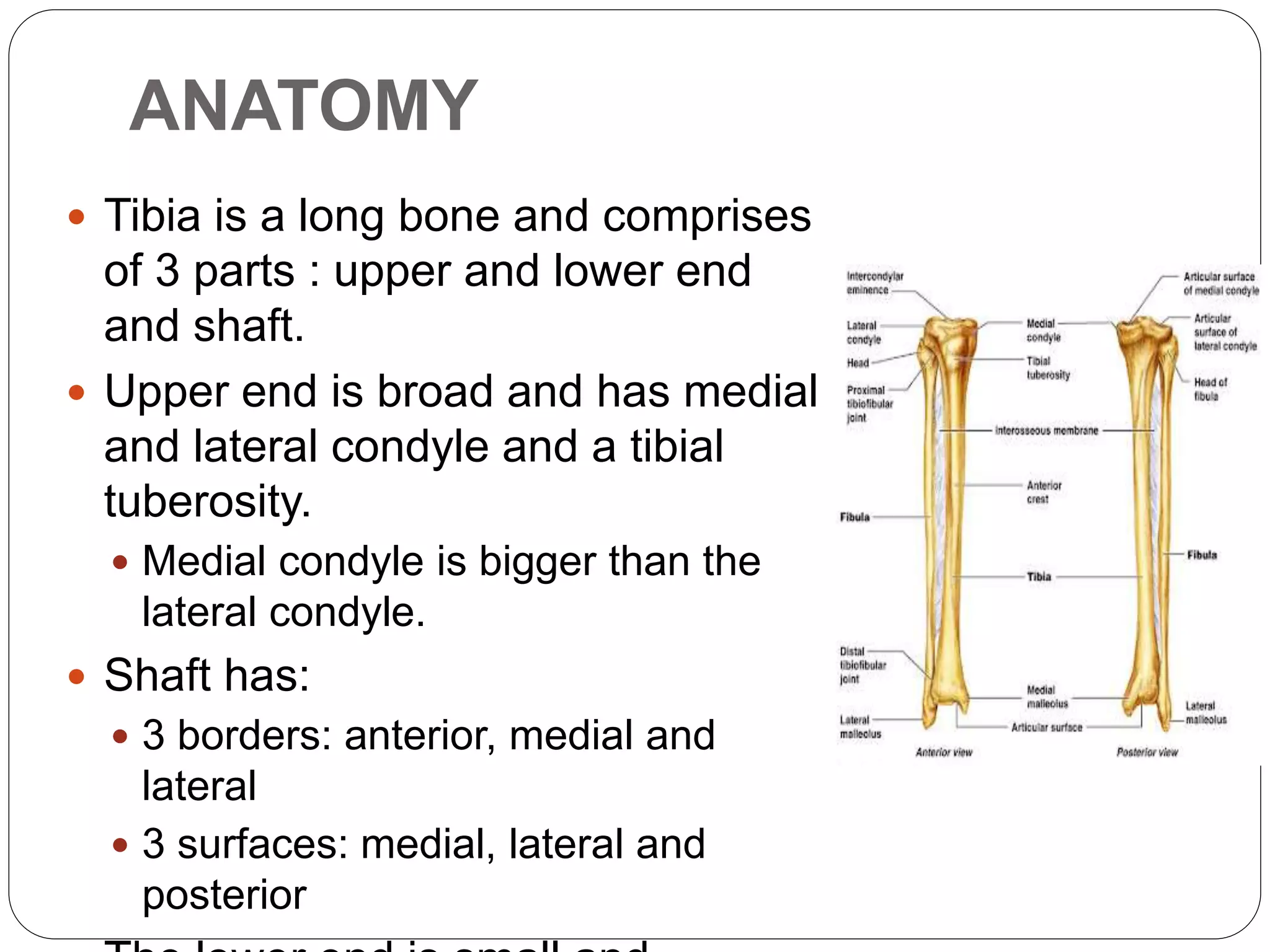
 Tibia is a long bone and comprises
of 3 parts : upper and lower end
and shaft.
 Upper end is broad and has medial
and lateral condyle and a tibial
tuberosity.
 Medial condyle is bigger than the
lateral condyle.
 Shaft has:
 3 borders: anterior, medial and
lateral
 3 surfaces: medial, lateral and
posterior
ANATOMICAL POSITION AND
SIDE DETERMINATION
 It is hold in a manner that:
Its expanded end with condyles faces
upward.
Its tibial tuberosity and sharp anterior
border faces anteriorly.
Medial malleolus is on the medial side.
The superior surface (tibial plateau) is
placed horizontal.
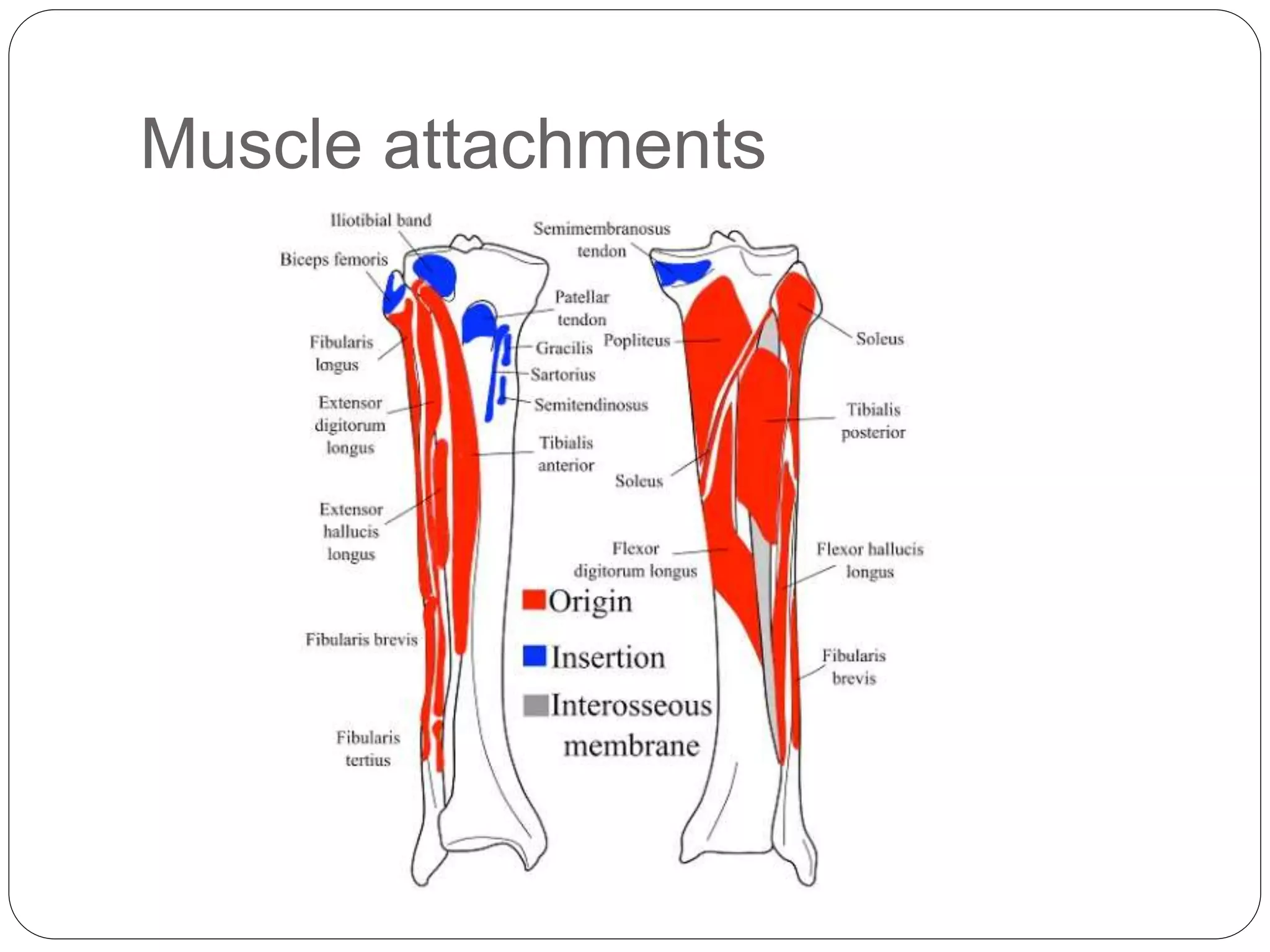
Muscle attachments
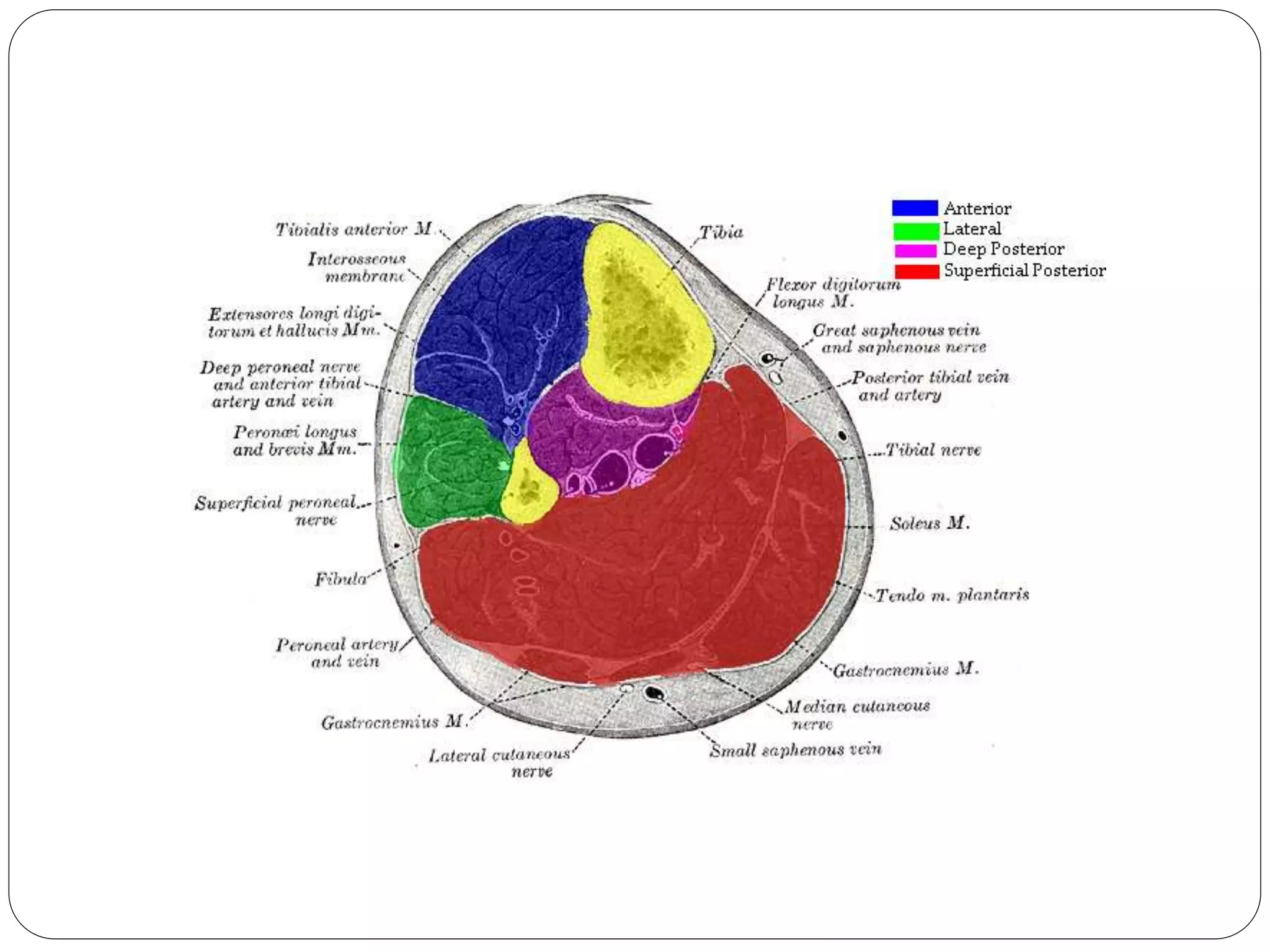
COMPARTMENTS OF LEG
1. Anterior compartment
2. Lateral compartment
3. Superficial posterior compartment
4. Deep posterior compartment
 Anterior compartment
 muscular
 tibialis anterior
 extensor hallucis longus
 extensor digitorum
longus
 peroneus tertius
 neurovascular
 deep peroneal nerve
 anterior tibial vessels
 Lateral compartment
 muscular
 peroneus longus
 peroneus brevis
 neurovascular
 superficial peroneal
nerve
 Superficial posterior
compartment
 muscular
 gastrocnemius
 plantaris
 soleus
 neurovascular
 sural nerve
 Deep posterior
compartment
 muscular
 tibialis posterior
 flexor hallucis longus
 flexor digitorum longus
 popliteus
 neurovascular
 tibial nerve
 posterior tibial vessels
FRACTURE SHAFT OF TIBIA
 Most common long bone fracture.
 Accounts for about 4% of all fractures.
 It is usually associated with fibula fracture.
MECHANISM OF FRACTURE
1. Low energy pattern
 Result of torsion injury
 Indirect or stress fracture
2. High energy pattern
 Motor vehicle crash
 Gunshot injury
 Associated with fibula fracture
Associated conditions
 Soft tissue injury (in open wounds)
 Compartment syndrome
 Bone loss
 Ipsilateral fibula fracture
 Ligamentous injury
 Ipsilateral femur fracture resulting in “floating
knee”
Fracture pattern
Transverse
fracture
Oblique fracture
Spiral fracture
Comminuted fracture
PRESENTATION
 Pain and swelling
 Inability to walk
 Deformity
 Contusion/ wound
 Abnormal mobility
 Bony crepitus
INVESTIGATION
 Radiographs
 Full length AP and Lateral views of the affected leg
 AP and Lateral views of the ipsilateral knee and
ankle
 CT scan
 To rule out any intraarticular fracture extension
MANAGEMENT
 Resuscitation of the patient as per ATLS
guidelines
 Airway
 Breathing
 Circulation
 Disability
 Exposure
 Volume stabilization with IV fluids or blood
transfusion
 Proper immobilization of the limb with Above-
knee splint.
TREATMENT
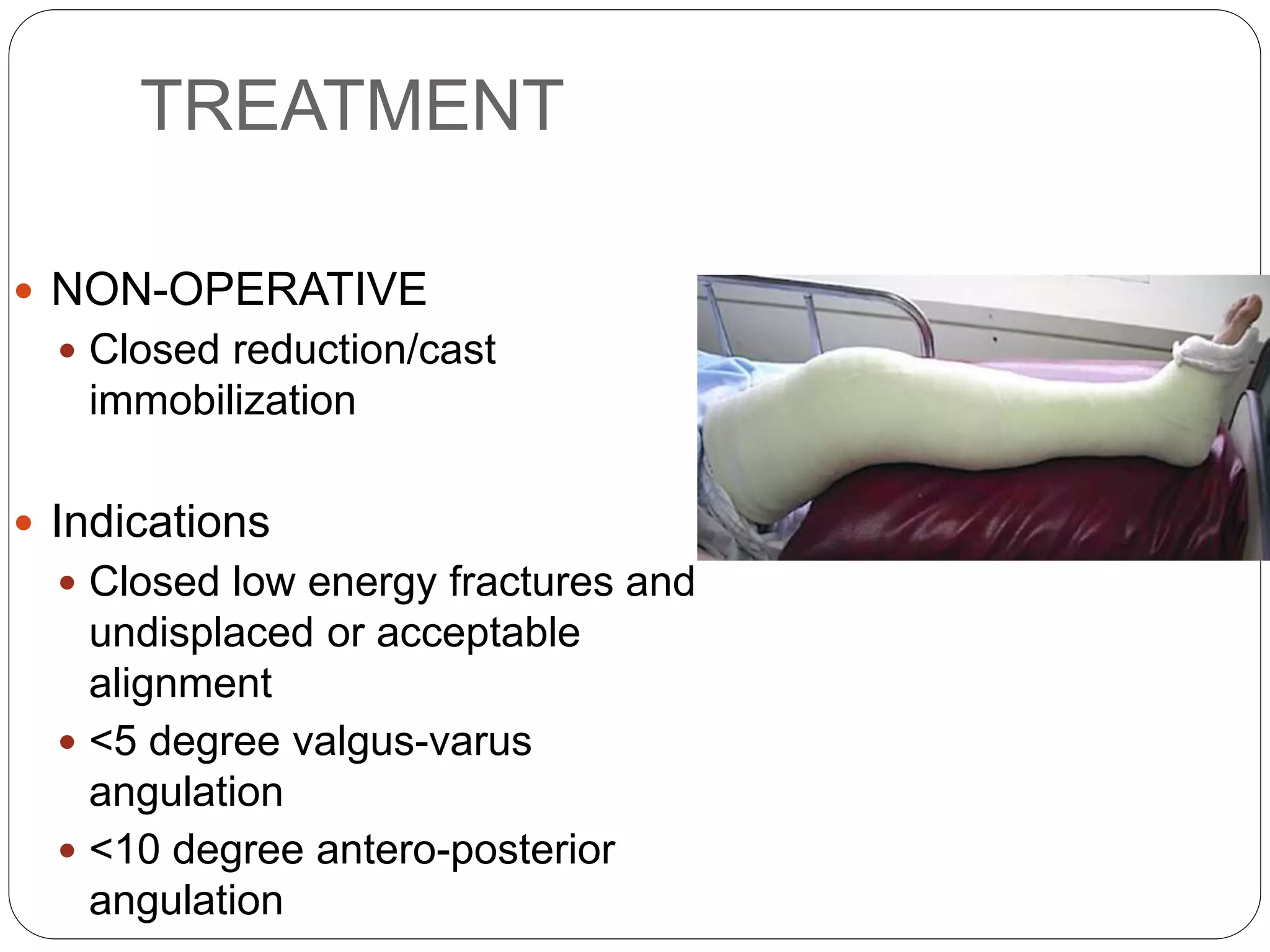
 NON-OPERATIVE
 Closed reduction/cast
immobilization
 Indications
 Closed low energy fractures and
undisplaced or acceptable
alignment
 <5 degree valgus-varus
angulation
 <10 degree antero-posterior
angulation
 Technique
 Long leg cast and convert to functional patellar
tendon bearing cast after 4 weeks
 Complication:
 Malunion
 Non union
 Risk of compartment syndrome
OPERATIVE
 Indication:
 Compound fractures
 Unacceptable alignment
 Segmental fracture
 Comminuted fracure
OPERATIVE MODALITIES
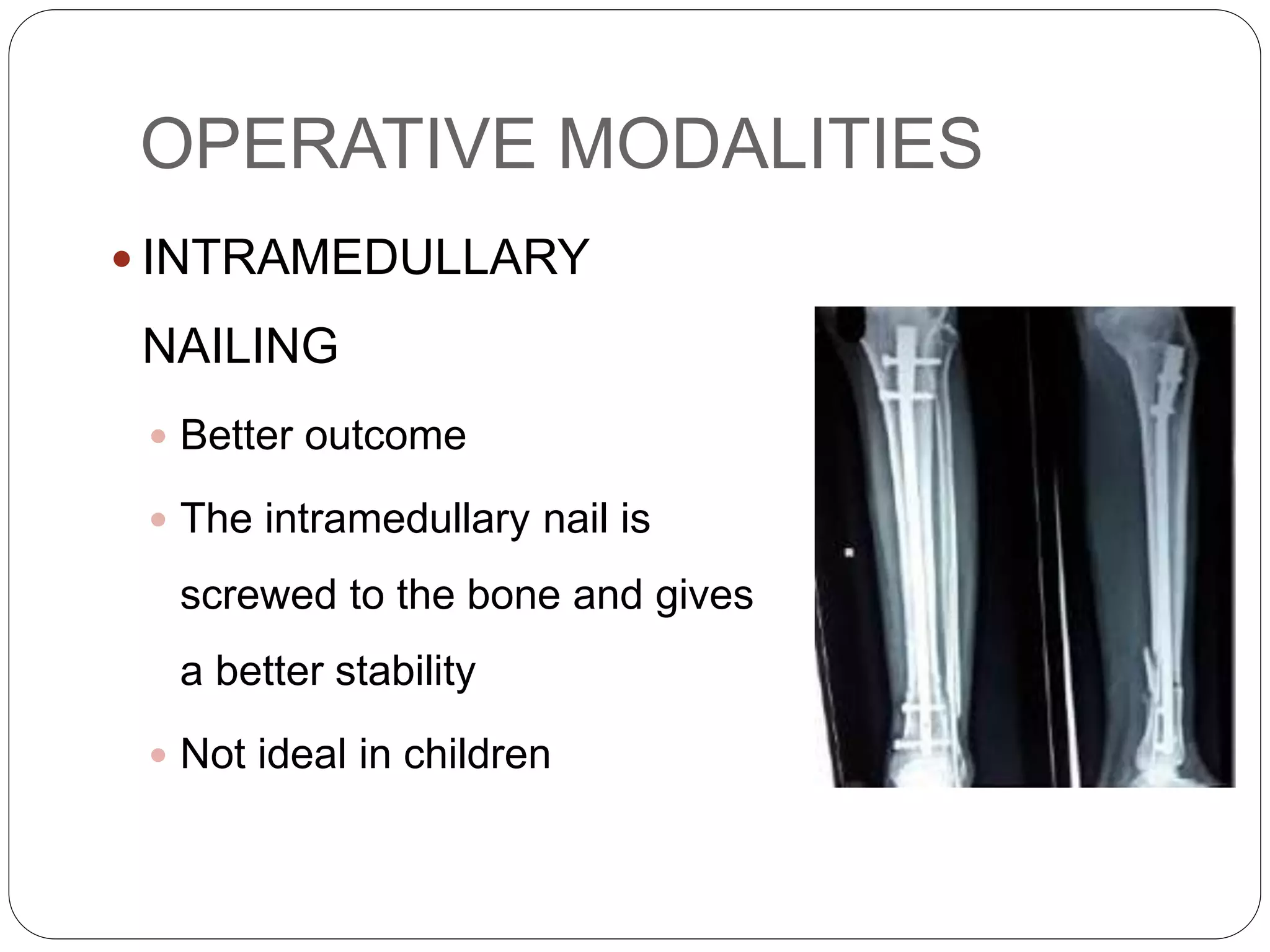
 INTRAMEDULLARY
NAILING
 Better outcome
 The intramedullary nail is
screwed to the bone and gives
a better stability
 Not ideal in children
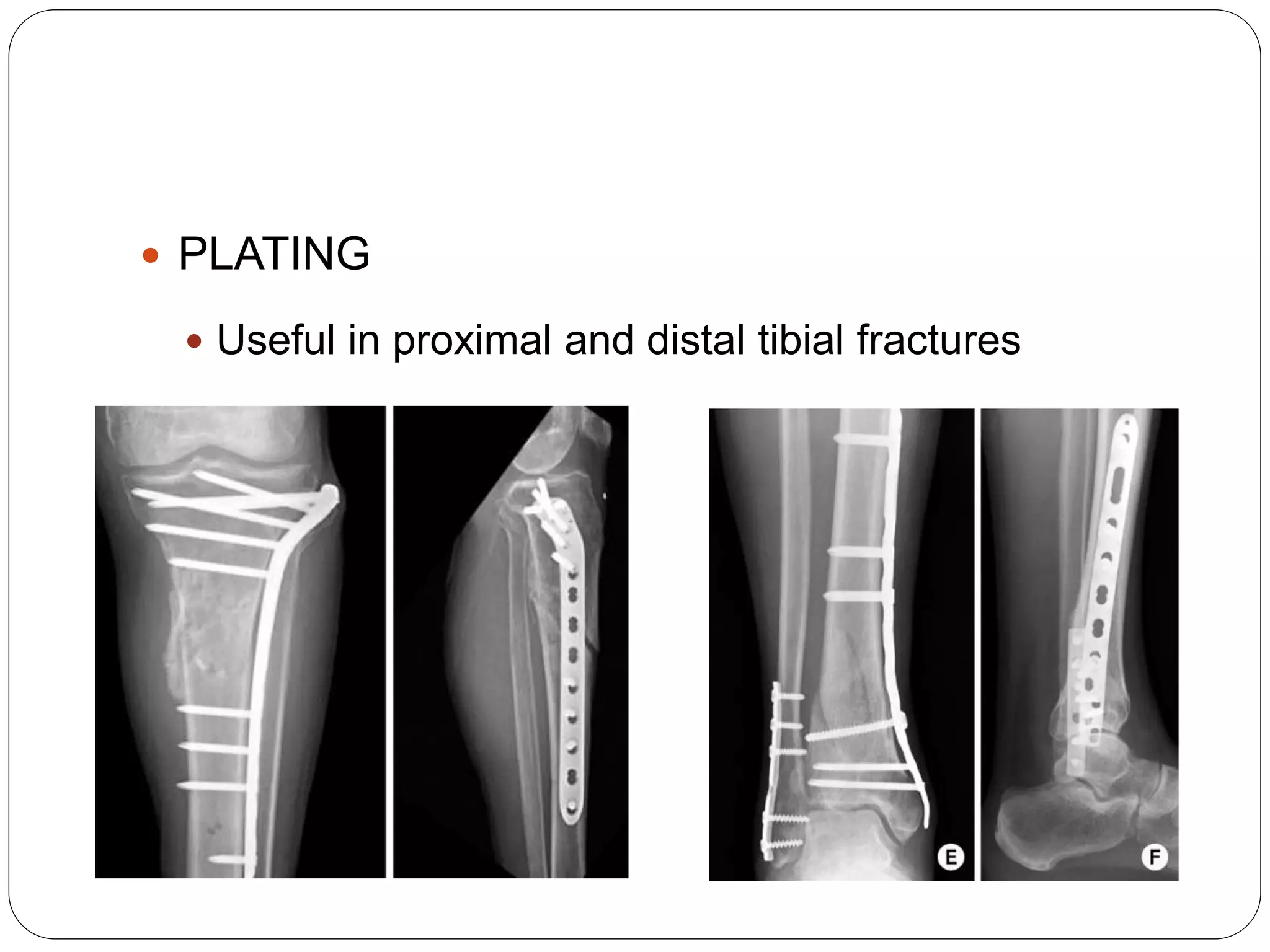
 PLATING
 Useful in proximal and distal tibial fractures
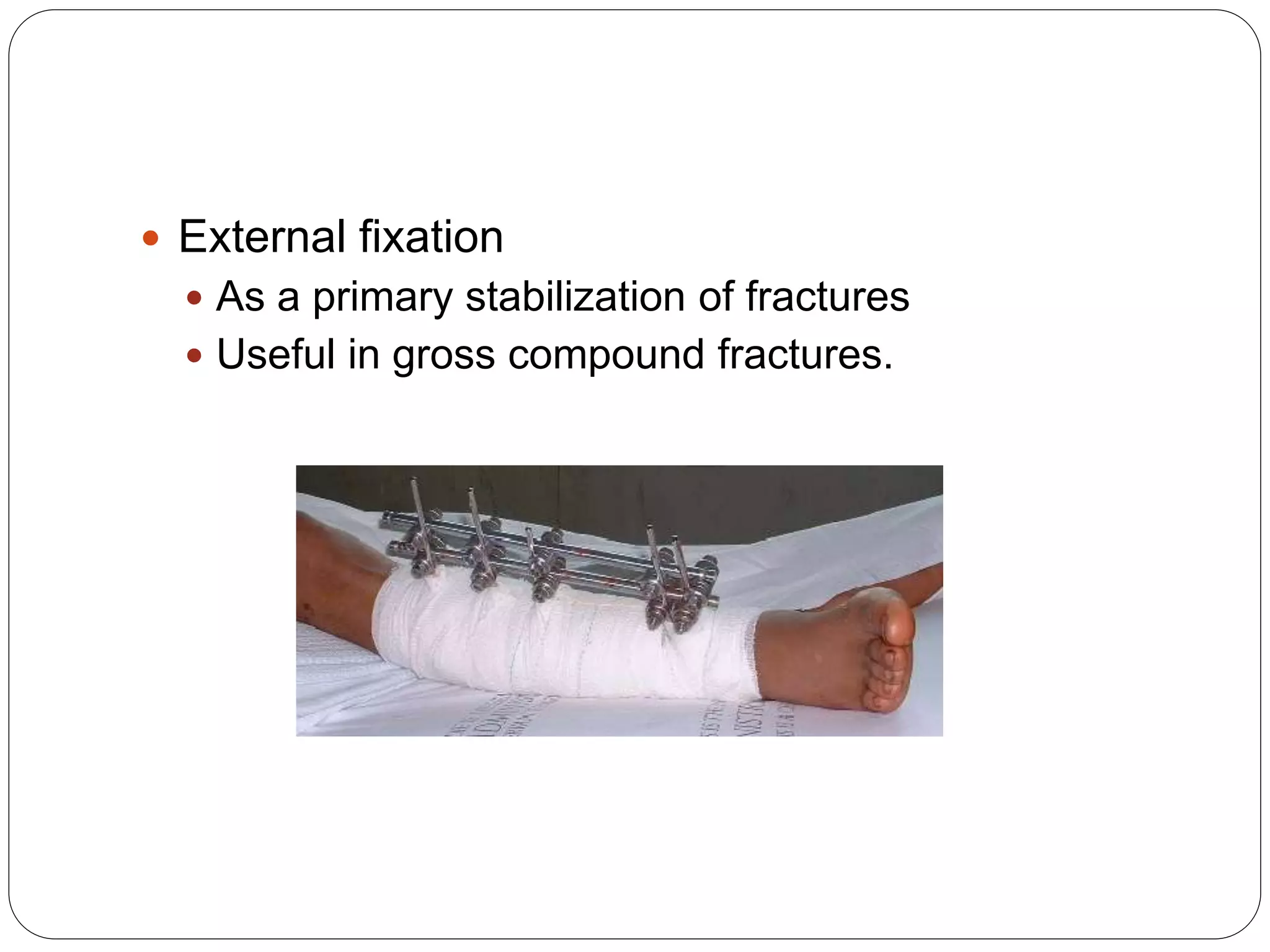
 External fixation
 As a primary stabilization of fractures
 Useful in gross compound fractures.
COMPARTMENT SYNDROME
 Compartment syndrome occurs when excessive
pressure builds up inside an enclosed muscle space
in the body.
 Compartment syndrome usually results from bleeding
or swelling after an injury.
 The dangerously high pressure in compartment
syndrome impedes the flow of blood to and from the
affected tissues.
 It can be an emergency, requiring surgery to prevent
permanent injury.
THANK YOU

Fracture shaft of tibia

  • 1.
    BY: DR. BIPULBORTHAKUR, PROFESSOR, DEPT. OF ORTHOPAEDICS, SMCH FRACTURE SHAFT OF TIBIA
  • 2.
    INTRODUCTION  Tibia isthe main bone of the leg. Also known as ‘shin’.  It is the 2nd largest bone in the body.  It is situated medial to fibula.  It carries about 80% of the body weight from femur to the foot.
  • 3.
    ANATOMY  Tibia isa long bone and comprises of 3 parts : upper and lower end and shaft.  Upper end is broad and has medial and lateral condyle and a tibial tuberosity.  Medial condyle is bigger than the lateral condyle.  Shaft has:  3 borders: anterior, medial and lateral  3 surfaces: medial, lateral and posterior
  • 4.
    ANATOMICAL POSITION AND SIDEDETERMINATION  It is hold in a manner that: Its expanded end with condyles faces upward. Its tibial tuberosity and sharp anterior border faces anteriorly. Medial malleolus is on the medial side. The superior surface (tibial plateau) is placed horizontal.
  • 5.
  • 6.
    COMPARTMENTS OF LEG 1.Anterior compartment 2. Lateral compartment 3. Superficial posterior compartment 4. Deep posterior compartment
  • 7.
     Anterior compartment muscular  tibialis anterior  extensor hallucis longus  extensor digitorum longus  peroneus tertius  neurovascular  deep peroneal nerve  anterior tibial vessels  Lateral compartment  muscular  peroneus longus  peroneus brevis  neurovascular  superficial peroneal nerve  Superficial posterior compartment  muscular  gastrocnemius  plantaris  soleus  neurovascular  sural nerve  Deep posterior compartment  muscular  tibialis posterior  flexor hallucis longus  flexor digitorum longus  popliteus  neurovascular  tibial nerve  posterior tibial vessels
  • 9.
    FRACTURE SHAFT OFTIBIA  Most common long bone fracture.  Accounts for about 4% of all fractures.  It is usually associated with fibula fracture.
  • 10.
    MECHANISM OF FRACTURE 1.Low energy pattern  Result of torsion injury  Indirect or stress fracture 2. High energy pattern  Motor vehicle crash  Gunshot injury  Associated with fibula fracture
  • 11.
    Associated conditions  Softtissue injury (in open wounds)  Compartment syndrome  Bone loss  Ipsilateral fibula fracture  Ligamentous injury  Ipsilateral femur fracture resulting in “floating knee”
  • 12.
  • 13.
    PRESENTATION  Pain andswelling  Inability to walk  Deformity  Contusion/ wound  Abnormal mobility  Bony crepitus
  • 14.
    INVESTIGATION  Radiographs  Fulllength AP and Lateral views of the affected leg  AP and Lateral views of the ipsilateral knee and ankle  CT scan  To rule out any intraarticular fracture extension
  • 15.
    MANAGEMENT  Resuscitation ofthe patient as per ATLS guidelines  Airway  Breathing  Circulation  Disability  Exposure  Volume stabilization with IV fluids or blood transfusion  Proper immobilization of the limb with Above- knee splint.
  • 16.
    TREATMENT  NON-OPERATIVE  Closedreduction/cast immobilization  Indications  Closed low energy fractures and undisplaced or acceptable alignment  <5 degree valgus-varus angulation  <10 degree antero-posterior angulation
  • 17.
     Technique  Longleg cast and convert to functional patellar tendon bearing cast after 4 weeks  Complication:  Malunion  Non union  Risk of compartment syndrome
  • 18.
    OPERATIVE  Indication:  Compoundfractures  Unacceptable alignment  Segmental fracture  Comminuted fracure
  • 19.
    OPERATIVE MODALITIES  INTRAMEDULLARY NAILING Better outcome  The intramedullary nail is screwed to the bone and gives a better stability  Not ideal in children
  • 20.
     PLATING  Usefulin proximal and distal tibial fractures
  • 21.
     External fixation As a primary stabilization of fractures  Useful in gross compound fractures.
  • 22.
    COMPARTMENT SYNDROME  Compartmentsyndrome occurs when excessive pressure builds up inside an enclosed muscle space in the body.  Compartment syndrome usually results from bleeding or swelling after an injury.  The dangerously high pressure in compartment syndrome impedes the flow of blood to and from the affected tissues.  It can be an emergency, requiring surgery to prevent permanent injury.
  • 23.