Pharmacotherapy of Infectious Diseases 
A Case-Based Approach 
Influenza 
Anas Bahnassi PhD Pharmacotherapy of Infectious Diseases 
Anas Bahnassi 2014 A Case-Based Approach
Pharmacotherapy of Infectious Diseases 
A Case-Based Approach 
Introduction 
•Influenza 
–An acute viral illness of the respiratory tract caused by influenza A &B virus. 
–Influenza-like illness is defined as an acute onset of respiratory illness with fever, cough, and one or more of the followings: 
•Sore throat. 
•Arthralgia. 
•Myalgia. 
•Prostration. 
Anas Bahnassi 2014 
•Gastrointestinal symptoms may be present in children <5yrs. 
•Fever may not show in children <5yrs or eldery >65yrs.
Pharmacotherapy of Infectious Diseases 
A Case-Based Approach 
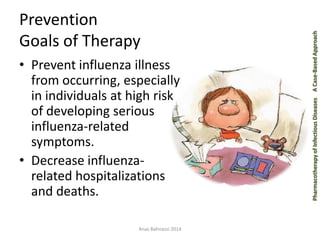
Prevention Goals of Therapy 
•Prevent influenza illness from occurring, especially in individuals at high risk of developing serious influenza-related symptoms. 
•Decrease influenza- related hospitalizations and deaths. 
Anas Bahnassi 2014
Pharmacotherapy of Infectious Diseases 
A Case-Based Approach 
Investigations: 
•History: 
–With particular attention to symptoms and onset of symptoms, the key to appropriate use antiviral agents: 
•When flu is circulating in the community, abrupt onset of fever ≥38.5ºC, and dry cough is likely to be the flu. Value of these symptoms is less in the very young and elderly. 
•Young children may present with either nonsymptomatic febrile illness or with a respiratory illness resembling croup, bronchitis, broncholitis. 
•Fever may not be prominent in elderly, if flu is circulating: suspect the flu with ≥ 2 symptoms: Sore throat, arthralgia, myalgia, or prostration. 
Anas Bahnassi 2014
Pharmacotherapy of Infectious Diseases 
A Case-Based Approach 
Investigations: 
•Laboratory Testing: 
–Beyond formal surveillance programs, widespread laboratory testing in the community is not necessarily or practical. 
–As a general rule, nasopharyngeal swabs from ill long-term residents should be sent for lab test if ≥2 or more cases of ILI in ≤72 hrs. 
–To decrease the potential of false negative results, swabs are best collected within 24hr of symptom onset and no later than 48 hrs. 
Anas Bahnassi 2014
Pharmacotherapy of Infectious Diseases 
A Case-Based Approach 
Prevention Choices Nonpharmacologic 
•Wash hands often, use sensitizers. 
•Cough/sneeze into tissues and throw used tissues in garbage, use sleeve if tissues are not available. 
•Stay home. 
Pharmacologic 
•Flu Vaccine 
Anas Bahnassi 2014
Pharmacotherapy of Infectious Diseases 
A Case-Based Approach 
Who should receive the flu vaccine? 
•Patients at high risk for influenza-related complications: 
–Chronic cardiac or respiratory disorder. 
–Residents of nursing homes. 
–>65 yrs old. 
–Patients of DM, Cancer, Immunodeficiency, Immunosuppression, Renal disease, Anemia, hemoglobinopathies, Chronic ASA therapy. 
•Persons able of transmitting influenza to high risk patients: 
–Healthcare workers. 
–People with direct contact to high risk patients. 
–Childcare workers. 
•Others: 
–People who provide essential community services. (police, fire..) 
Anas Bahnassi 2014
Pharmacotherapy of Infectious Diseases 
A Case-Based Approach 
Criteria for prophylactic use of antiviral agents: 
•Administer to all residents of a LTC facility who are not currently ill. 
•Duration of prophylaxis is 8 days after the onset of symptoms of the last case. 
•Administer for the duration of outbreak to healthcare provider in the LTC facility who refuse immunization. 
•Continue prophylaxis to high risk patients for the duration of the outbreak when 
Anas Bahnassi 2014
Pharmacotherapy of Infectious Diseases 
A Case-Based Approach 
Pharmacotherapy: Infectious Diseases: Anas Bahnassi PhD 
abahnassi@gmail.com 
http://www.twitter.com/abpharm 
http://www.facebook.com/pharmaprof 
http://www.linkedin.com/in/abahnassi 
Anas Bahnassi 2014

Influenza

  • 1.
    Pharmacotherapy of InfectiousDiseases A Case-Based Approach Influenza Anas Bahnassi PhD Pharmacotherapy of Infectious Diseases Anas Bahnassi 2014 A Case-Based Approach
  • 2.
    Pharmacotherapy of InfectiousDiseases A Case-Based Approach Introduction •Influenza –An acute viral illness of the respiratory tract caused by influenza A &B virus. –Influenza-like illness is defined as an acute onset of respiratory illness with fever, cough, and one or more of the followings: •Sore throat. •Arthralgia. •Myalgia. •Prostration. Anas Bahnassi 2014 •Gastrointestinal symptoms may be present in children <5yrs. •Fever may not show in children <5yrs or eldery >65yrs.
  • 3.
    Pharmacotherapy of InfectiousDiseases A Case-Based Approach Prevention Goals of Therapy •Prevent influenza illness from occurring, especially in individuals at high risk of developing serious influenza-related symptoms. •Decrease influenza- related hospitalizations and deaths. Anas Bahnassi 2014
  • 4.
    Pharmacotherapy of InfectiousDiseases A Case-Based Approach Investigations: •History: –With particular attention to symptoms and onset of symptoms, the key to appropriate use antiviral agents: •When flu is circulating in the community, abrupt onset of fever ≥38.5ºC, and dry cough is likely to be the flu. Value of these symptoms is less in the very young and elderly. •Young children may present with either nonsymptomatic febrile illness or with a respiratory illness resembling croup, bronchitis, broncholitis. •Fever may not be prominent in elderly, if flu is circulating: suspect the flu with ≥ 2 symptoms: Sore throat, arthralgia, myalgia, or prostration. Anas Bahnassi 2014
  • 5.
    Pharmacotherapy of InfectiousDiseases A Case-Based Approach Investigations: •Laboratory Testing: –Beyond formal surveillance programs, widespread laboratory testing in the community is not necessarily or practical. –As a general rule, nasopharyngeal swabs from ill long-term residents should be sent for lab test if ≥2 or more cases of ILI in ≤72 hrs. –To decrease the potential of false negative results, swabs are best collected within 24hr of symptom onset and no later than 48 hrs. Anas Bahnassi 2014
  • 6.
    Pharmacotherapy of InfectiousDiseases A Case-Based Approach Prevention Choices Nonpharmacologic •Wash hands often, use sensitizers. •Cough/sneeze into tissues and throw used tissues in garbage, use sleeve if tissues are not available. •Stay home. Pharmacologic •Flu Vaccine Anas Bahnassi 2014
  • 7.
    Pharmacotherapy of InfectiousDiseases A Case-Based Approach Who should receive the flu vaccine? •Patients at high risk for influenza-related complications: –Chronic cardiac or respiratory disorder. –Residents of nursing homes. –>65 yrs old. –Patients of DM, Cancer, Immunodeficiency, Immunosuppression, Renal disease, Anemia, hemoglobinopathies, Chronic ASA therapy. •Persons able of transmitting influenza to high risk patients: –Healthcare workers. –People with direct contact to high risk patients. –Childcare workers. •Others: –People who provide essential community services. (police, fire..) Anas Bahnassi 2014
  • 8.
    Pharmacotherapy of InfectiousDiseases A Case-Based Approach Criteria for prophylactic use of antiviral agents: •Administer to all residents of a LTC facility who are not currently ill. •Duration of prophylaxis is 8 days after the onset of symptoms of the last case. •Administer for the duration of outbreak to healthcare provider in the LTC facility who refuse immunization. •Continue prophylaxis to high risk patients for the duration of the outbreak when Anas Bahnassi 2014
  • 9.
    Pharmacotherapy of InfectiousDiseases A Case-Based Approach Pharmacotherapy: Infectious Diseases: Anas Bahnassi PhD abahnassi@gmail.com http://www.twitter.com/abpharm http://www.facebook.com/pharmaprof http://www.linkedin.com/in/abahnassi Anas Bahnassi 2014