Melaku Yitbarek(M.D.)
Internal Medicine Unit
Feb 23,2018
Outline
• Introduction
• Definition
• Pathogenesis
• Causes with clinical features &
• Management
Introduction
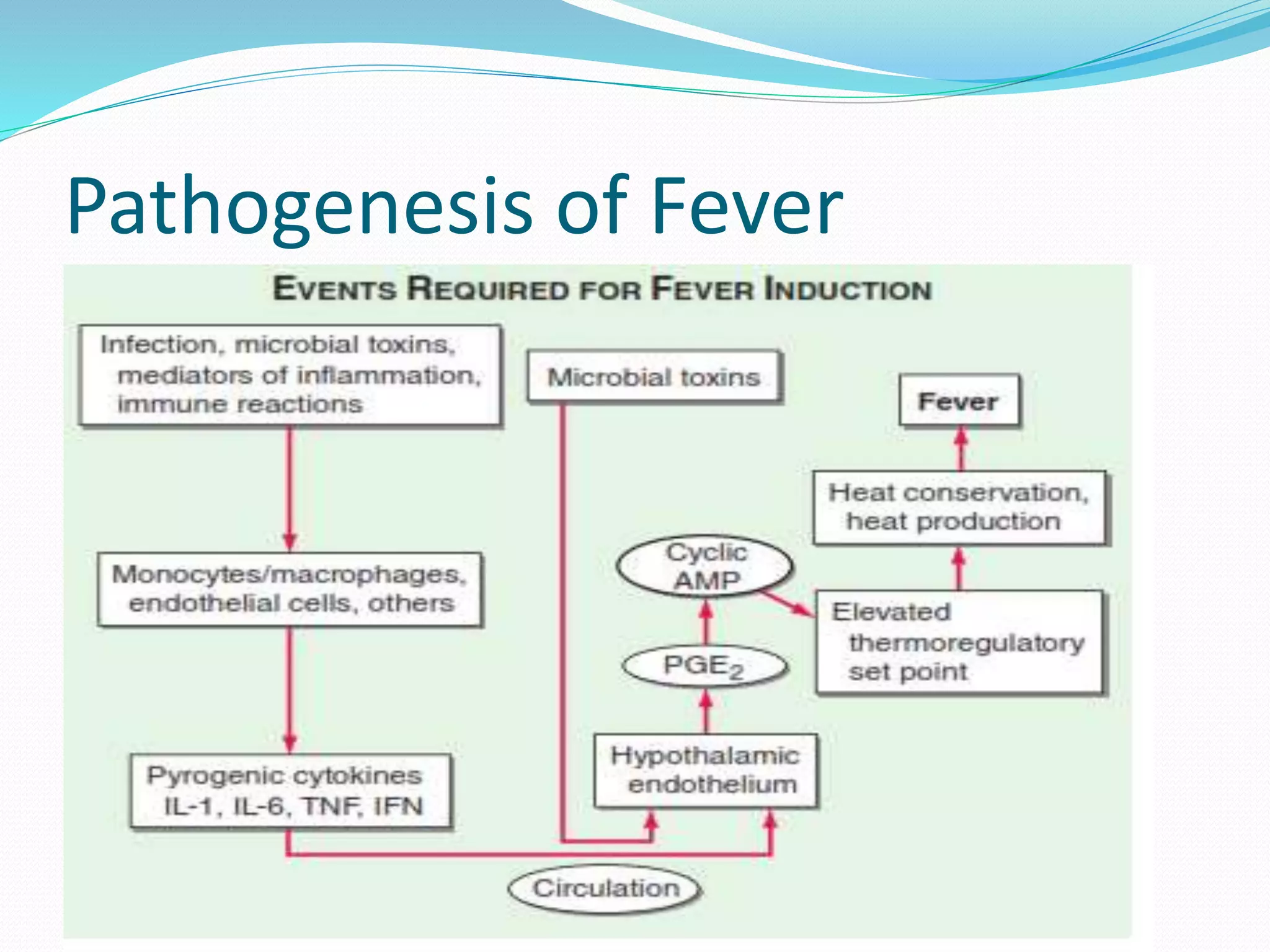
• Body temperature is controlled by the hypothalamus
• In a neutral temperature environment, the human
metabolic rate produces more heat than is necessary to
maintain the core body temperature in the range of 36.5–
37.5°C
• A normal body temperature is ordinarily maintained
despite environmental variations Because the
Hypothalamic thermoregulatory center balances the excess
heat production derived from metabolic activity in muscle
and the liver with heat dissipation from the skin And lungs
Definition
• According to studies of healthy individuals 18–40 years of
age, the mean oral temperature is 36.8° ± 0.4°C (98.2° ±
0.7°F), with low levels at 6 a.m. and higher levels at 4–6
p.m.
• The maximal normal oral temperature is 37.2°C (98.9°F) at
6 a.m. and 37.7°C (99.9°F) at 4 p.m.; these values define the
99th percentile for healthy individuals.
• In light of these studies, an a.m. temperature of >37.2°C
(>98.9°F) or a p.m. temperature of >37.7°C (>99.9°F) would
define a fever. The normal daily temperature variation is
typically 0.5°C (0.9°F).
• Rectal temperatures are generally 0.4°C (0.7°F) higher than
oral readings
Fever versus Hyperthermia
• Fever is an elevation of body temperature that exceeds
the normal daily variation and occurs in conjunction
with an increase in the hypothalamic set point
• A fever of >41.5°C (>106.7°F) is called
hyperpyrexia,This extraordinarily high fever can
develop in patients with severe infections
• Although most patients with elevated body
temperature have fever, there are circumstances in
which elevated temperature represents not fever but
hyperthermia (heat stroke)
Fever versus Hyperthermia
• Hyperthermia is characterized by an uncontrolled
increase in body temperature that exceeds the body’s
ability to lose heat.
• The setting of the hypothalamic thermoregulatory
center is unchanged.
• In contrast to fever in infections, hyperthermia does
not involve pyrogenic molecules.
Pathogenesis of Fever
Acute Febrile Infections
• Fever is their prominent symptom which is usually
high grade and sudden onset.
• Associated symptoms like
chills,rigors,arthalgia,headache,malaise and rash are
usually present
• No Prominent organ specific symptoms and signs
E.g cough, coryza, dysuria,chest pain
,frequency,vomiting,diarrhea,abdominal pain, local
tenderness…
AFI…
Common Differentials in our setting:
• Malaria
• Typhoid fever
• Ricketssial diseases(Typhus)
• Relapsing Fever
• CNS infections(meningitis)
Malaria
Introduction:
• Malaria is a protozoan disease transmitted by the bite of
infected Anopheles mosquitoes
• The most important of the parasitic disease of
humans-107 countries, 3 billion people, 1-3 million
deaths/ yrly
• Eliminated from few countries but resurged in many
parts of the tropics Four species of the genus
plasmodium cause nearly all malarial infections in
humans.
• Almost all deaths are by P.falciparum.
• The pathogenesis in human is as a result of direct
effects of RBC destruction.
Major Malaria Parasites
 P. falciparum ( 60%)
 P. vivax ( 40%)
 P. malariae (rare)
 Major Malaria Vectors
 An. arabiensis (family of An. gambiae comlex)=
primary vector
 An. funestus
 An. phareonsis
 An. nili
Life cycle Of malaria
MALARIA IN ETHIOPIA
 Malaria is one of the leading public health
problems in Ethiopia
 75% of the country is malarious (<2000m), with
about 68% of the population (50 million) at risk
 Major impediment to socio-economic
development, coincides with major planting and
harvesting season
Malaria Epidemiology
 Bimodal type of transmission:
 Major: Sep - Dec, following the main rainy season
from Jun to Aug
 Minor: Apr–May, following a short rainy season
from Feb to Mar
 Major epidemics occur every 5-8 years, focal
outbreaks are common
 Distribution varies from place to place depending
on climate and altitude
Geographic Distribution of Malaria in Ethiopia
Malaria in Ethiopia is Unstable
Unstable malaria
 Seasonal
 Lack of immunity
 Epidemic common
 All age groups affected
Malaria in Ethiopia
Stable malaria
 Intense, perennial
 High immunity
 Epidemic uncommon
 Children & pregnant
women more affected
Many SSA
Trend of an epidemic malaria in Adami Tulu District. Microscopically
confirmed malaria cases at Zeway MCL, 1999-2004.
0
200
400
600
800
1000
1200
1400
1600
1800
2000
.
.
.
.
.
.
.
.
.
.
.
.
.
.
.
.
.
.
.
.
.
.
.
.
.
.
.
.
.
.
.
.
.
.
.
.
.
.
.
.
.
.
.
.
.
.
.
.
.
.
.
.
.
.
.
.
.
.
.
.
.
.
.
.
.
.
.
.
.
.
.
.
1999 2000 2001 2002 2003 2004
Months
No.ofcases
Malaria in Ethiopia is Seasonal
Technical Strategic Approaches for Malaria
Prevention and Control
1. Early diagnosis and effective treatment
2. Vector control
3. Epidemic prevention and control
Clinical features
Uncomplicated Malaria:
 Fever, Chills, Rigors, Sweating, Severe Headache,
Generalized body and joint pain
 Nausea and or vomiting, Loss of appetite, Abdominal
pain (especially in children)
 Irritability and refusal to feed (in infants), flu-like
symptoms, fever above 38°C
 Splenomegaly, Pallor
Clinical features
Uncomplicated malaria:
Investigations
 Microscopy-thick and thin blood films for malaria
parasites, CBC
 Rapid diagnostic tests (RDT)-if microscopy is
unavailable
Clinical …
Uncomplicated malaria..
Treatment:
Non pharmacologic ;
 Apply tepid sponging or fanning to reduce body temperature
 Admit severe complicated cases
Pharmacologic:
Treatment of uncomplicated P. Falciparum malaria
First line:
• Artemether + Lumefantrine, 20mg + 120mg in a fixed dose
combination
• Alternative: Quinine dihydrochloride, 10mg quinine
sulphate salt/kg TID for 7 days.
Clinical…
Uncomplicated Malaria:
Treatment;
First line
 Chloroquine phosphate, 1 g, then 500mg in 6
hours followed by 500mg P.O., QD
 for 2 days, or 1g at 0 and 24 hrs followed by 0.5g at 48
hrs P.O.,
Followed by
 Primaquine, 15mg base P.O., QD for 14 days.
Clinical …
Complicated P.falciparum malaria:
 delay in diagnosis or inappropriate treatment of
uncomplicated malaria can lead to the rapid
development of severe or “complicated malaria”.
 It mostly occurs in children under 5 years of age,
pregnant women and non-immune individuals.
 Severe malaria may lead to death unless it is diagnosed
early and appropriately managed.
Clinical…
Complicated Malaria: clinical features
 Inability to take in fluids (or breast milk in children)
 Repeated profuse vomiting
 Dark or cola colored urine
 Passing of very little urine
 Difficulty in breathing
 Generalised weakness, inability to walk or sit without assistance
 Sleepiness, change of behaviour
 Repeated generalized convulsions
 Altered consciousness, confusion, delirium, convulsions, coma
 Tachypnoea, respiratory distress and/or cyanosis
Clinical…
Complicated Malaria: clinical features…
 Oliguria, renal failure
 repeated vomiting
 hypoglycaemia
 severe anaemia (Hb < 6 g/dL)
 Hyperpyrexia(axillaries temperature >38.5°C)
 Extreme pallor (severe anaemia)
 Circulatory collapse or shock (cold limbs, weak rapid pulse)
 Crepitations on chest examination
 Haemoglobinuria (dark or 'cola-coloured' urine)
 Spontaneous unexplained heavy bleeding (disseminated
intravascular
 coagulation)
 Complications of P. falciparum malaria
 Cerebral malaria ( coma )
 Severe anemia
 Metabolic (Lactic) Acidosis
 renal failure
 Pulmonary odema & ARDS
 hypoglycemia
 Hypotention & shock
 Bleeding & clotting disorder(DIC)
 Algid Malaria(CR-Collapse)
 Convulsions
 haemoglobinuria
 hyperparasitemia
 Hyperpyrexia
 Jaundice
 Prostration
Clinical…
Complicated Malaria:
Investigations
 Microscopy-thick and thin blood films for malaria
parasites
 Rapid diagnostic test (RDT)-if microscopy is unavailable
 CBC
 RBS
 Blood grouping and cross-matching
 BUN and creatinine
 Lumbar puncture to exclude meningitis or cover with
appropriate antibiotic.
Clinical…
Complicated Malaria;
Treatment:
Non pharmacologic:
 Clear and maintain the airway.
 Position semi-prone or on side.
 Weigh the patient and calculate dosage.
 Make rapid clinical assessment.
 Exclude or treat hypoglycemia (more so in pregnant women).
 Assess state of hydration.
 Measure and monitor urine output.
 If necessary insert urethral catheter.
 Measure urine specific gravity.
Clinical…
Complicated Malaria:
Non pharmacologic TX;
 Open IV line for 8 hours of intravenous fluids including
diluents for antimalarial medicine,glucose therapy and
blood transfusion.
 If rectal temperature exceeds 39°C, remove patient's
clothes, use tepid sponge,
 Consider other infections.
 Consider need for anti-convulsant treatment
Clinical…
Complicated Malaria:
Pharmacologic Tx:
First line
 Artesunate, 2.4mg/Kg IV or IM given on admission (time = 0), then
repeat at 12 hours, and 24 hours, then once a day for up to 5 days.
Alternatives
 Artemether, IM 3.2mg/kg loading dose on the first day followed by
1.6mg/kg daily for five days
 Quinine dihydrochloride: Loading dose: 20mg/kg in 500ml of
isotonic saline or 5% dextrose over 4 hours (4ml/minute) followed by
Maintenance dose: should be given 8 hours after the loading dose
at a dose of 10mg /kg and it should be given 8 hourly diluted in 500 ml
of isotonic saline or 5% dextrose over 4 hours.
Clinical…
Cerebral Malaria:
 In falciparum malaria, 10% of all admissions and 80% of
deaths are due to the C.N.S. involvement
 Manifestations of cerebral dysfunction include any degree of
impaired consciousness, delirium, abnormal neurological
signs, and focal and generalized convulsions
 For a diagnosis of cerebral malaria, the following criteria
should be met:
(i.) Deep, unarousable coma: Motor response to noxious stimuli
is non- localising or absent.
(ii.) Exclusion of other encephalopathies.
(iii.) Confirmation of P. falciparum infection
 all patients with P. falciparum malaria with neurological
manifestations of any degree should be treated as cases of
cerebral malaria
Typhoid Fever
 Enteric (typhoid) fever is a systemic disease characterized by fever and
abdominal pain and caused by dissemination of S. typhi or S. paratyphi
 The etiologic agents of enteric fever—S. typhi and S. paratyphi
serotypes A, B, and C—have no known hosts other than humans
 Most commonly, food-borne or waterborne transmission results from
fecal contamination by ill or asymptomatic chronic carriers.
 Sexual transmission between male partners has been described.
 Health care workers occasionally acquire enteric fever after exposure to
infected patients or during processing of clinical specimens and
cultures.
Typhoid…
Risk factors:
• include contaminated water or , flooding,
• food and drinks purchased from street vendors,
• raw fruits and vegetables grown in Fields fertilized with
sewage,
• ill household contacts,
• lack of hand washing and toilet access,
• And evidence of prior Helicobacter pylori infection (an
association probably related to chronically reduced
Gastric acidity).
Clinical Course
 Enteric fever is a misnomer, in that the hallmark
features of this disease—fever and abdominal pain—
are variable.
 While fever is documented at presentation in>75% of
cases,abdominal pain is reported in only30–40%
 Thus, a high index of suspicion for this potentially fatal
systemic illness is necessary when a person presents with
fever
Clinical…
 The incubation period for S. typhi averages 10–14 days
but ranges from 5 to 21 days, depending on the inoculum
size and the host’s health and immune status
 The most prominent symptom is prolonged fever(38.8°–
40.5°C; 101.8°–104.9°F), which can continue for up to 4
weeks if untreated.
Clinical…
Symptoms:
 headache (80%),
 chills (35–45%),
 cough (30%),
 sweating (20–25%),
 myalgias (20%),
 malaise (10%), a
 and arthralgia (2–4%).
Gastrointestinal manifestations
 included anorexia (55%),
abdominal pain (30–40%),
nausea (18–24%),
 vomiting (18%), and diarrhea
(22–28%) more commonly than
constipation (13–16%)
Signs:
 coated tongue (51–56%),
 splenomegaly (5–6%), and
 abdominal tenderness (4–5%)
 .
 Early physical findings of enteric
fever include rash (“rose
spots”30%),
 hepatosplenomegaly (3–6%),
 epistaxis, and relative
bradycardiaat the peak of high
fever (<50%)
Clinical…
Complications:
 Gastrointestinal bleeding (10–20%) and intestinal perforation (1–3%)
most commonly occur in the third and fourth weeks of illness and result
from hyperplasia, ulceration, and necrosis of the ileocecal Peyer’s patches
at the initial site of Salmonella infiltration
 Neurologic manifestations occur in 2–40% of patients and include
meningitis, Guillain-Barré syndrome, neuritis, and neuropsychiatric
symptoms
 Rare complications whose incidences are reduced by prompt antibiotic
treatment include disseminated intravascular coagulation,pancreatitis,
hepatic and splenic abscesses and granulomas,endocarditis, pericarditis,
myocarditis, orchitis, hepatitis,glomerulonephritis,pyelonephritis and
hemolytic-uremic syndrome,severe pneumonia, arthritis, osteomyelitis,
endophthalmitis, and parotitis
Diagnosis
 Because the clinical presentation of enteric fever is
relatively non specific,the diagnosis needs to be
considered in any febrile patient.
 Other than a positive culture, no specific laboratory
test is diagnostic for enteric fever
 In 15–25% of cases, leukopenia and neutropenia are
detectable
 Bone marrow culture is 55–90% sensitive,
 blood, bone marrow, and intestinal secretions are all
cultured, the yield is >90%
 Serology: Widal Test
Treatment
 Prompt administration of appropriate antibiotic
therapy prevents severe complications of enteric fever
and results in a case-fatality rate of <1%
 The initial choice of antibiotics depends on the
susceptibility of the S. typhi and S. paratyphi strains in
the area of residence or travel).
 For treatment of drug-susceptible typhoid fever,
fluoroquinolones are the most effective class of agents,
with cure rates of ~98%
Prevention and Control
 Personal and environmental hygiene
 Vaccine
 Whole cell killed vaccine, Ty21a attuenated, Vicps
polysaccharide
 Indication:
 Contacts with chronic carriers
 Lab workers
 Travellers
 Monitoring of food handlers
Epidemic(Louse born) Typhus
 The human body louse (Pediculus humanus corporis)
lives in clothing under poor hygienic conditions and
usually in impoverished cold areas.
 Lice acquire R.prowazekii when they ingest blood from a
rickettsemic patient.
 The rickettsiae multiply in the louse’s midgut epithelial
cells and are shed in its feces.
 The infected louse leaves a febrile person and deposits
infected feces on its subsequent host during its blood
meal; the patient autoinoculates the organisms by
scratching.
Epidemic…
 Brill-Zinsser disease is a recrudescent illness occurring
years after acute epidemic typhus, probably as a result of
waning immunity.
 R. prowazekii remains latent for years; its reactivation
results in sporadic cases of disease in louse-free
populations or in epidemics in louse infested
populations.
Epidemic …
Clinical Manifestions:
• After an incubation period of ~1–2 weeks, the onset of illness is abrupt,
with prostration, severe headache, and fever rising rapidly to 38.8°–
40.0°C
• Cough is prominent, developing in 70% of patients
• Myalgias are usually severe.
• A rash begins on the upper trunk, usually on the fifth day, and then
becomes generalized, involving the entire body except the face, palms,
and soles.
• Photophobia, with considerable conjunctival injection and eye pain, is
• Common
• the tongue may be dry, brown, and furred.
• Confusion an coma are common.
• Skin necrosis and gangrene of the digits as well as interstitial pneumonia
may occur in severe cases.
Epidemic…
Diagnosis and Treatment:
• The Weil Felix serology test with demonstration of a
rising/high titer.
 Doxycycline (200 mg/d, given in two divided doses) is
administered orally or—if the patient is comatose or
vomiting—intravenously.
 Although under epidemic conditions a single 200-mg oral
dose is effective, treatment is generally continued until 2–3
days after defervescence
 Prevention:Prevention of epidemic typhus involves control
of body lice,Clothes should be changed regularly, and
insecticides should be used every 6 weeks to control the
louse population
Relapsing Fever
 Recurrent acute episodes of spirochetemia and
fever alternate with spontaneous spirochetal
clearance and apyrexiya.
 Two forms:
 TBRF-a zoonosis transmited from rodents to humans
by tick bite
 LBRF-disease of humans transmited by body louse
46
Relapsing…
Etiology:
 Borrelia spp
 B. dutoni agent of TBRF
 B. recurrentis-LBRF
 B. burgdorferi-Lyme disease
 Vector:
 Body louse- transmission is by crashing of pruritic louse
bites
Relapsing…
Risk factors:
 Overcrowding, impoverishment, unhygienic condition
 Prisoners, war, famine
 Cool, rainy season
 Close contacts
 Accidental needle prick
Relapsing…
Pathogenesis:
 Multiplication in blood- (febrile period)
 Sequestration at liver, spleen, BM & CNS- (remission)
 Activation of mediators of inflammation
 Cytokines: IL-6, IL-8, CRP, TNF-responsible for JH
Relapsing…
 Edema and swelling of organs
 Histocytic inflammation of myocardium
 Petechial haemorrhage
 Haemorrhagic infarction of the spleen, heart, liver and
brain
Relapsing…
Clinical Presentation:
 Incubation Period: 7 days
 Sudden high grade fever(>40 )
 Chills, rigor, sweats, myalgia, arthralgia
 Dellirium, prostration, photophobia,cough
 Tachycardia, tachypnea
 Meningismus
 Icterus, petechia in 1/3 of patients
 Tender Hepatosplenomegaly
 Symptoms subside after 5 days with spontaneous crisis
Relapsing..
Complications:
 Haemorrhage: GI, CNS
 Coagulopathy
 Neurologic:
 Optic neuritis, lymphocytic meningitis, CN palsy and
coma.
 Pneumonitis
 Myocarditis
 Splenic rapture
Relapsing Fever
Complications:
 Jarisch-Herxheimer Reaction (JHR)
 Is a condition of worsening of the patients condition soon
after the intiation of antibiotic treatment, caused by
mediatiors like TNF
 Two phases
Chill phase:
 Toxic T>41, rigors, hyper metabolism
 Increase PVR & decrease in Pul. arterial pressure
 Lasts 10-30 min
Flush phase:
 Decrease in PVR & increase in Pul. Arterial pressure
 Decrease in T, diaphoresis, decreased effective circulatory volume
 Lasts<8 hrs
 Sleep, exhaustion, recovery with disappearance of spirochetes
 Mortality reaches 20% in malnourished & stressed population.
Relapsing…
Diagnosis:
 Demonstration of spirochetes in blood also in BM
& CSF
 CBC: low platelete
 Coagulation profile: PT, PTT, BT-prolonged
Relapsing…
Treatment:
 Delousing: permethrine dust or liquid
 Suportive: Rehydration, transfusion
 Antibiotic:
 Procaine penicilline
 TTC
 Monitor for JHR in 1-4 hrs of therapy
Meningitis
• Acute bacterial Meningitis
• Acute Viral Meningitis
Acute Bacterial Meningitis
Definition:
 Bacterial meningitis is an acute purulent infection
within the subarachnoid space
 It is associated with a CNS inflammatory reaction that
may result in decreased consciousness, seizures, raised
intracranial pressure (ICP), and stroke
Acute Bacterial Meningitis
Etiology:
 S.pneumonia – 50%
 N.meningitidis – 25%
 Group B.Strept – 15%
 L.monocytogenes – 10%
 H.influenzae - <10%
Acute Bacterial Meningitis
Predisposing Factors:
 S. pneumoniae
 Pneumococcal Pneumonia
 Otitis media and Sinusitis
 Alcoholism
 Diabetes, Splencetomy
 Hypogammaglobulinemia
 Head trauma
Acute Bacterial Meningitis
Predisposing…
 N. meningitides
 Colonization of nasopharyngeal
 Bacterial virulence
 Host immune defense-complement deficiency
 Dry season, overcrowding, smoking, recent viral URTI
Pathogenesis
 Bacteria colonizes the nasopharynx
 A defect in the barrier by URTI or dryness
 Transmigration to blood and reaches the Pia and
 Arachnoids matters
 Inflammatory response
 Increased permeability of BBB
Clinical Presentation
 The classic clinical triad of meningitis is fever, headache,
and nuchal rigidity, but the classic triad may not be present
 A decreased level of consciousness occurs in >75% of
patients and can vary from lethargy to coma
 Fever and either headache, stiff neck, or an altered level of
consciousness will be present in nearly every patient with
bacterial meningitis
 Nausea, vomiting, and photophobia are also common
complaints.
 Seizures occur as part of the initial presentation of
bacterial meningitis or during the course of the illness in
20–40% of patients
Clinical Presentation
Meningeal signs:
 Nuchal rigidity (“stiff neck”) is the pathognomonic sign of
meningeal irritation and is present when the neck resists
passive flexion
 Kernig’s sign is elicited with the patient in the supine
position,The thigh is flexed on the abdomen, with the knee
flexed;attempts to passively extend the knee elicit pain
when meningeal irritation is present.
 Brudzinski’s sign is elicited with the patient in the supine
position and is positive when passive flexion of the neck
results in spontaneous flexion of the hips and knees
Clinical …
 Raised ICP is an expected complication of bacterial
meningitis and the major cause of obtundation and
coma in this disease
 More than 90% of patients will have a CSF opening
pressure >180 mm water, and 20% have opening
pressures >400 mm water
 Signs of increased ICP include a deteriorating or
reduced level of consciousness, papilledema,dilated
poorly reactive pupils, sixth nerve palsies, decerebrate
posturing,and the Cushing reflex
(bradycardia,hypertension,andIrregular respirations)
Diagnosis
 When bacterial meningitis is suspected, blood cultures should be
immediately obtained and empirical antimicrobial and adjunctive
dexamethasone therapy initiated without delay
 Lumbar puncture(LP)
The classic CSF abnormalities in bacterial meningitis are
(1) polymorphonuclear (PMN) leukocytosis (>100 cells/µL in 90%),
(2) decreased glucose concentration (<2.2 mmol/L [<40 mg/dL] and/or
CSF/serum glucose ratio of <0.4 in ~60%),
(3) increased protein concentration (>0.45 g/L [>45 mg/dL] in 90%), and
(4) increased opening pressure (>180 mmHO in 90%).
CSF bacterial cultures are positive in >80% of patients, and CSF Gram’s
stain demonstrates organisms in >60%.
 Neuro imaging(MRI, CT)
Acute bacterial Meningitis
Treatment:
 Bacterial meningitis is a medical emergency.
 The goal is to begin antibiotic therapy within 60 min
of a patient’s arrival in the emergency room.
 Empirical antimicrobial therapy is initiated in
patients with suspected bacterial meningitis before
the results of CSF Gram’s stain and culture are known.
 And adjunct dexamethasone therapy 20 min before
antibiotic therapy.
Acute viral Meningitis
Etiology:
 The most important agents are enteroviruses
(including echoviruses and coxsackie viruses in
addition to numbered enteroviruses), varicella-zoster
virus (VZV), HSV (HSV-2 > HSV-1), HIV
 CSF cultures are positive in 30–70% of patients, with
the frequency of isolation depending on the specific
viral agent.
 Approximately two-thirds of culture-negative cases of
“aseptic” meningitis have a specific viral etiology
identified by CSF PCR testing
Acute Viral Meningitis
Clinical Manifestation:
 Immunocompetent adult patients with viral meningitis
usually present with headache,fever,and signs of meningeal
irritation couple with an inflammatory CSF profile
 Headache is almost invariably present and often
characterized as frontal or retroorbital and frequently
associated with photophobia and pain on moving the eyes
 Nuchal rigidity is present in most cases but may be mild
and present only near the limit of neck anteflexion
 Constitutional signs can include malaise, myalgia,
anorexia, nausea and vomiting, abdominal pain, and/or
diarrhea
Acute Viral Meningitis
Diagnosis:
 CSF:
 Lymphocytic pleocytosis (25-500/ul)
 Protein and glucose slightly increased
 Normal opening pressure
 CSF PCR
Acute Viral Meningitis
Treatment:
 Supportive:
 Fluid and electrolyte
 Analgesics
 Antiviral:
 Acyclovir
 Prognosis is excellent
THANK YOU!!!

acute febrile illnesses

  • 1.
  • 2.
    Outline • Introduction • Definition •Pathogenesis • Causes with clinical features & • Management
  • 3.
    Introduction • Body temperatureis controlled by the hypothalamus • In a neutral temperature environment, the human metabolic rate produces more heat than is necessary to maintain the core body temperature in the range of 36.5– 37.5°C • A normal body temperature is ordinarily maintained despite environmental variations Because the Hypothalamic thermoregulatory center balances the excess heat production derived from metabolic activity in muscle and the liver with heat dissipation from the skin And lungs
  • 4.
    Definition • According tostudies of healthy individuals 18–40 years of age, the mean oral temperature is 36.8° ± 0.4°C (98.2° ± 0.7°F), with low levels at 6 a.m. and higher levels at 4–6 p.m. • The maximal normal oral temperature is 37.2°C (98.9°F) at 6 a.m. and 37.7°C (99.9°F) at 4 p.m.; these values define the 99th percentile for healthy individuals. • In light of these studies, an a.m. temperature of >37.2°C (>98.9°F) or a p.m. temperature of >37.7°C (>99.9°F) would define a fever. The normal daily temperature variation is typically 0.5°C (0.9°F). • Rectal temperatures are generally 0.4°C (0.7°F) higher than oral readings
  • 5.
    Fever versus Hyperthermia •Fever is an elevation of body temperature that exceeds the normal daily variation and occurs in conjunction with an increase in the hypothalamic set point • A fever of >41.5°C (>106.7°F) is called hyperpyrexia,This extraordinarily high fever can develop in patients with severe infections • Although most patients with elevated body temperature have fever, there are circumstances in which elevated temperature represents not fever but hyperthermia (heat stroke)
  • 6.
    Fever versus Hyperthermia •Hyperthermia is characterized by an uncontrolled increase in body temperature that exceeds the body’s ability to lose heat. • The setting of the hypothalamic thermoregulatory center is unchanged. • In contrast to fever in infections, hyperthermia does not involve pyrogenic molecules.
  • 7.
  • 8.
    Acute Febrile Infections •Fever is their prominent symptom which is usually high grade and sudden onset. • Associated symptoms like chills,rigors,arthalgia,headache,malaise and rash are usually present • No Prominent organ specific symptoms and signs E.g cough, coryza, dysuria,chest pain ,frequency,vomiting,diarrhea,abdominal pain, local tenderness…
  • 9.
    AFI… Common Differentials inour setting: • Malaria • Typhoid fever • Ricketssial diseases(Typhus) • Relapsing Fever • CNS infections(meningitis)
  • 10.
    Malaria Introduction: • Malaria isa protozoan disease transmitted by the bite of infected Anopheles mosquitoes • The most important of the parasitic disease of humans-107 countries, 3 billion people, 1-3 million deaths/ yrly • Eliminated from few countries but resurged in many parts of the tropics Four species of the genus plasmodium cause nearly all malarial infections in humans. • Almost all deaths are by P.falciparum. • The pathogenesis in human is as a result of direct effects of RBC destruction.
  • 11.
    Major Malaria Parasites P. falciparum ( 60%)  P. vivax ( 40%)  P. malariae (rare)  Major Malaria Vectors  An. arabiensis (family of An. gambiae comlex)= primary vector  An. funestus  An. phareonsis  An. nili
  • 12.
  • 13.
    MALARIA IN ETHIOPIA Malaria is one of the leading public health problems in Ethiopia  75% of the country is malarious (<2000m), with about 68% of the population (50 million) at risk  Major impediment to socio-economic development, coincides with major planting and harvesting season
  • 14.
    Malaria Epidemiology  Bimodaltype of transmission:  Major: Sep - Dec, following the main rainy season from Jun to Aug  Minor: Apr–May, following a short rainy season from Feb to Mar  Major epidemics occur every 5-8 years, focal outbreaks are common  Distribution varies from place to place depending on climate and altitude
  • 15.
    Geographic Distribution ofMalaria in Ethiopia
  • 16.
    Malaria in Ethiopiais Unstable Unstable malaria  Seasonal  Lack of immunity  Epidemic common  All age groups affected Malaria in Ethiopia Stable malaria  Intense, perennial  High immunity  Epidemic uncommon  Children & pregnant women more affected Many SSA
  • 17.
    Trend of anepidemic malaria in Adami Tulu District. Microscopically confirmed malaria cases at Zeway MCL, 1999-2004. 0 200 400 600 800 1000 1200 1400 1600 1800 2000 . . . . . . . . . . . . . . . . . . . . . . . . . . . . . . . . . . . . . . . . . . . . . . . . . . . . . . . . . . . . . . . . . . . . . . . . 1999 2000 2001 2002 2003 2004 Months No.ofcases Malaria in Ethiopia is Seasonal
  • 18.
    Technical Strategic Approachesfor Malaria Prevention and Control 1. Early diagnosis and effective treatment 2. Vector control 3. Epidemic prevention and control
  • 19.
    Clinical features Uncomplicated Malaria: Fever, Chills, Rigors, Sweating, Severe Headache, Generalized body and joint pain  Nausea and or vomiting, Loss of appetite, Abdominal pain (especially in children)  Irritability and refusal to feed (in infants), flu-like symptoms, fever above 38°C  Splenomegaly, Pallor
  • 20.
    Clinical features Uncomplicated malaria: Investigations Microscopy-thick and thin blood films for malaria parasites, CBC  Rapid diagnostic tests (RDT)-if microscopy is unavailable
  • 21.
    Clinical … Uncomplicated malaria.. Treatment: Nonpharmacologic ;  Apply tepid sponging or fanning to reduce body temperature  Admit severe complicated cases Pharmacologic: Treatment of uncomplicated P. Falciparum malaria First line: • Artemether + Lumefantrine, 20mg + 120mg in a fixed dose combination • Alternative: Quinine dihydrochloride, 10mg quinine sulphate salt/kg TID for 7 days.
  • 22.
    Clinical… Uncomplicated Malaria: Treatment; First line Chloroquine phosphate, 1 g, then 500mg in 6 hours followed by 500mg P.O., QD  for 2 days, or 1g at 0 and 24 hrs followed by 0.5g at 48 hrs P.O., Followed by  Primaquine, 15mg base P.O., QD for 14 days.
  • 23.
    Clinical … Complicated P.falciparummalaria:  delay in diagnosis or inappropriate treatment of uncomplicated malaria can lead to the rapid development of severe or “complicated malaria”.  It mostly occurs in children under 5 years of age, pregnant women and non-immune individuals.  Severe malaria may lead to death unless it is diagnosed early and appropriately managed.
  • 24.
    Clinical… Complicated Malaria: clinicalfeatures  Inability to take in fluids (or breast milk in children)  Repeated profuse vomiting  Dark or cola colored urine  Passing of very little urine  Difficulty in breathing  Generalised weakness, inability to walk or sit without assistance  Sleepiness, change of behaviour  Repeated generalized convulsions  Altered consciousness, confusion, delirium, convulsions, coma  Tachypnoea, respiratory distress and/or cyanosis
  • 25.
    Clinical… Complicated Malaria: clinicalfeatures…  Oliguria, renal failure  repeated vomiting  hypoglycaemia  severe anaemia (Hb < 6 g/dL)  Hyperpyrexia(axillaries temperature >38.5°C)  Extreme pallor (severe anaemia)  Circulatory collapse or shock (cold limbs, weak rapid pulse)  Crepitations on chest examination  Haemoglobinuria (dark or 'cola-coloured' urine)  Spontaneous unexplained heavy bleeding (disseminated intravascular  coagulation)
  • 26.
     Complications ofP. falciparum malaria  Cerebral malaria ( coma )  Severe anemia  Metabolic (Lactic) Acidosis  renal failure  Pulmonary odema & ARDS  hypoglycemia  Hypotention & shock  Bleeding & clotting disorder(DIC)  Algid Malaria(CR-Collapse)  Convulsions  haemoglobinuria  hyperparasitemia  Hyperpyrexia  Jaundice  Prostration
  • 27.
    Clinical… Complicated Malaria: Investigations  Microscopy-thickand thin blood films for malaria parasites  Rapid diagnostic test (RDT)-if microscopy is unavailable  CBC  RBS  Blood grouping and cross-matching  BUN and creatinine  Lumbar puncture to exclude meningitis or cover with appropriate antibiotic.
  • 28.
    Clinical… Complicated Malaria; Treatment: Non pharmacologic: Clear and maintain the airway.  Position semi-prone or on side.  Weigh the patient and calculate dosage.  Make rapid clinical assessment.  Exclude or treat hypoglycemia (more so in pregnant women).  Assess state of hydration.  Measure and monitor urine output.  If necessary insert urethral catheter.  Measure urine specific gravity.
  • 29.
    Clinical… Complicated Malaria: Non pharmacologicTX;  Open IV line for 8 hours of intravenous fluids including diluents for antimalarial medicine,glucose therapy and blood transfusion.  If rectal temperature exceeds 39°C, remove patient's clothes, use tepid sponge,  Consider other infections.  Consider need for anti-convulsant treatment
  • 30.
    Clinical… Complicated Malaria: Pharmacologic Tx: Firstline  Artesunate, 2.4mg/Kg IV or IM given on admission (time = 0), then repeat at 12 hours, and 24 hours, then once a day for up to 5 days. Alternatives  Artemether, IM 3.2mg/kg loading dose on the first day followed by 1.6mg/kg daily for five days  Quinine dihydrochloride: Loading dose: 20mg/kg in 500ml of isotonic saline or 5% dextrose over 4 hours (4ml/minute) followed by Maintenance dose: should be given 8 hours after the loading dose at a dose of 10mg /kg and it should be given 8 hourly diluted in 500 ml of isotonic saline or 5% dextrose over 4 hours.
  • 31.
    Clinical… Cerebral Malaria:  Infalciparum malaria, 10% of all admissions and 80% of deaths are due to the C.N.S. involvement  Manifestations of cerebral dysfunction include any degree of impaired consciousness, delirium, abnormal neurological signs, and focal and generalized convulsions  For a diagnosis of cerebral malaria, the following criteria should be met: (i.) Deep, unarousable coma: Motor response to noxious stimuli is non- localising or absent. (ii.) Exclusion of other encephalopathies. (iii.) Confirmation of P. falciparum infection  all patients with P. falciparum malaria with neurological manifestations of any degree should be treated as cases of cerebral malaria
  • 32.
    Typhoid Fever  Enteric(typhoid) fever is a systemic disease characterized by fever and abdominal pain and caused by dissemination of S. typhi or S. paratyphi  The etiologic agents of enteric fever—S. typhi and S. paratyphi serotypes A, B, and C—have no known hosts other than humans  Most commonly, food-borne or waterborne transmission results from fecal contamination by ill or asymptomatic chronic carriers.  Sexual transmission between male partners has been described.  Health care workers occasionally acquire enteric fever after exposure to infected patients or during processing of clinical specimens and cultures.
  • 33.
    Typhoid… Risk factors: • includecontaminated water or , flooding, • food and drinks purchased from street vendors, • raw fruits and vegetables grown in Fields fertilized with sewage, • ill household contacts, • lack of hand washing and toilet access, • And evidence of prior Helicobacter pylori infection (an association probably related to chronically reduced Gastric acidity).
  • 34.
    Clinical Course  Entericfever is a misnomer, in that the hallmark features of this disease—fever and abdominal pain— are variable.  While fever is documented at presentation in>75% of cases,abdominal pain is reported in only30–40%  Thus, a high index of suspicion for this potentially fatal systemic illness is necessary when a person presents with fever
  • 35.
    Clinical…  The incubationperiod for S. typhi averages 10–14 days but ranges from 5 to 21 days, depending on the inoculum size and the host’s health and immune status  The most prominent symptom is prolonged fever(38.8°– 40.5°C; 101.8°–104.9°F), which can continue for up to 4 weeks if untreated.
  • 36.
    Clinical… Symptoms:  headache (80%), chills (35–45%),  cough (30%),  sweating (20–25%),  myalgias (20%),  malaise (10%), a  and arthralgia (2–4%). Gastrointestinal manifestations  included anorexia (55%), abdominal pain (30–40%), nausea (18–24%),  vomiting (18%), and diarrhea (22–28%) more commonly than constipation (13–16%) Signs:  coated tongue (51–56%),  splenomegaly (5–6%), and  abdominal tenderness (4–5%)  .  Early physical findings of enteric fever include rash (“rose spots”30%),  hepatosplenomegaly (3–6%),  epistaxis, and relative bradycardiaat the peak of high fever (<50%)
  • 37.
    Clinical… Complications:  Gastrointestinal bleeding(10–20%) and intestinal perforation (1–3%) most commonly occur in the third and fourth weeks of illness and result from hyperplasia, ulceration, and necrosis of the ileocecal Peyer’s patches at the initial site of Salmonella infiltration  Neurologic manifestations occur in 2–40% of patients and include meningitis, Guillain-Barré syndrome, neuritis, and neuropsychiatric symptoms  Rare complications whose incidences are reduced by prompt antibiotic treatment include disseminated intravascular coagulation,pancreatitis, hepatic and splenic abscesses and granulomas,endocarditis, pericarditis, myocarditis, orchitis, hepatitis,glomerulonephritis,pyelonephritis and hemolytic-uremic syndrome,severe pneumonia, arthritis, osteomyelitis, endophthalmitis, and parotitis
  • 38.
    Diagnosis  Because theclinical presentation of enteric fever is relatively non specific,the diagnosis needs to be considered in any febrile patient.  Other than a positive culture, no specific laboratory test is diagnostic for enteric fever  In 15–25% of cases, leukopenia and neutropenia are detectable  Bone marrow culture is 55–90% sensitive,  blood, bone marrow, and intestinal secretions are all cultured, the yield is >90%  Serology: Widal Test
  • 39.
    Treatment  Prompt administrationof appropriate antibiotic therapy prevents severe complications of enteric fever and results in a case-fatality rate of <1%  The initial choice of antibiotics depends on the susceptibility of the S. typhi and S. paratyphi strains in the area of residence or travel).  For treatment of drug-susceptible typhoid fever, fluoroquinolones are the most effective class of agents, with cure rates of ~98%
  • 40.
    Prevention and Control Personal and environmental hygiene  Vaccine  Whole cell killed vaccine, Ty21a attuenated, Vicps polysaccharide  Indication:  Contacts with chronic carriers  Lab workers  Travellers  Monitoring of food handlers
  • 41.
    Epidemic(Louse born) Typhus The human body louse (Pediculus humanus corporis) lives in clothing under poor hygienic conditions and usually in impoverished cold areas.  Lice acquire R.prowazekii when they ingest blood from a rickettsemic patient.  The rickettsiae multiply in the louse’s midgut epithelial cells and are shed in its feces.  The infected louse leaves a febrile person and deposits infected feces on its subsequent host during its blood meal; the patient autoinoculates the organisms by scratching.
  • 42.
    Epidemic…  Brill-Zinsser diseaseis a recrudescent illness occurring years after acute epidemic typhus, probably as a result of waning immunity.  R. prowazekii remains latent for years; its reactivation results in sporadic cases of disease in louse-free populations or in epidemics in louse infested populations.
  • 43.
    Epidemic … Clinical Manifestions: •After an incubation period of ~1–2 weeks, the onset of illness is abrupt, with prostration, severe headache, and fever rising rapidly to 38.8°– 40.0°C • Cough is prominent, developing in 70% of patients • Myalgias are usually severe. • A rash begins on the upper trunk, usually on the fifth day, and then becomes generalized, involving the entire body except the face, palms, and soles. • Photophobia, with considerable conjunctival injection and eye pain, is • Common • the tongue may be dry, brown, and furred. • Confusion an coma are common. • Skin necrosis and gangrene of the digits as well as interstitial pneumonia may occur in severe cases.
  • 44.
    Epidemic… Diagnosis and Treatment: •The Weil Felix serology test with demonstration of a rising/high titer.  Doxycycline (200 mg/d, given in two divided doses) is administered orally or—if the patient is comatose or vomiting—intravenously.  Although under epidemic conditions a single 200-mg oral dose is effective, treatment is generally continued until 2–3 days after defervescence  Prevention:Prevention of epidemic typhus involves control of body lice,Clothes should be changed regularly, and insecticides should be used every 6 weeks to control the louse population
  • 45.
    Relapsing Fever  Recurrentacute episodes of spirochetemia and fever alternate with spontaneous spirochetal clearance and apyrexiya.  Two forms:  TBRF-a zoonosis transmited from rodents to humans by tick bite  LBRF-disease of humans transmited by body louse
  • 46.
    46 Relapsing… Etiology:  Borrelia spp B. dutoni agent of TBRF  B. recurrentis-LBRF  B. burgdorferi-Lyme disease  Vector:  Body louse- transmission is by crashing of pruritic louse bites
  • 47.
    Relapsing… Risk factors:  Overcrowding,impoverishment, unhygienic condition  Prisoners, war, famine  Cool, rainy season  Close contacts  Accidental needle prick
  • 48.
    Relapsing… Pathogenesis:  Multiplication inblood- (febrile period)  Sequestration at liver, spleen, BM & CNS- (remission)  Activation of mediators of inflammation  Cytokines: IL-6, IL-8, CRP, TNF-responsible for JH
  • 49.
    Relapsing…  Edema andswelling of organs  Histocytic inflammation of myocardium  Petechial haemorrhage  Haemorrhagic infarction of the spleen, heart, liver and brain
  • 50.
    Relapsing… Clinical Presentation:  IncubationPeriod: 7 days  Sudden high grade fever(>40 )  Chills, rigor, sweats, myalgia, arthralgia  Dellirium, prostration, photophobia,cough  Tachycardia, tachypnea  Meningismus  Icterus, petechia in 1/3 of patients  Tender Hepatosplenomegaly  Symptoms subside after 5 days with spontaneous crisis
  • 51.
    Relapsing.. Complications:  Haemorrhage: GI,CNS  Coagulopathy  Neurologic:  Optic neuritis, lymphocytic meningitis, CN palsy and coma.  Pneumonitis  Myocarditis  Splenic rapture
  • 52.
    Relapsing Fever Complications:  Jarisch-HerxheimerReaction (JHR)  Is a condition of worsening of the patients condition soon after the intiation of antibiotic treatment, caused by mediatiors like TNF  Two phases Chill phase:  Toxic T>41, rigors, hyper metabolism  Increase PVR & decrease in Pul. arterial pressure  Lasts 10-30 min Flush phase:  Decrease in PVR & increase in Pul. Arterial pressure  Decrease in T, diaphoresis, decreased effective circulatory volume  Lasts<8 hrs  Sleep, exhaustion, recovery with disappearance of spirochetes  Mortality reaches 20% in malnourished & stressed population.
  • 53.
    Relapsing… Diagnosis:  Demonstration ofspirochetes in blood also in BM & CSF  CBC: low platelete  Coagulation profile: PT, PTT, BT-prolonged
  • 54.
    Relapsing… Treatment:  Delousing: permethrinedust or liquid  Suportive: Rehydration, transfusion  Antibiotic:  Procaine penicilline  TTC  Monitor for JHR in 1-4 hrs of therapy
  • 55.
    Meningitis • Acute bacterialMeningitis • Acute Viral Meningitis
  • 56.
    Acute Bacterial Meningitis Definition: Bacterial meningitis is an acute purulent infection within the subarachnoid space  It is associated with a CNS inflammatory reaction that may result in decreased consciousness, seizures, raised intracranial pressure (ICP), and stroke
  • 57.
    Acute Bacterial Meningitis Etiology: S.pneumonia – 50%  N.meningitidis – 25%  Group B.Strept – 15%  L.monocytogenes – 10%  H.influenzae - <10%
  • 58.
    Acute Bacterial Meningitis PredisposingFactors:  S. pneumoniae  Pneumococcal Pneumonia  Otitis media and Sinusitis  Alcoholism  Diabetes, Splencetomy  Hypogammaglobulinemia  Head trauma
  • 59.
    Acute Bacterial Meningitis Predisposing… N. meningitides  Colonization of nasopharyngeal  Bacterial virulence  Host immune defense-complement deficiency  Dry season, overcrowding, smoking, recent viral URTI
  • 60.
    Pathogenesis  Bacteria colonizesthe nasopharynx  A defect in the barrier by URTI or dryness  Transmigration to blood and reaches the Pia and  Arachnoids matters  Inflammatory response  Increased permeability of BBB
  • 63.
    Clinical Presentation  Theclassic clinical triad of meningitis is fever, headache, and nuchal rigidity, but the classic triad may not be present  A decreased level of consciousness occurs in >75% of patients and can vary from lethargy to coma  Fever and either headache, stiff neck, or an altered level of consciousness will be present in nearly every patient with bacterial meningitis  Nausea, vomiting, and photophobia are also common complaints.  Seizures occur as part of the initial presentation of bacterial meningitis or during the course of the illness in 20–40% of patients
  • 64.
    Clinical Presentation Meningeal signs: Nuchal rigidity (“stiff neck”) is the pathognomonic sign of meningeal irritation and is present when the neck resists passive flexion  Kernig’s sign is elicited with the patient in the supine position,The thigh is flexed on the abdomen, with the knee flexed;attempts to passively extend the knee elicit pain when meningeal irritation is present.  Brudzinski’s sign is elicited with the patient in the supine position and is positive when passive flexion of the neck results in spontaneous flexion of the hips and knees
  • 65.
    Clinical …  RaisedICP is an expected complication of bacterial meningitis and the major cause of obtundation and coma in this disease  More than 90% of patients will have a CSF opening pressure >180 mm water, and 20% have opening pressures >400 mm water  Signs of increased ICP include a deteriorating or reduced level of consciousness, papilledema,dilated poorly reactive pupils, sixth nerve palsies, decerebrate posturing,and the Cushing reflex (bradycardia,hypertension,andIrregular respirations)
  • 66.
    Diagnosis  When bacterialmeningitis is suspected, blood cultures should be immediately obtained and empirical antimicrobial and adjunctive dexamethasone therapy initiated without delay  Lumbar puncture(LP) The classic CSF abnormalities in bacterial meningitis are (1) polymorphonuclear (PMN) leukocytosis (>100 cells/µL in 90%), (2) decreased glucose concentration (<2.2 mmol/L [<40 mg/dL] and/or CSF/serum glucose ratio of <0.4 in ~60%), (3) increased protein concentration (>0.45 g/L [>45 mg/dL] in 90%), and (4) increased opening pressure (>180 mmHO in 90%). CSF bacterial cultures are positive in >80% of patients, and CSF Gram’s stain demonstrates organisms in >60%.  Neuro imaging(MRI, CT)
  • 67.
    Acute bacterial Meningitis Treatment: Bacterial meningitis is a medical emergency.  The goal is to begin antibiotic therapy within 60 min of a patient’s arrival in the emergency room.  Empirical antimicrobial therapy is initiated in patients with suspected bacterial meningitis before the results of CSF Gram’s stain and culture are known.  And adjunct dexamethasone therapy 20 min before antibiotic therapy.
  • 68.
    Acute viral Meningitis Etiology: The most important agents are enteroviruses (including echoviruses and coxsackie viruses in addition to numbered enteroviruses), varicella-zoster virus (VZV), HSV (HSV-2 > HSV-1), HIV  CSF cultures are positive in 30–70% of patients, with the frequency of isolation depending on the specific viral agent.  Approximately two-thirds of culture-negative cases of “aseptic” meningitis have a specific viral etiology identified by CSF PCR testing
  • 69.
    Acute Viral Meningitis ClinicalManifestation:  Immunocompetent adult patients with viral meningitis usually present with headache,fever,and signs of meningeal irritation couple with an inflammatory CSF profile  Headache is almost invariably present and often characterized as frontal or retroorbital and frequently associated with photophobia and pain on moving the eyes  Nuchal rigidity is present in most cases but may be mild and present only near the limit of neck anteflexion  Constitutional signs can include malaise, myalgia, anorexia, nausea and vomiting, abdominal pain, and/or diarrhea
  • 70.
    Acute Viral Meningitis Diagnosis: CSF:  Lymphocytic pleocytosis (25-500/ul)  Protein and glucose slightly increased  Normal opening pressure  CSF PCR
  • 71.
    Acute Viral Meningitis Treatment: Supportive:  Fluid and electrolyte  Analgesics  Antiviral:  Acyclovir  Prognosis is excellent
  • 72.