Download as PDF, PPTX






![Reference
• http://encartaupdate.msn.com/teleport/teleport.aspx?Lang=A&Year=
2007&tname=weblinks&ty=chk&ud=701712392&ca=1024&vs=2007
• Suite. Chicago: Encyclopædia Britannica
• Hart, John. "Acid Rain." Microsoft® Encarta® 2009 [DVD].
Redmond, WA: Microsoft Corporation, 2008.
• Microsoft ® Encarta ® 2009. © 1993-2008 Microsoft
Corporation. All rights reserved.
• Microsoft ® Encarta ® 2007. © 1993-2006 Microsoft
Corporation. All rights reserved.
• MLA Style: "acid rain." Britannica Student Library. Encyclopaedia
Britannica Ultimate Reference Suite. Chicago: Encyclopædia
Britannica, 2010.
• APA Style: acid rain. (2010). Britannica Student Library.
Encyclopaedia Britannica Ultimate Reference](https://image.slidesharecdn.com/presentationonacidrain22-140423014149-phpapp01/85/Acid-Rain-19-320.jpg)


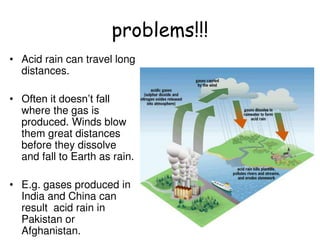
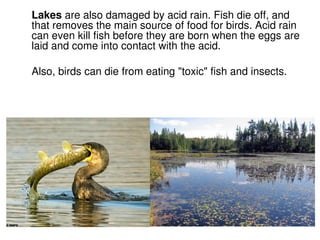
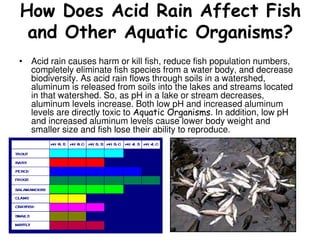
Acid rain is caused by sulfur dioxide and nitrogen oxide emissions from the burning of fossil fuels. These gases react with water and oxygen in the atmosphere to form acids that fall to Earth as rain, snow, or fog. Acid rain damages trees, aquatic ecosystems, infrastructure, and can harm human health. It harms trees by dissolving minerals in soil and leaves, damages buildings by corroding stone and metals, and kills fish by lowering the pH of lakes and streams. While regulations and use of renewable energy can help address the problem, individual conservation efforts also make a difference in reducing the emissions that cause acid rain.


![Acid rain powerpoint presentation[1]](https://cdn.slidesharecdn.com/ss_thumbnails/acidrainpowerpointpresentation1-130522105428-phpapp02-thumbnail.jpg?width=640&height=640&fit=bounds)


