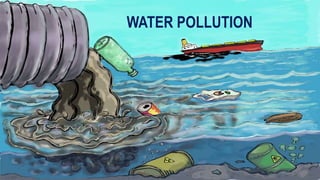
WATER POLLUTION
What is water pollution?
Water pollution is the contamination of water bodies (e.g. lakes, rivers,
oceans, aquifers and groundwater). This form of environmental
degradation occurs when pollutants are directly or indirectly
discharged into water bodies without adequate treatment to remove
harmful compounds.
Type of the water pollutants:
• There are several classes of water pollutants.
• The first are disease-causing agents. These are bacteria, viruses,
protozoa and parasitic worms that enter sewage systems and
untreated waste.
• A second category of water pollutants is oxygen-demanding wastes;
wastes that can be decomposed by oxygen-requiring bacteria.
Water pollution can be broadly categorized:
• Point source: includes definite sources from where the pollutants
enter a particular water body, ex: industrial effluent pipes, municipal
drainage pipes etc.
• Non-point source: includes those which cannot be easily demarcated
such as agricultural run offs, acid rain, etc.
Sources of water pollutants:
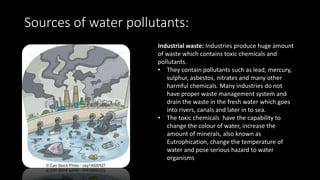
Industrial waste: Industries produce huge amount
of waste which contains toxic chemicals and
pollutants.
• They contain pollutants such as lead, mercury,
sulphur, asbestos, nitrates and many other
harmful chemicals. Many industries do not
have proper waste management system and
drain the waste in the fresh water which goes
into rivers, canals and later in to sea.
• The toxic chemicals have the capability to
change the colour of water, increase the
amount of minerals, also known as
Eutrophication, change the temperature of
water and pose serious hazard to water
organisms
Sewage and waste water:
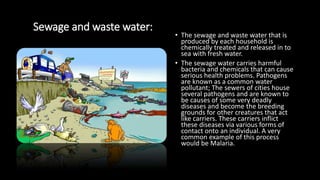
• The sewage and waste water that is
produced by each household is
chemically treated and released in to
sea with fresh water.
• The sewage water carries harmful
bacteria and chemicals that can cause
serious health problems. Pathogens
are known as a common water
pollutant; The sewers of cities house
several pathogens and are known to
be causes of some very deadly
diseases and become the breeding
grounds for other creatures that act
like carriers. These carriers inflict
these diseases via various forms of
contact onto an individual. A very
common example of this process
would be Malaria.
• Mining activities: The elements extracted
during mining in the raw form contains harmful
chemicals and can increase the amount of toxic
elements when mixed up with water which may
result in health problems. Mining activities emit
several metal waste and sulphides from the
rocks and is harmful for the water.
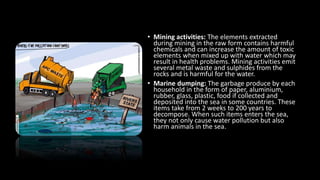
• Marine dumping: The garbage produce by each
household in the form of paper, aluminium,
rubber, glass, plastic, food if collected and
deposited into the sea in some countries. These
items take from 2 weeks to 200 years to
decompose. When such items enters the sea,
they not only cause water pollution but also
harm animals in the sea.
• Accidental Oil leakage: Oil spill pose a huge concern as large amount of
oil enters into the sea and does not dissolve with water; there by opens
problem for local marine wildlife such as fish, birds and sea otters. For
e.g.: a ship carrying large quantity of oil may spill oil if met with an
accident and can cause varying damage to species in the ocean
depending on the quantity of oil spill, size of ocean, toxicity of pollutant.
• Acid rain: caused by effects of air pollution due to human activities which
can lead to significant changes in water quality and its conductivity.
• Chemical fertilizers and pesticides: Chemical fertilizers and pesticides are
used by farmers to protect crops from insects and bacteria's. They are
useful for the plants growth. However, when these chemicals are mixed
up with water produce harmful for plants and animals. Also, when it
rains, the chemicals mixes up with rainwater and flow down into rivers
and canals which pose serious damages for aquatic animals.
• Radioactive waste: Nuclear energy is produced using nuclear fission
or fusion. The element that is used in production of nuclear energy is
Uranium which is highly toxic chemical. The nuclear waste that is
produced by radioactive material needs to be disposed off to prevent
any nuclear accident. Nuclear waste can have serious environmental
hazards if not disposed off properly. Few major accidents have
already taken place in Russia and Japan.
• Leakage from the landfills
• Urban development
• Leakage from sewer lines
• Animal waste
• Underground storage leakage
Effects of water pollution:
• Death of aquatic (water) animals: The main problem caused by water
pollution is that it kills organisms that depend on these water bodies.
Dead fish, crabs, birds and sea gulls, dolphins, and many other
animals often wind up on beaches, killed by pollutants in their
habitat.
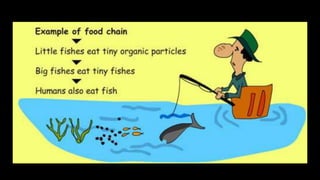
• Disruption of food-chains: Pollution disrupts the natural food chain
as well. Pollutants such as lead and cadmium are eaten by tiny
animals. Later, these animals are consumed by fish and shellfish, and
the food chain continues to be disrupted at all higher levels.
• Diseases: Eventually, humans are affected by this process as well.
People can get diseases such as hepatitis by eating seafood that has
been poisoned. In many poor nations, there is always outbreak of
cholera and diseases as a result of poor drinking water treatment
from contaminated waters.
• Destruction of ecosystems
Ecosystem (the interaction of living things in a place, depending on
each other for life) can be severely changed or destroyed by water
pollution. Many areas are now being affected by careless human
pollution, and this pollution is coming back to hurt humans in many
ways.
Control measures of water pollution:
• Scientific techniques should be adopted for environmental control of
catchment areas of rivers, ponds or streams
• Industrial plants should be based on recycling operations as it helps
prevent disposal of wastes into natural waters but also extraction of
products from waste.
• Plants, trees and forests control pollution as they act as natural air
conditioners.
• Trees are capable of reducing sulphur dioxide and nitric oxide pollutants
and hence more trees should be planted.
• No type of waste (treated, partially treated or untreated) should be
discharged into any natural water body. Industries should develop closed
loop water supply schemes and domestic sewage must be used for
irrigation.
• Qualified and experienced people must be consulted from time to
time for effective control of water pollution.
• Public awareness must be initiated regarding adverse effects of water
pollution using the media.
• Laws, standards and practices should be established to prevent water
pollution and these laws should be modified from time to time based
on current requirements and technological advancements.
• Basic and applied research in public health engineering should be
encouraged.
• Strict measures should be followed to check for radioactive waste
being discharged in the aquatic life.
The United Nations General Assembly marked 22nd March as
World Water Day responded at the 1992 United Nations Conference
on Environment and Development (UNCED) that an international day
should be designed to celebrate freshwater to focus attention on its
importance and for advocating the sustainable management of its
resources.
Thank you!

Water pollution

  • 1.
  • 2.
    What is waterpollution? Water pollution is the contamination of water bodies (e.g. lakes, rivers, oceans, aquifers and groundwater). This form of environmental degradation occurs when pollutants are directly or indirectly discharged into water bodies without adequate treatment to remove harmful compounds.
  • 3.
    Type of thewater pollutants: • There are several classes of water pollutants. • The first are disease-causing agents. These are bacteria, viruses, protozoa and parasitic worms that enter sewage systems and untreated waste. • A second category of water pollutants is oxygen-demanding wastes; wastes that can be decomposed by oxygen-requiring bacteria.
  • 4.
    Water pollution canbe broadly categorized: • Point source: includes definite sources from where the pollutants enter a particular water body, ex: industrial effluent pipes, municipal drainage pipes etc. • Non-point source: includes those which cannot be easily demarcated such as agricultural run offs, acid rain, etc.
  • 5.
    Sources of waterpollutants: Industrial waste: Industries produce huge amount of waste which contains toxic chemicals and pollutants. • They contain pollutants such as lead, mercury, sulphur, asbestos, nitrates and many other harmful chemicals. Many industries do not have proper waste management system and drain the waste in the fresh water which goes into rivers, canals and later in to sea. • The toxic chemicals have the capability to change the colour of water, increase the amount of minerals, also known as Eutrophication, change the temperature of water and pose serious hazard to water organisms
  • 6.
    Sewage and wastewater: • The sewage and waste water that is produced by each household is chemically treated and released in to sea with fresh water. • The sewage water carries harmful bacteria and chemicals that can cause serious health problems. Pathogens are known as a common water pollutant; The sewers of cities house several pathogens and are known to be causes of some very deadly diseases and become the breeding grounds for other creatures that act like carriers. These carriers inflict these diseases via various forms of contact onto an individual. A very common example of this process would be Malaria.
  • 7.
    • Mining activities:The elements extracted during mining in the raw form contains harmful chemicals and can increase the amount of toxic elements when mixed up with water which may result in health problems. Mining activities emit several metal waste and sulphides from the rocks and is harmful for the water. • Marine dumping: The garbage produce by each household in the form of paper, aluminium, rubber, glass, plastic, food if collected and deposited into the sea in some countries. These items take from 2 weeks to 200 years to decompose. When such items enters the sea, they not only cause water pollution but also harm animals in the sea.
  • 8.
    • Accidental Oilleakage: Oil spill pose a huge concern as large amount of oil enters into the sea and does not dissolve with water; there by opens problem for local marine wildlife such as fish, birds and sea otters. For e.g.: a ship carrying large quantity of oil may spill oil if met with an accident and can cause varying damage to species in the ocean depending on the quantity of oil spill, size of ocean, toxicity of pollutant. • Acid rain: caused by effects of air pollution due to human activities which can lead to significant changes in water quality and its conductivity. • Chemical fertilizers and pesticides: Chemical fertilizers and pesticides are used by farmers to protect crops from insects and bacteria's. They are useful for the plants growth. However, when these chemicals are mixed up with water produce harmful for plants and animals. Also, when it rains, the chemicals mixes up with rainwater and flow down into rivers and canals which pose serious damages for aquatic animals.
  • 9.
    • Radioactive waste:Nuclear energy is produced using nuclear fission or fusion. The element that is used in production of nuclear energy is Uranium which is highly toxic chemical. The nuclear waste that is produced by radioactive material needs to be disposed off to prevent any nuclear accident. Nuclear waste can have serious environmental hazards if not disposed off properly. Few major accidents have already taken place in Russia and Japan. • Leakage from the landfills • Urban development • Leakage from sewer lines • Animal waste • Underground storage leakage
  • 10.
    Effects of waterpollution: • Death of aquatic (water) animals: The main problem caused by water pollution is that it kills organisms that depend on these water bodies. Dead fish, crabs, birds and sea gulls, dolphins, and many other animals often wind up on beaches, killed by pollutants in their habitat. • Disruption of food-chains: Pollution disrupts the natural food chain as well. Pollutants such as lead and cadmium are eaten by tiny animals. Later, these animals are consumed by fish and shellfish, and the food chain continues to be disrupted at all higher levels.
  • 12.
    • Diseases: Eventually,humans are affected by this process as well. People can get diseases such as hepatitis by eating seafood that has been poisoned. In many poor nations, there is always outbreak of cholera and diseases as a result of poor drinking water treatment from contaminated waters. • Destruction of ecosystems Ecosystem (the interaction of living things in a place, depending on each other for life) can be severely changed or destroyed by water pollution. Many areas are now being affected by careless human pollution, and this pollution is coming back to hurt humans in many ways.
  • 13.
    Control measures ofwater pollution: • Scientific techniques should be adopted for environmental control of catchment areas of rivers, ponds or streams • Industrial plants should be based on recycling operations as it helps prevent disposal of wastes into natural waters but also extraction of products from waste. • Plants, trees and forests control pollution as they act as natural air conditioners. • Trees are capable of reducing sulphur dioxide and nitric oxide pollutants and hence more trees should be planted. • No type of waste (treated, partially treated or untreated) should be discharged into any natural water body. Industries should develop closed loop water supply schemes and domestic sewage must be used for irrigation.
  • 14.
    • Qualified andexperienced people must be consulted from time to time for effective control of water pollution. • Public awareness must be initiated regarding adverse effects of water pollution using the media. • Laws, standards and practices should be established to prevent water pollution and these laws should be modified from time to time based on current requirements and technological advancements. • Basic and applied research in public health engineering should be encouraged. • Strict measures should be followed to check for radioactive waste being discharged in the aquatic life.
  • 15.
    The United NationsGeneral Assembly marked 22nd March as World Water Day responded at the 1992 United Nations Conference on Environment and Development (UNCED) that an international day should be designed to celebrate freshwater to focus attention on its importance and for advocating the sustainable management of its resources.
  • 16.