• ASSIGNMENT.
• Explain five effects of fossil fuel on the
environment
• Greenhouse effect
• Acid rain
• Air pollution
• Soil erosion
• Destruction of the vegetation
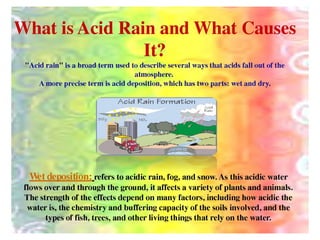
ACID RAIN
• Acid rain comes from burning fossil fuels.
• Acid rain is basically rain that has a higher
than normal acid level (low pH).
Causes of Acid Rain
• Burning coal. Oil and natural
gas in power stations makes
electricity, giving off sulphur
dioxide gas.
• Burning petrol and oil in
vehicle engines gives off
nitrogen oxides as gases.
• These gases mix with water
vapour and rainwater in the
atmosphere producing weak
solutions of sulphuric and
nitric acids – which fall as
acid rain.
The Problem!
People probably couldn't live without
electricity! Therefore coal will continue to be burnt.
Also, electricity and energy are constantly
being overused.
Think of it this way: every time you turn on a
light switch or the television set without really
needing to, you're indirectly contributing to the acid
rain problem.
More problems!!!
• Acid rain can travel long distances.
• Often it doesn’t fall where the gas is
produced. High chimneys disperse
(spread) the gases and winds blow
them great distances before they
dissolve and fall to Earth as rain.
• Eg gases produced in England and
Western Europe can result in acid
rain in Scotland and Scandinavia.
How Acid Rain Affects The
Environment
Acid rain is an extremely destructive
form of pollution, and the
environment suffers from its effects.
Forests, trees, lakes, animals, and
plants suffer from acid rain.
(i) Trees
The needles and leaves of the trees
turn brown and fall off.
Trees can also suffer from stunted
growth; and have damaged bark
and leaves, which makes them
vulnerable to weather, disease, and
insects.
All of this happens partly
because of direct contact
between trees and acid rain,
but it also happens when
trees absorb soil that has
come into contact with acid
rain.
The soil poisons the tree
with toxic substances that
the rain has deposited into
it.
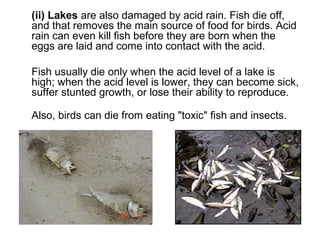
(ii) Lakes are also damaged by acid rain. Fish die off,
and that removes the main source of food for birds. Acid
rain can even kill fish before they are born when the
eggs are laid and come into contact with the acid.
Fish usually die only when the acid level of a lake is
high; when the acid level is lower, they can become sick,
suffer stunted growth, or lose their ability to reproduce.
Also, birds can die from eating "toxic" fish and insects.
(iii) Buildings
Acid rain dissolves the stonework and mortar of buildings
(especially those made out of sandstone or limestone).
It reacts with the minerals in the stone to form a powdery
substance that can be washed away by rain.
(iv) Transport
Currently, both the railway industry and the aeroplane
industry are having to spend a lot of money to repair the
corrosive damage done by acid rain. Also, bridges have
collapsed in the past due to acid rain corrosion.
(v) Humans
Humans can become seriously ill,
and can even die from the effects of
acid rain. One of the major
problems that acid rain can cause in
a human being is respiratory
problems.
Many can find it difficult to breathe,
especially people who have
asthma. Asthma, along with dry
coughs, headaches, and throat
irritations can be caused by the
sulphur dioxides and nitrogen
oxides from acid rain.
Acid rain can be absorbed by both plants (through soil
and/or direct contact) and animals (from things they eat
and/or direct contact). When humans eat these plants or
animals, the toxins inside of their meals can affect them.
Brain damage, kidney problems, and Alzheimer's disease
has been linked to people eating "toxic" animals/plants.
(vi) Research carried out in North
America in 1982, revealed that
sulphur pollution killed 51,000 people
and about 200,000 people become ill
as a result of the pollution.
Summary of the effects of acid rain
• (i) Leaves and tree roots can die from the
poison rain
• (ii) High acid levels make rivers and lakes
unsuitable for fish.
• (iii) Acid rain releases nutrients from soils-
crop yields decrease.
• (iv) Some of the nutrients which get into
rivers and lakes can kill the plant and animal
life.
• (v) Acid rain dissolves the stonework and
mortar of buildings.
Solutions
• 1. Sulphur dioxide can be removed from power
stations chimneys but this process is expensive.
• 2. Reduce the amount of electricity we use
- turn tv’s off at the mains, don’t leave on
standby.
- turn off lights when a room is not in use.
• 3. Use renewable energy like wind power, solar
panels, tidal power, HEP schemes and
geothermal energy.
• 4. Fit catalytic converters to vehicle exhausts
which remove the nitrogen oxides.
• 5. Limit the number of vehicles on the roads and
increase public transport.

Acid rain

  • 1.
    • ASSIGNMENT. • Explainfive effects of fossil fuel on the environment
  • 2.
    • Greenhouse effect •Acid rain • Air pollution • Soil erosion • Destruction of the vegetation
  • 3.
  • 4.
    • Acid raincomes from burning fossil fuels. • Acid rain is basically rain that has a higher than normal acid level (low pH).
  • 7.
    Causes of AcidRain • Burning coal. Oil and natural gas in power stations makes electricity, giving off sulphur dioxide gas. • Burning petrol and oil in vehicle engines gives off nitrogen oxides as gases. • These gases mix with water vapour and rainwater in the atmosphere producing weak solutions of sulphuric and nitric acids – which fall as acid rain.
  • 8.
    The Problem! People probablycouldn't live without electricity! Therefore coal will continue to be burnt. Also, electricity and energy are constantly being overused. Think of it this way: every time you turn on a light switch or the television set without really needing to, you're indirectly contributing to the acid rain problem.
  • 9.
    More problems!!! • Acidrain can travel long distances. • Often it doesn’t fall where the gas is produced. High chimneys disperse (spread) the gases and winds blow them great distances before they dissolve and fall to Earth as rain. • Eg gases produced in England and Western Europe can result in acid rain in Scotland and Scandinavia.
  • 10.
    How Acid RainAffects The Environment Acid rain is an extremely destructive form of pollution, and the environment suffers from its effects. Forests, trees, lakes, animals, and plants suffer from acid rain. (i) Trees The needles and leaves of the trees turn brown and fall off. Trees can also suffer from stunted growth; and have damaged bark and leaves, which makes them vulnerable to weather, disease, and insects.
  • 11.
    All of thishappens partly because of direct contact between trees and acid rain, but it also happens when trees absorb soil that has come into contact with acid rain. The soil poisons the tree with toxic substances that the rain has deposited into it.
  • 12.
    (ii) Lakes arealso damaged by acid rain. Fish die off, and that removes the main source of food for birds. Acid rain can even kill fish before they are born when the eggs are laid and come into contact with the acid. Fish usually die only when the acid level of a lake is high; when the acid level is lower, they can become sick, suffer stunted growth, or lose their ability to reproduce. Also, birds can die from eating "toxic" fish and insects.
  • 13.
    (iii) Buildings Acid raindissolves the stonework and mortar of buildings (especially those made out of sandstone or limestone). It reacts with the minerals in the stone to form a powdery substance that can be washed away by rain.
  • 14.
    (iv) Transport Currently, boththe railway industry and the aeroplane industry are having to spend a lot of money to repair the corrosive damage done by acid rain. Also, bridges have collapsed in the past due to acid rain corrosion.
  • 15.
    (v) Humans Humans canbecome seriously ill, and can even die from the effects of acid rain. One of the major problems that acid rain can cause in a human being is respiratory problems. Many can find it difficult to breathe, especially people who have asthma. Asthma, along with dry coughs, headaches, and throat irritations can be caused by the sulphur dioxides and nitrogen oxides from acid rain.
  • 16.
    Acid rain canbe absorbed by both plants (through soil and/or direct contact) and animals (from things they eat and/or direct contact). When humans eat these plants or animals, the toxins inside of their meals can affect them. Brain damage, kidney problems, and Alzheimer's disease has been linked to people eating "toxic" animals/plants.
  • 17.
    (vi) Research carriedout in North America in 1982, revealed that sulphur pollution killed 51,000 people and about 200,000 people become ill as a result of the pollution.
  • 18.
    Summary of theeffects of acid rain • (i) Leaves and tree roots can die from the poison rain • (ii) High acid levels make rivers and lakes unsuitable for fish. • (iii) Acid rain releases nutrients from soils- crop yields decrease. • (iv) Some of the nutrients which get into rivers and lakes can kill the plant and animal life. • (v) Acid rain dissolves the stonework and mortar of buildings.
  • 19.
    Solutions • 1. Sulphurdioxide can be removed from power stations chimneys but this process is expensive. • 2. Reduce the amount of electricity we use - turn tv’s off at the mains, don’t leave on standby. - turn off lights when a room is not in use. • 3. Use renewable energy like wind power, solar panels, tidal power, HEP schemes and geothermal energy. • 4. Fit catalytic converters to vehicle exhausts which remove the nitrogen oxides. • 5. Limit the number of vehicles on the roads and increase public transport.