Learning objectives What is acid rain? How is it formed? What effects does it have on people and the environment? How to reduce it?
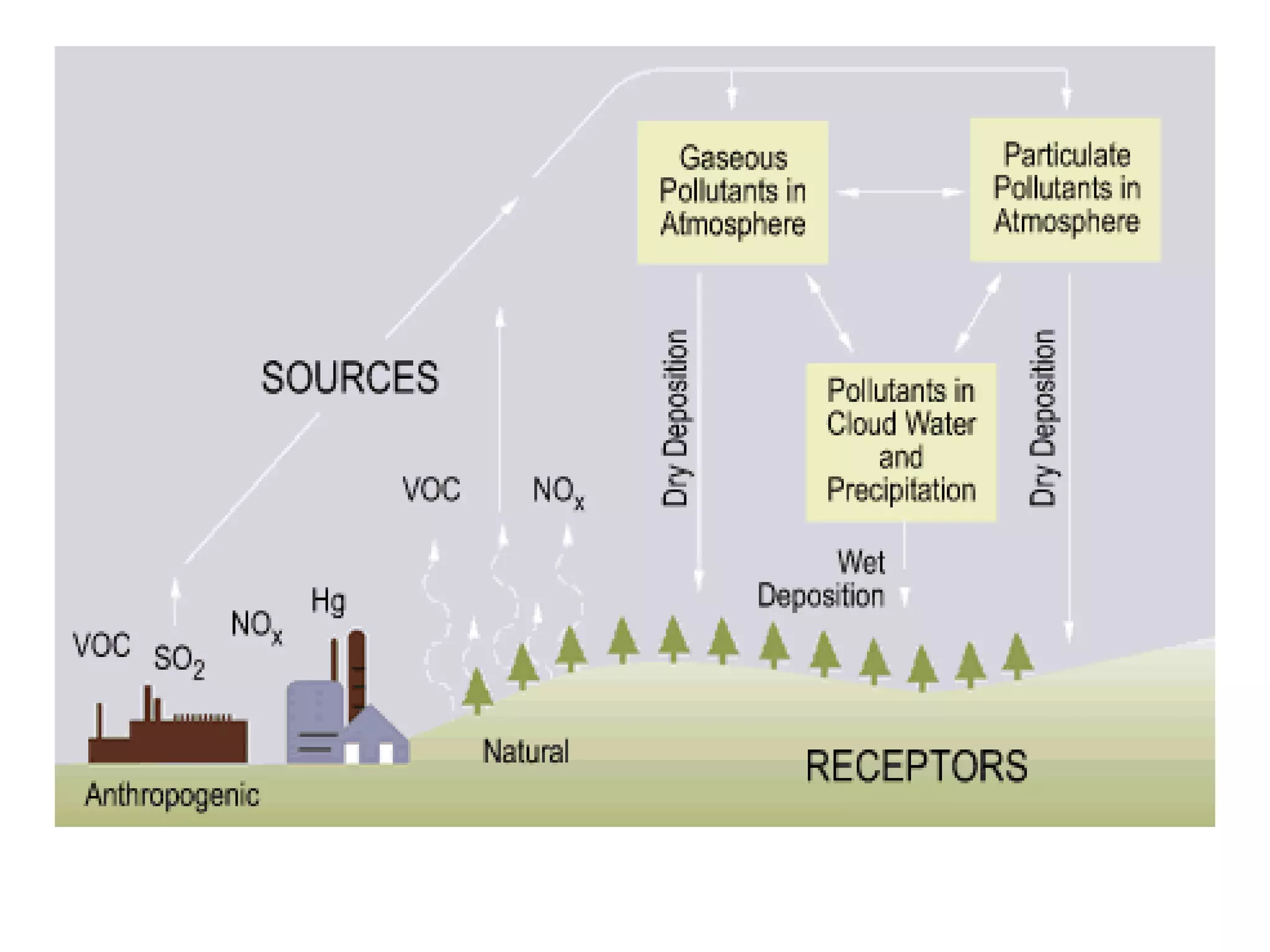
Acid Deposition Acid deposition involves the deposition of both  wet  and  dry  acidic components
This type of deposition includes rain, fog, and snow. Plants, as well as animals, are affected as the wet deposition falls to the ground. Wet Deposition
In dry areas, “the acid chemicals may become incorporated into dust or smoke and fall to the ground through dry deposition, sticking to the ground, buildings, homes, cars, and trees” (epa).  Dry Deposition
 
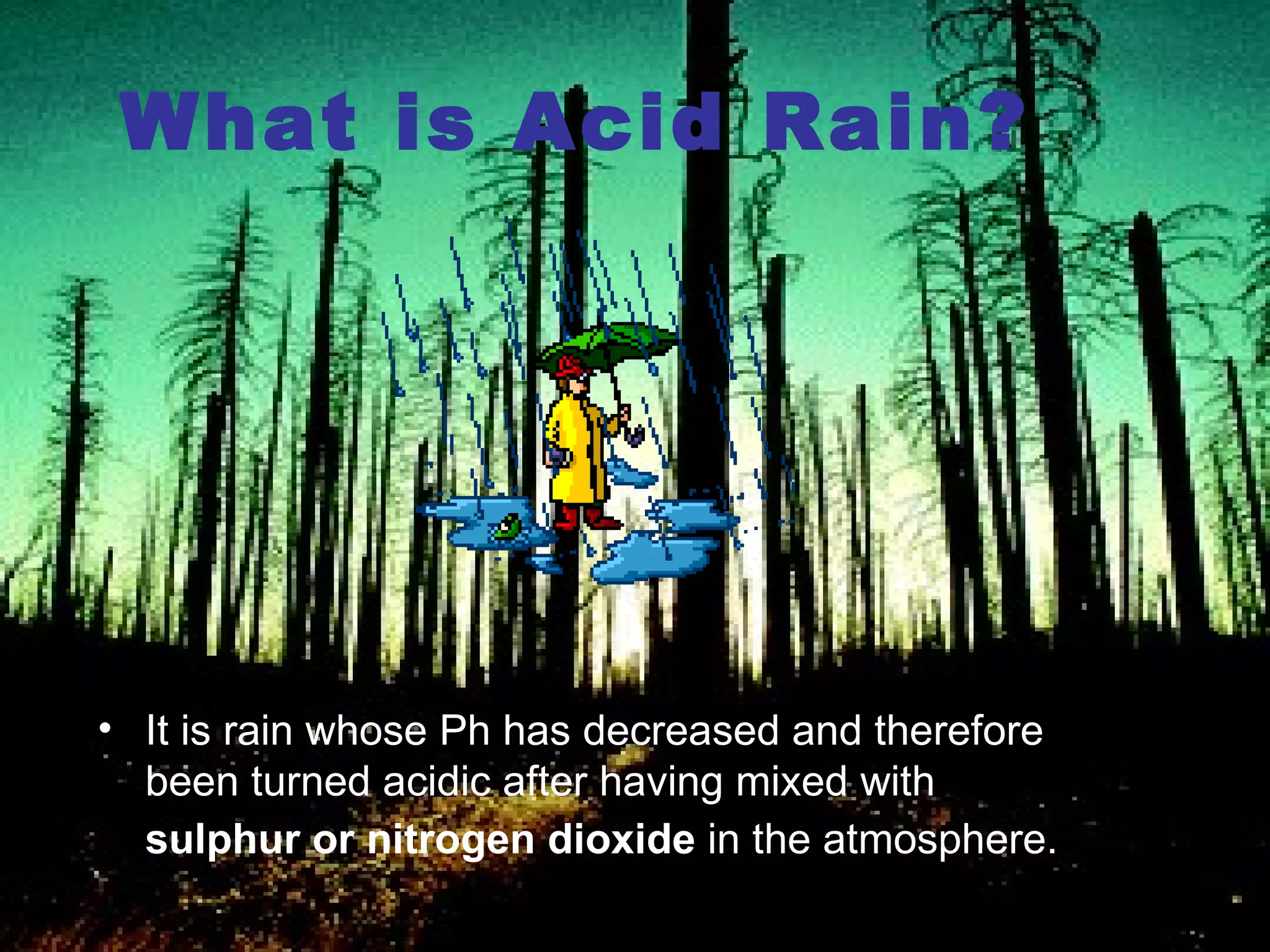
What is Acid Rain? It is rain whose Ph has decreased and therefore been turned acidic after having mixed with  sulphur or nitrogen dioxide  in the atmosphere.
The Formation of Acid Rain Burn fossil fuels in  Transport, Industry, Homes, power stations The rest reacts with sunlight and ozone in the atmosphere; nitric (HNO 3 ), and sulphuric acid (H 2 SO 4)  are produced Gas, Oil, Coal Some falls back to Earth close to the source as dry particles, gas and aerosols  (NO x  and   SO 2 )  (dry deposition)  NO 2 SO 2 It is dissolved in the moisture in the atmosphere making  2H +  and SO 4 2 _ and can be carried large distances before falling as rain  or snow  (wet deposition) TRANSBOUNDARY POLLUTION H +   NO 3 _  SO 4 2 _
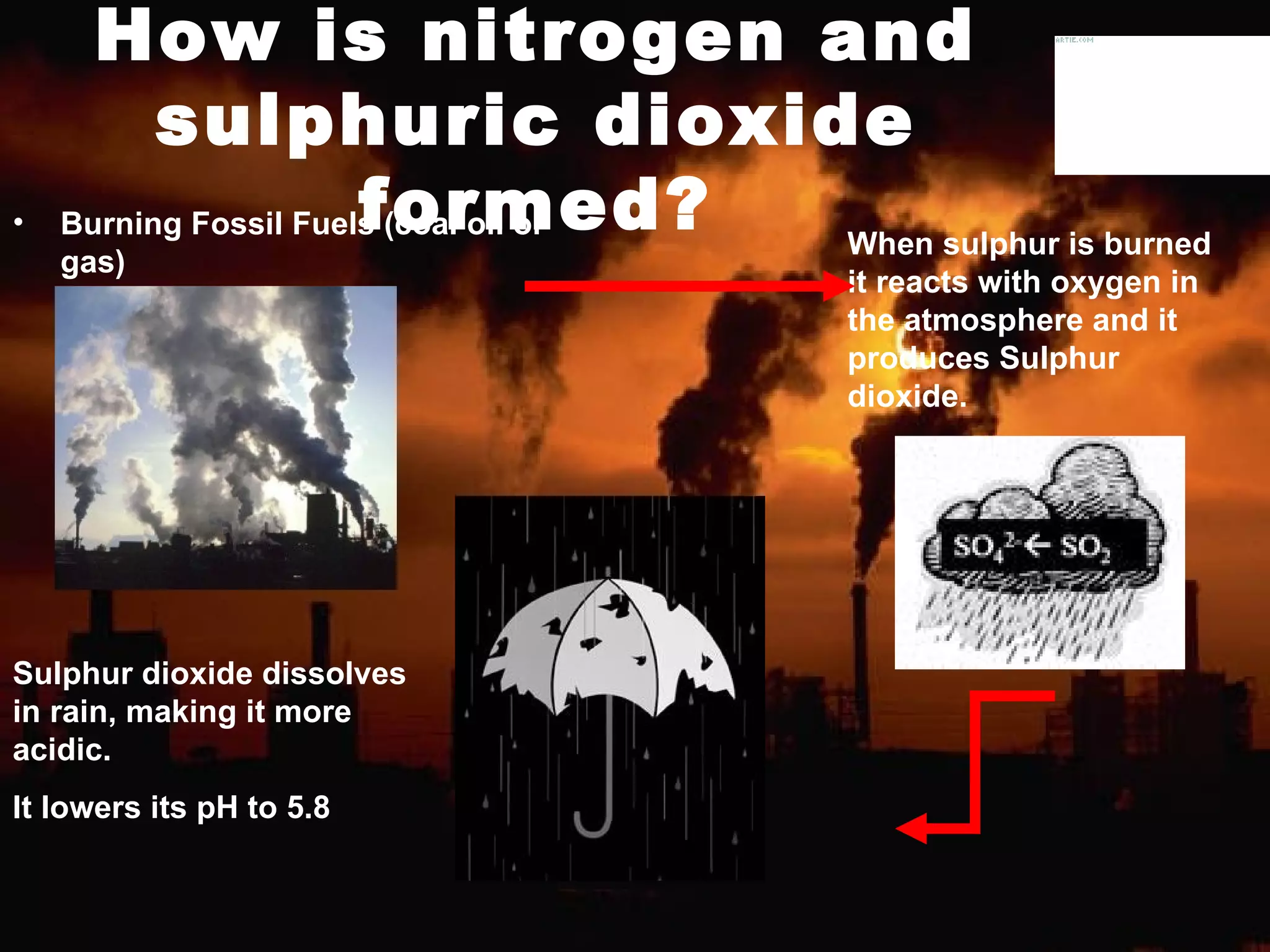
How is nitrogen and sulphuric dioxide formed? Burning Fossil Fuels (coal oil or gas) Sulphur dioxide  dissolves in rain, making it more acidic. It lowers its pH to 5.8 When sulphur is burned it reacts with oxygen in the atmosphere and it produces Sulphur dioxide.
 
 
Impacts of Acid Rain Acid rain can impact; Surface water (rivers, lakes etc.) and aquatic animals Soils Forests and vegetation Human health Building and the urban environment
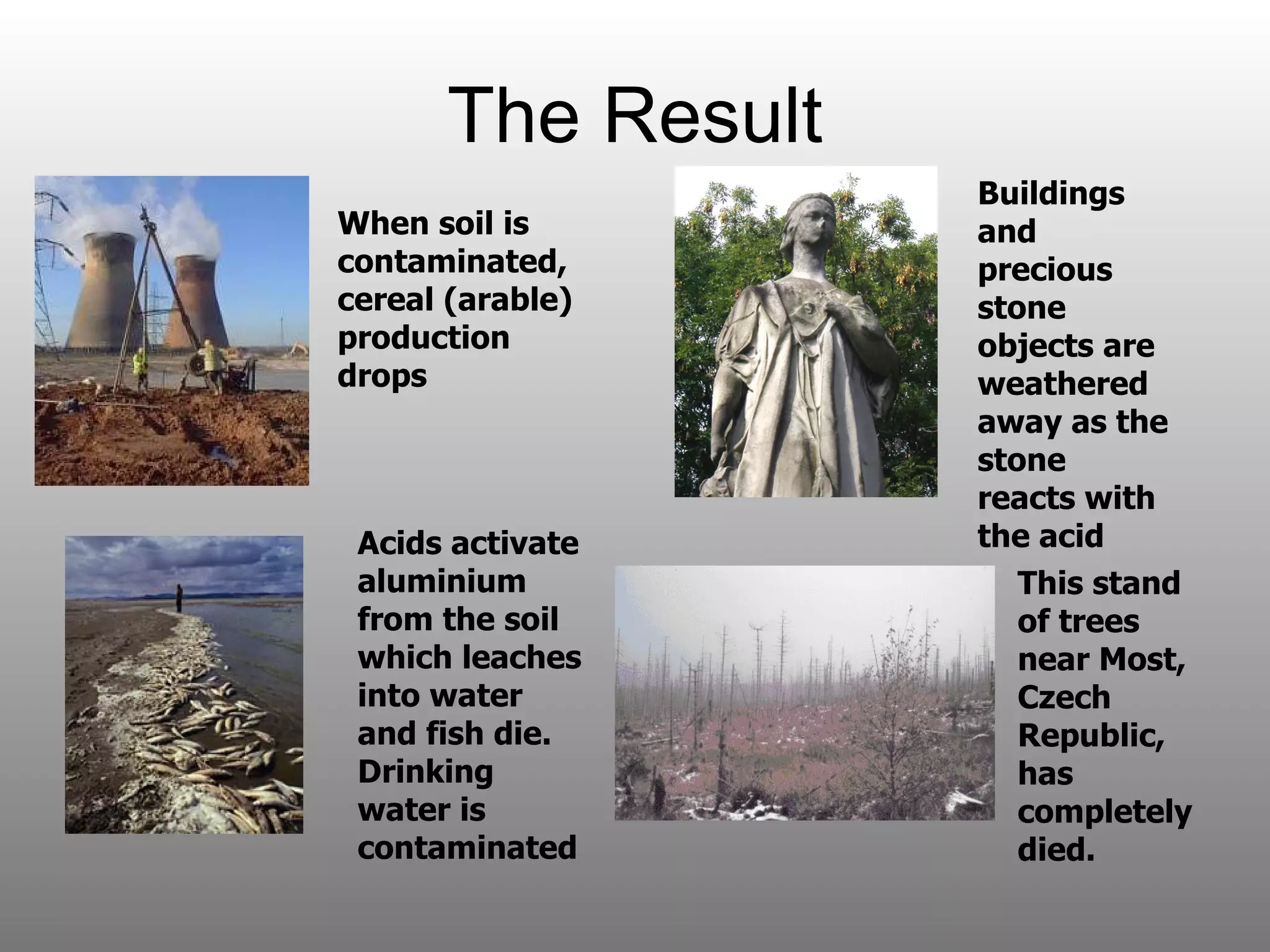
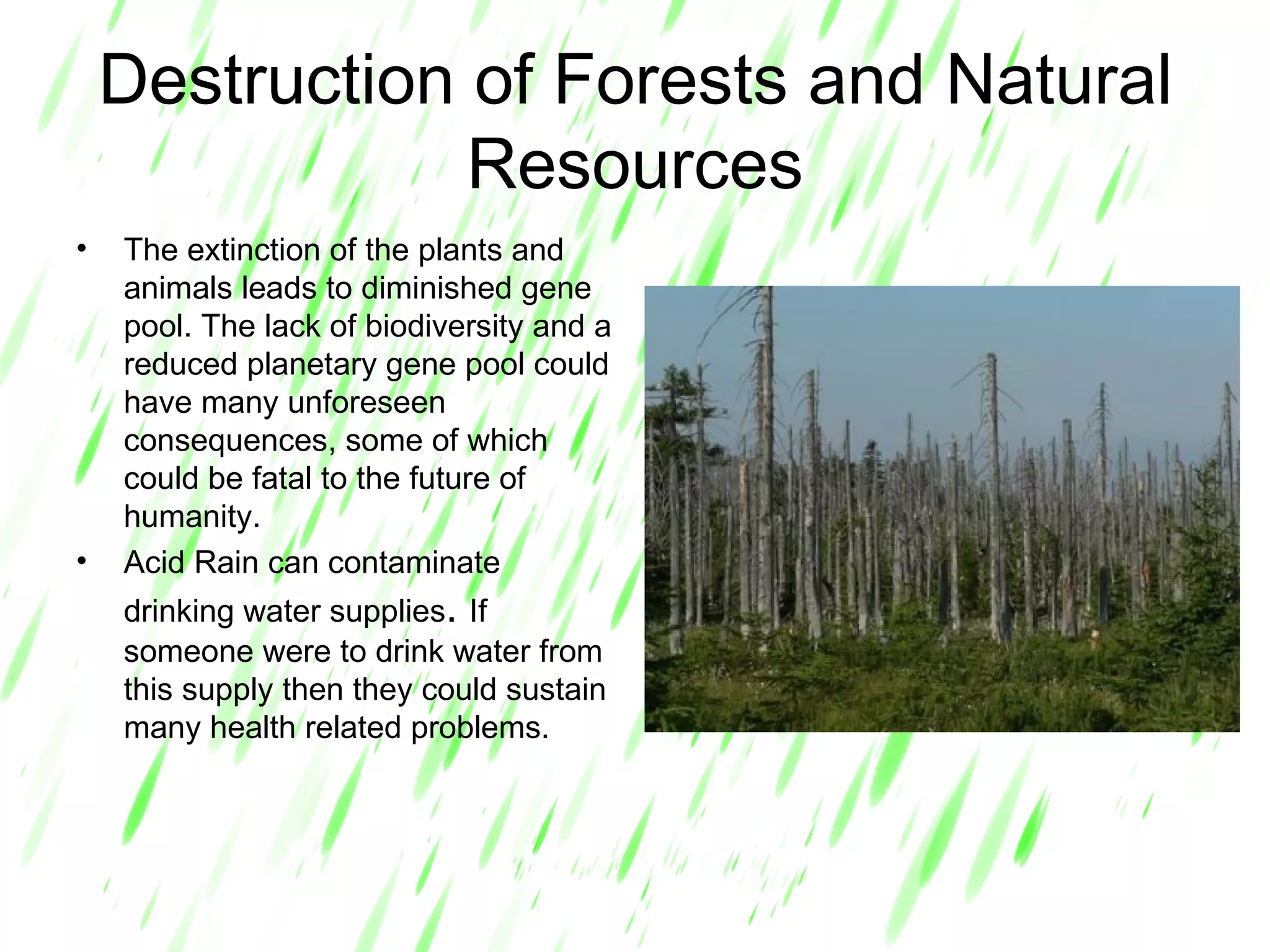
The Result Acids activate aluminium from the soil which leaches into water and fish die. Drinking water is contaminated This stand of trees near Most, Czech Republic, has completely died.  Buildings  and precious stone objects are weathered away as the stone reacts with the acid When soil is contaminated, cereal (arable) production drops
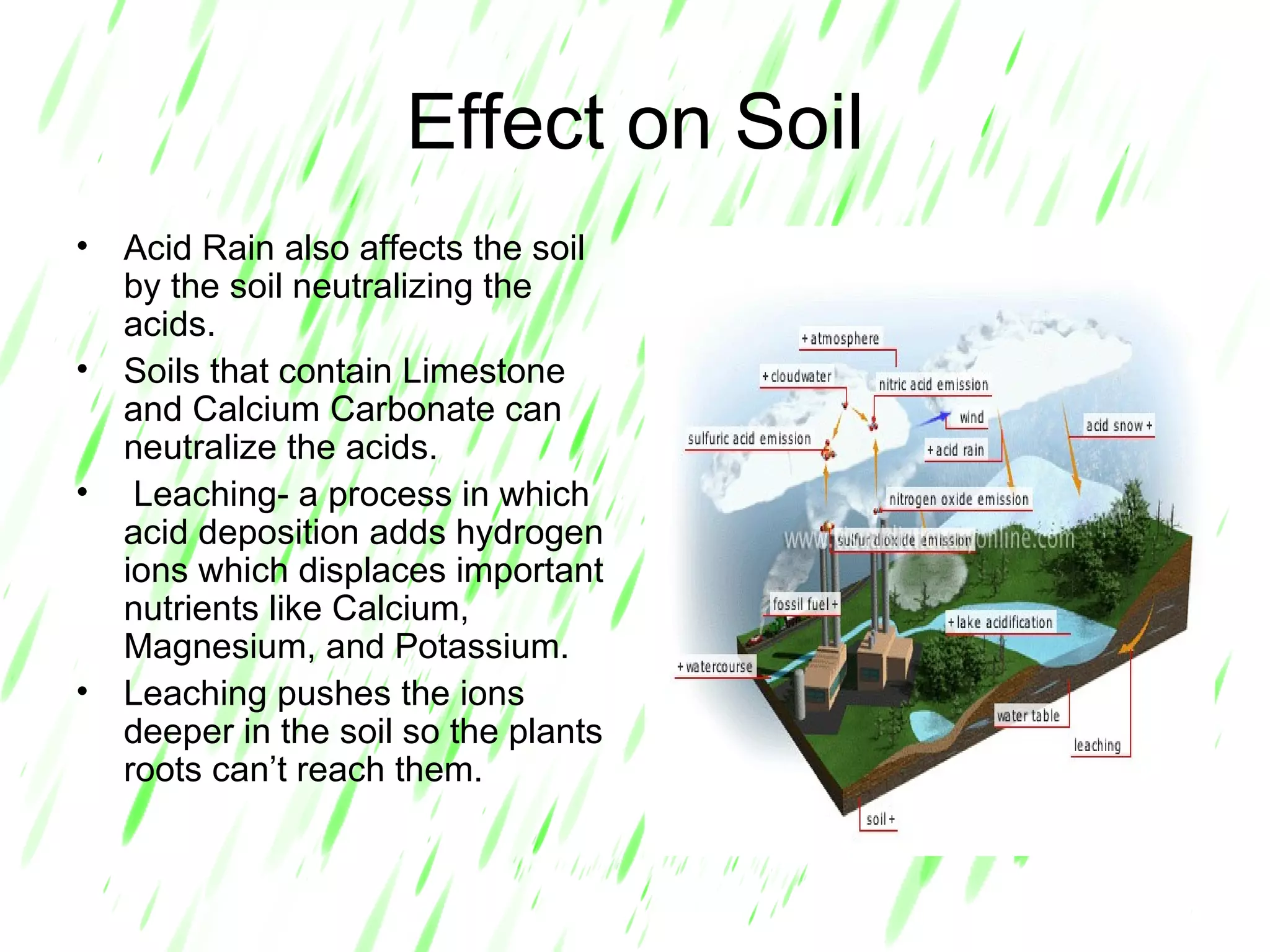
Effect on Soil Acid Rain also affects the soil by the soil neutralizing the acids.  Soils that contain Limestone and Calcium Carbonate can neutralize the acids. Leaching- a process in which acid deposition adds hydrogen ions which displaces important nutrients like Calcium, Magnesium, and Potassium.  Leaching pushes the ions deeper in the soil so the plants roots can’t reach them.
Effect on Fish During the winter dangerously acidic pollutants have built up in the snow and when the snow melts in spring all the acid drains into the water system killing many fish.   Even those who survive suffer from Acid Stress Other affect on the fish are reduced egg composition, decreased growth, inability to regulate there own body chemistry, and  deformities in young fish and increased susceptibility to naturally occurring diseases.  These mass fish disappearances affects the birds and eventually our whole ecosystem.
 
Destruction of Forests and Natural Resources The extinction of the plants and animals leads to diminished gene pool. The lack of biodiversity and a reduced planetary gene pool could have many unforeseen consequences, some of which could be fatal to the future of humanity. Acid Rain can contaminate drinking water supplies .  If someone were to drink water from this supply then they could sustain many health related problems.
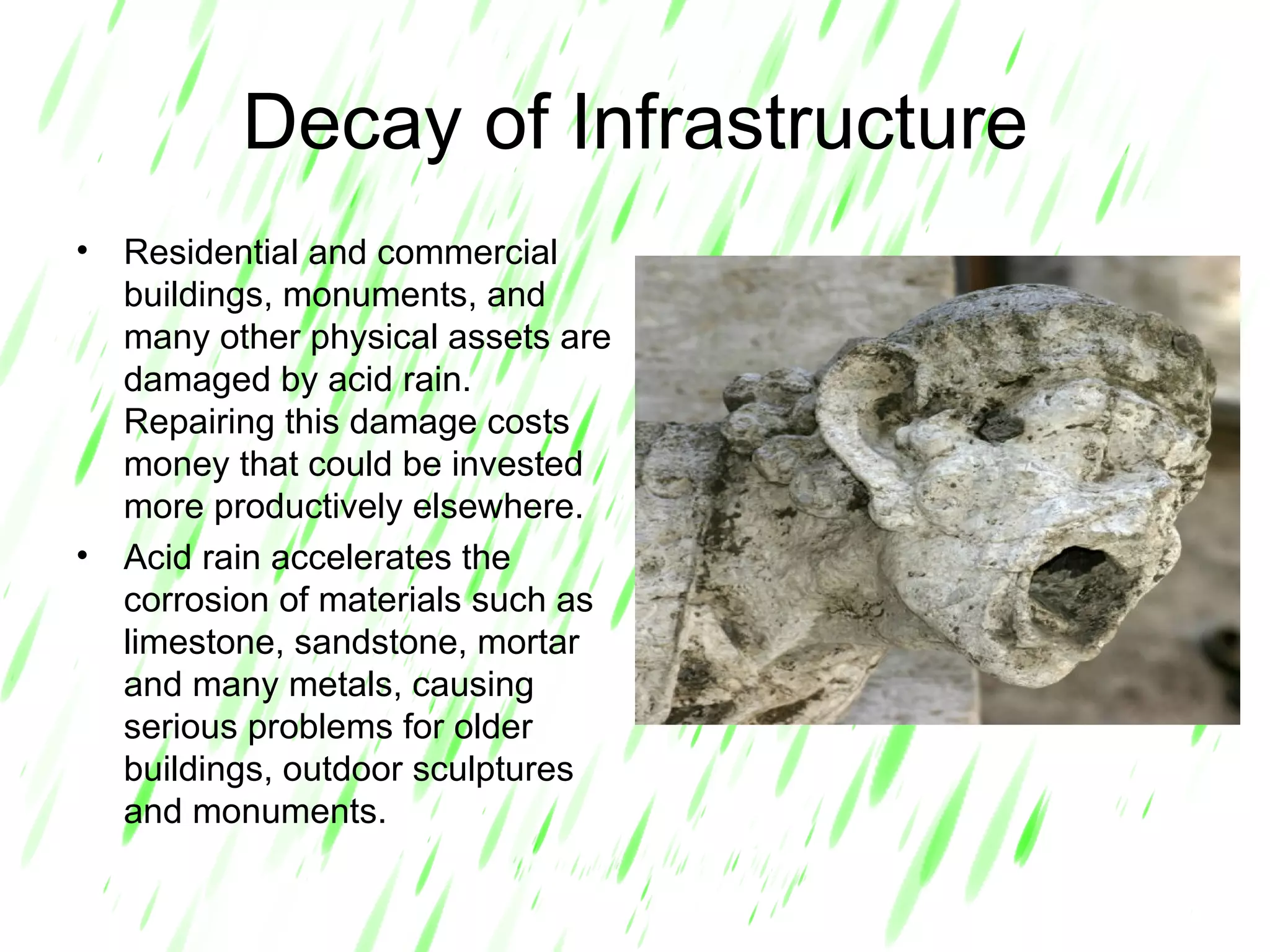
Decay of Infrastructure Residential and commercial buildings, monuments, and many other physical assets are damaged by acid rain. Repairing this damage costs money that could be invested more productively elsewhere.   Acid rain accelerates the corrosion of materials such as limestone, sandstone, mortar and many metals, causing serious problems for older buildings, outdoor sculptures and monuments.
Impact on Society Our historical monuments and statues are being decayed by acid rain which could deprive future generations from seeing such beautiful sculptures and buildings.
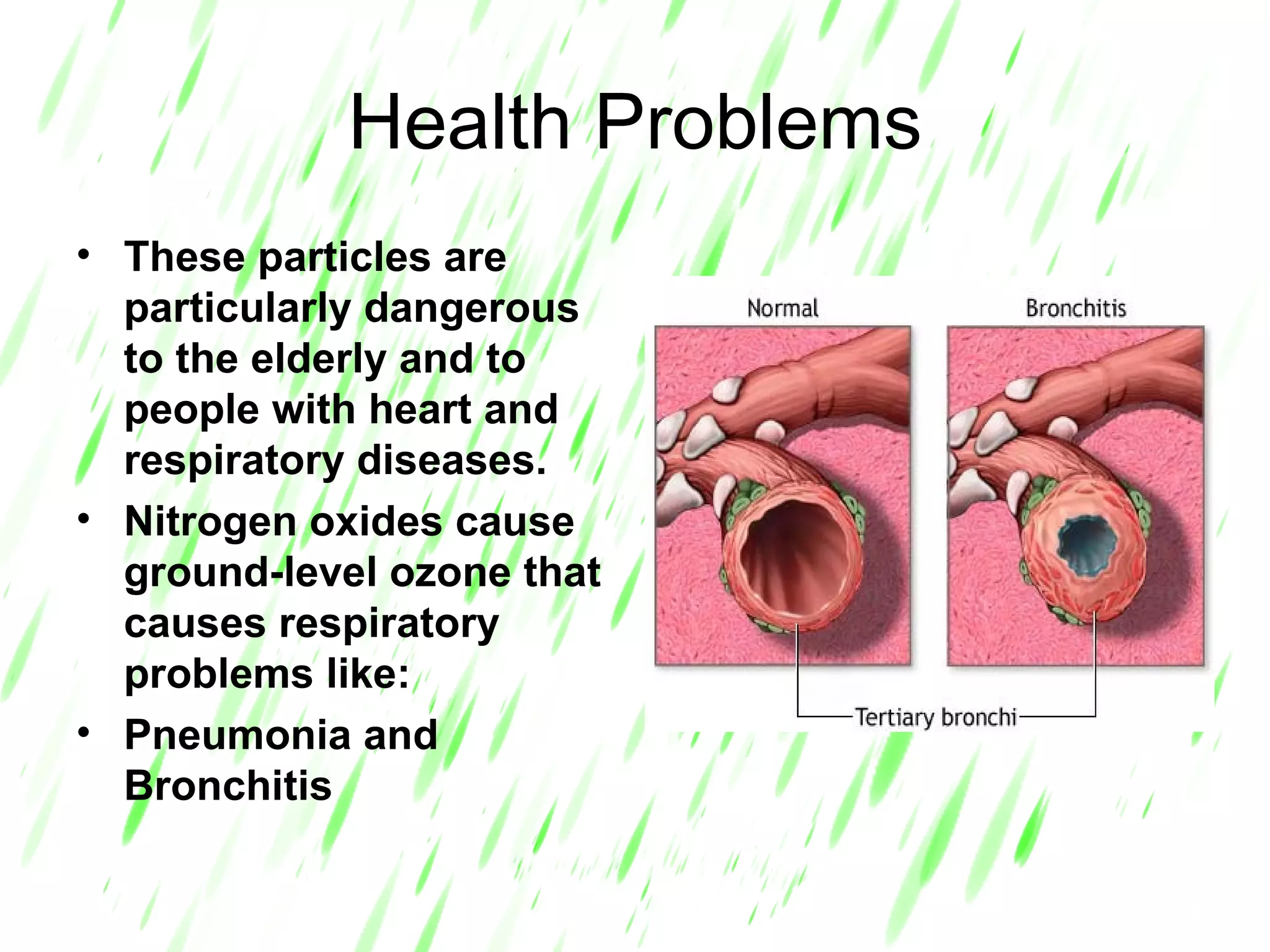
Health Problems Sulfur dioxide (SO2) and nitrogen oxides (NOx) gases turn in to particles that can be inhaled deep into people's lungs. In high levels of the fine particles there is an increase in illnesses, a key component of urban smog, cause inflammation and damage to tissues, and premature death from respiratory diseases such as: Asthma and Bronchitis.
Health Problems These particles are particularly dangerous to the elderly and to people with heart and respiratory diseases. Nitrogen oxides cause ground-level ozone that causes respiratory problems like: Pneumonia and Bronchitis
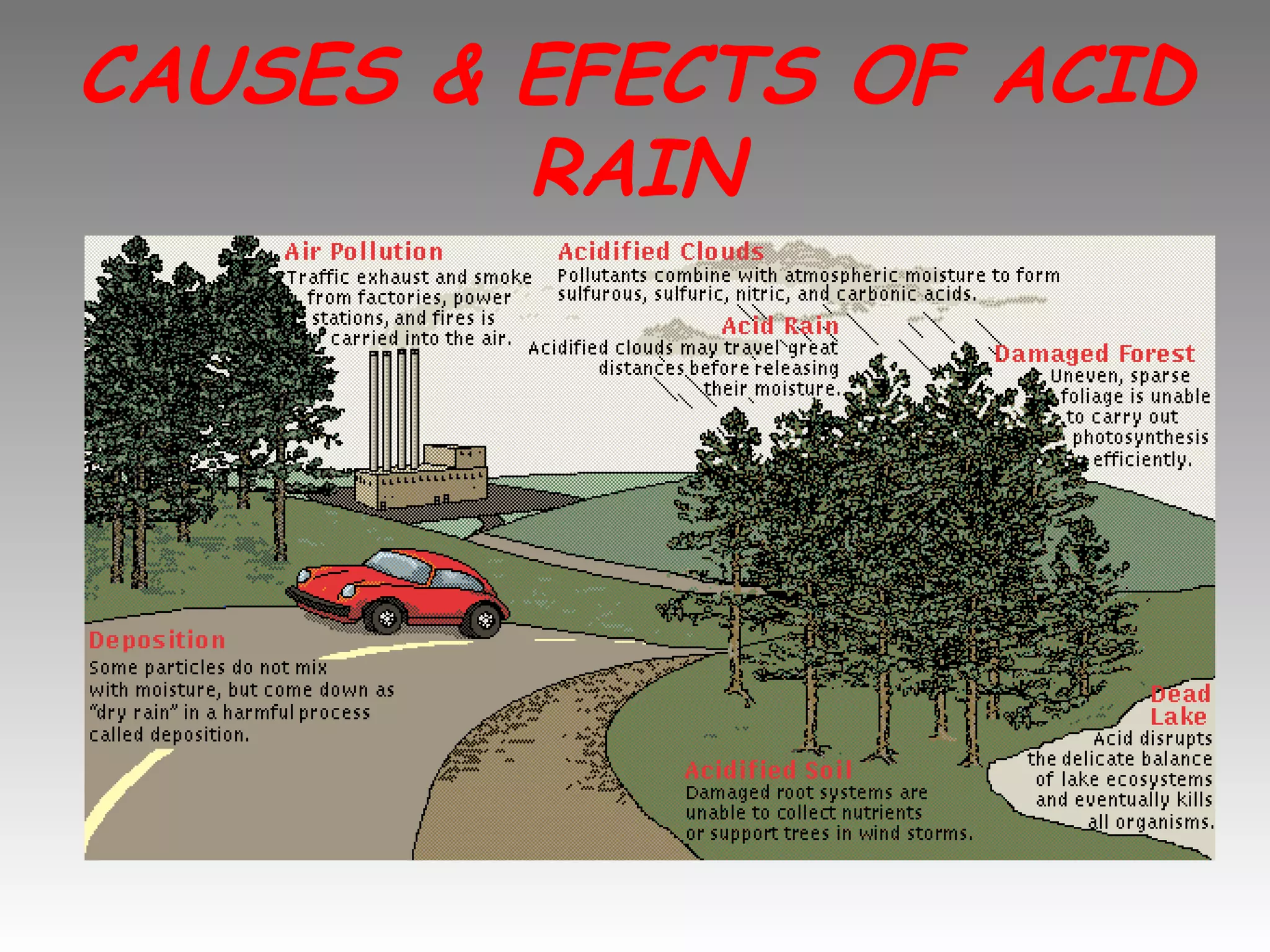
CAUSES & EFECTS OF ACID RAIN
 
How does this map show that Acid Rain is a transboundary issue? Which country is affected the most by acid rain? Why could this map be different today? Acid Rain Risk in Europe in 1998
Decide which fossil fuels burn more clearly. Research new less-pollutant methods Fit scrubbers into factory’s chimneys, which are chemical filters that remove impurities such as sulphur from smoke. The government can take action. Cars can be fitted with special converters which remove dangerous chemicals Solutions to Acid Rain
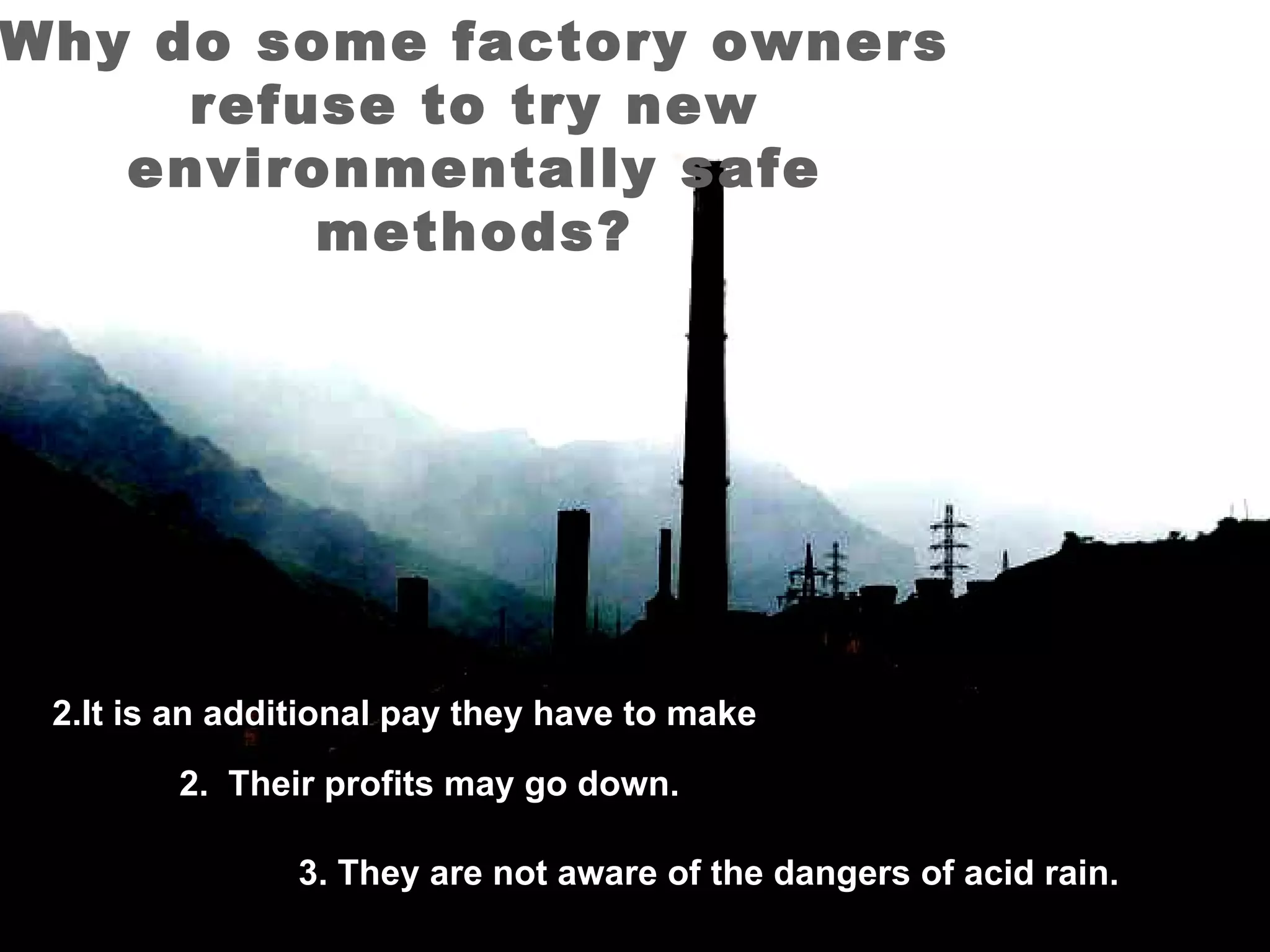
Why do some factory owners refuse to try new environmentally safe methods? It is an additional pay they have to make 2.  Their profits may go down. 3. They are not aware of the dangers of acid rain.
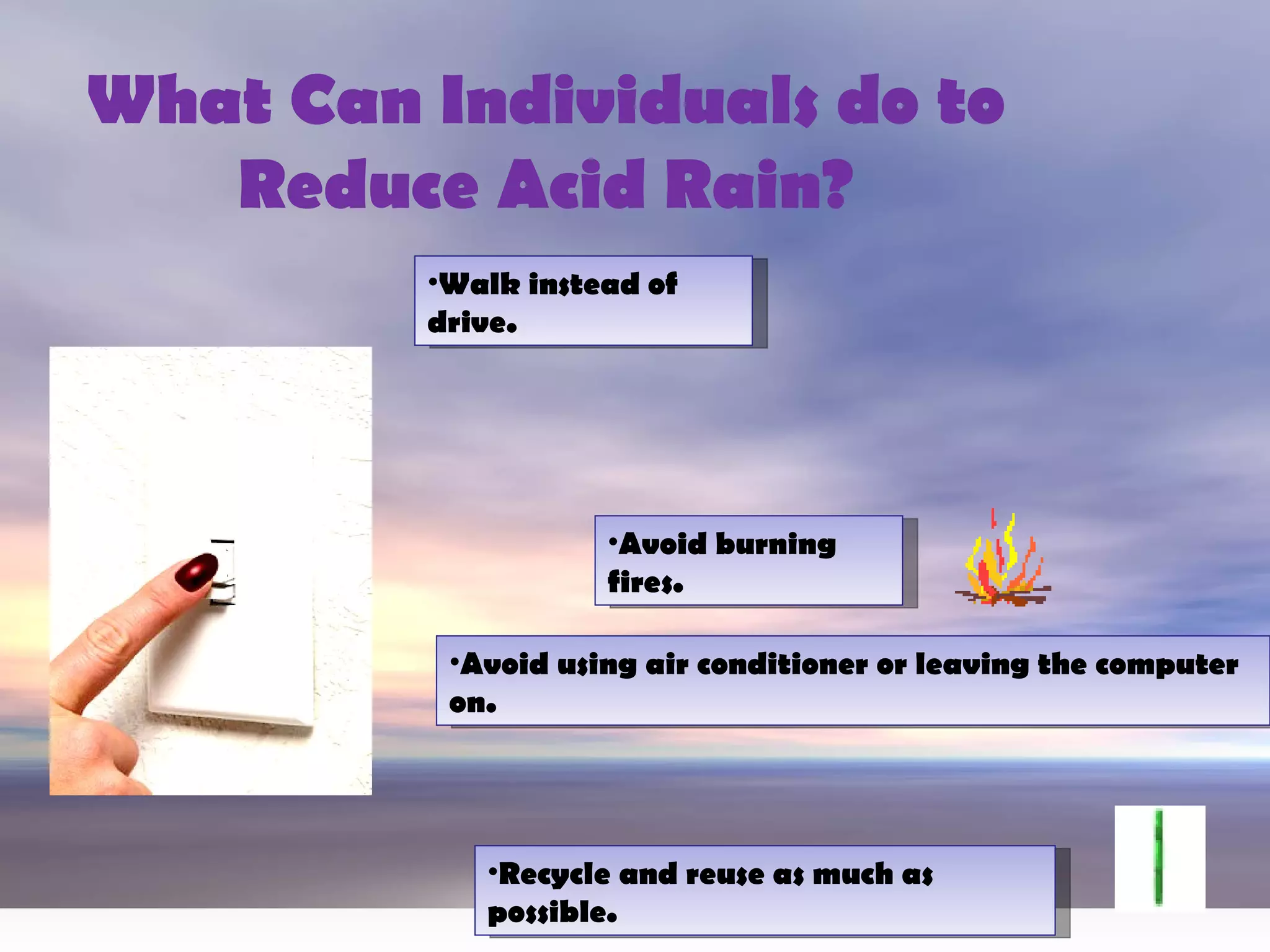
Walk instead of drive. Avoid burning fires. Recycle and reuse as much as possible. Avoid using air conditioner or leaving the computer on. What Can Individuals do to Reduce Acid Rain?
Thank you……… By V.S.NAVEEN

Acid Rain....

  • 1.
  • 2.
    Learning objectives Whatis acid rain? How is it formed? What effects does it have on people and the environment? How to reduce it?
  • 3.
    Acid Deposition Aciddeposition involves the deposition of both wet and dry acidic components
  • 4.
    This type ofdeposition includes rain, fog, and snow. Plants, as well as animals, are affected as the wet deposition falls to the ground. Wet Deposition
  • 5.
    In dry areas,“the acid chemicals may become incorporated into dust or smoke and fall to the ground through dry deposition, sticking to the ground, buildings, homes, cars, and trees” (epa). Dry Deposition
  • 6.
  • 7.
    What is AcidRain? It is rain whose Ph has decreased and therefore been turned acidic after having mixed with sulphur or nitrogen dioxide in the atmosphere.
  • 8.
    The Formation ofAcid Rain Burn fossil fuels in Transport, Industry, Homes, power stations The rest reacts with sunlight and ozone in the atmosphere; nitric (HNO 3 ), and sulphuric acid (H 2 SO 4) are produced Gas, Oil, Coal Some falls back to Earth close to the source as dry particles, gas and aerosols (NO x and SO 2 ) (dry deposition) NO 2 SO 2 It is dissolved in the moisture in the atmosphere making 2H + and SO 4 2 _ and can be carried large distances before falling as rain or snow (wet deposition) TRANSBOUNDARY POLLUTION H + NO 3 _ SO 4 2 _
  • 9.
    How is nitrogenand sulphuric dioxide formed? Burning Fossil Fuels (coal oil or gas) Sulphur dioxide dissolves in rain, making it more acidic. It lowers its pH to 5.8 When sulphur is burned it reacts with oxygen in the atmosphere and it produces Sulphur dioxide.
  • 10.
  • 11.
  • 12.
    Impacts of AcidRain Acid rain can impact; Surface water (rivers, lakes etc.) and aquatic animals Soils Forests and vegetation Human health Building and the urban environment
  • 13.
    The Result Acidsactivate aluminium from the soil which leaches into water and fish die. Drinking water is contaminated This stand of trees near Most, Czech Republic, has completely died. Buildings and precious stone objects are weathered away as the stone reacts with the acid When soil is contaminated, cereal (arable) production drops
  • 14.
    Effect on SoilAcid Rain also affects the soil by the soil neutralizing the acids. Soils that contain Limestone and Calcium Carbonate can neutralize the acids. Leaching- a process in which acid deposition adds hydrogen ions which displaces important nutrients like Calcium, Magnesium, and Potassium. Leaching pushes the ions deeper in the soil so the plants roots can’t reach them.
  • 15.
    Effect on FishDuring the winter dangerously acidic pollutants have built up in the snow and when the snow melts in spring all the acid drains into the water system killing many fish. Even those who survive suffer from Acid Stress Other affect on the fish are reduced egg composition, decreased growth, inability to regulate there own body chemistry, and deformities in young fish and increased susceptibility to naturally occurring diseases. These mass fish disappearances affects the birds and eventually our whole ecosystem.
  • 16.
  • 17.
    Destruction of Forestsand Natural Resources The extinction of the plants and animals leads to diminished gene pool. The lack of biodiversity and a reduced planetary gene pool could have many unforeseen consequences, some of which could be fatal to the future of humanity. Acid Rain can contaminate drinking water supplies . If someone were to drink water from this supply then they could sustain many health related problems.
  • 18.
    Decay of InfrastructureResidential and commercial buildings, monuments, and many other physical assets are damaged by acid rain. Repairing this damage costs money that could be invested more productively elsewhere. Acid rain accelerates the corrosion of materials such as limestone, sandstone, mortar and many metals, causing serious problems for older buildings, outdoor sculptures and monuments.
  • 19.
    Impact on SocietyOur historical monuments and statues are being decayed by acid rain which could deprive future generations from seeing such beautiful sculptures and buildings.
  • 20.
    Health Problems Sulfurdioxide (SO2) and nitrogen oxides (NOx) gases turn in to particles that can be inhaled deep into people's lungs. In high levels of the fine particles there is an increase in illnesses, a key component of urban smog, cause inflammation and damage to tissues, and premature death from respiratory diseases such as: Asthma and Bronchitis.
  • 21.
    Health Problems Theseparticles are particularly dangerous to the elderly and to people with heart and respiratory diseases. Nitrogen oxides cause ground-level ozone that causes respiratory problems like: Pneumonia and Bronchitis
  • 22.
    CAUSES & EFECTSOF ACID RAIN
  • 23.
  • 24.
    How does thismap show that Acid Rain is a transboundary issue? Which country is affected the most by acid rain? Why could this map be different today? Acid Rain Risk in Europe in 1998
  • 25.
    Decide which fossilfuels burn more clearly. Research new less-pollutant methods Fit scrubbers into factory’s chimneys, which are chemical filters that remove impurities such as sulphur from smoke. The government can take action. Cars can be fitted with special converters which remove dangerous chemicals Solutions to Acid Rain
  • 26.
    Why do somefactory owners refuse to try new environmentally safe methods? It is an additional pay they have to make 2. Their profits may go down. 3. They are not aware of the dangers of acid rain.
  • 27.
    Walk instead ofdrive. Avoid burning fires. Recycle and reuse as much as possible. Avoid using air conditioner or leaving the computer on. What Can Individuals do to Reduce Acid Rain?
  • 28.